• Donate
  • Our Purpose
  • Contact Us
Executive Magazine
  • ISSUES
    • Current Issue
    • Past issues
  • BUSINESS
  • ECONOMICS & POLICY
  • OPINION
  • SPECIAL REPORTS
  • EXECUTIVE TALKS
  • MOVEMENTS
    • Change the image
    • Cannes lions
    • Transparency & accountability
    • ECONOMIC ROADMAP
    • Say No to Corruption
    • The Lebanon media development initiative
    • LPSN Policy Asks
    • Advocating the preservation of deposits
  • JOIN US
    • Join our movement
    • Attend our events
    • Receive updates
    • Connect with us
  • DONATE
Comment

Lebanon’s subjective truths

by Nicholas Blanford July 3, 2011
written by Nicholas Blanford

The recent bomb attack against the United Nations Interim Force in Lebanon (UNIFIL) and the outbreak of sectarian violence in Tripoli came as no surprise. UNIFIL itself was expecting to feel the backlash of the unrest sweeping the region, particularly the violence that is roiling neighboring Syria.

It is an uncomfortable fact of life for the peacekeeping force, with its European-heavy battalions, that it serves as a huge soft target for anyone that wants to send ‘messages’ to the international community at large. Indeed, since UNIFIL was expanded after the 2006 war from 2,000 peacekeepers, drawn mainly from Ghana and India, to more than 11,000 troops and a maritime component, force protection has dominated its agenda. There was a spate of actual and attempted bomb attacks against UNIFIL four years ago, most of them unprofessional and resulting in few casualties. The one exception was a highly-sophisticated bomb attack against the Spanish battalion that killed six peacekeepers, UNIFIL’s highest single day casualty toll since 1978, when it was established.

As usual, the perpetrators and motives of the latest bombing of an Italian UNIFIL convoy near Sidon remain unknown. But UNIFIL is expecting more attacks, especially if the regional situation deteriorates further.

The same applies to that perennial flashpoint between Jabal Mohsen and Bab Tebbaneh in Tripoli. The clashes that broke out on June 17between the Alawite community in Jabal Mohsen and the Sunnis of Bab Tebbaneh and neighboring Qobbe were widely anticipated.

The frontline between the two districts, marked by a string of raggedy bullet-pocked and unpopulated buildings, remains probably the most consistent and volatile flashpoint in Lebanon. There have been several bouts of fighting here over the past six years as Lebanon lurched from one political crisis to another. Who started the June 17 clashes that left six people dead, including a soldier and a 14-year-old boy, depends on whom you ask. The Alawites insist that the Sunnis shot first, while the Sunnis say the Alawites opened fire on a demonstration held to support the Syrian opposition movement.

Rifaat Eid, the convivial head of the Alawite community, accused leading Sunni politicians and clerics in Tripoli of fomenting anti-Alawite sentiment and distributing weapons to be used in street battles. He said that the Sunnis have been provoking the Alawites for months by firing occasional rocket-propelled grenades into Jabal Mohsen. “They want a war and they are preparing for it,” he said.

But wander down the hill into Bab Tebbaneh and you will hear the diametric opposite, with local residents claiming that it is the Alawites who have been firing the RPGs. During an earlier clash in 2008, one could hear Alawite combatants insisting that Saudi jihadists were fighting with their Sunni enemies in Bab Tebbaneh. But the Sunnis would insist with equal vigor that Iranians were taking pot shots at them from the heights of Jabal Mohsen.

There is a weary predictability about the fighting between these two communities, which consistently allow themselves to be exploited as pawns in a broader political struggle.

The formation of a new government after five months of bickering over the allocation of ministerial seats has already increased the levels of political vitriol.

Mouein Merhebi, a Future Movement MP from Akkar, recently accused Hezbollah of deploying 130mm artillery guns in the rugged and remote hills southwest of Hermel, specifically Wadi Fissane, Marjhine and Ayoun Oghosh. The suspicion, of course, is that Hezbollah could use the cannons against the Sunnis of Akkar and Dinnieh. Hezbollah dismissed the claim as fabricated and ridiculous.

Take a drive along the remote trails winding through the ochre-hued hills of Hermel, studded with dark green juniper trees, and no artillery guns are to be seen. If they exist, they are well hidden. Still, talk to Sunnis living on the western side of the mountain ridge that separates Dinnieh from Hermel and you will receive avid assurances that Hezbollah’s artillery guns are pointed at them. But cross over to the eastern side of the ridge and chat to local Shia farmers and the claims are dismissed out of hand.

Like all unproven and politically-charged accusations and counter-claims in Lebanon, truth lies in the eye of the beholder.

Nicholas Blanford is the Beirut-based correspondent for

The Christian Science Monitor and The Times of London


July 3, 2011 0 comments
0 FacebookTwitterPinterestEmail
Society

Book review: The End of Modern History

by James Reddick July 3, 2011
written by James Reddick

Bernard Lewis’s new collection of essays, “The End of Modern History in the Middle East”, is an often fascinating, sometimes dull and endlessly frustrating continuation of the author’s 50-plus years of scholarly musing on the region. For those unfamiliar with Lewis, he is best known for coining the phrase “clash of civilizations”, which he introduced in a 1990 article in The Atlantic entitled “The Roots of Muslim Rage”. In that piece, Lewis presented his hypothesis that there was a deepening schism between Islam and the West — one founded in an inherent hostility toward Western values on the part of the Muslim world.

The events of 9/11 emboldened such thinking and Lewis’s ideology was espoused by the Bush administration in its hammerhead approach to creating ‘democracy’ in the Middle East (Lewis has criticized the implementation of the invasion of Iraq but has stood by its goals). This approach was largely discredited in the years following the Iraq invasion but it seems that Lewis continues to see the Middle East through the same lens, which pits democracy against fundamentalism in an epic struggle of progress versus regression.

The principal essay, which gives the book its title, is centered around the notion that the Middle East has reached a moment in history when it is free to charter its own course. Rid of the meddling superpowers (an arguable assertion in itself), the time is now to either move into the light —toward democracy, development and peace — or to revert further into the darkness of fundamentalism, autocracy and instability. If it is to move in the direction of the former, three catalysts would lead the way: Turkey, Israel and, most important of all, women.

Lewis asserts that, as the largest economy in the region and the first Muslim country to establish a democracy, Turkey could be the bellwether for development in the Middle East, depending on whether its own parliamentary system can withstand the Islamic leanings of the ruling party.

“It may choose… to turn its back on the West and return to the Middle East,” Lewis writes. “[Or] it may choose… to tighten its ties with the West and turn its back on the Middle East.”

In fact, Turkish Prime Minister Recep Tayyip Erdogan has done well in choosing both, maintaining strong economic and diplomatic ties with its eastern neighbors as well as with Europe, thus rebuking Lewis’s finite divisions between East and West.

Rightly, Lewis sees the Arab-Israeli conflict as the greatest impediment to development in the Middle East, “diverting energies and resources from creative to destructive purposes and preventing the progress of the region toward a new age of advanced technology and political freedom.”

But Lewis’s attitude toward the peace process, and his refusal to lay any blame on Israel, undermines the foundation of his argument. For him, the intransigence of Arab regimes that manipulate the Palestinian cause is the greatest impediment to peace; there is no mention of any stubbornness on the part of the Israelis.

“Dictatorships that rule much of the Middle East today will not…make peace because they need conflict to justify their tyrannical oppression,” he writes. “Real peace will come only with their defeat…and replacement by governments that have been chosen…by their people and that will seek to resolve, not provoke, conflicts.”

Omissions of Israeli accountability stand in stark contrast to Lewis’s strengths; his in-depth and lucid analysis of the linguistic and ethnic make-up of the Middle East’s states and the internal challenges facing each.  It is when he shifts to his trademark epic ideas of good versus evil that his credibility wanes. Take for example this passage from the title essay: “The war against terror and the quest for freedom are inextricably linked, and neither can succeed without the other.”

As any “Bush Doctrine” survivor knows, seductive as it maybe, such language should be met with trepidation.


July 3, 2011 0 comments
0 FacebookTwitterPinterestEmail
Society

The new connoisseurs

by Lauren Williams July 3, 2011
written by Lauren Williams


On a Wednesday evening in downtown Beirut, Wadih Riachi is carefully explaining to an engaged group the fermentation and maceration process that goes into the Joseph Drouhin Beaune Greves Premier 2006 that they will shortly be tasting at this evening’s wine course. The intimate group of around 20 professionals, most in their thirties, consists mainly of regulars at the weekly tasting event; most have developed a sophisticated enough palette to detect the grape and smoky blackcurrant tones of the wine and they can wax lyrical about its vintage. Some even boast of their own private cellars.

Guests to Riachi’s course are part of what the owner of Vintage Cellars in Saifi believes is a growing class of wine connoisseurs. Increasingly sophisticated in their taste and selections, they are driving a move away from spirits and towards high-end wines.

Riachi, who distributes to major restaurants, hotels and bars across the country, says, “wine has been elevated to the status of a luxury product [in Lebanon]”. But with more information and better availability of a vast range of good wines he says, “for wine to be luxury, the product must be flawless.”

“People can now read consumer reports and wine critics and they understand their wines more and more,” he added. That sentiment is echoed by Henri Debbané, owner of Enoteca cellars and alcohol distributors, who says Lebanon’s traditionally consumptive wine culture is increasingly discerning, evident in the mushrooming number of private cellars in homes around the country.

Thirsty market

“Wine is becoming trendy — you find people have cellars now in boutique apartments,” Debbané said. “Drinking good wine is a sign of prestige — more than good spirits even —because of the connoisseurship.” Riachi agrees: “Lebanon until recently has been a purely consumption market; you buy,you drink, which is nice, but we are starting to see more people collecting wine like art.”


Wine sales in Lebanon have increased a solid 5 percent for both local and imported wine in the last year.  The market, now valued at close to $6.5 million per year ,according to Debbané, has seen Lebanese increase their consumption from around half a bottle per person annually in 1993, to two bottles per person today. Heargues that the Lebanese are increasingly willing to spend more on a good drop. Rampant Chinese demand for top-of-the-range “brand” Bordeauxs and Burgundys has driven global prices through the roof in recent years. Debbané says he has seen Lebanese connoisseurs increasingly opt for mid to high-end wines in the same category, as taste has developed.

Maturing tastes

“The demand for luxury is growing,” Debbané says. “For the Bordeaux wines especially, prices are going up in a consistent way. Mid-range to high-end is going up 20-25 percent on already high prices, so what you used to drink for $50 you now drink for $200.”

Budgets for high-end wines have remained about the same he said, “so we are varying the range to propose wines in the same category but not necessarily of the same prestigious brands.”

Unlike other luxury products, said Riachi, price has little to do with prestige. “When it comes to luxury we are able to say there is a best in each category,” he said. “Once you develop an accomplished taste for wine, it is difficult to go back. What may have been drinkable yesterday is not drinkable today. That’s what is happening to the market now — they are demanding better wines.”

As co-directors of vineyards Chateau Marsyas in the Bekaa valley and Domain Bargylus in northern Syria, Karim and Sandro Saade have witnessed the same trend. “People around the world are drinking better,” says Karim Saade. “And in Lebanon the prestige culture around wine comes from an increasing awareness of its convivial, cultural and scientific value.” With the Syrian Bargylus red wine selling well at around $28 a bottle, and the white around $17, he says the price reflects the cost of production. 

Michel Khoury of MK Holdings, distributor of Muscato Roseand premium 24-carat gold-plated Luxor Brut, rosé, and vintage from Champagne, came to similar conclusions when selecting his latest product range of Italian Barolos, which he will begin distributing through exclusive partnerships this year. Sales of the exclusive $1,060 to $3,000 Luxor Champagne are slowing, he admits, and while there is a “saturation” of alcohol in the market, “there is always room for a quality, well-priced wine.” The Barolos will retail for between $25 and $50 — a price deemed reasonable given the market’s willingness to spend the same on a quality Bordeaux.

“To tell you that sales of Luxor haven’t decreased would be a lie; even though we deal with the top-end clients, the top 5 percent of the market. Our private clients who used to order a case are ordering a bottle as a luxury gift instead. We used to sell about 150 bottles a year, so far this year we have sold around 35.”

Globally, demand for Champagne has taken a hit, although Debbané says Lebanon’s thirst for the bubbly, like wines, is also developing.

“In Lebanon we are seeing Champagne experience the same changes in consumption as wines; people are starting to see it as a wine that is not just consumed for the celebration of festivities,” he said.

Trouble ahead?

Increasingly discerning as Lebanese wine drinkers or collectors may be, retail alcohol sales are closely linked to tourism which, with political unrest around the region, is set to take a hit.  Expecting this summer’s peak season volume to be half of last year, Debbané says many of his hotel and restaurant clients are preparing for a downturn in wine retail sales.

Meanwhile MK Holdings’ Khoury says he has aborted plans to distribute to beach resorts in the troubled South Lebanon. “I am not going to invest a quarter of a million dollars and pay all the insurance when I have no guarantees — it’s all on hold,” he said.

July 3, 2011 0 comments
0 FacebookTwitterPinterestEmail
Comment

Southern Sudan’s baptism in blood

by Maggie Fick July 3, 2011
written by Maggie Fick

The people of Southern Sudan ought to be celebrating on July 9 the culmination of their hard-won, long-fought and often extremely violent struggle for autonomy and respect on their own soil. On that day, the oil-rich but development-and-infrastructure-poor south is to break free from the oppressive yoke of Khartoum and officially declare itself as the world’s newest nation: The Republic of Southern Sudan. It ought to be a happy and optimistic time in a region that has had little reason for hope and few moments of sustained peace since Sudan, Africa’s largest country, gained independence in 1956.  

But disturbing developments along Sudan’s contested, militarized and resource-laden north-south border look set to undermine the elation of independence.  Throughout last month, aggressive military actions of the Sudanese Armed Forces (SAF), the northern army, severely undermined internationally-backed negotiations between Juba and Khartoum to forge a peaceful and cooperative relationship between the two Sudans after the country splits. In lieu of level-headed discussions with the Juba government, Khartoum is instead using its army’s superior military strength over its southern “brethren” and southern-aligned civilians living in northern border areas — including the Southern Kordofan state and the strategic zone of Abyei, which both governments claim.  

Chilling accounts are emerging from Southern Kordofan, home to the Nuba people, who practice several religions and allied themselves with the southern guerillas during the north-south civil war. The black African Nuba are northerners, and the Arab-led Khartoum government headed by President Omar al-Bashir — wanted by the International Criminal Court for atrocities committed in Sudan’s western Darfur region — has brutally lashed out against them in recent weeks, stirring local church leaders, international activists and diplomats alike to fear a repeat of the genocide perpetrated against the Nubas in the 1990s while the civil war raged. With restricted humanitarian access caused by insecurity and the government’s blocking of media access to the region in recent weeks, the impact of the SAF’s aerial bombing of civilian areas in Southern Kordofan is difficult to verify. But the United Nations said at the end of June that at least 73,000 people had fled their homes since fighting erupted between northern and southern forces in the state’s capital Kadugli on June 6. 

After winning praise earlier for accepting the near-unanimous results of the south’s independence vote held in January, President Bashir now appears to be attempting to undermine southern secession by tearing the north-south border asunder, a strategy that provides his government with the added advantage of a destabilizing “spillover effect” for the south.  Sporadic violence continues to dog the former southern guerilla movement — turned soon-to-be-national army, known as the Sudan People’s Liberation Army (SPLA) —as it confronts a range of rebel movements aiming to overthrow the southern government. The SPLA’s recent campaigns against these rebel movements have raised human rights concerns abroad — especially given the substantial Western support for the army — after civilian deaths in many oil-producing southern areas further stoked the south’s internal grievances.

The southern government blames Khartoum for backing these rebel militias, which is certainly possible, though hard evidence to support these claims is, again, difficult to come by. Rebels fighting the SPLA take issue with how it is governing, citing problems of ethnic exclusion and corruption in the soon-to-be-born state, and some of these complaints are merited. Building a state is a monumental task by any standard, not to mention creating a nation out of the scores of local tribes and sub-groups in the Afghanistan-sized south. If the Khartoum government’s deadly games in Southern Kordofan persist, July 9 will not be a day for celebration, especially given the plight facing the Nuba. The south will still likely get its freedom, though, and be saddled with the new challenges it will bring.

A saying I’ve often heard repeated by southerners in discussing successive regimes in Khartoum is a quote from former Vice President Abel Alier: “Too many disagreements dishonored.” The broken promises of Khartoum at the eleventh hour of a painstaking and years-long north-south peace process are a bitter but fitting note with which to mark the division of Sudan.


MAGGIE FICK is a freelance journalist based in Southern Sudan writing for the Associated Press, Foreign Policy and the Christian Science Monitor 


July 3, 2011 0 comments
0 FacebookTwitterPinterestEmail
Society

Discerning desires seek perfection

by Lauren Williams July 3, 2011
written by Lauren Williams

To say that money can’t buy taste is a truism with particular relevance in today’s luxury markets as they rebound from the global recession. Ostentatious spending is out, replaced with wise and cautious consumption that has translated into the development of sophisticated and refined tastes. That’s not to say that people aren’t spending.

Globally and in Lebanon, luxury is now more than ever about passion markets. Demand for cars, wines, watches, jewelry and art are being driven by a feel for offbeat designs, one-off collectables and vintage items requiring a discerning eye and valuation literacy. Aesthetics and the emotional appeal of luxury goods with no expiry date are the important indicators of investment value.

Nowhere is this more evident than in the growing market for art in Lebanon. Cash-laden and educated new collectors are venturing into the market. After initial market overzealousness for Iranian art, these cautious investors are propelling the market for Middle Eastern arts at a healthy rate.

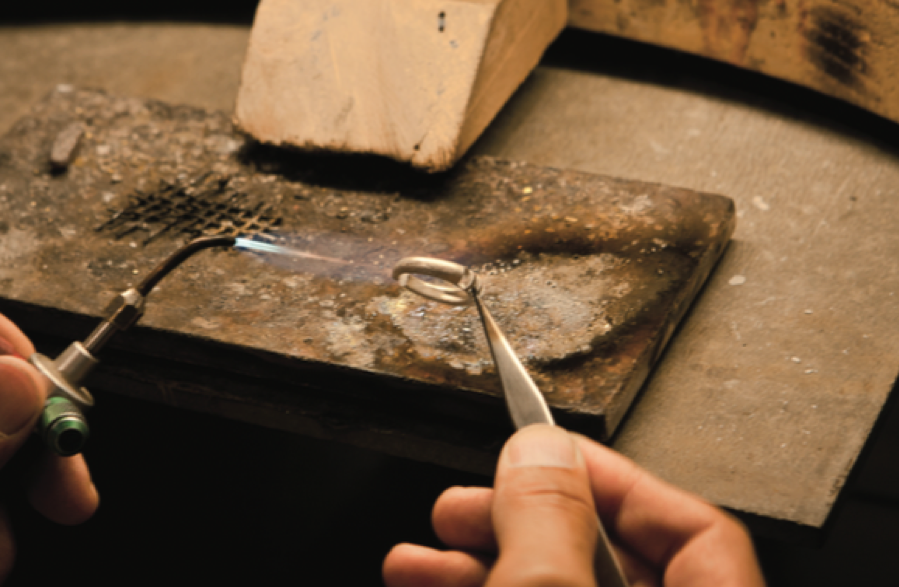
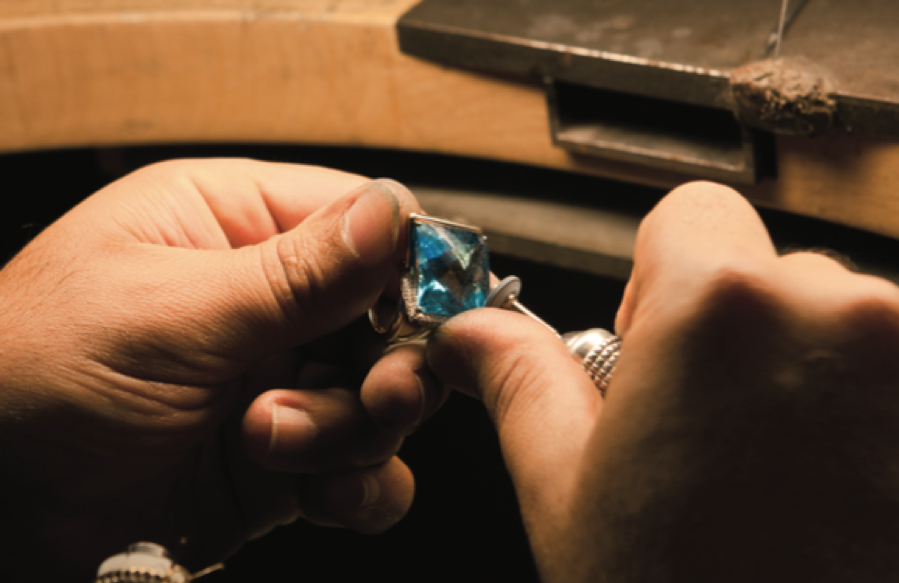
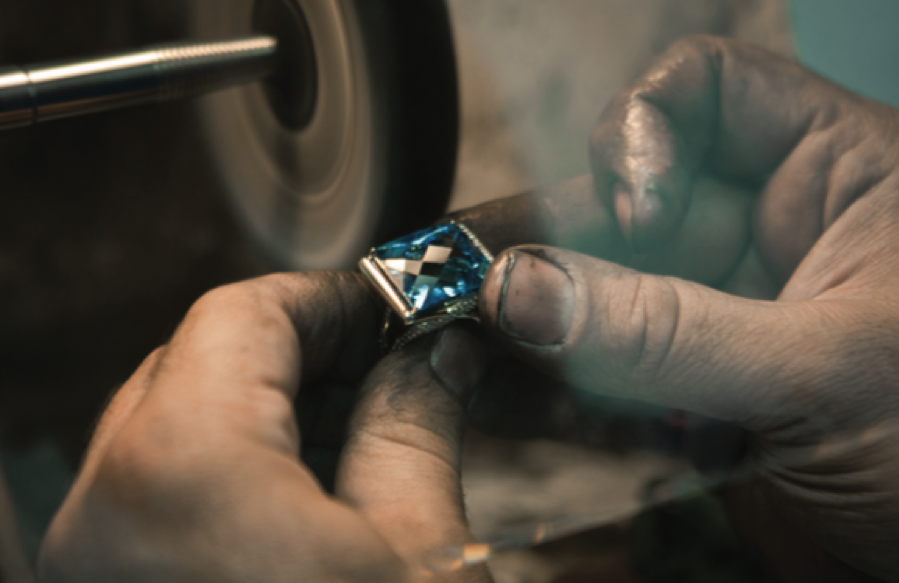
In Lebanon, wine sales are up as a traditional consumer culture makes way for a growing class of connoisseurs and cellar-owners. In homes and restaurants, the focus is on creating the unique memory and one-off experience. Jewelry and watch aficionados, meanwhile, have not been put off by the high prices of gold and gems, but are increasingly demanding individualized, custom-made pieces. Designers and watchmakers are responding with limited edition collections, one-off collaborations and narrative-oriented design. Class is manifest in understated and retro design. It is this penchant for rarities that is putting ‘exquisite’ back in to the meaning of luxury.

In this special luxury report, Executive shows how people are spending, and on what. We show you what are the trends, what is around the corner, and we take an analytical look at the cultural market drivers for luxury goods. Importantly, we take a sober look at the markets in this volatile recovery period.

From cars, boating, jewelry, watches, fashion, homes and interiors, wine, spirits and even food, we welcome Lebanon to a new era of refinement. 


July 3, 2011 0 comments
0 FacebookTwitterPinterestEmail
Society

Yachts: Leap of faith

by Zak Brophy July 3, 2011
written by Zak Brophy

Few displays of the luxurious lifestyle turn heads quite like a top-of-the range boat, and it is the colossal mega yachts that tend to elicit the most attention. These floating mansions can come custom furnished with swimming pools, helipads, indoor gyms and even mini submarines. But is size everything?

For Alain Maaraoui, founder and chief executive officer of Sea Pros Yachts, it is quality and not size that defines luxury. “We have boats that are 8 meters and cost over 280,000 Euros [$396,000]. It’s not a matter of size; it’s a matter of real luxury,” he said.

The Lebanese market is an important hub in the luxury boat trade, but as the 2011 season gets underway it is having to navigate some choppy waters. Political upheavals at home and across the region, slowing growth in the economy and a sluggish start to the tourist season don’t augur well for the coming year.

Showboating

At the end of May, IFP Expo and Messe Dusseldorf hosted the Lebanese maritime trade show, Beirut Boat 2011. Representatives from the top 20 international brands were among the 130 exhibitors who came to show off their wares. Many of the 28,000 visitors to the event at Joseph Khoury Marina in Dbayeh would have come purely to marvel at the opulent grandeur of the mega yachts or to appreciate the finesse of the classic brands. But it was the deals sealed with the serious shoppers that set the tone for the coming year’s business.

Overall, the event proved to be a success despite the prevailing climate, according to Joelle Ghannam, IFP Expo project manager. “More than $100 million in sales were made during the event. There are still big spenders. A $12 million boat was sold on the first day,” she said.

The interest shown in the large boats meant good business for Sea Pros’ Maaraoui. “We were surprised to receive high demand during the show for our mega yachts,” he said.

While the majority of the clientele were Lebanese, 12 percent of the guests came from the Gulf. Ghannam believes it is more than just the liberal lifestyle in Lebanon that attracts buyers from the Gulf. “Many of them prefer to moor in Lebanon. They have more months in which they can sail. It is too hot in the Gulf,” she said. Despite the relative success of the boat fair there is still some trepidation in the market.

“Business is not like last year. We are selling less. But you have to consider what is happening around us,” said Firas Khalife from BluePoint Yachting Lebanon.

Alain Maaraoui explained that the financial crisis had negatively affected trade with Europe. “Nowadays, even in Europe it’s much harder to finance a boat because of the global financial crisis,” he said. “The banks are placing many more restrictions.”

Blue Point Yachting sells solely to a Lebanese clientele and Khalife doesn’t see access to finance as a real impediment to business. “There is no problem with finance in Lebanon. There is plenty of money in the banks. If you fit the banks’ criteria it’s no problem,” he said.

For those seafaring folk who don’t want, or can’t afford, to spend millions on their own floating palace there is always the option of chartering. However, some charter companies have complained of a leaden start to the season.

“There are some problems because of the political situation. So far we have not had a single charter for one of our big boats,” said Randal-Haj of Dolphin Team Yachting. “We are in June and the charters normally start in May, or even earlier.” The vitality of the charter market is closely linked to the influx of tourists. According to the Ministry of Tourism, arrivals in the first quarter of 2011 were down 13 percent compared to the first quarter of 2010.

Hrair Tasslakian, part owner of Dbayeh fishing club, said this year’s business has been coming from locals and Lebanese returning from abroad. “As for the big spenders who come from the Gulf or Europe we haven’t seen them yet. We haven’t seen people that come and spend $10,000 dollars in a day,” he said.

Missing marinas

Many of the players in the industry are concerned that there is a lack of marina development in Lebanon. “The mooring space is almost non-existent now. This is a problem for boat sales, definitely. By next year there will probably be no space at all,” fretted Firas Khalife.

This is particularly a problem for large boats, a market that several agents are hoping to develop in Lebanon. “Now Lebanon is only a market for smaller boats, 50 to 80- footers [15 meters to 24 meters]. Anything more than 90 [27 meters] and it’s much tighter, but it’s growing. In two years Lebanon will have more 100 footers [30 meters] and plus,” said Jimmy Frangi, chief executive officer of Sovereign Sea Hermes.

There was a similar problem of inadequate marina space in the 1990s before the construction of the Joseph Khoury Marina in Dbayeh and Solidere Marina in Beirut.

A new complex in Jiyeh with a capacity for 90 yachts is also slated for completion this month.

Where yachters do find a mooring, they seek comfort, class and style onshore once the boarding ramps are lowered on to terra firma. In a bid to boost the appeal of Lebanon as a luxury yachting destination of choice, Beirut Waterfront Development — a joint venture between Solidere and international real estate development firm Stow Capital Partners — is investing somewhere in the region of $150 million to build Zaitunay Bay.

Located on 20,000 square meters of waterfront land by the Beirut Marina it will incorporate a plethora of restaurants and shops, 14,000 square meters of high-end residences and an exclusive yacht club.

The mood remains defiantly buoyant in the Lebanese luxury yacht market but how long it can stave off the encroaching malaise in Lebanon and the wider region remains unclear. BluePoint Yachting’s Khalife warned that “nobody really knows what’s going to happen.”

“You cannot do any long-term planning in the current climate in and around Lebanon,” he said. “We are playing it by ear.”


July 3, 2011 0 comments
0 FacebookTwitterPinterestEmail
Comment

Yemen’s fleeting chance for change

by Farea al-Muslimi July 3, 2011
written by Farea al-Muslimi

The attack on Yemeni President Ali Abdullah Saleh while he and his cabinet were at Friday prayers last month turned Yemen on its head. The days before the attack saw heavy clashes between rival tribes in the capital of Sanaa and civil war seemed inevitable. It became clear that the potential price of overthrowing the regime would be much greater than it had been in Egypt or Tunisia. 

Then came the June 3 ambush, leaving Saleh with burns to 40 percent of his body and injuries to his neck and chest requiring surgery; a dozen members of his cabinet were also heavily injured, some losing limbs. Several days later Saleh and most of his cabinet evacuated to Saudi Arabia, setting the stage for controversy. The youth in the “squares of change” around Yemen took to the streets at midnight to celebrate what was to them the final exit of Saleh’s regime, analogous to that of former Tunisian President Zine el-Abidine Ben Ali.

In many quarters, however, the celebrations were criticized as a glorification of violence and comparable to Saleh’s own savagery. Some were dismayed that the peaceful nature of the youth uprisings had descended into violence. And more importantly, the sanctity of where he was attacked garnered sympathy for the wounded despot; religion is a fundamental building block of the Yemeni DNA, and the timing and location of the attack blighted its outcome. 

The youth in the squares were naturally defensive in response. Saleh’s departure, they said, had been the goal for months and the means should not be questioned, even if it was not they who performed the operation. There were accusations of hypocrisy against those who condemned the attack on Saleh but not the violence Saleh had wrought on peaceful protesters leaving hundreds dead. One Yemeni youth justified the mosque attack by saying he “was going to leave prayer to kill more of us.”

Under the headline, “God’s hand that devastated Al Nahdeen Mosque”, Yemeni journalist Khaled Abdulhadi wrote in Al-Masdar: “The holiness of the mosque is meaningless if murderers were inside it; in fact it was meant by God that they were all inside to be attacked.”

Another casualty of the assault, however, may be Yemeni national reconciliation. In mid-June an unknown group called the “Revenge brigades of Yemen and President Saleh” attacked an opposition newspaper and pledged to assassinate opposition political leaders and Saleh opponents. These incidents raise concerns about the post-Saleh era. Unless a real national dialogue begins, and some sort of consensus emerges, blood will continue to stain Yemen’s headlines for years to come.

Five months of uprisings have made it clear that neither supporters of the regime nor the protest movement can easily impose their will on the other. Saleh’s departure presents an opportunity for the transfer of power, but this requires Yemen’s political actors to reach some form of national accord and opt for development over retribution, the former being crucial in a country where 40 percent of the population lives below the poverty line and the economy has lost some $5 billion since the beginning of the crisis, according to the Yemeni minister of trade and industry. 

Such consensus needs to account for the country’s diversity and include groups from South Yemen (who pose the most serious political issue facing the country), the Houthis (who have lived through six wars in five years), tribal actors, the youth movement and the current ruling party. The Joint Meeting Parties (JMP), the main opposition group in the country, has called for the transition of power to the vice president, followed by the formation of a national unity government assembled by the current ruling party and the JMP. This interim government would then convene a national consensus conference to establish the framework for a cohesive and inclusive ruling body. 

For this to be realized, foreign actors at the fore of the negotiations — such as the Gulf Cooperation Council, European Union and the United States — will also need to pressure the various local actors to partake. Paramount in all this, however, is that the protesters’ principal demand of the last five months is met; that Saleh and the rest of his family be removed from power. 

FAREA AL-MUSLIMI is a Yemeni activist and writer for Al Masdar


July 3, 2011 0 comments
0 FacebookTwitterPinterestEmail
Society

Watches: a return to classicism

by Lauren Williams July 3, 2011
written by Lauren Williams

Nicolas Baretzki checks his wristwatch. “It was a full moon exactly two-and-a-half days ago,” he says.

Like any avid luxury watch enthusiast, the International director of Jaeger Le Coultre Swiss-made watches — famed as the founders of “La Grande Maison des Complications” — Baretzki will tell you sophisticated and innovative complications are hard to pass by.

Last year witnessed a “bigger is better” trend for show-off complications but now consumers are opting for retro designs and elegant simplicity, at least in design and aesthetics. Classicism is back in a big way.

Tudor this year launched an updated version of the Heritage Advisor Model — a retrospective icon for the brand — and the response has been ecstatic, according to Zeina Annan, brand manager for the model’s local agent, AS Chronora.

“When Tudor came out with the ‘Advisor’, it combined the brand’s vintage spirit with retro chic elegance. It was perfect,” gushes Annan.

 Likewise, the reintroduction of the classic Jaegre Le-Coultre reversible master-line, with its signature swivel case, originally built to withstand the hard knocks of polo matches, was a resounding success; the watches sold before the new line was even launched, according to Baretzki.  While trends have become increasingly internationalized, “people are now more interested in precision complications, especially in Lebanon,” he says.

According to General Manager of AS Chronora, Ziad Annan, smaller, more traditional sizes are once again trendy.  “While medium-to-larger sizes are still selling well,” he says, “for the more dressy models the lady-sized watch is regaining some popularity.” The re-release of the classic Girard-Perregaux 1966 range, with its original high frequency movement operating at 36,000 vibrations an hour, in a simple, white 38 to 40 millimeter diameter case, has cemented the trend.

“We’re very glad with the results, as the 1966 range balances tradition with more contemporary values,” says Annan.

Barkev Atamian, local brand director for IWC, Jaeger Le-Coultre, Breguet, Blancpain, Ulysse Nardin, Harry Winston, Baume &Mercier, TAG Heuer and Longines at the Atamian Hagop Est., says the move towards classic, retro and minimalist designs actually hit an on-trend Lebanese market in 2010, a little earlier than elsewhere in the Middle East. “Today, apart from some iconic watches, the brands are introducing light and pure models. This is a challenge for the brands, to be simple and yet to have a different identity from their competitors,” he says.

Intricate sophistication

According to Atamian, 40 percent of sales in the high-end market are for collectors. “We can’t say these people are loyal for one brand, since they are passionate for beautiful complications.”

“Men who appreciate complications do so, not because these watches are often very expensive but because these watches are more sophisticated, complex and ‘mature’ than the regular movements which were created as simple products, with little care for their intrinsic value,” he says. “These collectors appreciate that because they overcame many real complications to be where they are today.”

At the same time, he says, they do follow trends closely and may prefer one brand over another over the years. Women collectors, however, are regrettably still rare in the region.

“The woman who knows her watches is simply ravishing,” he says.

No turning back

It’s no secret that the watch industry took a hit during the global financial crisis, but the big houses say the rebound has been encouraging, especially in the MENA market.

Ziad Annan’s AS Chronora is the local agent for several big names, including Rolex, Girard Perragaux, Jean Richard and Tudor. Anaan is typically tight-lipped about sales figures but says; “they are doing quite well this year, considering.”

“In the luxury category, most brands in the Lebanese market are probably doing a little less than what they achieved in 2010, but there certainly aren’t any dramatic differences.

The Lebanese are adaptable,” he says. Indeed that seems to be the case, as Baretzki affirms. Jaeger Le-Coultre’s Middle East and North African sales have seen “tremendous” growth of more than 30 percent per year, keeping manufacturers in Switzerland busy, with each hand-crafted masterpiece taking an average of 18 months to produce.  He attributes their resilience to a strong brand history and identity. A solid distribution network and concentration on boutique sales also helped avoid the risks, not to mention the economic boom in Asia softening the global downturn. Concentration of sales in the Gulf has also meant that the recent unrest has had little impact.

Rising prices for raw materials have also put upwards pressure on the price of goods in general, affecting budgets accordingly.  “We don’t have any reliable nation-wide statistics at our disposal,” says Annan, “but spending in the luxury category has probably decreased slightly over the last two quarters.” 

 Atamian says that, while sales in April and May were slow, he hopes to bounce back in the summer. “Yes, sales in Lebanon have been linked to political stability, but since this instability has been going for a very long time, it somehow created a ‘stable’ situation within the instability,” he says.  For the moment, he says, sales are affected from the political turmoil in the region, “mainly because the number of people entering and parting on a daily basis has diminished.”

“The Chinese consumers today represent more than 50 percent of the luxury sales in the world, not for watches but for everything which is in the luxury segment,” he says. “I hope the ministry of tourism concentrates more on advertising Lebanon in that region for the coming years.”

Nonetheless, in a sign of confidence in the high-end segment, the group is bolstering its retail presence, opening two new boutiques in Downtown Beirut this year for Longines and CK watches and accessories. Annan agrees: “The Lebanese market is a vibrant and attractive market with a great deal of potential. Our sales have reflected that, especially in view of the fact that regional sales have decreased during the same period.”

“If the customer is bracing himself, it certainly hasn’t been reflected in the quantities sold, but rather in the category of watch he or she might choose.”


July 3, 2011 0 comments
0 FacebookTwitterPinterestEmail
Society

Cars: Superior Steeds

by Paul Cochrane July 3, 2011
written by Paul Cochrane

There are around 200 super cars in Lebanon tucked away in garages, strategically parked by valets outside high-end night spots and, on occasion, swerving around suspension-wrecking potholes on Lebanon’s mountain roads. In the summer months, a further 100 Lamborghinis, Ferraris and Maseratis with Gulf license plates are to be seen zipping around town, the cars having been sent ahead by container ship for their holidaying owners.

Luxury cars are a tiny niche market and are likely to remain so due to the high level of cumulative taxation levied on imports, value-added tax (VAT) and registration, starting at 60 percent of the car’s value, and at its highest exceeding 70 percent. Given such costs, it is little surprise that owners of such vehicles are part of a very exclusive club. But that does not mean there is no demand.

“We would double or triple sales of luxury cars if taxes were reduced,” said Michel Trad, director of Saad and Trad, dealership for Lamborghini, Bentley, Jaguar and, as of this year, McLaren. Sales would also be made not just to Lebanese buyers, who are “99.9 percent of clients” in the luxury segment, added Trad.
Expatriate Lebanese and frequent visitors with cash to burn would undoubtedly boost sales, allowing dealerships such as Saad and Trad to shift more than the one Lamborghini sold over the past year, or the 17 Bentleys, nine Aston Martins and 27 Maseratis purchased by wealthy Lebanese. Indeed, at the height of the economic boom in the United Arab Emirates, Lamborghini alone sold 60 models in 2008.

As Nabil Bazerji, dealer for Maserati, noted, “sales are always to the Lebanese, as luxury cars are highly taxed, so foreigners are not happy to pay that and they bring over their cars, especially the Gulfies as taxes are much lower there on high-end cars.”

The joys of mountain roads

The fact that British super car manufacturer McLaren selected Beirut as one of its regional hubs as part of its global expansion gives some indication of its potential as a luxury car market. “There are very few McLaren dealers as the network is not finished yet,” said Trad. Indeed, while Saad and Trad joined other dealerships in Jeddah, Riyadh and Doha in having joint Lamborghini-McLaren showrooms, the McLaren MP4-12C super car has yet to be launched in Beirut, with New York, London and Dubai up first before the car will grace the roads of Lebanon.

While there is a lot of competition in the luxury car segment to get the country’s few affluent car aficionados to splash out on a new set of wheels, it is Lebanon’s position as a window display of the latest trendy products that gives the nation a special significance for luxury car brands.

“A lot of people summer here so Beirut is important for visibility, and [since] people come from the GCC. We have double the business at our repair center in the summer as our after sales department is well equipped and we have the only aluminum body repair shop in Lebanon,” said Trad.

Further reflecting Lebanon’s marketing importance, in May the country was chosen by Bentley to host a Beirut Drive day for VIP guests to test drive the Flying Spur, Supersports and Mulsanne models on the roads to Beit Misk and Broumana in the hills above the capital.

“Why pay millions to hire a circuit when you can just do it on the roads?” said Trad of the event. “Circuits are boring, and the conditions of the roads here add to the driving experience. In Dubai you go straight and then stop. The configuration of mountain roads is much better. My customer is Lebanese, not a foreigner coming here that doesn’t know about the road conditions or how to drive in Lebanon.”

The Trofeo Cup
While Bentley opted for the everyday extreme driving of Lebanon’s roads to showcase its latest models, Italy’s Maserati has gone for extreme speed to show off the new GranTurismo. For the first time outside of Europe, the brand has organized the Maserati GranTurismo MC Trofeo race in the Middle East for what Bazerji calls “gentlemen drivers and rookies.”

Running from October until April 2012, the cup allows drivers that stump up to $135,000 to rent the racing version of the GranTurismo for the season to compete with up to 16 identical versions of the car in more than seven races, from the Formula One tracks in Abu Dhabi and Bahrain, to Qatar’s Lusail Circuit and the Dubai Autodome.

“The purpose is to initiate people into safer driving, the pleasure of a luxury car and the driving experience,” said Bazerji.

The new GranTurismo MC Stradalé was launched in May, “despite what’s happening in the neighboring countries and the economic and political crisis in Lebanon,” added Bazerji. “We hope to exceed a sales mix of 20 to 24 Maseratis this year. But if the government reconsiders taxation and reduces it, the luxury segment should grow considerably.”

July 3, 2011 0 comments
0 FacebookTwitterPinterestEmail
Comment

Hollow hat trick for Erdogan

by Peter Grimsditch July 3, 2011
written by Peter Grimsditch

With three consecutive victories at the ballot box — a first in Turkish political history — Prime Minister Recep Tayyip Erdogan ought to be laughing all the way to his mega-mentions in future history books. In reality, he is beset with problems on all sides, both political and economic. 

On the domestic front, he had hoped to win a big enough majority to push a new constitution through parliament without the need to consult the opposition. Though his Justice and Development Party (AKP) won five million more votes than it did three years ago, its number of deputies shrank slightly to 326 out of 550.

Due to this quirk of the proportional system, Erdogan finds himself bereft of the two-thirds majority in parliament and therefore needs to consult the opposition parties to reach a consensus on rewriting the constitution last ratified in 1982. Many reforms have been introduced as a result of Turkey’s application to join the European Union but key and divisive issues, such as ethnic discrimination and completing the process of subjecting the military to total political control, will probably delay the vaunted but unconfirmed AKP plan to introduce a presidential-style political system. Removing Kurdish grievances such as making Turkish the official, not the only, recognized language and further empowering local government are more pressing issues.

Fears that he intends to install a radical Islamist form of governance are absurd. Critics tend to exaggerate the significance of his opposition to tobacco, alcohol and the ban on wearing a veil in certain places. The occasional Churchillian-sized cigar and a post-prandial glass of cognac would instantly dissolve such notions (as well as much of his electoral support).

On the international stage, he needs to repair Turkey’s longstanding close relations with Israel without losing credibility in the Arab world. Despite the loud condemnation of Israel’s tyrannical behavior toward the Palestinians and its slaughter of nine Turkish members of the Gaza aid flotilla in May 2010, commercial relations between the two countries continue to flourish.

The Turkish flotilla organizers have decided to pull out of this year’s aid effort. All that is needed now is an agreement between the two countries on a form of words that Turkey can prove to be an apology from Israel, but one that Benjamin Netanyahu’s government can claim admits no legal responsibility. That should test the versatility of their advisers and lawyers, but it can reasonably be expected to happen this year

The other big issue in the region lies just across the border.  It’s not easy living next door to Syria. Ankara’s “no problems with the neighbors” foreign policy becomes untenable when the people next door are too preoccupied with killing their own citizens to listen. Erdogan’s accusation of “savagery” is sincere but Turkey, like Israel, feels stability is better served if President Bashar al-Assad survives. Despite Erdogan’s best efforts to convince Assad of the need to reform, success seems unlikely. Hence a meeting of what passes for the Syrian “opposition” was allowed on Turkish soil.

Relations with Cyprus, Armenia and Greece will also occupy Erdogan’s time, but even more important will be preventing dents in the economic “miracle” the AKP has wrought over the past nine years.

Lending is out of control in Turkey. Loan growth has risen 40 percent in recent months and consumers have enthusiastically spent much of the newfound money on imported goods. This pushed up the trade deficit to 17 percent of gross domestic product. In short, Turkey is headed for a “correction” at best and a temporary recession at worst.

The remedies are simple if not particularly pleasant — raise taxes to curb spending, raise interest rates to make borrowing less attractive and raise bank reserve ratios to bring down the amount of money they have to lend.

These measures would not have been vote winners if enacted before the elections on June 12. Now there is little doubt some or all of them will be enacted. Erdogan has another four years for any grumbling to subside before he wipes the floor with the opposition for a fourth time.

Peter Grimsditch is EXECUTIVE’s Istanbul correspondent


July 3, 2011 0 comments
0 FacebookTwitterPinterestEmail
  • 1
  • …
  • 370
  • 371
  • 372
  • 373
  • 374
  • …
  • 686

Latest Cover

About us

Since its first edition emerged on the newsstands in 1999, Executive Magazine has been dedicated to providing its readers with the most up-to-date local and regional business news. Executive is a monthly business magazine that offers readers in-depth analyses on the Lebanese world of commerce, covering all the major sectors – from banking, finance, and insurance to technology, tourism, hospitality, media, and retail.

  • Donate
  • Our Purpose
  • Contact Us

Sign up for our newsletter

    • Facebook
    • Twitter
    • Instagram
    • Linkedin
    • Youtube
    Executive Magazine
    • ISSUES
      • Current Issue
      • Past issues
    • BUSINESS
    • ECONOMICS & POLICY
    • OPINION
    • SPECIAL REPORTS
    • EXECUTIVE TALKS
    • MOVEMENTS
      • Change the image
      • Cannes lions
      • Transparency & accountability
      • ECONOMIC ROADMAP
      • Say No to Corruption
      • The Lebanon media development initiative
      • LPSN Policy Asks
      • Advocating the preservation of deposits
    • JOIN US
      • Join our movement
      • Attend our events
      • Receive updates
      • Connect with us
    • DONATE