• Donate
  • Our Purpose
  • Contact Us
Executive Magazine
  • ISSUES
    • Current Issue
    • Past issues
  • BUSINESS
  • ECONOMICS & POLICY
  • OPINION
  • SPECIAL REPORTS
  • EXECUTIVE TALKS
  • MOVEMENTS
    • Change the image
    • Cannes lions
    • Transparency & accountability
    • ECONOMIC ROADMAP
    • Say No to Corruption
    • The Lebanon media development initiative
    • LPSN Policy Asks
    • Advocating the preservation of deposits
  • JOIN US
    • Join our movement
    • Attend our events
    • Receive updates
    • Connect with us
  • DONATE
Comment

The great nuclear silence

by Peter Speetjens June 3, 2011
written by Peter Speetjens

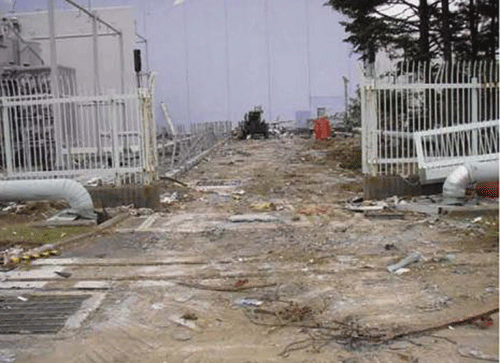
Obsessed with all things ‘now’ and ‘today’, the media are distinguished by a hopelessly short memory. Yesterday is ages ago, and anything that occurred last month might as well have happened in 1837, or not at all. When the news is no longer new the circus leaves town and a deep silence sets in. This is what happened after Japan’s March 11 earthquake and tsunami triggered a nuclear meltdown at Fukushima plant.

Following a fast and furious frenzy of media coverage, Fukushima’s fate and victims have disappeared from the radar, apart from on one day, May 20, when Masataka Shimizu resigned as President of the Tokyo Electric Power Company (Tepco), which owns the Fukushima plant, as it reported a net annual loss of $15 billion. Meanwhile, it remains to be seen how much Tepco will have to pay in compensation. Due to the radiation leaked into the atmosphere, some 50,000 families were forced to leave their homes, while more than 10 million liters of water contaminated with radioactive particles leaked into the sea. The financial and physical damage to human and marine life is hard to determine. The company itself has yet to issue an estimate, but analysts have indicated the total sum could amount to $125 billion. No wonder Tepco’s share price has fallen by 80 percent since March.

Meanwhile, the Japanese authorities have established a fund with which Tepco can compensate the victims. The company is obliged to pay back the government as soon as it returns to its profitable ways. Not known is what will happen were the firm to go bankrupt. Helped by a powerful lobby and PR machine, promoters of the nuclear option like to paint a safe and carefree picture of cheap, affordable energy. It’s true that, once up and running, nuclear power plants produce relatively cheap electricity. 

However, the cost of such unforeseen disasters as Chernobyl and Fukushima are not part of the calculations. Nor is a reliable estimate of the cost of nuclear decommissioning. The average lifespan of the world’s more than 450 nuclear plants is some 30 to 40 years, although many function well beyond their expiry date.  Once a nuclear plant is no longer safe to operate, it should be dismantled, while the site on which it stood should be decontaminated. Unfortunately, the nuclear industry has very little experience in decommissioning.

American nuclear power plants today reckon with an estimated decommissioning cost of some $325 million per reactor, and that is likely being optimistic. In France, the cost of decommissioning the relatively small Brennilis facility, which was only operational from 1967 till 1979, today amounts to some $650 million, no less than 20 times the amount initially estimated. Hence the reason why the big clean-up, like that of four other nuclear sites in France, has been postponed indefinitely. In Britain, the Nuclear Decommissioning Authority has altered its cost estimates several times and currently predicts a price tag of $100 billion for cleaning 19 nuclear sites.

While the Fukushima drama has triggered an intense debate over nuclear power in Europe, most Arab countries continue as if nothing has happened. Abu Dhabi remains determined to build four nuclear power plants on its shore, Riyadh recently signed a nuclear research agreement with China and Jordan is set to announce on June 30 the winning bid for building its first reactor. As none of these countries is particularly known for its free and critical media, the region’s nuclear future is largely determined in silence. There is one exception: Israel.

While the Israeli authorities recently shelved plans to invest in nuclear power generation, journalists, MPs and nuclear experts — for the first time ever — dared call for more openness regarding Israel’s, and the region’s, only nuclear facility at Dimona. They want to know if the ultra-secret, nearly-60-year-old military facility is still safe and where its waste is buried. And so they should: while the inland, desert facility is unlikely to be hit by a tsunami, it is situated only 30 kilometers south of the earthquake-prone Great African Rift.

But on the other hand, why worry? After all, the last big quake to hit the Galilee occurred in 1837, so long ago that it might as well have never really happened at all.

PETER SPEETJENS is a Beirut-based journalist


June 3, 2011 0 comments
0 FacebookTwitterPinterestEmail
Comment

Boon time for mercenaries

by Paul Cochrane June 3, 2011
written by Paul Cochrane

The wars in Afghanistan and Iraq are supposedly winding down, Osama Bin Laden is dead, and the so-called ‘Arab Spring’ is eroding the iron-fisted regimes that have for so long held sway over the Middle East and North Africa (MENA). For private military contractors (PMCs) — a polite name for professional mercenaries — such developments might be considered a harbinger of tough times. But business is better than ever in Iraq and Afghanistan, and the suppression of internal revolts throughout the MENA is presenting new opportunities for this multi-billion dollar industry.

Last month details emerged that the infamous founder of Blackwater, Erik Prince, was forming an 800-strong secret army for the United Arab Emirates, for a price tag of $529 million. Prince moved to the UAE after Blackwater, later renamed Xe Services, faced legal problems in the United States, notably in a case against four Blackwater operatives accused of killing 17 Iraqi civilians in Baghdad in 2007, which has recently been reopened.

Reflex Responses, Prince’s new venture in conjunction with a 51 percent Emirati stake, features South African and Latin American mercenaries, the latter brought into the UAE disguised as construction workers, according to the New York Times, hired to protect under-construction nuclear power plants and oil infrastructure from terrorist attacks, and to “put down internal revolts” and “unrest in crowded labor camps.”

What is curious is the UAE’s need for Prince’s firm, as the country already ranked 16th worldwide in 2010 for military expenditure, at $15.74 billion, or 7.3 percent of gross domestic product, according to the Stockholm International Peace Research Institute. If such a high cost for the conventional military cannot guarantee security, but a half billion dollar private force can, it puts into question the rationale for such a high defense budget. Furthermore, it sheds doubt on the UAE’s belief in the Gulf Cooperation Council — dominated by Saudi Arabia — to come to its aid to squash an uprising, as happened when GCC forces rolled into Bahrain this year.

The UAE is clearly worried about instability amid uprisings nearby and has taken a page out of other government manuals by resorting to guns for hire. In March, it was reported that up to 1,000 Pakistani troops had been recruited to serve in the Bahrain National Guard to put down the uprising, as local troops could not be relied upon. In Saudi Arabia, which recently signed a $60 billion arms deal with the US, Associated Press reported that a top secret project is underway with the US Central Command supervising and training a 35,000-strong Saudi force to protect oil infrastructure and, presumably, to crush any unrest. Reports also abound of Muammar al-Qadhafi using mercenaries in his ongoing war against the rebels in Libya.

Last year in Iraq, security was the second most common service provided by contractors to the US government, accounting for approximately 13,000 personnel, or 18 percent of all contractors, according to a recent report by the Congressional Research Service. But while US troop levels have dropped in Iraq since 2008, along with support service contracts as a result, PMCs actually increased by 39 percent, or 3,500 personnel, by the end of last year.

The US Department of Defense does not give a breakdown of contractor services in Afghanistan, but contracts have soared over the past five years, from $2 billion in 2005, to $11.8 billion for some 87,000 contractors in 2010. It appears as though demand for PMCs will remain high so long as governments carry out policies unpopular in the eyes of the public. After all, mercenaries are useful assets to perform tasks that might strain the loyalty of a country’s regular armed forces. Indeed, Reflex Responses will reportedly not hire Muslim mercenaries given that, in the words of Prince, “They could not be counted on to kill fellow Muslims.”

The regional spike in demand for mercenaries and private armies speaks volumes about the insecurities of the UAE and Saudi Arabia. More chillingly, it raises concerns about the destiny of the ‘Arab Spring’ when governments resort to such forces to quell revolt.

PAUL COCHRANE is the Middle East
correspondent for International News Services

June 3, 2011 0 comments
0 FacebookTwitterPinterestEmail
Economics & Policy

Executive Insight – Booz & Co.

by Ulrich Koegler & Ivan Jakovljevic June 3, 2011
written by Ulrich Koegler & Ivan Jakovljevic

ULRICH KÖGLER is a partner and IVAN JAKOVLJEVIC a senior associate at Booz & Company

In an age when email and digital social media dominate the present and future of communications, traditional postal systems are losing their role as the primary means of communication.

Yet, postal systems remain a vital way to reach people, even in the age of instant communication. What postal systems lack in speed they make up for in other benefits. They offer a way for citizens, especially those in rural areas, to better communicate with each other and their communities; a way for companies and merchants to reach their target audiences with direct mail, e-commerce deliveries and, perhaps most important to governments, a way to locate citizens in an emergency, get them essential services and documents and help them transfer money safely.

These benefits, while balanced among citizens, businesses and governments, nevertheless will not be available in emerging markets in general — and in the Middle East and North Africa (MENA) region in particular — without significant new investment and efforts by government leaders. Therefore it is critical for the benefits to be significant enough to justify investment and activity.

Because the region has only in recent decades witnessed stable population patterns common to Organization for Economic Cooperation and Development nations, postal systems in the MENA region are significantly smaller, less utilized and more costly than their counterparts in developed markets. Unfortunately, this has limited their potential and that of MENA countries to serve citizens, local and international businesses and governments.

Reaping the Benefits

There are numerous advantages to a strong postal system — one being the introduction of standardized addresses. An address system that makes the best possible use of modern Global Positioning Systems/geo-mapping technologies allows for both the unique identification of citizens as well as the ability to reach a destination in the shortest possible time. As such, an address system also offers important benefits for emergency responders, such as medical, police and fire services.

Meanwhile, governments seeking to interact more closely with their citizens can use postal addresses to locate and engage them regularly. When a government is able to reach its people it can efficiently deliver income support, information on public health and other essential services. This ability is vital to the success of many government services, especially in rural areas.

Those populations least likely to access government services in person or through electronic channels — the low income, sick, elderly or rural groups — are most in need of such access; therefore, a modern postal system is a valuable way to close any service gaps. Illustratively, the local post office is becoming a place where one can renew a driver’s license, pay utility bills, apply for various government documents or collect a pension check. 

A game plan for postal systems

Regional governments looking to further strengthen their postal systems have focused on four major areas for improvement: an address system to support national emergency and security services; data warehousing to provide governments and businesses access to essential socio-demographic information; a “last mile” delivery system to complement e-government services and e-commerce; and a system for postal money remittances to provide an inexpensive and traceable means to transfer money.

In addition to letting emergency responders — such as medical, police and fire services —  reach homes and businesses more easily, the unique identification of individuals through their mailing address can be part of a more comprehensive citizen and resident database that captures critical information. For instance, such a database might link addresses to medical history to allow ambulance attendants to respond more quickly and knowledgeably, note a history of domestic violence complaints that can prepare police for what they might face, or enable security forces to screen for potential security threats.


Last-mile delivery systems are another essential element in e-government and e-commerce services. For example, while e-government services can permit routine applications and renewals of key government licenses and documents, such as passports and birth certificates, citizens still need to take delivery. A postal system allows the government to ship those documents directly to people’s homes, rather than to make citizens stand in line in government offices that may be difficult to reach.

Globally leading postal operators have also deployed digital documents, such as secure letters, digital marketing and digital secure identification — a service that gives postal operators a strong footing to operate in the digital age.

Finally, postal systems can be a conduit for money transfers. Such use is not uncommon: in many markets, the post office is the primary place to conduct such transactions.

Moving more aggressively toward such a system would allow governments to track money transfers more efficiently, help security agencies tackle terrorism and reduce narcotics trafficking, money laundering and tax evasion. Postal remittances can be a more secure alternative to informal money transfer schemes (such as hawala), which have been linked to the financing used in the 9/11 terrorist attacks.

Other nations that have sought to improve national postal systems have developed some sophisticated capabilities. For example, Singapore introduced a postal address system that enables sequential sorting of mail items based on the shortest delivery route.

Many nations have developed postal banking systems that provide basic financial services to customers far from national banking centers. Development of all those service capabilities will require initial investments well beyond the capacity of national postal operators. Their current small scale and low revenue base will simply not allow for a comprehensive overhaul of postal infrastructure.

But due to the fact that these services have significant mid-term revenue potential, and the potential for a profound socio-economic impact, governments should take the lead in making sure that the MENA region has a full spectrum of opportunities for citizens to receive information and services.  

June 3, 2011 0 comments
0 FacebookTwitterPinterestEmail
Society

Gambling on a goddess

by Emma Cosgrove June 3, 2011
written by Emma Cosgrove

Claude Tahchy and his partner at Solicet, Tony Haswani, along with Mix FM radio station, are behind what has been touted as the event of the summer: Shakira’s first concert in Lebanon. Days before the over-$1million event, Executive sat down with the young producers to find out how an event of this magnitude comes together and what else is on the horizon, as they attempt to carve a place in the crowded and cut-throat field of event production in Lebanon.

How did Shakira’s first concert in Lebanon come together?

CT: It is not the issue of working with Shakira. The issue is how to build a portfolio and how to survive in Lebanon. We’ve been here for 16 years. I started at the company in 2001 as a volunteer and now I’m a partner. We’ve been trying to do big concerts but the problem is always the situation in Lebanon. But small events will lead you to big events. We’re not an international company, we’re a local one, and the issue is how to keep the company surviving in such a difficult market with such a situation; every two or three months you have a problem in Lebanon.  For Shakira, we did the contract 40 days ago [from May 20]. It was very fast. Usually for such an event you should plan four months ahead. But the issue is always the situation of the country.

What if something happens and you have to cancel the event?

CT: That is the main issue. If she cancels, we are taking this risk. We have insurance but still you have your credibility. If you stop the event you should refund the tickets and it’s another month of work. On a big project like this, all the efforts of this company are based on this event and every member of the company is working more than 12 hours a day on it… Up until today, everything is clear. And I think it is going to be huge.

Why hasn’t Shakira already come to Lebanon to perform?

CT: I will tell you how we proceed with Shakira’s management. [Tony Haswani] is based in Canada and we have another company there— a booking agency for artists. With Shakira, we’ve come to build a relationship with big agencies like Live Nation, Shakira’s management.  It’s all related to [public relations] and relationships. For five years, every producer in Lebanon was trying to bring Shakira. It’s not about money, it’s about our relationships. It’s not the issue that we paid a lot of money. We finalized the contract in 10 days. After 10 days we signed and we announced it. It was very fast because she is on tour.

How do you deal with the competition in production and event planning in Lebanon?

CT: It’s all related to the situation. If it’s not good everything will stop. In 2005 we were planning more than five events and then we had a problem and we stopped everything after [former Prime Minister Rafiq] Hariri’s death. After this point we were looking for long-term projects to allow us to survive; when you have big events it will be great and you’ll grow. After 2005, 2006, 2007, a lot of companies closed in Lebanon.

How do you determine an event’s ticket price?

TH: Shakira is a very big event in terms of cost and in terms of operation. We think about different things. First, we think about how many people we’re going to have. Accordingly, we set prices. And then we determine how we are going to position ourselves; do we want the same income with fewer people or do we really want the masses to come and enjoy? Then we lower our prices and make it affordable. Our pricing strategy was studied with our partner, Mix FM, and they have a lot of experience in this field. We are going to have more than 15,000 people at the concert.

What would the tickets cost if you were not trying to make any profit?

TH: I want to jump on this question because I may answer with ‘the same price’. Things that professionals in the industry understand but [those outside of it] don’t is that when you put on such an event, you don’t think about making a lot of money, you think about making a name out of it. You think that we should break even and we work very hard to break even.

If something happens and you have to cancel the event, will you refund the tickets?

TH: For sure.

This summer you are also bringing Crazy Horse de Paris to Casino du Liban – a controversial show. Are you at all worried about the perception here of this racy show?

CT: Crazy Horse de Paris is a signature event. They are celebrating their 60th anniversary and people are traveling to Paris just to attend this event.

TH: Everybody is hot about the idea and everybody is liking the show. First, it is a cabaret style show. If you go to Paris and you see it, the theater is small and it can accommodate 400 people so it is very niche. And the starting ticket is 8 euros [$11.25] and you just go there and do nothing and just see the show. In Lebanon we are doing it with a price of $100 with two drinks, $150 with two drinks and canapés and champagne and for the dinner it costs $200 or $250; they will have full dinner plus premium open drinks and a bottle of champagne.

Do the owners of the casino have any say over the entertainment inside?

TH: No. We are renting the casino and they are collaborating with us on a few things. But they are not financially [sharing the] risk with us. We brought the show.

Casino du Liban is indirectly owned, in part, by the central bank and Ministry of Finance, so is the government approving nudity?

TH: It is not nudity — this is sensual couture because if you know the show, you cannot really see nudity and even in Paris it’s not nudity; they are wearing strings that are painted. But it’s nudity together with visual effects and once you see the visual effects on the women’s bodies you are going to be lost in terms of what is the visual and what is the woman.

Are you getting any push-back or are you expecting protesting?

TH: So far we are seeing a lot of good reception for the show because Lebanon used to bring such shows in the ‘60s and ‘70s. But we’re Lebanese and we want to bring back what our parents have told us about. So why not bring it back? Why can’t Lebanon be what it used to be?


June 3, 2011 0 comments
0 FacebookTwitterPinterestEmail
Comment

Bin Laden’s last laugh

by Yasser Akkaoui June 1, 2011
written by Yasser Akkaoui

On May 2nd, television cameras broadcast around the worldimages of jubilant crowds at ‘Ground Zero’ in New York, in front of the WhiteHouse and across the United States celebrating the killing of the figurativeleader of Al Qaeda in Abbottabad, Pakistan. While many Americans may view thedeath of Osama bin Laden as an emotionally cathartic ‘closing of the accounts’,the reality is far less clear.

With the 9/11 attacks on New York and Washington, bin Ladengoaded America into invading Afghanistan, where a decade on US marines stillwallow in a grinding game of attrition against an enemy they cannot seem tokill, all the while hemorrhaging hundreds of millions of dollars of taxpayers’money daily. Riding on the coattails of the Afghan war, the Bush administrationinvaded Iraq, which provided Al Qaeda the platform it needed to ignite aninferno of sectarian hatred and killing, and recruit thousands of new adherentsto the anti-American jihad. 

Besides the hundreds of thousands of casualties, projectionshave these wars adding trillions of dollars to America’s debt, which is rapidlyapproaching a ratio of 100 percent of GDP and threatening the US’s AAA creditrating.

That it took 10 years for US intelligence services tofinally find bin Laden is a mark of failure; his killing by US special forcesis hardly a final victory, given that his legacy — his impact upon America —will likely outlive those who hunted him down. Moreover, the US militarycommanders were lucky bin Laden did not meet an untimely end all on his own bysimply tripping over stairs, or from kidney failure, in the time he spentwaiting for them.

To say the world’s only superpower is suffering decline isno controversial statement, with the limits of its once vaunted militaryexposed and its status as the global economic engine quickly eroding.

America has always been looked to as the torchbearer offreedom and democracy in the world; if the US cannot get its house in order andreverse the slide it has found itself in since that fated September day 10years ago, it faces the real possibility that bin Laden, from whichever hell heis in, will be left the last one laughing.


June 1, 2011 0 comments
0 FacebookTwitterPinterestEmail
Economics & Policy

Easing entrepreneurship

by Executive Editors May 28, 2011
written by Executive Editors

The recent political unrest in Middle East and North Africa (MENA) countries has underscored the importance of boosting the region’s economic stability.

Small and medium-sized companies have an important role to play in securing the region’s economic future, and as a result, interest in entrepreneurship has surged. A recent Booz & Company survey illustrated that the face of self-employment is changing, shifting away from small shops and other relatively unsophisticated businesses toward the development of innovative products and services with the intention of building new large businesses.

This is a positive trend consistent with dynamic industrialized economies and suggests that a long-term change in the region’s economy is afoot. There was a 100 percent year-on-year increase in business plan submittals to the MIT Arab Business Plan Competition in 2010-2011. Several banks and finance centers are establishing programs aimed at appealing to entrepreneurs and start-up businesses. Many organizations, such as YallaStartup, INJAZ, Arabnet and Endeavor have created mentorship programs and other one-stop centers for entrepreneurs. Venture capital firms and banks have established specialized funding arms for small businesses.

Charting the challenges

But these initial activities and signals of interest are only modest steps in what will need to be a much larger and more sustained effort.

Booz & Company conducted a survey of more than 300 individuals, most of whom consider themselves entrepreneurs, and a series of focus groups to determine what must be done to remove the institutional barriers to entrepreneurship in the Middle East. This showed that for a number of reasons, it is difficult for entrepreneurs to establish themselves, secure necessary seed capital and family support, negotiate complex and lengthy bureaucracy and regulatory systems and then develop the necessary infrastructure to build self-sustaining businesses of their own.

The survey took place in Saudi Arabia (where it was conducted in collaboration with the National Young Businessmen Committee, associated with the Chamber of Commerce), the UAE and Qatar.

The key issue raised regarded financing; of those surveyed, 42 percent said that family, friends and government sources provided primary debt financing and 60 percent said that those same sources provided primary equity financing. Yet beyond those sources, entrepreneurs face an uncertain and challenging process to secure the capital needed to buy equipment, establish a payroll and meet ongoing needs during the startup phase. In particular, there are funding gaps in sectors such as education, technology, tourism and hospitality, which get less investment than the energy-intensive sectors that dominate regional economies. In addition, although there is funding in place for small and large businesses, few have addressed the “missing middle” — those business with an enterprise value between $500,000 and $8 million. Even financial institutions that do offer funding need to do a better job of broadcasting that fact: approximately nine out of 10 entrepreneurs we polled were not aware of financial institutions that provide entrepreneurial and small and medium-sized enterprise (SME) financing.

Meanwhile, entrepreneurs face considerable cultural barriers: in the MENA region, there is greater prestige in working in large and established businesses than in experimenting with an entrepreneurial idea. This is especially so as the fear and stigma of failure is a pervasive problem for entrepreneurs, more so in the region than in Europe and the United States, where most successful entrepreneurs routinely cite their first failed efforts as critical opportunities for learning. For example, 78 percent of those surveyed said their teachers did not encourage them to pursue entrepreneurial businesses; a similar percentage reported the same treatment from mentors. Among the major challenges facing entrepreneurs, those surveyed said lack of prestige and lack of support from family members were the biggest, outpacing competition, time, financial demands and regulatory hurdles.

Complicating the startup process even more is the difficulty of gaining access to market opportunities. In the US and other markets, governments and large enterprises reach out to small businesses and even reserve slots on tender opportunities; by contrast, in the MENA region, tender requirements tend to call for certain qualifications, financial records and business networks, all of which make such opportunities a remote possibility for startups.

At the same time, entrepreneurs have limited access to education and training in business management, such as how to develop business plans. Formal mentoring programs are not available nearly enough, judging by the fact that close to 70 percent of those polled said they resorted to mentoring from family or friends, rather than from colleagues, investors, consultants or others. This was true for training as well. While entrepreneurs reported seeking training in skills such as marketing, management, finance and planning, they resorted to training from friends and family, or self-learning, in 40 percent of cases — far more than any formal online or technical institute or university, which collectively helped 26 percent of respondents.

The way ahead

Taking on these challenges will require a multifaceted approach. Although MENA nations can’t be expected to immediately overcome certain challenges — such as cultural resistance to risk-taking and failure — they can put into place several programs and efforts to develop an active entrepreneurial ecosystem. Booz & Company, leveraging workshops with key stakeholders, has identified several opportunities to increase entrepreneurship.

One such method is the creation of entrepreneurial service centers to help start-up founders write proper business plans, learn where and how to apply for financing, understand key business financial concepts such as bookkeeping standards and income statements and master more informal but equally valuable skills such as client recruitment and retention.

In addition, such service centers could provide beneficial data and statistics for companies seeking to develop greater market awareness, which would help them to further sharpen their business strategies.

Finally, one of the most valuable offerings of such one-stop centers is informal meetings; the ability to network with other entrepreneurs gives business founders a way to share experiences, learn from others’ mistakes and connect with interested financiers.

Entrepreneurs would also benefit from a more formal mentoring process, featuring communities of advisers led by those who have succeeded in the region already. Ideally, each mentor “pod” would consist of five to 10 young entrepreneurs and one experienced and successful entrepreneur. Each pod would focus on business plan development, financing assistance, introductions to key networks and a regular review of emerging challenges.

While the region’s banks may already be launching financing arms with a focus on entrepreneurs, policymakers could streamline the financing process by establishing a one-stop shop for those seeking loans and those offering them. These may include both private lenders and government sources. Importantly, these centers will help early-stage businesses properly apply for financing and track applications so they do not stall unnecessarily. 

Regional entrepreneurs could also secure greater access to opportunities if large corporations and government-backed entities initiate programs to attract SMEs as potential suppliers. Such a program would call for these organizations to set aside a certain amount of tender contracts for entrepreneurs and small and mid-sized enterprises. This would greatly reduce the barrier to entry for such startups and elevate their visibility to key purchasers.          

Taken together, these actions will provide a powerful tool to support and fund startup founders and will provide a valuable outlet for those entrepreneurial individuals who have been frustrated in the past. Importantly, such a coordinated effort would demonstrate to the rest of the industrialized world that MENA countries are ready to move to the next major stage of economic development — one that is led by innovative and small companies focused on building value throughout the economy and which are seeking to compete regionally, if not internationally.

Ahmed Youssef is a partner, Chady Zein a principal and Raymond Soueid a senior associate at Booz & Company

May 28, 2011 0 comments
0 FacebookTwitterPinterestEmail
Economics & Policy

Wasting away

by Executive Editors May 28, 2011
written by Executive Editors

For the most part, a drive out of Beirut down Lebanon’s southern coastal highway offers a scenic respite from the city; to the right lies the sparkling waters of the Mediterranean and to the left the mountains of the Chouf. But the natural beauty becomes marred when another mountain emerges to block the seascape. It is the gargantuan massif of garbage just outside the southern city of Saida that has been growing for some 40 years, due to the lack of solid waste planning and program implementation by the government.

“It was a mountain, now its two mountains and there is no place to have a third one,” said Mohamad Seoudi,  head of Saida’s municipality, which is charged with managing Lebanon’s most infamous waste disposal site. “The dump yard is overloaded. It was always overloaded. We have had to deal with this dump yard for over 40 years and the situation is now critical.”

Last month a crisis erupted in the areas around Saida when Seoudi refused to accept the garbage from the city’s surrounding municipalities. He said the reason was that they were not willing to allocate 40 percent of the money they receive from the Independent Municipal Fund to pay for separation and solid waste treatment.

This same process occurs in Beirut, where the money goes to the private waste management company Averda. This arrangement is far from cost effective, however. According to Seoudi the price of processing one metric ton of garbage comes to $170 in the capital when you include sweeping costs; by comparison, the upper estimate of the average cost of waste treatment in Germany ranges between $81 and $91 per metric ton, according to a report published by the European Commission.

Garbage began to pile up on the streets of Saida at levels reminiscent of civil war days, when the lack of functional government left garbage uncollected around the country.

“Nobody pays [for] anything,” said Seoudi “This is the difficulty, you tell them to come and share the burden and let the government manage the plant, and to deduct 40 percent from their budgets, and they don’t accept because they are used to paying nothing.”

What adds to the incredulity of the issue is that a solution is already present. Just next to the dump, a solid waste treatment plant sits idle. The plant belongs to the Lebanese-owned, Saudi funded IBC company, according to Seoudi. He said that an agreement was signed with the company to process the waste as far back as 2003 with operations slated to begin in 2005, yet nothing happened due to a dispute over pricing.

“We asked Prime Minister Hariri to deal with the issue and with the owners and they have to negotiate,” he said, adding that discussions are ongoing between the company and members of the ministries of interior and environment.

The annual cost of environmental degradation in Lebanon could be around $1.48 billion

The tip of the trash mound

The Saida dump seems to be only the tip of the iceberg when it comes to Lebanon’s environment issues. The new Country Environmental Analysis (CEA) study on Lebanon currently being compiled by the World Bank sheds light on many of the environmental problems Lebanon faces and will continue to face if action is not taken. The study seeks to identify the difference  between the cost of mitigation and the current level of government financing to recommend policies to improve the country’s environmental standing.

As ever in Lebanon, timely figures are few and far between. But extrapolating the latest figures available (from 2005)  — which set the annual cost of environmental degradation in Lebanon at 3.7 percent of gross domestic product  — into a context of today’s economy , poor environmental practices could be costing the country some $1.48 billion per year.

Proportionally, this figure is actually a decrease on the last estimate taken in 2000 when the figure was put at 3.9 percent of GDP, with the fall attributed to the one piece of major environmental policy passed by a post-war government targeting pollution. Before 2002, anyone driving down from the mountains above Beirut could hardly make out the empty Burj Al Murr tower through the thick layer of smog. Thankfully, that is no more the case, after a 2002 decision to ban diesel engines in cars.

Not surprisingly, the CEA document predicts Lebanon will most likely not achieve United Nations Millennium Development Goal Seven, which aims to “ensure environmental sustainability,” mostly due to a lack of adequate reform in reforestation, solid waste and wastewater management. The problem of solid waste was highlighted as a “major environmental problem with more than 700 open dumps used by the municipalities and where some of the waste is still burned.” 

The lack of proper solid waste management also weighs down Lebanon’s poor ranking on the World Bank’s 2010 Environment Performance Index. The index ranked the country 90th of 163 countries in the world, according to the CEA study, with a noted rapid decrease in environmental sustainability since 2008.

May Jurdi, director of the department of environmental health at the American University of Beirut, said that in addition to the disease-ridden cockroaches and rodents that come with these open dumps, there are also long-term health risks associated with the lack of action. “When it rains all the garbage goes into the groundwater and into the rivers,” she said.

But getting an accurate reading of the problem and how it affects the population is difficult.

In order to assess how much the issue is affecting public health, real monitoring figures are needed, and these currently don’t exist. Jurdi said the health ministry has collected some data, but it is far from sufficient.

“The problem is that there are no clear indicators,” she said. “In countries like ours [the government is] afraid of indicators. We are a country of conspiracy theories and doubts. Everything is a conspiracy because we don’t have trust.”

Already citizens consider water from the taps undrinkable. Groundwater is the most commonly used source of water in Lebanon because of the widespread prevalence of wells in the country, and the lack of dams. The Ministry of Energy and Water estimates that the total number of private wells exceeds 42,000, compared to the 620 officially sanctioned and government-owned wells. Private wells’ total yield is estimated at around  440 million cubic meters per year while the government wells draw only 260 million cubic meters.

However, due to the fact that most of these wells are illegal, ministry officials admit that the number could be as high as twice the official estimate. As a result, no one really knows how much of the water being consumed by the people is safe or how much is contaminated by garbage.

“People are unhappy if VAT is increased but they don’t want to pay directly for services”

Wasting water

Probably the most work that has been done in the past decade toward protecting the environment has been in the wastewater sector. At present 11 wastewater treatment plants operate in the country, with six others constructed but not yet connected to a network, according to the CEA study [See page 100]. When the existing facilities are all online, the country will have the capacity to treat 400 million cubic meters a year (CM/yr). At present, only 46.5 million CM/yr are being treated, according to the study.

Furthermore there is dispute over what constitutes a treatment plant and also what is being achieved. “Ghadir is not a plant because it does not have secondary treatment, Saida is a pumping station and at Baalbek, 20 percent is reaching the plant because people are stealing the wastewater for irrigation,” said Jurdi. 

That practice is causing widespread public health risks, which at present are not being measured. For starters, when wastewater is used to irrigate plants, carcinogenic trace metals accumulate in the soil; change in the soil’s PH levels can cause them to enter the plants and thus be ingested by humans. Fruits and vegetables destined for market shelves are often ‘cleaned’ with wastewater, causing fecal material to accumulate, not to mention the parasites, bacteria and viruses that are attracted to such material.

Manfred Scheu, principal advisor at the German Agency for International Cooperation (GIZ), said that the development of the wastewater sector over the past decade is “remarkable,” given that just to find a place for a treatment plant in Europe takes around a decade. “If you are not a dictatorship [that] can expropriate land without worrying about people then this takes time. Its absolutely normal,” he said, adding that by 2020 most of the wastewater discharged in Lebanon should reach a treatable level.

“Today the treasury is broke, the institutions are broke and the people are broke”

Paying for it

Paying for everything will be a monumental task. At present, just covering operations and maintenance (O&M) in the wastewater sector will require an estimated 50 percent increase in the lump sum tariff that consumers pay, according to Scheu. “That is only O&M. That is not going to cover your investment. But in Lebanon it’s much cheaper, in Europe you have to double [the tariff],” he said.

So far no government official has been willing to stick his or her neck out and propose such an increase on a highly sensitive political issue of this kind.

“People are unhappy if VAT is increased but they don’t want to pay directly for services,” said Fadi Doumani, an environmental analyst and World Bank consultant who worked on the CEA report.

Last month Gebran Bassil, caretaker minister of energy and water,  declined to comment on any increase in the tariff structure associated with building new water infrastructure. When pressed by Executive on whether the plan was to borrow the money needed for water infrastructure, such as dams, he responded that the debt is already mounting due to the subsidies to the regional water establishments.

“Today the treasury is broke, the institutions are broke and the people are broke,” he said. Since Lebanon’s only law protecting the environment was passed nine years ago, no government has issued the implementation decrees needed to put it into effect. The law covers many areas of environmental protection, including mandatory environmental impact assessments for approval of projects that would affect the environment and the formation of a National Environmental Council to protect Lebanon’s natural sustainability. Other laws also call for the environment ministry to house environmental police to implement the law. However, there is currently little legal means or active framework to mitigate the effect of environmentally harmful developments. The environment has “remained a secondary priority characterized by an uncompleted legal and institutional framework as well as by ineffective policies to address the challenges and political constraints to deliver reforms,” states the World Bank report.

Still, even if the Lebanese government does not implement the reforms needed to protect the environment, it is unlikely to affect their ability to attract funding, as World Bank funding has continued despite the lack of substantive reform measures by any post-war government. 

May 28, 2011 0 comments
0 FacebookTwitterPinterestEmail
Economics & Policy

For your information

by Executive Editors May 28, 2011
written by Executive Editors

Economy taking knocks

The political upheavals in Lebanon and around the region, coupled with a natural cyclical downturn, may signal the end of Lebanon’s economic honeymoon of the past several years. According to a statement issued by the International Monetary Fund, Lebanon will grow at just 2.5 percent this year — the worst rate since the 2006 war with Israel. To make matters worse, the inflation rate is also expected to climb to 6.5 percent this year. The IMF estimated the economy’s growth rate last year to be 7.5 percent. This year’s low growth rate was attributed to the cabinet’s collapse in January and the continuing political deadlock over the UN Special Tribunal for Lebanon investigation, according to investment bank Merrill Lynch. The bank cited the drop in the balance of payments to $2.6 billion in January along with $1 billion in capital outflows, an increase in dollarization and a deposit growth deceleration as the main reasons for the prediction. The central bank’s coincident indicator, an average of eight weighted economic indicators published on a monthly basis, echoed this sentiment, falling from 254.4 points in January to 243.2 points in February, the lowest since September 2010, indicating a deteriorating economic situation.

A dream of sanitation

The Ministry of Energy and Water last month released a new wastewater management plan entitled “Wastewater strategy: not to waste our water”. Lebanon creates more than 310 million cubic meters of wastewater each year, and while 60 percent of the population is connected to wastewater collection networks, only 8 percent of the generated wastewater is treated. The plan seeks to connect 80 percent of the population to wastewater collection networks by 2015 and 95 percent by 2020. It also seeks to achieve full operations and maintenance cost recovery in the sector within nine years. The ministry said that so far only four major wastewater treatment plants exist in the country. The total existing investment in the sector was set at some $1.5 billion. A further $1.69 billion is needed to complete all existing plants, while further investment is needed to fulfill all the objectives by 2020 was put at more than $3 billion. The plan will need to be passed through the cabinet to become policy; the money required must come from either a national budget, treasury advances or donors.

Damming the future

The Ministry of Energy and Water last month unveiled the new “Lebanese Strategy for Surface Water Storage,”part of the National Water Sector Strategy, which aims to build 30 dams across the country to address Lebanon’s water shortages. The document serves as an unofficial plan to invest $1.98 billion to build the structures, which will have a static storage capacity of 680 million cubic meters (MCM) and dynamic storage capacity of around 900 MCM. The plan is an updated version of a previous 10-year plan to build 27 dams, approved by both government and parliament over the last decade. Of those 27 proposed dams, only one saw the light of day.  A total of 10 were said to be ready for implementation while the remainder required further studies before they could be priced and implemented. Caretaker Minister of Energy and Water Gebran Bassil put the annual water deficit in 2010 at an estimated 426 MCM. In response to a commonly voiced objection to building dams Bassil admitted Lebanon’s geological formations were “not helpful,” but insisted that the projects go ahead. He added that even if all other reforms — including groundwater regeneration, network reconstruction and demand side initiatives — are enacted, it would only reduce the water deficit by 369 MCM as of 2015. Bassil declined to comment on a new tariff structure when asked how much citizens’ bills would increase as a result of the measure. He added, however, that citizens would be happy to pay one bill instead of three and that the reform would help the water establishments and relieve the public purse from having to cover their losses, which weighs on the public debt.

The cost of sectarianism

On the back of protests calling for the downfall of the sectarian system, a study by American University of Beirut Professor of Economics Jad Chaaban has put the accumulated cost of sectarianism to the Lebanese economy during the span of one lifetime at a minimum of 9 percent of GDP, or an estimated $3 billion. The report combined the costs of the sectarian system and its added costs from birth, to schooling, to housing, to marriage, to living expenses and old age, to arrive at a per capita burden of around $114,000. It identified the cost of residential segregation at $800 million and estimated that 16 percent of public servants are employed solely due to their confessional affiliation. Chaaban told Executive that the study was only preliminary and that he expected the actual cost to be much higher.

Suing to open the telecom market

Lebanese Internet Service Provider (ISP) and broadband operator Cedarcom is taking legal action against the country’s Ministry of Telecommunications (MoT) and government-owned GSM mobile network operators, Alfa and MTC. Cedarcom is mounting a legal challenge against Mobile Interim Company (MIC) 1 operated by Alfa, and MIC2 operated by MTC for monopolistic and unfair competition practices. Lebanon’s largest ISP claimed that the MoT, Alfa and MTC had breached telecom Law 431, ratified in 2002, by taking active steps to implement 3G networks and services without having received the required licenses from the Council of Ministers and the Telecommunications Regulatory Authority (TRA) in Lebanon. Cedarcom stated that the Lebanese Telecom Association, which includes a number of Lebanese ISPs, had repeatedly cautioned the MoT and TRA on the threat of a new monopoly in wireless broadband services if 3G services were introduced in the absence of proper licensing, unequal taxation and fair competition among government-owned and private operators. Cedarcom also argued that fixed-line and mobile GSM monopolies are already there, adding that private ISPs and data operators are kept on interim transitory yearly licenses, prohibited from increasing their DSL capacity and forced to pay up to 60 percent of indirect and direct taxes, all rules and regulations from which Alfa and MTC are exempt. VAT scandal

Al Akhbar newspaper last month reported millions of dollars had been stolen from government coffers by front companies claiming to be foreign import-export firms eligible to claim refunds for Value Added Tax (VAT) receipts. According to the newspaper, the finance ministry had paid out some $254 million in refunds to these companies,  which had accounts with the ministry, and that no inspections of the claims had been made to investigate any wrongdoing. In theory, the newspaper reported, these businesses had a right to file for refunds, while  the ministry has four months to check the legitimacy of their claims, otherwise refunds are automatically made. The newspaper claimed that this practice had been going on since 2005.  The finance ministry responded that such practices were common around the world and that it had uncovered the cases and forwarded requests for legal action to the general prosecutor’s office. The ministry added that its responsibility was not to inspect whether companies were truly established or not, but to inspect the financial statements it receives from companies. The ministry claimed inspections were in fact the responsibility of the commercial registry department at the justice ministry. In addition, the finance ministry refuted that $254 million was stolen, instead claiming that figure was the total amount refunded to all companies in 2010. The finance ministry did not reveal how much had been stolen by the front companies.

Tipping the scales

The balance of payments (BOP) continued its downward trend after registering a deficit of $668.8 million during the first two months of 2011, compared to a surplus of  $714.2 million over the same period in 2010. The BOP did post a surplus of $103.3 million in February, however, constituting a turn into the black after January registered a deficit of $772.1 million. The turnaround was attributed to a rise in the net foreign assets in Banque du Liban, Lebanon’s central bank, and that of other banks and financial institutions. This is the first time in the past three years that the first two months of the year did not see a BOP surplus.

May 28, 2011 0 comments
0 FacebookTwitterPinterestEmail
Real estate

Venus towering over Phoenician past

by Executive Editors May 28, 2011
written by Executive Editors

The threat that cultural heritage faces in Beirut as a result of rising land prices and the scarcity of empty plots is a familiar theme. There seems to be no shortage of fresh cases to highlight and local and international media, as well as local NGOs devoted to preserving national heritage, are doing their part to raise the issue.

Over the last several weeks, Venus Real Estate has been in the spotlight over the discovery of what local news media has claimed is an ancient Phoenician port on “lot 1398”, an approximately 7,000-square-meter site where the company is preparing to construct a luxurious three-tower high rise complex called Venus Towers. 

“I haven’t seen the site; it is closed to the public and even to archaeologists — this is what happens every time there is an important discovery in the Beirut town center,” said Leila Badre, museum director of the Archeological Museum of the American University of Beirut. The Directorate General of Antiquities (DGA) has been carrying out work on the site since the discovery of the ruins by the Ministry of Culture nearly two months ago. At present, the ministry is consulting with local and international experts to determine the value of the site, and as of April 27 five reports had been submitted, signifying that a final decision is coming soon. “We found slopes going down toward the sea that can be interpreted in many ways,” said caretaker Minister of Culture Salim Warde. “It might be a port, a shipyard, or even a quay, but it is surely something very interesting, and we are seeing how we can work with the owners of the land to save this site,” he said.

Over the month of April, An-Nahar criticized Venus Real Estate in two reports that cited numerous experts on the potential archeological value of the site. On April 27, Venus Towers issued an official statement to “clarify” the situation to the general public, threatening media outlets with legal action for making damaging accusations. The statement contends that the plot is too far from the sea to have been used as a port, and too far above sea level, but did not address any historic changes in sea level since the period when the ruins are thought to have originated from.

“The coast of Beirut today is not as it was over 2,000 years ago,” said Warde. “We know for a fact that over the last century this area was covered by stones at least four times. Before then, we don’t know how many times this occurred.” The last time land reclamation like this occurred was by Solidere, whose damage of historic sites was notorious during the post-civil war reconstruction boom. Disturbed by the situation and what he referred to as yet another challenge between the national interest and the private sector, member of Parliament Walid Joumblatt expressed his concern to Executive following the issuance of the Venus Real Estate statement. “I don’t believe a word they say; it’s all rubbish. They will find any excuse for the sake of a few square meters,” he said.

Prior to the publication of the statement from Venus Real Estate, Venus Towers spokesperson Wajih al-Bazri told Executive on April 25 that there was a great difference of professional opinion from archeological experts about the importance of the site. Bazri claimed that while local experts believe the site is important, the international expert brought by Solidere ruled the site unimportant. “The Ministry of Culture and Solidere are working together to get more opinions,” said Bazri. “There is no final opinion yet, but they are working to finalize as soon as possible to be able to go ahead with the project.”  He added that the real estate company will abide by the ruling of the Ministry of Culture, whatever it may be. In the worst case scenario, “we will build around it,” said Bazri, explaining that the ruins only cover about 1,000 square meters of land, then adding: “The newspapers are making a bigger fuss out of this than it really is.”

May 28, 2011 0 comments
0 FacebookTwitterPinterestEmail
Real estate

For your information

by Executive Editors May 28, 2011
written by Executive Editors

Illegal buildings on public property

Security forces in Lebanon are cracking down on the illegal construction of residential buildings on public land. Particular areas of concern are Hezbollah-controlled regions in the southern suburbs of Beirut and south Lebanon. According to As Safir, the Ouzai district was constructed entirely on public property while nearly 1,000 residential units were built on thousands of acres of public property in southern Lebanon. On April 18, six policemen in the southern suburbs of Beirut were injured while attempting to evict the occupants of illegal houses. A similar incident on April 21 in Tyre left two civilians dead and two others wounded by police gunfire. According to the Associated Press, caretaker Prime Minister Saad Hariri indicated that Hezbollah has turned a blind eye to the construction. Hezbollah defended itself against the accusation, urging officials to severely punish such violations.

Syrian tycoon Makhlouf in the spotlight

Last week, London-based World Finance magazine announced that it was reconsidering an award it had presented in March to Syrian businessman Rami Makhlouf, calling it “appropriate to factor in the wider political agenda” after Syrian protestors have been widely vocal about his perceived corrupt business dealings in the country. Makhlouf, the 41-year-old maternal cousin of Syrian president Bashar al-Assad, was commended for “visionary leadership and contribution to the Syrian economy” through his holding company Cham Holdings (Syria’s largest private company), which includes businesses ranging from aviation to telecommunications, energy and banking. Makhlouf’s businesses control more than 60 percent of the Syrian economy. His main property group, BENA holdings, is developing mixed-use, resort and hotel properties on a total of more than three million square meters of land from Aleppo to Damascus. In an email to the Financial Times, later published in an April 20 article, Magda Sakr, chief executive officer of Makhlouf’s telecommunications firm Syriatel, said that “Makhlouf is a businessman and is therefore seeking — as any serious businessman — to get investment opportunities… The fact that he is ‘well connected’ does not make him a criminal who has to justify each contract he gets.” The email went on to ask, “Is somebody going to claim that Mr. Makhlouf’s success was due to him using Syrian intelligence officials to intimidate the Syrian public to use the services of [his] companies?” Makhlouf has been widely criticized by the international media and was sanctioned by the United States Treasury in 2008, banning him from operating with any American person or business.

One big hotel purchase

Monaco resident and Lebanese businessman Toufic Aboukhater has coughed up $643 million to Morgan Stanley Real Estate Funds (MSREF) for seven InterContinental hotels in France, Vienna, Amsterdam, Madrid, Rome, Frankfurt and Budapest, according to a report by the Reuters press agency. Arguably the most prized asset in the portfolio is the Carlton Hotel overlooking the Mediterranean coast in Cannes. MSREF had bought the hotels in 2006 for $925 million using a debt-heavy strategy, with Barclays Capital organizing an assortment of lenders to complete the deal. The reclusive buyer once owned London’s Dorchester Hotel and Monte Carlo’s Grand Hotel, in addition to others throughout Europe.

Eco-design is flourishing

The Build it Green conference held at the end of March highlighted the vitality of eco-friendly living in Lebanon. Host to more than 300 real estate professionals from Lebanon and the Middle East, the conference addressed several aspects of green building. Featured at the conference was a new project by the event sponsor Greenstone. ‘La Broceliande’ in Yarze, outside Beirut, is to be Lebanon’s first residential BREEAM (an environmental assessment method and rating system) green-certified building, scheduled for completion by mid-2012. Fouad Hanna, an architect with Dagher Hanna and Partners, who worked on the La Broceliande project, emphasized the increased demand for green construction in Lebanon. “The interest that we find today is phenomenal compared to even just a few years ago,” he said. “Though consumers focus on quality and location when making purchasing decisions in Lebanon’s real estate industry, quality living and energy cost saving through environmentally-friendly architecture are gaining popularity.”

Jordan retains value

Despite the political unrest in the region, Jordan’s property market has not experienced dampened prices, according to a first quarter report from property consultancy Asteco Property Management, with some residential sales transactions exhibiting higher prices. The report noted that during the first quarter of 2011 the activity of sales and leasing of small and medium sized apartments has kept the same pace as in 2010, partly due to scarcity of land in  high-demand areas and low housing budgets. “The Jordanian government moved swiftly in adopting policy changes… [and] as a result of these changes, which included limitations on price increases and the waiving of transfer fees, Jordan’s property market has shown little sign of slowing,” said Elaine Jones, chief executive officer of Asteco Property Management. However, average apartment sale prices in Amman’s 4th Circle street have decreased by 1 percent to $1,340 per square meter compared to an average price of $1,481 per square meter in Abdoun, the most expensive residential area in Amman.

Egyptian land mogul detained

Former Egyptian housing minister Mohammed Ibrahim Suleiman was arrested by Egyptian Authorities on April 6 for allegedly awarding government land to real estate developers in the country for less than fair market prices, according to the Assocated Press. Suleiman, who is the second former housing minister to be arrested since the fall of the government, is believed to have approved biased deals while in office from 1993 to 2006, generating the possibility that land transactions made under previous governments may be annulled, much to the dismay of some regional real estate investors. Authorities also arrested Egyptian businessman Magdi Rasikh, accusing him of purchasing public land through a deal brokered with Suleiman, which indirectly lost the public purse some $100 million. Property companies have already been battling a series of legal challenges after a court ruling last year that an earlier land deal made with the country’s biggest developer, TMG Talaat Moustafa Group, was illegal.

Coughing up for the coppers

Construction company Saudi Oger – owned by the family of the Lebanese Caretaker Prime Minister Saad Hariri – plans to finance the construction of police training facilities in Saudi Arabia with a $2 billion syndicated loan. Saudi Oger last participated in the loan market in August 2010, borrowing $250 million via Credit Agricole, which will mature in December 2014. Bank sources claim that Saudi Oger has nearly reached the limits of its credit lines and has been trying to diversify its financing beyond domestic banks. According to Maktoob, Deutsche Bank has been attempting to put together a syndication of small banks to provide the loans. Similarly, lenders have each been asked to contribute $200 million.

May 28, 2011 0 comments
0 FacebookTwitterPinterestEmail
  • 1
  • …
  • 377
  • 378
  • 379
  • 380
  • 381
  • …
  • 686

Latest Cover

About us

Since its first edition emerged on the newsstands in 1999, Executive Magazine has been dedicated to providing its readers with the most up-to-date local and regional business news. Executive is a monthly business magazine that offers readers in-depth analyses on the Lebanese world of commerce, covering all the major sectors – from banking, finance, and insurance to technology, tourism, hospitality, media, and retail.

  • Donate
  • Our Purpose
  • Contact Us

Sign up for our newsletter

    • Facebook
    • Twitter
    • Instagram
    • Linkedin
    • Youtube
    Executive Magazine
    • ISSUES
      • Current Issue
      • Past issues
    • BUSINESS
    • ECONOMICS & POLICY
    • OPINION
    • SPECIAL REPORTS
    • EXECUTIVE TALKS
    • MOVEMENTS
      • Change the image
      • Cannes lions
      • Transparency & accountability
      • ECONOMIC ROADMAP
      • Say No to Corruption
      • The Lebanon media development initiative
      • LPSN Policy Asks
      • Advocating the preservation of deposits
    • JOIN US
      • Join our movement
      • Attend our events
      • Receive updates
      • Connect with us
    • DONATE