• Donate
  • Our Purpose
  • Contact Us
Executive Magazine
  • ISSUES
    • Current Issue
    • Past issues
  • BUSINESS
  • ECONOMICS & POLICY
  • OPINION
  • SPECIAL REPORTS
  • EXECUTIVE TALKS
  • MOVEMENTS
    • Change the image
    • Cannes lions
    • Transparency & accountability
    • ECONOMIC ROADMAP
    • Say No to Corruption
    • The Lebanon media development initiative
    • LPSN Policy Asks
    • Advocating the preservation of deposits
  • JOIN US
    • Join our movement
    • Attend our events
    • Receive updates
    • Connect with us
  • DONATE
Photo Essay

Protests against recusal of Beirut port blast judge

by Greg Demarque February 19, 2021
written by Greg Demarque

Parents and relatives of the victims of the Beirut port blast staged a spontaneous protest near the Courts of Justice in Adlieh in the evening of February 18th 2020 to express their anger and frustration at the recusal of Judge Fadi Sawan from the investigation earlier in the day, a decision condemned by both human rights activists who denounced perceived political interference in the judiciary process and the parents of the victims who still cry out for justice more than 6 months after the blast.
The recusal of Judge Sawan is expected to further delay the investigation to uncover the parties responsible for the presence of the ammonium nitrate inside the port and the explosion that left more than 200 dead, 6,000 wounded and thousands homeless.
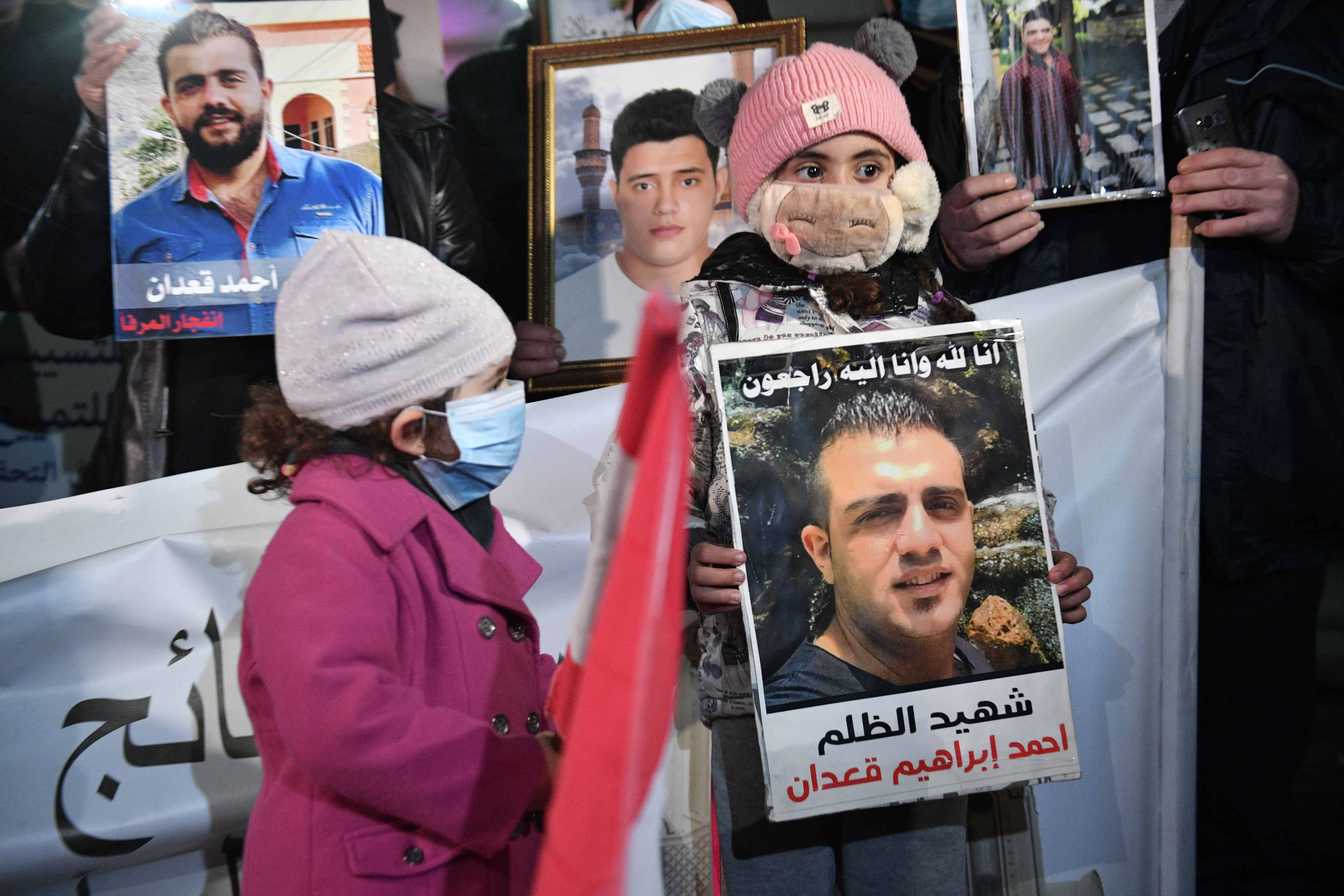
[rl_gallery id=”27263″]
February 19, 2021 0 comments
0 FacebookTwitterPinterestEmail
Photo Essay

Vaccination campaign finally launched

by Greg Demarque February 14, 2021
written by Greg Demarque

On Sunday, February 14th 2021, began the pre-vaccination campaign organized by the Lebanese Ministry of Health for Lebanese medical personnel at the Rafic Hariri University Hospital, Saint Georges Hospital University Medical Center, and the American University of Beirut Medical Center (AUBMC), to be followed on Monday 15th by a general vaccination campaign for Lebanese citizens aged 65 years and more that have registered for the vaccine on the website of the Ministry of Health.

[rl_gallery id=”27236″]
February 14, 2021 0 comments
0 FacebookTwitterPinterestEmail
Photo Essay

The Funeral of Lokman Slim

by Greg Demarque February 11, 2021
written by Greg Demarque

In the midst of Beirut’s beleaguered southern suburbs, statements for logic and reason, as well as empathis condemnations of terror and weapons, were solidified on this February 11, as clerics and dignitaries from Lebanon’s religious communities along with several foreign ambassadors joined with activists and family in the funeral of slain Lebanese filmmaker and fearless journalist Lokman Slim

[rl_gallery id=”27228″]
February 11, 2021 0 comments
0 FacebookTwitterPinterestEmail
Photo Essay

Civil unrest in Tripoli

by Greg Demarque February 1, 2021
written by Greg Demarque

Tripoli protests continued to be intense, on January 31, 2021, in Al Nour square. It started with the arrival of demonstrators from Beirut, and ended up with armored vehicles and the Lebanese army soldiers’ pursuit of a group of young demonstrators in the streets of Tripoli.

[rl_gallery id=”27231″]
February 1, 2021 0 comments
1 FacebookTwitterPinterestEmail
Entrepreneurship

Entrepreneurship

by Executive Editors February 1, 2021
written by Executive Editors

Executive’s faith in the Lebanese spirit of entrepreneurship remains strong. Despite compounded crises that have blocked foreign transactions, raised operational costs, and accelerated the migration of a skilled workforce, entrepreneurship in Lebanon continues to demonstrate its resilience, creative problem-solving, and untapped potential.

To reaffirm its support to entrepreneurship, Executive produced this video in collaboration with Konrad-Adenauer-Stiftung (KAS).

February 1, 2021 0 comments
0 FacebookTwitterPinterestEmail
Photo Essay

Civil unrest turns violent

by Greg Demarque January 29, 2021
written by Greg Demarque

Tripoli protests January 28, 2021, in Al Nour square.

7:30 p.m.

Protesters have already set fire to one of the doors of Al Tell police station, Bechara El Khoury street. Tear gas grenades rain down from the roof of the building and the air is unbreathable.

 Gas floods the adjacent streets for more than 2.5 hours, which did not prevent protesters from throwing Molotov cocktails at the police station.

10 p.m.

The army on the outskirts of the square decides to dislodge protesters by storming the square.

Driven from their place of protest, the demonstrators headed for the town hall of Tripoli, left unprotected, and ransacked and burned it.

11:00 p.m. The army arrives in front of the burning serial.

11:15 p.m. A fire truck arrives on the scene, but does not have sufficient water, so there is confusion and disorder before another fire truck arrives 20 minutes later.

[rl_gallery id=”27234″]
January 29, 2021 0 comments
0 FacebookTwitterPinterestEmail
BankingBeirut Port explosionBusinessBusinessCultureFinanceOverview

Pivotal events of 2020

by Nabil Makari December 31, 2020
written by Nabil Makari

DECEMBER 19
Parliamentary consultations take place. Mr. Hassan Diab is nominated to form a government, backed by the Amal movement, Hezbollah, the Free Patriotic Movement, the Marada and others.

DECEMBER 20-31
Heavy protests take place, protesting the nomination of Hassan Diab as Prime Minister.

JANUARY 14
Lebanese Protests resume after weeks of calm. Banks are heavily targeted as the focus of popular anger centers around the Lebanese banking sector. Roads are closed by protestors all around Lebanon.

JANUARY 16
Contrary to cabinet leaks circulating in the news, the formation of the government does not take place, without any explanation.

JANUARY 18
Clashes occur between protestors and the police, resulting in 400 wounded and 34 arrested. Protestors were dispersed by the police, the latter using teargas, water cannons, batons and rubber bullets, in violation of international conventions.

JANUARY 21
A new cabinet is formed. The government, essentially backed by the March 8 coalition and its allies, is heavily rejected and protestors go to the streets in a clear sign of rejection.

JANUARY 22
Clashes occur between the police and protestors outside the Lebanese parliament.

JANUARY 25
Crowds gather around Beirut to celebrate the 100th day of the Thawra, protestors demand for a complete overhaul of the Lebanese political system.

FEBRUARY 1
Protesters gather outside the US Embassy in rejection of US President Donald Trump’s Middle East Peace Plan.

FEBRUARY 5
Protests ongoing in refusal to recognize the new government.

FEBRUARY 6
In light of the financial crisis, the new government presents its plan to fight tax evasion and publishes a detailed policy paper in this regard.

FEBRUARY 11
Protests occur in light of the new government’s confidence vote. Protests become violent in front of parliament due to the police’s heavy use of batons, teargas and rubber bullets.

FEBRUARY 21
The 1st case of COVID-19 is confirmed in Beirut.

FEBRUARY 28
Lebanon bars all travel by non-residents by air, sea or land from countries worst hit by COVID-19. The Public Works Ministry named China, South Korea, Iran, and Italy as affected countries.

MARCH 8
Lebanon announces default on $1.2 billion Eurobond payment.

MARCH 10
The first COVID-19 related death is recorded.

APRIL 21
Ten people are killed in a shooting in the village of Baakline.

APRIL 22
Mazen Harfoush, the gunman in the Baakline shooting, is apprehended and confesses to his crimes.

MAY 31
Lebanon reaches 1,220 cases of Covid-19 infections

JULY 27
Exchange of fire between Israeli soldiers and four Hezbollah members, no escalation occurs.

AUGUST 4
An explosion in the port of Beirut kills 203 people, wounds thousands and results in 300,000 people losing their home

AUGUST 5
The government declares a two-week state of emergency following the explosions, effectively allowing the military a free hand in tackling the security situation.

AUGUST 6
French president Emmanuel Macron arrives in Beirut and visits the scene of the explosion and tours the damaged quarters in Beirut. He engages in discussions with residents of Beirut and calls for government reforms and anti-corruption measures. Macron declares that he would help gather international aid through an international summit with the European Union, Arabic countries and the USA, with such aid being conditional on the government implementing reforms. Protests break out as a popular anger is at an all-time high due to the blast. 16 port employees, accused of being connected to the explosion, are arrested according to the military court spokesman.

AUGUST 7
Lebanese officials declare that the victims of the explosion are numbered to 157 deaths and 5,000 wounded. The European Union releases emergency funds for aid amounting to $38 million. According to Boris Prokoshev, former captain of the ship that brought 2,750 tons of ammonium nitrate to Beirut, Lebanese authorities were “very well” aware of the risks of stocking the said amount in the Beirut port.

SENSITIVE MATERIAL. THIS IMAGE MAY OFFEND OR DISTURB An injured man is transported on a stretcher following an explosion in Beirut’s port area, Lebanon August 4, 2020. Picture taken August 4, 2020. REUTERS/Mohamed Azakir – RC2K8I9K1KYA

AUGUST 8
Protests occur all over Lebanon, with over 700 reportedly wounded and one policeman killed. Protestors storm through various official buildings, including the foreign ministry, as the crowds of protestors face police violence. Prime Minister Hassan Diab calls for new elections, while the 3 MPs of the Kataeb party resign.

AUGUST 9
Ministers Manal Abdel Samad and Demianos Kattar submit their resignations. International leaders join a donor conference by videoconference with the United Nations. France pledges nearly $300 million of direct assistance to the Lebanese population.

AUGUST 10
Prime Minister Hassan Diab announces that he and his cabinet’s resignation.

AUGUST 27
Clashes between Hezbollah and tribal members in the town of Khalde resulted in two deaths and ten wounded.

AUGUST 31
Lebanon reaches 17,308 cases of Covid-19 infections.

SEPTEMBER 8
Ali Hassan Khalil and Youssef Fenianos, two former ministers, are sanctioned by the US Treasury’ Office of Foreign Assets Control (OFAC).

OCTOBER 9
A fuel tanker explodes in Beirut, leaving at least four people dead and thirty injured. The blast occurred after the tank caught fire in the Tariq-al-Jdide district.

OCTOBER 14
A delegation led by Brigadier General Bassam Yassine launched talks facilitated by the United Nations and the United States with Israel over the disputed maritime border.

OCTOBER 22
Saad Hariri is charged with the formation of a new government.

NOVEMBER 6
Free Patriotic Movement leader Gebran Bassil is sanctioned under the Global Magnitsky Human Rights Accountability Act by the United States.

DECEMBER 21
Parliament passes a law to lift banking secrecy for the duration of one year

DECEMBER 28
Lebanon reaches 171,226 cases of Covid-19 infections, with the death toll at 1394

December 31, 2020 0 comments
0 FacebookTwitterPinterestEmail
AnalysisBusinessCommentRetailSpecial Report

Executive Magazine’s December issue

by Executive Contributor December 31, 2020
written by Executive Contributor

Dear Executive readers,

It is our honor to present to you our end-of-year issue. The year behind us has been tumultuous worldwide, and especially for Lebanon – a small country that has many times carried its weight throughout international and regional crises. The tri-tragedy of the pandemic, the port explosion, and the collapse of the economic system has revealed our brightest and strongest asset: ourselves. As a people, we have risen with grace and generosity in facing 2020. A spirit we feel confident will carry into 2021.

In this issue we take a bird’s eye view of 2020. It includes in-depth overviews of banking, energy, trade, and retail. The magazine also includes two special reports produced in partnership with the Konrad Adenauer Foundation: the first focuses on health care, and the impacts of Covid-19 and the port explosion; while the second focuses on entrepreneurship, covering the grim reality of the sector, but its potential to grow into a regional knowledge economy hub.

As a highlight, the issue features an updated version of the Economic Roadmap. It outlines urgent emergency measures for the near future as well as longer term needs in detailed strokes; measures Lebanon must take to place itself on solid economic, social, and political grounds for recovery.

With this, we wish you a very happy new year. May your year be blessed and full of wonder.

Executive Editors,

December 31, 2020 0 comments
0 FacebookTwitterPinterestEmail
EntrepreneurshipSpecial Report

Lebanese start-up funding threatened

by Nabil Makari December 31, 2020
written by Nabil Makari

Eager to capitalize on the tech-savvy population,high education rate and entrepreneurial spirit, Banque du Liban’s (BDL) Circular 331, released in 2013, paved the way for the creation of dozens of startups in Lebanon, in addition to accelerators and incubators. Despite this support, events of the past few years have put a stop to the generous investments in startups.

Circular 331 was meant to incentivize local banks to invest in the local tech scene to turn Lebanon into a start-up nation. The circular encouraged banks to allocate up to 3 percent of their capital in startups, incubators, accelerators and venture capital funds by a mechanism that would guarantee reimbursement in case of failure of the said venture up to 75 percent of direct startup equity investment or indirect support entities. Local banks would be authorized to obtain a seven-year loan from BDL with zero interest, in exchange for investing it in Lebanese Treasury Bills with an interest rate of 7 percent, in return for the banks committing to invest in the knowledge economy with BDL guaranteeing the investment up to 75 percent and sharing the profits with the banks at 50 percent.

The structure of the initiative allowed for more guarantees. In 2014, this allowed for an injection of $400 million in the Lebanese knowledge economy. According to Bassel Aoun, program manager at Kafalat for the Innovation in Small and Medium Enterprises (ISME) program, a project supported by the World Bank, the major source of startup funding has come through Circular 331 subsidies. Banks are the main suppliers of funds through Circular 331, so the current banking crisis has resulted in this money drying up overnight.

“Most of the funds came from the banks’’, says Fadi Bizri, a partner at B&Y Venture partners. Indeed, in the absence of well-developed capital markets in Lebanon, the attempts to reach international investors have been lukewarm, and the ecosystem has been resting mostly on BDL’s shoulders.

Nevertheless, in light of Lebanon’s financial woes, and due to regulatory hurdles and other shortcomings of the Lebanese economy, the support mechanism established through Circular 331 have stalled.

Due to the current financial crisis, and to capital controls, it has been difficult to get investments from abroad to local startups, and trying to attract such investors is, according to Aoun, “counter intuitive”. “Capital controls are affecting the performance of our companies,” Aoun continues.

Indeed, startups in Lebanon are being barred from wiring money abroad to pay for marketing, software, ads, and foreign talent, which is having an adverse effect on their financial standing. “It’s a nightmare” says Fadi Bizri, taking into account that the value of a startup is heavily related to the value of its software (hosted on servers such as Amazon Web Services), data and cloud management, all of which require international payments to be maintained.

To add, startups are no longer able to hire talent from abroad, and are even losing talent to emigration. “Between the thawra, capital controls and Covid-19, there is a lack of trust from abroad in the local economy and therefore very little to no investment,” says Nicolas Rouhana, general man-
In collaboration with 43 ager at IM Capital, an initiative funded by USAID
which provides capital and support to companies through early-stage investors like angel investors, venture capital funds, accelerators and incubators .

Efforts to mobilize international investors have had little to no tangible result, most finance experts say. Consequently, many startups are considering moving abroad to re-incorporate in a different jurisdiction. Start-ups are also being pushed to relocate by investors, who are nervous about the current situation and Lebanese judicial regulations, as Lebanese commercial laws are deemed too rigid for the corporate structures needed in venture capital. Also, the relocation of these start-ups abroad would allow them to raise capital from different pools of investors, in jurisdictions where money would be more easily accessible.

Nevertheless, initiatives to channel foreign money into Lebanese startups have not fully dried up. IM Capital, for example, to help provide relief for affected SMEs in light of the August 4 Beirut port explosion, recently launched the “heartfelt support to Beirut” – initiative supported by USAID
to help channel 2 billion LBP through its companies across four sectors: education, housing, food and water, securities and business platforms. The
money will be used to provide relief packages to clients and beneficiaries who have been affected by the port explosion.

HAVE START-UPS TRIED TO CHANNEL SOME OF THE LOCAL EPOSITOR MONEY?

Startups would, in principle, be seen as attractive investments to local depositors worried about capital controls and talks of haircuts on deposits. “We have witnessed this trend”, says Aoun, mentioning investments in local dollars – “lollars” – in startups, “though it has been minor for early stage startups”.

Nevertheless, for startups less dependent on foreign money, Rouhana believes that this could result in a mix of “fresh” dollars and local dollars
as an investment tool in the near future. Such a mix of local and international dollars, according to Fadi Bizri, would not depend so much on the startup’s industry, but more on how mature the company is. Mature companies wishing to pay higher salaries, for example, or needing to transfer money abroad, would be less interested in the use of local dollars.

Other ways to circumvent the difficulty of accessing capital and sending money abroad is the use of crypto-currency and crowdfunding. The use of crypto in Lebanon is not obvious as such tokens would have to be converted to hard cash – and buying them would prove difficult due to capital controls. Regarding crowdfunding, there have been minor initiatives but they have been made on a small level. According to Bizri, “You have small initiatives from people abroad who want to help”, but those happen mainly for companies with exportable (or potentially exportable) products who are in need to import things like raw materials or machinery, and that can repay investments with ‘fresh’ dollars, which is not the case for most startups in Lebanon who are engaged in the local production and distribution of services.

“The last 14 months have been challenging in abnormal ways for any entity across Lebanon” says Mouhamed Rabah, Chief Executive Officer of the Beirut Digital District (BDD), a privately-funded community space that
hosts startups, incubators, accelerators and funds. According to him, startups are looking for international funding, but this comes with a requirement to reincorporate abroad. He argues that two elements are driving these companies to reincorporate: the drying up of funds for startup investments in Lebanon, and a loss of trust in the government and institutions due to the August 4 explosion. Indeed, the latter seems to have been the breaking point for many talents, who do not see the need to risk their lives or their childrens’.

“We are seeing an increase in demand from companies wanting to set-up their back office in Lebanon due to a more competitive financial cost and this could help Lebanon transform into an added value outsourcing hub, building on the yearly graduating talents” says Rabah. For example, a Saudi company is opening up their engineering office in Lebanon at BDD to profit from these now more affordable talents. More of these examples can be found at BDD, according to Rabah.

As local funds dry up, startups can turn to their networks in the diaspora, as incorporating outside of Lebanon doesn’t necessarily mean to pack bags and leave. Indeed, reincorporating abroad can mean setting up another legal structure and bank account for cash management outside of Lebanon, but does not imply leaving the Lebanese market as a whole or moving out completely.

December 31, 2020 0 comments
0 FacebookTwitterPinterestEmail
Brand Voice

Fate, not misfortune

by Nour El Kurdi December 31, 2020
written by Nour El Kurdi

Over two decades of experience

The Investment Development Authority of Lebanon (IDAL) was established in 1994 with an economic vision to attract mega investments to the country. It targets foreign and local investors and provides them with services on three main levels: investment promotion, export promotion and startup support. IDAL grants incentives and provides facilitations to eight priority sectors that represent promising opportunities in terms of investment, and have an impact on socio-economic growth. These are agriculture, agro-industry, industry in general, media, technology, IT, telecommunication and tourism. IDAL is currently offering its services to more than 80 investors, and aims to reach double the number during the term of the new board of directors.

Executive talked to Dr. Mazen Soueid, chairman and general manager of IDAL, who shares about the initiatives of the new board, and the different programs and agendas that support large and small businesses, despite the difficult times that Lebanon is facing.

IDAL’s new board

IDAL’s new board of directors was appointed on October 10, 2019, which created a major strategic shift after 14 years of having the same board. “We instituted this board at a time that Lebanon is witnessing unprecedented changes and events, and we are working on rebuilding the institution,” reveals the chairman.

The new board is composed of young members, with expertise in the Lebanese private sector. It is composed of Dr. Mazen Soueid (Chairman and general manager), Alaa Hamieh (Vice President), Simon Souhaid (Vice President), Me. Rana Dabliz, William Charo, Mohamad Al Mohtar, and Me. Rabih Maalouli. The board members are well known in the business, economy, real estate, entrepreneurship and law fields. “I was appointed chairman after long experience in both international and local policy making, and I came to IDAL with big ambitions,” said Soueid. 

Despite all the events that hit Lebanon, Soueid has high hopes in Lebanese investments. “I learned to look at crisis as a great opportunity,” affirms Soueid, “The period of feeling down is behind us. We started to adapt and we are preparing many interesting ideas.” He also points to the necessity of preventing citizens from losing faith in the country and providing them with motivation. “I understand my friends who packed and left, but I do not agree with them,” Soueid said. “The country is not a hotel and I have to fight to make it a better place.”

Encouraging investment

IDAL supports investors on different levels in the pre-investment, financing and licensing stages with various services. It offers a package that comprises fiscal, financial and non-financial incentives. The institution helps in getting investments exemptions from corporate income tax, reduction on land registration fees, the issuance of administrative permits and licenses as well as granting employees work permits. The service also provides information and data on different investment opportunities, in addition to legal and tax advice. IDAL ensures follow-up with investors after starting their operations for an opportunity to grow.

IDAL started building an initiative last December called The Business Matchmaking Platform. Soueid describes its role as “the bread and butter of what the investment promotion authority should do.” He explains further, saying, “I wanted to channel large depositors, big investors and expatriates who can no longer access credits from the banks, into an investment opportunity. We invited many small, large businesses and SMEs at all levels to open their capital for investment in this very challenging time.”

Through this platform, IDAL offers finalizing the due diligence and the high-level presentation for those wishing to invest or those wishing to increase/open their capital. However, the launch of the platform on the national level was postponed due to the Covid-19 crisis that was followed by the Beirut 4 port explosion.

IDAL affirms that many investors reached out to the institution early in the crisis, wishing to manufacture -in Lebanon- the imported products that are disappearing from supermarkets. So, the institution was able to support them in finding lands and zones with tax incentives.

“Investors come to IDAL to validate their investment idea because we have the market know-how, but they are not doing it initially to be incentivized or to get tax credits,” explains Soueid, “They are doing it because they believe that a crisis is an opportunity and these are the people that we enjoy working with.”

Exportation Agenda

As per law No.360 (16-08-2001), IDAL is entrusted in helping Lebanese producers identify new markets. It has three programs that work on promoting the exportation of products and services. It helps investors in branding, developing their business strategy and identifying the markets to which they can export, specifically in the fields of industry and agriculture. In addition to this, the authority funds the participation of investors in international fairs or events, and connects them with foreign distributors through B2B meetings, especially in the gulf countries.

“I went within three months of my appointment as a Chairman to KSA, UAE, Bahrain, Kuwait and Jordan, where I met with the heads of chambers, and discussed the importance of Lebanese products in their markets during this crisis,” confirms Soueid, “We identify in every country the added value and the comparative advantage of Lebanese products depending on the interest.” He added that many activities were postponed due to the hit of Covid-19, yet he aims to relaunch the initiative of connecting the Lebanese exporters directly to distributors in the gulf, once the Covid-19 vaccine is projected to be availalbe in Spring 2021.

IDAL’S Chairman explains that the Lebanese private sector has been introverted for a long time, in the sense that there is high domestic consumption with minimal exportation. In this context, he says, “The company that cannot export cannot survive, because Lebanese purchasing power is significantly poorer than it was a year and a half ago. And thus, domestic companies cannot increase their sales, but the cost is increasing due to the rise in price of raw material.” He also mentions that, “In order to export, investors need to become more productive, more competitive and more efficient.”

Startup support

Supporting startups is very important at IDAL. “Part of my vision for IDAL is to focus on startups, the knowledge economy and the media sector, which will create the advantage of making Lebanon an outsourcing hub; especially that investors will be working from Lebanon and get paid abroad: the money they will be making will be spent here,” affirms Soueid.

“We have established the Business Support Unit (BSU), that is responsible for providing free services for people who have ideas, existing business plans or projects in the sectors we target,” explains Soueid, “We help them run their business and provide them free legal, audit and tax advice. We also assist them in finding angel funds, accelerators or incubators in some cases through our chain of networks that we work with very closely.”

Soueid views IDAL in a different perspective from other institutions. He explains the recognition of institutions, saying, “What is special about IDAL is that although it is a public institution, yet it works little with the public sector. It is an unusual public company that works with the private sector.”

Exclusive announcement, setting the example for public-private partnerships

Chairman and general manager Soueid, revealed exclusively to Executive, the new initiative that IDAL will be launching in 2021. “We are going to launch a Private Sector Development Agenda,” announced Soueid. “It is overreaching and ambitious, and it will be the best example for public private partnership. It will include how a government agency can work with the private sector in a transparent way to help it achieve its objectives,” explains Soueid.

IDAL’s chairman believes that it is the time to make the Lebanese private sector strong and easy to invest in, since it brings growth to the Lebanese economy. “We will work with the existing companies and businesses, to help them reform and reorient their operations towards export,” he mentions, “Once the situation in Lebanon changes, by getting the IMF program, reforming the banks and the political clouds are gone, we will be able to attract many investments because the private sector will be ready.”

IDAL is considered a crossroad between the private and public sectors, and is always open to collaborating with and between both sectors. The new board established a workshop to reform the institution’s decrees – that were not updated for a very long time – and many ministers were invited to IDAL’s premises to discuss future collaborations and projects. “We have to work all together as public institutions and ministries regardless of politics in order to provide the best service to the ultimate consumer which is the Lebanese citizen,” says Soueid.

To step back to the macro level, Soueid views that it is crucial for the new government to be able to attract fresh funds to Lebanon because this will be the only way to sustain Lebanese purchasing power. “Without injecting fresh dollars into the economy, we will see the parallel rate depreciating, the purchasing power eroding and Lebanon will be digging deeper into the crisis,” said Soueid.

Promise for youth and fresh graduates

IDAL offers the opportunity for all university students and fresh graduates to have internships on its premises. It makes sure to provide them with professional training and to link them with the network of investors that the institution works with. “IDAL is open to youth and fresh graduates at all levels, and is ready to provide guidance for startups ideas,” the chairman explains, “We will help them on the macrolevel to work for a better Lebanon and advocate the right policies.”

Projections for the new year

Soueid concluded by sharing his thoughts on the new year projects that will start coming to light in the first three months of 2021, saying, “If we can achieve excellent outcomes that shine in collaboration with the private sector, then I will say that I came to IDAL for a reason. In the most difficult time, it was fate and not misfortune.”

“As a chairman and as a board, we are working to make IDAL in 2021, an exemplary public institution through our private sector agenda, to establish a hub of excellence that will remain after the tsunami recedes,” Soueid emphasizes.

December 31, 2020 0 comments
0 FacebookTwitterPinterestEmail
  • 1
  • …
  • 38
  • 39
  • 40
  • 41
  • 42
  • …
  • 701

Latest Cover

About us

Since its first edition emerged on the newsstands in 1999, Executive Magazine has been dedicated to providing its readers with the most up-to-date local and regional business news. Executive is a monthly business magazine that offers readers in-depth analyses on the Lebanese world of commerce, covering all the major sectors – from banking, finance, and insurance to technology, tourism, hospitality, media, and retail.

  • Donate
  • Our Purpose
  • Contact Us

Sign up for our newsletter

    • Facebook
    • Twitter
    • Instagram
    • Linkedin
    • Youtube
    Executive Magazine
    • ISSUES
      • Current Issue
      • Past issues
    • BUSINESS
    • ECONOMICS & POLICY
    • OPINION
    • SPECIAL REPORTS
    • EXECUTIVE TALKS
    • MOVEMENTS
      • Change the image
      • Cannes lions
      • Transparency & accountability
      • ECONOMIC ROADMAP
      • Say No to Corruption
      • The Lebanon media development initiative
      • LPSN Policy Asks
      • Advocating the preservation of deposits
    • JOIN US
      • Join our movement
      • Attend our events
      • Receive updates
      • Connect with us
    • DONATE