• Donate
  • Our Purpose
  • Contact Us
Executive Magazine
  • ISSUES
    • Current Issue
    • Past issues
  • BUSINESS
  • ECONOMICS & POLICY
  • OPINION
  • SPECIAL REPORTS
  • EXECUTIVE TALKS
  • MOVEMENTS
    • Change the image
    • Cannes lions
    • Transparency & accountability
    • ECONOMIC ROADMAP
    • Say No to Corruption
    • The Lebanon media development initiative
    • LPSN Policy Asks
    • Advocating the preservation of deposits
  • JOIN US
    • Join our movement
    • Attend our events
    • Receive updates
    • Connect with us
  • DONATE
Banking & Finance

For your information

by Executive Editors March 27, 2010
written by Executive Editors

Byblos seeks extra $250 million

After obtaining shareholder approval on February 19, Byblos Bank is set to proceed with a $250 million capital increase, to be completed by the end of June. The bank expects the hike to come from common and priority shareholders primarily, with some capital coming from holders of global depository receipts. The bank said the goal of the increase was to help expand its services in emerging markets and to be better able to lend to small and medium-sized projects. Also contributing to the capital hike was Byblos Invest Holdings’ sale of $47.62 million of Byblos shares to the International Finance Corp. (IFC), concluded at the final price of $100 million. After the capital increase, the IFC will own 8 percent of Byblos Bank.

Mikati buys Audi stake

Members of the Mikati family confirmed to Bloomberg on February 3 that M1 Group, the family’s holding company, bought 50 percent of the $913 million of Bank Audi shares that EFG-Hermes sold in January. Azmi Mikati told media that M1 paid $450 million for half of the 21.95 percent stake that EFG offered up for sale. Bank Audi holds “great potential and is the leading financial institution in Lebanon growing at a very rapid pace. It has the potential to further expand in the region,” said M1 chief executive officer Azmi Mikati. The other half of EFG’s stake went to individuals already owning stock in the bank, as well as a number of unspecified parties, though none own more than 5 percent of Bank Audi, according to a January 18 filing with the Beirut Stock Exchange.  Lebanon’s Central Bank Governor Riad Salameh said in a January 20 interview that the central bank had aided in the sale. “The main element for us was stability in the banking sector and its reputation, because we don’t want foreign investors to be stuck in any investment in Lebanon,” he said.  Salameh has not commented on the claims made by Al Akhbar newspaper that the Central Bank bought $154 million in shares of Bank Audi in January. His reasoning was that the central bank is not legally permitted to discuss the activities of its clients, and all banks in Lebanon are its clients, said Salameh.

Armed thieves bust Beirut bank for $200,0000

Four gunmen robbed a Beirut bank of more than $200,000 on February 20. “Four masked, armed men entered the First National Bank in Jnah in broad daylight on Saturday and managed to steal an as yet unspecified amount of money by threatening the manager and staff at gunpoint,” a police officer told AFP. According to the officer, no one was harmed in the robbery and security forces subsequently sealed the area to question witnesses. The state-owned National News agency reported that the robbers stole the equivalent of $200,000 in Lebanese lira. The police officer, who declined to be named, also mentioned that bank robberies in Lebanon are rare.

Lebanese banks in the rankings

Lebanon’s two largest banks, BLOM Bank and Bank Audi, have made it into The Banker magazine’s top 500 banking brands list, released in February.  “One of the side effects of the financial crisis is that it has woken up banks to the importance of their brand,” the magazine said of the importance of branding in today’s volatile banking environment. The magazine also noted that emerging markets such as Lebanon continue to increase their strength in the world of branding. BLOM Bank was given 414th place out of the 500 top banking brands, and Bank Audi came in 422nd place. Both the banks were given a brand rating of “A,” signifying a strong brand according to The Banker’s brand ratings definitions. Of the 500 banks listed, 37 were from Arab countries. Emirates NBD received the highest ranking of all of the regional banks with a brand rating of “AA-,” or very strong. Four gunmen robbed a Beirut bank of more than $200,000 on February 20. “Four masked, armed men entered the First National Bank in Jnah in broad daylight on Saturday and managed to steal an as yet unspecified amount of money by threatening the manager and staff at gunpoint,” a police officer told AFP. According to the officer, no one was harmed in the robbery and security forces subsequently sealed the area to question witnesses. The state-owned National News agency reported that the robbers stole the equivalent of $200,000 in Lebanese lira. The police officer, who declined to be named, also mentioned that bank robberies in Lebanon are rare.

F.N.B. grows into group

First National Bank (FNB) announced the formation of FNB Group on February 17, resulting from the acquisition of Capital Finance Company (CFC) and Middle East Capital Group (MECG) by the Lebanese bank. “Our choice to own CFC and MECG was based on a future vision and market needs,” said Rami Nemer, general manager and chairman of the board of directors of FNB. “Such [an] operation helped us strengthen our existence in the retail lending sector through CFC and in the investment management sector through MECG.”  CFC, which specializes in retail loans, cost FNB $60 million, or $1.65 per share when the acquisition finalized on February 12.  MECG, an investment firm, was sold to FNB almost one year ago.

Saad and Al Gosaibi creditors’ 60-cent dollar

The chairman of the Union of Arab Banks said he believed that lenders would be able to collect 60 percent of the funds lent to the debt-ridden investment conglomerates Saad Group and Ahmad Hamad Al Gosaibi Bros. and Co. “Saad and Al Gosaibi are now behind the banking sector,” said Chairman Adnan Yousif to Zawya Dow Jones on February 22. The Saad and Al Gosaibi defaults left their lenders with $20 billion in exposure, most of which is assumed to belong to Middle East institutions. Though no official strategy for repayment to creditors has been reached, the chairman said that banks have adequately prepared for the losses. “Most banks have created good provisions for them,” he said. At the same time, Yousif downplayed regional exposure to Dubai World’s $22 billion in yet-to-be restructured debt, saying, “I don’t think these borrowers have a default problem, just a cash flow squeeze and they will overcome it.” John Tofarides, a Moody’s financial institution group analyst, said that collecting 60 cents on the dollar of Dubai World’s debt “would hurt profits, but not jeopardize solvency.” The ratings service estimates that United Arab Emirates banks are owed $15 billion by Dubai World, though few have disclosed their exposure.

Jordan offers interest lifeline

The Central Bank of Jordan cut three key interest rates by 50 basis points, effective February 21, to stimulate the country’s wavering economy. The cuts lowered the discount rate to 4.75 percent, the repo rate to 4.5 percent and the overnight window rate to 2.5 percent in what is the fifth round of interest rate cuts since November 2008.  New resident private sector lending has slowed to a virtual halt with only 1.3 percent year-on-year growth at the end of 2009. The lowered rates are intended to restart lending in this stagnated market. Resident private sector deposits however, showed an increase of 13.7 percent year-on-year at the end of 2009, totaling $22.87 billion.

Libya opens to foreign accounts

The Central Bank of Libya issued a statement on February 16 inviting foreign banks to apply for permission to open subsidiaries in the country. Formerly an internationally isolated economy, Libya has been slowly opening to the outside world.  The deadline for applications will be the end of March. Banks wishing to open subsidiaries in Libya are required to have $2 billion in capital and a Moody’s rating of Baa2, or a BBB rating from Standard and Poor’s or Fitch. These subsidiaries must be 51 percent owned by Libyan investors, but management and control would go to the participating foreign banks. “An important part of Libya’s financial sector reform strategy is to allow foreign banks to operate in the country,” said the statement.
March 27, 2010 0 comments
0 FacebookTwitterPinterestEmail
Feature

“Green gold” goes to waste

by Executive Editors March 12, 2010
written by Executive Editors

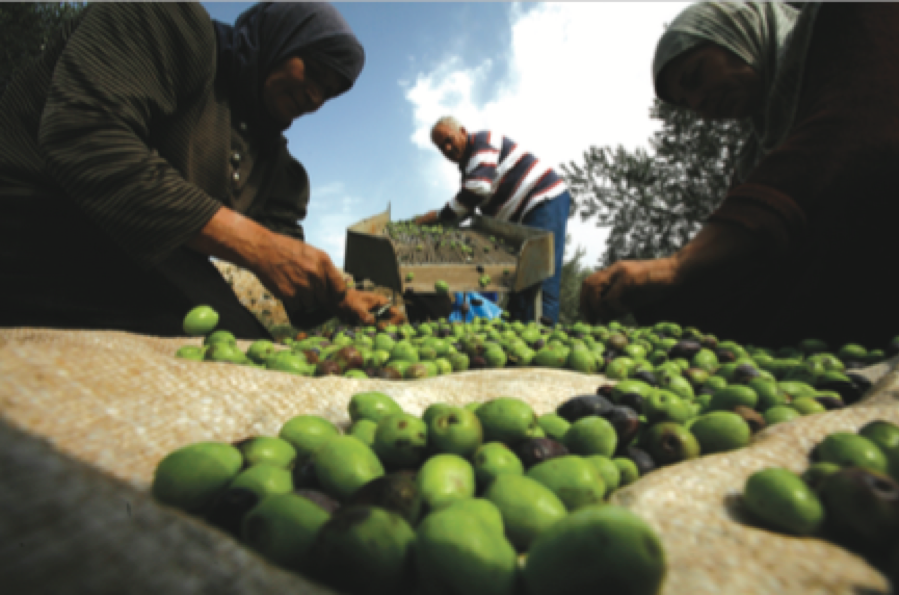
If Lebanon used its natural resources to its advantage, oil could be one of its main crude exports — olive oil, that is.

With the ideal climate for olive growing and a large expatriate community that prefers bottles of oil from home, Lebanon has the potential to stake a claim alongside gourmet olive producing countries such as France, Greece and Italy.

“There have been many attempts at export but it is fair to say that for the most part, Lebanese olive oil is underappreciated abroad and has yet to attract global consumers,” says Sabina Mahfoud, author of “Green Gold — The Story of Lebanese Olive Oil.”

“If it’s well packed, pressed and bottled, Lebanese olive oil is some of the best in the world,” insists Tony Maroun, general manager of Atyab (parent company to Boulos, Al-Baraka, Family and Virgo olive oils), which has half of the market share of branded olive oil in Lebanon. Even with his company’s success, Maroun still thinks the entire industry could do better. He suggests, “Lebanon should have a national campaign. The government should have advertisements [and] international exhibitions for Lebanese olive oil.”

Poor practice, poor production

Until now, the country’s olive oil industry, estimated at $72 million per year, has been characterized by inconsistent harvest seasons, outdated technology and production methods, poor marketing and a lack of standard quality control. In addition, rural migration to Beirut has left countless olive groves abandoned.

Lebanon produces between 5,000 and 15,000 tons of olive oil annually, with last year’s harvest, running from October to November, being at the smaller end of this spectrum. The large discrepancy year-to-year is due to a belief long-held by many farmers that olive trees don’t need to be pruned, irrigated or fertilized. They are traditionally considered naturally sustaining trees that need no care. Currently, more than 90 percent of olive groves in Lebanon are rain-fed. However, many experts contend that the best way to ensure consistent crops, and therefore reliable exports, is regular irrigation and pruning.

“The more you take care of the olive tree, the more it will take care of you,” says olive producer Youssef Fares, a fifth-generation olive grower from Koura, Lebanon’s top olive-producing area.

When the harvest is low, it is not uncommon for Lebanese producers to import oil from neighboring countries and label the bottle as “Lebanese” when selling it to foreign markets. Although the practice is relatively common, some producers worry this could affect the reputation of Lebanese olive oil.

“If it’s not a good season, Lebanese producers buy from Syria and Spain. That’s business,” says Bshara Shaker, an olive oil producer in the town of Aqtanit in the Bekaa Valley.

Shaker blames Lebanese olive farmers for the country’s inconsistent olive oil seasons, and thus the reliance on foreign olive oil. “Some farmers don’t work the right way to make their olive season big,” Shaker says. “If you go to Spain, Syria or Greece, you see the difference. You need to start at the grove, and prune and irrigate.”

All producers interviewed for this article denied using foreign olive oil.

Regardless of all the challenges the industry faces, Lebanese producers and consumers both consistently claim that Lebanon has the best quality olives in the world. In a country where foreign products are generally preferred over domestic ones, olive oil is the exception. Many people claim that olive oil from their village is the best and shun buying commercial brands from supermarkets.

There are approximately 100,000 olive farmers in Lebanon; a large proportion produces olive oil only for domestic (and often just family) consumption. Lebanese can form strong attachments to their native oil; most of the customers of Lebanese olive oil abroad are from the diaspora.

Olive producer Hussein Hoteit from Nabatieyeh says olive oil from South Lebanon is some 20 percent more expensive than from other parts of the country because the area’s large community abroad creates a higher demand for oil native to the South. But even Hoteit, a longtime producer from the South, doesn’t believe there is a difference between olive oil from different parts of Lebanon.

He says it’s the method of production that determines the quality. At the olive oil mills in the Nabatieyeh area, he points out what the producers are doing correctly and incorrectly: olives should be picked from the tree, not the ground; be delivered in boxes, not bags; be processed within 24 hours of arriving at the plant and stored in stainless steel and kept cool.

Hoteit says as much as Lebanese take pride in their olive oil, there remains  a “lack of olive oil culture in Lebanon.” That is to say, many Lebanese may actually prefer lower-quality oil because they are used to the mild taste, as opposed to the strong, peppery extra virgin flavor. With this in mind, Hoteit is educating Lebanese about the difference between high and low-quality olive oil, — starting with restaurants.

“If we can convince restaurants to use the best quality olive oil, then tourists from the Gulf will notice, and they’ll buy Lebanese oil,” he says.

Currently, Gulf tourists account for the vast majority of visitors to Lebanon, but the region imports just a small amount of olive oil, most of which comes from Spain and Italy.

“The donor countries don’t help. They let Israel bomb us, and then give us free olive presses”

Unhelpful aid

Over the past several years, aid groups have worked closely with olive farmers and producers in Lebanon’s rural areas. The René Moawad Foundation, a local charity, has been supporting Lebanese olive farmers by providing up-to-date training and equipment. The foundation has promoted Lebanese olive oil at food fairs abroad, helping give the product some long-sought international recognition.

The project started in 2003, with funding from the United States Agency for International Development (USAID) and the Spanish government, which donated $2.5 million and $860 thousand, respectively.

But not everyone appreciates the effort. Randa Aractingi, who grows her olives in Hasbaya, near the United Nations’ Blue Line, says that supplying free equipment to olive oil producers creates unfair competition for entrepreneurs like her.

“Everyone around me has olive presses from USAID,” she says. “This equipment is going to people who haven’t invested time and money. It’s hard for me to compete when my neighbors are receiving this equipment for free.”

“The donor countries don’t help,” she adds. “They let Israel bomb us, and then give us free olive presses.”

Fuad Hashwa, dean of the School of Arts and Sciences at the Lebanese American University in Byblos, who has been working to manage olive oil waste water, agrees that aid projects for rural development are often counterproductive.

“They fail to sustain themselves, and then we’re back to square one,” he says. Instead, he suggests that creating community cooperatives would help sustain the local environment as well as the economy.

Cleaning the toxic olive waste water would allow farmers to have more fertile soil to grow more trees, and some of the treated waste could be sold for animal feed. Italy holds the international standard to which all olive producing countries aspire; this is where most of Lebanon’s top producers studied their trade and bought their equipment.

Although a small country such as Lebanon is unlikely to ever match the production scale of countries such as Italy, many producers see the potential in achieving a similar reputation for high quality olive oil. Aractingi adds jokingly that she sees a day when sophisticated people will say, “If you want to make tabouleh, use Hasbaya olive oil; for fatoush, use oil from Koura.”

March 12, 2010 0 comments
0 FacebookTwitterPinterestEmail
Feature

Ales of an industry

by Executive Editors March 12, 2010
written by Executive Editors

Imagine you are the chief executive officer of a major multinational company. Your core business is selling fast-moving consumer goods with a solid majority presence in all of the world’s major markets, but opportunities for further expansion are all but exhausted.

All that remains to conquer is divided into relatively small markets, which would demand extensive investment to break into, since you have no domestic presence there and will have to start from scratch. How do you solve this problem? Simple: you study the market you are targeting, identify the main players in your sector and acquire them. Objective achieved — with the added advantage of providing you with an existing market share, a proven distribution network and local production facilities to introduce your own brands to the market.

Heineken’s takeover

This was the exact tactic employed by Heineken International, a Dutch company and one of three main players on the global beer market. After successfully applying the procedure in small European beer markets such as Greece and Cyprus, the company decided to move onto the even smaller markets in the Middle East. In 2002, Heineken acquired Al-Ahram Beverages Company (ABC) in Egypt which, conveniently having bought out its only competitor El-Gouna in 2001, controlled 100 percent of Egyptian beer production. In Jordan, the country’s only brewery is now exclusively producing Amstel.

In September of 2002, Heineken moved on to Lebanon. Already owning a 10 percent stake in Brasserie Almaza after taking over the Dutch Amstel brand, Heineken acquired another 69 percent stake in one of Lebanon’s national symbols from the quarreling al-Jabr family who founded the brewery. Not satisfied with controlling a majority share of the Lebanese market — and also Syria, which has two state-owned breweries of its own but remains Almaza’s main export market — Heineken also bought Almaza’s only competitor, Laziza, in October 2003.

Lebanon’s annual beer consumption roughly equals the total volume consumed in 10 days at the Munich Oktoberfest

Malt monopoly

Laziza was soon turned into a brand of non-alcoholic malt beverages, which are successfully exported to the Gulf Cooperation Council  market, leaving Almaza without any real competition in what is known as the “mainstream” segment of the beer market. Heineken’s own flagship brand was thereby well-placed to dominate the ‘premium’ or international segment, as it already does in other parts of the world.

Operating in this way virtually closes the market to other global players such as Carlsberg and Anheuser-Busch InBev who, unable to acquire any local producers, would be forced to either pay hefty transport and import costs, or invest heavily to set up local production from scratch.

Neither option would yield substantial returns, even over the long term, due to the negligible size of  the market: Lebanon’s annual per capita beer consumption stands at a mere five liters, as compared to an average 75 liters in Europe. To put this figure in perspective, Lebanon’s annual beer consumption roughly equals the total volume consumed in 10 days at the Munich Oktoberfest alone. The fact that a sizeable proportion of Lebanon’s population are observant Muslims of course affects this figure.

As Almaza’s Marketing Manager Naji Nakouzi explains to Executive: “There are Muslim communities here who are very religious and don’t drink, and others that are more liberal [and do drink], which is why Ramadan does have an effect on our sales.”

Haytham Nasr, a member of the Gemmayzeh Development Committee (GDC), the body of bar and restaurant owners, confirms that the fasting month almost halves the bars’ turnover.

Spirited competition

Nasr confirms that Lebanon simply does not have a beer culture like Europe or America. Beer is seen as a beach refreshment, consumed in summertime, preferably freezing cold.

“In the average bar I estimate that beer makes up 30 percent of sales, at most. Spirits, whether pure or in cocktails, are the preferred drink of the Lebanese. In many bars and clubs beer is actually priced artificially high to discourage its consumption, as spirits and cocktails offer a higher profit margin.”

Nakouzi likewise argues that Almaza’s main competitors aren’t other beer brands but spirits.

“The only way we can enhance our profit margin in Lebanon is by increasing the overall per capita beer consumption, which we try to achieve by encouraging a beer culture,” he says. “We schedule our annual marketing campaigns a little earlier every year, so that beer consumption is now starting to increase in spring, whereas previously consumption didn’t reach its seasonal level until June.”

Nakouzi argues that Almaza welcomes new competitors such as 961, since they contribute to creating a beer culture in the country.

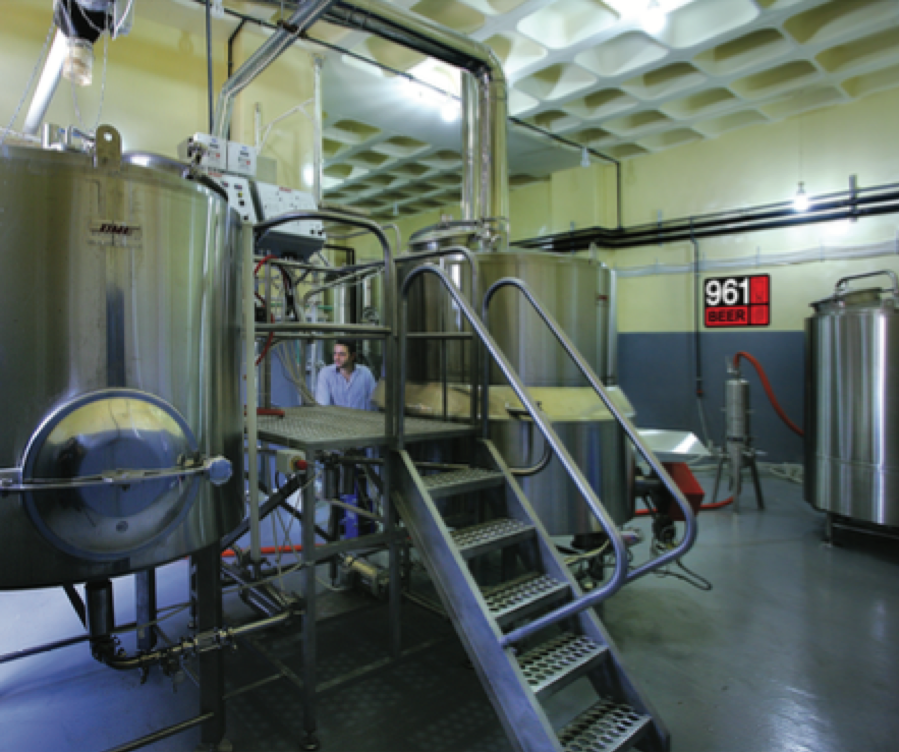
Called 961 after Lebanon’s international dialing code, the country’s newest mainstream brewery was founded in 2006. Despite a growing market share and increasing presence in Beirut’s bars, the fledgling firm’s entire output doesn’t exceed 0.5 percent of the 190,000 hectoliters of Almaza and Laziza produced annually at the famous brewery in Jdeideh.

Competition from 961 makes it untrue to say that Heineken controls the entire beer market in Lebanon, let alone claim, as some disgruntled bar owners do, that it holds a monopoly. There is also real competition in the international market segment — notably from Diageo-owned Corona Extra.

Quality brand

A bigger worry, says Nakouzi, is that 40 percent of Lebanon’s beer market is taken up by the low-end segment of strong canned beers sold mainly in retail outlets and currently dominated by the Turkish Efes brand.

“Although Heineken is a player in that market through our Rex and Meister brands, we prefer to profile ourselves as a quality brand offering,” Nakouzi says.

A truly Lebanese taste

Mazen Hajjar, 961’s chief executive officer, is a true beer enthusiast and a tireless promoter of his creation, which he estimates now makes up to 30 percent of beer sales in bars that carry the brand.

“The important thing for me is to offer…more choice,” he affirms. “We are introducing strong dark beers, including Belgian-style trappists and white beers, the kind that you don’t drink ice-chilled on a beach, but in the cold winter months in a warm bar. It is our arrival on the market that prompted Almaza to introduce its darker Pure Malt variety.”

Hajjar says 961 is a quintessentially Lebanese product; the company persuaded Bekaa valley farmers to grow Lebanon’s first hops crop. By comparison, Fadi Hojeily, quality manager at Almaza’s highly automated computer-controlled brewery for the last 11 years, says that the company imports most of its ingredients from the Netherlands.

“Every ingredient we use has to be approved by Heineken, not only for quality purposes, but also because the ingredients affect the taste of our beer,” he says. “We import the hops, barley, yeast and maize we use.”

In fact, the only Lebanese ingredient in Almaza is the water, which is treated in the plant before being added to the brewing mixture.

The only Lebanese ingredient in Almaza is the water, which is treated at the brewery before being added to the mix

Obstacles for new products

Hajjar identifies the major obstacle facing the introduction of new beer brands as being the prevailing practices in Lebanon’s supermarkets, which are reluctant to add new products to their range.

“In other countries, supermarket chains actually employ scouts who go out and look for local and regional produce, for unique brands to give a supermarket some character that distinguishes it from its competitors,” he says. “The Lebanese retailers do the contrary: they allot disproportionate shelf space to the major established brands and make new brands pay to get their products displayed in a corner of the bottom shelf. We were lucky to have a distributor who really believed in us or we still would not have made it to the supermarkets.”

GDC’s Nasr, who in addition to running a bar, also works as a marketing manager in a food and beverages firm, confirms Hajjar’s story: “If you want to get a new product listed, you have to pay huge fees. Shelf space is expensive too, and a two week promotion campaign with an off-shelf display in the five major supermarket chains in Lebanon will easily set you back some $10,000. Taken together, these factors mean you need a serious promotion budget just to get your product placed in the supermarkets.”

None of this, however, has dampened the enthusiasm of 961’s Hajjar, who recently announced a major new financial injection for the young company, enabling it to buy a second brewhouse and add extra fermentation tanks to increase output.

“We cannot keep up with the demand,” says Hajjar. “Everything we produce is sold out as soon as it enters the market. We still have a long way to go before achieving our full potential.”

March 12, 2010 0 comments
0 FacebookTwitterPinterestEmail
Feature

Walid Noshie

by Executive Editors March 12, 2010
written by Executive Editors

Shortly after takeoff from Beirut on October 3, 1957, a Curtis-Commando C-46 airplane of the Lebanese International Airways (LIA), bound for Ku-wait, caught fire. The pilot signaled to the control tower that the plane was in distress and that he was turning around to make an emergency landing, according to an account in L’Orient-Le Jour the next day. Minutes later the control tower received a final message: “Airplane uncontrollable; falling,” and the flight disappeared into the Mediterranean.

Twenty-three passengers and crew reportedly lost their lives, and while remains and luggage were recovered, the plane itself was lost to the deep. Further reports alleged that as much as 380 kilograms in gold coins were on board the plane when it went down.

Some 40 years later, Walid Noshie, owner of the Scuba Station gear shop in Hamra and a seasoned underwater enthusiast, caught wind of the tale of the doomed LIA flight. This began a near decade-long quest to find the plane and recover the gold. He amassed considerable experience over that period, and is now considered an expert in underwater search and recovery. 

Recently, Noshie’s experience of searching for drowned planes became  sadly all too relevant. Shortly after takeoff from Beirut on January 25 of this year, Ethiopian Airlines Flight ET-409 bound for Addis Ababa crashed into the Mediterranean, killing all 90 people on board. In the immediate aftermath of the tragedy, Noshie became a consultant for the Lebanese government in locating the plane’s black box recorders and recovering the victims’ remains.  Executive recently sat down for an exclusive interview with Noshie.

  • What’s your connection to the 1957 airplane crash and the search for the gold? Why was there gold on the plane in the first place?

[Our search] started in 1999.  We found a plane between Khaldeh and Beirut at a depth of 1,500 meters [in 2006].  It was exactly the size of the C46 and we thought, “this is it.”  The plane turned out to be a Henkel German Nazi fighter from World War II.  We had to start from scratch again. 

The Arabs in general used to pay with the English gold pound. Back then in 1957 [the British were] not making those gold coins anymore, but the soldiers in the Arab countries were still getting paid in the gold coin and they wanted [them]. Who was counterfeiting those gold coins?  Lebanon and Italy.  So they were buying them from us and paying their soldiers — which would explain the gold on the LIA flight.

  • What’s your connection to the search for the Ethiopian plane that recently crashed?

When the plane crashed I received a call from Prime Minister [Saad] Hariri, because he knows I have the expertise in looking for underwater stuff.  They needed someone to look for the plane [and he asked me to help].

I called Ocean Alert [which is owned by Odyssey Marine Exploration, Noshie’s partners in the search for the LIA flight] and said, “Look we have a disaster here. Can you help?”  They said, “OK we need 24 hours to be in Lebanon,” and, effectively, 24 hours later they were here.  This is when they went to the army base and were given [an area to search]. 

  • Who was involved in the main search parties?

The main search parties were the USS Ramage, the Laboe (a UN German ship) and the Ocean Alert.  [The army] gave each an area to search.  The USS Ramage and the Laboe didn’t have the Ocean Alert’s equipment but they hoped to hear, possibly, the black box [with sonar].

  • Who was supervising the search?

At all times two officers from the navy and army were on board the Ocean Alert, observing the search operation. So all ships were under the control of the Lebanese Army and the investigators, and had to comply with the requested search area.

  • How did the search unfold?

One night, after 48 hours or so, I received a call from the army saying that the USS Ramage had heard [a signal] in their area, approximately 10 kilometers out.  Logically, it didn’t make sense.  The investigators said [the plane] fell near to shore, the witnesses at the tower said it fell near the shore.  However, the Ramage said, “We heard the beacon 10 kilometers off Beirut.” So the only logical course of action from the army and investigators was to ask the Ocean Alert [which had the capabilities of scanning deep water areas] to direct its search to where USS Ramage heard that beacon.

  • Why was the Ocean Alert the only one that could scan that area?

Laboe and Ramage don’t have the capability to scan the sea bed deeper than 100 meters, while the Ocean Alert is equipped to scan waters up to 2,000 meters deep. So the Ocean Alert complied with the orders of the army and the investigators, and went out 10 kilometers and started looking.

The Ramage said it did not have an exact spot but rather a 35 square kilometer area where it had heard the beacon. The Ocean Alert started looking and after two days of search found [non geological] debris at 1,400 meters depth, which extended 1.6 kilometers across the bottom. We asked the Ramage to pass over the debris, [as we gave them that exact position] and see if they heard the beacon. They went over the debris and reconfirmed hearing the beacon.

While the Ocean Alert was out and ready to deploy its [remote operating vehicle] to check the debris at 1,400 meters, the French arrived with a device used to specifically hear the beacon of the airplane. They arrived on a [Lebanese] army ship and started listening in the area of the USS Ramage, exactly where we saw the debris, but did not hear anything.

At the same time, a body popped up to the surface in the search area of the Laboe [closer to shore]. So we decided to ask the Ocean Alert to go and investigate that area, with the approval of the army. 

The French team came to the same area as well and this is when they started hearing a beacon [in the Laboe’s area]. The Ocean Alert joined forces with the Lebanese Navy and started looking but didn’t find anything the first night. So they all came back to shore and had a meeting with the army and the French investigators. They re-pinpointed the exact position because the previous point they gave us was not exactly where they had heard the beacon.

They rectified that position and with these new coordinates, we were pretty sure we were going to find the plane between that night and the next day. At 8 o’clock in the morning I made a phone call to the Prime Minister. I confirmed that the Ocean Alert had located the tail and some debris. It was 42 meters deep and the army immediately began diving, looking for bodies and the black box. They found the first black box on the next day. The Ocean Alert made a wider search and it showed that the whole plane was right there but it was in a thousand pieces. 

We made an arrangement with the army that they would dive during the day and pick up bodies, while the Ocean Alert took over at night,  to scan and mark by [Global Positioning Satellite] the bodies they found. This was the pattern until two days ago [February 16]. And while getting bodies from the wreck, they found the remains of the second black box. This is how the second black box was found. The Lebanese army and the navy did an immense job to get all those bodies from the bottom.

  • What did the USS Ramage hear 10 km off Beirut?

It’s hard to tell, however; whatever they heard was not the ET-409 beacon, since the plane was finally found less than 3 km away off the coast of Lebanon.

  • Don’t bodies tend to float?

Bodies tend to float if they are in one piece, because you have gas in the intestines and in the lungs. However if the body is [not intact], it becomes a bulk of weight on the bottom.  There is nothing to make it float. The plane was in so many pieces and the bodies were not intact either. The plane fell from 9,000 feet, to hit the ocean at a speed of 700 kilometers per hour, so you can imagine what kind of impact that would create. It’s exactly like hitting concrete.

Mind you, when we started searching Hariri and Minister [of Public Works and Transportation MP Ghazi] Aridi gave strict, strict instructions that the two most important things for them were the bodies and the black box. That’s all they cared about. They wanted to get the bodies to their families and the black box, to know the truth.

  • Why did you ask the Odyssey Explorer to come to Beirut?

Odyssey Explorer (a second ship) showed up because I was asked by Hariri to be prepared for all scenarios. In the event that the plane was found and needed to be lifted to the surface, Odyssey Explorer has the capabilities of lifting the entire plane if needed. Ocean Alert can only lift up to 50 kilos. When Odyssey Explorer arrived, Ocean Alert returned to its previous work in the Mediterranean while Odyssey finished the job. 

At the initial arrival of Ocean Alert to Beirut, a day after the crash, they intended to find the plane in two or three days because they thought that the crash positions that were given were pretty much exact, but this was not the case and it took all this time. Ocean Alert had no intention of getting paid; they were just serving Lebanon free of charge, on the request of Hariri and Aridi.

After one week of search, [Odyssey Marine Exploration] told me, “It’s taking longer than expected and now that you are asking us for our second ship, the Odyssey Explorer to come [from London] and help in the search and recovery, we will have to charge.” It was agreed that Odyssey would start charging for its services only after February 1. All its services prior to that date were a gift to Lebanon. 

  • Were you personally on board the ships while they were doing the search?

No. I was in Beirut communicating between the ship, the government, the army and the investigators. I needed my phone and the internet to work efficiently so that I could relay requests and orders between all parties, as well as writing daily reports regarding the search.

  • Where is Odyssey Marine Exploration based?

Tampa, Florida. This is what they did for Lebanon. In return, they get accused by some local news media that they were wasting time looking for the gold. The accusations that these ships were taking advantage to look for the C-46 are absurd. All search activities and movements of the ships were directed by the investigation team and the army while directly supervised by the Lebanese Navy.

  • Do you have any plans to request that the Odyssey and Ocean Alert come back out to look for gold?

Absolutely, when they are done with the search and recovery of the Ethiopian plane, and only when we get the legal permit for the search from the Lebanese Government.  This has nothing to do with helping [look for the Ethiopian plane].

  • Where do you think the plane with the gold might be located?

It’s hard to say. Just look at how long it took to find the ET-409 flight. The C-46 was lost over 50 years ago. We know it’s somewhere out there, we just need to find it. 

March 12, 2010 0 comments
0 FacebookTwitterPinterestEmail
Comment

Pooling resources for peace

by Riad Al-Khouri March 9, 2010
written by Riad Al-Khouri

The view from the Swiss hotel where I found myself this winter was wet indeed. Both the falling rain and the sight of Lake Leman a few meters away focused attention on the theme of the meeting that brought me there: water.

Invited by the Strategic Foresight Group of Mumbai, India, to take part in their initiative on water security in the Middle East, I attended two workshops convened in February in Montreux: the first on Lebanon, Syria, Iraq and Turkey, and the second on the Jordan Valley countries. Supported by the Swiss and Swedish governments, the aim was to find sustainable collaborative solutions to the problem of water security, by using water as an instrument of regional peace.

Delivering the event’s keynote speech, Prince Hassan bin Talal of Jordan stressed the need for a regional water community. He called for a supra-national entity, such as the coal and steel community out of which the European Economic Community grew. He voiced hope that such a concept could spur regional co-operation and bring benefits comparable to European integration. Extending the metaphor that water does not start fires but puts them out, he noted that “war does not make additional water, but regional cooperation can.”

Looking at the Iraq-Syria-Turkey triangle in particular, it is possible to see this idea becoming a practical proposition. After centuries of Ottoman occupation of Syria and Iraq, followed by decades of friction among the three countries, each of them has now reached a stage of economic development where sustainable mechanisms to make the best use of shared water look both crucial and inevitable. Of the three, Syria may have the weakest resource position, with Turkish water and Iraqi oil respectively making Ankara and Baghdad look better endowed than Damascus. Syria shares five rivers with neighboring countries: the Euphrates, Tigris, Yarmouk, Orontes, and Al Kabir Al Janoubi. Of these, the Euphrates is most important for Syria, providing 36 percent of its renewable annual surface water resources. Multiple dams being constructed upstream in Turkey could potentially cut off some supply downstream, but better political relations on the one hand and sound use of water all around on the other should help ameliorate the problem. An agreement was signed in 1986 to allocate water from the Euphrates among Turkey, Iraq and Syria. A more recent accord among the three allows Syria to irrigate 150,000 hectares of land from the Tigris.

It may, however, be a good idea to put these agreements in the framework of a Tigris-Euphrates basin authority, which would have the power to develop hydraulic resources. Such a body could be financed by international donors, as well as Iraq and Turkey, with its headquarters in Syria. The authority would seek to make development of the basin a dynamic process backed by research, follow-up and the muscle to take decisions regarding water use.

Is this a utopian idea? Not at all: the three countries have been steadily moving closer over the past few years and such a step is no longer far-fetched (It’s true that there was a spike in tension between Syria and Iraq over accusations of recent bombings in Baghdad and other security issues, but that is gradually fading).

For the sake of the whole region, this would be a good idea, but Syria in particular could benefit greatly. The country’s per capita available water resources are about 860 cubic meters per year, below the international water poverty standard of 1000 cubic meters per capita annually. Regional modeling studies forecast a reduction of rainfall in the mid-21st century in the upper Euphrates and Tigris basin, leading to a drop in river discharge of 10 to 25 percent by 2070. Meanwhile, water shortage is increasing. Some 60 percent of the country’s irrigated area is served by private wells, over half of which are illegal – more than double the illicit drilling rate of 25 percent in 1999.

In short, Syria is suffering from water tension, which could be relieved by comprehensive management of Tigris-Euphrates resources. That in turn would have a positive domino effect on Syria’s water sharing with Lebanon and Jordan, also contributing to decreased tension.

Riad al-Khouri is a senior economist at the William Davidson Institute at the University of Michigan in Ann Arbor,and dean of the business school at the Lebanese French University in Erbil, Iraq

March 9, 2010 0 comments
0 FacebookTwitterPinterestEmail
Comment

Turkey’s empty coup

by Peter Grimsditch March 9, 2010
written by Peter Grimsditch

Obama orders arrest of three four-star generals. Air Force and Marine chiefs accused of trying to overthrow the administration.” If these headlines were splashed across the front pages of the American press, worries in the United States about healthcare, stimulus packages and budget deficits would pale into afterthoughts. Yet life in Turkey continues as normal, at least for the moment, despite last month’s arrests of 49 former and active military officers. Those held include two former commanders of naval operations, two admirals, three vice-generals and one vice-admiral, as well as two rear admirals and two brigadier generals still on active duty.

On the surface, the arrests are an extension of the round-up over the past two years of nearly 300 people who are alleged to have been plotting to overthrow the government of the Justice and Development Party (AKP). The bizarre schemes in the latest charges included planning for a mosque to be bombed and a Turkish fighter jet to be shot down, so the armed forces could step in to rescue the country from chaos, conveniently deposing a democratically elected government perceived by some to be hell-bent on turning Turkey into an Islamic state.

The latest skirmish between the AKP and the military prompted President Abdullah Gul to arrange a meeting between Prime Minister Recep Tayyip Erdogan and armed forces chief General Ilker Basbug. After three hours of talks, Gul’s office said that any “current problems would be solved within the framework of the constitution.”

So, no joy for those fearing (or others hoping for) a military coup. In fact, the prospect is highly unlikely since the whole world has changed since the military last flexed its muscles that way in 1980. Turkey is no longer the last outpost before the start of the evil Soviet empire, and there is less incentive for foreign states to sanction military coups. The current charges stem from 2003 and a war game codenamed Sledgehammer, which included steps to unseat the Erdogan government by creating chaos in the country with the help of terrorist attacks, according to press reports. The AKP says it was for real; the army says it was part of a normal exercise.

Erdogan has distanced himself from the arrests by saying that the judiciary is in charge of the investigation and technically he is correct.

What may be just as intriguing as the alleged plot is the role in its revelation played by the Taraf newspaper, which has revealed many of the stories about the equally alleged coup attempt. The paper is only two years old, and its inception coincided with widespread arrests in relation to the “Ergenekon conspiracy” case, in which well over 200 people are still under arrest for conspiracy to overthrow the government. Taraf claims to have received material from military officers who are opposed to the plots. The fledgling daily has scooped its better-established rivals with lurid tales. The inherent conflict between the AKP and self-styled staunch secularists is rife with conjecture but not replete with facts. Each time the AKP uses its legitimate powers of patronage to appoint supporters into various establishment jobs, it risks the charge of adding yet another brick to the Islamist state it is supposedly building. There is never a mention that the secularists had been appointing their own favorites for more half a century before the AKP came into power in 2002.  Predecessors of the AKP presided over rampant inflation — some lottery prizes are still advertised as offering prize money of trillions of liras — and wholesale corruption. The AKP has reduced inflation to single digits, expanded the economy at a rate never seen in modern Turkey’s history and stabilized the currency.

Some financial analysts warn the very public spat between the army and the government will destroy all these economic gains. One report said the lira would quickly lose 8 percent. More sanguine (and cynical) observers recall the results of the so-called ‘e-coup’ in April 2007, when the army warned the AKP not to pose a threat to secularism, and the attempt to close down the party in 2008. In both cases the markets and the currency quickly recovered.

There is no particular reason to believe that this trial of strength will have any different consequence, and a military coup in Turkey these days is as likely as Obama arresting four-star generals.

Peter Grimsditch is Executive’s Istanbul correspondent

March 9, 2010 0 comments
0 FacebookTwitterPinterestEmail
Society

Communication of faith

by Nohad Mouawad, Zeina Loutfi & Ramsay G. Najjar March 3, 2010
written by Nohad Mouawad, Zeina Loutfi & Ramsay G. Najjar

What comes to mind when you hear church bells ring or the call to prayer resonate across your city? These age-old holy sounds have been echoing throughout the Arab world for centuries, and are a core part of how the region’s predominant religions connect with their followers. Most people wouldn’t think of these ancient rituals as forms of noble communication, but the way that religions reach out to their audiences is very similar to a company communicating its values.

Pious PR

This idea might seem strange at first, but if we take a closer look we might find that communication and religion do go hand-in-hand, as religions must also ensure that they are understood by the general public and that their reputation is maintained and enhanced with audiences around the world, much in the same way that companies must maintain their image and highlight what they stand for.

Yet, while we see companies pulling out all the stops to ingrain the meaning behind their brands and view their corporations positively, are religions and religious institutions doing enough to enhance or correct their image and uphold their reputation? Are they engaging people and reaching out through communication to a universal audience beyond their immediate followers?

Beginning with Islam, the true voice of Islamic values seems overshadowed. Everywhere we look, groups only pretending to be Muslim are dominating the airwaves and television screens with fundamentalist and extremist messages that have no real relation to Islam’s teachings. From the Taliban recruitment videos, to websites dedicated to promoting terrorist activities, extremists have been exploiting young Arabs by using the communication channels that target them best, preying on their impressionable nature and lack of fully-formed values and faith, by swaying them with flashy but poisoned messages. Unfortunately, the damage of this “intelligent” propaganda, much like that of the extremists’ predecessors from Goebbels to McCarthy, can only be assessed when it is too late and people, especially the youth, have already been misguided.

This propaganda has been able to thrive as the “silent majority” of Muslim faithful, from religious institutions and other walks of life, are not communicating an alternative message that reflects the true essence and practices of their religion, which is both tolerant and moderate. Until the majority invests in effective, strategic communication, the propaganda of the minority extremist groups will continue to win.

But strategic communication is not only the responsibility of religious authorities, since, if we turned on our TV sets to find a moderate Muslim cleric arguing with an extremist religious leader, we might change the channel thinking that this is only an internal schism within the religion itself. This is where the role of the entire Arab community comes in, as it is in all of society’s interest to relay the true values of Islam and ensure that extremists do not succeed in distorting the image of their faith both regionally and worldwide. By joining together the voices of non governmental and civil society organizations, academic institutions and the media, along with religious organizations and even the private sector, to face down extremism, the impact of communicating true, moderate values will be much greater.

Each of these organizations can play a role in helping achieve this through a number of initiatives, such as launching media campaigns about the core values that are at the heart of religion, holding workshops to discuss the importance of religion and religious values in everyday life, or relaying these messages through reports and media interviews.

There have been some promising attempts by community organizations to communicate religious values to the youth and general public, such as a recent campaign on Arab satellite networks, showing young people helping others and being charitable, reflecting values that are at the core of Islam, as well as another campaign stating that “Terrorism has no religion.”

These activities, although on the right track, are not enough to make a lasting impact as they remain paid advertising and are not backed up by continuous and consistent messaging using a variety of channels.

Reaching out

Religious organizations have also attempted to communicate by launching satellite TV channels dedicated to religious topics. However, the main focus of these stations is purely on prayer and discussions of religious texts, devoting the majority of their programming to roundtables with religious authorities. Limiting religion to prayer and religious study can only succeed in making it more exclusive and less accessible to a wider audience, an approach which is incompatible with the concept of mass media.

Actually, religion permeates and guides every aspect of our lives, and therefore these channels should develop more well-rounded media content that touches on all areas of life and resonates with all audiences, infusing programming such as drama series, entertainment shows, children’s shows, and even game shows with religious values.

 By communicating from this new angle, religious institutions and authorities can reach one of their most important target audiences: the youth. It can provide them with an aspirational system of values that is more in line with their lifestyle.

This new approach to communicating religious values has, in fact, proven successful in the case of a Catholic nunnery in the US that tried to change its image as obscure and completely out of touch with people’s lives. It did so by opening its doors to talk show host Oprah Winfrey’s camera crews and sending two of its 20-odd nuns to be interviewed on the show about everything from faith to romantic relationships.

Engaging communication is the only way that Muslim and Christian religious communities in the Arab world can overcome the virus of exclusivity that is plaguing them and fight misperceptions about their beliefs, helping to create more understanding and tolerant societies.

This means taking a more proactive approach in keeping the true spirit of their religion alive and upholding their core values that are universal to all humanity.

Nohad Mouawad, Zeina Loutfi and Ramsay G. Najjar S2C

March 3, 2010 0 comments
0 FacebookTwitterPinterestEmail
Society

Toyota’s time for reckoning

by Nathanael Massey March 3, 2010
written by Nathanael Massey


What started as a crack in Toyota’s sterling reputation has widened to a gaping wound.

Billing your products as the safest cars on the road puts a lot of pressure on a company. As long as consumer reports are rosy, that pressure is not an issue. But Toyota’s recent plague of recalls have been punching holes in the Japanese giant’s public standing.

It’s true that few heads turned when, in 2005, the company recalled 75,000 of it’s eco-friendly Prius hybrid units after reports that a software issue was causing the car to stall. However, a 911 emergency call from the driver of a 2009 Lexus ES 350 with his accelerator stuck and his brakes failing sounded a much louder alarm and prompted the recall of 4.5 million units of select models in North America and Japan.

Then, in early February, it happened again — a programming glitch in the Prius, the jewel of Toyota’s crown, was found to be causing momentary braking failure. This was then followed by Toyota recalling the Corolla — the world’s best-selling car — due to possible problems with its power steering system.

It’s been a rough year for the Japanese auto-giant. The question is: can they shore up the damage and rebuild?

Preemptive mitigation

Officials from Boustany United Machineries Co. — the exclusive distributor of Toyota in Lebanon — did not respond to requests for comment about local action following the recalls in North America and Japan. However, Toyota’s distributor in the United Arab Emirates, Al-Futtaim Motors, said the two models would be recalled in the Gulf country in a service campaign similar to that which is being carried out in the US. As the situation escalates, it is possible that delayed shockwaves could reach Lebanon as well.

Rushing to mitigate further damage, Toyota has mobilized its entire organization of 172,000 North American employees and dealership personnel, as well as its full staff in Japan.

“We’re working hard to ensure that our dealers have the resources and support they need to make sure our customers get their cars fixed quickly,” Jim Lentz, president and chief operating officer for Toyota in North America, told the press last month. “Many of our dealers are working extended hours, some 24/7, and adding service technicians and other staff to complete the recall campaign as conveniently as possible.”

Stuck in park

The operations required to fix the latest batch of problems — the sticking accelerator pedal and brake failure — are relatively simple and can be completed within an hour.

Yet the damage to the company’s reputation may prove far harder to fix for two principle reasons: first, because Toyota has staked so much of its reputation on safety; and second, due to an increasingly vocal public that views the company’s responses as neither timely nor adequate.

 A report by US-based television news channel MSNBC in early February cited Toyota spokesperson Ririko Takeuchi as saying that the car maker was aware of a problem in the Prius’ braking system, and more importantly, that Toyota had begun fixing the problem in models sold since late January — indicating that the company had been aware of the problem for some time. 

“There’s a sharp contrast with previous times in terms of handling these kinds of situations,” Koji Endo, managing director of Advanced Research Japan, told reporters in February.

Part of that difference has to do with what appears to be a time lag between complaints on the part of customers and action on the part of the company. As early as last June, Toyota President Akio Toyoda promised to raise the bar on quality control, saying that the company was “facing crisis.” Yet it wasn’t until early February of this year that customers were informed of the recall, with letters from Toyota instructing buyers to bring their vehicles to dealerships for servicing going out February 5.

That gap raises a lot of questions. Did it take the company more than six months to diagnose the severity of the problem? Or worse, did they understand the problem and fail to act?

With the crisis in full swing and an angry public clamoring for explanations — The Times of London reported early in February that auto dealers were facing a barrage of customers demanding to know when the recall would begin —  top officials remained reticent for weeks. Little has come from top management by way of explanation for the Prius’ braking problem. Chief quality control overseer Shinichi Sasaki recently told the press “We don’t see [the problem] as critical because if you push on [the brake] a bit, the car will stop.”

Tarnished crown

Toyota now faces a criminal investigation in the United States, after defects were linked to at least five deaths, with a further 29 fatalities being investigated. The auto giant went up before congress in mid-February for two days of hearings during which congressional representatives accused the company of mismanaging the problem and misleading the public. In the hearing’s opening statements, Representative Henry Waxman, Democrat of California, said Toyota had “failed its customers.”During the hearing Toyoda apologized to Congress and millions of his customers over the automaker’s handling of the affair, but US lawmakers said that they were planning further hearings.

However, while Toyota estimates the recall fiasco will cost $4 billion in servicing costs and lost sales, share prices have dropped only slightly. “Investors are not worried about such one-time costs. Instead they welcome Toyota’s efforts to restore confidence in its products and its relations with the US government regardless of the costs,” Kazaka Securities analyst Yoshihiko Tabei told Reuters.

A diagram released by Toyota detailing both the problem with the defective gas pedal and their solution

In the midst of Toyota’s woes, it is perhaps the story of the Prius that has struck the deepest chord. The Prius was a landmark vehicle, not just for the company but for the automotive world as a whole. The first hybrid vehicle mass-produced across world markets, it represented a bridge between our oil-dependent past and our renewable resource future. The Prius was, in many ways, a reflection of all of Toyota’s best qualities: safety, efficiency and the cutting edge of technology.

With it’s flagship model fallen from grace and the spell of confidence bent, if not broken, Toyota will likely face an uphill struggle to save face and regain its reputation.

March 3, 2010 0 comments
0 FacebookTwitterPinterestEmail
Society

Facing the digital future

by Spencer Osberg March 3, 2010
written by Spencer Osberg

The who’s who of the advertising industry from across the Middle East and North Africa and beyond were brought together last month at the MENA Cristal Festival, amid the snows of Mzaar Kfardebiane. The highlight of the event, held February 1 through 5, was unquestionably the evening awards ceremonies, where the advertising agencies with the most innovative and best executed campaigns of the year earned their recognition in the spotlight.

During the days, however, among the various conference debates, round-table talks and chats in the hotel lobby, it became apparent that all is not at ease in the advertising industry. Beyond the fact that the sector, globally, lost up to 11 percent of its revenues last year as the financial downturn squeezed clients’ budgets, there is also a new reality bearing down on the industry, changing the old paradigm within which people once worked.

“Some people still feel that digital is just another channel, but its not, that’s the whole point. `It’s not an evolution, it is definitely a revolution,” said Dimitri Metaxas, regional digital executive director for Omnicom Media Group. “It is definitely something that has moved on and changed the rules of the game.”

As Richard Pinder, chief operating officer of Publicis Worldwide and president of this year’s MENA Cristal Festival, put it: “The difference between the new world and old world is two-way versus one-way.”

The near limitless availability of information online has made consumers far savvier than previous generations, said Metaxas, which, combined with any online users’ ability to reach a global audience almost as easily as a multinational corporation, and has led to a “democratization” of the process.

“We’re now in a forum, and not a pulpit,” he remarked. “This has shifted the consumer from that lower level of happily consuming what it is we tell them [to], to now having a very active role in that communication.”

Digital’s two-way street

Metaxas illustrates what this new dynamic can mean, using the example of the United Arab Emirate telecommunications provider du, which had recognized that it had an image problem with regard to its customer service. To address this, the company first opened an account on the Twitter social networking service and incentivized people to ‘follow’ it, using contests to win an iPhone, just as du was launching its iPhone service in the United Arab Emirates.

The company then transformed the Twitter account into a customer service channel.

Metaxas said in monitoring the “buzz” in online posts and chat rooms, many complained that du’s customer service was unresponsive.

“They turned their customer service into a marketing problem, and they committed to changing and solving every person’s query or customer service issue,” he explained. “What ended up happening is all these really negative statements — literally 99 percent of them — have transformed into positives.”

People who had posted comments like “customer service — nightmare,” were now posting comments like, “du, I can’t believe you’re actually listening to me, and two, you solved my problem.” The idea that digital advertising is little more than banner ads on websites – i.e. simply a “digital version” of what would be on TV or outdoor billboards — is a concept quickly becoming antiquated; it is the ability, even necessity, to include customers in campaigns that makes digital advertising a radically more expansive concept, said Mataxas.    

“If you make [consumers] part of the process, then you create advocacy out of it, and that, I think, is a far more powerful emotion than just advertising at them,” he said.

“Advertising is fantastic at building awareness, and it can engage if it’s really good…but that’s still a one-way process, and I think that is one of the fundamental shifts we’re talking about that social media has created. People have an opinion; they want to voice that opinion. If you ignore them, then you do it at your own peril.”

Blurring the lines

The digital revolution is creating anxiety among the veterans of advertising because it breaks down the walls between what used to be clearly defined roles in the production chain.

“Media, creative, public relations, direct marketing, customer relationship management — they’re all blurred,” said Pinder.  Even while uncertainty grows about individual responsibilities within the new digital paradigm, it is ever more certain that the digitalization of advertising will only accelerate. Pinder said that two years ago Publicis Worldwide’s revenue from digital advertising was zero; today it is 20 percent of total revenue and his aim is push that to 30 percent by 2012.

“Where I had an office that didn’t have digital, they had a catastrophic 2009,” said Pinder. “I have seen offices — both mine and from other networks — that [lost] one quarter of their revenue in one year, by not having digital.”

“In one particular office, their ad agency was down 35 percent in 18 months but their digital was up 75 percent, and they ended up at minus 3 [percent],” he continued. “People who tell me digital isn’t that important or it’s just a sideshow of advertising — no way. This is going to be one third of my business in two years.”

Pinder says Publicis is in the process of rebranding all of its global digital assets under the banner of Publicis Modem, and is planning an aggressive digital expansion in the Middle East “very soon.”

Existing tomorrow

Hussein Freijeh, Yahoo’s director of advertising sales at Dubai Internet City, explained that Internet penetration across the region has been expanding at more than 50 percent per year for the last four years, allowed for by the expansion of telecommunications infrastructure. He pointed to Egypt as one market that was “massively growing,” and said that in Dubai — already the region’s advertising hub and arguably the most wired-in of the region’s cities — is so far at the crest of the digital wave.

Digitalization of the future being near predestined

It seems, however, that some of the biggest players in the advertising and business communities still have their heads stuck in the sand.

“[Last year] we saw some major brands double their spending online, but we saw other major brands not spend a penny online,” said Freijeh, who lamented that one of the biggest challenges he still faces is to shift people out of the “offline” mentality.

With the digitalization of the future being near predestined, this reticence is baffling. But then again, it is in the nature of revolutions, digital or otherwise, for there to be those who recognize the significance of developments as they are happening and adapt to excel in the new reality. And there are always others, too married to the comfort of the old ways to change, as the shifting tide washes them into irrelevance.

March 3, 2010 0 comments
0 FacebookTwitterPinterestEmail
Economics & Policy

Steps for a sustainable future

by Jurgen Ringbeck, Amira El-Adawi & Amit Gautam March 3, 2010
written by Jurgen Ringbeck, Amira El-Adawi & Amit Gautam

The dizzying growth of the Middle East and North Africa region’s economy has created enormous opportunities for its tourism sector, with mega-resorts such as Dubai’s Palm Jumeirah capturing global attention and positioning the region as a “must-visit” destination. However, if the region is to reach its full potential, it must fuel its growth sustainably and lead global efforts to implement environmentally conscious tourism.


With concerns over climate change continuing to mount, the number of environmentally conscious tourists is on the rise. They are calling for “green” destinations, with major global travel distributors and communities like Thomas Cook and National Geographic Traveler increasingly using sustainability as a key measure in ranking and recommending destinations. A number of destinations across the globe, from the Maldives to Costa Rica, have responded by branding themselves as “green.”

In response, destinations must invest in the preservation of their natural assets. Those that squander their most precious resources by allowing tourists free rein are chiselling away at their ecological and economic foundation, trading long-term health for short-term gains.

By seriously committing to a long-term, holistic approach to environmental sustainability — one that goes beyond empty marketing promises and a series of piecemeal quick fixes — destinations can keep pace with the growing demand for sustainable tourism and stake a competitive claim in the green playing field.

In doing so, they can bolster their “double bottom lines,” preserving their natural assets while profiting economically. By implementing a transformational greening strategy, they can reap significant financial rewards. With that in mind, destinations must rigorously assess four key components of their environment to understand the true implications of environmental degradation on a destination’s economic sustainability.

Carbon emissions:  Carbon mitigation efforts are a critical aspect of green policy. The tourism industry is currently responsible for around 5 percent of global carbon emissions, largely as a result of air travel and accommodation. A recent global study from the World Economic Forum and Booz & Company estimates that these emissions will double by 2035 if left unchecked.

Since emissions result from both technological and human activity, any mitigation strategy must include comprehensive behavioral and technological change throughout the tourism sector. Destinations can dramatically reduce their carbon footprints by investing in green technologies and implementing best practices. These include renewable fuels, solar panels, geothermal heating and cooling, compact fluorescent lighting, energy-efficient appliances, building insulation, sustainably sourced materials and carbon sequestration from trees. Guests should be encouraged to choose energy-efficient transport and activities, such as hybrid vehicles, bicycles, sailboats, horses and camels.

Biodiversity conservation: In the past two decades, tourism to biodiversity hot spots has increased more than 100 percent. Although profitable in the short term, human activity can ultimately cause irreparable harm to fragile natural assets such as coral reefs, mountain trails and beaches. The preservation of these assets is therefore a critical component of sustainable tourism and a high-yielding investment in the future. Destinations should regulate access to fragile areas, protect indigenous species, develop national parks and control pests.

Water supply: A healthy water supply is crucial to a destination’s long-term environmental sustainability. What’s more, water provision and desalination typically guzzle energy and create emissions. Tourism places an even greater demand on the MENA region’s already scarce water supply, making conservative water policies more critical than ever.

Destinations should implement innovative conservation practices and technologies to optimize water use. They should also introduce technology to conserve water, such as sensor-operated taps, low-pressure showers and timed sprinklers. Finally, by cleaning and reusing wastewater, a destination can increase its potable water capacity and reduce sewage, pollution and clean-up fees.

Waste management: As a major pollutant, waste affects both water quality, land health and negatively influences a destination’s image. Effective liquid and solid waste management is therefore a “green imperative.” Destinations should follow global best practices for waste management by reducing potential waste streams, minimizing the amount of waste that ends up in landfills and incinerators, and recycling whenever possible. Cutting-edge methods such as waste-to-energy conversion can enhance a destination’s ‘green’ credentials and attract potential investors, in addition to bolstering environmental sustainability.

Finding the path to sustainability

Of course, none of these components exists in a vacuum. On the contrary, they are all interconnected and interdependent, much like the ecosystems they aim to protect. For this reason, a holistic approach to sustainability is key. To successfully address environmental sustainability, and generate significant improvement to the components discussed above, destinations must take a comprehensive and multi-faceted approach to transformation. This green transformation roadmap should include:

Regulations and governance: Successful implementation of a green strategy is largely dependent on having the right laws and regulations in place and the governance to oversee their implementation. Legislation should protect the environment, limit potentially harmful activity and encourage healthy behavior, while encouraging sustainable tourism as an opportunity to refuel demand and capture new tourism segments. A successful sustainability program should be sponsored by the highest levels of government and spearheaded by an independent local entity that facilitates its implementation.

Stakeholder participation: Any truly holistic sustainability program requires the active engagement of many different stakeholders. At the government level, national tourism ministries and local authorities should collaborate with the entities responsible for the environment, energy, transport, health and finance to steer policy and spearhead environmentally friendly efforts. For example, policymakers can establish an accreditation program that recognizes sustainable accommodation and services and provides incentives to green businesses in the tourism sector.

As the stakeholders with the most direct access to tourists, the private sector plays a key role in protecting the environment. For example, hotel owners can reduce their carbon footprints and implement policies regarding sustainable waste, energy conservation, and water usage. Tour guides can act as ambassadors for environmental awareness, influencing tourists to choose energy-efficient transportation and activities as well as rotating exposure to fragile ecological sites. In addition, non governmental organizations and universities can provide critical research and advocacy.

Funding and financing:  Investing in green programs such as energy-efficient technology often yields positive financial returns. Many initiatives that require private funds pay off quickly through savings in operating costs, which can then be recycled into other green projects. In addition, destinations can often generate green funding by better leveraging their own resources, through introducing variable demand-based fee schemes to visit protected sites.

However, although many greening strategies indeed bolster the double bottom line, not all are financially profitable. In addition, destinations are not always able to generate revenue through their own resources. In these instances, external funding can provide seed capital for long-term sustainability efforts. Such funding includes global financing schemes such as clean development mechanisms, public-private partnership financing models, biodiversity conservation funds and international tourism development funds. Other key elements to consider include educational and capacity-building campaigns, which must be introduced to train local stakeholders about best practices and encourage them to implement and promote green policy. Simultaneously, strong public relations and marketing campaigns should raise awareness about upcoming changes, encourage stakeholder participation, and attract ecologically minded tourists and potential investors.

Many popular tourist spots in the region have a lot of catching up to do in order to become successful green destinations. Given the global trend toward green tourism, MENA destinations need to start their environmental transformation process sooner rather than later. The implementation of green strategy is no easy task, and it cannot be accomplished overnight through a series of quick fixes. Green initiatives should not be approached as a marketing campaign but rather a serious, holistic, long-term effort to become environmentally sustainable.

With its dizzying rate of growth and appeal to a growing number of travelers, the MENA region has a powerful opportunity to nurture its tourism sector’s sustainable practices. 

March 3, 2010 0 comments
0 FacebookTwitterPinterestEmail
  • 1
  • …
  • 427
  • 428
  • 429
  • 430
  • 431
  • …
  • 696

Latest Cover

About us

Since its first edition emerged on the newsstands in 1999, Executive Magazine has been dedicated to providing its readers with the most up-to-date local and regional business news. Executive is a monthly business magazine that offers readers in-depth analyses on the Lebanese world of commerce, covering all the major sectors – from banking, finance, and insurance to technology, tourism, hospitality, media, and retail.

  • Donate
  • Our Purpose
  • Contact Us

Sign up for our newsletter

    • Facebook
    • Twitter
    • Instagram
    • Linkedin
    • Youtube
    Executive Magazine
    • ISSUES
      • Current Issue
      • Past issues
    • BUSINESS
    • ECONOMICS & POLICY
    • OPINION
    • SPECIAL REPORTS
    • EXECUTIVE TALKS
    • MOVEMENTS
      • Change the image
      • Cannes lions
      • Transparency & accountability
      • ECONOMIC ROADMAP
      • Say No to Corruption
      • The Lebanon media development initiative
      • LPSN Policy Asks
      • Advocating the preservation of deposits
    • JOIN US
      • Join our movement
      • Attend our events
      • Receive updates
      • Connect with us
    • DONATE