• Donate
  • Our Purpose
  • Contact Us
Executive Magazine
  • ISSUES
    • Current Issue
    • Past issues
  • BUSINESS
  • ECONOMICS & POLICY
  • OPINION
  • SPECIAL REPORTS
  • EXECUTIVE TALKS
  • MOVEMENTS
    • Change the image
    • Cannes lions
    • Transparency & accountability
    • ECONOMIC ROADMAP
    • Say No to Corruption
    • The Lebanon media development initiative
    • LPSN Policy Asks
    • Advocating the preservation of deposits
  • JOIN US
    • Join our movement
    • Attend our events
    • Receive updates
    • Connect with us
  • DONATE
Comment

Realism, roll out

by Executive Staff January 3, 2010
written by Executive Staff


The year 2009 was a modestly tolerable one for capitalism, but not at all for capitalist culture, or the advancement of free minds in freer markets. While the aftershocks of the financial crisis continued to be felt, the global financial system seemed more adept at absorbing bad news. The relative ease with which markets moved beyond the Dubai crisis of December, and news that the United States had shed a relatively low 11,000 jobs in November, were telltale signs of growing confidence.

You have to be careful not to overstate the point. Massive debt traps still exist, and the long-term costs of pumping so much liquidity into the markets will have negative consequences on the pace of future growth. 

The past year, Barack Obama’s first as US president, also brought many questions about Washington’s future overseas policies, which will doubtlessly have a profound economic impact. Obama announced a “surge” in Afghanistan, officially estimated at $30 billion per year, though American commitments to the country are bound to cost more. The standoff with Iran persisted, raising the probability of military conflict, even if American financial constraints will push in the opposite direction.

However, one thing that went missing in this stew was any thought, specifically among the Western democracies, about enhancing political liberty. The notion of promoting free minds, never a high priority at the best of times, was banished to the lowest rungs of indifference. 

This was not surprising. Political liberty, democracy and pluralism are concepts that the West has generally sought to advance in only a piecemeal way, and even then only when national interests created openings to do so. On top of that, three further phenomena inhibited such an agenda: First, the refusal of a majority of Western governments to echo a trope from the despised George W. Bush years (and yet so haphazardly implemented by the former US president); second, an understanding that encouraging free minds would create a negative backlash among undemocratic but appreciated providers of international liquidity — principally China and the Gulf states with their sovereign wealth funds.

And the third reason is that the Obama administration has made it clear, albeit without admitting so publicly, that it does not consider democratization and political liberty overly important. The president has always leaned toward more of a “realist” reading of political affairs, which, once you’ve cut away the fat, means a downgrading in a principles-based foreign policy. Principles were more of a Bush thing, while Obama always sought to demonstrate that he was different than his predecessor.

The president’s decision to send more troops to Afghanistan and seek a negotiated solution to Iran’s nuclear standoff opened a number of contradictory doors, which will have financial consequences. Obama, in a speech delivered in early December, affirmed that the US was not going to engage in a “nation building” project in Afghanistan; and it was always implicit that a democratic government in Kabul was less important to him than one that was not corrupt. We can believe Obama’s sincerity on the latter point, but as The New York Times columnist Thomas Friedman observed, if Afghanistan is not about nation building, then what is it about?

In other words, once the US falls into the logic of strengthening the Afghan government and state, its ability to limit spending will be severely reduced. The $30 billion Obama mentioned, which are estimates for maintaining 30,000 new troops per year, may soon be supplemented by a substantial amount of new funding. With money limited, where will cuts be made? Perhaps at home, but in an election year that can be fatal. No wonder the US Congress is so fearful of Obama’s plan.

As for Iran, a similar logic applies. If Tehran continues to stonewall on a nuclear deal, as appears likely, Washington will have one of two options: to move toward sanctions, which may not achieve much, or to consider a military operation against Iranian nuclear facilities. However, that could provoke regional wars and induce Iran to retaliate against the US and its allies in Iraq, the Gulf, and Afghanistan. Suddenly, Obama’s $30 billion estimate may be dwarfed by the costs of battle, direct and indirect.

 In that uncertain context, we can expect the coming year to be one of political uncertainty, particularly in the broader Middle East, even if the prospect of war in places other than Afghanistan may be alleviated by a fear of the financial consequences on all sides.

The US and Western Europe will remain financially strained, but they will also be more reliant on authoritarian countries like China and Russia to help find a solution to the major Iran imbroglio. Don’t expect free minds to proliferate in such an inhospitable climate. But you knew that, didn’t you?

Michael Young

January 3, 2010 0 comments
0 FacebookTwitterPinterestEmail
Comment

No-hope-in-hagen

by Peter Speetjens January 3, 2010
written by Peter Speetjens


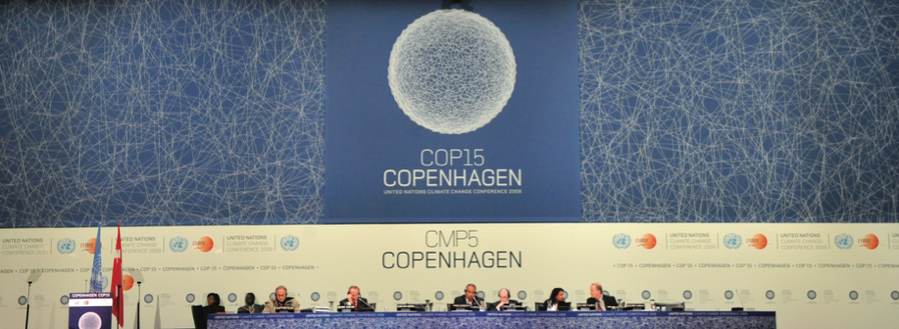
In the early hours of December 19, a giant balloon of hot air appeared over Copenhagen, as the United Nations Framework Convention on Climate Change came to an end. For two weeks the conference’s odd 15,000 participants had talked and talked and talked, yet were unable to reach an agreement. And thus the stage was set for “Our Savior” — United States President Barack Obama — on the very last day, to bang out a deal that utterly lacked in substance and ambition.

Tellingly, while most of the 115 world leaders had not even read the text, the White House was the first to announce that a historic agreement had been reached. Shortly after, Obama appeared on television to explain to his dear citizens that the US, China, Brazil, India and South Africa had agreed to limit global warming to less than 2 degrees Celsius. But he did not say how, and how could he? The initial aim, to reduce CO2 emissions by 2050 to 80 percent of 1990 levels, was abandoned and the current text contains not a single target for carbon cuts.

Lumumba Di-Aping, chief negotiator for the G77 group of 130 developing countries including the Middle East and North Africa region, did not mince his words.

“This deal…has the lowest level of ambition you can imagine,” he said. “It’s nothing short of climate change skepticism in action.”

Still, it is unlikely that many Americans will have sleepless nights over the impotence shown in Copenhagen. A recent US poll concluded that only 57 percent of Americans believe there is solid evidence that the earth is warming up, while only 36 percent believe human activity has something to do with it. These are quite stunning figures for a developed country.

One might argue that, faced with the fallout of the financial crisis, rising unemployment and the ongoing national healthcare debate, the average American has more urgent matters on his mind than the melting of the Arctic and starving polar bears. Yet, that does not tell the whole story.  The sad fact is that, ever since the first calls to curb CO2 emissions and tax the world’s main polluters, America’s leading industries have embarked on a campaign to question and downplay global warming. In an immediate response to the creation of the UN Intergovernmental Panel on Climate Change?(IPCC), which brings together 2,500 scientists from around the world, America’s leading trade associations in 1989 launched the Global Climate Coalition (GCC) with the aim to “reposition global warming as theory rather than fact,” by means of public relations and lobbying campaigns.

The GCC represented some 6 million US businesses, including all leading energy and automotive firms. Founded in 1991 by a handful of coal, electricity and fuel companies, the Information Council on the Environment had a similar aim. One of its slogans was: “Some say the earth is warming. Some also said the earth was flat.”

Both organizations have ceased to exist, yet similar campaigns continue. For example, the American Coalition for Clean Coal Electricity was founded by 48 mining, rail, power and manufacturing companies. For 2009 alone, it had a budget of $45 million to convince both politicians and the general public that coal is clean.

A third aspect in the battle for hearts and minds is to pay and promote scientists who doubt global warming. For example, a leaked 1998 action plan issued by the American Petroleum Institute announced a massive campaign to make climate change “a non-issue.”

In addition to advertisement campaigns and intense lobbying, the plan aimed “to recruit a cadre of scientists who share the industry’s views…and train them in PR so they can help convince journalists, politicians and the public that the risk of global warming is too uncertain to justify controls on greenhouse gases.”

In February 2007, The Guardian reported that the  American Enterprise Institute for Public Policy Research  had offered scientists and economists $10,000 “to undermine a major climate change report” issued by the IPCC. In promoting such views, capitalist America finds itself on an equal footing with Saudi Arabia. “Climate has been changing for thousands of years, but for natural and not human-induced reasons,” said Saudi Arabia’s lead negotiator, Mohammad al-Sabban, in the run up to Copenhagen. “Whatever the international community does to reduce greenhouse gas emissions will have no effect on the climate’s natural variability.” If the developed world were to introduce energy saving measures, then Riyadh would demand compensation for lost revenue. That is like the tobacco industry demanding compensation for promoting non-smoking policies, as one environmentalist pointed out.

The comparison between climate change deniers and the tobacco industry does not stop there. When scientists in the early 1970s started saying that smoking caused cancer, the industry hired an army of PR and advertisement firms to deny that claim, in much the same way as American industries have battled to undermine the notion of global warming. In a society ruled by the law of the market, everything is subject to negotiation, even the truth. Yet who today dares deny that smoking causes cancer?

PETER SPEETJENS is a Beirut-based journalist

January 3, 2010 0 comments
0 FacebookTwitterPinterestEmail
Comment

Mum’s the Saudi word for war

by Paul Cochrane January 3, 2010
written by Paul Cochrane

The veil of mystery that hangs over Saudi Arabia’s biggest military operation since the Gulf War in Yemen does not come as a surprise. When it comes to security issues the kingdom has a particularly poor record of letting us know what is going on, while trusting in censorship and petrodollars to make sure that whatever collective recollection remains is kept hushed up.

But such lack of transparency regarding how crises are handled by Saudi Arabia — the region’s most powerful country and its largest economy — belies how serious the situation is in the Arabian Peninsula and how events can get out of hand, often with long term ramifications. This has widespread security and economic concerns for the Gulf, given the peninsula’s geo-strategic importance as an energy provider. And the Gulf can ill afford more destabilization on the coattails of Dubai’s debt debacle.

Curiously, the cusp of 2010 signals a macabre 30th anniversary of a political-religious event whose ramifications are still felt in the current situation in Yemen, and beyond, due to Riyadh’s draconian management style. In late November 1979, the Great Mosque of Mecca was seized by hard-line Islamist gunmen bent on overthrowing the Saudi monarchy and introducing a new redeemer — the mahdi — on the day marking 1,400 years of Islam. No word was given to the outside world about the seizure for two days, yet the siege shook Saudi Arabia’s foundations for two long weeks, challenged the kingdom’s position as the guardian of the two holy cities of Islam, triggered a Shiite uprising in the east of the country, and unleashed forces that led to the rise of Al Qaeda.

Then, less than a month after the Saudis’ disastrous handling of the siege — amid botched attacks using artillery and armored vehicles that wrecked the Great Mosque while several hundred were killed — the Soviet Union invaded Afghanistan on December 24. This created the spark for a Machiavellian strategy, hit upon by the United States and Saudi Arabia, for the kingdom to export its “bad boys” — the hard-line Islamists — to take on the Soviets. And we all know where that led.

But back in late 1979 the truth was far from clear, as it is now in regard to Riyadh’s involvement in attempting to crush the Houthi rebellion in Yemen.

Blame for the siege was first leveled against the fledgling Islamic Republic of Iran, then labeled an American-Zionist plot to strike at the heart of Islam. Indeed, Washington had to beg Riyadh to say that the United States had nothing to do with it as US embassies came under attack across the Muslim world, with the embassy in Pakistan burned to the ground.

Some people today still believe the Iranians were behind the siege, as it has been so hushed up in the history books and documentation outright banned in Saudi Arabia. In fact, there is only one book on the subject, bar dissident Saudi literature: Yaroslav Trofimov’s “The Siege of Mecca.” This would be comparable to a modern history of the US not mentioning the 9/11 attacks. What is at risk now is a repeat of 1979, with no coherent story coming out of the Arabian Peninsula about what is happening, given all the propaganda at play.  Iran is being mentioned as one of the backers of the Houthis. This could well be true, yet Tehran denies this as vigorously as Riyadh denies it is operating in sovereign Yemeni territory and that the US is advising the Saudis and Yemenis. On top of this, for a deeper understanding of the current conflict, the fallout from 1979 needs to be understood.

The regular “terrorist” attacks that occur within Yemen have come from splinter groups of the Islamists sponsored in the 1980s by the Sanaa government, the US and Saudi Arabia to counter the Marxist south — just as in Afghanistan in the 1980s. These bankrolled Islamists, along with returnees from Afghanistan, were later used to fight the Houthis in the north, a policy that continues until today.

The Houthis, meanwhile, are fighting against this Islamist trend in the Yemeni establishment — so successfully nourished in the 1980s — and to oust President Ali Abdullah Saleh — who came to power in 1978 — rather than against the federal republic of Yemen per se. Saudi Arabia’s involvement is similar to Afghanistan, with the war on the Houthis another Saudi proxy war that is “not a war” — it has not officially been declared — despite reports of Saudi armed forces bombing within the borders of the kingdom and in Yemen itself, as well as the navy operating along the Yemeni coastline.

Given Saudi Arabia’s track record, pressure should be exerted on the kingdom to give a clearer indication of how all of this may play out. No one wants the kind of blowback that the world has endured the past 30 years for the sake of maintaining Riyadh’s veil of mystery.

PAUL COCHRANE is the Middle East correspondent for the International News Service


January 3, 2010 0 comments
0 FacebookTwitterPinterestEmail
Comment

Turkey’s chocolate box

by Peter Grimsditch January 3, 2010
written by Peter Grimsditch

The Turks must be feeling that Forrest Gump’s mum had it right. In recounting the ups and downs of life in the eponymous film, Forrest said his mother used to tell him, “Life was like a box of chocolates. You never know what you’re gonna get.” Of the many allegorically relevant events in recent weeks, two best illustrate Mrs Gump’s maxim: uproar over the banning by the Constitutional Court of the main pro-Kurdish political group, the Democratic Society Party (DTP), and an unlikely political gaffe in Spain by the national flag carrier Turkish Airlines.

The DTP was banned because of its alleged connections to the outlawed Kurdish Workers Party (PKK), which has been in violent confrontation with the Turkish army for more than two decades. Over the past year Prime Minister Recep Tayyip Erdogan has poured a lot of energy and money into trying to undercut support for the DTP in its constituency heartland, Turkey’s southeast, by offering to relax restrictions on use of the Kurdish language and other cultural assets.

His main aim of trying to win over voters in the municipal elections last March was thwarted when the locals decided to beware Turks bearing gifts and mostly rejected Erdogan’s candidates.

Conspiracy theorists, of whom there are many in Turkey, claim that somehow Erdogan influenced the court’s decision in the first place. This is unlikely. The court is a stronghold of hardline secularists who are opposed to Erdogan’s Islamic-leaning Justice and Development Party. If there were political as well as judicial aspects to the ruling, say the more sophisticated lovers of conspiracies, they were aimed at giving the impression Erdogan was to blame.

The embarrassment to Erdogan of the court’s decision was made more acute after a decision by the party’s members of Parliament to resign en masse, as well as by sporadic clashes between Kurds and police in both Istanbul and the southeast, in which several people died. So the prime minister is left in the strange position of publicly bemoaning the loss of a party he can’t stand because “it’s not good for democracy.”

The MPs’ resignations may further complicate life. They could continue under the banner of a friendly [and legal] group, the Peace and Democracy Party. However, elections to replace or re-elect them would provide an opportunity to embarrass Erdogan further, by showing how much his support has fallen since the AKP’s historic polling of nearly 47 percent of the electorate in 2007.

While the Kurds, the constitutional court and the prime minister were playing political games in one arena, Turkish Airlines (THY) scored an own goal at the opening of its new relationship with the Barcelona football club. The airline struck a three-year, $12.9 million deal with the Spanish league champions to become their official carrier.

Barcelona wants THY to fly the team for Champions League away matches next season as well as on commercial tours to Asia. A 777-300ER aircraft sports the team’s logo and has had its name changed to “Barcelona.”

However, the deal started off with a bumpy ride. The plane carrying the squad to Abu Dhabi for last month’s World Club Championship was refused permission by Spain’s aviation authority to make a direct flight. It was cleared to leave only for Istanbul after Spanish airline companies objected to a foreign airline flying between two countries, neither of which was its own. Despite a journey longer by two hours, Barcelona still beat the Mexican and Argentinean sides to carry off the cup.

Turkish Airlines’ cause was probably not helped by a sloppy attempt to ingratiate itself with the Catalan football club and its president, Joan Laporta. The director of THY’s office in Barcelona, Serdar Kulçur, flew with the team to Abu Dhabi and made a midair speech that ended with the Catalan phrase “Visca el Barca y visca Catalunya Lliure” (Long live Barcelona and long live free Catalonia). Laporta is a Catalan nationalist and backs independence from Spain. The Madrid government doesn’t share the view. Kulçur’s straying into local political sensitivities is not likely to help in solving THY’s mini-war over permissible flight plans and Barcelona could soon tire of having to make every journey via Istanbul.

It will also be interesting to see the reaction of Turkey’s passionate soccer fans if Barcelona play and beat one of the country’s teams after flying in from Spain on a THY plane. To paraphrase Mrs Gump, you never know what’s coming next.

PETER GRIMSDITCH is Executive’s correspondent in Istanbul

January 3, 2010 0 comments
0 FacebookTwitterPinterestEmail
Society

Automotive opulence

by Executive Staff January 3, 2010
written by Executive Staff


Cars, like people, come in all shapes and sizes. We find ourselves describing them in terms ordinarily reserved for humans: muscular, sophisticated, dependable, smart. Often personified by their own unique quirks and charms, metaphorically, at least, cars are a lot like those who drive them.

So what, then, is a supercar? Consider this analogy: there is man, and then there is Superman.

The man from Krypton is stronger, faster, smarter, and better-looking than his earthling cousins. He defies physics. He pushes the envelope in the realm of the possible. Even when he’s battling the forces of evil, his hair remains impeccably styled.

Compare an ordinary car to a supercar, and you see a similar contrast, with one additional feature: where Superman can fly with eagles, the soaring prices of supercars reach stratospheres all of their own.

Loss leader

The supercar market has traditionally been an exclusive niche, dominated by marques such as McLaren, Ferrari, Bentley and Bugatti. The supercar model cannot simply be viewed as a high-end product: in many cases, even the cars’ stratospheric price tags do not match the even higher costs of their design and manufacture. Companies never invest without expecting return. So what’s the selling power in an uneconomical but dead sexy set of wheels?

The simplest, most comprehensive answer is that supercars promote their brand. The supercar is all about image: it’s flashy, fast and hogs the public spotlight each time it breaks a new record for speed or handling. Manufacturers are even selective about who they sell to, since anyone driving a supercar will automatically lend their own star-power, if they have any, to the car’s image.

It might seem like a global economic crisis would be a good moment for the struggling auto industry to tone down its image, trade glitz and glamor for conservative spending, and shore itself up against the biggest shock to its system since the Great Depression.

If super wasn’t enough

Logic would suggest that as citizens are forced to tighten their budgets, they’d be looking for reliable cars at low costs, not a $1.5 million dreamboat.

In fact, the opposite has occurred. While the automotive industry tanks and big dealerships unload their wares on the public at dramatically lowered costs, the supercar industry is expanding. Not in terms of volume by brand, but in a widening of the niche itself. Dealers such as Nissan and Hyundai, who originally built their reputations on dependability and low cost, are now launching their own supercar prototypes, the Nissan GTR and the Hyundai Genesis Coupe, both priced in the hundreds of thousands of dollars.

Established supercar makers are finding their own ways to step up quality, coming out with models that take “super” to the next level: the Ferrari 430, for instance, already a supercar, was recently upgraded with the release of the 430 Scuderia, faster and more powerful than its progenitor. The Lamborghini LB 640 tells the same story.

We can speculate at length on why this may be. Perhaps the industry is fighting to retain consumer confidence, and see massive spending on unsellable products as a way to show that it has plenty of profits to throw around. Perhaps the world’s wealthiest, those who might actually be able to shell out for a Bentley, weren’t hit hard by the crisis, or aren’t willing to show it.

It is interesting to consider where the supercar market might go from here. A possibility is that the supercars of today, launched as prototypes to catch the media spotlight, will hit the roads as an affordable vehicle tomorrow. This was the case with the Chevy Cameo, initially launched as a custom model, but later mass produced for a larger market.

What can be certain is that, with new competition in the niche, we’re bound to see interesting developments in the future. If every major carmaker jumps on the supercar bandwagon, companies such as Bugatti and Ferrari will have no choice but to supersede their past achievements and take their products to a new level if they are to maintain their image as forerunners in automotive technology.

NADIM MEHANNA is an automotive engineer and has been a pioneer of motoring on Middle Eastern television since 1992 

January 3, 2010 0 comments
0 FacebookTwitterPinterestEmail
Comment

Iraq’s amorphous politics

by Ranj Alaaldin January 2, 2010
written by Ranj Alaaldin

Iraq is set to hold parliamentary elections this March, after politicians in Baghdad overcame the squabbling and heated debates that had long delayed the controversial new election law. Iraqis will find themselves participating in a democratic process which, because of its incorporation of the open-list system (whereby people vote for individuals as opposed to parties), outmatches the elections of 2005, which adopted the closed-list system, and also outmatches the democratic standards of their regional neighbors.

The electoral process in Iraq will not be a smooth one. Violence, as ever, will decide the extent to which Iraqis will turn out to cast their votes. Recent security failures indicate that terrorists, suspected to be comprised of extremist Sunnis and jihadists, still remain at large. Their tactics have morphed to meet the challenges posed by a far more confident and assertive Iraqi security force, which can claim some credit for the overall reduction in violence; terrorists now re-group, re-equip and then, in time, strike at high value targets, such as the various ministries which suffered suicide attacks in recent months. In comparison to previous years, they strike at chance, as opposed to at will.

The terrorists’ main aim is to rekindle the ethno-sectarian violence of 2005 and 2006 that tainted Iraq in the aftermath of the United States-led invasion. But despite extremist strikes on Shiite civilian and government targets, there has yet to be reprisal attacks against Sunnis by the Shiite community, its clerical and political leaders.

Although large scale ethnic and sectarian violence is, save for certain parts of northern Iraq, a thing of the past, Iraqi politics as a whole has yet to garner the same fortunes. Politics in Iraq continue to be determined by ethnic and sectarian affiliations, and the Iraqi elections in March will exhibit this paralyzing feature of a country that continues to be a victim of its fascinatingly diverse, culturally and historically rich population.

But there is hope. Political scientists often highlight that division within majority identity groups is essential for stability in highly diverse societies. The Shiites, the majority group in Iraq, ran as a single bloc in the 2005 elections under the United Iraqi Alliance. This time, the alliance, running under the new banner of the Iraqi National Alliance (INA), does not include the current Iraqi premier Nouri al-Maliki and his Islamic Dawa Party.

The Islamic Dawa Party instead sought to form a secular and cross-sectarian alliance that builds on the group’s electoral success in the provincial elections last January. At the time, the development suggested a new chapter in Iraqi politics — one free from the shackles of ethno-sectarian loyalties. Yet, this never came to be. Maliki failed to bring any prominent Sunnis or Kurds onboard, leaving the premier vulnerable, but nevertheless comforted by the widely held belief that the INA still comprised mainly sectarian parties who performed poorly in last January’s provincial polls. Recent terror attacks will hurt Maliki, however, given that his key campaign platform was security.

Things also look more promising for the Sunnis. The Unity of Iraq Alliance (UIA) includes the major Sunni figure Ahmed Abu Risha, leader of the Anbar Awakening forces, who commands significant respect among the Sunni population. Elsewhere, the Iraqi National Movement (INM) is led by former premier Ayad Allawi (also a Shiite) and prominent Sunni figure Salih al-Mutlaq.

The major electoral battle will be in the Shiite south. In the January 2009 provincial polls, Maliki’s coalition achieved 28.6 percent of parliamentary seats, while the INA, made up of the Islamic Supreme Council of Iraq (ISCI), the Sadrists, former premier Ibrahim Jafari and the Fadhila party, achieved 28.2 percent. The contest this March will therefore be a hot one, with neither of the coalitions likely to win a majority. This will embolden the Kurdish parties, but also the UIA and INM, who will be lobbied to become coalition partners.

Further splits are likely after the elections. The INA, though currently united, is essentially an alliance of convenience — bedfellows who have conflicting ideological and political visions but who recognize they fare better united than divided against Maliki’s electoral credentials. The INA’s ISCI and Sadrists have a history of violent rivalry, and the INA is made up of numerous strong personalities who have ambitions to become premier (a likely sticking point in the aftermath of the elections).

The divisions are positive only in that they make parties more susceptible to compromise on some of the key outstanding disputes: the division of power and control over the country’s vast energy resources.

The ongoing territorial and constitutional disputes will certainly continue well beyond the elections. But this is not to suggest that Iraqi democracy will be reduced as a result. To the contrary, the new open-list system means that Iraqi politicians will be more accountable; it also reduces the significance of affiliations, sectarian or otherwise, since merit rather than background becomes the route to power.

 Cracks are starting to appear in the traditional political landscape of Iraq for the better of Iraqis as a whole, though the journey is still a painfully enduring one.

RANJ ALAALDIN is a scholar on Iraq and is published regularly in The Guardian

January 2, 2010 0 comments
0 FacebookTwitterPinterestEmail
Real Estate

Standing your ground

by Nada Nohra January 1, 2010
written by Nada Nohra

Dealing with the slowdown facing the United Arab Emirate real estate market was not easy for property developers in 2009. With project financing and mortgages less available as well as market sentiment at basement levels, both investors and end-users were reluctant to invest in a sector so heavily affected by the financial crisis.

“People were trying to keep their liquidity to themselves…so there was not that much interest in investing in real estate,” said Faisal Hasan, head of research at the Global Investment House, an investment company which manages real estate funds. With the preliminary fourth quarter and yearly numbers coming out, some developers managed to end the year in a relatively good financial position, while others suffered significant losses in profits and revenues.

“It was just a question of the degree of how negative those numbers were going to be,” said Zahed Chowdhury, institutional equity sales manager at Al Mal Capital, an investment bank with a large real estate portfolio.

Fourth Quarter Results

Emaar property was the best performing UAE developer in the fourth quarter, beating market expectations by recording a hefty rise in both profits and revenues. Aldar suffered substantial losses, while Sorouh and Union Properties, which both saw declines in net profits and revenues in the fourth quarter. Deyaar has not issued its last quarter numbers yet but said it had a 95 percent decrease in profit in 2009.  

UAE fourth quarter results (in $millions)

UAE full year results (in $millions)

Chowdhury said that comparing fourth quarter results, or even yearly results of real estate companies, is rather inaccurate and is not a valid indicator of the health of these businesses since their sales do not happen continuously, but depend on when projects finish and when delivery takes place.

“While you are building, there is no revenue, but when you build it and sell it there is ‘100 percent revenue’ and the day after you sold it there is ‘zero percent revenue,’” he said. Therefore, he noted, what should be looked at is whether the company has delivered what it announced on schedule. Moreover, analysts Executive spoke to said that revenues and profits, although the most popular numbers, are not enough to indicate whether the company is solid financially. It is also important to look at the balance sheet and the net debt-to-equity ratios of these companies. For example, both Aldar’s and Union Properties’ net debt-to-equity ratios are 115 percent, Emaar’s is more than 20 percent and Deyaar’s and Sorouh’s are negative (because of negative equity resulting from asset values falling below outstanding loan values), according to a fourth quarter report the HC Services and Investment’s brokerage arm.

“In Aldar’s case, [the debt] it is going to be a stress for the business while in Emaar’s it will not,” said Chowdhury. It will also affect the company’s ability to acquire financing.

“For example if Emaar wanted to raise money it would be able to because it doesn’t have that much debt on its balance sheet, and also it has rental properties and that can be used as underline collateral. But, in general, lenders are still very risk averse,” said Sana Kapadia, vice president of equity research at EFG Hermes.

Low financing slows the market

Since the financial crisis began and banks started to tighten loan requirements, both project and mortgage lending have been hard to obtain, which limited both demand for, and the supply of, new projects.  Charles Neil, chief executive officer of real estate firm Landmark Advisory, said that in the fourth quarter only about 14 percent of transactions executed by the company were financed by banks, while the rest was personal financing. 

“The commercial banks don’t seem to have much risk appetite for new lending in the property sector so they have been lending at very low loan-to-value ratios,” he said. The Dubai World debt crisis, which erupted in the last quarter of last year, also put more pressure on financing and affected companies’ fourth quarter results. “You can’t really exclude the Dubai World factor from fourth quarter of 2009,” said Saud Masud, head of research and senior analyst at the real estate department of UBS. “It put more pressure on financing, which also put more pressure on project activity, so it forced companies to either delay projects or to see more challenging adoptions in terms of demand.”

Emaar outperforms

In its preliminary results, Emaar announced a 94 percent increase in fourth quarter revenues and a net profit of $196 million compared to a loss of $662 million in 2008. Emaar’s net profit beat Credit Suisse estimates by 39 percent, but was in line with the Bloomberg consensus numbers. The increase in revenues and profits was driven by the delivery of 3,100 units in 2009, and the increase in income coming from malls and leisure businesses it owns.

“I think what is happening is that Emaar has done well because it didn’t need support like Aldar and Sorouh did, it had the financing already,” said Masud. He also added that Emaar was able to differentiate itself from the rest of the pack because other companies do not have a portfolio as mature as Emaar’s, in terms of reoccurring income and international projects. “To what extent it can continue to do that will be a question mark,” he added. 

As for the first quarter numbers, Chowdhury from Almal Capital said that Emaar’s financials should be strong with the delivery of Burj Khalifa, but will not maintain a robust growth in the second or third quarter since there will not be as many deliveries to be made.

“Emaar looks better for the simple reason that it sold most of the things that it was going to sell,” he said. “Aldar is still building most of the things that it is going to sell and while it is building them, [their prices] are falling.”

Aldar underperforms

Aldar also had some surprising results. Shafqat Malik, chief financial officer told Bloomberg in mid-February that the company had suffered, for the first time, a net loss of $153 million in the fourth quarter of last year, compared to a profit of $23 million in the same period of 2008. In a Bloomberg survey, analysts expected the company to record a profit of $111 million and a Credit Suisse estimate stood at $23 million. Aldar’s annual profit fell 71 percent year-on-year to $272 million, and revenues fell 60 percent to $539 million. Malik also told Gulf News that the decline was due to the absence of any land sales throughout the year, adding that there “were project write-offs of around $141 million in the fourth quarter alone, with the pre-opening costs of $46 million in our different Yas Island assets.”

The drop came as somewhat of a shock due to the relatively strong Abu Dhabi market in which it is based.

“Aldar couldn’t exceed expectations because people expected it could do some land sales, because the Abu Dhabi market was comparatively better than Dubai’s,” said Venkateshwaran Ramadoss, senior research analyst at real estate department of the Kuwaiti Financial Center  (Markaz).

Moreover, Chowdhury explained that Aldar is earlier in its lifecycle than Emaar and thus has a less developed business model.

“Aldar it is still at least another year or two away [from maturity],” he said. “So the crisis has caught Aldar too early in its life cycle, leaving its revenue and its income stream more volatile to the crash, compared to Emaar.” 

After announcing its financial results, Aldar also announced the sales of the Yas racetrack, the yacht club, as well as the infrastructure on Yas Island to the Abu Dhabi government for $2.5 billion. The sale was at book value and no profit was recorded. Credit Suisse reported that this sale would reduce the net debt-to-equity ratio from 115 percent to 71 percent.

“The sale of the track and certain associated amenities in itself is a positive step,” said EFG Hermes in a note. “As it would mean that some concerns over Aldar’s capital-intensive ventures are now eased.” In the first week of March, Moody’s downgraded Aldar’s rating to Ba1 from Baa2, the first step below investment grade with a negative outlook, along with six other government related UAE companies. Following the announcement, Abu Dhabi government reaffirmed in a press release its support for its state-owned entities and said “we obviously disagree with the reasoning involved in a number of Moody’s decisions.” Aldar was not available to comment.

Sorouh too young to fall

Sorouh Real Estate fared better than Aldar in the last quarter, and revenues were $119 million, 17 percent lower than the same period of 2008. The revenue was mainly driven by the sale of 643,000 square meters of land for developing the first phase of the Al Ghadeer project, built by Al Sdeirah Real Estate Investment, which is 30 percent owned by Sorouh. The company recognized $66 million in provisions in the last quarter as well as a $13 million loss from its 20 percent share in three associates: Aseel Finance, Green Emirates Properties, and Al Maabar International Investment LLC. The company’s net profit amounted to $7 million; down from $13 million in the same period of 2008.

“In 2009, we saw very few sales of property units, as we had not launched any new projects and had already pre-sold a number of units heading into construction phase,” said the company in an emailed statement.

Over the course of the year, the company managed to cut expenses by 41 percent to $63 million, recording $844 million in revenues and $135 million in net profit — 16 percent and 73 percent lower, respectively, than in 2008. Al Mal Capital’s Chowdhury said that Sorouh was further behind in its life cycle than Aldar, which has placed it in a better financial position and protected it from a substantial debt burden on its balance sheet.

Construction continues outside Dubai
</p>
									            </div>
        </div>

		            <div class=

January 1, 2010 0 comments
0 FacebookTwitterPinterestEmail
Economics & Policy

Making hay while the sun still shines

by Ahmed Moor January 1, 2010
written by Ahmed Moor


Oil and gas markets face a number of challenges to their continued development, with producers confronting three main issues: peak oil, alternative energy and/or nuclear power and the risk of geopolitical instability.

The United Arab Emirates is as affected by these issues as any other energy-exporting nation. Dubai is already experiencing the effects of peak oil, as its reserves dwindle to nearly insignificant levels. The country is pursuing nuclear and renewable energy to offset its consumption of fossil fuels. The UAE also relies heavily on the Strait of Hormuz for most of its export capabilities — leaving it vulnerable to the potential effects of war with Iran.

Peak Oil

Peak oil represents one key theoretical challenge to producers in the oil industry. The idea is that because global stores of oil are finite, the world will one day reach a point where it is extracting the maximum amount possible, and will thereafter confront a period of decline in oil output. While some analysts expect peak oil to occur around 2030, others expect it to occur sooner than that.  Analyst and author David Strahan expects the net global production to reach peak oil by 2020 at the latest. According to him, oil production is shrinking in 60 of the world’s 98 oil-producing countries. Indeed, he predicted in 2008 in a speech at the World Energy Summit in Abu Dhabi that the total oil output for non-Organization of Petroleum Exporting Countries (OPEC) states will reach its apex in 2010.

The United States Energy Information Administration (EIA) appears to agree on this point. According to a report it published, “the EIA projects the total non-OPEC supply of crude oil will grow by just over 1 million barrels per day [bpd] to an average 51.5 million bpd in 2010 — the largest year-over-year increase since 2002. The increase in total non-OPEC supply for the year is the result of higher production in the United States, Brazil, China, and Russia.” 

But after this bumper year, the EIA expects non-OPEC supply set to drop by 280,000 bpd in 2011  — the third time in the last 15 years that non-OPEC supplies have fallen year-over-year. Previous declines in 2005 and 2008 were primarily the result of supply disruptions in the Gulf of Mexico related to hurricanes.

There are other indicators that peak oil may be a serious concern in the coming decade. For instance, the 30 biggest oil companies upped their exploration budgets by 45 percent to more than $400 billion in 2006 alone. Yet, oil and gas reserves only grew by 2 percent despite the massive investment.

According to Kate Dourian, Middle East editor at Platts, yields from existing fields are dropping about 5 percent to 7 percent annually. At the same time, analysts predict that 30 to 40 million barrels of new daily capacity will be needed to meet global demand between now and 2030. That’s due to the fact that the capacity expansions currently underway in the Gulf don’t cover the difference. “There will be a supply shortage if people don’t invest now because of the long lead time” in exploration and delivery to market, she said. But because of the increased viability of alternative fuels, producers are reluctant to invest. “It’s difficult to ask producers to pour billions into the ground to keep it there,” she explained.

Alternative energy and nuclear power

A wide range of alternative energies are being brought to the market and there is some expectation that they will displace oil and gas market share globally, which today is generally estimated to be between 80 and 90 percent. According to the International Energy Agency, in 2005 nuclear generation provided 6.3 percent of the world’s total primary energy supply and its share of the market is likely to have climbed. Alternative fuels encompass a range of sources such as biodiesel, chemically-stored electricity, hydrogen, vegetable oil and biomass sources.

There are two main reasons for why governments and people around the world seek to become less dependent on fossil fuels. First, the consumption of oil and gas creates greenhouse gasses, which are heavily implicated in global warming and the destruction of ecosystems worldwide. Environmental degradation is arguably the direst threat confronting the world today. In the words of United Nations Secretary-General Ban Ki-Moon: “Business as usual cannot be tolerated, for it would condemn millions — no, billions — of children, women and men around the world to shrinking horizons and smaller futures.” 

Indeed, climate talks may be having a chilling effect on the amount of new investment oil and gas producers are making in increased production, even before any viable alternatives hit the market. Dourian explained that: “The producers are saying ‘Well hang on a second we don’t know how Kyoto is going to impact future demand; we don’t know how much is going to be displaced.’” The Kyoto protocol is an international agreement designed to combat climate change that expires in 2012. Efforts are underway to replace the agreement with similar or more robust international agreements.

Second, as economies in the developing world grow — most notably China and India — they will require ever larger amounts of energy. Energy from oil producing states is far from guaranteed in the long term, and renewable energy that can be produced within a country’s own borders is often preferable. Many governments regard energy security as a priority, and a heavy reliance on foreign governments exposes them to potentially destructive consequences.

The UAE is already making provisions for nuclear energy in response to increased domestic energy demand and to further capitalize on petroleum’s exportability. At present the country is in consultation with the International Atomic Energy Agency (IAEA) to create a nuclear program, and it accepted a $20 billion bid from a consortium of South Korean companies in December of 2009 to build four nuclear power plants for commercial use by 2020. This is in keeping with Dubai’s plans to produce 20 percent of its energy from renewable sources by 2030.

The UAE is a signatory to the Nuclear Non-Proliferation Treaty. It also signed and ratified an additional safeguards agreement with the IAEA in 2003. In 2008, the country appointed an ambassador to the IAEA.

Geopolitical disturbance

The Middle East and parts of Africa are some of the most politically volatile areas of the globe. They also contain the largest stores of fossil fuels, which means that global supply lines are threatened by every regional conflagration.

The Iran-Iraq war, the first Gulf war, the 1973 war, and ongoing strife in the Niger Delta all precipitated spikes in the price of oil and natural gas. Today, there is a real possibility that Western countries and/or Israel will attack Iran under the banner of quashing its nuclear capability. If that happens, the Iranians may retaliate by striking tankers and cutting supply routes through the all-important Strait of Hormuz, through which passes approximately 17 million barrels of crude oil per day. While many countries have energy reserves (America’s stockpile consists of about 700 million barrels of crude oil), they probably will not be enough to offset the adverse effects of a war with Iran. Such a conflict would thus likely lead to a ‘double-dip’ global recession. 

There are many challenges to the continued provision of steady oil and gas supplies to the world market. The industry is being forced to grapple with steadily shrinking supplies, adverse environmental effects which result from fossil fuel consumption and a high-risk supply area. While much can be done to mitigate these risks in the short and possibly medium term, these are likely long term, irreversible trends. In other words, the world will continue to move away from oil.

January 1, 2010 0 comments
0 FacebookTwitterPinterestEmail
Capitalist Culture

Arab Perestroika

by Michael Young December 17, 2009
written by Michael Young

In early November, the Western media was awash with material celebrating the 20th anniversary of the fall of the Berlin Wall. Not surprisingly, these echoes had turned into a hollow clang by the time they reached the Arab world. So, are Arabs really incapable of grand transformative change, particularly democratic change, and if so, why?

The question is both fair and beside the point. Everyone will provide a different answer; trying to nail down such a momentous query is unlikely to lead far, raising only more questions. Aligned against those, present company included, who believe that the region is capable of deep democratic change, there are those who will present “culturalist” arguments to the effect that Arab states don’t have the historical baggage required to set up democratic orders.

As their societies have always been autocratic, the argument goes, Arabs are therefore predisposed to autocracy. Others will go further to assert that Islam doesn’t inherently allow for democracy, even though no convincing evidence has ever been presented to justify such a sweeping conclusion.

 These opinions are terribly constricting and self-reinforcing. If a society is perceived as being incapable of opening up, of pursuing liberal outcomes, then there is no motivation from their governments, let alone foreign governments, to ever take popular preferences seriously. Yet as East Germany in 1989 showed, as did Lebanon in 2005 and Iran this year, even when presented with small openings, societies under tight control — whether domestic or foreign — will take steps toward emancipation, which, even momentarily, can fundamentally improve their situation.

 Unlike the former communist states of Eastern Europe, the Arab world is more complex when it comes to economics. By and large the region’s economies are under the control of the state, or its representatives. Even private sectors, where they exist and even thrive, can in many ways be undermined by rulers and the absence of independent judiciaries.

Yet economics and finance have also been rare areas in the region where regimes have left society some room to maneuver; in most places the notion of a private sector is encouraged, so long as leaders and their acolytes are reserved a cut of state profits and political realities remain unaffected.

But these hybrid economic systems have failed to create more liberal societies. An assumption of numerous Western projects directed at the Arab world has been that the loosening of economic controls might ultimately be mirrored by a loosening of political controls.

This was, for example, a pillar of the Barcelona process set up in the mid-1990s by the European Union. In reality, the link between economic and political openings has been tenuous at best, which is why the political expectations surrounding Barcelona have virtually dissolved, with the process focusing almost exclusively on economic reform.

In that case, what would it take for the Arab world to have its own Berlin Wall moment? Is such a thing even conceivable, particularly given that the region is not held together by a unified intimidating power similar to the Soviet Union’s, where a loosening of the straps at the center could ultimately bring the entire edifice down?

That the George W. Bush administration imagined Iraq’s liberation might be such an event raises hackles today, even if the impact of what happened there has yet to be fully grasped. Grand projects tend to die in the Middle East. Instead, the region seems only to breed stalemate and a sense that nothing will ever change.

But that may not be true. One could easily imagine, for example, that a sudden breakdown of Iran’s autocratic order, which is now devoid of any revolutionary ideological fervor, would send shockwaves through neighboring Arab states. Had post-Saddam Iraq succeeded more quickly (for it will likely emerge from its nightmare stronger), its democratic reverberations could have been more effective than they are; even now, the country’s emerging pluralism deeply worries its neighbors.

In a Middle East where the status quo has prevailed for so long, a sudden swell of change akin to the fall of the Berlin Wall may be more plausible than we think. Arab states will not become freer and more liberal through economic reform. And if change comes, states will not have the benefit of a democratic neighborhood, such as the European Union, to frame their future actions and integrate them into the safety of a liberal, capitalist and multilateral structure.

That’s why if, or when, the Arab wall falls, the consequences may be much direr than those found in Europe two decades ago. The wall may collapse on our heads.

Michael Young

December 17, 2009 0 comments
0 FacebookTwitterPinterestEmail
Luxury Retail

Faces of fashion

by Executive Staff December 17, 2009
written by Executive Staff

Toni Traboulsi Executive manager, Middle East Luxury Group

E  Rumors of money laundering activities have sometimes beenassociated with some prominent Lebanese luxury groups in Lebanon. Some retail clients have also complained about unfair return policies and voiced doubts as to the original quality of goods sold by some of the luxury sector’s mammoths. How, as a member of the luxury retail industry, do you perceive these serious accusations and do you believe they reflect on the Lebanese luxury sector as a whole?

I am aware of these accusations but I believe that this type of talk is common in Lebanon when an individual or a company becomes very successful. However I really cannot say for sure if there is any truth to such allegations, but given that our industry is a very sensitive one and our market an extremely sensitive one, such accusations are certainly detrimental to the image of the Lebanese luxury retail as a whole.

Regarding accusations of counterfeiting, I do not believe it is practiced by large groups as you mentioned, but certainly by some smaller retail stores, some of which openly display copies of famous brands and are located in the vicinity of the Lebanese parliament. There should definitely be more of a governmental effort to rein in such unlawful practices that harm the Lebanese luxury retail industry. As for complaints about the return policies and quality of service provided by some boutiques, I believe that brand policies differ from one market to another and especially in Lebanon, due to the mentality of some clients who tend to abuse the system. We at MELG take, however, very seriously any complaint regarding product defect and immediately replace any faulty item, if sold at one of our boutiques. We also involve the manufacturer every step of the way.

Christiane Boustany Business manager of the fashion division, Malia Group

“Lebanese designers have exported luxury to the world”

E  Do you believe that the financial crisis put an end to the luxury retail party in Lebanon? Or on the contrary, do you feel that Lebanon will be spared by the overall financial contraction?

I highly doubt the party is over for Lebanese retailers. And yes I do believe Lebanon still has major potential as a regional luxury shopping destination. One has to keep in mind that the country’s precarious political situation and permanent state of instability has reflected negatively on our growth and  left us lagging behind other luxury retail destinations for quite some time.

We’ve come a long way but we still have a lot to achieve. However, Lebanon’s position is unique in the Middle East; not only has it become an importer of luxury brands, it has been able, through a pool of talented Lebanese designers such as Elie Saab or Zuhair Murad, to export luxury to the world.

Grace Sehanoui Brand manager, E and E Group 

E  Do you believe that with the current economic crisis, there is more of a future for diffusion brands than for haute couture creations?

“Without haute couture there is no future for diffusion brands…the democratization of luxury will never be able to cross certain boundaries”

The world of luxury fashion will always be defined by haute couture. It is true that diffusion brands have today become part of a wider trend: the world’s luxury fashion houses are looking to grow through lower priced items dubbed as secondary brands. It is also interesting to note that some famous designers, such as Jimmy Choo, are entering the low cost retail market by creating special collections for other retailers, which are international companies like H&M. These diffusion lines, which have lower margins than luxury lines but higher volume, are growing in importance. But at the end of the day, many big fashion names rely on the visibility of their high-end brands and the glamour of their Paris, London or Milan défilés to bring in the numbers. While the strategy of some of the fashion powerhouses will be to expand in diffusion lines, because they can increase sales turnover, higher profit margins will remain in haute couture which, ultimately, help boost all other lines with the brand image they diffuse and the quality and creativity involved in their production process. Without haute couture there is no future for diffusion brands and I believe that the democratization of luxury will never be able to cross certain boundaries.

Izzat Traboulsi Managing director, Hugo Boss for the Middle East

“We need to preserve the exclusive character of downtown”

E  How, in your opinion, should Lebanese luxury retailers position themselves in order to differentiate Lebanon as a luxury retail destination from other international shopping capitals such as Dubai, Paris or London, and what can they do to capture a larger portion of the Arab clientele?

As luxury retailers we need to focus, develop and further promote our downtown area as a luxury shopping destination. Beirut’s downtown is comparable to New York’s Sachs Fifth Avenue area — which is delimited by the 40th and 50th street quadrant — or the select Paris Avenue Montaigne. We definitely need to preserve and promote the exclusive character of our downtown area by building a proper brand mix, while staying away from lower cost brands that might hurt the luxury image we would like to achieve. Ultimately, Lebanon is, today, providing shoppers with a beautiful open air space, a naturally handsome setting that features glamorous brand names. We have been able to create a high-end destination that other countries in the Gulf can’t really compete with. Even in countries like Syria, which actually have a downtown area, it is very difficult for them to offer a similar shopping experience due to the setup of their urban areas, lacking proper brand mix and where shoppers will encounter sandwich eateries sitting side by side to luxury stores. Besides a naturally beautiful setting, Lebanon also has the advantage of the savoir-faire and know-how of big retail groups that define the meaning of luxury in our country.

December 17, 2009 0 comments
0 FacebookTwitterPinterestEmail
  • 1
  • …
  • 435
  • 436
  • 437
  • 438
  • 439
  • …
  • 686

Latest Cover

About us

Since its first edition emerged on the newsstands in 1999, Executive Magazine has been dedicated to providing its readers with the most up-to-date local and regional business news. Executive is a monthly business magazine that offers readers in-depth analyses on the Lebanese world of commerce, covering all the major sectors – from banking, finance, and insurance to technology, tourism, hospitality, media, and retail.

  • Donate
  • Our Purpose
  • Contact Us

Sign up for our newsletter

[contact-form-7 id=”27812″ title=”FooterSubscription”]

  • Facebook
  • Twitter
  • Instagram
  • Linkedin
  • Youtube
Executive Magazine
  • ISSUES
    • Current Issue
    • Past issues
  • BUSINESS
  • ECONOMICS & POLICY
  • OPINION
  • SPECIAL REPORTS
  • EXECUTIVE TALKS
  • MOVEMENTS
    • Change the image
    • Cannes lions
    • Transparency & accountability
    • ECONOMIC ROADMAP
    • Say No to Corruption
    • The Lebanon media development initiative
    • LPSN Policy Asks
    • Advocating the preservation of deposits
  • JOIN US
    • Join our movement
    • Attend our events
    • Receive updates
    • Connect with us
  • DONATE