• Donate
  • Our Purpose
  • Contact Us
Executive Magazine
  • ISSUES
    • Current Issue
    • Past issues
  • BUSINESS
  • ECONOMICS & POLICY
  • OPINION
  • SPECIAL REPORTS
  • EXECUTIVE TALKS
  • MOVEMENTS
    • Change the image
    • Cannes lions
    • Transparency & accountability
    • ECONOMIC ROADMAP
    • Say No to Corruption
    • The Lebanon media development initiative
    • LPSN Policy Asks
    • Advocating the preservation of deposits
  • JOIN US
    • Join our movement
    • Attend our events
    • Receive updates
    • Connect with us
  • DONATE
Executive EducationSpecial Report

Learning for the corporate world

by Executive Staff August 28, 2009
written by Executive Staff

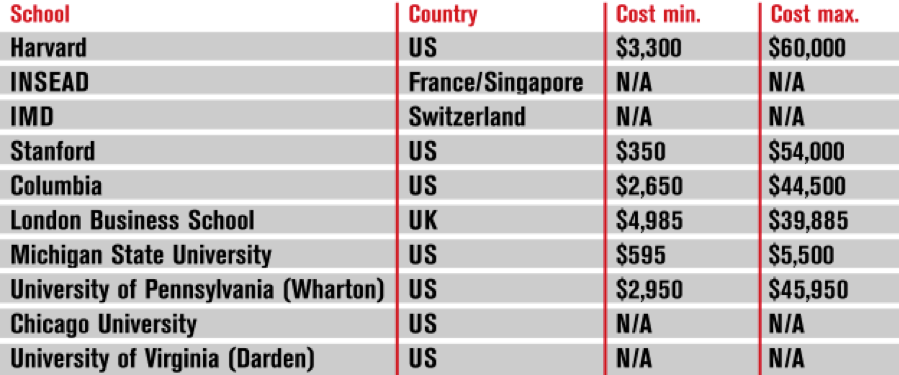
Top 10 international executive education programs

Source: BusinessWeek

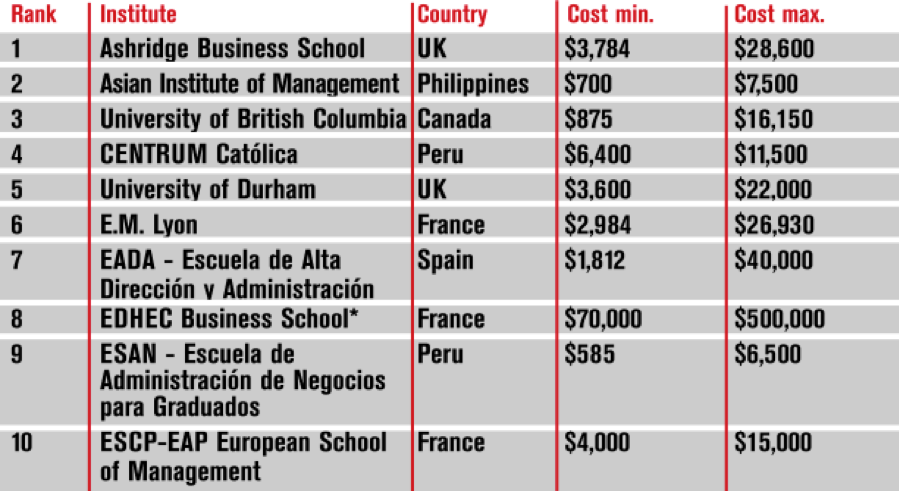
Top 10 non-US executive education programs

*Custom program
Source: BusinessWeek

At an executive managerial level, it isn’t easy to make long-term commitments unrelated to work. Executive education programs are tailored to those who want to continue their education but are unable to spare a year or two obtaining an Executive Master’s Business Administration (EMBA), or executive master’s degree in business administration. While no degrees are issued upon completion of executive training courses, participants receive accredited certificates. With shorter, smaller classes, executive education courses come in two forms: open enrollment and customized courses.

Business schools around the world have created tailor-made executive education courses for companies aiming to enhance their employees’ skills. Harvard Business School, the world’s top executive education provider, works with companies to develop specially designed courses to fit the organization’s needs. Training courses benefit the individual employee as well as the entire company, according to Harvard.

Open enrollment courses are also valuable, as employees acquire skills on a personal need basis and then apply the knowledge in their working environment. For example, ‘Achieving Outstanding Performance’ is a five-day course offered by INSEAD. This course is for senior managers in companies focusing on initiatives to enhance its staff’s performance.

Another course offered by INSEAD is the “Family Enterprise Challenge.” This four-day course is “an overview of the latest thinking and best practices on a wide range of family enterprise topics, using real family business cases.” With many small to medium-sized enterprises and family-owned businesses in the Middle East, this class is ideal for regional executives. Other institutions offer numerous topics ranging from “advanced strategic management” at International Institute for Management Development in Switzerland to classes on “interpersonal dynamics for high-performance executives” at Stanford and “wealth management” at Wharton.

Lighter on the pocket and softer on time away from the office, executive education is an alternative to a long-term EMBA in today’s competitive and rigorous global business circumstances.

August 28, 2009 0 comments
0 FacebookTwitterPinterestEmail
Executive EducationSpecial Report

How the successful push further ahead

by Executive Staff August 28, 2009
written by Executive Staff

Fine-tuning your professional skills may be your best bet to retain a position or get a promotion. If you are a middle to senior manager with 10 to 15 years of managerial experience, the executive masters of business administration (EMBA) is for you.

Unlike the specific MBA, where students choose a particular specialization in business administration, the EMBA covers a wider range of skills, and does not explicitly focus on one issue. Instead, the EMBA provides executives with the breadth and depth of business management skills they need to boost their career. MBA programs are full-time programs, whereas EMBA degrees offer more flexible scheduling. Once an individual has reached a senior management position, they have the ability to take a few working days off to travel and focus on their studies every month, especially since companies are aware of the benefits its employees are gaining. Completing an EMBA gives executives significant leverage over their peers and competitors. Candidates for the EMBA are fast-paced, hard-working individuals, who are unquestionably devoted to their careers.           

Outside of the United States, the EMBA is quite a new concept; it has only appeared in the rest of the world within the last decade. The American University of Beirut (AUB) introduced its EMBA program in February 2004, and has since graduated 90 executive students. International programs, such as the London Business School and INSEAD — both of which opened campuses in Dubai — have larger clusters of students, as these programs have been around slightly longer. The limited awareness of EMBA programs is starting to change, as more globally renowned institutions are transplanting their programs into the Middle East while regional universities are starting to pick up the pace.

Top 20 international EMBA schools

Source: BusinessWeek

Do you fit the profile?

EMBA students in the region and around the world are largely mid-level executives who are ready to climb the next rung on the ladder, and senior executives wanting to sharpen their skills.

Edward Buckingham, director of EMBA programs at INSEAD, outlines the different kinds of individuals who frequently participate in an EMBA. First, there are the specialists. This group includes doctors, lawyers, engineers, accountants, architects and the like, who have already matured in their specific careers. At some point, these specialists become so good at their job that they are asked to lead a department.

“Very often, [specialists] haven’t had the chance to do an MBA earlier, so they need the training to take on more responsibilities,” say Buckingham.

Riad Dimechkie, director of the EMBA program at AUB’s Olayan School of Business, says experts are those seeking to widen the scope of their business knowledge.

“[These students] are often functional experts, so they have expertise in sales, accounting, information technology and they want more breadth, they want to know something about the more functional areas so that they can deal with them at a strategic level,” he says. “Or, they are getting ready to be promoted and want to learn about the functions they don’t know about firsthand.”

Dimechkie notes the specialists joining an EMBA program bring a lot of industry knowledge with them, whether it be in banking, law, finance or other major industries.

“They already have another career but they want to understand more about businesses with which they have some kind of relationship,” he says. “[For example,] if a lawyer deals with business people, they will want to have a better sense of business strategy and business accounting. Medical doctors may want to start up their own practice, or have shares in a business they want to oversee.”

The second group of EMBA students, according to Buckingham, are entrepreneurs. Such individuals have built-up their own company within the last five to 10 years and did not have the time to do a full-time MBA program.

“They shoulder an enormous amount of responsibility for their organization and community,” he says. This group also includes owners of small and medium-sized enterprises and family-owned businesses.

Dimechkie and Buckingham similarly highlight a final group of executive students, known as ‘the generalists.’ According to Dimechkie, this group is usually made up of general managers (GMs).

“These could be people who inherited a business or who were promoted to being a GM. All of a sudden they’re going from a GM to dealing with lawyers, bankers, insurance, hiring people, etc…  so they too need the breadth,” he says. “They also need more depth, because many of them come from non-business backgrounds and they are tired of managing by trial and error and want some fundamental analytical tools, conceptual frameworks, and more to better make decisions and most importantly, to be more confident in the decisions they make.”

Buckingham says generalists are often managers in multinational corporations or large companies.

“They have a lot of social capital within their company, around five to 10 years of experience within the same company. They are committed to a path and want to develop themselves,” he says. 

Many specialists need E.M.B.A. training to take on more responsibility in their careers

The learning curve

EMBA programs around the region allow participants to engage with one another in safe surroundings. Executive students are given the opportunity to test business ideas, concepts, frameworks, proposals and strategies with their classmates who come from a variety of cultural and career backgrounds. The classroom enables executives to interact with one another and experiment with different ideas without feeling insecure, says Dimechkie.

“Executives get to really enjoy the opportunity to share and bounce their ideas off of other people with similar or different backgrounds, because it’s a safe environment,” he says. “They don’t get the chance to do that in their own company, as they’re afraid to take chances because they want to be consistent with past behavior patterns or because they don’t want to be judged.”

Kevin Dunseath, director of the EMBA program at London Business School in Dubai, believes that executive students learn an unparalleled amount of information during the course.

“Our students will learn at least as much from one another as they will from the professors,” he says. “The professors have around 20 years of teaching experience, but in the class you’re going to have 800 years of combined work experience, from a huge variety of professional backgrounds.”

The dynamics of an EMBA classroom provides an edge for students. Dimechkie says that teachers are the facilitators of learning, as they manage the class without directly lecturing its students.

“The really clever professors are the ones that use the invisible hand; they’re intervening at the right time to push the discussion in a certain direction or to emphasize a point,” he says, adding that EMBA participants acquire knowledge in a different way than young students do.

“Executives learn in a much different way than [undergraduate] students do,” says Dimechkie. “They don’t learn by sitting and listening to lectures. They learn by doing, [just as they’ve been] learning while they’re on the job for the last 20 years. They learn by reflecting on what they’ve done and seeing if it was the right way to do it or not.”

Because students must be employed full-time during the program, what is learned in the classroom can be immediately applied in the workplace.

E.M.B.A. Programs build an extremely powerful, influential and well-connected network of people

Added value

Most EMBA programs meet every three to four weeks, for two to three day block sessions. No matter what program one chooses, classes are extremely diverse as executives fly from all around the world to participate in the top-notch courses. With so much diversity around, executives get to network with each other during and after the program.

“By the end of the program, [participants] would have built up an extremely powerful, influential, very well-connected network of people,” says Dunseath.

Dimechkie also highlights the networking opportunity that EMBA programs create.

“It’s very important for people to [get the chance to network] in the region, because they are the people they’re going to be working and connecting with for the rest of their lives,” he says. “[Executive students] tend to develop very close and strong relationships with each other, and very often go into business ventures together.”

Executives around the world gain a tremendous amount of leverage over their peers in their company, as each month they return to the office from the program with new ideas. Alumni of EMBA programs gain the ability to quickly analyze complex business issues, and quickly make decisions about them. Dimechkie explains the mixture of rigor and relevance common in an EMBA program.

“[The executive students] need the relevance to apply what they’re learning, quickly. The idea is to quickly take those concepts [from class] and struggle and wrestle with them and try to apply them in the real world,” he says.

It is key to note that EMBA programs are not tailor-made to regional issues or economies. The point of such an executive degree is for students to learn and apply knowledge at a global level, thus providing alumni with the most universal and cutting edge business tools around.

Executive students are taught comprehension of overall business functions, from human resources to balancing the organization’s books. EMBA programs also teach leadership skills, demonstrating how to manage large groups from the most senior level.

Corporate sponsorship

Many companies in the world sponsor senior employees seeking an EMBA. Corporations view sponsoring higher education as a retention strategy, with some asking their employees to promise to remain with the company for a certain amount of time upon completion of the corporate sponsored degree.

“Companies use the EMBA as a risk management tool for people to get the training they need and to get feedback on how to progress further,” says INSEAD’s Buckingham.

Since the global financial crisis took hold, many companies simply do not have the means to fund such pricey programs.

“Companies that send people tend to send them less during times of crisis, as one of the first things they want to save is expenses on training,” says Dimechkie. “If a company is laying people off, to turn around and spend $50,000 on one person doesn’t look that great within the company.”

The flipside of the financial turmoil is that it lures eligible candidates to ameliorate their knowledge and skills, and think about returning to education. Since last year, London Business School has witnessed a 20 percent increase in its applications. Still, corporate funding is not always available. Many students pay from their own pockets, if need be.

“One difference that we’ve noticed in the last 12 months is that fewer companies are willing or able to provide corporate sponsorship,” says Dunseath. “But, we are confident that as business confidence builds up in the coming months, we’ll attract more corporate sponsorship again.” 

Obstacles for women

Around the MENA region, and the world generally, few women are enrolling in EMBA programs.

“There are fewer women in upper-middle and top management in the Arab world than there are men,” Dimechkie says. “Also, the average age group of participants [in the AUB EMBA] is around 40 years old. At that age, women usually have young families so it’s hard for them to constantly leave and participate in such a rigorous program.”

He wishes there were more women in the program, and like his peers in the region, makes continuous efforts to encourage top female executives to enroll.

“Once, we had 15 percent, which is still way too low… but the program is very expensive for people in [the region], so we’re trying to make a scholarship for women specifically,” he says.

International universities also face this obstacle. Dunseath estimates that only 10 to 20 percent of participants at the London Business School in Dubai are female. Buckingham says the INSEAD program in Beijing has around 27 percent women enrolled, while the Fontainebleau program has a class  composition which is approximately 17 percent female.

“We recognize that this is part of a larger problem,” says Buckingham. “It’s difficult for women to balance career and home life. There’s another problem o­­f companies who are not so open minded about hiring women with children, as they’re worried that their loyalties will lie with the family and not the company.”

EMBA programs in the Middle East

* Tentative: expected to be launched in fall 2010
Source: Executive Magazine

Movin’ on up

Career advancement is one of the possible rewards upon completion of one’s EMBA. Graduates may receive salary increases, promotions, or may have the pleasure of being headhunted for higher positions in another company. It’s a two-way street though; Dimechkie says just because a EMBA candidate has been “in a pressure cooker for 20 months” doesn’t mean they will automatically receive the related perks.

Conversely, companies must make an effort toward recognizing their hard-working employees.

“Companies need to recognize that people are making huge investments in themselves — while also sacrificing their family time and social life — and if you don’t watch them or give them opportunities to grow, you might lose them,” says Dimechkie. “It’s the executives’ responsibility to make an impact, but also the companies’ responsibility to give them opportunities to expand.”

Of the AUB EMBA graduates, around 70 percent are either promoted within their company or are recruited by other companies at more senior levels. Alumni of the London Business School’s Dubai program double their salary within three years of completing the program. But Buckingham say what’s most interesting is how EMBA alumni’s careers are reoriented and redeveloped after the program.

Ultimately, no matter how much money one spends or how prestigious the institution, the onus lies in the hands of the EMBA participant.

“Just because you’re working hard and getting an education, if you don’t make an impact in the organization you’re in, they are not going to promote you or give you a higher salary,” says Dimechkie. “Somehow, you have to figure out a way to make an impact. Once they get noticed, they get promoted.”

August 28, 2009 0 comments
0 FacebookTwitterPinterestEmail
North Africa

Free trade docks hard

by Executive Staff August 28, 2009
written by Executive Staff

In June, Morocco entered into fresh free trade agreement talks to add Canada to its growing number of close commercial partners. The list of Morocco’s free trade allies already includes the European Union, the United States, the United Arab Emirates, Turkey and Jordan, alongside North African neighbors Tunisia and Egypt. Rabat hopes to diversify its markets and capabilities, which are currently focused on a small number of European partners, by dismantling tariffs with new partners like Canada. Meanwhile, Morocco’s new port facilities and burgeoning IT development are opening never-before-seen trade routes and commercial opportunities, allowing the country to reconsider its economic and political global alliances.

European countries have been Morocco’s principal trading partners since independence, with France, at 21 percent, and Spain, at 20 percent, the two countries with the largest volume of bilateral trade. In 2007, more than 60 percent of Moroccan exports were sent to the EU, while 58 percent of Moroccan imports came from the EU, for a total trade amounting to nearly $30 billion.

Beyond Europe

In a move set to significantly divert Moroccan trade away from dependence on EU markets, Morocco became the second Arab country (after Jordan in 2000) to sign a free trade agreement with the US. The US-Morocco agreement, which went into effect on January 1, 2006, has a particularly sweeping scope that took two years for negotiators to settle. It includes industrial products, agricultural products, services and public works contracts, in addition to measures relating to intellectual property, environment, workforce and governance.

Bilateral trade more than doubled in just three years, mostly to the benefit of the US, which now sells Morocco products ranging from Washington apples to drilling and oil field equipment. In 2008, US exports rose to $1.4 billion, from $480 million in 2005, while Moroccan exports during the same period climbed from $445 million to $878 million, according to the US Census Bureau’s Foreign Trade Division.

But in spite of a few isolated success stories, Moroccan producers are finding it difficult to penetrate the American market.

New reports are showing that Morocco’s traditional exports like textiles, fish, citrus, flowers, and artisanal handicrafts are not making it across the Atlantic. The Minister of Foreign Commerce declared in a February report that the US FTA has not succeeded in stimulating national exports. He cited the lack of diversification and sophistication of Moroccan exports as the main obstacles to entering newly opened markets.

Ahmed Reda Chami, Morocco’s minister of commerce, industry and new technologies, said there are fundamental incompatibilities between Moroccan products and the American consumer market.

 “The cultural and linguistic barrier… complexity of US distribution…[and] production that requires Moroccan companies to manage very important orders while at the same time ensuring a constant quality on the whole product line, and the devaluation of the dollar compared to the dirham, all reduce the competitiveness of our products,” Chami said in an interview with Oxford Business Group.

While national export levels are disappointing Moroccan administration officials, local press and watchdog groups warn that the US trade agreement undermines access to affordable medicines for Moroccan consumers, allows US companies to patent seeds and charge small-scale farmers royalties for planting crops, and sets back environmental and workforce standards.

So why open domestic markets to fierce competition if the benefits are so seemingly asymmetrical?

First, agriculture is still the backbone of the Moroccan economy. In order to advance from the vulnerability of depending on weather conditions for economic security, the administration is investing to diversify its economy and raise productivity. Foreign partners are essential to industrial modernization. The North African country is also looking to capitalize on its geographical positioning and political stability by becoming a competitive regional hub and platform for other countries to reach a wide range of international markets.

More than 160 high-tech western companies have recently set up shop in Casablanca and Tangiers

Future tech

Morocco’s national industrial strategy to develop high-potential aeronautics, automotive and electronics sectors, as well as nanotechnology, biotechnology and microelectronics — called “Plan Emergence” — has already helped attract more than 160 equipment manufacturers from Japan, France, the US and Spain in special zones in Casablanca and Tangiers. These companies are expected to generate 60,000 to 70,000 industrial jobs by 2015, according to Industry Minister Chami.

“Morocco signed many FTAs with several regions across the world: the EU, US, Turkey… These agreements have permitted our country to position itself as a ‘hub’ for the Mediterranean and a platform to reach the world,” said Saad Benabdellah, who heads the Moroccan Center for Promoting Exports, in an interview with local paper l’Economiste. “Just a few years ago, it would have been difficult to imagine that emblematic enterprises like Renault, Tata Group, Cap Gemini, Airbus and Safran would now be implanted in Morocco.”

Moroccan rapprochement with new international markets in North America, Asia and the Gulf does not seem to be hurting its relationship with the EU. The 27-country bloc overrode heated political objections to the status of the disputed Western Sahara territory and bestowed the coveted ‘advanced status’ designation on Morocco in December 2008. The ‘advanced status’ designation — a first in the southern Mediterranean region — makes Morocco less than a member but more than a partner to the EU, and is designed to integrate Morocco into EU policies and deepen free trade agreements.

August 28, 2009 0 comments
0 FacebookTwitterPinterestEmail
North Africa

An apple a day…

by Executive Staff August 28, 2009
written by Executive Staff

For fairly obvious reasons, Morocco’s pork production sector has never been one of the country’s sectoral heavyweights. In a nation with a majority Muslim population and minority Jewish community, farmers catered mainly to European tourists, producing an estimated 270 tons of pork annually, generating around $1.48 million, according to 2008 figures. In a normal year, pigs would be a peripheral part of government planning, but since the emergence of A(H1N1) flu, better known as swine flu, the public health sector has received extra funding and ramped up its prevention programs.

Unlike Egypt, where the government responded to the outbreak by calling for the slaughter of the country’s 300,000 pigs, Morocco’s response has been more measured. There have been no calls to eliminate the pig farms and their estimated 5,000 pigs. The World Health Organization said killing the animals has no effect on the spread of swine flu since they do not transmit the virus. As of July 9, there were 21 confirmed cases in Morocco, according to the Maghreb Arab Press, though only two of these remain in hospital.

Pandemic preparation

Swine flu may strain Morocco’s already stretched healthcare resources, but the government has earmarked $105 million for the operation. The funds will be channeled to programs that prevent the disease from entering the country and to individual protection plans. The government has established tracking systems nationwide. The first follows airline passengers from countries with confirmed cases. Thermal scanners, which can detect elevated skin temperatures, a possible sign of infection, have been installed at entry points. In addition, the Ministry of Public Health has launched a public information campaign. Swine flu can be treated effectively if identified quickly, so making information available may prevent panic as well as save lives.

Overall healthcare indicators in the country are good and public spending is rising, but a shortage of doctors, a lack of access to health care for poorer citizens and modern lifestyles are starting to take their toll. A third of the population over the age of 20 has high blood pressure and nearly 7 percent of the same age group also suffers from diabetes. The Strategy 2008 to 2012 plan includes for the first time provisions to outsource medical services, with the private sector billing the government, according to Dr. Ennaceri Mimoun, head of the hospitals division at Morocco’s Ministry of Public Health.

The ministry has agreed that the national association of nephrologists (kidney specialists) can provide dialysis for patients on waiting lists in public hospitals, and Mimoun thinks that this can be extended to other services. Mimoun estimates a deficit of about 9,000 doctors in the public sector, compounded by the departure of highly experienced doctors, who “gravitate towards the comfort of working in the private sector.”

With the increased links between the two, however, doctors can treat poorer patients, while still maintaining their incomes.

Further funding from non-governmental organizations and foreign countries plays an important role in improving the sector. A new initiative launched in the Fes-Boulemane region will help to treat children with cancer. The regional division of the Ministry of Public Health and the local branch of l’Avenir, an association of parents and friends of children with cancer, have partnered to supply medicines, equipment, laboratory tests and X-rays. The European Union is planning to give $120 million for development. According to the head of the EU Commission in Rabat, Ambassador Bruno Dethomas, these funds will help sectors of the population who may not have access to health insurance coverage.

In addition to addressing the needs of its own population, the kingdom has the challenge of providing international calibre services for tourists. Currently, Moroccan law states that clinics must be owned and operated by Moroccan citizens. As visitor numbers increase and global sicknesses like swine flu move quickly across national borders, the government may need to allow foreign participation in the health sector, opening the door for new partnerships and investments.

August 28, 2009 0 comments
0 FacebookTwitterPinterestEmail
North Africa

A ripe economy

by Executive Staff August 28, 2009
written by Executive Staff

Tunisia was ranked the most competitive business environment in Africa in a report released during the World Economic Forum summit in Cape Town. The 2009 Africa Competitiveness Report, produced by the WEF in association with the African Development Bank and the World Bank, gave the Tunisian economy a score of 4.6 out of 5 for competitiveness, ranking it the 36th most competitive economy globally and the fifth most competitive in the Arab world.

The report, based on hard data and responses to the WEF’s Executive Opinion Survey, singles out the country’s institutions as “one of its most competitive advantages,” resting on “fairly transparent and trustworthy relations between government and civil society.” As a whole, Tunisia’s institutions ranked 22nd globally, with a particularly high placing for efficiency of public spending (2nd), public trust of politicians (16th), low levels of favoritism among officials (14th) and transparency in the policymaking process (15th).

Beyond institutions, in the 11 other “pillars” assessed by the report, Tunisia also ranked highly in infrastructure (34th), health and primary education (27th), higher education and training (27th), goods market efficiency (30th) and innovation (27th). The only area it scored relatively poorly in was labor market efficiency, coming 103rd out of 134 countries assessed. Overall, Tunisia’s ranking places it nine positions ahead of its nearest African rival in the table, South Africa, which came 45th.

In a special chapter on enhancing competitiveness, Tunisia and three other African economies were highlighted for their achievements in ensuring strong growth by adopting development strategies that promote efficient market mechanisms. Alongside Namibia, Botswana and Mauritania, the Tunisian economy was praised as an example that high growth need not necessarily require a large economy. Like Mauritania, Tunisia has had a policy of economic diversification that in the 1970s helped the economy remain internationally competitive.

Flexibly fit

Tunisia’s efforts to integrate its economy into the global market saw it become the first Arab country to complete the steps to enter the European Union’s free trade zone in 2008. Tunisia’s recent policy of exchange rate flexibility was seen as a key factor toward helping the economy reduce tariffs and barriers to entry, enabling the textile sector in particular to compete within the lucrative European market without the need for protective measures. Stable fiscal policy has also contributed to low inflation, another key requirement for maintaining competitiveness, especially in the manufacturing sector.

Tunisia’s success comes despite its paucity of natural resources. Perhaps as a result of this though, some practices that have proved harmful to competitiveness in other African economies have been avoided. The absence of major state-owned conglomerates in the oil, gas or mining sectors means private capital is less crowded. The tax system is also less distortive to business practices, and agricultural efficiency is relatively high due to lower and better targeted subsidies. A consistent commitment to the principle of privatization has seen several major utilities move out of direct government control in recent years, while the proceeds of privatization have often gone toward paying down the government’s external liabilities.

However, while polling highly in many areas, the report nonetheless highlighted some aspects of the economy with room for improvement. Despite ranking second in Africa for technological readiness, in global terms information and communications technology penetration remained low. The figures suggest that, while at the higher levels of the economy Tunisia has largely succeeded in bridging the technology gap, the effects have yet to fully trickle down to the wider economy.

The report will be welcome news to the Tunisian government, which continues to demonstrate its commitment to a liberalized economy. Indeed, the publication coincided with a recent announcement by the cabinet that Tunisia would join six other Mediterranean countries in implementing a full “open-sky” agreement by 2010, a move that will make the country available to low-cost airlines and hopefully boost tourism.

August 28, 2009 0 comments
0 FacebookTwitterPinterestEmail
North Africa

Banked with bells on

by Sam Inglis August 28, 2009
written by Sam Inglis

Financial reforms conducted over the past two decades have left the Algerian banking sector well poised to bounce back from the global financial crisis, according to the World Economic Forum’s Africa Competitiveness Report 2009. The report said Algeria was one of four African economies whose “competitive banking systems” and “functional regulatory systems” meant they were more likely to rebound positively. In particular, the report noted that while Algeria is “a slow reformer,” the country benefited from a financial system that “still demonstrates remarkable intermediation.”

The WEF’s blessing is good news for the sector, which in recent years has witnessed stalled efforts towards privatization, due in large part to the onset of the financial crisis in developed markets. Initial attempts to partly privatize Algeria’s biggest bank, Crédit Populaire d’Algérie, scheduled for early 2008, were delayed and eventually shelved when the subprime crisis began to take hold. Of six international banks permitted by the government to bid, three withdrew from the process, including Spain’s Banco Santander and troubled US giant Citigroup, leaving the planned privatization on shaky ground.

Since then, efforts to reduce the state’s role in the banking system have been put on the back-burner while the government focuses on its $150 billion infrastructure investment strategy and developing non-banking sources of capital. In 2002, the government diversified access to non-bank capital by creating a government debt market, through which the state’s large public enterprises were later encouraged to issue their own bonds. The result has been, in the words of the International Monetary Fund, a corporate bond market in Algeria “significantly larger than in other countries at the periphery of the European Union.” With the groundwork for non-bank capital already laid, and the beginnings of a medium to long-term yield curve developing in state bonds, the government appears to be focused on using the National Investment Program to deepen local capital markets further, as opposed to bank-based finance.

The judiciousness of this strategy, and indeed the slow pace of reform in the banking sector, has been supported by the need to absorb the relatively high structural liquidity surplus within Algeria’s banking system, which is the legacy of an export economy dominated by hydrocarbons. The IMF commended the Algerian government’s “prudent” monetary policy for successfully absorbing this liquidity, as well as bringing down foreign debt and keeping inflation stable. However, with export demand from Europe likely to remain weak for some time, Algeria’s banking sector will have an increasingly important role to play in domestic demand. 

It is in this spirit that the IMF in its 2009 consultation described financial sector reform in Algeria as “key” to improving productivity, developing the economy and sustaining non-hydrocarbon growth. In particular, access to loans for small and medium-sized enterprises (SMEs) remains a challenge, with 20 percent of respondents to the Africa Competitiveness Report describing this as currently the most problematic aspect of doing business in Algeria.

Although foreign banks such as BNP Paribas, Société Générale and Citigroup have managed to gain a foothold in the system, state banks still account for approximately 95 percent of Algeria’s total bank assets and loan portfolios. While the government remains committed to prioritizing major state corporations for its growth strategy, the development of SMEs to service both these corporations and the wider domestic economy has been identified as a significant opportunity for further growth. 

To truly thrive though, successful enterprises will need access to capital. In the long run, it is likely that once the current financial crisis has abated, the government will look once again towards the privatization of some banks as a means of securing easier access to capital for SMEs.

Sam Inglis is Executive’s Mediterranean correspondent, based in Istanbul

August 28, 2009 0 comments
0 FacebookTwitterPinterestEmail
North Africa

The Maghreb’s sunny profits

by Executive Staff August 28, 2009
written by Executive Staff

The most significant step toward creating an ambitious, $500 billion solar project in the North African desert occurred on July 13.

Executives representing one Algerian and 11 European companies gathered in Munich that day to formally launch the Desertec Industrial Initiative, a new alliance for developing solar-thermal energy. In mundane business terms, the 12 companies signed a memorandum of understanding to create a new company by October 31.

The new company, named Desertec Industrial Initiative (DII), will tackle the creation of a complete network of electricity generation plants from renewable energy sources — mostly solar heat — and transmission lines around and under the Mediterranean with the aim of satisfying approximately 15 percent of Western European electricity demand by 2050.

News of the project quickly drew comments from supporters and critics alike, many asking if such a venture was at all serious.

A few years ago, discussion of solar energy was but a nice mind game, something for incorrigible idealists, aspiring but naïve scientists, academics tormented by fears of climate doom and influence-free politicians — the backbenchers who never get invited to the power lunches of the big companies.

But now the situation has changed. Like the economic climate and energy prices that have contributed to demand for energy efficient vehicles, the idea of solar power has gained traction in the real world, and is able to elicit professions of idealism from corporate executives who have billion-dollar signatory powers.

What makes the announcement of Desertec a milestone in the history of energy generation is convergence: specifically, price-cost ratios and technical capabilities have come together in a way that was not plausible five or six years ago.

The project presents the possibility of new future partnerships for the Mediterranean rim countries, making the region a new global player that can see eye to eye with other economic growth centers.

The sales pitch for solar power

The first selling point of Desertec is that it is possible. The technical basis of Desertec, are Concentrating Solar Thermal Power plants, which use sunlight in the generation of electricity via steam turbines. It is a tested and proven method that has been applied in commercial operations, which have been in business for more than a decade.

The other decisive technical component in the concept is power transmission. Here, the protractors of a Mediterranean grid say that the latest high-voltage direct current (HVDC) transmission lines are economical up to a distance of 3,000 kilometers with a attrition rate of no more than 3 percent per 1,000 km.

The second selling point is profitability. Cost of producing a kilowatt of electricity from Desertec’s renewable sources is projected to come down to levels that are comparable to, or lower than, costs of generating electricity from the burning of fossil fuels. The cost argument involves variables and assumptions but it is strongly supported by the trend of the past 10 years that has shown the cost of renewable energy drop at better-than-expected rates, including the cost of the other solar electricity generation method, photovoltaic, which is approaching the break-even point in Europe.

The third selling point is sustainability: the energy created by Desertec can replace dwindling fossil reserves, there are no CO2 emissions and it creates a new energy balance where production and consumption are distributed more equitably than in the oil-era scenarios of Middle Eastern energy exporters and consumers.

The Desertec plan for the Mediterranean rim

The draft of the Desertec power network is much more than a simple link from some Saharan solar farm or power tower to electricity grids in Europe. The roadmap for renewable energy circling the Mediterranean also entails wind, hydro and other renewable power generation plants. On the African and Western Asian side, more than 30 solar thermal plants would be augmented by a string of wind farms along the Atlantic coast and occasional hydro power and biomass installations.

This grid of MENA power production would reach over to Europe via several routes, mostly crossing under the Mediterranean. Power lines in the draft plan follow both the short, western routes into Spain, but also island hop through Cyprus, Crete, Malta/Sicily and Sardinia/Corsica. And, of specific importance for the Levant region, about 35 percent of the solar power plants on the Desertec roadmap are located on the Arabian Peninsula, with transmission lines sketched to traverse Syria and link into Turkey’s Anatolia.

The draft concept on the Desertec site also mentions several pilot projects that would deliver electricity and water to MENA’s most oppressed — the people of Gaza.

“A solar power plant and drinking water plant on Egyptian territory for the benefit of the Gaza Strip would be useful as a pilot project,” the paper says, “for humanitarian reasons.”

This goodwill is sure to be confronted with challenges, just as the entire plan will probably see more changes than implementation of original draft components if the project eventually becomes a reality.

Source: Regional Press Network

The naysayers

When held against these pro-Desertec arguments, opponents of Desertec seem to be largely captivated by mono-cultural thinking and monopolistic fears. Some want the project to be stillborn because it could create power for big business and might threaten the growth of small-scale solutions for renewable power in Europe that could sustain an alternative cottage energy industry.

Other detractors north of the Mediterranean painted a dark image of political risks that would allow the power producing and power transmitting countries in MENA to use the network as a political pressure point. Others criticized the MENA countries as being vaguely “unstable.”

Such issues confront the energy industry aplenty, as political challenges are a major facet of dealing in the global energy supply infrastructure of today.

However, what is of much greater interest from the vantage point of the MENA side, is the question of how many opportunities for economic growth, sustainable investment and skills development would arise from Desertec and how much this project would do for peace by way of integration.

No one can reliably foretell how much energy will be consumed by the MENA countries by the middle of the century. Chances are that development of production capacities in the high-population growth countries of the region will trigger new opportunities for manufacturing and consumption.

But some have criticized the project for being dominated by European companies with only one minor MENA investor.

Independent experts with a favorable view of the Desertec concept have argued that it would be logical and desirable for the countries on the producing side of the solar rim to be the first to benefit from this energy source for their own domestic needs and general industrial development. But Desertec, representing a new energy infrastructure between Europe and the MENA, could become a catalyst for many positive changes in the social and economic disparities between the two sides of the Mediterranean.

Crucially, MENA private sector businesses will be able to exploit this opportunity if they succeed in accelerating their growth in governance and competence.

Desertec Industrial Initiative — the venture and the players

The 12 companies taking part in the Desertec Industrial Initiative (DII) partnership are from the energy, finance, technology and manufacturing sectors. The six DII participants that are household names and publicly traded on European markets have a combined market capitalization of approximately $200 billion. German firms represent nine of the 12 companies that put their signatures on the collaboration.

In terms of geographic reach of member companies, the partnership is firmly integrated in European business and energy operations and sweetened by the addition of an Algerian company, Cevital, whose core business is in producing margarine and edible oils.

Also on the list is ABB, the technology group headquartered in Switzerland and the privately held Spanish group, Abengoa. The former is not only a leader in products such as power plant turbines but also has a strong history of working with Arab clients. Recently the company received orders for power transmission projects in Bahrain and Saudi Arabia.

One of the main drivers of the DII partnership and one of three financial firms in the venture is Munich Re, the reinsurance company. Munich Re hosted the launch event, and board member Torsten Jeworrek explained the company’s interest in the initiative. He said the project was important given the increased number of climate-related catastrophes and the importance of clean energy in avoiding future escalation of costly catastrophes that will affect the insurance and reinsurance sector.

“We are pursuing a visionary plan,” he said. “If it is successful, we will make a major contribution to combating climate change. The ecological and economic potential is huge.”

Munich Re’s signature on the Desertec initiative was joined by two German lenders: national banking leader Deutsche Bank and HSH Nordbank, a financial institution specialized in corporate lending and business finance that is majority-owned by two northern German states.

EON and RWE are the energy companies that make the venture dynamic with their very strong positions in running infrastructure networks and utilities. In the list of German engineering providers, Siemens, the ubiquitous engineering multinational, is joined by two specialist firms, Schott Solar and MAN Solar Millennium.

Going another step into the analytics of the DII team, there is a 13th warrior as one participating company is itself a joint venture. MAN Solar Millennium was formed by German solar plant builder Solar Millennium and by MAN Ferrostaal, a Dutch-German group that delivers industrial solutions and constructs plants in, among other areas, the chemical and petrochemical fields.

Note: the majority owner of MAN Ferrostaal, with a 70% stake, is Abu Dhabi’s outbound energy investment unit, International Petroleum Investment Company. The state-owned IPIC completed the acquisition of the controlling interest in March of this year under an agreement that valued the stake at $697 million.

August 28, 2009 0 comments
0 FacebookTwitterPinterestEmail
GCC

For your information

by Executive Staff August 28, 2009
written by Executive Staff

Regional power grid

Representatives from the six Gulf Cooperation Council states inked an agreement in July which facilitates the sharing of electricity by linking each country’s power grid to form a unified power network. Two important parts of the project have already been completed by the GCC states: the interconnectivity of Kuwait and Qatar’s electricity networks and the synchronization of the “GCC North Grid” which links the power grids of Qatar, Saudi Arabia, Bahrain and Kuwait. The next phase of the project will entail the connection of the Oman and United Arab Emirates power grids to form the “GCC South Grid.” The final phase, expected to be completed in 2011, will link north and south grids. Upon completion the grid is expected to provide Kuwait and Saudi Arabia with an extra 1,200 megawatts (MW) of power, the UAE with 900 MW, Qatar 750 MW, Bahrain 600 MW and Oman 450 MW.

GCC countries estimate that when the agreement is implemented, it will save $1.4 billion per year by eliminating the need to construct new power plants in order to meet the region’s growing demand. Analysts have estimated that up to $50 billion could be spent to increase generation capacity by 60,000 megawatts in the GCC by 2015.

Emaar Properties merger

Emaar Properties, the second largest GCC company by market capitalization, announced on June 26 its plans to merge with three real estate units of Dubai Holding: Sama Dubai, Dubai Properties and Tatweer. An Emaar press release stated the merger will be finalized by September.

“The proposed consolidation will create a robust and strategic asset base while joining the strengths of the management teams and employees of these companies,” Emaar Chairman Mohamed Alabbar said in a letter posted on the Dubai bourse website.

The merger will result in an entity worth $52.85 billion and will have $4 billion in debt obligations — 7 percent of total assets.

Emaar share prices suffered in the wake of the news. Share prices fell 8 percent in the first three days following the announcement, and bottomed out at $0.60 on July 14 — down from $0.80 on June 29. Since hitting bottom, Emaar share prices have started to pick up, reaching $0.70 on July 22.

EFG Hermes said on July 8 that its researchers did not view the merger as positive. The note said the consolidation might lead to the dilution of Emaar’s minority shareholders and increase the exposure of the combined entity to the troubled real estate market.

Oil demand temperate

The International Energy Agency (IEA) announced that it expects global demand for oil to grow by a mere 0.6 percent, or 540,000 barrels per day (bpd) from 2008 to 2014, bringing total global consumption to 89 million bpd. The medium-term estimate is substantially less than last year’s prediction of a one million bpd yearly increase. The agency attributed the drop in demand to the ongoing effects of the global economic downturn. On the bright side, the agency said the decrease has allowed the market to limit price fluctuations resulting from interruptions such as attacks on Iraq and Nigeria’s oil infrastructure. The Organization of Petroleum Exporting Countries’ (OPEC) supply cushion is expected to reach 7.67 million bpd, up from last year’s forecast of a paltry 1.67 million bpd.

The IEA also cautioned against unrealistically optimistic talk of economic “green shoots” spurring oil price recovery. The agency said the recent rise in prices may have nothing to do with the health of the world economy, but “could also simply reflect the rebuilding of depleted inventories across several industries, making it arguably premature to predict an imminent and strong economic rebound, not least because the elimination of spare capacity, the deleveraging of the private sector in several highly indebted countries and the rebalancing of global demand are still at an early stage.”

Despite the news, regional oil and gas production looks set to increase. Last month, Saudi Aramco and Total entered into a joint-venture and signed 13 agreements with contractors to build a $9.6 billion refinery. Also, officials at Egypt’s state-owned gas companies announced the start of a bidding round to explore the countries gas prospects. In a similar move GASCO, the majority of which is owned by the Emirati government, awarded $9 billion in gas contracts to companies from Italy, UAE, South Korea and the United States.

Iraq also launched its first post-invasion bidding round with disappointing results highlighting the still fragile political and security environment. Only one contract was awarded to a joint venture of BP and the China National Petroleum Corporation, to develop the Rumaila field, Iraqi’s largest. The bidding round came on the same day as the deadline for American combat troops to pull out of Iraqi cities.

August 28, 2009 0 comments
0 FacebookTwitterPinterestEmail
Levant

The money wash

by Executive Staff August 28, 2009
written by Executive Staff

In the wake of the financial crisis, governments have been considering ways to bolster foreign investment and shore up the financial system. Turkey hit on the idea of an ‘asset amnesty’ to attract deposits from wealthy expatriates and return money to the banking sector. 

Starting last November, the scheme was extended in June, and looks like it will be extended again in September when the current deadline ends. The scheme may be novel, but it has proved controversial.

“The Turkish government has instituted a policy for Turks to bring back their money no questions asked — a few million dollars to come home, they say no problem, we’ll take 2 to 3 percent tax,” said an investment banker in Istanbul who wanted to remain anonymous. “It has not been completely welcomed around the world, as dirty money is going to be cleaned in Turkey, but for Ankara it’s a stop-gap method to boost foreign direct investment.”

Economists are skeptical about how successful the amnesty has been in attracting capital, arguing it can only be a temporary measure and that the amnesty’s attraction has been eroded by the first amnesty period being sold as a ‘one off chance,’ only for it then to be extended. Ankara’s extension of the amnesty has also sent a clear message to the International Monetary Fund that Turkey is not keen on implementing a $25 billion loan agreement with the fund to stabilize its $700 billion economy, which is expected to contract 5.9 percent this year, according to the Organization of Economic Cooperation and Development (OECD).

Additionally, the asset amnesty has been met with displeasure by the European Union, which wants Turkey to tighten financial regulations in line with EU accession requirements, as well as curb money laundering and the flow of narcotics into Europe. The OECD’s Financial Action Task Force (FATF), a Brussels-based body set up to combat money laundering and terrorist financing globally, has also voiced its concerns, coming at a time when FATF has been exceedingly critical of Ankara’s efforts to rein in anti-money laundering and counter terrorist financing.

Boosting foreign direct investment?

On paper, the asset amnesty has boosted assets, with the declared amount of the first amnesty amounting to 14.8 billion Turkish Lira ($9.6 billion), but the reported inflow has been limited to $3.9 billion, according to research firm YF Securities. According to an economist who was not authorized to speak with the media at an Istanbul brokerage house, the amnesty has not been as successful as the government hoped.

“The amount declared may be much less,” he said. “The government said there was to be only one asset amnesty in November, but [that] turned out not to be the case, and people remember these things, so it is not good for fiscal quality. If you are going to do it, do it only once.” 

“It is not a sustainable financing source, for any economy, not just Turkey,” he added.

The economist said the government wants to see if the asset amnesty extension will bring more deposits.  He said the “government wants to keep this card in its hands, as the new decree gave them the possibility to extend it for three months beyond September.”

Economists have pointed out that the people most likely to utilize the amnesty would have done so in the first few months, making the extension unnecessary, and that the amount raised from the second asset amnesty round will be significantly less than the first. And while the money that has flowed in has bolstered banks’ assets, allowing for more credit, inflows are not expected to enter the stock market or other asset classes.

“Most of the people that wanted to benefit have already reported their holdings abroad, and the government intends to [make] additional legal arrangements to make it more attractive,” the economist said. “I am not too optimistic on that due to macroeconomic fundamentals. The good thing is that the current account deficit is in decline due to falling oil prices, but Turkey needs external sources to finance the capital account deficit, as the rollover of the private and public sector for foreign borrowing is up to just below 100 percent.”

Turkey’s public debt is projected to reach $50 billion this year, and the continuation of the amnesty has thrown doubt on Ankara’s ongoing talks with the IMF for a loan between $25 billion to $40 billion. If inked in September, the IMF would require structural reforms and stricter controls on government spending.

“The [amnesty] extension being introduced in such a manner is another signal that the IMF is not part of the government’s game plan, as the fund would have a say on amnesties, at least in the way they are implemented,” the economist said.

Dirty laundry

It’s unknown how much of the declared $9.6 billion repatriated during the asset amnesty is dirty money. But the amnesty has not put Ankara in the OECD’s Financial Action Task Force good books, with Turkey, positioned as it is as a crossroads between the East and West, serving as a transit hub for narcotics trafficking and organized crime.

In 2007, Turkey was heavily criticized by the FATF for failing to enact 33 out of the task force’s 40 recommendations on anti-money laundering and combating terrorist financing. Criticism included the lack of a precise definition in the law on money laundering, and the low number of suspicious transaction reports.

A 130-page report submitted by Turkey’s financial intelligence unit, ‘Mali Suclari Arastirma Kurulue’, or MASAK, to the task force’s general assembly in February, stated that since 2007, Turkey had adopted a bill on the prevention of money laundering that required financial institutions to issue suspicious transactions reports and have compliance units. According to MASAK, there has been a huge rise in suspicious transaction reports year-on-year, from 180 in 2003 to 4,318 in 2008.

But while the report highlighted Turkey’s more active role in curbing money laundering, MASAK noted there has been a dramatic rise in proceeds from the illicit drug trade within Turkey, which it estimated at $5 billion a year. Reports related to fraud and fraudulent bankruptcies had also increased significantly, attributed to the financial crisis in late 2008.

Tight financial regulations on market trades have also boosted money laundering, with Turks seeking to evade a 10 percent capital gains tax paid out to play the markets, resulting in the use of intermediaries to get around taxation.

“We’d have ‘mustachioed [disguised] Turks’  to get money out to say Geneva, or get a prime brokerage account with a big London firm to do the trading,” said the former investment banker. “As this is technically illegal in Turkey, it is always being looked out for and is very tightly regulated.”

Providing further regulatory challenges to the Turkish authorities is the country’s low banking penetration rate, estimated at just 40 percent of the population.

“Turkish people have huge under-the-mattress savings; penetration of the banking system is not like Western economies,” said the economist. “People tend to keep foreign currency or gold.”

Penetration rates are, however, likely to increase this year following the introduction of a new finance ministry regulation requiring rent to be paid via bank accounts. The asset amnesty could also help.

The European Union connection

While the EU is critical of the asset amnesty and Turkey’s anti-money laundering and combating terrorist financing regime, counter terrorism experts say that the EU is not doing enough to assist Ankara in combating the narcotics trade and groups like the Kurdistan Workers Party (PKK).

“Despite the PKK being a banned organization by the EU, many member states are ambivalent about cracking down on its sophisticated networks and infrastructure within the Kurdish diaspora communities around Europe,” said John Solomon, global head of terrorism research at World-Check, a British company that maintains a database on high risk individuals and entities. “This lack of political will has afforded the PKK a safe haven to raise funds, plan attacks and disseminate propaganda.”

A Turkish study has claimed that the PKK has controlled an estimated 80 percent of the European narcotics trade on and off for decades, with the group earning an estimated $140 million a year. According to Interpol, at one time nearly 200 PKK front organizations in Europe were suspected of involvement in the narcotics trade.

“Due to the surge in poppy production in Afghanistan post-2001, and Turkey’s strategic position relative to lucrative western markets for refined heroin in Europe, it is quite possible that the PKK’s involvement in the trade has intensified,” Solomon said.

Some of that drug money could have been cleaned since the November asset amnesty, and the extension would give ample opportunity to clean further funds. In order to boost deposits, Turkey has shown a willingness to take in the good as well as the bad.

August 28, 2009 0 comments
0 FacebookTwitterPinterestEmail
Levant

Selling what is not theirs

by Executive Staff August 28, 2009
written by Executive Staff

Abdullatif Kalafani, an 81- year-old Palestinian exile living in Lebanon, is the owner of house number 15 on al Burj Street, now renamed Liberation street, in Haifa. Kalafani is one of many Palestinians who still owns property in Israel, but maybe not for long. House number 15 has been put up for sale in one of the public auctions that developing municipalities are running in different urban areas like Haifa, Acre and Jerusalem.

Since 2007, the Israel Land Administration (ILA) has been issuing tenders for auctioning properties that belong to some 800,000 refugees who were forced out of Israel in 1948 and 1967. So far, 282 tenders were issued in 2007, 106 in 2008, and 80 in the first six months of 2009.

Adalah, a legal center for Arab Minority Rights in Israel, is trying to stop the issuance of these tenders, saying that selling these properties is illegal under both Israeli and international humanitarian law.

In May this year, Adalah sent a letter to the Israeli attorney general, the ILA attorney general, the general director of the Israeli government-owned housing company Amida and to the Custodian of Absentee Property, demanding cancelation of the tenders.

“So far we have not received a reply from the attorney general, except that it is being dealt with and as soon as they finish, they will get back to us,” says Suhad Beshara, a lawyer from Adalah. “Most probably they will reply. In any case, we probably will be filing a petition to the Supreme Court.”

Breaking their own law

Many Israeli laws issued in the 1950s restrict the sale of refugees’ property, unless the owner chooses to sell. According to Adalah, the Absentees’ Property Law issued in 1950 stipulates that property belonging to absentees — Palestinians who fled during the war of 1948 — were handed to the Custodian of Absentee Property for guardianship until a solution regarding Palestinian refugees was reached. Since these properties were acquired, many were leased, but not sold, until the auctions began to take place in 2007.

Moustafa Assir, a lawyer at Alem Associates in Lebanon, goes back even further to 1947, and says that law 194 issued by the United Nations during that year stipulates that refugees have the right to go back to their land, unless they are considered the “enemy.”

“Lebanese people are considered Israel’s enemy, but Palestinians aren’t,” he said.

Moreover, Beshara says the tenders also violate the Israel land law of 1960, which says that all land  owned by the state of Israel and therefore include the Palestinian real estate controlled by the development authority, cannot be sold.

In a reply to Adala’s accusations, the ILA told Al Jazeera TV that after the 1960 law was issued, there was a follow up bill which was passed in the same year. It included seven exemptions. One of them allows the sale of absentee property located in an urban area that is under 20,000 hectares (200 million square meters).

Adalah also thinks Israel is breaking international humanitarian law, which requires the respect of private properties and prohibits its expropriation following the termination of warfare.

A possible reason

Adalah’s Beshara told Al Jazeera the auctions might be done for political reasons. Israel may be auctioning the properties to create a situation “that would eternally frustrate any potential attempt in the future to fairly and justly resolve the issue of Palestinian refugees.”

Once sold, Palestinian refugees will not be able to claim their property back, since it would already belong to another owner. 

Kalafani, who lived his first 20 years in Haifa, is worried about losing his home. He told Al Jazeera that even though there is little chance he could go back due to his old age, he believes that there is a chance his descendants will. 

August 28, 2009 0 comments
0 FacebookTwitterPinterestEmail
  • 1
  • …
  • 453
  • 454
  • 455
  • 456
  • 457
  • …
  • 685

Latest Cover

About us

Since its first edition emerged on the newsstands in 1999, Executive Magazine has been dedicated to providing its readers with the most up-to-date local and regional business news. Executive is a monthly business magazine that offers readers in-depth analyses on the Lebanese world of commerce, covering all the major sectors – from banking, finance, and insurance to technology, tourism, hospitality, media, and retail.

  • Donate
  • Our Purpose
  • Contact Us

Sign up for our newsletter

[contact-form-7 id=”27812″ title=”FooterSubscription”]

  • Facebook
  • Twitter
  • Instagram
  • Linkedin
  • Youtube
Executive Magazine
  • ISSUES
    • Current Issue
    • Past issues
  • BUSINESS
  • ECONOMICS & POLICY
  • OPINION
  • SPECIAL REPORTS
  • EXECUTIVE TALKS
  • MOVEMENTS
    • Change the image
    • Cannes lions
    • Transparency & accountability
    • ECONOMIC ROADMAP
    • Say No to Corruption
    • The Lebanon media development initiative
    • LPSN Policy Asks
    • Advocating the preservation of deposits
  • JOIN US
    • Join our movement
    • Attend our events
    • Receive updates
    • Connect with us
  • DONATE