• Donate
  • Our Purpose
  • Contact Us
Executive Magazine
  • ISSUES
    • Current Issue
    • Past issues
  • BUSINESS
  • ECONOMICS & POLICY
  • OPINION
  • SPECIAL REPORTS
  • EXECUTIVE TALKS
  • MOVEMENTS
    • Change the image
    • Cannes lions
    • Transparency & accountability
    • ECONOMIC ROADMAP
    • Say No to Corruption
    • The Lebanon media development initiative
    • LPSN Policy Asks
    • Advocating the preservation of deposits
  • JOIN US
    • Join our movement
    • Attend our events
    • Receive updates
    • Connect with us
  • DONATE
LuxurySpecial Report

Paving the way for lavish rides

by Executive Staff July 27, 2009
written by Executive Staff

Luxury vehicles are an industry of pure prestige, and the Middle East is far from lacking in demand for opulent car brands. While numerous reports say that luxury sales in Dubai are down around 45 percent in the first two quarters of 2009 compared to the same time last year, most car manufacturers are surprisingly optimistic.

Since the financial crisis began, prices for luxury automobiles have not fallen. Instead, leading extravagant car brands have tailor-made their strategies, altering the supply to demand equation by offering fewer cars than they did before, while not lowering the asking price for each model.

The Gulf is highly dependent on expatriate spending, but the financial crisis has lowered their spending power, especially in the United Arab Emirates. But there is still much growth potential that stems from demand among the Gulf population. This situation leaves the luxury car market room to roam in the region.

Levant vs. Gulf

In Lebanon, a major speedbump for the deluxe car industry is high taxes. Nabil Bazerji, managing director of G.A. Bazerji & Sons Co., the country’s Maserati dealership, says the accumulation of taxes on luxury vehicles is outlandish.

First, consumers in Lebanon must pay a customs duties, which is 5 percent of the cost of the car. Next, customers spend another 45 percent of the car’s price tag on the ‘consumer tax.’ Then, buyers pay a value added tax of 10 percent of the car’s selling price, as well as registration taxes amounting to 7 percent of the product’s worth.

“When you pay 10 percent VAT, you’re paying it on the built-up costs, which includes taxes already,” says Bazerji. “When you pay the registration tax, you pay it on top of the selling price, including VAT. So we pay tax, on top of tax, on top of tax, on top of tax!”

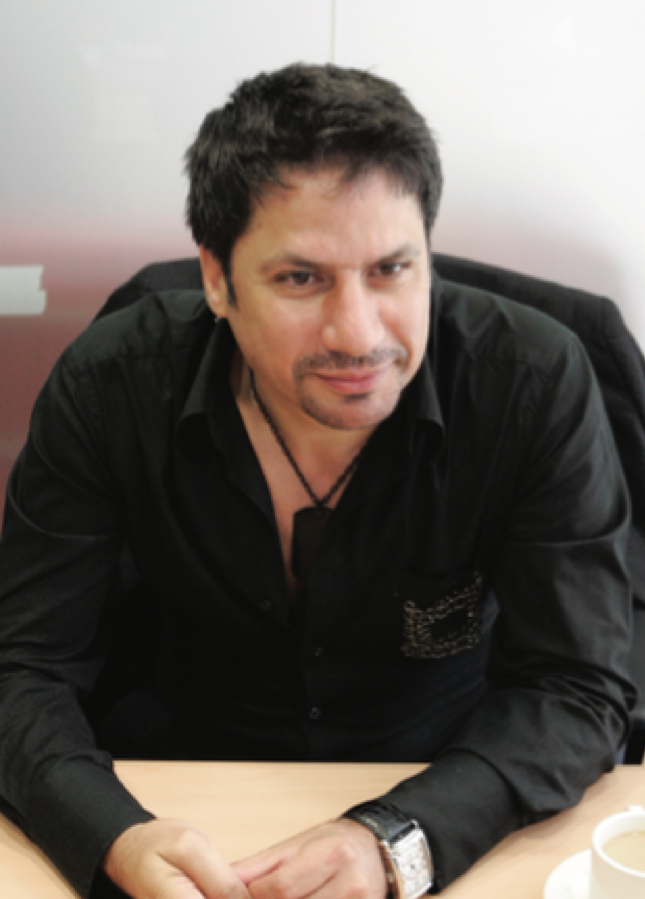
Wissam Trad, director at Saad & Trad, Lebanon’s distributor for international luxury leaders Lamborghini, Jaguar, Bentley and Rolls Royce, agrees that the luxury vehicle taxes in Lebanon are absurd.

“This is too high and discouraging to potential buyers. Should these taxes be revised, I am sure sales would be even higher,” he says.

Consumers in Dubai get a much better tax deal. Assaad Raphael, chairman and general manager at Porsche Center Lebanon illustrates the drastic taxation contrasts between Lebanon and the GCC.

“[In the Gulf], there is a big tax incentive because the cars are taxed only 5 percent, which makes it the cheapest place in the world to buy a car,” Raphael says.

This benefit makes buying a luxury vehicle more reasonable in the GCC than in a country like Lebanon, where the taxes add up to more than 60 percent of the car’s total value.

Still, sales in Dubai have gone down rather noticeably. 

“They’re dumping prices and it’s another issue of flooding the Lebanese market and other markets with the overstock and excess products they have from their market,” Bazerji says. “This is a serious problem. We are losing opportunities and sales, especially since a lot of potential customers are taking advantage of registering their cars in the Gulf to avoid paying [the high taxes they would face in Lebanon].”

A question of sales

In times such as these, who would buy a brand new, luxurious, exclusive car? It seems the current economic circumstances have mostly affected the middle class.

“High net worth people are still today’s spenders,” says Raphael.

Frank Bernthaler, director of sales and marketing at Mercedes-Benz Middle East and Levant, believes consumers looking to purchase luxury vehicles may put a bit more thought into what they’re buying now than before the financial crisis.

In Lebanon, luxury vehicles have fared well amidst the global chaos.

“We are enjoying our best year ever in terms of Bentley and Lamborghini sales, and second best with Jaguar,” notes Trad. For Bentley, the Middle East represents 12 percent of the brand’s sales worldwide.

Maserati in Lebanon has also performed remarkably well in 2009.

“Sales in the first quarter of 2009 have been better than that of 2008,” Bazerji says. The brand’s opulent Quattroporte, which was launched in 2005, is the company’s bestseller.

Sales of lavish vehicles have, without a doubt, softened in the Gulf. Despite scarce liquidity and credit, GCC sales are expected to pick up as the crisis bottoms out.

Compared to the first quarter of 2008, Audi reported a 16 percent drop in sales in the first quarter of this year. A spokesman for the company says they remain optimistic.

“It is a tough time for the whole industry, but our outlook is very positive,” he says.

BMW sales have also dipped this year. Sales fell by 9 percent overall for the company. But the brand’s sales in Lebanon and Syria grew by more than 100 percent, while in Saudi Arabia they accelerated by 15 percent.

According to Stathis I. Stathis, general manager at AGMC in Dubai — the sole importer of BMW in Dubai — this year will present the industry with many obstacles, but hopes remain high.

“We anticipate 2009 to be challenging, but consumer demand in the luxury segment still remains healthy,” he says. “We have several new products planned for the year, so we are optimistic that 2009 will be another good year.”

Bernthaler of Mercedes notes that it hasn’t been all bad for the Middle East luxury car industry.

“Looking at the market in the Middle East and the Levant, we’ve seen year-on-year sales increase. Our most iconic vehicle, the evergreen G-Class SUV, grew by 139 percent in May 2009 compared to the same time last year.”

Candidly, Raphael admits that the global financial crisis has taken a toll on Porsche’s transactions.

“Of course, the economic crisis has had a negative effect on our sales, that’s for sure,” he admits.

Thankfully, Porsche’s production strategy has allowed them to avoid major fallouts.

Premium manufacturers are confident their brand images will sustain sales and customer loyalty

The engine of strategy

“We forecast our deliveries from the factory one year in advance,” Raphael says. “So by the time the crisis happened in September 2008, the factory had time to react. The strategy of Porsche factory was to produce less cars, and the reason is that we’d rather sell one car less than discount our cars.”

Thus, by producing less the company itself modified the supply-to-demand equation in order to not feel the burn of the crisis.

Trad’s company also uses a similar approach to working around the financial crisis.

“In terms of adjustment, we are more careful with the way we order and stock cars compared to last year,” he says.

Regardless, most luxurious car brands only produce a small amount of each model in order to keep the exclusivity of each design. The crème de la crème of premium manufacturers remain confident that their grandiose brand images will help sustain their sales and consumer loyalty.

Sanguine about his dealership’s brands, Trad sees opportunities.

“We are confident that our portfolio of brands[Lamborghini, Jaguar, Bentley and Rolls Royce] are very strong and have a bright future,” he says. “For this reason, we are investing in new showrooms.”

Speeding past crisis

The epitome of luxury is the $1.4 million Maybach Landaulet. The 2009 limited edition model allows passengers in the rear to relax with the top down while the driver remains separated and covered. Maybach has produced only 20 units of the Landaulet for the entire global market, and the Middle East was the first to receive one of these vehicles.

Mercedes and Maybach are some of the top-selling brands in the Middle East. According to Bernthaler, one in every 10 Mercedes S-Class vehicles sold around the world is delivered to the Middle East. Porsche is also amongst the region’s favorite list.

“Porsche has had strong growth in the Middle East in the past six years,” says Raphael. “We have grown from 2,500 cars seven years ago to 8,000 cars this year.”

Compared to last year, 2009 sales have been rather exceptional and are even higher than 2007, according to Raphael. In the Middle East, the average age of the Porsche buyer is around 35 years old, whereas in Europe the profile is around 45.

The new Porsche 2009 Panamera is the brand’s luxurious new four-door sedan. This model is expected to alter the performance of the posh sedan market, as critics say it will create high competition with Maserati’s Quattroporte, a more expensive four-door sports car.

Although car sales in many places have dropped this year, most upscale players in the luxury market segment remain optimistic. With manufacturers such as Maybach rolling out new models like the Landaulet in 2009, who is buying? The richest of the rich, of course. For the rest of us, we’ll keep on dreaming.

July 27, 2009 0 comments
0 FacebookTwitterPinterestEmail
For your information

For your information

by Executive Staff July 24, 2009
written by Executive Staff

ADIA launches new funds

The Abu Dhabi Investment Company (ADIC), an investment arm of the world’s largest sovereign wealth fund, the Abu Dhabi Investment Authority (ADIA), recently announced it is opening up four new funds that will operate in the Middle East and North Africa region. The move comes on the heels of a recent lull in investment activity that was spurred by the ongoing global economic downturn. The company is also rebranding itself through the adoption of a new name, Invest AD. Apart from having the world’s largest wealth fund behind it, Invest AD’s investments will focus on the region as opposed to investing in western financial institutions where the fund’s mother ship suffered huge losses after buying up large chunks of Citigroup, Blackstone and Merrill Lynch. The announcement also comes at a time when most private equity firms are still in a ‘wait-and-see’ mode, despite the market offering interesting valuations across the board.

Mideast airlines expand

The global airline industry looks set to continue its downward spiral for the remainder of the year. Last month the International Air Transport Association (IATA) announced that the global airline industry is likely to lose $9 billion this year, a sizable chunk of which is made up by Middle Eastern airlines. According to IATA, the Middle East’s carriers are set to lose $1.5 billion over the course of the year, up from a previous estimate of $900 million in loses made in March. Despite the bad news, the region’s carriers seem unfazed in their expansion plans, ostensibly betting that the industry will pick up sooner in the region than in other global markets. The Dubai-based Emirates Airlines plans to add 18 new aircraft to its fleet in 2009 and increase its number of flights by 14 percent. The airline has said that it is committed to standing by its order of 160 Boeing and Airbus planes, valued at $62 billion, to be delivered right through to 2018.

“We got sufficient cash and we made profits for the last 24 years,” said Emirates Airlines president Tim Clark to the Associated Press last month. “We can afford to take a hit because we haven’t squandered that money and we have a cash mountain that allows us to tough it through.”

Not to be outdone by its local competitor, Etihad Airways, the other large Emirates-based airline, announced it would spend up to $14 billion on engines and maintenance contracts to complement the 100 aircraft it ordered in 2008. The region’s other big sluggers also got in on the game with Qatar Airways announcing that it would acquire 24 Airbus A320s worth $1.9 billion, while the Bahrain-based Gulf Air signed a $1.5 billion deal with Rolls-Royce PLC to supply engines to the airline’s new Airbus A330 long-haul aircraft.

Abu Dhabi, Riyadh property development

The Abu Dhabi-based private equity firm Gulf Capital will work with New York-based Related Companies, the largest mixed-use developer in the US, to build mixed-use development projects in both Abu Dhabi and Riyadh, valued between $817 million and $1.36 billion each. The venture will be called Gulf Related and headquartered in Abu Dhabi. The deal is set to capitalize on the lack of housing in both cities and low land prices prevalent in the two capitals.

“Our entry into the regional real estate market is a timely one given the considerable drop in both land prices and construction costs, as well as the surging demand in select areas of the GCC,” Karim el-Solh, chief executive officer of Gulf Capital, told Zawya Dow Jones.

Half of the venture’s capital is expected to be capitalized through investors, while the other half will be leveraged by bank loans. The initial capitalization of Gulf Related is expected to reach almost $50 million and increase to $273 million by 2012. Solh hopes that the first project will be announced in mid-2010, according to Zawya Dow Jones. The mixed-use development project will offer both luxury villas as well as high-rise buildings.

GCC bank consolidation

A wave of consolidations in the Gulf Cooperation Council banking industry is expected soon, according to a June report by consulting firm AT Kearney. The firm believes that the fragmented nature of the GCC banking sector provides the perfect platform for mergers and acquisitions among the region’s banks.

“We see great potential for regional banks to consolidate and grow regionally,” said Alexander von Pock, a senior manager at AT Kearney Middle East, in a statement. “While the region has witnessed very few banking mergers and acquisitions over the past years, there will be more activity in the future. GCC banks are still small compared to the big international banks and eventually will need to grow externally to compete. Banks need to proceed carefully, though, as most mergers fail to meet their objectives due to poor planning or execution.”

The United Arab Emirates, in particular, is over-banked and consolidation could prove healthy for the economy. Market capitalization of banks in the UAE has reportedly declined by almost 60 percent recently.

Raj Madha, director of equity research at EFG-Hermes in Dubai, is not a fan of consolidation in the banking sector. “I am not a believer that current issues can be resolved by mergers, although a limited number of cross-border mergers may be appropriate,” he said.

“This is not the kind of market to be combining banks. The suspicion would be that any bank willing to be bought would have a loan portfolio not worth buying.”

UAE banking sector health

The United Arab Emirates government is continuing to try and dampen both the economic and psychological impacts of the financial crisis. In mid-June, the UAE Ministerial Committee released a statement on the current status of the Emirates’ banking sector.

“The UAE banking sector is stable and firmly on the growth path. The liquidity status of the UAE’s national banks is excellent,” it stated.

UAE banks were hit hard when the crisis first arrived in the Gulf. UAE banks were highly overleveraged and as the economy faltered, tightened lending conditions, causing the government to try to boost liquidity and credit facilities in the country. Now, data from the UAE Central Bank (UAECB) suggests that the gap between national banks’ loan-to-deposit ratios has improved. The loan to deposit ratio has declined by almost one third since the beginning of 2009, a huge improvement from the end of last year. In 2008, UAE banks lent $30 billion more than their deposit base, well exceeding the lending ceiling set by the UAECB, according to Standard Chartered bank research.

“We are following a clear path that encourages and supports national banks to move forward with confidence,” said Obaid Humaid al-Tayer, minister of state for financial affairs. “We have also observed that the liquidity status of the UAE’s national banks is excellent.”

Other measures are being taken by the Emirates as well. Younis Al Khoori, the UAE Ministry of Finance’s director general, said in mid-June the UAE will sell federal bonds to help fund budgetary spending on infrastructure and seek, for the first time, a sovereign rating.

“The government is moving to a long term budgeting process and whatever we need will be done through a bond issuance,” Khoori told Zawya Dow Jones in an interview. “The federal government mandated the Ministry of Finance to start issuing a bond for a few purposes.”

Qatar banking status

In June, ratings agency Fitch Ratings issued a special report attributing the health of Qatar’s banking sector to continuous government support. At the end of March, the government purchased $1.8 billion worth of local banks’ investment portfolios, in order to revive lending, boost liquidity and support the economy. In early June, the government announced plans to spend an additional $4.1 billion to buy domestic real estate portfolios of banks, due to the swelling risks associated with the property sector.

Even with the government assistance, the near future looks challenging for Qatar’s banks. Fitch notes that profitability amongst local banks will be challenged by sluggish loan growth. Also, profitability will be tested by “funding constraints and increasing impairment charges.”

Robert Thursfield, a director in the financial institutions group at Fitch Ratings, said that “asset quality remains the biggest issue facing Qatari banks in 2009. Fitch expects loan defaults to rise given the rapid growth in lending during the boom.”

Fortunately, quashing most of these risks is the support the government is willing, and capable, of giving. The bailouts were welcomed with arms wide open by all banks in the country, of which the government has part ownership. In such uncertain times, these vigorous measures have boosted confidence while also improving Qatari banks’ risk profiles.

Real miscommunication

On June 13, Kingdom Holding Company announced that Emaar properties, the Gulf’s largest real estate company, would handle the development of its $26 billion Kingdom City project, including construction of the world’s tallest tower. The next day Emaar’s stock jumped more than 7 percent. But the increase was short lived — Emaar denied the deal two days later, saying it will only provide management services for the project for a fee. Consequently, the stock price of Emaar fell 5 percent a day later, and Kingdom Holdings’ stock also fell 2.7 percent. Since the rumor had a significant effect on the stock market, United Arab Emirates bourse regulator asked Emaar to give a detailed clarification about the deal, including its nature, value and possible impact on the company’s earnings.

“As the project is currently at the feasibility and master plan review stage, the level of income currently cannot be envisaged,” was the company’s written response to the regulator. Emaar added that it was too soon for Kingdom Holding to announce such a deal since many agreements were not finalized yet.

“In view of all the required agreements not having been finalised as yet, no announcement was made by Emaar in respect of this agreement. However, Kingdom Holding Company announced the transaction on [June 13] without informing Emaar,” the company’s response read.

Kingdom Holding, owned by Saudi billionaire Prince Alwaleed bin Talal, replied by saying that Emaar is not investing in the Jeddah project, and that the agreement between the two included only management services.

Property predictions

Several recent reports in Dubai have offered estimates on how low property prices in the Emirate might sink. Dubai property prices have fallen as much as 50 percent since their peak in August 2008, and 30 percent in Abu Dhabi. Some predict that prices will continue falling for the next one to two years; others say that the market will bottom out by the end of 2009, and a few have optimistic expectations that the market will actually be in the first stages of recovery by year’s end.

For example, the global financial firm UBS predicts real estate prices will fall another 40 percent by the end of 2010. EFG-Hermes said that the second half of 2009 will see 70,000 fewer new units coming online than last year, and the cumulative decrease in prices would reach 15 to 20 percent by 2011. Aldar’s CEO, one of the biggest real estate companies in Abu Dhabi, did not predict how much prices will decrease, but said that the market will stay depressed for at least the next 12 months.

Other analysts see the market nearing the bottom. Deutsche Bank expects prices to decrease 10 to 20 percent in 2009 and the market to bottom out by the end of the year, as expatriates are still exiting the Emirate and new supply is still entering the market. Georges Makhoul, head of Morgan Stanley’s Middle Eastern and North African operations has the same opinion on prices, but a different analysis. He says market prices will hit bottom and start too rebound by the end of 2009 as international investors start buying distressed assets in the market.

“Once you see distressed funds coming to the market and picking up whole portfolios from developers and banks, then you know we are on the mend,” he told The National. “That is the way bubbles clear themselves. I am waiting to see that.”

Ali Khan, managing director of Arqaam Capital, was perhaps the most optimistic of all. He predicted real estate prices will show some recovery in the fourth quarter of this year, and that prices will be higher than they are today.

UAE lending

Dubai Islamic Bank , the largest Islamic bank in the UAE, announced that it is offering 90 percent financing for properties across the Emirates, both for UAE nationals and expatriates. In another sign of lending returning to the UAE market, HSBC Middle East also announced in April that it is offering 75 percent financing on completed villas, 70 percent financing on completed apartments, and 50 percent on off-plan properties. Moreover, Fahd Reaz, senior product manager in personal and home finance at Noor Islamic Bank, said that mortgage activity in Dubai has improved compared to the beginning of the year.

“[Mortgage lending] is almost 40 to 50 percent higher” he told Arabian Business.

July 24, 2009 0 comments
0 FacebookTwitterPinterestEmail
Editorial

Staked in stability

by Yasser Akkaoui July 24, 2009
written by Yasser Akkaoui

Summer is upon us, and in this post-election period, in the midst of the global recession, an air of optimism has washed over Lebanon. The pundits are predicting that we will end the year having welcomed 2 million tourists. There was a time when 1 million visitors were seen as a benchmark of good health for the national economy, but today — even with the spectacular political blips that Lebanon has experienced over the last few years — our pull remains irresistible.

The boom, if it happens, will surely boost the tourism sector’s share of the economy to $2.5 billion, create jobs and contribute to Lebanon’s image building (or should we say image re-building). No one has apparently asked where the surplus visitors will stay, and even a quick back-of-the-envelope calculation will show that guest houses from Bint Jbeil to Hermel will be overflowing.

This does not mean that Lebanon has achieved utopian perfection. Those who will not be among this summer’s visitors are Lebanese Jews. Jews are listed in the Lebanese Constitution as one of the country’s 18 officially recognized sects, but the Jewish community has all but disappeared in the last half century, its members having sought sanctuary abroad to take their place among the diaspora. Today the community numbers in the hundreds, and those who spend their weekends partying in Gemmayze should remember that before the area became a hub for Beirut nightlife, many of its stone ceilinged bars were shops inhabited by Jewish tradesmen and merchants. What makes Lebanon such a unique country and gives it color and flair in the region is the variety of religions living in relative harmony. Rebuilding the Magen Avraham synagogue would be the first step toward what we hope will be greater recognition, and reintegration, of Lebanon’s Jewish community.

Around the region the feel good factor is beginning to return, with yields from 2008’s last quarter restructuring slowly coming to harvest. Saudi Arabia is leading the way — in particular, the kingdom’s newly-regulated real estate market should go some way toward invigorating that economy — and this augers well for the rest of the region.

The political outlook also appears brighter. The rumbling on the streets of Tehran aside, the appointment of a new US ambassador to Damascus is a positive move as the rest of the region kisses and makes up. As ever, there is just one word of caution: if ever the Middle East party threatens to get out of control again, hands off Lebanon, please.

Even in Hermel, hotel owners now have a stake in stability.

July 24, 2009 0 comments
0 FacebookTwitterPinterestEmail
LuxurySpecial Report

High time to set to sea

by Executive Staff July 10, 2009
written by Executive Staff

It hasn’t been smooth sailing for the region’s luxury yachting industry for some time now. Even before the global financial fiasco in the Middle East, shipyards had to contend with the exorbitant cost of oil that makes up most of the resin-based raw material costs of the industry.

“A lot of companies had to adjust their prices according to how much sellers were selling raw materials, and the price of a lot of boats soared,” said Camille Chamoun, chairman and chief executive officer at Lenco Marine, a Lebanon-based boat manufacturer. “You just had to adjust, you couldn’t do anything else.”

Nonetheless, the consumer appetite that was driving oil prices higher and filling up the coffers of regional governments kept the industry afloat. In turn, manufacturers continued to maintain high levels of supply to the market that ultimately proved to be unrealistic.

“The brands that built many boats and accumulated excess stock have really been hit hard,” said Alain Maaraoui, chairman and chief executive officer of Sea Pros Yachts, a yacht service and sales company with outlets in Lebanon, Kuwait, Egypt and the Emirates.

“Boats that were being produced for clients who had financial problems and had to cancel their order. The companies [producing the boats] are now contacting us to try to sell some of their boats.”

The cloud’s silver lining

That push, coupled with the plummeting price of oil and, by extension, raw materials for yacht makers, translated into a window of opportunity for anyone who loves the smell of the sea, and had a few million dollars to spare. But initially, it did not seem like the fish were biting. Even Saddam Hussein’s former luxury yacht, which includes a submarine, a helicopter landing pad and golden bathroom faucets, failed to entice yacht buyers when it was put on sale back in January, according to an Iraqi government spokesperson.

There are signs, however, that demand may be returning. The downturn resulted in boat valuations hitting all time lows as the rules of oversupply have pushed prices down, all but quashing the margins of boat-makers. Manufacturers are now looking to get rid of their excess stock and reposition themselves for better times.

“After the downturn you found a lot of beautiful yachts that were selling at half price,” said Chamoun. “A lot of boats were being sold at cost price.”

Many in the yacht industry agree that the time to make a buy is now, but it won’t last forever. The coming summer season means high-season for yachting and vacationing in the region. That will inevitably have a positive effect on sales in a region where boat shows still feature the latest, newest and glitziest products, albeit with a few less exhibitors. For instance, this year’s Dubai International Boat Show, the biggest annual boat show in the Middle East and one of the top five in the world, attracted 721 exhibitors from 50 countries at the Dubai International Marine Club. The event suffered only an 11 percent decrease in the number of exhibitors from the year before.

“After the downturn you found a lot of beautiful yachts that were selling at half price”

Fewer and fatter

The industry itself also looks to be consolidating as companies attempt to make themselves less vulnerable to the ongoing downturn.

“All the companies are restructuring, and there have been several mergers abroad, which means they have lowered production costs because of economies of scale,” Chamoun said.

The regional industry focus also seems to be shifting away from traditional markets, such as the Emirates, toward more liquid areas in the region.

“Abu Dhabi, Dubai and Kuwait have been hit hard but Lebanon has not been affected at all and there is a lot of demand, especially after the elections,” Maaraoui said.

The region’s largest economy, Saudi Arabia, also looks well positioned to harbor much of the excess supply being placed on markets, because the effects of the crisis there have been “marginal,” Chamoun said. “They are booming and building lots of marinas because there is a lot of cash flow out there.” 

Today the chance to get a good deal still persists as excess stocks have not yet been depleted.

“The production that was available will be done in a month or two after the summer is over,” Maaraoui said. “There is a gap until the end of the summer at the most, so today there is an opportunity to buy.”

July 10, 2009 0 comments
0 FacebookTwitterPinterestEmail
LuxurySpecial Report

Wings clipped but still flying

by Executive Staff July 10, 2009
written by Executive Staff

The Middle East has been one of the world’s fastest growing regions for luxury goods. From yachts to private planes, cars to clothes, the last decade saw the region’s luxury sales skyrocket as much as 20 percent per year. But now that consumers have tightened their purse strings, demand has fallen, and luxury market sales in such high-profile shopping destinations as Dubai have dropped as much as 45 percent. Some retailers estimate the region will rebound more quickly than others, due to the rising price of oil. But how are those tasked with making and selling luxury goods dealing with the downturn in the meantime?   Some are focusing on long term customers, others on consumers looking for quality instead of flash. In this special summer section, Executive profiles the purveyors of premium goods and services in the Arab world to find out how they’re faring and strategizing in these challenging times.

There is little doubt that the region’s jet-setting executives have been humbled by the global economic downturn. As a consequence, the slump has left the high-flying Middle Eastern private jet industry feeling the turbulence of the downturn’s headwinds.

“Today, the rates we are offering are 20 to 25 percent below what they were before the crisis,” said Abed el-Jaouni, chairman of Imperial Jet, a multi-national aviation services group based in Lebanon, Saudi Arabia and the United Arab Emirates.

The global airline industry is set to lose $9 billion in 2009, according to the International Air Transport Association, and the business jet industry is by no means bucking the trend. Bombardier, the Montreal-based transport behemoth and the largest manufacturer of business jets globally, recently announced that it expects new orders to slow to 375 aircraft this year and not to return to last year’s level of 1,400 aircraft until 2013. The company also announced that it will lay off more than 4,000 employees and lower production due to the slump in demand. 

Western woes

Most of the damage that has been done occurred in western markets where jets are produced. But if one compares the region to other more developed markets, the Middle East seems to have been spared the brunt of the downturn.

“The market in Europe is dead and it will continue to be a medium to bad year [for them],” said Jaouni. “But here in the Middle East it is picking up.”

Nicholas Meszaros, general manager of the Beirut-based Executive Aircraft Services, agrees.

“Manufacturers are looking more to the Middle East because there are still some deals to be done here, as opposed to the States or Europe,” he said.

It would be fallacious, however, to say that the entire region has flown right through the storm. Those who splurged during the upturn now seem to be in a tailspin.

“Most of the operators in Dubai had to take some dramatic decisions,” Meszaros said. “They have reduced their pilots, cutting down on routes and stops, and have cancelled a lot of aircraft they were waiting to get on management certificates.”

But those companies in the region that did not over-extend have done moderately well considering the economic turmoil afflicting the world today.

“The two biggest markets we have in the region are Saudi and Egypt,” Imperial Jet’s Jaouni said.

Other markets such as Qatar and Kuwait are expected to continue to do relatively well in the months to come, according to most observers.

The good news for the region’s executive jet industry is that the negative effects of the downturn on western manufacturers has led to bargains for the Middle East’s aviation service operators and jet enthusiasts.

“Manufacturers have stopped production on certain things and what has happened is that people have forfeited their down payment so the manufacturers are saying ‘take it for cheaper,’” Jaouni said. “I see the bottom and the right time to buy planes. [An] aircraft that was valued only eight months ago at $38 million is being offered to us today at $22 million.”

Landing in reality

With less disposable income and a risk-averse approach, manufacturers are less keen to build large, expensive aircraft. Operators are shying away from large aircraft as well, having less money for purchases, operations and maintenance.

“More people are looking at the smaller airplane, because when you are looking at 10 or more seats, you are looking at long-range expensive aircraft, and the demand has been less in this area,” said Meszaros.

While the skies over the Middle Eastern jet market may still be cloudy, aircraft services executives say the region’s market is already looking brighter. 

“It is better today, it will get better come the beginning of next year and it will be much better towards the end of next year,” Jaouni said.

July 10, 2009 0 comments
0 FacebookTwitterPinterestEmail
North Africa

Tops in technology

by Executive Staff July 10, 2009
written by Executive Staff

Tunisia’s investment in information and communication technology (ICT) has begun to pay off. A flurry of recent reports has ranked the sector among the top in the region, highlighting its potential as a destination for the offshore operations of European companies. While such reports can only provide a rough comparison and rely on subjective factors, rankings from such diverse sources as the World Economic Forum, the World Bank, AT Kearney and the Commonwealth Business Council nonetheless underscore Tunisia’s advantages, including a proximity to key markets, a multilingual population, low costs and a competitive ICT and business environment. As European companies look to reduce expenses, the North African country could become a popular site for new developments.

Tunisia has benefitted from European corporations’ increasing tendency to locate ICT operations offshore. While Southeast Asia has emerged as a popular offshore destination, European firms have looked closer to home, relocating operations to Eastern Europe, the Middle East and North Africa. With English less of a priority, Tunisia’s location, which offers travel times of less than two hours to many European capitals and sits in the same time zone, has attracted many firms. Although North American firms still account for nearly 70 percent of offshore spending, according to a recent report by US-based consulting firm AT Kearney, European companies are catching up quickly. As European demand increases, so too will the flow of business to North Africa.

The entire region will likely benefit from this shift, but Tunisia stands out among its neighbors. For the third year in a row, the World Economic Forum’s report on ICT ranked Tunisia first in North Africa. Rated 38th of the 134 countries ranked in the report, Tunisia came in well ahead of its closest competitors (Jordan, 44 and Egypt, 76), and scored well on individual criteria, including political and economic environment and degree of ICT utilization.

Tunis hardwires ICT

This acknowledgement can largely be attributed to the government’s strong support of the ICT sector. In a bid to improve Tunisia’s knowledge economy, the government has funnelled money to training and education programs, as well as into ICT infrastructure, while new legislative incentives have also been unveiled to encourage offshoring. Tunisia’s 11th development plan (2007-11) calls for an investment of $1.91 billion into the local ICT sector, with a major focus on training and increasing employment. Although Tunisia’s population is relatively small, it is well-educated and multilingual — something the government hopes to take advantage of in the coming years, with a target of an additional 10,000 ICT jobs per year. Currently, 10 percent of university students are pursuing ICT studies, which bodes well for the future of the industry.

Given the pressures of the global economic downturn, Tunisia’s competitive labor costs and developed infrastructure are also attractive. These market advantages are bolstered by an encouraging legislative framework which has, amongst other things, paved the way for a series of IT industry zones. El Gazala, the nation’s flagship technology and communications center located just outside Tunis, is an example of the policy’s success. Open since 1999 and home to about 80 companies, including Ericsson, Alcatel-Lucent and Microsoft, demand at El Gazala has been so high that it is adding 36 hectares to its existing 65 hectares. Two other parks, at Sousse and Sfax, are also expanding, adding a total of 100,000 square meters.

The government has also worked to streamline bureaucracy in the ICT sector’s regulatory agencies in an effort to attract new companies. A one-stop shop to simplify administrative and legal procedures and to facilitate import and customs procedures for ICT was established in 2008. The process consolidates the activities of a number of oversight bodies and allows companies to complete most procedures online.

“Previously, customs procedures could take a week or longer. This speeds up the process,” said Jawher Ferjaoui, the general director of the digital economy section at the Ministry of Communications and Technology.

Tunisia’s “government readiness” rank, according to the World Economic Forum, is even higher than its overall rank (27th compared to 38th), and it ranks 8th for government prioritization of ICT. The state aims to increase ICT’s contribution to the economy to 13.5 percent by 2012, up 3.5 percent from the current level, which will bolster the sector’s position in the increasingly competitive market for  offshore ICT services.

July 10, 2009 0 comments
0 FacebookTwitterPinterestEmail
North Africa

Development’s new digs

by Executive Staff July 10, 2009
written by Executive Staff

Private developers are moving to establish a permanent foothold in Algeria’s largely untapped real estate market, with a number of sizeable projects due to break ground in the coming year. 

Following nearly a decade of strict financial restrictions and political instability, the recent glut of petro-dollars has helped fuel a massive increase in the construction and real estate sectors, drawing in foreign investors and nurturing domestic developers. 

Gulf investors have flocked to Algeria to develop its 1,200 kilometer coastline. Some of the Gulf’s more prominent property investors — including Emaar, Gulf Finance House and Al Qudra — have unveiled billion-dollar plans for commercial, residential, tourist and mixed-use projects in and around Algiers.

Among the more prominent developments is the new megaproject by Emirates International Investment Company (EIIC), the $4.8 billion Dounya Parc, a nearly 7 million square meter greenbelt around Algiers. The company also has unveiled plans for the $322 million beachfront Ain Chorb tourism village, which the group is developing with the Kuwaiti Investment Group. Projects of this size represent a massive step forward for the Algerian market, although the lack of precedent means that such developments often face a lengthy land acquisition process requiring coordination with both ministries and local authorities. However Camille Nassar, CEO of EIIC Algeria, said the country’s enormous commercial potential was a crucial incentive. 

Europe and China look to the Maghreb

Gulf investors are not alone in looking to enter the Algerian market. Swiss-based Société des Centres Commerciaux d’Algérie (SCCA) is overseeing the construction of Algeria’s largest commercial center, the $73 million Bab Ezzouar complex, which will include some 31,000 square meters of retail space. The China State Construction Engineering Corporation (CSCEC) has also expressed interest in expanding its Algerian operations by developing real estate. 

Domestic investors have also joined in the headline grabbing events. Dahli Group’s $3.4 billion Alger Medina development in downtown Algiers  issued a bond that was marketed directly to the public — an audacious move and the first of its kind for the country’s fledgling capital markets. The bond raised 30 percent of the cost of the project, which will provide some 1 million square meters of office space. 

Following the completion of its ambitious low-cost housing program, the Ministry of Housing and Urban Planning will dedicate an additional $19.4 billion to building one million more homes. As one of the primary pillars of President Abdelaziz Bouteflika’s election campaign, the new residential space will be marketed through a network of more than 450 private and state-owned real estate agencies offering subsidized schemes.

With one of the highest per-unit occupancy rates in the world, according to the United Nations Development Program, Algeria has also tried to mitigate urban migration by launching a program to improve existing housing structures around the country. Nacer Djama, president of the Caisse National du Logement, said there is enormous opportunity for companies specializing in the construction of social housing in the coming years. With only 15,000 to 20,000 mortgages given out last year, Djama said the banking sector needs to catch up with demand for housing finance.

While Algeria’s real estate market offers a tantalizing target for companies that are increasingly squeezed by the global economic downturn, developers — and foreign companies in particular — still face a number of obstacles. The prime minister recently issued a decree on foreign investment, mandating that any project that benefits from government incentives must have a local majority shareholder.  

Still, Algeria is a promising place for the committed long-term investor. The trials and tribulations of the market as it adjusts to these multibillion dollar projects will also help prepare the authorities to deal with the needs of the country’s increasingly dynamic real estate sector.

Sam Inglis is Executive’s  Mediterranean correspondent, based in Istanbul 

July 10, 2009 0 comments
0 FacebookTwitterPinterestEmail
North Africa

Invested in tourism

by Executive Staff July 10, 2009
written by Executive Staff

Like many of its neighbors, Morocco has a long-term tourism development strategy and has recently highlighted its flexibility by introducing a new program to follow its current tourism plan, called “Vision 2010.” That plan, kicked off in 2001 to chart development over 10 years, has been largely successful, but is nearing its conclusion. Now, the government has launched “Cap 2009” to retool the sector’s objectives and pump cash into the market in preparation for the upcoming launch of the “Vision 2020” development program.

Taken together, the two plans aim to boost arrival numbers, upgrade infrastructure and increase the quality of human resources. While Vision 2010 may fall short of its initial target of 10 million tourists by 2010, particularly given current economic conditions, the number of tourists rose 69 percent between 2001 and 2007, and another 7 percent from 2007 to 2008, bringing the total arrivals to almost 8 million. Hotel construction has been keeping pace with the increase and total bed capacity has risen more than 47 percent since the start of the plan.

Given that tourism attracts more investment than any other sector in Morocco and contributes around 6 percent to the economy annually, the government is taking proactive measures to ensure the momentum continues, even during the downturn. With tourist receipts decreasing 3.5 percent, from $7.4 billion in 2007 to $7.1 billion in 2008, Cap 2009 will seek to use Internet marketing to expand the arrivals base beyond the traditional European markets. The program will receive a budget increase of 10 percent ($6.2 million) in 2009 to facilitate expansion into Eastern Europe, Russia, the Gulf and China, among other markets.

Building from the top down

Domestically, Cap 2009 identifies Marrakech, Fez, Casablanca and Agadir as priority regions, which is consistent with the Kingdom’s promotion of high-end cultural and beach tourism. Efforts to target these areas are already included in Vision 2010. The components — Plan Azur, Plan Biladi and Plan Madain — aim to develop resorts, bolster domestic tourism and showcase cultural destinations.

Plan Azur is expected to be the linchpin of the three, as Morocco looks to capture some of the lucrative regional resort market. The plan outlines six new integrated resorts that will require investment of $5.7 billion and will result in the creation of 110,000 beds and 400,000 direct and indirect jobs. While the sun-and-sea model is relatively low-earning and faces serious competition, the government hopes that increased numbers of visitors will compensate for smaller margins of revenue.

Adding infrastructure is the primary goal of Vision 2010, with Vision 2020 expected to focus on human resources and build upon the expanded offerings. When the government launches the program next year, it will be geared towards bringing service quality up to the standard that many international consumers expect. Vision 2020 will also take into consideration requirements for sustainable and responsible tourism, as well as the protection of natural and cultural resources.

To accommodate the continued rise in arrivals, Morocco is working to upgrade its airports. Abdelhanine Benallou, the CEO of the Moroccan National Airports Authority (ONDA) said the objective is to reach a capacity of 32 million passengers by 2012, with current capacity at 23 million. In mid-April, the African Development Bank granted the Kingdom a loan of $334 million to enhance facilities at the Casablanca, Fez, Agadir, Marrakech and Rabat airports, which handle the bulk of the country’s air traffic. The loan will cover about 75 percent of the $445 million project, with the ONDA covering the remainder of the cost. ONDA is also working with the Moroccan National Tourism Office to reduce bureaucracy and has announced adjustments to airport taxes on chartered flights.

The government’s willingness to make adjustments across the tourism sector underlines the country’s adaptability, particularly during these difficult times. Cap 2009 will expand Morocco’s presence in emerging markets, which should help make up for a decline in arrivals from Western Europe. Meanwhile, targeted Internet marketing and increased bed capacity will develop a solid foundation that will help temper the effects of the recession in the short term, and provide the necessary framework for future growth under Vision 2020.

Morocco seeks to upgrade its airport capacity to 32 million passengers per year

July 10, 2009 0 comments
0 FacebookTwitterPinterestEmail
GCC

Going once, going twice

by Executive Staff July 10, 2009
written by Executive Staff

If you can’t sell it, auction it. That seems to be the mantra many in the United Arab Emirates’ troubled real estate market have adopted as they try to offload properties.

On May 19, Madania real estate company took the lead by auctioning four properties. Sherwoods, a real estate consulting firm, followed suit and auctioned 21 lots on June 4. Coldwell Banker also received a permit from the Dubai Land Department (DLD) and is planning to conduct an auction this summer.

But the auctions have run into some problems. Despite more than 100 people showing up at the Sherwoods auction, not one property was sold out of 24 on offer.

“There’s so much bad news, everyone’s scared and is holding on to their money… If I had access to the sort of money being asked for, I would buy,” Anwer Moola, a Dubai property owner, told The National newspaper. “A five-bedroom villa, for example, can still be rented for [$50,000 or $55,000] a year.”

But experts believe that the auctions are the best way to get an accurate price for properties in a market where buyers and sellers have vastly different ideas of a “fair price.”

“The auction removes the price and puts the product out in the market, and it allows people to look at it and make their opinion on what the property is worth,” says Raymond Kuceli, chief executive officer of Madania Real Estate. “The price that is generated gives an indicator to the seller on where exactly their property sits in the marketplace.”

Executives at Sherwoods say the properties auctioned so far have not been distressed assets, but units that have been put on the market with no interested buyers.

“None of the properties were taken from lending institutions, but we certainly have people who agreed to sell below the original price that they paid,” says Jeremy Mayhew-Sanders, head of investment & developments at Sherwoods Independent Property Consultants.

Still, both Kuceli and Mayhew-Sanders agree that there is a possibility for distressed properties to also be included in future auctions.

On the auction block

Property auctions are still new in Dubai and come at a time when the market is in its worst downturn, so the results were not surprising — both auctions bids failed to attain the lowest price set by sellers.

“We knew we would struggle to sell anything on the night of the auction, and if we did it would have been a great bonus,” says Mayhew-Sanders.

Kuceli says the outcome of the auction was satisfying, since some properties achieved competitive bidding and bidders showed interest after the auction was over.

“For us we had a good turnout, we had some bids. And we had negotiations afterwards, too,” says Kuceli of Madania’s auction, where two of the four properties on offer received bids.

At the Sherwoods auction, 17 bidders were present in the room and at least seven lots received bids. Bidders also showed interest after the auction, where a deal for a $1.6 million penthouse in the Emirates Crown closed.

“We are working on land deals which may or may not close, but I hope they will,” says Mayhew-Sanders.

Land department

Any company that wants to hold a public auction has to get an auction license from Dubai’s Department of Economic Development and an auction permit from the Land Department.

Companies can auction as many properties as they want, but should submit details for every property in order to receive approval. If all the information is submitted at once, the process might only take a couple of days, says Kuceli. The fee for obtaining an auction permit from the Land department is $545.

The Dubai Land Department also charges 2 percent of the sales price of the property. The system is for completed properties, and dealings with foreclosures and inherited properties have yet to be specified.

Planning ahead

The first two auctions might not have been very successful, but that will not keep companies like Sherwoods and Madania from planning future auctions in the hopes that they can build on the level of interest and success.

Sherwoods is planning another auction in November. Mayhew-Sanders says he is not sure how many plots the auction will include, but it will be easier than the first one.

“Our next auction will be very focused on dealing with stock that we feel confident we can sell,” he says.

As for Madania Real Estate, Kuceli says “we were looking… at the second week of July because we want to get more properties online.”

With eight properties confirmed and aiming for 15, Madania’s Kuceli believes more investors will show up, having familiarized themselves with the auction process.

July 10, 2009 0 comments
0 FacebookTwitterPinterestEmail
Comment

A government under the gun

by Thanassis Cambanis July 1, 2009
written by Thanassis Cambanis

March 14 can claim a major — and unexpected — victory at the polls, but they’ll have to pay close attention to Lebanon’s real balance of power if they want to avoid miscalculation and overreach. The pathology of sectarianism and Hezbollah’s entrenched military power place far more serious constraints on the prospect for changing Lebanon than electoral politics do.

The results of the June 7 ballot are just one of many factors that determine what Saad Hariri’s coalition can and cannot achieve — maybe even one of the smaller factors. The biggest, on the contrary, is the old rule of force: Hezbollah’s militia.


If the Party of God perceives a threat to the autonomy of its militia, it will do anything, including a military takeover of Beirut, to neutralize the perceived threat. Hezbollah did so in May 2008, and has made clear it would do so again, regardless of the political fallout or cost to the resistance’s legitimacy among Lebanese. It’s also worth keeping in mind that about 850,000 Lebanese voted for Hezbollah and its allies, significantly more than the 720,000 who voted for March 14. Only sectarian gerrymandering translates that popular vote into a parliamentary majority for Saad Hariri’s coalition.


Votes do matter, but brute power matters more. Hezbollah won’t shirk from a confrontation, and it doesn’t have to worry about losing popularity and legitimacy so long as it commands the nearly undivided loyalty of the Lebanese Shiites in the Bekaa Valley, southern Lebanon and Beirut’s southern suburbs. The principle factor that could reduce Hezbollah’s power is Iran. For decades, the Islamic Republic has given Hezbollah a generous operating budget and a steady flow of military training and material, allowing the Party of God to build its own state and act independently of the normal constraints on a Lebanese political party. If Iran cut a grand bargain with the United States (or if Syria, which controls the flow of weapons to Hezbollah, makes a deal with Israel), Hezbollah could suddenly find itself defanged, or at the very least, boxed in.


By a similar token, Hariri and his allies draw considerable power from their links to outside powers — in particular the United States and Saudi Arabia. Neither of March 14’s patrons has demonstrated anything like Iran’s staying power and commitment to its client, in terms of military aid or consistent political cover. In Washington’s case, the sponsorship is particularly shaky; most Lebanese are convinced that anytime Lebanon’s interests conflict with Israel’s, there’s no question that Washington will side with Tel Aviv.


Whatever government emerges from the elections, it’s hard to imagine any substantial effort to disarm Hezbollah, although calls to do so will come from some quarters. The cries for “change and reform” notwithstanding, Lebanon’s political classes of all stripes have far too much vested in a system of patronage and corruption, and it will likely survive unscathed. Finally, it’s nearly impossible to imagine Lebanon’s arcane political system being revamped, with its guarantees of certain powers for certain sects regardless of their actual share of Lebanon’s population. Hence a shrinking Christian minority will wield more government power than a Muslim population twice its size, and the Shiites — Lebanon’s largest group by far — will still be relegated, at least in name, to the most marginal government posts.


The March 14 forces can claim a victory at the polls but they’d be hard pressed to claim a mandate. They won the support of the Sunni, the Druze and around half of the Christians, largely by convincing voters that the other side was worse — not by mobilizing support for a set of political goals. That lack of momentum makes it hard for March 14 to do more than govern in the middle, in pursuit of incremental change, as it has since 2005. Any attempt to radically reshape Lebanese politics, for example by disarming Hezbollah and seeking a peace treaty with Israel, would meet an intransigent and powerful Hezbollah, which at least in the short term will retain the power to bring the Lebanese state to its knees by force, if it so chooses.


When the dust settles, everyone will talk about a “new phase.” Hezbollah politicians already were speaking quietly, before the elections, about a conciliatory approach. Ali Fayyad, just elected to parliament after 14 years at the helm of Hezbollah’s think tank, said his party now had to hunker down and work out the details of its political platform, eschewing confrontation.
“Politics has its own logic,” he said sitting on the porch of his home in Taibe. “When we were a small militant resistance group, we had other issues. We are now the biggest political party and player, with strategic effects in half the region. We will never achieve political reform by civil war or by hegemony.”
Rest assured though that until something radical and unexpected shifts in the regional dynamic, Lebanon will see small changes rather than big ones, and as usual, they’ll be decided by a small group of men sitting around a table — and not at the ballot box.

Thanassis Cambanis is a journalist writing a book about Hezbollah

July 1, 2009 0 comments
0 FacebookTwitterPinterestEmail
  • 1
  • …
  • 459
  • 460
  • 461
  • 462
  • 463
  • …
  • 686

Latest Cover

About us

Since its first edition emerged on the newsstands in 1999, Executive Magazine has been dedicated to providing its readers with the most up-to-date local and regional business news. Executive is a monthly business magazine that offers readers in-depth analyses on the Lebanese world of commerce, covering all the major sectors – from banking, finance, and insurance to technology, tourism, hospitality, media, and retail.

  • Donate
  • Our Purpose
  • Contact Us

Sign up for our newsletter

    • Facebook
    • Twitter
    • Instagram
    • Linkedin
    • Youtube
    Executive Magazine
    • ISSUES
      • Current Issue
      • Past issues
    • BUSINESS
    • ECONOMICS & POLICY
    • OPINION
    • SPECIAL REPORTS
    • EXECUTIVE TALKS
    • MOVEMENTS
      • Change the image
      • Cannes lions
      • Transparency & accountability
      • ECONOMIC ROADMAP
      • Say No to Corruption
      • The Lebanon media development initiative
      • LPSN Policy Asks
      • Advocating the preservation of deposits
    • JOIN US
      • Join our movement
      • Attend our events
      • Receive updates
      • Connect with us
    • DONATE