• Donate
  • Our Purpose
  • Contact Us
Executive Magazine
  • ISSUES
    • Current Issue
    • Past issues
  • BUSINESS
  • ECONOMICS & POLICY
  • OPINION
  • SPECIAL REPORTS
  • EXECUTIVE TALKS
  • MOVEMENTS
    • Change the image
    • Cannes lions
    • Transparency & accountability
    • ECONOMIC ROADMAP
    • Say No to Corruption
    • The Lebanon media development initiative
    • LPSN Policy Asks
    • Advocating the preservation of deposits
  • JOIN US
    • Join our movement
    • Attend our events
    • Receive updates
    • Connect with us
  • DONATE
Editorial

Staked in stability

by Yasser Akkaoui July 24, 2009
written by Yasser Akkaoui

Summer is upon us, and in this post-election period, in the midst of the global recession, an air of optimism has washed over Lebanon. The pundits are predicting that we will end the year having welcomed 2 million tourists. There was a time when 1 million visitors were seen as a benchmark of good health for the national economy, but today — even with the spectacular political blips that Lebanon has experienced over the last few years — our pull remains irresistible.

The boom, if it happens, will surely boost the tourism sector’s share of the economy to $2.5 billion, create jobs and contribute to Lebanon’s image building (or should we say image re-building). No one has apparently asked where the surplus visitors will stay, and even a quick back-of-the-envelope calculation will show that guest houses from Bint Jbeil to Hermel will be overflowing.

This does not mean that Lebanon has achieved utopian perfection. Those who will not be among this summer’s visitors are Lebanese Jews. Jews are listed in the Lebanese Constitution as one of the country’s 18 officially recognized sects, but the Jewish community has all but disappeared in the last half century, its members having sought sanctuary abroad to take their place among the diaspora. Today the community numbers in the hundreds, and those who spend their weekends partying in Gemmayze should remember that before the area became a hub for Beirut nightlife, many of its stone ceilinged bars were shops inhabited by Jewish tradesmen and merchants. What makes Lebanon such a unique country and gives it color and flair in the region is the variety of religions living in relative harmony. Rebuilding the Magen Avraham synagogue would be the first step toward what we hope will be greater recognition, and reintegration, of Lebanon’s Jewish community.

Around the region the feel good factor is beginning to return, with yields from 2008’s last quarter restructuring slowly coming to harvest. Saudi Arabia is leading the way — in particular, the kingdom’s newly-regulated real estate market should go some way toward invigorating that economy — and this augers well for the rest of the region.

The political outlook also appears brighter. The rumbling on the streets of Tehran aside, the appointment of a new US ambassador to Damascus is a positive move as the rest of the region kisses and makes up. As ever, there is just one word of caution: if ever the Middle East party threatens to get out of control again, hands off Lebanon, please.

Even in Hermel, hotel owners now have a stake in stability.
July 24, 2009 0 comments
0 FacebookTwitterPinterestEmail
LuxurySpecial Report

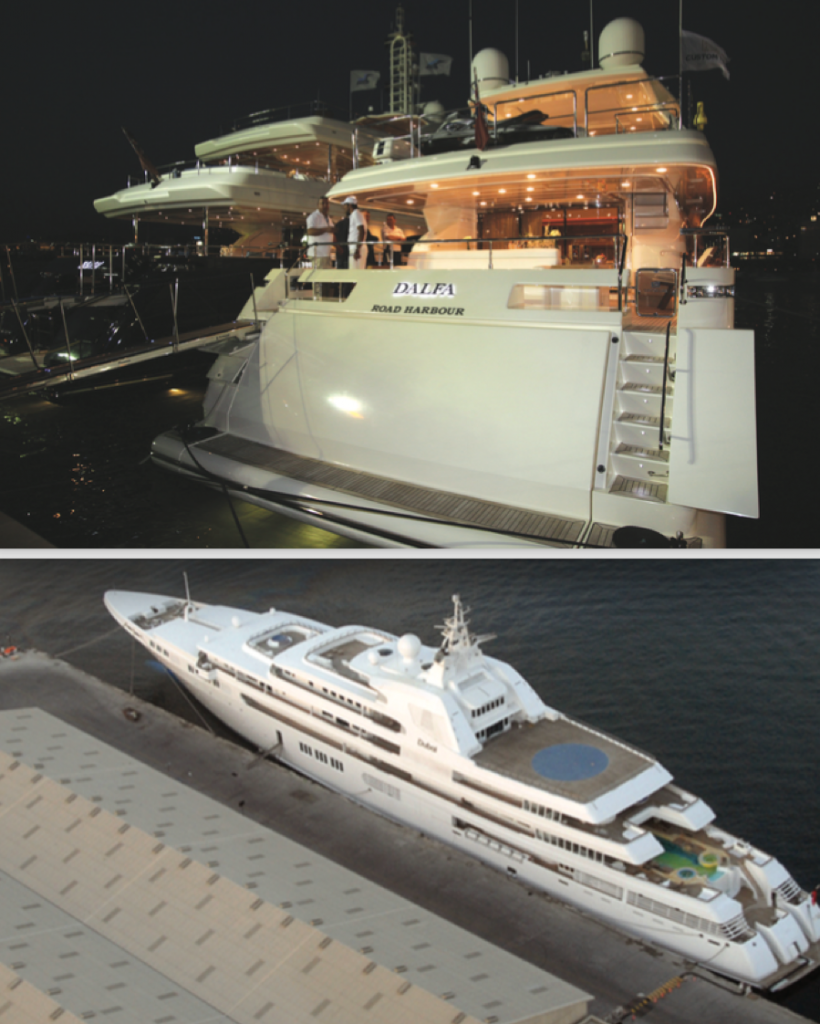
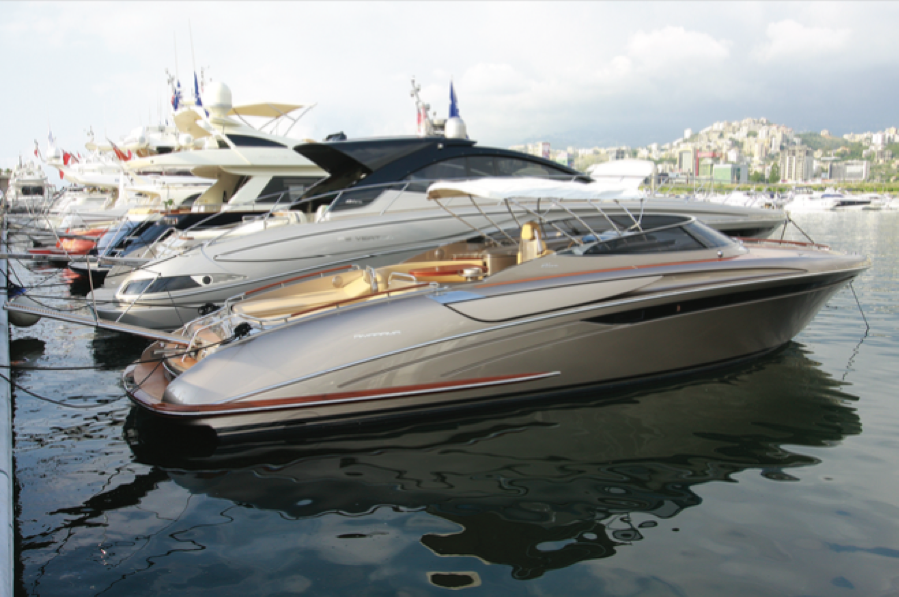
High time to set to sea

by Executive Staff July 10, 2009
written by Executive Staff

It hasn’t been smooth sailing for the region’s luxury yachting industry for some time now. Even before the global financial fiasco in the Middle East, shipyards had to contend with the exorbitant cost of oil that makes up most of the resin-based raw material costs of the industry.

“A lot of companies had to adjust their prices according to how much sellers were selling raw materials, and the price of a lot of boats soared,” said Camille Chamoun, chairman and chief executive officer at Lenco Marine, a Lebanon-based boat manufacturer. “You just had to adjust, you couldn’t do anything else.”

Nonetheless, the consumer appetite that was driving oil prices higher and filling up the coffers of regional governments kept the industry afloat. In turn, manufacturers continued to maintain high levels of supply to the market that ultimately proved to be unrealistic.

“The brands that built many boats and accumulated excess stock have really been hit hard,” said Alain Maaraoui, chairman and chief executive officer of Sea Pros Yachts, a yacht service and sales company with outlets in Lebanon, Kuwait, Egypt and the Emirates.

“Boats that were being produced for clients who had financial problems and had to cancel their order. The companies [producing the boats] are now contacting us to try to sell some of their boats.”

The cloud’s silver lining

That push, coupled with the plummeting price of oil and, by extension, raw materials for yacht makers, translated into a window of opportunity for anyone who loves the smell of the sea, and had a few million dollars to spare. But initially, it did not seem like the fish were biting. Even Saddam Hussein’s former luxury yacht, which includes a submarine, a helicopter landing pad and golden bathroom faucets, failed to entice yacht buyers when it was put on sale back in January, according to an Iraqi government spokesperson.

There are signs, however, that demand may be returning. The downturn resulted in boat valuations hitting all time lows as the rules of oversupply have pushed prices down, all but quashing the margins of boat-makers. Manufacturers are now looking to get rid of their excess stock and reposition themselves for better times.

“After the downturn you found a lot of beautiful yachts that were selling at half price,” said Chamoun. “A lot of boats were being sold at cost price.”

Many in the yacht industry agree that the time to make a buy is now, but it won’t last forever. The coming summer season means high-season for yachting and vacationing in the region. That will inevitably have a positive effect on sales in a region where boat shows still feature the latest, newest and glitziest products, albeit with a few less exhibitors. For instance, this year’s Dubai International Boat Show, the biggest annual boat show in the Middle East and one of the top five in the world, attracted 721 exhibitors from 50 countries at the Dubai International Marine Club. The event suffered only an 11 percent decrease in the number of exhibitors from the year before.

“After the downturn you found a lot of beautiful yachts that were selling at half price”

Fewer and fatter

The industry itself also looks to be consolidating as companies attempt to make themselves less vulnerable to the ongoing downturn.

“All the companies are restructuring, and there have been several mergers abroad, which means they have lowered production costs because of economies of scale,” Chamoun said.

The regional industry focus also seems to be shifting away from traditional markets, such as the Emirates, toward more liquid areas in the region.

“Abu Dhabi, Dubai and Kuwait have been hit hard but Lebanon has not been affected at all and there is a lot of demand, especially after the elections,” Maaraoui said.

The region’s largest economy, Saudi Arabia, also looks well positioned to harbor much of the excess supply being placed on markets, because the effects of the crisis there have been “marginal,” Chamoun said. “They are booming and building lots of marinas because there is a lot of cash flow out there.” 

Today the chance to get a good deal still persists as excess stocks have not yet been depleted.

“The production that was available will be done in a month or two after the summer is over,” Maaraoui said. “There is a gap until the end of the summer at the most, so today there is an opportunity to buy.”

July 10, 2009 0 comments
0 FacebookTwitterPinterestEmail
LuxurySpecial Report

Wings clipped but still flying

by Executive Staff July 10, 2009
written by Executive Staff

The Middle East has been one of the world’s fastest growing regions for luxury goods. From yachts to private planes, cars to clothes, the last decade saw the region’s luxury sales skyrocket as much as 20 percent per year. But now that consumers have tightened their purse strings, demand has fallen, and luxury market sales in such high-profile shopping destinations as Dubai have dropped as much as 45 percent. Some retailers estimate the region will rebound more quickly than others, due to the rising price of oil. But how are those tasked with making and selling luxury goods dealing with the downturn in the meantime?   Some are focusing on long term customers, others on consumers looking for quality instead of flash. In this special summer section, Executive profiles the purveyors of premium goods and services in the Arab world to find out how they’re faring and strategizing in these challenging times.

There is little doubt that the region’s jet-setting executives have been humbled by the global economic downturn. As a consequence, the slump has left the high-flying Middle Eastern private jet industry feeling the turbulence of the downturn’s headwinds.

“Today, the rates we are offering are 20 to 25 percent below what they were before the crisis,” said Abed el-Jaouni, chairman of Imperial Jet, a multi-national aviation services group based in Lebanon, Saudi Arabia and the United Arab Emirates.

The global airline industry is set to lose $9 billion in 2009, according to the International Air Transport Association, and the business jet industry is by no means bucking the trend. Bombardier, the Montreal-based transport behemoth and the largest manufacturer of business jets globally, recently announced that it expects new orders to slow to 375 aircraft this year and not to return to last year’s level of 1,400 aircraft until 2013. The company also announced that it will lay off more than 4,000 employees and lower production due to the slump in demand. 

Western woes

Most of the damage that has been done occurred in western markets where jets are produced. But if one compares the region to other more developed markets, the Middle East seems to have been spared the brunt of the downturn.

“The market in Europe is dead and it will continue to be a medium to bad year [for them],” said Jaouni. “But here in the Middle East it is picking up.”

Nicholas Meszaros, general manager of the Beirut-based Executive Aircraft Services, agrees.

“Manufacturers are looking more to the Middle East because there are still some deals to be done here, as opposed to the States or Europe,” he said.

It would be fallacious, however, to say that the entire region has flown right through the storm. Those who splurged during the upturn now seem to be in a tailspin.

“Most of the operators in Dubai had to take some dramatic decisions,” Meszaros said. “They have reduced their pilots, cutting down on routes and stops, and have cancelled a lot of aircraft they were waiting to get on management certificates.”

But those companies in the region that did not over-extend have done moderately well considering the economic turmoil afflicting the world today.

“The two biggest markets we have in the region are Saudi and Egypt,” Imperial Jet’s Jaouni said.

Other markets such as Qatar and Kuwait are expected to continue to do relatively well in the months to come, according to most observers.

The good news for the region’s executive jet industry is that the negative effects of the downturn on western manufacturers has led to bargains for the Middle East’s aviation service operators and jet enthusiasts.

“Manufacturers have stopped production on certain things and what has happened is that people have forfeited their down payment so the manufacturers are saying ‘take it for cheaper,’” Jaouni said. “I see the bottom and the right time to buy planes. [An] aircraft that was valued only eight months ago at $38 million is being offered to us today at $22 million.”

Landing in reality

With less disposable income and a risk-averse approach, manufacturers are less keen to build large, expensive aircraft. Operators are shying away from large aircraft as well, having less money for purchases, operations and maintenance.

“More people are looking at the smaller airplane, because when you are looking at 10 or more seats, you are looking at long-range expensive aircraft, and the demand has been less in this area,” said Meszaros.

While the skies over the Middle Eastern jet market may still be cloudy, aircraft services executives say the region’s market is already looking brighter. 

“It is better today, it will get better come the beginning of next year and it will be much better towards the end of next year,” Jaouni said.

July 10, 2009 0 comments
0 FacebookTwitterPinterestEmail
North Africa

Tops in technology

by Executive Staff July 10, 2009
written by Executive Staff

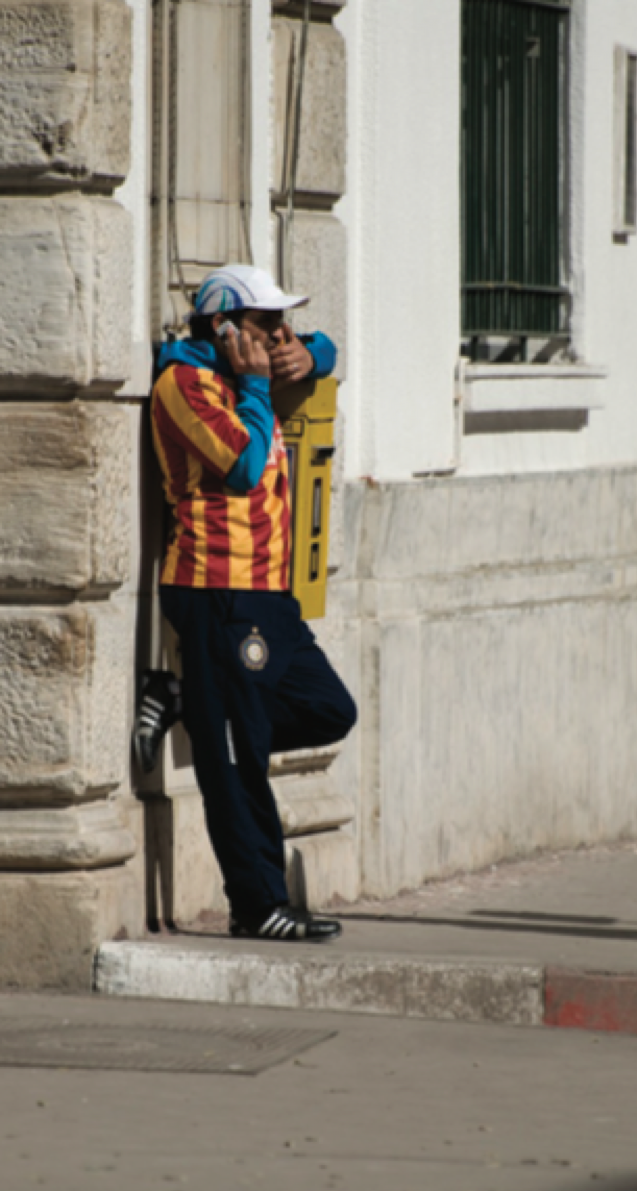
Tunisia’s investment in information and communication technology (ICT) has begun to pay off. A flurry of recent reports has ranked the sector among the top in the region, highlighting its potential as a destination for the offshore operations of European companies. While such reports can only provide a rough comparison and rely on subjective factors, rankings from such diverse sources as the World Economic Forum, the World Bank, AT Kearney and the Commonwealth Business Council nonetheless underscore Tunisia’s advantages, including a proximity to key markets, a multilingual population, low costs and a competitive ICT and business environment. As European companies look to reduce expenses, the North African country could become a popular site for new developments.

Tunisia has benefitted from European corporations’ increasing tendency to locate ICT operations offshore. While Southeast Asia has emerged as a popular offshore destination, European firms have looked closer to home, relocating operations to Eastern Europe, the Middle East and North Africa. With English less of a priority, Tunisia’s location, which offers travel times of less than two hours to many European capitals and sits in the same time zone, has attracted many firms. Although North American firms still account for nearly 70 percent of offshore spending, according to a recent report by US-based consulting firm AT Kearney, European companies are catching up quickly. As European demand increases, so too will the flow of business to North Africa.

The entire region will likely benefit from this shift, but Tunisia stands out among its neighbors. For the third year in a row, the World Economic Forum’s report on ICT ranked Tunisia first in North Africa. Rated 38th of the 134 countries ranked in the report, Tunisia came in well ahead of its closest competitors (Jordan, 44 and Egypt, 76), and scored well on individual criteria, including political and economic environment and degree of ICT utilization.

Tunis hardwires ICT

This acknowledgement can largely be attributed to the government’s strong support of the ICT sector. In a bid to improve Tunisia’s knowledge economy, the government has funnelled money to training and education programs, as well as into ICT infrastructure, while new legislative incentives have also been unveiled to encourage offshoring. Tunisia’s 11th development plan (2007-11) calls for an investment of $1.91 billion into the local ICT sector, with a major focus on training and increasing employment. Although Tunisia’s population is relatively small, it is well-educated and multilingual — something the government hopes to take advantage of in the coming years, with a target of an additional 10,000 ICT jobs per year. Currently, 10 percent of university students are pursuing ICT studies, which bodes well for the future of the industry.

Given the pressures of the global economic downturn, Tunisia’s competitive labor costs and developed infrastructure are also attractive. These market advantages are bolstered by an encouraging legislative framework which has, amongst other things, paved the way for a series of IT industry zones. El Gazala, the nation’s flagship technology and communications center located just outside Tunis, is an example of the policy’s success. Open since 1999 and home to about 80 companies, including Ericsson, Alcatel-Lucent and Microsoft, demand at El Gazala has been so high that it is adding 36 hectares to its existing 65 hectares. Two other parks, at Sousse and Sfax, are also expanding, adding a total of 100,000 square meters.

The government has also worked to streamline bureaucracy in the ICT sector’s regulatory agencies in an effort to attract new companies. A one-stop shop to simplify administrative and legal procedures and to facilitate import and customs procedures for ICT was established in 2008. The process consolidates the activities of a number of oversight bodies and allows companies to complete most procedures online.

“Previously, customs procedures could take a week or longer. This speeds up the process,” said Jawher Ferjaoui, the general director of the digital economy section at the Ministry of Communications and Technology.

Tunisia’s “government readiness” rank, according to the World Economic Forum, is even higher than its overall rank (27th compared to 38th), and it ranks 8th for government prioritization of ICT. The state aims to increase ICT’s contribution to the economy to 13.5 percent by 2012, up 3.5 percent from the current level, which will bolster the sector’s position in the increasingly competitive market for  offshore ICT services.

July 10, 2009 0 comments
0 FacebookTwitterPinterestEmail
North Africa

Development’s new digs

by Executive Staff July 10, 2009
written by Executive Staff

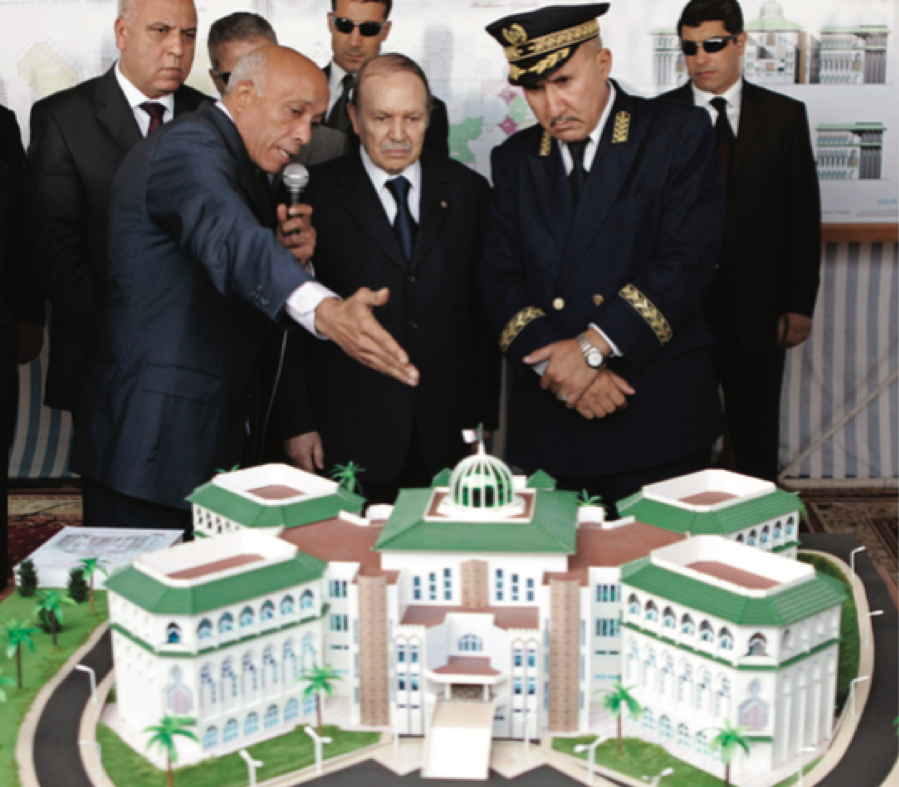
Private developers are moving to establish a permanent foothold in Algeria’s largely untapped real estate market, with a number of sizeable projects due to break ground in the coming year. 

Following nearly a decade of strict financial restrictions and political instability, the recent glut of petro-dollars has helped fuel a massive increase in the construction and real estate sectors, drawing in foreign investors and nurturing domestic developers. 

Gulf investors have flocked to Algeria to develop its 1,200 kilometer coastline. Some of the Gulf’s more prominent property investors — including Emaar, Gulf Finance House and Al Qudra — have unveiled billion-dollar plans for commercial, residential, tourist and mixed-use projects in and around Algiers.

Among the more prominent developments is the new megaproject by Emirates International Investment Company (EIIC), the $4.8 billion Dounya Parc, a nearly 7 million square meter greenbelt around Algiers. The company also has unveiled plans for the $322 million beachfront Ain Chorb tourism village, which the group is developing with the Kuwaiti Investment Group. Projects of this size represent a massive step forward for the Algerian market, although the lack of precedent means that such developments often face a lengthy land acquisition process requiring coordination with both ministries and local authorities. However Camille Nassar, CEO of EIIC Algeria, said the country’s enormous commercial potential was a crucial incentive. 

Europe and China look to the Maghreb

Gulf investors are not alone in looking to enter the Algerian market. Swiss-based Société des Centres Commerciaux d’Algérie (SCCA) is overseeing the construction of Algeria’s largest commercial center, the $73 million Bab Ezzouar complex, which will include some 31,000 square meters of retail space. The China State Construction Engineering Corporation (CSCEC) has also expressed interest in expanding its Algerian operations by developing real estate. 

Domestic investors have also joined in the headline grabbing events. Dahli Group’s $3.4 billion Alger Medina development in downtown Algiers  issued a bond that was marketed directly to the public — an audacious move and the first of its kind for the country’s fledgling capital markets. The bond raised 30 percent of the cost of the project, which will provide some 1 million square meters of office space. 

Following the completion of its ambitious low-cost housing program, the Ministry of Housing and Urban Planning will dedicate an additional $19.4 billion to building one million more homes. As one of the primary pillars of President Abdelaziz Bouteflika’s election campaign, the new residential space will be marketed through a network of more than 450 private and state-owned real estate agencies offering subsidized schemes.

With one of the highest per-unit occupancy rates in the world, according to the United Nations Development Program, Algeria has also tried to mitigate urban migration by launching a program to improve existing housing structures around the country. Nacer Djama, president of the Caisse National du Logement, said there is enormous opportunity for companies specializing in the construction of social housing in the coming years. With only 15,000 to 20,000 mortgages given out last year, Djama said the banking sector needs to catch up with demand for housing finance.

While Algeria’s real estate market offers a tantalizing target for companies that are increasingly squeezed by the global economic downturn, developers — and foreign companies in particular — still face a number of obstacles. The prime minister recently issued a decree on foreign investment, mandating that any project that benefits from government incentives must have a local majority shareholder.  

Still, Algeria is a promising place for the committed long-term investor. The trials and tribulations of the market as it adjusts to these multibillion dollar projects will also help prepare the authorities to deal with the needs of the country’s increasingly dynamic real estate sector.

Sam Inglis is Executive’s  Mediterranean correspondent, based in Istanbul 

July 10, 2009 0 comments
0 FacebookTwitterPinterestEmail
North Africa

Invested in tourism

by Executive Staff July 10, 2009
written by Executive Staff

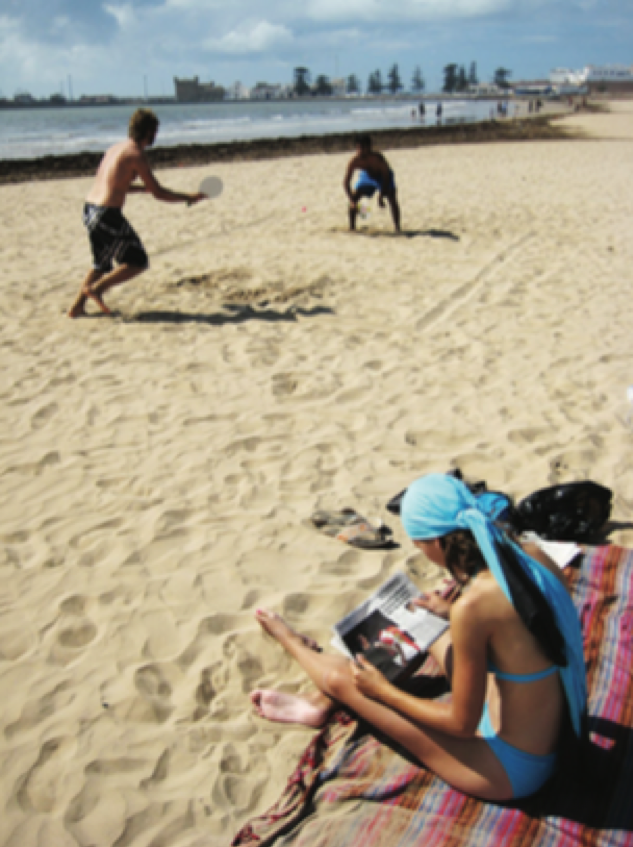
Like many of its neighbors, Morocco has a long-term tourism development strategy and has recently highlighted its flexibility by introducing a new program to follow its current tourism plan, called “Vision 2010.” That plan, kicked off in 2001 to chart development over 10 years, has been largely successful, but is nearing its conclusion. Now, the government has launched “Cap 2009” to retool the sector’s objectives and pump cash into the market in preparation for the upcoming launch of the “Vision 2020” development program.

Taken together, the two plans aim to boost arrival numbers, upgrade infrastructure and increase the quality of human resources. While Vision 2010 may fall short of its initial target of 10 million tourists by 2010, particularly given current economic conditions, the number of tourists rose 69 percent between 2001 and 2007, and another 7 percent from 2007 to 2008, bringing the total arrivals to almost 8 million. Hotel construction has been keeping pace with the increase and total bed capacity has risen more than 47 percent since the start of the plan.

Given that tourism attracts more investment than any other sector in Morocco and contributes around 6 percent to the economy annually, the government is taking proactive measures to ensure the momentum continues, even during the downturn. With tourist receipts decreasing 3.5 percent, from $7.4 billion in 2007 to $7.1 billion in 2008, Cap 2009 will seek to use Internet marketing to expand the arrivals base beyond the traditional European markets. The program will receive a budget increase of 10 percent ($6.2 million) in 2009 to facilitate expansion into Eastern Europe, Russia, the Gulf and China, among other markets.

Building from the top down

Domestically, Cap 2009 identifies Marrakech, Fez, Casablanca and Agadir as priority regions, which is consistent with the Kingdom’s promotion of high-end cultural and beach tourism. Efforts to target these areas are already included in Vision 2010. The components — Plan Azur, Plan Biladi and Plan Madain — aim to develop resorts, bolster domestic tourism and showcase cultural destinations.

Plan Azur is expected to be the linchpin of the three, as Morocco looks to capture some of the lucrative regional resort market. The plan outlines six new integrated resorts that will require investment of $5.7 billion and will result in the creation of 110,000 beds and 400,000 direct and indirect jobs. While the sun-and-sea model is relatively low-earning and faces serious competition, the government hopes that increased numbers of visitors will compensate for smaller margins of revenue.

Adding infrastructure is the primary goal of Vision 2010, with Vision 2020 expected to focus on human resources and build upon the expanded offerings. When the government launches the program next year, it will be geared towards bringing service quality up to the standard that many international consumers expect. Vision 2020 will also take into consideration requirements for sustainable and responsible tourism, as well as the protection of natural and cultural resources.

To accommodate the continued rise in arrivals, Morocco is working to upgrade its airports. Abdelhanine Benallou, the CEO of the Moroccan National Airports Authority (ONDA) said the objective is to reach a capacity of 32 million passengers by 2012, with current capacity at 23 million. In mid-April, the African Development Bank granted the Kingdom a loan of $334 million to enhance facilities at the Casablanca, Fez, Agadir, Marrakech and Rabat airports, which handle the bulk of the country’s air traffic. The loan will cover about 75 percent of the $445 million project, with the ONDA covering the remainder of the cost. ONDA is also working with the Moroccan National Tourism Office to reduce bureaucracy and has announced adjustments to airport taxes on chartered flights.

The government’s willingness to make adjustments across the tourism sector underlines the country’s adaptability, particularly during these difficult times. Cap 2009 will expand Morocco’s presence in emerging markets, which should help make up for a decline in arrivals from Western Europe. Meanwhile, targeted Internet marketing and increased bed capacity will develop a solid foundation that will help temper the effects of the recession in the short term, and provide the necessary framework for future growth under Vision 2020.

Morocco seeks to upgrade its airport capacity to 32 million passengers per year

July 10, 2009 0 comments
0 FacebookTwitterPinterestEmail
GCC

Going once, going twice

by Executive Staff July 10, 2009
written by Executive Staff

If you can’t sell it, auction it. That seems to be the mantra many in the United Arab Emirates’ troubled real estate market have adopted as they try to offload properties.

On May 19, Madania real estate company took the lead by auctioning four properties. Sherwoods, a real estate consulting firm, followed suit and auctioned 21 lots on June 4. Coldwell Banker also received a permit from the Dubai Land Department (DLD) and is planning to conduct an auction this summer.

But the auctions have run into some problems. Despite more than 100 people showing up at the Sherwoods auction, not one property was sold out of 24 on offer.

“There’s so much bad news, everyone’s scared and is holding on to their money… If I had access to the sort of money being asked for, I would buy,” Anwer Moola, a Dubai property owner, told The National newspaper. “A five-bedroom villa, for example, can still be rented for [$50,000 or $55,000] a year.”

But experts believe that the auctions are the best way to get an accurate price for properties in a market where buyers and sellers have vastly different ideas of a “fair price.”

“The auction removes the price and puts the product out in the market, and it allows people to look at it and make their opinion on what the property is worth,” says Raymond Kuceli, chief executive officer of Madania Real Estate. “The price that is generated gives an indicator to the seller on where exactly their property sits in the marketplace.”

Executives at Sherwoods say the properties auctioned so far have not been distressed assets, but units that have been put on the market with no interested buyers.

“None of the properties were taken from lending institutions, but we certainly have people who agreed to sell below the original price that they paid,” says Jeremy Mayhew-Sanders, head of investment & developments at Sherwoods Independent Property Consultants.

Still, both Kuceli and Mayhew-Sanders agree that there is a possibility for distressed properties to also be included in future auctions.

On the auction block

Property auctions are still new in Dubai and come at a time when the market is in its worst downturn, so the results were not surprising — both auctions bids failed to attain the lowest price set by sellers.

“We knew we would struggle to sell anything on the night of the auction, and if we did it would have been a great bonus,” says Mayhew-Sanders.

Kuceli says the outcome of the auction was satisfying, since some properties achieved competitive bidding and bidders showed interest after the auction was over.

“For us we had a good turnout, we had some bids. And we had negotiations afterwards, too,” says Kuceli of Madania’s auction, where two of the four properties on offer received bids.

At the Sherwoods auction, 17 bidders were present in the room and at least seven lots received bids. Bidders also showed interest after the auction, where a deal for a $1.6 million penthouse in the Emirates Crown closed.

“We are working on land deals which may or may not close, but I hope they will,” says Mayhew-Sanders.

Land department

Any company that wants to hold a public auction has to get an auction license from Dubai’s Department of Economic Development and an auction permit from the Land Department.

Companies can auction as many properties as they want, but should submit details for every property in order to receive approval. If all the information is submitted at once, the process might only take a couple of days, says Kuceli. The fee for obtaining an auction permit from the Land department is $545.

The Dubai Land Department also charges 2 percent of the sales price of the property. The system is for completed properties, and dealings with foreclosures and inherited properties have yet to be specified.

Planning ahead

The first two auctions might not have been very successful, but that will not keep companies like Sherwoods and Madania from planning future auctions in the hopes that they can build on the level of interest and success.

Sherwoods is planning another auction in November. Mayhew-Sanders says he is not sure how many plots the auction will include, but it will be easier than the first one.

“Our next auction will be very focused on dealing with stock that we feel confident we can sell,” he says.

As for Madania Real Estate, Kuceli says “we were looking… at the second week of July because we want to get more properties online.”

With eight properties confirmed and aiming for 15, Madania’s Kuceli believes more investors will show up, having familiarized themselves with the auction process.

July 10, 2009 0 comments
0 FacebookTwitterPinterestEmail
Comment

A government under the gun

by Thanassis Cambanis July 1, 2009
written by Thanassis Cambanis

March 14 can claim a major — and unexpected — victory at the polls, but they’ll have to pay close attention to Lebanon’s real balance of power if they want to avoid miscalculation and overreach. The pathology of sectarianism and Hezbollah’s entrenched military power place far more serious constraints on the prospect for changing Lebanon than electoral politics do.

The results of the June 7 ballot are just one of many factors that determine what Saad Hariri’s coalition can and cannot achieve — maybe even one of the smaller factors. The biggest, on the contrary, is the old rule of force: Hezbollah’s militia.


If the Party of God perceives a threat to the autonomy of its militia, it will do anything, including a military takeover of Beirut, to neutralize the perceived threat. Hezbollah did so in May 2008, and has made clear it would do so again, regardless of the political fallout or cost to the resistance’s legitimacy among Lebanese. It’s also worth keeping in mind that about 850,000 Lebanese voted for Hezbollah and its allies, significantly more than the 720,000 who voted for March 14. Only sectarian gerrymandering translates that popular vote into a parliamentary majority for Saad Hariri’s coalition.


Votes do matter, but brute power matters more. Hezbollah won’t shirk from a confrontation, and it doesn’t have to worry about losing popularity and legitimacy so long as it commands the nearly undivided loyalty of the Lebanese Shiites in the Bekaa Valley, southern Lebanon and Beirut’s southern suburbs. The principle factor that could reduce Hezbollah’s power is Iran. For decades, the Islamic Republic has given Hezbollah a generous operating budget and a steady flow of military training and material, allowing the Party of God to build its own state and act independently of the normal constraints on a Lebanese political party. If Iran cut a grand bargain with the United States (or if Syria, which controls the flow of weapons to Hezbollah, makes a deal with Israel), Hezbollah could suddenly find itself defanged, or at the very least, boxed in.


By a similar token, Hariri and his allies draw considerable power from their links to outside powers — in particular the United States and Saudi Arabia. Neither of March 14’s patrons has demonstrated anything like Iran’s staying power and commitment to its client, in terms of military aid or consistent political cover. In Washington’s case, the sponsorship is particularly shaky; most Lebanese are convinced that anytime Lebanon’s interests conflict with Israel’s, there’s no question that Washington will side with Tel Aviv.


Whatever government emerges from the elections, it’s hard to imagine any substantial effort to disarm Hezbollah, although calls to do so will come from some quarters. The cries for “change and reform” notwithstanding, Lebanon’s political classes of all stripes have far too much vested in a system of patronage and corruption, and it will likely survive unscathed. Finally, it’s nearly impossible to imagine Lebanon’s arcane political system being revamped, with its guarantees of certain powers for certain sects regardless of their actual share of Lebanon’s population. Hence a shrinking Christian minority will wield more government power than a Muslim population twice its size, and the Shiites — Lebanon’s largest group by far — will still be relegated, at least in name, to the most marginal government posts.


The March 14 forces can claim a victory at the polls but they’d be hard pressed to claim a mandate. They won the support of the Sunni, the Druze and around half of the Christians, largely by convincing voters that the other side was worse — not by mobilizing support for a set of political goals. That lack of momentum makes it hard for March 14 to do more than govern in the middle, in pursuit of incremental change, as it has since 2005. Any attempt to radically reshape Lebanese politics, for example by disarming Hezbollah and seeking a peace treaty with Israel, would meet an intransigent and powerful Hezbollah, which at least in the short term will retain the power to bring the Lebanese state to its knees by force, if it so chooses.


When the dust settles, everyone will talk about a “new phase.” Hezbollah politicians already were speaking quietly, before the elections, about a conciliatory approach. Ali Fayyad, just elected to parliament after 14 years at the helm of Hezbollah’s think tank, said his party now had to hunker down and work out the details of its political platform, eschewing confrontation.
“Politics has its own logic,” he said sitting on the porch of his home in Taibe. “When we were a small militant resistance group, we had other issues. We are now the biggest political party and player, with strategic effects in half the region. We will never achieve political reform by civil war or by hegemony.”
Rest assured though that until something radical and unexpected shifts in the regional dynamic, Lebanon will see small changes rather than big ones, and as usual, they’ll be decided by a small group of men sitting around a table — and not at the ballot box.

Thanassis Cambanis is a journalist writing a book about Hezbollah

July 1, 2009 0 comments
0 FacebookTwitterPinterestEmail
Comment

Iran‘s inclement election

by Gareth Smith July 1, 2009
written by Gareth Smith

The re-election of President Mahmoud Ahmadinejad and the subsequent violence in Tehran deepens the challenges facing American President Barack Obama in his desire for engagement with Iran.


Ahmadinejad does not control Iranian foreign policy, but he will probably have a stronger voice in a leadership group where Ayatollah Ali Khamenei, the supreme leader, is pre-eminent.


The stiff reaction from the authorities to the demonstrations reflects a real fear among Iranian conservatives, especially in the Revolutionary Guards, that the “green wave” offered by Mir Hussein Moussavi, Ahmadinejad’s main challenger, was an attempt to repeat the “orange revolution” of 2004 in Ukraine.


While Ayatollah Khamenei in March held out the possibility of talks with the United States, he stressed the need for the US to “change its behavior.” Iran is in a strong position, say state newspapers and state officials, and the US is stuck in a quagmire.


“The Americans have made lots of mistakes [and]… they need Iran to save them,” opined Kayhan, the leading conservative daily, in April. “They have tried and examined all possible ways and eventually found no solutions. That is why, now, they have no other choice but to turn to Iran.”


In private, some Iranian politicians acknowledge that the US’ formidable military power means things are not quite that simple. Hence, while Iran’s political class — including Moussavi and Ahmadinejad — share a commitment to the country’s nuclear program and its “right” to be treated as an international power, there are important differences over talks with the US.


In the recent election campaign, Ahmadinejad slammed his predecessors for the 2003-2005 talks with the European Union under which Iran suspended uranium enrichment as a “goodwill gesture,” even though the move was endorsed by Ayatollah Khamenei. Kayhan editor Hossein Shariatmadari has consistently argued against talking to the US, even though the supreme leader has accepted the possibility.
In any case, the fractures in the political class do not suggest the Iranians will readily focus on negotiations. Iran is not China, where uniformity can be readily imposed.


The wide coalition against Ahmadinejad has taken shape since about 2006. It has included both Moussavi and Mehdi Karrubi, the former speaker also defeated in the presidential election. But it has also involved the former reformist president, Mohammad Khatami, and Akbar Hashemi Rafsanjani, who heads two important state bodies, the Experts Assembly and the Expediency Council.


This “coalition of the concerned” came together through fear that President Ahmadinejad’s bellicose rhetoric was damaging Iran’s international position, no matter how popular it was across the Islamic world. Tougher sanctions, the president’s critics have argued, compound the damage done by Ahmadinejad’s reflationary economics.


The coalition helped shape the political agenda, to the extent that conservatives like Ali Larijani, the parliamentary speaker, and Mohsen Rezaei, the former Revolutionary Guards commander, called for a national unity government.


Moussavi ran for president with a skillful pitch for the middle ground, a “third way” promising adherence to principles (the conservatives call themselves “principle-ists”) as well as judicious reform. But the resulting melee has done anything but consolidate the middle ground.


Unfortunately for engagement prospects, many of Iran’s natural diplomats occupy the middle ground. Some are professionals, and others more or less allied to Rafsanjani, long seen as an advocate of talks with the US. Many have already been swatted by the Ahmadinejad government, beginning with his early purge of ambassadors and including spying charges in 2007 against Hossein Moussavian, the former negotiator with the European Union.


Rafsanjani remains a central target for Ahmadinejad, who came to office in 2005 attacking a man he alleges has enriched himself at the people’s expense. Ahmadinejad has consistently attacked the “oil mafia,” and, in the recent televised election debate with Moussavi, tried to link him to Rafsanjani in the hope this would weaken his support.


In seeking an interlocutor in Tehran, the US has long known it must talk to Ayatollah Khamenei, but president Obama can hardly relish dealing with an Iranian leader facing an internal crisis and possible power struggle.
And if that weren’t enough, opponents of engaging Iran in Israel and the West now have fresh wind in their sails.


US neo-conservatives have rushed to back “democracy protests” in Iran — which they say are a post hoc vindication of the George W. Bush strategy of spreading democracy — and to demand further ostracizing of Iran.
In Israel, the Netanyahu government is stepping up its argument that Iran is such an urgent military threat and that tackling it dwarfs such minor matters as Jewish settlements and blockaded Gazans.


John Bolton, the former US ambassador to the United Nations,  now at the right-wing American Enterprise Institute, has gone further, arguing that an Israeli strike on Iran “could well turn Iran’s diverse population against an oppressive regime.”


No wonder the neo-cons are cock-a-hoop. Events in Tehran not only make it harder for Obama to win the argument for engagement. They make it harder for engagement to succeed.

Gareth Smyth is the former Financial Times correspondent in Tehran

July 1, 2009 0 comments
0 FacebookTwitterPinterestEmail
Comment

Iraq’s vertigo

by Ranj Alaaldin July 1, 2009
written by Ranj Alaaldin

Amidst the ongoing tumultuous events in the Middle East, Iraq has recently attracted little coverage within the international news media and, save for some macabre event like a mass casualty suicide bomber attack or the capture and murder of foreign hostages, rarely features on our television screens.

Yet, a recent surge in terrorist attacks manifestly suggests that taking Iraq off the radar may turn out to be a reckless and complacent endeavor. The bomb in Baghdad’s Sadr City at the end of June which killed more than 70 people exemplifies the threat. Therefore, a number of key areas must therefore be re-visited and assessed to determine where Iraq’s future lies.


The so far intermittent, but increasingly frequent attacks, should serve to provide a stark warning that leaving Iraq’s still nascent security and democratic institutions to fend for themselves in the drawdown of foreign troops could prove to have unexpected consequences. A surge in attacks could prolong the presence of foreign troops, preserving a status quo of violence and uncertainty, with serious ramifications for foreign powers with vested stakes in the country, and in an increasingly volatile region as well.


But the drawdown of British and American troops suggests Iraqis are capable of governing independently. Despite the aforementioned security threats, Iraqi security forces have proved their merits on previous occasions and, critically, have the respect of the population. Operation Charge of Knights in 2008 rid resource-rich Basra of Shia militias operating under the direction of radical cleric Moqtada al-Sadr, while elections went ahead in January without disruption and, more importantly, under the supervision of the Iraqi army, rather than American forces. Moreover, civilian casualties are down in Iraq by more than 70 percent in comparison with previous years.


Improving security becomes futile, however, in the absence of political reconciliation between Iraq’s myriad of ethnic and sectarian groups.
Of pressing concern are relations between the Kurds in the north and the federal government in Baghdad. Both continue to stand eyeball to eyeball over unresolved matters that have left the country in a state of paralysis. Iraq has yet to pass the hydrocarbons law as a result of disputes between the Kurdistan Regional Government (KRG) and Baghdad over who has the right to control and manage the country’s array of resources. As a result, huge reserves of gas and oil — Iraq has a 119 billion-barrel oil reserve, making it the third largest in the world — remain unexploited and deprived of the foreign investment needed to repair and upgrade a decaying oil infrastructure.


In addition, observers are concerned about a looming power struggle. For example, along with the Kurds, the Sunni political parties are becoming increasingly wary of a more powerful Shia-dominated Baghdad government, which they fear will serve to their disadvantage should American troops leave the country completely. Prime Minister Maliki recently added to such worries when he suggested that political consensus should be sacrificed for majority rule.


While disputes have for the best part been restricted to political exchanges, uncertainty and tension are being markedly transformed into violent confrontation. The disputed territories of Mosul and Diyala, for example, still exist as terrorist hot-spots, where the last remnants of Al Qaeda in Iraq and the Iraqi insurgencies, both Sunni and Shia, remain concentrated. Continued turmoil in these provinces is already forcing American commanders to reconsider the forthcoming troop pullout from Iraq’s cities, towns and villages by June 30 to their bases, and the complete withdrawal of troops from the country by December 31, 2011.


In Kirkuk, the oil rich disputed territory, Article 140 of the Iraqi constitution, which determines the status of the province — that is, whether it should be administered by the KRG or Baghdad — is yet to be implemented. The United Nations recently submitted a yet-to-be-made-public proposal to Baghdad and the KRG which outlined suggestions for remedying the problem. But continued intransigence is costing Iraqi lives, as portrayed by a recent attack which killed 73 civilians in Kirkuk.


Economic realities may, however, inject some hope. Iraq suffers from a budget deficit, and low oil prices have required the Iraqi government to slash its budget three times this year already — Iraq also depends on oil revenues to fund 90 percent of its reconstruction. Partly in response to this, the Baghdad government recently allowed Kurdish oil exports from fields administered by the KRG, suggesting that pragmatism can dictate policy more than ideology, and help pave the way toward reconciliation.


Where does Iraq stand? And where next for this country of painful paradoxes? The unavoidable reality is that the three pillars of a stable and prosperous Iraq are security, political reconciliation and the economy; still yet to be appreciated, however, is that these cannot operate independently of each other and unless equally respected and addressed, the US will find its presence prolonged and Iraq will head back to its previous state of bloody and costly degeneration.

Ranj Alaaldin is a Ph.D. candidate at the London School of Economics focusing on post-invasion Iraq

July 1, 2009 0 comments
0 FacebookTwitterPinterestEmail
  • 1
  • …
  • 460
  • 461
  • 462
  • 463
  • 464
  • …
  • 697

Latest Cover

About us

Since its first edition emerged on the newsstands in 1999, Executive Magazine has been dedicated to providing its readers with the most up-to-date local and regional business news. Executive is a monthly business magazine that offers readers in-depth analyses on the Lebanese world of commerce, covering all the major sectors – from banking, finance, and insurance to technology, tourism, hospitality, media, and retail.

  • Donate
  • Our Purpose
  • Contact Us

Sign up for our newsletter

    • Facebook
    • Twitter
    • Instagram
    • Linkedin
    • Youtube
    Executive Magazine
    • ISSUES
      • Current Issue
      • Past issues
    • BUSINESS
    • ECONOMICS & POLICY
    • OPINION
    • SPECIAL REPORTS
    • EXECUTIVE TALKS
    • MOVEMENTS
      • Change the image
      • Cannes lions
      • Transparency & accountability
      • ECONOMIC ROADMAP
      • Say No to Corruption
      • The Lebanon media development initiative
      • LPSN Policy Asks
      • Advocating the preservation of deposits
    • JOIN US
      • Join our movement
      • Attend our events
      • Receive updates
      • Connect with us
    • DONATE