• Donate
  • Our Purpose
  • Contact Us
Executive Magazine
  • ISSUES
    • Current Issue
    • Past issues
  • BUSINESS
  • ECONOMICS & POLICY
  • OPINION
  • SPECIAL REPORTS
  • EXECUTIVE TALKS
  • MOVEMENTS
    • Change the image
    • Cannes lions
    • Transparency & accountability
    • ECONOMIC ROADMAP
    • Say No to Corruption
    • The Lebanon media development initiative
    • LPSN Policy Asks
    • Advocating the preservation of deposits
  • JOIN US
    • Join our movement
    • Attend our events
    • Receive updates
    • Connect with us
  • DONATE
Levant

A roof over every head

by Executive Staff June 24, 2009
written by Executive Staff

One consequence of the population growth forecasted for the Middle East is the increasing need for affordable housing. Until recently, the region’s main property developers focused on the high-end market, while the public sector built subsidized homes for lower income groups. This stereotypical state of affairs has gradually changed face, as the tendency today is for governments to enter private-public partnerships (PPPs) with the region’s leading construction firms. 

Tameer Jordan, for example, is to construct 16,000 affordable homes outside Amman, and Orascom Hotels and Development (OHD) is building some 50,000 units in the 6th of October City on the outskirts of Cairo. Emaar recently won a $100 million contract to build social homes in Egypt and, as early as 2006, signed a memo of understanding with the Syrian government to build low-cost housing.

One thing is certain: constructing social housing is not just about solidarity, but makes perfect business sense. While very lucrative, the top-end of the market is limited in size as, at most, 20 percent of the region’s population is able to afford a top-notch villa or luxury apartment, let alone second, third or even fourth homes.

Market of the masses

“Some 80 percent of the world’s population lives on less than $10 a day, while some 50 percent live on less than $2.50 a day: that’s an enormous market,” said Markus Giebel, chief executive officer of Deyaar Development in the United Arab Emirates. “While it remains difficult to target the extreme poor, there are certainly opportunities in the low-income segment.”

Jonathan Reckford, CEO of Habitat for Humanity (HH), an American non-governmental organization constructing homes for the poor, explained that builders and property developers have so far largely ignored the lower-end market segments for a few basic reasons. The market’s top-end segment is extremely profitable, the region suffers from land scarcity, especially in urban areas, and zoning laws in most countries favor high-end development.

“Most importantly, it is extremely difficult for low-income groups to obtain mortgage loans, especially in the Middle East, while micro financing for housing hardly exists,” he said. “We have run such a program in Egypt for the past decade or so, and the results have been very promising. Over 95 percent of recipients pay their installments on time.”

The reason for the Egyptian government to downscale the role of its public building arm and enter PPPs, according to Egypt’s Minister of Housing Ahmed El Maghrabi, lies in the fact that the state simply cannot keep up with the rise in demand, which is mainly driven by a population growth rate of more than one million people a year.

“We will continue to work with the private sector in the future,” he said. “The government’s role will be limited to offering subsidized land and housing loans.”

One of the main contractors to build low-income housing in Egypt is OHD, which is in negotiations with the Turkish and Moroccan governments to build similar projects. Chairman and CEO Samih Sawiris said a number of conditions should be met to make PPPs regarding social housing schemes a success. First of all, he warned, companies that are only interested in making short-term profit should forget about entering the business.

“It’s a long-term investment,” he said. “Ultimately, it will make money through the appreciation of residual land values. The revenue cycle is 10 to 15 years.”

Sawiris stressed that high volume is crucial to keep construction costs down and urged governments to avoid the mistake of pushing the urban poor into an area or suburb far  from the urban core where, he said, they commonly make their money.

“People will refuse to go, as they do not have the money to commute,” he said.

Wrapped up in regulation

Finally, the state and its inevitable layers of red tape should stay away. Sawiris pointed to Egyptian regulations that stipulate a three-lane-road should be constructed when a project reaches a certain size. Yet most poor people do not drive and prefer to pay less for a sand road and have access to public transport instead. “Let the government provide the land and developers will do the rest,” he said.

There was one big absentee in the debate: green building. Can developers offer mass low-cost housing schemes and provide for green solutions in terms of water and energy use?

Maghrabi admitted that his government’s focus has been on housing people. Green building practices will have to come later. At next year’s World Economic Forum perhaps?  

June 24, 2009 0 comments
0 FacebookTwitterPinterestEmail
Levant

The Oriental assembly

by Executive Staff June 24, 2009
written by Executive Staff

From May 15 to 17 the World Economic Forum (WEF) on the Middle East took place on the hot and humid shores of the Dead Sea in Jordan. Some 1,400 participants from across the globe, including some 1,000 private sector representatives, 14 heads of state and dozens of ministers, traveled to the earth’s lowest point to discuss the socio-economic issues facing the region.

As is so often the case with mega-gatherings such as the WEF, the most interesting words and opinions were not always expressed in the main conferences; many were found in the topic specific debates taking place on the meeting’s sidelines.

Participants and press happily met over coffee, lunch and dinner. And eat well they did as, according to one cook at the King Hussein Conference Center, the food bill for the first day amounted to some $90,000. Fortunately, the WEF has its sponsors.

There was also some controversy before the meeting even started. A small group of demonstrators in Amman protested over the attendance of an Israeli delegation, including Israeli President Shimon Peres, which was arguably the reason there were no Syrian or Iranian representatives.

In his opening speech, Jordan’s King Abdullah II referred at length to the Nakba and the Arab Peace Initiative (API). According to him, the Nakba was not just a catastrophe for the Palestinians, but for the entire region and the world.

“As we feel compassion for all who have suffered, let us also commit to joining the solution as well,” he said. That solution, said Abdullah, is the API.

“We have committed,” he said. “So now must Israel. The API has offered Israel a place in the neighborhood and more: acceptance by 57 nations.”

Abdullah also said that there can be no economic cooperation with Israel without a political solution. 

Away from politics, he identified the Arab youth as a “vital dynamic” of this year’s forum. 

“The 21st century has brought the Middle East its largest youth population in history,” said Abdullah. “In only a few years we will be looking to these 200 million young men and women for our region’s strategies, partnerships and solutions.”

From the plethora of topics discussed and debated at the Dead Sea, Executive highlights three in the following pages that in the future will play an ever more important role, particularly in the context of the region’s fast growing and ever younger population. These are the call for social housing; the state of the media; and the need for proper education.

June 24, 2009 0 comments
0 FacebookTwitterPinterestEmail
Levant

Banks hold the fort

by Executive Staff June 24, 2009
written by Executive Staff

As with most countries in the Levant, Jordan has emerged relatively unharmed from the financial storm that ravaged the world. The Kingdom’s banking sector possessed few toxic assets. The Amman Stock Exchange (ASE) saw a decline of some 25 percent, far less than the world and Arab average. Still, Jordan’s economy appears faced with a tough road ahead. One of the crisis’ main victims so far has been real estate, which recorded a sharp fall in prices. In addition, remittances from the estimated 350,000 Jordanians living abroad are likely to decline and unemployment is set to rise. The economic growth forecast for 2009 is some 3 percent, down from 5.6 percent in 2008.

“The Jordanian banking sector has proven to be quite robust,” said Ali Nasser, an investment analyst at the Global Investment House in Amman. “The Central Bank of Jordan (CBJ) upholds strict regulations, which is one of the reasons that Jordan’s banks have not been directly affected by the credit crunch. Jordan’s loans to deposits ratio, for example, is 70 percent, while in the UAE it measures between 100 and 120 percent. In addition, the CBJ has responded adequately to the crisis. The only criticism one may have is that the CBJ could have reacted a bit earlier and more aggressively.”

Following the 2008 financial meltdown, Jordan’s central bank embraced an expansionary monetary policy in an attempt to boost the economy. Since last November, it cut interest rates three times, while the reserves to deposits ratio was reduced from 10 to 7 percent. Today, the re-discount rate stands at 5.25 percent and the interbank rate at 3.1 percent. To secure consumer confidence, the government guaranteed all bank deposits until the end of 2009.

In March, the International Monetary Fund’s mission to Jordan praised the measures, although most financial observers agree the central bank’s relaxation of monetary policy has so far not resulted in more dynamic lending practices. As with banks elsewhere, Jordanian banks have opted for a wait-and-see approach. Consequently, the CBJ currently holds excess bank reserves of some $4.5 billion.

“Banks will make profits in 2009, yet their results will be hampered by the economic slowdown and losses on the Jordan and other stock markets,” said Nasser. “In the first quarter of 2009, the prices of most bank shares were in decline, which is arguably the result of risk aversion in lending practices. Car loans for example were down some 70 percent, and it is very hard these days to get a housing loan.”

Amman Stock Exchange

Having recently celebrated its 10 year anniversary since privatization in 1999, the ASE has been affected by the financial crisis, although less than markets elsewhere. During the first half of 2008 the ASE price index had increased by some 30 percent to reach its highest level ever. Companies extracting potash and potassium did especially well, due to the food crisis and the demand for fertilizers.

Following the financial downturn in September 2008, however, the ASE price index went into free fall and closed the year 25 percent lower than the previous year. Market capitalization amounted to a bit more than $37 billion. While the industrial sector, which includes mining, declined by 11 percent, the service sector decreased by 17 percent, and the financial sector by 29 percent. The latter was dragged down by real estate firms that saw their average share price decrease by some 50 percent.

“Today, the ASE has absorbed the crisis and we can conclude that the losses were not as deep as elsewhere,” said ASE’s Chief Executive Officer Jalil Tarif. The Morgan Stanley index reveals that stock markets worldwide in 2008 declined by an average of 43 percent, while Arab markets fell by an average of 55 percent.

“One significant reason for the ASE’s limited losses has been the presence of foreign investors,” said Tarif. “This has had a stabilizing effect, as most of them are strategic partners; ‘hot money’ is not really an issue in Jordan.”

By the end of 2008, 49 percent of ASE shares were owned by foreigners, mostly Saudis (8 percent), Kuwaitis (7 percent), Lebanese (6 percent) and Qataris (4 percent). 

“The prospect for 2009 depends first of all on the direction of the international financial markets,” Tarif said. “Of course, the well-being of the US market is a key indicator for any market. Secondly, the movement of the oil price is important, as Jordan is a net-importer. Because of these factors, the future is difficult to predict. But this year’s first quarter results have been promising.”

The first quarter showed an average decline in profits of companies registered at the ASE of some 20 percent, yet the figure was dominated by the performance of financial and real estate firms.

“Ten years ago there were but five or six real estate firms registered at the ASE, while today there are some 40,” said Tarif. “Due to the crisis and banks being less willing to issue housing loans, some companies face difficulties to meet their obligations.”

Remittances

According to a report by the National Bank of Kuwait issued in February, some 350,000 Jordanians work in GCC countries. Their remittances amount to some 17 percent of the Jordan’s GDP. Due to the current crisis, especially in Dubai, remittances declined in the first quarter of 2009 by 18 percent compared to the last quarter of 2008. While most Jordanians abroad will try to stick it out as long as they can, many fear an increasing number will return home, putting more pressure on the domestic labor market. Officially, unemployment fell during the first quarter of 2009 to 12.1 percent, compared to 12.7 percent, yet in reality the number of jobless is thought to be double that figure.

In light of the above, Jordan’s central bank downgraded its forecast for economic growth from some 6 percent to an estimated 3 to 3.5 percent. But the good news is that inflation, which was a record-high 14 percent in 2008, fell to some 4 percent this year. That has not helped retail so far. While there were no vacancies to be seen in Amman’s main shopping centers, one shop keeper at the City Mall estimated a decrease in turnover of some 20 to 25 percent. So it seems that it is not just Jordan’s banks that are keeping a cautious eye on their money while awaiting better times ahead.

June 24, 2009 0 comments
0 FacebookTwitterPinterestEmail
Special SectionYoung Arab Leaders

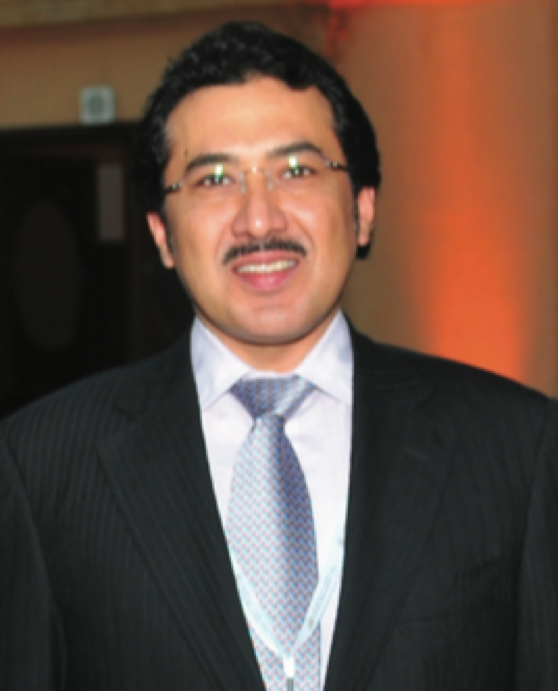
Salah A.H. Al-Qahtani- Q&A

by Executive Staff June 24, 2009
written by Executive Staff

Salah A. H. al-Qahtani is the executive vice president of Al Qahtani Pipe Coating Terminal and the chairman of the Saudi Arabian chapter of Young Arab Leaders (YAL). Executive magazine recently spoke with him about YAL’s critical role.

E  There’s been a lot of talk today about finding practical solutions to the problems young Arab students face, particularly with specialized education. Is that something affecting you in Saudi Arabia?

Yes, there is a lack of education, for sure. We understand it, but we have to just fix it, we don’t have to talk about it. What we have to do as business people is we have to train our kids. You have to build a team under your company. You build a team, and you educate them.

E  So, in other words, you see filling this gap as a responsibility of the private sector?

No, it’s not the responsibility of the business sector, it’s the responsibility of the government, but the question is, what can we do to boost it? In Saudi Arabia, we are a part of the government and at the same time we are not.

The way I see it, it’s like a wagon and a horse. The government is the wagon, but you need a horse — the business community — to move it.

The wagon, there’s a value in it, but you need the two together. And without the two, the government cannot build infrastructure that the businessman can use.

I’ve worked with a lot of charities, and I like to participate in a lot of government institutions, because the government has helped us to build. Our father and mother taught us to build for tomorrow — to build up young people who can help you in the future.

E  And this, I assume, is where Young Arab Leaders (YAL) comes in. How long has YAL been in Saudi Arabia?

YAL in Saudi Arabia started in 2004. I started two years ago, and I  took the chairmanship eight months ago.

E  What sort of initiatives have you undertaken?

The best that we have done, thanks to God, is we signed a deal with a Saudi economics newspaper. This is a huge deal for us. They can train the students in a number of fields, including even PR work, like how to deal with news. Also every event that they have, anytime they have a speaker, they will bring it to our group, and invite our YAL members. In the last six months, we’ve had an event every six weeks.

Also — this is very good news, everyone is so happy about it — we just did an agreement with Cisco Systems, two weeks ago. The plan is that we get 200 students, all mature boys, class ‘A’, from university, and they get to work with Cisco for between eight and 12 weeks.

E  Like an internship program?

Right. We had a party to celebrate the deal, and the chairman of commerce in the kingdom came.

E  And young people are signing up for this?

Just last week, the board of YAL Saudi — me and my colleagues — we went to all the universities and explained that we have this system; these are the pros of it, these are the cons, and we need students. I brought in seven, one of my colleagues brought in 10, and now we have already signed up 25 students.

E  Sounds like things are taking off in Saudi.

When I started as chairman we had 84 members. Now we have 118.

June 24, 2009 0 comments
0 FacebookTwitterPinterestEmail
Special SectionYoung Arab Leaders

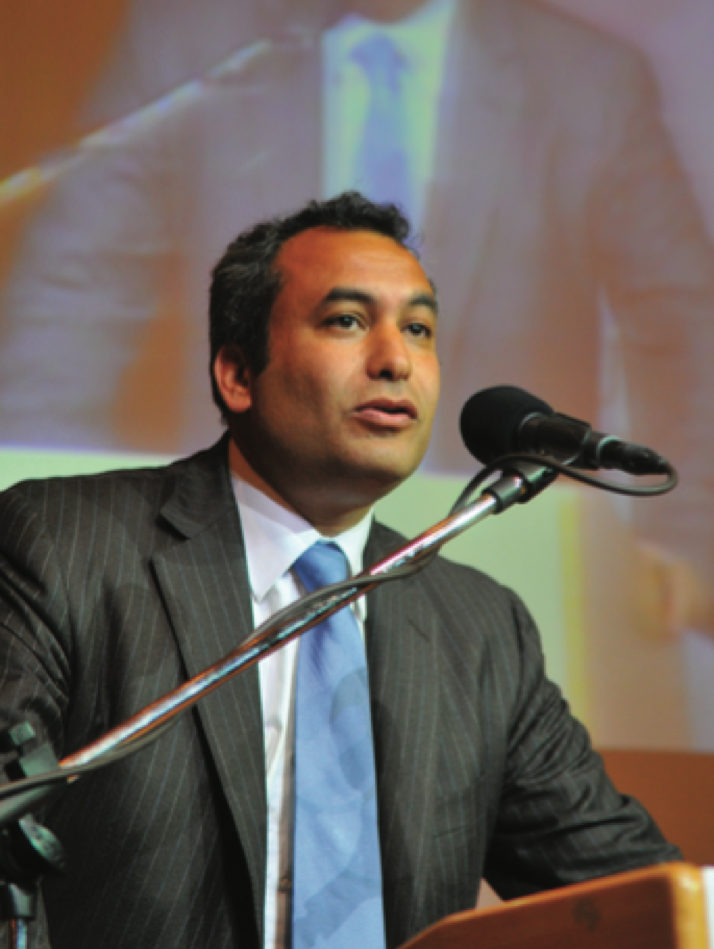
Elwy Taymour- Q&A

by Executive Staff June 24, 2009
written by Executive Staff

Executive sat down to talk with Elwy Taymour after a press conference announcing the opening of the YAL Egypt Branch, the appointment of Taymour as its chair, and the formal launch of a program called Learning for Life, which is “designed to help Arab students bridge the gap between universities’ academic output and the marketplace requirements.”

E  So here we are, minute one.

Right. We just started, this is minute one.

E  Egypt seems like a pretty big gap in coverage.

What happened was that Young Arab Leaders realized from the very beginning that Egypt was very important, but for two or three years nothing really happened.

E  Why not?

I think it just didn’t materialize. But the Minister of Investment came in with SODIC [an Egyptian company that has been running a pilot program for the past year], and they tried to push the program and start the chapter. What’s good about Egypt is that the nucleus of the program was started before all this was organized, so there’s a structure that we can build around to hit the ground running.

E  So tell me what’s been happening

We’re doing two main things. We have the Learning for Life program, and the grants associated with it, but then we also have donated money for labs, for actual labs at the universities and that’s going to be an ongoing thing. It’s always going to be there, it’s always going to be serving as place to offer training courses.

E  It seems that students coming out of university without the necessary training for the workforce is a real problem in Egypt.

It’s always been a problem with this region. I think more and more there’s a gap between people coming out of university versus what’s out there waiting for them. Everyone wants to be an engineer and a doctor, and there’s a ton of other things out there that nobody knows how to do. So, I think one of the main things of YAL is that each chapter will try to reduce that gap. By introducing courses, by maybe getting a little bit more of a headway than what the government is doing, in terms of providing these guys with a little more of something to look forward to when they come out.

E  Do you have any specific plans, now that you’re in charge?

To continue the initiatives that have already started, that’s one. Second, I really would like to start working in places other than Cairo, so the focus is also going to be, for me, like Alexandria, and some of the poorer places in upper Egypt. That’s a priority for us and to also encourage more people to dedicate some of their own time to participating in the programs.

E  You mean adults, or kids?

Whichever. Whether they’re people who decide to join the chapter, or people who are older and would like to volunteer some of their time.

E  Big plans, it sounds like.

Well, I think these programs are quite important, but I also think that what Egypt suffers from is a lot of little problems. I think fundamentally there are things that need to change in the country, but to begin with, there are smaller things. If you were to assume the quality of education is currently at 20 percent of its potential, for it to jump to 60 percent or 70 percent I think you need very small things to change. Getting kids exposure to the arts and things like that, I think, is something much more important that we can focus on that will create a much bigger impact. I think the most important thing right now are the small things that we can change.

June 24, 2009 0 comments
0 FacebookTwitterPinterestEmail
Special SectionYoung Arab Leaders

The first step in progress

by Executive Staff June 24, 2009
written by Executive Staff

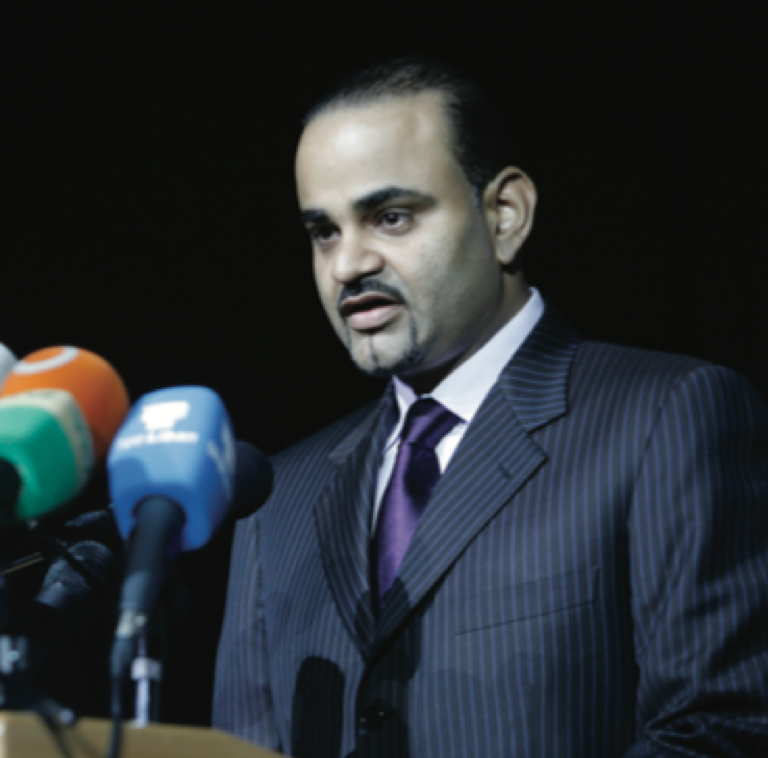
Dr. Omar bin Sulaiman, the chairman of Young Arab Leaders (YAL), didn’t have to pay very close attention at YAL’s annual forum in Beirut last month to pick up on the high levels of youth frustration — although it’s probably a good thing he did.

“How do you start?” a young woman, a YAL member from Egypt, asked from the audience. She was standing with a microphone in a large ballroom at the Habtoor Grand Hotel during a morning discussion on how to create more opportunities for youth. And she was expressing a recurring sentiment.

“Young people do not have enough expertise to write a correct business plan,” she said. “We end up with young people saying, ‘No one will give me a job if I don’t have the right connections.’ Meanwhile, the public sector says you need more education. The private sector says the public sector has to change first. Your parents say go find a job.”

Like so many others in the ballroom, she was feeling exasperated. For one thing, the financial crisis had severely limited job opportunities. But she had also found that gaps in higher learning left recent graduates just a little shy of what hiring companies expect from them.

This is precisely the role Sulaiman envisions YAL playing. YAL has big ideas and lofty goals — their four pioneering initiatives are education, entrepreneurship, dialogue and leadership — but Sulaiman is a practical man, and he believes in practical solutions.

He was sitting in the front row and wasn’t supposed to be part of the discussion — he’d already given some introductory remarks earlier in the day — but now he rose to respond to this young woman.

“Who here is ready to train someone on the spot?” he said, turning to face the crowd. Half the adults in the room raised their hands. “That’s 400 hands! We could start right here, with ourselves!”

It was a start

Later, during a break in the forum, Sulaiman told Executive, “frustration is a part of life… We all go through it. You know, your house, your friends, sometimes something frustrates you. It’s fine, it’s a part of life. As long as you move on from that.”

Over the past year, YAL has faced its own frustrations and challenges — the economic crisis being at the top of the list — and it has steadily worked to make itself more streamlined and structured. They moved away from the non-profit model. They elected their first CEO, Assem Kabesh. They opened a new branch in Egypt. And, as Sulaiman pointed out, they increased their reach to more that 4,000 “beneficiaries” — nearly half of them in the past four months alone.

“You want a culture of debate, but eventually you want to move on,” he told Executive. “You don’t want to debate it forever. Kill the issue, hammer the issue, but move on. That’s what I was trying to bridge. Stop saying, ‘Why aren’t you doing something about it?’ We need to say, ‘I’ll do something about it.’”

At lunchtime — over Lebanese cuisine at the hotel’s spacious pool bar — several students said they agreed with this sentiment. They wanted more solutions, and fewer debates, especially political ones.

“If we had gotten into politics this morning,” a young Lebanese YAL member said, “we never would have gotten out of the room.”

In the afternoon, Sulaiman’s practical problem-solving was put to a test. The YAL forum-goers divided up into smaller breakout sessions, with experts discussing each of YAL’s main initiatives.

At the session on entrepreneurship, Rami Makhzoumi, the moderator (also President and CEO of Future Pipe Industries,) took a cue from Sulaiman and used the opportunity to ask the members of the panel, all corporate executives, if they would be willing to pledge to consider the applications of any young men and women who went through a YAL training course. They all said “yes.”

June 24, 2009 0 comments
0 FacebookTwitterPinterestEmail
Executive Insights

Engaging employees for the company’s success

by Tommy Weir June 24, 2009
written by Tommy Weir

In the midst of the financial crisis, most organizations are looking for a proven way to improve their financial performance.

The likelihood is that you are as well, and there is a proven way you can do it. Kenexa Research Institute (KRI) studies conclude that there is a relationship between employee engagement and an organization’s financial performance.

In the graph below we see that organizations with high employee engagement scores have two times the annual net income of those firms with low employee engagement scores. This data points to the fact that there is a direct linkage and correlation between engaging your employees and an improvement in your financial performance.

Global employee engagement & annual income

Source: Kenexa Research Institute (2009)

You may be wondering, “What is employee engagement?” According to Jack Wiley at KRI, employee engagement is “The extent to which employees are motivated to contribute to organizational success, and are willing to apply discretionary effort to accomplishing tasks important to the achievement of organizational goals.”

Simply stated, employee engagement = employee pride + employee satisfaction + employee advocacy + employee retention. In other words, engaged employees are proud and extremely satisfied with where they work. They’re so satisfied they tell people about it and recommend their company as a good place to work. Engaged employees rarely think about looking for a new job with another company.

Some organizational leaders are skeptical about assertions that employees can be this satisfied. If you fall in this category as a leader, you need to reflect on the research analyzing employee engagement and understand the conclusive evidence supporting this research.

The way that employee engagement relates to an organization’s financial performance is that it drives an employee’s performance in terms of conscientiousness, organizational commitment and productivity. Additionally, higher employee engagement reduces absenteeism and employee turnover. These combined factors give us the most important result of employee engagement: an improvement in an organizations’ service quality and customer satisfaction.

Since it’s most probable that your organization wants to improve its customer service and financial performance, let’s contemplate the most relevant question: “What can an organization do to improve employee engagement?”

According to Wiley, to increase employees engagement, organizations need the following. 

  • Leaders who inspire confidence in the future because employees want to know what the future is and how their work relates to it.
  • Managers who recognize employees and emphasize quality and improvement as priorities.
  • To provide employees with exciting work and the opportunity to improve their skills. Employees who enjoy their work and are encouraged (and given the opportunity) to get better, contribute the most to organizational success.
  • Most importantly, organizations must demonstrate a genuine responsibility to their employees and communities.

So, how do you think your company is doing on employee engagement? Let’s take a look in the Gulf Cooperation Council and see what employee engagement scores indicate.

Employee engagement in the BRIC countries (Brazil, Russia, India and China) and GCC

0 = employees are not engaged at all

80 = employees are highly engaged
Source: Kenexa Research Institute (2009)

On average, organizations in the GCC are in line with global averages when it comes to employee engagement. But they are way behind India, which has a highly engaged workforce,which is one of the reasons why Indian organizations perform well and grow. If organizations in the region want to be global leaders, there is tremendous room for improvement in employee engagement.

One of the peculiarities about the GCC is the dual workforce: homegrown (nationals) and imported (expatriate) talent. Do you think there is a difference between the engagement of nationals and ex-pats?

Employee engagement in the GCC — comparing  ex-pats to nationals

0 = employees are not engaged at all
100 = employees are completely engaged
Source: Kenexa Research Institute (2009)

The results across the GCC are scattered as to who is the most engaged: homegrown or imported. But on  the whole, organizations in the GCC and all over the world have an incredible opportunity to improve their financial performance by driving employee engagement.

In conclusion, is your workforce motivated to contribute to organizational success, and willing to apply discretionary effort to accomplishing tasks important to the achievement of organizational goals? It is important for every organization to understand its specific employee engagement score and implement a plan to improve it and, in turn, to improve the organization’s financial performance.

Tommy Weir serves as managing director of the EM Leadership Center

June 24, 2009 0 comments
0 FacebookTwitterPinterestEmail
Editorial

Orphans and the ghosts of martyrs past

by Yasser Akkaoui June 24, 2009
written by Yasser Akkaoui

This month’s Lebanese elections will be dominated by orphans and the ghosts of martyrs past. On the March 14 ticket no less than five children — Saad Hariri, Walid Jumblatt, Nayla Tueni, Michel Moawad and Nadim Gemayel  — of slain politicians are all, in one way or another, forced to follow in a tragic tradition that has become the hallmark of Lebanese politics. Meanwhile, the opposition March 8 bloc has its own martyrs whose blood has helped make the soil of Lebanon so sacrosanct.

Yes indeed, we Lebanese do like honoring our dead, but the living must not be forgotten. It is of the utmost importance that our politicians, while recalling past sacrifice, do not lose sight of future obligations. Lebanon is a country dominated by its business community — its bankers, its financiers, its hoteliers, its restaurant owners, its retailers, its property developers, its traders and its small business owners.

From the mega-wealthy, who shape the Beirut skyline, to the shopkeepers on every street corner, business, more than politics, is what courses through Lebanese veins. Any future government, whatever its stripe, must provide to the electorate a robust economic blue print, a model to drag the country from its slough of despondency. Now is the time to deliver on the promises.

The good news is that regionally the markets are picking up, clawing back one third of the losses sustained since the meltdown. It is the first sign that the critically-ill patient is on the mend. More money will be pumped into the region, but this time it will be allocated prudently into those companies that have demonstrated they suitably restructured and shed the fat of corporate excess.

But this new financial nutrition will take time to filter into the region’s bloodstream, and in the meantime, new regulations must be adopted to ensure this new investment is safeguarded. Meanwhile, the price of oil is creeping upwards and this bodes well for regional economies.

For the moment, let’s hope the dead can breathe life into the living.

June 24, 2009 0 comments
0 FacebookTwitterPinterestEmail
Lebanon

Election – The ballots bought

by Sami Halabi June 3, 2009
written by Sami Halabi

Lebanon’s June 7 parliamentary elections are expected to be a close affair, pitting the March 14 coalition against the opposition parties of Michel Aoun’s Free Patriotic Movement, Hezbollah and Amal. The elections are unprecedented in many respects, not least of which is the introduction of a new electoral law.
Lebanon’s new electoral law is unique in the region, addressing core issues such as media objectivity during the elections and campaign finance. The reforms are a step towards adopting legislation that would bring Lebanon’s elections in line with international standards. But the current legislation is “diluted by significant loopholes,” said Madeline Albright, the former United States Secretary of State, when she touched down in Beirut to head a delegation to monitor elections from the National Democratic Institute (NDI).
The loopholes are many, but certain reforms that did not exist prior to this year’s elections have been adopted. Not least of which is Lebanon’s newly formed Constitutional Council that can adjudicate contraventions of the electoral law. 

Spending caps skirted
In theory, the new election law stipulates that an “electoral campaign account” must be established for each candidate and “all electoral contributions and expenses shall be exclusively made through this account during the period of the electoral campaign.”
The law restricts each candidate to a campaign spending limit, including pay-in-kind expenses, of approximately $100,000, plus a variable of around $2.66 per registered voter in an electoral district, which is measured by the Ministry of Interior’s list of registered voters. But the actual number of eligible voters in a district is impossible to calculate because Lebanon has not conducted a census since 1932. 
“Candidates are required to do all their spending from their electoral account, but they can make transactions from their personal accounts or their family’s accounts and no one can know,” said Lynne Ghossein, the campaign finance project manager at the Lebanese Transparency Association (LTA). 
One possible solution to this skirting of the law would be to monitor candidate’s personal accounts or those of their families. But this provision is not included in the new electoral law. 
“I gave my opinion while discussing the draft electoral law and I said very openly that we cannot limit banking secrecy to the campaign account,” said Lebanon’s Interior Minister Ziad Baroud at a press conference for the Supervisory Commission on the Election Campaign (SCEC). Baroud is responsible for insuring the SCEC fulfills its mission of implementing the new electoral law.
Lebanon is one of the only countries in the world that maintains a policy of banking secrecy on personal accounts. Banking secrecy can only be lifted by the Special Investigation Committee (SIC) of the Lebanese Central Bank.
“We have not lifted banking secrecy on any candidate’s accounts nor received any request to do so,” said Hisham Hamzeh, director of the audit and investigation unit at the SIC.
Hamzeh explains that banking secrecy is only lifted in order to investigate suspected “terrorist” activity, as well arms and narcotics trafficking and money laundering. Even if candidates are found to have violated the campaign spending clauses of the electoral law, the public would not find out about it until after the elections, when many of the candidates will have already assumed office.
“The only thing that can happen is when the election is over someone does the inventory and campaign auditing for a candidate. [Then] they can see that there is more money spent than what was in the [electoral campaign] account,” said Nadine Farghal, legal counsel and coordinator at the Lebanese Civil Campaign for Electoral Reform (CCER). “This way they can see that [the candidate] has used another account.”  
Violations of campaign financing regulations are to be submitted to Lebanon’s Constitutional Council, whose formation has been delayed for years. On May 19, a group of 55 Lebanese civil society organizations and eight universities sent a formal letter to President Michel Sleiman demanding the creation of the Constitutional Council.
On May 26 — less than two weeks before the election — Lebanon’s cabinet finally appointed its half of the council’s membership (five out of the 10 seats). The council is Lebanon’s highest judicial body that can rule on the constitutionality of the elections and is seen as an essential judicial organ providing an alternative to violent conflict over electoral contentions.
In addition to being prevented from tracking the personal accounts of candidates, the SCEC can only begin to monitor campaign accounts from the point when candidates officially submit their eligibility, a period that ran from March 2 to April 7. Hence, supposing that candidates do follow the letter of the law and only use their campaign accounts to fund their campaigns, there is still no adequate mechanism in the law to account for the total amount spent on a campaign, which began well before the submission period.
“The monitoring time is [too] short and we didn’t get the time we wanted,” Baroud said.
Yara Nassar, executive director of the Lebanese Association for Democratic Elections, said that long before the monitoring period began, candidates used their own accounts or that of their party. She said the lack of an official commission to report violations in the run-up to the election period is another significant shortcoming of the new law.
“This is the first time the SCEC is here,” she said. “They haven’t been around for four or five years and this is part of the problem.”

Foreign influence 
In theory, Lebanon’s new electoral law specifically prohibits candidates “from accepting or receiving, whether directly or indirectly, contributions or aids from foreign states or from a non-Lebanese natural or legal person.”
But without oversight on candidates’ personal accounts, there is technically little to stop candidates from ignoring the law and accepting the support of foreign entities willing to dish out cash to support their interests.
“Candidates can receive money in other accounts then transfer it to their electoral account,” said Gaelle Kibranian, programs director at the LTA. “We cannot know where this money is coming from.”
Lebanon’s role as a battleground for regional and international players makes it a prime candidate for illegal money entering the country to support one side of the political divide more than another.
“Can you say that Hezbollah doesn’t take money from Iran or Saad Hariri doesn’t take money from Saudi or [Michel] Aoun from Qatar,” added one legal expert who spoke on condition of anonymity. “It’s all around the media and no one is investigating it.”
The practice of accepting foreign money has become so commonplace in affecting the course of Lebanese politics that many politicians have heralded it as a necessary element to achieving their political aims. Ahmad el-Assad, a candidate running for the Shiite seat in the Marjayoun electoral district and founder of the Lebanese Option Gathering (LOG), said he has “no problem” with accepting financial help from Saudi Arabia or the US “because if we don’t do that things don’t move forward.” However, he denied receiving any funding for his campaign from foreign sources.
His organization aims to provide an alternative to Hezbollah’s influence over Shiites in the south of Lebanon. Assad accused Hezbollah and its allies of intimidating the residents of Lebanon’s south and of receiving “tens of millions of dollars” from Iran. Hezbollah declined to comment on Assad’s accusations.  

Vote buying
International and local election watchdogs say the biggest obstacle to preventing vote buying is the balloting system in Lebanon. Ballots can be printed or written out on any piece of paper and parties usually hand out their pre-printed “list” before a voter enters a polling station.  
A party can hand out a variety of ballots, with candidates listed in any order and any font. This in turn allows political parties to trace the ballot back to a particular voter or bloc of voters. 
Despite repeated calls by civil society and some government figures like Minister Baroud, the proposed introduction of standardized, pre-printed and government distributed ballots at the polls was not included in the 2008 Election Law, due to opposition from parties on both sides of the political spectrum.   
“We know that the buying happens at the ballot because it is just a piece of paper and they [candidates and parties] put signs on it and pay for the votes afterwards,” the LTA’s Kibranian said. 
She said each party has representatives at the polling station during vote counting who, in turn, monitor the number of votes cast for each candidate or list of candidates.  CCER’s Farghal said the markings are usually simple alterations in the lists of candidates, such as having the “second name in italics or the third name in a different font.”
Election observers agree that most of the ballot rigging happens at the ‘family level,’ whereby large families in electoral districts agree to arrange for their family members to cast votes for a certain candidate or list of candidates. Once the ballots are counted, each family then receives cash or pay in-kind services according to the number of counted votes. 
“We have witnessed representatives of the candidates marking each name when they count the votes,” said Nassar of LADE.  “They see the ballots they need to mark and then they mark their own register.”
But it’s not just families that take part in vote buying corruption. An anonymous source working with one of the major Christian opposition parties in Lebanon said his party  recruited through an “electoral pyramid scheme,” whereby the amount of money ‘recruiters’ make increases with the number of people they ‘recruit.’ The source has agreed to vote for the party in question and act as a representative at the polling booth. 
“All they wanted was a photocopy of my ID,” the source said. “If you have a car they need your driver’s license and you can get more [money] because they ask you to transport people.”
The source said he was receiving $100 for his vote and $100 to man the polling station come June 7.
Candidates and parties are also looking to bring votes back to Lebanon from abroad, and with it the voters, because current legislation does not allow Lebanese citizens to vote outside the country.
An anonymous source in Dubai with links to a prominent Sunni party said the electoral pyramid scheme that applies to local vote buying is also being put to use abroad. The source said that parties are giving voters abroad, especially those from tightly contested districts, either airline ticket vouchers or sending them tickets directly. 
While this is not technically an illegal practice, the electoral law specifically states that transportation costs must be deducted from a candidate’s electoral campaign account.
“If you can prove that the candidates themselves are paying for people to fly in from abroad to come and vote for them, then it can be counted as campaign spending,” said Farghal.
As for the foreign staff in charge of recruiting voters, the payment of their salaries will not pose much of a problem in circumventing the law.
“If I am a candidate and I have a lawyer, even if he is not a very smart one, I will find a way to make it seem like these people [foreign staff] are volunteering to get me more votes abroad,” added Farghal.
The current law allows for volunteers to provide services for free which are not counted as campaign expenditures.

Pay-in-kind and your vote is mine
Apart from candidates merely paying people in cash to further their campaign, many parties and candidates are blatantly disregarding the illegality of pay-in-kind services to further their campaigns.
In May the March 14-affiliated Kataeb party advertised on its website that it had distributed free medicine and healthcare in a “special for the campaign.”
El-Assad’s campaign also “distributed health cards that were conditional upon voter choices,” according to a report issued by LADE. El-Assad admited to this violation but says that it pales in comparison to Hezbollah’s violations. Hezbollah declined to comment.

The media’s bark
The new electoral law aims to restrict Lebanon’s sectarian media landscape from unbalanced reporting on the elections. Given that each major media outlet in Lebanon belongs to one political party or another, this is turning out to be an uphill battle for the SCEC.
“Our media landscape is controlled by people who are running in the elections and obviously they will use their media outlets for their own purposes,” said Roula Mikhael, executive director of the Maharat Foundation, a local NGO that is monitoring the media during the elections.
The SCEC’s first report in early May identified 293 media violations of just one article of the electoral law committed over 14 days, from April 14 to April 28. The report covers several categories of contraventions across different types of media that include libel, slander, defamation and broadcasting that triggers sectarian tensions.
The first report contained no specifics as to who committed which media violation because of what head of the SCEC Ghassan Abu Alwan, called “a period of forgiveness.” Minister Baroud added that “we should not consider that it is impossible for the media to follow the law.”
The media organizations however seem to be above the law as they enjoy widespread support among large swaths of the Lebanese public because of their political and religious affiliations. Nassar of LADE explained that the issue of addressing what the media are allowed to do is “something that the authorities in Lebanon are afraid to tackle or take action against,” because “even if the court says you are right, you are well documented and you have everything you need to do this, public opinion could sway against you.”

Piles of posters
The new law also lays out the explicit terms for displaying political posters by which each municipality must assign spaces for display.
But given Lebanon’s municipal elections are scheduled to be held next year, municipalities have a lot to consider if they are to take down illegal posters of a candidate who could represent them in government after June 7.
“Municipalities are usually politicized so they will not, in most cases, forbid people from hanging posters of a certain figure,” said Tony Mikhael, lawyer and legal expert at Maharat. But since the beginning of May, reports have surfaced that the law is being applied in some areas of Lebanon, but “if you go outside of Beirut you see the chaos when it comes to hanging pictures,” said Mikhael.
This practice has greatly impeded any monitoring body’s ability to track campaign expenditures on campaign posters. The SCEC has declared that the cost of any promotional material that even alludes to a candidate or their party will be counted against their campaign account. On the ground, however, there are always ways around such rules.
“You cannot forbid people from placing posters on private property,” Tony Mikhael said. “If you put a picture on the roof or balcony of a building, the municipality can do nothing.”

Abusing public office
Public officials have been accused by various monitors and NGOs of abusing their public offices to promote their campaigns. One of these is the telecommunications Minister Gebran Bassil who recently sent out a voice recording to mobile phone subscribers advertising Lebanon’s recent deduction in phone tariffs.
The message started out by saying “This is not a lie, but the truth” mentioning the minister’s name, but not that of his ministry, which prompted a flurry of accusations. His office said that he recorded the message on April 1, before he submitted his candidacy. Gebran’s office said “technical reasons” caused some subscribers to receive the message later.
Even Parliamentary Speaker Nabih Berri, an opposition leader, has been criticized by LADE for promoting himself and his electoral list by giving speeches at the opening of public events.
Ali Hamdan, a senior adviser to Berri, said that the SCEC has approved of all of the speaker’s speeches, and in turn accused LADE of being biased.
“The US is supporting this NGO so how can they be neutral,” said Hamdan. “They are not neutral anymore and [hence] they should be phased out.” LADE declined to respond to the allegation.
The mudslinging will most likely continue well into and past the elections. But with the legal body to prosecute violations in place, the law now has some teeth. And, with some key reforms advocated by civil society already enacted, there is a sense that the ball has at least started rolling on the path to a democratic process that is in line with international standards.

June 3, 2009 0 comments
0 FacebookTwitterPinterestEmail
Finance

Bank Audi – Freddie C. Baz

by Executive Staff June 3, 2009
written by Executive Staff

E Economist Marwan Iskandar recently said that it is not realistic to think that Lebanon has not been affected by the global financial crisis, especially considering the public debt; what’s your take on this?

Our customer deposits represented almost 90 percent of our funding base. Boring banking, boring banks. Lack of sophistication based in commercial banking is why Lebanese banks have been insulated from the crisis.
What Iskandar is saying is true in marginal terms, not absolute terms. The International Monetary Fund has forecasted real gross domestic product growth for 2009 between 3 and 4 percent. Global GDP will witness a negative growth of negative 1.5 percent. This drop in our growth rates translates into some of the burdens felt by the global financial crisis, but it’s a mix of positive and negative contributions, with a net contribution still positive, but at 3 percent, not at 8.5 percent. At this point of the year, it is too early to confirm what Iskandar is saying or not.

E Some believe that by lending the government money, Lebanese banks are perpetuating the country’s debt problem. How much longer can the banks carry Lebanon’s debt?
It’s a political statement, it’s not an objective or professional statement. Nobody imposed the subscription to any public paper on the banks. At the end of the day, the government has to pay salaries to the public servants, so if there is no income, you either borrow or you sell assets. This easy borrowing has made the politicians’ lives easier in not feeling the need to reach a consensus on financial reforms. Easy borrowing has provided an exit.
If you evaluate all pubic assets, and you allocate a very conservative value to each of those assets, you will reach a bottom line which is much bigger than the outstanding debt. So the Lebanese government is not in a situation of technical bankruptcy, whereby their asset value is lower than their outstanding debt. Their asset value is still higher than their debt. The issue is more one of cash flows than of net asset value.

E Due to the slower pace of lending to the private sector compared to public sector lending, many feel that banks in Lebanon should increase their lending and are pressuring the central bank to lower the interest rates in order to stimulate investment in the private sector. What is your take on this?
At the end of the day, figures talk. The consolidated exposure of Lebanese banks to the domestic private sector in terms of lending is almost 100 percent of GDP. The benchmark worldwide is 60 percent. It’s a false problem that has been created by politicians. We are at 85 or 90 percent lending to the private sector. When you have such a high level of exposure in Lebanese banking, you shouldn’t even dare to mention that we are under-lending to the private sector.
If you go into the breakdown of the overall portfolio by size of companies and how much we are lending to big corporates, with respect to middle size corporations and small to medium [sized] enterprises (SMEs), there is a [higher] concentration in the bigger corporations. That is because of the contribution of those important borrowers to the GDP of Lebanon. If 80 percent of my portfolio is concentrated on tier 1 companies, it’s because the top 100 companies in Lebanon contribute up to 80 percent of the GDP formation in Lebanon.
I agree that we should give more loans to SMEs in order to increase their contribution to the economy of Lebanon, but it’s a matter of governance much more than one of size. SMEs are mostly family profiled or not legally organized. The responsibility is not at the level of the banks, because those companies have not developed into well organized companies eligible for bank loans.

E Do you expect to see mergers and acquisitions in the Lebanese banking sector?
On the regional scene, there is a place for one or two mega Lebanese institutions [to merge]. This is something that frustrates me a little bit because this should have been encouraged by the central bank. It will definitely happen. Among the top 10 banks in Lebanon we have to see two or three mega-mergers. What we have witnessed so far are lobsters eating shrimps; what we need in Lebanon is lobsters marrying each other.

June 3, 2009 0 comments
0 FacebookTwitterPinterestEmail
  • 1
  • …
  • 464
  • 465
  • 466
  • 467
  • 468
  • …
  • 686

Latest Cover

About us

Since its first edition emerged on the newsstands in 1999, Executive Magazine has been dedicated to providing its readers with the most up-to-date local and regional business news. Executive is a monthly business magazine that offers readers in-depth analyses on the Lebanese world of commerce, covering all the major sectors – from banking, finance, and insurance to technology, tourism, hospitality, media, and retail.

  • Donate
  • Our Purpose
  • Contact Us

Sign up for our newsletter

    • Facebook
    • Twitter
    • Instagram
    • Linkedin
    • Youtube
    Executive Magazine
    • ISSUES
      • Current Issue
      • Past issues
    • BUSINESS
    • ECONOMICS & POLICY
    • OPINION
    • SPECIAL REPORTS
    • EXECUTIVE TALKS
    • MOVEMENTS
      • Change the image
      • Cannes lions
      • Transparency & accountability
      • ECONOMIC ROADMAP
      • Say No to Corruption
      • The Lebanon media development initiative
      • LPSN Policy Asks
      • Advocating the preservation of deposits
    • JOIN US
      • Join our movement
      • Attend our events
      • Receive updates
      • Connect with us
    • DONATE