
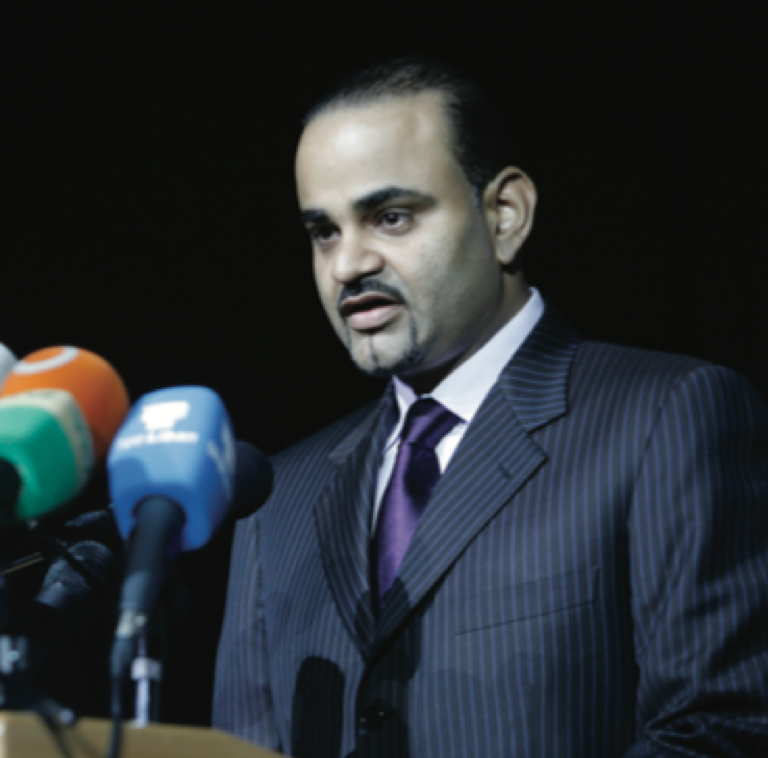
Dr. Omar bin Sulaiman, the chairman of Young Arab Leaders (YAL), didn’t have to pay very close attention at YAL’s annual forum in Beirut last month to pick up on the high levels of youth frustration — although it’s probably a good thing he did.
“How do you start?” a young woman, a YAL member from Egypt, asked from the audience. She was standing with a microphone in a large ballroom at the Habtoor Grand Hotel during a morning discussion on how to create more opportunities for youth. And she was expressing a recurring sentiment.
“Young people do not have enough expertise to write a correct business plan,” she said. “We end up with young people saying, ‘No one will give me a job if I don’t have the right connections.’ Meanwhile, the public sector says you need more education. The private sector says the public sector has to change first. Your parents say go find a job.”
Like so many others in the ballroom, she was feeling exasperated. For one thing, the financial crisis had severely limited job opportunities. But she had also found that gaps in higher learning left recent graduates just a little shy of what hiring companies expect from them.
This is precisely the role Sulaiman envisions YAL playing. YAL has big ideas and lofty goals — their four pioneering initiatives are education, entrepreneurship, dialogue and leadership — but Sulaiman is a practical man, and he believes in practical solutions.
He was sitting in the front row and wasn’t supposed to be part of the discussion — he’d already given some introductory remarks earlier in the day — but now he rose to respond to this young woman.
“Who here is ready to train someone on the spot?” he said, turning to face the crowd. Half the adults in the room raised their hands. “That’s 400 hands! We could start right here, with ourselves!”
It was a start
Later, during a break in the forum, Sulaiman told Executive, “frustration is a part of life… We all go through it. You know, your house, your friends, sometimes something frustrates you. It’s fine, it’s a part of life. As long as you move on from that.”
Over the past year, YAL has faced its own frustrations and challenges — the economic crisis being at the top of the list — and it has steadily worked to make itself more streamlined and structured. They moved away from the non-profit model. They elected their first CEO, Assem Kabesh. They opened a new branch in Egypt. And, as Sulaiman pointed out, they increased their reach to more that 4,000 “beneficiaries” — nearly half of them in the past four months alone.
“You want a culture of debate, but eventually you want to move on,” he told Executive. “You don’t want to debate it forever. Kill the issue, hammer the issue, but move on. That’s what I was trying to bridge. Stop saying, ‘Why aren’t you doing something about it?’ We need to say, ‘I’ll do something about it.’”
At lunchtime — over Lebanese cuisine at the hotel’s spacious pool bar — several students said they agreed with this sentiment. They wanted more solutions, and fewer debates, especially political ones.
“If we had gotten into politics this morning,” a young Lebanese YAL member said, “we never would have gotten out of the room.”
In the afternoon, Sulaiman’s practical problem-solving was put to a test. The YAL forum-goers divided up into smaller breakout sessions, with experts discussing each of YAL’s main initiatives.
At the session on entrepreneurship, Rami Makhzoumi, the moderator (also President and CEO of Future Pipe Industries,) took a cue from Sulaiman and used the opportunity to ask the members of the panel, all corporate executives, if they would be willing to pledge to consider the applications of any young men and women who went through a YAL training course. They all said “yes.”
