
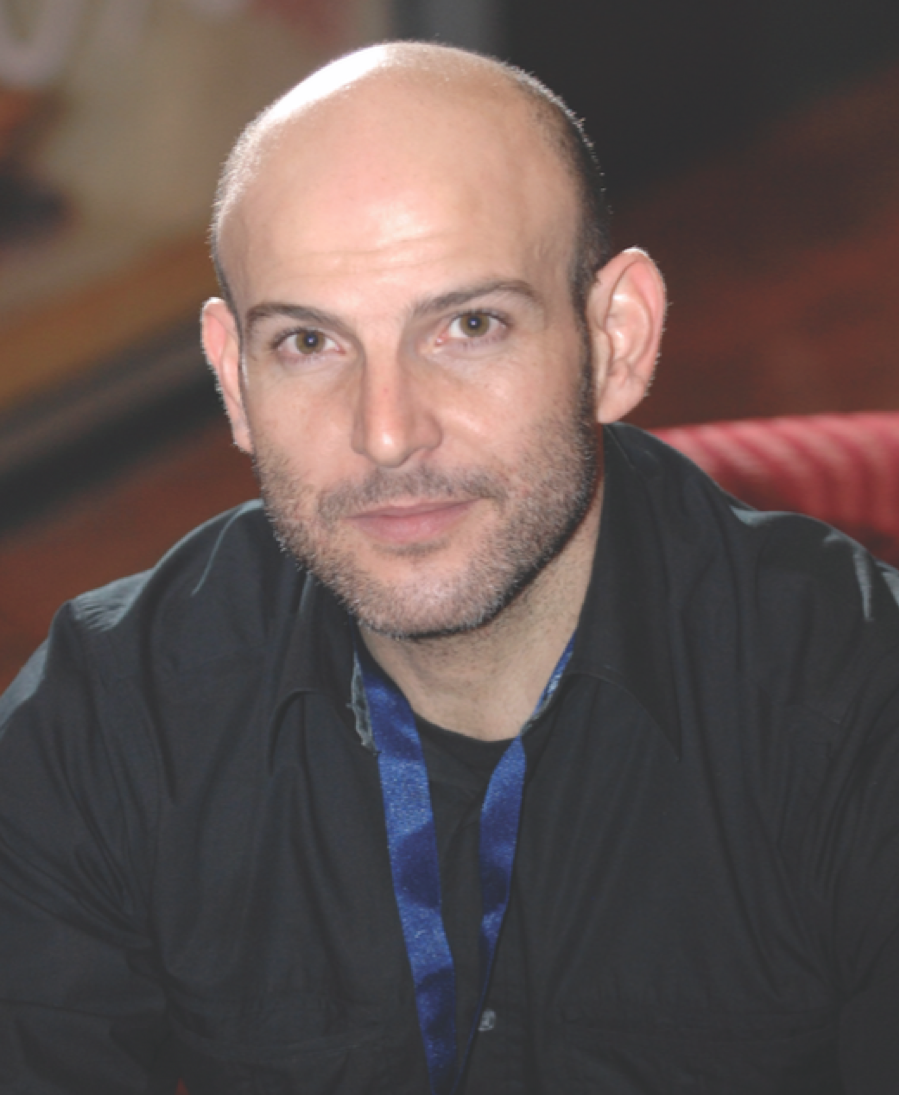
Paul Boulos joined Drive Communication in early 2008 with an 11-year track record in the advertising and marketing industry. Almost a decade ago he helped set up the Leo Burnett office in Riyadh, Saudi Arabia and was then appointed deputy managing director of the agency’s Kuwait operation. Drive joined the Dentsu advertising network in 2005. Executive Magazine recently caught up with Boulos at the MENA Cristal awards.
E The regional advertising world has historically perceived Saudi Arabia through a number of stereotypes. Why have these agencies been unable to break free from this narrow view?
I have been in the advertising business for 12 years, but I was fortunate enough to step out of the advertising business for two years. I was in broadcasting with LBC, so I was obliged to see communication from a holistic perspective. You have to see from a holistic perspective. You can’t just think as an ad man anymore. For example, there is another face of Saudi today. This does not mean that the conservative part of Saudi is not there, don’t get me wrong. But today, when you have a population of five or six or seven million, or when you have youth making up 60 to 65 percent of the population, you cannot ignore them anymore. You need to attend to them. First, acknowledge that they exist and understand their habits. The industry has been too caught up with itself and its been done in a one-to-all communication. What I am trying to show is the opposite. It is the underground of Saudi, but it is real and it is coming from the audience. One of the key strategic questions that needs to be attended to is about content. Should the advertisers dictate content, or should the audience?
E You alluded to the fact that advertising agencies in the Middle East spend half a percent of their budgets on research. They are basically flying blind. Why has there been this reluctance to embrace analytical information?
It is really a question of belief. In our culture, we don’t really believe in numbers and figures. Also, in the advertising industry you see a lot of attitude. If someone comes out with a figure, the other person always thinks of it in a negative way or in a political way and that does not have to be the case. There are also different kinds of research, qualitative and quantitative. You don’t need to spend tons of money to do it. But the advertising industry does not move easily. I ask them to rethink their business model as advertising agencies.
E The advertising industry has been slow to adopt this type of change, especially in Saudi Arabia. Do you think their reluctance is based on their perception of Saudi as a place where things cannot change due to things like restrictions on freedom of speech by the government? Do you think that advertisers will not try to challenge this status quo because it might be detrimental to their business?
This is partially true. But the other truth lies with the mindset of the advertising agencies. Let’s ask the flip side of the question. How many of these companies has tried to do so. Who has tried and been blocked. Yes, there could be exceptions. Yes, there could be a challenge. I am not saying it is going to be an easy ride. All I am trying to say is that we need to try and approach the business in a different manner and to look at Saudi in a different way.
E Many advertisers in the West have tried to penetrate the digital market by targeting certain niches and clusters as defined by social networking websites like Facebook and others. But this hasn’t worked for many advertisers and some analysts are suggesting that the strategy be abandoned. Why do you think that this is the way forward in this region?
First is the international best reference, the benchmark, which is the US market. This year, online advertising spending [in the US] surpassed spending for outdoor advertising. This is a landmark change. But in the Middle East, online spending is .1 percent of the total budget, simply because agencies aren’t doing their job. Online advertising is the future of advertising for two reasons. One, it is a form of alternative self-expression and will continue to be. Two, the number of users is said and done. What does not exist is how to deal with it and how to profit from it. This will absolutely be the biggest growth area in the next three to five years.
E We are currently in the middle of a global financial crisis. There is less money to go around. We have seen a substantial number of unsettled payments in the industry. We have seen 2009 advertising budgets cut by more than 50 percent for some of the big players in things like real estate. How long will this continue to affect the industry?
In our business, the client determines the budget. The client can be in any sector today: automotive, retail, telecommunications, real estate… in any sector. There is more responsibility from the communication industry, from the media profession, to think responsibly about how to allocate budgets and not just how to make profits. This gives us one more reason to think about alternative media and new media like mobile or SMS advertising, sponsorship of different kinds of events, different ways of communicating the brand.
E There has been a lot of relocation of staff within the industry lately. Agencies have been moving out of the hubs and into markets that were previously untapped like Jordan, North Africa and the Levant. How do you think this will pan out in the end? Will new hubs emerge?
The industry has become mature enough. It is beyond the merger and acquisition stage. Today, what we see is something more or less called the top 10. It is not a big mystery as to what they will do. Beirut is seen as a creative center of talent. That will continue to be the case, whether on the shuttle approach or a standard axis. So you can have your team in Beirut and service a client in Nigeria. This pragmatic approach ultimately makes agencies more efficient.
