
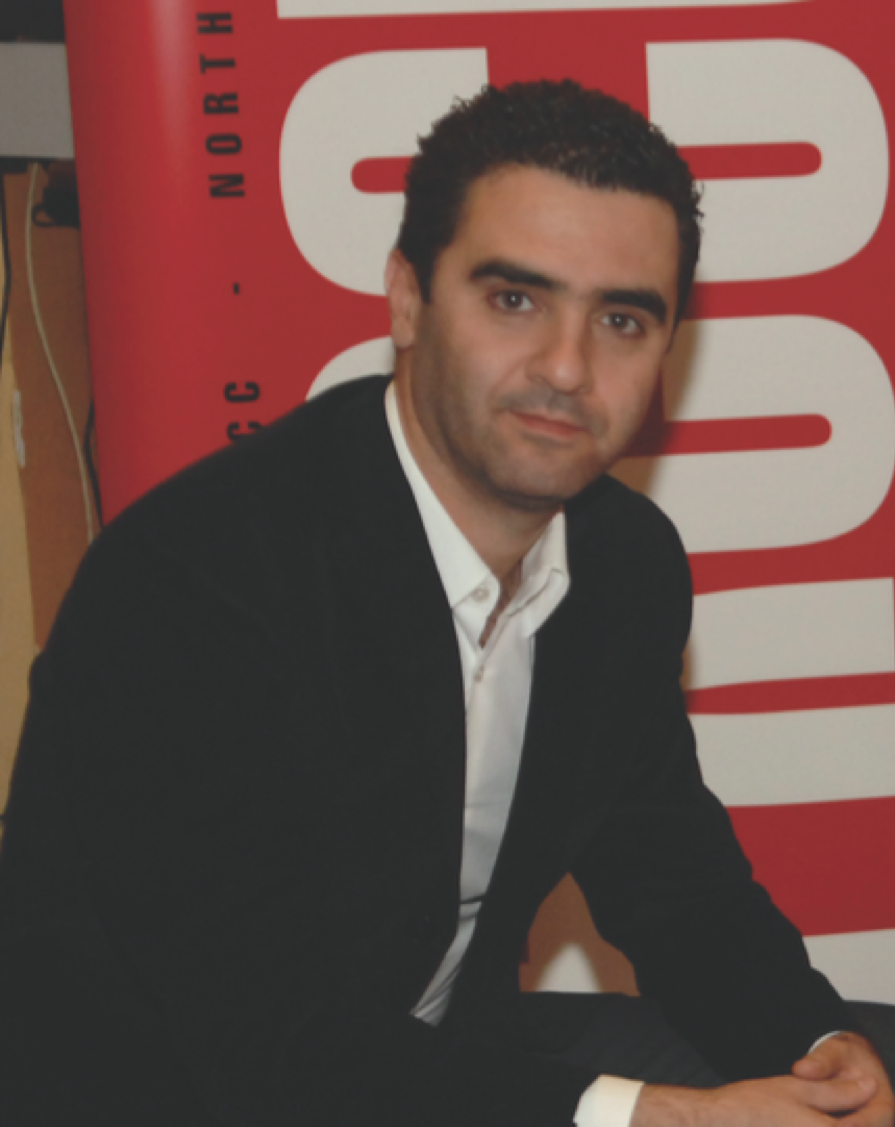
With more than 100 offices in 67 countries, Starcom MediaVest Group is one of the biggest advertising agencies in the world. Starcom MediaVest Group’s MENA executive vice president Tarek Daouk sat down with Executive on the fringes of the MENA Cristal Awards to offer up an expert’s perspective of the advertising market in the region.
E We are in the middle of a financial crisis, with not as much money being thrown around and there have been reports of a substantial number of delayed payments related to campaign completions in the advertising industry. Have you witnessed any of these occurrences as of late?
Of course. It has happened and it’s mainly not the multinational clients but more the local clients. The reason is that it [the crisis] was a shock; the whole thing took everyone by surprise. When surprises like this happen, usually people freeze and adopt a wait-and-see attitude. We haven’t faced an issue of payment with any of our clients. No one is saying ‘I will not pay you’ and no one is discussing invoices. Rather, what we are discussing with them [clients] is when exactly payments will be made. We want to be partners in acknowledging that there is a problem. So you can take two stands; say ‘I don’t care I want it now’ or to say ‘I want it now but let’s see how we can handle this appropriately’.
E Do you think that advertisers need to be understanding of clients’ defaulting in light of the crisis in order to forge better relationships?
I think that both parties need to be understanding because agencies and advertisers will now look into how they can help in this [payment] process. At the same time you have media [outlets] that need to pay their employees. So I think that both parties should be looking into each other’s interests otherwise things will not work. Keep in mind that the financial system of any agency is much smaller than big clients so you cannot sustain the same kind of cash flow as tier-one clients.
E Do you think that the focus of advertising agencies will now be on international clients knowing that they have the cash flow and the capacity, instead of trying to get the smaller fish?
I don’t think agencies have lost focus because no one can afford to lose focus irrespective of how much multinationals spend because of the relationships, the people, the money and the years of doing business together. What happened is the increase in investment from local businesses inflated some of the expectations of media that you didn’t have locally. Its [local clients] a growth sector in the industry which is a good thing and you have to manage this now when growth is slowing down significantly. So no one lost focus it’s just that you had a bigger pie and you were just trying to cope with it.
E Looking out onto the horizon, new campaigns in 2009 are reportedly down in some agencies by up to 50 percent. How are you dealing with this and how do you expect the industry to restructure — especially in terms of staff reallocation — in order to cope with this challenge?
We haven’t done it yet but the principle of reallocating our resources to where the business is, is a sound business principle. We haven’t done it not because we don’t agree with the principle, but we haven’t yet faced the need. If you look at our business over the past few years, the increase in our volume has been significantly greater than that of our headcount, hence we don’t have too much ‘fat’ in our structure. We are not facing any staffing issues but if a disaster happens we will have a reality check. When it comes to media relationships and negotiations, we are looking at how we can develop alternative sources of revenue. If we used to do things one way and this year we cannot get the same revenue out of it there are always other things that the client can benefit from that will bring in money for us and these are the things that we are exploring.
E The advertising market in Dubai has been booming for around a decade. Now we see Qatar emerging and Saudi Arabia constituting a strong and liquid market. Do you view these countries as potential market hubs for the advertising industry now that Dubai has reached somewhat of a critical mass?
I don’t think that there is an answer that will stand forever. Today Dubai is in a tough economic situation but the economy could get better. When and how this will happen we don’t know, but expectations are that Dubai will come out of it [the crisis] sooner than the rest of the world. Dubai has the right infrastructure. So when you look at it, most of the infrastructure that the government needed to borrow money to build has already been borrowed and at cheap rates. For me 2009 is finished and you can’t talk about it anymore. The first half is done for, then Ramadan comes in and afterwards you have the summer. So 2009 will be an extremely bad year for the local media in Dubai. In Saudi there is no change as it has always been the focus and has never lost it. It’s the biggest market for all our clients. If you put aside the local UAE Real Estate developers, 80 percent of our clients’ businesses are in Saudi Arabia.
E In terms of profit margins and new campaigns, is the industry trying to be more competitive piece-wise and consequently decreasing the bottom line for advertisers?
Frankly, I don’t think there is anymore room for price cutting. If you look at most of the commissions that are placed in pitches, they have already decreased to, in some cases, unsustainable levels. So it’s impossible to cut margins further because you will be running a business at a loss and no one can do that. However, if you sweeten your portfolio with different services that have better margins, your margins will improve.
E There is a lot of talk about new media and social networking in the industry, is this something you are focusing on and do you think it is feasible in the Middle East given the infrastructure constraints that persist in the region?
You would be surprised. Digital is no longer ‘new media’. There is a difference between us and the Western markets but the pace of change is much faster in this region. We have more than a 100 percent mobile penetration rate in the region. If you look at what we did with MBC online in Saudi, we launched a video that got one million viewers. Saudi Arabia has 20 million people in it and half of them are under 15; hence you cannot include them in research. So out of 10 million people [surveyed], 10 percent used the most sophisticated mode of communication — broadband download. With ADSL launched in Lebanon it will get there in no time. Technology is relatively cheap in terms of fixed costs, it’s fast and it’s available. I am not saying that the industry should take its money off established media and dump it into digital. People want to consume and an increasing number of people want to consume differently.
