• Donate
  • Our Purpose
  • Contact Us
Executive Magazine
  • ISSUES
    • Current Issue
    • Past issues
  • BUSINESS
  • ECONOMICS & POLICY
  • OPINION
  • SPECIAL REPORTS
  • EXECUTIVE TALKS
  • MOVEMENTS
    • Change the image
    • Cannes lions
    • Transparency & accountability
    • ECONOMIC ROADMAP
    • Say No to Corruption
    • The Lebanon media development initiative
    • LPSN Policy Asks
    • Advocating the preservation of deposits
  • JOIN US
    • Join our movement
    • Attend our events
    • Receive updates
    • Connect with us
  • DONATE
Finance

Qatar – A pearl of prudence

by Executive Staff April 3, 2009
written by Executive Staff

Watching their regional counterparts struggle to stay afloat, banks in Qatar are making very calculated and prudent moves this year. While the global financial turmoil has not hit the Qatari banking sector as hard as other GCC nations, bankers and analysts alike are expecting the ripple effect of the crisis to arrive sooner than later. Fortunately, most banks in the pearl of the Gulf did not invest heavily in structured products or toxic assets — as many other banks in the region did — which has helped Qatar avoid major a fallout in its small, yet robust, banking sector.

With a predicted real GDP growth of around 8.5 percent in 2009, today Qatar is one of the fastest growing economies in the world. As global markets face an indefinite period of recession, many investors are looking for financial safe havens. With its diverse and relatively peppy economy, Qatar hopes bankers and investors will continue to flock to the country and help it achieve financial supremacy over its oil-poor neighbors Bahrain and Dubai. With many multi-billion dollar projects spanning numerous industries in the works, the banking sector would be a major beneficiary of such developments. Unfortunately, due to the global economic slowdown, many of those projects are expected to be delayed or cancelled, leaving banks to feel the blow in their loan portfolios. But thanks to major diversification strategies, banks in Qatar are believed to be well protected against any aftershocks the global meltdown could send their way.

Sovereign serenity
Despite the inevitable slowdown in growth, with the affluent government standing behind its economy all sectors are expected to perform adequately this year. The resilience of the banking sector, according to Mohamed Damak, a rating specialist in financial services at Standard & Poor’s, is “above average,” which is “mainly due to the combination of lower exposure to structured investment products” and the proactive role taken by the Qatari government. For example, in the fourth quarter of 2008, the Qatar Investment Authority (QIA) announced its plans to acquire between 10 and 20 percent ownership in every local bank — of which there are 11 total — helping to increase confidence across the banking sector and to boost liquidity conditions in the market. More recently, at the end of March 2009, the government purchased $1.8 billion worth of local banks’ investment portfolios in order to share the burden of such funds, revive lending, boost liquidity and to support the economy.
While this latest act has been welcomed with open arms by banks across the country, Raj Madha, director of equity research at EFG-Hermes in Dubai, points out “the reality is this is essentially a free gift from the government. It does have the negative impact of encouraging risky behavior on the basis of relying on the government to act as a backstop. However, given the very unusual nature of the current global situation, it may seem reasonable to make an exception on this occasion.”
Still, Madha views this “start of greater intervention from the government” as “positive for valuations, underpinning that the government stands behind the [banking] sector in case of a blow up. Clearly,” he cautions, “this creates some moral hazard, but this is not really the market to be worrying about moral hazard and perverse incentives.”
Abdulbasit A. Al-Shaibei, chief executive officer of Qatar International Islamic Bank (QIIB), believes that this move “is a prudent strategy [by] the government of Qatar,” while calling the sovereign’s decision — unsurprisingly — “generous” toward local banks.
But, Madha highlights, one must not forget that “credit portfolios are still exposed” and the government’s purchase of investment portfolios “has no impact on loan provisioning.” As far as the central bank’s role is concerned, the majority of observers seem to be quite content with how well the institution is managing its banking sector.
Elena Panayiotou, an analyst at Moody’s Investors Service, trusts that Qatar Central Bank (QCB) “aims to exercise sufficient prudential control and supervision of the local banking sector and to harmonize Qatari banking regulations with international standards, as well as to address specific risk areas.”
Damak reiterates this sentiment, saying, “the [QCB] is hands-on with risk issues, meaning they are aware of the different risks and they tend to be proactive when dealing with risks.” In general, Damak — like Madha — sees the “interventionist” attitude of the government as a positive thing. In the event of an emergency, he believes, Qatari banks can expect to “see some kind of extraordinary support.”
Overall, there is no disagreement about the supportive role played by the Qatari government toward its banking sector. Yet, despite the copious sovereign support, “the main issue will be whether the government spending will take up the slack from slower growth in the private sector,” warns Madha.

Home is where the heart is
Before the international financial crisis began, banks around the world — Qatar included — were looking abroad. Whether it was for cross border investments, lending or general expansion, Qatari banks “were a bit aggressive in terms of going abroad,” notes Al-Shaibei. In 2009, he says, “Qatari banks will focus more on the local market [and] concentrate on strengthening their equity base.”
Over the past five years, contends Damak, banks have been “growing tremendously.” Qatar National Bank (QNB), Commercial Bank of Qatar (CBQ) and Doha Bank (DB) alone have witnessed a growth rate of 43.2 percent in 2008, Damak discloses.
Madha agrees, saying that last year “was all about growth and finding new areas to expand the balance sheet into. This year, growth is almost a bad word, with banks focusing primarily on profitability.”
Panayiotou emphasizes “a slowdown in the Qatari banks’ business growth, reflecting the current global economic environment, the tightened funding conditions both domestically and internationally, [as well as] the banks’ more risk-averse behavior.” Strategically, banks will have to “apply more prudent lending policies, particularly in the retail sector as consumer indebtedness in the country rises and as the risk element of the segment increases,” she adds. According to Moody’s data, Panayiotou explains, personal loans have one of the highest delinquency rates in the entire Qatari banking system.
Robert Thursfield, a director in the financial institutions group at Fitch Ratings in Dubai, chimes in saying that “lending growth is likely to be slower” this year in the Qatari banking sector.

Risky business
Due to the declining property market in Qatar, banks will indubitably be adopting a shrewder attitude towards developers and customers alike. Even though the Qatari property market conditions are not nearly as severe as those in Dubai, it is still a crucial concern for the banking sector. Mortgage lending will witness a significantly more conservative approach, insists Damak, as “the expected decline in property prices will have some manageable effects on the Qatari banking system… and the fact that some of the projects will be delayed or cancelled will translate into lower opportunities for growth going forward.”
Al-Shaibei admits, “Of course, we will get hit because of the drop in property prices.”
Panayiotou illustrates the deteriorating real estate situation in the country, saying “a further decrease in demand in the Qatari property market will lead to slower growth in the financing of the construction and the real estate sectors in the country.”
Luckily, Al-Shaibei insists, “everything will be manageable. [The real estate issue] is not going to get out of control.” All local banks are heavily dependent on government projects, so thankfully for them the sovereign’s damage control should be sufficient to deal with any property contractions. Bank growth is also expected to slow due to continued declining liquidity.
Liquidity in the Qatari banking sector is currently adequate, but like in every other economy around the world, it is expected to tighten significantly as the crisis unfolds. Experts unanimously agree that liquidity has been declining in the Qatari banking system lately. The extended and unknown period of global distress is, explains Panayiotou, “expected to lead to a tightening of the banks’ liquidity levels, particularly as funding conditions in Qatar and in international markets continue to be challenging.”
This year, banks in the country will be targeting lower growth than ever before in order to preserve liquidity in the long run and to achieve realistic profitability goals. In terms of balance sheet growth, Madha says, “Qatari banks are now reducing their expectations to low double digits, from the stratospheric levels we saw in 2006 through 2008. This will require some shift in mentality, with banks being much more selective about providing credit.”
Damak asserts that this year, “preserving liquidity and asset quality indicators” will be top priorities on the agendas of local banks.
Seeing as banks are prominently dependent on customer deposits, there is “[f]ierce competition in Qatar in attracting deposits, together with the challenging conditions in the inter-bank and wholesale markets, [which] is likely to put pressure on banks’ funding and liquidity levels going forward,” voices Panayiotou. The good news, she proclaims, is that Moody’s’ concerns “are partly mitigated by the government’s strong financial position and its significant and growing contribution to the Qatari banks’ funding base.”
Another risk, noted by both Panayiotou at Moody’s and Damak from Standard & Poor’s, is the banks exposures to the Doha Stock Market (DSM). Damak warns that Qatari banks will have “some exposure to the stock market and with this decline we will see some one-off effects on profitability if the stock market is not stabilized during the remaining quarters [of 2009].”

What to do
In order to avoid financial catastrophes, Qatari banks will have to act preemptively on a number of fronts. First and foremost, banks must maintain, if not boost, their current liquidity conditions in order to safeguard themselves from future crises in either global or local markets. Secondly, banks should be cautious with provisioning and balance sheet security. Damak stresses the need for calculated risk management, as the international operating environment is clearly not as favorable as it used to be. Also, he says, taking good care of credit and funding is important to banks’ success and protection in the current circumstances. Panayiotou draws attention to the banks’ “need to identify and finance clients that provide good returns with relatively low risk profile, while at the same time ensuring that they take early remedial actions in cases where delinquency rates of existing clients start to rise.”
Prudent moves and preventative measures are the safest best for Qatari banks in 2009. To date, Qatar’s banking sector has been able to avoid any major hits on its domestic front from the global financial crisis, but symptoms of the downturn are likely this year with anticipated slower growth and tightened liquidity conditions.

April 3, 2009 0 comments
0 FacebookTwitterPinterestEmail
GCC

Private equity – Where to scare up the cash

by Executive Staff April 3, 2009
written by Executive Staff


In times of crisis come times of great opportunity, or so we are told. The proverb does seem to bear some truth, however, when applied to the regional private equity (PE) market. Perhaps for too long, PE activity has been focused on a few hotspots in the Middle East and North Africa and has neglected many of untapped or fundamentally solid areas. Now there is little choice when it comes to being picky; firms need to go where the opportunities are rife and many countries in the region are taking advantage of the newfound openness towards expansionism that has taken hold of the industry.

The first country in the cross hairs seems to be Saudi Arabia. The usual criticisms of Saudi being a cumbersome and overly conservative market have turned out to be unfounded. Both Saudi Arabia’s central bank and its sovereign wealth fund (SWF) are coming out of this financial debacle much less scarred than most of their regional counterparts, but that’s not to say they have been unaffected.

“There will be an increased reliance on cash coming out of places such as Saudi… which are unlikely to be so badly affected by current market conditions,” says Robert Hall, head of transaction services Middle East & South Asia at KPMG. Others are more reserved in their analysis.

Ammar Al-Khudairy, managing director and CEO of Amwal Al Khaleej Investment Co, says “I would not point out Saudi Arabia as a bastion or a haven of still available money. It is a haven of less economic turmoil without a doubt. That does not, however, necessarily give investors more comfort than other markets vis-à-vis deployment or fresh commitment of capital.”

Flow like the Nile

Another country that looks to continue its upward trend despite the effects of the global downturn is Egypt. The land of the pharaohs has already attracted $2.8 billion in PE investments (33 percent of total MENA investments) since 2005 according to Zawya Private Equity Monitor and the Gulf Venture Capital Association. Even though this figure is largely attributed to Abraaj’s investments of $1.4 billion in the Egyptian Fertilizer’s Company (EFC) and a $501 million investment in EFG Hermes in 2006, Egypt is expected to continue to attract investment from PE firms desperate for buying opportunities.

“There is a positive outlook on the medium to long-term prospects of Egypt because of the demographics, reforms and the fact that Europe needs the southern Mediterranean basin as a manufacturing base because of environmental and cost of labor issues,” says Al Khudairy.

For the more risk-prone capitalist there is always Iraq which, despite its obvious shortcomings, cannot be written off when considering investment opportunities in the region.

“Obviously Iraq has its challenges, but PE is a local business and you need to be there early,” says Hisham El Khazindar, managing director and co-founder of Citadel Capital. In theory, the promise of post-conflict Iraq is monumental given its oil reserves, demographics and the amount of greenfields on offer for potential investors. However, other industry heavyweights would rather pay more when and if the political risks of Iraq ever do subside.

“Iraq still has significant geopolitical risks and we won’t know the full effect of these risks until the US winds down its occupation,” says a regional PE chief executive who spoke on condition of anonymity. “I would rather pay three times the amount [for a company] without a civil war than with one.”

Preservation is key

The regional PE sector is at a crossroads, or perhaps the more accurate term would be a U-turn. Gone are the days when investors lined up to throw money at PE firms. Today, what separates the wheat from the chaff will be cold hard cash.

“If you have already raised money then you will be OK, if you haven’t then you are in trouble,” says Imad Ghandour, executive director of Gulf Capital. That notion becomes even more reinforced when one considers that leveraging options have all but dried up for the immediate future.

“I do not see previous levels of leveraged investments restored in the foreseeable future, as the market will need to clear excess leverage,” says Rami Bazzi, senior executive officer at Injazat Capital. Al Khudairy adds that, “leveraging is gone for two or three years at least.”

As regional PE firms move forward, the key to surviving will be to take care of ones own and keep limited partners happy whether or not the bottom has been reached.

“The bottom may have been reached but it is important to remain disciplined and stay focused on your existing portfolio a little bit longer, to make sure it is in good form and weathering the storm before starting to get distracted by some of the great opportunities, even if it means you miss the bottom,” says El Khazindar.

The ride has been bumpy and it’s not over yet. What remains to be seen is whether regional PE firms will hold on for the ride or if they will be thrown to the wayside.

“We have had a rising tide that lifted all the boats and the industry never had to really roll up its sleeves and do the dirty work as portfolio companies,” says Yahya Jalil, senior executive officer and head of private equity at The National Investor in Dubai. “That time is now at hand.”

April 3, 2009 0 comments
0 FacebookTwitterPinterestEmail
Capitalist Culture

Ethics – The need for greed

by Michael Young April 3, 2009
written by Michael Young

Ever since the financial crisis hit last October, rarely a day goes by without another article being published suggesting how we must all develop a greater social conscience when it comes to economic affairs.

That word “conscience” is an interesting one, both for its quasi-religious overtones and for the fact that use of the word in the last, let’s say, 25 years, when free- market capitalism was accorded near mystical status, could assure you a life sentence with hard mockery.

Take for example what the sociologist Amitai Etzioni recently had to say about the good life, and how to achieve it in the shadow of the global economic crisis. Lamenting consumer voracity in the capitalist system, he observed: “Only after we come to see that additional goods add precious little to our happiness; that pursuing them is Sisyphean — the more we gain, the more we seek; and that deep contentment and human flourishing rise out of spiritual projects and bonding with and caring for others, shall we be able to come to terms with much that bedevils us.”

These are doubtless noble thoughts, and who can deny that the financial crisis was, in large part, a result of a system that didn’t know when to put order in the increasingly rickety credit edifice, because the rising profits were too alluring. However, what is galling in absolutist pontifications like those of Etizioni is that they seem to imply that everything about capital expansion in the past decade and more, and even the capitalist system in general, has been about greed. Certainly greed played a large part of it — but then again, what is the motor of an expanding economy except a desire to accumulate, therefore a certain kind of greed?

And it was not all about unalloyed greed. The expansion of sub-prime mortgages in the housing market allowed those who, hitherto, could not purchase a home, to do so. The market ultimately collapsed, the regulatory framework was a shambles, but the rationale behind the loosening of credit conditions was in many ways defensible. There was more money circulating in the market, so why not allow more people to benefit from this? In this period of rapid change, economies grew, spurred on for most of this period and until last year by low oil prices, pushing consumption up and allowing countries like China and India, with their large populations, to expand employment and reduce poverty.

Nothing odd here; these are the normal tropes of an expanding economic order. Of course, the critics have more often been loudest in their censure of the poorly understood market for derivatives, whose value in connection with palpable economic benchmarks was always dangerously vague. However, when one calls for “spiritual projects and bonding with and caring for others,” that is an implicit attack on the very foundations of the capitalist economy, sounding warning bells that the backlash against that economy may be even more excessive than its unquestioning defense.

What is disturbing in the sudden onrush of moral sanctimoniousness in the markets is the increasing effort in many societies to go overboard in legislating morality — or more perniciously, in legislating day-to-day behavior on moral grounds. Why is this a problem? Largely because it is often unclear who decides what is virtuous in the marketplace. It need not always be the state, but can be a vocal minority, which, because of its effectiveness, can ultimately impose its will on a majority. This seems to have been the case, for example, with anti-smoking crusaders who over the decades turned the debate over public smoking into largely a moral one, managing to transform smokers into pariahs banished to the sidewalks of most Western cities.

But let’s assume for a moment that it is the state that legislates virtue. How does it effectively do so in the markets? Certainly tighter regulatory frameworks can be introduced to protect investors and prevent destructive market meltdowns; certainly too, more public money can be put into socially meritorious projects, or into, let’s say, more foreign aid to countries in need. However, nothing can or will alter the essential greed at the heart of capitalism, and nothing should. When states take onto themselves the duty of creating more righteous orders, this becomes social engineering, and the dangers to society only multiply.

There are many lessons to be learned from the financial crisis, not least that this may be as close as we will ever get to a bottomless pit of capital loss. That the markets will need deep reform in the coming years is obvious. But we should get a grip. We’re not on the verge of a new ethical metamorphosis when it comes to the nature of capitalism, nor should we welcome such a thing. In difficult times people become extreme. And nothing is more extreme than an overdose of morality in a financial system that, by definition, demands healthy amorality.

April 3, 2009 0 comments
0 FacebookTwitterPinterestEmail
GCC

Abu Dhabi – A sure and steady rise

by Executive Staff April 3, 2009
written by Executive Staff

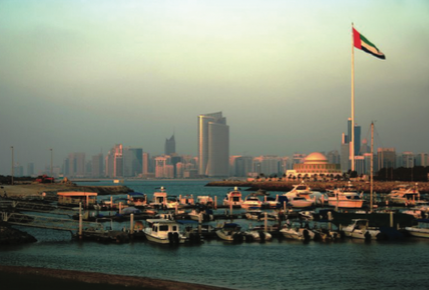
Abu Dhabi, the capital of the United Arab Emirates and the largest of the seven, has been overlooked for years by investors and entrepreneurs who tended to consider Dubai a more attractive destination. Yet the capital did not stand idle. The fact that Abu Dhabi possesses 10 percent of the world’s oil, five percent of its gas reserves and that it produces 90 percent of oil in the UAE, has enabled it to diversify its economy by investing heavily in infrastructure, real estate, tourism, financial services and other key sectors. In 2007, the Urban Planning Council released the Abu Dhabi 2030 plan, which has been the foundation for the growth of the real estate sector. Dr. Hanni Shammah, CEO of Bloom Properties, believes that Abu Dhabi is trying to become a global city, in line with New York, London and Hong Kong.

“Abu Dhabi is in the midst of a structural change. It is rebranding and repositioning itself with the rulers aspiring to transform the city into a global and cosmopolitan city, while keeping a proud Arab/Emirati identity,” says Shammah.
A major problem for Abu Dhabi since the beginning of its boom has been the lack of real estate supply, whether residential or commercial. Consequently, the capital became more expensive than Dubai. Mohammed Al Haj, CEO of MBI, a venture capital firm that specializes in properties and financial investments, say that since the UAE government aims to attract investors from around the world, it expected the inflow of expatriates would take 10 years.
“What happened is that the region was attractive and the oil prices were dramatically high, which attracted all those people in only three or four years,” he explains. “Therefore, the demand was really high and the infrastructure wasn’t ready.”
Due to the tremendous shortage of supply and Abu Dhabi’s long-term plan, the real estate market grew quickly. Major residential and commercial projects were being launched and developed, while demand escalated. But oil wealth has proven to be insufficient to protect Abu Dhabi from the impact of the current crisis. Although the capital has strong market fundamentals, demand for most real estate segments has gone down, prices and rents of residential properties are decreasing, and bank financing is becoming less available.

Residential prices
Before the financial crisis started to impact residential real estate prices in Abu Dhabi, they were escalating rapidly. Buyers were acquiring property despite the high prices, encouraged by the promising economic growth of the capital in general and the housing market in particular. According to the Landmark Advisory first quarter 2009 report, even though the fourth quarter of last year witnessed a softening in villa and apartment prices, they increased 80 and 55 percent respectively for 2008.

End-user demand is high in Abu Dhabi, but it was not the only reason prices escalated. Speculators saw the capital as the next best thing after Dubai and aimed to make the same returns on real estate investments.

Shammah says, “I know several people who got a bit greedy and instead of investing in a single property they went for whole floors and multiple units, while not necessarily having the means to digest such investments.” He added that prices in restricted areas have been more resilient to the current conditions as opposed to freehold areas. “Most price decreases that I have seen in freehold areas were within the 20 to 30 percent range,” he adds.

Hussain Ali Al Shamkhani, chief investment officer at Escan, agrees with Shammah, but he believes that because Abu Dhabi opened up its market recently, speculators have not had as much time to affect the market. This means end- user demand has been a more significant factor.

“There was not enough time — [the speculators] would have made one flip, two if they were lucky, but I believe that most of them did not have the chance to,” he says.Whether the prime driver of the market was speculators or end-users, one sure thing is that the former are out of the market right now and the latter are more conscious about purchases. The factors behind the decreasing demand are mainly the lack of financing, as well as uncertainty and lack of confidence in the real estate market and the economy in general. Consequently, prices started to decline, going back to their original values in some cases. The Landmark report states that since their peak in the third quarter of 2008, prices of villas have decreased 20 to 25 percent, while prices of apartments declined by 15 to 20 percent. The report adds that Abu Dhabi’s master developments like Al Raha Beach, Al Reef, Al Reem Island and Hydra Village were the most affected. Al Reem witnessed the biggest plunge declining from 20 to 25 percent between the third quarter of 2008 and March of this year. Listings for Al Raha Beach and Reem Island suffered a 10 to 15 percent decline in the same period.
Hesham Ikhwan, branch manager at the newly opened Landmark Properties in Abu Dhabi, believes the fundamentals of Abu Dhabi are still sound, since demand is still higher than supply. He attributes the fall in prices to two things: the financial crisis and the soaring prices featured at last year’s Cityscape.
“At Cityscape last year, developers launched their projects at very high prices, which were around 2,000- 2,500 AED ($540-$680) per square foot, so when investors bought [the properties] they could not sell them right afterwards as usual. So it took the market a while to realize that obviously prices were too high, therefore it leveled off for a while and then [prices] started to decrease.”
It is important to differentiate between off-plan units and those completed or under construction. Off-plan units have been the worst hit since people are currently looking for properties that will give them immediate returns, either by renting or occupying them so they don’t have to pay rent. Loshini Lawrence, operations manager at the Abu Dhabi branch of Better Homes, explains “banks are not offering mortgages on off-plan properties right now. They are more focusing on ready projects in Abu Dhabi.”

Since end-users currently dominate the market, they will certainly find finished properties more suitable. Paying rent for a couple of years until the delivery date of a new apartment is expensive, further completed projects are easier to finance and less vulnerable to volatility.

“If you have an off-plan unit and you are trying to sell, good luck!” says Al-Shamkhani, explaining that while completed projects are best positioned, those under construction have had their share of price declines as well. “People are hearing that developers are going to delay or top construction, citing the lack of funding. For example, if it is now the time to make your fourth or fifth payment, you have to rely on your own money,” he furthers.

Experts agree that the price correction in Abu Dhabi residential real estate is healthy in the long run and essential to bring prices back to more affordable levels.

“If prices can be in a range from 400AED ($108) per square foot to 1,000AED ($270) in residential properties, [it]

Distressed assets ripe for the picking

The ongoing global liquidity crisis has put the completion of many real estate developments in the UAE and the region into question, since developers, who relied heavily on banks or off-plan sales for construction, have found themselves with empty pockets and no equity to cover their costs. Consequently, these projects have decreased in value and some institutional investors and high-net- worth individuals who can still secure financing see these assets as good investment opportunities.

Duncan Pickering, real estate partner at DLA Piper in Abu Dhabi explains, “distressed assets generally come from borrowers who default or who are about to default. Banks would generally be working with the company to negotiate an exit or sell the property, and generally, for companies that are holding on to the distressed assets, time is running out for them so they need to find a resolution quickly.”

Property consultant Jones Lang LaSalle announced mid- March that $1.98 billion worth of equity is waiting to be invested in distressed assets in the GCC region, the most attractive destinations being Abu Dhabi, Qatar and Saudi Arabia. The Dubai real estate developer Cirrus Development revealed in the same month an international fund to buy distressed assets in Dubai, the US and the UK, targeting prime real estate and hospitality assets. Moreover, the US- based property firm Tate Capital also began a two-month study to identify investment opportunities in the UAE. By acquiring distressed assets, Tate Capital is aiming to create a long-term income stream for the company. Morgan Stanley also announced in January its plan to acquire distressed assets around the world, including in the Middle East, by establishing five global funds.
Pickering expects that “there will be funds from all around the world that are looking at the Middle East to see whether they can pickup distressed assets.” However, these assets are associated with some risks. “One of the key risks is failure to carry out adequate due diligence either because the deal has to be done very quickly or because the seller has limited information or inaccurate records. The seller may be under pressure from the lender to sell,” says Pickering. For example, in Abu Dhabi, there is no public register to check if a particular development was partly sold and contracts were exchanged, which would make it harder for the investors to make a decision. The lack of reliable information would make the right price of the asset very hard to determine. “The opportunity to buy distressed assets is really only as good as the investors’ ability to negotiate the right price,” adds Pickering.

“We always recommend a buyer get full disclosure from the selling management team as soon as possible. Unless information is available, the purchaser cannot decide if there is an investment opportunity that is worth exploring — it takes a lot of money and time to carry out such an investigation,” he further explicates.
Investors appear to still be in the exploration and investigation process, since there have been no big announcements about this type of transaction yet. However, it is expected that in the near future investments of this nature will take place.


While the speculative market may be dead, experts say property values will increase in the long run. Oscar Marquez, a real estate trainer at the Leader’s Edge Training says, “real estate will always double in value. I remember when I first got into real estate [and] started to sell houses for $150,000. Now the same house is selling for $600,000. That was 20 years ago. Twenty years from today the house worth $600,000 is going to be $1.2 million.”

Residential rents
As Abu Dhabi attracted resident expatriates, the demand for leased property grew and rental rates increased accordingly, especially for residential apartments. According to the Landmark report, average rental rates for residential villas and apartments in the fourth quarter of 2008 were 35 and 80 percent higher than in the same period of 2007. During the fourth quarter, one-bedroom apartments witnessed the biggest hike as they registered a 125 percent increase in rents, followed by two and three bedroom units at 95 and 100 percent, respectively.

High rents, coupled with low availability in Abu Dhabi, caused some people to commute to work in the capital while living in Dubai.

Lawrence said, “you may pay three times [the rent] in Abu Dhabi for the same accommodation that you would pay in Dubai. People are not ready to pay that much anymore, they are doing their homework and negotiating the price and the number of payments.”

Al Haj of MBI thinks that rents soared even more than the report stated. “It depends on the location, but in some place, rents increased 90 percent and even 100 percent. For example, now if I am renting a house and paying 20,000 AED ($5,400) if I move out, the new tenant would pay 80,000AED ($21,000). Some owners are willing to pay current tenants one year of rent in order to move so that they can bring a new tenant and make him pay more,” Al Haj explained. Hence, tenants who pay affordable rents consider themselves lucky and try to renew their contracts benefitting from the low, five percent rent cap in Abu Dhabi.

Rents are holding stronger than prices since people who are reluctant to buy still need a place to live. Unlike Dubai, people are not leaving the capital due to job losses or the closing of companies. The Landmark report states that apartments witnessed an increase of two to three percent in the last quarter and another one to two percent in the first two months of the year. Villa rental rates decreased three to five percent in the last quarter and recovered by two to three percent during January and February.

The fact that villa rental rates decreased was because more units are coming on stream, which increases availability and “tenants have more [options] for villas, like in Al Raha Garden and Al Khalifa city, but for apartments they are very hard to find, especially the two bedroom apartments,” said Ikhwan from Landmark.
Rents are not expected to slowdown, since demand is still strong and supply is expected to remain short in the next couple of years.

Matthew Green, associate director of CB Richard Ellis in Abu Dhabi, says that rents are expected to hold stronger than in Dubai since “in Abu Dhabi, we can say that on average there will be 8,000 to 10,000 [new units] in the next couple of years, while Dubai has been averaging 30,000 units per year.”

Office space
Soaring demand has also hit offices, since Abu Dhabi was becoming an attractive destination for new businesses, branches and relocations. Consequently, there is an even bigger supply gap than in the residential market and new companies have found it more appropriate to use commercial villas as offices. CB Richard Ellis’ fourth quarter Abu Dhabi report stated that even though rental rates started to soften in the fourth quarter of 2008, there was a 30 percent overall increase during the year. Lawrence from Better Homes, whose office is located in a commercial villa, explains, “when we chose the villa, it wasn’t the cheapest, but we had no choice. There was no tower space available.”

Many companies opening in Abu Dhabi face the same difficulties. Not only is finding office space a problem, but finding a place to park is a major issue as well. According to Al-Shamkhani from Escan,“if you go downtown in Abu Dhabi, good luck finding a parking space. Sometimes you have to drive around 15 minutes or up to an hour to find a spot, so villas are more convenient.”

Companies are currently cautious about expansion plans and are picking more affordable and smaller offices. According to Asteco’s fourth quarter Abu Dhabi real estate report, demand for large offices has decreased slightly, while demand for smaller offices, between 50 and 100 square meters, has increased. Experts predict the market will maintain high prices until new offices come online.

Future outlook
Compared to its neighbor Dubai, Abu Dhabi has not gone as far in terms of growth and development, but that should not be considered a disadvantage in these tumultuous times. What happens in Dubai happens in Abu Dhabi on a smaller, more delayed scale. This gives Abu Dhabi the opportunity to anticipate, either by improving its property laws, trying to secure financing or controlling the market supply. Simply said, as Dubai suffers, Abu Dhabi learns.

April 3, 2009 0 comments
0 FacebookTwitterPinterestEmail
Comment

Short of a sure bite to eat

by Riad Al-Khouri April 3, 2009
written by Riad Al-Khouri

For some countries in the region drought, high population growth and social tension will be an explosive combination over the long term. Add to that serious short-term concerns about nutrition and other crises that arise regarding problems of unsustainable development. An example of this was the food price jump of 2007 to 2008, which sent an urgent message to states in the Arabian Peninsula: when nutrition once again becomes expensive — maybe in the next two to five years — economies must be better prepared.

Viewed in this context, water is a major issue that now seems to be taken more seriously. For example, Saudi Arabia, the region’s largest economy and also the biggest geographically, will phase out water-intensive cereal production by 2016 since non-renewable fossil water reserves are being depleted. Instead, Saudi agriculture will re-orient to crops such as fruits and vegetables using water-saving technologies, including greenhouses and drip irrigation. Such a shift will help to ease the tough demography-hydrology combination, as the combined population of Saudi Arabia and her five neighbors of the Gulf Co-operation Council (GCC) will soar to nearly 60 million by 2030.

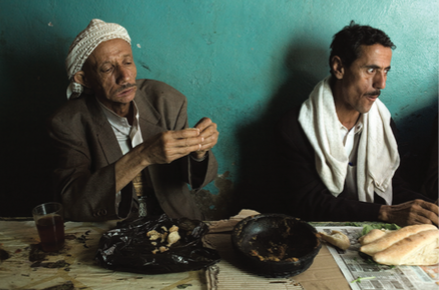
All this poses a threat to food security, as major food import dependence — currently 60 percent of total demand — grows in the GCC states. Fortunately, they can afford to throw money at the crisis in the short term. The poor man of the Arabian Peninsula, Yemen, does not have that luxury. The country suffers from severe levels of food insecurity, including lack of income to access and buy food and inadequate national safety nets. Last year it even looked as though Yemen was losing further ground as the share of poor people in the total population may have increased by six percent due to the rise in food prices that began in late 2007 and peaked in mid-2008. Steps taken by the government to ameliorate the effects of high food prices last year included one-off distribution of wheat, flour and seeds.

In the end, these measures succeeded in staving off disaster until the eventual fall in prices eased the situation. At the same time, the crisis was an eye-opener that is prompting Yemen to look at sustainable long-run solutions to its nutritional balance. During 2009, targeting and overall efficiency and effectiveness of the food safety net is expected to improve, based on a similar model being applied in Jordan.

Yet, unlike the latter, Yemen is classified by the United Nations as a Least Developed Country, one of the few dozen poorest in the world. The UNDP ranks Yemen very low on the Human Development Index, which leaves the country vulnerable to fluctuations in oil prices.

The economy relies heavily on oil, which in recent years accounted for around 70 percent of government revenue and up to 90 percent of the value of exports. However, oil creates few jobs directly. Generating non-oil growth and addressing unemployment is therefore a key to reducing poverty. Meanwhile, oil continues to drive the economy as growth in agriculture and manufacturing remains modest. At the same time, fuel is subsidized by the state and is being sold domestically below international prices. An additional challenge may arise as projections indicate that the oil production will decline and barring discovery of major new reserves, Yemen could become a net oil importer by 2012.

Yemen’s gross national income per capita is less than a quarter of the average in the Middle East and North Africa (MENA) region and its GDP growth has steadily been falling. Inflation has been averaging 12 percent since 2002, rapidly increasing the cost of living. Poverty in rural areas, where about 72 percent of the population resides, remains high at 40 percent. The Global Hunger Index ranks Yemen 80 out of 88 countries analyzed, indicating an alarming stage of food insecurity. While other MENA countries have seen significant improvement according to this ranking, Yemen’s score has not changed between 1990 and 2008. Almost half of the population is below 15 years of age, implying increased pressure on economic development to provide jobs and basic services, so the drive for food security should also be supported by policies to lower demographic growth. Yemen has the highest population growth rates in the MENA region, with a current annual increase of 3.1 percent (about a third higher than the average for Least Developed Countries) and a projected increase of 2.3 percent annual average until 2050.

In conclusion, an insecure food situation in Yemen will increase discontent and could even aggravate political security. Sitting at the doorstep of the GCC countries, the latter cannot afford to see Yemen degenerate into another Afghanistan, sapped by poverty and insecurity, in nutrition or otherwise.

Riad al Khouri is senior fellow of the William Davidson Institute at the University of Michigan in Ann Arbor

April 3, 2009 0 comments
0 FacebookTwitterPinterestEmail
Levant

Syria – Freeing the market’s bonds

by Executive Staff April 3, 2009
written by Executive Staff

On March 10, Syrian Finance Minister Mohamed Hussein rang the bell to launch trading at the long-awaited opening of the Damascus Securities Exchange (DSE). Despite its humble size, the DSE is yet another sign that Syria means business about the privatization and gradual liberalization of its state-controlled economy. Ever since President Bashar al-Assad came to power in 2000, the country has made significant progress in its aim to become a “social market economy,” reminiscent of China.

Initiated by presidential decree in 2006, the DSE is a public institution that, once it stands on its feet, is scheduled to be transformed into a private shareholding company. Six companies are currently registered on the bourse: Banque Bemo Saudi Franci, Bank of Syria and Overseas, United Group for Publishing, Advertising and Marketing, Arab Bank-Syria, Alahlia Company for Transport and Bank Audi Syria.

Four other companies have applied to be registered. The DSE expects some 15 companies with an estimated value of 28 billion Syrian pounds (SP) (or $600 million) to be listed by the end of the year, about half of which are active in the banking and insurance sector.

Run and regulated by the Syrian Commission on Financial Markets and Securities (SCFMS), the DSE consists of a “main” and a “development” market. For a company to be registered at the main stock exchange, it has to be more than one year old, have at least 100 shareholders and a minimum capital of $2 million. New or smaller firms are registered at the development market. Currently, two of the six listed companies are listed at the latter.

Slow start

Trading on the first day in the life of the DSE was largely symbolic, as only three transactions took place, in which 15 shares in Banque Bemo Saudi Franci worth some $350 changed hands. By March 19, trading had picked up some pace, as over 1,400 shares were traded with a value of nearly $11,000. Mainly due to the limited number of listings, the DSE is currently open just two days a week.
According to Bassel Hamwi, general manager of Bank Audi Syria and deputy chairman of the DSE, the Syrian bourse offers several advantages to the Syrian economy.

“First of all, it creates a much-needed platform for the some 8,000 shareholders of the six currently registered companies to sell their shares,” he explains. “Before, shareholders who wanted to sell their stocks had to find a buyer and come to the bank accompanied by a lawyer to make the deal, while today they can simply open an account at a brokerage firm.”

“In addition to the classic advantages stock markets offer registered firms, such as increased access to liquidity, the DSE will help transform Syria from a frontier market into an emerging market,” says Hamwi. “In the more distant future, we hope the DSE can provide the channel for the privatization of public companies.”

Five broker firms have been licensed and their number is expected to climb to 12 by the end of the year. Trading at the DSE is subject to strict restrictions. “The Damascus stock exchange will not be open to gambling or risk- taking,” SCFMS chairman Ratib Shalah told the SANA news agency. “Shares can only be traded by those who want to invest money, not for speculation.”

Shares are not allowed to rise or fall by more than two percent during a day of trading, and cannot be bought and resold on the same day. Shorting and leverage are not allowed. Foreign investors are required to maintain their holdings with a licensed custodian and are not allowed to re-sell shares within a period of six months. The latter mainly serves to avoid instability due to the influx of ‘hot money’.

“These are temporary measures,” Hamwi says. “We hope that they will evolve, as the market evolves. The margin of two percent, for example, may prove too tight in the future and may need to be broadened.”

The long delay

The DSE has only just begun to function, nearly three years since Presidential Decree No. 55 was issued in 2006. The reason for the delay lays at the heart of the Syria Accountability and Lebanese Sovereignty Restoration Act (SALSRA). Passed by the US Congress in 2003 with the aim to fight global terrorism, the SALSRA bans the export or re-export of American products to Syria, with the exception of food and medicine.

As a consequence, specialized products such as electronic trading systems have been difficult to obtain. The same has been true for items such as Boeing aircraft spare parts. With an eye on air passenger safety, however, Washington recently allowed a shipment of aircraft parts to enter Syria. As the DSE was not able to obtain American- made products, it started negotiations with Paris-based Euronext and OMX, a Swedish-Finnish financial services firm. Yet these efforts were not fruitful, as Euronext and OMX were bought by the New York Stock Exchange Group and Nasdaq in 2006 and 2008 respectively. “Especially the latter was a major setback as negotiations with OMX had been ongoing for almost a year,” says Hamwi. “Eventually, the DSE managed to acquire a state-of-the-art system used in eight markets worldwide in late 2008.”

Despite these setbacks, most experts agree that SALSRA has failed to directly damage the Syrian economy. Indirectly, however, the trade embargo caused many European firms to be rather reluctant to invest in Syria, as American officials would remind them of the possible negative consequences of doing so. The DSE is widely perceived as the next step on Syria’s path to develop and enhance the role of its private sector. Syria’s state reserves have witnessed a downturn in recent years, mainly as a consequence of the decline in oil production. A decade ago the country’s wells produced some 600,000 barrels per day (bpd), today they are good for less than 380,000 bpd. Consequently, the state has sought new means to boost the economy, especially in terms of boosting the role of the private sector.

Following the collapse of the Soviet Union, Syria’s road to a new economy started as early as 1991, when Investment Law Number 10 was adopted, which introduced tax holidays for foreign investors and provided for the repatriation of overseas profits. The process picked up pace with a series of measures introduced since the inauguration of current President Bashar al-Assad in 2000. A crucial step in transforming the Syrian economy from a centralized socialist system to a Chinese-inspired social market model was the modernization of the country’s financial sector with the legalization of private banking in 2001, a move that has been overwhelmingly successful. Although it took until 2004 for the first private bank to open its doors, today there are roughly one dozen operating, while a handful of others have obtained licenses and are set to start operations later this year.

Banking on success

Deposits in Syrian private banks increased from some $9.4 billion in 2005 to $14.3 billion in 2007, which represents some 35 percent of total deposits. Five years ago, most foreign tourists changed their foreign currencies on the black market to avoid the official exchange rate set by the state. Today the Syrian pound fluctuates, while ATM machines and credit cards have become common.
The Governor of Syria’s Central Bank Adib Mayaleh, announced at a March economic summit in Kuwait that the government is considering allowing foreign investors a controlling stake in financial companies. So far, foreign shareholders have been permitted to own more than 49 percent of certain Syrian industrial ventures, but the same does not hold true for financial services firms. The authorities hope that investments in private banks will help to expand the industrial, tourism and real estate sectors.

In addition, the Syrian government adopted a series of measures to attract foreign investments, as a means to stimulate social and economic development. According to the World Bank, foreign direct investment in Syria amounted to $885 million in 2007, an increase of nearly 50 percent compared to 2006. Most foreign investors hail from the Arab world, Turkey, Iran and China.

Syria’s success in attracting foreign capital and the increased role of the private sector is illustrated by the rapid growth of the country’s industrial cities. Following the completion of several feasibility studies in the late 1990s, construction started in 2001 of three industrial cities at Sheikh Najjar (4,412 hectares) near Aleppo, Hassia (2,500 hectares) near Homs, and Adra (7,000 hectares) near Damascus. The government acquired the land, installed the necessary infrastructure in terms of roads, water and electricity, before selling the land to both Syrian and foreign investors, who are exempted from a range of taxes and custom’s duties.

By the end of 2007, a total of 1,162 hectares had been sold for industrial use in Sheikh Najjar, 838 hectares in Hassia and 1,680 hectares in Adra. Some 162 companies had also started production in Sheikh Najjar. In fact, according to Khalil Mouases, director of industrial cities and zones at the Ministry of Local Administration and Environment, Sheikh Najjar met with such success that it is likely be completed by 2012, instead of 2020. The warm welcome has prompted the authorities to announce the establishment of eight more such industrial estates.

The right ingredients

The recipe for the cities’ success has not just been cheap land and facilities, but also Syria’s relatively cheap and well-educated workforce, low energy prices and the country’s strategic location between the EU, Turkey, Iran and the Arab world. Syria has also signed the Greater Arab Free Trade Agreement and free trade agreements with Turkey and Iran.

Although state-owned companies continue to play an important role in Syria’s economy, over the past decade the private sector has become the main contributor to the country’s GDP, which is perhaps best illustrated by the pharmaceutical industry. While in the early 1980s, there were two state-owned pharmaceutical plants that produced enough medicine to meet 15 percent of domestic demand; in 2008 there were 52 pharmaceutical firms that met 90 percent of domestic demand. With these developments in mind, it should come as no surprise that the Syrian authorities have earned praise from the International Monetary Fund, which concluded that the Syrian government has taken crucial, albeit slow, steps towards liberalization, which will enable Syria to deal with the consistent decline in oil reserves.

“We are quite bullish about the Syrian economy, which is diversified and has a lot of potential,” saysd Hamwi. “If properly regulated, we think the DSE will increasingly be able to mirror the state of the Syrian economy.”

April 3, 2009 0 comments
0 FacebookTwitterPinterestEmail
Comment

Madoff’s unanswered billions

by Peter Speetjens April 3, 2009
written by Peter Speetjens

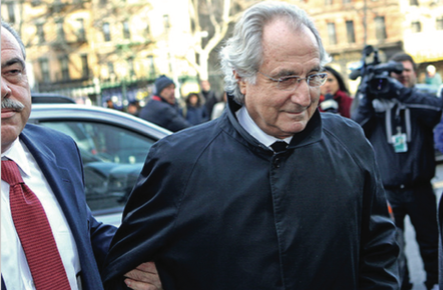
On March 12, former Wall Street icon Bernard Madoff pled guilty to all criminal charges brought against him, including fraud, theft, money laundering and perjury. Most people will be more than happy that the 70-year-old confessed and that he will get no less than 150 years behind bars.

The latter is of course a symbolic figure, essentially meaning a life sentence. The length of sentence mainly gives weight to the notion, at least among the general public, that justice will be done. At the same time, however, it obscures the fact that as a consequence of Madoff pleading guilty, no in-depth trial will take place and many questions will likely remain unanswered. For example, it is still unclear if his wife and sons will be charged or if the family fortune will be drawn on to pay back his victims.

Also, as no jury-trial will take place, we will probably never know how Madoff operated. How was a well-respected member of Wall Street’s inner circle, and former Nasdaq chairman, able to fool not only his clients, but the entire finance and banking community for almost 30 years? Where were the institutions that are supposed to apply checks and balances to Wall Street?
These questions are all the more pressing as Madoff’s fall from grace follows hot on the heels of the sub-prime crisis and the collapse of the financial markets, which has given investment bankers worldwide a bit of a bad odor. Notably, almost no financial institution or publication saw them coming either. Madoff stands accused of running a Ponzi scheme described by the US authorities as “extraordinary” and “unprecedented” in scale, as losses could amount to $65 billion. Named after an Italian swindler who immigrated to the US in 1903, a Ponzi scheme pays returns to investors from their own money or money paid by later investors, rather than from actual profit. In other parts of the world it is more commonly known as a pyramid scheme.

Madoff is said to have run the scheme since the 1980s. He apparently told clients he had found a magic formula, one that could not go wrong, as he spread investment risk over volatile stock markets and more secure government bonds. Now, anyone who is familiar with investing and stock markets should know there is no such formula, yet Madoff’s clients were keen to believe him.
While many people were angry to hear that Madoff lived on bail in his $7 million New York apartment after his arrest, they will be even more furious if Madoff’s wife and two sons are not prosecuted. So far, no charges have been brought against them and there is a widespread fear that Madoff may have pleaded guilty in exchange for his family to be let off the hook.

Madoff’s defense team argues that he was the only one in charge and the only who knew what was really going on in the company. This is very hard to believe. His wife and former high school sweetheart, Ruth Madoff, who was at his side when he set up the firm in 1960 knew nothing? His sons, both senior executives, knew nothing? None of them thought it odd that most of Madoff’s possessions were in Ruth’s name?

Court papers filed in March revealed that the net value of Madoff’s ownership in his firm was $700 million, while the estimated net worth of Bernard and Ruth Madoff amounted to some $826 million, most of which is in Ruth’s name. The papers, for example, listed real estate in Manhattan, Florida and France worth $22 million, a $17 million bank account at Wachovia bank, $45 million in municipal bonds and a $12 million interest in an aircraft company, all in Ruth’s name. What’s more, a few weeks before Madoff’s arrest, Ruth withdrew $15.5 million from her account.

The claim that a banker or investor acted on his own — a rogue trader — has become quite familiar in recent years. Just think of the cases of Nick Leeson and Jerome Kerviel who lost billions for Barings Bank and Société Générale respectively. Now suppose they did indeed act on their own, the question remains: should not someone within the bank, or some financial watchdog outside the bank, have noticed? Or were they just happy to go along for the ride and to give them the benefit of the doubt, as long as profits were made?
The same appears to be true for Madoff. As he pled guilty, we may never know how the web around him worked or if any institutions related to his firm could be held responsible for negligence.

Peter Speetjens is a Beirut-based journalist

April 3, 2009 0 comments
0 FacebookTwitterPinterestEmail
Comment

The linchpin of peace

by Claude Salhani April 3, 2009
written by Claude Salhani

Lebanon has been to taking on a more prominent role in the overall Middle East peace process as the conflict gets more complex with every passing year. And the delay in finding an amenable solution to the crisis — now 61 years in the making — is serving no cause except that of extremism on both sides.

Ironically, during the earlier years of the Arab-Israeli crisis when Lebanon still had no direct quarrels with Israel, it used to be said that Lebanon would be the second Arab country to sign a peace treaty with the Jewish state. But since then, more blood than water has run under Lebanon’s bridges. Today, given the twists and turns that fate and geo-politics have thrown at Lebanon, the Lebanese will very likely be the last people in the region to sign a peace treaty with Israel.

The fact that Lebanon is increasingly playing a more prominent role in the regional conflict is not terribly good news for the Lebanese. And neither is the news that Islamist fighters have taken refuge in many of the country’s Palestinian refugee camps. The US said it would equip the Lebanese army with M-60 Main Battle tanks, as did the Germans who promised to deliver Leopard tanks and the Russians have pledged ten MiG-29 fighters (NATO designation: Fulcrum). Obviously, none of that hardware is intended to outfit the Lebanese armed forces to fight any external threats. Logic would dictate, therefore, that those weapons are intended for internal housekeeping and meant to be used if and when the day comes that Lebanon is forced to get its house in order so as to close a peace deal with Israel.

In fact, many analysts are saying that there could not be a regional solution to the Arab-Israeli dispute if the Palestinians and the Syrians each sign a peace treaty with Israel and Lebanon remains at war with the Jewish state.
Until just a few years ago, despite it being the stage of much of the Middle East’s turmoil, Lebanon was a reluctant pawn in the greater Middle East games of war and peace. Lebanon’s role in the Middle East dispute came about as a result of the presence of the Palestine Liberation Organization (PLO) and its affiliated groups who set up shop in Lebanon.

Until recently it was not considered essential to include Lebanon in regional peace talks, but now Beirut finds itself at the forefront of a final settlement of the Arab-Israeli dispute.

As difficult as it may be, the Obama administration must realize that Lebanon cannot remain the only country bordering Israel to remain in a state of war with the Jewish state.

At the same time it is of paramount importance to the future stability of the Middle East that Lebanon not be sacrificed at the altar of a Syrian-Israeli or a Syrian- American rapprochement.

One cannot stress enough the importance of ensuring that when such a peace treaty is signed between Israel and Syria, Lebanon is not left out in the cold.
The fact that Lebanon is a small country does not mean it is irrelevant. While Lebanon does not constitute a threat to Israel, the country’s geographic location — on the border of Syria and Israel — gives it an advantage, or as the case may be, a disadvantage. Certain elements within Lebanon have the power to create serious problems for Israel along its northern border, and in so doing, keeping the Arab-Israeli dispute going, even if Syria were to sign a separate deal with Israel.

Among them are Hizbullah and a number of pro-Syrian paramilitary organizations, as well as the vast network of intelligence agents Syria left behind in Lebanon when it withdrew shortly after the assassination of former Prime Minister Rafiq Hariri.

It is without doubt to the advantage of the United States and Israel to ensure that Lebanon remains an independent and stable nation.

History has shown us what happens when the state is weak, as was (and remains) the case in Lebanon. History is also repeating itself in Lebanon, where the Palestinians first took advantage of the weak central government and the PLO became a state within a state. After the departure of the PLO from Beirut, the central government continued to be weak, allowing other groups, some acting at the behest of foreign powers, to emulate the Palestinians and establish themselves as a parallel authority to the Lebanese government.

Let there be no doubt: Lebanon’s continued instability only serves the enemies of democracy in the region. All the more reason why Lebanon must not be omitted from the next round of Middle East peace talks, if and when they take place.

Claude Salhani is editor of the Middle East Times and a political editor in Washington, DC

April 3, 2009 0 comments
0 FacebookTwitterPinterestEmail
GCC

Oman – Docking infrastructure

by Executive Staff April 3, 2009
written by Executive Staff

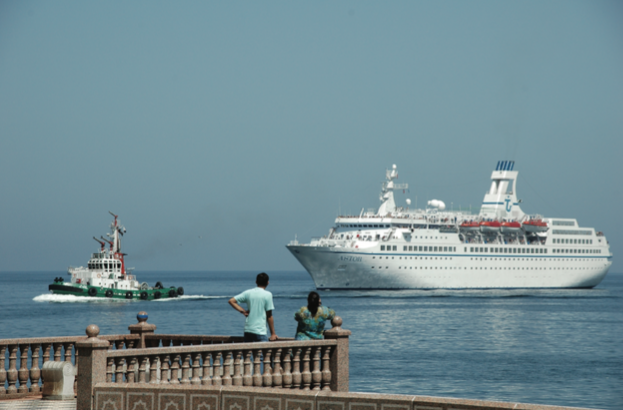
While construction workers are putting down their tools throughout the Gulf and the future of many massive infrastructure projects is in jeopardy, the Sultanate of Oman is bucking the regional trend by investing billions of dollars to bolster its nascent tourism sector, aviation sector and industrial base.Compared to its GCC neighbors that have spent lavishly over the past decade on infrastructure and real estate projects, the sultanate, the relative poor man of the Cooperation Council, has lagged behind in infrastructure roll out.

That Oman is doing so now is not down to Muscat possessing a financial crystal ball that foresaw the cost of raw materials plunging from record highs and contract bidding becoming more competitive. For Oman, the projects are out of necessity, to catch up with regional developments and to be viewed as more of a GCC player than merely the better half of the lower Arabian Peninsula.

The sultanate has always had to be prudent with its revenues, and never so much as at present with tumbling oil prices accounting for some 75 percent of national revenues. The last two immediate budgets, which ran a $1.04 billion deficit in 2008 with revenues of $14.06 billion, were both based on $45 a barrel. That was conservative thinking 16 months ago when oil hovered around the $100 mark, but roughly on par for this year.

If prices drop, some projects could be frozen, but Oman also has new oil and gas fields coming online and is aiming to average out production at 550,000 barrels of oil per day. Furthermore, Oman has not been hit to the same degree by the financial crisis as the more service-based economies of the rest of the Gulf, in addition to only relaxing property laws as late as 2006, which had previously prevented foreigners from owning property and restricted GCC citizens to just three plots of land. As a result, the real estate sector has only started to flourish over the last few years, further compounded by the entrance of international realtors that have changed the face of the sector in addition to driving up rents.

But the path the sultanate wants to tread doesn’t differ much from that of other GCC countries: investing heavily in airports, roads, ports, industrial zones and high-end tourism projects. Oman is just the last member of the GCC to board the ‘speed-development’ train.

Infrastructure roll out

Talking of trains, Oman is mulling the idea of its first railway, a goods carrier that would run 200 kilometers between the industrial city of Sohar and Barka. Reportedly in its consultancy phase, the line would eventually cater to passengers.

But where Oman is really placing its infrastructural transport emphasis is on roads and airports. In such a large country with populated areas confined to Muscat and the cities of the northeast, and a vast, relatively empty expanse of 1,000 kilometers to the second major city, Salalah in the south, a developed road network has been vital. Some $1.9 billion was earmarked in the 2008 budget for highway and road development, in addition to improving traffic flow in Muscat, according to Gulf Construction.

The impacts are already being felt, with the newly opened Muscat-Sur highway — so new the tollbooths are still not operational — slashing two hours off drive time.

But with tens of billions to be spent on industrial projects, ports and tourism projects, roads alone are not enough to connect areas like Duqm, Salalah and Sohar.

“To speed up access to Duqm, as four to five hours by road from Muscat, an airport is ‘essential’ infrastructure,” says George Bellew, chief executive officer of Oman Airports Management Company.

Airports are where the big money is being invested, to the tune of $3 billion for the expansion of Muscat International Airport (MIA) and billions on six other airports.

“Like everywhere else, there has been an increase in travelers, tourism and commercial trade in Oman. Six airports are to be built, maybe more,” says H.E. Sheikh Mohamed Bin Sakhar Al-Amry, Under Secretary for Civil Aviation Affairs. “We will build airports as needs dictate,” he adds. Some $43.86 million has been earmarked for consultancy studies, design and supervision of the airports.

All airports are to be located in areas of industrial activity or tourist destinations, a potential major currency earner given Oman’s nature, history, 2,700 kilometers (km) of coastline and two months in the summer — known as Al Khareef — when the area surrounding Salalah is uniquely endowed with monsoon rains that transform the landscape into a lush green oasis.

“There is a determination by the Omani government to diversify non-oil revenues and an aspect of that is clearly tourism and air travel,” said Bellew.
Numerous multi-billion dollar tourism projects are underway in Oman, including the $7 billion Blue City, the $2.5 billion Wave Muscat, the $2 billion Salam Yiti, the $1.6 billion Omagine and the $400 million Muscat Gulf Course.

In Salalah, the Dhofar Tourism Company is developing the $2.85 billion Mirbat project, consisting of residencies and hotel resorts, while the Muriya Tourism Development Company, a joint venture between Oman’s Ministry of Tourism and Egypt’s Orascom Development Holding, is developing Salalah Beach. Covering 15.6 million square meters, the project will have 3,000 residences, a marina, a PGA golf course and hotels from the major chains Club Med, Rotana and Movenpick.

To meet the expected surge in tourism when such projects are finished, Salalah’s airport is being expanded from the current needs of 300,000 passengers per year to accommodate two million in phase one and eventually to four million.

Domestic links

Three domestic airports are to be built in the southern towns of Haima and Shaleem, as well as in Adam, a gateway city to Oman’s interior region some 300 km south of Muscat.

Duqm is to be the country’s third international airport with a capacity for 500,000 passengers per year and it is the site of a $1.8 billion port project, refinery, shipyard and tourism resorts. Firms are currently bidding for a $200 million contract for the construction of the airfield and infrastructure projects.

Further airports are to be built in Ras al Hadd and Sohar, located 200 kilometers from Muscat on the way to Dubai. “Ras Al Hadd is being progressively developed as a tourist area, where turtles nest [at Ras al Jinz] and covers the local area of the city of Sur. There also is the expectation of eco-tourism developing along the Eastern coastline,” said Bellew.

Sohar has risen as the country’s foremost industrial hub, driven by more than $12 billion of investment in the city’s port, a joint venture between the government and the Port of Rotterdam. The Sohar Special Economic Zone (SSEZ) is also under development, primarily catering to downstream petrochemicals and the steel industry as well as logistics at a 500-hectare site. The SSEZ will compliment the 220-hectare Sohar Industrial Estate and the Oman International Container Terminal, which the country is banking on to bolster trade due to Sohar’s proximity to Muscat and the nearby UAE. The Sohar airport is slated for completion by 2013, although a $300 million tender for the passenger terminal has not yet been appointed. The biggest airport development is at the MIA.

“MIA is a gateway airport with one main runway. The plan is to build a standalone midfield terminal,” says Bellew.

The first expansion phase will allow for 12 million passengers a year, with a new passenger terminal control tower, 32 air bridges, VIP building, air traffic management center, 6,000 car parking spaces and a cargo terminal to handle some 200,000 tons per year. The second terminal will be connected to the rest of the airport via an underground metro system, with the design brief making it possible to expand to 48 million passengers per year by 2050. “In six months we will finish the planning and award contracts,” adds Bellew.

There was a need, however, to expand in March to increase capacity to seven million passengers per year. Indeed, last year MIA saw air traffic rise 18 percent over 2007 to 4.5 million passengers. In January, passenger numbers were up by 19 percent, largely due to Oman hosting the Gulf Football Cup.

“January figures are an anomaly to the global figures, where there has been a lot of negative results, largely due to the underdeveloped nature of the market here,” Bellew notes.

The sultanate will no doubt be hoping that Oman is an anomaly in weathering the financial storm as so many projects get off the ground. Economic growth, however, is expected to slow from seven percent in 2008 to three percent this year, but major projects are nonetheless still years off completion.

“We budgeted for this a long time ago, so I don’t think we will change plans,” states Al-Amry.

April 3, 2009 0 comments
0 FacebookTwitterPinterestEmail
Comment

Swapping bullets for ballots

by Mohanad Hage Ali April 3, 2009
written by Mohanad Hage Ali

Samarra, 78 miles north of Baghdad, is more than just a city: it is an indicator of tension between Iraq’s Sunnis and Shiites. The majority of Samarra’s population is Sunni, but they make their living out of Shiite pilgrims who come to visit the shrines of two holy imams. On February 22, 2006, those shrines were bombed in an Al Qaeda attack that ignited a bloody sectarian conflict leaving tens of thousands of people killed. What happened on that day divided both cities and neighborhoods into Shiite and Sunni enclaves. Today Samarra is conveying another sign.

The city’s mayor announced last week that its holy sites are receiving 15,000 Shiite pilgrims every day. This was a good indicator of how the security situation is improving in Iraq. But the effects of the sectarian reconciliation are not only visible in Iraq’s security; they have also reshuffled the political priorities in the country. The Iraqi political scene is shifting from sectarian strife to mundane daily politics, including corruption and patronage.

The first sign of this is the decaying public support for major sectarian political groups, many of whom were either accused of direct involvement in violence or participation in incitement. The Shiite Islamic Supreme Council of Iraq is one of them. They were accused of establishing death squads to target Sunnis in retaliation for the killing of Shiites. Their power and influence within major ministries, the army and police were expected to last beyond the American and British withdrawal. To both the groups’ and many observers’ astonishment, they have lost control over most Shiite provinces and subsequently, their major goal of establishing a Shiite autonomous region in the South faded away.

Nouri al Maliki, the incumbent prime minister who supports a strong central government, achieved considerable gains in the provincial elections at the expense of the Supreme Council and Moqtada Sadr, the young, anti-American, populist Shiite leader. What may ease their loss is that they were not alone. Other ethnic and religious groups are encountering similar changes. The Tawafoq Front, the major Sunni parliamentary bloc, whose leader Adnan Dulaimi made fiery anti-Shiite speeches during the past few years, followed suit. Their coalition crumbled over political differences related to the selection of a new parliamentary speaker. The Iraqi Islamic party, the Muslim Brotherhood, was left without its major Sunni ally, the National Dialogue Council. In different provinces, new Sunni groups emerged in the last elections, paving the way for more nuanced choices.

The most astonishing of all surprises was the Kurdish political scene. Since the mid-1990s, that is until after the autonomous Kurdish region’s infamous civil war, the two major Kurdish groups consolidated their power and left little room for dissent. Ethnic tensions and external threats helped maintain Kurdish public support for both the Patriotic Union of Kurdistan, led by Jalal Talabani, Iraq’s president, and the Kurdistan Democratic Party whose leader, Massoud Barazani, currently presides over the autonomous region’s presidency. With the relative stability of Iraq’s consensus-based regime, the Kurdish political scene has started to change. Talabani’s party is faltering. Four of its major leaders have submitted their resignation, undermining the Iraqi president’s leadership. They have denounced his family’s ascent into power and the corruption within his establishment. With those high profile politicians out, another party is expected to emerge, thus paving the way for more diversity in the Kurdish political scene.

It is still too early to consider Iraq a stable country. Al Qaeda is still active in Mosul and Diyala and it remains capable of inflicting high casualties and reviving sectarian and ethnic tensions. Nevertheless, the relatively low level of violence and the population’s adaptive trend six years on paves the way for the normalization of politics. The Iraqi security forces capabilities and training are moving forward, in conjunction with reconstruction efforts. It remains hard to predict December’s national elections results. However, six years into Iraq’s invasion we may finally learn what Iraqis really think of their politicians.

Mohanad Hage Ali is a political editor at al-Hayat Newspaper

April 3, 2009 0 comments
0 FacebookTwitterPinterestEmail
  • 1
  • …
  • 475
  • 476
  • 477
  • 478
  • 479
  • …
  • 686

Latest Cover

About us

Since its first edition emerged on the newsstands in 1999, Executive Magazine has been dedicated to providing its readers with the most up-to-date local and regional business news. Executive is a monthly business magazine that offers readers in-depth analyses on the Lebanese world of commerce, covering all the major sectors – from banking, finance, and insurance to technology, tourism, hospitality, media, and retail.

  • Donate
  • Our Purpose
  • Contact Us

Sign up for our newsletter

    • Facebook
    • Twitter
    • Instagram
    • Linkedin
    • Youtube
    Executive Magazine
    • ISSUES
      • Current Issue
      • Past issues
    • BUSINESS
    • ECONOMICS & POLICY
    • OPINION
    • SPECIAL REPORTS
    • EXECUTIVE TALKS
    • MOVEMENTS
      • Change the image
      • Cannes lions
      • Transparency & accountability
      • ECONOMIC ROADMAP
      • Say No to Corruption
      • The Lebanon media development initiative
      • LPSN Policy Asks
      • Advocating the preservation of deposits
    • JOIN US
      • Join our movement
      • Attend our events
      • Receive updates
      • Connect with us
    • DONATE