• Donate
  • Our Purpose
  • Contact Us
Executive Magazine
  • ISSUES
    • Current Issue
    • Past issues
  • BUSINESS
  • ECONOMICS & POLICY
  • OPINION
  • SPECIAL REPORTS
  • EXECUTIVE TALKS
  • MOVEMENTS
    • Change the image
    • Cannes lions
    • Transparency & accountability
    • ECONOMIC ROADMAP
    • Say No to Corruption
    • The Lebanon media development initiative
    • LPSN Policy Asks
    • Advocating the preservation of deposits
  • JOIN US
    • Join our movement
    • Attend our events
    • Receive updates
    • Connect with us
  • DONATE
GCC

Tanking up with tax

by Executive Staff April 9, 2009
written by Executive Staff

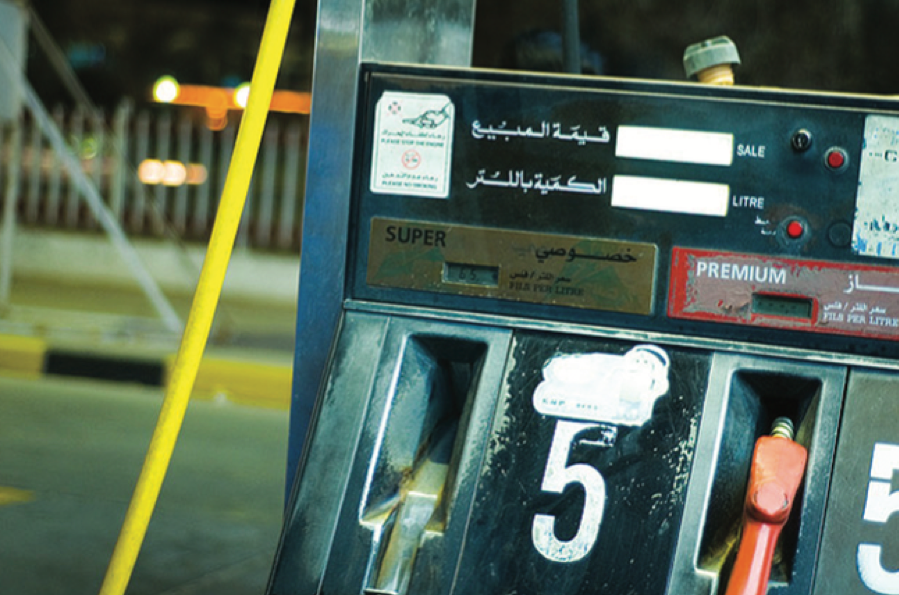
At a time when oil prices are half of what they were a year ago, the retail price of gasoline in Lebanon has been stagnant or climbing. For example, in July 2007 when the price of Brent crude was around $78 per barrel, the government raised taxes on gasoline which pushed the price from $14.90 per 20 liters — the standard measurement for gasoline in Lebanon — to $15.64 per 20 liters. This is roughly the same price of gasoline in today’s retail market, at a time when crude sells at around $50 per barrel. Needless to say, this illogical development is confusing for the consumer.

In 1985, then Minister of Finance Camille Chamoun issued a governmental decree abolishing state subsidies on gasoline; so legally the subsidy was removed. However, the government has levied a tax on gasoline, which it increases or decreases at will. When the government decreases the tax, gasoline prices drop giving the feel of a subsidy.

Further exacerbating the situation is that most people in Lebanon rely on private transport. Lebanon’s approximately 1.4 million registered vehicles consume around five million liters of gasoline per day, according to Bahij Abou Hamzeh, president of the Association of Petroleum Importing Companies (APIC) in Lebanon.

Another factor experts in Lebanon point to is unfair competition. “There is an oligopoly controlling gasoline imports to Lebanon and this is the heart of the problem,” says Jad Chaaban, professor of economics at the American University of Beirut and acting president of the Lebanese Economic Association. “The prices are set by the Ministry of Energy in consultation with the APIC. When you have an oligopoly controlling an import sector you cannot pass on decreasing or rising prices with the same efficiency as when you have a competitive market.”

Collusion in a free market

For his part, Abou Hamzeh admits that the association does collude with the Lebanese Ministry of Energy, but insists that the market is open to anyone who has the means to set up the infrastructure.

“We regulate the market in cooperation with the ministry but we have to do it because it’s the only product in Lebanon that has a ceiling for the price,” claims Abou Hamzeh. “The government is setting the ceiling of the price on a weekly basis. This doesn’t mean we cooperate in order to monopolize the market; it’s not what we are after.”

Abou Hamzeh blames the government who earlier this year raised the level of taxes on gasoline to $6.35 per 20 liters of imported gasoline when the price of oil was at around $35 per barrel. Abou Hamzeh adds that the gasoline price ceiling, set weekly, is too low. “The government imposes a ceiling according to the international prices and a small margin to cover additional costs,” says Abou Hamzeh. “This margin does not cover our costs. We cannot continue like this; we are making a loss not a profit.”

Whether or not competition is fair, one thing does remains clear: that the government is making a lot of money. Most estimates are that government revenues from gas tax will increase this year to around $466 million as opposed to $199 million in 2008. On March 19, the Lebanese General Confederation of Labor Unions gathered in front of the Lebanese parliament to protest the high prices and taxes on gasoline and around 150 cars blocked one of Beirut’s main commercial districts.

Tax of necessity

The government, however, seems to have little choice when it comes to removing the tax, since it is already drowning in a sea of debt and in need of more revenue. Furthermore, according to a high ranking member at the Ministry of Finance who spoke on condition of anonymity, the government must keep the higher gasoline tax in place because it has already reneged on two of its other promises made to donors at Paris III: the five to seven percent taxation on bank deposits and the increase of Value Added Tax (VAT). The cherry on top may be that many in the government are reluctant to enact policy due to the upcoming elections in early June.

“When we protest the government tells you, ‘you are right but now we have to have the election’,” says Abou Hamzeh.

Whatever the reasons may be, for the immediate future it seems that the high gasoline prices and price fixing will continue. Once again it seems it will be Lebanon’s people and industries that pay the final price.

April 9, 2009 0 comments
0 FacebookTwitterPinterestEmail
GCC

Cityscape 2009

by Executive Staff April 9, 2009
written by Executive Staff

As April begins, so does the countdown for Abu Dhabi Cityscape 2009. Just a few weeks separate Abu Dhabi’s real estate developers, investors and market players from the capital’s most prestigious property show. Usually, Cityscape is where developers launch their multi-billion dollar projects such as high-rise towers, mixed-use developments and even entire new cities. This year, however, the definition has changed. Instead of bragging about their new projects, developers have to prove their resilience in the face of current market conditions. Experts will also have to demonstrate their understanding of the current situation and prove Abu Dhabi’s strong position. On the other hand, investors and end-users will be watching to see whether Abu Dhabi still represents a good opportunity for investment.

Cityscape Abu Dhabi will take place in the Abu Dhabi National Exhibition Center April 19 to 23 and will include a series of conferences and summits, during which 101 key speakers will be discussing the most important challenges and issues facing the property market. Moreover, three post-conference workshops will take place on the last day of Cityscape. In the first workshop, Louise Sunshine, chairwoman and CEO of Domineum will be tackling the global property solution in the current challenging economy. In the second, Oscar Marquez, a real estate master trainer at the Leader’s Edge Training will be discussing new marketing strategies. The third conference will be lead by Matthia Gelber, who will confer about how companies can become green and make money out of it. Additionally, Middle East Real Estate Awards will be held on April 19 at the Emirates Palace in the presence of 500 industry leaders, where distinctive projects that combine architectural excellence with eco-friendly solutions will be awarded.

The optimistic view

Marquez, who remains very optimistic about the real estate market in the Middle East, says that Cityscape will give people a lot of hope.

“People think that this is the end of the world, while it is not. Many investors will become aware [during Cityscape] of the big opportunities that are right now in real estate,” he explains. Moreover, Marquez also thinks that at Cityscape, developers will make up their mind on how much prices have to be reduced in order to keep the economy moving forward. “It is just a matter of time before [developers] realize that they can’t make 100 percent profit,” he adds. 

Other experts agree with Marquez, while saying that this year, the number of transactions that are going to take place will be minimal. Indeed, now more than ever investors are cautious about their investment decisions. They will likely consider Cityscape as a means to see how developers are progressing on their previously launched projects as well as the prices and payment plans that they are going to present.

Hussain Ali Al Shamkhani, chief investment officer at Escan Real Estate PJSC, says that Cityscape 2009 represents an opportunity for developers to show that they are still in the market and still going ahead. He explains that “developers should show the benefit of the demand-supply gap [in Abu Dhabi] and show people that instead of speculating, they can buy units and rent them out and make seven to eight percent return. [Developers] should sell that as the main benefit of buying a unit.”

Shamkhani also adds, “they need to emphasize and explain the potential of Abu Dhabi, how it is very different from Dubai and why it is much safer and more profitable. I think this should be the theme for the show and this is the best message to get across.”

IIR Middle East, the organizers of the event, introduced the first Cityscape Connect breakfast recently, where 150 real estate and property stakeholders met to increase confidence in Cityscape and the market in general. At the breakfast, Sami Eid, Aldar’s senior marketing manager, said “it’s one of the biggest events and we’ll be showcasing ourselves and showcasing Abu Dhabi… We won’t be unveiling anything new but it’s important to be out there and we’ll be showing all our projects.”

This statement is likely to apply to all developers who are considering Cityscape a chance to prove themselves as well positioned to face the current turmoil. Since early February, 95 percent of the exhibition stands were booked, Cityscape organizers asserted. They added that 40 percent more floor space has been sold than last year. Moreover, attendance is expected to increase up to 27 percent from 35,000 during Cityscape 2008.

Real estate stakeholders are looking forward to this year’s show, waiting to see what Abu Dhabi has to offer. Consequently, Cityscape 2009 has a hard task to meet, since it will have to prove that Abu Dhabi is still, despite the current market turbulence, one of the most attractive destinations for investment in the Middle East.

April 9, 2009 0 comments
0 FacebookTwitterPinterestEmail
GCC

Private equity – Stacks of dry powder

by Executive Staff April 9, 2009
written by Executive Staff

Big or small, PE firms in the Middle East are faring much better than most other financial institutions in the region, despite the amount of “dry powder” — i.e. capital called or committed that is yet to be deployed — in the area. Nevertheless, sitting on a mountain of cash and not spending it because you don’t like what you see is more enviable then struggling to pay off your creditors.

The phenomenon of dry powder is not just an effect of the financial crisis and the ensuing downturn, which started to take effect in the last quarter of 2008. Investments by PE firms began to make an about-face around the beginning of 2008. PE investments over the whole of 2008 saw a significant decrease in both number and size year-on-year by 22 and 31 percent respectively, the principle reason for this being that private valuations still seem to be out of touch with public market perceptions.

“At the moment, valuations are generally too high so PE firms are saying ‘give us another six to nine months for them to fall,’” says Robert Hall, head of transaction services Middle East & South Asia at KPMG.

Hisham El Khazindar, managing director and co-founder of Citadel Capital, adds that “in the grand scheme of things valuations across the board are 70 percent of what they were two years ago.”

When the region’s PE firms will start to sprinkle their powder around will, for the most part, depend on how long it will take owners’ willingness to break away from their egos and admit that they are in trouble.

“A contraction is taking place, but certainly we are not seeing the valuations that are in the public sector. We are not in a situation where we see distressed shareholders who are willing to sell at any price,” Christophe de Mahieu, co-head at Gulf Growth Capital at Investcorp, said to The National.

Yahya Jalil, senior executive officer and head of private equity at The National Investor in Dubai, remarks that, “it’s a little bit of an ego thing to admit that things have gone bad; this region is not known for being forthcoming as people like to contain their problems.”

Overcoming egos aside, many shareholders and owners don’t see the point of going into the market.

“People who have been in the market for 20 to 25 years see the blip in the market as very temporary, so they are thinking: why should they off a portion of their equity at these valuations,” says Jalil.

Ammar Al-Khudairy, managing director and CEO of Amwal Al Khaleej Investment Co., says “one private consumer goods company said to me, ‘I brought in one of the big four, they did a valuation for me and said my company was worth $100 million back in August [2008] and nothing has changed since. I sell no less if not more and, in fact, my cost of raw material has come down. So why should I sell for less than 100?’”

The stalemate that is brewing between firms and investors doesn’t seem to be going away anytime soon and it remains to be seen if the same understanding with regards to delaying capital calls will be extended to the firms for much longer.

Stressed out

The possibility of distressed or mezzanine funds is something that many in the industry are starting to look at as a result of the trauma being suffered by many regional organizations. Significantly, the Dubai Financial Services Authority (DFSA) wants the Dubai International Financial Center (DIFC) to consider establishing the Gulf’s first private equity secondary market. This could provide a respite for many PE firms looking to rid themselves of their dry powder.

“The whole issue of distressed assets in this region hasn’t been fully experienced in previous recessions. If you look at what the ‘ultimate’ distress is, which is a company becoming insolvent and unable to pay debts as they become due, then you really haven’t seen much of that yet,” says Hall. “In the recession this time around, the economy is much bigger and there are undoubtedly going to be some companies that will have significant problems. For PE firms this will provide some great opportunities.”

However, for the time being things don’t look that bad and the omnipresent attitude in the region today is not one of going after high risk and high return opportunities.

“Mezzanine capital is definitely more expensive than traditional forms of capital and it works well when valuations are improving and in upward cycle,” says Tamer Bazzari, deputy CEO of Rasmala.

Jalil says, “in the long term mezzanine is a huge unmet need in the region, but for the next year or two I think that, relatively speaking, it is not going to be interesting for investors — the risk profile between mezzanine and secured is night and day.”

April 9, 2009 0 comments
0 FacebookTwitterPinterestEmail
GCC

Quick & lean

by Executive Staff April 9, 2009
written by Executive Staff

With the financial crisis at hand the question is: what are businesses going to do about it? The response many businesses in the region have is to look inwards and improve internal business processes in order to hold down the fort until the onslaught subsides. The next and perhaps more important question is: how will regional businesses restructure their organizations?

Despite the dismal undertone of the business news coming out of the region, there are a few encouraging signs. One sector that is doing surprisingly well as a result of the need for businesses to restructure and improve efficiency is the Enterprise Resource Planning (ERP) industry. According to the International Data Corporation (IDC), ERP growth within the GCC will range between nine and 12 percent, an enormous figure considering many regional states will not grow at all this year.

“We will probably have the best month we have ever had this month,” says Bill Tomlinson, general manager of Dynamic Vertical Solutions, a multinational Microsoft partner that specializes in vertical add-on solutions to Microsoft Dynamics ERP platforms.

Much of this anomalous growth results from owners and managers  realizing that ERPs can increase efficiency for them.

“Before the crisis there was more time and more money,” says Sergio Maccotta, managing director of SAP Middle East and North Africa. “Now companies are taking the opportunity to change, through IT adoption, in order to improve their internal processes.”

The industry itself is also experiencing a paradigm shift in relation to its operating environment. Before the crisis, many regional businesses were hesitant to adopt standard ERP processes, opting instead to fit the system to their businesses or not to adopt one at all. Today, however, the tables have turned.

“What we are seeing that we didn’t see before is that many of the upper to mid-market organizations are coming to us, while we used to go to them and try to prove our solutions,” says Tamer Elhamy, regional business solutions manager at Microsoft Gulf.

What’s on offer?

The ERP companies in the region are increasingly being queried about how their systems can help companies save on the more costly elements of doing business and keep in touch with their customer base.

“People want to manage their [human] resources a lot better now so they are looking for payroll and HR solutions more than ever,” explains Tomlinson. Maccotta adds that, “the money in the market is lower, so in order to secure your portion you have to execute better and stay closer to your customer.”

It should be noted that internally, ERP solution providers are also benefiting from some of the more sinister effects of the global downturn, such as rising unemployment, decreasing real estate valuations and weakening currencies. Although there has been “no drastic change,” according to Maccotta, in the resource pool for providers, there has been a decrease in the acquisition and retention costs of consultants for providers. “The [Indian] rupee rate is at 51 to the dollar, whereas it used to be 39 to the dollar and that cuts 25 percent of cost because I am on dollar fixed,” says Tomlinson. “Another benefit of the crash is that all the rents are down by about half, so if you want to bring in some big people for a project then you can do it cheaper and it’s making our job easier.”

The argument within the industry, however, is centered around the size of the solutions on offer.

“Many of the customers are deciding to adopt an ERP to increase their efficiency but they are trying to start with the minimum number of users and functionalities and taking a step-by-step approach,” says Elhamy. That approach is prompting many people in the industry to predict that smaller and less expensive ERP solutions will be the trendsetters in the future.

“In the global scheme of things, SAP and Oracle’s figures are down because they are too expensive. People are more cash conscience now and are actually exposing the product for what it is,” claims Tomlinson. Perhaps unsurprisingly, that assertion is being bitterly contested by the larger and more complex solution providers.

“I don’t agree when you say we are more expensive because our solution is extremely flexible, as well as scalable, and can fit any kind of business,” counters Maccotta. “We still see a lot of demand and having the vertical competence is putting SAP at a competitive advantage.”

“In order to secure your portion you have to execute better and stay closer to your customer”

April 9, 2009 0 comments
0 FacebookTwitterPinterestEmail
GCC

Much tilling without harvest

by Executive Staff April 9, 2009
written by Executive Staff

Last year food was big news as prices soared globally by 54.9 percent and associated riots erupted in 60 countries. In the Arab world alone the shortage in food sufficiency was estimated at $18 billion by the Arab Authority for Agricultural Investment and Development (AAAID). In the Gulf countries, dependent to the tune of $12 billion a year on imports and with agricultural water consumption at unsustainable levels, the issue took on grave importance. State and private investors promptly started eyeing up arable land in Africa and Asia to secure food for a region that is expected to increase import dependency to 60 percent by 2010, according to the UN’s Food and Agriculture Organization (FAO).

But while food prices and commodities have reduced in the wake of lower oil prices and the global financial crisis, the issue of food security has not gone away. However, it has yet to be seen whether all the touted agribusiness projects will take off as Sovereign Wealth Funds (SWFs) and private investors tighten their belts in the face of the global economic slowdown.

The big issues

The Arab world’s population ballooned 121.9 percent between 1975-2005, while over a similar period, 1980-2004, the region’s food grain and meat production increased by 93 percent.

The shortfall was not overly concerning given access to the free market and that staples such as wheat and rice were fair cheap, at least affordable enough for governments to subsidize. Additionally, countries such as Saudi Arabia, Syria and Iraq were involved in large-scale agricultural projects to boost domestic production.

Saudi Arabia, for instance, spent a staggering $85 billion on agricultural development between 1984-2000, according to estimates by Elie Elhadj in The Middle East Review of International Affairs.

But the cost of such investment has gone beyond budgetary concerns. It is worth noting that while Saudi Arabia was paying up to $500 per ton for domestically produced wheat — when international market rates were around $120 —  to maintain local agriculture some 300 billion cubic meters of water was used between 1980-1999, two-thirds of it non-renewable, says the Ministry of Agriculture and Water. Such a gigantic amount of water was needed to grow produce in the kingdom’s arid climate, which is two to three times more water than required in a temperate climate.

After investing an estimated $16 billion to $18.7 billion over the last 30 years on its wheat program, according to BMI, last year Riyadh decided to phase out production due to water shortages. The costs versus the benefits were no longer sustainable, having been self-sufficient in wheat since the 1980s when production hit 4 million tons per year, Saudi Arabia is now a net importer and as of 2016 it will be totally dependent on imports. Furthermore, with Saudi Arabia joining the WTO, the kingdom has to abide by the organization’s requirement to reduce state support for agriculture to 13.3 percent over the next decade. This will have other knock on effects, such as on the 12 percent of the workforce involved in a sector that accounts for just 3.3 percent of GDP.

The region is losing an estimated one million hectares of arable land each year to salinity

Saudi Arabia is not the only country re-thinking its agriculture policies, with the region losing an estimated one million hectares of arable land each year to salinity, according to Dr. Shoaib Ismail, a halophyte agronomist at the International Center for Biosaline Research (ICBR) in Dubai.

“Twenty years ago there was good quality water everywhere. Now there is one-third seawater concentration in the groundwater and salinity is even higher in other places. Mismanagement has led to more salinity,” said Ismail. “Some 85 percent of water usage in the GCC is for agriculture, the highest in the world. In that sense, the question arises, how feasible is agriculture over here?”

The short answer is that it isn’t. Even producing processed foodstuffs for domestic consumption and export requires water, what has been called the “export of virtual water” and it may have to be re-thought given looming water constraints.

One solution is to use halophytes, plants that grow under high saline conditions, as opposed to glycophytes, non-salt loving plants, an alternative with which the ICBR is involved. But while halophytes could be used to replace more water intensive plants and trees, those plants would not produce adequate amounts of food. It is in landscaping, which accounts for 18 percent of water use in the UAE, that plants and non-conventional grasses can be advantageous, according to Ismail.

Oman is developing a salinity plan and it has invested in a project to clean water from the oil industry, because for every barrel of oil pumped out of the ground seven barrels of water are used. The UAE has also developed a ‘Master Development Plan’ to assess water usage and improve efficiency, such as changing irrigation systems, phasing out subsidies and expanding water pricing to include agriculture and industry.

Desalinization is another touted panacea for the region’s water concerns, but costing between $0.81-$1 per cubic meter, desalinized water is too expensive for agricultural use.

“Building new desalination plants is not the solution, as this warms up the sea and affects marine life,” said Ismail. It also increases the sea’s salinity.

Rich countries trying to secure land overseas risk creating a ‘Neo-Colonial’ System

Eyeing pastures new

With wheat prices rising 83 percent last year and other staples doubling in price, governments started eating into their reserves to placate populations which were spending ever-larger proportions of their income on food.

In Pakistan, the NGO Oxfam reported that, due to food inflation, the number of poor has risen from 60 million to 77 million since 2007, while in the Arab world the AAAID predicted some 35 million people were falling into poverty due to high food costs. As the region has an overwhelmingly young population and high population growth, food security is paramount.

For the GCC, the surge in food prices didn’t push people under the poverty line, but it was a contributor to inflationary pressures. And with the population expected to double by 2038 to 60 million people, demand for food will continue to grow at a rapid pace. Saudi Arabia, the Gulf’s most populated country, already imports some $5 billion per year of food and beverage items, according to BMI, and that will figure will spike in years to come.

“Food security is officially defined not just as a shortage, but also looking at availability and affordability,” said George Attala, a principal at Booz Allen Hamilton. “There are a number of ways to ensure supply is always available. One is try and diversify sources, not all wheat from say, Ukraine. Another is look at internal networks, such as imports through more than one port. A third way is storage capacity, of four to six months, while the fourth is to get into contract farming, but that is not always the best solution.”

Essentially, the Middle East is left with two choices. “The region has to import. The question is, invest abroad or rely on the free market?” said Dr Eckart Woertz, program manager in economics at the Gulf Research Center in Dubai.

Last year, Arab states appeared to be opting for the first choice in the face of high food prices, with government missions from Saudi Arabia, the UAE, Qatar, Kuwait, Egypt and Libya visiting Pakistan, Ethiopia, Cambodia, Uganda, Angola, Kazakhstan, Ukraine, Thailand and the Philippines to discuss the possibilities of buying up arable land to cultivate. The private sector also got in on the act, with the likes of the Emirates Investment Group, Abraaj Capital, Al Qudra Holding and the Bin Laden Group reportedly acquiring land in Sudan and Pakistan.

But such policies are not always popular and they are also not necessarily dependable in the long run.

“For the GCC it is a ‘pros and cons’ situation. In the short term it is profitable to buy or lease land, but it also depends on the geopolitical situation. A country may be a friend today, but might not be tomorrow, so it is a dependency issue,” said Ismail.

Last year, the FAO warned that rich countries trying to secure land overseas risked creating a “neo-colonial” system. The concerns were related to Gulf investments in Sudan where only indigenous water and land were used, whereas fertilizer, seeds, equipment and labor came from abroad. It was a similar story in Pakistan.

As Woertz remarked, “the negative case is bribe an African official, then expel locals and pastoralists, so no benefit for the local population at all. There is political baggage.” Furthermore, he added, “the GCC doesn’t have a good track record of labor rights or the environment and these need to be taken into consideration.”

And while the countries being courted may be interested in foreign investment, they also have to feed their own populations. Sudan, for instance, has an estimated 200 million acres of fertile land, yet only 20 percent is being utilized. However, despite 160 million acres of available arable land, the country is importing two millions tons of wheat per year and five million people are dependent on food aid. Similarly, Pakistan is facing problems in feeding its population, as well as losing groundwater to salinity.

But although there are many reports on plans to buy land, there has been minimal information coming forth about these projects, with “transparency limited to media accounts,” said Woertz. “They announce it — billion dollar deals — but it is unclear whether it has taken off and how the private sector has been brought in.”

An additional factor is that discussions to acquire land overseas were began when oil and food prices were higher. “The urgency is not there now and there is less money to throw around,” said Woertz. “The SWFs lost money in the markets and have less revenues, so [acquiring land abroad] may not be such a widespread phenomenon as made out.”

April 9, 2009 0 comments
0 FacebookTwitterPinterestEmail
GCC

Park sales to pump service

by Executive Staff April 3, 2009
written by Executive Staff

The UAE automobile sector saw sales plunge by up to 45 percent in the first two months of the year compared to 2008, a remarkable downturn from the years of double-digit growth when the $3.6 billion sector was one of the fastest growing in the world.

“The end of the third quarter 2008 was vastly different from the fourth for manufacturers,” said Mike Devereux, president of GM Middle East. “This year we are looking at a decrease overall, with the same daily sales rates since December to now.”

But while the economic slowdown has started to bite, the sector is not sitting on the sidelines until a recovery starts. It has resorted to a change in financing strategy and a greater focus on services to shift units as access to credit tightens and consumer preferences change.

“The financial crisis has certainly affected automotive sales in the UAE, with banks applying more restrictions on financing. And since nearly 80 percent of the UAE’s automotive sales are dependent on financing, this is more evident locally,” said Waldo Galan, managing director of Ford Middle East. Ford, Lincoln and Mercury sales grew 35 percent last year.

As a result of tighter lending, manufacturers and dealers are teaming up with banks to offer zero percent interest on car purchases and making credit more readily available to customers. The most notable change in sales strategy has been the widespread introduction of leasing, a technique dealers had formerly eschewed as car prices were low and customers preferred to buy.

“Financing is a problem so schemes have to be more tactically focused. Screaming the price from the rooftops is not what it’s about, but customer issues. The change is more tactical and less general as there is too much on people’s minds,” Devereux pointed out, adding that: “Lots of people want vehicles but need financing, so we’re focusing on a partnership with the National Commercial Bank (NCB) in Saudi Arabia and in the UAE a car leasing scheme.”

In with the new but not out with old

While enticing customers into showrooms is one concern for the manufacturers, so is keeping dealerships afloat, having ordered vehicles months in advance that can now not be sold or re-exported elsewhere. This has been further compounded by 2009’s models now being on sale, yet there is excess stock of last year’s lines.

“Credit, wholesale finance and bank loans are difficult for dealers. Stock levels for dealers mean reduced working capital so less money in the inventory,” said Devereux. “We will winnow down our inventory and import much less cars.”

And while there is an excess of unsold cars, manufacturers are hesitant to offload vehicles in fleet deals and government tenders.

“We’re trying not to chase unprofitable fleet tenders that we would have done before, as there is little to no margin,” said Devereux. “We are now focusing on the retail business, with 65 percent retail and 35 percent fleet.”

Consumer preferences are also expected to shift towards more competitive fuel efficiency, fewer SUVs and more crossovers.

“While demand for luxury vehicles would possibly see a reduction, quality and value would still remain on top of the consumer’s list,” said Galan. “We believe that consumers will act more out of a rational mindset and look for quality and value for money rather than the emotional drive.”

After sales is a another area manufacturers and dealers are focusing on as sales stagnate — a sector valued in the Middle East at some $11 billion, while the UAE tire trade is valued at $1.1 billion and slated to grow this year.

“There is a big focus now on services, which will be a stable haven in a downturn. Most dealers here are under invested in service capacity and the number of vehicles has increased so quickly,” said Devereux. “There is a need to invest in new services as vehicles are coming into prime servicing years after 2-3 years since purchase.”

While manufacturers continue to monitor the local environment, they are optimistic that revenues will go up next year as supply and demand align, even though it might not be the double-digit figures of the boom years.

“There is a big focus now on services, which will be a stable haven in a downturn”

April 3, 2009 0 comments
0 FacebookTwitterPinterestEmail
GCC

Oman – Docking infrastructure

by Executive Staff April 3, 2009
written by Executive Staff

While construction workers are putting down their tools throughout the Gulf and the future of many massive infrastructure projects is in jeopardy, the Sultanate of Oman is bucking the regional trend by investing billions of dollars to bolster its nascent tourism sector, aviation sector and industrial base.Compared to its GCC neighbors that have spent lavishly over the past decade on infrastructure and real estate projects, the sultanate, the relative poor man of the Cooperation Council, has lagged behind in infrastructure roll out.

That Oman is doing so now is not down to Muscat possessing a financial crystal ball that foresaw the cost of raw materials plunging from record highs and contract bidding becoming more competitive. For Oman, the projects are out of necessity, to catch up with regional developments and to be viewed as more of a GCC player than merely the better half of the lower Arabian Peninsula.

The sultanate has always had to be prudent with its revenues, and never so much as at present with tumbling oil prices accounting for some 75 percent of national revenues. The last two immediate budgets, which ran a $1.04 billion deficit in 2008 with revenues of $14.06 billion, were both based on $45 a barrel. That was conservative thinking 16 months ago when oil hovered around the $100 mark, but roughly on par for this year.

If prices drop, some projects could be frozen, but Oman also has new oil and gas fields coming online and is aiming to average out production at 550,000 barrels of oil per day. Furthermore, Oman has not been hit to the same degree by the financial crisis as the more service-based economies of the rest of the Gulf, in addition to only relaxing property laws as late as 2006, which had previously prevented foreigners from owning property and restricted GCC citizens to just three plots of land. As a result, the real estate sector has only started to flourish over the last few years, further compounded by the entrance of international realtors that have changed the face of the sector in addition to driving up rents.

But the path the sultanate wants to tread doesn’t differ much from that of other GCC countries: investing heavily in airports, roads, ports, industrial zones and high-end tourism projects. Oman is just the last member of the GCC to board the ‘speed-development’ train.

Infrastructure roll out

Talking of trains, Oman is mulling the idea of its first railway, a goods carrier that would run 200 kilometers between the industrial city of Sohar and Barka. Reportedly in its consultancy phase, the line would eventually cater to passengers.

But where Oman is really placing its infrastructural transport emphasis is on roads and airports. In such a large country with populated areas confined to Muscat and the cities of the northeast, and a vast, relatively empty expanse of 1,000 kilometers to the second major city, Salalah in the south, a developed road network has been vital. Some $1.9 billion was earmarked in the 2008 budget for highway and road development, in addition to improving traffic flow in Muscat, according to Gulf Construction.

The impacts are already being felt, with the newly opened Muscat-Sur highway — so new the tollbooths are still not operational — slashing two hours off drive time.

But with tens of billions to be spent on industrial projects, ports and tourism projects, roads alone are not enough to connect areas like Duqm, Salalah and Sohar.

“To speed up access to Duqm, as four to five hours by road from Muscat, an airport is ‘essential’ infrastructure,” says George Bellew, chief executive officer of Oman Airports Management Company.

Airports are where the big money is being invested, to the tune of $3 billion for the expansion of Muscat International Airport (MIA) and billions on six other airports.

“Like everywhere else, there has been an increase in travelers, tourism and commercial trade in Oman. Six airports are to be built, maybe more,” says H.E. Sheikh Mohamed Bin Sakhar Al-Amry, Under Secretary for Civil Aviation Affairs. “We will build airports as needs dictate,” he adds. Some $43.86 million has been earmarked for consultancy studies, design and supervision of the airports.

All airports are to be located in areas of industrial activity or tourist destinations, a potential major currency earner given Oman’s nature, history, 2,700 kilometers (km) of coastline and two months in the summer — known as Al Khareef — when the area surrounding Salalah is uniquely endowed with monsoon rains that transform the landscape into a lush green oasis.

“There is a determination by the Omani government to diversify non-oil revenues and an aspect of that is clearly tourism and air travel,” said Bellew.
Numerous multi-billion dollar tourism projects are underway in Oman, including the $7 billion Blue City, the $2.5 billion Wave Muscat, the $2 billion Salam Yiti, the $1.6 billion Omagine and the $400 million Muscat Gulf Course.

In Salalah, the Dhofar Tourism Company is developing the $2.85 billion Mirbat project, consisting of residencies and hotel resorts, while the Muriya Tourism Development Company, a joint venture between Oman’s Ministry of Tourism and Egypt’s Orascom Development Holding, is developing Salalah Beach. Covering 15.6 million square meters, the project will have 3,000 residences, a marina, a PGA golf course and hotels from the major chains Club Med, Rotana and Movenpick.

To meet the expected surge in tourism when such projects are finished, Salalah’s airport is being expanded from the current needs of 300,000 passengers per year to accommodate two million in phase one and eventually to four million.

Domestic links

Three domestic airports are to be built in the southern towns of Haima and Shaleem, as well as in Adam, a gateway city to Oman’s interior region some 300 km south of Muscat.

Duqm is to be the country’s third international airport with a capacity for 500,000 passengers per year and it is the site of a $1.8 billion port project, refinery, shipyard and tourism resorts. Firms are currently bidding for a $200 million contract for the construction of the airfield and infrastructure projects.

Further airports are to be built in Ras al Hadd and Sohar, located 200 kilometers from Muscat on the way to Dubai. “Ras Al Hadd is being progressively developed as a tourist area, where turtles nest [at Ras al Jinz] and covers the local area of the city of Sur. There also is the expectation of eco-tourism developing along the Eastern coastline,” said Bellew.

Sohar has risen as the country’s foremost industrial hub, driven by more than $12 billion of investment in the city’s port, a joint venture between the government and the Port of Rotterdam. The Sohar Special Economic Zone (SSEZ) is also under development, primarily catering to downstream petrochemicals and the steel industry as well as logistics at a 500-hectare site. The SSEZ will compliment the 220-hectare Sohar Industrial Estate and the Oman International Container Terminal, which the country is banking on to bolster trade due to Sohar’s proximity to Muscat and the nearby UAE. The Sohar airport is slated for completion by 2013, although a $300 million tender for the passenger terminal has not yet been appointed. The biggest airport development is at the MIA.

“MIA is a gateway airport with one main runway. The plan is to build a standalone midfield terminal,” says Bellew.

The first expansion phase will allow for 12 million passengers a year, with a new passenger terminal control tower, 32 air bridges, VIP building, air traffic management center, 6,000 car parking spaces and a cargo terminal to handle some 200,000 tons per year. The second terminal will be connected to the rest of the airport via an underground metro system, with the design brief making it possible to expand to 48 million passengers per year by 2050. “In six months we will finish the planning and award contracts,” adds Bellew.

There was a need, however, to expand in March to increase capacity to seven million passengers per year. Indeed, last year MIA saw air traffic rise 18 percent over 2007 to 4.5 million passengers. In January, passenger numbers were up by 19 percent, largely due to Oman hosting the Gulf Football Cup.

“January figures are an anomaly to the global figures, where there has been a lot of negative results, largely due to the underdeveloped nature of the market here,” Bellew notes.

The sultanate will no doubt be hoping that Oman is an anomaly in weathering the financial storm as so many projects get off the ground. Economic growth, however, is expected to slow from seven percent in 2008 to three percent this year, but major projects are nonetheless still years off completion.

“We budgeted for this a long time ago, so I don’t think we will change plans,” states Al-Amry.

April 3, 2009 0 comments
0 FacebookTwitterPinterestEmail
Comment

Swapping bullets for ballots

by Mohanad Hage Ali April 3, 2009
written by Mohanad Hage Ali

Samarra, 78 miles north of Baghdad, is more than just a city: it is an indicator of tension between Iraq’s Sunnis and Shiites. The majority of Samarra’s population is Sunni, but they make their living out of Shiite pilgrims who come to visit the shrines of two holy imams. On February 22, 2006, those shrines were bombed in an Al Qaeda attack that ignited a bloody sectarian conflict leaving tens of thousands of people killed. What happened on that day divided both cities and neighborhoods into Shiite and Sunni enclaves. Today Samarra is conveying another sign.

The city’s mayor announced last week that its holy sites are receiving 15,000 Shiite pilgrims every day. This was a good indicator of how the security situation is improving in Iraq. But the effects of the sectarian reconciliation are not only visible in Iraq’s security; they have also reshuffled the political priorities in the country. The Iraqi political scene is shifting from sectarian strife to mundane daily politics, including corruption and patronage.

The first sign of this is the decaying public support for major sectarian political groups, many of whom were either accused of direct involvement in violence or participation in incitement. The Shiite Islamic Supreme Council of Iraq is one of them. They were accused of establishing death squads to target Sunnis in retaliation for the killing of Shiites. Their power and influence within major ministries, the army and police were expected to last beyond the American and British withdrawal. To both the groups’ and many observers’ astonishment, they have lost control over most Shiite provinces and subsequently, their major goal of establishing a Shiite autonomous region in the South faded away.

Nouri al Maliki, the incumbent prime minister who supports a strong central government, achieved considerable gains in the provincial elections at the expense of the Supreme Council and Moqtada Sadr, the young, anti-American, populist Shiite leader. What may ease their loss is that they were not alone. Other ethnic and religious groups are encountering similar changes. The Tawafoq Front, the major Sunni parliamentary bloc, whose leader Adnan Dulaimi made fiery anti-Shiite speeches during the past few years, followed suit. Their coalition crumbled over political differences related to the selection of a new parliamentary speaker. The Iraqi Islamic party, the Muslim Brotherhood, was left without its major Sunni ally, the National Dialogue Council. In different provinces, new Sunni groups emerged in the last elections, paving the way for more nuanced choices.

The most astonishing of all surprises was the Kurdish political scene. Since the mid-1990s, that is until after the autonomous Kurdish region’s infamous civil war, the two major Kurdish groups consolidated their power and left little room for dissent. Ethnic tensions and external threats helped maintain Kurdish public support for both the Patriotic Union of Kurdistan, led by Jalal Talabani, Iraq’s president, and the Kurdistan Democratic Party whose leader, Massoud Barazani, currently presides over the autonomous region’s presidency. With the relative stability of Iraq’s consensus-based regime, the Kurdish political scene has started to change. Talabani’s party is faltering. Four of its major leaders have submitted their resignation, undermining the Iraqi president’s leadership. They have denounced his family’s ascent into power and the corruption within his establishment. With those high profile politicians out, another party is expected to emerge, thus paving the way for more diversity in the Kurdish political scene.

It is still too early to consider Iraq a stable country. Al Qaeda is still active in Mosul and Diyala and it remains capable of inflicting high casualties and reviving sectarian and ethnic tensions. Nevertheless, the relatively low level of violence and the population’s adaptive trend six years on paves the way for the normalization of politics. The Iraqi security forces capabilities and training are moving forward, in conjunction with reconstruction efforts. It remains hard to predict December’s national elections results. However, six years into Iraq’s invasion we may finally learn what Iraqis really think of their politicians.

Mohanad Hage Ali is a political editor at al-Hayat Newspaper

April 3, 2009 0 comments
0 FacebookTwitterPinterestEmail
GCC

Q&A: Louis Hakim

by Soraya Darghous April 3, 2009
written by Soraya Darghous

Louis Hakim joined Philips in 1998 and is currently the chairman of Philips Middle East and vice president of Royal Philips Electronics. Executive recently sat down with him for a candid chat about environmental issues facing the United Arab Emirates today. Philips has worked with private and public institutions across the globe to help them go green and in 2010 launched its ‘livable cities’ campaign.

E  A recent report revealed that the United Arab Emirates has the largest environmental footprint in the world. How can the country be more environmentally conscious?

The UAE is taking positive steps to reduce its carbon footprint; you see it in several of their activities. The metro is one of them — initially the metro began as a project to address the congestion in Dubai. Now 120,000 passengers per day take the metro.

Each emirate is looking at ways to address the issue of power consumption. This can work well in their favor, but there are definitely more low hanging fruits that could be addressed by the authorities. For example, legislation — there is no clear legislation that forces people to use any standardized energy efficient approach in construction. Secondly, there are no incentives to make people opt for greener solutions. Day to day, water boilers — my favorite topic — consume the most energy at home. We live in a country where we have 365 days of sun! If you change them to solar water boilers, you automatically save a lot of energy. But now if you ask people to go and do it, it’s a major investment for an average person.

Lebanon took a bold step a few weeks ago, granting people zero interest loans over a period of five years if they change their water boilers.

For buildings to go green, the incentive could be a deduction or percentage discount on their power bills. What we’ve been doing so far is penalizing people for consuming more — but what did we do to push them to save more? I think there needs to be a change of mindset.

I know that Abu Dhabi is investing a serious amount in reducing their carbon footprint. They’re testing converting street lighting to LED lighting. They have several smart initiatives on the table. Masdar is another major project in that respect. We need to be fair: while the consumption is high, there is a lot that is happening in the background as well. Remember, during the growth period, you could not avoid such a high carbon footprint because it was a construction site 24 hours a day.

We have pollution as well. We have too many cars on the roads and there is also the issue of the flight frequency out of the UAE. Water consumption is also very high. It’s really the same topics as most countries.

E  Is there a lack of awareness here about environmental issues?

Two years ago I would have said ‘yes’, but today I don’t think it’s the case. The people are aware, but no one knows how to go about [solving the problem]. Have we introduced smart meters in the country? No we have not. Have we pushed people or encouraged people to go into energy efficient lighting? No we did not. We really need major plans or initiatives in those respects.

E  What about using private-public partnerships (PPPs) to provide incentives for going green?

You need a regulatory framework that does not exist in the Arab world — except in Jordan and Saudi — to do PPP projects. The benefit of PPPs is that they take pressure off the government and allow the private sector to contribute, be it financially or be it through the expertise and the solutions they have. PPPs also create jobs immediately. At the same time, it benefits the environment so it’s sort of a triple win for everybody. But still it doesn’t seem to be on anybody’s agenda. This still keeps us puzzled although we advocate and keep on preaching PPP everywhere we go.

E  What does Philips do, internally, to show its commitment to the environment? How are you socially responsible from within?

Most recently we told our employees to bring in all their light bulbs and we gave them energy efficient home light bulbs for free. We recycled their old bulbs immediately. An energy efficient lamp consumes one-fifth of an incandescent lamp. A 100-watt incandescent lamp generates around 90 percent heat and 10 percent light. These are energy burners and heat generators. Go to any hotel lobby or office today, you see these spotlights. This technology is pre-1970. It’s a shame that we still use it. It should be banned. The heat that is generated by these lamps makes your air conditioning work 30 percent more!

Several months back we decided to no longer use regular paper, and now only use recycled paper. We did the cost analysis and the difference was minimal, so we moved ahead. We’ve been looking at the numbers, and I think we’ve managed to save something like 20 kilograms of CO2 (carbon dioxide) emissions and 200 trees during that period. We are changing our offices all around the world to green lighting — you won’t see any Philips offices that are not 100 percent compliant.

There is an ongoing engagement campaign to keep people aware. The most recent was the lamps. We’re talking about 80 percent savings on energy bills in a domestic environment.

E  What are your green advocacy plans for the UAE?

What we’re trying to push for as much as possible is making organizations aware of the benefits of energy efficiency and again, the triple win benefit of PPPs. Personally I’m a true believer that without any PPP structure, neither the government can do it alone, nor the private sector can do it alone and the people definitely won’t. So the two of us have to sit together and try to find solutions.

A good example — the Intercontinental Hotel in Festival City. A year ago we engaged in a discussion with the Dubai Tourism Board. They decided that by 2012, hotels need to be at least 20 percent more energy efficient. One of the first projects we worked on was that hotel. They had conventional lighting inside the hotel — 35,000 light points, that’s a huge number. We changed, in less than six months, all the indoor and outdoor lighting of the hotel. They saved around 40 to 50 percent in energy consumption. Today, they not only benefit from the savings but also from the improved image of being a good corporate citizen themselves.

E  What advice do you have for companies in the UAE that are trying to ‘go green’?

Any organization that doesn’t have any cash flow issues should not think twice about going green because they benefit immediately. Who does not want to save? The only thing they need to do is realize that they could save beyond their expectations.

E  You mentioned that at the time of its economic surge, the UAE’s footprint could not have been any less than it was. Why do you think developers were not using green materials a few years ago?

To be honest with you… going green has been on the table for about 20 years. Everybody knew about it and that we needed to do something about the environment. The momentum did not pick up until the last 18 months; it coincided with the crisis.

Now is the time, under the current circumstances to say ‘from now on this is how we’re going to address construction’ — it needs to be green, energy efficient and follow certain protocols. If you don’t follow certain protocols and we get a third party to come and certify that you didn’t, then you don’t get your license, for example.

Another problem is the people who build the buildings are not the people who live in them. If I were an owner, I would look at the marketing benefit and the premium that I could rent or sell a building if it’s totally green.

Being green can happen in stages. Pre-construction, you need proper insulation – glass or wall insulation. You need to use screens. Lighting is another big thing. Also, solar water heaters. Make sure that your windows are airtight. The construction needs to be very high quality.

April 3, 2009 0 comments
0 FacebookTwitterPinterestEmail
Comment

Big swing with a small ball

by Norbert Schiller April 3, 2009
written by Norbert Schiller

It is amazing how the oil-rich countries of the Persian Gulf have this ability to zoom in on the most insignificant detail about their country and transform it into something of historical significance.

Take Qatar for example. In the mid-1990s I was invited by the government to attend the first tourism festival in the country. I accepted the all expense paid junket almost as a joke to find out what Qatar had to offer as a tourism destination. My early recollection of Qatar in the 1980s was wide empty spaces and open roads punctuated with a few modern buildings, including the only five-star hotel in the country. Upon arriving at the airport, I was whisked away from the other passengers then taken into a small VIP hall and treated with all the usual amenities given to visiting dignitaries. The next morning, when I went down to join the other guests at breakfast, I was pleasantly surprised to find about half a dozen gorgeous women seated at the table marked “tourism festival guests.” I parked myself next to a tall stunning blond and proceeded to make conversation only to be told that she did not speak English. I then attempted the same with a brunette on the other side and got pretty much the same response. Feeling a bit embarrassed by my frugal attempts at making small talk, I turned my attention to something more pressing and proceeded to devour my breakfast. As I was about to take my first bite, a woman seated across from me asked, half jokingly, if I was there to “attend the festival or here to meet the Polish models flown in for the fashion show.” I later found out that this woman was one of the event organizers.

After breakfast, our group of around a dozen guests, which included tour operators, travel journalists, and of course the models, was taken to a small conference room and given a briefing about our first destination, al Zubara fort on the northern tip of the Qatari peninsula. After hearing in great detail about the history of the fort, its significance and the government’s grandiose plans to turn it into a first class tourist destination, I expected to find something right out of Walt Disney’s animated film Aladdin. After an hour of traveling over barren landscape, we arrived at the fortress. At first glance I was a bit taken aback as it was nothing like the Acraba that I had envisioned during the presentation. In fact, if this fort were to be located in any other country, for example Egypt, Jordan or Syria, it would hardly be noticeable among all the other forts, castles and historic sites of antiquity. In short, the Qataris were devoting a great deal of energy to build up what little they had and to earn historic credibility in the Gulf region.

More recently, while covering the Dubai Tennis Championships in February, I received a packet which is given out to visiting journalists as a welcome gesture. The packet included a book entitled, Fly Buy Dubai, The Remarkable 25 Year Journey of Dubai Duty Free. Understandably, Dubai Duty Free is interested in promoting its achievements over the last quarter century. As a sponsor of a number of prestigious events, including the annual tennis tournament, it was only natural that the company wanted to showcase its accomplishments.

I can see publishing a pamphlet or even a small book for the occasion, but I was shocked upon seeing the 500 plus page book. Out of curiosity, I actually began reading the book to see how one could write so much about a duty free shop. Interestingly, the book begins by looking at the origins of the duty free experience at Ireland’s Shannon Airport in 1947 and examining how the concept spread from there to the rest of the globe.

It’s funny though how the book reaches to include Dubai from the very beginning. It attempts to draw a parallel between the father of the duty free concept, Irish entrepreneur Brendan O’Regan, and Sheikh Hasher bin Maktoum Al Maktoum, the great-grandfather of Dubai’s present ruler Sheikh Mohamed bin Rashid Al Maktoum. Sheikh Hasher is credited with establishing Dubai as a tax-free haven at the end of the 19th century to attract businesses to the then obscure emirate. As impressive as the move was at the time, it can hardly be compared to the duty free revolution that Brendan O’Regan embarked on.
The historical section of the book is quite informative. The most interesting tidbit was how the name Irish Coffee was coined in the 1940s by the head chef at the Shannon airport restaurant, Joseph Sheridon. On a very cold night, he decided to add a drop of whiskey to a pot of coffee he made for a group of transiting Americans. When one of the passengers asked, “is this Brazilian coffee?” Sheridon replied, “No, Irish Coffee!” The rest of the book goes into every detail about the company and draws on many anecdotes from Colm McLoughlin, the Dubai Duty Free managing director and one of the original consultants sent from Ireland to set up the duty free in 1983. The book has its interesting moments but, by all accounts, it is way too long.

In short, Qatar’s tourism festival, the hype surrounding its al Zubara fort and the 500-page book commemorating the 25-year anniversary of Dubai Duty Free, are examples of how big money is spent in this part of the world to procure a place in history. Then there is the other side of the coin, countries with considerable history but with no money to preserve it.

Norbert schiller is a Dubai-based photo-journalist and writer

April 3, 2009 0 comments
0 FacebookTwitterPinterestEmail
  • 1
  • …
  • 475
  • 476
  • 477
  • 478
  • 479
  • …
  • 708

Latest Cover

About us

Since its first edition emerged on the newsstands in 1999, Executive Magazine has been dedicated to providing its readers with the most up-to-date local and regional business news. Executive is a monthly business magazine that offers readers in-depth analyses on the Lebanese world of commerce, covering all the major sectors – from banking, finance, and insurance to technology, tourism, hospitality, media, and retail.

  • Donate
  • Our Purpose
  • Contact Us

Sign up for our newsletter

    • Facebook
    • Twitter
    • Instagram
    • Linkedin
    • Youtube
    Executive Magazine
    • ISSUES
      • Current Issue
      • Past issues
    • BUSINESS
    • ECONOMICS & POLICY
    • OPINION
    • SPECIAL REPORTS
    • EXECUTIVE TALKS
    • MOVEMENTS
      • Change the image
      • Cannes lions
      • Transparency & accountability
      • ECONOMIC ROADMAP
      • Say No to Corruption
      • The Lebanon media development initiative
      • LPSN Policy Asks
      • Advocating the preservation of deposits
    • JOIN US
      • Join our movement
      • Attend our events
      • Receive updates
      • Connect with us
    • DONATE