• Donate
  • Our Purpose
  • Contact Us
Executive Magazine
  • ISSUES
    • Current Issue
    • Past issues
  • BUSINESS
  • ECONOMICS & POLICY
  • OPINION
  • SPECIAL REPORTS
  • EXECUTIVE TALKS
  • MOVEMENTS
    • Change the image
    • Cannes lions
    • Transparency & accountability
    • ECONOMIC ROADMAP
    • Say No to Corruption
    • The Lebanon media development initiative
    • LPSN Policy Asks
    • Advocating the preservation of deposits
  • JOIN US
    • Join our movement
    • Attend our events
    • Receive updates
    • Connect with us
  • DONATE
Comment

Swapping bullets for ballots

by Mohanad Hage Ali April 3, 2009
written by Mohanad Hage Ali

Samarra, 78 miles north of Baghdad, is more than just a city: it is an indicator of tension between Iraq’s Sunnis and Shiites. The majority of Samarra’s population is Sunni, but they make their living out of Shiite pilgrims who come to visit the shrines of two holy imams. On February 22, 2006, those shrines were bombed in an Al Qaeda attack that ignited a bloody sectarian conflict leaving tens of thousands of people killed. What happened on that day divided both cities and neighborhoods into Shiite and Sunni enclaves. Today Samarra is conveying another sign.

The city’s mayor announced last week that its holy sites are receiving 15,000 Shiite pilgrims every day. This was a good indicator of how the security situation is improving in Iraq. But the effects of the sectarian reconciliation are not only visible in Iraq’s security; they have also reshuffled the political priorities in the country. The Iraqi political scene is shifting from sectarian strife to mundane daily politics, including corruption and patronage.

The first sign of this is the decaying public support for major sectarian political groups, many of whom were either accused of direct involvement in violence or participation in incitement. The Shiite Islamic Supreme Council of Iraq is one of them. They were accused of establishing death squads to target Sunnis in retaliation for the killing of Shiites. Their power and influence within major ministries, the army and police were expected to last beyond the American and British withdrawal. To both the groups’ and many observers’ astonishment, they have lost control over most Shiite provinces and subsequently, their major goal of establishing a Shiite autonomous region in the South faded away.

Nouri al Maliki, the incumbent prime minister who supports a strong central government, achieved considerable gains in the provincial elections at the expense of the Supreme Council and Moqtada Sadr, the young, anti-American, populist Shiite leader. What may ease their loss is that they were not alone. Other ethnic and religious groups are encountering similar changes. The Tawafoq Front, the major Sunni parliamentary bloc, whose leader Adnan Dulaimi made fiery anti-Shiite speeches during the past few years, followed suit. Their coalition crumbled over political differences related to the selection of a new parliamentary speaker. The Iraqi Islamic party, the Muslim Brotherhood, was left without its major Sunni ally, the National Dialogue Council. In different provinces, new Sunni groups emerged in the last elections, paving the way for more nuanced choices.

The most astonishing of all surprises was the Kurdish political scene. Since the mid-1990s, that is until after the autonomous Kurdish region’s infamous civil war, the two major Kurdish groups consolidated their power and left little room for dissent. Ethnic tensions and external threats helped maintain Kurdish public support for both the Patriotic Union of Kurdistan, led by Jalal Talabani, Iraq’s president, and the Kurdistan Democratic Party whose leader, Massoud Barazani, currently presides over the autonomous region’s presidency. With the relative stability of Iraq’s consensus-based regime, the Kurdish political scene has started to change. Talabani’s party is faltering. Four of its major leaders have submitted their resignation, undermining the Iraqi president’s leadership. They have denounced his family’s ascent into power and the corruption within his establishment. With those high profile politicians out, another party is expected to emerge, thus paving the way for more diversity in the Kurdish political scene.

It is still too early to consider Iraq a stable country. Al Qaeda is still active in Mosul and Diyala and it remains capable of inflicting high casualties and reviving sectarian and ethnic tensions. Nevertheless, the relatively low level of violence and the population’s adaptive trend six years on paves the way for the normalization of politics. The Iraqi security forces capabilities and training are moving forward, in conjunction with reconstruction efforts. It remains hard to predict December’s national elections results. However, six years into Iraq’s invasion we may finally learn what Iraqis really think of their politicians.

Mohanad Hage Ali is a political editor at al-Hayat Newspaper

April 3, 2009 0 comments
0 FacebookTwitterPinterestEmail
GCC

Q&A: Louis Hakim

by Soraya Darghous April 3, 2009
written by Soraya Darghous

Louis Hakim joined Philips in 1998 and is currently the chairman of Philips Middle East and vice president of Royal Philips Electronics. Executive recently sat down with him for a candid chat about environmental issues facing the United Arab Emirates today. Philips has worked with private and public institutions across the globe to help them go green and in 2010 launched its ‘livable cities’ campaign.

E  A recent report revealed that the United Arab Emirates has the largest environmental footprint in the world. How can the country be more environmentally conscious?

The UAE is taking positive steps to reduce its carbon footprint; you see it in several of their activities. The metro is one of them — initially the metro began as a project to address the congestion in Dubai. Now 120,000 passengers per day take the metro.

Each emirate is looking at ways to address the issue of power consumption. This can work well in their favor, but there are definitely more low hanging fruits that could be addressed by the authorities. For example, legislation — there is no clear legislation that forces people to use any standardized energy efficient approach in construction. Secondly, there are no incentives to make people opt for greener solutions. Day to day, water boilers — my favorite topic — consume the most energy at home. We live in a country where we have 365 days of sun! If you change them to solar water boilers, you automatically save a lot of energy. But now if you ask people to go and do it, it’s a major investment for an average person.

Lebanon took a bold step a few weeks ago, granting people zero interest loans over a period of five years if they change their water boilers.

For buildings to go green, the incentive could be a deduction or percentage discount on their power bills. What we’ve been doing so far is penalizing people for consuming more — but what did we do to push them to save more? I think there needs to be a change of mindset.

I know that Abu Dhabi is investing a serious amount in reducing their carbon footprint. They’re testing converting street lighting to LED lighting. They have several smart initiatives on the table. Masdar is another major project in that respect. We need to be fair: while the consumption is high, there is a lot that is happening in the background as well. Remember, during the growth period, you could not avoid such a high carbon footprint because it was a construction site 24 hours a day.

We have pollution as well. We have too many cars on the roads and there is also the issue of the flight frequency out of the UAE. Water consumption is also very high. It’s really the same topics as most countries.

E  Is there a lack of awareness here about environmental issues?

Two years ago I would have said ‘yes’, but today I don’t think it’s the case. The people are aware, but no one knows how to go about [solving the problem]. Have we introduced smart meters in the country? No we have not. Have we pushed people or encouraged people to go into energy efficient lighting? No we did not. We really need major plans or initiatives in those respects.

E  What about using private-public partnerships (PPPs) to provide incentives for going green?

You need a regulatory framework that does not exist in the Arab world — except in Jordan and Saudi — to do PPP projects. The benefit of PPPs is that they take pressure off the government and allow the private sector to contribute, be it financially or be it through the expertise and the solutions they have. PPPs also create jobs immediately. At the same time, it benefits the environment so it’s sort of a triple win for everybody. But still it doesn’t seem to be on anybody’s agenda. This still keeps us puzzled although we advocate and keep on preaching PPP everywhere we go.

E  What does Philips do, internally, to show its commitment to the environment? How are you socially responsible from within?

Most recently we told our employees to bring in all their light bulbs and we gave them energy efficient home light bulbs for free. We recycled their old bulbs immediately. An energy efficient lamp consumes one-fifth of an incandescent lamp. A 100-watt incandescent lamp generates around 90 percent heat and 10 percent light. These are energy burners and heat generators. Go to any hotel lobby or office today, you see these spotlights. This technology is pre-1970. It’s a shame that we still use it. It should be banned. The heat that is generated by these lamps makes your air conditioning work 30 percent more!

Several months back we decided to no longer use regular paper, and now only use recycled paper. We did the cost analysis and the difference was minimal, so we moved ahead. We’ve been looking at the numbers, and I think we’ve managed to save something like 20 kilograms of CO2 (carbon dioxide) emissions and 200 trees during that period. We are changing our offices all around the world to green lighting — you won’t see any Philips offices that are not 100 percent compliant.

There is an ongoing engagement campaign to keep people aware. The most recent was the lamps. We’re talking about 80 percent savings on energy bills in a domestic environment.

E  What are your green advocacy plans for the UAE?

What we’re trying to push for as much as possible is making organizations aware of the benefits of energy efficiency and again, the triple win benefit of PPPs. Personally I’m a true believer that without any PPP structure, neither the government can do it alone, nor the private sector can do it alone and the people definitely won’t. So the two of us have to sit together and try to find solutions.

A good example — the Intercontinental Hotel in Festival City. A year ago we engaged in a discussion with the Dubai Tourism Board. They decided that by 2012, hotels need to be at least 20 percent more energy efficient. One of the first projects we worked on was that hotel. They had conventional lighting inside the hotel — 35,000 light points, that’s a huge number. We changed, in less than six months, all the indoor and outdoor lighting of the hotel. They saved around 40 to 50 percent in energy consumption. Today, they not only benefit from the savings but also from the improved image of being a good corporate citizen themselves.

E  What advice do you have for companies in the UAE that are trying to ‘go green’?

Any organization that doesn’t have any cash flow issues should not think twice about going green because they benefit immediately. Who does not want to save? The only thing they need to do is realize that they could save beyond their expectations.

E  You mentioned that at the time of its economic surge, the UAE’s footprint could not have been any less than it was. Why do you think developers were not using green materials a few years ago?

To be honest with you… going green has been on the table for about 20 years. Everybody knew about it and that we needed to do something about the environment. The momentum did not pick up until the last 18 months; it coincided with the crisis.

Now is the time, under the current circumstances to say ‘from now on this is how we’re going to address construction’ — it needs to be green, energy efficient and follow certain protocols. If you don’t follow certain protocols and we get a third party to come and certify that you didn’t, then you don’t get your license, for example.

Another problem is the people who build the buildings are not the people who live in them. If I were an owner, I would look at the marketing benefit and the premium that I could rent or sell a building if it’s totally green.

Being green can happen in stages. Pre-construction, you need proper insulation – glass or wall insulation. You need to use screens. Lighting is another big thing. Also, solar water heaters. Make sure that your windows are airtight. The construction needs to be very high quality.

April 3, 2009 0 comments
0 FacebookTwitterPinterestEmail
Comment

Big swing with a small ball

by Norbert Schiller April 3, 2009
written by Norbert Schiller

It is amazing how the oil-rich countries of the Persian Gulf have this ability to zoom in on the most insignificant detail about their country and transform it into something of historical significance.

Take Qatar for example. In the mid-1990s I was invited by the government to attend the first tourism festival in the country. I accepted the all expense paid junket almost as a joke to find out what Qatar had to offer as a tourism destination. My early recollection of Qatar in the 1980s was wide empty spaces and open roads punctuated with a few modern buildings, including the only five-star hotel in the country. Upon arriving at the airport, I was whisked away from the other passengers then taken into a small VIP hall and treated with all the usual amenities given to visiting dignitaries. The next morning, when I went down to join the other guests at breakfast, I was pleasantly surprised to find about half a dozen gorgeous women seated at the table marked “tourism festival guests.” I parked myself next to a tall stunning blond and proceeded to make conversation only to be told that she did not speak English. I then attempted the same with a brunette on the other side and got pretty much the same response. Feeling a bit embarrassed by my frugal attempts at making small talk, I turned my attention to something more pressing and proceeded to devour my breakfast. As I was about to take my first bite, a woman seated across from me asked, half jokingly, if I was there to “attend the festival or here to meet the Polish models flown in for the fashion show.” I later found out that this woman was one of the event organizers.

After breakfast, our group of around a dozen guests, which included tour operators, travel journalists, and of course the models, was taken to a small conference room and given a briefing about our first destination, al Zubara fort on the northern tip of the Qatari peninsula. After hearing in great detail about the history of the fort, its significance and the government’s grandiose plans to turn it into a first class tourist destination, I expected to find something right out of Walt Disney’s animated film Aladdin. After an hour of traveling over barren landscape, we arrived at the fortress. At first glance I was a bit taken aback as it was nothing like the Acraba that I had envisioned during the presentation. In fact, if this fort were to be located in any other country, for example Egypt, Jordan or Syria, it would hardly be noticeable among all the other forts, castles and historic sites of antiquity. In short, the Qataris were devoting a great deal of energy to build up what little they had and to earn historic credibility in the Gulf region.

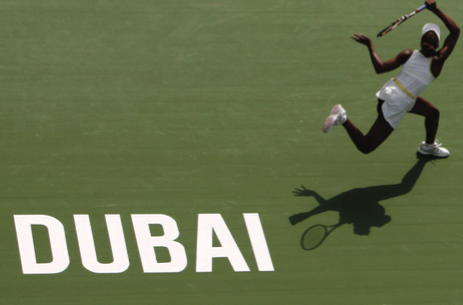
More recently, while covering the Dubai Tennis Championships in February, I received a packet which is given out to visiting journalists as a welcome gesture. The packet included a book entitled, Fly Buy Dubai, The Remarkable 25 Year Journey of Dubai Duty Free. Understandably, Dubai Duty Free is interested in promoting its achievements over the last quarter century. As a sponsor of a number of prestigious events, including the annual tennis tournament, it was only natural that the company wanted to showcase its accomplishments.

I can see publishing a pamphlet or even a small book for the occasion, but I was shocked upon seeing the 500 plus page book. Out of curiosity, I actually began reading the book to see how one could write so much about a duty free shop. Interestingly, the book begins by looking at the origins of the duty free experience at Ireland’s Shannon Airport in 1947 and examining how the concept spread from there to the rest of the globe.

It’s funny though how the book reaches to include Dubai from the very beginning. It attempts to draw a parallel between the father of the duty free concept, Irish entrepreneur Brendan O’Regan, and Sheikh Hasher bin Maktoum Al Maktoum, the great-grandfather of Dubai’s present ruler Sheikh Mohamed bin Rashid Al Maktoum. Sheikh Hasher is credited with establishing Dubai as a tax-free haven at the end of the 19th century to attract businesses to the then obscure emirate. As impressive as the move was at the time, it can hardly be compared to the duty free revolution that Brendan O’Regan embarked on.
The historical section of the book is quite informative. The most interesting tidbit was how the name Irish Coffee was coined in the 1940s by the head chef at the Shannon airport restaurant, Joseph Sheridon. On a very cold night, he decided to add a drop of whiskey to a pot of coffee he made for a group of transiting Americans. When one of the passengers asked, “is this Brazilian coffee?” Sheridon replied, “No, Irish Coffee!” The rest of the book goes into every detail about the company and draws on many anecdotes from Colm McLoughlin, the Dubai Duty Free managing director and one of the original consultants sent from Ireland to set up the duty free in 1983. The book has its interesting moments but, by all accounts, it is way too long.

In short, Qatar’s tourism festival, the hype surrounding its al Zubara fort and the 500-page book commemorating the 25-year anniversary of Dubai Duty Free, are examples of how big money is spent in this part of the world to procure a place in history. Then there is the other side of the coin, countries with considerable history but with no money to preserve it.

Norbert schiller is a Dubai-based photo-journalist and writer

April 3, 2009 0 comments
0 FacebookTwitterPinterestEmail
GCC

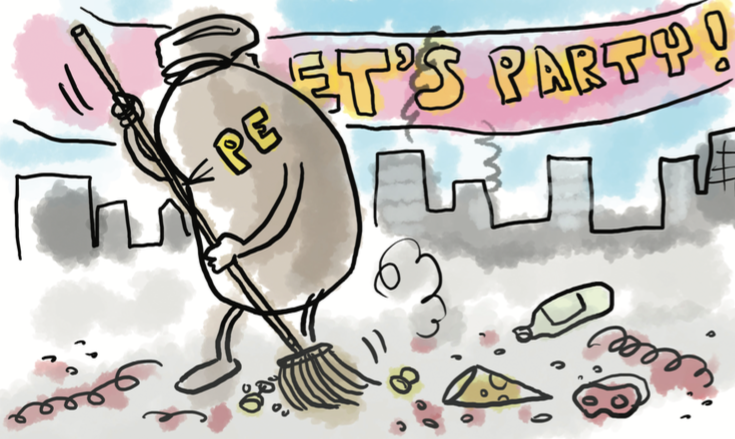
Private equity – The party is over

by Executive Staff April 3, 2009
written by Executive Staff

If there is one thing everyone in the regional private equity (PE) game agrees on, it’s that the party is officially over, albeit after a long and fruitful period of money making. Despite the economic downturn and the immaturity of PE in the region, regional PE firms managed to raise a total of more than $6.4 billion in 2008, according to research conducted by Zawya Private Equity Monitor (ZPEM) and the Gulf Venture Capital Association (GVCA). When one considers that in 2005 PE firms raised a total of $2.9 billion, the compound annual growth rate (CAGR) in the region over the past three years had registered at 30 percent, according to the GVCA. Ergo it’s no surprise that, until around October of 2008, the region was being heralded by many in the global PE industry as the next global PE hub.

The financial bulldozer

Inevitably, the financial disaster that emanated from Wall Street has dampened the promise of PE in the region, at least for the time being. The Middle East is still reeling from the effects of the crisis and even the most reliable analysts and commentators are reluctant to give an answer as to when the region will see the bottom of this downturn. The funding frenzy that has typified the regional PE market over the past few years has come to a grinding halt and those seeking to raise funds in the region face a challenging task.

“Fundraising in 2009 will be a small fraction of what was raised in 2008,” says Hisham El Khazindar, managing director and co-founder of Citadel Capital. “If we see $1 billion raised in 2009 it would be fantastic,” he adds. That sentiment is echoed across the industry, whether it comes to the funds themselves or the disposition of limited partners (LPs).

“All the PE shops that I know who were scheduled to do fund raises in the first half of this year have postponed them because the appetite just isn’t there,” says Yahya Jalil, senior executive officer and head of private equity at The National Investor in Dubai.

That said, comparatively speaking PE firms are still in a better position than many other financial institutions in the region. For one, PE firms in the region were not heavily involved in the kind of investments that got the world into its financial mess to begin with and by nature they are committed to longer spreads and lockups whose longevity may well ride out the current financial conundrum.

“The typical PE investment cycle is around four years, which means that investments made now will not ‘mature’ until 2013,” says James Tanner, head of placement and relationship management at Investcorp. “By that time, it is expected that the current downturn will have passed and we expect the region to have returned to its long-term growth trajectory.”

Lenders licking wounds

Many of the traditional financing and exit avenues for PE firms have become unattractive as banks look inward — as well as to their governments — to repair their balance sheets. Furthermore, the immaturity of PE and leveraged buy-outs (LBOs) in the region largely shielded the industry from the effects of widespread and complex leveraging prevalent in many developed PE markets.
“LBOs only covered around 25 percent of the [regional] PE market,” says Imad Ghandour, executive director of Gulf Capital.

Tamer Bazzari, deputy CEO of Rasmala, adds that “immaturity did result in limited exposure to LBOs in the Middle East market compared to the West. This immaturity was not because of the immaturity of the PE firms, which are capable of structuring these deals, but to the inability of the banks to support such transactions in the region.”

Perhaps the most important and advantageous aspect of the regional PE market, however, is the fact that PE firms in the region are still sitting on vast amounts of “dry powder” — capital called or committed that is yet to be deployed. This has placed regional PE firms in a position where they will have first dibs on opportunities once there is some kind of consensus on when the bottom has truly been reached.

“You don’t get any accolades for picking the bottom and the risk of thinking you are at the bottom when you are not is quite substantial,” says Jurgen Heppe, managing director of direct investment at Istithmar World. “I think it’s what’s holding people back, because there is a lot more comfort in investing into an uptrend then trying to pick the bottom.”

All things considered, the near term state of the regional PE industry will be one of reticence and reflection. PE firms have had a good run of luck — now they are being called upon by their LPs and the companies they invest in to show their worth by preserving the value of their portfolios in the face of an economic whirlwind the likes of which this region has never seen. The hunting season is on, except now the guns are pointed in the other direction.

April 3, 2009 0 comments
0 FacebookTwitterPinterestEmail
Editorial

A bane unto ourselves

by Yasser Akkaoui April 3, 2009
written by Yasser Akkaoui

Why is it that we Lebanese fall into the same trap every time our instincts take control?

Since 2005 and the outrageous assassination of former Prime Minister Rafiq Hariri, we have seen Lebanon’s hard won equity eroded by political killings, instability, full- scale war, economic decline and civil unrest. During this period, Lebanon has lost a dozen brave reformers and national servants as well as — and here is where the really shocking figures kick in — 1,400 civilians lost to a war in 2006 that also saw the displacement of nearly one million people and the economy ripped to shreds. Today, we are still picking up the suffering, especially when one considers the subsequent deaths from unexploded cluster bombs that continue to litter South Lebanon.

And for what? All we do is pander to the same leaders whose performance, if judged in the boardroom rather than the street, would be dismissed quicker than you can say Lehman Brothers.

You see, it’s the same old story: Lebanon fights and suffers at everyone else’s expense. Now we witness presidents Barack Obama and Bashar Al Assad, not to mention the royal family of the Kingdom of Saudi Arabia, burying the hatchet. It is only at moments like this that we realize we have been taken for a very long and expensive ride. We negotiate for others but not for ourselves.

But that’s only half the joke. There are elections slated for June in Lebanon. With the decreased level of political tension in recent weeks and all the kiss-and- make-up that we witnessed in the news, one can only wonder how campaigns will look in the absence of all the hatred we are accustomed to. There will be no hatred campaigns, there will be no slogans, as our politicians know only one thing — how to segregate.

With our politicians clueless in economics, we will be back to square one with another set of dumb strategies that will take us nowhere.

In the meantime, in the rest of the region, Dubai, Iran and Iraq — yes even Iraq — are all getting their acts together. Dubai in particular, despite all the rumors of bankruptcy and recession, is still showing signs of life. New companies are not shying away. Why? Because the private sector has the experience and the nerve to look long term and to have confidence in the role of the state.

The rest of the world — our so-called allies, be they Iran, Syria, Saudi Arabia and even America — know that at the end of the day regional maneuvering should not affect national growth and internal development.

Only Lebanon believes that it can still take international posturing and bluster at face value and attach it to a national agenda.

April 3, 2009 0 comments
0 FacebookTwitterPinterestEmail
GCC

The dollar’s exposure

by Executive Staff March 22, 2009
written by Executive Staff

“The dollar is our currency, but your problem,” quipped US Secretary of the Treasury, John Connolly, to his European counterparts in 1971. Today, nearly 40 years later, his words couldn’t ring truer. While the value of the US dollar weakened relative to the world’s other major currencies for most of the George W. Bush presidency, the slide became ever more precipitous in the first half of 2008. This helped spur inflation across the Middle East — where the value of many countries’ currencies are pegged to the greenback — as imports priced in euros, yens and anything other than dollars quickly became more expensive.

For states in the Gulf Cooperation Council (GCC), the equation was even more costly as the dipping dollar eroded the value of their trillions in accumulated dollar holdings. New revenues from oil receipts are also priced in dollars, and so even as the dollar price per barrel of oil reached record highs through the first half of 2008, the value of each dollar earned from oil was declining.

What was pushing the dollar down? The factors are numerous, complex and interrelated, but part of the answer is that America has been living well beyond its means and is thereby exposed to significant liabilities. Total US government debt surpassed $10 trillion in September 2008, helped along by the trillion dollar tax cuts early in Bush’s presidency and the hundreds of billions absorbed by military adventures in Iraq and Afghanistan. More generally, however, the American economy simply consumes more than it produces and has been doing so for a long time — in 2008 this imbalance amounted to $677 billion. The US has run an annual balance of payments deficit on current accounts of approximately six percent of GDP for most of the last decade, implying that for every $100 worth of goods and services produced, America consumes $106 worth. Where does the other six dollars come from? In essence, America has been borrowing money from the rest of the world.

If the Americans could have continued forever printing more dollars to send out into the world in exchange for the tangible products the rest of the world makes, they might not have had a problem. However, as total American debt lurched ever higher through the 2000s, moneylenders everywhere began to question America’s ability to pay this money back. These creeping doubts meant that US debt — effectively the dollars sent abroad — became less attractive to hold onto, thus contributing to the dollars declining value.

US dollar against major world currencies

Monthly average values

Welcome to the financial crisis

The grinding slow-down in the US economy through 2008 led the US Federal Reserve Bank to continually lower interest rates to try and encourage growth, with the January 2008 rate of 4.25 percent falling to 0.25 percent — effectively zero — by year’s end. Yet as the global financial crisis began to cascade and investors’ August of angst morphed into September’s sheer panic, capitalists grabbed their money and ran to where they always run when Armageddon seems nigh, the pocket of their champion, Uncle Sam.

“Despite the next to nothing yield offered by dollar denominated investments, a flight to safety into US dollars and government bonds has kept the US dollar from collapsing,” wrote Kathy Lien, director of currency research at FX360.com, in a December 2008 report. “The concern for safety was so high that investors were willing to take negative yields just to park their money with the US government.”

Thus, since August 2008 the dollar’s dive has U-turned — albeit, far from smoothly — riding demand for dollar-shelter and appreciating nearly 20 percent against the euro between July 2008 and February 2009. How can this be happening when there are so many good reasons to sell the dollar? The non-partisan Committee for a Responsible Budget estimated that the different bailouts and stimulus packages the US government has announced will total $2.6 trillion in new spending; Morgan Stanley predicts the 2009 US deficit at $1.5 trillion, or some 10 percent of GDP. While some of this new spending will be paid for through new borrowing, the rest of the money will be created, in essence, out of thin air.

“The Federal Reserve is basically printing money and using that money to flood the market with liquidity, eroding the value of the US dollar in the process,” noted Lien. “The central bank will not be worried about a weaker currency and will in fact welcome one because they know that a weaker currency is like an interest rate cut in many ways because it helps to support and stimulate the economy.”

Foreign exchange traders are a cynical lot. More than one has noticed the long-term benefits to America in driving the dollar down. Effectively, it allows the US to renege on a portion of its foreign debt, as US debt is denominated in dollars. If, for example, an American borrowed $100 worth of euros and used them to purchase goods in July 2007, they would have been able to buy 73 euros worth of stuff. If they repaid the $100 a year later in July 2008, after the US dollar had declined in value, it would only have bought 64 euros worth of stuff, meaning whoever lent America that money is getting short changed.     

As well, American workers need jobs and American politicians lose theirs when unemployment remains high. A high value for the dollar means that foreign imports into the US are continually displacing American producers, while a low dollar produces a surge in exports and creates jobs for middle class Americans, thereby preserving political careers.

“The G.C.C. states are locked into the dollar and the fate of the dollar is their fate as well”

The Chinese checker

While many countries worry about dollar devaluation, few have more to lose than China, by far America’s largest lender with a staggering $1.95 trillion in its foreign exchange reserves. The US has been able to run such a large balance of trade deficit for so long in large part because China has, essentially, been recycling its trade surplus — which was $262 billion in 2008 — back into buying US treasury bonds, supporting the dollar’s value, keeping US interest rates low and lending America back the money to buy more Chinese goods. Daniel Sternoff, director of emerging markets and energy research at Medley Global Advisors (MGA), explains that China’s trade surplus will shrink if China’s exports fall as the world economy weakens, or if China’s own $580 billion economic stimulus package to bolster domestic demand successfully props up its economy, keeping imports “at a relatively decent level.” These possible scenarios make it uncertain whether China will continue to have sufficient trade surpluses in 2009 to recycle back into the US treasury market to prop up the dollar.

“And that’s just a question of what’s the overall supply of dollars they have to be purchasing more,” says Sternoff. “Whether they will begin to sell their reserves outright is more of a political question, and we have received some indications that they are going to be spending at least $300 billion of their foreign exchange reserves.” 

A nightmare scenario for the US and the global economy at large would be if China began dumping its US reserves. This would flood currency markets with dollars, causing their value to drop, in turn evaporating the value of US dollar savings held by countries, companies and people the world over and writing off the US as the globe’s largest export market. Beijing has “serious worries over the potential for much greater dollar weakness and the erosion of the value of their holdings,” and has been looking for ways to try and diversify its reserve holdings, Sternoff points out. Yet he adds that the Chinese also “have a very strong vested interest in the stability of the global financial system and in the stability of the US economy… They’re not about to start currency wars with the US by shooting themselves in the foot by selling their bond holdings.” A second nightmare scenario is that the vast overhang of dollars in portfolios around the world has grown to a magnitude that may be beyond the control of any single group of players — and that when everyone is worrying about currency depreciation, it may only take a small event to spark a stampede for the exits.

GCC’s dollar marriage

The fabric of Gulf economies has been intertwined with the dollar since the 1970s arrangement with the Organization of Petroleum Exporting Countries (OPEC) to have oil sales priced exclusively in dollars. With five out of the six GCC currencies currently pegged to the dollar, Kevin Muehring, a financial journalist specializing in macro economics and monetary policy, remarks that, “for better or for worse, the GCC states are locked into the dollar and the fate of the dollar is their fate as well.” The Gulf’s banking systems are structured around the dollar, the banks, the government and the private sector all hold huge proportions of their assets in dollars and, most importantly, “oil is priced in dollars and therefore most of their revenues, before they are converted into their domestic currencies through government spending, are in dollars,” says Muehring.

However, one need only look to Iran to see that a dollar divorce is, although long and unpleasant, possible. In 2003, the world’s fourth largest oil producer began large-scale movement of its foreign-held assets out of dollars and as American financial sanctions continued to press on the exposed parts of the Persian purse, Tehran announced in April 2008 that it was no longer taking dollars in exchange for its oil.

“We agreed with all the buyers of Iran’s crude to trade oil in currencies other than the dollar,” said Hojjatollah Ghanimifard, international affairs director of the National Iranian Oil Company, to the Fars News Agency. “In Europe, Iran’s crude is being sold in euro, in Asia in euro and yen.”

Kuwait also caused ripples through the Gulf when it became the first GCC country to break ranks and de-peg from the dollar in May 2007, instead locking its dinar into an exchange rate mechanism based on a ‘currency basket’, including the dollar, the euro, the pound and the yen.

“The massive decline in the dollar’s exchange rate against main currencies… has contributed to the increase in local inflation rates and this step is part of the central bank’s efforts to curb inflationary pressure,” said Sheikh Salem Abdul-Aziz al-Sabah at the time.

Inflation due to dollar devaluation had other GCC states openly speculating through the first half of 2008 that they might also de-peg their currencies, “but now, this discussion is not happening,” remarks Sven Behrendt, associate scholar at the Carnegie Middle East Center in Beirut. In recent years Gulf states have funnelled much of their surplus oil revenues into sovereign wealth funds (SWFs) to reinvest, with the Council on Foreign Relations estimating the Gulf SWFs’ 2007 external portfolio at $1.3 trillion. However, the global financial storm has pummeled Gulf SWF holdings, with the Abu Dhabi Investment Authority alone estimated to have lost some $140 billion through 2008.

“They shifted a lot into equity, and with that came a higher risk exposure to their portfolios,” says Behrendt. “Now they’ve burned — quite substantially — their fingers in some of their investments.”

Given the lack of transparency with which the SWFs operate, accurate fiscal assessments are difficult, but what is clear, says Behrendt, is that they have been burned with heavy losses and are now among those sheltering their bundles of cash in US treasury bonds, in turn helping to keep the dollar high.

Should a viable alternative to the dollar reveal itself to investors, support for the dollar will collapse

Forever a dollar world?

Everybody uses US dollars because everybody else accepts them, but this was not always the case. Historically, the pound was the world’s general medium of exchange and the invoice currency of much of international trade. In the 1960s, however, major weaknesses in Britain’s economy forced London to de-value the domestic currency and the sterling lost its international shine, making way for the assent of global dollar hegemony. Today, with the US economy plummeting and the greenback baring an ever-growing debt, is the dollar’s reign near its end?

Muehring, the financial journalist, acknowledges the dollar will experience massive downward pressure in 2009, but “the offsetting pressures will be the lack of currency alternatives as the underlying economies of both the euro and the yen are in worse shape than the US.”

This was highlighted last month when German Finance Minister Peer Steinbrueck stated that a number of the 16 euro zone countries were “getting into trouble” and may need help — read ‘financial bailout’ — from the euro’s two biggest economies, Germany and France. Bloomberg reported European countries have committed more than $1.5 trillion to “save their banking systems from collapse,” and a number of countries are now staggering under the debt-load. The cost of insuring the debt of Ireland, Greece and Spain against default is at an all-time high. As well, Austria’s exposure to banks in eastern Europe has Vienna pleading with the EU for help, as the country “is on the hook for so much money that essentially if they don’t get paid by eastern Europe they’ll go bust,” said Marc Faber, managing director of Marc Faber Ltd., to Bloomberg. 

And so as the global financial crisis pushes counties and economies to the cliff’s edge, investors continue to huddle under the dollar for lack of anywhere else to hide. But the foundations of the dollar’s dominance are cracking and should a viable alternative reveal itself to lure investors away, support for the dollar will collapse.

March 22, 2009 0 comments
0 FacebookTwitterPinterestEmail
Levant

Politics over pragmatism

by Peter Grimsditch March 22, 2009
written by Peter Grimsditch

If the International Monetary Fund (IMF) were putting up candidates in this month’s municipal elections in Turkey, the best advice would be for them to withdraw before being trounced. On one side, the ruling Justice and Development Party, or AKP, is spending lavishly on certain local authorities while holding off on raising tax revenues. Those killjoys from the IMF have been campaigning for months for Prime Minister Recep Tayyip Erdogan to do exactly the opposite. If Turkey wants a new standby loan to see it through the tough times of 2009, say the men with built-in calculators, it needs to be less profligate.

A “deal” has been on the cards allegedly since last November and even in February Erdogan claimed the talks were progressing well despite a “last minute hitch” when the IMF was said to have injected some “unacceptable conditions.” A team from the Fund spent most of January in Turkey seeking to hammer out a deal before suspending the talks. Smart money (and certainly not the IMF’s) is going on a forecast that no agreement will be reached before the elections on March 29. A plummeting currency and rising unemployment are making life difficult for the Turks as it is, without the possibility of cutting public spending and improving tax collection.

The indication of economic performance afforded by early 2009 numbers make for grim reading. Officially the government’s policy is still to aim for four percent growth this year, a number it has been adhering to despite advice from the IMF and others that it was not only unattainable, but ruinous. In January, the budget deficit rose by 466 percent year-on-year to $1.65 billion, overall revenues limped up a mere 0.3 percent, tax revenues fell by 2.4 percent and spending shot up 15.3 percent. In face of the inevitable, some economists are now predicting that a two percent drop in GDP this year is far more likely than growth of any size.

Greasing democracy’s palm

While the IMF is talking of belt-tightening and even said to be suggesting a tax on pensions to help fund the social security system, AKP local authorities are distributing free food, washing up liquid and, reportedly, fridges and cookers, a tactic reminiscent of the Lebanese parliamentary elections of 2000.

In Ankara, the AKP-controlled metropolitan municipality awarded $64 million in local tenders in the first six weeks of 2009. The equivalent 2008 figure for the whole of January and February was $12 million. One tender this year for $26.6 million to buy washing up liquid, soap, detergent, beans, rice, jam, vegetable oil, pasta and cheese was won by Orpas Gida, with a note on the tender saying the products were to be delivered to locations specified by the head of the municipality’s social services department. In 2008 the exercise cost $1.4 million. The voters also know the temporary rules of the election game, with reports from throughout the country of the owners of illegally constructed buildings (of which there are many) using the campaign period to add another floor, reasoning that no local authority of sense would raise objections just ahead of polling day.

Meanwhile, more conventional ways of trying to stimulate the economy, which at any other time would have appeared sound suggestions, look increasingly hollow these days. New measures announced in February allow investors up to a 75 percent reduction in corporate tax for five years if they create at least 100 jobs and move textile plants to the eastern or south-eastern parts of the country before 2010. To help the car industry, the government is urging drivers to scrap their old vehicles to buy new ones. The central bank cut its benchmark interest rate by 1.5 percent to try to encourage business to borrow and grow. In practice, one of few expansion areas is the number of unemployed, with a rise of more than two percentage points in the last quarter of 2008 to 12.3 percent.

All of this depressing statistical news makes the more lurid politics of the mayoral race in Kecioren almost a welcome diversion. The AKP incumbent Turgut Altmok has pulled out of the election after photos were handed to the party leadership of him and a woman with whom it was claimed he was having an affair. The real problem appears to have been less his alleged dalliance than the fact that he refused to accept influence from the mayor of the neighboring Ankara Municipality about who should be on the AKP ticket.

March is going to be an interesting month.

Peter Grimsditch is Executive’s Turkey correspondent

March 22, 2009 0 comments
0 FacebookTwitterPinterestEmail
Levant

Aid work on a shoestring

by Executive Staff March 22, 2009
written by Executive Staff

“Give me the money that has been spent in war and I will clothe every man, woman, and child in an attire of which kings and queens will be proud,” said 19th century US senator and anti-slave leader Charles Sumner in reference to the US Civil War. His words have lost no salience since. The war in Iraq, for instance, has cost US tax payers at least $3 trillion according to research conducted by the former chief economist at the World Bank, Joseph E. Stiglitz. That’s enough money to put a lot of shirts on a lot of backs.

In Lebanon, war has become somewhat of a national sport pitting the interests of regional and global players against each other in a seemingly endless saga of death and destruction. Indeed, the latest episode of Lebanon’s war saga that took place in 2006 between Israel and Hizbullah proved no different, leaving dead around 1,200 Lebanese dead — mostly civilians — and 160 Israelis, mostly soldiers. Human suffering aside, Lebanon’s Council for Development and Reconstruction (CDR) estimated that the total material cost of the war stood at $3.6 billion.

Lebanon’s many needy

What was unique about the 2006 conflict, however, was the speed and magnitude of international humanitarian assistance in the form of funding that poured into Lebanon upon the cessation of hostilities.  A host of non-governmental organizations (NGOs) have since moved in to provide the humanitarian relief and development assistance needed for the country to recover from the conflict. Furthermore, the Nahr el Bared conflict in 2007 between the Lebanese army and the Fatah al-Islam militant organization kept the focus on Lebanon in terms of funding for humanitarian assistance. The Italian Government alone has committed over $217 million towards emergency relief and infrastructure in Lebanon since the 2006 war.

Today, however, Lebanon enjoys relative political stability, with Merril Lynch estimating 2009 growth at 2.7 percent, while most of the countries that have pledged money towards humanitarian efforts in the country are contracting. “The global financial crisis has affected humanitarian work around the globe. Countries worldwide have to make reductions and external elements are an obvious selection,” says Christina Bennike, Lebanon country program manager at the Mines Advisory Group (MAG), a British mine clearance organization.

Additionally, the transient nature of humanitarian work entails a specific work model that comes in three stages: the emergency phase (during and directly after a conflict or natural disaster), the post-war construction and capacity building phase and, finally, the development phase characterized by long, drawn out funding cycles. This natural progression also brings with it funding constraints that complicate the budgets of humanitarian organizations operating in Lebanon.

“Funding for projects during the crisis period could typically be expedited in around three months as opposed to the time it takes today which can be up to a year,” says Wolfgang Hager, EU senior policy adviser to the Lebanese Government. “Projects are now moving into more of a maintenance phase.”

As such, most revenue streams flowing into Lebanon for emergency and construction phases are expected to dry up by the end of this year. “The final phase of financing for our emergency program will [go from] 2009 until 2010 and I don’t think we continue with financing after that,” says Fabio Melloni, director of the Italian development cooperation office, the humanitarian and development arm of the Italian government.

“Usually when you have a crisis situation in any country you have a lot of international NGOs and donors that will come in and give a lot of money to handle emergency relief issues and then all of a sudden they leave,” adds Ghassan Makarem, editor and media coordinator at Lebanon Support, an organization that coordinates humanitarian efforts in Lebanon. “People already got their money for the first part of 2009. The problems will start when they apply for funding for 2010 or late 2009.”

Time to tighten the belt

As the cash flow of large donors becomes increasingly restricted, humanitarian relief organizations and some NGOs are feeling the crunch.

“This year we are getting half the budget we received last year, for projects of a similar nature [sic],” said a senior director of a European NGO, speaking on condition of anonymity.

Sarah Shouman, country director at Search for Common Ground, says “there is definitely going to be an effect on NGO funding and donors will be a lot more stringent on their regulations as to how they give out funding. Everyone is going to feel that and be taken aback.”

On some levels the lack of funding has already begun to materialize through the scaling down of projects essential to the well-being and development of the Lebanese population. Two of the seven international mine clearing organizations in the country have already shut down due to a lack of funding and it seems likely others will follow.

“Last year we had 22 [mine clearing] teams; at the beginning of this year we had 18 and now we are down to 15. We stand to loose more than half of our teams,” says Bennike. “The more we reduce teams the less likely there will be a handover of land, which is going to impede economic recovery, the construction of villages and homes as well as increase civilian casualties.”

As if that wasn’t enough, another natural element of the humanitarian sector is to move with the tide of wars and natural disasters. “Unfortunately, with the NGO game wherever the need is; you have to rush there,” says Shouman. Ergo, the recent Israeli onslaught on Gaza is expected to deplete the already skeletal coffers of large donors like the EU and the US. To some extent this transference of priorities has already begun to materialize. On February 18, the EU announced in a joint statement that it will grant the UN agency for Palestinian refugees (UNRWA) a further $51 million to meet humanitarian needs in the Gaza Strip.

Naturally, the combination of these factors has begun to affect Lebanon’s real economy as many people who were employed in these organizations are either on the verge of being unemployed or have already been handed a pink slip.

“The [number of] jobs will drop with the money,” explains Makarem. “There have been situations where all of a sudden you have all of the men in a village… unemployed.” Also complementary businesses stand to suffer once their cash cows leave Lebanon for greener pastures. “It’s over for the suppliers and some of them know it, but there is nothing they can do about it,” adds Makarem.

All in all, it looks like the party is over for the humanitarian sector in Lebanon. Most of what’s left to do inside the country will either be completed by the end of this year or pan out across several years and funding cycles before eventually being handed over to local partners and the Lebanese government. What remains to be seen is whether Lebanon’s government and civil society can shed their sectarian pretensions, step up to the plate and help themselves instead of having others do it for them.

Israel’s recent gaza onslaught is expected to deplete the coffers of donors like the U.S and E.U.

March 22, 2009 0 comments
0 FacebookTwitterPinterestEmail
Levant

Rockin’ the shop

by Executive Staff March 22, 2009
written by Executive Staff

The global music industry is facing hard times. Over the last five years, sales of legal ‘hard copies’ (CDs, DVDs, cassettes and records) have declined sharply, due to the rise of MP3 and iTune formats, as well as Internet downloading. Some of these losses have been partially replaced by legal online sales — amounting to 15 percent of music sales worldwide by 2007, according to figures from the International Federation of the Phonographic Industry (IFPI), but the industry has been slow to grapple with new technologies and the changing consumer mentality. Add to this volatile mix the global economic crisis and a severe credit crunch, and the emerging picture seems gloomy indeed. Yet artists, retailers and producers are not all that pessimistic.

Tony Sfeir is the founding manager of both the retail shop CD-Thèque and independent label Incognito Records. He sees himself as the classic ‘disquaire,’ offering a near-complete knowledge of his products to customers and making it a point to let them discover new music. Sfeir takes his business extremely seriously. In fact, he even closed down CD-Thèque’s second outlet in Hamra when another professional disquaire could not be found.

“You know you have found a real tradesman when people say they bought their music from Raymond, not from the CD-thèque,” says Sfeir, referring to one of his employees. The closure has cost the company part of its turnover, but Sfier believes it has generated credibility, saying “CD-thèque has loyal customers who returned to the original establishment in Ashrafiyeh.” He quotes the 2008 turnover of CD-thèque as around $700,000 — down from $800,000 in 2007 due to the shop closure — estimating this to be 20 percent of the legal sales market in Beirut. He has yet to see a drop in sales due to the financial crisis.

The franchise guys

Anthony Ziade, CEO of the Virgin Megastore franchise for Lebanon and KSA, is equally optimistic about customer loyalty, feeling that Virgin has no real competition in Lebanon on the level of the overall shopping experience on offer. The concept of Virgin Megastore is a combination of music, books, films, multimedia hardware, musical instruments and a cafe. “Music is the anchor of Virgin, it is the first thing you connect with our Megastores, so we will keep selling hard copies – even if they represent only a fraction of our sales volume now.” Music has dropped from over 50 percent of turnover back in 2001 to a mere 15 percent in 2008. This is a global evolution. At Virgin France, music represents only seven to eight percent of total sales volume today and even that figure continues to drop. Yet Ziade is not considering selling MP3’s in the Megastore or through its website.

“I don’t think the Middle Eastern public is ready for that yet, even in Lebanon,” he says. The crisis is not making itself felt in Virgin’s sales yet, Ziade claims. It has, however, manifested on the supplier side, where the retailer is experiencing some shrinkage in its sourcing, as some producers and distributors have gone out of business or face difficulties obtaining credit. Suppliers are also less eager to give credit, demanding upfront payments instead and following up payments very closely. Despite the difficulties, Virgin Megastore has now branched out to Saudi Arabia, where it has taken the retailer some time to get started. The concept of Virgin Megastore is a controversial one in KSA. “We faced many hurdles from the side of the government, what with censorship and related issues, but we are now proud to present a respectable range of CDs, DVDs and books — albeit more limited than in Beirut of course,” says Ziade.

Hady Hajjar, marketing manager of the recording label Rotana Music, doesn’t see the global crisis as a major threat either. “We are not just selling ordinary products. Music is a universal language and people will always need music in one way or another. We have 120 stars in our portfolio, including all the big names in the Middle East.” Hajjar therefore doesn’t see the financial crisis as a major threat, although he admits Rotana has been affected by the global drop in music sales. To counter these losses, the Rotana empire, as Hajjar likes to call it, has been branching out to include management and event organization, as well as a digital department for the sale of ringtones and digital online formats. In 2008, the company signed contracts with Zain and Mediaphone to cover the region. Additionally, it has started licensing out its music to companies around the world in an effort to reach Arab households worldwide, and acquiring licensing contracts from Sony, Universal, Fox and Disney to distribute their music and films through its own distribution network in the region.

New scenes

Although Rotana is an established authority on the Arabic music scene, the company is always on the lookout for new talent, trying to keep its finger on the pulse of the ever-changing tastes of the young. Amanda Hartford manages Rotana Musiqa, one of Rotana’s multiple satellite channels, which features a show closely tracking hip-hop, techno and alternative music in the region. She is fascinated by what’s brewing now in terms of new developments. “Compared to only three years ago, young musicians — whether rappers, DJ’s or rockers — are becoming very professional. Scenes are rapidly evolving, especially in Lebanon, but also the clubbing scene in Egypt and hip-hop in Saudi Arabia, to name just a few.” Rotana has been sponsoring events like the Sound Bomb hip-hop festival in Beirut last fall and while these artists do not fit into any of the company’s formats at the moment, Hartford sees it eventually reaching the point where sub-labels will be set up for the different genres.

Yet questions are cropping up about how open the industry is to newcomers. Rima Khcheich is an up and coming Lebanese singer, who combines her classical tarab training with jazz influences. She has released three albums with the Dutch Yuri Honing Trio. She claims the situation for Arabic music in general today is bad, complaining that only commercial music has a chance to reach the audience, while artists who are working to develop their own voice do not get a lot of chances to produce their music, let alone to get it distributed.

“I produced my own first CD, so production is possible if you are determined, but distribution is another matter,” says Khcheich.

Sfeir feels the key is to create a separate or alternative scene. “With Incognito, we have started from the bottom up and I think that is the key to our success. We started with releasing budding musicians who gravitated around the CD-thèque,” he adds. The shop started publishing a magazine, organizing events and in that way eventually managed to create an interest in the music it wanted to release. The original Incognito label focused on rock and alternative music, such as Scrambled Eggs and Mazen Kerbaj. In 2006, the sub-label New Oriental Sounds was created, which releases classical Arabic music from across the region with a modern touch, in jazzy or experimental interpretations, or blended with a more Western-oriented sound.

This has proven quite popular, to the point where Incognito is now selling between 7,000 and 8,000 copies of its bestselling products. Together with their distribution of other labels, this has resulted in a turnover of $800,000 for 2008. “We are nowhere near the level of something like the Cuban scene yet, which is known and appreciated throughout the world, but we are trying to build a similar name for Beirut internationally,” he claims.

Piracy

Both independents and established companies agree that distribution is the biggest hurdle. In countries like Syria, Sfeir points out, there is hardly a distribution network for the simple reason that CD’s are downloaded and burned on demand in the retail shops — which brings us to the piracy issue.

The Middle East, as is well known, has a reputation for music and film piracy. Rotana’s Hadi Hajjar estimates illegal copying in Lebanon alone at 80 to 90 percent of the market. Ziade agrees, though he estimates that the effect on Virgin Megastore is not a sales issue, arguing that Virgin customers have a certain buying power and prefer the quality and extra features of the original. The issue, he says, is credibility.

“Customers ask us for season 17 of a series like ‘24,’ but we are still at season 12. We follow the official channels and we honor release schedules, whereas the pirated version is already on the market, of course,” said Ziade.

On the other hand, Ziade says he has seen a real effort from the Lebanese authorities in the last year and a half to crack down on piracy, although he agrees there is still a long way to go. Rotana has recently lowered the price of its CD’s drastically to combat piracy sales. Hajjar explains the concept, saying the price of a legal copy is now only a few dollars above the pirate price, as opposed to the previous 10 dollars-plus difference.

“We have also waged an awareness campaign and are moreover making a real effort to bring our CD’s closer to consumers, working not only with our own retail outlets and dedicated chains like Virgin, but setting up distribution to the small local supermarket-cum-fuel station chains,” he says. For smaller labels like Incognito, though, piracy does not have the same effect. Sfeir has no major problem with piracy, apart from the effect it has of impeding the establishment of a distribution network. On the contrary, he sees piracy as a form of promotion, bringing Incognito’s music to new audiences.

“A part of this public will eventually go looking for the original copy, attend concerts, or in other ways contribute to our scene,” concludes Sfeir. As Khcheich sees it, the main disadvantage is that with all the copying going on in the Arab world, “not only can you not count on the real CD selling in most countries, but there’s no way to know even how many you are selling.”

March 22, 2009 0 comments
0 FacebookTwitterPinterestEmail
Levant

Ever the snow bunnies

by Executive Staff March 22, 2009
written by Executive Staff

The warm weather this year may be celebrated by some but for the many keen skiers the snowy slush and closed slopes in the ski resorts of Lebanon are causing consternation. Despite this, however, people are still taking to the slopes at the ski resorts of Faraya and Kfardebiane in large numbers, allowing the businesses there to breathe a huge collective sigh of relief.

In fact, such is the nature of Lebanon that despite this being the worst ski season in terms of snow in recent history, businesses have seen robust growth year-on-year. Joanne Zarifé, communications manager of the Intercontinental Mzaar, says that, “the occupancy of the resort maintained a high level exceeding the percentage of the last two years by 26 percent and the hotel has occupancy averages of 90 percent until March 2009. Our restaurant outlets have also shown an increasing occupancy of 22 percent compared to 2008.”

Ronald Sayegh, general manager of www.skilebanon.co.uk, also announced that his company had achieved growth of 20 percent last year. So while the warm weather has kept the snow away, the lack of snow has not kept the people away.

However, companies in the mountains are not resting on their laurels and are keen to stress that there is enough snow to enjoy the slopes. As Zarifé claims, “Now since the weather conditions have changed due to global warming, there are periods where skiing conditions are perfect and periods where it could be much better. But since it snowed heavily [in February], it is guaranteed that the month of March will be great in terms of skiing.”

March 22, 2009 0 comments
0 FacebookTwitterPinterestEmail
  • 1
  • …
  • 477
  • 478
  • 479
  • 480
  • 481
  • …
  • 696

Latest Cover

About us

Since its first edition emerged on the newsstands in 1999, Executive Magazine has been dedicated to providing its readers with the most up-to-date local and regional business news. Executive is a monthly business magazine that offers readers in-depth analyses on the Lebanese world of commerce, covering all the major sectors – from banking, finance, and insurance to technology, tourism, hospitality, media, and retail.

  • Donate
  • Our Purpose
  • Contact Us

Sign up for our newsletter

    • Facebook
    • Twitter
    • Instagram
    • Linkedin
    • Youtube
    Executive Magazine
    • ISSUES
      • Current Issue
      • Past issues
    • BUSINESS
    • ECONOMICS & POLICY
    • OPINION
    • SPECIAL REPORTS
    • EXECUTIVE TALKS
    • MOVEMENTS
      • Change the image
      • Cannes lions
      • Transparency & accountability
      • ECONOMIC ROADMAP
      • Say No to Corruption
      • The Lebanon media development initiative
      • LPSN Policy Asks
      • Advocating the preservation of deposits
    • JOIN US
      • Join our movement
      • Attend our events
      • Receive updates
      • Connect with us
    • DONATE