• Donate
  • Our Purpose
  • Contact Us
Executive Magazine
  • ISSUES
    • Current Issue
    • Past issues
  • BUSINESS
  • ECONOMICS & POLICY
  • OPINION
  • SPECIAL REPORTS
  • EXECUTIVE TALKS
  • MOVEMENTS
    • Change the image
    • Cannes lions
    • Transparency & accountability
    • ECONOMIC ROADMAP
    • Say No to Corruption
    • The Lebanon media development initiative
    • LPSN Policy Asks
    • Advocating the preservation of deposits
  • JOIN US
    • Join our movement
    • Attend our events
    • Receive updates
    • Connect with us
  • DONATE
Financial Indicators

Regional equity markets

by Executive Staff December 8, 2008
written by Executive Staff

Beirut SE: BLOM  (1 year)

Current Year High: 1,629.74  Current Year Low: 822.17

The Beirut Stock Exchange (BSE) is a relatively small market with only 26 listed stocks, 3 funds and a market cap of $8.7 billion as of November 25, 2007. Like any Arab market, the BSE is greatly affected by its surroundings and has been subject to many fluctuations. The BLOM Stock Index (BSI), BSE’s main indicator, began the year at a level of 1,488, following an upward trend. After the Doha agreement in May, the BSI rose significantly to peak on July 7th at an all-time high of 2,119. It then started to decline due to the political bickering and the worsening global economic climate. The BSI recorded a year-low on November 25, 2008, when it closed at 1,201. Solidere, the real estate giant, accounts for the bulk of traded value, in addition to the biggest banks in the country, such as BLOM, Audi and Byblos. On a year-to-date basis, the top performers were Bank of Beirut, RYMCO and Société Libanaise des Ciments Blancs (N), that grew by 41%, 37% and 35% respectively. Conversely, the worst performers were BLC (Bank Libanaise pour le Commerce), Holcim and Audi GDR with a reduction in price of 76%, 28% and 25%.

Amman SE  (1 year)

Current Year High: 5,043.72  Current Year Low: 2,561.30

The Amman Stock Exchange, established in 1999, has been growing significantly in the past few years, mainly because of Gulf investments in the country, leading the market cap to reach $32.2 billion. Total volume traded during the period extending from January 2nd to November 25th surpassed 4.9 billion shares worth over $26.4 billion. The year 2008 started on a rise, increasing the ASE index from 3,764 on January 2, to reach its peak at 5,043 on June 19th. However, this did not last, as the ASE index began to decline and closed at 2,597.8 on November 25th, recording a year to date decrease of 30.99%. Of the 245 companies listed on the Amman Stock Exchange, the financial sector accounts for the majority of the volume traded, while the industrial and the services sectors follow. TIT, MEDI and Al Ahlia are the top three performers with a year-to-date growth of 316.67%, 238.77% and 140.23% respectively. On the other hand, the worst three performers were Comp. Transports, Beitna and Optimiza that witnessed a price drop of 76.52%, 66.97% and 65.67% respectively, compared to their prices recorded at the beginning of the year.

Abu Dhabi SM  (1 year)

Current Year High: 5,148.49  Current Year Low: 2,701.65

The Abu Dhabi Stock Exchange lists 63 companies with a market capitalization of $68.35 billion. The market did not experience significant trades during the first two months of 2008. However, the market activity started to improve mid-March, boosting the ADSM Index to its year-to-date high of 5,158. Following the drop in oil prices, the market began to deteriorate leading the ADSM Index to reach its year-to-date low of 2,697 in mid-November, thus recording a year-to-date decline of 41%. Trades from the start of the year recorded a volume of 48.62 million shares and a value of $62.3 billion, with a daily average turnover of $271.9 million. Asmak and Methag Lil Takaful were top gainers during this period, recording price increases of 400% and 212% respectively. Gulf Medical Projects Company was also among the best performers with a 196% rise in its price. On the other hand, Ras el Khaimah Properties, Waha Capital and Dana Gas were the worst performers as they lost 73%, 69% and 69% of their respective values.

Dubai FM  (1 year)

Current Year High: 6,391.87  Current Year Low: 1,814.90

The Dubai Financial Market (DFM) was launched in January 2004 and includes 54 listed companies with a market capitalization of $41.71 billion. The activity on the Dubai exchange maintained the norm throughout the first five months of 2008, recording a year-to-date high of 6,314 in the month of February. It then started to decline negatively as it was affected by the global financial crisis. The main factor behind the decrease in the market was the significant drop in prices of real estate and banking stocks. Consequently, the Dubai Financial Market Index slumped to reach its lowest value of 1,809 by mid-November, scoring a significant year-to-date drop of 69%. The total volume and value traded during this period reached 72.62 million shares and $81.07 billion, representing a daily average turnover of $355.8 million. GGICO was the best performer realizing an increase in price of 58%. NGI and Tameen followed recording an increase of 51% and 38% respectively. On the other hand, Tamweel, Emaar Group, DFM and Amlak Finance were the worst performers to date recording a major decrease in their prices by 85%, 82%, 81% and 80% respectively.

Kuwait SE  (1 year)

Current Year High: 15,654.80            Current Year Low: 8,552.70

The Kuwaiti stock exchange index witnessed a 30% decline from 12,800 at the beginning of the year to close at 8,683 on November 25, 2008. The high of 15,667 was registered on 24 June during the peak of oil prices and the low of 8,459 was attained on 17 November in the midst of the current global financial and economical crisis that saw a weekly temporary trading freeze on the KSE. The total volume of stocks traded reached 75.711 billion with a value of $126.405 billion, thus recording a daily average value of $566.841 million. The KSE lists 97 companies in different sectors ranging from banking, investment, insurance and other industrial and service related companies. The total market capital of these companies is equivalent to $122.961 billion. Some of the best performers of the Kuwaiti index were Al Soor company, AREF Energy and Hits Telecom Holding company recording a 200%, 191%, and 129% respectively. Whereas Burgan Group, DAMAC, and IIG recorded 77%, 76%, and 76% losses on a year-to-date basis.

Saudi Arabia SE  (1 year)

Current Year High: 11,895.47            Current Year Low: 4,264.52

The Saudi Arabian Stock Market (Saudi SE) is the largest market in the Arab world with 126 listed companies having a market cap of $229 billion. The Saudi SE has been the most affected by the global financial turmoil. Saudi Arabia is the biggest exporter of oil in the gulf region and its economy is predominantly affected by oil prices. Therefore, with the surge in oil prices by the end of June, the Saudi Arabian market remained at a peak level throughout the first half of the year recording 11,895. The Saudi SE began to plunge thereafter to record a year low of 4,223 on the 23rd of November. By the 25th of November, the Saudi SE index lost 58.58% of its value led by the SAICO Saudi company that saw a decline of 88% in its price. Anaam dropped 86% and Al Ahlia Insurance decreased 86%. Moreover, out of the 126 listed stocks, only 5 companies registered an increase in their prices, led by UCA that gained 80% and Development Bank that increased 12.5% from the beginning of the year.

Muscat SM  (1 year)

Current Year High: 12,109.10            Current Year Low: 5,846.19

The Muscat Stock Market closed at 6,125 on November 25, down 33.27% from year start. The index registered a year-to-date high of 12,164 in mid-May when oil prices were equal to $147 per barrel. The index’s year to date low was 5,815 as a result of the global financial crisis. A volume of 4.014 billion stocks were traded with a total value of $8.487 billion and an average daily turnover of $36.896 million up to November 25. Some 128 companies in various sectors are listed with a total market cap of $16.366 billion. NDP, OMPC and Financial Corporation were among the best performers throughout the year recording an increase of 223%, 112% and 101% respectively, while Al Batinah International, AJS and OUIC registered 71%, 70% and 66% price reductions.

Bahrain SE  (1 year)

Current Year High: 2,902.68  Current Year Low: 1,947.55

The Bahraini Market, similar to all oil-exporting countries, witnessed a stable performance in the first six months of 2008 and recorded a year-high 2,898 on the 16th of June. However, with the beginning of the global recession, and the drop in oil prices, the Bahraini index began a downward trend that reached a year to date low of 1,947 recorded on November 25, with a year to date decrease of 29%. Relative to the country’s small size, the Bahrain SE has a market capitalization of $22 billion and the Bahraini Stock market lists 42 companies, of which 15 stocks gained in price and 25 shrunk during this year. BFLC, Banader and NHC were the top gainers with growth rates of 55.6%, 40.8% and 36.6% respectively. On the other hand, the worst performers were ABC, GFH and Global with a year-to-date decrease of 66.64%, 52.06% and 50.81% respectively.

Doha SM: Qatar  (1 year)

Current Year High: 12,627.32            Current Year Low: 5,504.53

The Doha Stock market that started trading in January 2000, holds 43 listed companies with a market capitalization of $63.92 billion. Trades on the Doha market witnessed slight fluctuations at the beginning of 2008 until March. Afterwards, the demand on stocks started to rise leading the DSM Index to peak at 12,636.24 by the end of May. The market began to decline later, realizing minor improvements in September to finish with a year-to-date low of 5,504 on the 25th of November and a year-to-date decrease of 42%. The total volume of trades during the year attained 3.5 million shares worth $44.867 billion with a daily average turnover of $193.39 million. Islamic Broker was the best performer to date with a rise in its price of 217%, followed by Mannai Corporation and Ezdan with an increase of 50% and 48.65%, respectively. As for worst performers, Makhazin came in first place with its price falling by 70.65%, whereas QIIC and Care Holding came in second and third places recording a decrease of 64.76% and 61.52%.

Tunis SE  (1 year)

Current Year High: 3,418.13  Current Year Low: 2,579.60

The Tunisian market, launched in 1998, has been the most resilient market against the financial crisis, as the Tunis Stock Exchange (Tunindex) was one of the few markets in the world and the only one in the Arab world to register a positive year-to-date change of 14.20%. The Tunis SE kept an upward sloping trend throughout the first 9 months of the year to register a yearly high of 3,418 on September 9 and gradually decreased to close at 2,994 on November 25. Out of the 51 listed shares on Tunindex with market weighted capitalization of $6 billion, 27 went down and 24 went up. The best performers have been Astree Assurances that went up by 168%, STAR was up by 156% and ASSAD by 143%. On the other hand, the worst performers were the pipeline company SOTRAPIL that went down by 55% and the two Tunisian telecom companies SOTETEL and SPDIT-SICAP both dropping 46% and 34% respectively.

Casablanca SE All Shares  (1 year)

Current Year High: 14,925.99            Current Year Low: 10,969.06

The Casablanca Stock Exchange (Casa All) recorded a year-to-date level of -14.26% on November 25, a percentage that is regarded as fair given the heavy losses on other exchanges. To date, the Casablanca SE has been relatively able to withstand against the global financial crisis in comparison with other countries in the region. The market maintained a constant level until mid-August, after which it decreased towards its year low of 10,742 in the last week of October. From year’s start, the Casablanca SE underwent a volume of 124.8 million shares with a total value of $9.4 billion. Out of the 77 listed companies with a market capitalization of $62 billion, 11 went up, led by Cosumar with an increase of 32%, and Afriquia Gaz, that also rose by 29%. On the other hand, 66 stocks went down, lead by the IT company Microdata with a decrease of 59%, followed by the electronic banking provider HPS that fell 58.90% and the Insurance firm La Maroccaine Vie, that dropped 55%.

Cairo SE: Hermes  (1 year)

Current Year High: 11,935.67            Current Year Low: 3,686.35

The CASE 30, one of the major indexes in Egypt that started in 1998, has by the 25th of November lost more than 63% of its value. The index registered a year high of 11,935 on May 4 2008 and since then took a downward trend to record a year low 3,686 on the 24th of November. In the 224 days of trading to date, 19.96 billion shares exchanged hands at a value of $70.41 billion. Out of the 185 listed shares that have a market capitalization of $53 billion, 146 have decreased, 28 increased and 11 were steady. The real estate sector was the most influenced by the current global financial crisis where SODIC Co. lost the most with 82.25%, the Canal Shipping Agencies Company and Alexandria Containers & Goods also retreated 81.63% and 81.40% respectively. Among the best performers, the entertainment sector grew the most; Semiramis Intercontinental Cairo, grew 1,016.25% followed by the industrial sector with UEFM increasing by 172% and Egypt poultry increased by 122.23%.
December 8, 2008 0 comments
0 FacebookTwitterPinterestEmail
Banking

Running realty’s gauntlet

by Executive Staff December 8, 2008
written by Executive Staff

Before the global financial crisis hit home, the main priority for banks in the UAE was how to decrease inflation rates. Another top concern in 2008 was dealing with the flood of liquidity streaming into the market, as well as currency speculation. But then, at the end of the second quarter, liquidity started to dry up, and immediately after the financial crisis climaxed in September banks became reluctant to give out loans as liquidity was so scarce. By the end of 2008, banks across the United Arab Emirates will have borrowed a minimum of AED70 billion ($19 billion) from the government. As of the beginning of November, banks had already received 80% of this liquidity package. Such a move aims to — most importantly — provide liquidity to the sector, in addition to easing tight lending requirements amid the continuing global financial crisis. Raj Madha, director of equity research at EFG-Hermes, thinks that the government “has been doing quite a good job” via pumping liquidity into the banking system and thus has been “very successful in bringing down interest rates.” Standard & Poor’s (S&P’s) announced in a recent report that the tightening liquidity conditions in the UAE are “only tangentially related to the global credit crunch and are being driven mainly by a host of country-specific factors, including speculative investor activity surrounding the UAE dirham’s peg to the US dollar, rapid domestic growth in recent years and concerns over the real estate sector.” Even though banks in the UAE have been growing at 40-50% per annum in the last two to three years, this will “inevitably slow,” said Eirvin Knox, chief executive officer of the Abu Dhabi Commercial Bank, to  Bloomberg newswire.

With the country’s economy heavily based on development projects, the market will inescapably witness a slow down as projects will be more difficult to finance and loans harder — and more expensive — to acquire. And if liquidity dries up again, “funding future projects will, however, become more difficult, thereby affecting the UAE economy’s hitherto extraordinary growth,” according to S&P’s. But, a simmering in growth “would not necessarily be a bad thing,” argued S&P’s, “as it could alleviate infrastructure and resource bottlenecks that had been stoking inflationary pressures, as well as reduce the risk of a significant oversupply in the real estate market.”

As the UAE real estate index had declined by 46% in July 2008, banks have also been affected by some of the property market’s concerns. S&P’s stated that by the middle of this year, the UAE’s direct exposure held somewhere between 15-20% of their total loans and 80% of their adjusted total equity. Overall, a colossal decline in real estate prices would, undoubtedly, negatively affect the banking sector, via direct exposures and indirectly through the depleted value of the collateral taken.

Solid vaults

All in all, domestic banks in the UAE show robust financial profiles distinguished by high profitability, good asset quality and strong capitalization. Third quarter results have been, in general, “strong” according to Madha. Despite the significant write-downs that took place, they were not as big as expected. “They are having to change their lending criteria, but that is what you would expect in a rescue environment,” he said. Regarding short-term stability in the immediate aftermath of the global financial crisis, UAE banks have stabilized thus far.

Since year-on-year growth has been rather remarkable in the UAE, “the thirst for credit has been substantial,” noted S&P’s. But while a part of this has been quenched by external borrowing, the local banking sector has satisfied most of the credit needs. S&P’s contended that loans granted by UAE banks have expanded annually by an average of 35% in the past four years. Following Qatar, “this is the fastest rate of loan growth observed in the Gulf.” The pace of growth, underlined S&P’s, “even accelerated in the first half of 2008 (to about 50% annual increase), boosted by massive borrowings from government and government-related entities to expand their business domestically and internationally.” Although customer deposits also grew rather briskly, they could not keep up with the excessive growth in lending. Thus, by the end of June 2008, the loan-to-deposit ratio exceeded 100% for the entire banking sector. Now, with an ongoing era of uncertainty, banks must keep their eyes open to any and all possible solutions to these new long-term problems.

The temptation for mergers and acquisitions has thus never been more appetizing for those banks suffering from the crisis. Mashreqbank, the UAE’s largest private bank, has said it is only open to a merger if “one plus one equals three” — i.e. if both parties involved will benefit from the activity — said the bank’s chairman, Abdul Aziz Al-Ghurair.  The CEO of the National Bank of Abu Dhabi, Michael Tomlin, has also said the bank would welcome a merger, emphasizing that “we need to be bigger to compete effectively on the global stage.” With over 50 banks throughout the Emirates, financial institutions have had little impetus to merge until the recent global crisis. Right now, the majority of bankers are keeping mum about the possible need for mergers and acquisitions. No one wants to be kicked while they are down and voicing a desire to merge or be acquired is viewed as a sign of weakness. In November, Sultan bin Nasser Al Suwaidi, governor of the UAE Central Bank, said the bank would support any mergers and acquisitions if that would help soften the blow of the international financial crisis on the local economy. Madha, however, does not see any advantages to mergers and acquisitions, feeling that it “would take up a lot of airtime and a lot of management time. You want management to be focused on liquidity issues and managing risk, not busy with M&A activity.” For the time being, banks are displaying more interest in expanding abroad than integrating domestically, but in the long run, integration could be something to consider.

Forecasts

In the medium term, the UAE banking sector faces a few challenges in terms of future growth and profitability. In the coming period wholesale funding will be harder to attract, and cost more. S&P’s forecasted “a potential moderate deterioration in asset quality in the medium term. On the liabilities side, banks are expected to step up their competition to attract additional customer deposits to fund their growth and keep their liquidity at satisfactory levels.” The ratings agency expects UAE banks “to continue to re-price lending risk, which should act as a significant buffer to overall profitability.” Madha highlighted that loans for share purchases — potentially a derivative exposure — will be a chief concern for Emirati banks in 2009. Another major issue will obviously be provisioning, said Madha, “and that will depend on how the labor markets do, and again, the labor markets are not as solid as they have been in the past. We’re certainly seeing a reality check in the labor markets at the moment.” A further principal obstacle, asserted Madha, is the continuing lack of visibility in the system. “The fact that there is effectively no communication between the government and analysts — I see it as significant risks,” he said.

For the future, Madha is concerned with long-term stability in the banking sector. He feels this will heavily depend on the performance of the real estate market in the UAE: “if the property sector holds up, then the banking sector should be fine.” Al Suwaidi, however, firmly holds that the UAE’s banking sector is strong enough to deal with any corrections in the real estate market. Keep your fingers crossed for the banking sector, because the real estate market seems to be facing some serious downturns in 2009. Overall, next year banks in the UAE will continue to try to stabilize whilst facing numerous challenges.

December 8, 2008 0 comments
0 FacebookTwitterPinterestEmail
Real estate

Gains wane

by Executive Staff December 8, 2008
written by Executive Staff

While the boom in North African real estate continued through most of 2008, a downturn in global financial markets could put the brakes on the burgeoning sector in 2009. Algeria’s unstable security situation and fickle political climate continued to scare off investors and any significant growth in the sector over the past year, but Tunisia and Morocco pushed forward with ambitious state-sponsored public housing projects, as foreign investment flows helped finance the development of tourism projects, upscale properties and numerous mega resorts.

Analysts have predicted that the financial crisis will have little direct influence over the Tunisian and Moroccan economies. However, as the crisis worsens, regional real estate insiders are calculating the indirect influence they may see in the coming years, as these countries’ economic dependence on affected economies like those in Western Europe becomes a greater liability.

For instance, Tunisia and Morocco, like so many other developing economies in the globalized world, have come to rely heavily on the economic boost that remittances from workers living abroad send home. Out of the estimated $5 billion that is sent to Morocco in remittances, as much as 86% is invested in real estate. Now, as layoffs increase in developed economies and consumption trends dip to dangerous new lows, remittances to developing economies will sharply decline as the Moroccans and Tunisians living abroad tighten their belts.

Land of the second home

In addition, Tunisia and Morocco have had great success in marketing to second-home buyers in Western Europe and other regions. Offering lower real estate prices than the northern Mediterranean countries, year-round sunshine and hundreds of miles of undeveloped Atlantic and Mediterranean coastlines, both countries have became seductive destinations for Europeans interested in a vacation home or secondary residence. The region’s real estate boom, which most agree began in 2006, was further reinforced by the recent arrival of new low-cost airline carriers like Ryanair and Jet4You, which increased routes between exotic North African cities and European capitals and offered more competitive prices on fares. Analysts expect a sharp decline in demand for second-homes and vacation properties in these countries as financial conditions abroad grow worse.

As for the domestic real estate market, Tunisia’s outlook is bright for the following year with local demand largely met. Though many locals may complain of rising prices, the government implemented a strategy to promote national home ownership by preventing foreigners from participating in the property market until national ownership reached approximately 80%. Tunisia currently has the highest home ownership rate in Africa and one of the highest in the world. Morocco, on the other hand, with its much larger territory and whose population is nearly three times that of Tunisia, suffers from an ongoing housing deficit for which Housing Minister Taoufiq Hejira is finding no easy solutions. The development of the kingdom’s upscale market and tourism industry have by all means proved an economic windfall, but climbing prices of residential real estate in many areas have now reached peaks that are well beyond the reach of most Moroccans.

Due to a somewhat late entry on the international property market scene, Tunisia remains much less well-known than Morocco as a real estate investment destination, with an up-and-coming property market that is just beginning to attract a great deal of attention from investors in Europe, Asia, and the Gulf. In 2005, new legislation made it easier for foreigners to purchase property in areas designated for “economic and tourist activities.” Prices in Tunisia are still low, especially compared to some regions of Morocco (namely the much hyped Marrakech, a longstanding staple on the jet-set scene), where thirty years of foreigners buying villas have raised real estate prices to European levels. If prices continue to rise and they begin to lose their competitiveness with areas like southern Spain, buyers will choose properties in markets north of the Mediterranean, which have vastly superior infrastructures and identical climactic conditions.

The Moroccan administration is firmly in favor of economic liberalization and Hejira has proclaimed the state’s intention to completely withdraw from real estate development within five or ten years, entrusting the industry entirely to the private sector. But the administration continues to demonstrate a willingness to step in when necessary, making new land available at strategic moments in order to combat real estate speculation and sponsoring the development of 170 new urban zones. The proliferation of shantytowns is a painful and highly visible reminder that a healthy rate of economic growth and low inflation are not changing the kingdom’s high rates of poverty and unemployment as quickly as many would hope.

Social housing is currently a top priority for the public sector, which it is trying to pass on to the private sector. The Ministry’s ambitious plan to provide 130,000 social housing units by 2012 seemed like the ideal way to resolve the housing deficit (annual demand is officially estimated at 30,000 – 40,000 units). But while private-public partnerships formed the backbone of the state’s strategy to meet demand, the private sector has become more reluctant recently to invest in this bracket of housing, in spite of tax breaks and land incentives offered by the state. Social housing units, which must be priced at around 200,000 MAD ($23,000) to meet buyers’ capacity, are less and less economically feasible, since rises in construction and land costs over the past year have practically erased the profit margin for private developers.

Samir Benmakhlouf, President of Century 21 Morocco, thinks that domestic demand could carry the real estate market through the turbulence of the crisis period. When asked if the real estate boom could be over, he replied: “The demand is still there and the demand is much bigger than the supply. There is a readjustment period that we have to go through, but we still have a lot to build. We still have a more than one million housing unit deficit. The demand is very big and the opportunity is still very big. However there is a stagnation that is causing a lot of people to think twice about coming to the sector.” As he pointed out, a period of stagnation could actually prove beneficial to the market over time: the sector’s rapid growth and the promise of huge profits led to a great deal of speculation and under-the-table deals that have plagued the sector’s development and inflated prices. A period of calm will allow professionals to regain control of the sector and weed out some of the greed and corruption. Also, a stagnation of property prices is already boosting the rental market, which is sorely in need of a transition from the informal to the formal economy and whose development would help address the country’s massive housing deficit.

The rise of the rental

Benmakhlouf pointed to rising interest and profitability in the overlooked and underdeveloped rental market saying, “Our network has been receiving a lot of people throughout this crisis; we’re actually making record revenue throughout this stagnation period — record transactions, because a lot of them are rental, when people cannot afford to buy, they rent, there is a trend now to go towards rental.” Reports indicate that the state will soon pass legislation protecting owners rights and extending their control over property, which will boost the rental market, as owners currently cannot evict tenants who fail to pay rent. Benmakhlouf added, “If you look at cosmopolitan cities around the world, you find that two-thirds are rented and one-third is owned by the person who is living there. In Morocco it is the opposite, right now its one-third renters and two-thirds owners, but we are moving towards the rental market.”

Mega-projects in the course of development by Gulf companies Emaar, Al Qudra Holding, Sama Dubai, Qatar Real Estate Partners and others will also support the sector’s sustained growth in Morocco and Tunisia in 2009. Since 2003, climbing oil prices created an excess liquidity in the Middle East that oil-fueled investors, mainly sovereign funds and wealthy families, have used to make record levels of global investments. Pursuing a forward-thinking strategy of diversifying their economies away from dependence on oil exports, these regional investors, equipped with a petrodollar windfall in excess of $2 trillion, invested heavily in the North African region. Tunisia and Morocco, thanks to sustained political stability, solid economic outlook and carefully crafted investor-friendly environment, received the bulk of the region’s megaprojects, most of which have been channeled into tourism-related developments and luxury residential real estate.

These projects also have a modernizing influence that will pay off over the next decade in terms of job creation, urban renewal and the transformation of unused plots of land into hubs of tourism and industry. Projects in Tunisia such as Tunis Sports City and Mediterranean Gate ‘Century’ City, both funded by Dubai investment at $25 billion and $5 billion, will feature golf courses, state-of-the-art sports academies, marinas, luxury hotels and thousands of residential units.

In Morocco, the renovation of the Rabat-Sale Bouregreg River, currently nearing completion, is considered an axis of the kingdom’s strategy to update its social and economic conditions, starting with the capital city. The project, which is being carried out in partnership with the United Arab Emirates, includes a tramway, a port on the Atlantic, a marina and a facelift to monuments and historical features of Morocco’s administrative center. And while Casablanca, the economic capital of Morocco, is still waiting for a comprehensive urban renewal program, it is at least experiencing a boom in commercial real estate. Two thousand and eight saw the breaking of ground on the Morocco Mall project, which will be the largest mall in Africa, featuring an Imax theater and over 200 name-brand stores.

Several large-scale infrastructural works are underway in Tunisia and Morocco, as both countries update their airports to increase capacity for tourism and modernize their train transport system. Tunisia awarded a contract to build its seventh international airport at Enfidha to the Turkish holding company Tepe Aksen Ventisres (TAV) in 2007 and plans to award a contract to build a deep water port in the same region. In November 2008, Morocco received a 625 million euro ($804.6 million) loan from France to fund a high-speed TGV route between Casablanca and Tangiers. Although much remains to be done, particularly in the areas of public transport and urban planning, investments in national infrastructure prove that Morocco and Tunisia, often known for corruption and misuse of public funds, are very serious about achieving a goal-oriented long-term sustainable economic development.

December 8, 2008 0 comments
0 FacebookTwitterPinterestEmail
Real estate

Realty reform

by Executive Staff December 8, 2008
written by Executive Staff

The UAE government has long been active in setting laws and regulations to improve the transparency of its real estate market and ensure long-term growth. Since the global financial crisis began, these attempts were further amplified by issuing new laws, intervening in the market by controlling future supply and by injecting liquidity into the banking sector to promote lending. “Every strong government provides its market with an ability to bounce back in difficult times and the UAE has shown over the last four decades its resilience and ambition in making [the country] one of the most buoyant economies in the world,” said Hayan Merchant, CEO of Ruwaad Holdings LLC.

On November 9, 2008, Dubai’s government formed a high-level committee consisting of a few private developers and Dubai-based master developers, including Emaar Properties, Nakheel and Dubai Properties, who jointly control around 70% of the property supply in Dubai. The committee aims to tackle the impact of the current financial crisis on the UAE’s real estate market, while looking into various options to restore confidence. Additionally, it was announced that no new projects can be launched without the committee’s approval, however, none of the already-launched projects will be called off.

The global financial crisis has hit the banking sector and rippled into the UAE real estate market. Some banks and mortgage lenders have considerably cut down or even stopped their real estate lending. For example, Amlak suspended new mortgage loans and NBD stopped lending to expat employees of real estate firms, fearing loan defaults. In response, the government in October began injecting $19 billion into UAE banks to overcome this liquidity squeeze. Additionally, the central bank has set up around $13.5 billion in an emergency credit fund for homeowners, investors and developers. It has also discussed proposals for introducing financial instruments to boost liquidity and insure the continuity of real estate loans.

New laws

Reforms of the real estate sector’s regulations started in July 2007, when a Real Estate Regulatory Authority (RERA) was established in Dubai to set policies and to create awareness of rights and responsibilities in the property sector.

The Strata Law was issued and came into effect on March 31, 2008. It defines the responsibility of property owners and developers in the management of common areas in multi-owner developments, like gated communities and apartment buildings.

The interim registration law came into effect on August 31, decreeing that any ownership change of off-plan properties in Dubai will be invalid if not registered in RERA’s Interim Register, with all registered sales transferred to the Land Department Register. Additionally, transactions made before the law came into effect will not be exempted, as they were to have been registered within 60 days of the law enactment. “While this may cause a slowdown for off-plan buying, it will be very beneficial in the long term to stabilize the market and put off flippers and speculators,” said Mohamed Al Zarah, CEO of Great Properties.

Moreover, the new Dubai Property Court was established in September. It is expected to reduce the workload of RERA, which since its establishment has been swamped by property cases, including for project delays and noncompliance with a property developer’s initial description.

The new mortgage law, which came into effect on October 30, states that mortgages will not be valid if they are not registered at the Dubai Land Department or the new Interim Real Estate Register, and it includes all procedures concerning a mortgage and its legal effects on stakeholders. Additionally, it includes execution procedures for the mortgaged property and proper conduct between the bank and the borrower.

Abu Dhabi is following suit by finalizing a new law to regulate its property market and to put an end to dangerous speculation. Also, there are plans in the Emirates’ capital to introduce similar real estate laws that Dubai has earlier issued — like the strata, broker and escrow laws — in order to assure investors that they are investing in a safe environment with a solid legal structure.

“Thanks to measures taken by the authorities and the initial strength of the market, I firmly believe that the UAE will overcome this crisis,” said Jean Pierre Nammour, managing director of Al Nahda Real Estate. With these regulations, the UAE in general and Dubai in specific, are trying to move from a speculative to a more mature property market, without facing a sharp real estate crash. Though progress has been made, the road is yet long: new laws are being drafted, such as the ‘company law,’ the new banking credit law and a new foreign investment law, to further improve the investment environment in the country.

December 8, 2008 0 comments
0 FacebookTwitterPinterestEmail
Comment

All roads lead to India

by Norbert Schiller December 8, 2008
written by Norbert Schiller

Many years ago, an Indian friend of mine living in Dubai said to me, “If you want to send a plane to anywhere in the world, including the North Pole, and are worried that you won’t have enough passengers, land in Delhi and I promise you that the plane will take off without one empty seat.” He was correct. There are very few places in this world where there is not a large thriving Indian community. From the South Seas to Africa, Indians have this uncanny ability to adapt to just about any situation and succeed. At the same time, they are one of the few communities that, no matter where they go, manage to keep their cultural identity and ultimately aspire to return home.

This past month I covered the India Economic Summit 2008 in New Delhi. The summit has been an annual event for the past 24 years and brings together the country’s brightest and most influential political and business leaders from all strata of society — from the multi-billionaire entrepreneur Vijay Mallay, whose portfolio includes everything from air transport to beer and tourism developments, to J. Vasudev, sadhguru and founder of the Isha Foundation. The summit also attracted a few influential foreign personalities, most notably former US Secretary of State, Henry Kissinger and former US Secretary of Defense, William Cohen.

Unfortunately, the timing of the summit this year could not have been worse. Instead of focusing on ways to improve the lives of India’s billion-plus population, most of whom live at or below the poverty line, business and political leaders spent the better part of four days discussing the world’s financial crisis and how to minimize its impact on the region. There were, however, a few local Indian politicians who wanted to distance themselves from the ‘global agenda’ and to use the summit as a political platform, possibly because of the upcoming parliamentary elections, to focus on the plight of India’s poor.

There is no country in the world where the rich and poor are so diametrically opposed and where the divisions in society run so deep. The caste system was officially abolished years ago, but the imprint it has left will most likely last for generations to come. For the average Indian, the solution is not in finding ways to bail out the financial system. Their priorities are more basic: having enough food on the table, educating the children and obtaining proper healthcare. One Indian politician at the summit so rightly put it that, “they had nothing to do with creating the financial crisis in the first place, so why should they be burdened by it?”

After spending almost a week with India’s rich and famous, I set out to discover the other side of the country. While traveling along the road, it’s not difficult to see why some of India’s local parliamentarians attending the summit were keen on using the event as a platform for their campaigns. Everywhere you turn there is grinding poverty. It’s also not difficult to understand why so many Indians have left their country to settle elsewhere. In the past, Indians began settling in Africa and parts of Asia because that was where the trade routes took them. Today, many end up in the Arab Gulf countries as laborers working long hours for a little more pay than they would receive at home.

While staying at a small hotel in Agra, I got to talking with an elderly waiter about travel and where I had grown up. It turned out that the waiter had been quite the entrepreneurial traveler of his time. When I spoke about my time growing up in California and Europe he began to reminisce about his years in the States and how he ended up there after being invited by one of his students, who had been a Peace Corps volunteer in India back in the 1960s. He told me how he moved from job to job until he opened his first travel agency. After the first year he sold the agency and then with the money started another travel agency. Over the course of 15 years he opened and sold 15 travel agencies and then, after having had enough of being an entrepreneur, set out into the world, a traveler once again.

I asked him why he was working now as a waiter in the hotel; he told me that there was really nothing for him to do in India and the one thing he liked to do was be among travelers and reminisce. “Besides,” he said, “ultimately you go home.”

Norbert schiller is a Dubai-based photo-journalist and writer

December 8, 2008 0 comments
0 FacebookTwitterPinterestEmail
Real estate

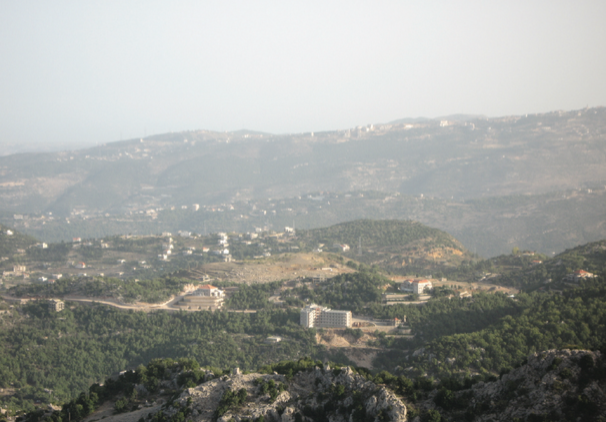
$20 billion in undeveloped land at Lebanese banks

by Abdallah Hayek December 3, 2008
written by Abdallah Hayek

Should a chicken incubate her eggs for forty years, one would expect her to hatch no less than a golden goose. Similarly, the Central Bank of Lebanon is sitting on $1.2 billion worth of properties, some of which have been in its nest since the 1960 — that’s equal to 18% of Lebanon’s gold reserves in value. In fact, private banks, religious organizations and local municipalities own an estimated $20 billion worth of properties, all cumulatively earning the country a big, fat return. The current financial crisis is stalemating lending institutions, making liquidity a precious commodity to have. Lebanon needs a cash injection to not only avert an impending crisis that has threatened the very existence of major economies and even countries, but also to service a mounting national debt that has reached an alarming $48 billion in a country with a GDP of $25 billion.

The proven skill and leadership of Central Bank Governor Riad Salameh are again called on to have some of these properties become the engines of development and growth, instead of them remaining idle reminders of ineptitude and red tape. Salameh has demonstrated his masterful abilities as a financial wizard and leader, building a financial firewall for the country’s economic structure and engineering regulations which major governments are trying to emulate, even at the eleventh hour. Salameh might well again be the one throwing a new lifeline into Lebanon’s economy.
What are we talking about? If we leave religious endowments (waqf) alone for a minute, the Central Bank and other private lending institutions have accumulated over the years properties they acquired as security against bad loans. Private banks have established real estate departments to promote these properties to the private sector, but that effort has remained mired by inefficiency and an inability to move these properties in the proper cycle of dynamic reinvestment. Using announcements in local newspapers, the Central Bank occasionally auctions out select properties through a closed bidding process. Currently, no such bids are available as they await the appointment of the new central bank board, which takes decisions on these matters.
The interesting thing is that the banking sector is not highly leveraged against these properties — i.e. it did not dish out loans exceeding 60% of the original value of the land. Today’s real estate prices have risen significantly and the opportunity for high returns is more than likely. Yet, in order to move these properties, the central bank would direct private banking institutions to considerably discount these properties, sometimes up to 80% of their current market values. Banks would still turn a good profit and would simultaneously take a monkey off their backs, since these properties cost dollars to manage despite their sitting idle and returning no profits.
Governor Salameh is asked to extend his ingenuity in economics and finance by inviting the public sector, banking sector, private investors, NGOs and professionals over to a roundtable discussion on an applicable plan to promote such properties. The process needs to be transparent and make use of the latest global marketing tools while providing an easy roadmap for Lebanese expatriates to invest in their homeland.
Lebanese investors and expatriates are an excellent target for such mass properties. In order to be able to bid, a website must provide preliminary information about the area, plot number, location and available shares distribution. Some of these properties are located in remote areas such as valleys and rough terrain, but the market still needs such properties for special-purpose projects like agriculture.
The amount of cash liberated by this procedure could play a major role in Lebanon’s national stability and economic prosperity if we just consider the numerous employment opportunities that this will create for thousands of families. We can literally dig ourselves out of this mess.

Abdallah Hayek is the chairman of Hayek Group, Beirut.

December 3, 2008 2 comments
0 FacebookTwitterPinterestEmail
Economy & Finance

Turkey – Running from fire to fire

by Executive Staff December 3, 2008
written by Executive Staff

If it takes brief visits to both extremes to plot a middle course, then 2008 provided Turkey with an opportunity to write the manual for the rest of the world. Still riding high from a decisive election victory in the previous year, the ruling Justice and development Party (AKP) was faced with decimation when the Constitutional Court was called to rule on accusations the party had been indulging in practices that breached the sacred separation of state and Islam.

The AKP had pushed through parliament a measure to allow female university students to wear headscarves, a measure that infuriated the staunchly secularist establishment (including the army). Had the most severe penalty been imposed in the event of conviction, President Abdullah Gul, Prime Minister Recep Tayyip Erdogan and around 70 of the deputies would have been banned from politics, not only bringing down the government but also destroying the party.
In the event, a heavy touch of realpolitik set in with accommodation and compromise all around. The AKP was given a mild slap over the wrist, Gul, Erdogan and their supporters in parliament kept their jobs and the army appeared to take a course signaling its appreciation of stability.
Attributing motives is a sport that serves only to keep the chattering classes alert and is rarely based on evidence. Even so, it seems both the Constitutional Court and the army viewed that the presence of the strongest political and economic stability for decades, not to mention a booming economy, gave the AKP the right to continue. In a gesture that screamed reconciliation, the army even forewent its annual purge of officers suspected of Islamist leanings.

On the mind of business
The alternative — new elections bringing the inward- looking and fractious opposition parties back into play — was viewed with alarm by the business community. The Istanbul Stock Exchange (ISE) dipped sharply and the national currency came under pressure. Both setbacks were instantly reversed when the AKP was allowed to carry on ruling and that in itself is a measure of how much Turkey has come to rely on its steady, pro-business guiding hand.
Even if one immense threat was removed, a series of lesser, though still significant, worries kept the government on its toes. Fierce clashes with the Kurdish PKK separatists based in Iraq perpetually grabbed the headlines, especially when Turkish soldiers crossed the border almost certainly with the tacit support of Washington. Negotiations to join the European Union are becoming a sick national joke, with popular support for the application declining in proportion to the lack of progress. The target for inflation, set at 4% at the beginning of the year, was abandoned by its author, the Central Bank of Turkey, and revised upward to 7.5%. Even the new and higher number is optimistic since the final tally is likely to be around 10-11%.
Unemployment rose by nearly half a percent to 9.8% and then — finally — there descended the fallout from the international credit crunch. By the end of the year the ISE followed the freefall of the rest of the world and the lira went in the same direction, losing around 30% of its value within a matter of weeks, plunging from around 1.18 to the US dollar to a low of 1.70. Foreign direct investment went in the same direction, leaving Erdogan with an interesting balancing act going through to 2009.
Negotiations with the IMF to re-institute a standby loan to help bridge the current account deficit and provide extra foreign currency liquidity to the banks brought to the surface diametrically opposing views. The IMF said the growth target for 2009 should be slashed to 2% to allow consolidation and a cut in inflation, even at the risk of higher unemployment. Erdogan, doubtless with an eye on the municipal elections in March of next year, was unimpressed and pondered the possibilities of solving the problem in a different way — a temporary currency swap with the US or even a separate deal with the World Bank. In any event he presided over a cut in interest rates, preferring attempted stimulation of the economy to a counter- inflationary move of raising them.
Yet even with the prospect of a devalued currency making exports cheaper, the horizon is still cloudy. With Turkey’s major markets in Europe officially in recession, the price of exports becomes a little academic. The number juggling game that will dominate 2009 — not only for Turkey of course — may make the AKP’s Constitutional Court problems of 2008 appear a trifling affair.

Peter Grimsditch is Executive’s Turkey correspondent

December 3, 2008 0 comments
0 FacebookTwitterPinterestEmail
Banking

Qatar – Liquidity’s breakwater

by Executive Staff December 3, 2008
written by Executive Staff

In 2008, vibrancy in almost every sector in Qatar’s economy drove the banking sector to flourish. Luckily, the strength of the Qatari banking sector has prevailed amid the unceasing global financial crisis and the country continues to bask in the fruits of its economic boom. Volatility in the Doha Securities Market caused major declines but, fortunately, thanks to its continued economic diversification strategy, real economic growth is expected to rise. This growth should go from an approximate 11.8% in 2008 to 13.4% in 2009, “as new liquefied natural gas and petrochemicals projects come on stream, easing to a still strong 8.8% in 2010,” according to Zawya. The IMF projected that as gas exports begin to surge, real GDP growth will soar from the 16.8% in 2008 to 21.4% in 2009. Even though inflation continues to be the one of the country’s biggest obstacles, “the domestic growth story is one that the nascent Qatar Financial Centre hopes will be enough to keep a steady stream of bankers turning to Doha as an economic refuge in troubled times,” said Simeon Kerr of the Financial Times. Abdulla bin Saud Al Thani, governor of the Qatari central bank, boasted that Qatar possesses “very sold banks, highly capitalized, highly liquid and nothing needs to be done by the central bank. Unlike their GCC counterparts — namely the UAE, Kuwait, and Saudi Arabia — there has been no need for the government to inject liquidity into the domestic banks.”

Banks across the country posted robust growth after the third quarter of 2008, showing the stability of Qatari banks in light of the international debacle. According to a recent report by Global Investment House (GIH), the combined profits of the listed Qatari banks increased by 34.3% during the first nine months from QR6.0 billion ($1.7 billion) to QR8.1 billion ($2.2 billion). The sector’s major market capitalization heavyweights, Qatar National Bank and Qatar Islamic Bank, achieved substantial growth of 62% and 45.7%, respectively, in their net profit by the end of the third quarter. As the largest bank in the country, Qatar National Bank (QNB) posted the highest year-on-year profit growth of 62% for the first nine months of 2008. The Commercial Bank of Qatar also witnessed strong year-on-year growth, reporting 54.8% by the end of the third quarter. Overall, most banks reported healthy growth levels.

Forecasts
Seeing as the banking sector is viewed as a financial safe haven in the Gulf, Qatar hopes bankers and investors will continue to flock to the country to help it achieve financial supremacy against oil-poor Bahrain and the emirate of Dubai. Even better are the forthcoming multi- billion dollar projects from various sectors, which would undoubtedly be good for the banking sector. GIH firmly believes that, “the banking sector would be one of the major beneficiaries of these projects and regional diversification programs.” In recent years, the small country has widely focused on ameliorating its quality of assets, which according to GIH, “resulted in substantial improvement in the quality of their loan portfolio.” GIH considered that “going forward, quality of the loan book is likely to remain sound, however, steep growth in loan books needs to be watched with caution.” With the central bank’s focus on confidence building, investors’ confidence in both the banking sector and the stock market is likely to be restored. What’s more is the brawny performance of Qatari banks in the third quarter of 2008 — during the global financial mayhem — which supports most positive outlooks and predictions for the growth of the country’s booming economy and banking sector.

December 3, 2008 0 comments
0 FacebookTwitterPinterestEmail
Economics & Policy

IMF cautions against complacency

by Abigail Fielding-Smith December 3, 2008
written by Abigail Fielding-Smith


On October 8 the International Monetary Fund issued the final report of its annual consultation with Lebanon. The report sounds out the resilient position of Lebanon throughout the global financial crisis but cautioned that “underlying vulnerabilities remain large.” After commending Lebanon for weathering the crisis due to “buoyant activity in construction, tourism, commerce and financial services,” the IMF released a preliminary estimate of 9 percent growth for 2009 with “at least 8 percent this year.”

The fund attributed the increase in government revenues to the reintroduction of gasoline excises but recognized that increasing fuel prices have also increased inflation in the country this year. Figures show that the cost of living had increased by 4 percent in the year-to-September but many economists doubt the accuracy of this, fearing that the actual level may be significantly higher.

“Little headway has been made on critical structural reforms, including addressing the loss-making electricity sector, raising the value added tax (VAT) rate, eliminating extra-budgetary funds, and overhauling the budget process,” the IMF added. In conclusion, the fund stated: “Despite the economy’s impressive resilience to the crisis, Lebanon continues to suffer from high underlying vulnerabilities. Domestic stability rests on the fragile political system split along confessional lines, and the country lies at the crossroads of regional tensions. The government’s debt remains among the highest in the world, and almost half of it is denominated in foreign currency. The large banking system depends on short-term deposit inflows from nonresidents to roll over its large exposure to the sovereign.”

December 3, 2008 0 comments
0 FacebookTwitterPinterestEmail
Private Equity

Lebanon – Kabab-ji‘s stars and stripes

by Executive Staff December 3, 2008
written by Executive Staff

The popular Lebanese food chain Kabab-ji is a success story of entrepreneurial knack, making the restaurant an attractive target for private equity investment. The restaurant recently received growth capital from a financing round led by MENA Capital with several co- investing limited partners. The deal is the first of its kind, with a Lebanese business reaching out to a Lebanese private equity shop to finance growth outside of the Middle East’s own burgeoning economies to a Western consumer market.

Kabab-ji has a history of product freshness since its owner and CEO Toufic Khoueiri first started the chain in 1993. Its reputation has since allowed it to expand to franchises throughout the Middle East with locations in Bahrain, Jordan, Kuwait, Qatar, Saudi Arabia, Sudan, and the UAE, making it the preeminent Lebanese food chain. With its menu of fresh and health-oriented cuisines, the franchise is looking to expand to the US market where there is a high demand for good quality food at reasonable prices. While Kabab-ji’s management recognized and believed in the potentials, the deal was dependent on MENA Capital’s own judgment and decision to work with the business in expanding and operating in a new and quite different market.
According to Ziad Maalouf, MENA Capital’s senior vice president, the firm chose to finance the deal because “the increasing acceptance of ethnic foods in the US is creating long-term market opportunities for concepts such as Kabab-ji.” Maalouf acknowledged the fierce competition in the US’ traditional fast-food sector and the domination of mega-chains that are not only recognized in the States but the world over, but also pointed out that “a clear leader has yet to emerge in the small ethnic segments such as Lebanese/Mediterranean food.”
The idea certainly holds promise. With the restaurant set to open in the heart of Washington, DC, it can expect instant popularity from a crowd of young professionals and others who are already spending their evenings at Tapas Bars, and Ethiopian and Indian restaurants. Once the establishment is open for business, Americans can benefit from authentic shish taouk, kibbeh and labneh complemented by fresh hummus, fattoush, and wara’ ainab. If the meals are matched with traditional Lebanese drinks, other producers in Lebanon might seize the opportunity to market araq to match desserts in the summer, or one of many Bekaa- produced vintages throughout the year. According to Maalouf, “consumers of Lebanese/Mediterranean and other less mainstream ethnic foods have often scarified on issues such as comfortable surroundings and excellent service in exchange for the ability to try something new and exotic.” Thus, he believes that, “Kabab-ji’s focus on quality, freshness, and tasteful food should position the company well to become the leading brand in the fast- casual segment of this cuisine.”

The meat of the deal
MENA Capital structured the deal as a joint-venture between Khoueiri and the MENA Capital Private Equity Fund I with capital commitments of $50 million. According to Maalouf, “Kabab-ji will bring the name, know-how, management, and vast experience in the field, while the Fund and the other investors will provide capital, financial oversight and assist in the business strategy.” The deal’s strategy is longer than some with an exit foreseen in five to seven years via an initial public offering or a strategic sale to an industry leader in the US. MENA Capital estimates a very lucrative finishing position for the deal with an exit that will yield an internalized rate of return of over 35%. Although the make- up of MENA Capital’s limited partners is unclear, the deal indicates that other possibilities for Lebanese firms looking for private equity to finance growth outside of the region are viable and MENA Capital has expressed a willingness to “assist the company’s growth until the time is ripe for exit,” according to Maalouf. Ideally, Kabab-ji could achieve initial success and attract more funding from MENA Capital if there are viable opportunities to expand once in the US.

Family over franchise
Although private equity helped Kabab-ji’s plans to expand into the US market, not all financing has to come through fund managers and return-seeking investors. Indeed, the strong cohesion of the family model found in the Middle East retains its roots in the US as well and Lebanese Taverna, a popular Washington, DC restaurant chain, has been a showcase for how to harness the traditional business model of Lebanese firms and achieve success in the US market without outside capital. Lebanese Taverna started as a single restaurant in 1979 after Tanios Abi- Najm moved his family from Lebanon to the US in 1976. According to his son and co-founder Dany Abi-Najm, the idea behind the restaurant was “taking a chance and working as a family, pooling all our resources” to help get the business going. The Abi-Najm family started the first restaurant with family financing and co-signed loans. What began as a single restaurant supported by an idea has grown into 11 branches throughout the metropolitan DC area after the family self-financed several expansions by reinvesting profits and using personal savings as capital.

Opportunities for others
Maalouf wants to replicate the strategy and is confident that “there are many opportunities for Lebanese companies to expand in the US market, especially companies in the food and hospitality sectors.” He prefaced this with the caution that doing business in the US is very different from Lebanon, and requires more complex arrangements, believing that any US expansion “should be carried out with the help and guidance of professional investment firms like MENA Capital that can assist in not only analyzing the viability of the investment with regard to its potential risks and rewards, but also in structuring the complex legal and capital aspect of the transaction, securing strategic partners, if needed, and helping introduce the concept to the US market through strategic planning and brand positioning.”

December 3, 2008 0 comments
0 FacebookTwitterPinterestEmail
  • 1
  • …
  • 491
  • 492
  • 493
  • 494
  • 495
  • …
  • 696

Latest Cover

About us

Since its first edition emerged on the newsstands in 1999, Executive Magazine has been dedicated to providing its readers with the most up-to-date local and regional business news. Executive is a monthly business magazine that offers readers in-depth analyses on the Lebanese world of commerce, covering all the major sectors – from banking, finance, and insurance to technology, tourism, hospitality, media, and retail.

  • Donate
  • Our Purpose
  • Contact Us

Sign up for our newsletter

    • Facebook
    • Twitter
    • Instagram
    • Linkedin
    • Youtube
    Executive Magazine
    • ISSUES
      • Current Issue
      • Past issues
    • BUSINESS
    • ECONOMICS & POLICY
    • OPINION
    • SPECIAL REPORTS
    • EXECUTIVE TALKS
    • MOVEMENTS
      • Change the image
      • Cannes lions
      • Transparency & accountability
      • ECONOMIC ROADMAP
      • Say No to Corruption
      • The Lebanon media development initiative
      • LPSN Policy Asks
      • Advocating the preservation of deposits
    • JOIN US
      • Join our movement
      • Attend our events
      • Receive updates
      • Connect with us
    • DONATE