• Donate
  • Our Purpose
  • Contact Us
Executive Magazine
  • ISSUES
    • Current Issue
    • Past issues
  • BUSINESS
  • ECONOMICS & POLICY
  • OPINION
  • SPECIAL REPORTS
  • EXECUTIVE TALKS
  • MOVEMENTS
    • Change the image
    • Cannes lions
    • Transparency & accountability
    • ECONOMIC ROADMAP
    • Say No to Corruption
    • The Lebanon media development initiative
    • LPSN Policy Asks
    • Advocating the preservation of deposits
  • JOIN US
    • Join our movement
    • Attend our events
    • Receive updates
    • Connect with us
  • DONATE
Levant

Frayed circuits, crossed wires

by Executive Staff November 17, 2008
written by Executive Staff

When people discuss the electricity problem in Lebanon, they often accuse Électricité du Liban (EDL), the fully government-owned electrical utility, of being mismanaged, corrupt and needing years to reform. Some even avoid opening the subject saying that EDL is like Ali Baba’s cave, and its problems are too complicated to discuss.

Now, is true that EDL is deep in debt and needs structural reforms to get back on track. Nevertheless, it is important to find out if all these complications are due solely to its internal mismanagement, or also to external factors that EDL has no control over and are the responsibility of the government.

Any distribution network is subject to losses. There are two types of losses, technical and non-technical. By losses are meant the difference between the energy that is generated by the power plants or bought from external sources and the energy billed to customers. Technical losses result from difficulties in the physical properties of the network. They represent 15% of total production and over the last few years have been constant. These losses are due to the inefficiency of the old power plants, like Zouk and Jiyeh, which causes severe losses in the transmission and distribution process.

Non-technical or commercial losses are the main cause behind EDL’s deficit. They are mainly due to the fact that EDL has been selling energy for much less than it costs. Additionally, these losses results from unpaid bills by water treatment and pumping stations, hospitals, ministries, residential customers and electricity theft by tapping into lines and manipulating meters. Non-technical losses are around 20% of total production, which is huge comparing to international standards that are around 3-4%. Earlier this decade it had even been higher, reaching 30%.

High cost

If EDL collects 100% of its bills, has no loss of energy and operates under perfect managements, it will still be losing money. 89% of Lebanon’s electricity is generated by gas oil and fuel oil, the remainder by hydropower plants. In the 1990s, when the price of oil was below $30/barrel, the cost of production was around LL100/KW ($0.07). On that basis different tariffs were set for residential customers, public institutions like hospitals and churches, industrial firms and administrations. When the price of oil started to rise and the cost of electricity went up to LL350/KW ($0.23) EDL was not allowed to change its tariffs, and thus profits turned into huge losses that the government was obliged to subsidize.

In early 1990s, concessions were given to four private companies in Zahle, Aley, Bhamdoun, and Byblos to buy electricity from EDL — for a lower tariff than residential and commercial customers — and handle distribution and bill collection in their areas. Due to political pressure, these contracts were not changed, even when it became more expensive for EDL to produce electricity and thus today these four companies still buy electricity for very low tariffs and sell it to consumers at current prices, making big profits at EDL’s expense.

Industrial firms are also abusing the facilities given to them in the contracts signed with EDL. They pay the highest price during peak hours that vary between summer and winter. In order to save money, firms use their private generators during these hours, leaving EDL with revenues that would not cover even half of the production cost. Since the government did not change these contracts either, EDL has no choice but to bear these losses and hope for the price of oil to decrease.

Billing

Even although the tariffs are already very low, some costumers, especially in the public sector, fail to pay their bills. EDL has a separate billing section for the public sector, which includes public administrations, public institutions and water treatment stations. During the Civil War and until the early 1990s, the whole public sector was using electricity for free. When EDL took the decision to cut electricity to these institutions, they started to pay. However, things did not improve much. Currently, unpaid bills add up to LL200 billion ($133.3 million). EDL tried to suggest a payment plan to facilitate the procedure, but the government showed no interest.

Water treatment stations are causing the biggest loss. Out of five stations, each located in a different governorate, only the ones in Beirut and Mount Lebanon are paying. Their debt amounts to LL160 billion ($106.7 million). Second come hospitals, which are considered public institutions and are the biggest debtors in their segment. They do not enter the government’s budget and therefore are not subsidized. EDL cannot cut electricity to these institutions for both political and moral reasons.

In the case of public administrations (ministries, city halls, etc), even though their debt is lower than that of water treatment stations or hospitals, they are causing losses to EDL. They are also paying fewer and fewer of their bills. In 2005 they paid around 64% of their bills, In 2006 that rate fell to 57%, and to 50% in 2007.

The government tried to settle its situation with EDL by declaring that it should collect its bills in exchange for the subsidies it receives. However, that is against the law, since while EDL has the right to collect its bills in full, but not the means to do so, the government has the obligation to subsidize the electrical utility that might otherwise collapse both physically and financially.

The collection process for the private sector, including residential and commercial customers, is more successful, if only for the sole reason that EDL can cut electricity in case these costumers fail to pay. Eighty-five to 90% of bills are being collected. In Beirut, only 1% of the bills are unpaid, in Antelias 4%, and around 12% in Chiah. In some areas the rate of unpaid electricity bills goes up to 25%, usually because bill collectors are not able or are not allowed to enter. Each week, cases of assaults and physical attacks are taking place and usually remain unreported. In 2003, former President Emile Lahoud allowed police escorts to assist EDL in bill collection, but that decision did not last long. Currently bill collectors are facing their challenge alone without any protection.

Electricity theft

Electricity theft can occur by tapping into network lines or manipulating meters. It represents the unbilled electricity, which amounts to up to 40%. In some areas, EDL conducts search campaigns — up to twice a week during the night and more often during daytime. No specific number of violations can be assigned to different areas, since it can dramatically increase or decrease depending on the frequency of the search campaigns. There were talks about a law stating that anyone who steels electricity or water is sentenced to jail for a period ranging from three months to two years, but that law was never implemented. In every case a fine is issued depending on the period and amount of electricity stolen. If the fine is unpaid, it is redirected to the police and then settled by agreement without reaching court.

Solutions

The main solution suggested by both EDL and government is privatization. It would involve selling EDL or one of its sections — generation, transmission or distribution — to the private sector, leaving the government free of any obligations. However, while waiting for privatization to take place, EDL officials think that the government should undertake basic actions to help the sector survive its crisis. First, the billing system should be set to at least cover the cost of production. Old contracts with private distribution companies and industrial firms should be changed and brought up to date to reflect today’s oil price. It should be EDL’s right to set a bill that would cover its expenses with a small profit margin to be able to renew its power plants and supply more electricity.

An alternative to raising prices would be using natural gas instead of gas oil and fuel oil, since it is much cheaper and would lower the production cost. The government should also encourage customers to use alternative sources of energy, like wind or solar energy, by offering low-interest loans for this kind of investment. The perfect solution would be if EDL itself used alternative sources of energy by constructing small dams in different areas and using them to generate electricity. However, that would need huge amounts of funds that the government is unwilling to supply.

November 17, 2008 0 comments
0 FacebookTwitterPinterestEmail
Levant

A higher lowest wage

by Executive Staff November 17, 2008
written by Executive Staff

The minimum wage in Lebanon has been the center of dispute between the General Labor Confederation (GLC), the private sector and the Lebanese government for the last couple of years. This dispute was agitated by increased inflation of consumer goods caused by the depreciation of the US dollar against the euro, as well as other internal and external factors. Each side has pulled in its own direction throughout the negotiations and refused to take no for an answer. The GLC wanted to increase the minimum wage to LL960,000 ($640) and to increase all other salaries by LL200,000 ($133.33). The private sector disagreed and the government was trapped between the two, trying to make social and economic reforms without causing further chaos in the economy.

The law

Before the new wage law was passed, Lebanon’s minimum wage had been LL300,000 ($200) since 1996, despite continuous pressure from the GLC. Ghassan Ghosn, the president of the GLC, stated that “the last raise in 1996 was insufficient, it did not represent a real match between the minimum wage and inflation, it was lower than the optimal number by 15-20 percent, as I remember, and we carried on with our demands since then.”

In early September this year, the cabinet finally decided to raise the minimum wage to LL500,000 ($333.33). It was further mandated that all salaries — with no exception — should also be increased by LL200,000 in both the private and public sector. The raise was to be retroactive on all salaries paid since May. The cabinet also decided to increase transportation subsidies from LL6,000 to LL8,000 as well as to add LL150,000 to the retiree’s pensions. The public sector raised their wages in October. On September 10 the law was finalized — signed by the prime minister and the president — and implementation should begin in the private sector as of November.

Economist Elie Yachoui considered the additional LL200,000 “a bonus for workers in both private and public sectors.” The salary increase should be a percentage and not in fixed amount. He added that there is no study as to why the government chose LL500,000 as a practicable minimum wage and to why it added LL200,000 to all salaries. “We can not randomly fix or present figures. Any figure should be justified and should have an acceptable rationale behind it. Our country is very far from being scientific in steps and decisions taken,” said Yachoui.

General Labor Confederation

The GLC’s Ghassan Ghosn is not happy with the new minimum wage. He wanted to raise it to LL960,000. “The raise is not enough, but we do not refuse to receive a part of our right, we take it and we continue with our movement,” he said. Many criticized his suggestion and said that it is rather unrealistic and prices would skyrocket. Ghosn pointed out, however, that LL960,000 is not a random figure. He explained that studies were done by economic experts based on a recent UNDP report on poverty in Lebanon. The report was published in conjunction with the collaboration of the National Labor Organization to determine the basic needs of the family. These studies showed that a Lebanese should earn LL960,000 in order to support a wife and two children. If a family is receiving less than LL960,000 then it is below the poverty line.

What is more important is that the GLC emphasizes LL960,000 as a value and not an absolute number. “If the government improves medical care, education, transportation … and exercises control over prices and monopolies then maybe $100 would be enough,” said Ghosn. “When teachers start putting their children in public schools, then we will do the same … it is not enough to build public schools and paint them, or construct public hospitals with good architecture, there should be a high level of medical care and education.” He added that we talk about a laissez-faire economy, while we have exclusive agencies and monopolies that cannot be removed because of political pressure. This forbids any kind of competition, freezes the market and decreases the purchasing power of the consumers because of rising inflation. If the government does its job right, then the real value of people’s wages would increase and there would be no need for any significant adjustments that might hurt the economy and cause more inflation and unemployment.

Yachoui commented on the GLC’s demands saying, “perhaps they are right when they talk about one million Lebanese Lira because of the very high cost of living, but we should look at the capacity of the private sector.” He added that it is true that there are monopolies, exclusive agencies and not enough competition in the market, but Lebanon is an importing country, therefore with the increase in prices of wheat and oil in the last couple of months, it is also importing inflation. So even if there was competition in the market, there would still need to be an increase the wages because of the external inflation.

The private sector

The private sector did not reject the new minimum wage but refused to increase the salaries of employees earning more than LL500,000, saying that the government has no right to set the salary scales for the private sector. Fadi Abboud, president of the Lebanese Industrialists Association, was quoted saying that it will take their case to the Shura Council if the government forces them to abide by the increase. He added that it is against the nature of the World Trade Organization (WTO). Ghosn commented on Abboud’s statement saying that this point of view was too right-wing and that the government should interfere with or without the private sector’s approval.

Even though the private sector rejects the new law, it has no choice but to abide by it. Any worker that does not receive the new raise has the right to go to the Ministry of Labor, the GLC or his own union and file a complaint against his employer. The question is how successful will the government or unions be in forcing all the private companies to follow the new law, and will employees have the courage to file complaints or will they be too scared of losing their jobs? The lack of enforcement in Lebanon means the outcome can hardly be forecasted.

SMEs

The private sector as a whole has rejected the new legislation. Large companies operate on a large scale and should be strong enough to handle the wage increases. But how will this affect revenue, prices and employment in small and medium enterprises (SMEs)?

Ghassan Beyrouthy, an economist and the owner of Bel Azur Resort in Jouniyeh, said that SMEs will be the ones most affected by the increase in minimum wage and salaries. After having a rough couple of years due to the 2006 war and political instability, the tourism sector was able to catch its breath this summer and make some income, he pointed out. However, it is still too vulnerable to bare such increases in wages with unrelenting high prices and the unstable environment. “I cannot give LL500,000 to the man who cleans the rooms or the dishes, not to mention the National Social Security Fund (NSSF) expenses that would also increase. If the government forces the private sector to abide, I will have to either fire some of my employees or keep them if they settle for their previous salaries,” said Beyrouthy. It will be challenging for SMEs to raise the salaries of all their employees and fight rising inflation at the same time.

Additionally, SMEs cannot increase their prices infinitely. They have already raised them recently and any further amplification will lower demand for their goods and services. With prices unchanged and no additional sales or revenue, a further increase in salary costs may in fact result in higher unemployment.

Yashoui said that exporting firms are probably the only ones who will be able to bare this increase. “Exporting firms are in general profitable firms. Those who are relying on domestic markets like hotels and restaurants are too vulnerable and will have to fight to survive”.

Ghosn presented an upbeat view when he was asked about how the sector will handle the pressure. He said it is true that every law or reform has an adverse effect, but we should all bear the burden and contribute in the revival of our economy. He added that it is not only the private sector that has to bear the consequences, but the government should also boost the economy by creating new job opportunities, decreasing taxes on imports and implementing growth strategies. The GLC is in an open battle with the government to ensure more reforms will be implemented and that it will fulfill its role in enhancing the growth of the overall economy.

The government

Will the government be able to handle its part of the financial burden? Lebanon’s budget deficit reached 26.18% ($1.45 billion) of spending in the first seven months of 2008 and may exceed 37 percent in 2009 due to the increase in wages for government employees and the expected rise in Electricite du Liban’s (EDL) deficit, as reported by the ministry of finance. The higher wages alone will cost the treasury LL500 to LL800 billion ($333 to $533 million).

November 17, 2008 0 comments
0 FacebookTwitterPinterestEmail
Editorial

The game we never win

by Yasser Akkaoui November 14, 2008
written by Yasser Akkaoui

Let’s make one thing clear: If Alan Greenspan, the former head of the Federal Reserve, has no clue, then who am I to predict how the economic meltdown will run its course. I will not waste my ink and your time on the matter.

That said, I will offer a humble vignette, the origins of which came to me in New York, the Ground Zero of the current crisis. I was having lunch with a friend at Le Bilboquet, a well-appointed restaurant uptown between Madison and Park Avenues, when we noticed a brace of Lehman Brothers executives wolfing down their food, apparently without a care in the world. I asked my companion how they could stomach their food at a time when the doom mongers on Wall Street were predicting the end of capitalism and the beginning of a new socialist dawn.

My friend shrugged and pointed out the huge global correction was in fact nothing more than the apogee of capitalism. The markets, he said, were “a game we always play but never win.”

His maxim became clearer to me when I returned to Beirut and saw my sons playing video games. They would lose their allotted ‘lives’ but still be able to resume the game where it left off, and once more they would take the play to a frenetic level of activity — blood, monsters, demons, crashes, death, take your pick — until the game engulfed them.

The game they play but never win, if you will.

‘Game over’ was determined, not by the players, but by big daddy, in this case me, who stepped in to break up the inevitable sibling dispute. On one occasion, I had to intervene when my eldest son, bored by ‘driving’ on the virtual road, had taken to reversing up virtual one-way streets, mounting the virtual pavement and even running over innocent virtual pedestrians.

The game, if you will, had become infected with a corrupt and destructive culture. In my son’s case, it was harmless, but in the case of the global markets this corrosive culture had seen the real cash, or human element, become subsumed by that of the superego and its big daddy, in this case the regulators, had to step in and clean up the house.

Like Alan Greenspan, we have no idea when the ‘resume game’ button will be available.

November 14, 2008 0 comments
0 FacebookTwitterPinterestEmail
Financial Indicators

Global economic data

by Executive Staff November 8, 2008
written by Executive Staff

Road motor vehicles

Per thousand inhabitants

In 2006, ratios of motor vehicles to population ranged from 778 per thousand inhabitants in Portugal to 86 in Turkey. Over the periods shown in the table, ratios of vehicles to population increased in all countries except in the United States. Sharp increases of this ratio occurred in Portugal, Iceland, Greece and Poland. In 2006, road fatalities per million inhabitants ranged from over 230 per million inhabitants in Russian Federation to 49 in Sweden. Over the periods shown in the table, rates have decreased in all countries except in Iceland and in the Russian Federation with particularly sharp falls in Portugal, New Zealand and France. Road fatality rates per million inhabitants are an ambiguous indicator of road safety since the number of accidents depends to a great extent on the number of vehicles in each country. Rates per million vehicles are affected by driving habits, traffic legislation and the effectiveness of its enforcement, road design and other factors over which governments may exercise control. In 2006, fatality rates per million vehicles were less than 100 in Switzerland, Norway and Sweden, but exceeded 400 in Slovak Republic, Turkey and 1,100 in Russian Federation. Note that low fatality rates per million inhabitants may be associated with very high fatality rates per million vehicles. For example, a country with a small vehicle population may show a low fatality rate per million inhabitants but a high fatality rate per vehicle.

Gross domestic expenditure on R&D

As a percentage of GDP, 2006 or latest available year

Expenditure on research and development (R&D) is a key indicator of government and private sector efforts to obtain competitive advantage in science and technology. In 2005, research and development amounted to 2.3% of GDP for the OECD as a whole. The R&D data shown here have been compiled according to the guidelines of the Frascati Manual. It should, however, be noted that over the period shown, several countries have improved the coverage of their surveys of R&D activities in the services sector (Japan, Netherlands, Norway and United States) and in higher education (Finland, Greece, Japan, Netherlands, Spain and the United States). Other countries, including especially Italy, Japan and Sweden, have worked to improve the international comparability of their data. Some of the changes shown in the table reflect these methodological improvements as well as the underlying changes in R&D expenditures. For Korea, social sciences and the humanities are excluded from the R&D data. For the United States, capital expenditure is not covered. Data for Brazil and India are not completely according to Frascati Manual guidelines, and were compiled from national sources. Data for Brazil, India and South Africa are underestimated, as are the data for China before 2000.

Water abstractions

Cubic meters per capita, 2005 or latest available year

Most OECD countries increased their water abstractions over the 1960s and 1970s in response to demand by the agricultural and energy sectors. Since the 1980s, some countries have stabilized their abstractions through more efficient irrigation techniques, the decline of water-intensive industries (e.g. mining, steel), increased use of cleaner production technologies and reduced losses in pipe networks. More recently, this stabilization partly reflects consequences of droughts while population growth continues to drive increases in public supply. At world level, it is estimated that water demand rose by more than double the rate of population growth in the last century, with agriculture being the largest user of water. Water abstractions refer to freshwater taken from ground or surface water sources, either permanently or temporarily, and conveyed to the place of use. If the water is returned to a surface water source, abstraction of the same water by the downstream user is counted again in compiling total abstractions. Mine water and drainage water are included. Water used for hydroelectricity generation is an in situ use and is excluded. It should be borne in mind that the definitions and estimation methods employed by member countries may vary considerably and may have changed over time. In general, data availability and quality is best for abstractions for public supply, representing about 15% of the total water abstracted in OECD countries.

Population growth rates

Average annual growth in percentage, 1993-2006 or latest available period

The size and growth of a country’s population are both causes and effects of economic and social developments. The natural increase in population (births minus deaths) has slowed in all OECD countries, resulting in a rise in the average age of populations. In several countries, falling rates of natural increase have been partly offset by immigration from outside the OECD area. In 2006, OECD countries accounted for 18% of the world’s population of 6.5 billion. China accounted for 20% and India for 17%. Within OECD, the United States accounted for 25% of the OECD total, followed by Japan (11%), Mexico (9%), Germany (7%) and Turkey (6%).  Between 1993 and 2006, the population growth rate for all OECD countries averaged 0.7% per annum. Growth rates much higher than this were recorded for Mexico and Turkey (high birth rate countries) and for Luxembourg, Australia, Canada,  Ireland, New Zealand and United States (high net immigration). In the Czech Republic, Hungary and Poland, the population declined from a combination of low birth rates and net emigration. Growth rates were very low, although still positive, in Germany and the Slovak Republic. The population growth of OECD countries is expected to slow down in the coming decennia.

November 8, 2008 0 comments
0 FacebookTwitterPinterestEmail
Financial Indicators

Regional equity markets

by Executive Staff November 8, 2008
written by Executive Staff

Beirut SE  (1 month)

Current Year High: 3,470.63  Current Year Low: 1,761.53

The Beirut Stock Exchange felt the influence of international markets just like anyone else. Liquidity and share volumes dried up towards the end of the review period and the BLOM Stock Index ended at 1402.88 points on Oct 24, some 19% down from 1732.24 on the final close Sep 29 before the observation of the Eid al Fitr holidays. Solidere shares had another difficult month and closed at $21 and $21.06 for the two share classes on Oct 24, about one fourth down from their valuations at the start of October. Banking shares declined to $70 for Audi and $83.5 for BLOM, although the banking sector reported improved third-quarter results, which were impervious to the financial markets epidemic that decimated global banking income. The Lebanese banks remained bright because they were barred by the central bank from speculating in derivatives and real estate — and because they never were subjected to strong pressure for finding risky products as long as they could do well with investing in Lebanese sovereign debt instruments. What was seen over years as the banks’ risky over-exposure to T-Bills and eurobonds now looks a lot saner.

Amman SE  (1 month)

Current Year High: 5,043.72  Current Year Low: 3,351.01

Distress in motion also on the Amman Stock Exchange. The ASE general index closed at 3117.07 points on Oct 26, representing a 23.36% weakening when compared with the last close in September. Selling of industrial stocks — much of it attributed to foreign investors — supplied the weight that pulled the market down but the insurance, banking, and services sub-indices all also headed south, albeit less than the general index. Local analysts said the market provides exceptional buying opportunities for those who can afford to enter but cautioned that it may be quite a while before share prices recover the losses of the recent fear phase. 

Abu Dhabi SM  (1 month)

Current Year High: 5,148.49  Current Year Low: 3,133.51

The UAE markets couldn’t cling to the notion of having a persistent real estate boom and living in splendid isolation from the financial world crisis. In Abu Dhabi, real estate was beaten down 23.55%, leading all sectors into the valley. The general index moved down 6.56% but that was by Oct 23, with no telling how much the bloodletting would still swell to by the end of this month, and in weeks thereafter. Signals sent by the leading global markets were scary as October entered into its final days, and the price to earnings ratio of the Abu Dhabi Securities Market headed below a 9x, a multiple that should bait buyers like an artificial fly attracts a hungry trout. 

Dubai FM  (1 month)

Current Year High: 6,291.87  Current Year Low: 3,025.08

The ease of autumn that returns Dubai to a place where one can revel outdoors and enjoy walks in the old souks also came, however, with a shocking fall in equities. Much has been said about a confidence crisis in global markets, and confidence in the Dubai market has been eroded more than one would have believed possible as the DFM general index wilted with a 24.8% slide to its close of 3102.65 points on the evening of Oct 26, which translates into a 47.7% drop from the start of the year. As if that were necessary, a look back by 12 months can illustrate the size of the malaise further: in the same period a year ago, the DFM index ascended 17.2% and was knocking at the door of 5,000 points. One can and should note, however, that apart from the rude awakening of the real estate mirage, the UAE economy is much better than the paucity of confidence lets on. 

Kuwait SE  (1 month)

Current Year High: 15,654.80            Current Year Low: 10,804.40

The Kuwait Stock Exchange Index, dropping 18.4% from Oct 1 to 23, was in the group of the GCC’s worst performers together with the Dubai Financial Market and the Doha Securities Market in the review period. The KSE index closed at 10,481.10 points on Oct 23. Local analysts lamented that the bourse’s weakening was exaggerated and that “the panic has to stop.” Panic was among the most widely used words in international stock market comments during the month – however, as much as investor psyche and overshooting due to fears contributed to the downturn, the term panic could do with some clarification. The individual investor decisions in the current situation may be rational by the person’s interests and ad-hoc needs – which is not an attribute of a panicked mind. The damage is the accumulation of self-interest that defies the economy’s purpose, and thus damages the interests of the very persons that acted individually in pursuit of their own self-interests. 

Saudi Arabia SE  (1 month)

Current Year High: 11,895.47            Current Year Low: 5,794.87

There is really no point in reporting time-based performance or trying to make sense of any numbers in stock markets during the month of October 2008. What was up one day by 4% can be down 9% the next, or moving at the limit one way or another. Markets that were the worst performer of the month yesterday have been outdone in negative sentiment by another bourse the next afternoon, leaving the single day and the current moment the only relevant events. The Saudi Stock Exchange recorded a massive fall on Oct 25, after world markets drowned in negative sentiments a day before, but other regional markets were spared the dip momentarily because of their Friday/Saturday closures. Limit-down was the direction of roughly one third of the SSE’s 125 listed companies on this day. In the longer vision lines, the SSE lost 16.38% from the start of October and more than 52% of its value when comparing with the year high it reached in January. 

Muscat SM  (1 month)

Current Year High: 12,109.10            Current Year Low: 6,626.94

Spicy trading peppered with excessive volatility was the market scent also on the Muscat Securities Market. The general index’s 21.2% drop from the start of the month to October 26 was shadowed by all sub-indices. However, the industrial index was the underperformer of the month, ending the period 28.89% down. In daily reports on the MSM by a financial news provider, the R word and three ways of writing fear provided minimal variation and zero consolation regarding market moods, although recession is still no specter for any GCC country. Thus, the tale of the MSM was no altercation from the experiences of other GCC markets in October — fallout from global fears but not a meltdown of local profits were given the blame for driving investors into the abyss, like the Asian proverb of the herd that swerves if the lead bull swerves without reason.

Bahrain SE  (1 month)

Current Year High: 2,902.68  Current Year Low: 2,309.12

The Bahrain Stock Exchange was exposed to less volatility — at least during this review period — than other markets in the area but it gave up 10% since the start of October and its year-to-date record, down almost 20%, is a solid disappointment. The BSE closed its Oct 23 session at 2,290.69 points. Banking and investment companies underperformed the market. Banking stocks at the bottom end of market developments included banks Salam Khaleej, and Ithmaar. Gulf Finance House and Esterad Investment Company were at the bottom of the tally, closing down 18.59% and 20.90%, respectively — Esterad’s stock gave up 9.40% a day after the company announced that it had swung from a $4.5 million profit in Q3 2007 to a BHD $20 million loss in the third quarter of 2008. 

Doha SM  (1 month)

Current Year High: 12,627.32            Current Year Low: 7,029.95

Volatility of 5.42% and a precipitous decline of 20.45% from the start of October to a close at 6,892.95 points on Oct 26 are the fever readings of the Doha Securities Market, according to the Zawya thermometer. The DSM’s curve of pain included a single-day fall of 8.93% on Oct 26, which wiped out gains made between Oct 12 and 21. Qatar Cinemas was star performer of the month, giving up a mere 0.9% of its value. Real estate developer QREIC and Doha Insurance Company hurt the most, as they each saw 42.6% erased from their share prices. While their price performance during the review period was comparable, the two companies significantly diverged in their interim earnings announcements — DIC reported 44.5% higher nine-month figures whereas QREIC said its earnings contracted by some 15%.

Tunis SE  (1 month)

Current Year High: 3,418.13  Current Year Low: 2,516.22

The Tunisian Stock Market index tumbled 11.39% in October, closing 2,979.22 points on Oct 24. The market’s single gainers were Union Bancaire pour le Commerce et l’Industrie, which advanced 1.45% and glass manufacturer Sotuver, which edged 1% higher. In its second full month of trading, newcomer Poulina lost 14% since the start of October. Financial services firm Tunisie Leasing and Assad, a battery maker, were the biggest victims of downward pressure, dropping 21.5% and 24.9%, respectively, over the period.

Casablanca SE  (1 month)

Current Year High: 14,925.99            Current Year Low: 11,971.33

It looks as if Rick has finally cashed the profit from his Café Americaine and gotten out of the Casablanca market. The Casablanca Stock Exchange saw its second consecutive month of slippage and ended the October 24 session below 12,000 points, at 11,935.46, to be precise. Representing a 4.42% weakening in the review period, the Moroccan bourse was reading almost 6% lower on the year. However, the P/E ratio of 20.05x is the highest in the region on the Oct 25/26 weekend, keeping Moroccan stocks at valuation ranges from where the average P/E ratios of GCC bourses have long departed. 

Egypt CASE (1 month)

Current Year High: 11,935.67            Current Year Low: 5,112.29

Confidence is hard to gain, easily wasted, and much harder to regain. The Cairo and Alexandria Stock Exchanges had seen shaky investor trust wane already in spring, making the onslaught of global confidence problems ever more difficult to bear. The negative performance of CASE between the last session in September and the first day of action after the Eid Al Fitr holidays only accelerated later in October and drove the index a massive 35.34% lower between Sep 29 and Oct 26 when the CASE 30 closed at 4,564.18 points. Sector heavyweights Orascom Construction and Orascom Telecom Holding reached 37.12% and 27.08% lower, while investment bank EFG Hermes Holding lost 35.27%. However, there were three smaller stocks with market cap between $8 and $60 million apiece, which were reduced to market dust by share price losses of between 69 and 93% in the review period of less than a month. 

November 8, 2008 0 comments
0 FacebookTwitterPinterestEmail
Comment

Dire straits for food & finance

by Peter Speetjens November 3, 2008
written by Peter Speetjens

As world leaders have their eyes fixed on the global financial crisis, which has seen western governments spend trillions of dollars to keep banks and financial institutions afloat, British aid organization Oxfam on October 16 issued Doubled Edged Prices, an alarming report about the ongoing global food crisis.

According to Oxfam, average prices of staple foods such as rice and cereals have risen up to 300% in some countries, which have pushed an extra 200 million people to the edge of starvation, bringing the worldwide total to nearly one billion. Key drivers of the crisis are increased demand, which includes increased demand for bio- fuels and meat; reduced supply due to an increase in extreme weather conditions; the hike in energy prices and financial speculation in commodity markets.
Hardest-hit are poor urban dwellers who spend up to 80% of their daily income on food and mainly live in food- importing countries in Africa, Asia and Latin America. The Middle East has not escaped the ordeal. According to the Arab NGO Network for Development (ANND), the price of corn and rice in Egypt has risen by more than 70% between 2007 and 2008, while in Sudan the price of wheat increased by 90%. In Lebanon, the average price of imported food has increased by 145%. Experts warned that an estimated 30% of Lebanese live under the poverty line, which could increase to 40%.
Massive bread riots in Egypt earlier this year showed what the political consequences of an empty stomach can be. The Egyptian government is currently paying billions of dollars to subsidize cheap bread production. Following years of drought and bad harvests, the Syrian government may soon be forced to start importing wheat. Meanwhile, Oxfam observed, the crisis is not a setback for everyone, as large agricultural corporations and supermarket chains have recorded soaring profits.
Interestingly, a BBC survey last summer found that 60% of respondents in 26 countries said higher food and energy prices had affected them “a great deal.” Dissatisfaction with their government in terms of tackling the crisis was greatest in Egypt, where 88% of respondents said to be unhappy with their leaders, followed by the Philippines (86%) and Lebanon (85%).
At first sight, the world’s financial and food crises could not be more different. While the first has so far mainly been felt by Wall Street bankers, boardroom directors and shareholders, the second predominantly hurts the poorest of the poor, who break their backs for a few dollars a day and for whom a 30% price increase on a loaf of bread is quite literally a matter of life and death. International aid organizations have warned that the crisis is most acute in Ethiopia where six million people survive through emergency food hand-outs, up from two million last April.
However, the crises have at least one thing in common: far-reaching deregulation and market liberalization appear have aggravated the suffering. Lack of overview and transparency in the US allowed banks to build an elaborate financial pyramid on what were essentially bad mortgage loans. In terms of food and agriculture, countries that have followed the wishes and international guidelines set by donor countries and global financial watchdogs have been hit harder than countries such as India and Brazil, which have stuck to a more protective agricultural policy.
“The trend in agriculture, as in international finance, has been towards deregulation and a reduced role for the State,” said Oxfam director Barbara Stocking. “This has had devastating effects and innocent lives have been blighted by exposure to market volatility. In countries where governments have invested in agriculture and put policies in place to target vulnerable or marginalized groups, the impacts of food price inflation have been less severe. In contrast, where there has been unmanaged trade liberalization, underinvestment in agriculture and little support from government, the effects have been devastating.”
For decades, financial organizations like the World Bank and IMF have pushed for free trade, open markets and deregulation, despite the fact that the US and Europe themselves have proved unwilling to stop paying billions of dollars in agricultural subsidies to domestic farmers. It was these same subsidies that caused the latest round of Doha free trade talks to collapse.
Haiti is an often-cited example of how open markets and free trade may in fact help create poverty. In 2007, some five million Haitians lived on less than a dollar a day, while almost half the population was undernourished — a situation only aggravated by recent price hikes and bad weather. Ironically, Haiti once was a significant rice producer, yet urged on by free trade ideologists the country opened its markets to allow for cheap imports to arrive, which caused a decline in local production and job creation. Later on, global food prices increased and thus became unaffordable for the increasingly impoverished population.
One thing is certain: less than two decades after the collapse of the Soviet Union, which prompted some conservative enthusiasts to hail the end of history, the world’s food and financial crises have painfully shown the shortcomings and limitations of the free market ideology.

Peter Speetjens is a Beirut-based journalist

November 3, 2008 0 comments
0 FacebookTwitterPinterestEmail
Comment

Too much to flush

by Claude Salhani November 3, 2008
written by Claude Salhani

For over a month now the headlines in the local press have been all about illegal sewage dumping on Dubai’s beaches and the risks to swimmers. Illegal dumping is nothing new in the Emirates and when it occurred in the desert, nobody seemed to take notice or care. But now that the beaches in the upscale neighborhood of Jumeirah are contaminated, the alarm bells are sounding. Jumeirah is not only home to luxury villas and trendy shops, but this beach front is also known for its five-star hotels, most notably the world famous Burj al-Arab.

The levels of sewage have become so high in the sea that the municipality has put up barricades and posted numerous signs warning of the dangers. Many beaches along the stretch are affected. Recently, an international sailing regatta had to be canceled at the Dubai Offshore Sailing Club, one of the hardest hit areas. Tests of the affected sea water have shown levels of human feces three times higher than normal and traces of the e-coli bacteria which can cause everything from ear infections to Typhoid fever and Hepatitis A.
Dubai’s rapid growth has not always been friendly on the environment. It seems that every few weeks we hear of another ecological disaster in the works. One week there is a campaign to get rid of plastic bags because they are killing camels in the desert; the next week the ruler issues a decree to plant more trees in order to purify the air. However, the sewage problem seems to be hitting a particularly raw nerve in a city that prides itself on its modernity and glamour.
Any visitor to the UAE can see that the country’s infrastructure is not equipped to handle the throngs of people who continued to move here seeking better opportunities. The massive traffic gridlocks are the most blatant example of this overload. Another problem, which has been brewing underground, may be less apparent but no less critical. In the past, sewage water tankers made their rounds in the city picking up waste water from septic tanks and delivered it to the sewage treatment plant. Up until around five years ago everything went relatively smooth. Then Dubai embarked on a number of mega projects, including the Burj Dubai, which is the tallest structure in the world. Overnight the demand for guest laborers rose and so did temporary accommodations and other facilities like portable toilets, showers and containers to hold liquid waste. Work camps began sprouting up as fast as building sites and before anyone could take notice, Dubai’s already fragile sewer system was on the verge of imploding.
To confront the sudden increase in waste water, sewage water tankers were rerouted to labor camps. Realizing there were not enough sewage water tankers to pick up both the city’s and the labor camp’s waste, more were added to the fleet, but this only created additional congestion and longer lines at Dubai’s only treatment center. Suddenly, the wait time jumped from one to two hours, to a day. What aggravated the drivers even more than waiting was the fact that they only got paid per load of waste they carried. The more loads they picked up, the more money they earned — simple mathematics.
As a way to avoid the long lines and increase their runs, truckers began driving out on empty roads and dumping the waste water in the desert. However, as more empty areas, in and around Dubai, were turned into to construction sites, truckers were forced to either drive further out into the desert or look for an alternative solution. Enter Dubai’s storm drains.
During the winter months Dubai sees only a little rain, but each time there is a downpour the effects are felt for weeks if not months afterwards. Water in this desert environment does not run off but rather just sits in puddles and small shallow lakes until it eventually evaporates or is pumped out by machines. Storm drains were dug at strategic places throughout the emirates to divert some of the rain water back into the sea. The storm drains may be needed only twice a year but their role is essential in keeping Dubai and the other emirates from sinking in flood water.
As a way to avoid long lines or driving way out into the desert, sewage waste tanker drivers began dumping their waste water in storm trains. In the beginning there were only a few culprits but over time other drivers caught on.
In a way to combat this illegal practice, the authorities have imposed a series of measures, which includes fines of 100,000 Dirham ($27,250), confiscation of the tankers for a period of time and suspension of the trade license of sewage waste transporting companies.
Recently, a reader submitted a photo to one of the local papers showing a group of men swimming in the sea just off Jumeirah Beach. In the background one can see a yellow barricade which stretches along the shore and a sign which reads “Sorry for Inconvenience.” This barrier, supposedly put up to prevent people from swimming, did not seem to have the desired effect. It may be that the men decided to ignore the dangers or they simply misunderstood the sign thinking instead that it was an apology for having to step over the barricade.

Norbert schiller is a Dubai-based photo-journalist and writer


November 3, 2008 0 comments
0 FacebookTwitterPinterestEmail
Consumer Society

Cyprus – History distilled

by Executive Staff November 3, 2008
written by Executive Staff

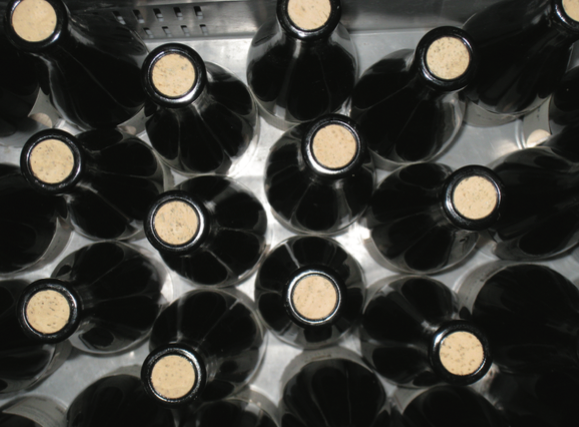
Olvia Haggipavlu stopped to take in the huge concrete vats at Etko, the Cypriot winery her family founded in 1844. “These tanks used to fill ships that would carry bulk wine all over the world, to Sudan to Russia and to Sierra Leone.”

Etko is Cyprus’ oldest winery and, along with three other producers, until 20 years ago dominated the Cypriot wine sector. The “big four,” — Etko, Geo, Sodap and Loel – as they were, and are still, known produced tens of millions of liters of wine that were sold in bulk to the world, though mainly to the former Soviet Union.
The vats are now empty and bulk wine is no longer the mainstay of the Cypriot winemakers. The collapse of the USSR, a decline in Cypriot grape growing culture, a severe drop in the annual rainfall — there was none in the 2008 season — and huge demand from thirsty tourists, mainly British and Russian holidaymakers, and the emergence of over 50 small producers making modern wines, have all contributed to a revolution in Cypriot wine in the last two decades. The result has been a dramatic increase in the quality, presentation and range of wines.
Meanwhile, Cypriot producers are recognizing that they must emphasize making wines using indigenous grapes, such as the red Maratheftiko and the white Xynisteri, if they want to succeed in what is a cutthroat international market. If all goes according to plan, Cyprus threatens to be the next boutique destination for wine lovers seeking something different from the run-of-the-mill Chardonnay and Syrah that, while hugely popular on a global scale, have created a sense of ennui among discerning tipplers. In fact, October saw Cypriot winemakers attempt to make inroads into the Lebanese market, one that has seen a noticeable rise in the popularity of wine. On October 10, Etko and the Fikardos Wineries held a seminar in Beirut for the Lebanese hospitality sector. More tastings are scheduled to be held around the country, but it remains to be seen how much of an impact, they will have on what is a market still in its infancy.
That does not mean that Cypriot wines will be alien to the regular drinker. All the recognizable ‘international’ varieties — Cabernet Sauvignon, Merlot, Syrah, Grenache, Mourvedre, Chardonnay, Muscat and Semillon and the like — are grown on the island. The trick is how to use them to their maximum commercial potential while still striving to create a Cypriot identity.

Three-pronged approach
At the moment Etko produces over 3 million bottles and carries nearly 30 wines. It may seen excessive for such a modest (by global standards) production level but it typifies the dilemma faced by the Cypriot producers “We are selling to three defined sectors,” explained Haggipavlu. “The local consumers are still in awe of the international grapes, so we have to make wines for them. Then we have the Russians and British who will drink anything if the price is right so we make wines that target this niche, and then we have our international customers who want wines made with indigenous grapes and who don’t want to hear about Chardonnay and Merlot from Cyprus.”
Wine is gaining popularity among young Cypriot drinkers too. “Wine is fashionable among the young, whereas before they preferred whisky, brandy or the local Zivinia,” said Yiannis Kyriakides, who, with his brother, owns the Vasilikon Winery in Pathos. Kyriakides is putting his money where his mouth is and investing millions in new premises that will house the winery, cellars, F&B area and company offices. Established in 1993 and now producing around 350,000 bottles per year, Vasilikon is among the bigger of the new generation producers, but unlike many who produce less than half of his output but have over a dozen labels, he only makes three wines: two reds and a white. “We know our market and we know what our customers want,” said Kyriakides as yet another car with the back seats down pulled up outside the winery. “Got any white left?” enquires the young Englishman eagerly.
In nearby Panayia, Andreas Kyriakides, owner of the Vouni Panayia winery, is also investing millions in a new state of the art winery, wine tourism and conference center. It is in essence a one-stop shop for the wine tourist. Founded 21 years ago, the winery and Kyriakides are considered pioneers in the new Cypriot industry. “We have come a long way since the mid-80s, when the emphasis was on bulk wines and there was little or no competition.”

A huge history
For the record, Cyprus has been making wines for about 6,000 years and lays claim to being among the oldest wine producers and exporters. Its most famous wine is Commandaria, a sweet white made from Mavro and Xinisteri grapes, which has been made in Cyprus since 800BC and which today can only be made in the 14 villages in the Trodos Mountain region. Even though it is essentially a liqueur, many producers see Commandaria as the wine that can take Cyprus into the modern international market. “It is the first wine of Christianity,” said one local winemaker proudly.
Today, Cyprus produces some 15 million bottles (although it is impossible to get an accurate figure) each year, 95% of which are sold on the local market that boasts consumption of 26 liters per capita per annum (compare this to 1 liter per capita per annum in Lebanon). So why the need to export? The island’s admission into the EU in 2004 saw a drop in tariffs and a quick browse of the shelves in any major Cypriot supermarket will reveal that foreign wine producers with greater volume can undercut homemade wines. If Cyprus wines are to be profitable they need to wow the foreign drinker.
The Keo winery is one of the big four that has had to adapt to this new order. The winery, the biggest Cypriot producer, used to be located in Limassol but this proved too far from the vineyards to make serious wines. The grapes that would arrive from the vineyards in the mountains in the screaming heat would have already started to ferment in the lorry.
“We moved here after we realized the days of bulk wines were over,” said George Metochis, Keo’s winemaker, speaking from its current winery set in the Trodos Mountains, where the company has invested around $5 million in making sure it is a competitive player in the new, more diverse wine sector. “We have to fight for our identity. We have to fight for the uniqueness of Commandaria and we have to make people pay for the privilege of drinking wine made from Cypriot grapes, especially the Maratheftiko.”

A grape with promise
Mara-what? The Maratheftiko stands on the cusp of international greatness, provided enough of it can be harvested and vinified. It is Cyprus’ prized red grape. It is difficult to grow and work with but with some love and care the results in the bottle are magnificent. Only 146 tons of Maratheftiko were harvested this year, less then the 184 tons picked in 2007 and the 208 tons picked in 2006. Nonetheless, Cypriot producers are convinced that this grape can take Cyprus to a wine world starved for a new grape with a new flavor and a new identity.
Others are placing their money on the more common but equally illustrious Lefkada, which is less of a headache to work with. “The Maratheftiko is a great grape but it is difficult to handle and is very temperamental. My money is on the Lefkada,” said Tim Whitrow, an Australian winemaker working at the Zambartas Winery.
And if that weren’t enough it is not the easiest of words to market. “Maratheftiko is not easy to pronounce if you are not a Greek speaker and this may be a problem for foreigners,” admitted Michael Constandinides, owner of the Ezouza Winery in the hills above Pathos.

Use what you have
“The OIV has always told to insist on being different to use what we have. In the 80s we didn’t know about the possibilities,” explained Akis Zambartas, whose Zambartas Winery, also in the Trodos Mountains is making wines that blend local and international varieties. Zambartas, who is the former boss of Keo, believes that wines with international and local grapes — such as his three reds that blend Maratheftiko with Syrah, Levkada with Syrah, Levkada with Cabernet Franc and a white that pairs Xinisteri with Semillon — offer the best formula for any export drive. “The consumer knows he is getting something different but he feels safe knowing that there is also a grape he knows.”
It is a view that is echoed by Costas Tsiakkas owner of the Tsiakkas Winery. “You can give personality to the wine but you must also listen to the market. We don’t have the resources [like the Australians] to make cheap Cabernet Sauvignon and we don’t have the experience [like the French] to make expensive Cabernet Sauvignon, so we’ve got to play to our strengths.”
Understanding the consumer tastes is also crucial. “Gone are the days when it was okay to make heavily oaked wines, big wines which need years to age,” said Nicos Nicolides, owner of Domaine Nicolides. “They want something to drink now.”

Challenges
If only getting the right blend was the only challenge. Rain and a declining rural economy also threaten to thwart any progress. “By and large, the vineyards are not owned by the wineries so the wine producer has to rely on the judgment of the local grape grower for the quality,” said Tsiakkas. “There is no sense of partnership and this affects quality. Furthermore, there is no youth left to carry on the tradition so we need to make planting vineyards a priority. There is no one left in the villages; we have a human resources problem.”
Christakis Lambouris of the Lambouri Winery gets around this problem by buying half of his grapes from members of his extended family who own vineyards. He acknowledged he is lucky and to acquire the other half he has had to take on land owned by grape growers who have basically given up. “They get subsidies from the government of between 160 and 180 euros per 1,000 square meters,” he explained. “In reality, they take the money and we take on the land.”
Then there is the water issue. “Add to this is the fact that we have no rain, so we have to ask ourselves where will the best place for these vineyards? At high altitude or low altitude? Should they face north? All this needs to be studied if we are to move forward,” explained Tsiakkas, who also sounded a note of optimism. “These changes might force our hand in the kind of direction we need to go in especially if we find out that native varieties are better suited to our soil and need less water.”
The challenges have not stopped enterprising producers like Lambouris from finding foreign customers. Not only are his wines served in Lufthansa’s business class but he even makes a kosher wine (wine made under strict rabbinical supervision during all stages of production) for the Israeli market. “They wanted at least one Cypriot wine as a tribute to their biblical tradition,” explains Lambouris.
So what of the future? Zambartas, like almost all the local producers, knows he is being squeezed by international competition and needs to play to his strengths. “I see a sector with lots of boutique wineries producing less than 100,000 each. This number is easy to control in a country like Cyprus where the structure of landowning is small. People are drinking less but they are drinking better quality. We have 60,000 British living on the island and they are very demanding.”
Back at the Etko Winery, Olvia Haggipavlu entered the vast warehouse where the huge wooden vats of Kamandaria are stored. “I am proud to be carrying on this tradition,” she said staring up at the huge casks. “It’s a shame to waste so much history.”


November 3, 2008 0 comments
0 FacebookTwitterPinterestEmail
Consumer Society

Food – Making the cheddar

by Executive Staff November 3, 2008
written by Executive Staff

The largest food company in the United States and the second largest worldwide, Kraft Foods, has become not only a common household name, but also synonymous with success in the world of fast moving consumer goods. Although the company is best known for its cheese products, Kraft maintains a diversified portfolio with hundreds of well- known brands covering every category from ketchup to chocolate. Patrick Satamian, vice president and area director of Kraft Foods Middle East and Africa, explained how the company has managed to establish and maintain its position as a global leader in the industry. “Kraft is a company that focuses very much on quality, on integrity, on the way our products are manufactured, the way we distribute our products, the freshness of our products; there’s a combination of factors which explain why we are in the leadership position in various categories,” he said.

The cornerstone feature of fast moving consumer goods, like those that Kraft manufactures, is that they are sold quickly at a relatively low cost. With a significant increase in commodities costs, this past year was a difficult one for both producers and consumers of goods. “At a certain point this year, most commodities — like wheat, flour, sugar, cocoa, you name it — reached their historical price-point peak,” Satamian described. As a result, consumer habits have had to adapt. People are more conscious of their spending and are often avoiding unnecessary purchases. Yet, indulgences like Toblerone chocolate, one of Kraft’s luxury chocolate brands, are still selling because the company has managed to keep not only attractive products, but also attractive prices.
According to Kraft’s second quarter results for the Middle East and Africa region, the company recorded double- digit organic net revenue growth at 13%, resulting in a combined organic net revenue growth of 17% for developing markets. Satamian cited successful brand and marketing investments, as well as favorable product mix and pricing that more than offset higher input costs as primary drivers for Kraft’s impressive performance.

Taste of success, hunger for more
Kraft’s success in the region has driven its plans to continue expanding here. April of this year saw the opening of Kraft’s sixth manufacturing facility in the region, located in Bahrain. The company derives some of its core strength from having its factories and organizations on the ground, Satamian explained. “It’s a big asset and advantage. We can produce products that really meet consumer needs, we can produce products which are fresher and we are faster when reacting to consumer trade dynamics,” he outlined. He elaborated on another benefit of operating locally, as opposed to shipping all products from abroad, which is that it creates opportunities for local talent. This, in turn, gives Kraft an invaluable competitive edge because it immediately brings in new and loyal customers, and makes the company much more effective in communicating with its customer base and satisfying their needs.
Aside from several factories on the ground, Satamian pointed to Kraft’s people as one of the chief reasons for the company’s long-standing success. “Getting the right people with the right skills is most important. With this you take the business to another level,” he stated. The multinational company strives for diversity amongst its employees because bringing together different tastes and points of view fosters more creativity, more flexibility, an open-minded attitude; it allows the company to extend its reach across various nations and cultures. When Kraft recently acquired the biscuit division of Danone, it accepted the existing French business culture of the company and simultaneously introduced certain elements of its own way of doing business. “It’s always a balancing act between diversity and integration. You need to accept diversity and welcome different ways of thinking, but at the same time you need to integrate,” said Satamian.
With so many iconic products like Tang, Oreo, and various cheeses, it is obvious why Kraft maintains leading positions is all the categories in which it operates. Aside from the taste and quality of its products, Kraft has the business experience and strategy, the right people behind the brand names and as Satamian put it, “Kraft products make you dream.”

November 3, 2008 0 comments
0 FacebookTwitterPinterestEmail
Banking & Finance

Private equity – Liquidity flows

by Executive Staff November 3, 2008
written by Executive Staff

This October, emerging market equities sank to an all time low. Dominated by few firms and largely composed of infrastructure-related companies, capital markets in the Middle East and elsewhere could not provide the liquidity needed to boost stocks. While similar effects will continue across regional bourses and affect the short-term valuation of firms, the region’s private equity industry will remain shielded because of the inherent nature of the asset class and the deal types most popular in the Middle East: buyouts and growth capital.
At the fundraising stage, private equity fund managers will continue to enjoy high liquidity for another quarter, until prospected declines in oil revenues are realized and futures contracts expire. Sovereign Wealth Funds (SWF) still have capital to deploy and will continue to partner with private equity firms for attractive buyouts in the region and abroad as company valuations sink and smart investors can invest in firms with untapped value. SWFs and private equity are best positioned to do this as they enjoy longer-term outlooks — typically five to seven years — until they exit investments. These investment horizons — coupled with the fact that most funds have recently completed fund raising and are now looking to deploy capital — make private equity a source of much needed liquidity in both the Middle East, as oil prices drop, and elsewhere, as financial intermediaries are squeezing credit flows to businesses.
Owing to the large size of most family-owned firms in the Middle East and North Africa (MENA), private equity houses have structured their funds to invest in buyout deals and offer companies growth capital. According to Amr Al Dabbagh, governor of the Saudi Arabian General Investment Authority (SAGIA), private equity investment opportunities in the region are on a scale “never seen before.”

Buy and build
Private equity buyout funds follow the traditional deal and exit structure of a private equity firm. A fund manager will scout out an attractive company, buy out the firm, build its business by adding assets or cutting costs, and exit investments to strategic investors or competitors, a secondary sale to another private equity investor, or via an initial public offering (IPO) on capital markets.
Several buyout funds are targeting MENA-wide deals and three of the most notable funds recently completed investments. Abraaj Capital’s Buyout Fund II (ABOF II) along with Waha Capital acquired a 49% stake in
GMMOS group, helping Waha Capital build a regional maritime business through its Al-Waha Maritime Group. Both maritime businesses plan to use the deal to further expansion agendas. Abraaj set itself up for a strategic deal after purchasing 100% of GMMOS Group in 2007. In this deal, Abraaj Capital partnered with the strategic buyer at the investment stage and will doubtlessly exit its remainder in the deal to Waha Capital after strengthening GMMOS Group’s corporate governance.
In another series of deals, Ithmar Capital has targeted construction and infrastructure-related buyouts. The private equity player made a recent investment in the UAE- based Dewan Architects and Engineers, a mid-market architecture, engineering, and consulting firm. Ithmar Capital’s buyout investment came amidst falling equity values and, consequently, a time when undervalued firms are attractive to long-term investors like private equity houses and SWFs.
Global Investment House (Global) has also fostered a burgeoning buyout business in the Middle East. It has recently closed its Global Buyout Fund with limited partner capital commitments, as well as additional financing by Dubai Islamic Bank and Millennium Capital, to the tune of $615 million. Additionally, Global closed another tranche of its buyout business for its $500 million Islamic Buyout Fund targeting sharia-compliant investments across the Middle East, North Africa, South Asia, and Turkey (MENASAT).
Global recently made a buyout deal through its standard buyout fund, by taking a stake in Al Sawani Food and Industry Supply Company, a food and beverage franchising operation based in Saudi Arabia with locations across twelve countries.
Abraaj Capital also made a recent buyout purchase in Nas Air with the aim of expanding the firm’s fleet of five aircraft to 18 by 2010 and eventually 167 by 2012. This buyout deal would make Nas Air the fastest growing private aviation fleet in the Middle East.
Not all MENA capital will be spent in the region. Much of it will be used for global buyouts in undervalued firms in the Asia, Europe, and the US. Credit-sapped firms in the US and elsewhere looking for long-term finance can find it in Middle East private equity shops. One deal in which this dynamic was apparent is Istithmar World Capital’s buyout of US-based Gulf Stream Asset Management, a financial services provider with $3.8 billion in assets.
GrowthGate recently achieved a final close for its $100 million buyout fund focusing on buy and build deals. With the plethora of spare capital committed lying dormant in these funds, they will be an important source of liquidity for the right firms looking to sell off their businesses.

Growth capital
While buyout funds are popular in the MENA region, growth capital continues to dominate the strategies of private equity shops. Growth capital proves the more popular of the two because it is a well-received investment style for entrepreneurs, and especially family firms. The reasons for this are clear. Instead of buying a firm, restructuring it, and exiting it via a secondary sale to another private equity shop, a strategic sale to a strategic buyer or competitor, or via an IPO, growth capital investments provide liquidity to firms with an established track record, possible areas for growth to different sectors or country, and a fairly sound corporate governance structure.
Entrepreneurs looking to private equity are essentially asking for investors to partner with them over several years to help grow the business and receive a substantial rate of return for helping develop the growth. Family firms are particularly worried about the potential for private equity to erode businesses, so growth capital remains an avenue through which families can find an investor but retain the business after a period of growth.
A recent investment has illustrated the process of growth capital private equity. Ithmar Capital purchased Panceltica, a Qatar-based, regional housing firm. Although the terms of the financing were not disclosed, the private equity shop provided capital for Panceltica’s growth and expansion strategy out of Ithmar Capital’s Fund II. Ithmar Capital’s Faisal Belhoul noted at a press conference that his fund is “uniquely placed to provide Panceltica with innovative investment and business development strategies to tap into the phenomenal growth potential of the region.” With most major cities sharing a high demand for the cranes to create buildings and the workers needed to operate them — from Doha to Dubai — Ithmar Capital’s investment and expertise enables Panceltica to grow its business across the region to build onsite steel structure for housing and other projects, which is eight times as fast to construct.

In search of growth opportunities
Additionally, private equity firms are looking to provide growth capital to firms which complement portfolios. In several instances, private equity managers are looking to create an integrated portfolio where the common tie to the private equity house can foster relationships between firms looking for business. Ithmar Capital, having recently acquired Panceltica and looking to help grow its business, might look in another high- growth economy in the region, perhaps in Saudi Arabia, Egypt, or the UAE, where another firms are looking to expand into equally high-growth economies. Ideally, Ithmar Capital can line up a firm that complements Panceltica and build some synergy between business and package its portfolio with perhaps a steel smelter, which could provide Panceltica with the downstream supply needed or with a property developer that could offer Panceltica an upstream market to supply temporary housing and storage solutions for large-scale developing businesses. Ithmar Capital’s holding of Gulf & World Construction might provide the sort of portfolio synergy necessary to build the relationships on a vertical level.
Buyout funds, growth capital funds and private equity in general offer large-scale companies a stable source of finance over the course of several years. For instance, a fund launched in 2005 did, on average, achieve a series of closes over 2005 and 2006 before achieving a possible end- of-year close in 2006. Once the fund achieves its first close it can start investing and will usually have deals in the pipeline. The holding period can also last several years for each investment and the fund itself will invest deliberately over a three to four year period, so a fund launched in 2005 with a first close in the same year can still invest in 2009, provided they have some capital left over. If a fund makes its last investment in 2009, then it has a few more years until closing, perhaps to 2012 or 2013, giving the fund a life of eight years. For funds with recent closes like Abraaj and GrowthGate, investments can continue over the next three to five years, enough of a gap to weather the currently credit-sapped business cycle.

November 3, 2008 0 comments
0 FacebookTwitterPinterestEmail
  • 1
  • …
  • 501
  • 502
  • 503
  • 504
  • 505
  • …
  • 696

Latest Cover

About us

Since its first edition emerged on the newsstands in 1999, Executive Magazine has been dedicated to providing its readers with the most up-to-date local and regional business news. Executive is a monthly business magazine that offers readers in-depth analyses on the Lebanese world of commerce, covering all the major sectors – from banking, finance, and insurance to technology, tourism, hospitality, media, and retail.

  • Donate
  • Our Purpose
  • Contact Us

Sign up for our newsletter

    • Facebook
    • Twitter
    • Instagram
    • Linkedin
    • Youtube
    Executive Magazine
    • ISSUES
      • Current Issue
      • Past issues
    • BUSINESS
    • ECONOMICS & POLICY
    • OPINION
    • SPECIAL REPORTS
    • EXECUTIVE TALKS
    • MOVEMENTS
      • Change the image
      • Cannes lions
      • Transparency & accountability
      • ECONOMIC ROADMAP
      • Say No to Corruption
      • The Lebanon media development initiative
      • LPSN Policy Asks
      • Advocating the preservation of deposits
    • JOIN US
      • Join our movement
      • Attend our events
      • Receive updates
      • Connect with us
    • DONATE