• Donate
  • Our Purpose
  • Contact Us
Executive Magazine
  • ISSUES
    • Current Issue
    • Past issues
  • BUSINESS
  • ECONOMICS & POLICY
  • OPINION
  • SPECIAL REPORTS
  • EXECUTIVE TALKS
  • MOVEMENTS
    • Change the image
    • Cannes lions
    • Transparency & accountability
    • ECONOMIC ROADMAP
    • Say No to Corruption
    • The Lebanon media development initiative
    • LPSN Policy Asks
    • Advocating the preservation of deposits
  • JOIN US
    • Join our movement
    • Attend our events
    • Receive updates
    • Connect with us
  • DONATE
North Africa

Open skies to Europe

by Executive Staff October 3, 2008
written by Executive Staff

As Morocco moves forward to meet tourism development targets for 2010, the decisive liberalization of the kingdom’s air transport is beginning to bear fruit. Tourism arrivals registered a year-on-year rise of 14% in 2007, according to the Ministry of Tourism, bringing a total of 6.72 million visitors to the developing country. Building up its tourism industry is a top priority for this destination, which is a mere two hour flight from major European cities like Paris and Madrid.

Morocco and the European Union signed an Open Skies Agreement in 2006, paving the way for growth in the underdeveloped Moroccan air transport sector as well as heightened competition for its national carrier, Royal Air Maroc (RAM). Competition from low-cost European airlines is already bringing Morocco closer to achieving its goal of 10 million tourist arrivals by 2010, but some are worried about the effect of competition on local carriers.

Although the conclusion of the agreement gave rise to initial concerns about allowing European low-cost operators to compete with local carriers, most in the industry agree that the overall impact has been largely positive. The local air transport industry has capably adapted to the heightened competition, with the launch of two local low-cost carriers, AtlasBlue (a low-cost subsidiary of the national carrier RAM) and Jet4You. These companies are both striving to remain competitive in local markets, as well as to capitalize on the new access to European markets.

“The liberalization of air transport in Morocco is very positive for Morocco,” said Karim Baina, vice-president of Jet4You. “We have seen immediate results. There was a boom in air transport and in the number of clients, passengers, and tourists who come and discover Morocco. When the lock on air transport was removed, this led to the creation of new operators like Jet4You. It led, as well, to greater supply in Morocco. By raising the supply, this has allowed us to lower prices on tickets and thus to make Morocco a more attractive tourist destination, both in terms of fares, and in terms of visibility for European consumers.”

Decade of reforms

Since Mohamed VI ascended to the throne nearly a decade ago, the kingdom has pushed through a number of free-market reforms, including the liberalization of finance, banking and trade. It has also emphasized social reforms, for instance by reworking the Moudawana to improve women’s rights and organizing historical forums to address the former regime’s human rights abuses that had been never been publicly acknowledged. Such reforms testify to a modern, more open Morocco. This Morocco is eager to advance to international standards of political and economic practices, and to become more business-friendly in the eyes of foreign investors and trade partners. Its courage in confronting the economic risks of globalization head-on have been paying off, with soaring levels of foreign direct investment and a boost in tourism indicators.

Air transport liberalization dates back to 2004, when Transportation Minister Karim Ghellab laid out his plan to triple the availability of international air transport. King Mohammed VI expressed his support for the strategy in a royal letter, where he stated, “As we had highly recommended, the project to reform the map of the skies has just been put into effect. This will allow not just for the sector’s liberalization, but also for reducing transport costs, greater fluidity and the appropriate coordination between issuing markets and tourism zones.”

In 2006, after a successful lobbying campaign for a single comprehensive agreement with the entire European bloc, Morocco became the first non-EU country to conclude a complete aviation agreement with the EU. The Open Skies Agreement abolished restrictions and limits regarding passenger transport between the EU and Morocco, by both Moroccan and European carriers.

This agreement was a major achievement for the kingdom, as in the absence of one comprehensive agreement, Morocco would have been forced to spend years renegotiating bilateral accords, some of which date back to the 1950s, with each individual EU member. The Open Skies Agreement swept away air transport barriers between Morocco and the entire realm of its number one trade and tourism market, Europe.

One year after the conclusion of the Open Skies Agreement, more new aerial routes were opening in Morocco than in any other country in the world. They now link untapped tourist markets in Europe to seductive destinations like Marrakech and Agadir. Within the European market, the industry has seen a notable rise in traffic between the UK and Morocco: according to the Ministry of Transport, 359,000 passengers travelled between these two countries in 2005, up 62% from 223,000 in 2003. Three British carriers began operating regular and charter flights between the London/Manchester and Marrakech/Agadir regions since 2004. Already popular routes like Paris-Casablanca and Paris-Marrakech are reinforced by the entry of new carriers who create a higher volume of supply to accommodate increasing numbers of tourist arrivals. The multiplication of routes between Morocco and Europe also strengthens North-South relations and business links.

A sky full of new players

Since 2004, 22 new foreign companies have begun offering regular flights to and from Morocco, though European companies are not the only carriers flocking here. In addition to 19 new European companies, including low-cost powerhouses like RyanAir and EasyJet, MENA providers like Libya’s Buraq Air, Ettihad of the UAE and Turkish Airlines have also initiated regular flights to and from the kingdom. Air Arabia, the MENA region’s largest low-cost carrier, just announced plans to set up a new hub in Rabat planned for opening in 2009, featuring a fleet of Airbus A320 aircraft.

Passenger traffic rose 16.5% between 2006 and 2007, and the National Office of Airports (ONDA) has overseen infrastructure improvements throughout the country to accompany the opening of skies above Morocco. The Casablanca and Marrakech airports, the two largest, recently each received a new terminal, while a $880 million investment between 2004 and 2007 targeted other projects including Tangier, Essaouira and Dakhla.

Another provision of the Open Skies Agreement calls for the improvement of security and safety procedures, although one security expert, who spoke on condition of anonymity, pointed out vulnerabilities and ineffective security in the airports. Attacks like 2004’s suicide bombings targeting foreign symbols are the most significant threat to tourism development goals, and the security provisions of the Open Skies Agreement had better bring standards up to international levels.

But in the end, Morocco remains a relatively peaceful, business-minded tourist destination with broad appeal to tourist-issuing markets in both Europe and the Middle East. The country has boldly wagered its future on its ability to attract tourists, although some argue the state risks too much in making economic development dependent on such a fickle industry. No doubt a more diversified economy would be better protected from market fluctuations.

But with a wager this big, the country is making every effort to ensure a smooth evolution towards systematic goals, whose horizons of 2010 and 2012 are suddenly not so far away. The liberalization of the air transport sector has already paid off by raising the number of tourist arrivals, improving the quality of services through allowing in new competition and bringing the country’s airports and servicing fleets up to speed. Morocco’s regional neighbor Tunisia is following in its footsteps, and entered into talks towards its own Open Skies Agreement with the European Union in September.

The liberalization of air transport in Morocco has been, up until now, a well-coordinated effort with a perceivable immediate impact. However, rising oil prices and a downturn in the global economy could pose significant challenges to the air transport sector and to global tourism over the next few years. Already, flights are becoming more expensive as fuel prices hover around the $100/barrel mark, and air companies are forced to add fuel charges to normal passenger fares to absorb extra costs. If European economies continue to suffer the fallout from the worsening financial crisis in the US, the next few years could mean stagnation or decline in the numbers of tourists travelling from Europe to Morocco. When 2010 has passed and the country considers its next round of strategic development plans, it may well apply the same kind of goal-oriented mobilization of both private and public sectors to stimulate other cornerstones of the economy, like the services sector.

October 3, 2008 0 comments
0 FacebookTwitterPinterestEmail
GCC

Consumption – Abu Dhabi trims edacity

by Executive Staff October 3, 2008
written by Executive Staff

With a construction industry that accounts for 68% of energy consumption, Abu Dhabi has set its sights on energy efficient construction. The government of Abu Dhabi has introduced an initiative, Estidama 2030, which will establish local and regional standards for energy efficient construction.

Estidama is the Arabic word for “sustainability” and the budding initiative, although still in the planning phase, includes the strict Estidama New Building (ENB) guidelines for construction projects, aiming at a 30% reduction in the city’s energy and water consumption.

Dar Al-Estidama is a private company providing consultation on the Estidama 2030 initiative. According to the company’s website, Dar Al-Estidama is particularly interested in “reducing CO2 emissions, construction and demolition waste and indoor air pollution.”

General Manager Kai Schlenther described Dar Al-Estidama’s task as “caring for sustainability in buildings and concentrating on environmental issues inside [buildings].” He explained that proper insulation can reduce energy use up to 20%.

Current sustainability standards in the UAE are based on the American LEED system. Yet Schlenther sees the Estidama 2030 initiative as “more formulated to the climactic conditions of the region than LEED.” For example, reducing water consumption is crucial as each person in Abu Dhabi consumes around 550 liters of water per day.

Schlenther noted slow change of national sentiment. “It has been difficult to convince people of the benefits. We have told people that it’s not just about nature but also financial savings,” he said. To a society that prioritizes wealth over the environment, Schlenther makes a point to tell his clients, “Look, you are saving millions of dollars!”

October 3, 2008 0 comments
0 FacebookTwitterPinterestEmail
GCC

Equality – Gender and work

by Executive Staff October 3, 2008
written by Executive Staff

By Western standards, the Middle East workplace has moved slowly in its acceptance of women in the traditionally male-dominated workplace. A recent survey conducted by Bayt.com and YouGovSiraj, “The Women in the Middle East Workplace,” monitored women’s perceptions of their work environment promotion potential, gender-specific benefits and salary satisfaction. Of the surveyed women, 60% felt that they were treated equal to their male co-workers while 23% reported inferior treatment and 7% reported superior treatment. Differences in perception were apparent among Western and Asian women as well as Arab women working in their home country.

Dr. Dima Dabbous-Sensenig, director of the Institute for Women’s Studies at the Lebanese American University was not convinced that the study accurately reflected women’s perceptions of their work environment. “Often, when women are asked, ‘are you being discriminated against in the workplace?’ many will say, ‘no’ yet there is a big difference between perception and reality,” she said, noting that in her view the 60% rate of perceived equality in the workplace is “a high rate, yet does not account for the differences in legal and cultural understanding of what constitutes discrimination or harassment.”

Climbing the corporate ladder is one of the most prominent concerns of working women.  In the survey, 41% responded with a pessimistic outlook on this matter — most of them being GCC nationals. Among Asian women, 47% saw slim chances of promotion over their male counterparts. The generalization of disparate individuals and job sectors opened up further questions for Dabbous-Sensenig. She specifically questioned the ethnic categories defined by the survey. “What does the category of Asian women include? South Asians? East Asians? The category must be further defined,” she said.

Equal pay for equal work has long been the chant of women’s rights enthusiasts. Yet 46% of survey respondents reported lower salaries than their male colleagues. In this category, Asian women, at 58%, reported the most pay discrimination. Throughout all job sectors, Dabbous-Sensenig said, “I’m sure there is a lot of pay discrimination going on because people are told not disclose their salaries. For this reason, women can’t tell if they are being paid less than men.” She also noted that the majority of problems women face in the workplace are “less obvious, indirect structural forms of discrimination.”

October 3, 2008 0 comments
0 FacebookTwitterPinterestEmail
GCC

UAE/UK – Culture’s commerce

by Executive Staff October 3, 2008
written by Executive Staff

Middle Eastern culture has raised much curiosity  among Western expatriates traveling to the region. Each year, the UAE receives 1.1 million British tourists. Additionally, 150,000 British comprise a large and influential expatriate community in Dubai.

The British Business Group (BBG) and the Sheikh Mohammed Center for Cultural Understanding (SMCCU), well aware of Dubai’s place as the Middle East’s major cosmopolitan commerce destination, have a special interest in helping Western expatriates harmoniously merge the two worlds.

SMCCU and BBG coordinate cultural events and networking activities to facilitate the cross-cultural interaction necessary to forge strong business relationships. During Ramadan, Iftar dinners prove an ideal opportunity for those of diverse backgrounds to reach across the East and West cultural divide. The dedication of both the BBG and SMCCU to the promotion of active dialogue between different cultures contributes to Dubai’s international reputation as a foreigner-friendly city.

Sharifa Madgwick, general manager of SMCCU, commented on the center’s Open Doors, Open Minds program, saying that “We are very happy to step forward towards cultural understanding.” She described the center’s overall goal as “building bridges of communication in the business community and giving expatriates the opportunity to learn about cultural differences.”

SMCCU offers a variety of services including cultural lunches, spoken Arabic classes, corporate training and guided tours through the Bastakiya district. The center also gives tours of the Jumeirah Mosque which was the first to open its doors to non-Muslims.

Regarding the UAE business environment, Madgwick pointed out that, “Traditionally, business here takes place in the majlis — a place in the home for meeting and discussing work matters over coffee.” She mentioned that majlis gatherings do not often include females. “A lot of business between locals and expatriates happens in an office setting, yet there are cultural differences in manners and etiquette that Western expatriates find confusing,” Madgwick added.

October 3, 2008 0 comments
0 FacebookTwitterPinterestEmail
GCC

Energy – UAE plans fusion with nuclear power

by Executive Staff October 3, 2008
written by Executive Staff

In light of looming peak demand for electricity, the UAE faces an energy crossroads. Which form of alternative energy is most viable? Business conference organizer, Leaders Presents, a division of the Institute for International Research Middle East, recently held a poll among 300 regional business leaders. 92% support government research initiatives for alternative fuel sources. With the expectation that the UAE’s annual electricity demand will reach 40,000 megawatts by 2020, a quick and practical solution is needed.

While safe methods of radioactive waste disposal must be explored, 69% of surveyed business officials prefer nuclear energy to continued reliance on crude oil as it leaves no carbon footprint. Although nuclear energy is the most practical solution, the world questions the nuclear intentions of the small Middle Eastern state.

The UAE’s recently launched Policy on the Evaluation and Potential Development of Peaceful Nuclear Energy Programs clarifies the direction and aspirations of its nuclear energy developments. Six principles convey the “peaceful and unambiguous objectives” of the UAE’s intended use of nuclear energy. The first three commit to complete operational transparency, pursuing the highest standards of non-proliferation, and the highest standards of safety and security.

The fourth principle emphasizes the UAE’s commitment to IAEA (International Atomic Energy Agency) standards. Principle five states the desire to “develop any peaceful domestic nuclear power capability in partnership with the governments and firms of responsible nations, as well with the assistance of appropriate expert organizations.” The UAE states in principle six that it will “approach any peaceful domestic nuclear power program in a manner that best ensures long-term sustainability.”

Nuclear officials have already taken practical steps: in July they began to scope out potential locations for nuclear reactors. With a cost of $7 billion for each 1,500 megawatt reactor and a seven year waiting period for each reactor to become fully functional, the UAE faces a time crunch to make costly decisions about its energy future.

October 3, 2008 0 comments
0 FacebookTwitterPinterestEmail
GCC

Education – London school of Emirates

by Executive Staff October 3, 2008
written by Executive Staff

In the spirit of strengthening business relations between the UK and Abu Dhabi, the Emirates’ capital and the London School of Economics (LSE) have collaborated for the enhancement of business education.

The agreement between Abu Dhabi’s Department of Planning and Economy (DPE) and LSE sets the groundwork for future business education and training for the emirate’s public policy sector. With a longstanding record of training business communities in rapidly developing regions of the world, LSE Enterprise will guide Abu Dhabi in business and economic planning in both the public and private sectors.

Upon signature of the MoU that solidified this partnership, DPE Undersecretary Mohammed Omar Abdullah said, “Abu Dhabi is undergoing profound changes right now and the pace of economic development is accelerating. This agreement supports our leaders to make better informed decisions about complex and sensitive matters that affect everyone who lives here.”

LSE Enterprise’s Chief Executive Officer and memorandum co-signer Simon Flemington opined that the most appealing aspect of Abu Dhabi is “without a doubt the scale of ambition for the emirate as mapped out in the DPE’s strategic plan for the economy.” This plan includes increasing economic education and research and a possible Abu Dhabi School of Economics.

The renowned British school has an established reputation in the UAE with its involvement in the International Institute for Technology and Management (IITM) in Dubai. Degree programs at IITM were designed by LSE and students have opportunities for exchange programs. It has also forged ties with the Emirates Foundation to for the creation of a Center for Middle Eastern Studies. Flemington also noted LSE’s public sector executive programs in Spain, Kazakhstan, Libya, Hong Kong, Taiwan, China, Bosnia and Tanzania.

LSE’s expertise in business training is expected to introduce innovation and open a world of educational resources for Abu Dhabi. Flemington stated as the main objective of this new educational link “to fully support the requirements and requests of the DPE for assistance in development of people and research activities within the department and more broadly.”

October 3, 2008 0 comments
0 FacebookTwitterPinterestEmail
GCC

Automobiles – Racing sales

by Executive Staff October 3, 2008
written by Executive Staff

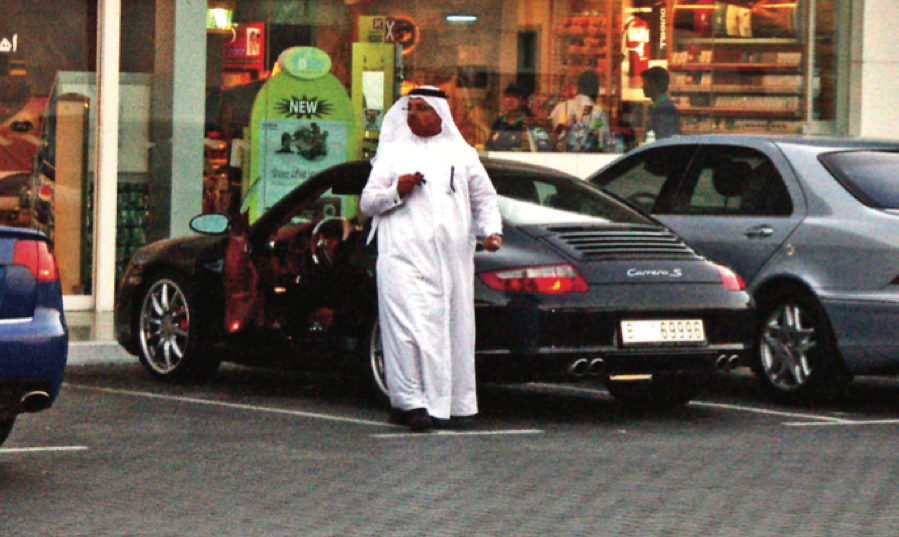
Dubai’s Airport Free Zone (DAFZ) has become an ideal location to sell luxury cars. Seven international automobile manufacturers have recently established bases here: Ferrari Middle East and Africa, Maserati Middle East, Porsche Middle East FZE, Spyker Automobielen, Audi Volkswagen Middle East FZE, Isuzu Motors Limited and MAN Middle East FZCO. The strong regional demand for cars is projected to surpass 23.2 million units by 2010.

“Since its inception more than a decade ago, [DAFZ] planned to focus on attracting major industries and potential investors who bring about added-value to the overall objectives of the Free Zone,” said Salah El-Tayeb, DAFZ’s media and communications senior officer. “The cars are 100% tax free and there is the option to repatriate capital.”

Edwin Fenech, General Manager of Ferrari Middle East and North Africa, aware of the region’s small but financially mighty population, stated that, “this market generates demand for the most luxurious cars.”

El-Tayeb explained that the strategic location of the DAFZ has attracted automobile producers and consumers and brought them together in an optimal business environment, saying “The Dubai Airport Free Zone is located in the northern part of the airport near Terminal 2 so it is easier to reach.” In a city where traffic is notoriously bad, the DAFZ is a quick drive from the city center.

The DAFZ is currently able to provide affordable, top-notch amenities to its clients, but as more companies enter the sought-after Middle East market, luxury car makers will be increasingly challenged to set up a first rate base at a reasonable cost.

October 3, 2008 0 comments
0 FacebookTwitterPinterestEmail
GCC

ICT – Yemen gets connected

by Executive Staff October 3, 2008
written by Executive Staff

Cellular phone companies in the Yemeni market can expect a healthy demand for services in the next five years. Based on a July 2008 study by Yemen’s Public Telecommunications Corporation (PTC), analysts at the Arab Advisors Group expect the country’s cellular sector to reach 10.5 million cellular subscribers by the end of 2012.

2007 ended with the addition of a fourth cellular operator to the Yemeni market. Arab Advisors senior research analyst Hussam Barhoush commented on the effects of this increased competition in Yemen’s cellular market by saying that, “With four companies competing against each other offering different services and technologies, we believe (the market) is bound to grow.” Barhoush projects a Compound Annual Growth Rate (CAGR) of 15.7% from 2008 to 2012 resulting in a cellular penetration rate of 42.4%.

“75% of Yemen’s population live in rural areas and don’t have fixed line services,” Barhoush said. “The PTC is bound to deploy fixed line services in the next few years, but due to the high cost, cellular services will catch on sooner.”

Another obstacle to obtaining cellular or landline phone service is the low standard of living in Yemen compared with the rest of the Gulf region, though Barhoush expects income rises in the coming years to contribute to increased demand.

A free cellular and land-line market in which there are many competitors is the most optimal situation for driving prices down to an affordable level. While land-line service is government controlled, the cellular sector is, for the most part, liberalized.

October 3, 2008 0 comments
0 FacebookTwitterPinterestEmail
GCC

Luxury – Chocolate’s finest tastes

by Executive Staff October 3, 2008
written by Executive Staff

In an increasingly waistline-conscious world, inhabitants of the GCC still choose sugar over slender. Regional consumption of sweets is booming as confectioners keep watch of regional trends. In a late 2007 study TNS, an international market research group, found the demand for chocolate in the UAE and Saudi Arabia to be high, with 99% of Saudis and 98% of UAE nationals confessing to chocolate consumption at least one time within a seven-day period.

In a recent Gulf News article Helena Shpakovich, sales and marketing executive at Moka General Trading, a UAE chocolate distribution company, said, “The market for confectionaries in the region is booming and becoming more aggressive. Manufacturers from all over the world feel the potential of UAE’s market, as it is still easy to enter.” Chocolatiers will be happy to know that Middle East consumers spend $4.2 billion a year on chocolate.

Growth in the sweets sector of the GCC foodservice industry has led many confectioners to increasingly popular sweets exhibitions. The Dubai World Trade Centre (DWTC) and industry coordinator Koelnmesse will collaborate this November for Sweets Middle East 2008.

At least 160 companies will gather for networking opportunities and the chance to launch that new ‘it’ product that will satiate the discerning Arab sweet tooth. “The success of the 2007 exhibition reaffirmed a need for this important industry platform, as the confectionary and sweet industries continue to expand across the Middle East,” said Joanne Cook, DWTC Industry Group Manager.

GCC nationals crave luxury in all that they consume and chocolate is no exception. Swiss confectioner Confiserie Sprüngli set up shop in Dubai this past spring. A company famous for using the freshest premium-quality ingredients, Sprüngli keeps in mind the cultural needs of the Gulf in its promotion of Eid gifts and quick delivery services.

“We hope to introduce and sell Sprüngli products to individuals who are accustomed to the highest quality products, and who enjoy ‘the finer things in life,” said Ester Crameri, managing director of Sprüngli Middle East.

Latest industry trends indicate that chocolate lovers are turning to dark chocolate, associated with high cocoa content, for health benefits. With such a commodity as chocolate, there is always room for healthy compromises.

October 3, 2008 0 comments
0 FacebookTwitterPinterestEmail
GCC

Soaring in the cheap seats

by Executive Staff October 3, 2008
written by Executive Staff

The news is not good: the global airline industry is desperately struggling to keep its head above stormy waters. With more than 25 airlines having gone belly up since the start of the year, oil prices peaking at nearly $150 per barrel back in July, and a flagging global economy, it is almost scary how unsurprising the anticipated industry losses for 2008 are. The International Air Transport Association (IATA) revised its financial forecasts early last month, landing on a stomach-churning $5.2 billion in projected losses for the global airline industry this year. As the industry confronts its bleakest days since September 11, 2001, one wonders, are there any survivors in this crash?

Picking through the rubble one can see the debris of several carriers who barely stood a chance against the 82.5% increase in jet fuel prices, as compared to last year. One sees planes being grounded, routes forsaken and thousands of jobs vanishing into thin air, whilst ticket prices and baggage charges keep rising.

Traditionally, fuel accounts for anywhere between one third (in the case of legacy carriers) and one half (in the case of low cost carriers) of airline budgets, and for every dollar that the price of fuel increases, costs to the aviation industry rise by $1.6 billion. Clearly this indicates desperate times, and as those kinds of times call for corresponding measures, airlines are adopting rather innovative methods to reduce fuel burn. Some airlines are flying at slower speeds to increase fuel efficiency, or towing planes to take-off areas to save up to 2 tons of fuel per flight; others are removing unnecessary weight by switching to lighter seats and carrying less toilet water. Some airlines plan to strip the old paint off planes that are scheduled for re-spraying, making them 400 kilograms lighter; others have streamlined on-board cutlery, reducing weight by 2 grams per piece. These airlines are enduring the disastrous circumstances, just barely.

The low-cost equation

Anomalous to rest of the industry, low-cost carriers (LCCs) in the Middle East are not only avoiding bankruptcy, but are moving forward with expansion plans, acquiring new planes, diversifying routes and making a profit. LCCs are structured in such a way that they are able to offer low fares by efficiently managing operational costs and removing many traditional passenger frills such as in-flight meals. “Air travel to us is taking a person from point A to point B with the safest operation, with good services, and with the best price so that he can fly over and over again,” explained Housam Raydan, communications manager for Air Arabia. “It’s not that we are doing something super; it’s simply that we are offering a good value for money, and people are loving the experience.”

Regional LCCs have certainly felt the blows of today’s high oil prices, yet they have managed to dodge the knockout that numerous other LCCs around the world could not, and will round out 2008 with just a few inevitable bumps and bruises. “The region here is different,” Raydan explained. “You have over 25 airlines that went bankrupt in North America, Europe, and parts of Eastern Asia, while here we are still recording profits.”

So what is it about the region that has allowed LCCs to endure these hard times? Raydan cited three reasons. “First, the Middle East has an oil-based economy; when oil goes up people get more money and travel more often. Second, air travel is the only means of transportation in this region. We don’t have trains, we don’t have buses, you can’t travel in your car between countries, so you have to depend on air travel as a means of transportation. And third, the nature and the geographic factor of the GCC countries. 80% of the UAE’s population are expatriates from neighboring countries, and therefore people want to travel more often to more places, back to their home countries as often as possible. Added to that are the business demands, which require a lot of travel within the region.”

Currently there are five major LCCs spread throughout the Middle East. Air Arabia, based out of Sharjah, was the first of its kind in the region, commencing operations in 2003. Two years later, Jazeera Airways came to Kuwait City, followed by Saudi Arabia’s NAS Air based out of Riyadh and Sama Airlines out of Dammam. Manama-based Bahrain Air, the newest LCC in the Gulf and the first privately owned premium low-priced carrier, launched its first commercial flight in February 2008.

As a result of its early success, Bahrain Air has decided to double its authorized capital to $53 million, which it will use to move forward with expansion plans. With about 10,000 low cost passengers using the available airlines in Bahrain per month, Bahrain Air is seizing the available opportunity with zeal. According to the airline’s three-year plan, it will have 14 aircraft by the end of 2008 and 25 at the close of 2010, making it the most rapidly growing LCC in terms of fleet expansion.

The growth of cheap flights

Likewise, Jazeera Airways recorded markedly improved results for Q2 2008 as compared to that of the previous year, pointing to a 100% passenger increase and robust cost management as factors that outweighed high fuel prices. The airline plans to go ahead with scheduled market expansion strategies later this year

Lately it seems that the majority of airlines have been forced to take a cue from circus contortionists: bending and wriggling themselves in ways that seem unnatural, yet are essential to generate income. Middle Eastern LCCs like Air Arabia attribute their success not to any new, creative ways of doing business, but to sticking with the same business model they have followed since inception. “We have managed because we have a flexible business model that allows us to adapt as per country, as per industry challenge,” Raydan said, and added that Air Arabia has recorded a net profit of about $43.5 million in the first half of 2008. “If you adapt the local business culture into your company, you manage to become profitable and face many more challenges.”

Raydan said that some of the cost-saving features that LCCs have adopted at the core of their business models were to make company websites the sales engines for business to reduce distribution channels, being completely paperless in favor of electronic tickets, and not giving commissions to travel agents. Also, LCCs typically use a single type of airplane and a single class of aircraft cabin; they offer short flights and fast turn around times, fly direct flights, and practice aggressive fuel hedging programs.

Despite the widespread economic duress, air travel in the Middle East remains stable and shows no signs of abating. In 2007, the region hosted the fasted growing aviation market in the world, and is currently investing over $100 billion in airplanes and infrastructure to accommodate the influx of travelers. Drivers of this unprecedented growth include excess liquidity, budget surpluses, demographic makeup, and geographic position. LCCs are dramatically increasing their activity, and are buoying the industry as a whole.

“The oil price is harder to predict than the weather,” Raydan said. “At the end of the day, we all pay the same price for oil. The only difference is, as a low cost carrier we have made a choice; we took a simple business model and we adapted it. We are not looking to make a luxurious hotel in the sky. Our business model is based on managing our costs ruthlessly, in a way that we can maximize profit without affecting the level of service and safety we offer.”

October 3, 2008 0 comments
0 FacebookTwitterPinterestEmail
  • 1
  • …
  • 504
  • 505
  • 506
  • 507
  • 508
  • …
  • 688

Latest Cover

About us

Since its first edition emerged on the newsstands in 1999, Executive Magazine has been dedicated to providing its readers with the most up-to-date local and regional business news. Executive is a monthly business magazine that offers readers in-depth analyses on the Lebanese world of commerce, covering all the major sectors – from banking, finance, and insurance to technology, tourism, hospitality, media, and retail.

  • Donate
  • Our Purpose
  • Contact Us

Sign up for our newsletter

    • Facebook
    • Twitter
    • Instagram
    • Linkedin
    • Youtube
    Executive Magazine
    • ISSUES
      • Current Issue
      • Past issues
    • BUSINESS
    • ECONOMICS & POLICY
    • OPINION
    • SPECIAL REPORTS
    • EXECUTIVE TALKS
    • MOVEMENTS
      • Change the image
      • Cannes lions
      • Transparency & accountability
      • ECONOMIC ROADMAP
      • Say No to Corruption
      • The Lebanon media development initiative
      • LPSN Policy Asks
      • Advocating the preservation of deposits
    • JOIN US
      • Join our movement
      • Attend our events
      • Receive updates
      • Connect with us
    • DONATE