• Donate
  • Our Purpose
  • Contact Us
Executive Magazine
  • ISSUES
    • Current Issue
    • Past issues
  • BUSINESS
  • ECONOMICS & POLICY
  • OPINION
  • SPECIAL REPORTS
  • EXECUTIVE TALKS
  • MOVEMENTS
    • Change the image
    • Cannes lions
    • Transparency & accountability
    • ECONOMIC ROADMAP
    • Say No to Corruption
    • The Lebanon media development initiative
    • LPSN Policy Asks
    • Advocating the preservation of deposits
  • JOIN US
    • Join our movement
    • Attend our events
    • Receive updates
    • Connect with us
  • DONATE
Comment

Authoring Israel’s chronicle

by Peter Speetjens June 3, 2008
written by Peter Speetjens

History is a funny thing. It is like a piece of clay that changes shape depending on the hands that hold it. After a war, it is generally first picked up by the ones who won. They like to tell tales of heroes and bravery. Those who lost will see things quite differently, yet generally do not have a voice.
In the documentary The Fog of War (2004), former US Secretary of Defense Robert McNamara claimed that had the US not won WWII, the country would have been prosecuted for war crimes, because of the massive bombing campaign on Japanese cities.
On May 15 the world commemorated 60 years of Israel and 60 years of the Palestinian Nakba (Catastrophe). These are of course twin events, intertwined like a Gordian knot, yet when speaking to the Knesset on Israel’s latest anniversary, US President George W. Bush proved hopelessly one-sided in his Bible-fuelled admiration for the Jewish state, while mentioning the Palestinians only once.
Having set the tone by calling Ariel Sharon “a man of peace, a friend,” Bush argued that Israeli independence was founded on “the natural right of the Jewish people to be masters of their own fate” and “the redemption of an ancient promise given to Abraham and Moses and David.”
Israeli MPs awarded Bush with a standing ovation, yet both friends and foes must have shivered hearing his sermon-like speech. Now, of course the Jewish people have a right to self-determination. Who could disagree with that? However, one’s right ends where the other’s begins, and who could argue that deportation and confiscating land and property are an acceptable part of a people’s path to self-determination?
Illustrating his status of a born-again Christian, Bush’s claim that Israel’s right to exist is God-given is a direct reference to the Torah and Old Testament. With it he not only delighted Israeli nationals and an estimated 90 million evangelicals within the US, but probably also Osama Bin Laden and anyone else eager to take the world back to the Crusader era.
Golda Meir, for one, would have been pleased, having herself once said: “This country exists as the accomplishment of a promise made by God Himself. It would be absurd to call its legitimacy into account.” Who would dare argue with God?
In his speech Bush went on to compare the foundation of the US to that of Jewish state. “When William Bradford stepped off the Mayflower in 1620, he quoted the words of Jeremiah: ‘Come let us declare in Zion the word of God.’ The founders of my country saw a new promised land and bestowed upon their towns names like Bethlehem and New Canaan.”
There are indeed many striking similarities between the US and Israel. Both are built by colonists, God-fearing “farmer-fighters” in search of a better future and a better life. In many ways both succeeded, yet they only did so at the expense of the native population, a reality both nations rather ignore.
Israel’s history has been largely written by the Zionist victors who were greatly inspired by the tale of David and Goliath. In short: tiny little Israel was forced into a battle with a sea of armed Arabs. Against all odds, it won. Meanwhile, the local inhabitants had fled, as they were told by their leaders, and thus Israel miraculously ended up with twice as much land as it was given in the UN partition plan.
This is still being taught in Israeli schools today. Only last year, the Israeli Ministry of Education allowed the word “Nakba” to be mentioned in schoolbooks, yet solely in Israeli Arab ones. Israel’s Jewish children continue to be fed “the miracle of 1948” even though since the 1980s the Zionist version of events has largely been destroyed by a new generation of Israeli historians, who based their conclusions on declassified Israeli sources.
Take Benny Morris, who has shown that most Palestinian did not leave because their leaders had told them so, but because they were forced at the barrel end of a Zionist gun. Avi Shlaim shattered the prevailing view that Israel always wanted peace, while the Arabs were always unwilling to negotiate.
Ilan Pappe showed that the Jews in 1948 were better armed than the Palestinians and in fact executed a strategy known as “Plan D” that aimed at surrounding villages and deporting its inhabitants. Thousands of people were executed on the spot. According to Pappe, it is a classic example of ethnic cleansing, not much different from what happened in Kosovo and Bosnia in the 1990s.
If there is one thing to celebrate about 60 years of Israel, it is the fact that the country has a relatively free intellectual climate able to give birth to academics such as Morris, Shlaim and Pappe who dare to confront Israeli society with its painful hidden past.


­Peter Speetjens is a Beirut-based journalist.

June 3, 2008 0 comments
0 FacebookTwitterPinterestEmail
By Invitation

The economics of three digits

by John Defterios June 1, 2008
written by John Defterios

World Economic Forum meetings are, as one former Prime Minister put it over a nightcap, part private high-level talks, part networking and a fair portion of theatre. “Theatre is good, just not in large doses” he rightly declared.

That is a succinct description of what transpired in the Red Sea resort of Sharm el-Sheikh this week at the World Economic Forum meeting.

There was plenty to digest and discuss, but as usual the many of the more memorable thoughts came in the networking lounge over an espresso. I spoke to the CEO of a Gulf investment authority who, during our conversation said they really want to get it right this time, since they are blessed with the “three digits.”

The conversation continues, as I try to bluff my way through what “three digits” means. After another minute my curiosity gets the better of me and I confess my ignorance. “Three digits,” he tells me with a broad smile, “is oil — anything over $100 and we are in three digit territory,” he said, adding that: “We can do a lot with three digits.”

There is no doubt about that and I confirm that after 20 years of covering OPEC meetings and visiting production facilities from the Gulf of Mexico to the Arabian Gulf, I know it costs about $4 to $6 per barrel for the major Middle Eastern producers to get their crude to market. To put it crudely, that is a profit of about $120 a barrel at today’s prices.

Spend it wisely

While the Gulf producers are happy to watch the savings roll in, they are very aware that the world is watching to see how they plan to use it. It was, no doubt, the number one issue on the agenda at this regional meeting. Somewhat boldly some members of the Arab community, which are not blessed with the same huge natural resources, spoke up in Sharm el-Sheikh.

Egyptian Prime Minister Ahmed Nazif, the tall, silver haired reformist, noted that one cannot force money where it does not want to go, but, “I believe that real opportunities exist today in the region, whether it’s in infrastructure, whether it’s in capacity building, education and other aspects of it.” Egypt is attempting to be the back office to the Middle East — why set up in Bangalore if you can capture the diversity of language speakers and low cost in your own backyard?

A former government official from Jordan, now running a private equity group, was more direct. Reem Badran is CEO of Kuwaiti Jordanian Holding Company — a firm funded with Gulf money. She says, “There is room for the oil producing countries to give a hand to the non oil producing countries to make these types of imbalances and gaps less and everybody would flourish at the end of the day.”

There is a great deal of money from the six Gulf countries flowing into real estate development projects throughout North Africa. The key now is to expand that brief to include factories and even schools. The second most talked about issue had to be development of human capital. During the final plenary panel of the meeting which I chaired, all four leading businessmen (and woman) talked about the sense of urgency to do more. Money is being deployed into education in every market, but these business people admitted they need to be more involved to insure that the skills needed are being taught in universities and vocational schools. If not, the over reliance on expatriate workers will remain. The most pressing concern, and it was reinforced on my panel, is that 100 million more people will need jobs over the next ten years.

If that is not an incentive to use the “three digits” wisely, I am not sure what is.

John Defterios is the presenter of CNN’s Market Place Middle East.

June 1, 2008 0 comments
0 FacebookTwitterPinterestEmail
By Invitation

Beirut’s irrepressible optimism for property investors

by Priyan P. Khakhar June 1, 2008
written by Priyan P. Khakhar

From a distance, one observes the birth of a new skyline — sprouting towers of elegant bricks, mortar and concrete that will house an eclectic range of people who choose to live in Beirut, a city with a raw database of stories with even more plots and twists than the latest Hollywood movie. These flawlessly finished apartments, kaleidoscope designs and stainless kitchens do, however, also come with a somewhat jaw-dropping price tag for a non-utopian city. Apartments in the tower blocks facing the marina, for example, are $1 million plus, this being considered a modest figure by the many that have already sold “off-plan.” A recent report by Bank Audi on Lebanese real estate records over 35,000 property transactions in the third quarter of 2007 alone.

The political climate of the country is no secret, with the World Bank and International Monetary Fund rating the investment risk of the nation on par with states such as Chad and Sudan. In mid-May the country was on the brink of civil war when Hizbullah’s heavily armed fighting machine attacked and seized large parts of West Beirut and nearby Beirut suburbs. For six months Lebanon had remained without a president and the specter of confrontation and violence had loomed over the entire nation for the past three years. After the fighting in May, most business people in Lebanon’s hospitality and tourism sectors were convinced this would be another summer of dread, a third year with an abysmal tourism season and a degree of security risk that would scare even a speculators of George Soros’ ilk.

How then does one explain these property prices? Take for instance the prices in towns such as Marbella on the Mediterranean coast of Spain, a naturally luxurious and hedonistic playground of the rich and famous that can potentially be Beirut, once the “Paris of the Middle East.” Apartments and villas, in gated compounds, boast similar million dollar and above price tags, with a relative saving grace of EU membership, security, a stable and functioning government, absence of political bickering, lower investment risk rating and of course the Spanish siesta. From a stability point of view, comparing Marbella and Beirut can be like comparing chalk and cheese, and yet the latter demonstrates great resilience within the real estate sector.

Analysts could attempt to explain this, citing the strong Lebanese banking sector with its impressive levels of liquidity and credit availability, investment from the Middle East region in general, former Lebanese residents re-investing in their motherland and a social transformation of the younger generation irrespective of the political divisions and diversions that frustratingly prevail. The prices must therefore exist due to supply and demand side factors that have assimilated the political factor, combined with changing perceptions of the nation to both investors and home buyers. The supply-side factors may be explained two-dimensionally by the fact that key locations in the city, such as Hamra, are crowded with developments in a relatively small space; this is compounded with the needs of the local and growing student population at prestigious institutions such as the American University of Beirut delivering medium-term tenants for investors, all scrambling for limited good space locations.

Prices in Marbella, however, have long reached their peak, and the number of British residents and investors living in this southern gem of Spain is a known fact. In similar fashion, Beirut has lured investors from a variety of locations in the Middle East. The country boasted FDI stocks of $18.3 billion and inflows of $2.7 billion in 2006, this in a year Lebanon was at war with Israel. There is speculation further investments are yet to come, providing the political tensions dilute or at least don’t escalate to the previous historical levels. It is a question of risk taking, risk adverse or a laissez-faire attitude to risk in terms of investment, though it has to be noted that both Lebanese economics and politics exist in varying shades of grey. 2008 growth in 2008 is projected to be positive, with estimates from 4-8% depending on which local source is consulted. According to local research companies such as Infopro, “the prices have risen, though some are just gearing up for the boom that is to come in 2008.”

After several days of intense negotiations in Qatar, Lebanon’s opposing leaders elected a president and a new “united” government was expected to be formed by end of May. The Doha agreement has created hope for many Lebanese to lift the nation out of a state of violence and confrontation into peace and stability.
Within hours of the political sea of change on May 25, 2008, the Beirut city center was preparing for an abundant summer of returning visitors and countless festivities. This ability to return to form and celebrate life is what makes the place. Beirut offers that ‘something extra’ — an intangible and unquantifiable element — that is mainly driven by an unprecedented cosmopolitanism that refuses to exclude anyone or anything, an “x-factor” which other cities in the region lack.

A drive down the city center would awe the most critical of architects at the restoration of a once destroyed French style quarter. Retail spaces are plenty, with rents in the popular malls ranging from $2,000-$3,000 per square meter. One would expect the political factor to suppress prices, yet it appears that some defiance amongst buyers and sellers remains. Given that the political crisis subsides, in terms of real estate at least, the city seems set to become a Marbella of the Middle East.

Dr Priyan P. Khakhar is an assistant professor at the American University of Beirut’s Olayan School of Business.

June 1, 2008 0 comments
0 FacebookTwitterPinterestEmail
By Invitation

Arab sovereign wealth funds

by Sven Vehrendt June 1, 2008
written by Sven Vehrendt

The past months have witnessed an intensive debate about the relevance of SWFs in the global economic system and their role in global financial markets. Global Insight, the research firm, states that SWFs have grown a remarkable 24% annually in the past five years. Morgan Stanley, the investment bank, argued that the total size of the SWFs could increase from $3 trillion to $12 trillion by 2015.

Commentators have tried to put these stunning figures into perspective. Robert Kimmitt, Deputy Secretary of the U.S. Treasury, argues that if one wants SWFs to appear large then one would argue that hedge funds manage an estimated $1.5 trillion and that the current market capitalization of the S&P 500 is roughly $12 trillion. On the other hand $12 trillion is only a fraction of the estimated $190 trillion in total global financial assets. Assets managed by mature-market institutional investors (such as pension funds and endowments) are about $53 trillion. Pension funds manage over $15 trillion, insurance companies $16 trillion, investment companies $21 trillion. This is a small fraction of the global debt and equity securities, exceeding $100 trillion.

But an important element is missing in this assessment. First and foremost, Gulf Arab SWFs shall be of benefit to the citizens of their countries. How relevant are they then with regards to their own economies? An analysis arrives at some interesting findings.

The size of the assets managed by the Abu Dhabi Investment Authority is estimated at $875 billion. This is equivalent to 675% of the GDP of the United Arab Emirates. The Reserve Fund for Future Generations managed by the Kuwait Investment Authority is estimated to manage assets valued at over $170 billion. This represents twice the GDP of Kuwait. The Qatar Investment Authority’s assets stand at over $60 billion or 141% of Qatar’s GDP. Only Saudi Arabia’s assets managed by the Saudi Arabian Monetary Agency are somewhat smaller at just below 100% of Saudi Arabia’s GDP.

Based on these numbers one arrives at the conclusion that although large, Arab Sovereign Wealth Funds might be not that overwhelming in size if one compares them against the assets of other players in global financial markets. But our numbers show that they are extremely important in the context of their own national economies.

Here some more examples: An optimistic 8% return that ADIA might manage to realize amounts to roughly $44,300 per UAE citizen (excluding expatriates), or roughly 63% of GDP per capita. This is substantial. The same is true for Kuwait. At 8% growth, the revenues realized by the KIA amount to $17,160 per every Kuwaiti citizen or 44% of Kuwait´s GDP per capita. Again, this is not trivial and illustrates the importance of SWFs’ role in maintaining the wealth of oil exporting Gulf countries.

A fundamental question is then if the SWFs will be able to maintain or even grow this wealth for future generations. The idea of SWFs is to enable governments to diversify away from their own national economies and searching for interesting return perspectives elsewhere. But if SWFs do not identify very attractive investment opportunities outside their economies, their purpose is challenged.

The economies of the Gulf are currently growing at a rapid speed, much stronger than most of economies elsewhere. It will therefore be quite difficult to identify investment opportunities that are on par with opportunities at home. If we see GDP per capita growth rates increase in the Gulf region as rapidly as in the past years and we assume that SWFs will invest elsewhere, that is in regions which are growing at a more slower pace, then the SWFs contributions to safeguarding the welfare of the citizens of Gulf states is negative. Only in case the economies in the Gulf region would calm down and other economies grow more rapidly will SWFs be able to meet their task to secure their standard of living for future generations beyond oil.

The importance of SWFs within their national economies and their exposure to global economic trends illustrates how important a broader debate about purpose and investment strategies of Arab SWFs has become. Not only have SWFs become a contentious issue for Western policy makers, but their risk/return profile should also be of major concern for the Arab public, since the future economic well-being of Arab societies is at stake.

Sven Vehrendt is an Associate Scholar at the Carnegie Middle East Center, Beirut

June 1, 2008 0 comments
0 FacebookTwitterPinterestEmail
Capitalist Culture

Diplomacy – Venice of the Gulf

by Michael Young June 1, 2008
written by Michael Young

One of the more interesting stories in the Gulf in the past decade or more has been the expanding, paradoxical role of Qatar. When the emirate hosted the Lebanese dialogue talks in May, this was only its latest demonstration of a policy of counterpoint that has either pleased or infuriated those used to more predictable behavior from Arab states.
The dialogue helped one understand Qatar’s strange ability to place itself at the nexus point of contradictory regional interests. Why, many observers wondered, had the March 14 parliamentary majority agreed to the interchange with the opposition under the auspices of a regime with close ties to Syria and Iran, which has financed reconstruction in Hizbullah-controlled areas? Simply put, there was no one else. Tension between Saudi Arabia and Egypt on one hand and Syria and Iran on the other meant that the Saudis, traditional mediators in inter-Arab affairs, were unable to play that role in Lebanon. Egypt, in turn, had its own problems with Damascus and was anyway represented more or less by the Arab League secretary general, Amr Moussa. Jordan and the North African states were too preoccupied with other matters to intervene. So Qatar filled the gap.
In many ways, Qatar is the Venice of the Middle East. Not for the picturesque waterways or singing gondoliers; but because Qatar, like the Venice of the Renaissance, is a place constantly juggling and preserving a balance between its most improbable relationships, all the while protecting itself, increasing its profits, and enhancing its regional role.
While Doha has good relations with Syria and Iran, as well as Hizbullah, it has managed to do this while hosting the largest American military base in the Middle East, maintaining contacts with Israel, preserving more ambiguous relationships with militant Sunni Islamists, protecting itself on both the Arab nationalist and Islamist sides through its Al-Jazeera satellite TV station, and, more recently, working to paper over its previous rivalry with Saudi Arabia (partly by toning down criticism of the kingdom on Al-Jazeera).
Before the Lebanese dialogue in Doha, Qatari policies in Lebanon provoked much anger from March 14. In some ways the reaction was justified: Qatar sided openly with those most opposed to the government. However, at a broader level, Qatar is interesting because it has taken the lead in shaping what can only be described as a post-ideological approach to Arab politics. Certainly, most Arab states long ago gave up on ideological consistency, and Arab nationalist or Islamist regimes have, mostly, turned their ideological pretensions into little more than instruments to buttress dictatorships. But Qatar has taken this a step further, so that the emirate can openly ignore the most fundamental of Arab benchmarks, the isolation of Israel, while providing political and financial sustenance to Israel’s bitterest foes.
Is this something positive? In one way it is. Pragmatism is an ingredient that has long been in short supply in the modern Arab world. The region is more often defined by polarization, by its stubborn divisions, than by efforts to transcend differences and deal with all sides simultaneously. Pragmatism can also be an essential element of capitalist culture, where the market, whether the market of politics, economics, or ideas, is basically allowed to develop unfettered, free of preconception.
But a capitalist culture, and the pragmatism underlining it, becomes self-defeating when it bolsters autocracy. Take the case of Iran or Hizbullah. That Qatar seeks to deal with both to its advantage is understandable; but if Iran or Hizbullah were ever to impose their will on Qatar, or on Arab states behaving like the emirate, the latitude for that pragmatism would collapse. Would a hegemonic Iran in the Gulf, for example, allow Qatar to continue to serve as a headquarters for U.S. power in the region? A Syrian return to Lebanon, while it might not disturb officials in Doha, could significantly strengthen those regional forces with an interest in obstructing Qatar’s open ways.
In other words, by basing its political actions purely on self-interest, a post-ideological state like Qatar might find itself helping unleash those forces in the Middle East that suffocate the interesting possibilities in a post-ideological state. The same would doubtless apply if pressure came from, let’s say, the United States, except that there are limits to what the U.S. can do. For example, despite its hostility to Al-Jazeera, Washington has understood that it cannot much change the station’s tone. In late 2001, the then-U.S. secretary of state, Colin Powell, tried, and was promptly condemned at home for this.
Gulf politics are so personalized that it may be difficult to reach the conclusion that Qatar represents the way of the future — or a way of the future. The possibility always remains that when leaders change, so do a state’s policies. However, the tightrope act the emirate has pursued in recent years is working for the moment. Not everyone is happy, but it may be a model that Gulf states begin adopting, perhaps to their detriment. Perhaps not.

Michael Young

June 1, 2008 0 comments
0 FacebookTwitterPinterestEmail
Comment

The Horn of too many bulls

by Paul Cochrane June 1, 2008
written by Paul Cochrane

One word sums up the Horn of Africa’s regional importance: geostrategic. Over the last two months, several developments have highlighted how intricately linked the Middle East is, and wants to be, with the countries on the other side of the Red Sea. There are the usual three suspects: business, politics and the “war on terror,” plus a wildcard, piracy.

The big business news is that Osama bin Laden’s brother, Tawfik, wants to build a $22 billion Africa-Arab bridge to link Djibouti with Yemen. The 28.5-kilometer project would span the narrowest point across the Red Sea, at the Bab al Mandab, “the Gate of Tears” — an appropriate name, especially given the situation in the vicinity and all the piracy off the Somali coast.

Indeed, piracy has dramatically increased since the Islamic Courts Union (ICU) was toppled by the US-backed Ethiopian invasion of Somalia in December 2006. Last year there were 31 attacks, and so far this year 23 attacks by Somali pirates on sea-going vessels, including the 47-day hijacking of a Russia bound icebreaker, the Svitzer Korsakov. A $1.6 million ransom was allegedly paid out.
Bin Laden’s Bridge, as it could be dubbed, will potentially bring more stability to the region and its sea routes — after all, an estimated 3.3 million barrels of oil are shipped through the Bab al Mandab every day. The bridge certainly intends to boost traffic between the two continents, and act as an entry point for pilgrims to Mecca. But the ongoing situation in Somalia presents concern for any parties involved in the troubled Horn, including Qatar.

This is the big international politics story: Ethiopia breaking diplomatic ties with Qatar over the emirate’s alleged funding of the al-Shebab movement in Somalia, the military wing of the ICU and a recent addition to the US State Department’s list of terrorist organizations.

Doha-based Al Jazeera’s sympathetic coverage of an anti-Ethiopian rebel group, the Ogaden National Liberation Front (ONLF), also rankled Addis Ababa, especially given Qatar’s diplomatic ties with Ethiopia’s other nemesis and ONLF supporter, Eritrea.

A week after the diplomatic spat — Doha denies any involvement with Al-Shebab — a US air strike killed the top leader of the movement, Aden Hashi Ayro.

Whether Qatar has any involvement with these groups or not, Doha is not the only Middle Eastern player in the mix, with a UN arms embargo monitoring group reporting in late 2006 that Egypt, Iran, Libya, Saudi Arabia, Syria, Yemen and Lebanon’s Hizbullah were all supporting warring factions in Somalia. The US meanwhile has a military base in Djibouti, 100 military advisors in Ethiopia, recently donated $97 million to Ethiopia in recognition of its “strategic importance,” and Special Forces are reportedly operating within Somalia. This melee thus includes countries on side with the US-led “war on terror,” seemingly on side with the “war on terror’, and those that are on the complete other side against the war on terror.

Somalia is Africa’s equivalent of Lebanon.

The irony of all this is that the activities of the US and its allies in the region have made the situation worse than before the ICU was overthrown. Ethiopia, for its own ends as well as Washington’s, has waged a brutal war on Somalia. Half the population of Mogadishu has fled, a humanitarian crisis is underway and Amnesty International last month accused Ethiopian troops of widespread atrocities against Somalis, including slitting people’s throats, gouging out eyes and gang-raping women. Somalia’s disintegration is also generating further support for Islamic movements.

Furthermore, Somalia’s regression back to warlord-run days under the Transitional Federal Government (TFG) is bad for regional business.
According to the Mombasa-based Seafarers’ Assistance Programme, most of the Somali pirates are linked to the TFG, which has little control of the country and its territorial waters.  In the six months the ICU were in power, piracy on the Somali high seas was reportedly down, but from 2007 the distance vessels were advised to keep away from the coast was increased from 50 nautical miles to 200. Although that is not even enough, with a Spanish luxury yacht hijacked in international waters in early April, the second European vessel to be overrun by pirates in a fortnight.

For such an important shipping route it would be to the advantage of most players involved, and certainly for the free flow of goods and energy, to better police the area around the Gate of Tears.

One solution is to put African Union troops on the ground in Somalia instead of the 8,000 Ethiopians currently there, as called for in UN Resolution 1725, and international monitoring off the coast to ward off illegal fishing as well as piracy.
Construction of Bin Laden’s Bridge would certainly need plenty of security, and a more stable Horn would help this African theater of the “war on terror” from becoming yet another disasterous tragedy with far-reaching geostrategic implications.

PAUL COCHRANE is a Beirut-based freelance journalist. He was recently in Ethiopia.

June 1, 2008 0 comments
0 FacebookTwitterPinterestEmail
Comment

The ‘Axis’ taking Bush for a spin

by Claude Salhani June 1, 2008
written by Claude Salhani

By now we are well familiar with what President George W. Bush labeled the new “Axis of Evil” — communist North Korea, socialist-leaning (Baathist) Syria and Islamist Iran. Each one has expansionist ambitions of varying degrees, though some are more grandiose in aspiration than others. North Korea and Iran want to dominate the world, while Syria will settle for considerably less.

The North Koreans want to turn the world into a vast Godless worker’s paradise, similar to the Stalinist Garden of Eden that is the northern part of the Korean peninsula — only perhaps one where the comrades aren’t starving half the time and trying to escape to South Korea or even to China the other half. However, Kim Jong-il, the megalomaniacal leader of the North, would probably be satisfied if he could occupy the South, thus reuniting the two Koreas and in the process double his clout, his ego and his people’s misery.

The ruling mullahs governing the Islamic Republic of Iran have somewhat of a similar philosophy: they too would like to dominate the world. However, the main difference with the non-believers in North Korea is that the Iranians want to impose their religious diktat on the rest of the world. The other major difference between the North Koreans and the Iranians is that the latter have been slightly more successful in exporting their revolution. The North Korean expansionist desire was stopped at the 38th parallel; in contrast, Iran’s mullahs have made inroads in the Gaza Strip by supplying Hamas with all the guns and money it needs to disrupt Bush’s efforts at peace-making in the Holy Land.

And in Lebanon, Iran’s and Syria’s proxy militia, Hezbollah, has demonstrated that it can, if it so wishes, take over the country by military force, or in any case, at least great swaths of the country. Of course whether the Shiite militia can then retain the territory it occupies is a completely different story. This Hezbollah found out the hard way when it tried to go after the Druze in the Chouf.

As for the third spoke in the new “Axis of Evil”, Syria, its territorial ambitions are far more modest than those of either North Korea or Iran: Syria only wants what is rightfully hers, the Golan Heights, the strategic plateau overlooking the northern Galilee which was taken militarily by Israel in the 1967 War and remains under Israeli occupation to this day.

Oh yes, Syria wants Lebanon too.

And here’s where the story begins to get somewhat complicated (if it wasn’t already) due to the fact that a great many Lebanese are opposed to the idea of Syrian domination. The Bush administration supports the notion of a free and independent Lebanon and has invested in backing Fouad Siniora’s government and the March 14 Movement. So the defeat of pro-government forces by the Syrian and Iranian-backed Hezbollah in early May in the fiercest exchange of internal violence Lebanon has experienced since the end of the civil war in 1990 can be seen as a defeat for Bush’s democracy spreading policy in the Middle East.

Hezbollah’s attempted coup also frightened Sunni powerhouses such as Saudi Arabia and Egypt who rightfully perceived the action as an attempt by Tehran to extend its political power base and influence in the region. Hezbollah’s victory comes as a second slap across the face of the U.S. president from his Iranian and Syrian foes. The first blow came when Hamas took over Gaza.

This leaves the U.S. administration pondering what course of action it can take. Part of the conundrum facing the administration is amplified by the fact that it continues to refuse to engage either Syria or Iran in talks, while these two countries seem to be pulling all the strings in Lebanon today.

This is where President Bush’s new counter-axis-of-evil comes into play with the American president turning to his Arab allies for assistance.

Enter Saudi Arabia, Egypt and Jordan, three moderate Muslim nations who are getting nervous over Iran’s rising influence. The recent successes of the Islamic republic in the Gaza Strip and in Lebanon have revived fears particularly among the Saudis, prompting the Saudi king to assume greater responsibility in regional matters.

As one Saudi, who is well connected to the intelligence community in the desert kingdom, said to me when the fighting broke out in Beirut: “Don’t forget the critical Saudi role, which is now even more central than the role of the U.S. and France in the region!”

Saudi Arabia’s role in the Middle East will be all that more crucial as the November U.S. presidential elections approaches and American politicians become completely absorbed by domestic politics, turning a blind eye on the rest of the world.

Claude Salhani is editor of the Middle East Times

June 1, 2008 0 comments
0 FacebookTwitterPinterestEmail
Comment

Do as I say, not as I nuke

by John Dagge June 1, 2008
written by John Dagge

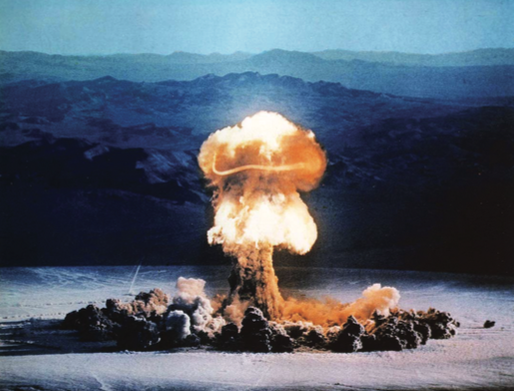
The Nuclear Non-Proliferation Treaty (NPT) is under threat. We know this because the only country to have ever used nuclear weapons (twice) told us last month. The warning came at the end of a two-week meeting of the 106 NPT member nations in Geneva in early May. A statement from the five sanctioned nuclear powers — the United States, United Kingdom, Russia, France and China — laid responsibility for the threat of increased nuclear proliferation squarely on Iran and North Korea. Yet a quick look at the record shows those most hysterically calling for an international effort to ‘shore-up’ the NPT have long worked to undermine the world’s premier weapons control agreement — at least when it comes to their own obligations.

Although the 1968 Nuclear Non-Proliferation Treaty is generally understood in the West as giving the United States the right to decide who can and who can not have nuclear technology, the document’s exact wording is a little more complicated. At the heart of the agreement is a quid pro quo arrangement, one the West (primarily the US) has long failed to uphold. In return for forgoing nuclear weapons, nuclear power for civilian use is to be made available to all non-nuclear signatories. And yes, this does include Iran.

On top of this, under Article VI of the NPT, the five recognized nuclear states are obligated “to pursue negotiations in good faith on effective measures relating to cessation of the nuclear arms race at an early date and to nuclear disarmament, and on a treaty on general and complete disarmament under strict and effective international control.” This requirement was strengthened via a 1996 International Court of Justice ruling which unequivocally stated nuclear powers must disarm. It was further reinforced at the NPT Five-Year-Review in 2000 when delegations from 180 countries (including the US, then under Bill Clinton) agreed on a 13-step program to implement Article VI.

Yet this most essential element for a workable NPT has been delayed, ignored and outright breeched by Western powers for years. The Bush administration in particular has demonstrated a unique determination to ensure NPT obligations apply to everyone but the United States. This was clearly displayed in 2002 with the release of the US Nuclear Posture Review. In that document America reaffirms the ongoing role nuclear weapons will play indefinitely in her defense policy, outlines the research and development of a number of new tactical nuclear weapons such as bunker busting bombs and, for the first time, shifts the use of nuclear weapons from deterrence to first use, a radical departure in military policy which received little press attention. All of which effectively ends a US commitment to the NPT.

Moves by the United States to reduce its nuclear arsenal also need to be taken with a large grain of salt. In another little publicized but extreme shift from convention thinking on disarmament, the Bush administration has done away with the principle of irreversibility in terms of reducing its nuclear weapons stockpile. While the average person may understand disarmament to mean actually destroying your nuclear weapons, the legal eagles of the Bush administration have ruled this clause simply means putting them on standby. Under the 2002 Moscow Treaty — a key agreement the White House cites as evidence it takes its Article VI obligations seriously — the US is not required to destroy its weapons. Rather, they simply must not be “operationally deployed”, meaning a large number will be maintained in a “responsive force” capable of redeployment within weeks or months.

Furthermore, the NPT is only one of many overlapping pieces of legislation which work together to control the world’s most destructive weapons. Its main supporting pillar is the Comprehensive Test Ban Treaty, an agreement which prohibits nuclear test explosions (or any other) and one which America has steadfastly refused to ratify for more than 10 years. The other major piece of complementary legislation is the negotiation of a treaty banning the production of any further fissile material, the fuel for nuclear weapons. Again, the conclusion of such an agreement has been stymied by Washington. In November 2004, the UN Committee on Disarmament voted in favor of a verifiable fissile materials cut-off treaty. The result was 147 in favor and one against. No prizes for guessing who opposed. Likewise, US support for the nuclear programs of Pakistan, India and Israel makes its near daily hubris against Iran ridiculously hypocritical.

The US is right to assert the NPT is under threat. International Atomic Energy Agency director general Mohamed ElBaradei summed the treaty’s main challenges as follows: “We must abandon the unworkable notion that it is morally reprehensible for some countries to pursue weapons of mass destruction yet morally acceptable for others to rely on them for security and indeed to continue to refine their capacities and postulate plans for their use … We have come to a fork in the road: either there must be a demonstrated commitment to move toward nuclear disarmament, or we should resign ourselves to the fact that other countries will pursue a more dangerous parity through proliferation.”

John Dagge is a freelance journalist based in Syria.

June 1, 2008 0 comments
0 FacebookTwitterPinterestEmail
Comment

America reaps seeds it sows

by Riad Al-Khouri June 1, 2008
written by Riad Al-Khouri

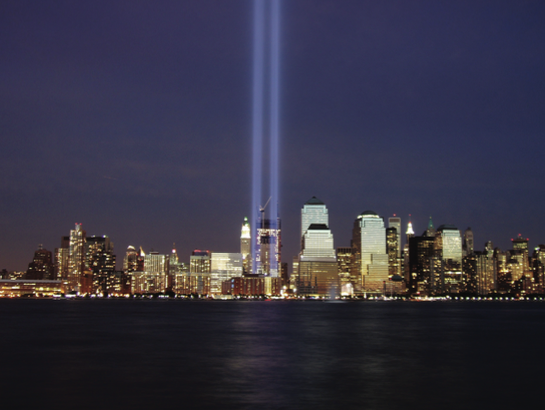
Political scientists, along with other specialists as well as laypersons, have spent the last seven years grappling with the implications for international relations of the attacks of 11 September 2001 and their aftermath. The impact of 9/11 around the world, and on the Middle East in particular, has been enormous. The effects on development, democracy, and human rights are vast, with sharp change and conflict increasingly characterizing Western relations with Muslim countries. As a subset of this phenomenon, ties between the Arab world and the West also shifted.

However, although 9/11 is a turning point, there is no consensus on its roots or implications. As an antidote to the sterile contention shrouding the event, the rigorous work of Dan Tschirgi (pronounced as if combining the two French words “cher” and “guy”), professor of political science at the American University of Cairo, provides sober analysis.

Turning Point puts into a proper context the implications of 9/11. Flying in the face of the puerile shortcuts that so many in the West have taken during the past few years, Tschirgi’s book includes original insightful cases of the global challenge of asymmetric warfare. Applying his theory of “Marginalized Violent Internal Conflict” to three cases, Tschirgi elucidates the roots of insurgency through the struggles of underdogs to preserve their identities in an unfriendly world. He demonstrates the dynamics through which the oppressed in modern times struggle against tyrannical states by looking at Mexico’s Zapatista conflict, the struggle of Egypt’s authorities against the Gamaa al-Islamiyya, and the Nigerian government’s fight against the Ogoni people in the Niger Delta. In doing so, he raises many issues related to the Middle East and American policy toward the area.

Tschirgi’s thesis is that 9/11 was not unique, but an understandable — though deplorable — reaction to Arab marginalization and Western threats to regional identity. As a corollary, he debunks the “exceptionalist” approach to the Arab world (the presumption that Western social science fails to fathom the Arabs). Tschirgi also suggests two broad policy recommendations: that the US has no duty to support Israeli expansionism, and that an American withdrawal from Iraq must come as early as possible.

With a new US administration looming, we may now be looking at a post-post-9/11 era. It has become one of the clichés of the current American presidential election campaign that the economic crisis has replaced the Iraq war as a main issue. In fact, the two are indirectly related. Just as sloppy corporate governance in the banking sector caused the subprime crisis, poor governance in Washington unleashed American hubris and greed, which lead into the Iraqi swamp.

Harmony within and among societies suffers because of a resurgence of fundamentalism and its antithetical aggression, Western or otherwise. All are losers in this situation. The danger raised by the terrorist threat is as real today as it was in September 2001 and indeed before. However, the American rampage in Iraq and elsewhere around the world is equally dangerous, and indeed interacts with real or imagined threats of terrorism in a vicious circle. The solution would thus seem to lie in the re-engineering of America to allow it to regain the moral high ground it occupied during parts of the 20th century.

This is clearly a tall order; in any case, Tschirgi’s balanced scholarly work does not delve into such issues, nor does he have final answers — no serious social scientist ever has. However, he sets the stage for policymakers or laypersons to address important questions rationally: Where are the US and the Arab world going from here? Have the major challenges changed? Are new priorities emerging? In this way, Turning Point generates healthy debate about policy alternatives for other scholars to build on — and policy players to ponder: McCain, Obama, and Hillary, please take note. At a time when dabblers too often dominate the discussion of contemporary world affairs, this thoughtful work from an established American scholar with decades of experience in the complexities he analyzes is refreshing.

In this grim new world, our duty is to engage peacefully with potential or actual adversaries. Modern technology means that war and other forms of physical violence have become luxuries we can no longer afford. For example, for the US to talk to Iran or Syria, instead of blustering and vituperating, is literally a question of world war or peace. The alternative is to refuse to listen to the other side, a crime of which the Middle East is as guilty as the West. In such mess, works of the caliber of Turning Point are welcome.

Riad al Khouri is a visiting scholar at the Carnegie Middle East Center, and Senior Fellow of the William Davidson Institute, University of Michigan.

June 1, 2008 0 comments
0 FacebookTwitterPinterestEmail
Comment

The generous virtue in vanity

by Paula Schmitt June 1, 2008
written by Paula Schmitt

The amount of wealth in the Middle East is quite visible, and when it comes to individual wealth, it is more evident than practically anywhere in the world. It translates into a disproportionate number of people driving Hummers, smoking expensive cigars, having the largest aquarium, the largest shopping mall, the most expensive hotel, the tallest this, the longest that.

It is not without reason that Arabs are often associated with extravagance and bad taste. I once visited a house in Lebanon where the toilets feature faucets made of gold. Yet with so much wealth transformed into visible signs of itself, not much of it has been used to fight poverty, illiteracy and disease. In a study yet to be published, the Arab world is said to have at least 22% of its population living on less than a dollar a day. If we include the population living on less than $2, the percentage doubles. I myself come from Brazil, a country where poverty is a national shame, and where hunger is indefensible amidst so many gifts of nature — which brings me to a story about Ayrton Senna, the Brazilian Formula One driver.

Ayrton Senna was the perfect icon: beautiful, rich, successful, his whole persona helped advertise and sell many luxury goods and other products. Many in Brazil wanted to be Ayrton Senna, or possess something endorsed by him. Yes, humans emulate. His participation in ads raised the sale of many products, showing the power of mimetism, or the urge to imitate and thus be associated with.

But when Senna died in a tragic accident, Brazilians found out something else about him that until then few people knew: Senna was a philanthropist. A large chunk of his money was donated to fight poverty, promote education, help orphans. After his death, his sister decided to continue his silent work and created the Ayrton Senna Foundation. With visibility, and fanfare, the foundation grew exponentially and now helps many more people than when Senna was alive. That is what brings me to the following statement: Senna could have been an inspiration not only for the consumption of expensive watches, he could have made people emulate him in his goodness.

But there is a certain taboo about advertising one’s goodness. And in the Middle East people like to cite the hadith that says that the right hand should give while the left should not know it. The Koran, however, does not condemn publicity of one’s contributions. It encourages charity and alms giving several times, and only once does it say that giving in silence is better (“If you give alms openly, it is well, and if you hide it and give it to the poor, it is better for you”).

Yet, human beings are vain by nature. And by that same nature they like to emulate those they look up to. Why should one be proud of a gold watch, an expensive car, a luxury brand pair of shoes, and not of one’s goodness? Haven’t we by mistake inverted our values? Why is it that people seem to feel no qualms about showing off signs of wealth, amidst so many needy people, and at the same time keep mute about goodness? If Prophet Muhammad condemned showing off, even goodness, what would he have said about showing off money and extravagance?

I say give, and tell. Give the example. Inspire. Let us have the Ayrton Sennas make people want to be like them in everything — not only the gold watches, but in their kindness. Let the women who want to have Angelina Jolie’s lips and shoes imitate her in her generosity (Jolie is said to donate 1/3 of her money to charity. She had considered joining the UN as a refugee officer but realised she would help much more by just continuing to work in the movie industry and donating part of her money to the causes she believes in). Publicising charity is as inspiring as advertising one’s favourite brands, so why should we fail to do one while not hesitating in doing the other?

It is for that reason that I particularly praise Sheikh Mohammed Bin Rashid Al Maktoum and his campaign Dubai Cares. Instead of just fasting during the day, and compensating the hunger at night, Sheikh Mohammed Bin Rashid Al Maktoum had another of his ambitious ideas, this time helping poor children get an education. With TV ads that would compare the price of an expensive bag and how many kids could study with that amount of money, the campaign raised almost half a billion dollars which were at the end matched by Sheikh Al Maktoum, totalling just short of a billion.

Now that is a competition the world would love to see: who gives more. Giving, along with its publicity, is very inspiring. After Bill Gates donated $25.9 billion to charity, Warren Buffet, not to be outdone, beat Gates by pledging the donation of $37 billion.

Rochefoucauld was right when he said that “Virtue would not go to such lengths if vanity did not keep her company.” Knowing that humans are vain, and that in the age of spectacle exhibitionism is inevitable, we could only wish that the things that make us vain and proud also make the world a better place.

 
Paula schmitt is Middle East corrispondent for RFI and Rolling Stone Brazil

June 1, 2008 0 comments
0 FacebookTwitterPinterestEmail
  • 1
  • …
  • 526
  • 527
  • 528
  • 529
  • 530
  • …
  • 686

Latest Cover

About us

Since its first edition emerged on the newsstands in 1999, Executive Magazine has been dedicated to providing its readers with the most up-to-date local and regional business news. Executive is a monthly business magazine that offers readers in-depth analyses on the Lebanese world of commerce, covering all the major sectors – from banking, finance, and insurance to technology, tourism, hospitality, media, and retail.

  • Donate
  • Our Purpose
  • Contact Us

Sign up for our newsletter

    • Facebook
    • Twitter
    • Instagram
    • Linkedin
    • Youtube
    Executive Magazine
    • ISSUES
      • Current Issue
      • Past issues
    • BUSINESS
    • ECONOMICS & POLICY
    • OPINION
    • SPECIAL REPORTS
    • EXECUTIVE TALKS
    • MOVEMENTS
      • Change the image
      • Cannes lions
      • Transparency & accountability
      • ECONOMIC ROADMAP
      • Say No to Corruption
      • The Lebanon media development initiative
      • LPSN Policy Asks
      • Advocating the preservation of deposits
    • JOIN US
      • Join our movement
      • Attend our events
      • Receive updates
      • Connect with us
    • DONATE