• Donate
  • Our Purpose
  • Contact Us
Executive Magazine
  • ISSUES
    • Current Issue
    • Past issues
  • BUSINESS
  • ECONOMICS & POLICY
  • OPINION
  • SPECIAL REPORTS
  • EXECUTIVE TALKS
  • MOVEMENTS
    • Change the image
    • Cannes lions
    • Transparency & accountability
    • ECONOMIC ROADMAP
    • Say No to Corruption
    • The Lebanon media development initiative
    • LPSN Policy Asks
    • Advocating the preservation of deposits
  • JOIN US
    • Join our movement
    • Attend our events
    • Receive updates
    • Connect with us
  • DONATE
GCC

Banking in the Gulf

by Executive Staff June 20, 2008
written by Executive Staff

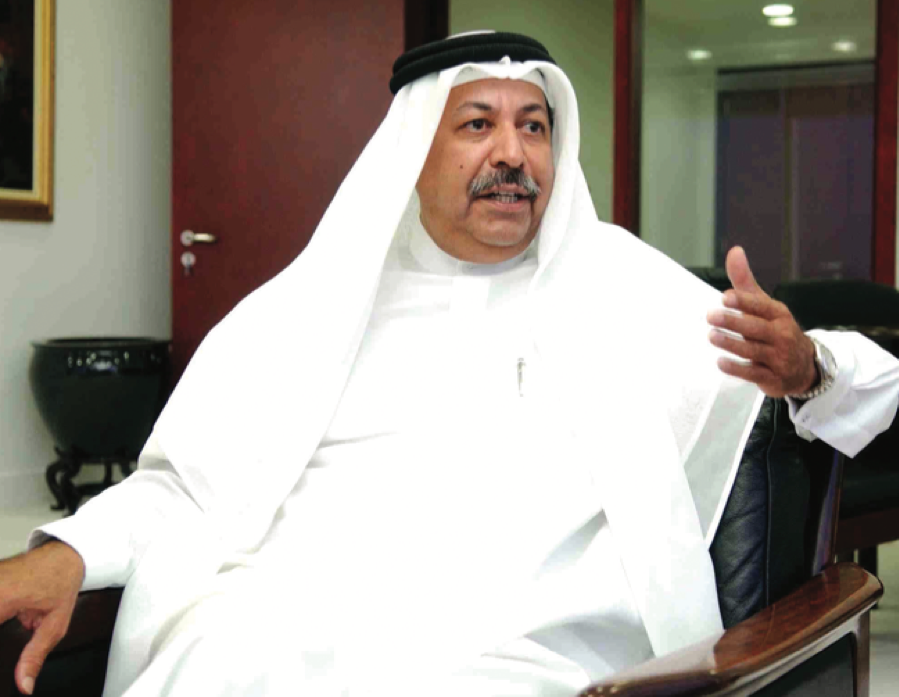
The GCC has enjoyed vigorous growth in the banking sector, with the exception of Saudi Arabia that suffered the aftershocks of the 2006 downturn in its stock market. These profits have been driven by record high oil prices across the region, better regulation practices (e.g. Basel II), financial diversification, and nationalization.

Basel II acts as an internationally standardized regulatory accord to manage credit risk, improve transparency, and strengthen the overall stability of financial systems. The GCC’s recent implementation of Basel II will alter how banks lend money, and to which countries they lend it to. With this standard on their backs, banks will have to invest abundantly to upgrade their IT systems and consultancy fees in order to comply with the new regiments. Basel II compliance will also encourage banks to liberalize their policies, be more transparent with their balance sheets and to manage their risks more effectively.

Floating on crude

With crude oil pushing $130 per barrel, the Gulf is awash with liquidity. Such an overflow of liquidity means customers have more money to place in banks, thus driving their desire for better services. The soaring liquidity has bred inflation. Inflation rates across the GCC are high, with Qatar hitting a record of 14.81% in March of 2007. Finishing in second place is the UAE, with inflation rates expected to reach up to 12% in 2008. Oman ranked third with inflation rocketing to 11.5% in 2007, but it is expected to come down this year. Inflation in Kuwait also soared from 4.4% in 2007 and is anticipated to climb to 6.6% in 2008. Saudi Arabia falls right behind Kuwait, with probable inflation of 6% this year, up from 4% last year. With the lowest rate across the GCC, Bahrain’s inflation is expected to rise to a mere 4.5% this year, up from 3% in 2007.

The high liquidity and resulting inflation plaguing the GCC has lead to renewed talk about severing ties with the ailing American greenback. While Kuwait removed its dollar peg in May 2007, it remains the only Gulf country to have done so. The move came as a surprise as most analysts had expected a more unified approach to the issue, especially with the idea of a joint GCC currency still being floated. It appears that the de-pegging has had two effects on the Kuwaiti economy. First, it has helped to curb inflation somewhat, although rising real estate prices have done much to cancel the effect. Second, the move has cut into Kuwait’s oil profits by $2.9 billion in 2007, according to a study by Aljoman Centre for Economic Consultancy. Apparently, the loss resulted from reduced oil income calculated in dollars. This development may make it even more difficult for the rest of the GCC countries to de-peg their currencies before the anticipated joint currency in 2010.

GCC top 10 banks in assets

Source: Zawya

Index of economic freedom 2008

Source: Heritage Foundation

Banking penetration GCC

Source: Respective Central Banks
*Excluding Bahrain due to non-comparable data

Diversification necessary

Other issues in the GCC banking sector include the need for diversification. Most of the Gulf countries practice heavy-handed protectionism. For example, the UAE levies 20% tax on profits for foreign owned banks, but local banks pay nothing. This has understandably limited foreign direct investment and limited the market. Other countries, like Oman, have opened their doors to foreign financial institutions, driving up standards and pushing the economy forward. Furthermore, nationalization has been and will continue to be an issue. Countries like Saudi Arabia are working hard to qualify and employ their indigenous human resources in the banking sector. Perhaps moves like this will not only benefit the sector, but ultimately help to solve social woes as well.

Having avoided the rest of the world’s economic downturn and the resulting credit crunch, and by slowing tackling their own homegrown challenges, the GCC’s banking industry is poised to continue make strong profits on the back of record high oil prices. The region’s financiers are certainly smiling… all the way to the bank.

June 20, 2008 0 comments
0 FacebookTwitterPinterestEmail
Levant

An economy in contest

by Executive Staff June 20, 2008
written by Executive Staff

As Manchester United’s Cristiano Ronaldo discovered in Moscow in May the twisting path from being a hero to potential super villain and back to hero can be very short. The man who is arguably the world’s best footballer scored a goal, missed a penalty but ended on the winning side at the Champions League final against Chelsea. Durmufl Yilmaz, governor of the Turkish Central Bank (TCMB) and arguably the best macro-manager of the economy the country has, might care to take lessons on how to achieve the same rapid transformation.

The bank and its boss have gained many plaudits for shepherding the monetary measures that slashed inflation rates of three figures to single digit levels. The TCMB at one time even forecast the level would fall to 4% this year, an event as likely as sacked Chelsea manager Avram Grant getting his job back.

Measured by the consumer price index (CPI), inflation hit 9.66% year-on-year in April, in which monthly inflation was 1.68%, according to the Turkish Board of Statistics (TUIK). Electricity price increases in June will not help. Domestic usage is to go up by 14% while the rise for industry is even higher, at 19%.

Inflation, long Turkey’s largest macroeconomic bugbear, has been on the rise again after a significant drop from the 1990s, when it regularly registered 100% or more. In 2005, the rate was brought down to 8.2%, from around 25% the year before, before climbing again to 9.5% in 2006 and 9.8% in 2007.

Inflation was so rampant that the Turkish lira was at times the least valuable currency in the world until six zeros were lopped off the currency in 2005. In 2004, $1 was equal to 1.35 Million lira. Thus controlling inflation has been seen as one of the greatest successes of Turkish macroeconomic policy in recent years, earning praise not only for the central bank but also for the Justice and Development Party (AKP) government.

Whose trophy?

Skeptics of the latter’s rule attribute more credit to the former, as well as to previous governments and the International Monetary Fund (IMF), which imposed a fiscal straightjacket on Ankara in exchange for more than $45 billion of funding since Turkey’s 2001 financial crisis.

Arguably, the AKP has risen conveniently on the world boom in emerging markets, facilitated by policies actually implemented by its predecessors. Nonetheless, given its parliamentary majority — a rare occurrence in Turkey’s notoriously unstable political history — the stability afforded by the AKP’s rule has helped secure investors’ confidence.

Economy Minister Mehmet Simsek has argued that the spike in inflation has largely been caused by external factors on the supply side, particularly rising global food and fuel prices. He asserts that the long-term trend is unequivocally toward deflation. “The risk of a persisting inflation shock in Turkey is very low. Currently, we are faced with the pressure of supply side and cost-based inflation,” he has told the press.

“What we have in Turkey is relative success. If you compare our inflation increase with that of other countries which are targeting lower rates of inflation like us, the difference has become smaller. Inflation in Turkey has gone up relatively less.”

The numbers game can, however, be a little deceptive. Turkey’s inflation rate has been on a gentle upward path even since the first year it came down to single digit level. Even so, fiimflek has a point — the ailing economies of the United States and Western Europe are experiencing a jump in inflation due to the rising cost of oil, food and commodities.

Oil prices recently hit $130 a barrel and counting. The effects of geopolitical instability — near-civil war in Iraq, Iran’s increasing belligerence towards the West, tension over the Palestine issue, unpredictability in Nigeria, declining confidence in the intentions of the CIS and Venezuela’s brand of eccentricity — have contrived with increasing demand-pull from burgeoning economies such as China and India to drive up the price of crude.

Food prices have been driven up by a number of factors. Many emerging markets experienced bad harvests last year. Turkey itself suffered drought, as did Morocco and Syria, among others, while floods slashed Bulgaria’s agricultural output.

More importantly as a long-term trend, increasing consumption of meat in emerging markets has put upward pressure on prices. Land that previously supplied cereal crops has been turned over to livestock, which is a less efficient and more expensive way of generating calories for consumption. Furthermore, the enthusiasm that North America, Europe and parts of Southeast Asia have found for biofuels has led to a shift away from food crops. Few countries have been immune from rising food costs, which have contributed to escalating wage demands and therefore fed through to the wider economy.

Building boom inflation

A third factor is the rising cost of other commodities, particularly building materials. Due partly to a worldwide construction boom, particularly in China, prices of steel and cement have been rising at double-digit annual rates. New buildings to satisfy increased demand for higher-grade property (of all types) are getting more expensive to construct. The commensurate rise in property prices and rents has fed through to increased consumer prices and, again, rising wage demands. So if fiimflek is saying in a long-winded way that it could have been worse, he is right.

One of the three domestic factors helping to push up prices in Turkey is the influx of capital. After a sluggish performance in the 1980s and 1990s, Turkey has of late experienced a flood of foreign direct investment (FDI): $19 billion in 2007, up from $17.6 billion in 2006 and $622 million in 2002, according to the central bank. The rise in oil prices has not only had a demand pull but also a supply shock effect as Gulf investors have pumped their petrodollars into the Turkish economy, particularly in the banking and real estate sectors.

Secondly, the AKP has been accused of upping public spending too much, further fuelling inflation. The government has a mandate to reduce poverty and has a large following among the less well-off, encouraging it to increase wages and public spending. Facing rising resistance from the secular and largely middle-class opposition, the AKP is loosening the purse strings to secure its support with the bulk of the population.

On May 15, in what some have seen as a symptom of increasing fiscal laxity, parliament voted to forego most of the interest payments due on $18.8 billion of late social security payments. The government also cut its primary public sector surplus target from 4.2% of GDP to 3.5%, compared to the 6.5% goal imposed under the tutelage of the IMF, whose mandate to recommend policy in Turkey (the condition of a $10 billion loan) expired May 10.

Finally, the weakening of the lira this year (by around 10%) has added to import costs, although it should be noted that inflation was climbing before the currency took a hit, and some consider it still overvalued.

The central bank appears more concerned with inflation than the government. On that busy May 15, the TCMB increased its overnight borrowing rate 50 basis points to 15.75%, indicating it saw inflation as a greater immediate risk than slowing the economy. The lending rate increased from 19.25% to 19.75%.

Yilmaz expects inflation to remain high the next few months and further increases may be required.

But the rate rise has drawn the ire of some business leaders, who argue that promoting growth should be the bank’s priority. GDP growth dropped to around 4.5% last year after topping 6% in 2006, and the IMF foresees a figure of less than 4% this year.

Ömer Cihad Vardan, Independent Industrialists and Businessmen’s Association (MÜSAD) President and Ankara Chamber of Commerce (ATO) head Sinan Aygün said the rate hike would impair business expansion and employment, while benefiting only currency speculators.

Rumor has it government has been leaning on the TCMB to freeze rates — claims strenuously denied by the AKP. But certainly the relationship appears anything but cordial. Zaman Today Columnist Asim Erdilek said the bank would “probably have to increase its benchmark policy rates by another 100 basis points by the end of the year.” He also recounted the tale of Yilmaz and his senior aides being left to “cool their heels for five hours in the Prime Ministry, in a room without cell phone reception, prior to Yilmaz’ more than hour-long, 107-slide PowerPoint presentation” justifying the rate rise. Some ministers are said to have criticized what they saw as an attempt to blind them with science in a talk that was highly technical. Yilmaz retorted that bankers have their own language. As Erdilek explained, “Perhaps what bothered some of the ministers was Yilmaz telling them the government had to practice fiscal discipline and move forward with structural reforms.”

Clearly there is some disagreement within Turkey about whether slower growth is a price worth paying for keeping the old inflationary beast caged. Given the tense political situation as well, the argument seems unlikely to be settled conclusively at the moment and the government has enough problems without facing a penalty shootout against a supposedly independent central bank.

June 20, 2008 0 comments
0 FacebookTwitterPinterestEmail
Levant

Hashemite Savings

by Executive Staff June 19, 2008
written by Executive Staff

Not an oil-producing country itself, Jordan has nonetheless benefited from the oil riches in recent years. Along the intertwining roads that crisscross Amman’s calcareous landscape, luxury villas and a rising towers are built. Reflecting the country’s positive economic environment, the Jordanian banking sector continues to display sound financial indicators.

The Jordanian banking sector currently has 23 banks, of which eight are foreign institutions (including two Lebanese), two are Islamic banks and 13 commercial banks, according to Khouloud al-Saqqaf, Vice Governor of the Central Bank of Jordan (CBJ).

A March 2008 IMF report describes the Jordanian banking sector as well capitalized with low non-performing loan ratios, strict loan classification and provisioning rules requiring banks to maintain adequate loan-loss provisions.

The entry of regional players has rendered the market more competitive and prompted the introduction of more sophisticated products. As an indicator, “the number of ATM machines has also been growing significantly,” added the vice governor.

By Q3 of 2007, the Jordanian banking sector grew by $3.89 billion, representing an 8.44 % growth from 2006 year-end to reach $50 billion, according to a report published by Jordinvest, a local financial company.

Players in the banking sector

The Arab Bank was the largest contributor to this increase, its total assets soaring by $2.35 billion. This growth was generated by a surge in net credit facilities estimated at $1.2 billion, accounting for a 10.73 % rise in the first six months of the year. The Housing Bank for Trade and Finance came in second place contributing to an increase of $600 million in total assets, driven essentially by the $266.8 million growth in cash balances at banks.

The Jordanian banking sector is extremely concentrated as demonstrated in the market share of the Arab Bank, which can accounts for just over 60% of the banking sector institutions’ total increase

The entry of the Dubai International Capital into the Jordanian market, through the acquisition of shares in the Industrial Development Bank, will certainly affect the market positively, more particularly in terms of Islamic banking, al-Saqqaf believes.  In Jordan, Islamic banking caters for mostly a clientele base. “High liquidity levels boasted by Islamic banks might redirect their funds towards the Gulf to invest that excess liquidity,” al-Saqqaf explained.

In terms of the allocation of credit facilities by economic activity, al-Saqqaf said that the share of the retail sector was estimated at 28%, general trade at 22%, mining and industry at 18.8% and construction at 17.7%. “Loans to the retail sector are limited, however, by law to about 20% of banks assets,” she pointed out.

Facilities granted for general trade and construction purposes were the largest contributors to the growth experienced by banking sector, displaying a rise of $546.3 million and $440.6 million respectively. The mining sector registered the largest percentage growth at 89.48 %.

The IMF estimates that in order to prevent a further increase in the loan-to-deposit ratio, especially of some of the smaller banks that presently have relatively high ratios, prudential limits on the sources versus uses of funds that are under consideration should help mitigate risks. “In addition, they will likely act to curb credit growth, thereby reducing inflationary pressure Although the share of credit to the construction sector and to purchase stocks has increased in recent years, appropriate prudential regulations are in place to curb banks’ exposure to the real estate sector and the stock market,” the report stated.

One particularity of the retail lending segment is born out of the large projects that are underway in the Hashemite Kingdom. According to the Oxford Business Review, Nour Nahawi, the CEO of Arab Banking Corporation in Jordan, has said that, “The demand is in mega-capitalized banks to cope with potential projects like the Red-Dead Canal. Capital must be sizeable enough to remain in step with economic growth.”

Khouloud al-Saqqaf confirmed that another market segment is showing growth levels as ratio of retail to corporate loans have been rising significantly of late.  “The corporate market, which is extremely competitive, has pushed banks to expand their retail activity,” she said.

Total liabilities increased by $3.55 billion, hitting $42.3 billion, mainly fuelled by a $2.65 billion increase in customer deposits dovetailed by an $832 million increase in banks’ and financial institutions’ deposits.

Examining the sector’s profitability reveals an increase of $22.6 million in the bottom line year on year, indicating a 5.69% rise to $420.1 million, as compared to $397.5 million in the first half of 2006.

The oil riches as well as the central bank’s new regulations imposing minimum capital levels of approximately $142 million by 2010, has encouraged banks to expand into the region. “Jordanian banks are thus establishing operations in countries such as Syria, Algeria, Qatar, Bahrain, or the UAE where the Housing Bank has opened recently,” underlined al-Saqqaf.

Bank of Jordan received a license to begin operations in Syria. The Housing Bank for Trade and Finance, one of Jordan’s largest domestic banks by assets, has already taken majority shares in subsidiary banks positioning itself on the Syrian and Algerian markets.

Forecast

The banking sector has been closed to outside players since the CBJ decided not to grant more licenses for the time being. “We expect consolidation of the banking industry to take place. There is certainly an appetite for mergers essentially due to the implementation of Basel II and the large projects that are emerging in Jordan,” the vice governor pointed out.

The IMF has declared that the CBJ has made significant progress in strengthening the regulatory and institutional framework for the banking sector in recent years with the implementation of Basel II standards underway and the enactment of an anti-money laundering (AML) law in 2007 as well as the establishment of an AML unit in the CBJ. New corporate governance regulations for banks, implementation of the electronic check-clearing system, and publication of the Financial Stability Report are welcome developments.

In al-Saqqaf’s estimate, the new challenges awaiting the banking sector are mainly articulated around a further automation of the industry, more mergers and structured products. In addition, the recent establishment of a Dow Jones index for the Amman Stock Exchange will certainly add more sophistication to the market and contribute to the development of the broader capital market and the deepening secondary debt market.

June 19, 2008 0 comments
0 FacebookTwitterPinterestEmail
Levant

Opening the vault

by Executive Staff June 19, 2008
written by Executive Staff

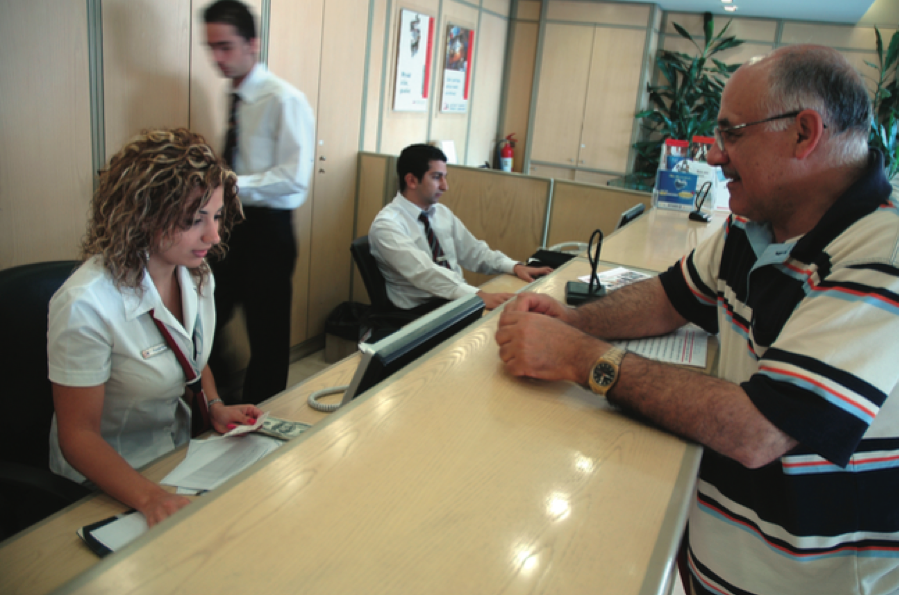
Syria’s private banks continue to shake up the country’s long stagnant banking sector. Four years after the first private banks entered the market, nine now operate, including the country’s first Islamic firms, on top of the existing five state-run institutions. A further nine have received preliminary licenses to operate in the market which, up until 2004, had been strictly the domain of the state. International credit cards, phone banking services, wider ATM access and tailored personal loans for laptops and automobiles have all been launched over the past 12 months to a public which remains heavily under-banked by regional and international standards. Business is good, with all newcomers again posting strong double digit growth figures. Indeed, Syria’s banking pastures are green enough to have seen every private bank turn a profit by the second year of their operations, a year ahead of industry standards.

“There are few countries in the world, if any, where the private banking sector has been able to generate a positive return on equity in their first or second year of operation,” Bassel Hamwi, general manager of Bank Audi Syria, said. “Syria stands out. What’s more, the growth that the sector has experienced has been overwhelmingly organic. It’s not growth that private banks are deriving from the deposits of Syrians at public banks. It’s coming from money that was under the mattress and is making its way into the formal economy.”

By the numbers

Overall, total banking sector assets rose by 12% in 2007, ending the year at $34.3 billion, up from $30.6 billion at the end of 2006, according to the most recent figures released by the Central Bank of Syria. Public bank assets rose by 4.8% to hit $28 billion, up from $26.7 billion a year earlier. State-owned banks held 81.5% of the country’s banking assets at the end of 2007, slightly down from 87% in 2006. Private bank assets almost doubled over the same period, rising from $3.9 billion to $6.3 billion. No bank, public or private, had released first quarter figures for 2008 by the time of this publication.

Three new private banks have opened to the public in the past 12 months, including the country’s first two Islamic firms. The newcomers include Syria Gulf Bank (SGB), a $65 million joint-venture between United Gulf Bank of Bahrain, Al Fotouh Investment Company of Kuwait, Global Investment House of Kuwait, First National Bank of Lebanon and other several local investors. SGB was licensed at the end of 2006 but, in practice, operated only in the second half of 2007.

The first Islamic bank to open to the public was Cham Bank which launched its services officially in August last year. Cham is a $108 million joint venture between a number of key investment firms from the Gulf — Kuwait in particular — and Syrian investors. The country’s second Islamic institution is the Syria International Islamic Bank (SIIB) which opened its services to the public last September. The bank is a $108 million joint-venture between several Qatari financial institutions, including Qatar International Islamic Bank.

A further nine banks have received preliminary licenses to open. These are the Bank of Jordan, Qatar National Bank, Dubai Islamic Bank, Noor Financial Investment Company, Tadhamon International Islamic Bank, Bank of Baraka-Syria, Global House Group of Bahrain, Lebanon’s Fransabank and Banque Libano-Française, the latter of which will operate under the name of Orient Bank.

Four years after opening her banking sector to private investment, Syria has still been unable to attract the attention of any bank from outside the Arab world. The damage to the country’s business reputation brought about by a heavy US sanctions regime — particularly the targeting of the country’s largest bank, the state-owned Commercial Bank of Syria — as well as provisions in the law which impose an ownership ceiling of 49% on foreign investors are widely held as being responsible for the lack of interest outsiders have shown in the Syrian market. The government has been considering increasing the foreign ownership ceiling to 60% since early last year — giving foreign stakeholders a controlling interest — but just when this will take place remains anyone’s guess.

In other industry indicators, total deposits increased by close to 15% last year, rising from $17.4 billion at the end of 2006 to $20 billion at the end of 2007. Deposits held by state-owned banks — this includes the Commercial Bank of Syria, Agricultural Cooperative Bank, Popular Credit Bank, Industrial Bank, Real Estate Bank and Savings Bank — grew by around 6% in 2007, rising from $14.3 billion to $15.2 billion. Over the same period, deposits held by private banks increased by 54.5%, from $3.1 billion to $4.8 billion. At the end of last year private banks held 24.39% of all deposits, up from 18% at the end of 2006.

Syria’s private sector had deposits of $14.2 billion in the local banking system at the end of 2007, up from $9.7 billion at the beginning of 2005. The private sector is increasingly choosing to do business with private banks and around one-third of all private sector deposits are now held by non-government banks. Government institutions and companies still, however, deal almost exclusively with state-owned banks, although nothing in the law forbids them from working with private banks.

The total loan portfolio of the country’s banking sector grew by around 26%, ending 2007 at $13.4 billion, up from $10.6 billion a year earlier. Loans extended by state banks increased by 20%, rising from $9.9 billion to $11.9 billion over the same period. Loans extended by private banks increased by 94%, rising from $760 million to $1.5 billion.

Holdings of Syria’s top banks (figures in $ billion)

* have not traded for a full year
Source: Cental Bank of Syria

Loans market still weak

Despite the near triple-digit growth rate in the loan portfolios of private banks, Syria’s credit lines remain weak and government dominated. While it had been hoped the introduction of private banks would be the catalyst in transforming the country’s lending market, state-owned institutions accounted for 89% of all loans undertaken by Syrian banks last year.

Complicated lending procedures and weak internal banking practices at the country’s major public lenders, the lack of proper financial records among potential borrowers and the absence of key market instruments such as treasury bills and bonds all make accessing and extending credit in Syria a difficult proposition. The overwhelming majority of deposits at Syrian banks, particularly private banks, are short term in nature (three to six months) which further limits their ability to provide long term loans. A legal environment which holds public bank staff — the major lenders — personally liable for the loans they sign off on should they go bad also acts as a disincentive for granting credit. A lack of legislation regarding repossession rights and mechanisms for solving potential disputes such as conflicting land ownership claims has also been cited by industry players as reasons they have stayed away from providing long term credit, particularly in the form of home mortgages.

“It’s a big issue,” Hamwi said. “We were able to provide long term project financing early on and we take pride in the fact that we have done it for several projects, but it is an area plagued with problems.”

Syrian authorities are, however, moving to create a more favorable lending environment. The introduction of treasury bills and bonds this year should, in theory, provide banks with the tools they need to carry out long term lending. Decree No 174 passed in September 2007 further permitted private banks to offer credit rate margins of plus or minus two percent, instead of the previous half percent either side of the Central Bank rate. The move is expected to decrease lending rates by around 1.5% and stimulate competition among the banks.

The government is also presently drafting a set of laws which will clarify repossession rights and other key issues, as well as pave the way for mortgage financing companies to enter the market. According to the plans, mortgage finance companies will be able to make loans and then sell on packages of customers’ repayments as bonds to other financial institutions — increasing the companies’ access to finance and spreading the risk of default loans among a wider pool of investors. Such companies are not without risk, however, and were largely responsible for the subprime mortgage crisis in America.

Skilled staff in demand

As with other areas of Syria’s rapidly expanding financial services sector, a lack of suitable potential employees continues to be an obstacle to growth, particularly given all new private players are working to expand their branch network coverage. Syrians are increasingly taking over the reigns at the country’s banks, however, and the sector has made it a policy to target expatriate Syrians. “Specifically, we are targeting the Gulf, the United States and Canada,” said Issam Nashawati, Syria Gulf Bank general manager. “Bringing back expatriates from Europe is more difficult as they are generally more settled.”

Financial training inside Syria remains poor — with no training in Islamic banking products provided — and all private banks have commenced internal training programs. “We are bringing in graduates and providing them with considerable internal training,” Nashawati said. “We are focusing on Syrians because they are the future. There is an understanding of this across the industry.” An industry wide ‘gentleman’s agreement’ not to poach staff has generally been upheld by new entrants to the market.

Increasing the number of branches remains the primary key to growth. The number of branches operated by private banks in Syria presently sits at 68, up from 43 in 2006. Banque Bemo Saudi Fransi (BBSF), the country’s largest private bank both in terms of market share and coverage, accounted for close to one-third of all private bank branches with 20 branches presently operating in Syria. BBSF continues to lead the expansion of the private banks into rural and remote areas, opening branches in Hassakeh, Qamishli, Deir el-Zor and Deraa. The International Bank of Trade and Finance follows with 13 branches, up from 10 at the end of 2006. Bank Audi Syria saw the largest relative increase in its network over 2007 and presently operates 10 branches up, from five at the end of 2006. Over a third of private bank branches are located in Damascus, while the balance is mostly spread through Syria’s other large cities of Aleppo, Homs, Tartous, Lattakia and Hama.

June 19, 2008 0 comments
0 FacebookTwitterPinterestEmail
Lebanon

Crossing new frontiers

by Executive Staff June 19, 2008
written by Executive Staff

Lebanese banks have long operated in a different category from the real Lebanese economy, with deposits and accounts experiencing year-on-year growth as the country’s general economic outlook was, at best, far from dynamic.

The country’s recent turbulence has done nothing to change this scenario. As Walid Raphael, deputy general manager of Banque Libano-Francaise, pointed out, there was negligible negative activity at Lebanese banks in May, and during 2006’s July War, only 3.5% of the money in Lebanese bank accounts were transferred abroad. “All the money came back before the end of the year,” he added.

Likewise, the assassination of former Prime Minister Rafik Hariri in 2005 only dented the sector’s books by 2.5% in outside transfers. Contrasted to some Saudi Arabian banks during the Gulf War, where up to 30% of assets were withdrawn, Lebanese banks know how to weather a storm.

“At each crisis we had an outflow of funds, and then funds came back,” said Semaan Bassil, Vice Chairman and General Manager of Byblos Bank. “This has been the same since the 1990s. Despite this deposits have risen from $5 billion to over $69 billion today.”

Indeed, the figures speak for themselves. According to the Central Bank, the consolidated balance sheet of Lebanese financial institutions reached $662.5 million at the end of February, up 21.6% from $544.7 million in the same period last year, while liabilities to the private sector increased 33.2% to $128.9 million, and assets were up 2.4% to $193.3 million.

But the instability of the past few years have, understandably, impacted on the sector. Banks have mulled the possibility of moving head offices elsewhere in the region, economic growth (in real terms) has been lower than potential, and banks are marketing to an increasingly fractured while also shrinking bankable populace.

With the country over-banked, particularly for such a small population, coupled with the exodus of Lebanese abroad in search of work, both white- and blue-collar alike, banks are looking outside for extra business. And for many Lebanese banks, external markets are forming the backbone of future plans, with some, like Byblos Bank, aiming for 50% of all activities in the next five years to come from outside.

An eye on expatriate cash

For a country that derives 25% of its GDP from external remittances, at some $5.72 billion in 2006, tapping into that market and the growing Lebanese diaspora is, essentially, a no-brainer. How many Lebanese account holders are living overseas is difficult to estimate, said Raphael, what with Lebanese based in the country but also travelling for work. Semaan Bassil, on the other hand, said “a large percentage of deposits are generated by Lebanese from other countries’ economies including the Gulf, Europe, Africa and the US, and those funds have shown their stability in the Lebanese banking sector over a long period of time despite all the crises.”

One thing is clear however, money earned outside Lebanon is having positive effects for the country.

This is particularly evident in the booming real estate market, which is being driven by Lebanese rather than in previous years when Gulf investors dominated the sector.

“Since the beginning of the year we’ve seen very large flows of money into real estate, and loans are mainly for real estate projects,” said Raphael. He attributed this to three primary factors. One, that Lebanese living abroad will return, two, Lebanese are comparing prices of real estate in the region and Lebanon is considered relatively cheap, and three, fear of inflation and the depreciating value of the US dollar in purchasing power terms. Indeed, for most banks, between 70-90% of loans are in greenbacks.

Over the last year and a half banks have been more aggressive in terms of retail products, and are now customizing for the diaspora.

“Lebanese banks have been offering the diaspora an interest rate premium on deposits at 1-3%,” said Bassil. Higher interest rates, banking secrecy and side stepping tax laws are also factors for expatriate Lebanese to keep accounts in Lebanon rather than outside, he added.

To tap into this market effectively, Lebanese banks are following their clients.

“We are not trying to find new markets as we have a very active client base, so we follow our clients, from Lebanon and Syria,” said Raphael. As a result, Banque Libano-Francaise is expanding from its established overseas markets in France, Switzerland and Cyprus to secure a license this year to operate in Syria, has applied for a representative office in Abu Dhabi and is looking to enter African markets.

Other banks are being somewhat more adventurous, driven by the need for survival. “Over 50 banks are trying to eat from the same pie, so they’re going abroad,” said Bassil.

As Roger Dagher, manager of financial control at the Bank of Beirut, put it: “Expanding outside Lebanon is not an option for the Bank of Beirut, it is a necessity. Constrained by the small Lebanese economy we have developed an expansion strategy that has led us to operate in nine countries — Lebanon, Britain, Cyprus, the UAE, Oman, Sudan, Nigeria, Iraq, and Qatar — through wholly-owned subsidiaries, foreign branches, representative offices, and strategic partnerships.” The bank also has “concrete plans” to open or acquire banks in Syria, Africa and Europe.

Expanding out

Other banks are pursuing similar strategies, with “each bank finding an intelligent way to go overseas,” said Bassil.

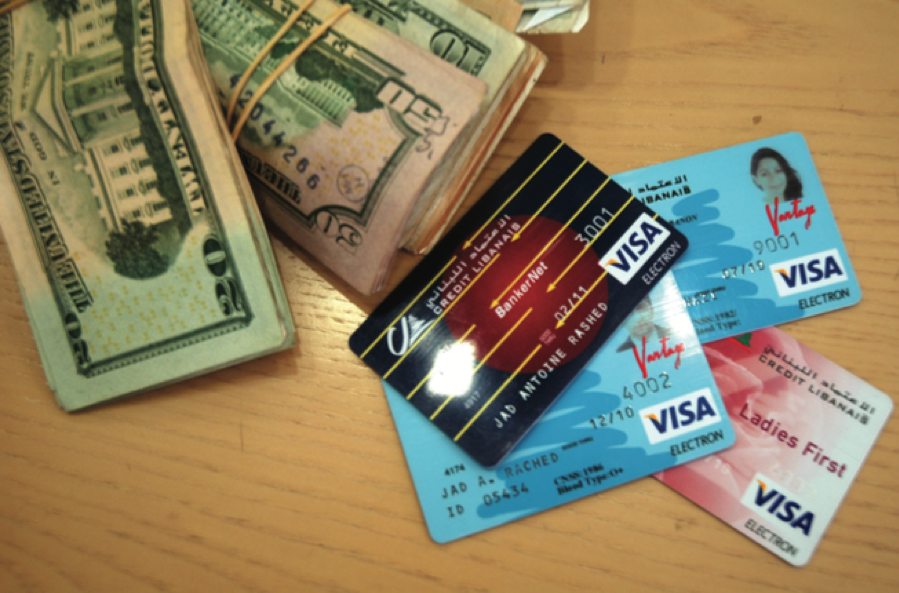
BLOM Bank recently entered Saudi Arabia with $26 million in capital for investment arm BLOMINVEST, in April 2008 was granted a license to open a subsidiary at the Qatar Financial Center, and opened a representative office in Abu Dhabi to complement BLOM Bank France’s two branches in Sharjah and Dubai. Meanwhile, the Lebanese-Canadian Bank is investing in Algeria, Bank Audi in Saudi Arabia and Sudan, Bank Med in Turkey, and Credit Libanais, which has branches in Canada, Bahrain and Cyprus, is aiming to expand into Senegal and the Ivory Coast.

“The Lebanese diaspora offers banks with a new segment, and on the diaspora level, the market is certainly not saturated,” said Alain Hakim, assistant general manager at Credit Libanais.

With Lebanese banks making up the majority of foreign private banks in the burgeoning Syrian market, Africa is increasingly becoming the new target. “Now is the right time to enter the African continent, especially as the West increasingly relies on its large source of raw materials,” said Bassil, in addition to pent up demand in emerging markets for loans.

The advantage Lebanese banks have in such emerging markets is the know-how gained in the immediate post-civil war years of operating in a non-transparent and difficult market, as well as Lebanese banks having adopted Basel II and best practice procedures, bolstered by the reputation of the Central Bank with international regulators.

Such expansionist plans will effectively reduce banks reliance on Lebanon. “Currently, 20% of Byblos’ activities and profits are from outside, and in the next five years we’re aiming for up to 50%,” said Bassil.

Raphael said that all banks are aiming for similar figures to have a diversified income.

“If you look at our exposure, nearly half is outside Lebanon, so you can say in terms of loans, financial activities, and sources of payment, half is already outside of Lebanon,” he added.

For the time being, as banks prepare to enter new markets, overcoming human resource issues is one of the most pressing concerns. And with the recent stability in the country, the domestic market will again be a focus for banks, although not to the same degree as external operations.

June 19, 2008 0 comments
0 FacebookTwitterPinterestEmail
Lebanon

Technological streamlining

by Executive Staff June 19, 2008
written by Executive Staff

In today’s fast-paced world, Information Technology has become a central element to the smooth running of any business operation. The banking sector, a pivotal industry in Lebanon’s economy boasting $85 billion in assets, is no stranger to the trend. Banks are increasingly allocating larger parts of their budget to IT departments. This has prompted some companies such as Capital Outsourcing to offer financial institutions tailor-made IT services.

“Outsourcing has been proven to help businesses reduce their costs, maximize their resources, and operate more efficiently, thus allowing them to focus on their core competencies,” underlined Charbel Bouhabib, deputy general manager at Capital Outsourcing. The company offers to financial institutions flexible propositions, allowing them to choose from a number of services and solutions, while adapting them to the specific needs of each bank.

Range of services

According to Bouhabib, there are different types of IT outsourcing that can be provided to financial institutions. “The formula is very flexible and can involve a range of products and services,” he said. Among the IT services that can be outsourced are IT consulting, messaging, hosting, and collocation. “IT support can be either provided on site or remotely and our company can either complement an organization’s existing IT team or replace it completely,” he pointed out. The company is also beefed up by its own team that is responsible for designing and implementing IT projects.

Hosted messaging using HMC technology reduces reliance on internal IT resources and provides a sophisticated messaging and collaboration solution for companies. This allows for instant access to email, calendar appointments and task notifications, while incorporating new mobile security features, such as wiping data from lost and stolen devices.

Collocation allows banks to liberalize their resources while significantly allowing for time and cost reductions by using a data platform that is shared with other Capital Outsourcing clients. “This technology is based on a concept of economies of scale as each server and service is shared by various institutions,” he said. The manager emphasized that the shared data infrastructure also provides the security of offsite data back-up.

Hosting services are another service that can be outsourced by banks. This type of service varies in frequency and complexity while delivering secure space and reliable connectivity for the most complex operations such as dedicated hosting services for high traffic volume.

 “The IT activity in Lebanese banks evolves within the regulatory framework defined by the Central Bank with the oversight of the Banking Control Commission,” Bouhabib said.

Many banks in Lebanon have turned from internally developed solutions to international software packages and solutions. Capital Outsourcing offers multiple banking solutions such as Capital Global Banking for corporate and retail banks and Capital Private Banking for private banks, which are used by more than 110 banks in Europe, Middle East and Africa.

“Our software programs encompass all types of banking activities, satisfying all sorts of needs. They also allow banks to stay in line with new Basel II requirements, and offer flexibility in report issuance,” explained Bouhabib. Such software is built around parameters that can be adapted to each financial institution.

Tailoring services to demand

“As an example, commission calculation varies from one bank to the other. Our programs, which include different parameters and various methods of calculations and take into consideration time periods, currencies involved and different values, can be tailored to each institution’s individual needs,” the manager said.

Capital Outsourcing IT management also provides expert advice to banks when its comes doing performance audits, make a new purchase or lease our servers.

For outsourcing companies the IT business can be a very profitable one. IT budgets vary traditionally within a bracket of $1-4 million yearly, depending on the bank’s size. This figure includes maintenance of the system, security running and telecommunication fees. However, the last figure varies greatly, depending on the number of branches the financial institution has. Prices for  relatively small software can go from $1 million to $3 million, including implementation and training sessions, which can cost as much as the actual licensing.

In most Lebanese banks IT systems are usually centralized. The approach differs, however, as some banks have installed servers in each branch synchronizing with the headquarters, while other are directly linked with to the main server. While costs of the project increase when each branch is equipped with an independent server, it offers reliability incase of communication failure. Branches connected with headquarters traditionally rely on two links, dial-up and microwave.

The Capital Outsourcing manager pointed out that, besides the obvious advantages, such as improving efficiency, outsourcing has allowed institutions to dramatically cut IT costs within the span of only a few years.

June 19, 2008 0 comments
0 FacebookTwitterPinterestEmail
MENA

Cleansing the banks

by Executive Staff June 19, 2008
written by Executive Staff

Since 9/11 the issue of combating money laundering and terrorist financing has taken on greater importance for the banking and financial sectors, forcing institutions to shake up their administrative divisions to comply with regulations as well as apply initiatives like ‘know your customer’ at the branch level. It’s been a costly and time consuming process, but with the MENA region a focus of international anti money laundering (AML) and counter terrorism financing (CTF) initiatives, central banks and financial institutions were left with little choice.

The USA’s Patriot Act has been the main driver, sections 311 and 314 in particular, calling for: “Special measures for jurisdictions, financial institutions, or international transactions of primary money laundering concern,” and “cooperative efforts to deter money laundering.” The seriousness of these requirements cannot be downplayed.

Obliged to obey

Unless MENA banks comply, they will be unable to have a representative bank or depository in the US, and other day-to-day operations, such as letters of credit, face heightened suspicion if not downright refusal. Furthermore, failure to comply with the Patriot Act and the OECD’s Financial Action Task Force’s 40 Recommendations on money laundering (ML) plus 9 Special Recommendations on terrorist financing (TF) can blacklist a country and its banks, as the Commercial Bank of Syria and Iranian banks currently face. Additionally, the consequences of non-compliance are not just operation and reputation related but also financial, with Arab Bank fined $24 million in 2005 by US banking regulators for failing to implement AML controls at its New York branch.

The benefits of implementing AML and CTF compliance certainly outweigh the risks, but are nonetheless costing institutions a pretty penny, whether installing new software, employing and training staff, or building up a compliance division. Middle Eastern banks are cagey about releasing such figures, but for an idea of the costs involved, a Pricewaterhouse Coopers report in Australia estimated the cost of AML/CTF compliance for a financial institution at $48 million to $96 million.

A recent survey by KPMG found that from around the globe, the regions that recorded the highest increase in costs of AML compliance were, “unsurprisingly,” North America and the Middle East/Africa. “This reflects the significant legal and regulatory changes in the US, and the wider impact of the extra-territorial provision of US law around the world,” the report noted. Middle East/Africa banks’ average percentage increase in AML investment in 2001-2004 was 68%, and in 2004-2007 an estimated 70%.

In terms of cost, topping the list was enhanced transaction monitoring, greater provision of training, sanctions compliance, remediation of ‘know your customer’ documentation, and transaction ‘look-back’ reviews.

Need for more regulation

The region has been fairly successful in curbing money laundering and terrorist financing, at least according to official accounts, with the Middle East North Africa-Financial Action Task Force (MENA-FATF), a regional body based in Bahrain, claiming a 90% decline since the body was set up in late 2004.

But tackling ML and TF is a slippery business, as heads of financial intelligence units and compliance officers unabashedly make clear. Indeed, ML and TF is considered to occur more in major financial centers, such as London and Frankfurt, where there is greater safety in numbers, than in the smaller and more risk associated markets of parts of the Middle East.

The countries in the MENA region that have warranted censure, Iran and Syria, are arguably lower in the money laundering stakes than the likes of Dubai, and in terms of terrorist financing, Saudi Arabia.

But the matter is politically tinged (see Islamic Banks and TF article in the Islamic Banking and Finance Special Report), as a private sector dialogue with the US government attended by all the region’s major banks in Cairo a few years ago highlighted when there was a heated discussion about what constitutes a terrorist group. The 5% that were in disagreement concerned Hamas and Hizbullah, two groups at the top of US concerns with TF that also enjoy popular support around the Middle East, including Saudi Arabia, a known financial backer of Hamas.

Politics aside, banks are making noticeable progress in tackling ML and TF, but there is still reluctance amongst Middle Eastern banks to voluntarily adopt higher AML standards in line with global policies as it would put them at a competitive disadvantage. This was reflected in the declining importance senior management placed on AML issues in the KPMG survey, with 88% of respondents in 2004 citing AML as a high profile issue, but by 2007 only 54%.

There is optimism however, with 84% of respondents from banks in the UAE expressing the view that AML regulations should be increased. Indeed, although MENA-FATF has been carrying out country evaluations, to improve AML and CTF in the region commercial and retail banks need to be encouraged to do more, for their reputation as much as curbing money laundering and terrorist financing.

June 19, 2008 0 comments
0 FacebookTwitterPinterestEmail
Comment

Authoring Israel’s chronicle

by Peter Speetjens June 3, 2008
written by Peter Speetjens

History is a funny thing. It is like a piece of clay that changes shape depending on the hands that hold it. After a war, it is generally first picked up by the ones who won. They like to tell tales of heroes and bravery. Those who lost will see things quite differently, yet generally do not have a voice.
In the documentary The Fog of War (2004), former US Secretary of Defense Robert McNamara claimed that had the US not won WWII, the country would have been prosecuted for war crimes, because of the massive bombing campaign on Japanese cities.
On May 15 the world commemorated 60 years of Israel and 60 years of the Palestinian Nakba (Catastrophe). These are of course twin events, intertwined like a Gordian knot, yet when speaking to the Knesset on Israel’s latest anniversary, US President George W. Bush proved hopelessly one-sided in his Bible-fuelled admiration for the Jewish state, while mentioning the Palestinians only once.
Having set the tone by calling Ariel Sharon “a man of peace, a friend,” Bush argued that Israeli independence was founded on “the natural right of the Jewish people to be masters of their own fate” and “the redemption of an ancient promise given to Abraham and Moses and David.”
Israeli MPs awarded Bush with a standing ovation, yet both friends and foes must have shivered hearing his sermon-like speech. Now, of course the Jewish people have a right to self-determination. Who could disagree with that? However, one’s right ends where the other’s begins, and who could argue that deportation and confiscating land and property are an acceptable part of a people’s path to self-determination?
Illustrating his status of a born-again Christian, Bush’s claim that Israel’s right to exist is God-given is a direct reference to the Torah and Old Testament. With it he not only delighted Israeli nationals and an estimated 90 million evangelicals within the US, but probably also Osama Bin Laden and anyone else eager to take the world back to the Crusader era.
Golda Meir, for one, would have been pleased, having herself once said: “This country exists as the accomplishment of a promise made by God Himself. It would be absurd to call its legitimacy into account.” Who would dare argue with God?
In his speech Bush went on to compare the foundation of the US to that of Jewish state. “When William Bradford stepped off the Mayflower in 1620, he quoted the words of Jeremiah: ‘Come let us declare in Zion the word of God.’ The founders of my country saw a new promised land and bestowed upon their towns names like Bethlehem and New Canaan.”
There are indeed many striking similarities between the US and Israel. Both are built by colonists, God-fearing “farmer-fighters” in search of a better future and a better life. In many ways both succeeded, yet they only did so at the expense of the native population, a reality both nations rather ignore.
Israel’s history has been largely written by the Zionist victors who were greatly inspired by the tale of David and Goliath. In short: tiny little Israel was forced into a battle with a sea of armed Arabs. Against all odds, it won. Meanwhile, the local inhabitants had fled, as they were told by their leaders, and thus Israel miraculously ended up with twice as much land as it was given in the UN partition plan.
This is still being taught in Israeli schools today. Only last year, the Israeli Ministry of Education allowed the word “Nakba” to be mentioned in schoolbooks, yet solely in Israeli Arab ones. Israel’s Jewish children continue to be fed “the miracle of 1948” even though since the 1980s the Zionist version of events has largely been destroyed by a new generation of Israeli historians, who based their conclusions on declassified Israeli sources.
Take Benny Morris, who has shown that most Palestinian did not leave because their leaders had told them so, but because they were forced at the barrel end of a Zionist gun. Avi Shlaim shattered the prevailing view that Israel always wanted peace, while the Arabs were always unwilling to negotiate.
Ilan Pappe showed that the Jews in 1948 were better armed than the Palestinians and in fact executed a strategy known as “Plan D” that aimed at surrounding villages and deporting its inhabitants. Thousands of people were executed on the spot. According to Pappe, it is a classic example of ethnic cleansing, not much different from what happened in Kosovo and Bosnia in the 1990s.
If there is one thing to celebrate about 60 years of Israel, it is the fact that the country has a relatively free intellectual climate able to give birth to academics such as Morris, Shlaim and Pappe who dare to confront Israeli society with its painful hidden past.


­Peter Speetjens is a Beirut-based journalist.

June 3, 2008 0 comments
0 FacebookTwitterPinterestEmail
Comment

Do as I say, not as I nuke

by John Dagge June 1, 2008
written by John Dagge

The Nuclear Non-Proliferation Treaty (NPT) is under threat. We know this because the only country to have ever used nuclear weapons (twice) told us last month. The warning came at the end of a two-week meeting of the 106 NPT member nations in Geneva in early May. A statement from the five sanctioned nuclear powers — the United States, United Kingdom, Russia, France and China — laid responsibility for the threat of increased nuclear proliferation squarely on Iran and North Korea. Yet a quick look at the record shows those most hysterically calling for an international effort to ‘shore-up’ the NPT have long worked to undermine the world’s premier weapons control agreement — at least when it comes to their own obligations.

Although the 1968 Nuclear Non-Proliferation Treaty is generally understood in the West as giving the United States the right to decide who can and who can not have nuclear technology, the document’s exact wording is a little more complicated. At the heart of the agreement is a quid pro quo arrangement, one the West (primarily the US) has long failed to uphold. In return for forgoing nuclear weapons, nuclear power for civilian use is to be made available to all non-nuclear signatories. And yes, this does include Iran.

On top of this, under Article VI of the NPT, the five recognized nuclear states are obligated “to pursue negotiations in good faith on effective measures relating to cessation of the nuclear arms race at an early date and to nuclear disarmament, and on a treaty on general and complete disarmament under strict and effective international control.” This requirement was strengthened via a 1996 International Court of Justice ruling which unequivocally stated nuclear powers must disarm. It was further reinforced at the NPT Five-Year-Review in 2000 when delegations from 180 countries (including the US, then under Bill Clinton) agreed on a 13-step program to implement Article VI.

Yet this most essential element for a workable NPT has been delayed, ignored and outright breeched by Western powers for years. The Bush administration in particular has demonstrated a unique determination to ensure NPT obligations apply to everyone but the United States. This was clearly displayed in 2002 with the release of the US Nuclear Posture Review. In that document America reaffirms the ongoing role nuclear weapons will play indefinitely in her defense policy, outlines the research and development of a number of new tactical nuclear weapons such as bunker busting bombs and, for the first time, shifts the use of nuclear weapons from deterrence to first use, a radical departure in military policy which received little press attention. All of which effectively ends a US commitment to the NPT.

Moves by the United States to reduce its nuclear arsenal also need to be taken with a large grain of salt. In another little publicized but extreme shift from convention thinking on disarmament, the Bush administration has done away with the principle of irreversibility in terms of reducing its nuclear weapons stockpile. While the average person may understand disarmament to mean actually destroying your nuclear weapons, the legal eagles of the Bush administration have ruled this clause simply means putting them on standby. Under the 2002 Moscow Treaty — a key agreement the White House cites as evidence it takes its Article VI obligations seriously — the US is not required to destroy its weapons. Rather, they simply must not be “operationally deployed”, meaning a large number will be maintained in a “responsive force” capable of redeployment within weeks or months.

Furthermore, the NPT is only one of many overlapping pieces of legislation which work together to control the world’s most destructive weapons. Its main supporting pillar is the Comprehensive Test Ban Treaty, an agreement which prohibits nuclear test explosions (or any other) and one which America has steadfastly refused to ratify for more than 10 years. The other major piece of complementary legislation is the negotiation of a treaty banning the production of any further fissile material, the fuel for nuclear weapons. Again, the conclusion of such an agreement has been stymied by Washington. In November 2004, the UN Committee on Disarmament voted in favor of a verifiable fissile materials cut-off treaty. The result was 147 in favor and one against. No prizes for guessing who opposed. Likewise, US support for the nuclear programs of Pakistan, India and Israel makes its near daily hubris against Iran ridiculously hypocritical.

The US is right to assert the NPT is under threat. International Atomic Energy Agency director general Mohamed ElBaradei summed the treaty’s main challenges as follows: “We must abandon the unworkable notion that it is morally reprehensible for some countries to pursue weapons of mass destruction yet morally acceptable for others to rely on them for security and indeed to continue to refine their capacities and postulate plans for their use … We have come to a fork in the road: either there must be a demonstrated commitment to move toward nuclear disarmament, or we should resign ourselves to the fact that other countries will pursue a more dangerous parity through proliferation.”

John Dagge is a freelance journalist based in Syria.

June 1, 2008 0 comments
0 FacebookTwitterPinterestEmail
Comment

America reaps seeds it sows

by Riad Al-Khouri June 1, 2008
written by Riad Al-Khouri

Political scientists, along with other specialists as well as laypersons, have spent the last seven years grappling with the implications for international relations of the attacks of 11 September 2001 and their aftermath. The impact of 9/11 around the world, and on the Middle East in particular, has been enormous. The effects on development, democracy, and human rights are vast, with sharp change and conflict increasingly characterizing Western relations with Muslim countries. As a subset of this phenomenon, ties between the Arab world and the West also shifted.

However, although 9/11 is a turning point, there is no consensus on its roots or implications. As an antidote to the sterile contention shrouding the event, the rigorous work of Dan Tschirgi (pronounced as if combining the two French words “cher” and “guy”), professor of political science at the American University of Cairo, provides sober analysis.

Turning Point puts into a proper context the implications of 9/11. Flying in the face of the puerile shortcuts that so many in the West have taken during the past few years, Tschirgi’s book includes original insightful cases of the global challenge of asymmetric warfare. Applying his theory of “Marginalized Violent Internal Conflict” to three cases, Tschirgi elucidates the roots of insurgency through the struggles of underdogs to preserve their identities in an unfriendly world. He demonstrates the dynamics through which the oppressed in modern times struggle against tyrannical states by looking at Mexico’s Zapatista conflict, the struggle of Egypt’s authorities against the Gamaa al-Islamiyya, and the Nigerian government’s fight against the Ogoni people in the Niger Delta. In doing so, he raises many issues related to the Middle East and American policy toward the area.

Tschirgi’s thesis is that 9/11 was not unique, but an understandable — though deplorable — reaction to Arab marginalization and Western threats to regional identity. As a corollary, he debunks the “exceptionalist” approach to the Arab world (the presumption that Western social science fails to fathom the Arabs). Tschirgi also suggests two broad policy recommendations: that the US has no duty to support Israeli expansionism, and that an American withdrawal from Iraq must come as early as possible.

With a new US administration looming, we may now be looking at a post-post-9/11 era. It has become one of the clichés of the current American presidential election campaign that the economic crisis has replaced the Iraq war as a main issue. In fact, the two are indirectly related. Just as sloppy corporate governance in the banking sector caused the subprime crisis, poor governance in Washington unleashed American hubris and greed, which lead into the Iraqi swamp.

Harmony within and among societies suffers because of a resurgence of fundamentalism and its antithetical aggression, Western or otherwise. All are losers in this situation. The danger raised by the terrorist threat is as real today as it was in September 2001 and indeed before. However, the American rampage in Iraq and elsewhere around the world is equally dangerous, and indeed interacts with real or imagined threats of terrorism in a vicious circle. The solution would thus seem to lie in the re-engineering of America to allow it to regain the moral high ground it occupied during parts of the 20th century.

This is clearly a tall order; in any case, Tschirgi’s balanced scholarly work does not delve into such issues, nor does he have final answers — no serious social scientist ever has. However, he sets the stage for policymakers or laypersons to address important questions rationally: Where are the US and the Arab world going from here? Have the major challenges changed? Are new priorities emerging? In this way, Turning Point generates healthy debate about policy alternatives for other scholars to build on — and policy players to ponder: McCain, Obama, and Hillary, please take note. At a time when dabblers too often dominate the discussion of contemporary world affairs, this thoughtful work from an established American scholar with decades of experience in the complexities he analyzes is refreshing.

In this grim new world, our duty is to engage peacefully with potential or actual adversaries. Modern technology means that war and other forms of physical violence have become luxuries we can no longer afford. For example, for the US to talk to Iran or Syria, instead of blustering and vituperating, is literally a question of world war or peace. The alternative is to refuse to listen to the other side, a crime of which the Middle East is as guilty as the West. In such mess, works of the caliber of Turning Point are welcome.

Riad al Khouri is a visiting scholar at the Carnegie Middle East Center, and Senior Fellow of the William Davidson Institute, University of Michigan.

June 1, 2008 0 comments
0 FacebookTwitterPinterestEmail
  • 1
  • …
  • 526
  • 527
  • 528
  • 529
  • 530
  • …
  • 696

Latest Cover

About us

Since its first edition emerged on the newsstands in 1999, Executive Magazine has been dedicated to providing its readers with the most up-to-date local and regional business news. Executive is a monthly business magazine that offers readers in-depth analyses on the Lebanese world of commerce, covering all the major sectors – from banking, finance, and insurance to technology, tourism, hospitality, media, and retail.

  • Donate
  • Our Purpose
  • Contact Us

Sign up for our newsletter

    • Facebook
    • Twitter
    • Instagram
    • Linkedin
    • Youtube
    Executive Magazine
    • ISSUES
      • Current Issue
      • Past issues
    • BUSINESS
    • ECONOMICS & POLICY
    • OPINION
    • SPECIAL REPORTS
    • EXECUTIVE TALKS
    • MOVEMENTS
      • Change the image
      • Cannes lions
      • Transparency & accountability
      • ECONOMIC ROADMAP
      • Say No to Corruption
      • The Lebanon media development initiative
      • LPSN Policy Asks
      • Advocating the preservation of deposits
    • JOIN US
      • Join our movement
      • Attend our events
      • Receive updates
      • Connect with us
    • DONATE