• Donate
  • Our Purpose
  • Contact Us
Executive Magazine
  • ISSUES
    • Current Issue
    • Past issues
  • BUSINESS
  • ECONOMICS & POLICY
  • OPINION
  • SPECIAL REPORTS
  • EXECUTIVE TALKS
  • MOVEMENTS
    • Change the image
    • Cannes lions
    • Transparency & accountability
    • ECONOMIC ROADMAP
    • Say No to Corruption
    • The Lebanon media development initiative
    • LPSN Policy Asks
    • Advocating the preservation of deposits
  • JOIN US
    • Join our movement
    • Attend our events
    • Receive updates
    • Connect with us
  • DONATE
Society

Environment – Crude without a culprit

by Executive Staff June 1, 2008
written by Executive Staff
 
Sometime during the evening of Saturday, March 22, pipes from the Holcim cement factory in Chekka began leaking oil into the Mediterranean. Between one and two tons of oil entered the sea in the industrial area of Koura, just south of Tripoli. Holcim teams worked through the Easter holiday to clean the spill, and by Monday morning, the beach and the sea that were immediately contaminated in Chekka was cleaned.

Holcim, the NGO IndyAct and local residents all agree on the chronology of the oil spill and subsequent cleaning in Chekka. Yet that same weekend, residents of Anfeh, a fishing village a few kilometers north of Chekka, discovered a huge amount of oil had spilled onto their beaches, only two months after local teams with international support finished cleaning the remains of the 2006 War’s oil spill. Well over a month has passed, the beaches of Anfeh remain covered in black oil and Holcim, IndyAct, locals and the Lebanese government fight a protracted battle to identify the polluter and hold him responsible for cleaning costs.

Dana Obeid, a member of IndyAct, said that the organization became aware of the oil spill over the Easter weekend, and went to Anfeh to assess the damage on the following Tuesday. According to Obeid, IndyAct found that residents who live in the immediate vicinity of the beach were forced to leave their homes — sometimes for as long as five or six days — to avoid the overwhelming smell, made stronger by spring winds. Fishermen were unable to take their boats into the waters for up to two weeks. The large Phoenician walls built into a small cliff overlooking the ocean were threatened by the oil. The public beach was rendered unusable.

Polluting the economy

The village depends largely on the sea for its income and thus is in a difficult position as the summer season begins. Faysal Touma, a local fisherman, said the damage was worse than what the village saw after the July War. “Here we fish in shallow waters, and these were the areas most affected.” Another local fisherman, Bassam Fares, agreed. “The boury and crabs that used to flourish here have almost completely disappeared. Restaurants that used to call and order fish in the morning know that we have nothing and have stopped calling.”

The oil spill could not have come at a worse time for fishermen. “We still don’t know the full effect of the damage because spawning season begins this month. We won’t know how much the oil spill has affected fishing until we see how many eggs hatch this year, and then how that will affect next year’s spawn,” Touma said.

The strong spring tides have also pushed layers upon layers of debris onto the beach, making the area contaminated almost a meter thick in some places. Finally, as the days get warmer, the sun is melting the oil that had filled the crevices in the rocks along the coastline and dried on the rocky beach, meaning that it is now creeping back into the sea.


The town’s proximity to the Holcim factory and the winds that push the tide north immediately led IndyAct to see a link between the Chekka accident and the damage in Anfeh. Obeid said that IndyAct was in contact with Holcim the same day they went to survey the incident, but that the company immediately denied responsibility for the Anfeh spill and said that their responsibility had ended once the Chekka cleanup had been completed.

Issam Salameh, communications spokesperson of Holcim in Lebanon, maintains that it would have been impossible for the Holcim oil to reach Anfeh, because of the quick and “vigilant” response of Holcim teams as soon as the leak began.

“We began cleaning immediately when we saw the leak on Saturday, and we monitored the leak until everything was clean. If the fuel had spread, we would have noticed it and cleaned it immediately,” he said, noting Holcim’s interest in recovering as much oil as possible, as the leaked fuel is filtered directly back into the factory’s systems for continued use.

Salameh said although 200 to 400 square meters of water were covered by the oil, the environmental damage was limited. “Oil does not dissolve in water, and when it first enters water, it floats on the surface, so it never actually mixes with the water.”

Over the course of the cleanup, Holcim determined high temperatures caused quick melting of large amounts of ice, overloading the pipes in the factory and causing the leak. Salameh said Holcim is examining the cause of the leak in more detail in order to take corrective action, which should be in place within the year.

As the beaches of Anfeh sat black, the story gained press coverage and the attention of the government. A joint government committee from the Ministries of Environment and Transport visited Anfeh, taking fuel samples along the beach and the Holcim plant to determine if the two samples match, which should determine definitively whether the oil was Holcim’s.

No one held responsible

More than a month has passed since the sampling and no results have been announced yet. A Ministry of Environment official said it is normal that the identification process is long, as the matching process, known as fingerprinting, is quite complex. He said he hoped to have results within the next several weeks, but did not seem urgently concerned about the environmental damage.

“This area was hit very hard by the oil spill during the July War,” he said. “Because the cleaning was only finished two months ago, the environmental damage was already done.”

The ministry also stressed that entities other than Holcim may have caused the spill. The official said “eyewitnesses reported seeing an industrial tanker off the coast of Anfeh that weekend. This tanker may also have leaked fuel, and the two oil spills could be a simple coincidence.” This ‘other tanker’, however, remains unidentified. The ministry source said the government would only begin to look for the mystery vessel if the tests showed that the oil in Anfeh did not originate at the Holcim factory.

Obeid, however, noted that the chances of two factories in the same region having an oil spill of similar amounts in such close proximity at the same time are slim. She also pointed to the fact that the Holcim factories have had similar accidents causing oil spills twice in the last six years.

Once the results of the government study are announced, the responsible party will bear the costs of cleaning the Anfeh beach. Confident the oil did not originate from Holcim’s factories, Salameh said his company had cooperated fully with investigators and would clean the beach if ordered to by the ministry.

The cleaning process will, however, be labor-intensive. The Anfeh beach is very rocky, which means that cleaning efforts will have to include manual scrubbing of rocks before high-pressure water hoses can be used. Moreover, the affected stretch of coast is surrounded by homes, which will impair access to the beach. Tony Chamoun, the director of the PROMAR company that cleaned the Anfeh beaches following the July War, estimates that cleaning would take between 30 and 45 days and would cost at least $200,000.

The Anfeh spill reveals bigger problems in Lebanon’s environmental laws, specifically in the Koura region. As Habib Maalouf of the Lebanese Environmental Party said, “There is always a high risk of environmental damage in this region because of the many ports and factories.” Yet despite this ever-present risk, the government has no strategy in place to deal with oil spills, instead dealing with cases on an ad hoc basis.

The Ministry of the Environment defended this strategy, saying flexibility made it easier to respond appropriately to individual incidents and enforce laws requiring polluters pay for environmental damage they cause. Yet Maalouf said this legal principle is poorly enforced and leads to poor clean up of environmental damage.

IndyAct is calling for the beach to be cleaned immediately and for Holcim to pay compensation to the local fishermen. But as Holcim and IndyAct await the results of the government’s tests, local residents are anxious for action.

“We want to be able to use our beach. We want to be able to go back to work. We want someone to be held responsible, and we want to make sure that this won’t happen again,” Touma said. “People keep coming here to take pictures, to talk to us and to take samples, but when is anyone finally going to do something?”


June 1, 2008 0 comments
0 FacebookTwitterPinterestEmail
Lebanon

Bank stability – Strongholds of commerce

by Executive Staff June 1, 2008
written by Executive Staff

In recent years, Lebanon’s banking sector has played a pivotal role in supporting local economy. In spite of repetitive security crises and heightened tensions, the financial industry has been able to navigate through tricky waters — rendered uncertain by Lebanon’s political situation — while at the same time contributing to the resilience of the economy.

“The banking sector assets are larger than the actual Lebanese economy. In most countries, deposits amount to once or twice the national income, while in Lebanon, it is as much as three times,” said economist Marwan Iskandar. Commercial banks’ assets hover at $85.1 billion, while the GDP is only $24 billion. The economist attributes this unusual situation to the large number of expatriates — estimated at about 40% of the total population — making yearly transfers to their families in Lebanon.

Iskandar believes this year’s remittances have reached as much as $7 billion. “This figure actually exceeds the central bank’s last official figures, as it includes the further wave of emigration Lebanon has faced in the last two years, the undeclared cash brought in by Lebanese into their home country as well as the riches witnessed in the Gulf, where many Lebanese are residing. One has to also to include in the estimates Iran’s aid to Hizbullah,” he underlined. Iskandar also included the steady aid flow received by Lebanon from Paris III as an important factor contributing to Lebanese resilience, with inflows estimated at about $1.5 billion last year only.

In the opinion of Nassib Ghobril, head economist at Bank Byblos, Lebanese commercial banks have also contributed to the stability of exchange rate, a cornerstone of the Lebanese economic resilience. “To stabilize the Lebanese exchange rate, the Banque du Liban (Central Bank) has relied on resources constituted by deposits of commercial banks, which are bound by the law to place with the BDL 50% of their reserves in foreign currency and 25% in Lebanese pounds, both amounting to $20.5 billion,” Ghobril pointed out.
Lebanese commercial banks have supported the economy by purchasing a significant part of the country’s public debt. When in the 1990s commercial banks initially subscribed to Treasury Bills issued by the BDL, they were primarily concerned with Lebanon’s economic stability. “By issuing certificates of deposits with long maturities on numerous occasions, and more particularly during phases of political instability such as the assassination of prime minister Rafik Hariri, banks have relieved pressures on the Lebanese pound and attracted capital,” Ghobril said.

Multiple approaches

However, the approach of banks towards public debt banks has been far from monolithic. While some banks have been reluctant to subscribe to new debt emissions, others have simply renewed subscription. A third category of banks still adopts an aggressive stance and purchases government bonds. As Ghobril highlighted, “Commercial banks would naturally like to see debt to GDP ratios decline but this can only be achieved by implementing the reforms envisioned by the Paris III conference, an impossible exercise in the absence of political consensus.”

Lebanon’s donors’ implicit guarantee that they will support the Land of the Cedars in difficult time has helped to alleviate some of tension on the local level. Lebanese investors are also dedicated to their banking sector and have proven numerous times that they will not exit the market at the first shock, as has been the case in some South American countries. “The internal debt does not really represent a real risk for banks as the central bank can always turn to printing money, although it comes with an inflationary price,” Iskandar explained.

Regardless of the internal debt’s weight on Lebanese banks, their expansion abroad has positively affected the BDL’s resources, helping its deposits to steadily grow, and promoted investors’ confidence. This has reflected indirectly on the flow of remittances into the country “as senders feel assured their transfers will not witness any significant erosion in value,” declared Ghobril. Most Lebanese banks have followed an aggressive expansion strategy. “Seven of the ten largest Lebanese institutions have set up shop in Syria, while others have opened in Jordan, Egypt, Sudan, Algeria, and Saudi Arabia,” Iskandar said.

Iskandar also observed that about 30% revenues of the two largest banks — Audi and BLOM — stem from outside Lebanon, as featured on their balance sheets. “The sector has established its competence on the regional level and been able to maintain its credibility despite the local dire situation,” Iskandar underlined, adding however that growth of the sector is lower than what is hinted by indicators if one removes accumulation of interest. “Another significant indicator showing relatively lower growth of the banking sector than what figures may boast lies in number of bank employees that has remained constant in the last few years,” he added. Ghobril argues, however, that falling interest rates in recent years have proven deposits are growing at a faster rate than interest accumulation.

Contrary to popular belief, commercial banks have continued extending loans to small and medium enterprises and the private sector in general, in spite of higher risks on the local market associated with political volatility. “Loans to the private sectors amounted to some $18.5 billion last year and credit growth has been partly fueled by rising competition among banks,” Ghobril emphasized.
As the largest Lebanese employer, the banking sector’s some 16,000 workforce also boasts higher salaries than other industries.

The resilience of the sector does not, however, necessarily imply that it operates independently from the rest of the economy. “On the contrary, the banking sector is exposed to all Lebanese industries and reaches into all classes of the local population,” highlighted Ghobril. Investor’s commitment to the industry has helped the sector maintain some of its buoyancy in addition to the BDL’s efforts.

“Lebanese banks have been able to stay away from the subprime crisis and avoid any significant losses,” Iskandar added. Ghobril believes that rules and policies adopted by the BDL have allowed commercial banks to maintain their credibility and stay in line with international regulations. “In addition, the Central Bank has protected its depositors and their funds as well as encouraged the consolidation of the sector, earning it the 41st place among developing countries on the IMF autonomous index,” Ghobril said.

June 1, 2008 0 comments
0 FacebookTwitterPinterestEmail
Society

Nightlife – Taming the block rock

by Executive Staff June 1, 2008
written by Executive Staff
 
Going back a few years, Gemmayzeh was a quiet, residential area. As the brown tourist signs declare, it was and still is a “quartier a caractère traditionnel”, and back then one might have thought of it as something of a “sleepy neighborhood.” But much of that has changed. In those few short years it has gained a reputation as a nightlife hotspot — one of the places to be seen over the weekend, where the high heels and Gucci bags brigade rub shoulders with the nose rings and dreadlocks crowd.

Four years ago there were only a couple of bars or restaurants in Gemmayzeh, but the last year or so has seen an exponential growth in the number of establishments with around 80 bars at present, and it seems as if a new place is opened every week. While this may be good news for weekend revelers, the rapid development has come at a price for some of Gemmayzeh’s residents. Over the weekends the quarter’s once slow and sleepy roads are now packed with traffic and the streets are crowded with the city’s youth letting off steam. As the neighborhood’s residents get ready for a good night’s sleep, a cacophony of clinking bottles, base beats, laughter and chatter rises from the streets until the early hours of the morning.

Tensions between the residents and the bar owners and patrons had been on the rise for a while and at some point something had to give. In the beginning of April, some residents staged a demonstration in Gemmayzeh, bringing the place to a stand still for a couple of hours, while also lodging formal complaints with the Ministry of Tourism and the Governor of Beirut about the problems the bars were causing them. This lead to the temporary closure of some twenty establishments that were not in possession of the correct licenses and placed yet another two groups in Lebanon in a tense stand-off: bar owners on one side and the residents on the other.

Parties to Politics

Those who read foreign press features will be acutely aware that there are two almost contradictory stories that periodically emanate from Lebanon. The first revolves around the political turmoil and speculates about the possibility of conflict and the second celebrates Beirut as the only city in the Middle East with a “decent” — whatever that might be — nightlife. So it is a fitting irony that Beirut’s nightlife has, of itself, become the latest cause of turmoil.

To date things have not gotten too out of hand, and although the odd egg or two has been thrown from a sleep-deprived resident’s balcony towards a crowd of loud and tipsy drinkers, the security situation appears to be under control. However, Ellie Nassar, the mukhtar (mayor) of Gemmayzeh and head of the residents committee, noted that there have been escalations of late: in one instance a whole bucket of carefully aimed steaming water drenched a noisy group of street drinkers. He proceeded to make the point that Gemmayzeh should have some 15 to 20 police on the streets over weekends, plain clothed if possible, to monitor the situation.

Nassar even expressed concern, possibly a little tongue in cheek, that without proper policing and with so many inebriated individuals, events might take a violent turn. He explained, “with so many drunk people coming from the bars and making problems with the residents, maybe it will end in a shooting — when people drink they lose control and everybody here has a gun. Everybody. It’s dangerous and it could happen.”

Perhaps this is over the top, but perhaps not. On one occasion in a bar in Gemmayzeh there was a young man who was very eager to show off his gun. Standing with an Al-Maza in hand, he proudly listed the names of his friends in different sects and then proceeded to explain that he had an automatic weapon in the back of his car and he’d be more than happy to get it out. The offer was politely declined.

The road from Monot to Gemmayzeh

In a more serious vein however, Gemmayzeh’s rise does have a connection to the political situation. The opposition sit-in around the downtown area seriously affected the number of patrons visiting bars around Monot, which predated Gemmayzeh as Beirut’s street nightlife center and is located only a stone’s throw away from the fringes of the tent-city sit-it. At tense points in the political stand off, Gemmayzeh, although also close to downtown, was viewed as a somewhat safer location for a night out. Novelty, changing fads, and a trendy set of bars and restaurants have also played their part in Gemmayzeh’s transformation from a sleepy residential area to the latest hip thing.

Then, of course, there is money. Entertainment is big business. According to a survey by Ziad Kamel, who sits on the Gemmayzeh bar owners’ marketing committee, local businesses in Gemmayzeh were losing as much as $70,000 a day in revenue during the two-week period in which a number of the bars were shut down and strict closing times were imposed on those that remained open. It is not only the bar owners who are profiting, between them the restaurants and bars pay some $3.4 million annually in rent to Gemmayzeh landlords.

At present, the vast majority of the bars have been reopened and the early closing times have been lifted, following a series of commitments from the bar owners, such as monitoring noise levels and preventing customers from leaving their premises with drinks. Residents have also requested closer regulation of the valet parking system and there has been a suggestion that the disused Charles Helou Bus station car park might be revamped to cater for weekend parking in the area.

Both the bar owners and the mukhtar were keen to point out that the responsibility for regulating the area does not fall to the proprietors alone. Both have requested that the government provide better services in the area, particularly efficient policing, improvement of the infrastructure, regulation of the one-way traffic system and possibly even installing cameras along the street.

The debacle has had some positive effects, as Ziad Kamel pointed out that “it’s the first time that the bar owners in Gemmayzeh have worked together and seen one another as support rather than competition — this is something that Monot never had.” At the same time the mukhtar, Ellie Nassar, hopes that the efforts on all sides will make life easier for the residents. Under the new agreements all the entertainment establishments are to be given three warnings should they violate the noise regulations, after which they will be summarily closed down.

At the end of the day though, Mukhtar Nassar clarified that even the vast majority of residents do not want it to come to this, saying “We don’t have any target to close down the bars, we simply want to regulate the nightlife.” As another resident, Michelle Ghanem, said while attending the bar owners’ committee meeting, “all I want to do is get some sleep, that’s it, just some sleep.”


June 1, 2008 0 comments
0 FacebookTwitterPinterestEmail
Lebanon

Retail banking – Beyond the frontiers

by Executive Staff June 1, 2008
written by Executive Staff

In recent years, the retail banking landscape has morphed dramatically with banks turning into one-stop shops. Insurance, car or house loans, and invoice domiciliation have all become staples in the life of the everyday modern bank client.

Joumana Bassil Chelala, deputy head of the Byblos Group consumer banking division dates the origins of Lebanese retail banking to the early 1990s. “Byblos Bank first introduced the personal loan concept in 1992, as the country was slowly emerging from war. The population was in need of small loans in order to renovate shops, homes and cars. At the time, banks were still primarily focusing on commercial banking and trade finance activities. After launching the personal loan, we also started offering housing loans,” she said.
By the mid-nineties, the retail banking sector was also familiarized with ATMs (Automated Teller Machines), which started mushrooming around Lebanon through LINK, the company responsible for putting in place the first POS (point of sale machines) and launching awareness campaigns around the country.

“Today, retail banking has gone beyond the frontiers of traditional banking, as products and services were streamlined under one brand and one roof,” added George Aouad, head of the retail banking division at Bank of Beirut (BOB).

For Chelala, in addition to a structure built on products and services, the success of retail banking relied essentially on other intangibles such as a wide branch network, customer focused service, staff knowledge and ethics, a strong brand identity, IT support, simple and clear procedures, proper training, real time support and the credibility born from years of experience

Customer focus

“Retail banking is a combination of all the previous ingredients that define a bank’s savvy. What is the use of offering new and innovative products without proper follow up and sufficient customer support? What added value can excellent products bring, if customers’ requests are not answered and if they are not provided with real time assistance?” pondered Chelala.

According to Aouad, the primary role of banks is to respond to client needs while facilitating them. “Basic products, namely individual loans, credit cards and salary domiciliation for employees have significantly altered the face of retail banking forever,” he added.

In order to better adapt to their client needs, banks have started segmenting their market more efficiently. Aouad pointed out that BOB has developed different bundles of products, which are customized to meet the needs of various categories of clients. “A typical example that comes to mind is that we do not offer gold credit cards to clients falling in the lower income bracket,” said the BOB manager, who underlined that anyone eligible for a loan needs to satisfy certain important requirements such as having a secure job and source of income and belonging to a stable sector.

Reflecting the need for further market segmentation, vertical cards developed by BOB have targeted such stable economic sectors and independent professionals including doctors, engineers, teachers and bankers. “Vertical cards offer holders certain perks and advantages such as redeemable points, lottery tickets as well as discounts in specialized stores,” Aouad said.

HSBC is another bank that has been following a careful segmentation of its client base. According to Tony Graham, Senior Manager Personal Financial Services (PFS), the bank is built around the concept of PFS and HSBC Premier, dedicated to the more affluent class targeting individuals boasting liquid assets of $100,000 to $4 million. “Usually, Premier customers do not have a great need for personal loans and thus we provide them with high end products or real estate financing. We still, however, provide regular services to our other clients, along our Premier services,” Graham highlighted.

HSBC has also taken its approach to market segmentation a step further by engaging Lebanese dual nationals. “Premier services are provided in 37 countries, and Cross Border Premier allows our clients to access our different offers wherever they are. Hence, a Gulf client has the possibility to contract a loan at our Beirut office if he wishes to buy real estate in Lebanon,” explained the manager who believes the HSBC joined-up structure and wide network grants the institution a competitive advantage when compared with other players.

Market penetration

In spite of Lebanon’s relatively small size, the presence of banks varies greatly among the different regions. Chelala holds that penetration levels may have reached as much as 75% with branches in rural areas and automated teller machines sprawling into the most underdeveloped region. “We have contributed to the development of rural areas by providing the local population with products and services that are adapted to their needs and environment such as kafalat and small loans addressed to small businesses,” she underlined.

At BOB, Aouad emphasized however that in spite of its positive performance the Lebanese banking sector still lags behind other countries in the region, where relationship ratios remain higher. The manager estimates that while there are about two products for each customer in Lebanon, this ratio rises to 3-to-1 in the Gulf.

“Retail banking clients are becoming increasingly more sophisticated. Therefore banks need to increasingly adapt products and services to needs of each of their targeted segments,” underscored the manager. HSBC’s Graham believes that among the new trends shaping the retail banking sector is the separation between two distinct types of markets: a mass market and a more premier market. “Successful banks segment their customers. It is very difficult for banks to be all things for all people,” he added.

According to Aouad, there are also other trends such as the more frequent use of POS machines that may ideally lead to an automation of retail banking. “Retail banking has been evolving for decades. However, in recent years we have fallen far behind Europe, the US and even the Gulf, which have been relying on new technologies and heavily invested in retail banking. The nature of the Lebanon market risk hinders the proper advancement of the retail banking sector,” he pointed out. “Nonetheless, if Lebanon was to be granted stability, many opportunities would be laying ahead.”

June 1, 2008 0 comments
0 FacebookTwitterPinterestEmail
Society

Real estate – Prosperity’s anticipation

by Executive Staff June 1, 2008
written by Executive Staff

Downtown Beirut has become so desolate and empty that one almost expects to find tumbleweeds rolling in between vacant restaurant tables. But a walk through the Central Business District can feel even more surreal, because while streets look barren, construction sites are working at full steam. Hundreds of cranes, concrete structures, excavation craters and trucks careening through an empty city center can make Lebanon look slightly schizophrenic. However, while puzzling at first sight, the high activity of Lebanon’s real estate industry is not (just) rooted in the country’s notorious resilience — it makes outright economic sense.

After a war whose destructive effects that cost the country billions of dollars, five months without a president, a parliament that has not met since November 2007 and an opposition sit-in that has paralyzed part of the capital’s business center, one could expect real estate investors to be looking for greener pastures. But the political limbo and uncertainty plaguing Lebanon are part of the very reason why right now is the time to invest in the Lebanese market. According to the annual Global Property Guide report, published in a Byblos Bank newsletter in March 2008, real estate purchase and rent prices of upscale properties in Lebanon are lower than in five other countries in the MENA region: Amman, Tunis, Marrakech, Tel Aviv and Dubai. The average monthly rent in Beirut, according to the same report, is $1,154 compared to the regional average of $1,740. But Lebanon’s real estate upsurge, as much as its prices, have to be put into context.

No comparison 

Comparing the Lebanese market with that of Dubai, for example, where the average rent is $3,140 per month, does not make much sense — Dubai is a case of its own, witnessing economic activity of a speed and volume practically unprecedented in the region. Yet while Lebanon’s prices are only half of those in Dubai, the risk of a regional war and the internal political instability did not translate into a drop. Quite to the contrary. “I think we are seeing the highest prices that this country has seen in many years,” said Nabil Sawabini, CEO of Mena Capital, which focuses on real estate development and private equity fund management. In Cairo, for example, the average purchase price per square meter is $406, while in Beirut it is $1,237. Another reason for the increase in real estate activity is yet one more thing that used to cause a lot of complaints in Lebanon — the brain drain. While the Lebanese are being hired abroad, especially in the wealthy Gulf countries where there are better-paid opportunities, these expatriates are earning enough to buy a residence in the home country.

“Eighty percent of the sales we have seen over the past 18 months have come principally from Lebanese expatriates,” said Sawabini. With Mena Capital currently building three projects with a total of 90 residential units ranging from $4,000 to $8,000 per square meter, Sawabini says that probably 65% of them have been sold already. “We have more demand than supply, at least at the upper end of the market. You have many more well-off Lebanese, especially in the Gulf or overseas, who are looking to buy. We didn’t have that before. Remittances are approaching $6 billion a year, so the brain drain turned out to be positive in that sense.” And foreigners, while not coming to Lebanon for holidays, are still purchasing properties here. “As far as buyers from the Gulf are concerned, I don’t think they represent more than 20% of the market now. However, if things were to quiet down, I think that could easily be reversed and the Gulf influx would be very considerable. That is when I think we would see a tremendous boom.”

Even before this expected boom, the Lebanese real estate market has seen a surge, and if statistics are not easily available, personal experiences are revealing. “For two years until [last] December I had sold nothing,” said Karim Bassil, chairman of BREI, a real estate developer. Among other projects, he had started to build a boutique hotel in the upcoming area of Gemmayzeh. “I thought it was quite sexy to have a boutique hotel in that area, high ceilings, 40 to 50 rooms. But I just didn’t manage to sell it.” With interest rates eating up his financing, Bassil decided to transform the would-be hotel into a residential building. And it worked, as within six to seven months he sold 70% of the units. The percentage, he explains, could be still higher, but he chose not to sell the upper floors, expecting even higher prices: “I left them for later.”

In Lebanon, land is a prized commodity, if for nothing else but because it is scarce. When coupled with the oil boom in the region and the liquidity of the economy, Lebanon is a very good investment. Another reason for the rise in real estate is that construction materials are usually priced in euro. With the euro rising against the dollar, any delay in construction would just translate into higher costs — even if the building is a hotel that will be faced with very low occupancy rates.

The hotels under construction in downtown Beirut, for example, are about to be completed with no occupancy in sight, as tourism figures are dropping steadily. In this area, managed by Solidere, much of what is being built had been planned before the 2006 War. According to Pierre Achkar, head of the Lebanese Hotel Association, the last time the association got the request to issue a hotel license was in the first half of 2006.

Hotels sitting pretty

Nevertheless, not a single hotel has sold its project to another group. According to Achkar, this is “because until now, real estate is doing well in Lebanon. In general, part of the hotel business is the operation, and the other part is the real estate of the hotel. Let’s take Habtoor [which has closed its 5-star hotel in Beirut], for example. Maybe they are losing some money in the operation, but as far as real estate goes, they have made a great investment.” And this is not only because the price of the land has gone up, by 40% to 60% last year alone, according to Sawabini. “Take steel prices, for example. When Habtoor started the construction, steel was around $400 per ton. Now it is $1,150,” explained Achkar.
 

For real estate developers, residential buildings are at risk only while the construction is going on. Once the residential units are delivered, the risk is transferred from the developer to the final owner. But when it comes to building anything that requires future management, the prospect of a war can be discouraging, especially because insurance against war has a very high premium.

According to Jean Hleiss, general manager of ADIR Insurance, war insurance is uncommon, even in Lebanon. The reason is mainly the price. “The actual war premium is around 1% of the total value of the property, while the average insurance issued against SRCC (strike, riot and civil commotion) is between 0.18% and 0.3%.” In the case of war, the premium rises even further. “During the last war with Israel, for instance, some clients asked to be insured and the premium raised to maybe five times what is being charged now,” he pointed out. But even with the media reminding everyone of the prospect of another war, none of the people interviewed for this article seemed to believe there will be a conflict. On the contrary – the general perception is that things will get better, and real estate prices will soar.

For Elias Abou Samra, manager of a regional real estate fund at Morgan Stanley, “one has to keep in mind that all the developments in Beirut, combined, do not match the investments being thrown in one of Dubai’s new cities, or Bahrain’s reclaimed land projects.” But the small size can, in fact, be an advantage in the real estate market. “We need to put things into a regional perspective to understand how the tiny supply in Lebanon is creating a huge demand. It is a totally different game from that in the Gulf, where large scale and volume are creating the demand.” The current surge in property prices may also be due to the fact that they were low in the first place. For Lina R. Sadek, Corporate Affairs Director of Al Habtoor Leighton Group, the price increase may be just the result of the basic law of demand and supply: “When there is a slump in property prices, people will step in to buy up land and property because the prices are low, and this will in turn drive prices up.”

Monaco of the east

Lebanon, like sort of like Monaco of the Middle East, a small country coveted for its nature and lifestyle, has very limited land with unlimited appeal. Working in Saudi Arabia, Abou Samra knows the fascination Lebanon exerts over oil-rich investors. “Arab investors know the Lebanese market very well. Unlike Western investors, they are happy to take the risks of war and conflict in Lebanon. Even those who invested before the civil war in the 1960s and early 70s ended up covering their losses and making huge profits in the late 90s and until today. I’ve heard one of the biggest Kuwaiti investors say he is willing to wait a hundred years [to sell his Lebanese land] because he knows prices will catch up with the rest of the region sooner or later.”

As far as economic indicators go, Lebanon’s situation could be much worse. According to an IMF report from April 2008, Lebanon’s “economic performance in 2007 was significantly better than expected, despite the difficult political conditions. Given a very strong fourth quarter, the authorities now estimate real GDP growth at 4%.”

Considering that Lebanon’s economy had zero growth in 2006 – an initial 6% growth completely wiped out by the war, this might be a reason to celebrate. Moody’s Investors Service also had a positive outlook, and in March 2008 raised Lebanon’s rating from negative to stable.

“If you compare prices in Lebanon to prices in the region, even in the immediate vicinity, whether it be Syria, Jordan, Egypt and not to mention Dubai and Qatar, the prices here have become reasonably inexpensive, which has never been the case – Lebanon has always been more expensive than its neighbors”, said Sawabini. But would that not be a indication that Lebanon is really not in good shape? Sawabini chose to put it differently: “[That indicates] that the prices have gone up very, very rapidly in neighboring countries relative to Lebanon. So, if things were to quiet down and we have stability, then you would see the boom that we are expecting. Prices would move much, much higher than they are now”.

Mounir Doueidy, general manager of Solidere, agreed, saying “When you compare prices between Beirut and elsewhere, given the big disparity in quality, Beirut is very cheap. So it is very logical for people to come and invest here, because they believe that it is the time to buy now before prices start going up.” In the first quarter of 2006, Solidere’s sales “went through the sky,” totaling $1.1 billion. “Then came the July War, and subsequent to that the sit-in, and sales stopped, selling land completely stopped.” From mid-2007, however, sales experienced a “revival”. With around 50% of Solidere still up for sale, Doueidy believes that waiting for a political solution to the current Lebanese impasse does not make much economic sense. He argued that if investors assume that a solution will happen in the medium term, “let’s say another year, it makes sense for them to buy the land today because it takes a year or two before you can come up with the concept, preliminary design etc. If they wait a year or two, then it may be too late because prices will have gone up.” Without giving a percentage, he illustrates how much prices have increased, even during this time of uncertainty: “In 2007, for example, we were selling the built up square meter for about $1,600. This year we are not selling below $2,000.”


June 1, 2008 0 comments
0 FacebookTwitterPinterestEmail
Lebanon

Banking overview – Cedar’s deep roots

by Executive Staff June 1, 2008
written by Executive Staff

Against all odds Lebanese banks have been weathering the current economic and political crisis. In spite of the numerous political shocks Lebanon faced in the last two years, the banking sector still managed to show healthy performance levels.

“The Central Bank of Lebanon (BDL), since the mid- 1990s, has adopted consistent strategies in the economic, monetary and banking domains. Thankfully, these strategies have proved to be successful,” said Roger Dagher, Bank of Beirut’s CFO. The BDL has been able to greatly contribute to the sector’s strength and resilience to political and economic shocks while the banking sector in Lebanon is often deemed as the most prosperous industry driving the economy.

“The central bank is mainly in charge of the monetary policy and its prudent approach has been very successful as witnessed in the recent banking sector results, more particularly in view of the current situation,” confirmed Samih Saadeh, General Manager of Banque BEMO. The manager accredits the central bank with involving commercial banks in the effort of supporting the economy in an effort to segregate it from the political arena.

The BDL has relied on three strategies in order to strengthen the banking industry. “They have controlled efficiently interests on debtor and depositor accounts, by coordinating their efforts with banks. They have also managed extremely well the foreign exchange market, intervening directly when needed. Finally they have monitored quantitatively and qualitatively the sector with the help of the banking commission,” explained Alain Hakim, Assistant General Manager at Credit Libanais. Among the other contributions of the BDL to the banking sector is its coordination with the government to efficiently manage the public debt, issuing series of regulations that tackle most of banking issues, including conforming to prudential limits and ratios in different areas such as liquidity, capital adequacy, lending limits, related parties lending, setting up the risk management culture and best practices, establishing corporate governance guidelines and introducing and implementing the Basel II Accords.

Basel II

According to Walid Raphael, Deputy General Manager at the Banque Libano-Française (BLF), BDL Governor Ghassan Salameh has actively supported the Lebanese pound and helped boosting confidence levels in the banking sector. “All Lebanese banks have complied with Basel II while other emerging markets are still struggling with the implementation of such international standards, including the United States. The adoption of best practices is facilitating the entry of Lebanese banks into new markets as well as promoting the reputation of the central bank with regulators elsewhere,” he added.

Nonetheless, the banking sector is plagued by the political volatility that has become Lebanon’s reality. The Lebanese commercial sector is still recovering from the aftermath of the July 2006 War. “The 2006 events were undoubtedly a major blow to Lebanon, but the general repercussions had no real impact on banks, whose activities continued to grow significantly. The banking sector has been able to attain similar levels of activity a few months ago, compared to the ones prevailing before the July War,” underlined Anthony Usher, Chief Executive Officer at Standard Chartered in Lebanon.

Despite the dire economic situation in Lebanon during 2007 deposits, whether based in dollars or Lebanese pounds, still managed to rise. Credit Libanais’ manager underscored that while the first segment’s incremental difference may be partly attributed to high interest rates accounting for the country’s risk, the second category remains constant essentially due to the profile of account holders. “Accounts in Lebanese pounds are essentially held by retirees or individuals belonging to the lower income bracket who are extremely loyal to the local currency, making this particular currency denomination segment very viable,” said Hakim who does not perceive interest accumulation as the only engine to growth in deposits when daily consumption figures are taken into consideration.

An important factor accounting for the banking sector’s relatively healthy growth levels are remittances, of which Lebanon receives some $6 billion every year. “The bulk of this amount flows directly into the banking system, which retains a fair sum of it,” said Usher. The CEO also estimates about 50% of the banks’ deposit growth to be stemming from the Lebanese diaspora living overseas. “The economy largely functions on these inward remittances and on the banking sector,” he added.

Evidently, Lebanese banks have shown resilience to political and economic shocks and even to security tribulations due to certain factors. As Dagher declared: “There is no secret; this resilience is due to the constant inflow of funds from the sizable and affluent Lebanese diaspora and the adoption of a regional expansion strategy that provides means of diversification, both in terms of income and risk.”

Real estate dynamism

In terms of loans, growth has also been significant in recent years. According to Saadeh, loans to deposits have increased by 15% in the last two years, and banks are diversifying risk by looking into new forms of personal retail and corporate lending. The largest economic sector currently profiting from institutional lending is real estate because of the sector’s dynamism and the sheer size of projects underway.

Hakim does not believe, however, that the banks’ staunch support for the Lebanese government, through financing the public debt, may hinder the private sector. “Lebanese banks are investing and financing local consumption whether in terms of white or black goods,” he said. Lebanese commercial banks also grease the economic wheels through loans destined to SMEs or others done in conjunction with the government such as kafalat, targeting particular economic sectors namely agriculture, IT or tourism.

Some institutions, such as Bank of Beirut, reckon they are continuously gaining additional market share in all areas, and more particularly in lending activities. “The strategy adopted few years ago focusing on the retail business segment strengthening the already well- established commercial lending activity has paid off. We are hence witnessing a remarkable growth in our retail franchise. In fact, we are almost doubling the figures every year and on the commercial lending front, we are the leading bank in trade finance activity, and we continue to gain new markets every day,” said Dagher.

Hakim also attributed the growth of the banking sector to expansion in consumer and SME products. According to BOB, the bank has been able to enhance its asset base which has soared from $40 million at end of year 1992 to $5.3 billion at end of year 2007. Dagher believes the bank’s outlook for 2008 to be very positive in all areas. Raphael agrees, saying “all sectors are actually experiencing strong growth whether in terms of retail, trade finance, private banking, or brokerage services.” The deputy general manager explained that due to the emergence of new product categories, there is still room to grow in certain specific segments. Banking secrecy also seems to provide Lebanese banks with another competitive advantage, as opening accounts in Lebanon is relatively easier than in the US or Europe where KYC requirements are much more stringent.

Calculating risk

In a country where political instability as become inherent to the country’s landscape risk is an essential element shaping bank strategy. “On the local level, the country risk has translated into higher interest rates on depositor accounts,” Hakim pointed out. He emphasized that he default risk is, however, well controlled by banks that have closely followed requirements imposed by Basel I and II. “Naturally, risk is also shaped by the banks’ strategies and exposure levels,” he added.

How does Moody’s low rating of Lebanon affect the banking sector? Standard Chartered’s CEO admitted that lower ratings have deterred his bank from purchasing any new government paper. Nonetheless, he added, “in our view a default, while possible, is unlikely in the absence of catastrophic political developments. In spite of the extraordinary difficulties it has faced in the past, the Lebanese government has never defaulted, which is quite extraordinary for an economy that has been through so much.”

This surprising state of affairs can be also partly attributed to the BDL’s ability to bolster its currency reserves due to inflows of remittances. The central bank’s gold holdings have more than doubled in value over the last few years, observed the Standard Chartered CEO who believes that the government reserves are in a better position now than they were during the 2006 War.

“The government’s finances have also progressed mainly due to healthier revenues from taxes and the reduction in the cost of borrowing with the use of financial engineering mechanisms as well as rewriting Eurobonds,” he added.
So how does the sovereign debt weigh on the Lebanese banking sector? Like all international banks, financial institutions in Lebanon are exposed to various risks, whether liquidity, credit, market, operational, and other risks. “As we cannot eliminate those risks, the challenge is to effectively manage them. The key is to promote the risk management culture within all the bank’s sections, starting from the board of directors to all employees in each department,” Dagher pointed out. Hakim also underlined that the sovereign debt remains under control when compared to banks massive assets. As Hakim averred, “Under BDL’s management Lebanon will never face a crisis comparable to the one that hit Argentina.”

In order to mitigate risk, Lebanese banks have decided to expand abroad. For many financial institutions around the country, beefed up by a large staff and high level of expertise, the Lebanese market has become too limited, a reality that has initiated a wave of regional expansion. “Countries in the region are in need of expertise in the field of banking, especially in light of the unprecedented wealth witnessed by the Gulf nations. Lebanese financial institutions have such know-how, in addition to the similarity of language and culture, which is thus promoting joint ventures between Lebanese and Arab banks,” said Saadeh.

In order to adapt to the market needs and to shape their expansion abroad, banks have opted for various strategies. Credit Libanais’ approach focuses on Lebanon and the Lebanese population, whether living in the Land of the Cedars or dispersed around the world. “This specific targeting of Lebanese has prompted our expansion abroad as we tend to follow our customer base. Our Canadian branch caters for Lebanese Canadians, while our Bahrain office targets Gulf countries’ Lebanese residents. Finally, our Cyprus operations reach towards the Lebanese immigrants established in Europe,” Hakim said. Banks are actively seeking a larger piece of the pie within the segment targeting the Lebanese diaspora. “Lebanese clients residing abroad want different products in relation with their home country such as real estate loan as well as deposit related products with many preferring to invest in Lebanon due to higher interests on deposits,” Hakim added.

In order to tap into the Lebanese diaspora market, some banks have opted for a network of representative offices or individual branches. “In such a framework, investments are minimal while profitability levels are maximized” said the Credit Libanais manager who underscored, however, that many Lebanese banks have also been engaged in building a complete network abroad. “Regardless, the goal of banks who have expanded by opening a limited number of branches or rep offices is not to compete with local financial institutions but target the Lebanese niche market, by providing complementary products,” he said.

Targeting customer groups

As members of the Lebanese diaspora feel a strong connection with their home country and as many are convinced they will be coming back to Lebanon at some point, they tend to invest some of their fortunes in local property. “For Arab investors Lebanon is also affordable in terms of real estate value, which explains that in terms of banking this sector is the strongest sector we have by a long way,” highlighted Usher.

Among the other strategies favored by some banks is market specialization. BEMO’s approach relies on targeting successful entrepreneurs and high net worth individuals. “We concentrate on a relationship approach with most of our clients who can seek the advice of our specialist any time any place. On the level of corporate banking, we feature in our books most of the largest corporate clients in Lebanon,” said Saadeh.

On a micro-strategic level, Standard Chartered is also developing products targeting SMEs. “The SME segment is an area we have wanted to penetrate for some time now; the timing is just right for us to become more active in this sector. We have an excellent cash management account and we will shortly be launching a loan product to be followed by trade finance later on, which will enable us to offer our clients a full line of products,” explained Usher. In terms of Islamic finance, Standard Chartered is still looking into this particular segment but it does not rank high on its priority list as the bank is currently aiming at building market share by means of organic growth.

Market trends defining the banking industry have been mainly divided between a further specialization of institutions and the adoption of a universal approach. In terms of strategy, the largest banks have favored a universal banking strategy, by providing as many banking services to the customers as possible. “Banks can either specialize or try appealing to the mass. This approach will, however, vary from one country to the other and is ultimately defined by the market,” reckons Saadeh. BEMO’s strategy in Lebanon has been quite specialized, while in Syria, where the bank made an early entry, it favored a more universal approach to banking.

Retail banking has become a leading trend while private banking is evolving gradually on the Lebanese arena. “I would say that the professional service is until now offered mainly by the international banks and not the Lebanese ones. I think that this business needs more time to mature,” added Dagher.

Forecast

Hakim holds that in the long run the market is bound to naturally re-segment itself. Although the largest banks have a universal approach, the activity is segmented within the institution. “In Lebanon, the market’s limited size can account for the lower levels of segmentation,” the Credit Libanais manager said.

Surprisingly, one of the less prevalent trends is the consolidation of the banking industry, although consolidation processes allow for a more efficient banking system. Lebanon is also still waiting for a new merger law, yet to be approved by the parliament, which might be postponed to the next parliamentary sessions in October 2008.

Regardless of the context, mergers and acquisitions are a natural evolution of the sector. This might be facilitated as the banks’ founding families come into their second and third generations, progressively becoming more open to the idea of consolidation. “Economies of scale and implementation of Basel II will also pressure banks into seeking consolidation,” added Saadeh. Usher agreed and underlined that Basel II requirements will force small banks to merge rather than to attempt to raise new capital. “There should be definitely more consolidation but the current instable environment does not promote mergers which ultimately require higher confidence levels,” added Semaa Bassil, Vice Chairman of Byblos Bank.

Some bankers also believe that the structure of small bank in Lebanon do not offer attractive opportunities because of, on the one hand, the relatively high price and, on the other, the lack of proper synergies. “If the Audi merger actually comes to term, it might push the industry into seeking favorable synergies,” Dagher hopes.

Many challenges remain. Other than the usual financial risks, the country is confronted by a fragile political environment, a considerable public debt and an overleveraged private sector. The large Lebanese banks have been able to cope with these challenges with the cooperation of the BDL, hoping that the new positive political events will shortly contribute to speed up the reconstitution of the public confidence, re-launching of the economic and fiscal reforms and achieving real growth.

As Dagher summed it up: “The role will be intensified and we will see more penetration in many regional markets. However, I would stress the issue of bank licensing in the region and especially in the Gulf area. Lebanese banks are still facing many regulatory obstacles for entering some markets in the region. I truly believe the markets should be open, of course within the highest standards of banking regulations, and competition will judge which bank will succeed and which will not.”

June 1, 2008 0 comments
0 FacebookTwitterPinterestEmail
GCC

Dubai’s global runway

by Executive Staff May 28, 2008
written by Executive Staff

In a bid to become the aviation capital of the world, Dubai is investing more than $13 billion in civil aviation and aerospace industry projects as part of a master plan that extends to 2050. Neighboring emirate Abu Dhabi is also moving to get in on the booming aviation sector, with plans to spend up to $50 billion, but with such lofty ambitions there are always additional problems, such as a serious shortage of pilots.

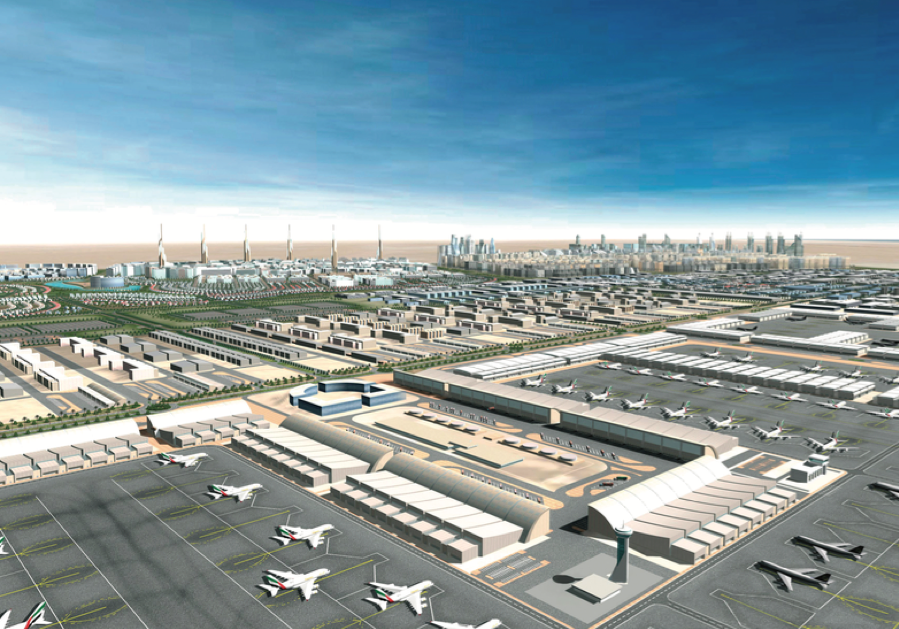
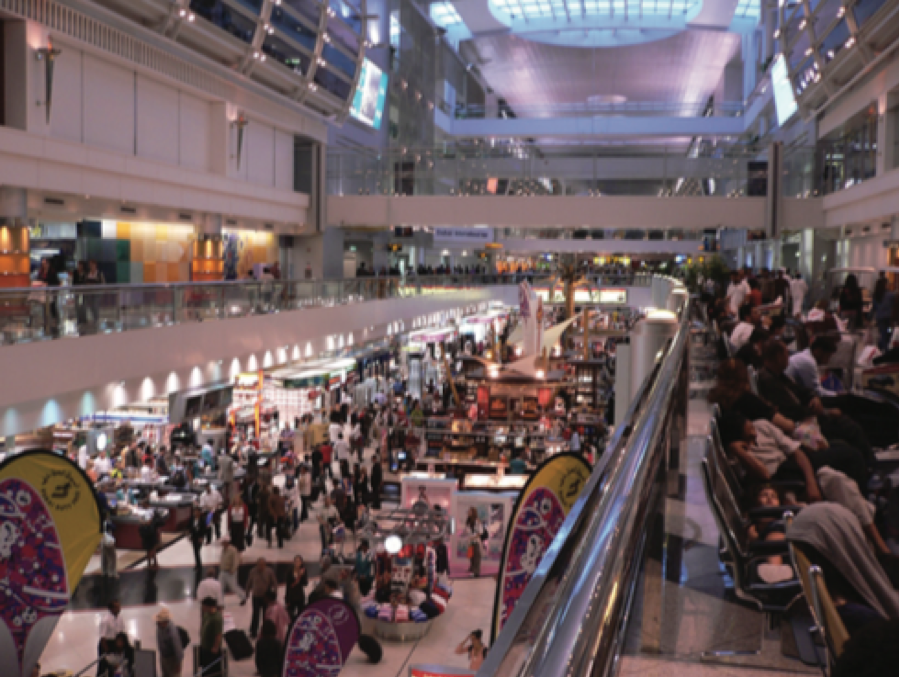
Dubai International Airport (DXB), the tenth busiest in the world in 2006 according to Airports Council International, is spending $4.5 billion on terminals and other facilities that will triple capacity by 2009 to 75 million, while the $33 billion Dubai World Central (DWC) will be centered around the world’s largest airport and cargo hub.

This heavy investment comes as the MENA region is set for the largest aviation growth globally between 2008-11, almost 40% higher than the world average, according to the International Air Transport Association (IATA). The region’s sector was also the fastest-growing in the world in terms of passenger movement in 2007, with a 18.6% growth rate, compared to 5% in Europe’s and the US’ 3% according to the Abu Dhabi Airport Company.

Spurring on Dubai’s decision two years ago to build the DWC, are rising passenger numbers, with 34.3 million at the DXB in 2007, up 19.3% on 2006 and the sixth consecutive year of growth above 15%.

Cargo has likewise spiked at Dubai Cargo Village, the freight facility for the DXB, handling 1.66 million tons in 2007, up 10.96% on 2006. Growth is attributed to the United Arab Emirate’s surging population, up 75% in a decade to 5.6 million, the 6.45 million tourists that visited Dubai last year — according to the Dubai Department of Civil Aviation — as well as the emirate’s growing position as a transport hub for the Gulf.

The DXB is extending Terminal 2 by 37,000 square feet to allow the terminal to handle 700 flights per week, of which 320 will be cargo. Terminal 3 is also under construction — several months behind schedule due to a shortage of raw materials — and is being laid out underground, some 20 meters below the apron and taxiways. Exclusively for Emirates Airlines, Terminal 3 will significantly ease congestion, with the DXB handling nearly a third more than its original capacity of 22 million passengers.

Fields upon fields of development

An estimated $33 billion is earmarked for infrastructure costs alone on the 140 square-kilometer DWC, a multi-phase development financed by the Dubai government, which incorporates the Al Maktoum International Airport (MIA), Dubai Logistics City, DWC Residential City, DWC Commercial City, DWC Aviation City and the DWC Golf City.

“It is geography that makes this vision possible with huge land availability in a prime location,” said Sheikh Ahmed Bin Saeed Al Maktoum, Chairman of Dubai City of Aviation Corporation-DWC. “The long-term benefits of DWC to the UAE, GCC countries and the wider region are phenomenal and will place this emirate firmly in ‘pole position’ for regional logistics, tourism and commerce.”

Neighboring Abu Dhabi, however, intends to spend $40-$50 billion for the building of new airports, according to the Centre for Asia Pacific Aviation, and turn Abu Dhabi’s second international airport, Al Ain, into a hub for aviation and cargo. The plan will also slot into Abu Dhabi’s recent announcement to build a new Capital District to consolidate the emirate’s position as the administrative capital of the UAE.

As in the case with Dubai, the decision to invest so heavily in aviation is being motivated by strong growth, with Abu Dhabi’s Etihad Airways posting a 40% increase in passengers during the first quarter this year, from 1 million to 1.4 million compared to first quarter last year, while cargo traffic was also up by 20%. The Abu Dhabi International Airport (ADIA) saw a spike in passengers as well, up 33% this year over last, with aircraft activity rising 16.9% over the same period.

To cater to rising demand, the ADIA has embarked on a $6.8 billion expansion plan. The airport is currently investing $272 million to add five million more passengers to the terminal’s capacity, bringing total capacity to 12 million, and increasing cargo capacity to 500,000 tons by the end of 2008.

Building the worlds biggest airport

At Dubai World Central, some 15,000 workers toil away in the heat of the desert sun on 18 construction projects, a number set to increase over the next three years as some 40 tenders are awarded.

“Of the 30 tenders already awarded, 20 have been specifically for the airport’s infrastructure and the rest spread over DWC’s real estate and logistics components,” explained Abdulla Al Falasi, DWC’s Marketing and Corporate Communications Director.

Some $8.1 billion is to be spent on the MIA in Jebel Ali to become the world’s largest international airport with a designed capacity for 120 to 150 million passengers per year and able to handle over 12 million tons of cargo annually.

The airport is to cover 68 square-kilometers with six parallel runways and as many concourses. Work is already completed on the first CAT-III runway, which will be able to handle the new jumbo Airbus A380.

The MIA will have two mega-terminals, the first for airlines within the Emirates Group, the second for regional and international carriers, while a third terminal is earmarked for low-cost charter airlines. The third passenger terminal building, a 75,000 square meter single level terminal, is designed to cater to seven million passengers per year, and is being built through a joint venture between the UAE’s Arabtec and Germany’s Max Bogl. The final design of the mega-terminals is to be announced at the end of 2008, said Khalifa Al Zaffin, DWC’s Executive Chairman. An Executive Jet Centre will also be built.

The MIA is to be linked to the DXB by an express rail system, and eventually linked to the Dubai Metro when it is completed. Not satisfied with having, likely, the region’s biggest car park, with some 100,000 spaces, the MIA’s $39 million air traffic control tower will be the region’s tallest freestanding control tower at 92 meters.

Aviation all in one place

A central feature of the DWC will be the $1.36 billion Aviation City —  covering 6.7 square kilometers — the aim of which, said Al Zaffin, is to merge all the various aviation related business within one centralized location. Individual developers will also be allowed to develop their own hangers and facilities within a free zone on a long-term leasing basis, with air and land access to the MIA.

Al Zaffin said that the facility would host all aviation manufacturing, maintenance, repair and overhaul (MRO) services, aviation support services, design and consultancy, research and development, product and parts, light manufacturing units and high-technology industries. The MRO, said Al Zaffin, will be able to service up to 100 aircraft, a figure set to rise as the multi-phase development expands through to 2050.

On-demand flight support company Palm Aviation has plans in the works to build the project’s first fixed-base operation (FBO) ground handling facility, which is to cover 80,000 square feet and is estimated to come in at a cost of $10.8 million.

To meet the Gulf’s surging imports, worth an estimated $320 billion in 2007 according to the Dubai Logistics City (DLC), the DWC will be able to handle up to 12 million tons of cargo a year.

The 21.5 square-kilometer DLC is being developed as an integrated multi-modal logistics platform with all transportation modes, logistics and value-added services, such as product manufacturing and assembly in a single-bonded free zone environment made up of the DLC, DWC-MIA and the Jebel Ali port. Sea-to-air times for transport of goods at the DWC are expected to be three to four hours as opposed to the current one to three days.

The Aviation City will also feature a heliport zone with 17 helipads in addition to fuel, lighting and hangar facilities.  An academic zone will host several aviation colleges and training centers for aerospace and academic studies.

The need for such institutions has become particularly pressing following a recent report by global management consultancy A.T. Kearney which said the GCC faced a ‘serious shortage’ of pilots to cater to surging demand, with passenger traffic up 18.1% last year. The report said that with GCC passenger traffic expected to grow 8% between 2007 and 2015 — higher than the global average of 5% — the number of pilots required by the UAE’s five airlines alone would spike by 75% by 2020.

Build it and they may come, but an adequate number of pilots will be integral to getting them all there and helping to realize the success of the Gulf’s futuristic aviation metropolises, though the tens of thousands of people already involved in turning these lofty ambitions into reality.

May 28, 2008 0 comments
0 FacebookTwitterPinterestEmail
Levant

Ads that don’t add

by Executive Staff May 28, 2008
written by Executive Staff

The only way is up, or so it seems, for the Jordanian advertisement sector, which recorded stunning double digit growth figures over the past decade. A recent media survey, however, produced some uneasy literature for advertisers, ad agencies and media representatives alike, as readership ratios hardly match the way advertisement budgets are spent.

According to research firm Ipsos, total advertisement expenditure based on official rack rates increased by some 30% in 2007 to amount to $280 million. Since 2000, total ad spending grew by no less than 260%, making it one of the kingdom’s fastest growing industries. Still, Jordanian advertisement represents but 3% of the regional market, whereby it should be noted that all Ipsos figures are based on

official rack rates. In reality, ad spend could be more than 30% lower.

Jordan’s big spenders are the same as elsewhere, with the 30% increase in 2007 mainly fuelled by the re-branding campaigns of the Arab Bank and telecom firms Zain and Orange. Home to four national operators, the Jordan telecom sector remained the country’s biggest advertiser with some 20% of the market, followed by banking (12%), leisure and entertainment (12%), general services (11%) and real estate (8%).

While most countries spend the lion’s share of their budget on TV commercials, nearly 80% of Jordanian advertisement spending is in the country’s newspapers. The remaining 20% is divided, more or less equally, between television, magazines, radio and outdoors. The main reason television scores so badly is the fact Jordan has but one national broadcaster, state-owned Jordan TV, which is hardly watched.

Still, seeing the overwhelming amount of ads in Jordan’s print media, the Jordan Media Survey (JMS) managed to raise some eyebrows, to say the least. Conducted by the International Research & Exchanges Board (IREX) in late 2007, the survey did over 3,000 face-to-face interviews during a period of two weeks and found that only 57.9% of respondents had “read or flipped through” a newspaper during the previous month, while less than one third of people polled had read a weekly, and just 13.5% had opened a monthly.

Read your news today?

Funded by a $5 million USAID grant, IREX’ aim is to strengthen media independence in the kingdom. The aim of the survey was to help media outlets come to a better understanding of the market. Not surprisingly, it appeared that 30% of interviewees had read Al Rai, Jordan’s leading newspaper with a daily circulation of some 100,000 copies, followed by Al Ghad (15.2%), Al Dustour (12.9%) and Al Yawm (5%). On the question if they had read a newspaper “yesterday,” only 18.5% of interviewees responded positively.

The situation was not much better for weeklies and monthlies. From the some 30% of people who had read or flipped through a weekly, 21% responded that they had opened a free classified publication. The dozens of other, relatively small weeklies, divided the remaining 9% with readership percentages never exceeding 3%.

The leading monthly magazines were Arabic-language women’s magazines. Among the English language magazines, Jordan Business and Jo scored highest with 3.5% of respondents affirming they had read or flipped through the publication during the previous month. All other publications on the list scored well below 1%.

Two positive points need to be made. First, while the readership of newspapers was significantly lower than expected, a remarkable 80% to 90% of respondents said they have read a daily on the Internet, yet so far the worldwide web in Jordan hardly attracts any advertisement. Second, a separate poll among “opinion leaders,” concluded that 92% had read a newspaper during the previous month and 58% the previous day.

Without a doubt, the survey’s big winner was radio, as no less than 57% respondents replied they had listened to a channel during the previous 7 days, while 46% tuned in during the previous day. Radio has blossomed in Jordan since 2002, when the Audiovisual Media Law largely liberalized the air waves.

While before 2002, Jordan’s citizens could only listen to Radio Jordan in either Arabic or English, today there are over 25 channels. According to the JMS, Fann FM proved the most popular with a listenership of 32.3%, followed by Quran FM (20.6%), Rotana FM (15%), Jor FM (14.4%), Jor AM (11.3%) and Mazaj FM (7.6%).

More than they’re due?

“Print media has a penetration rate of but 42.8% for dailies, and much less for weeklies and monthlies, yet it receives more than 80% of the country’s ad expenditure,” said IREX’ Samuel Compton. “Radio has a penetration rate of 56.9%, yet receives but 8% of total ad spend.”

Seeing the success of Jordanian radio, one wonders why the Jordanian government has failed to allow for a private TV channel to compete with the country’s state-owned dinosaur JTV. It would no doubt be welcomed by viewers and advertisers alike, as an advertisement campaign ideally makes use of all media outlets. While print media the world over are confronted with shrinking budgets, Jordan’s own may hope that the status quo prevails, as long as they receive the lion share of ad spend.

May 28, 2008 0 comments
0 FacebookTwitterPinterestEmail
Levant

Dawn of the new Amman

by Executive Staff May 28, 2008
written by Executive Staff

With the exception of the city’s numerous minarets and a giant flag, Amman has always been a predominantly horizontal city. But this is about to change, since the Greater Amman Municipality (GAM) adopted an ambitious master plan in 2007 that allows for the construction of towers up to 200 meters tall. As urbanists, architects and property developers rub their hands to construct the future Amman skyline, critics wonder how the city’s infrastructure will cope, while Jordanian MPs in April raised questions regarding the way multi-billion dollar contracts are concluded in the kingdom. Last but not least, there is water or, more precisely, the lack of it.

From the hill-top remains of a Roman temple, Amman looks a bit like a giant beehive spread out over the rolling hills, a concrete sprawl of three and four-storey buildings. From here, one can perhaps understand the Jordanian capitals’ reputation for being dull and ugly. To most visitors it is but stopover. The city’s reputation however, no longer matches reality.

Gentrification of a capital

In recent years, a number of cafés, restaurants and clubs have opened, while malls and supermarkets offer the latest in food and fashion. In an attempt to beautify the city, the GAM has largely banned billboards, planted trees and made the city more pedestrian friendly. More importantly, from an urbanist point of view, Amman is simply fascinating, as it is one of the fastest growing cities in the region.

While in the early 1920s the city hosted some 25,000 people, today over 2 million live in Amman, which is expected to increase to some 6.4 million by 2025. In terms of size, by that date the Jordanian capital is to grow from today’s 700 square kilometers to some 1700 sq km. To streamline this massive growth, Jordan’s King Abdullah II in 2006 asked Amman mayor Omar Maani to formulate the urban master plan, which was presented in phases throughout 2007.

“We can’t afford to continue our current development trend because it will lead to unprecedented urban sprawl that will exacerbate our transportation problems and eat up some of Jordan’s most productive agricultural lands,” said Maani when presenting the masterplan’s first phase designating four areas of High Density Mixed Use (HDMU).

These four areas are the future Central Business District of Abdali, the Central Parkway between Jabal Abdun and Jabal Amman, as well as two areas located close to the city’s northern and southern gateways. For each cluster, a strict number of low, medium, high rise and landmark towers has been determined, each with exact measurements to preserve the city’s “view corridors.”

In February 2008 Dubai World’s property developing arm Limitless announced that it is to build two 200 meter-high residential towers at the Central Parkway. With a price tag of $300 million, the landmark twins will add some 600 luxury apartments to Amman’s housing market, which has recorded an unprecedented growth. Over the past four years, real estate trading increased by nearly 150%.

One of the main reasons for this growth is the fact that, since the US-led invasion of Iraq in 2003, Jordan absorbed a wave of Iraqi refugees, many of whom are quite well off. The sudden increase in demand for housing saw property prices soar, particularly in the more affluent western part of the capital. Experts estimate that prices in West Amman increased by some 300-400%. Furthermore, there is a growing demand for modern office space, especially from foreign organizations operating in Iraq. Add to that normal market drivers, such as a 2.3% population growth rate and a growing economy, and it should not come as a surprise that Arab nationals increasingly invest in Jordan.

“Jordan’s fast-growing economy, changing real estate requirements, convenient location and stability make it a firm favorite in our list of markets,” Limitless CEO Saeed Ahmed Saeed explained. “Limitless Towers is the first of several distinctive, sustainable projects currently being assessed by our Jordan team.”

The Dubai company is not alone. Billions of dollars are being poured into the kingdom, with Amman seeing most of the action, followed by Aqaba and the Dead Sea. Thus, the Gulf Finance House has invested some $1.5 billion in three projects, including the Amman Gate towers, while Emaar is building a handful of luxury resorts popping up along the Dead Sea. In Aqaba, the $1 billion Saraya Aqaba project and the $1.5 billion Ayla Oasis are under construction, while in April 2008 Abu Dhabi-based property developer Al Maabar signed a $5 billion contract to relocate Aqaba port and develop a new city center.

Other real estate firms have targeted the enormous market for low- and middle-class housing. Tameer International is constructing a city of some 16,000 units in Zarqa. Last but not least, there is the $1.5 billion Abdali Urban Regeneration in the heart of Amman, one of the city’s four areas designated for high rise buildings.

Heart of the city

Today, between Shmeisani and downtown Amman, the area has been fenced off as the foundations are laid for what is set to become the new heart of the city. The project is an initiative of Abdali Investment and Development (AID), the main shareholders in which are Oger Jordan, part of the Hariri group, and the National Investment and Development Corporation (Mawared), the property development arm of the Jordanian armed forces.

Much like the role Solidere played in the reconstruction of downtown Beirut, AID has developed the Abdali master plan and is responsible for the construction and exploitation of the project’s main artery, a 320-meter-long shopping boulevard. The remaining 75% of the project, with a total built-up area of one million square meters, has been sold to private developers, such as Damac and the Capital Bank of Jordan, which is to construct its 220-meter-high headquarters there.

After the initial presentation of the four hubs, the GAM later presented the remaining chapters of the masterplan, dealing with the improvement of the city’s main access roads and corridors, the preservation of rural areas and continued development of industrial sites, among other projects. As Jordan’s population is to more than triple, the GAM estimates one million extra jobs are needed, about a third of which is to be provided by industry.

Finally, in December 2007 the municipality presented the long-awaited plans for the largely vacant lands along the Airport Road, one of Amman’s most prospective areas and the subject of intense speculation. Contrary to what many had expected, the road will not be home to major highrises, but to a mix of land use. Seeing the close proximity of the airport, as well as several universities, the GAM hopes to attract smart business and research centers, while preserving the existing forest and (some) agricultural lands.

The Amman master plan is a balanced blueprint for future growth and was overall well-received. However, one often-heard concern is that the strategic decision “to go vertical,” will lead to a congestion of the capital’s infrastructure. So far, Amman has been largely spared from the daily traffic jams all too familiar in most Arab cities. The city is largely blessed with multi-lane roads and modern traffic regulation systems, yet the first signs of congestion are starting to become apparent.

“We have been closely collaborating with the GAM to ensure that sound traffic solutions are implemented, especially since the new downtown Amman will be a high density area with over 90,000 people residing, commuting and visiting on a daily basis,” said AID Marketing Director Luna Madi. “Therefore, we have incorporated parking facilities which will hold over 25,000 vehicles. In addition, the inroads were especially designed to calibrate offsite traffic flow and check overall congestion.”

According to Amman Mayor Maani, the year 2008 is all about transport. “Money tends to park itself in buildings these days, but we believe that is insufficient for sustainable growth,” he said. “Other factors must be taken into consideration, such as livability, infrastructure and public transport. There are currently some 750,000 cars in the GAM area. So, providing decent public transport is very important, as well as promoting pedestrian-friendly areas.”

Privatizing development

The privatization Amman’s formerly state-owned bus company and the arrival of over 100 new busses was a first step in improving public transport. Meanwhile, the GAM started construction of the 120-km long Amman ring road, which aims to decrease traffic flows within the city, while in June 2008 construction will start of a $250 million light rail connection between Amman and the neighboring city of Zarqa, home to many who commute to the capital on a daily basis.

According to Maani, the light rail is to halve commuter traffic between the two cities and will be extended to the airport and other parts of Amman if proven a success. The mayor caused some controversy when in mid-April he announced plans to sell 55 hectares in the heart of the capital to the Lebanese billionaire and former Prime Minister Najib Mikati for $1.5 billion. Mikati is to build a complex of government buildings, which then will be leased to the state. This proposal, and especially the $5 billion port deal with Al Maabar in Aqaba, provoked Jordanian MPs to raise a number of critical questions.

“The problem is the lack of transparency. Such contracts are required to be made public,” said senator and former Prime Minister Taher Masri. “The government must explain the circumstances of these investments, which happen in the dark. The Jordanian people might not feel the positive effects of privatization plans which will only benefit a small group of the rich.”

“Past experiences in Jordan have unfortunately proved that secret deals were designed to hide paid commission,” political analyst Fahd Khitan told AFP, criticizing the under-the-table agreements reached without the knowledge of the council of ministers. “Negotiations on privatization plans, including tenders, should be subject to public debate, particularly projects that are related to national or historical values.”

However, a lack of transparency regarding multi-billion investments and privatizations schemes is not Jordan’s only worry. On the long term, a much more frightening scenario could disrupt the kingdom and Amman’s sustainable growth: a drastic lack of water. Already one of the water-poorest countries on earth, by 2025 Jordan may be able to offer the perfect home to its citizens and tourists alike, yet arguably not a weekly shower.

Admittedly, the government has made a head start in saving and reusing water while Amman’s ageing network is under repair. However, seeing the fact that the city’s 2 million inhabitants already need to ration water use to make it to next week’s delivery, more drastic measures will be required to accommodate a city of over 6 million people.

Generally, government points at two solutions: the Diseh pipeline and the Red-Dead Canal. Diseh, a natural aquifer, has water, yet it is a non-renewable source near Wadi Rum in Jordan’s deep South. Inexplicably, it is today used for agriculture, while at the same time fueling Aqaba’s rapid expansion.

Critics wonder, therefore, just for how long a $750 million pipeline from this non-renewable source could benefit Amman. The $3 billion Red Dead Canal, combined with a desalinization facility, could be a way to help Jordan quench its thirst and save the Dead Sea from completely evaporating. One thing is certain however: the next Amman urban master plan will have to deal with water as an integral part of the city’s infrastructure.

May 28, 2008 0 comments
0 FacebookTwitterPinterestEmail
Lebanon

Crude without a culprit

by Executive Staff May 28, 2008
written by Executive Staff

Sometime during the evening of Saturday, March 22, pipes from the Holcim cement factory in Chekka began leaking oil into the Mediterranean. Between one and two tons of oil entered the sea in the industrial area of Koura, just south of Tripoli. Holcim teams worked through the Easter holiday to clean the spill, and by Monday morning, the beach and the sea that were immediately contaminated in Chekka was cleaned.

Holcim, the NGO IndyAct and local residents all agree on the chronology of the oil spill and subsequent cleaning in Chekka. Yet that same weekend, residents of Anfeh, a fishing village a few kilometers north of Chekka, discovered a huge amount of oil had spilled onto their beaches, only two months after local teams with international support finished cleaning the remains of the 2006 War’s oil spill. Well over a month has passed, the beaches of Anfeh remain covered in black oil and Holcim, IndyAct, locals and the Lebanese government fight a protracted battle to identify the polluter and hold him responsible for cleaning costs.

Dana Obeid, a member of IndyAct, said that the organization became aware of the oil spill over the Easter weekend, and went to Anfeh to assess the damage on the following Tuesday. According to Obeid, IndyAct found that residents who live in the immediate vicinity of the beach were forced to leave their homes — sometimes for as long as five or six days — to avoid the overwhelming smell, made stronger by spring winds. Fishermen were unable to take their boats into the waters for up to two weeks. The large Phoenician walls built into a small cliff overlooking the ocean were threatened by the oil. The public beach was rendered unusable.

Polluting the economy

The village depends largely on the sea for its income and thus is in a difficult position as the summer season begins. Faysal Touma, a local fisherman, said the damage was worse than what the village saw after the July War. “Here we fish in shallow waters, and these were the areas most affected.” Another local fisherman, Bassam Fares, agreed. “The boury and crabs that used to flourish here have almost completely disappeared. Restaurants that used to call and order fish in the morning know that we have nothing and have stopped calling.”

The oil spill could not have come at a worse time for fishermen. “We still don’t know the full effect of the damage because spawning season begins this month. We won’t know how much the oil spill has affected fishing until we see how many eggs hatch this year, and then how that will affect next year’s spawn,” Touma said.

The strong spring tides have also pushed layers upon layers of debris onto the beach, making the area contaminated almost a meter thick in some places. Finally, as the days get warmer, the sun is melting the oil that had filled the crevices in the rocks along the coastline and dried on the rocky beach, meaning that it is now creeping back into the sea.

The town’s proximity to the Holcim factory and the winds that push the tide north immediately led IndyAct to see a link between the Chekka accident and the damage in Anfeh. Obeid said that IndyAct was in contact with Holcim the same day they went to survey the incident, but that the company immediately denied responsibility for the Anfeh spill and said that their responsibility had ended once the Chekka cleanup had been completed.

Issam Salameh, communications spokesperson of Holcim in Lebanon, maintains that it would have been impossible for the Holcim oil to reach Anfeh, because of the quick and “vigilant” response of Holcim teams as soon as the leak began.

“We began cleaning immediately when we saw the leak on Saturday, and we monitored the leak until everything was clean. If the fuel had spread, we would have noticed it and cleaned it immediately,” he said, noting Holcim’s interest in recovering as much oil as possible, as the leaked fuel is filtered directly back into the factory’s systems for continued use.

Salameh said although 200 to 400 square meters of water were covered by the oil, the environmental damage was limited. “Oil does not dissolve in water, and when it first enters water, it floats on the surface, so it never actually mixes with the water.”

Over the course of the cleanup, Holcim determined high temperatures caused quick melting of large amounts of ice, overloading the pipes in the factory and causing the leak. Salameh said Holcim is examining the cause of the leak in more detail in order to take corrective action, which should be in place within the year.

As the beaches of Anfeh sat black, the story gained press coverage and the attention of the government. A joint government committee from the Ministries of Environment and Transport visited Anfeh, taking fuel samples along the beach and the Holcim plant to determine if the two samples match, which should determine definitively whether the oil was Holcim’s.

No one held responsible

More than a month has passed since the sampling and no results have been announced yet. A Ministry of Environment official said it is normal that the identification process is long, as the matching process, known as fingerprinting, is quite complex. He said he hoped to have results within the next several weeks, but did not seem urgently concerned about the environmental damage.

“This area was hit very hard by the oil spill during the July War,” he said. “Because the cleaning was only finished two months ago, the environmental damage was already done.”

The ministry also stressed that entities other than Holcim may have caused the spill. The official said  “eyewitnesses reported seeing an industrial tanker off the coast of Anfeh that weekend. This tanker may also have leaked fuel, and the two oil spills could be a simple coincidence.” This ‘other tanker’, however, remains unidentified. The ministry source said the government would only begin to look for the mystery vessel if the tests showed that the oil in Anfeh did not originate at the Holcim factory.

Obeid, however, noted that the chances of two factories in the same region having an oil spill of similar amounts in such close proximity at the same time are slim. She also pointed to the fact that the Holcim factories have had similar accidents causing oil spills twice in the last six years.

Once the results of the government study are announced, the responsible party will bear the costs of cleaning the Anfeh beach. Confident the oil did not originate from Holcim’s factories, Salameh said his company had cooperated fully with investigators and would clean the beach if ordered to by the ministry.

The cleaning process will, however, be labor-intensive. The Anfeh beach is very rocky, which means that cleaning efforts will have to include manual scrubbing of rocks before high-pressure water hoses can be used. Moreover, the affected stretch of coast is surrounded by homes, which will impair access to the beach. Tony Chamoun, the director of the PROMAR company that cleaned the Anfeh beaches following the July War, estimates that cleaning would take between 30 and 45 days and would cost at least $200,000.

The Anfeh spill reveals bigger problems in Lebanon’s environmental laws, specifically in the Koura region. As Habib Maalouf of the Lebanese Environmental Party said, “There is always a high risk of environmental damage in this region because of the many ports and factories.” Yet despite this ever-present risk, the government has no strategy in place to deal with oil spills, instead dealing with cases on an ad hoc basis.

The Ministry of the Environment defended this strategy, saying flexibility made it easier to respond appropriately to individual incidents and  enforce laws requiring polluters pay for environmental damage they cause. Yet Maalouf said this legal principle is poorly enforced and leads to poor clean up of environmental damage.

IndyAct is calling for the beach to be cleaned immediately and for Holcim to pay compensation to the local fishermen. But as Holcim and IndyAct await the results of the government’s tests, local residents are anxious for action.

“We want to be able to use our beach. We want to be able to go back to work. We want someone to be held responsible, and we want to make sure that this won’t happen again,” Touma said. “People keep coming here to take pictures, to talk to us and to take samples, but when is anyone finally going to do something?”

May 28, 2008 0 comments
0 FacebookTwitterPinterestEmail
  • 1
  • …
  • 528
  • 529
  • 530
  • 531
  • 532
  • …
  • 688

Latest Cover

About us

Since its first edition emerged on the newsstands in 1999, Executive Magazine has been dedicated to providing its readers with the most up-to-date local and regional business news. Executive is a monthly business magazine that offers readers in-depth analyses on the Lebanese world of commerce, covering all the major sectors – from banking, finance, and insurance to technology, tourism, hospitality, media, and retail.

  • Donate
  • Our Purpose
  • Contact Us

Sign up for our newsletter

    • Facebook
    • Twitter
    • Instagram
    • Linkedin
    • Youtube
    Executive Magazine
    • ISSUES
      • Current Issue
      • Past issues
    • BUSINESS
    • ECONOMICS & POLICY
    • OPINION
    • SPECIAL REPORTS
    • EXECUTIVE TALKS
    • MOVEMENTS
      • Change the image
      • Cannes lions
      • Transparency & accountability
      • ECONOMIC ROADMAP
      • Say No to Corruption
      • The Lebanon media development initiative
      • LPSN Policy Asks
      • Advocating the preservation of deposits
    • JOIN US
      • Join our movement
      • Attend our events
      • Receive updates
      • Connect with us
    • DONATE