• Donate
  • Our Purpose
  • Contact Us
Executive Magazine
  • ISSUES
    • Current Issue
    • Past issues
  • BUSINESS
  • ECONOMICS & POLICY
  • OPINION
  • SPECIAL REPORTS
  • EXECUTIVE TALKS
  • MOVEMENTS
    • Change the image
    • Cannes lions
    • Transparency & accountability
    • ECONOMIC ROADMAP
    • Say No to Corruption
    • The Lebanon media development initiative
    • LPSN Policy Asks
    • Advocating the preservation of deposits
  • JOIN US
    • Join our movement
    • Attend our events
    • Receive updates
    • Connect with us
  • DONATE
Lebanon

BLOM Cedars Balanced Fund – For Lebanese, by Lebanese

by Executive Staff March 3, 2008
written by Executive Staff

Recently, BLOM Invest has launched an investment fund, the BLOM Cedars Balanced Fund. The fund is an open-ended mutual fund with weekly subscriptions and redemptions. It is a balanced fund in that it combines two asset classes: Fixed income from bonds, which comprise 75% of the fund, and a maximum of 25% invested in stocks. The fund will invest only in Lebanese securities, both stocks and bonds. Executive talked to Michel Chikhani, head of Asset Management, and Bechara Bardawil, portfolio manager at BLOM invest to discuss this new entry into the family of Lebanese funds.
 

What is so unique about this fund?

Bardawil: It is unique in that it is the only all-Lebanese fund that actually has a component that invests in Lebanese equities. The previous funds in Lebanon all invested in fixed-income securities only. The idea behind the fund is to enable our retail customers to participate in the Lebanese capital markets with minimum capital, starting at $5,000. They would participate in this basket and take advantage of any recovery that these capital markets should enjoy in case the situation in Lebanon stabilizes and would enter into a phase of catch-up with the rest of the region. Basically, this is a way to boost the return they are getting on their deposits especially in the climate of declining interest rates on the US Dollar.

Chikhani: Features such as weekly redemption and subscription allow investors to move into the fund more frequently, and eventually, if they want to move out from the fund, they can. In terms of the process of management, the risk management is very different because you have two asset classes — one of them is equities and the way we deal with equities is very different from how we deal with fixed income.

There are three aspects that are immediately striking: The low buy-in rate, the focus on Lebanon and the weekly redemption. Can you expand on these three aspects?

Chikhani: Concerning the low buy-in rate there are a lot of people that have savings and who are depositors. These people are potential investors, but unfortunately no one is addressing them as such. These potential investors are not able to take advantage of any of the opportunities that an investment could bring, instead they are just putting their money in bank deposits. If you take into consideration any country where you have people with small amounts of money, they still have access to investment vehicles. We started with $5,000 because any amount less than that we don’t see as being an investment.

We have two tranches of units, which is another unique aspect of this fund — one of them capitalizes and another distributes. Currently, people know more about interest rates and the bond market but very few understand the stock market. If one looks at the stock market from the perspective of the BLOM Index then it was very rewarding to stay invested in the Lebanese stocks. We don’t have a lot of Lebanese stocks but their performance has been significant for any one wanting to invest in them. However, in order to approach these markets you need professional people in terms of investing and this is what BLOM Invest is offering in this fund.

Was a weekly redemption approach taken so investors could easily get in and out?

Chikhani: It is much more to get in than to get out, because if someone has money he does not wait until the end of the month to decide to enter into an investment. People don’t want to lose time waiting for an opportunity. If they believe they have to invest, they want to do it now and this fund will give them the opportunity. All are liquid investments and as this is an open ended mutual fund there is no need to place money on a monthly basis. The weekly redemption is also for those that want to get out. If someone wants to redeem units to the fund, most likely the client needs this money for something else, so why should he wait a month to get his money out?

What is the recommended amount of time that people should leave their money in for it to properly mature?

Chikhani: As long as it takes to realize the expected annualized return. Otherwise, we recommend two to three years, the optimal being three years. Also, it is important for this fund that, since it has opened a window to the equity side, it will accompany the investment universe of the equity for the next 15 years. So basically, if we have more stocks that are going to be listed on the Beirut Stock Exchange or Lebanese stocks that are going to be listed abroad, it is going to be able to give access to the development of the financial markets as well. It is not to be restricted to what is available today in the market only.

Now, the proportion of 25/75 is one that we think is the most conservative knowing that the universe of stocks is very limited and quite correlated. However, with time we may change this within the prospective of the fund, or launch other funds once the underlying proportion has changed. We give the investor the opportunity to invest in everything that is available through a balanced formula, which we believe is conservative. And over the long run, we continue to offer investment vehicles that portray the Lebanese market universes in terms of liquidity, availability and instruments.

Bardawil: Although a lot of high net-worth individuals were interested in this fund, the bulk of people that this fund is aimed at are not the type of investors who would invest overseas, say in the US, Europe or China. The people attracted to this fund, psychologically, like to be close to where their money is invested. They know Solidere and the major banks and are living the economic and political situation everyday. For them it makes sense to invest in their own country.

Chikhani: We are very keen for the investors to know exactly what they are investing in. We don’t want people to think that we are offering something that we are not. That is why we kept the proportion of fixed income at a high level to protect the capital, although we don’t think the stocks will fall to zero. We took the maximum the stocks are going to fall, which would be a theoretical zero, and made sure it was protected. Although many investors have a lot of money, they are not the main target of this fund. We think that the retail market needs to be more educated and the road is long. What we are doing is conservative, heavily controlled but at the same time not static and forward looking, and certainly it is for the benefit of our customers.

It is very interesting that you focus on the Lebanese market. Is it not a high risk and unstable environment to invest in currently?

Chikhani: There is still a very wide gap between interest rates, the differentials between what we can get inside Lebanon and outside. Investors in Lebanon are all invested indirectly in the same instruments that we are talking about. We are talking about the fund that invests in securities in which the underlying investment is $30 billion already held by Lebanese whether this is eurobonds, directly or indirectly through the banks, or it is the stock market. So we are not trying to find some illiquid markets that we want to be in. We think that there is a sufficient underlying state in the market, which is already held by Lebanese and or institutions in and outside Lebanon that can justify the launching of a fund with such instruments. Now concerning the instability, the Lebanese market has proven resilient and uncorrelated to other markets. The volatility of the market is quite controllable and very low. We have seen major events taking place in summer 2006 without too many incidents on the market. If we take into consideration the risk of the instruments that we are involved in, we take into consideration liquidity risk, or counter value risk, or default risk, each component, whether fixed income or equity, has a different risk. We believe that by investing with deposits on the one hand, through papers from the central bank and commercial banks, through papers issued from the Lebanese government and through equities that are not held by the Lebanese government we are offering a nice combination for investors, which is 40-50% invested inside the government debt. We are betting on the dynamics of Lebanese corporations and their momentum outside the country, namely Solidere, and the main banks as well as other companies that may step in. We have valued many banks and see that their PE ratio and price book ratio are much lower than at other banks in the region, and so they are at attractive prices despite the unstable political situation. All the companies on the Beirut Stock Exchange have the desire to expand internationally, so it makes sense to include them in the portfolio.

Thus, although the political situation is unclear, many other issues have been quite stable in the country, in terms of development of business and the international development of business. The valuation is still low and we believe that all these criteria mean that it makes sense for investors to step in. We believe that the assets in which we are investing today are under-priced. The question is not just “Why now?” It is a question of valuation in a certain point in time, how much we want to value our investments in stocks and equities. The whole environment gives us a very decent price to step in.

What rate of return do you expect?

Chikhani: We believe it to be a between 8% and 12% plus.

Bardawil: This is annualized over a period of three years.

Chikhani: The benchmark is to be able to exceed the deposit rate and to give something that will compensate for the inflation rate, while also keeping this investment liquid, which is why it has a weekly redemption. For us, 8-12% is a very decent return.

How has the fund been received so far? 

Chikhani: The initial subscriptions have been more than expected and we are continuously receiving new ones.

Bardawil: There have also been very few redemptions, which means that people are not getting cold feet about this. Hopefully, our efforts, at BLOM, to instill in our retail customers the culture of long-term investment are succeeding.

Chikhani: But this is also because people know why they are investing as well. We have provided enough awareness in our branches and our staff to convey the message to our customers. And now we are moving broadly toward the market, but the product is not just dedicated to be sold in the Lebanon, but around the world.


March 3, 2008 0 comments
0 FacebookTwitterPinterestEmail
Lebanon

Recycling – The potential of garbage

by Executive Staff March 3, 2008
written by Executive Staff

Garbage is a nuisance. It threatens public health and nature, as well as sticking around for generations to come. Disposing of it is an issue with which every country has difficulties, and only few have a handle on the problem. Burning trash and open landfills are part of the regular practice of most waste management services but for many reasons, neither of these is a good solution. However, waste can be controlled, and what we toss into bins as rubbish could be a money maker and even help the environment. All that is needed are the right governmental policies and the creativity of ingenious entrepreneurs.

Consumption behavior in Lebanon is different than the West. A typical Lebanese garbage bag is filled with nearly 70-80% organic matter, mainly food remains and paper. This can be compared to the trash content of New Jersey, where organic material makes up only 40%, according to Ziad Abichaker, CEO of waste management company Cedar Environmental. The remaining 20-30% of local trash consists of plastic, glass, metals, textiles, and miscellaneous material. Of the total waste content, only textiles — which account for less than 10% — are currently not recyclable in Lebanon, nor can they be sold to recycling centers abroad.

State of affairs in waste regulations

Waste collection, or the hiring of a collection service, is under the authority of the municipalities. However, regulations have not caught up with the times. As Abichaker pointed out, open dumping remains the main disposal method not only in Lebanon but in the whole of the Middle East. Open dumping, or landfills, means that all garbage, including recyclable materials and organic substances, is simply thrown together in one area. He explained, “They are used to the idea that garbage is waste, something to be disposed of.”

Not only is it a shame to waste materials that could be used again, this approach is an environmental hazard that leads to sink holes, methane gas explosions and fires from the organic materials rotting away.

Sukleen is the largest waste management service in Lebanon and operates within Greater Beirut and Mount Lebanon, with the exception of Jbeil (Byblos). Ill-equipped and under-

funded, most other municipalities are getting buried by their own waste. Jacopo Monzini, technical officer for the Italian Cooperation for Development, a general directorate of the Italian Ministry of Foreign Affairs, said that as 90% of municipalities are not covered by the Sukleen contract and therefore must deal with waste removal themselves, “They don’t know what to do with their waste nor have they any idea how to treat it.”

Ali Darwish, president of Green Line, a Lebanese environmental NGO, thinks that this is a national problem and thus requires a policy at the national level rather than policies that are decentralized and individualized for each municipality.

Currently, only an estimated 5% of recyclables (plastic, glass, metals) are being recycled and less than 20% of organic items are turned into compost, according to Wael Hmaidan, executive director of IndyAct, the League of Independent Activists. And, he said, at present cities such as Saida and Tripoli do not have recycling programs.

The Saida “garbage mountain” is a good example of an open landfill and its ramifications. The garbage site, 45m high and 150m long, has a total volume of around 1 million cubic meters. The landfill is a mixture of municipal solid waste but also contains industrial, hospital, and slaughter waste. Pockets of methane gas are formed inside the mount from the decomposing organic material and regularly catch fire.

The garbage mountain is a travesty both in terms of public health and the environment. Besides being an eyesore on the coastline and the terrible smell, the mountain is leaking chemicals into the ground water used for drinking and garbage regularly falls into the sea. Just in February alone, as a result of a winter storm the garbage mountain dumped an estimated 150 tons of trash into the sea.

Unfortunately, aggregate statistical information remains unattainable. According to Sukleen’s own estimation Lebanon produces 4,000 tons of waste per day, with Greater Beirut and Mount Lebanon alone accounting for 2,300 tons, but nobody knows for sure. The Italian Cooperation, through its Ross Program, has been working to collect data to fill this void. “If you don’t know how much waste you are producing, it’s impossible to plan,” explained Federico De Nardo, project coordinator at the Italian NGO. “You have to know how much raw material you are getting.” The Italian Cooperation is also collecting data on the amounts of material collected by the municipalities to forecast needs and help them to manage their waste and recycling. A major effort is the reorganization of recycling programs that previously had been random, and often resulted in potentially recyclable material to become unusable for recycling companies. By correcting this problem, the waste has also become more valuable.

Several NGOs have called attention to solid waste management and lobbied for stronger regulations and more efficient collection processes. However, most of their cries have gone unheard. In the past, development aid to Lebanon had included waste management. USAID has funded several facilities, but once the project had been completed these proved to be unsustainable. The Italian Cooperation is now rehabilitating five of those facilities to make them sustainable and restart recycling in the south.

NGOs are also battling the perception of many in the government that recycling is neither profitable nor worth the effort. But as Green Line’s Darwish pointed out, one perfect counter-example is the fact that hundreds of people are living from individual recycling collection efforts in the suburbs.

Out of the high density polyethylene (HDPE) plastic that makes up most plastic objects like, shampoo bottles, vegetable containers and flower pots are made. PET plastic, used in most drink bottles, is also recycled locally. Metals have to be shipped abroad to be recycled because of the high energy needs of their recycling plants.

With per-ton prices at $1,000 for aluminum, $400 for HDPE plastic, $250 for PET plastic, and $90 for other metals, the informal sector has become involved in picking through trash bins for extra cash. “The informal sector you see collecting cans and cardboard are now actually organized companies,” explained Hmaidan.
 

Sorting at the source

Sorting garbage is a multi-stage process. The most effective takes place at the source, i.e. when you throw your garbage away. Several projects are aiming at getting citizens to sort their waste at the bins themselves. In South Lebanon and the Bekaa, the Italian Cooperation has begun a public awareness campaign and provides public trash bins dedicated to organic and inorganic waste. “It’s very important for the municipality, as they can more efficiently separate the recyclables and get some income from recycling,” explained De Nardo. However, sorting bins is not a national policy and there are few working sites despite calls for more.

Composting

After sorting the organic from other materials, the waste is then processed in two ways. The recyclable materials go to specific recycling plants and the non-

recyclables make their way to landfills or are burned. The organic matter that should not be in landfills is converted into compost to be used by farmers as a soil enhancer and goes through an approval process for agriculture use. The Italian Cooperation, for their part, complies with European standards for composting. De Nardo insisted that there is a demand for compost in the South because of soil depth and mineral deficiencies as well as the lack of animal farming.

The business model for setting up a waste management plant is difficult. Cedar Environmental’s Abi­chaker explained that for the municipalities, setting up a recycling plant rests solely on the part of the investor as they operate under the assumption that the investor puts up all of the money for the plant (around $400,000) and they give the plant the garbage for free. However, he explained, “It’s not profitable now because if I have to put up the initial investment and operational costs, the break-even point takes between 7-8 years while the lifespan of the project is only 10 years.”

According to him, when Europe and the US faced the same problem with waste management they instituted what became known as a “tipping fee”: The public sector gives the plant a flat rate per ton of waste collected. With the tipping fee, the break-even point is shortened to that of a normal industrial plant of 3-4 years.

Getting paid by ton

The tipping fee isn’t without its critics. For Darwish, however, being paid by weight gives very little incentive to separate the refuse for recycling without stricter recycling policies in place but instead lends itself to collecting more and more. “When you get paid by the ton, you have more interest in collecting more tons to dump into your site.”
 

This situation, he said, has led to the problem with the Naameh landfill just outside Beirut. Instead of separating the waste and landfilling only those parts that could not be recycled or composted, the focus moved to simply collecting more. The landfill had initially been projected to run for 10 years. Because of open landfill policies in place the dumping ground reached its capacity halfway through and had to be expanded.

Lebanon’s most famous waste collection and recycling company, Sukleen, is a giant operation with around 1,200 regular employees and 1,800 cleaning operators. Its activities are handled by two main departments: City Cleaning Operations for the municipal solid waste collection, street sweeping, recycling, in addition to special operations, and Vehicle Maintenance & Repair. Both departments operate with the common objective of providing the best quality services for the community, in conformance with the ISO 9001: 2000 quality standard. The City Cleaning Operations units work around the clock. Sukleen keeps abreast with the latest technology in the waste management sector through, for instance, the implementation of the Fleet Management (FM) system, which is a monitoring system to evaluate the drivers’ performance and the vehicles parameters. As part of the FM, all vehicles have Global Positioning System (GPS) units that allows routes audit, planned versus actual routes comparison, and thus increases operations efficiency.

Sister company to Sukleen, Sukomi Waste Treatment runs four plants using a state-of-the-art technology for sorting. The final disposal of waste rejects and bulky items takes place at two different sanitary landfills, operated and managed by Sukomi. Both landfills were designed and constructed, and are operated, managed and controlled as per the British waste management standards and codes of practice. Both Sukleen and Sukomi are owned by Averda, one of Lebanon’s largest companies. Unfortunately, data for revenue is not available to the public.

Cedar Environmental operates nine facilities on a small, decentralized model in communities of around 25,000 people — located mainly in the south in Naqoura, Aitaroun, Jbaa, Queia, Qabrikha, Khirbit Siyum, Chakra and Kfarsir, and two in the north (Douma and Jbeil) — which makes for easier manageability and cuts transportation costs. Yearly revenue is around $1-2 million. The waste management company sorts out the recyclables into their different categories. Plastics are then further sorted by type, shredded and sold to other recycling plants. Organic materials, as usual, are made into compost. By using their odorless “Dynamic Composting Technology” in the process, Cedar Environmental has not faced the same NIMBY (not in my backyard) problems with which other operations have to contend. Altogether, Cedar Environmental is able to recycle 98% of the waste.

In order to be profitable, the company had to find innovative ways outside of the low tipping fee provided by municipalities and the recycled materials they sold. As a major innovation, Cedar Environmental has been able to produce a fertilizer out of their compost that has been authorized for use in organic farming. The quality of the compost can fetch $100 per ton instead of the non-

profitable regular compost.

Abichaker is working on an awareness campaign for farmers to make the switch to organic farming, which can get double the price of ordinary produce. Cedar Environmental is also doing a bit of its own organic farming to use as an example of just how profitable making the change can be.

He avers that “the switch is going from a quantity paradigm to a quality paradigm.” If farmers would come on board, he argued, Lebanese produce achieve value added and could serve the growing, very lucrative market for organic food. “Ultimately, I believe, we could be leaders in this kind of agriculture.”


March 3, 2008 0 comments
0 FacebookTwitterPinterestEmail
Lebanon

Extraordinary risk insurance – Playing it safe in a dangerous world

by Executive Staff March 3, 2008
written by Executive Staff
 
February was an unsettling month in Lebanon and not just on the political front. On February 15, the country experienced a earthquake that registered 5.1 on the Richter scale, according to the Bhannes Center for Seismic and Scientific Research. And although just a few injuries were recorded, it was definitely a reminder that danger can come from other than the political sphere. Every year catastrophes and disasters kill tens of thousands of people around the globe. In 2006, the most recent year for which precise numbers are available, the Zurich based reinsurance giant Swiss Re estimated that 213 manmade disasters and 136 natural catastrophes killed 31,000 people worldwide.

Earthquakes caused the most damage. In Indonesia alone, two earthquakes claimed 6,600 lives. The financial losses from these events were not small either, amounting to a whopping $48 billion in total. Other natural catastrophes accounted for most of the damage checking in at $11.8 billion, whereas manmade disasters cost $4 billion.

In a world this dangerous it makes sense to have insurance. Yet only one-third of the losses mentioned above had been insured. And in Lebanon, this number would have been much lower — just 20%. This does not bode well for the country as the number of disasters and catastrophes around the world appears to be rising in the long term, putting Lebanon more at risk every year.
 

Extraordinary risk insurance

Earthquakes are just one type of insurable risk categorized as “extraordinary risk”. This type of insurance covers events that either have high aggregation potential, like the fall-out from a big earthquake, or an exceptionally high probability of occurring, like the assassination of a Lebanese politician.

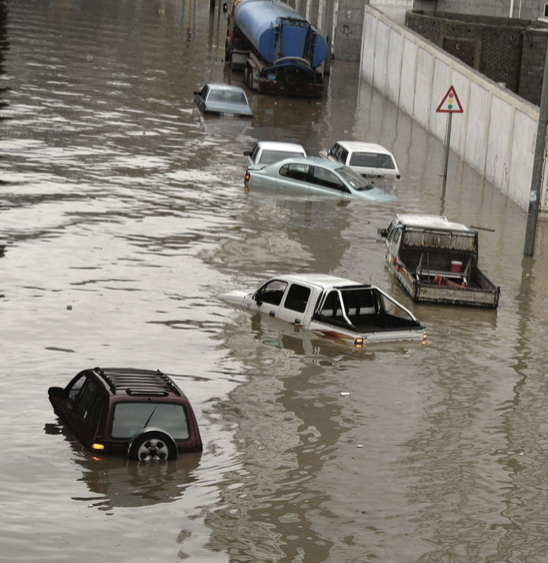
According to Maroun Corm at the Beirut-based Libano-Suisse Société D’Assurances, there are two main types of extraordinary risk insurance, acts of God and political violence. Acts of God are divided into three aspects: flood, earthquake and tidal wave (tsunami). Usually, all three can be simply added on to a fire policy. Earthquake and tidal wave insurance are often slightly more expensive due to their higher aggregation potential. It is also interesting to note that geographic location within Lebanon does not affect premium rates for earthquake coverage, so cost is the same no matter where you are in the country.

Interviewed by Executive, Jean Hleiss, associate general manager at ADIR insurance, said that although February’s earthquake caused little damaged, now is a good time to purchase earthquake insurance as it is likely reinsurance providers will increase their rates next year. He explained that a typical earthquake add-on to a standard fire insurance policy for a $1 million building would amount to a $500 annual premium.

Political violence insurance

The second type of threat covered by extraordinary risk insurance is political violence, and can also be divided into three groups. The first type, SRCC, protects against strikes, riots and civil commotion. An example of this would be the January 27 riots in Mar Mikhail. Second is insurance against terrorism. The random bombing campaign that targeted Beirut in 2005 best represents this category. The third category is war insurance, which appears to be straightforward at first glance but can be divided into both war and civil war by some insurance companies. Premiums and deductibles for all insurance guarding against political violence are much higher than those for acts of God.

Depending on the company, all three can be purchased separately or as a package and can be added onto a pre-existing standard fire policy. Unlike a standard fire policy, however, premium rates swing wildly. They can range from 1% of the property value up to 10%. As always, it is best to purchase a policy when the political situation is calm to take advantage of lower initial rates. Although premiums do change with the political situation, a long-term client will likely get much more favorable rates when things do go sour. It is also important to keep the higher deductibles in mind, which often start at a minimum of $500,000 for war damages. Other factors are worth considering as well. Location, for example, can affect premium. If your building is next to the headquarters of a political party in Beirut you will certainly pay more due to increased risk.

Due to the significantly higher premiums and deductibles, very few insurance policies, protecting against terrorism and war, are sold. Of the five insurance companies Executive interviewed for this article, three said that they had not sold a policy of this type in the last year and the other two had sold less than 10. This does not keep some insurance companies from advertising, however. For example, Medgulf’s promotional brochure on personal accident insurance has two schemes, Plan A exclusive and Plan B inclusive of passive war coverage.

Assassination insurance

But apart from property, how do people insure themselves against political violence? Again, due to high premiums and deductibles this type of insurance is generally very rare and is usually sold on a case by case basis, in direct contradiction to Medgulf’s plan B system. Hisham Barraj of Arabia Insurance Company explained that his company does not offer a standard coverage because “each person has to assess his own value. A human life is not a material that can be appraised by someone else.”

Libano-Suisse’s Corm said that recently he had written a policy of this type for the chairman of a prominent Lebanese business. The client had himself insured for up to $500,000 against kidnapping, ransom and terrorism (although he is not covered against personal assassination). His premium is 10% of the total insured or $50,000 per year. It is important to note that the rate is not that high because of the client’s job but to the territoriality limit, as he frequently travels to Iraq.

It appears that for some, policies for businessmen headed to Iraq are big business. Hleiss of ADIR said his firm has written no-less than 500 policies in total to insure clients against kidnapping and ransom, and added that from those policies his company had only seen two or three claims. However, those can be costly: ADIR recently paid out $3 million on a claim resulting from an assassination in Beirut.

Read the fine print

Farid Chedid, managing director of Chedid Re, pointed out what a lot of people neglect — the details. He said that one major problem with insurance in Lebanon is that the contracts here are based on European wordings. For example, in Europe a standard SRCC contract specifically states that “rioters” are unarmed people.

Unfortunately, when this standardized contract is used in Lebanon unmodified, damage incurred would often not be covered as it is not unusual for rioters in Lebanon to carry weapons. Therefore, it is important to use an insurance company that is particular about contract wording and has a good reputation for honoring claims.

When looking for a policy, one should also keep exclusions in mind. Most policies will not cover damage incurred during nuclear, chemical or biological attacks, or in a war between any two of the world’s five superpowers.

Of course, for local and regional residents, these particular instances are rather unlikely, and give no reason to avoid purchasing insurance altogether. In fact, with a little bit of common sense and preparation, the astute client will be able to insure himself well against the extraordinary risks of our uncertain world.


March 3, 2008 0 comments
0 FacebookTwitterPinterestEmail
Banking & Finance

IPO Watch – Rosy outlook

by Executive Staff March 3, 2008
written by Executive Staff

Regional companies are running toward their local public markets, leaving a trail of prospectuses behind them and welcoming individual and institutional investors from across the Middle East and abroad to partake in the region’s new found stable equity markets. The IPO market in the GCC continues to experience a flurry of new IPO announcements and, in the month of February, analysts say that a new record of announced, planned or in progress IPOs are in the works.

Starting with the region’s largest economy, Saudi Arabia, had five IPO announcements in February. Although in terms of value, the announcement s are not big, the number of companies jumping on the IPO bandwagon speaks a lot about the current psychology and mood in the kingdom’s stock market. Most worthy IPO news is the announcement by the kingdom’s fixed-line telecommunication companies, who won the licenses in late 2007, revealed their plans to offer 25% of their shares to the public in the second quarter of 2008. Atheeb Telecom, Optical Communication Co. and Al-Mutakamila who have a combined capital of more than $801.1 million, did not provide additional information on the offering.

In the food sector, the Saudi-based Herfy Food Services, a unit of Savola Group, announced plans in mid-February to sell 30% of its shares in an initial public offering. Herfy which has a capital of $27 million is expected to receive the regulator’s approval for the IPO, in March. In the transportation sector, Al-Bassami International said it will offer 30% of its shares to the public, in the second half of 2008. The company said it plans to raise its capital to $106.8 million. Saudi-based National Air Services, better known as NAS, said that it plans to launch an IPO by the end of 2008, in an effort to raise around $4.5 billion to expand its fleet over the next five years. Although NAS did not disclose more information on the offering, analysts expects this IPO to create a lot of excitement on the market and even some controversy. Meanwhile, in the petrochemical industry, Saudi Industrial Investment Group launched, on February 23, a $600 million rights issue to double its capital to $1.12 billion. The move comes as part of the company’s plan to acquire a petrochemical firm. Saudi Industrial Investment offered 225 million shares at $2.67 each to existing shareholders subscription. The IPO is expected to close on March 5.

Moving to the region’s hottest economy, the UAE came in second this month with three IPO announcements. The newly-established Islamic lender, Ajman Bank, said it will raise $149.9 million by offering 550 million new shares or 55% on the Dubai Financial Market in April. The price per share will be $0.27, valuing the bank at $272 million. Subscription opened on February 17 and the closing date is scheduled for February 27. In Abu Dhabi, Al-Rayan Investment said that it will launch an initial public offering in 2008. But the company’s chairman, Fardan al-Fardan, refused to provide further details until the full plan for the IPO is complete.

In tiny Bahrain, Voltamp Manufacturing Company, a producer of power transformers and switchgear, said it will launch a $88 million IPO, sometime in April. The company has fixed the share price at $1.40 with a nominal value of $0.26. Voltamp is 57.42% owned by Al-Anwar Holdings, an investment company listed on the Muscat Securities Market. Krishna Kumar Gupta, CEO of Al-Anwar Holdings, told reporters that Voltamp’s enterprise value is estimated at $70 million.

In the Levant, two noteworthy announcements were made in February. The first being Lebanon’s Fransabank, which revealed on February 26 its Damascus-base unit, Fransabank Syria, has launched an IPO valued at $12.1 million. Fransabank Syria is offering 1.26 million shares or 36% of its total shares at $9.87 each. The share price consists of the par value without an issue premium. The IPO is expected to close on March 13. The second IPO, is Jordan’s Darat Jordan Holdings, which plans to offer 26.6% of the or 4 million shares to the public starting on March 3rd. Darat who has appointed Jordan Investment Trust as the lead manager is looking to raise around $28 million. The company said the proceeds will be used to expand its real estate portfolio.

The favorable outlook for the IPO market in 2008 has heightened interest of individual, institutional and foreign investors in the region’s markets. Of course the GCC markets continue to garner the largest share of investment, but analysts say North Africa is not doing too bad. In the Levant there is still much more development and maturing to do, but once political stability is realized the Levant is set to catch up quickly to its neighbors. Observers say that the overall performance of the IPO market in 2008 so far has been promising and many are betting on a new record year.
 

March 3, 2008 0 comments
0 FacebookTwitterPinterestEmail
By Invitation

Special Economic Zones, how to make them special

by Nadim Batri, Jonathan Fisk & Ali Habbtar March 3, 2008
written by Nadim Batri, Jonathan Fisk & Ali Habbtar

Over the past 30 years, there has been a proliferation of special economic zones under a myriad of names: “free zone”, “free trade area”, “export-processing zones”, and “special economic zones”, amongst others. A special economic zone, or “SEZ”, is defined as an area within the boundaries of a country where favorable regulatory, fiscal, and financial incentives are applied preferentially to the rest of the country. SEZs can vary in scale from small enclaves within or near a major city or port, to planned metropolitan centers like Economic Cities. Shenzhen and Jebel Ali are considered to be two of the most famous and successful SEZs. Shenzhen in China had a 15% year-on-year GDP growth in 2006, the highest mainland GDP/capita, and the economic added value of a midsize Chinese province. Jebel Ali is Dubai’s thriving equivalent. In 2004, it accounted for approximately 36% of Dubai’s export/re-export activity. Jebel Ali has attracted significant investments, increasing its number of tenants by 25% year-on-year since its establishment in 1985.

SEZs are traditionally established to boost economic development through the attraction of foreign investment, leveraging the competitive advantage of the country or region over its neighbors. However, the rapid growth of SEZs has translated into competition over capital and consequently to increased startup costs. These large initial expenditures, which have been magnified with the increasing scale of SEZs, are heightening investment risk.

In this article, we outline seven key enablers for the success of a Special Economic Zone.

First — In order to achieve a competitive edge, a Zone should focus on a limited number of sectors, which define its main objectives and vision. Establishing an industry focus enables synergies between different tenants and ensures a competitive edge over other Zones offering similar services. The target industries or sectors should have a natural fit with the comparative advantages of the country: natural resources, human capital, access to markets, etc.

Second — A development blueprint, also know as a Master Plan, is then needed to guide construction planning and urbanization of the Zone, identifying the various Zones and the key elements required to operationalize its industrial, business and tourist zones, and to populate its residential neighborhoods. Specific sections of the Master Plan would translate the high-level industry or sector focus into concrete industry targets by mapping the competitive landscape and evaluating industry or sector attractiveness and profitability. The specific sections would then form bankable business proposals to secure financing and attract potential tenants. The Master Plan would also be used as a marketing tool used to communicate the Zone’s capabilities and competitive advantages to potential investors and residents. It helps the responsible entities deliver a consistent message to potential investors and residents by communicating the Zone’s advantages clearly and concisely.

Third — As part of its competitive offering, the Zone requires world-class infrastructure and utilities. A number of questions must be addressed to determine these requirements:

• How will the Zone be accessible (proximity of sea/airport, highways, railways, etc.)?

• How will fuel and feedstock be distributed to tenants?

• How will electrical power and water capacity be provided?

• What type of telecommunication services will be provided?

While most of the Zones aspire to have the best-in-class infrastructure needed by the tenants, the challenge lies in the financing of these capital-intensive projects. For example, Jebel Ali Free Zone relied extensively on government support until the zone became self-sufficient. Recent Zones have increasingly relied on the private sector to finance these projects.

Fourth — Civil and Public Services must be provided to meet the needs of the Zone’s investors and residents, and fall into seven main service categories; Security, Civil and Judicial, Municipal, Commercial, Education, Healthcare, and Social and Religious services.

Fifth — Fiscal and financial incentives are used as an additional tool to attract investors to set up operations in the Zone. The incentives take on the form of low tax rates, low customs tariffs, investment incentives (mainly for R&D), and attractive loan programs.

Sixth — A proper Governance Model should be set up to define the distribution of roles and responsibilities between the multiple government and private stakeholders of the Zone. The model describes four interlinked levels of governance:

1. Policy Setter(s): Set the overall policies to shape the Zone’s direction over the medium and long term, and approve the regulations detailing such policies;

2. Regulator(s): Issue, monitor and enforce the Zone’s regulations and bylaws, set Zone tariffs, approve plans and partnerships, monitor competition and resolve conflicts between service providers and consumers;

3. Developer(s): Develop the Master Plan, infrastructure and superstructure to fulfill the Zone’s vision and attract potential anchor investors;

4. Operator(s): Operate and maintain the Zone’s infrastructure and superstructure and manage the provision of civil and public services.

Each of the Zone’s key services must have responsible entities at each of the four levels described above; these entities can belong to the Central Government, the Zone Authority or the private sector. The key to design an effective Governance Model is to achieve the “right” balance between the various entities. For example, the decision about which entities are best suited to administer the Zone’s Commercial Services should be based on whether Commercial Services are a competitive advantage for the Zone, and if the desired quality of service can be provided through the existing entities in the country.

Seventh — Finally, the successful implementation of the governance model depends on the relationships between the three entities mentioned above, and the parameters that define their cooperation. Zones usually outsource the provision of non-core services, in order to focus on administration, land lease and key port services.

The seven key enablers outlined above combine to define the Zone’s Value Proposition to all the concerned stakeholders, including Central Government and Zone Authority, Zone developers and service providers, and the Zone tenants and residents. The Value Proposition defines the Zone’s development plan and industrial focus, and its required capabilities/services and the means of their provision; it also describes how the Zone is governed and monitored throughout its development.
Nadim Batri and Jonathan Fisk are senior associates, Ali Habbtar is an associate at Booz Allen Hamilton.

March 3, 2008 0 comments
0 FacebookTwitterPinterestEmail
By Invitation

UK-Lebanese trade setting sights on a better future

by Dominic James March 3, 2008
written by Dominic James

July 2005. London. Applying for trade postings in British embassies in Damascus, Beirut and Amman, I am delighted to get my first choice — Beirut. Despite the instability sparked by the assassination of Rafik Hariri that year and a spate of subsequent attacks, Lebanon seems a good choice for a commercial posting. I have been visiting the country since 2003 and been impressed with Lebanese business professionalism. There is energy and dynamism in the air, and a feeling of excitement that Beirut could once again become a true business hub for the region. There is a good team at the embassy, and from my visits it is clearly also a great place to live — the nightlife, natural beauty, skiing, the food, the people. I can’t wait — I have five months to prepare for a January 2006 start.

February 2008. Beirut. July 2005 seems a long time ago. It hasn’t quite worked out as expected. I have learned new and unexpected skills — evacuating our nationals in July 2006, counselling businesspeople trapped by riots in January 2007, emergency business planning in response to cancelled events, and dealing with regular disruption to everyday life. Thankfully, my job is not to analyze Lebanese politics, but I share the frustrations of the local business community at the seemingly endless stalemate which holds them back. It affects me personally, too — I say reluctant goodbyes to Lebanese friends leaving for better paid jobs in more stable countries, and feel sorrow for those who have lost immeasurably more than just their business.

For UK companies it has also been a difficult time. Along with other western countries, Britain advises against all but essential travel to Lebanon. This affects insurance cover and is a major factor for potential visitors. Some international companies have left for more stable environments, and even mentioning the words ‘Lebanon’ or ‘Beirut’ to some people seems to awaken almost dormant fears from the bad old days. It is demoralizing for my team, so I can only imagine what it is like for those Lebanese who have worked so hard to build up their businesses only to see their hopes of success and prosperity dashed.

So what’s the point of being here at all? The surprising truth is that British exports continue to do extremely well in Lebanon and UK-Lebanon business links are growing. Although final figures are not yet available, it looks as though 2007 will be an all-time record for UK-Lebanon trade — with two-way commerce approaching $500 million (up well over 15% in 2005 — which was itself a record year). And in a complicated political and economic environment, companies making decisions about working in Lebanon need our advice more than ever. And there are still companies who have identified new opportunities and are seeking to enter the market.

Like Lebanese businesses, my section — known as UK Trade and Investment (UKTI) — has adapted to the ‘situation’. We try to ignore political and security events outside our control and concentrate on where we can make a difference. We focus less now on promoting the Lebanese market in the UK — where potential exporters have a wide choice of easier options. We have also reduced our focus on major set-piece events (trade missions, exhibitions, etc.) which we cannot say with any certainty will be able to go ahead.

Instead we have started to develop much better contacts with British companies already in the region, mainly in the Gulf. Once successfully established in the Middle East, these companies start to look at opportunities in other markets in the region. UK companies see Lebanese companies and franchises flourishing in the Gulf, and want to take a closer look at Lebanon — to see beyond the newspaper headlines. In my last trip to Dubai in late January, I had no fewer than 24 pre-arranged meetings with UK companies visiting the Arab Health exhibition who wanted to talk to me about the Lebanese healthcare market. Many of these are following up with specific requests for further information or planning to visit.

But it is not so easy for a UK company to come to Lebanon in the current circumstances. So we often find ourselves commissioned to undertake a piece of work on behalf of a British company — to find an agent or distributor, or to do a piece of research which they would normally do themselves. We have successfully linked several British companies with local partners without them needing to set foot in the country. And we are developing better links with other regional UK embassies to provide a more joined-up service to UK companies already in the region. Beyond this we are still taking key Lebanese businesspeople to the UK to meet UK suppliers. In 2007, this included delegations from the power sector, the environment (solid waste) sector, ICT, financial services and security sectors.

The bottom line is that the Lebanese consumer has, despite everything, continued to consume UK products and services — in greater quantities than ever before. This could be specialist building supplies to feed the booming real estate market, consultancy for the banking sector, security consultancy, or simply medical supplies or food and drink — nearly $20 million of Scotch whisky is exported to Lebanon each year! And the big infrastructure projects such as power stations, refineries, water and wastewater, etc., will all need to go ahead at some point, so we try to position UK companies to be ready for when these are launched.

The recent strategy devised by UKTI HQ in London has been to focus on high-growth emerging markets, moving away from the traditional European and North American areas. The big names are obvious — China, India, Brazil, etc., and in the Middle East the focus is on the UAE, Saudi Arabia and Qatar. But other smaller markets are not ignored — and the potential in markets like Lebanon is clear. Although conflict and other incidents have sometimes scuppered plans to hold normal business activities, in reality the show goes on regardless. For local businesses, despite the fact that the economic situation is extremely difficult and many have been forced to close, others have been extremely successful. We need to be here to advise British and other companies to position themselves to meet the shifting demands.

Economically, as the IMF recently pointed out, Lebanon is ‘atypical’. Such a high debt-GDP ration should, according to standard models, have produced a debt crisis years ago. But the unique factors (strength of the banking sector, the state’s record in never defaulting, and the loyalty of depositors and investors) give Lebanon an advantage. Unless something drastic breaks the equilibrium (which cannot of course be ruled out), Lebanon will continue to maintain relative stability, and investors will continue to maintain a medium to long-term view. We try to bring these factors across to UK companies who are looking at the potential of the country.

One of the fallouts from the July 2006 conflict was that it forced the postponement of a visit that month from the Lord Mayor of the City of London after months of preparation on both sides. The Lord Mayor is one of Britain’s most prominent commercial representatives, representing the financial services industry in the UK. As Lebanon’s financial sector continues to develop a key role in the region, this visit would have brought the highest profile British commercial delegation for many years to Beirut. I take comfort from that fact that London is taking a relaxed view, and that the visit has been postponed rather than cancelled. I have no doubt that it will go ahead when the timing is right. Both Beirut and London have good stories to tell as hubs for financial and insurance services, and it is right that contacts are developed at the highest levels for the commercial benefit of both countries.

We also see a good future in the development of the creative industries, where again both London and Beirut are key centres of advertising, design, media and fashion, and we are working with our colleagues in the British Council to develop a strategy to move this work forward. Already in the last few months one British graphic design company, “afishinsea”, has successfully established itself in Beirut with UKTI help, and we are looking to assist more such ventures. We are also focusing on construction, power (especially renewable energy technology), healthcare and ICT, the latter of which should offer great opportunities in future years assuming the privatization of Lebanon’s telecoms sector goes ahead.

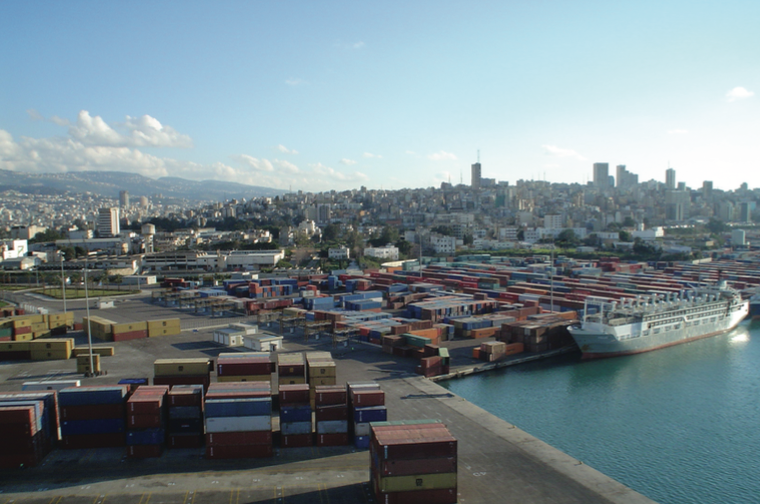
We have good support. While our Ambassador, Frances Guy, is necessarily focused on the political arena, she is also extremely enthusiastic about commercial work. In recent months she has been 45 meters up a crane at the Beirut Container Terminal (a real success story — run by a Lebanese-British consortium), visited the offices of several major importers from the UK, and toured several factories. We also work closely with key individuals from the British Lebanon Business Group — an informal network of British and Lebanese businesspeople which includes some of Lebanon’s most influential commercial decision makers.

So, am I optimistic about the future? The answer has to be ‘yes, but…’! I was lucky enough to be here in the first-half of 2006 when Lebanon really seemed to be booming. New mega-projects were being announced on a weekly basis, and while there were problems, it was possible to imagine that Beirut could regain its pre-civil war status as a financial and trade hub for the region. Much has been lost, and whatever happens it will take time to regain that momentum. But the underlying skills, dynamism, and creativity are still here, and there is significant pent up energy from investors waiting for better times. It is not a market for the fainthearted, but the rewards could be substantial.

Dominic James is the head of Trade and Investment at the British Embassy in Lebanon.

March 3, 2008 0 comments
0 FacebookTwitterPinterestEmail
By Invitation

Trouble brewing beyond the oil fields

by John Defterios March 3, 2008
written by John Defterios

It does not take much to rattle the commodity markets these days. Despite a dramatic slowdown in the United States and within Western Europe, there is certainly enough demand and enough speculation to have a new record close for oil this week, above $100 a barrel.

The trigger for the final close above that benchmark was a refinery explosion. Fingers were also pointed at the falling dollar, potential unrest in Nigeria and Hugo Chavez’s unpredictable nature as the overseer of Venezuelan crude.

With the strong growth underway in the Middle East region for this year and the mammoth construction boom, prices for everything from iron ore to make steel, to Arabica coffee beans to make cappuccinos, are at record highs.

There is a whole basket of so called soft and hard commodities skyrocketing — and for good reason. Demand outside of the Group of Seven countries remains strong and minor “events” create reasons for speculators to drive prices higher.

Take Kenya and the prolonged negotiations over the power sharing talks with President Mwai Kibaki and renewed fighting in Sri Lanka between the government and the Tamil Tigers in the north. Together those two countries represent 50% of tea exports. Tea demand is up 12% over the last year. Again don’t look to the traditional tea houses in London for the answer, but places, like India and China who cannot meet domestic demand.

Last week, prices for high quality Arabica coffee beans soared to a 10 year high, after prices climbed 36% in 2007. Cocoa prices hit a 24 year high after surging 45% last year. Upcoming elections and civil unrest in the Ivory Coast provide plenty of “grist for the mill” (or reasons to speculate) if you are a trader of cocoa beans.

I don’t know if you are a daily scanner of the commodity section of your preferred newspaper, but right now they make for interesting reading beyond the daily staples of our diet. Platinum, iron ore, gold are all in record territory. We are seeing that major steelmakers are settling on contracts for raw supplies that are up more than 70% over last year. No doubt, the construction companies of the Middle East will be paying higher prices for steel plates and wire, only adding to the inflationary pressure we are seeing for real estate in the region.

The sum of all the parts is this: The rise across the board of this basket of commodities is not esoteric, “does not affect me” kind of stuff, but the real deal. While a slowdown in the West may slightly correct the imbalance of supply and demand near term, it will not solve the problem created by prosperity and a more globalized world. One thing I am not reading between the lines is the potential for the extra supplies coming onto the market to curb these prices. This applies to both quality coffee and quality crude.

Which leads me back to the recent rise of oil. Doing some quick math on Saudi Arabia, at roughly 9 million barrels a day, the Kingdom brings in $6.3 billion a week in revenues from oil production; $325 billion a year. That is a great deal of money for a population of just 27 million. The government is in the midst of reallocating that money with a whole set of new economic cities, airports and universities. They don’t want to see a replay of the 1970’s boom and bust scenario. There is an effort underway to build a foundation for future growth, beyond the barrel if you will.

We’ll take a closer look at that effort next week while on the ground at the Jeddah Economic Forum.

John Defterios is the presenter of CNN’s Market Place Middle East

March 3, 2008 0 comments
0 FacebookTwitterPinterestEmail
By Invitation

Privatization: As public as it gets

by Ramsay G. Najjar March 3, 2008
written by Ramsay G. Najjar
If you walk down the streets of Beirut on any given day, chances are you will hear a passer-by cursing the sub-par quality of Lebanon’s mobile networks and services and the “exorbitant” prices levied on consumers by the two GSM providers. Yet when you ask many members of the public if they support privatizing the same network, they will adamantly disagree.

This dichotomy epitomizes the problem with obtaining the buy-in for privatization: its benefits are concrete, but they have to be clearly communicated to be understood by the public.

Lebanon is just one side of the privatization spectrum, where political quarrels and a skeptical public have slowed down the process to the detriment of citizens, who have been facing deteriorating mobile and electricity services among others.

On the other side of the spectrum, however, there are numerous case studies in countries where privatization has been a success, in large part due to the communication behind the initiative that drew citizens’ attention to “what’s in it for them” and helped gain their backing for this alternative way of running the economy.

Margaret Thatcher’s reforms in England during the 1980s and 1990s, for example, have become an international benchmark of successful privatization for their effectiveness in transforming the debilitated electricity, postal and railway systems in the country. The ‘secret’ behind this achievement was the British people’s endorsement of the project once they understood that it would lead to greater efficiency, higher quality, lower prices and more service offerings.

Thatcher’s success is even more striking when contrasted with the failure of Communist governments, during the same period, because of their attempt to force a system on their people by claiming that citizens must accept it for the ‘good of the state,’ at the expense of individual rights and benefits. This is where governments must understand that instead of drowning in a sea of rhetoric, they can build a bridge through communication that reaches across the gap between what’s good for the state and what’s good for the citizen.

Failure in securing public support for privatization will also persist as long as the misconception that privatization is equal to handing public property over to private corporations is perpetuated. Instead, communication needs to position privatization as a deeply-rooted partnership between the public and private sectors that is ultimately in the benefit of the citizen. In fact, “public-private partnership” is the new word for privatization — a genuine partnership where the public sector safeguards the sovereignty of public services and upholds the public interest and where the private sector brings in its dynamism, business sense and innovation to ensure viable, quality services and competitive prices.

Regionally, we only have to look as far as Saudi Arabia, Egypt and Jordan to witness citizens reaping the benefits of privatization, in the form of lower mobile prices and a more reliable phone network. As these countries and others expand privatization to touch other sectors, such as utilities and transport, it is important that they ride the wave of popular momentum by pointing to the jobs created and the overall efficiency of operations that answer to consumers instead of being artificially propped up by citizens’ tax dollars.

Weak or inappropriate communication, on the other hand, most often backfires and destroys campaigns of economic reform. Just take the example of Bangladesh. In the 1990s, the Bangladeshi government decided to resist popular discontent with its plans to privatize a coastal warehouse, by undertaking the project in secret. Sure enough, a potential investor came to visit the warehouse site only to be threatened to be killed by a guard, reflecting the public’s fear of privatization and leading to several years of delay in the process.

Cloak-and-dagger secrecy and messages that do not effectively target stakeholders, can make governments look like they have something to hide, as well as failing to shed light on how this partnership will touch their lives and bring a solution to their every day problems. This adds fuel to the fire of local hostility and misconceptions about private interests wanting to take advantage of state wealth and public goods, rather than highlighting how such a reform would contribute to improving their quality of life.

Yet, while secrecy leads to disaster, highlighting the transparency of the privatization process, in terms of each step of the bidding process and the clear-cut rules and regulations, is not the proper remedy. Authorities have spent too much time and effort on taking the public step-by-step through the nitty-gritty of privatization, when these explanations are far too technical and removed from the population’s deepest concerns and needs.

To avoid such pitfalls, a communication strategy must be carefully balanced between relaying the long-term vision behind economic reform and managing people’s expectations, which involves an explanation that for every job lost more will be created. That privatization actually bolsters and catalyzes economic growth and that competition in any sector means more variety and better prices for consumers. In fact, privatization not only creates jobs, it also fosters better working conditions and benefits for employees and promotes a higher level of productivity and innovation. What’s more, many privatized sectors lead to IPOs that consumers can literally be a part of and profit from as an investment.

Communicating these messages begins with highlighting the transparency of the process and reaching out to the different stakeholders, from regulatory bodies to members of the public. But the key to successful communication in this case is to focus on a two-way dialogue with the public, based on understanding their needs and expectations and tailoring the messages to each and everybody’s question: “What’s in it for me?”

After all, who is more convincing: a dietician who lists each and every food you’ll be deprived from on your diet or one that tells you that by following the diet, you can go back to wearing your favorite outfit or a sexy swimsuit on the beach? Of course, the crucial element in effective communication is not just being heard, but saying something that people will listen and respond to — in this case that they will benefit from privatization.

Ramsay G. Najjar, chairman of S2C

March 3, 2008 0 comments
0 FacebookTwitterPinterestEmail
Capitalist Culture

Politics of – Entertainment

by Michael Young March 3, 2008
written by Michael Young

Fairuz does not have much in common with the United Kingdom’s Olympic authorities. However, both found themselves in a similar conundrum recently, and it was not particularly pleasant.

In January, Fairuz traveled to Damascus for a concert, the city having been named the Arab cultural capital for 2008. Before leaving, politicians from Lebanon’s anti-Syrian March 14 coalition urged her not to go. In an open letter, one parliamentarian, Akram Shuhayyib, wrote: “People who sing for freedom, for Jerusalem, for the Arab conscience and dignity do not sing for the tyrants of Damascus … You are our ambassador to the stars, you have painted our Lebanon as a free, independent and sovereign nation, so don’t sing for those that don’t even recognize our nation.”

In February, the British Olympic Association (BOA) came under similar fire, when it admitted that athletes attending the summer Olympic Games in Beijing would have to sign a contract with a clause forbidding them to comment on China’s poor human rights record. Those refusing to sign would be banned from the games. To justify the move, the contract referred to Section 51 of the International Olympic Committee Charter, which “provides for no kind of demonstration, or political, religious or racial propaganda in the Olympic sites, venues or other areas.”

Consciously or not, Fairuz and the BOA hid behind a familiar defense: that there are certain domains that should remain isolated from politics. But more generally, they were trying to achieve an understandable if somewhat self-centered objective: to dodge ambient political bullets so as to emerge personally or institutionally better off.

In that sense, Fairuz and the BOA were right. When political matters infiltrate anything, they often polarize attitudes. And when that happens, a professional is forced to take sides. Yet the point of many professions, particularly artists or sports personalities, is to appeal to as many people as possible. Fairuz had no interest in alienating part of her audience by refusing to travel to Syria; and the BOA had no interest in damaging its Olympic prospects by allowing athletes to deflect public attention toward matters not essential to Britain’s sporting performance.

At the same time, however, such calculations are naïve, even counterproductive. In not wanting to alienate her Syrian audience, Fairuz alienated part of her Lebanese audience. As a noted Lebanese blogger wrote, with great bitterness: “Fairuz the singer died when her voice tragically aged. But her art was kept alive by the people who worshipped her as a symbol of their existence, and as a nostalgic reminder of home. Today, she betrayed them, and their memories. Syrian media hailed her ‘return to her people.’ Let them have her. Many of us will pretend that she died in the war, like many other people and things of value.”

Similarly, the BOA, in wanting to ignore politics, only compelled critics to look up comparable cases in the past. The Daily Mail, for example, ran a photo of the England football team saluting Nazi-style at the 1938 Olympic Games in Berlin, a showpiece for Adolph Hitler, over a caption reading “a memory which critics do not want to see recalled in China.” Was this disingenuous? Plainly, since China is hardly Nazi Germany. But that’s irrelevant. The real issue is that the BOA carelessly thought it could isolate itself from this kind of political one-upmanship.

Is there any solution to this dilemma? No. Culture, like professional sports, has always been fundamentally political, as are most kinds of public activity. National sporting rivalries, even if they do not overtly involve politics, reflect issues of solidarity or hostility and say a lot about how a country views itself. Culture that is entirely apolitical is terribly limited in scope, and many forms of expression, from poetry to painting to jazz, only found their true resonance when expanding into themes that were in some way political by challenging existing conventions.

But then a famous example of this involves Fairuz herself. In the 1980s, her son Ziad Rahbani staged a brilliant play titled Shi Fashil (Failure). It was about a theater troupe trying to stage a play similar to the theatrical musicals written by the Rahbani brothers (notably Ziad’s father Assi), which had turned Fairuz into a star. The biting comedy line came from the fact that the play being rehearsed in the play was supposed to be apolitical and reflect the basic unity of the Lebanese, even as the theater troupe was riven by political differences. Ziad’s message was that the apolitical, idealized musical worlds created by his father and highlighting his mother were mostly a sham; politics were everywhere in Lebanon.

Fairuz should have revisited Ziad’s play before agreeing to go to Damascus. She may have been justified in singing to her admirers there, but she couldn’t have seriously expected it wouldn’t provoke controversy.

Michael Young


March 3, 2008 0 comments
0 FacebookTwitterPinterestEmail
Sudan

Room for growth

by Executive Staff February 27, 2008
written by Executive Staff

Mobile phone usage has exploded in Africa over the last decade, with 197.4 million mobile phone users in 2006, up from just 25.3 million in 2001, according to the UN’s International Telecommunication Union. The growth was so spectacular that some of the bigger markets like South Africa and Nigeria have already shown signs of consolidation. But analysts say there is still plenty of room for growth in Sudan.

Ahmed Haroun’s tiny newspaper stand in the middle of Khartoum is plastered with mobile phone posters and strings of pre-pay cards, wallpapering the back of the shack and hanging down in front of customers like festive decorations.

Outside, the street is cluttered with advertising urging passersby to sign up with state-run Sudani, South Africa’s MTN or Kuwait’s Zain. Even the rubbish on the pavement is littered with bent and used up mobile phone scratch cards, most of them in the smallest denomination of five Sudanese pounds ($2.50). It is a scene repeated endlessly across Sudan’s dusty capital, on street corners and roadside shacks, each of them a front line in the fierce battle for mobile phone customers currently raging across Africa.

Sudan, the sixth biggest African country by population, came to the growth game relatively late. It missed out on much of the early days of the telecom boom, thanks to the turmoil of more than 20 years of civil war, compounded by an illiberal telecom market and crippling economic sanctions imposed by the US.

The world’s telecom companies, encouraged by a welcome liberalization in the national market, have been rushing into Sudan to scoop up as many new customers as they can get their hands on. There are now three established players in Sudan — Sudani, MTN and Zain.

Canar, a fixed-line group owned by UAE’s Etisalat, has also been negotiating for a fourth national mobile license over recent months. The market has become so crowded that Zain’s chief executive in Sudan warned that the granting of yet another license would force him to reconsider a huge expansion package. “We definitely think that the market can continue to grow,” said Andrawes Snobar, senior research analyst at Jordan’s Arab Advisors Group.

“The presence of three mobile operators in the market right now means there is plenty of competition. That will lower prices and increase the number of services offered to new subscribers. And that will increase the number of subscribers. “The mobile phone penetration is also very low in the country compared to regional standards and absolute levels.” Devine Kofiloto, principal analyst at UK-based Informa Telecoms & Media, agrees. “Sudan is a very interesting case, based on the parameters of low penetration and high population,” he said.

Near virgin territory for operators

At the end of 2006, just over 13% of Sudan’s 40 million-strong population had access to a mobile phone, according to the latest figures released by the Arab Advisors Group. Investors would have to search far and wide to find an equally sizable market and attractive penetration statistics elsewhere in the region.

Three out of Africa’s six biggest countries by population — Nigeria, Egypt and South Africa — already have mature mobile markets. No outside operators are allowed into Ethiopia, where the huge and inefficient Ethiopian Telecommunications Corp holds a state monopoly. That only leaves the Democratic Republic of the Congo — with its 60 million inhabitants, of which only 9% have mobiles phones, according to Informa — to rival Sudan in the investment stakes. Analysts thus concur: There are plenty of opportunities for expansion in the country.

Khartoum may have plenty of handsets and mobile phone masts. But huge areas of the country — from Darfur in the west, to the Red Sea coast in the east, remain near virgin territory for operators. If new mobile licenses prove hard to come by, there are always other ways in. Sudatel floats on the Bahrain and Abu Dhabi stock exchanges.

Another largely untapped opportunity lies in South Sudan with two mobile licenses of its own, currently held by the tiny operators Gemtel and NOW. Both could be tempting acquisition targets. Big names that are still on the sidelines without a stake in Sudan include the Anglo-South African Vodacom and Egypt’s Orascom Telecom.

Guilt by association

As in all markets, there are also risks. One of the biggest, especially for any operators with ties to Europe or the US, is the possibility of getting tainted through association with the festering conflict in Darfur. Human rights campaigners have mounted huge publicity campaigns against foreign companies suspected of propping up the Sudanese government or supporting atrocities in Darfur. German engineering giant Siemens, which has a sizable telecommunications division, pulled out of Sudan last year citing “moral and political” reasons. France’s Alcatel-Lucent has also been forced to defend its business interests in Sudan, following campaigns by divestment and human rights groups.

Most affected of all has been Sudan’s own national operator Sudatel, controller of the Sudani mobile brand. The company was one of 31 Sudanese groups barred from doing any business with US companies last year, after the White House accused it of “contributing to the conflict in Darfur.” But even that exclusion from the world’s biggest economy has not prevented Sudatel from finding its own opportunities for growth. In December, it snapped up a 70% stake in Intercellular Nigeria Limited. Three months before that, it spent $200 million on a mobile phone license in Senegal.

When Sudatel’s CEO Emad Ahmed was asked by reporters what impact America’s sanctions were having on his business, he replied: “The sanctions do not affect Sudatel at all. We are still dealing with the main builders of telecommunications … except American companies. The technology is available everywhere: it is available in Europe, it is available in the Far East and China, especially in China.”

February 27, 2008 0 comments
0 FacebookTwitterPinterestEmail
  • 1
  • …
  • 543
  • 544
  • 545
  • 546
  • 547
  • …
  • 685

Latest Cover

About us

Since its first edition emerged on the newsstands in 1999, Executive Magazine has been dedicated to providing its readers with the most up-to-date local and regional business news. Executive is a monthly business magazine that offers readers in-depth analyses on the Lebanese world of commerce, covering all the major sectors – from banking, finance, and insurance to technology, tourism, hospitality, media, and retail.

  • Donate
  • Our Purpose
  • Contact Us

Sign up for our newsletter

[contact-form-7 id=”27812″ title=”FooterSubscription”]

  • Facebook
  • Twitter
  • Instagram
  • Linkedin
  • Youtube
Executive Magazine
  • ISSUES
    • Current Issue
    • Past issues
  • BUSINESS
  • ECONOMICS & POLICY
  • OPINION
  • SPECIAL REPORTS
  • EXECUTIVE TALKS
  • MOVEMENTS
    • Change the image
    • Cannes lions
    • Transparency & accountability
    • ECONOMIC ROADMAP
    • Say No to Corruption
    • The Lebanon media development initiative
    • LPSN Policy Asks
    • Advocating the preservation of deposits
  • JOIN US
    • Join our movement
    • Attend our events
    • Receive updates
    • Connect with us
  • DONATE