• Donate
  • Our Purpose
  • Contact Us
Executive Magazine
  • ISSUES
    • Current Issue
    • Past issues
  • BUSINESS
  • ECONOMICS & POLICY
  • OPINION
  • SPECIAL REPORTS
  • EXECUTIVE TALKS
  • MOVEMENTS
    • Change the image
    • Cannes lions
    • Transparency & accountability
    • ECONOMIC ROADMAP
    • Say No to Corruption
    • The Lebanon media development initiative
    • LPSN Policy Asks
    • Advocating the preservation of deposits
  • JOIN US
    • Join our movement
    • Attend our events
    • Receive updates
    • Connect with us
  • DONATE
North Africa

Egypt Riding high

by Executive Contributor December 30, 2007
written by Executive Contributor

Egypt is riding high. Economic growth in the last fiscal year that ended on June 30 reached 7.1%, the highest level in more than two decades. This pace has prompted Finance Minister Youssef Boutros-Ghali to inform International Monetary Fund officials in October that Egypt could reach a growth rate of as much as 9% in a year, according to a finance ministry statement.

The International Finance Corp, the World Bank’s financing arm, set the record straight and declared Egypt the world’s top reformer this year, eliciting cheers from the Egyptian authorities who faulted the IFC’s last year assessment of the North African country’s business climate. As a top reformer, Egypt cut the minimum time required to start a business, lowered fees for registering property and relaxed bureaucracy for construction permits among other measures, according to IFC’s 2008 Doing Business report released in October. The report, the fifth in a row, details regulations that affect business activity among 178 economies.

Outlook is excellent

“The outlook for growth in Egypt for the next two years is excellent,” Matthew Vogel, the London-based head of Head of Emerging Europe, Middle East and Africa Strategy at Barclays Capital told Executive. “The government has done a tremendous job in privatization and reform.”

According to the World Investment Report released by the United Nations Conference on Trade and Development, Egypt emerged as the number one recipient of foreign direct investment in Africa, beating South Africa (last year’s top recipient) by attracting as much as $10 billion in 2006, compared with $5.4 billion a year earlier. Egypt, which jumped 35 places among countries ranked in the report, attracted 80% of the investment to expansion and new projects in the non-oil industry, the report said.

The government, undaunted by allegations of selling state assets to colonizers, announced its intention to sell as much as 80% of the country’s third largest state lender, Banque du Caire, to a strategic investor, in a step seen as a rebuff to detractors who had criticized the slowing pace of the government’s privatization program. Privatization proceeds also increased to $2.8 billion in the last fiscal year that ended June 30 from $906 million a year earlier, Central Bank figures show. However, the pace of privatization is not expected to remain the same over the next few years.

“The government has privatized the blue chips,” said Reem Mansour, a Cairo-based economist with HC Securities & Investment, an Egyptian investment company. “What’s left may not be very as attractive to investors as the assets sold before and the government may not find it easy to sell the remaining assets.”

Besides these reforms, the Arab World’s most populous state continued to benefit from the influx of Gulf oil money generated from prices that are inching closer to $100 a barrel in New York. The Cairo & Alexandria Stock Exchanges (CASE), the nation’s bourse, has benefited from the oil boon as the benchmark CASE Index broke a new record in November. The CASE Index’s stellar performance has prompted the Egyptian government to set-up in October a new exchange for small and medium sized companies, called NILEX, the first such market in the Middle East and North Africa region.

The country’s balance of payment recorded a surplus of $5.3 billion in the last financial year ended June 30, compared with a surplus of $3.3 billion a year earlier. The Central Bank of Egypt attributed the increase in surplus to a rise in the services account and transfers. Total Egyptian trade exports grew by 19.3% to $22 billion in the last fiscal year from $18.5 billion a year earlier, widening the trade deficit to $15.8 billion. Exports have increased despite the appreciation of the pound.

Foreign investment doubled

“The country’s increasing trade orientation to Europe has been very encouraging, which has allowed the government to allow currency appreciation against the dollar to fight inflation without any major negative impact on export performance,” said Vogel.

Meanwhile imports rose 24.3% to $37.8 billion in the last fiscal year from $30.4 billion a year earlier, according to the Central Bank. Tourism revenue rose as much as 10.7% to $8 billion in the same financial year. Foreign direct investment almost doubled to $11.1 billion in the last financial year from $6.1 billion a year earlier, with significant growth in investments directed to new businesses.

“We think investment will continue to grow, but investment growth at these levels is not realistic,” Simon Kitchen, a Cairo-based economist with Egyptian investment bank EFG-Hermes Holding, told Executive. “There are constraints such as high land and cement prices.”

Yet the economic bonanza taking place in Egypt is tainted. Some low-income Egyptians are not feeling the fruits of the economic overdrive, analysts and politicians say. Egypt, blessed with the world’s longest river, suffered this year from the disgrace of being unable to provide clean water to its rural citizens, amid protests about the level of government services. Strikes, mainly at state-run textile companies, marred the economic success of privatization and revealed a level of revolt among public state employees unseen and unfamiliar to the much-controlled socialist state. The crackdown on labor unions has riled human rights activists, including Human Rights Watch, which criticized the Egyptian government’s closure of two labor groups in a report in April. The Muslim Brotherhood, the country’s largest opposition group in parliament, is leading the political and economic rally to hold the government accountable.

“The government policies do not take into account the social needs of the Egyptian people, because of the widening gap between the rich strata of society which consists of businessmen allied with the state and the poor strata representing the majority of the population,” Mohammed Habib, first deputy of the Muslim Brotherhood told Executive.

the government policies do not take into

account the social needs of the egyptian people

Undoing socialism in Egypt has come with a heavy price. Inflation has rocketed to 8.8% in September from a year earlier, a level not seen since it peaked this year at 13% in March, as a result of an increase in domestic food prices such as maize, edible oil and wheat — staples of Egyptian diet — according to the Central Bank of Egypt. The bank, which nonetheless has left interest rates unchanged at its last meeting in November, said “higher economic growth” is expected to push inflation “above the upper level of the CBE’s (Central Bank of Egypt’s) comfort zone.” Usually government and central bank officials have defined their target inflation rate to range between 6 and 8%.

“Inflation is going to be an on-going problem for these levels of growth,” said Kitchen. “Growth will be between 6 and 7% for the next five to 10 years, which is quite a transformation of the Egyptian economy.”

The rise in inflation and strikes at state-owned enterprises has prompted some politicians to call on the government to halt its sale of state assets, which is seen by some lawmakers as allowing “colonizers” to return to the country, which kicked out foreign businesses during the socialist era of former President Jamal Abdul Nasser.

“I do not think there is substantial pressure on the government to slow the pace of privatization,” said Vogel. “The challenges for the government lie more in the areas of civil service reform and subsidies. Privatization and FDI (foreign direct investment) inflows are leading to job creation, not job destruction.”

Opposition focuses on unemployment

Government officials and ministers have cautioned that the trickle-down effect of economic growth will take time to reach the low-income bracket. Prime Minister Ahmed Nazif has said he is willing to sacrifice a rise in inflation in order to maintain growth and create jobs, which was one of the tenets of President Hosni Mubarak’s re-election program in 2005. Pro-government and opposition members of parliament have rallied to underline the lingering problems in Egypt, starting with meeting the needs of low-income earners to lowering the unemployment rate. The state says the rate has fallen to 9.1% in June 2007 from 9.5% in June 2006. However, independent organizations had in the past doubted the official levels of unemployment.

“The government is likely to refocus on social infrastructure more to further strengthen the country’s productivity and ensure that poorer members of society share in the benefits of higher economic growth,” said Vogel. The government has attempted to meet the needs of the low-income earners. In a bid to halt the spike in inflation and spare the poor extra expenses, the government has said that fuel subsidies would be restructured to suit the needs of the most-deprived Egyptians.

In a bid to attract investors and lower inflation, the government also lowered average tariffs to 6.8% this year from about 9%, after lowering them from 14.6% in 2004. The government is also seeking to lower property taxes and introduce value-added tax.

Boutros-Ghali has emphasized that the government intends to increase spending, but at a controlled pace, to meet the needs of Egyptians over the next few years. In addition to these measures, the government is intent on implementing an ambitious economic program that includes slimming the fiscal deficit and thus the public debt through higher income from taxes and other resources and economic growth exceeding 7%.

“With growth helping so much with public sector finances, some of the more pressing and difficult issues, such as civil service reform, may be postponed,” said Vogel. “This poses some risks to confidence should growth slow.”

Lowering the deficit

Boutros-Ghali has pledged to lower the fiscal deficit from 7.5% of GDP in June to about 3 to 4% of GDP by 2011 through higher growth, greater tax revenue, stable growth in expenditure as a percentage of GDP and other fiscal measures. The government managed to lower its fiscal deficit last year by lowering fuel subsidies, a move that sparked a rise in inflation, and higher proceeds from privatization. The government, though, has postponed another fuel price hike for now to tame the rise in inflation.

“The first moves they did on lowering fuel subsidies were encouraging,” said Vogel. “Since fiscal revenues have been performing so well, the public sector deficit is falling as programmed. However, they may be encouraged to move slower on the pace of future cuts in subsidies.”

A lower fiscal deficit and higher growth would help stem the rise in the country’s total domestic debt, which stood at 637.2 billion pounds or about 87% of GDP at the end of June, compared with 593.5 billion pounds or 96% of GDP in June 2006. The public debt has irked Egypt, which has had bad history with its borrowing needs, which spiralled out of control in the 1980’s and 1990’s. Owing to its strong ties with the US and other Western power, Egypt managed in the 1990’s and under the supervision of the International Monetary Fund to cut its debt. Its participation and support to the US-led war on Iraq in 1990-1991 helped Egypt secure debt rescheduling agreements and write-offs from various countries.

Uncertainty remains

However, lowering the fiscal deficit and thus cutting the debt has its own set of problems. Further cuts in the fiscal deficit involve removing subsidies on fuel and food, and slashing the bloated public wage bill, two politically unpopular moves.

“The government is relying on other sources of revenue such as sale of land and privatization proceeds to lower the fiscal deficit, but these are unsustainable,” said Mansour. “They have to look at decreasing expenditure. They can’t cut the wage bill because that will cause political upheaval and they can’t say they will lower food subsidies because that is also threatening.”

The issue of lowering the fiscal deficit and maintaining political stability, mainly succession of power, is affecting the country’s rating, according to credit rating agency Standard & Poor’s. President Hosni Mubarak has ruled Egypt since 1981 on his own, without a vice-president. He has yet to nominate a possible successor to power.

“Since our revision of the outlook to stable from negative in March 2005, we have not raised the ratings on Egypt,” Standard & Poor’s said in a report released in November. “They continue to be constrained in the ‘BB’ category by the country’s fiscal inflexibility, and by uncertainty surrounding presidential succession.”

December 30, 2007 0 comments
0 FacebookTwitterPinterestEmail
Levant

Jordan Robust recovery

by Executive Contributor December 30, 2007
written by Executive Contributor

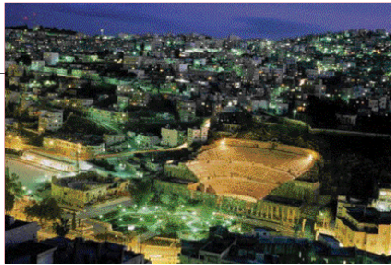
Jordan may be situated in a precarious environment, having borders with countries such as war-ravaged Iraq and unstable Israel and the Palestinian territories, yet it has managed in this decade to avert a recurrence of the 1988-1989 economic meltdown by having strong political allies with countries such as the US and support from the International Monetary Fund. The fund provided Jordan with support from 1989 to 2004, allowing the country to survive an economic crisis that saw that deficit spiral to 23% of GDP before grants received in 1988, external public debt soar to 174% of GDP, and inflation spike to over 25% in 1989.

Debt rescheduling

Jordan’s economic recovery was aided by debt rescheduling from political allies, mainly the 19-nation creditor group, the Paris Club. As is in the case of Egypt, the debt relief was partly a token of appreciation to Jordan for its support to the U.S.-led war on Iraq in 1990-1991, which was aimed at putting the end to the Iraqi invasion of neighboring Kuwait. This October, Jordan agreed with the Paris Club to buy $2.5 billion of its lingering debt, starting in January next year. 

It is certainly an encouraging move and will have a beneficial effect on the country’s external debt servicing bill. However, the net effect will not be dramatic,” Tristan Cooper, a Dubai-based analyst with Moody’s Investors Service told Executive. “One has to bear in mind that while the government will be saving the interest payments on whatever portion of its non-ODA (official development assistance) Paris Club debt that it repurchases, it will be using its saved privatization proceeds to do this and will therefore forego the interest that it currently receives on those deposits. Hence, the net effect, while positive, will not be huge.” 

Since the end of the IMF’s program in 2004, Jordan has been blessed with robust growth, an increase in foreign direct investment, and lower levels of debt as a percentage of GDP. Foreign aid to Jordan, which has fluctuated over the year, is expected to reach $810.4 million this year, according to Jordanian government figures. In 2007, Jordan’s economy continued to grow, although at a slower pace, aided by the influx of money from oil-rich Gulf countries. Real estate prices have soared amid a flood of investments, mainly from the Gulf. The flow of Iraqi refugees fleeing war and looking for accommodation in Jordan has also helped push up real estate prices. The oil-generated boom in the Persian Gulf has led to a rise in remittances from Jordanians working abroad. Economic growth in the first half of 2007 slowed to 5.8% from 6% in a year-earlier period, according to Jordan’s Department of Statistics. The IMF is projecting an economic growth rate of 6% for this year because of “continued sound policies and large capital inflows.”

“There are new changes that may influence this target such as the price of fuel,” said Amman-based economist Fahed Fanek. The financial and insurance sector was the main contributor to economy in the first half of this year. It grew 11% in the first half, followed by taxes on goods with 9.9% growth during the same period. Investments benefiting from the country’s investment laws reached $3.25 billion in the first nine months of this year and are projected to top $3.53 billion by year’s end, according to Amman-based Jordan Investment Board, which oversees the implementation of the country’s investment laws.

“Political stability is the number one factor that is helping to attract investments to Jordan,” Maen Nsour, chief executive officer of Jordan Investment Board told Executive. “The macroeconomic policy of the government is also making a big difference.”

Nsour, who projected investments benefiting from the country’s investment laws would reach $4.24 billion next year, said the major inflows are coming from the Gulf and Asia and are mainly directed to industry and tourism. To help boost the level of inflows, Jordan plans to introduce a new investment law that will open up sectors such as transport and simplify measures for investors by the first quarter of next year, he said.

Ninth most globalized economy

Jordan’s efforts to improve its economic climate has earned it the rank of the ninth most globalized economy in the world in its first year on the Globalization Index, according to a study conducted by US consulting firm A. T. Kearney and Foreign Policy which was published in October. The study, which featured 72 countries, “assesses the extent to which nations are becoming more or less globally connected.”

political stability is the number one factor that is helping to attract investments in jordan

Jordan also earned an unexpected gift as a new survey ranked Petra, the site of Jordan’s ancient Nabataean civilization, as one of the new Seven Wonders of the World — putting it on par with historical sites such as the Great Wall of China and the Taj Mahal in India. This bonanza is expected to help boost tourism revenues and reassure confidence in the sector which hasn’t been affected by the 2005 three hotel bombings in the capital. The number of tourists flocking to Jordan reached about 1.5 million in the first half of this year, compared with 3.2 million for the whole of last year, according to figures by the Ministry of Tourism and Antiquities. Tourism receipts reached $802.2 million in the first half of this year, compared with $1.643 billion for the whole of last year, as a result of the influx.

The Jordanian government has also decided not to sit on its laurels and is seeking to sell its state assets to strategic investors to boost efficiency at state-run enterprises and enlarge the country’s state coffers.

“Privatization is going fast but there is little left to sell,” said Fanek.

Already this year the government sold a 51% stake in the Central Electricity Generating Company to a group of Arab and Asian investor, the first sale of state assets in the energy sector. The government has also announced plans to sell other state-owned enterprises, including national flag carrier Royal Jordanian Airlines in an initial public offering. Privatization proceeds would help lower the country’s fiscal deficit, which is expected to reach 6.8% of GDP this year, compared with 4.4% of GDP for the whole of last year.

“Since Jordan graduated from the IMF program in 2004, the government undertook to implement reforms on its own and has succeeded except for the fiscal deficit,” said Fanek. “The deficit is increasing rather than decreasing, which is the major shortcoming of the government.”

Lowering public debt

Public debt stood at $11 billion or about 69% of GDP at the end of September this year, compared with $10.5 billion or 73.5% of GDP last year. The government is intent on lowering the public debt stock to 60% of GDP by achieving higher economic growth rate, lower interest rate payments and higher government revenue.

“Achieving a lower debt-to-GDP ratio than the 60% target by 2011 is well within reach,” the International Monetary Fund said in August following consultations with the Jordanian authorities. Jordan’s foreign currency reserves, which were almost depleted by 1989, were at an all-time high of $6.7 billion at the end of August, according to the Central Bank of Jordan.

Jordan’s rosy economic picture remains tinted. As oil prices head toward $100 a barrel in New York, the Gulf oil boon that is pouring foreign direct investment into Jordan has been offset by a rising oil import bill. During the UN sanction days under former Iraqi President Saddam Hussein, Jordan used to receive almost all its oil from Iraq, half for free and the rest at preferential prices. Jordan started to receive some Iraqi oil again this year at slightly discounted prices. However, the Iraqi oil won’t meet the country’s needs. The spiralling of the oil price has led to controversy in Jordan. The attempt to end or lower fuel subsidies, supported by former Deputy Prime Minister and Finance Minister Ziad Fariz, led to his resignation. The government had opposed such a move, which would strongly impact Jordanians, who have in the past revolted against a cut in fuel subsidies. Raising fuel prices in the short-term at a time when parliamentary elections are set to take place in Jordan in November is unlikely, Moody’s said in a country report on Jordan released in October. Following the elections a new government is expected to be formed.

“Next year presents many difficulties to Jordan, mainly because of the price of fuel which will spark inflation and create a big fiscal deficit in the budget,” said Fanek. “I think the present government should be asked to raise the fuel price rather than let a new government take unpopular decisions.”

Inflation to increase

Inflation in Jordan has remained high amid an increase in real estate, food and fuel prices, reaching 5.6% in the first eight months of this year, compared with 6.3% in a year-earlier period. Inflation is expected to pick up next because of the increase in the price of fuel, according to Fanek.

Jordan is not benefiting as much as before from the economic success of the qualified industrial zones (QIZs), which allow Jordan to export tariff-free goods to the US provided they have Israeli inputs — a result of Jordan’s signing a peace agreement with Israel in 1994. Exports to the US, Jordan’s number one export market, fell by 1% to $949.6 million in the first nine months of this year from $950.1 million in a year-earlier period, according to the Department of Statistics.

“Exports from the QIZs used to grow very fast, but they are not anymore because of competition from Egypt and China,” said Fanek.

Total exports increased by 11.2% to $3.39 billion in the first nine months of this year from $2.95 billion in a year-earlier period, Department of Statistics figures show. Imports meanwhile rose 11.5% to $9.6 billion in the first nine months of this year from $8.6 billion in a year-earlier period. Jordan and Egypt are the only two Arab countries with QIZ agreements, owing to their peace agreements with Israel. Jordan is benefiting, however, from the increase in trade with neighboring Iraq, Jordan’s second-largest trade partner, which imports a large number of its goods from Jordan.

the government has made good progress in weaning itself off high levels of foreign aid

Drop in foreign aid

Jordan suffers from a large deficit in the current account, which is projected to reach 13.8% of GDP this year, compared with 13.6% of GDP deficit, the IMF said in July. The deficit is expected to rise because of the increase in oil prices. Despite the recent drop in foreign aid, the Jordanian government is expected to receive aid representing as much as 5.1% of GDP this year, compared with 3.3% of GDP last year, to help alleviate the rise in the fiscal deficit, according to IMF projections. The fund has recommended that Jordan eliminate fuel subsidies by next year to help address the fiscal deficit.

“The government has made good progress in weaning itself off high levels of foreign aid, but the fiscal account is still dependent on that aid,” said Cooper. “The sharp reduction in foreign grants over the past four years has had a negative effect on the overall fiscal balance. While the government has made headway in minimizing the effect through its drive to raise revenues and cut fuel subsidies, the fiscal deficit has still deteriorated.”

the government is intent on lowering the public debt stock to 60% of gdp

Growth not felt by all

Jordan’s unemployment rate remains high, reaching 14.3% at the end of the third quarter, compared with 15.4% in the same period of 2006, according to the Department of Statistics. Poverty is also prevalent among Jordan’s 5.7 million population, with poverty incidence rising to 14.7% in 2005 from 14.2% in 2002-2003, according to government figures. The government has tried to alleviate poverty by setting up special economic zones in impoverished areas such as Ma’an.

“There is some concern that the strong growth in Jordan isn’t being spread throughout the population and is benefiting the wealthy more than the poor,” said Cooper. “Evidence supporting that is the unemployment rate, which is stubbornly high and is not falling as rapidly as one might expect. Reducing unemployment is clearly a long-term issue. Education and vocational training are key to lowering unemployment both in Jordan and in other countries in the region.”

December 30, 2007 0 comments
0 FacebookTwitterPinterestEmail
Levant

Syria Mixed results

by Executive Contributor December 30, 2007
written by Executive Contributor

Syria chalked up numerous successes in 2007. Politically, the country ended its international isolation. On the domestic front, the government continued — however cautiously — to open the economy. The country’s private banking and insurance sectors both posted healthy gains, bricks and mortar finally began to be put in place on a number of high profile real estate developments, the country’s first private university graduates hit the job market and the first Syrian produced car rolled off the production line, a joint Syrian-Iranian venture.

The coming year, however, presents greater challenges on the economic front. Over 2007, Syrians learned they had become net oil importers, exploding the budget deficit. Throughout 2008, debate over the need to reduce fuel subsidies and reform a bloated public sector is set to pitch a new wave of Syrian economic reformers against old guard Baathists in ever more heated argument. Tough decision regarding the economic direction of the country will become increasingly difficult for President Bashar al-Assad to postpone.

One door opens, another closes

Any debate about the strength of Bashar al-Assad’s position was laid to rest in 2007. Ongoing violence in Iraq and political unrest in Lebanon saw stability and security emerge as major themes of the young president’s referendum campaign; a presidential poll in which he secured 97.6% of the vote.

The deep freeze on diplomatic contact with Syria began to thaw over 2007. The need for Syrian involvement in producing solutions to conflicts in Iraq, Lebanon and Palestine was grudgingly admitted to by US officials. The first major diplomatic breakthrough came in March when EU foreign policy chief Javier Solana broke a two-year freeze on high level EU contacts and visited Damascus, pledging to help Syria regain the Golan Heights in the process. US House Speaker Nancy Pelosi lead a congressional delegation to Syria one month later (and went shopping for pearls in Souq Hamidiyya), spurring talk that American sanctions against Damascus may be lifted. The major breakthrough came in May when US Secretary of State Condoleezza Rice met with her Syrian counterpart Walid Mu’allem on the sidelines of a conference about Iraq. Damascus ends the year having forced the 40-year-old occupation of the Golan Heights onto the agenda of the recent Annapolis peace conference.

Not that it was all smooth sailing. While 2007 may have seen the resumption of diplomatic activities with Western nations, Syria’s relationship with her Arab neighbors became increasingly strained. The usual stage-managed facade of Arab brotherhood has been torn away in the past few months and sharp disagreements regarding Lebanon, Iraq, Palestine and Damascus’ tightening embrace of Tehran spewed into the public arena. The most sensational allegations arose in August when Saudi ambassador to Lebanon, Abdel Aziz Khoja left the country because, according the Kingdom, he had received death threats from Syrian proxies in Lebanon. The Saudi daily Okaz went on to damn Syria’s relationship with Iran, calling Damascus “a dagger thrust by this regional element into the Arab nation.”

Border conflict between Turkey and the Kurds, growing division in Palestine, the threat of American strikes on Iran, instability in Lebanon and the continuing investigation into the killing of former Lebanese Prime Minister Rafik Hariri all require careful navigation by Syria in 2008. In all, however, Damascus can look to the new year with increased confidence, secure in the knowledge that the international community has all but decided that ignoring Syria benefits no one and that the most hostile US administration on record will soon be forced out of the White House.

Making the most of any opportunity

Syria’s private sector continued to show, when given the chance, it will defy expectations. The country’s newly opened insurance sector grew by 25% over the year, with premiums totalling $85 million in the first six months. Fifteen firms now operate in the newly opened market. The state-controlled Syrian Insurance Company continued to take a beating; its market share fell by around 40% over the year.

The private banking sector also consolidated its market share over 2007 and now accounts for around 40% of all private sector credits. In April, Byblos Bank Syria became the first Syrian bank to issue MasterCard prepaid, debit and credit cards.

syria’s private sector continued to show, when given the chance, it would defy expectations

Syria’s Islamic financial services sector also took its first baby steps — steps that are likely to become gigantic bounds in the coming years. The country’s first Islamic bank opened in late August, registering 10,000 new accounts in the first two months of operations, a period that included the Ramadan holiday season. The Syrian International Islamic Bank followed shortly after, launching the largest investment drive in Syria’s history by offering $51 million in shares to the public and taking $20 million in deposits in its first month of operation. The country’s first Islamic insurance firms are expected to open throughout 2008, with industry stakeholders predicting the sharia-compliant companies will snare up to 25% of the market.

Syrian policy makers continued to roll out their program of economic reform. Presidential Decree No. 7 and No. 8 revamped the backbone of the country’s investment regulatory regime, allowing foreigners to own land, repatriate profits and avoid customs tax on the imports of assets and equipment related to projects. It also ended several tax incentives for foreign investors, however the government simultaneously moved to reduce taxation rates on companies and private investors. The ceiling on foreign ownership of banks and real estate was also lifted in a bid to boost FDI.

Speaking at an investment conference in Damascus in late November, Syrian Investment Agency head Mustafa al-Kafri said $8 billion in new projects were licensed under the new investment regime in 2007, a slight decrease from the record $9.2 billion approved in 2006. Like all figures in Syria, the county’s FDI numbers need to be taken with a large grain of salt. Approved is one thing, implemented is another. The agency recently revealed around 60% of approved projects are yet to be started.

Syria’s Central Bank disengaged the Syrian Pound from the dollar in July. The pound is now linked to a basket of currencies which includes the dollar at 44%, euro at 34% and the yen and sterling pound at 11% each. Foreign exchange bureaus were given the green light to set up shop and traders gained permission to purchase all their foreign exchange requirements for imports from the private sector.

On the trade front, the long anticipated Syrian-Turkish free trade agreement came into affect in January, with both countries looking to boost trade from $1.3 billion this year to more than $5 billion over the next five years.

Budget deficit greatest challenge

The country’s mounting budget deficit looms as the greatest challenge in 2008. Aggregated by declining oil production, estimated to be falling by 11% per annum, the deficit presently weighs in at $4 billion. Syria’s oil balance has moved from a surplus of $2.4 billion in 2003 to an estimated deficit of $1.3 billion this year.

Increasing taxation has been identified as one possible solution to the fiscal crisis. “The government has said it will deal with the fiscal deficit by increasing taxation, augmenting the existing tax revenues and rolling out a second generation of tax reform,” Ernst & Young Syria head Abdul Kader Husrieh said. Past attempts at increasing tax compliance, however, have only been mildly successful. The 2006 budget anticipated tax receipts to total $3.2 billion; the state collected $1.57 billion. At the same time, tax reform by itself is nowhere near enough. “Even if all this goes ahead, the government does not expect to collect more than $196 million which is less than 5% of the budget deficit,” Husrieh said.

At the heart of the matter are the politically unpalatable choices of ending the government’s long held subsidies regime and public sector reform. Moves to cut into both have provoked much heated debate among Syrians.

The beginning of the end?

Subsidies are projected to cost the government around $7 billion over 2008, around 20% of the country’s GDP. Fuel subsidies alone, according to the IMF, cost the Syrian government around $15 million per day. The price of gasoline jumped by 20% last month, however, Syria is most reliant on diesel for transport, agriculture and heating needs. Due to decades of poor planning, the country has limited refinery capacity. As of 2006, Syria has been forced to import diesel at the international price of just under 60 cents, but sells it domestically for 13.7 cents per litre.

“I don’t think we are going to see anything other than cosmetic reform”

A government plan to end fuel subsidies is meant to take effect from January 1. If it goes ahead, the immediate impact will be to see fuel prices almost double, with a litre of fuel oil rising from 14 cents to 24 cents and a tank a gas increasing from $2.90 to $5 (the price of petrol has still yet to be released). The price of industrial fuel oil was increased in 2004 and would rise by a further 25% to just under $150 per ton. The government has proposed to compensate some 3.5 million families, identified as being in lower income brackets, through the provision of a $235 annual cash payment.

“the government has said it will deal with the fiscal deficit by increasing taxation”

Implementation of the plan is being viewed as a major test for Syria’s economic reform guru Abdullah al-Dardari and an indication of his pull with Assad, who must choose between his economic reform team and the old power elite.

Public sector reform

Public sector reform has long been identified as an urgent need. Syria’s business environment remains strangled by red tape and the president again identified the need to fight corruption as a government priority during his swearing in address before parliament. Deeds, however, are not following words. More disturbingly, a number of indicators suggest the situation is getting worse, not better. The recently released World Bank’s Doing Business 2008 ranked Syria 137 out of 178 countries in terms of ease of doing business, chalking up worse results in 8 of the 10 indicators used to formulate the overall ranking compared to the previous year. Neighbors Turkey ranked 57, Jordan 80 and Lebanon 85. Syria ranked 13 out of the 17 Arab countries listed – only two war-torn countries (Iraq and Sudan) as well as Mauritania and Djibouti fared worse.

The perception of corruption is also disturbingly high. The Corruption Perception Index by Transparency International ranked Syria as the second worse country in the Middle East in terms of perceived corruption, only less corrupt than war-torn Iraq. More worrying is the sharp fall in Syria’s world ranking, from 70 two years ago to 138 last year.

All of which detracts from the investment attractiveness of the country and Syria continues to lag behind her neighbors in terms of FDI. “What these reports show is that attractiveness to private investment is not only a consequence of better economic regulations,” a report by the Syria Report stated. “It has to do, as much, with lowering bureaucratic obstacles and corruption, with the availability of a truly independent judiciary, and last but not least with serious efforts at accountability. Further economic reforms, although necessary, will not be sufficient. The Syrian authorities will have to look at other reforms, not only economic ones.”

No easy way ahead

In many ways 2008 looms as a watershed year for Syria; one which will decide if the country will deliberately move towards full economic liberalization, or be dragged kicking and screaming into a social market economy only after it has exhausted all other economic alternatives. The easy reforms have been taken. With most watchers predicting a slight downturn in the economy this year — The Economist Intelligence Unit expects real GDP growth of 3.3% for 2008-2009 — the room Dardari is given to implement unpopular solutions to stop the haemorrhaging of public coffers will be a litmus test of Syria’s commitment an open economy. Most, however, are not expecting radical change. “On the most sensitive issues of reform, on the unpopular issues like raising the price of fuel and public sector reform to which there is a lot of opposition in the press, in the parliament and among ordinary Syrians, I don’t think we are going to see anything other than cosmetic reform,” said Nabil Sukar, managing director of the Syrian Consulting Bureau. “I think it will take another two years before the situation becomes urgent enough to warrant real change by the government.”

December 30, 2007 0 comments
0 FacebookTwitterPinterestEmail
GCC

Oman Riding the wave

by Executive Contributor December 30, 2007
written by Executive Contributor

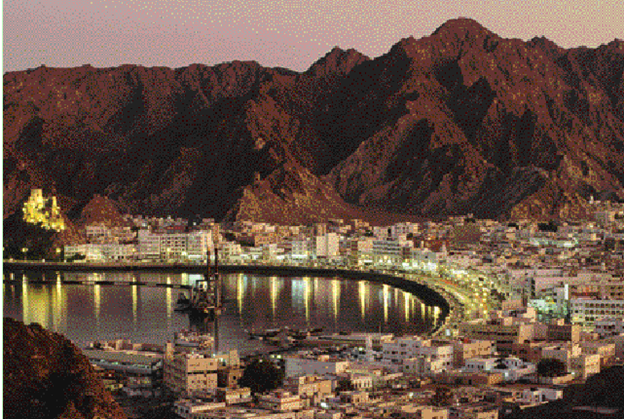
The path of privatization and diversification is the cornerstone of Oman’s economic strategy. From successfully implementing several infrastructure projects, the country is enjoying increased attention from investors and benefiting from high foreign direct investment (FDI) inflows, which, according to Global Investment House, rose from $122.3 million in 2002 to an estimated $705.3 million in 2006.

Increased returns from non-oil activities showed not only the health of the country’s business environment, but also the success of its diversification policy, which began as a hedge against over-dependence on Oman’s natural resource endowments. However, the country’s budget continues to benefit from oil revenues, encouraging public spending, which does not appear to pose a threat to price stability.

Inflation registered smaller than its Gulf neighbors at about 3.2% in 2006. The figure partly reflects “the effects of high growth in the face of capacity constraints, in addition to the sustained influence of imported inflation as a result of the pegged system that the central bank has adopted to the domestic currency,” according Global Investment House.

Inflation is not worrisome

The Gulf trend of imported inflation from currency pegs to the dollar is not unique to Oman, but the government does not seem worried. According to the Oman Daily Observer, Executive President of the Central Bank of Oman Hamoud Sangour al-Zadjali said, “As long as the Omani rial is concerned, there is no plan to change the pegging.”

Leading the drive away from oil dependence is diversification aimed at developing the country’s natural gas reserves. The growth strategy of exporting liquefied natural gas (LNG) and implementation of LNG projects have made the sector the main economic driver with a growth rate of 60.7%, according to Global Investment House.

One LNG plan is by British Petroleum (BP), which successfully bid to develop two large natural gas fields in Central Oman. According to the Oman Daily Observer, BP plans to develop two gas fields in a 2,500 km area close to the existing gas field of Saih Nihayda as part of a government strategy to enhance gas production with the help of multinational firms.

After its gas sector, Oman is witnessing growth in the services sector, which reported a rise of 11.7% in 2006, from 8.5% growth in 2005. Most of the growth in services is led by communication and transport infrastructure growth, which grew by 25.4% in 2006, up from 3.4% in 2005.

oman is witnessing growth in the services

sector, which is reported a rise of 11.7% in 2006

The Sultanate’s banking sector also performed tremendously well. According to Global Investment House, Omani banking sector soundness “was reflected in their strong capital levels, further improvement in asset quality in the face of large expansion in banking assets, and remarkable growth in profits.”

In addition to increased banking performance, Oman’s financial sector remains healthy, despite the downward trend of financial markets in the Gulf. The benchmark Muscat Securities Market (MSM) Index ended 2006 at a yearly gain of 14.5%. MSM’s other figures include a market capitalization in 2006 of $16.19 billion and trading volume growth of 115.9%.

Diversification initiatives

Other diversification plans in the works include the construction of a large sugar refinery at the port of Sohar. According to Oxford Business Group (OBG), Al-Hafri Sugar Refinery signed agreements for constructing a $233 million facility to handle 660,000 tons annually. Al-Hafri’s strategy is aimed at harnessing the strong potential for regional growth, which is estimated at the 5 million tons of sugar gap produced by the shortfall between demand and supply in the Gulf.

Because of Oman’s fiscal health and prospects for industrial sector growth, Standard & Poor’s (S&P) gave Oman a stable rating of “A” on sovereign risk, currency risk, banking sector risk, and economic structure risk.

Research conducted by Jordan Investment Trust also finds Oman in a good situation, noting “Oman is geared up for local and foreign investments after the execution of several infrastructure projects, including the construction of road, water, energy, and communications networks. The economic and political stability the country enjoys and its invest-friendly environment are also value added for investors.”

December 30, 2007 0 comments
0 FacebookTwitterPinterestEmail
GCC

Qatar Double-digit growth

by Executive Contributor December 30, 2007
written by Executive Contributor

Endowed with natural resources, including an abundance of liquefied natural gas (LNG), Qatar is witnessing an economic boom supported by the rising price of petroleum products. In recent years, the small state has used its petro-earned surplus to jumpstart a slew of development projects aimed at diversification. Focusing on education, entertainment, finance, etc., Qatar is revamping opportunities for its citizens through several long-term projects. The evidence of Qatari government spending is found in the country’s expanding budget, which rose from $7.42 billion in 2004 to $13.75 billion in 2006.

There seems to be no end in sight for the wealthy nation. An outlook by Global Investment House expects Qatar to “record a strong trade surplus in 2007 as volumes of LNG and oil exports are likely to increase due to the expected increase in production.” The growing energy appetite of developing economies, in particular China, is likely to support Qatar’s mainstay industry in the medium term. Qatar’s gas development strategy will make the country “the world’s biggest exporter of liquefied natural gas,” according to Global Investment House, estimating an expansion of Qatari LNG production to 77 million tons by 2012 from around 25 million tons in 2006.

Yet not all news is positive for Qatar, as the country is battling against inflation and the currency’s peg to the dollar. Strong, double-digit growth in the money supply has increased consumption and inflation.

The banking sector

Large banks continue to control the country’s credit facilities and are led by Qatar National Bank (QNB), which tops the banking system with 39.1% of total assets and 43.2% of total deposits, in addition to a 43.3% market share of net loans and advances. New banks, including the Islamic-oriented Al-Rayan Bank and the more conventional Gulf Commercial Bank recently entered the market. The Qatari government is encouraging foreign attraction to the country’s banking sector by permitting joint venture projects with foreign participation, as long as Qatari partners own 51% of capital.

Liberalizing the telecom sector

Another industry set to liberalize is Qatar’s telecom sector, which has seen steep market penetration, recording 104% in 2006, up from 85% in 2005. Although Qtel (Qatar Telecom) currently has a monopoly over competition, moves by the government are underway to attract a second operator to the market. A report by Oxford Business Group (OBG) stated that “even though Qatar is currently one of the most saturated mobile phone markets in the world…there is still potential for a new operator to dial in to the lucrative market.”

While much of Qatar’s economy is continuing the trend of strong growth, the country’s financial sector, like most others in the region, reported downward trends, including loss in market capitalization for several stock markets. Nonetheless, encouraging signs are pointing to an up-tick in the near future, with development and infrastructure projects likely to have a spillover effect on other sectors. In addition, mergers and acquisitions activity is growing for Qatar. The OBG reported that while “it is widely agreed that M&A will not continue to enjoy the same boom witnessed in recent years [by most Gulf states], this is far from the case in Qatar, where large-scale investments outside the country are expected to remain very high.” The report attributes the positive outlook to high growth in government revenue and gross domestic product (GDP) from a rising oil price.

Foreign M&A activity by Qatar has the added benefit of creating a hedge against the dollar, to which the nation’s riyal is pegged. Concurrent with the dollar, Qatar’s currency is weakening against other major currencies and increasing the cost of imports. Many analysts agree the peg is also to blame for the nation’s inflationary pressures, as monetary policy, including interest rate policy, takes its lead from moves by the US Federal Reserve.

Combating inflation, managing extreme growth, and dealing with the dollar-peg are the challenges Qatar will continue to face in the medium term, yet the overall economic outlook for Qatar’s economy is likely to remain bright.

December 30, 2007 0 comments
0 FacebookTwitterPinterestEmail
GCC

Bahrain Refined prosperity

by Executive Contributor December 30, 2007
written by Executive Contributor

Bahrain follows the trend of other Gulf countries, including strong economic growth, worrisome inflation, and a vision towards economic diversification to non-oil sectors. The strength of Bahrain’s economy comes from continued price increases of oil. Price rises in the commodity brought the government’s budget from the red in 2005, at a deficit of $556.3 million, to a surplus of $686 million. Rigorous diversification efforts have lowered Bahrain’s dependence on oil, relative to other GCC economies, but oil price rises have blurred the contributions of non-oil sectors to the economy.

In addition to oil production, Bahrain plans to maintain its place as a regional refiner of crude oil. According to the Oxford Business Group (OBG), “currently, Bahrain’s sole refinery has a capacity to process 250,000 barrels per day (BPD), though less than 20% of this comes from the kingdom’s own fields, with the vast majority of crude coming from nearby Saudi Arabia through a single 54 km long pipeline.” Current projects aimed at expanding storage capacity and oil infrastructure carry an estimated value of $1.2 billion

the third largest contributor to gdp is the manufacturing sector which contributed 13%

Regional banking hub

After the oil and gas sector, the highest contributor to the country’s GDP is the banking and financial institution sector. The country is growing as a regional hub for banks wanting to tap into Middle Eastern markets, according to a report by Global Investment House. Total banking system assets grew by 26.1% from 2002 to 2006. Net foreign assets of the banking system increased 9.1% from 2005, to remain at $6.41 billion by the end of 2006.

According to Arab Press Digest, a group of businessman and companies from GCC countries plan to establish an international Islamic bank with $2 billion in initial capital. The new bank, United Islamic International Bank, will be one of the largest in the Gulf.

The third largest contributor to GDP is the manufacturing sector, which contributed 13% to the country’s GDP in 2005, from a contribution of 10.6% in 2004. Global Investment House uses this as evidence that diversification efforts are “bearing fruits.”

Building infrastructure

Much of the government’s diversification effort has focused not only on directly building up non-oil industries, but facilitating growth in the sectors through infrastructure improvement efforts, most of which were implemented with the intent to strengthen the country’s manufacturing and service sector base. Bahrain’s fiscal prudence has led to Standard & Poor’s (S&P) upgrade of Bahrain’s foreign currency debt rating to “A” from the lower level of “A-”, according to Bahrain Tribune.

The Arab Press Digest also reported that Bahrain has no plans to revalue their currencies relative to the dollar, even though other GCC economies are citing the need to form a common currency union among themselves. Bahrain’s neighbors cite two main harms of a dollar peg, including the loss of sovereignty over monetary policies as Gulf central banks follow the lead of the US in setting interest rates in addition to inflation, which is partially attributed to the peg and the increasingly feeble dollar.

According to Global Investment House, foreign companies are attracted to Bahrain for its “geographic environment, well-regulated authorities and low cost factor in setting up operations.” The group’s report maintains a positive outlook and notes Bahrain’s main challenges as continued diversification efforts into more labor intensive activities and further easing of the economy’s dependence on oil.

Partially-soiled by a report from Transparency International suggesting a rise in Bahrain’s corruption, the Sultanate responded quickly to allegations of corruption, according to the OBG, which reported that “Crown Prince Sheikh al-Khalifa declared at the beginning of October that the fight against corruption had to be made a priority and that no one, not even government ministers, would be spared if implicated in malpractice.”

Continued adherence to transparency, and a will to improve industries and attract foreign investors will support Bahrain’s efforts to maintain strong economic performance.

December 30, 2007 0 comments
0 FacebookTwitterPinterestEmail
GCCUncategorized

Kuwait Basking in success

by Executive Contributor December 30, 2007
written by Executive Contributor

Much like other Gulf economies, Kuwait is experiencing an economic boom attributed to rising world oil prices. However, the country differs from Bahrain, Oman, and Qatar in that it has not pushed as formally for economic diversification. Rather than hedge against oil dependence, it appears Kuwait is basking in its oil wealth. Kuwait’s citizenry remains optimistic.

According to research conducted by the Kuwait Economic Society, 64% of Kuwaitis surveyed worry most about the high cost of living. The high cost of living is a worry for companies also, especially those in the real estate sector or financial institutions. Kuwait’s real estate market has experienced rising prices due to land scarcity, with Kuwait’s housing and real estate market recording 1% growth during the third quarter of 2007, according to a report by Kuwait Finance House. The growth comes from construction surges in residential, office, and retail space, especially within Kuwait’s capital, Kuwait City.

Growth dependent on oil markets

The Central Bank of Kuwait (CBK) reported on the continued growth the country enjoys, thanks to its domestic oil production and growing international oil prices. Measured at current prices, Kuwait’s GDP grew by 25.8% in 2006, down from 39.7% growth in 2005. The CBK notes that 70.1% of GDP growth during 2006 reflects the positive developments in world oil markets, including price and production increases. For 2006, the oil sector’s value increased by 25.9%, compared with 60.2% in 2005.

In addition to crude production and refining, Kuwait is set to expand its oil sector through large-scale petrochemical projects. One project noted by the Oxford Business Group (OBG) is EQUATE Petrochemical Company’s launch of the $2.5 billion EQUATE 2 chemical plant. The plant plans to export petrochemical products that sell near $500/barrel, instead of the lesser price of $80/barrel for crude oil, according to EQUATE spokesman Mohammed Gharib Hatem.

Relative to the oil sector, non-oil sector growth decelerated in 2006 to 14.5%, down from 20.2% in 2005. Financial institutions contributed the highest portion to non-oil sector growth, rising 68.1% in 2006, up from 37.3% in 2006. .

Kuwait also performed well in the Global Competitiveness Report (GCR), which listed the economy as the most competitive of those in the Gulf Cooperation Council (GCC) from 2007-2008. The GCR rated Kuwait’s macroeconomic stability as the best in the world, due to oil-fueled budget surpluses and high savings rate from the country’s prudence in reinvesting oil surpluses.

the gcr rated kuwait’s macroeconomic stability as the best in the world

Money supply increasing

Kuwait has also found itself worrying less about inflation, regardless of its economic boom. The CPI experienced decelerated growth in 2006, registering only 3.1%, compared with 4.1% in 2005, attributed to decelerating growth in basic goods and services prices.

Although Kuwait is enjoying growth without burdensome inflation, numbers may change in the future. The rapid rise in domestic liquidity from the country’s oil bonanza pushed up Kuwait’s broad money supply. Both phenomenons are attributable to increased credit available to domestic sectors.

However, the government has taken active steps to counter inflationary pressures induced by the dollar peg, from which most other Gulf economies suffer. By shifting the Kuwaiti dinar’s peg against the dollar from 292 fils to 289.14 fils/dollar in 2006, for a 1% decrease, the Central Bank of Kuwait preempted further decline in the dollar’s value, staving off continued loss experienced by those with unchanged pegs to the dollar.

Thanks to Kuwait’s growth and reform, in addition to well-structured banking arena, external investments abroad are on the rise, accelerating by 53.2% in 2006 from  a rise in asset values invested by institutions abroad.

Less optimistically, Kuwait continued the regional trend of poor performance in its stock markets. Figures of the Kuwait Stock Exchange (KSE) experienced a downtrend during 2006, including a decline of total value of traded shares by 39.2% and decline in transactions by 24%. Although Kuwait presents a favorable macroeconomic environment, KSE-listed companies experienced a decline in net profits and government resistance to continue with some projects managed by KSE companies.

December 30, 2007 0 comments
0 FacebookTwitterPinterestEmail
GCC

Saudi Arabia Making the grade

by Executive Contributor December 30, 2007
written by Executive Contributor

Barring an unprecedented and wholly non-expectable immense natural catastrophe and the slightly greater probabilities of another Middle East war or massive occurrences of domestic or imported terrorism, the outlook for Saudi Arabia’s development in 2008 is for another year of very significant growth. 

It is an absolute no-brainer that a country that derives about half of its GDP and four-fifths of its government revenues from oil and is the world’s leading producer of the commodity will thrive at a time when the barrel sells at close to double what this country needs for its fiscal sustenance — and the oil price outlook for the next few years is for no drop below this break-even point.

Tasks for 2008

That is not to say that Saudi Arabia won’t see a surge in challenges, which in the next 12 months could expand beyond the habitual challenges of properly managing oil production, diversifying the economy and creating employment to meet the needs of the kingdom’s young populace. Tasks which the Saudi decision makers will have to succeed in are: Making good on regulatory improvements, opening the enigmatic market, and controlling the dollar trap. The investment buzz words include petrochemicals, railroads, utilities, telecommunications, industrial cities, general construction, tourism, and education; add question marks under the headers environment, Saudization, regional politics, and international reputation.

In the second year after the kingdom’s accession to the World Trade Organization, Saudi Arabia got an exceedingly positive grade from the World Bank Group’s lectern in the master class on the right way of conducting business on the global playing field. According to the Doing Business 2008 score card by World Bank and International Finance Corporation, Saudi Arabia was among the world’s top 10 achievers for improvements of their business climate in 2007 and now is one of the 25 countries with the most business-friendly regulations on issues such as starting and operating an enterprise, trade and taxation, dispute settlements, and also the ease of winding down a business.   

Reforms cited by the World Bank and IFC as reasons for the improvement in the Saudi business climate included a reduction in the time for setting up a business to 15 days from 39 days, the establishment of a credit bureau for the commercial sector, abolition of a minimum capital requirement as multiple of per-capita GDP, and improvements in import/export procedures.

Saudi Arabia has initiated or announced further reform steps including plans to professionalize and partly privatize its stock market and revamp its index structures. In longer term moves, King Abdullah also recently took forward reforms of the judiciary and stipulated important details of the kingdom’s new succession planning procedures.  

The innovations and reforms notwithstanding, the existential wheels of the Saudi economy are the same that they were in 1998 when then Crown Prince Abdullah made the first bold public statements on the kingdom’s need to diversify away from oil dependency.

The two main wheels in the national assets chamber are hydrocarbons and population growth. However, where these wheels had been spinning in a rather contradictory motion in the last phase of the 20th century under conditions of slow oil revenues and high population growth, the increased speed of the oil wheel in the past seven years has reversed the deficit tendency of the kingdom’s finances and is advancing the probability of turning Saudi Arabia’s domestic labor pool into the long-term resource that it ought to be instead of a cost factor weighing heavy on fiscal situation. The success of this economic sea change will depend on the success of the education and economic reform steps that are ranked top on the current Saudi agenda. 

Shrinking debt burden

The magnitude of the virtuous collaboration of the two economic wheels in Saudi Arabia emerges in the correlation of revenues and education investments. In 1999, national debt had climbed to 115% of GDP because of the high social costs (and a few military expenditures) that had burdened the coffers in the period of low oil prices which hit bottom in the $15 range in 1998.

As the oil price picked up in the new millennium, the kingdom could reduce its debt to 28% of GDP by the start of 2007 while boosting budget allocations to education and qualification measures. For the two years of 2006 and 2007, the total funding allocated to human resources development reached $49 billion and a flood of new schools and colleges was devised.

Whereas the forecast for total nominal GDP and oil revenues anticipates a slight contraction in the year totals for 2007, the debt burden is expected to shrink further to less than 25% of GDP. Real GDP growth is expected at 3.6% to 3.8% for 2007 with an improvement to possibly 5.8% in 2008. Non-oil GDP increases of up to 7% have been forecasted for 2007 and 2008. Inflation pressures are expected to increase from around 3.5% in 2007 to 4% or more in 2008 but will be less than in other GCC countries.

However, perception of the kingdom’s socioeconomic outlook would be seriously distorted if one reviews solely capacity developments on the production side of oil and petrochemicals or industrial goods. Population matters are the country’s real story. The demographics of Saudi Arabia forecast a net population gain of 4.5 million people between 2007 and 2015.

With a projected 29.3 million inhabitants by 2015, the country’s population increase and total labor force will be considerably less than the respective increases and totals in Turkey and Egypt, not to mention Pakistan and India across the Gulf which will add 27 and 143 million persons to their population bases in the next seven years. 

At the same time, Saudi Arabia’s demographic rise in the oil age signifies a nine time multiplying of the population between the baseline year 1950 and 2015, a ratio that exceeds the growth rates in most other countries. With so much increase concentrated in a short period and given the national circumstances of high energy needs due to climate conditions and shortages of easily available fresh water, it becomes very clear why Saudi Arabia is bound to face challenges on its socioeconomic path in the next two decades.

Growing importance

Seeing these factors on one hand and the cultural parameters of an expansion-oriented religious mindset on the other, the role of Saudi Arabia is one of a medium to long-term player destined to seek a position of strength and growing civilizational, economic, and technological importance in the Middle East and Western Asia.

On the short-term horizon, the performance of the Saudi economy in 2007/2008 is based on corporate earnings that improved in the second half of 2007 and are expected to be strong in 2008, on robust consumer confidence that will be reflected in spending growth for 2007, albeit at a lesser rate than in the record retail spending growth year of 2006, and on the continued course of expansionary government spending on infrastructure, industrial, and social investments. 

The reinvestments of Saudi wealth at present and in the coming years are staggered at a volume of $350 billion in oil and gas, petrochemicals, water and power, industry, and construction. Construction of six new economic cities is targeted with a price expectation in the range of $100 billion, which almost looks understated considering the scope of the planned urban realms and the creation of jobs for more than a million people.

Putting the number of jobs under development into perspective, Saudi statistics said the country’s private sector workforce was around 5.5 million persons in 2005. But almost 90% of the labor force are foreigners while the current unemployment rates of nationals in the kingdom (officially 6.9% in 2005 with an increase to over 9% in 2006) are surprisingly high for a country in the middle of a boom cycle which moreover has been pursuing its avowed Saudization campaign for preferential employment of citizens for at least a decade. 

At the junction of 2007 and 2008, the Saudi Stock Exchange is a good proposition for playing catch-up with the bourses of the other member countries in the Cooperation Council of Arab Countries in the Gulf. Although the sentiment among regional analysts has been for the greater part of 2007 that the correction phase of Arab emerging bourses was winding down, the Tadawul Index stayed sluggish for most of the year and on some mid-October days was a tad negative when compared with the start of the year. Retail investors who had been burned worse than most neighbors in the correction of 2006 were slower than these neighbors in returning to the stock game. The SSE started what could become a local bull march in November of 2007, though, and valuations suggested in November that the SSE has some of the Gulf’s most attractive price plays to offer. 

The sub-sectors with the strongest gains to the end of November were insurance — an outlier in more than one way as the sector supplied a big chunk of the year’s primary market action and the newly listed companies started trading on a wave of speculative interest from retail investors — followed by agriculture and industrial stocks. Banking, cement, and telecom values on the other hand are regarded by a number of analysts as sectors where 2008 could see quite good gains.

To keep the dollar peg or not

A fashionable debate in the third and fourth quarters of 2007 is the dollar peg of the riyal and other GCC currencies. Will Saudi Arabia revalue the riyal, or perhaps switch its peg from the dollar to a currency basket? One aspect of this issue is the plan for a GCC economic and monetary union, which has been put on the agenda for 2010.

The balance of currencies is important for a monetary union and the EU’s pioneering acts in building the euro zone have shown an example of firmly aligning currencies in preparation for the step — but it is not unperceivable that the union could come even if some central banks take a slow step away from the dollar peg. However, the while the GCC union is still verbally on the table, the indications of actual implementation on the 2010 timeline are rather weak and ahead of a GCC meeting in Qatar in early December 2007, the political, institutional, and other nation-level obstacles to the step seemed larger than the currency issue.   

The second specter raised in conjunction with the dollar peg is that of imported inflation and self-coercion into following the Federal Reserve’s monetary policies. Analysts have taken differing views in this debate: some regional investment researchers, such as EFG-Hermes, reasoned that prioritizing of domestic concerns in determining of interest rates will be likely to change the Saudi approach away from following the Fed and eventually could lead to increased currency flexibility in the medium term; by contrast, analyst views from inside the Saudi economy seem to be leaning toward continuity of the monetary status quo that has served the kingdom for 21 years. The SABB financial group wrote in its fourth quarter economic report for 2007, “we continue to believe firmly that the Saudi riyal is not going to be revalued.”

Beyond the monetary issues, Saudi Arabia faces a definite need to assert its role as economic value producer and viable business location on the international map. This is where the improvements in the regulations for foreign direct investments and economic participation of non-citizens are crucial. The political perception of Saudi Arabia in Western populations is marred by negative image factors on women’s and human rights, perceived shortfalls in tolerance and individual freedoms, and, in general terms, substantial cultural distance.  

In the past, the cultural distance to developed countries stayed in place while the economic interaction happened in the oil sector through trade and joint ventures with a few corporate partners. Intensification of trade ties and funds flows has occurred on all levels in 2007 from outgoing remittances by foreign workers and heightened investments in global petrochemicals in Europe, the Far East, and the US through the state-backed petrochemicals giant SABIC which expanded its existing international operations and bought GE Plastics n a strategic move. In parallel, the Saudi aim is to attract foreign direct investments into the kingdom at a much greater rate — talk is of luring in $80 billion within 10 or 20 years.

Business leaders with experience in Saudi Arabia advise patience in expecting the implementation of reforms and changes. It would be naïve and dangerous to assume that the kingdom would shape shift into a society molded after the wishes of its economic partners in the developed countries. The question is if the reform impetus will be sufficiently strong to change the hermetic Saudi economy of the past into a hermeneutic state exemplary of a third millennium Islamic national identity and of the new Arab role in the global community. 

From the side of Saudi interests, it is clear that this fortuitous ratio of oil revenues and current account surpluses will not stay as strong as it can be expected for the seven years starting in 2002 and lasting into 2008 or a perhaps a little more. The global economy will not stay on a broad expansion course forever, and the country wants to be ready when the oil price cycle swings again.

December 30, 2007 0 comments
0 FacebookTwitterPinterestEmail
CommentComment

Off the people, buy the people

by Riad Al-Khouri December 30, 2007
written by Riad Al-Khouri

The past year appears to have been a good one for Jordan; was the same true regarding the well-being of average Jordanians? On the positive side, the country continues opening up to the rest of the region and the world economy. This can be felt in the boardrooms of Amman — though to a lesser extent on the street — and was confirmed by Jordan ranking a phenomenal ninth globally (and first among Arab states) in the Globalization Index for 2007, released last month. Developed by Foreign Policy magazine (published by the Carnegie Endowment for International Peace) in collaboration with consultants A.T. Kearney, the index measured economic, personal, technological, and political integration in 72 countries accounting for 97% of world gross domestic product and 88% of the earth‘s population. The index looks at 12 variables in four baskets: economic integration, personal contact, technological connectivity, and political engagement. Jordan led all of the index’s Arab countries, among which Morocco was 40th worldwide, Tunisia 46th, Saudi Arabia 52nd, Egypt 55th, and Algeria 70th.

In the political dimension, Jordan topped the countries covered by the index, and did well in the personal sphere and in economic integration. A look at Jordan’s foreign partnership agreements confirms the latter element. It is the only Arab country that simultaneously has free trade with the United States, a partnership accord with the European Union, a Qualifying Industrial Zone arrangement with Israel and the US, and membership of the Agadir agreement to facilitate trade among Arab states and the EU. These arrangements put Jordan firmly inside the Western economic and political sphere, but the kingdom also boasts a widening range of links with other countries, as well as membership in international bodies such as the World Trade Organization.

However, in the index’s technological dimension, the country ranked 50th, in stark contrast to other indicators. This combination of high marks in some areas and a dismal showing in another typifies the contradictions in Jordanian life today, which became even more apparent in 2007. For all its development, Jordan still has a way to go in assuring sustainable development, cutting unemployment, and reducing poverty. Given the continuing Jordanian real estate boom, the influx of Gulf and foreign capital into the country, and the presence in the kingdom of hundreds of thousands of Iraqis who are mainly not poor, Jordan may this year have evolved more than at any other time in the past half-century. Yet underneath, the country’s traditional core remains.

Among many other spheres, this traditionalism reflects in the country’s parliament as seen once again this year when Jordanians elected a new Chamber of Deputies, comprised of 110 members from 45 electoral districts. Although political parties and movements participated, they won few seats due to the country’s tribal fabric, and Jordan’s electoral law, which adopts the uninominal principle — voting for a single candidate only, rather than for a list, even when the electoral district (as most do) has more than one seat. Vote buying is also important and helps plutocrats win elections. (The government does not deny the existence of such a phenomenon, only saying that the media has exaggerated it.) As a result, the outcome of the November 2007 elections was similar to those of others since 1993, with tribal and traditional figures continuing to dominate, even as globalization sweeps through the country with greater force than ever. 

Examples of this contradiction are apparent in Amman: In the midst of dramatic construction activity and demographic growth, the Jordanian capital is acquiring a modern veneer that hides its traditional fabric. Among many other features of globalization, branding is a feature of daily life in Amman, with massive advertising spending on new or existing brands. However, many of these products are imported, a phenomenon which, coupled with weak exports, exacerbates the country‘s chronic trade gap. In that respect, the latest figures available for the kingdom’s foreign trade are not encouraging. Although the value of exports increased by over 11% during the first nine months of the year compared to the same period in 2006, the much larger figure for imports rose close to 12%, resulting in an increase in the already yawning trade deficit by more than 12%.

In sum, given this volatile mixture of rapid but sometimes superficial development coupled with entrenched traditionalism and a shaky economic base, I predict that in 2008 many Jordanians will continue to feel left behind in the country’s surge toward globalization. The new government formed after the elections must keep the social lid on, especially with fuel price hikes coming from the elimination of subsidies. That will be tough going, but with the US and Israel underwriting the country’s stability, Jordan next year will probably stay the course. Anyway, watch this space.

December 30, 2007 0 comments
0 FacebookTwitterPinterestEmail
Banking & Finance

IPO Watch

by Executive Contributor December 2, 2007
written by Executive Contributor

Top 10 IPOs for the Region in 2007

1. DP World

UAE, Transport

$2.822 billion, 17% equity offered

Lead Manager: Deutsche Bank

2. Development Bank

Saudi Arabia, Financial Services

$2.807 billion, 70% equity offered

Lead Manager: Samba Financial Group

3. Saudi Kayan Petrochemical

Saudi Arabia, Oil and Gas

$1.8 billion, 45% equity offered

Lead Manager: Samba Financial Group

4. Deyaar Development

Saudi Arabia, Oil and Gas

$882.59 million, 55% equity offered

Lead Manager: Millennium Finance Corporation

5. Kingdom Holding

Saudi Arabia, Financial Services

$860.91 million, 5% equity offered

Lead Manager: Samba Financial Group

6. Air Arabia

UAE, Transport

$713.03 million, 55% equity offered

Lead Manager: SHUAA Capital

7 Jabal Omar Development

Saudi Arabia, Real Estate

$537.01 million, 30% equity offered

Lead Manager: Bank Al Bilad

8. Compagnie Generale Immobiliere

Morocco, Real Estate

$430.97 million, 20% equity offered

Lead Manager: CDG Capital

9. Talaat Mostafa Group

Egypt, Conglomerates

$412.36 million, 10% equity offered

Lead Manager: Hermes Holding Company

10. Al Khalijj Commercial Bank

Qatar, Financial Services

$337.99 million, 17% equity offered

Lead Manager: Commercialbank

Year in review and what’s ahead for 2008

Top 10 IPOs for the Region in 2008

1. Saudi Mobile Telecommunications

Saudi Arabia, Telecoms and IT

$1.5 billion, 40% equity offered

Lead Manager: Banque Saudi Fransi

2. EgyptAir Airlines Holding

Egypt, Transport

$1 billion, 20% equity offered

Lead Manager: Goldman Sachs

3. United International Bank

Bahrain, Financial Services

$800 million, 40% equity offered

Lead Manager: Global House Company

4. International Petroleum Investment Company

UAE, Financial Services

$544.57 million

5 Power and Water Utility Company

for Jubail and Yanbu

Saudi Arabia, Power and Utilities

$466.6 million, 30% equity offered

6. DEPA United Group

UAE, Construction

$400 million

Lead Manager: Morgan Stanley — UBS

7. Prince Abdul Aziz Bin Musaed Economic City

Saudi Arabia, Real Estate

$399.9 million, 30% equity offered

Lead Manager: Deutsche Bank

8. Damas Jewellery

UAE, Consumer Goods

$272.32 million, 25% equity offered

Lead Manager: HSBC Financial Services

(Middle East)

9. Chemanol

Saudi Arabia, Oil and Gas

$200 million, 50% equity offered

Lead Manager: Samba Financial Group

10. Future Pipe Group

UAE, Basic Materials

$108.9 million

Lead Manager: SHUAA Capital

Initial public offerings in the region 2007-2008

The average values for IPOs in the region are expected to grow in 2008, indicating a strong willingness for private or state-owned enterprises to go public and expand into new markets. The highest rises in average IPO value are expected in Bahrain, which is set to rise from $69.48 million per IPO in 2007 to $425 million per IPO in 2008, and Egypt, with an expected rise to $1 billion per IPO in 2008, from $209.55 million per IPO in 2007. United International Bank is preparing to sell 40% of its ownership to investors in Bahrain in the coming year, while EgyptAir Airlines Holding is offering 20% of its equity to investors

Gulf countries expect the most IPOs in 2008. Leading the way in the Gulf is Saudi Arabia, which plans to host 26 IPOs, followed by the UAE at 19, and Bahrain with 3 deals expected. Elsewhere in the region, Syria plans to handle 4 IPOs in 2008, trailed by Egypt and Jordan, both of which expect to host 3 deals.

Regional IPO growth remains hot. The most active sectors for IPOs are headed by financial services, oil and gas, real estate, and transport. Much of the growth in Jordan, Saudi Arabia, and the UAE is fuelled by increased activity in the financial sector, where firms are seeking to expose themselves to investors and increase credit access to fund expansion into new markets

December 2, 2007 0 comments
0 FacebookTwitterPinterestEmail
  • 1
  • …
  • 552
  • 553
  • 554
  • 555
  • 556
  • …
  • 696

Latest Cover

About us

Since its first edition emerged on the newsstands in 1999, Executive Magazine has been dedicated to providing its readers with the most up-to-date local and regional business news. Executive is a monthly business magazine that offers readers in-depth analyses on the Lebanese world of commerce, covering all the major sectors – from banking, finance, and insurance to technology, tourism, hospitality, media, and retail.

  • Donate
  • Our Purpose
  • Contact Us

Sign up for our newsletter

    • Facebook
    • Twitter
    • Instagram
    • Linkedin
    • Youtube
    Executive Magazine
    • ISSUES
      • Current Issue
      • Past issues
    • BUSINESS
    • ECONOMICS & POLICY
    • OPINION
    • SPECIAL REPORTS
    • EXECUTIVE TALKS
    • MOVEMENTS
      • Change the image
      • Cannes lions
      • Transparency & accountability
      • ECONOMIC ROADMAP
      • Say No to Corruption
      • The Lebanon media development initiative
      • LPSN Policy Asks
      • Advocating the preservation of deposits
    • JOIN US
      • Join our movement
      • Attend our events
      • Receive updates
      • Connect with us
    • DONATE