• Donate
  • Our Purpose
  • Contact Us
Executive Magazine
  • ISSUES
    • Current Issue
    • Past issues
  • BUSINESS
  • ECONOMICS & POLICY
  • OPINION
  • SPECIAL REPORTS
  • EXECUTIVE TALKS
  • MOVEMENTS
    • Change the image
    • Cannes lions
    • Transparency & accountability
    • ECONOMIC ROADMAP
    • Say No to Corruption
    • The Lebanon media development initiative
    • LPSN Policy Asks
    • Advocating the preservation of deposits
  • JOIN US
    • Join our movement
    • Attend our events
    • Receive updates
    • Connect with us
  • DONATE
North Africa

Nadim Ghantous General Manager Byblos Bank Africa

by Executive Contributor December 2, 2007
written by Executive Contributor

E What made Byblos Bank decide to expand into Sudan?

Byblos Bank has had a 30-year relationship with Sudan. We never had any problems and it was a good experience. The chairman is familiar with Sudan, which made a big difference in our approach. In 2001/02 there were signs of the country opening up and encouragement from the Central Bank, prompting Byblos Bank to become the first foreign bank in Sudan. In September 2003, we opened in Sudan. Byblos Bank Africa was supported by the OPEC Fund for International Development, which has a 20% stake in the bank, 10% is held by the Islamic Corporation for Development (100% owned by the Islamic Development Bank, IDB), 5% by a Sudanese family, and the other 65% by Byblos Bank Beirut.

E What has been the experience in Sudan so far? Has it been a success?

It was nothing less than a full success. We came at the right time and were able to actively participate in the economic growth of Sudan by providing financing needs to local corporations, offering efficient banking services. We are the only bank that is open until 4:30 p.m. We have foreign currencies available at all times. We provide yearly credit facilities, rather than transaction-by-transaction. We have dedicated staff for corporate and retail banking, who are there to serve our clients.

E What are the quantitative results?

We now have 4,000 clients, out of which 1,000 are companies. Most NGOs, diplomats, and foreign companies bank with us. Our assets now stand at $225 million, coming from a starting capital of $12 million in 2003 that had been increased to $25 million in 2005. And this is coming all from one location — our headquarters and branch.

E What difficulties has Byblos Bank encountered? How has it responded?
The main challenge was to build up a working team. In early 2004, our team consisted of 14 people: five expats from Beirut and nine Sudanese. Today, there are still five expats, but 60 Sudanese. We were able to find young men and women who today are among the best in the industry in Sudan. We looked for Sudanese working in the Gulf who wanted to return. We found young men and women, enthusiastic and ambitious Sudanese eager to learn, with good ethical backgrounds. Our employees undergo on-the-job training here and at the Byblos Bank headquarters in Beirut, where they focus mainly on customer service, risk awareness, and IT-banking.

E How does the banking sector in Sudan differ from others in the region? What are its characteristics?

Sudan is unique in that the banking sector is purely Islamic in the North and only recently conventional in the South, where only one bank operates. It is a very interesting system, similar to investment banking whereby the bank partners up with the client in the project or business, or buys goods on their behalf and resells it to them — at a profit, of course. On the other hand, customers also partner up with banks for investment deposits, whereby they share with the bank in the profits by the loan portfolios, as well as the risks.

sudan is unique in that the banking sector

is purely islamic in the north and only

recently conventional in the south

Another characteristic is that Sudan has a very strong central bank, probably the strongest in the region, that has proven to have excellent skills in good times and bad, managing the liquidity fluctuations, changing the currency — which was done perfectly, controlling local banks, and swiftly getting directly involved where needed.

E What are the challenges facing the banking & finance sector in Sudan?

They lie mainly in coping with future liquidity requirements when the economy will really boom. Another one is to achieve a faster turnover of financial investments.

E What are the medium- and long-term goals of Byblos Bank in Sudan?

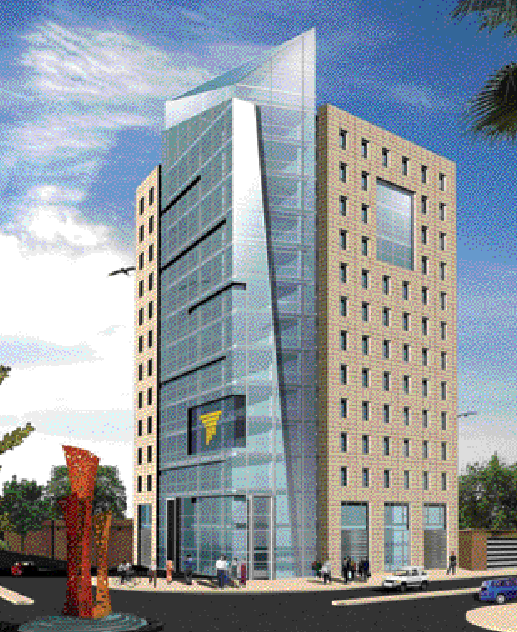
Our slogan is “Your bank for life” and therefore we are here to stay indefinitely. We started to branch out in the Khartoum area by building our new HQ — a 14-floor mixed-use tower — in the center of town on Baladiya and Meknemr streets, and another branch close to the industrial zone in Khartoum, North Bahri. This branch will be finished in September 2008 and the headquarters in 2009.

E What products is Byblos Bank offering in Sudan? Which ones are successful and why?

We offer regular services for individual and corporate banking, trade finance, capital expenditure financing, investment deposits, export loans, raw material loans, car loans, housing loans, etc. All are successful because the bank provides swift and efficient service with strong liquidity available at all times and personalized service, as well as tailor-made solutions.

E How does Byblos Bank evaluate the overall economic and business climate in Sudan? Where does Byblos Bank see the country moving over the next years? The basic requirement for any investment is physical security and this is one feature in Sudan that the country can be proud of — it is absolutely safe. The Sudanese people are very welcoming and very courteous, which facilitates a lot of interaction and the solving of problems. Certain ministries are strongly encouraging foreign investment. The country is slowly moving towards more of a consumer society, as can be seen by the number of cars and consumer electronics sold, or supermarkets and restaurants. We do expect a surge

December 2, 2007 0 comments
0 FacebookTwitterPinterestEmail
Comment

Who will you be (with) this holiday season?

by Rana Hanna December 1, 2007
written by Rana Hanna

As a new year begins and we all search to reinvent ourselves, here are a few ideas for those wishing to find out who they really are, and even who they may want to be.

For those who wish to know the past before moving on to the future, you can now can trace your ancestry using genetic genealogy and find out if you are closer to Claudia Schiffer or a monkey. The DNA Ancestry Project, offered by Genebase Systems, allows us to trace our origins based on mutations in our DNA. According to the project info, DNA tests have proven that we all shared a common ancestor anytime between 50,000 and 200,000 years ago. As people migrated out of Africa, genetic mutations occurred in their DNA. As these mutations cemented in the generations that passed, each mutation in our genes today can be linked to a specific time and place in history. By sending a sample of your DNA, obtained through a saliva sample on a cotton swab (provided in the special participation kit on sale for $119) certain mutations that are predominant in certain areas will determine where you come from. Check it out on www.dnaancestryproject.com.

Closer to the monkey? No problem. Just reinvent yourself as an Avatar and make a new start on Second Life, a virtual community populated by Avatars. If you’re not already, you can reinvent yourself as a tall, blue-eyed blonde, find work and buy property. With over 2 million residents, life in Second Life (or SL as it is commonly known) is replete with shopping sites, discotheques, parks and even a red-light district. There are many real-life companies that have set up offices in Second Life, including CNN, Reuters, Cisco, Toyota and Starwood Hotels and Resorts. The government of Sweden even opened an embassy there. SL is a complex system with its own economy (it has its own currency, the Linden Dollar), laws, rules and regulations so if you do decide to reinvent yourself, make sure you have a lot of time on your hands. (www.secondlife.com)

But if you decide to stay in present day reality, then like most of us, you will probably be sending holiday greetings to all your friends on Facebook.

Facebook, like MySpace, Frienster and LinkedIn (a network of professionals with degrees of separation), is one of the many social and professional networking sites that allow people to get in touch and stay connected, one of the many marvels of the internet that have made us more and more dependent on our machinery and the cyber world.

On these sites, you can post up your pictures and tell people as little or as much as you like about yourself. Where you are, what you’re doing, your state of mind and even what you’re eating.

Facebook is about popularity. It is not so much who you are, but who you know, and how many people you know that matters. Facebook has introduced a new concept to friendship: the Facebook friend. A Facebook friend is someone whose news you only know through Facebook because you simply don’t have time (or maybe don’t want to) catch up with in reality. But there’s another type of friend introduced by Facebook: The long lost childhood friend. But here’s the catch: You’ve found your long lost friends. Now what? After exchanging greetings, sending pictures that you wish you could retouch and summarizing the last 30 years of your life in three lines (trust me, it can be done), where do you go from here? I have found it difficult to keep in touch with my childhood friends because I can’t face the momentous task of catching up. A few months ago I found a friend I hadn’t seen in 24 years. We exchanged phone numbers and we’re still waiting to have lunch! (Makes you wonder why you lost touch in the first place).

Never before have people been as connected as they are now. Virtually at least. But as we stare at our screens and “touch someone”, do we realize how disconnected we have actually become from reality and the people around us? How dependent we have become on our cyber life? Here’s a test you can do to test how dependent you are on your internet connection: stay at home or office for one hour and switch your connection off. Give yourself 10 points for not minding, 5 points if you looked longingly at your laptop and 0 points if you freaked out.


December 1, 2007 0 comments
0 FacebookTwitterPinterestEmail
Comment

Tehran’s domestic battles begin

by Gareth Smith December 1, 2007
written by Gareth Smith

Western media reaction to last month’s International Atomic Energy Agency (IAEA) report on Iran’s nuclear program sounded chillingly like the beat of war drums. Even supposedly reputable outlets seized on the line — from British spin doctors — that Iran had “failed to come clean.” In fact, the report recognized that Iran had improved its cooperation with the IAEA, in line with a decision Tehran took in August despite growing western belligerence.

The US and British-led plan is undermining the pragmatists in Tehran. Hence, last month’s announcement of spying charges against Hossein Mousavian, the former Iranian security official who played a leading role in nuclear negotiations with the Europeans.

I found Mousavian an urbane and intelligent man when I interviewed him several times in 2004 and 2005. He was one of the three Iranians leading talks with the European Union. That was a time when Iran suspended key parts of its program and when some European diplomats spoke privately of a compromise in which Iran would keep at least some uranium enrichment capacity.

The charges against Mousavian — which include passing secrets to the British embassy — have all the hallmarks of being political. The fundamentalists who criticized the talks back in 2003-5 have taken over more and more levers of government power since the election in 2005 of Mahmoud Ahmadinejad to the presidency.

But Mousavian is part of an older trend of Iranian officials who have paid a price of working for an agreement with the West and then failing to deliver tangible benefits in a compromise that recognizes Iran’s “rights”.

Ali Larijani, secretary of the Supreme National Security Council, resigned (or was pushed to do so) in October after the failure of his dual strategy of talking to Javier Solana, the EU foreign policy chief, and improving cooperation with the IAEA. The dialogue with Solana was undermined by opponents at home and in Europe.

Gordon Brown, the British prime minister who at first distanced himself from the Middle East policies of his predecessor Tony Blair, made a speech at the London Lord Mayor’s banquet last month that president Bush must have enjoyed. Brown warned Tehran it had a choice between “confrontation with the international community leading to a tightening of sanctions” and “a transformed relationship with the world…if it changes its approach and ends its support for terrorism.”

Western proponents of tougher sanctions and — “if necessary” — military force against Iran argue that harsh treatment will change the behavior of the regime in Tehran. They say existing sanctions are already biting, despite the country’s record oil revenue, which rose by 13.6% to $54 billion last Iranian year (ending March 2007).

Certainly, the international energy majors with existing Iranian interests are pausing. Royal Dutch Shell, Total, OMV and Repsol are all holding off commitments on investment after their agreements in principle over developing Iran’s massive gas reserves — the world’s second largest. Iran has given the companies until June 2008 to decide. But it insists both its gas and oil reserves can be developed if necessary through Iranian companies cooperating with east Asian companies, and some small European companies willing to take risks that may offer huge long-term benefits.

The warming up of the domestic political battles in Tehran also reflects a build up to parliamentary elections due in March. Iranian politics have changed in many ways since the last poll, in February 2004, saw a relatively unified conservative camp win a comfortable majority in a quiet election after many leading reformists were disqualified.

Critics of Ahmadinejad — including both reformists and conservative pragmatists allied to former President Akbar Hashemi Rafsanjani — were encouraged by their performance in December’s local council elections. But in all likelihood, conservatives will retain their parliamentary majority — even if reduced — and maintain their advantage as Iran moves towards the 2009 presidential election.

However, the political pendulum swings in Iran, the western expectation that internal Iranian politics can work in its favor is misguided.

First, the track record is terrible. Consider Bush’s botched intervention in the 2005 presidential election, when his message that the poll “ignored the basic requirements of democracy,” presumably designed to help a boycott campaign led by right-wing exiles, was followed by a high turnout.

Secondly, it is far from clear who the West would like in power in Tehran. Many Washington neo-conservatives, like their Israeli allies, were delighted with Ahmadinejad’s election win, believing to would bring confrontation nearer, and have done nothing to disguise their glee at the propaganda opportunities he has presented them, particularly in remarks about the Jewish holocaust.

But there are still some Europeans who believe an agreement is possible, because they realize, especially after Iraq, what the alternative might be.


December 1, 2007 0 comments
0 FacebookTwitterPinterestEmail
Comment

Stand-up and laugh

by Paula Schmitt December 1, 2007
written by Paula Schmitt

The Egyptian American comedian Ahmed Ahmed says in his stand-up show that, because there is a supposed terrorist also called Ahmed Ahmed, his name is in a most-wanted list. That makes air travel a unique — if not, horrible — experience. But one cannot but laugh when he tells of his ordeal: “I always know who the air marshal is on the plane. He is the guy reading People Magazine upside down and looking right at me.” After googling his own name and finding out that indeed there seems to be a terrorist called Ahmed Ahmed, the comedian wonders if the other Ahmed is in the Arab world going through the same identity mix-up: “I swear I am not a comedian, I am a terrorist!”

These and other stories are told by the Axis of Evil, a stand up comedy group formed by Ahmed, Aron Kader (whose father is Palestinian and mother is an American Mormon), Maz Jobrani (Iranian-American) and Dean Obeidallah (Palestinian-American). Of all places, the Axis’s first performance happened where the expression Axis of Evil has a whole different connotation: Washington, D.C. Since then, November 2005, they have been touring America using humor as a weapon against prejudice. Now, after full-house performances throughout the US, the Axis is touring the Middle East with a mission that is as necessary as destroying prejudice: helping make the Arabs laugh at themselves.

In America, the Axis of Evil Comedy Tour has been welcomed with raving reviews by the likes of CNN, Time, National Public Radio, and Newsweek. Along with the laughter, the group aims at promoting a shift in cultural perceptions. “We don’t want to be defined any longer by the worst examples in our community. There are a few terrorists and they define all of us,” said Ahmed in an interview on CNN.

But the paradigms are changing already. A lot has happened since 9/11, when Dean Obeidallah followed the suggestion of a club owner and dropped his Arab surname, performing under his middle name instead, Dean Joseph. Now, the group has become so popular and is so successful in defying prejudice that one of the Axis’s show in the US was sponsored by one of the main targets of the jokes: the FBI. With some of the officers attending one of the performances, Ahmed looks at them, sitting close to the stage, and tells the audience “It’s so nice to be standing in front of the FBI and not be handcuffed.”

In his routine, Ahmed reminds the audience that after 9/11, hate crimes against Middle Easterners increased by 1,000%, but that still leaves them in fourth place among hate crime victims — behind blacks, gays and Jews. “I just want to be number one in something,” he joked. United in prejudice, but with the wisdom to transform pain into pleasure, the ethnic comedians are more important in healing and unifying than they are given credit for. Quoting a colleague who is a rabbi, Ahmed says “you can’t hate anybody when you are laughing with them.”

But do Arabs easily laugh at themselves? Kader has one line aimed at the more uptight, imitating a fictitious Arab who insists he does indeed have a sense of humor: “Whoever says we don’t have a sense of humor, I will kill you and burn your flag.” But it takes a lot of high self-esteem and intellectual freedom to laugh at oneself. The only practicing Muslim in the group, Ahmed jokes that “you know you’re a Muslim when you drink, gamble and have sex but you won’t eat pork.”

Comedy is about stereotypes. As a Brazilian, I know my country has them in abundance and I was genuinely offended when my government threatened to sue the producers of the Simpsons cartoon, after one episode showed the Simpson family travelling to Rio to find out what happened to the money they were donating to a boy living in a slum. On the same trip, the Simpsons watch TeleBoobies, a show in which semi-naked girls entertain Brazilian children, while the Brazilian public transport system is depicted as one long conga line. Sadly, even our president at the time made the surreal comment that the cartoon “brought a distorted vision of Brazilian reality.”

Since when does comedy have the duty to reproduce reality? What some suspect, though, is that the president was offended not by the distortion, but precisely by the small bits that didn’t distort our reality all that much. After the embarrassing, irrelevant dispute, Homer Simpson made his retribution in style. In a later episode, he is the proud owner of a monkey. And he asks his friend to be careful with the animal, as it was a present from Brazil, and whose pedigree is very important, since “this monkey is the cousin of the tourism minister.” Kudos.
 

December 1, 2007 0 comments
0 FacebookTwitterPinterestEmail
Comment

Hardliner city

by Andrew Tabler December 1, 2007
written by Andrew Tabler

Until recently, Syria bucked the age-old political dictum that regimes under intense external pressure halt domestic reforms until the coast is clear. The country’s 10th Five Year Plan, approved a year after Syrians were named suspects in the murder of the late Lebanese Prime Minister Rafik Hariri, introduced a slew of economic and social reforms designed to transform Syria from a state-dominated and socialist system to one involving greater domestic freedoms and a partnership with the country’s vibrant private sector. While liberalization in Syria’s finance, forex and trading regimes continue to unfold, Israel’s bombing of an alleged Syrian “nuclear” facility on September 6th has triggered the widest crackdown since the dark-days of the 1980s on Western influence in Syria and the ways its people communicate with the outside world.

The first signs came in mid-September when the Syrian government announced that names of all schools, businesses and shops must be in Arabic ahead of Damascus’ serving as the 2008 Arab Cultural Capital. As businesses with western names like KFC and Shrimpy prepared to change their marquees, foreign schools and universities were ordered to integrate Syrian curriculum into their hitherto Western teaching models. Even Arab European University — one of the darlings of Syria’s European-supported reform process — was forced to drop the term “European” in favor of “International”.

Internet speeds throughout the country then slowed to a trickle in late September without reason. Rumors filled the Syrian capital that a Finnish firm supplied technology to Syrian authorities to more closely monitor internet traffic in the country. Suddenly added to the list of banned opposition websites and blogs were such popular services such as Facebook and even some functions of Google news. The new software is rumored to allow complete tracking of individual e-mail accounts inside and outside of Syria.

Syrian “reformers” ran for cover. Deputy Prime Minister for Economic Affairs Abdullah Dardari — Syria’s reform guru and author (with German assistance) of the Five Year Plan — recently stopped meeting foreign media without prior permission from Syria’s Ministry of Information. As President Assad’s right hand of reform, Dardari is under intense criticism by pundits and economists for everything for fiddling with the economic numbers to his stark warnings that Syria must cut its annual $7 billion subsidies bill or risk a fiscal crisis of major proportions. While Dardari insists that Syrian oil production is plummeting at a rate of 11% and therefore the state must accelerate efforts to make up the difference through taxation, his critics say the high price of oil will keep the budget deficit in check. The subsequent announcement by his rival, Finance Minister Mohammed al-Hussein, that the 2008 budget deficit would be in excess of $3.8 billion, down from a $5.86 billion only five years ago, failed to stem the tide of calls for Dardari’s head in a much-anticipated cabinet change. Neither did the regime’s midnight hike of gasoline prices by 20% two weeks ago and to be followed by a 20% hike next year. Diesel is still only $0.14 a liter, however, ensuring that a steady supply of smuggled fuel will continue to make its way to Lebanon, Turkey and Jordan where it fetches nearly five times the price.

But who’s counting anyway. Dardari’s effort to launch an “Executive Plan” to monitor the Five Year Plan and actually see if Syria was meeting its targets was quietly shelved late last summer for unknown reasons. The regime’s preference to fly blind in reform followed the state’s closure earlier this year of the renowned media coverage monitor IPSOS-STAT’s Damascus offices. Syria might have plenty of new private sector newspapers, magazines and radio stations, but no one knows exactly who listens to them and how they compete with their hard-line state-owned competitors.

Rollbacks in Syrian reform this autumn are the latest chapter in a two-year hiatus in political and social legislation. In his acceptance speech to a second seven-year term as Syrian President Bashar al-Assad said Syria has been in a “battle with destiny” (presumably with Israel and the US) and therefore has not had time to follow up on changes to the political parties, emergency and NGO laws promised in the 2005 Baath Party conference. The latter law, rumored to be on the verge of passage last September, is now expected next year.

So why is the regime letting private sector banks, insurance companies, foreign exchange house and trading companies flourish? Some people say it’s due to the state’s fiscal problems. But a closer look shows that, ironically, Syria’s pullout from Lebanon in April 2005 was perhaps the most powerful impetus for reform during Assad’s first term. Strained ties with Lebanon forced the state to implement long-dormant legislation to allow Syria’s private sector to do what Syrians long contracted Lebanese to do for them. In the bizarre world of Syrian reform, Friedrich Nietzsche’s quote “that which does not kill us makes us stronger” has never rang more true.
 

December 1, 2007 0 comments
0 FacebookTwitterPinterestEmail
Editorial

A different focus

by Yasser Akkaoui December 1, 2007
written by Yasser Akkaoui

This year’s Executive Facts and Forecasts has picked three nations in the MENA region that it believes best represents its economic heartbeat: an emerging Sudan, a thrusting UAE and a Lebanon that is in transition but which has potential in abundance.

One of the exciting stories of the past years has been the resurgence of Sudan from decades of political conflict and war, enabling the country to truly access its natural resources — such as oil and sugar — and use these to develop a burgeoning economy. The result has been double-digit growth that has propelled Sudan into the limelight and made it attractive to investors seeking to diversify their emerging markets portfolio.

The UAE (and the rest of the GCC for that matter) had another record year and will continue to set new economic benchmarks. Those who believe that the oil boom is past its peak had better think again. This is not a flash-in-the-pan correction similar to what was experienced in the 70s; black gold will maintain its robustness to fund even greater projects and fuel prosperity throughout the region and beyond. But this success is not just down to increased oil revenues; they have merely helped implement a remarkable vision that has seen assets used to create sustainable economic development and transform a region into throbbing modern metropolis

Lebanon, being the regional barometer that it is, must thank its lucky stars that the political crisis that has plagued the little Mediterranean nation since mid-2006 happened during the current oil boom. The economic development in the GCC has allowed Lebanese talent to be absorbed into, and contribute to, the dream and brand Lebanon was able to diversify and become less reliant on an ailing and limited local economy. The good news is that the election of a new president at the end of 2007 should herald at least three years of calm and allow Lebanon to once again take its place as the most elegant boutique in the regional mall.

What we at Executive hope to showcase in this annual issue is that, despite the tag of instability that is so often attached to the region, the Middle East and North Africa is filled with credible and sustainable opportunities with the vision and talent to make them happen.


December 1, 2007 0 comments
0 FacebookTwitterPinterestEmail
North Africa

The Maghreb – Opening markets

by Executive Staff December 1, 2007
written by Executive Staff

Although both Tunisia and Morocco have free trade deals with the European Union and Algeria’s economic and political ties with Britain have reached an unprecedented high, there is a growing feeling in all three Maghreb countries that rapid growth will be spurred from the southeast — the Gulf — rather than from the North.

Even before oil prices rocketed to $100 a barrel, Gulf investors had begun to move into North Africa in a big way, eyeing especially tourism and real estate opportunities in Tunisia and Morocco, while banking interests kept a close watch on the possibilities afforded by future privatization of the monolithic Algerian state banking sector.

Gulf money is, ironically, being starved of investment opportunities at home while in Europe much of the focus previously directed towards the Maghreb is shifting to the newer and poorer members of the EU in Central and Eastern Europe.

Yet the influx of Gulf money is neither charity towards fellow Arabs nor less demanding of moves to liberalize the Maghrebian economies and open up sectors previously denied to private sector investment. The UAE firms Emaar, Dubai Holding and Abu Khater Investment Group are moving into the region in a big way. And the decision to allow “alternative” financial products in Morocco — for which read Islamic finance — opens up the possibility for the spread of a banking system that is also gaining roots in London.

Backed by this new source of interest, the countries of the Maghreb can look forward to 2008 in a situation of macroeconomic stability and steady growth.

However, the region will have to keep up the pace of reform if it is to continue to attract petrodollars as well as tackle its leading economic and social headache — high unemployment among quickly-growing, young populations. All three have kept inflation in check but pressures remain, meaning that significant monetary and fiscal relaxation would be ill-advised. The encouragement of private sector job-creation as opposed to public sinecures is the priority. This will entail sustained deregulation and liberalization, robust financial sectors and the continued development of trade and investment ties.

Morocco

Morocco has achieved average GDP growth of 5.4% since 2001, thanks to a raft of reforms, but is expected to only achieve 2.5% this year. The drop is mainly due to the effect of a severe drought on agriculture, which contributes 20% to GDP and more than 40% to employment. The cereal harvest fell from 9.3 million tons to 2 million tons and exports of products like citrus fruits have also nosedived.

The country is committed to reducing its reliance on agriculture, and the government is confident the economy will bounce back and targeted 6.8% growth in 2008. The IMF forecasts a marginally more modest 5.9%. In the third quarter of 2007, due mainly to the lively services and construction sectors, unemployment dipped beneath the psychologically important 10% level, despite the loss of 20,000 agricultural jobs. As elsewhere in the region, unemployment is a serious issue, with the government saying 400,000 jobs a year must be created over the next 10 years to keep pace with population growth and reduce overall joblessness. This is no small feat — over the past 10 years, a period of relatively high growth, on average only 130,000 new jobs were created annually.

With fears of inflation eliminating any expansionary fiscal policy as a tool for cutting unemployment, job creation will have to come from the private sector, aided by the government’s pro-business stance. Sectors such as telecom, transport and the all-important labor-intensive tourism sector are all expected to register growth between 7 and 9% over the next year.

As well as seeking to strengthen the trade-oriented industries that benefit from EU open ties, Morocco is seeking to develop trading relations with its immediate neighbors, which have been weak up to this point, not least down to Algeria’s support for the Polisario Front in Rabat’s continuing conflict over the Western Sahara.

Tunisia

In 2007 Tunisia marked 20 years since the Change, when President Habib Bourguiba, who had led the country since independence, was replaced by Zine al-Abedine Ben Ali. Under Ben Ali, Bouguiba’s socialist model has been incrementally rolled back in favor of free markets and private enterprise.

For the past 35 years, Tunisia has made attracting FDI to the country a cornerstone of economic policy, and has specifically encouraged investment in export-oriented sectors. Its geographical position, relatively affordable land and labor, and most importantly a range of trade deals, particularly that with the EU, are touted by officials as ideal reasons to invest in the country.

This policy has been accelerated since the Change, with privatization and a gradually more open economic policy being keys to ensuring that foreign capital continues to flow in, and exports to flow out. FDI grew from $83 million in 1986 to $3.65 billion in 2006, and has created an estimated 270,000 jobs in that time.

The IMF has praised Tunisia’s “outward-oriented development strategy” which eschews protectionism and looks to encourage foreign participation in the economy and stimulate exports. Over the past decade, exports have grown by 15% annually and now contribute more than half of GDP, compared to 35% 20 years ago.

Now Tunisia is focusing on further improving its attractiveness to foreign investors and in increasing the export of “value-added” — i.e. more expensive and higher-margin — products. The 11th Development Plan includes pledges to “stimulate private investment, particularly in high value-added sectors” and “improve the business climate, attract more FDI.”

Legislation is in the pipeline to allow companies to apply for 10-year tax holidays on profits derived from exports, after which they will be taxed at 10% — equal to the lowest rate in the EU.

No set timeline has been laid out for the shift of the dinar to full convertibility. Most estimates are in a vague three-to-five year range, despite the undoubted benefits of convertibility to foreign investors. While Tunisia’s present system of controlled floating rates is seen both as transitional and not a huge barrier to investment, the fact that there is no set date for full convertibility puts in doubt the political will to implement a full float.

Tunisia’s macroeconomic stability looks secure enough, promoting a continuation of strong growth. This growth will be essential to ensuring that jobs are created for the growing population, many of whom are — or will be — young university graduates, equipped to work in high-end, demanding jobs.

Unemployment has remained stubbornly around 14% for the past half decade. By continuing to promote FDI in high-earning sectors, the government is taking some of the right steps to increase employment. However, they need to be supplemented by a loosening of red tape and an even more active encouragement of private enterprise. The official projection is for unemployment to be cut to 13.4% by 2011 — even taking into account fast population growth, this seems woefully short of what is needed.

Algeria

The soaring world price of energy defies all attempts by oil and gas rich countries to diversify the fundamentals of their economies. Algeria’s non-hydrocarbon growth this year is expected to be 6%, with overall growth of 5% as hydrocarbon output was reduced. Even so, the cash interpretation of these percentages is such that the significance of oil and gas in the economy is going up, not down.

Government coffers are brimming with hydrocarbon revenues, and money is being ploughed into big projects such as the $60 billion Complementary Plan for Support to Growth which aims to bring the country’s infrastructure up to the standards of the developed world, as well as providing jobs for the country’s unemployed.

This level of funding coming on-stream requires a continuation of careful monetary policy, particularly as other pressures such as rising food and construction costs are also present. The IMF predicts 4% inflation by year-end, tolerable for an emerging market, but has warned that keeping a lid on prices is a key priority for the country, along with the elusive goal of a diversification away from hydrocarbons.

Two other, thornier problems highlighted by the organization are high unemployment and an underdeveloped financial sector. Overall unemployment is 13% officially, but youth unemployment may be as high as 45% — a very serious issue indeed for the country. While public funds and continued growth should help cut unemployment to a degree, a report prepared for the IMF has suggested that supply-side reforms will also be beneficial. These include easing labor legislation to make hiring and firing easier, a reduction in employer contributions to social security, using oil revenues to cut taxes and ensuring that the financial system is robust enough to support private enterprise.

In 2007, Algeria recommenced privatizing its previously troubled banking sector, offering 51% of state-owned Crédit Populaire d’Algérie (CPA), the country’s fifth-largest bank, with a 15% market share. Technical bids were submitted by several large international banks, including Banco Santander, Citibank and BNP Paribas and the deal was expected to be sealed before the end of the year at the time of going to press.

The fact that such large banks are enthusiastic about the privatization bodes well for the Algerian banking sector, where previous privatisations ended in crisis and renationalization. It is also a fact that has not escaped the bigger Gulf banks. State-owned Algerian banks account for 95% of loans and deposits, but suffer from inefficiency and a high proportion of non-performing loans — around 38% of all credit, compared to 5.8% in the private sector.

However, there are currently no published plans to privatize the largest state banks, Banque Exterieur d’Algérie (BEA), Banque Nationale D’Algérie (BNA) and Banque de l’Agriculture et du Développement Rurale (BADR). Since they would all benefit from the capital, technology and professionalism that the private sector can bring, it is only a matter of time before the government applies the same logic to them that it did to CPA and Banque de Developpement Local (BDL).

And those all important new ties with Britain, now assuming the economic mantle once worn by France? Bouteflika’s two-day visit to London in July 2006 was the first visit for an Algerian head of state to the UK since the country gained independence from France in 1962. His 48 hours in London was aimed at promoting Algeria to potential UK investors and the broader international community, but especially to the British energy and telecom sectors. Britain’s recognition of the potential gains from these newly forged links was signalled by its intention to acquire larger premises in Algiers for its embassy and easier visa access. The British Council is also back after a 13 year absence.

Peter Grimsditch is editorial director of the Oxford Business Group.


December 1, 2007 0 comments
0 FacebookTwitterPinterestEmail
Comment

The Tunisian Change

by Peter Speetjens December 1, 2007
written by Peter Speetjens

On November 7, 2007, it was precisely 20 years ago that “the change” took place. Today, one month later, the streets of Tunis are still colored red with tens of thousands of the nation’s flags and images of President Zine al-Abedine Ben Ali, while you cannot open a magazine without reading about the incredible progress the country made under the inspiring guidance of its great leader.

So, the national press agency reported that on the 20th anniversary of “the change” 3,000 intellectuals, members of civil society and jurists had signed a declaration praising the gains the country had achieved, while emphasizing that these could not have been achieved without the will and “perseverance” of the Tunisian President. Réalités Magazine put a heavily retouched photo of the president on the cover with the headline: “The new face of Tunisia.”

This kind of journalism can hardly do any good for the country, as it just screams for an ironic reply, knowing that “the change” first of all, and rather euphemistically, refers to the disposal of former President Habib Bourgiba by current President Ben Ali. After some 30 years at the helm, Bourgiba was judged “senile”. Newly sworn in, Ben Ali solemnly declared he would never stay as long in power as his predecessor, yet 20 years and two constitutional amendments later, Ben Ali still firmly sits on the throne. Hence, he also known as “Ben a vie” (Ben for life).

Still, putting irony aside, one cannot but admit that Tunisia has booked impressive results under Ben Ali’s leadership. For “the change” not only refers to the change at the top, but also to gradual transformation of Tunisian society: From a socialist-inspired model, in which the benevolent state took care of everything and everyone, to a more liberal scheme, in which free market forces and private enterprise were allowed to take center stage. Remarkably, Tunisia achieved its change without any major social upheavals or financial crises, despite the fact the country’s economy was in a deplorable shape by 1987.

While countries such as Egypt, Syria and Algeria are still struggling to come to terms with the reality of the post-Cold War era, the Tunisian private sector today contributes 76% to the country’s GDP of some $33 billion, employs 71% of the country’s workforce, and represents 64% and 85% of annual investments and exports respectively. In addition, Tunisia has known a more or less constant annual economic growth rate of 4% to 5% annually and consequently saw its GDP almost double since the infamous change.

The good thing about the Tunisia transformation is that economic progress so far did not come at the expense of social development. So, still some 80% of the population belongs to the country’s middle class, while less than 4% lives under the national poverty line. Nearly every household is connected to the electricity grid. An increase in health centers and hospitals, combined with free medical care for the needy, saw life expectancy increase to an average 73 years, while illiteracy has been reduced to less than 20%.

The latter may still seem a lot, yet one should know that by the end of the French colonial rule in 1956 no less than 98% of Tunisians were illiterate. In that sense, it is no exaggeration to state that Tunisia has come a very long way, especially as it did so without an abundance in natural resources. Add to that the country’s safety record and, last but not least, the fact that in 2008 Tunisia’s free trade agreement with the European Union will go into top gear, and one understands why Tunisia has become a darling destination for international investors.

So, the Spaniards bought themselves into the country’s formerly state-owned and quite lucrative cement industry. The Italians have signed up to construct an electricity plant and industrial city. The Turks are building an airport and the Indians a phosphate producing plant. In recent years however, it has especially been the Emiratis who have come to appreciate the Tunisian model and the country’s strategic position on the edge of Europe.

It made President Ben Ali a busy man. In July, he laid the cornerstone for “The City of the Century,” Dubai Holding’s $15 billion dollar mixed-use project on the edge of Tunis, while in November he laid yet another symbolic first stone for “Tunis Sorts City,” Bukhatir’s $5 billion theme-based development on the shores of the capital’s Lac du Nord.

Seeing Tunisia’s achievements over the last 20 years, it is all rather unfortunate that the country’s media still too often behave as a caged bird. Its overzealous parroting and personal worship only leads to unintended irony. Ben Ali, the new face of Tunisia? No, not quite. Ben Ali, the face of a remarkable Tunisian turnabout? Like it or not, but most probably the only reply to that question would be a wholehearted: yes, indeed.


December 1, 2007 0 comments
0 FacebookTwitterPinterestEmail
By Invitation

Web 2.0: Profiting from the threat

by Jad Hajj December 1, 2007
written by Jad Hajj

Web 2.0 — the second generation of web-based services and communities that emphasize online collaboration, networking and user-created content — is growing at a phenomenal pace. A recent Booz Allen Hamilton study shows just how prevalent this interactive consumer behavior has become and puts to rest any notion that social networkers are all 17-year-old boys or that “average people” don’t read Weblogs. The study found that 50% of all internet users frequent social media sites, and that more than half of the visitors to MySpace, the notoriously youth-oriented social networking site, are 25 or older.

Among the many activities taking place on new technology platforms, such as blogs, wikis, podcasts and online communication pit stops, is one that should particularly pique the interest of corporate managers: More and more, consumers are sharing their opinions about products, services and the behavior of companies. What this means for business is not always clear, but most executives have a sense that their company must respond to this phenomenon. They’re just not sure what to do or how to begin.

One useful approach is to frame the issue as a challenge: How do internet-based social media change the marketing environment for companies? We have identified three ways that the internet is altering the landscape, along with the hidden opportunities in each.

Companies are no longer solely in control of their message

Corporations are unable to rely on traditional one-way methods of communication to reach and influence consumers. Web 2.0 has turbocharged the whole notion of “word-of-mouth,” circumventing traditional marketing by letting individuals talk directly to each other about their passions, their buying preferences and their pet peeves. Hence, instead of trying to control the message, companies should focus on joining in these conversations. Web 2.0 offers limitless opportunities for companies to engage their customers in meaningful dialogues and learn exactly what they’ve wanted to know all along: precisely what their consumers think about their products and brand. Companies can begin at sites like Technorati.com to find out what is being said about them online and respond to postings about their products or services or addressing concerns as warranted. And they can begin generating conversations themselves by creating their own blogs, as Sun CEO Jonathan Schwartz has done with Jonathan’s Blog.

Web 2.0 is fragmenting marketing channels

The explosion of blogs and social networking sites — some 100,000 new blogs launch daily — is breaking already-fragmented marketing channels into even tinier pieces. Visitors to the web no longer start at large portals like Yahoo or MSN; rather, they go straight to niche communities and websites catering to their specific interests. But fragmentation has its upside, offering companies a shortcut to highly desirable demographic groups. Want to get the attention of professionals with an average of 15 years of experience? Try LinkedIn.com. Moreover, establishing a brand presence on online channels costs a fraction of what it does in traditional media channels. And it allows companies to leverage “consumer evangelists” — those customers who, once captured, undertake their own word-of-mouth marketing campaigns and help a company’s customer base evolve.

In addition, companies can take advantage of fragmented channels to perform targeted, inexpensive product research — partly because customers are already using these channels to describe what they love and loathe about companies’ offerings. Companies that collect and analyze this data can use it to improve and shorten product development cycles, which in turn can lead to increased predictability of product successes.

Web 2.0 offers a bullhorn for consumer complaints

Learn from computer maker Dell’s mistake: In 2005, it ignored a single blogger’s complaint about its poor customer service that eventually reached traditional media outlets such as the Wall Street Journal and the New York Times. In the months that followed, Dell’s customer satisfaction rating, market share and share price in the United States all plummeted.

Rather than ignoring — or fearing — criticism generated in Web 2.0 forums, companies should seize Web 2.0 tools to respond. For example, when frustrated JetBlue customers launched a blog recounting the hours that the airline left them stranded on the tarmac during a February 2007 storm, JetBlue responded with a video apology from its CEO on YouTube. The video was viewed 40,000 times in its first seven days online, during which time JetBlue received thousands of supportive e-mails from consumers. In addition, JetBlue was praised by blogger pundits for successfully incorporating social media into crisis communications.

Social media need not set off a panic. Although companies can no longer count on the power of one-way messaging, it’s also important to realize that new platforms carry new potential benefits. Furthermore, building competency with the new platforms is not an option; it’s a requirement. In the interactive context, traditional marketing campaigns are no longer enough; getting the desired message to the target audience takes vigilance and constant adjustment to the fast-changing communications landscape.

Jad Hajj is an associate for Booz Allen Hamilton in Dubai.


December 1, 2007 0 comments
0 FacebookTwitterPinterestEmail
By Invitation

Muscling the Mideast music market

by John Defterios December 1, 2007
written by John Defterios

It took us a half hour to drive from Sheikh Zayed Road in the center of Dubai to the Al-Quoz Industrial Area where you’ll find the headquarters of Arab Media Group or AMG. Their three-letter acronym will soon have a very familiar three-letter brand running right along side it, MTV.

The one you know is celebrating the launch of its 60th channel this weekend, 53 of those outside the United States. The other, AMG, gets a chance overnight to play in the big leagues of global media, with its 10-year partnership agreement.

A great deal has been said already ahead of the launch, but let me boil it down into three headlines:

MTV is ready to enter a market of 50 music channels in the region. Their lead music channel will be built around Hip Hop and two-thirds of the population in the Arab World is under the age of 25, so there is room to grow.

What is equally important but often overlooked in the excitement about edgy programming and the rush for advertising dollars, or in this case dirhams, is what I call the third ‘D’, dialogue.

MTV sees itself as something much more than music television. It is a platform for debate to discuss drugs, health issues and can be a great vehicle to exchange cultures, music and ideas. Bill Clinton and Tony Blair jumped into MTV town hall meetings for the same reason advertisers choose this platform, to reach youth in their space.Bill Roedy, MTV’s global ambassador since 1989, not only gets excited about rap music emerging out of Saudi Arabia, but the potential to break down barriers. “I think often there are stereotypical views about the Middle East,” Roedy says, “And this will give us a chance to reflect this great culture and what I think is going to be a great product.”

His counter-part in the venture, Abdullatif al-Sayegh the 30-something CEO of AMG, did the interview with me in the traditional Arab tobb, against the MTV graffiti studio backdrop. He talks about listening to the Arab youth and engaging them through entertainment.

“Just go with the language they understand, with the language that they believe in, with the way that they can understand you better. I am sure we can fill a lot of gaps between the West and the Arab World if we do this.”

Sounds worthy, but possible. How about the backlash against the message coming from what is clearly a western brand? Not a problem. The Virgin Music Store we went into was filled with a mix of Arab and western expatriate youth, thumbing through the latest offerings and perusing New York Yankee baseball caps. Downstairs in the shopping mall, teenagers and their parents lined up at Starbucks to get their iced lattes and blended fruit drinks.

So the lesson we may all learn out of the latest launch of MTV, is that many on the streets of the Middle East may not agree with US policies in the region, but they do trust American brands and what they stand for — openness, edginess, and can we say it? Being hip.

John Defterios is the host of “CNN Marketplace Middle East,” a new weekly business program dedicated to the latest financial news and figures from across the Middle Eastern region.


December 1, 2007 0 comments
0 FacebookTwitterPinterestEmail
  • 1
  • …
  • 553
  • 554
  • 555
  • 556
  • 557
  • …
  • 696

Latest Cover

About us

Since its first edition emerged on the newsstands in 1999, Executive Magazine has been dedicated to providing its readers with the most up-to-date local and regional business news. Executive is a monthly business magazine that offers readers in-depth analyses on the Lebanese world of commerce, covering all the major sectors – from banking, finance, and insurance to technology, tourism, hospitality, media, and retail.

  • Donate
  • Our Purpose
  • Contact Us

Sign up for our newsletter

    • Facebook
    • Twitter
    • Instagram
    • Linkedin
    • Youtube
    Executive Magazine
    • ISSUES
      • Current Issue
      • Past issues
    • BUSINESS
    • ECONOMICS & POLICY
    • OPINION
    • SPECIAL REPORTS
    • EXECUTIVE TALKS
    • MOVEMENTS
      • Change the image
      • Cannes lions
      • Transparency & accountability
      • ECONOMIC ROADMAP
      • Say No to Corruption
      • The Lebanon media development initiative
      • LPSN Policy Asks
      • Advocating the preservation of deposits
    • JOIN US
      • Join our movement
      • Attend our events
      • Receive updates
      • Connect with us
    • DONATE