• Donate
  • Our Purpose
  • Contact Us
Executive Magazine
  • ISSUES
    • Current Issue
    • Past issues
  • BUSINESS
  • ECONOMICS & POLICY
  • OPINION
  • SPECIAL REPORTS
  • EXECUTIVE TALKS
  • MOVEMENTS
    • Change the image
    • Cannes lions
    • Transparency & accountability
    • ECONOMIC ROADMAP
    • Say No to Corruption
    • The Lebanon media development initiative
    • LPSN Policy Asks
    • Advocating the preservation of deposits
  • JOIN US
    • Join our movement
    • Attend our events
    • Receive updates
    • Connect with us
  • DONATE
Real estate

What‘s in store – Possible correction?

by Executive Staff October 1, 2007
written by Executive Staff

Bubbly can be tasty. Bubbly stock markets are less so as those who have been caught in the implosion phase of market bubbles are known to share. The problem with market bubbles is not really that only very few people can detect them; the problem is that it is very tricky to avoid being hit when they burst.

For the past year, economists have been divided over the future course of the UAE real estate market, arguing when a correction will set in. The debate was quite intense in the immediate aftermath of the GCC stock markets correction, driven by the painful experiences of billions of dollars in market caps that were wiped out in the first half of 2006. Additionally, as analysts pointed out in autumn of last year, stock market corrections often are followed by downturns in real estate prices — and that with considerable lag time.

On the other side were experts who diagnosed the UAE as having continued severe housing shortages that in the short term would not likely be answered by home construction, despite the immense number of project announcements that flooded the emirate at the center of attention, Dubai, throughout 2006. In short, market liberalization, foreign property ownership, sector volatility, outstanding economic growth — both in the UAE and the GCC — has created two camps: One camp believes that Dubai’s property bubble has reached a head and will soon burst, while the other camp believes the sector will continue to experience growth at least until 2010 and the bubble will remain intact.

Diversifying economic programs

As part of its strategic diversification plan to rely less on oil revenues, Dubai has been for the past seven years spearheading an ambitious economic program with real estate, trade and tourism being the main drivers. The government invested directly into these sectors through the creation of the country’s top real estate development and operating companies. Consequently, Dubai’s measures designed to build a state-of-the-art, modern infrastructure, with the aim to attract millions of tourists and international firms has spawned massive construction projects in the emirate, which, in turn, has created a substantial and a buoyant real estate stock market. Real estate and construction accounted for 15% of UAE’s $164 billion GDP.

Not to be left behind, Abu Dhabi has also earmarked the real estate, business and tourism sectors as key drivers of growth and now engaged in a frenzy of construction activities unmatched in the world. The government of Abu Dhabi announced in mid-September its “Abu Dhabi 2030: Urban Structure Framework Plan,” which lays out a vision that would make the UAE’s capital a global city equal to its European peers. The plan estimates the city’s population to grow to over three million people by 2030 and calls for the spending of over $165 billion on real estate sector and infrastructure projects.

Due to the high speed of economic expansion, the real estate sector was marked by a speculative streak in both property deals and trading in the shares of sector companies on the two stock exchanges of the UAE, the Dubai Financial Market (DFM) and the Abu Dhabi Stock Exchange (ADSM). Equity prices have returned to levels that reflect more reasonable valuations but recent turmoil in international markets raised new questions if equities in the property development and real estate sector have fortified themselves by improving their corporate governance and sensitizing their expansion strategies.

The property sector’s volatility on the Dubai Financial Market was demonstrated in August by very strong, sudden fluctuations of leading property stock, Emaar, which swung within 48 hours from a 3.5% drop to a gain of 5.6% on poorly communicated information, fears, and speculative pressures. Emaar’s fluctuation impacted local and regional market indices but only on a very short term. Calm was restored in September and the following weeks demonstrated that UAE investors have considerable trust in the value propositions of listed real estate stocks.

One testimony to this optimism on the real estate sector was the trading start of Deyaar on the DFM on September 5. Strengthened by an IPO with high demand, the company — a real estate subsidiary of Dubai Islamic Bank — rocked up 100% on its first day of trading, achieving market capitalization equal to the fair value assessments the scrip had been given in recent weeks. The first month of trading saw Deyaar retaining comparatively high price levels of 80 to 90% above its issue price.

Notably, however, the two UAE bourses diverged in September as far as their real estate stocks. The key sector companies on the DFM, Emaar and Union Properties, were rather listless in their share prices. On the ADSM, however, key players ALDAR and Sorouh recorded substantial gains in the latter part of September. Up until the summer, Emaar (and the DFM real estate sub-index that is heavily under its influence) stuck out as subdued performer while Union Properties moved more similarly to its ADSM peers. If real estate sub-indices on the two bourses maintain divergent trajectories over prolonged future periods, it could imply that investors perceive the Abu Dhabi property market as promising but have doubts about the sustainability of Dubai real estate prices.

Supply still has to catch up with demand

However, until now, “the supply of properties, whether in the residential, commercial, hospitality or retail segments of Dubai and Abu Dhabi alike, has yet to catch up with the ever increasing demand,” a report by Dubai-based Shuaa Capital said. “The result has been spiraling prices and rental rates for properties on the market and those in the pipeline,” it added, noting that prices have increased by 13.9% in the eight months leading up to August 2007.

Freehold house prices had more than doubled in the last two years because a fraction of homes under development had been completed, creating a short-term supply crunch. Yet, with many set for completion from 2008 to 2010, experts say the market is set to experience a “declining price” phase and that prices may drop 20% by 2010.

But market observers told Executive that the current market conditions for real estate in the UAE will not turn to the worse in the foreseeable future, that balance on the demand curve has definitely shifted, and greater hunger for residential and commercial property is predicted. “The extent of a correction is difficult to quantify since the economic business cycle does not appear to be at risk of suffering a decline over the forecast period,” Shuaa said in its report.

However, one thing is certain: the price rise can’t go on forever. If the real estate bubble bursts, the pattern will be different from that of a correction in equity markets. While the latter is characterized by huge trade volumes at lowered values, a collapse in real estate markets shows through illiquidity. The prices may not go down but transaction numbers melt away and distressed sellers have a hard time finding buyers. This is bad news for people who bought a home at a price they considered excessive on a rationale that the value of the property will still go up. After a property market correction, these people may have to wait for years for a buyer.

Possible correction in 2009

While international markets carry the memories of burst real estate cycles in the 70s, 80s, and 90s of the last century, opinions on the GCC market see the two possibilities of a sharp sudden drop or a soft landing. Prices will not go up indefinitely but a gradual slowing is a plausible scenario for many in the current positive economic environment of much of the region.

In its latest sector view, investment bank EFG-Hermes expects a UAE price correction in 2009, following upon “a rise in average prices of 10-15% in 2007 and a rise of 5-10% in 2008, with the peak being reached in 2H2008.”

Earnings of listed real estate companies in the UAE, so far, have been no cause of concern and it makes no sense to speculate on short-term weaknesses of publicly traded sector heavyweights, however disappointingly some companies may have treated their stakeholders.

Historic causes of real estate bubbles were in relation to the economy’s expansion low interest rates, scarcity of land, rapid accumulation of people in an area, and speculative pressures. Experts say if investors are concerned about real estate values and feel that the bubble might burst, than they must keep a close eye on long-term interest rates and the unemployment rate. If both of these rates start creeping up, it might be time to reconsider investment in real estate market.

Currently, the unemployment rate of locals in the UAE remains high and given that the emirates has its national currency tied to the US dollar creates a potential recipe for a bubble burst. Add to this the fact that that real estate companies in Dubai are already overvalued the chances for a burst become more acute.

But much can be done to reduce the risk of a stock market decline. For example, housing prices simply can’t continue to rise faster than wages do and wage increases must catch up to housing price increases. Furthermore, speculative excesses in markets will trigger downturns in real property valuations. As such, the government must take steps to end the speculative winds. Proper valuations of real estate firms are also in order. “Proper handling of the real estate market dynamics by the authorities will prevent a potential meltdown,” Samer Shaheen, a senior analyst at Zawya told Executive. “The UAE’s young markets lack a form of information sophistication. In-depth research on the property market to forecast trends are rare and much more on this level is needed.”

October 1, 2007 0 comments
0 FacebookTwitterPinterestEmail
Comment

Fulfillment & Betrayal

by Michael Karam October 1, 2007
written by Michael Karam

The Palestinian businessman Naim Attallah has just published Fulfillment & Betrayal 1975-1995, the third installment of his autobiography. His first two offerings The Boy in England and In Touch with his Roots tells of his arrival in London as an immigrant and penniless student (he once worked as a hospital porter and laborer) and his impressive rise as a financier.

He began his career in banking as a foreign exchange dealer with Crédit Foncier d’Algérie et Tunisie in the City of London. He went on to become the protégé of the brilliant but ultimately flawed Palestinian banker, Yusuf Beidas who, in early ‘60s, made Lebanon’s Intrabank the biggest financial institution in the Middle East. Intra’s collapse in 1966 has been called by many a national witchhunt and a conspiracy as well as a key milestone in the subsequent unraveling of Lebanon. It certainly destroyed Beidas, who died a broken man in Switzerland two years later.

Amid the legal debris of the collapse, Attallah was named as Beidas’s executor, a role that, despite his success in other areas, would haunt him for years. In 1995, a summons was issued by a Lebanese court on behalf of the Beidas family, accusing Attallah of breach of trust in his handling of the aftermath of the collapse. He fought and won the case. Of Beidas, he said: “I felt he became the underdog, the victim of political vindictiveness and maneuvering and if you balance his debits and his credits are far in excess of his debits.”

That would be career enough for most people, but Attallah went on to become a flamboyant film and television producer, publisher, author and journalist impresario, and friend to the stars.

He also gave me my first job.

He was a close friend of my parents (in In Touch with his Roots he chronicles a rather glamorous and spectacular car crash in London in the ‘60s involving my parents and Attallah and his wife, pining the blame on my father’s carefree driving habits) and when the time came to find something for young Michael to do before going up to university, I was dispatched to Quartet, his publishing house where Attallah bestowed upon me the title of office boy. My brief foray into Attallah’s world coincided with an era — written about in exacting detail in Fulfillment & Betrayal — that made him famous (and infamous) and which warmed the heart of a young man happy to see a fellow Arab have London society at his feet.

It was 1983 and the London gossip columns could not get enough of what they dubbed “Naim’s Hareem.” For an 18-year old with his hormones raging, working at Quartet was like collecting the mail for Hugh Hefner, except that these women had degrees from Oxford and had parents who either owned castles — Liza Campbell — or who ran the country — Nigella Lawson. Some of the nastier elements of London society bristled at how an arriviste Arab — Johnny Wog — with a comb-over hair style had snagged such blue chip totty, but Attallah had rhino hide for skin.

I would take packages from the Quartet offices in Goodge Street to Attallah’s penthouse office on Poland Street just off Soho to find London’s most desirable women draped over his office. “Naaaaayeem,” they would drawl. “Won’t you take us to lunch?” Attallah, first and foremost a businessman, would bat away their requests: “Not now darling. Later.”

Although not what it was, Quartet will be remembered as a genuine force in publishing and Attallah’s record as a publisher is considered, even by his many enemies, as that of more than just an exotic dilettante. Sure he had his lemons but he did publish The Joy of Sex! Furthermore, he never forgot he was an Arab. Quartet published two books that at the time were considered controversial: Jonathan Dimbleby and Don McCullin’s The Palestinians, one of the first in English to tell the Arab-Israeli story and God Cried, a searing account of the 1982 Israeli Invasion of Beirut, written by Tony Clifton and photographed by the late Catherine Leroy

Attallah went on to produce movies, found magazines and become the CEO of the Asprey. Now 77, Attallah is regrouping. When I interviewed him in London in February of last year, I put it to him that he must surely be slowing down, taking it easy. Sitting in his Mayfair office, and resplendent in a bright red shirt and natty black and red pinstripe suit, he said he had a few debts to pay off but then would “recapitalize and start again.”

Fulfillment & Betrayal 1975-1995 by Naim Attallah (Quartet), £25

October 1, 2007 0 comments
0 FacebookTwitterPinterestEmail
Real estate

Profiles – More than neighbors

by Executive Staff October 1, 2007
written by Executive Staff

Sharjah

Industrial, residential, and cultural aspects are combined in the profile of Sharjah. The emirate ranks third in terms of housing demand, size, and population in the UAE. Industry is a development focus where the emirate claims to generate 40% of the country’s industrial GDP in its manufacturing establishments and 19 industrial zones.

The latest major industrial zone projects in the emirate are the Emirates Industrial City (EIC) and the Sharjah Investment Center (SIC). EIC is owned by UAE and Saudi developers through a holding company. The project’s size is 7.7 million square meters; it caters to small and medium enterprises, with a strong space allocation to logistics and warehousing. SIC is a mixed use industrial, commercial, and business zone of 2.9 million square meters that is being developed by SNASCO, a Saudi-owned real estate firm.

In 2006, Sharjah was ranked in second place for the number of industrial establishments in the UAE after Dubai, with a share of 29% among the country’s close to 3,600 registered industrial enterprises. However, in terms of cumulative value of industrial investments it was a distant third place after Abu Dhabi and Dubai. The industrial infrastructure of Sharjah includes its airport and three commercial ports, with leading free zones being Hamriyah Free Zone and Port and SAIF at the airport.

The residential sector in Sharjah faces high demand from people working in Dubai who seek affordable living in the northern emirate. The emirate’s leasehold ownership options and local market conditions have supported diverse building activities and residential towers. Residential projects with noteworthy profile include the Sharjah and ABBCO towers by UAE real estate firm Bonyan International, or the Taawun 2 and Sondos towers by Tiger Real Estate.

For its tourism and resort sector, the emirate’s largest project is the $4.9 billion (AED17.9 billion) Nujoom Islands development, comprising 10 islands with residential, commercial, and resort facilities. Other facets of the tourism development include emphasis on doubling the emirate’s number of hotel rooms to 10,000 by 2010, attracting cultural visitors and increasing the conference and events side of business travel to Sharjah.

With all ongoing developments and relative to its size and economic weight, Sharjah is underreported in international and regional media. The emirate maintains a conservative value approach and cultural emphasis. It has 2,600 square kilometers of land surface, including areas on the Gulf and the Indian Ocean coasts; its population was reported at 725,000 in the last census. The ruler of Sharjah is Sheikh Dr. Sultan bin Mohammed al-Qassimi.
 

Ajman

The government of Ajman is overseeing an expansive residential real estate boom that started with the passing of freehold property legislation in 2004, opening the market to foreigner ownership. The smallest of the emirates is benefiting from the sky-high prices of real estate in Dubai and throughout the country and can draw soon-to-be residents and investors with prices as low as AED 350 ($95) per square foot. There are over 200 residential towers in the works.

It’s impossible to gauge exactly how much has been spent on developing real estate in Ajman. The government acts as lead financer for most of the projects and does not disclose the costs.

The emirate is positioning itself through building a new urban center and by aiming to be more than a “suburb of Dubai.” The Al-Zora project is undertaken in collaboration between the government of Ajman, private investors, and Solidere International in a billion-dollar partnership. Another mixed-used project is the 72-tower commercial and residential complex, Emirates City, which will cost an estimated AED15 billion ($4.1 billion).

Tameer Holding, based in neighboring Sharjah, is building residences and commercial properties in Almeera Village, a freehold development that advertises its location of being only 15 minutes from Dubai International Airport. The project was initially expected to cost AED1.2 billion ($410 million).

However, the price tag is likely to rise. According to Tameer, the developer is currently in the final stages of negotiations with the Ajman government to lift the 11-story cap initially placed on buildings in Almeera Village.

“Initially, the majority of properties available in Ajman are residential,” Roger Wilkinson, a managing director of the real estate management and leasing company Northern Emirates Property, told Executive. “However, Ajman does not want to become a satellite city that will only accommodate people who will have to commute to other emirates for work or for pleasure. You can purchase leasehold offices there.”

Once the leasehold law was passed in 2004, the building boom began. Since then, three projects have been completed, adding over 1,800 new apartments to the real estate pool and 26 buildings to the skyline.

Prices have been on the rise since the first new leasehold project was completed in 2005. The “introductory launch price” per square foot for an apartment in the first development was AED157 ($43) per square foot but has risen in increments to between AED300 ($82) and AED400 ($110), according to Wilkinson.

He described property prices in Ajman as “realistic and reasonable,” which currently attracts mainly buyers for investment purposes, but prices are set to increase.

Ajman has an active free zone that was established in 1988 and received autonomous status in 1996. Future development plans include relocation of the emirate’s port and construction of an airport.

Ajman is the smallest emirate in the UAE with a land surface of 259 square kilometers and a population estimated at 235,000. Its southern neighbor is Sharjah.
 

Ras Al-Khaimah

The emirate at the tip of the United Arab Emirates, Ras al-Khaimah, catapulted itself into wider awareness around three years ago. The launch package included investor conferences, the formation of an investment authority, the establishment of a real estate company, and, importantly, a marketing approach of compacting the emirate’s elaborate but unwieldy Arabic name into RAK for all these tasks.

RAK Properties, the emirate’s primary real estate development firm, was established in early 2005 and undertook an initial public offering worth $302 million (AED1.1 billion) one month after its incorporation. The company is owned to 5% directly by the RAK government; the shareholder base includes corporate, governmental, and private investors as well as 49% in circulation on the Abu Dhabi Securities Market.

Initial flagship projects by RAK Properties include a $2.7 billion (AED9.9 billion) coastal leisure development, launched as Mina al-Arab in spring of last year, and two residential towers that are said to reach the market next year as its first completed projects.

In 2006, RAK Properties assumed a stake of over 20% in another development company by name of Rakeen, set up together with the emirate’s government and the national airline. Rakeen claimed having operations in eight countries less than one year after its creation and is involved in large new projects in Ras al-Khaimah, including a financial free zone first announced this summer.

Industrial zones, ports, and infrastructure are part of the emirate’s development program but its tourism projects have attracted greater attention. RAK’s announced development ambitions in 2006 reached literally if not to the stars but at least — almost — into orbit with a plan by a commercial US company to create a commercial spaceport for extra-planetary tourism through suborbital flights that provide five minutes of weightlessness.

In 2005, RAK authorities teamed up with Saraya Holdings and the Arab Bank group in a resort and residential project. The Saraya Islands project will play on the theme of Arab seafaring heritage and address the luxury resort crowd, according to statements issued by the joint venture partners in December of last year.

Newer projects in the RAK development portfolio include a $2.5 billion (AED8.4 billion) free zone for the hospitality industry under the name of “ihottz” that was announced in April and Financial City, which was introduced in June as the center piece development for an offshore project called RAK Offshore. Owned by the Ras al-Khaimah Investment Authority, or RAKIA, and developed by Rakeen, the offshore project aims at becoming a center hosting financial, legal, logistics, and insurance services.

RAKIA confesses to a private-public model of economic development in which the vision of the emirate’s crown prince and deputy ruler Sheikh Saud Bin Saqr al-Qasimi is of great importance. He ascended to these positions in 2003 as younger son of Sheikh Saqr bin Mohammed al-Qasimi, who has ruled Ras Al-Khaimah since 1948.

According to RAKIA, the emirate has a population of 250,000, an area of 2,468 square kilometers, a coastline of 65 km, and almost zero crime.

Fujairah and Umm Al-Quwain

Tucked away from the international attention that Dubai and Abu Dhabi attract because of their outsized ambitions and wealth, the emirates of Fujairah and Umm al-Quwain have nonetheless seated themselves on the bandwagon of real estate development. Fujairah is situated on the eastern slopes of the Hajar Mountains, facing the open waters of the Indian Ocean. At least for the time being, it seems a bit distant from Dubai to be a major contender in the game of commuter communities but it started sprouting resort hotels that inserted oases of luxury into the frame of the terrain’s harsh natural beauty.

Land ownership in Fujairah is more restrictive than in other emirates of the UAE, which limits its attractiveness for residential buyers. On the industrial front, Fujairah has airport, port, and free zone. Its strongest prospect for industrial growth appears to be as shipping hub for oil and gas, which bring producers in the UAE and Saudi Arabia the advantage of avoiding the shipping bottleneck of the Strait of Hormuz. Plans call for (further) port expansion, construction of a major pipeline in the next few years, and erection of an LNG storage plant.

The development of tourist hotels and resorts was promoted by the Emirate of Fujairah since early in the century when the local government co-invested in building the Le Meridien Fujairah Beach Resort, the first of several resort projects in the sea-in-front, mountain-in-back category. A Fujairah tourism bureau (FTB) was established by government decree from 1997 and apparently erupted with a spurt of content in news in 2001/2002 (including a welcome page in Arabic, German, and English).

According to the FTB, Fujairah covers a territory of 1,450 square kilometers on a length of 70 kilometers. The emirate has an estimated population of 130,000 and it is ruled since 1974 by Sheikh Hamad bin Mohammed al-Sharqi.

At the crossroads of the UAE’s northern emirates, Umm Al-Quwain is an emirate that aspires to greater prominence. The overarching development project is the master-planned Al Salam City, a mega real estate concept with a timeline of more than a decade and a target of attracting 300,000 or even 500,000 in population. The development rationale relies on both nearness to Dubai and creation of the city’s own economic sphere.

Announced in 2005, the project cost was estimated at $8 billion to be invested by 2020. With its implementation this project, run by Tameer Holding, would make the emirate the UAE’s biggest gainer in the number of residents by far, given that the 2006 national census results attribute a population of less than 50,000 to Umm Al-Quwain.

Two coastal resort projects also grace the emirate, the $2.2 billion (AED8 billion) White Bay waterfront resort community and the $3.3 billion (AED12 billion) Umm al-Quwain Marina. Apart from these big ticket residential items, the emirate is investing into infrastructure development, including a large desalination plant. An industrial zone with integrated camp housing for laborers, the Emirates Modern Industrial Area, was developed by Tameer. A free zone has been in existence next to the emirate’s Ahmed Bin Rashid Port since 1998.

Umm Al-Quwain seems to maintain no significant own presence on the internet. Its territory stretches over 750 square kilometers and entails what UAE tourism websites routinely call “endless beaches.”


October 1, 2007 0 comments
0 FacebookTwitterPinterestEmail
Banking & Finance

IPO Watch – Making a splash

by Executive Staff October 1, 2007
written by Executive Staff

September’s IPO window was not just open, it was wide open as several new IPO announcements were made and several ongoing IPOs came to a spectacular conclusion with oversubscription rates for two primary issues in the range of 15 times each. At close up, supply of $160 million worth of stock in the two issues faced demand above $2.3 billion.

Impending primary issues confirmed in September included Kuwait’s Noor Telecommunications Holding Company which is offering a 49% stake to the public at a price of 110 Kuwaiti fils per share. The IPO is expected to be launched on October 7. Not far behind, the UAE’s Al Nahda International Education Company, which operates a large number of schools in Abu Dhabi, announced that it will offer 770 million shares or 38.5% stake to the public, at a share price of AED 1.02. The IPO is expected to launch in the fourth quarter of 2007. An extension of subscription was reported from Syria, where Al Aqeelah Takaful Insurance said it lengthened the period to October 27 after achieving 50% subscription coverage by September 26.

A new IPO proposal was communicated from Qatar where a conglomerate will approach the market under the name Aamal with an IPO worth $284.5 million for 30% of its capital. The timeline is not yet confirmed but the measure will be the first to target expatriates as part of the subscriber base. Even more weighty prospects come from the Saudi market, with a lead by Saudi Aramco. The company said that an oil refining joint venture set up with Japan’s Sumitomo Chemical Co. on the western coast of the Red Sea will raise $3 billion in an IPO to finance its operations. According to media reports the IPO is expected to launch by the end of the year.

The joint firm known as Rabigh Refining & Petrochemical Co. (Petro Rabigh) had a total projected cost at $4.3 billion, but surging materials prices have pushed up the figure to $9.8 billion. The company has already raised $5.8 billion in loans from about 20 banks and the IPO, which would be the largest ever in the region, will cover the remaining costs.

According to Zawya’s IPO Monitor, three companies — two from Jordan and one from Oman — were on track with successful subscription periods between end of August and late September. Oman’s Galfar Engineering and Contracting was 14.81 times oversubscribed when it closed on September 10. Jordan Baton for Blocks and Inter Locking Tiles was 15.17 times oversubscribed when it closed on August 30.

Expected to be oversubscribed is also Jordan’s United Cables Plants Co. which launched its IPO on September 17, offering a 25% stake, worth $14.1 million, of its $56.4 million capital. Announced closure date for subscription was September 30.

Galfar Engineering was the largest IPO in Oman history

Galfar Engineering was the largest IPO in Oman’s history. It garnered immense demand from institutional buyers whose hunger for allotments upward of 10,000 shares exceeded supply almost 33 times. In the retail tranche of the offering, where prospective buyers could request up to 10,000 shares, demand was lower by a factor 30 and oversubscription amounted to only 2.3 times, according to the company.

Galfar was the demand tiger in September, with $2.27 billion on subscription records versus its $156 million offering. In late September, the company said allotments on the retail category (10,000 or less than 10,000 shares) was 43.91%, and the second category (more than 10,000 shares) 2.97%. The additional funds were to be refunded on September 25, the company said. Galfar is expected to be listed on the Muscat Securities Market around October 24.

Rights issues of importance have been furthered by two banks, Qatar National Bank and National Bank of Kuwait, both of which are appealing to their shareholders with new expansion plans. QNB wants to up its capital of currently $446 million by 48.5% through its rights and bonus shares issue. NBK is looking for a 20% increase of its present $693 million capital.

The IPO that gapped the headlines for first-day performance at listing in September was Abu Dhabi’s Deyaar Development, a real estate firm, which registered a gain of 100% during its debut on September 5 on the Dubai Financial Market. By end of trading day, Deyaar’s shares closed up at AED 1.91 ($0.52) after peaking to AED 2.02 and recorded transactions valued at AED 3.299 billion ($898.5 million) or 1.73 billion shares. This was in line with analysts expectations of a fair value estimate of AED 2.0 per share, implying an upside of 96% to the IPO plus subscription fee price of AED 1.02 per share.

October 1, 2007 0 comments
0 FacebookTwitterPinterestEmail
Real estate

Shopping centers – Just getting bigger

by Executive Staff October 1, 2007
written by Executive Staff

While still there, although less in Abu Dhabi than Dubai, the traditional, open-air souq is quickly being overshadowed by the modern, air-conditioned mall in the political and financial capitals of the UAE. Dubai dedicates more space to its souqs but it also far surpasses its much larger neighbor in space dedicated to climate-controlled commerce. And both are furiously building more malls.

At the end of 2006, the land covered by existing shopping malls in Dubai alone gave the UAE more space dedicated to shopping than any other GCC country will have until 2010, based on announced plans at the time.

In May, Dubai announced what is being described as the “world’s largest shopping area” — 3.7 million square kilometers of leasable retail space, or gross leasable area (GLA) in industry lingo.

The move added a retail component to the Bawadi development launched last year within Dubailand — the emirate’s 278 million square kilometer entertainment development. Malls, boutiques and street-level shops will line each side of the 10-kilometer Bawadi Boulevard, woven between and through 51 hotels, which themselves will have retail space.

This deluge of retail space — the equivalent of over 544 World Cup regulation football pitches, which if laid out lengthwise in a line would stretch over 57 kilometers and take the average person over 11 hours to walk end to end — is over two-and-a-half times the GLA in Dubai at the end of 2006.

Less than a month after the retail plan was announced, Al Ghurair Investments, a holding company based in the UAE, inked a joint venture with Bawadi to build the first of the malls. Phase one of the AED10 billion ($2.74 billion) project is expected to reach completion by 2012, explains Arif Mubarak, chief executive officer of Bawadi LLC, the project’s coordinator. The Ghurair Group, founded by Al Ghurair’s Investments’ CEO’s father, opened the first mall in Dubai in 1983.

Mubarak declined to speculate on the total investment the Bawadi shopping space would draw but does not expect the building to be completed before 2015. The Bawadi hotel development, announced in 2006, is expected to be finished by 2016 and cost AED 367 billion ($100.55 billion).

Elsewhere in Dubailand, what will be the world’s largest mall has its pilings and infrastructure in place, according to an official with the mall’s owner. She said that they hope building of the structure will begin in a couple of months.

Outdoing the world and each other

Myra Searle, vice president for retail with the I & M Galadari Group LLC, which owns the Mall of Arabia, explained the first phase of the mall will take 29 months to complete and have 372,000 square meters of GLA. Phase two will be ready five to seven years later and put Dubai at the top of the large-mall food chain. The mall’s total cost is AED32 billion ($8.8 billion).

The Mall of Arabia will not only replace the current largest mall in the world, in China, but it will also depose Dubai’s current largest mall, Mall of the Emirates, often known as “the one with the ski slope.” The Mall of the Emirates built an indoor winter oasis with the centerpiece five-slope indoor skiing area.

Abu Dhabi is not attempting to defy nature with its retail outlets, and the space dedicated to the malls in largest of the emirates, which comprises 81% of the country’s total area, pales in comparison to Dubai. Between 2006 and 2010, the GLA in Abu Dhabi is expected to more than double from 574,000 square meters to 1.4 million square meters. This will leave the oil and gas rich sheikhdom with 0.87 square meters of GLA per capita, 37% less than what Dubai is expected to have by 2010.

As Abu Dhabi follows Dubai’s lead in mall building, it is also mimicking its neighbor’s self-contained development building model. Dubai is known for the many “cities” within it (Knowledge City, Media City, Sports City, etc.), which feature housing, office, entertainment and, of course, retail space.

One of Abu Dhabi’s largest development projects, Al Reem Island, being built on a natural island, will also host what will become one of Abu Dhabi’s largest malls. Less than a third the size of the future world’s largest mall, the Al Reem Island Mall is expected to offer 130,000 square meters of GLA upon completion in 2010.

The Al Raha Beach development, which is planned to span a length of the Dubai-Abu Dhabi highway and, again, Dubai-style, be built on reclaimed land, will also house a shopping mall, albeit much smaller. The Al Raha Beach Mall will only offer shoppers 40,000 square meters of GLA.

The ultimate goal of all this mall building is to draw tourists, but malls are also a hit with the local market. Residents of the UAE are serious shoppers. A 2005 Nielsen Company poll found 80% hit the mall once a week or more “for something to do” — or “shopertainment”. This is the second highest rate in the world behind Hong Kong.

“The trend is more or less the same [today],” Himanshu Vashishtha, managing director at The Nielsen Company UAE, said. “If anything, the proportion of people who do shopping for entertainment, or “shopertainment” as we term it in this part of the world, has only increased.” Why?

Little else to do but shop

“Six months of the year you have very hot weather and people definitely tend to seek indoor entertainment,” he said. “Couple that with the fact that 74% of shoppers enjoy shopping. This is true even when they are just visiting the hypermarket… And it becomes an outing.” With food courts, cinemas and other attractions, malls have become the place to go in the UAE. On average, residents spend three to four hours at the mall each trip. He noted the rates were higher among UAE nationals than the community of foreign nationals increasingly populating the country.

On average, Vashishtha said, those flocking to the mall spend AED400 ($110) per trip, or just under AED21,000 ($5,800) each per year. Right before the announcement of this new retail space, the real estate consulting firm Collier’s International estimated Dubai residents would need to spend AED31,000 ($8,490) per capita for all the malls to turn a profit.

The local burden, they estimated, would be reduced to around AED21,000 ($5,800) when tourist spending is considered, equal to what the entire country currently spends per capita each year. In Abu Dhabi, Colliers estimates residents will have to each spend AED18,000 ($4,932) to keep their malls in the black. Colliers did not estimate what amount tourists spend in Abu Dhabi malls.

So is all this mall building a viable plan?

“That’s the million-dollar question,” says Searle, of the Mall of Arabia. “Put it this way: A developer will know when Dubai is over-malled when the retailers no longer lease… At the moment we have seen no evidence of that taking place.”

October 1, 2007 0 comments
0 FacebookTwitterPinterestEmail
By Invitation

At a Crossroads: The Middle East transport and logistics industry

by Fadi Majdalani & Ulrich Koegler September 21, 2007
written by Fadi Majdalani & Ulrich Koegler

The Middle East has historically been a trade route for merchants, prized for its connections to both Europe and Asia. This history has laid the groundwork for a vast transportation and logistics network that is slowly emerging in the region and could be a significant source of economic growth for many years to come. The Middle East’s geographic location and excellent accessibility by air, land, and sea put it in a prime position to serve as a trade hub.

The trade volume between Europe and Asia is likely to continue to grow, as Asia has become a key production and manufacturing region for the Western world. Traditionally, air freight carriers used to stopover in the Middle East to refuel, halfway along this trade lane, and will continue to do so to maximize freight loads. However, volume growth on the Europe-Asia trade lane has increased the need for shippers to use larger vessels and apply more advanced logistics concepts. With product cycles speeding up, demand becoming less predictable, and companies managing their stock more closely, sea freight increases the risk of carrying outdated items. As air freight remains too expensive for most goods, the option of a conversion from cost-effective sea to air freight while en route becomes more significant. The Middle East is a natural location for sea-to-air conversion.

Beyond its potential as a global hub along the Europe–Asia trade lane, the Middle East can establish regional transport and logistics hubs serving northern and central Africa, Pakistan, and the Caucasus. The region has equal proximity to all these markets and very good connectivity by road and short sea transport. These markets currently lack access to competing regional centers, such as Europe and South Africa, and cannot yet afford the required infrastructure investments. Furthermore, as companies optimize their supply chains, it makes sense for them to establish a single regional distribution center in the Middle East for all of these markets. Increasing production capacity also underscores the need for a strong regional logistics sector.

Public Policy Steps for a Strong Industry

As Middle Eastern governments embark on the development of the transport and logistics sector to drive economic growth, it should be clear that the opportunities are not equally available to all countries. Hence, governments should consider four key building blocks for developing a successful transport and logistics sector strategy.

1. Choose a strategic play for the sector with appropriate infrastructure. The correct choice of one of the three strategic plays described hereafter needs to be based on a thorough and honest assessment of the qualifying factors. The global multimodal transport and logistics hub strategic play is the most demanding option, requiring a preferred geographic location and huge investments to create infrastructure incorporating a world-class airport and port zone. It also demands an economic environment that attracts foreign direct investment; the availability of a large free zone around the port-airport infrastructure; highly competitive handling charges; and living standards that accomodate a large expatriate community. However, there are very few truly global hubs: We predict that there is an opportunity to establish two global hubs in the region, and one will likely be Dubai.

The regional logistics and distribution hub strategic play requires similar elements but is less demanding in terms of overall size and multi modality. However, services and processes must adhere to the same high standards; the infrastructure must simultaneously provide good connections to global hubs and exporting countries, as well as excellent links to neighboring regional markets, via a strong road and short sea infrastructure. A few traditional gateways to the Middle East such as the Nile Delta, the Red Sea ports, Kuwait’s coastal area, and the northern shores of the Gulf could develop into regional hubs.

Finally, countries that cannot meet the needs of a global or regional hub play should focus on the development of domestic transport and logistics services.

2. Adjust policies and regulations to promote sector development. These should promote foreign direct investment, provide a liberal economic environment, and allow for full foreign ownership of the respective local entities.

3. Optimize government services to meet the demand of the logistics sector. The key government services required by the logistics sector fall into three areas: business and equipment licensing, regulatory oversight and competitive regulation, and customs services. Optimization of government services in the first two areas should be part of a broader economic development program to promote and foster entrepreneurial activity. Transactional customs services should be automated as much as possible and seamlessly integrated into the logistics service providers’ order management systems.

4. Promote the development of national transport and logistics champions. In most countries in the region, the industry structure of transport carriers and logistics service providers is still highly fragmented and often not developed.

The development of a strong domestic transport and logistics sector is a strategic imperative for economic development in the Middle East. The countries that succeed at establishing sustainable networks can expect to see increased economic activity, improved industry competitiveness, and growth in job opportunities. Those that do not, however, may find themselves falling by the wayside.

September 21, 2007 0 comments
0 FacebookTwitterPinterestEmail
Comment

Musings from Arab America

by Norbert Schiller September 21, 2007
written by Norbert Schiller

During our holidays this summer we were fortunate to be able to stay with my wife’s extended Lebanese family on both the east and west coasts of the United States. It had been almost six years since we last visited, and I must say that staying in an Arab-American household lessened the shock of fitting into the American way of life; a kind of decompression chamber if you will. Behind closed doors nothing really changed; the family was as tight-knit as ever and if it wasn’t for the green lawn outside the window and the lack of blowing horns and shouting in the streets we could have all been sitting in Beirut.

Both Lebanese-American families we stayed with were forced to leave during war. The husband of my wife’s cousin, who is originally Palestinian, remembers when in 1948, at the age of eight, he was forced to flee his village in northern Palestine after the Arab armies advised the inhabitants to leave because “the Jews are coming to take your land.” He made his way to southern Lebanon by holding onto the tail of his uncle’s donkey. On the east coast, my wife’s brother and his wife fled Lebanon for the United States in the mid-1980s, during one of the darkest chapters of the civil war.

Obviously, for my wife and her family, the first few days were consumed by relaying and absorbing Lebanese and Diaspora news: the physical changes taking place in Lebanon (the pulling down of the grand old building around the corner that once belonged to so-and-so) and how much of the country has been restored a year after the war with Israel.

However, unlike previous visits, the solid opinions that my wife’s family once held true were now blurred and the issues watered down.

When we first traveled to the States in the early days of our marriage 15 years ago, Lebanon was always on the forefront of every conversation. One misplaced word or train of thought could trigger an all out major debate on Lebanese politics that would result in phone calls to friends and family across America and even a call to Lebanon if it meant proving a point. Now that has all changed.

It’s not hard to explain this waning interest. American press coverage of the Middle East is something you have to actively seek out. Even with the 500 plus stations available to most cable subscribers, if you don’t have your own satellite hook up, you are not privy to all the international news stations like CNN International, BBC World, Al Jazeera, and LBC International. The newspapers inundate readers with local news, followed by a bit of national news and then a blurb here and there from the rest of the world. If there is something from the Middle East, it will probably be about Iraq and even then there is a good chance it will have a local angle. 

In the past, I remember always seeing a second, more international, newspaper lying around — the New York Times or Los Angeles Times — but now, with time, I notice that my wife’s family are slowly becoming more interested in the news that affected them on a daily basis. Even when we were visiting, they tended to veer away from the Middle East if some local issues, like the rise in crime, a garbage collection strike, or the bridge collapse in Minneapolis there was more anguish — “Haraam, they were just going home from work” — than for any car bomb outrage in Iraq.

One family member told my wife that she felt that her generation had “missed all the boats.” They had missed Lebanon’s golden era, caught the war and then had to endure all the insecurities of living as immigrants in the United States. And then came 9/11 with all that feeling of not belonging and being seen as outsiders. Her only consolation is that her children will hopefully feel more grounded and not live forever in search of a homeland.

September 21, 2007 0 comments
0 FacebookTwitterPinterestEmail
Money Matters

by Executive Contributor September 20, 2007
written by Executive Contributor

Ithmaar Bank posts 130% in H1-07 net profits

Ithmaar Bank, a Bahrain based global investment institution, announced a 130% increase in its H1-07 net profits to $65.09 million up from $28.7 million for the same period last year. As a result of their expansion, Ithmaar experienced a tripling of operating profits from $23.7 million in the first half of 2006 to $71.1 million in the first half of 2007. Income from investment in financing amounted to $97.8 million, while $25.4 million was generated in fees and commissions and $23.1 million was generated from sale of investment securities. Total assets, including funds under management stood at $5.1 billion at the end of last June, compared to $4.4 billion at the end of last year. Ithmaar is growing at a rapid pace and is one of the most dynamic financial institutions in the region covering a wide range of Islamic financial services and investments. Ithamar’s wholly-owned Ithmaar Development Company (IDC) has made considerable progress in several major projects with the Kingdom of Bahrain and internationally.

Emaar ranked in top 10 of S&P Index

Standard and Poor’s (S&P’s) ranked Emaar Properties PJSC, the UAE-based real estate developer, in the Top 10 of IFCG Extended Frontier 150 Index for frontier equity markets. Attaining the highest weight of 5.59% in the index reflects Emaar’s strong regional presence and growing international recognition. The Extended Frontier 150 Index plans to accommodate the needs of increasingly sophisticated investors willing to expand in developed and emerging markets. This year, S&P Rating Services and Moody’s Investor Services assigned Emaar A- and A3 ratings respectively, with steady outlook reflecting the company’s strong financial profile.

IMF forecasts strong growth for Syria in 2007

In its latest report, the International Monetary Fund (IMF) highlighted the strong economic performance of the Syrian economy in 2006 and has forecasted a positive outlook in 2007. According to the report the economy’s supply responsiveness, the tighter credit policy and the fiscal discipline have contributed in tightening inflationary pressures caused by the large demand shocks from Iraqi investors. The report assessed that Syria needs to maintain a strong external stability over the medium run, which can be achieved through strong fiscal adjustments, accelerated structural reforms and exchange rate flexibility. The IMF regarded the Syrian private banking sector promising despite the possible drawbacks it might face in developing reforms. In addition to that, vital action is needed for the state banks to attract the accumulation of non-performing loans and enhance competition. Finally, Syria’s economy is in need of progress in developing market-based instruments for monetary control and should reduce the excessive risk taking as well as dollarization.

September 20, 2007 0 comments
0 FacebookTwitterPinterestEmail
North Africa

Tunisia  Emirati Dreaming in Tunis

by Executive Editors September 20, 2007
written by Executive Editors

Bilateral relations between the UAE and Tunisia are set to expand with leaders from both countries being keen on promoting joint-investment projects to enhance social and economic relations.

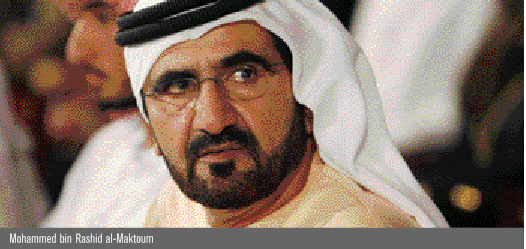
On his recent visit, HH Sheikh Mohammed bin Rashid al-Maktoum, vice president and prime minister of the UAE, expressed that the enhancement of bilateral relations is a starting point “towards wider avenues of mutual economic, technological and tourism cooperation.” He also added that such cooperation is a significant step in “embodying the deep fraternal relations and the common history of our two countries and peoples and building new bridges between the eastern and western Arab countries.”

The most recent joint-investment agreement between the two countries was part of a ceremony held during the visit of Sheikh Mohammed to Tunisia. Together with Tunisian President Zine El Abidine Ben Ali, the two leaders laid the foundation stone of a $14 billion real estate and investment development set to provide housing for half a million people. The mega real estate development project on the southern lake of the Tunisian capital is a joint venture between Sama Dubai, the international investment arm of Dubai Holding and the Tunisian government. The development will cover some 850 hectares and offer all the services of a satellite city, including retail and entertainment centers along with apartments, luxury hotels, a wide range of recreational and sports facilities, and up market housing.

Called the Century City and Mediterranean Gate, the development is intended to serve as a business hub, with office space for more than 2,500 international firms, with an emphasis on those in the financial sector. Businesses located there will benefit from state of the art communications infrastructure and impressive architecture. The centerpiece of the project will be two massive towers.

Additionally, the new city will play a major role in the country’s tourism industry, boasting 14 high class hotels and resorts, leisure and sporting facilities and a marina as part of the design.

Century City will be the single biggest investment project in Tunisia’s history, and will make Dubai the largest foreign investor in the country. The $14 billion price tag eclipses TECOM Investments and Dubai Investment Group’s acquisition of a 35% stake in Tunisie-Telecom in 2006 — valued at $2.25 billion.

According to Mohammad al-Gergawi, Dubai Holding’s chief executive officer, Sama Dubai expects to raise investment in Tunisia from $3 billion to $18 billion in the near future.

The potential for Century City to attract further foreign investment through companies relocating to the vast business district, drawn by the opportunities presented by a new city of up to half a million prospective customers, is undoubtedly welcomed by the Tunisian authorities.

State projections predict the work will add 0.6% to the country’s growth rate for a period of up to 15 years, and provide jobs for 130,000 people during the construction phase, pleasing statistics considering that unemployment is running at more than 14%, according to official figures.

Agreements signed between the state and Sama Dubai specify that most workers on the project will be Tunisians and the company will provide them with specialized training.

Al-Gergawi said actual work on the project will begin in the next few months. “The scheme is very important so it will be done in stages,” he commented. “It requires 10 years to be finished.” Al-Gergawi stated that Tunisia had been chosen as the site for the development by Sama Dubai because the country has potential to become a promising regional economic center, thanks to its position as a gateway to many other destinations. The growing services sector and the favorable investment regime were also strong attractions, he told a press conference in early August.

September 20, 2007 0 comments
0 FacebookTwitterPinterestEmail
North Africa

Morocco  Linking the continents

by Executive Editors September 20, 2007
written by Executive Editors

The construction of an undersea tunnel linking Morocco and Spain has been on both countries’ agenda for over 25 years now. Today, the idea is closer to materializing than it has ever been before.

After rounds of geological tests and feasibility studies run by specialist independent geotechnical consultants from the Swiss engineering company Giovanni Lombardi, the project looks to get a go ahead by the end of 2007. The cost of this project has been estimated to exceed $13 billion and initial studies by engineers forecast a project length of up to 25 years.

It is predicted that the tunnel could carry 9 million passengers and 8 million tons of freight annually. There is a potential for boosting the economies of both nations as well as mutually improving tourism and trade opportunities. Currently, Moroccan exports to EU countries account for 73.8% of total export revenues and generate $12.76 billion (or 22% of current GDP) annually. In return, Morocco receives 65.1% of its total imports from the EU, the bulk of which are transport equipment and machinery, which contribute to Morocco’s automotive industries. Additionally, agricultural exporters would be set to gain a strong advantage from this transport development, being able to send some of Morocco’s more delicate exports such as flowers and tomatoes by train instead of ship.

The growth in the number of European tourists to Morocco has given further impetus to ambitions to link Spain and Morocco across the Strait of Gibraltar.

Morocco’s tourist industry witnessed a successful first half of the year with EU figures showing over 2.26 million visitors from January to June 2007, representing a 7% increase in year-on-year terms. As such, the country is keen further to improve the accessibility of its tourist sites by moving ahead with the Gibraltar tunnel project.

European tourists

According to the Moroccan Ministry of Tourism, European arrivals to Morocco account for 83% of 2007’s arrivals to date, with French visitors leading the pack with 873,000 visitors in the first six months of 2007, an increase of 4% on last year. Visitors from Spain and Britain accounted for 479,000 and 175,000 visitors respectively, with British tourist arrivals recording a 43% increase as a growing number of no-frills airlines such as easyJet and Ryanair are making the country more accessible with flights to Marrakech, Casablanca and Fez. Germany, Belgium and Italy are also important markets, each accounting for approximately 100,000 visitors. The three most popular tourist destinations have recorded growth in the number of visitors in the last six months; Marrakech has seen a rise of 12%, Casablanca recorded a 9% rise and the coastal resort of Agadir saw a 3% more visitors than in the same period last year.

The construction of the proposed Gibraltar tunnel is a joint venture between government agencies Société Nationale d’Études du Détroit (SNED) in Morocco and Sociedad Española de Estudios para la Comunicación fija a Traves del Estrecho de Gibraltar (SECEG) in Spain. The tunnel would consist of a 39 km passenger, car and freight rail line running across the strait connecting the cities of Tarifa and Tangier. Its deepest point will be 300 meters.

The next step will be to consider a number of logistical challenges. Even though the distance across the Strait of Gibraltar is 14.5 km, the challenges posed to engineers by a Morocco-Spain tunnel are far greater than challenges facing engineers during the “Chunnel” construction between England and France, which lie 32 km apart at the Strait of Dover. The water is deeper; nearly 1000 meters at the shortest route across the strait, compared with just 61 meters in the English Channel. Another challenge is the texture of the earth. The first test diggings over 10 years ago revealed that the soft earth near Tarifa is not suitable for building a structure of this type. Recent tests have re-confirmed this and so Cape Malabatta has been selected as the entrance point to Morocco, after which the tunnel will continue to Tarifa. Additional concerns include securing the tunnel against human trafficking between Africa and Europe and whether the there will be a sustainable flow of goods and people in both directions given the economic disparities between the two continents.

Yet leaders of both countries are keen on proceeding. Spanish Prime Minister Jose Luis Rodriguez Zapatero has said that he is fully committed to the project. According to the minister the tunnel would “greatly speed growth, development and prosperity” on both sides of the Mediterranean. The goal behind the construction is to create “an integrated Euro-Mediterranean economic area” and possibly lead to developing the transport network further to include a link between Marrakech and Europe.

September 20, 2007 0 comments
0 FacebookTwitterPinterestEmail
  • 1
  • …
  • 560
  • 561
  • 562
  • 563
  • 564
  • …
  • 686

Latest Cover

About us

Since its first edition emerged on the newsstands in 1999, Executive Magazine has been dedicated to providing its readers with the most up-to-date local and regional business news. Executive is a monthly business magazine that offers readers in-depth analyses on the Lebanese world of commerce, covering all the major sectors – from banking, finance, and insurance to technology, tourism, hospitality, media, and retail.

  • Donate
  • Our Purpose
  • Contact Us

Sign up for our newsletter

    • Facebook
    • Twitter
    • Instagram
    • Linkedin
    • Youtube
    Executive Magazine
    • ISSUES
      • Current Issue
      • Past issues
    • BUSINESS
    • ECONOMICS & POLICY
    • OPINION
    • SPECIAL REPORTS
    • EXECUTIVE TALKS
    • MOVEMENTS
      • Change the image
      • Cannes lions
      • Transparency & accountability
      • ECONOMIC ROADMAP
      • Say No to Corruption
      • The Lebanon media development initiative
      • LPSN Policy Asks
      • Advocating the preservation of deposits
    • JOIN US
      • Join our movement
      • Attend our events
      • Receive updates
      • Connect with us
    • DONATE