• Donate
  • Our Purpose
  • Contact Us
Executive Magazine
  • ISSUES
    • Current Issue
    • Past issues
  • BUSINESS
  • ECONOMICS & POLICY
  • OPINION
  • SPECIAL REPORTS
  • EXECUTIVE TALKS
  • MOVEMENTS
    • Change the image
    • Cannes lions
    • Transparency & accountability
    • ECONOMIC ROADMAP
    • Say No to Corruption
    • The Lebanon media development initiative
    • LPSN Policy Asks
    • Advocating the preservation of deposits
  • JOIN US
    • Join our movement
    • Attend our events
    • Receive updates
    • Connect with us
  • DONATE
North Africa

Morocco  Olive Production

by Executive Contributor October 3, 2007
written by Executive Contributor

In a drive to increase Morocco’s value-added agricultural production, the first of 10 state-of-the art olive farms are expected to be planted in the region of Beni Hellal in September. The olive farms, each with 1,000 hectares of olive trees, will be concentrated in the Haouz, Tensift, Tadla and Meknes regions. With the first harvest expected in 2010, the majority of the oil produced will be for export, given the growing appetite for olive oil products in Europe.

Crédit Agricole du Maroc and the Société Générale Asset Management joined forces to launch the olive cultivation program. The investment fund, named Olea Capital, aims to revitalize Morocco’s centuries-old olive oil industry. The project aims to take Morocco’s olive oil production to 30,000 tons per year.

The Moroccan government is equally committed to boosting olive oil production. The National Olive Production Plan aims to dramatically increase the scale of the industry. At present, some 500,000 hectares of land are dedicated to olive cultivation, a figure the government seeks to double by 2010. The plan also focuses on raising the quality of olive oil, most of which does not comply with international standards.

Tariq Sijilmassi, president of Crédit Agricole Morocco, said he believes Olea Capital is an important step for agriculture in Morocco, a sector “in need of success stories” and in need of “a modern financial framework.”

Modernization of presses needed

The fund will inject money into rural areas and help to encourage balanced economic growth.

Sijilmassi said he is confident Moroccan olive oil is a strong product that will see good investment returns, due to its popularity in the European market. Olea Capital is the equivalent of a Plan Azur for the agricultural sector, said Sijilmassi (Plan Azur being the national tourism campaign to boost arrivals to 10 million per year by 2010 and to create 600,000 new jobs).

Morocco has a long-established tradition of olive oil production, but existing methods can be inefficient — and sometimes unhygienic. At present, most olive oil is produced in small artisan-style oil presses know as maâsras, many of which are still powered by horses. There are an estimated 16,000 of these in use in rural Morocco. The maâsras is not of a high enough quality to produce olive oil for export, with most of the oil being consumed by the producers or sold in local markets.

“Maâsras are also wasteful; after pressing by traditional methods, the pulp and pits still contain a lot of oil,” said Mustapha Ismail-Alaoui of the Institut Agricole et Vétérinaire Hassan II. It is estimated that up to 900,000 liters of oil are wasted every year. Storage and transportation are also major obstacles to the growth of the industry.

Learning from Tunisia

Harvested olives are often left in boxes or piled on the ground for weeks and allowed to ferment before they are processed. To stop the rot, farmers cover the olives with coarse salt, but since they are often not washed before pressing, salt finds its way into the oil. By international standards, a lot of the oil is not fit for human consumption due to its high acidity, said Ismail-Aloaui, although many Moroccans are used to the taste.

the fund will inject money into rural

areas and help

encourage balanced economic growth

According to Philippe Brosse, director-general of Société Générale Asset Management, the central aim of Olea Capital and the National Olive Production Plan is capacity building to meet a rising demand. These projects will promote efficient, modern methods that should enable Morocco to become an internationally competitive producer of olive oil.

However, Morocco needs to be careful not to emulate the semi-success of Tunisia on the olive oil market. Although a major producer in the Mediterranean region, much of Tunisia’s production is sold in bulk to Spanish and Italian firms, who then blend and brand it as their own. In doing this, much of the value-added is lost to the Tunisian economy. For Morocco’s plan to work, it needs to consider more than what happens before the oil leaves the farm gate.

October 3, 2007 0 comments
0 FacebookTwitterPinterestEmail
North Africa

Morocco  Keeping promises

by Executive Contributor October 3, 2007
written by Executive Contributor

Less than two weeks after Morocco’s parliamentary elections, King Mohammed VI on September 19 chose Abbas el-Fassi, leader of the nationalist Istiqlal (Independence) Party, as Morocco’s next prime minister.

On September 7, Morocco’s parliamentary elections ended in a win for the Istiqlal Party, a partner in Morocco’s ruling coalition, though marked by a record-low turnout. Istiqlal won 52 seats in the 325-member lower house, up from 48 in the last parliament, followed by the opposition Islamist Justice and Development Party (PJD) with 47 seats, and the Union of Socialist Popular Forces (USFP) with 36 seats.

The complex electoral system, based on proportional representation, makes it very difficult for a single party to gain an absolute majority. Intense negotiations over forming a new governing coalition will thus follow. All eyes are now set on the appointment of a new cabinet, which should take place in the next few weeks.

According to political analysts, the disappointing electorate participation, down from 52% in the last election in 2002 to 37% of the 15.5 million voters, reflects Moroccans’ feeling that the government has not done enough to eradicate widespread poverty, unemployment and corruption.

However, economic growth and unemployment dominated the Moroccan election. During the course of the campaign, all of the parties made ambitious pledges to cut taxes and create jobs.

Unemployment remains a key concern for Moroccans, in a country where over 60,000 university graduates enter the job market every year. The Istiqlal Party pledged to create 1.3 million new jobs over the next five years and lower unemployment to less than 7% from its current 10% by promoting opportunities in key industrial and service sectors, including agriculture, fisheries, car assembly, telecoms and health. These have been highlighted as key areas for economic development.

Following through on commitments

The party said it is committed to achieve GDP growth of 6%, excluding cereal production (after efforts to diversify and not rely upon cereal revenues following this year’s crop failures). It has also promised to allocate Dh1,200 ($146) to underprivileged families for enabling each child to enroll in school; Dh6,000 ($732) to families caring for a disabled person and Dh3,000 ($366) to those looking after an elderly person.

Another pledge worth noting is the party’s commitment to tax cuts, which were high on the agenda for both Istiqlal and the USFP during the campaign. Istiqlal proposed cutting the personal income tax imposed on middle-class workers to 35% down from 40% at present, and reducing Value Added Tax (VAT) from 20% to 18% by 2012. It also proposed dividing business income taxes into three categories according to size and revenue: 2.5% for micro-companies (those with revenues not exceeding Dh100,000), 25% for SMEs and 35% for large businesses and financial and service sector companies. All the political parties stressed the need to ease tax burdens on companies to encourage both recruitment and investment.

An impressive and bold economic reform platform is evident, but how and when it will be delivered remains to be seen. Morocco’s economic indicators are at a current high for this quarter with real GDP growth reaching 8% and unemployment falling to just below the 10% mark. But as unemployment and poverty are the main concerns of the electorate, the new government will need to commit to economic reform soon.

October 3, 2007 0 comments
0 FacebookTwitterPinterestEmail
North Africa

Libya Dreaming green

by Executive Contributor October 2, 2007
written by Executive Contributor

What to do when you want to rehabilitate a country, attract investment, make money, preserve the environment and have the world’s media cover your plan as if you were helping save the Earth all at the same time?

The answer: announce an environmental plan and pay for roughly 200 journalists to come and cover it. That is just about what Libya did by launching the Green Mountain Project on September 13. This ambitious mission aims to create “the world’s first large-scale conservation and sustainable development project,” one that Libya promises will help the environment, save energy and make money from tourism — resorts, archaeological sites and other resources.

And there is nothing wrong with killing several birds with one stone. If there is one country that should optimize its moves and maximize strategies it is Libya, a country still largely confined to its insular ideology. But beyond the brochure distributed by Clownfish, the event’s PR handlers, one filled with buzz words like “sustainability” and “zero carbon emissions,” the project is as ambitious as it is full of good intentions. Indeed, even if a small part of the Green Mountain gets off the ground, Libya and the Libyans will probably be better off than before, but one felt that over the course of the trip, we should have read the small print.

Ripe for a fresh start

Three times larger than France, with about 2,000 km of a coastline as turquoise-transparent as the most pristine Greek islands and an archaeological heritage that is breathtaking (and still largely undiscovered), Libya is ripe for a fresh start. While mistakes in urban planning and development are often irreversible (how many developed countries today wish they could go back in time?), Libya is a country that is pledging to do it right. Thus on September 13, the well-rounded, Western-educated son of Libyan leader Colonel Muammar Gaddafi, Seif al-Islam, unveiled the Cyrene Declaration before an audience of journalists from outlets ranging from CNN to BBC, Euronews to La Nación, The Times to The Independent, all flown in for free in a well-orchestrated PR-event to polish the image of a country desperately in need of rehabilitation. And desperate it should be: In 2006, Libya was the country with the least amount of investment in the whole world.

The Green Mountain Project aims to be a holistic approach to developing an area of about 5,500 square kilometers, along some 200 kilometers of the Mediterranean coastline. In this area, reliance on oil and gas would be diminished by replacing it with wind and solar power; archaeological sites would be duly protected and surrounded with infrastructure, making them tourist-friendly and more capable of generating revenue; local communities would learn to profit from their artifacts and traditions; microbanking would finance the participation of the local population in the economy and agriculture would be expanded and sustain the communities.

The plan would “create an estimated 65,000 jobs in ecotourism alone.” And all this is very much needed. According to the Libyan government, the total produce in Libya meets only 15% of the country’s overall demand for food, and 93% of the country is desert. Libya’s unemployment in 2004, if the CIA Fact Book is anything to go by, was officially recorded as 30%, higher than Iraq in 2005.

In his speech, Seif al-Islam told journalists that “20 years ago, this region was covered with half a million hectares of forest; now, there remains only 180,000,” while “the level of the water table has fallen from 200 meters below the surface to 600 meters below the surface in just 15 years.” Among the ruins of Cyrene, al-Islam reminded the audience that “in Roman times there was enough water to fill a cistern of one million cubic meters; the cistern is still there, but the water is gone.” So yes, we were all in agreement Libya needs this project. But how much will be realized?

Libya’s choice of partners would suggest that Seif al-Islam means what he says. Top officials from UNESCO were present at the event and are said to be on the board of directors of the governmental body recently created for the project. Environmentalists, NGOs and other worthy entities were invited to the ceremony of the Cyrene Declaration — a set of guidelines that pledges to “aim for CO2 neutrality on a regional scale,” among other very laudable, albeit unspecific, goals. The some specific goals sound very ambitious — even if we weren’t entirely sure who would build or pay for them — and include “sustainable Infrastructure — including renewable power generation, waste management and recycling facilities, closed-loop water systems and sustainable transport.”

“twenty years ago, this region was covered with half million hectares of forest; now, there remains only 180,000”

Preserving the coastline

In fact, the declaration is so vague that is raises doubts as to how binding the intentions will be. And amidst all the sound-bites and pledges of good environmental and sustainable ideas, microbanking, irrigation and solar power, the only things close to materializing so far are three, admittedly environmentally friend, hotels: Cyrene Grand Hotel, Spa Resort and Canyon Resort.

An hour before Seif al-Islam’s speech, the presentation of Stephan Behling, senior partner at Foster + Partners, the highly-regarded architectural firm working alongside the Libyan government for the project, was revealing. Helped by huge posters and exquisite small scale models of the region, he presented the hotel’s blueprint to the assembled media. Talking about the Canyon Resort, Behling said the idea was to make the resort follow the “principle of camouflage.” Embedded in the mountains, it will have a magnificent view of the Mediterranean and the canyons while being practically invisible from the sea, thus leaving the natural layout unspoiled. Using the Spanish resort of Benidorm as an example of what not to do (and apologizing to the Spanish journalists), Behling said that, unlike Benidorm, the sea view will not be interrupted by developments, which instead of being on the beach, would  be built at the bottom of the nearby coastal mountains, leaving the water in clear view of those who drive by. Thus, he said, the beaches will be free of developments and, to quote the brochure, “encourage preserved coastline for all.”

In a region where public beaches are increasingly rare, this is good news. Countries like Lebanon and Bahrain, for example, despite not much coastline, have restricted access to the sea, unlike countries like Brazil, where notwithstanding the endless coast no one is allowed to own a beach. But alas, further examination shows that Behling may not apply the same sound standards elsewhere in Libya. In the same brochure produced by the organizers, a proposed resort in Libya’s Leptis Magna archaeological region boasts a “unique seafront location adjacent to Leptis Magna and a private beach,” with “dedicated access to the ancient site from the hotel as well as direct access to the beach.” So much for the “preserved coastline for all” and avoiding the legacy of Benidorm.

The major investor in the Green Mountain project is allegedly Hassan Tatanaki, the owner of Challenger, a Libyan oil drilling company. One of his relatives present at the event told Executive that the whole vision came not from Seif al-Islam, but from Tatanaki, who needed the government as a partner if the project ever hoped to see the light of day and that it was Tatanaki, not the Libyan government, who paid for the press junket. This could simply be another case of authorship jealousy and fight for recognition, but by all accounts Tatanaki and the government are close enough. According to the Washington Post, in 1992, Tatanaki hired John M. Murphy, a former House Representative who was convicted of taking bribes from FBI agents pretending to be Arab sheikhs, to promote Libya abroad. The most plausible explanation is that it is a joint venture marrying Tatanaki’s commercial edge to Gaddafi Sr.’s genuine ecological and self-sustainability concerns.

“We are a backward country — people don’t

understand that we are damaging the land, damaging the environment”

Environment is an old concern

In fact, while the Green Mountain project is rumored to have been envisioned less than two months before its launch, Gaddafi has been talking about the need for environmental protection for a long time. Seemingly more rational than his famous Green Book suggests, the Libyan leader is quoted by Andrew Cockburn in National Geographic seven years ago, having just returned from the Green Mountains, as saying “We are a backward country — people don’t understand that we are damaging the land, damaging the environment.” And it is not only Gaddafi’s words that hint at his preoccupation. Despite economic embargoes imposed upon his country and notwithstanding his socialist rhetoric, Gaddafi may have done more for his people than other oil-rich countries, while still being more environmentally friendly.

Infant mortality is half that of the world average and less than in Iran, Syria, Lebanon, Pakistan and Egypt. Unlike the United States, Libya is a subscriber to the Kyoto Agreement, and only 7% of the population lives below the poverty line, compared to around 13% in the US.

Still, clearly there is a long way to go. At the very place where journalists gathered to hear about the environment, light-bulbs were kept on all day and instead of using one or two buses to shuttle people to the venues, the organizers chose to use individual vans and release more carbon dioxide into the air. As for creating jobs in a revitalized tourism industry, most of the staff at the event came from Egypt or Lebanon, signalling a lack of experienced local workforce. But Libya is honest about its lack of expertise. And if Libya really means what is says, Seif al-Islam could be its best ambassador.

An architect, he is pursuing his PhD in Governance and International Relations at the London School of Economics. Speaking fluent English, and speaking off the cuff, al-Islam can be refreshing in his sincerity and, while one can see hints of his father’s well-known bluntness, al-Islam’s personally reworded his official speech to avoid blaming foreigners for such ills as global warming and archaeological looting.

One of the common — and dim-witted — criticisms levelled at Al Gore for his recent worldwide concert for a greener earth was made by the usual do-nothings, accusing the participating singers of polluting the environment by flying to the concerts. But al-Islam accepts he does not live in la-la land. One of the lines he chose to strike out of his speech was the following: “We will work hard to provide easy access and incentives for visitors to reach here by land and sea, cutting down on carbon emissions from aviation.”

Maybe Gore should help stage the inaugural concert.

October 2, 2007 0 comments
0 FacebookTwitterPinterestEmail
Comment

The business of doing arms

by Peter Speetjens October 1, 2007
written by Peter Speetjens

Most media reported it rather matter-of-factly. Washington over the next decade will supply its regional allies Israel, Saudi Arabia, Egypt and several other Gulf States with $63 billion worth of advanced weaponry in addition to what these countries normally spend on military equipment. According to Condoleezza Rice, this extra weaponry is needed to counter the growing threat of Iran and Syria.

“We have a lot of interests in common: the fight against terrorism and extremism; protecting the gains of peace processes of the past and in extending those gains to peace processes of the future,” stated Rice. Selling arms to bring peace is the ultimate Orwellian double-speak, which by its very nature should raise suspicions that perhaps more is at play.

Let us have a closer look at the alleged threat by comparing some figures: With a 2005 defense budget of $4.9 billion, Iran ranked 32nd among the world’s spenders on military hardware, according to the Center for Arms Control and Non-Proliferation, while Syria had a budget of some $2 billion. That same list was topped by the US with a 2005 defense budget of $450 billion — 43% of the world’s total expenditure — which in 2008 is set to increase to $643 billion. The Americans were followed at some distance by China (6%), Russia (6%), UK (5%), Japan (4%) and France (4%). Saudi Arabia ranked 9th with a budget of $20 billion (2%).

The US plus NATO represent 75% of the global budget. Add to that America’s regional allies and their arsenals and you got a lot of firepower, more than a hundred times than that Iran and Syria combined. Now, even if Iran and Syria represent a serious and potentially nuclear threat, these numbers simply do not add up. Other motives must be at play. It may just be that war with Iran is on the horizon, but it could just be business.

There are over 1,000 arms manufacturers worldwide. According to Defense News, the 2006 market leaders were Lockheed Martin with defense revenues of some $36 billion, followed by Boeing ($30.8 billion), British BAE Systems ($25 billion), Northrop Grumman ($23 billion) and Raytheon ($19 billion). Of the world’s 100 biggest producers, more than half are American.

Their influence on domestic and foreign policy has a proud legacy. In his farewell speech on January 17, 1961, US President Eisenhower warned: “We have been compelled to create a permanent armaments industry of vast proportions. We annually spend more on military security than the net income of all US corporations. We recognize the need for this development. Yet, we must guard against the acquisition of unwarranted influence, whether sought or unsought, by the military industrial complex. The potential for the disastrous rise of misplaced power exists and will persist. We must never let the weight of this combination endanger our liberties or democratic processes.”

The market has no morals, so the world’s free market gurus claim, and America’s military industry is an industry as any other, one that seeks to promote its interests, sell its products and increase profits. Thus, to gain influence, weapons manufacturers contribute to the election campaigns of Republicans and Democrats, and individual politicians. They also hire PR and advertisement firms to promote their products and recently convinced US senators to replace the entire F15 fleet with F22 fighter jets, with a price tag of $135 million each.

Take the following fragment, which would suit any neo-con speech, yet stems from a Lockheed Martin promotional video: “Civilized society is under siege. The world is populated by renegade nations and extremist factions willing to use any method available to spread their beliefs. These potential enemies continue to modernize and upgrade their military capabilities.” Conclusion: civilized society must arm itself.

So, here you have an arms dealer mingling in political theory, while in pursue of its commercial interests, which are not necessarily in tune with the well-being of the US or other nations. According to the US Congressional Report “Conventional Arms Transfers to Developing Nations,” the US sold 36% of all conventional weapons to the world’s developing nations, while the five Security Council members plus Germany exported 75% of all arms destined for the developing world.

When the Cold War came to an end in 1989, many thought the arms race would end. Global trade declined from $1 trillion to $800 billion in the mid-1990s, yet today it is well beyond Cold War heights. Interestingly, the increase started way before 9/11 in 1998, when Bill Clinton lifted a ban on arms transfers to Latin America. Why?

“Chile doesn’t need F-16s,” Jimmy Carter explained. “But if Chile spent a large portion of its free budget funds on F-16s, it’s almost inevitable that Argentina would have to buy F-16s just for some future contingency. This would then spread to Brazil. And the first thing you know, South America will be covered with F-16s and other advanced weaponry, electronics, defense techniques to defend yourself against F-16s.” And as soon as everyone has F16s, we need F22s!

PETER SPEETJENS is a Beirut-based freelance writer. 

October 1, 2007 0 comments
0 FacebookTwitterPinterestEmail
Comment

Steps in the right direction

by Riad Al-Khouri October 1, 2007
written by Riad Al-Khouri

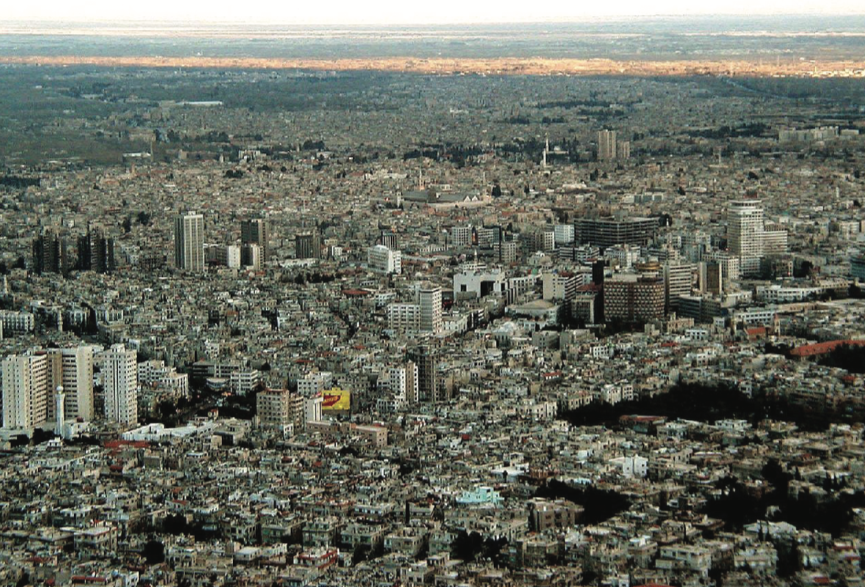
Damascus has taken yet another step to unpeg its currency from the US dollar by delinking the Syrian pound (SYP) from the greenback and replacing it as a foreign exchange anchor with the Special Drawing Rights (SDR) of the International Monetary Fund (IMF). The shift was partly due to Washington’s 2004 sanctions on Damascus, which escalated in 2006 following a ban on the state Commercial Bank of Syria dealing in dollars over an allegation of Syrian connections to illegal activity.

Syria had also moved early this year to distance itself from the greenback by diversifying foreign currency reserves, previously all in dollars, to include euros, sterling, and Swiss francs, with the dollar now representing around half the total held. Given the tension between Washington and Damascus, such a move was on the cards as the Syrian government at the start of had 2006 issued an official circular instructing all ministries and state companies to adopt the euro instead of the dollar for foreign transactions.

However, decisions such as these are not just emotional or diplomatic: it was economically and financially smart for Syria to shift out of dollars, irrespective of the political correctness of the move. Ending the long-standing link between the currencies of the two countries is allowing Syria a more sensible exchange rate while at the same time tweaking Washington’s nose.

A basket of major currencies used in international trade — the euro, the pound sterling, the Japanese yen and the US dollar — defines SDRs. The amounts of each making up an SDR accord with the relative importance of the individual currency in international business. The IMF Executive Board determines the currencies in the SDR basket and their amounts every five years. Current weights of SDR currencies (and hence those Syria uses) are dollars 44%, euro 34%, yen 11%, and sterling 11%. (However, there is an element of flexibility here: for the half-decade to 2005, the first three had been respectively 45%, 29%, 15%, and all could change again after 2010.)

Syrian moves to adopt the SDR basket make economic sense, as weakening links with the greenback help reduce the impact of dollar exchange rate fluctuations against other currencies, which gives more stability to the SYP. With the fall in the dollar, the Syrian pound lost around 10% of its value last year, adding to the costs of imports, especially from Europe. Syria’s Central Bank estimates that decoupling the pound from the dollar would take two percentage points off the country’s inflation rate, which hit 10% in 2006, in part a reflection on the weaker local currency. The IMF website thus gives an estimate for the current year of Syrian consumer prices rising at a rate of 8%, while the forecast for 2008 is an even milder 5%. At the same time, the IMF noted that Syria’s economic performance was strong in 2006, and that the outlook for 2007 is positive. Notwithstanding an unsettled regional environment, the Syrian economic recovery that started in 2004 remains on track: GDP in 2006 benefited from growth in exports and from sizeable inflows of private investment. The IMF’s recent final report on Syria for 2007 projected a rise in real GDP of a respectable 3.3% for this year, while for 2008 the Fund’s forecast for growth is an even healthier 4.7%.

The IMF advises Syria to ensure implementation of a managed float within a tight trading range, helping adjust to changes arising from trade liberalization and the transition to a market economy. On the other hand, it should be interesting to watch how the central banks of Arab countries with currencies pegged to the dollar and political ties to America can move away from over-reliance on the greenback. Jordan is an example, as a number of economic and political considerations keep the kingdom wedded to a fixed exchange rate that pegs the Jordanian dinar to the dollar. Yet as the greenback continues to depreciate, this point is now the subject of discussion: Marwan A. Kardoosh and Anne Mariel Peters writing recently in Amman’s Jordan Business magazine grant that the Jordanian dinar’s peg to the US currency “has been important to overall macro-economic stabilization and the development of certain sectors.” However, they quickly add, “in the face of an increasingly weak dollar as well as creeping inflation from other sources, perhaps it is time to re-evaluate Jordan’s choice of exchange rate regime.” As Jordanian prices rise and the value of reserves falls, can the kingdom learn from Damascus? On that score, I am personally not holding my breath. Meanwhile, the irony is that an American bluster has pushed Syria in the right direction: towards better monetary management.

RIAD AL KHOURI is the Director of MEBA wll, Amman; and Senior Associate of BNI Ltd, New York City.

October 1, 2007 0 comments
0 FacebookTwitterPinterestEmail
Comment

Mall vision

by Alex Warren October 1, 2007
written by Alex Warren

A new day, a new dawn. From the wind swept sands, a new legend rises,” read the introductory text on one website I came across last week. It was intriguing. Would this dramatic passage go on to describe a particularly heroic chapter in world history? Was it the deadpan voiceover for the trailer of a Hollywood blockbuster?

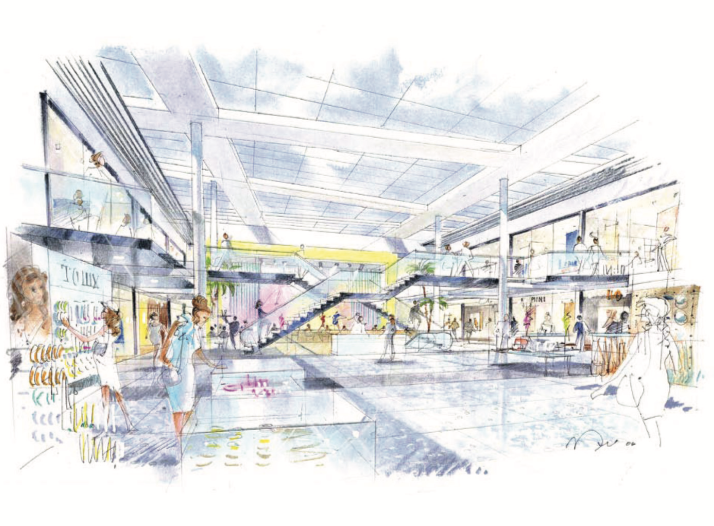
Wrong on both counts. It’s talking about a mall. Not just any mall, mind you, but “a mall of epic proportions that is named The Dubai Mall,” and an edifice which when completed will be the largest shopping center on earth. That is, if its rival — the Mall of Arabia — doesn’t get there first.

Now, shopping malls are already big in Dubai. They’re big metaphorically, in that they make piles of cash and attract millions of visitors every year, and they’re big literally. Acres of space in this ever-expanding city are devoted to helping people consume or purchase products in air-conditioned indoor areas, and plenty more acres are being prepared for this purpose as we speak.

It’s not surprising that this should be the case, nor that malls should be so popular and successful here. They’re a haven from the heat and the construction work, there’s no natural outdoor city center for shoppers to congregate in, and there are lots of consumers with hefty disposable incomes who have nothing better to do with their spare time than buy things.

But I’m afraid that doesn’t stop most of the city’s malls from somehow being extraordinarily depressing places. Please don’t get me wrong: I could think of far worse places to spend my time (prison, for instance), and once you’ve battled your way around the labyrinthine car parks, the initial sensation upon entering a mall is not unpleasant. The arctic wave of air-conditioning is a blessed relief after the outdoor heat, everything is clean and shiny, and there are lots of potentially enticing products.

Then, after about half an hour or so, something strange begins to happen. I start to tense up and become agitated. Other people bump in to me. They stand on both sides of an otherwise empty escalator that I would like to walk up. The incessant muzak being piped from every shop drills into my brain. Overdressed salespeople lurking near promotional stalls try to accost me about buying an off-plan property. The smell of nachos or fries, so appealing at first, now makes me feel sick.

Soon my nervousness turns to rage. Everyone is now my enemy and I must immediately leave. I keep my head down and stride as quickly as I can towards the exit, desperate to escape this fridge and re-enter real life, even if it is smelly and hot and dusty and doesn’t have a Dunkin’ Donuts.

Yet what amazes me is that people seem to spend hours in Dubai’s malls without incurring any of the brutal psychological side-effects that seem to afflict me. Even more amazing is that many of these people are visitors from the UK or Europe, where they can purchase exactly the same things as they can in Dubai, at almost exactly the same prices. But fly them halfway around the world on a $900 flight and they appear to temporarily lose their senses.

Lots of British tourists, for instance, are quite clearly dumfounded by the fact that Dubai has many of the same shops that you would find on the UK high-street. “Oh, great”, they say, “there’s a Marks and Spencer’s. We’ll just pop in and have a look around — I wonder if they have the same things as they do in England? And look — there’s a Boots too! Wow, this place is fantastic — let’s spend our holiday time buying the same items that we could buy at home!”

Maybe I’m being a bit cruel. I guess there’s a kind of “wow” factor to Dubai’s malls which draws in people, just in the same way that the Burj Dubai or the Burj al-Arab are tourist sights in themselves. Plus, of course, the retail developers have been clever in coupling the retail side of things with standalone attractions — like the ski slope at the Mall of the Emirates.

No one knows just how big the mall developers’ profits are, as they don’t open their books, but it’s safe to assume that they’re not losing money. And that purely commercial reason, as well as the various social ones, is why malls will always be central to life in Dubai as the city grows out into the desert and along the coast.

The trick now will be to dream up fresh unique selling points to attract all these new and hungry consumers. Dubai Mall, for instance, is set to feature an Olympic ice-skating rink and the world’s largest gold souk. Slightly more dubiously, the Mall of Arabia is partly basing its future allure on housing the world’s largest Starbucks. Call me a bore, but I can’t think of anything less likely to cure my allergic reaction to malls.

ALEX WARREN is a Dubai-based freelance consultant and writer

October 1, 2007 0 comments
0 FacebookTwitterPinterestEmail
Comment

Phishing for your money

by Paul Cochrane October 1, 2007
written by Paul Cochrane

When I was in London recently I tried withdrawing some cash from my British bank, but was denied access. On calling the bank I was asked if I had made several transactions — when “no, no, no and no” were my replies I was informed I’d been defrauded. Thousands of dollars had been taken from my account.

I’d get the money back, but would first have to sign a declaration form, get a new credit card and wait 10 days to be reimbursed. Whew.

Relating the story to friends it was surprising to find that all of them had either had a relative defrauded or experienced it themselves; in some cases more than once.

How it happens is by “phishing,” where hackers send in what are called Trojans — software downloaded without knowledge of the user — that take screen shots of your computer, allowing the capture of passwords and credit card details.

In Britain the problem has become so acute that the Association for Payment Clearing Services, a banking industry body, said there had been an 8,000% growth in online fraud between 2004 and 2006, estimated at losses of $90 million last year alone. Online business is big business in Britain, with 26.5 million people undertaking an estimated 372 million online transactions a year.

As technology becomes more widespread phishing could increasingly happen in the Middle East. Indeed I had been phished in Beirut, albeit by some crooks working through Italy, the destination for my looted cash. Whether Arab banks are facing this issue yet is not making any headlines, but de-frauding will no doubt come to the region as banks and goods outlets increasingly adopt the online service and hackers size up another global region to plunder.

The other financial shocker of my trip to the overcast British Isles was the extent private debt was affecting the lives of most inhabitants. The majority of people I encountered had debt, with my former student friends (American friends are another story) owing thousands of pounds, years after they had graduated from a university system partially funded by the state. Such debt is hindering that all-important purchase, a property — but that of course requires going even further into the red.

For young people starting out in life such debt looms over them like a Damocles sword, with the average 18 to 24-year-old owing $5,720 in unsecured borrowing, and some 108,000 in the same age bracket having credit card debts of more than $10,000.

The willingness of Brits to go into debt is only rivaled by the Americans, with the average Briton owing twice as much in unsecured borrowing — overdrafts, personal loans, credit card debt — than the typical European.

According to consultancy firm Grant Thornton, Britain owes a collective $2,690 billion in mortgage and unsecured debt. For the fist time that figure is higher than Britain’s expected gross domestic product (GDP), forecast at $2,660 billion for 2007.

This debt has trebled in the decade that Labour has been in 10 Downing Street, and is largely based on a runaway housing market, which accounts for $2.261 trillion of debt while personal loans and credit card debt stands at $428 billion.

But such disproportionate debt in relation to GDP poses a problem. Britain is essentially consuming more than it produces, in goods and services. Adam Smith, that doyen of capitalist thinking now commemorated on the back of the new £20 note, would have been horrified. Smith disapproved of speculative fever (which is now getting hedge funds and banks in deep water) and an economic emphasis on buying and selling (Britain’s “buy now, pay later” culture) rather than producing actual assets. The true healthiness of an economy that is based on such intangibles is highly questionable.

Arab financial institutions should watch, very closely, how Britain and America deal with the current financial crisis, particularly as this part of the world is striving to emulate the Anglo-American economic model.

Such out of control debt, and the ease with which banks dish out cash, even to the unemployed, has caused serious reverberations around the world as well as negatively impacting on the lives of millions of home-owning Americans and now, Brits.

The run on Britain’s fifth-biggest mortgage lender, Northern Rock, last month — with $2 billion withdrawn in a day over fears the company could go bust — shows how dicey the interlinked financial system is. Northern Rock was forced to turn to the Bank of England to bail it out as the firm’s ability to withdraw from financial institutions had been compromised by the $200 billion valueless US mortgage market, where risk has been sold on to such an extent internationally that any its anyone’s guess which bank will be hit next.

The Arab world would do well to hedge its bets on a more realistic debt market that is in line with GDP as well as trying to avoid the pitfalls that have beset online transactions.

PAUL COCHRANE is a Beirut-based freelance writer. 

October 1, 2007 0 comments
0 FacebookTwitterPinterestEmail
Comment

One down for the ‘Axis of Evil’

by Lee Smith October 1, 2007
written by Lee Smith

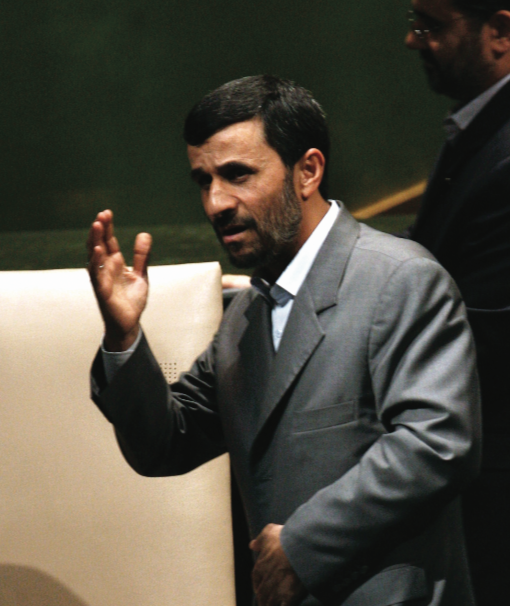
If you are keeping score at home, September was a bad month for the “Axis of Evil,” especially for its junior member in Damascus. In the middle of the month, Iranian president Mahmoud Ahmadinejad came to New York to address the UN General Assembly and was invited to Columbia University, one of the US’s most important institutions of higher learning.

Once led by Five-Star General Dwight D. Eisenhower after he had helped the Allies win WWII as supreme commander of the Allied Expeditionary Force and before he became the thirty-fourth president of the United States, Columbia of late has acquired something of a reputation as a hotbed of campus anti-Americanism. After all, this is the tenured perch from where Edward Said had famously explained how Western imperialism was responsible for everything that had gone wrong with the Middle East. Current Columbia University president, Lee Bollinger, turned the Orientalism doctrine on its head by calling the Islamic Republic of Iran to account for its policies, foreign and domestic.

If many observers thought it rude to treat a guest with so little hospitality, the Islamic Republic of Iran has extended few Oriental courtesies this last quarter century to foreign academics, foreign journalists and, of course, foreign embassy staff. However, Ahmadinejad had no reason to fear that Ivy league undergraduates were capable of the same revolutionary violence his former student colleagues had shown to the US diplomats and embassy staffers they took hostage for 444 days back in ‘79, but the Iranian leader was certainly flummoxed when the students booed and jeered after he claimed there was no homosexuality in Iran. No doubt this will come as news to aficionados of Persian and Abbasid poetry and prose.

But the big news was the hazily, albeit avidly, reported “Operation Orchard,” the Israeli raid on Syria September 6. It is quite possible that no one will know precisely what happened for decades, especially if it was, as many suspect, an attack on a nuclear facility housing North Korean wares. Nuclear issues are notoriously sensitive subjects for all involved. And yet if the events at Deir el-Zor remain a mystery, certain other things have become clear.

First of all, among members of the international community only North Korea made any noise about the raid. The Israeli incursion, said one North Korean foreign ministry official, was “little short of wantonly violating the sovereignty of Syria and seriously harassing the regional peace and security.” This protest, amidst the silence of the Arab states and all of Europe, has buttressed the claims of some analysts that the Syrians were indeed housing North Korean goods. In other words, Bush’s speech describing the “Axis of Evil” in terms that have been routinely derided by more “sober” observers of the international scene is much more than just the cartoonish imagination of a White House speechwriter.

For Tehran, the Deir el-Zor raid means that the Americans and Israelis have a very sound solution to the IRI’s nuclear program once it becomes clear that the diplomatic option is no longer workable. France’s new Foreign Minister Bernard Kouchner made waves when he said the world must prepare for the worst with Iran, which, in the estimation of the new Paris government, means war.

Washington clearly has no taste for war with Iran as it is still trying to make Iraq workable, and yet Deir el-Zor should give Tehran pause. Insofar as the ostensible Iranian response to an attack on their nuclear program is not massive troop movements but terror operations against US interests and allies, that no longer seems to be a daunting concern for the Americans.

Moreover, if most the foreign policy advisers for the 2008 Presidential hopefuls take it for granted that that Bush will pass the Iran file on to the next administration, this is a useful reminder that finally it will depend on the predisposition of the commander-in-chief. Bush does not lead according to poll numbers and it is not obvious why the man who staked his legacy on bringing democracy to the Middle East would leave intact a nuclear program that would change the balance of the region to the benefit of an ideological and millenarian Islamist regime.

As for Damascus, while regime functionaries and flacks have been crowing about how badly the US needs Syria, it looks like it is going to be a very cold winter in the beating heart of Arabism. Since Syria shows little inclination in changing its own status quo, it perhaps does not understand that, once again, the earth has shifted under its clay feet.

LEE SMITH is a Hudson Institute visiting fellow and reporter on Middle East affairs.

October 1, 2007 0 comments
0 FacebookTwitterPinterestEmail
Comment

Who dares, wins

by Thomas Schellen October 1, 2007
written by Thomas Schellen

Branding has traits of parenting. Although it takes energy, vision, and a gutsy approach to business life — and as such is no small feat — the effort of conceiving of a new brand pales when compared with the unending task of nurturing it and seeing it through years and years of maturation.

On this note, one could not even begin to speculate about future pathways of Zain, the master brand launched on September 8 by multiple GSM operator, MTC.

The birthday bash of Zain gathered between 4,000 and 5,000 guests in four capitals: Manama, Kuwait City, Amman, and Khartoum. This was because Zain erupted into public being simultaneously in four countries, Bahrain, Kuwait, Jordan, and Sudan.

In the middle of the celebration’s vortex of culture, fun, food, and communication, the sense of wonderment at three things was never far away for those of us pausing to think of: the rapidity of this company’s rise; the scale of the brand birth achievement; and the enormity of the future of the community that this brand is setting out to create.

There are more than enough numbers in circulation that document how big MTC has grown in the less than five years since it adopted the mission of turning itself, a Kuwaiti operator of a single mobile network, into a telecommunications player of international, and eventually global, proportions.

But without citing any performance figures and targets that had to be modified because they had been exceeded well ahead of all plans, the fact that Zain was introduced in two continents by a multi-cultural team of quality people was enough to demonstrate the operator’s stature transcending national idiosyncrasies and any complexes of business inferiority.

The brand launch achievement was a thing to behold, a testimony to investments of a magnitude that MTC did not even want to talk about and to how much a total will to something new can create within 48 hours! When I arrived at Bahrain International Airport on the evening before the launch party, Zain was still a phantom. When I left two mornings later, executives of the company said confidently that the network’s identity had been moved to Zain by more than 90% — including web sites and most store signs, not to mention the brand’s massive first wave of advertising.

The mega-thing, however, will be the future. This only begins with the fact that Zain aspires to be perceived as a global company and that it wants to move another 15 plus existing networks in its portfolio to the new brand in a short time span — including some networks that have a strongly developed identity and others that have already undergone a name change. Shaping such a community in very diverse markets and demographics will, even in the definition interactive realm of telecommunications, engender challenges that one can expect but never solve from even the best a priori thinking.

To be sure, the proud progenitors of Zain have spared no effort to give the brand a head start in life. The gestation period of designing name, logo, values, and mission of Zain exceeded 18 months. The good ring of the name in many languages was examined and the brand has been imbued with a whole orchestra of positive connotations, from the heart, belonging, and radiance that MTC affixed to the word to the aural allusion of the zeitgeist-colored logo.

From perspective of regional business culture, the beauty of Zain for the beholder goes further still than MTC’s brand messages. This, because the dominant business culture in the region is only starting to discover the art of existing as a brand. Some countries and state-backed entities in the Gulf region have embarked on communicating their identities to wide audiences with branding tools. The emirates of Qatar and Dubai, as well as Emaar Properties, Emirates Airlines, Etihad Airways and Aldar Properties come to mind.

However, none of the companies among those is independent from their respective state roots, which stands as barrier against reaching corporate self-determination in all decisions. Plus, if one produces claims to be global deliverer of quality lifestyle or treat every passenger as honored guest, severe imperfections in corporate governance and customer service easily can turn into haunting deficiencies. Zain, like all brands, will also face this challenge that the brand will be the mirror of what the company does — and not of what it says.

Branding is a lifetime investment. Branding also involves listening, responding and letting go, as every successful brand turns into a community that has a very strong own mind. There is no telling for which characteristics Zain will be known some years from today, as a brand and as a community. In setting up its brand as core of a community and in daring to develop it from its first atom with regional and joint cultural essence, Zain is pioneering an Arab and an African brand. It brings affirmation of originality and creativity that thrives in people in the Middle East as much as in any creative center of the world. The responsibility of Zain’s corporate parents will be not to spoil the brand.

October 1, 2007 0 comments
0 FacebookTwitterPinterestEmail
Company Bulletin

Business center – In brief

by Executive Staff October 1, 2007
written by Executive Staff

With the triumphant success of ABC Ashrafieh (Beirut), international consultancy JHP has reshaped ABC’s former flagship store in Dbayeh, east of Beirut, to bring Lebanese shoppers over 32,000 square meters of retail space, carrying a vibrant mix of leading brands over five floors. Located on the coastal highway leading in and out of Beirut, ABC Dbayeh attracts over 2 million visitors every year and is expected to attract even more with this latest expansion initiative, making it the largest department store in the Middle East.

Staying with Lebanese retail, a GS spokesperson announced last month that the popular clothing company has decided to launch a string of shops across the region, starting with the Kingdom of Jordan. This exciting move is in part a response to the growing regional demand for the GS brand, demand it is hoped will transform the Lebanese company into a regional retail chain. The grand opening of the 700 square meters landmark store located on the first floor of Amman’s Al Baraka Mall is set for February 2008.

In Dubai, Credit Suisse announced that it has appointed Michael Fouad Chahine as global head of Islamic banking distribution and that as part of its ongoing commitment to the growing Islamic investment and financing market, Credit Suisse will expanding its platform to distribute Shari’a compliant solutions to this important growth market. Michael Chahine will be based in Dubai and in his new role will coordinate the existing Islamic banking competencies across Credit Suisse’s investment banking, private banking and asset management businesses to build a distribution center in Dubai, one that is close to the market, clients and sources of new investment and financing opportunities.

Launch of Levant Express

Shipping giant CMA CGM Group was pleased to announce the launch of Levant Express, a new weekly service linking Asia, the Middle East and the Eastern Mediterranean. Operated independently from Phoenician Express, the service offers a second direct weekly connection without transshipment between China and Lebanon and allows a direct coverage of Thailand, Greece and Turkey. Levant Express will deploy seven 2,500 TEU ships, the first of which, CMA CGM BEIRUT, arrived in Beirut last month. This rotating service will cover the ports of Chiwan, Laem Chabang, Port Kelang, Suez, Damietta, Piraeus, Mersin, Lattakia, Beirut, and Damietta. These new stops will enable CMA CGM Group to serve directly, from China, the Levant and the ports of the Aegean Sea, and through transshipment through the Port Kelang hub, India, Pakistan and the Arab Gulf.

Arab racing driver Basil Shaaban, who is bidding to become the first Arab to compete in Formula One, is taking part in a nationwide environmental drive to gather old and damaged mobile phones for recycling to accelerate the growth of all-round environmental awareness in the UAE.

Proving its commitment to a new Iraq, Byblos Bank s.a.l., has recently announced the opening of its branch in Arbil, in northern Iraq. As a branch of Byblos Bank, the Arbil branch activities will cover commercial and correspondent banking services including payments, letters of credit, letters of guarantee, and documentary collections.

Danube Building Materials FZCO, a leading player in the construction, interiors, and shop fitting industry, has announced its expansion into Ras al-Khaimah with an investment of AED 30 million for a state-of-the-art facility. The move is aimed at catering to a massive demand for building and construction materials, as the emirate’s construction industry witnesses an unprecedented boom with multi-billion development projects being undertaken and scheduled for implementation.

Under the patronage of His Excellency Nasser Judeh, the official spokesman for the government, the International Advertising Association — Jordan Chapter (IAA Jordan) is organizing its 3rd annual Advertising and Marketing Communications conference under the theme “Box Basics,” whereby conference delegates will revisit the basics while highlighting creative and strategic excellence. The conference, which will be held on November 6–7 at the Grand Hyatt Amman Hotel, will host international speakers, as well as media representatives from leading agencies around the world. “IAA Jordan has launched its annual conference to share progress being made in the industry around the world and see how we can develop the local industry by learning from their successes,” said Mustapha Tabba, IAA Jordan’s president.

Arope Insurance launches new investment and protection plans

Lebanese Arope Insurance recently launched its new investment and protection plan during a conference at its headquarters in Beirut. Invitees from different Lebanese brokerage firms and insurance specialists attended the event. The new product is the newest addition to Arope’s family of products: Arope Open Life (AOL), a series of financial planning products designed to assist in creating and preserving wealth of individuals over a long period of time. It lends its name to a multitude of built-in flexibilities to assist in the design of a “fitting” long term financial plan providing both, life protection and selective prime investment opportunities. The product addresses several financial planning concerns and saving options including retirement and education.

Staying in Lebanon, Banque Libano-Française (BLF) has modernized its Akkawi branch, in line with both the company’s new architectural concept and an ambitious growth strategy on local and international levels. The bank’s new logo and unified architectural design reflect its visual identity and strengthened the harmony and the consistency of its various communications. BLF has a local network of 32 branches providing its corporate, SME and retail customers with a wide range of services and products. The bank is soon expected to open branches in Damascus, Syria.

Last Month, Rusiya al-Yawm, the first Russian TV channel in Arabic and a new window to modern Russia for the Arab world, celebrated 100 days on air. Speaking to journalists in Cairo, Sergey Frolov, director general of parent company ANO TV-Novosti, said the 20-hour news and current affairs satellite channel will address Russian, international and Middle East news events with a perspective that is sensitive to the region’s culture.
 

Finally, H.E. Sheikha Lubna al-Qassimi, the UAE Minister of Economy, is one of the five women in the Middle East considered by the US-based business magazine Forbes to be among the world’s 100 most powerful women. The Forbes article credited Sheikha Lubna with creating more transparency and corporate governance in the UAE, and recognized her effective negotiation skills and intensive trade relations program that sees her travel to four countries each month to promote the UAE.

October 1, 2007 0 comments
0 FacebookTwitterPinterestEmail
  • 1
  • …
  • 558
  • 559
  • 560
  • 561
  • 562
  • …
  • 686

Latest Cover

About us

Since its first edition emerged on the newsstands in 1999, Executive Magazine has been dedicated to providing its readers with the most up-to-date local and regional business news. Executive is a monthly business magazine that offers readers in-depth analyses on the Lebanese world of commerce, covering all the major sectors – from banking, finance, and insurance to technology, tourism, hospitality, media, and retail.

  • Donate
  • Our Purpose
  • Contact Us

Sign up for our newsletter

    • Facebook
    • Twitter
    • Instagram
    • Linkedin
    • Youtube
    Executive Magazine
    • ISSUES
      • Current Issue
      • Past issues
    • BUSINESS
    • ECONOMICS & POLICY
    • OPINION
    • SPECIAL REPORTS
    • EXECUTIVE TALKS
    • MOVEMENTS
      • Change the image
      • Cannes lions
      • Transparency & accountability
      • ECONOMIC ROADMAP
      • Say No to Corruption
      • The Lebanon media development initiative
      • LPSN Policy Asks
      • Advocating the preservation of deposits
    • JOIN US
      • Join our movement
      • Attend our events
      • Receive updates
      • Connect with us
    • DONATE