• Donate
  • Our Purpose
  • Contact Us
Executive Magazine
  • ISSUES
    • Current Issue
    • Past issues
  • BUSINESS
  • ECONOMICS & POLICY
  • OPINION
  • SPECIAL REPORTS
  • EXECUTIVE TALKS
  • MOVEMENTS
    • Change the image
    • Cannes lions
    • Transparency & accountability
    • ECONOMIC ROADMAP
    • Say No to Corruption
    • The Lebanon media development initiative
    • LPSN Policy Asks
    • Advocating the preservation of deposits
  • JOIN US
    • Join our movement
    • Attend our events
    • Receive updates
    • Connect with us
  • DONATE
Comment

Steps in the right direction

by Riad Al-Khouri October 1, 2007
written by Riad Al-Khouri

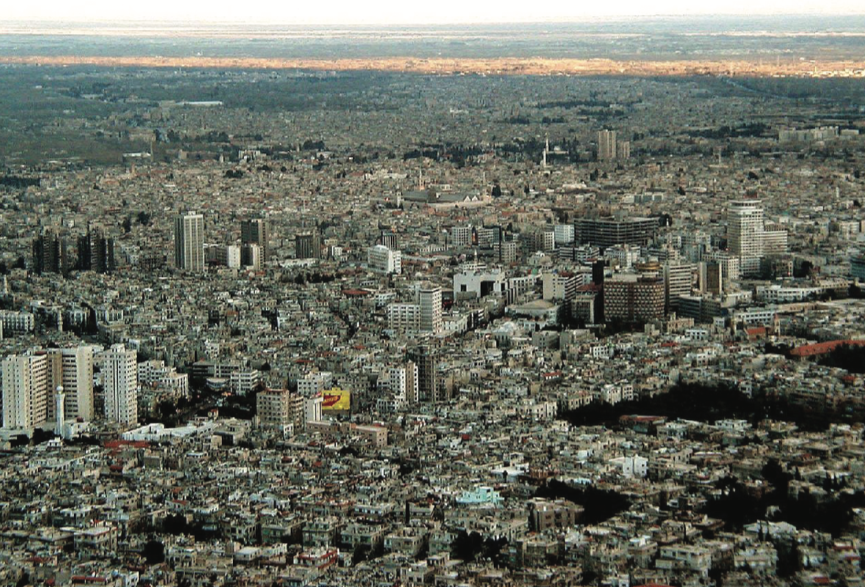
Damascus has taken yet another step to unpeg its currency from the US dollar by delinking the Syrian pound (SYP) from the greenback and replacing it as a foreign exchange anchor with the Special Drawing Rights (SDR) of the International Monetary Fund (IMF). The shift was partly due to Washington’s 2004 sanctions on Damascus, which escalated in 2006 following a ban on the state Commercial Bank of Syria dealing in dollars over an allegation of Syrian connections to illegal activity.

Syria had also moved early this year to distance itself from the greenback by diversifying foreign currency reserves, previously all in dollars, to include euros, sterling, and Swiss francs, with the dollar now representing around half the total held. Given the tension between Washington and Damascus, such a move was on the cards as the Syrian government at the start of had 2006 issued an official circular instructing all ministries and state companies to adopt the euro instead of the dollar for foreign transactions.

However, decisions such as these are not just emotional or diplomatic: it was economically and financially smart for Syria to shift out of dollars, irrespective of the political correctness of the move. Ending the long-standing link between the currencies of the two countries is allowing Syria a more sensible exchange rate while at the same time tweaking Washington’s nose.

A basket of major currencies used in international trade — the euro, the pound sterling, the Japanese yen and the US dollar — defines SDRs. The amounts of each making up an SDR accord with the relative importance of the individual currency in international business. The IMF Executive Board determines the currencies in the SDR basket and their amounts every five years. Current weights of SDR currencies (and hence those Syria uses) are dollars 44%, euro 34%, yen 11%, and sterling 11%. (However, there is an element of flexibility here: for the half-decade to 2005, the first three had been respectively 45%, 29%, 15%, and all could change again after 2010.)

Syrian moves to adopt the SDR basket make economic sense, as weakening links with the greenback help reduce the impact of dollar exchange rate fluctuations against other currencies, which gives more stability to the SYP. With the fall in the dollar, the Syrian pound lost around 10% of its value last year, adding to the costs of imports, especially from Europe. Syria’s Central Bank estimates that decoupling the pound from the dollar would take two percentage points off the country’s inflation rate, which hit 10% in 2006, in part a reflection on the weaker local currency. The IMF website thus gives an estimate for the current year of Syrian consumer prices rising at a rate of 8%, while the forecast for 2008 is an even milder 5%. At the same time, the IMF noted that Syria’s economic performance was strong in 2006, and that the outlook for 2007 is positive. Notwithstanding an unsettled regional environment, the Syrian economic recovery that started in 2004 remains on track: GDP in 2006 benefited from growth in exports and from sizeable inflows of private investment. The IMF’s recent final report on Syria for 2007 projected a rise in real GDP of a respectable 3.3% for this year, while for 2008 the Fund’s forecast for growth is an even healthier 4.7%.

The IMF advises Syria to ensure implementation of a managed float within a tight trading range, helping adjust to changes arising from trade liberalization and the transition to a market economy. On the other hand, it should be interesting to watch how the central banks of Arab countries with currencies pegged to the dollar and political ties to America can move away from over-reliance on the greenback. Jordan is an example, as a number of economic and political considerations keep the kingdom wedded to a fixed exchange rate that pegs the Jordanian dinar to the dollar. Yet as the greenback continues to depreciate, this point is now the subject of discussion: Marwan A. Kardoosh and Anne Mariel Peters writing recently in Amman’s Jordan Business magazine grant that the Jordanian dinar’s peg to the US currency “has been important to overall macro-economic stabilization and the development of certain sectors.” However, they quickly add, “in the face of an increasingly weak dollar as well as creeping inflation from other sources, perhaps it is time to re-evaluate Jordan’s choice of exchange rate regime.” As Jordanian prices rise and the value of reserves falls, can the kingdom learn from Damascus? On that score, I am personally not holding my breath. Meanwhile, the irony is that an American bluster has pushed Syria in the right direction: towards better monetary management.

RIAD AL KHOURI is the Director of MEBA wll, Amman; and Senior Associate of BNI Ltd, New York City.

October 1, 2007 0 comments
0 FacebookTwitterPinterestEmail
Comment

Mall vision

by Alex Warren October 1, 2007
written by Alex Warren

A new day, a new dawn. From the wind swept sands, a new legend rises,” read the introductory text on one website I came across last week. It was intriguing. Would this dramatic passage go on to describe a particularly heroic chapter in world history? Was it the deadpan voiceover for the trailer of a Hollywood blockbuster?

Wrong on both counts. It’s talking about a mall. Not just any mall, mind you, but “a mall of epic proportions that is named The Dubai Mall,” and an edifice which when completed will be the largest shopping center on earth. That is, if its rival — the Mall of Arabia — doesn’t get there first.

Now, shopping malls are already big in Dubai. They’re big metaphorically, in that they make piles of cash and attract millions of visitors every year, and they’re big literally. Acres of space in this ever-expanding city are devoted to helping people consume or purchase products in air-conditioned indoor areas, and plenty more acres are being prepared for this purpose as we speak.

It’s not surprising that this should be the case, nor that malls should be so popular and successful here. They’re a haven from the heat and the construction work, there’s no natural outdoor city center for shoppers to congregate in, and there are lots of consumers with hefty disposable incomes who have nothing better to do with their spare time than buy things.

But I’m afraid that doesn’t stop most of the city’s malls from somehow being extraordinarily depressing places. Please don’t get me wrong: I could think of far worse places to spend my time (prison, for instance), and once you’ve battled your way around the labyrinthine car parks, the initial sensation upon entering a mall is not unpleasant. The arctic wave of air-conditioning is a blessed relief after the outdoor heat, everything is clean and shiny, and there are lots of potentially enticing products.

Then, after about half an hour or so, something strange begins to happen. I start to tense up and become agitated. Other people bump in to me. They stand on both sides of an otherwise empty escalator that I would like to walk up. The incessant muzak being piped from every shop drills into my brain. Overdressed salespeople lurking near promotional stalls try to accost me about buying an off-plan property. The smell of nachos or fries, so appealing at first, now makes me feel sick.

Soon my nervousness turns to rage. Everyone is now my enemy and I must immediately leave. I keep my head down and stride as quickly as I can towards the exit, desperate to escape this fridge and re-enter real life, even if it is smelly and hot and dusty and doesn’t have a Dunkin’ Donuts.

Yet what amazes me is that people seem to spend hours in Dubai’s malls without incurring any of the brutal psychological side-effects that seem to afflict me. Even more amazing is that many of these people are visitors from the UK or Europe, where they can purchase exactly the same things as they can in Dubai, at almost exactly the same prices. But fly them halfway around the world on a $900 flight and they appear to temporarily lose their senses.

Lots of British tourists, for instance, are quite clearly dumfounded by the fact that Dubai has many of the same shops that you would find on the UK high-street. “Oh, great”, they say, “there’s a Marks and Spencer’s. We’ll just pop in and have a look around — I wonder if they have the same things as they do in England? And look — there’s a Boots too! Wow, this place is fantastic — let’s spend our holiday time buying the same items that we could buy at home!”

Maybe I’m being a bit cruel. I guess there’s a kind of “wow” factor to Dubai’s malls which draws in people, just in the same way that the Burj Dubai or the Burj al-Arab are tourist sights in themselves. Plus, of course, the retail developers have been clever in coupling the retail side of things with standalone attractions — like the ski slope at the Mall of the Emirates.

No one knows just how big the mall developers’ profits are, as they don’t open their books, but it’s safe to assume that they’re not losing money. And that purely commercial reason, as well as the various social ones, is why malls will always be central to life in Dubai as the city grows out into the desert and along the coast.

The trick now will be to dream up fresh unique selling points to attract all these new and hungry consumers. Dubai Mall, for instance, is set to feature an Olympic ice-skating rink and the world’s largest gold souk. Slightly more dubiously, the Mall of Arabia is partly basing its future allure on housing the world’s largest Starbucks. Call me a bore, but I can’t think of anything less likely to cure my allergic reaction to malls.

ALEX WARREN is a Dubai-based freelance consultant and writer

October 1, 2007 0 comments
0 FacebookTwitterPinterestEmail
Comment

Phishing for your money

by Paul Cochrane October 1, 2007
written by Paul Cochrane

When I was in London recently I tried withdrawing some cash from my British bank, but was denied access. On calling the bank I was asked if I had made several transactions — when “no, no, no and no” were my replies I was informed I’d been defrauded. Thousands of dollars had been taken from my account.

I’d get the money back, but would first have to sign a declaration form, get a new credit card and wait 10 days to be reimbursed. Whew.

Relating the story to friends it was surprising to find that all of them had either had a relative defrauded or experienced it themselves; in some cases more than once.

How it happens is by “phishing,” where hackers send in what are called Trojans — software downloaded without knowledge of the user — that take screen shots of your computer, allowing the capture of passwords and credit card details.

In Britain the problem has become so acute that the Association for Payment Clearing Services, a banking industry body, said there had been an 8,000% growth in online fraud between 2004 and 2006, estimated at losses of $90 million last year alone. Online business is big business in Britain, with 26.5 million people undertaking an estimated 372 million online transactions a year.

As technology becomes more widespread phishing could increasingly happen in the Middle East. Indeed I had been phished in Beirut, albeit by some crooks working through Italy, the destination for my looted cash. Whether Arab banks are facing this issue yet is not making any headlines, but de-frauding will no doubt come to the region as banks and goods outlets increasingly adopt the online service and hackers size up another global region to plunder.

The other financial shocker of my trip to the overcast British Isles was the extent private debt was affecting the lives of most inhabitants. The majority of people I encountered had debt, with my former student friends (American friends are another story) owing thousands of pounds, years after they had graduated from a university system partially funded by the state. Such debt is hindering that all-important purchase, a property — but that of course requires going even further into the red.

For young people starting out in life such debt looms over them like a Damocles sword, with the average 18 to 24-year-old owing $5,720 in unsecured borrowing, and some 108,000 in the same age bracket having credit card debts of more than $10,000.

The willingness of Brits to go into debt is only rivaled by the Americans, with the average Briton owing twice as much in unsecured borrowing — overdrafts, personal loans, credit card debt — than the typical European.

According to consultancy firm Grant Thornton, Britain owes a collective $2,690 billion in mortgage and unsecured debt. For the fist time that figure is higher than Britain’s expected gross domestic product (GDP), forecast at $2,660 billion for 2007.

This debt has trebled in the decade that Labour has been in 10 Downing Street, and is largely based on a runaway housing market, which accounts for $2.261 trillion of debt while personal loans and credit card debt stands at $428 billion.

But such disproportionate debt in relation to GDP poses a problem. Britain is essentially consuming more than it produces, in goods and services. Adam Smith, that doyen of capitalist thinking now commemorated on the back of the new £20 note, would have been horrified. Smith disapproved of speculative fever (which is now getting hedge funds and banks in deep water) and an economic emphasis on buying and selling (Britain’s “buy now, pay later” culture) rather than producing actual assets. The true healthiness of an economy that is based on such intangibles is highly questionable.

Arab financial institutions should watch, very closely, how Britain and America deal with the current financial crisis, particularly as this part of the world is striving to emulate the Anglo-American economic model.

Such out of control debt, and the ease with which banks dish out cash, even to the unemployed, has caused serious reverberations around the world as well as negatively impacting on the lives of millions of home-owning Americans and now, Brits.

The run on Britain’s fifth-biggest mortgage lender, Northern Rock, last month — with $2 billion withdrawn in a day over fears the company could go bust — shows how dicey the interlinked financial system is. Northern Rock was forced to turn to the Bank of England to bail it out as the firm’s ability to withdraw from financial institutions had been compromised by the $200 billion valueless US mortgage market, where risk has been sold on to such an extent internationally that any its anyone’s guess which bank will be hit next.

The Arab world would do well to hedge its bets on a more realistic debt market that is in line with GDP as well as trying to avoid the pitfalls that have beset online transactions.

PAUL COCHRANE is a Beirut-based freelance writer. 

October 1, 2007 0 comments
0 FacebookTwitterPinterestEmail
Comment

One down for the ‘Axis of Evil’

by Lee Smith October 1, 2007
written by Lee Smith

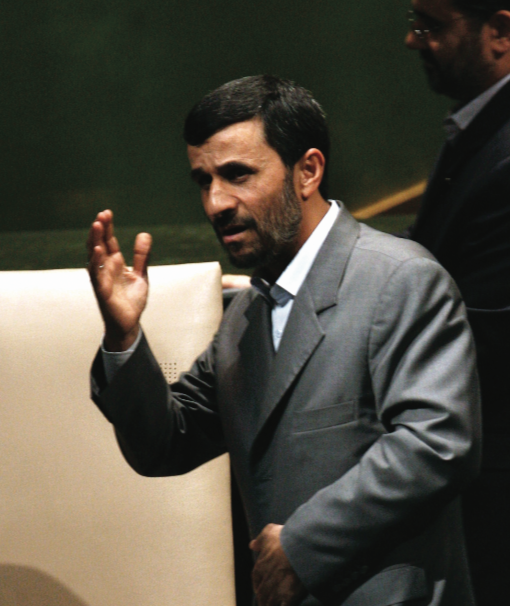
If you are keeping score at home, September was a bad month for the “Axis of Evil,” especially for its junior member in Damascus. In the middle of the month, Iranian president Mahmoud Ahmadinejad came to New York to address the UN General Assembly and was invited to Columbia University, one of the US’s most important institutions of higher learning.

Once led by Five-Star General Dwight D. Eisenhower after he had helped the Allies win WWII as supreme commander of the Allied Expeditionary Force and before he became the thirty-fourth president of the United States, Columbia of late has acquired something of a reputation as a hotbed of campus anti-Americanism. After all, this is the tenured perch from where Edward Said had famously explained how Western imperialism was responsible for everything that had gone wrong with the Middle East. Current Columbia University president, Lee Bollinger, turned the Orientalism doctrine on its head by calling the Islamic Republic of Iran to account for its policies, foreign and domestic.

If many observers thought it rude to treat a guest with so little hospitality, the Islamic Republic of Iran has extended few Oriental courtesies this last quarter century to foreign academics, foreign journalists and, of course, foreign embassy staff. However, Ahmadinejad had no reason to fear that Ivy league undergraduates were capable of the same revolutionary violence his former student colleagues had shown to the US diplomats and embassy staffers they took hostage for 444 days back in ‘79, but the Iranian leader was certainly flummoxed when the students booed and jeered after he claimed there was no homosexuality in Iran. No doubt this will come as news to aficionados of Persian and Abbasid poetry and prose.

But the big news was the hazily, albeit avidly, reported “Operation Orchard,” the Israeli raid on Syria September 6. It is quite possible that no one will know precisely what happened for decades, especially if it was, as many suspect, an attack on a nuclear facility housing North Korean wares. Nuclear issues are notoriously sensitive subjects for all involved. And yet if the events at Deir el-Zor remain a mystery, certain other things have become clear.

First of all, among members of the international community only North Korea made any noise about the raid. The Israeli incursion, said one North Korean foreign ministry official, was “little short of wantonly violating the sovereignty of Syria and seriously harassing the regional peace and security.” This protest, amidst the silence of the Arab states and all of Europe, has buttressed the claims of some analysts that the Syrians were indeed housing North Korean goods. In other words, Bush’s speech describing the “Axis of Evil” in terms that have been routinely derided by more “sober” observers of the international scene is much more than just the cartoonish imagination of a White House speechwriter.

For Tehran, the Deir el-Zor raid means that the Americans and Israelis have a very sound solution to the IRI’s nuclear program once it becomes clear that the diplomatic option is no longer workable. France’s new Foreign Minister Bernard Kouchner made waves when he said the world must prepare for the worst with Iran, which, in the estimation of the new Paris government, means war.

Washington clearly has no taste for war with Iran as it is still trying to make Iraq workable, and yet Deir el-Zor should give Tehran pause. Insofar as the ostensible Iranian response to an attack on their nuclear program is not massive troop movements but terror operations against US interests and allies, that no longer seems to be a daunting concern for the Americans.

Moreover, if most the foreign policy advisers for the 2008 Presidential hopefuls take it for granted that that Bush will pass the Iran file on to the next administration, this is a useful reminder that finally it will depend on the predisposition of the commander-in-chief. Bush does not lead according to poll numbers and it is not obvious why the man who staked his legacy on bringing democracy to the Middle East would leave intact a nuclear program that would change the balance of the region to the benefit of an ideological and millenarian Islamist regime.

As for Damascus, while regime functionaries and flacks have been crowing about how badly the US needs Syria, it looks like it is going to be a very cold winter in the beating heart of Arabism. Since Syria shows little inclination in changing its own status quo, it perhaps does not understand that, once again, the earth has shifted under its clay feet.

LEE SMITH is a Hudson Institute visiting fellow and reporter on Middle East affairs.

October 1, 2007 0 comments
0 FacebookTwitterPinterestEmail
Comment

Who dares, wins

by Thomas Schellen October 1, 2007
written by Thomas Schellen

Branding has traits of parenting. Although it takes energy, vision, and a gutsy approach to business life — and as such is no small feat — the effort of conceiving of a new brand pales when compared with the unending task of nurturing it and seeing it through years and years of maturation.

On this note, one could not even begin to speculate about future pathways of Zain, the master brand launched on September 8 by multiple GSM operator, MTC.

The birthday bash of Zain gathered between 4,000 and 5,000 guests in four capitals: Manama, Kuwait City, Amman, and Khartoum. This was because Zain erupted into public being simultaneously in four countries, Bahrain, Kuwait, Jordan, and Sudan.

In the middle of the celebration’s vortex of culture, fun, food, and communication, the sense of wonderment at three things was never far away for those of us pausing to think of: the rapidity of this company’s rise; the scale of the brand birth achievement; and the enormity of the future of the community that this brand is setting out to create.

There are more than enough numbers in circulation that document how big MTC has grown in the less than five years since it adopted the mission of turning itself, a Kuwaiti operator of a single mobile network, into a telecommunications player of international, and eventually global, proportions.

But without citing any performance figures and targets that had to be modified because they had been exceeded well ahead of all plans, the fact that Zain was introduced in two continents by a multi-cultural team of quality people was enough to demonstrate the operator’s stature transcending national idiosyncrasies and any complexes of business inferiority.

The brand launch achievement was a thing to behold, a testimony to investments of a magnitude that MTC did not even want to talk about and to how much a total will to something new can create within 48 hours! When I arrived at Bahrain International Airport on the evening before the launch party, Zain was still a phantom. When I left two mornings later, executives of the company said confidently that the network’s identity had been moved to Zain by more than 90% — including web sites and most store signs, not to mention the brand’s massive first wave of advertising.

The mega-thing, however, will be the future. This only begins with the fact that Zain aspires to be perceived as a global company and that it wants to move another 15 plus existing networks in its portfolio to the new brand in a short time span — including some networks that have a strongly developed identity and others that have already undergone a name change. Shaping such a community in very diverse markets and demographics will, even in the definition interactive realm of telecommunications, engender challenges that one can expect but never solve from even the best a priori thinking.

To be sure, the proud progenitors of Zain have spared no effort to give the brand a head start in life. The gestation period of designing name, logo, values, and mission of Zain exceeded 18 months. The good ring of the name in many languages was examined and the brand has been imbued with a whole orchestra of positive connotations, from the heart, belonging, and radiance that MTC affixed to the word to the aural allusion of the zeitgeist-colored logo.

From perspective of regional business culture, the beauty of Zain for the beholder goes further still than MTC’s brand messages. This, because the dominant business culture in the region is only starting to discover the art of existing as a brand. Some countries and state-backed entities in the Gulf region have embarked on communicating their identities to wide audiences with branding tools. The emirates of Qatar and Dubai, as well as Emaar Properties, Emirates Airlines, Etihad Airways and Aldar Properties come to mind.

However, none of the companies among those is independent from their respective state roots, which stands as barrier against reaching corporate self-determination in all decisions. Plus, if one produces claims to be global deliverer of quality lifestyle or treat every passenger as honored guest, severe imperfections in corporate governance and customer service easily can turn into haunting deficiencies. Zain, like all brands, will also face this challenge that the brand will be the mirror of what the company does — and not of what it says.

Branding is a lifetime investment. Branding also involves listening, responding and letting go, as every successful brand turns into a community that has a very strong own mind. There is no telling for which characteristics Zain will be known some years from today, as a brand and as a community. In setting up its brand as core of a community and in daring to develop it from its first atom with regional and joint cultural essence, Zain is pioneering an Arab and an African brand. It brings affirmation of originality and creativity that thrives in people in the Middle East as much as in any creative center of the world. The responsibility of Zain’s corporate parents will be not to spoil the brand.

October 1, 2007 0 comments
0 FacebookTwitterPinterestEmail
Company Bulletin

Business center – In brief

by Executive Staff October 1, 2007
written by Executive Staff

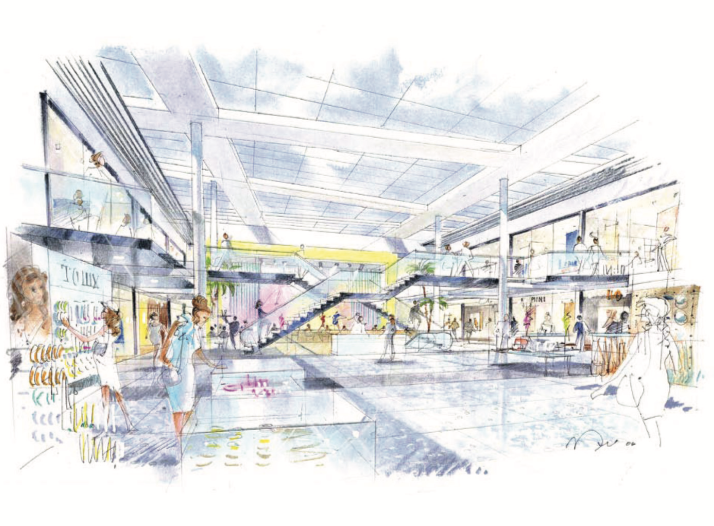
With the triumphant success of ABC Ashrafieh (Beirut), international consultancy JHP has reshaped ABC’s former flagship store in Dbayeh, east of Beirut, to bring Lebanese shoppers over 32,000 square meters of retail space, carrying a vibrant mix of leading brands over five floors. Located on the coastal highway leading in and out of Beirut, ABC Dbayeh attracts over 2 million visitors every year and is expected to attract even more with this latest expansion initiative, making it the largest department store in the Middle East.

Staying with Lebanese retail, a GS spokesperson announced last month that the popular clothing company has decided to launch a string of shops across the region, starting with the Kingdom of Jordan. This exciting move is in part a response to the growing regional demand for the GS brand, demand it is hoped will transform the Lebanese company into a regional retail chain. The grand opening of the 700 square meters landmark store located on the first floor of Amman’s Al Baraka Mall is set for February 2008.

In Dubai, Credit Suisse announced that it has appointed Michael Fouad Chahine as global head of Islamic banking distribution and that as part of its ongoing commitment to the growing Islamic investment and financing market, Credit Suisse will expanding its platform to distribute Shari’a compliant solutions to this important growth market. Michael Chahine will be based in Dubai and in his new role will coordinate the existing Islamic banking competencies across Credit Suisse’s investment banking, private banking and asset management businesses to build a distribution center in Dubai, one that is close to the market, clients and sources of new investment and financing opportunities.

Launch of Levant Express

Shipping giant CMA CGM Group was pleased to announce the launch of Levant Express, a new weekly service linking Asia, the Middle East and the Eastern Mediterranean. Operated independently from Phoenician Express, the service offers a second direct weekly connection without transshipment between China and Lebanon and allows a direct coverage of Thailand, Greece and Turkey. Levant Express will deploy seven 2,500 TEU ships, the first of which, CMA CGM BEIRUT, arrived in Beirut last month. This rotating service will cover the ports of Chiwan, Laem Chabang, Port Kelang, Suez, Damietta, Piraeus, Mersin, Lattakia, Beirut, and Damietta. These new stops will enable CMA CGM Group to serve directly, from China, the Levant and the ports of the Aegean Sea, and through transshipment through the Port Kelang hub, India, Pakistan and the Arab Gulf.

Arab racing driver Basil Shaaban, who is bidding to become the first Arab to compete in Formula One, is taking part in a nationwide environmental drive to gather old and damaged mobile phones for recycling to accelerate the growth of all-round environmental awareness in the UAE.

Proving its commitment to a new Iraq, Byblos Bank s.a.l., has recently announced the opening of its branch in Arbil, in northern Iraq. As a branch of Byblos Bank, the Arbil branch activities will cover commercial and correspondent banking services including payments, letters of credit, letters of guarantee, and documentary collections.

Danube Building Materials FZCO, a leading player in the construction, interiors, and shop fitting industry, has announced its expansion into Ras al-Khaimah with an investment of AED 30 million for a state-of-the-art facility. The move is aimed at catering to a massive demand for building and construction materials, as the emirate’s construction industry witnesses an unprecedented boom with multi-billion development projects being undertaken and scheduled for implementation.

Under the patronage of His Excellency Nasser Judeh, the official spokesman for the government, the International Advertising Association — Jordan Chapter (IAA Jordan) is organizing its 3rd annual Advertising and Marketing Communications conference under the theme “Box Basics,” whereby conference delegates will revisit the basics while highlighting creative and strategic excellence. The conference, which will be held on November 6–7 at the Grand Hyatt Amman Hotel, will host international speakers, as well as media representatives from leading agencies around the world. “IAA Jordan has launched its annual conference to share progress being made in the industry around the world and see how we can develop the local industry by learning from their successes,” said Mustapha Tabba, IAA Jordan’s president.

Arope Insurance launches new investment and protection plans

Lebanese Arope Insurance recently launched its new investment and protection plan during a conference at its headquarters in Beirut. Invitees from different Lebanese brokerage firms and insurance specialists attended the event. The new product is the newest addition to Arope’s family of products: Arope Open Life (AOL), a series of financial planning products designed to assist in creating and preserving wealth of individuals over a long period of time. It lends its name to a multitude of built-in flexibilities to assist in the design of a “fitting” long term financial plan providing both, life protection and selective prime investment opportunities. The product addresses several financial planning concerns and saving options including retirement and education.

Staying in Lebanon, Banque Libano-Française (BLF) has modernized its Akkawi branch, in line with both the company’s new architectural concept and an ambitious growth strategy on local and international levels. The bank’s new logo and unified architectural design reflect its visual identity and strengthened the harmony and the consistency of its various communications. BLF has a local network of 32 branches providing its corporate, SME and retail customers with a wide range of services and products. The bank is soon expected to open branches in Damascus, Syria.

Last Month, Rusiya al-Yawm, the first Russian TV channel in Arabic and a new window to modern Russia for the Arab world, celebrated 100 days on air. Speaking to journalists in Cairo, Sergey Frolov, director general of parent company ANO TV-Novosti, said the 20-hour news and current affairs satellite channel will address Russian, international and Middle East news events with a perspective that is sensitive to the region’s culture.
 

Finally, H.E. Sheikha Lubna al-Qassimi, the UAE Minister of Economy, is one of the five women in the Middle East considered by the US-based business magazine Forbes to be among the world’s 100 most powerful women. The Forbes article credited Sheikha Lubna with creating more transparency and corporate governance in the UAE, and recognized her effective negotiation skills and intensive trade relations program that sees her travel to four countries each month to promote the UAE.

October 1, 2007 0 comments
0 FacebookTwitterPinterestEmail
Consumer Society

Low-cost carriers – Taking off

by Executive Staff October 1, 2007
written by Executive Staff

As a part of its “23 new destinations in 22 months,” Kuwait-based discount carrier, Jazeera Airways will start with four flights weekly between Beirut and its second hub in Dubai beginning on October 27 and increasing the flights by January 2009 to seven. The airline already flies between Beirut and Kuwait.

As with the new Beirut service, the carrier will offer six other new destinations out of Dubai that includes Kuwait, Bahrain, Muscat, Salalah, Riyadh, and Jeddah. Jazeera also flies to other cities outside the region including Delhi, Mumbai, and Kochi and is adding a vacation destination to the Maldives.

“We broke one barrier after another,” said Marwan Boodai, chairman and chief executive officer of Jazeera Airways. He explained that at first, Jazeera faced difficulties in gaining trust and support in the investment community as well as securing access to some airports.

After this initial success, Jazeera now has ambitious expansion plans — doubling their routes by 2010 — and placed a $2.4 billion order in July for 40 new Airbus A320s, complete with leather seats.

For added services to customers, Jazeera also entered into two new service partnerships. The first is with American International Group (AIG) that will give passengers a travel insurance option to cover lost baggage, missed flights and other mishaps. “This is an added service to give comfort, ease, and peace of mind to travelers that when they leave home an international organization is giving them support for all of their insurance needs and services,” said Boodai.

The second new service is partnered with Dnata, a flight services company created by the Dubai government to assist the travel industry, which will link the airline’s booking system directly to Dnata. This new alliance gives customers a third booking outlet and the ability to walk into any Dnata office in the region to reserve a flight. Other ticketing options include their own online booking system which accounts for 62% of all transactions and their call center.

Trimming down overhead

Fewer booking outlets is part of how low-cost carriers save money. By relying on direct booking through their own online systems and cutting out third parties such as the global distribution system (GDS) and other leased databases used by travel agents, low-cost carriers (LCCs) are able to circumvent high costs in selling tickets. E-tickets and online services also help to cut costs and commissions ordinarily passed on to consumers. “It saves the customer around $11 by not having a paper ticket,” according to Joe Chamoun, general manager for Air Arabia in Beirut.

Other ways LCCs trim costs are by cutting overhead such as complementary food and beverage services offered in-flight. Rather than providing meals, LCCs make available sandwiches and beverages as well as entertainment for a low fee.

Another way they cut costs is by standardizing their fleets using the same model aircraft. Both Jazeera and Air Arabia fly Airbus 320s which is the most economical on the market. This streamlines the needs of aircrafts by concentrating their efforts on maintaining only one model.

Turnaround time is also a huge cost-saver. As full-service airlines park their planes for extended periods and pay for overnight accommodations for their flight crews, LCCs have a turnaround time of 45 minutes. They fly to their destination, unload, clean, and take off again with passengers all in less than an hour.

However, to distinguish itself from competitors, Jazeera offers more than just a cheap ticket. “We use a different model, we have brand-new aircraft with fitted leather seats, through the services like Jazeera Plus and technology we offer our passengers we are different,” according to Boodai. Jazeera Plus is designed for the business class and offers extra services such as complementary food, drinks, entertainment and lounge access.

Boodai is excited at what his company can offer: “We were on time 93% of the time. I missed my flight on Jazeera because I wasn’t at the airport on time — they didn’t even wait for me,” he cooed.

The major hurdle for Jazeera has been convincing the market that low cost does not equal low quality. For Chamoun, the entry of Jazeera on the market was more of a support for Air Arabia. “In the beginning, we had a tough time getting people to understand the concept of low-cost airlines. But when Jazeera came on as well, we were no longer alone.”

Sharjah-based Air Arabia began its operations in 2003 with five flights. They started with one leased aircraft and now have 10 fully-owned planes. They too will be unveiling new destinations very soon

The entry of low-cost carriers on the regional market has forced prices of other airlines to be more competitive. According to Chamoun, “three years back, a ticket from Beirut to Dubai would have cost a minimum of $600 for major airlines, today the ticket price has gone down to $400 even though the price of fuel has increased. This is due to the conditions caused by low-cost airlines.” Furthermore, the arrival of LCCs in the region grew the market by tapping into a segment that was not serviced before — those unable to afford full service carriers.

Low cost does not mean low profit and growth for the LCCs is expected to be much higher than their higher cost competitors. Air Arabia’s net profits for the first six months of this year increased 342% compared to the same period in 2006. The carrier managed to break even the first year and recorded $9 million in profit the second year and $30 million for their third year of operations.

Jazeera had the most successful IPO in Kuwait history bringing in $34 million and set to sell more shares again in November — doubling the number of shares. They have offered to sell one new share for every share held by their existing 36,500 shareholders and plan to raise another $450 million through banks.

Growth higher than global average

Growth for air traffic in the region has grown three times the global average. Passenger demand has grown this year by 20%. The Center for Asia Pacific Aviation (CAPA) recorded the growth rate in terms of revenue passenger kilometers during the first seven months of 2007 to 16.8%.

This region, especially Dubai and other Gulf airports are competing for international hub status. Dubai is marketing itself into an international hub as a natural stopping point between Europe and East Asia.

Regional governments are investing massively in new systems and infrastructure to handle the growth. For the industry at large, Booz, Allen Hamilton in a recent report cited liberalization, deregulation and regional cooperation as the biggest obstacles facing the Middle East. Access restrictions are still limiting some airports in the region from expanding service.

There are currently over 65 airlines operating out of Rafic Hariri International Airport with Air Arabia and Jazeera among the top ten. The most popular destinations from Beirut is the UAE (19.11%), France (11.54%), Saudi Arabia (8.93%), Kuwait (7.3%) and Egypt (5.1%).

October 1, 2007 0 comments
0 FacebookTwitterPinterestEmail
Editorial

Value before reality

by Yasser Akkaoui October 1, 2007
written by Yasser Akkaoui

I recently witnessed at the house of a Polish friend a card game that went on for hours and during which 20 players around the same table had to wait longish periods for their turn to play. I noticed that when the players were not “in” the game, they were deep in furious discussion. “What are they doing,” I asked. “They are making money,” my friend beamed.

He explained the scenario: Let us assume player A has a container of jeans he bought for $100,000. He will sell it to player B for $110,000. Although player B was warned that the jeans only had one leg. Player B still goes with the deal and wastes no time in palming the lot off on player C for $120,000, who also doesn’t hold onto it for too long before making his margin with the next buyer.

And so it goes round and round adding profit to profit, it all ends when one owner decides to actually open the container. He is faced with the reality not the perception, but for as long as it took for the container to sail from Bangladesh to Lodz, the jeans were a commodity whose value was left to the free-floating market forces.

The same thing is happening with Gulf property — that is not to say I must add that there is anything wrong with them structurally or that the bathroom tiles aren’t what they appear. It is just that there is so much development and so much liquidity that people are snapping up the option to buy even at the drawing board stage and the ownership of a home may change hands several times before the first human takes a shower or hosts the first dinner party. If the faucet explodes, the parquet floor warps or the landfill subsides, it will have had no bearing on the profits made in the previous couple of years it has taken to build the residence.

After that the commodity — for that is what it has effectively become — will slip into the mainstream property market and be subject to a different type of value and be more slave to the usual real estate checklist.

Like diamonds, if we can persuade enough people that a rock, or anything for that matter, has value and beauty and is desirable, we can then control supply keeping demand and prices high enough. In the UAE, the challenge is for the state to ensure that this new diamond, in the shape of a vibrant and shiny and exciting property boom, does not become tarnished. But seeing what the Emirates have achieved so far, it is fair to assume that the cities built out of the sand and the sea will not loose their luster.

October 1, 2007 0 comments
0 FacebookTwitterPinterestEmail
Lebanon

Jordan – Is Amman the next Beirut?

by Executive Staff October 1, 2007
written by Executive Staff

Lebanese companies are taking Jordan by storm, hoping to reap some of the fruits of the country’s recent economic growth. Lebanese fashion outlets — Aishti, ABC, GS, K-Lynn, Mario Bruni —, restaurants — Diwan Al Sultan, Casper and Gambini’s, Zaatar w Zeit, Eight, Abdel Wahab and Kabab-ji — and banks — Audi Saradar, BLOM Bank — are setting up shop in the capital Amman.

“Jordan has positioned itself as the new regional business center and a main gateway to Iraq,” says Nassib Ghobril, head economist at Byblos Bank, which itself is rumored to have increased its stake in the Jordanian Al-Ahli United Bank.

In spite of the highly-charged regional political environment and the country’s lack of resources, Jordanians enjoy a high per capita disposable income. According to the IMF, Jordan’s GNI per capita was $2,660 in 2006, up from $1,790 in 2000. “The comfortable economic situation can be credited to the Jordanian’s government ability to maintain social and political stability, beefed up by a high inflow of remittances,” adds Gobril. The kingdom’s fiscal deficit reached 4.4% of GDP in 2006 and is estimated at 4.3% for 2007. Its currency, which is pegged to the dollar, has remained relatively stable despite increasing regional tensions. In addition, Jordan has graduated from a strict IMF program. Public debt amounts to $10.6 billion and 72% of GDP while external debt remains at 50% of GDP, below its target range, through swap and repayment agreements.

“This positive environment has also prompted Lebanese banks to reconsider the Jordanian market,” explains Ghobril. “There is a gap in Jordan’s banking sector when it comes to retail products, which can be filled easily by Lebanese banks.”

Lebanon falls behind Jordan

Lebanese companies seeking a more favorable business environment are looking to Jordan. According to the Doing Business in 2007 report released this year by the IMF, Lebanon falls behind Jordan in terms of the ease of doing business, starting a business, dealing with licenses, employing workers, registering properties, getting credit, registering properties, protecting investors, paying taxes, trading across borders and closing a business.

This positive business environment as well as several other factors such as the Lebanese political situation, companies’ overall expansion plan and the kingdom’s high economic growth has encouraged Lebanese companies to look into the Jordanian market. Pierre Iskandar, managing partner of GHIA Holding, whose brands include Abdel Wahab, El Paladar, Duo, Al Saraya and Shah, cites the negative impact the Lebanese current political situation has on the tourist sector. This is a concern also voiced by others such as Khaled Ramy, managing partner of Diwan Al Sultan and its subsidiary Sultan Brahim, who admitted the chain had to shut down its Aley operation due to the unstable situation and withering tourists figures.

Toufic Hayek, manager of Mandaloun, the up-market Lebanese nightclub, announced the company had started operating in Jordan four months ago. “Different factors played in our decision to open in Amman — the obvious lack of stability in Lebanon, our broader expansion plan, the country’s cultural proximity as well as logistics concerns in relation to alcohol procurement and distribution, which is relatively easy in Jordan in comparison to other MENA countries.”

As for companies’ expansion plan, Robert Fadel, ABC’s manager, explained at a recent Business Opportunities in Lebanon conference that, “the rapid regional growth offers unique opportunities, provided something new is brought to the market. ABC’s positioning fills a current gap in the regional market.” He also observed a high demand in retail business for anchor stores in new malls. ABC, which occupies a 4,184 square meter ground floor of Al-Baraka Mall located in the Al-Sweifiah District, west of Amman, will open in February 2008, and will be the first department store to be featured in Jordan.

Jordan’s economic growth has played a major part in the decision making process adopted by Lebanese companies, attributed in part to the Iraqi exodus and the regional oil riches. Over the last years, Jordan’s economy has shown robust growth rates, leaping from 4.25% in 2003 to 8.4% in 2004, before settling at around 6.5% for the last two consecutive years. By creating large economic free zones processing Asian merchandise on their way to the US, where they benefit of duty free status, Jordan has managed to increase its export level as a percentage of GDP from 41.8% in 2000 to 50.7% in 2006, according to IMF figures. Ghobril also pointed out the kingdom’s special status when it came to economic freedom, rating higher than China, Brazil and Bulgaria, among the lower level income countries.

In their quest for the Jordanian market, Lebanese companies have decided to either partner up with locals or franchise their operation. Diwan Al Sultan opted for the first business option by opening three new outlets in Jordan in partnership with a local businessman. “The chain is launching its first two branches in the Al-Wadi Dead Sea resort. The first restaurant, which can host up to 150 people, corresponds to our popular ‘Diwan El Sultan’ concept, while the other is a snack restaurant that can accommodate up to 800 people. A third restaurant is scheduled to open in Amman as of June 2008,” said Ramy.

Branching out

Other Lebanese companies have opted for a franchising approach, considered by some as a more rapid and cost efficient mean of expansion. Casper & Gambini’s regional operations manager Maroun al-Hajj perceives Jordan’s development as a natural outcome of the exponential growth and demand for the restaurant’s high-quality dishes, home-blended coffee and friendly service, which was made possible through franchisee Al Amer Touristic restaurants. Another of Lebanon’s heavy weights in terms of the restaurant industry, Kabab-ji has two dine-in and three express restaurants scheduled to open over a four year period in Jordan announced Ola Saghir, the company’s franchising manager.

On their way to regional stardom, Lebanese companies have been faced with different obstacles. For Hayek, the main difficulty resided in shifting preferences and consumer behavior. “Contrary to Lebanon, where people go out every night, Jordanians tend to party two nights a week only. This has affected our estimated break-even period, even if Jordanians are on average less price conscious than Lebanese,” he states. On the other hand, Ramy did not notice any major differences in consumer behavior exhibited by Jordanians. The small divergences have, however, affected to a certain extent the company’s choice of concept. The popular oriental food eatery “Diwan al Sultan” concept was exported to Jordan, while its famous “Sultan Brahim” fish concept was not deemed suitable for the kingdom’s market where room for growth lies mostly in oriental food delivery services.

Other Lebanese restaurants have also integrated an express restaurant concept into their original framework such as GHIA’s Abdel Wahab. “The eatery is opening very soon at Villa Toscana but we have scheduled to open around four to five expresses, over the next few years,” says Iskandar. Besides the two Casper and Gambini’s branches scheduled to open in Amman, and a minimum of five branches in other Jordanian cities, al-Hajj is planning to launch a catering Service in the next coming months.

Jordanians love all things Lebanese

Jordan’s appeal to Lebanese businesses, in addition to geographic and cultural proximity, is attributed to the kingdom’s liking of all things Lebanese. “We are blessed, Jordanians simply love Lebanese brands, products and food,” said Saghir, smiling. An opinion shared by most Lebanese companies, as Jordanians believe there is a definite added value to Lebanese products, according to Iskandar.

So is Lebanon doomed ad infinitum to export its talent and innovative concepts abroad, falling behind other countries in region embracing the 21st century riches? “Business is driven by profits. At the end of the day and as much as Lebanese are survivors in the business sense of the word, investors can’t be blamed for looking into more predictable returns on their investments. Jordan’s stability is a determining factor to any expansion plan,” admits Saghir. On a more positive note, some entrepreneurs underscore that Lebanon will remain a leader in terms of handsome and innovative concepts, which because of the situation will be further developed and perfected, away from its gleaming Mediterranean shores.

October 1, 2007 0 comments
0 FacebookTwitterPinterestEmail
Real estate

Housing loans – Still coming of age

by Executive Staff October 1, 2007
written by Executive Staff

The adage is old but it only underscores the importance of the matter: Home acquisition and finance is for most people the largest single personal purchase transaction in their life, whether it is the building of a new house, or buying of a house or an apartment.

In a time where mortgage lending has become the byword for confidence worries in America and Europe, the importance of sound and equitable housing finance in the Middle East cannot be emphasized enough. Until the turn of the century, new supply of residential dwellings was realized at slow rates even in Dubai, the emirate that pioneered the idea of the economic surge in the GCC. Recently, however, the UAE market is changing fast, as more banks have started offering home loans in addition to two housing finance specialist firms, which analysts estimated at various times this year to have up to 70%, but at least 50%, in market share.

Modern mortgage and home loan provision in the entire region is very young, measuring about five years of any significant market presence in the UAE — which, however, is still a longer existence than in other countries of the Middle East, such as Egypt and Saudi Arabia, where legal frameworks for the housing finance sector are being phased in or are, in case of the Saudi mortgage law, expected to come into force in the near future.

Housing finance companies expand abroad

For this reason, the housing finance companies of the UAE have been on the path of expansion into neighboring markets, while their home market is still in a phase of very rapid and uneven development. The two firms that dominate the UAE mortgage market are Amlak, founded in 2000, and Tamweel, which started operations in 2004. Both have initially been capitalized by strong parent companies — Emaar Properties for Amlak, Dubai Islamic Bank and state-owned investment firm Istithmar for Tamweel.

In the years 2004 to 2006, the two companies expanded their business — first Amlak and then Tamweel — by multiples in turnover and profits, as the UAE mortgage market grew exponentially from 2003 to 2006, increasing tenfold according to some experts.

Both firms were looking to expand their capital basis beyond the funding supplied by the parent companies and listed on the Dubai Financial Market, beginning with a $112 million IPO by Amlak in January 2004. Tamweel’s $153 million IPO in March 2006 was, from the company’s perspective, fortuitously timed and met with incredible demand and an epochal oversubscription rate of almost 500 times.

In recent months, the stocks of both firms lagged behind the — largely unexciting — development of the DFM general index. Amlak fared markedly weaker of the two and recorded a share price drop of 57% between end of September 2006 and end of last month. Tamweel’s share scored a drop of 18%, within reasonable range of the DFM index whose loss amounted to 13% over the past 12 months.

Market analysts have been neutral to pessimistic on the stocks Shuaa Capital in August rated them at fair values of AED 3.90 ($1.06) for Tamweel and AED 2.30 for Amlak, representing a “hold” on the former and a “sell” on the latter. In early 2006, EFG-Hermes had issued long-term fair value estimates for the two companies that were between AED 4.50 and AED 4.75. After their share prices went lower from last October through spring of this year, EFG-Hermes said in May that both stocks could be rated “buys” if the firms achieve financial gearing levels similar to that of a commercial bank.

The ‘if’ is important in this matter, because one of the factors weighing on the profitability of the two firms has been the cost of funding. As financial companies, they could provide — shari’a-compliant — mortgage loans and home finance but they have been barred from accepting customer deposits as part of long-term financing schemes, resulting in a need to source financing through more expensive means.

Both firms applied for banking licenses and had hoped to be awarded commercial banking rights in 2007; however, UAE central bank officials told media around mid-year repeatedly that they are not eager to expand the number of banks in the country. Inquiries with the two companies and the central bank said the applications have not been decided upon, leaving the matter hanging in the air in September.

This has great implications for the strategies of the two firms. Although the UAE and other GCC property markets have not been visibly affected by the real estate financing crisis that caused valuations of a number of US mortgage companies to evaporate and led to the first run of UK depositors in ages on a bank, real estate specialist Northern Rock, market watchers cautioned that the global credit crunch could bear repercussions for the home financing industry in the UAE if fundraising through shari’a-compliant asset-backed securities becomes more difficult in the rougher global credit environment.

Forecasts are grim for mortgage

Higher costs of financing in a less vibrant global economy and absence of the freedom to build a deposit base from people who put money into savings under home finance programs would impair the ability of the mortgage companies to fill demand for their products, some fear.

The market where these companies operate is complicated by the lack of historic benchmarks and absence of property price tables on the one hand and by a fair amount of speculative building and buying during the past five years on the other hand. The common base for prediction of UAE real estate trends by analysts in the past three years has been the growth of population in general and the forecasted influx of foreign labor in specific. Yet the root assumption of these forecasts was ambiguous, as some analysts said they preferred to rely for their population estimates on older government projections from 2004 and not the result of the official census from 2006.

The high share of people in the age group of 20 to 45 years in the total population was interpreted as driver for real estate demand. Business development and the trend of high-end financial companies to obtain licenses for operating in the DIFC have been cited as demand factors, while the high costs of property and the uneven distribution of income with a heavy overweight of laborers and low-income earners are cited as factors likely to slow demand.

The high growth of the UAE economy is a massive driver of labor demand and there can be no dispute that housing needs in the emirates are immense; but the real estate demand forecasts are weakened by generalizations and analyst statements that are far from compelling, such one investment house’s assertion that migration of foreigners to the Dubai housing market is supported by selling points such as “moderate weather conditions” in the emirate.

The threadbareness of market information lets secondary sources and guesstimates play a role that is stronger than the methodologies warrant. In one example, media recently reported on a survey by an exhibition company which polled persons with household income above $55,000 per year as prospective home buyers. The survey found that 16% of 332 respondents (representing 77% non-property owners of 431 persons polled) said they were interested in considering a home purchase for the coming year. Of the 332 sample, four out of five said they would not want to spend above $550,000 on their home — or ten years of the threshold income in the survey — and about half said they were not looking into a home purchase at all because it is too expensive. What such market impressions could mean as accents that would further elucidate the going housing demand forecasts of around 50,000 units per year may be a matter of interpretation.

Spiraling rents help the buyer’s market

The creation of new ownership options has made home purchases interesting for real estate buyers without investment angle — the large group of people who want to develop their careers in the UAE over a considerable period of time. The lure of ownership under a mortgage financing model is supported by the UAE’s spiraling rents and uncertainties over lawful compliance of landlords with the new rent caps. Real estate sales agents also bait prospective customers by painting value increase scenarios of new properties of up to 40% after little more than a year from signing the purchase contract.

International market comparisons depict homes in Dubai and other UAE locations as still low-priced, but that does not negate risks for individual home buyers if they run into changing economic conditions. Financing with banks and mortgage companies in the UAE is not particularly cheap as buyers may discover when looking at annual “profit” rates, which the mortgage companies charge for a variety of Islamic financing methods in lieu of interest income, achieving of which would violate the rules of shari’a.

These profit rates range, according to Amlak, from 8.5% to 15% annually, depending on the type of Islamic finance product, the duration of the contract, and the status (resident or non-resident) of the borrower. For financing a $140,000 home on a 15-year timeframe with 20% down payment, a buyer can look at total expenditure of $220,000 or more, on an 8.5% contract. Some banks have offered promotional rates below 7% and the market share of bank mortgages is expected to increase in the UAE but overall, projections see the country reaching only a modest ratio of average mortgages to GDP by 2011.

Although the UAE mortgage firms describe their shari’a products as simple, the underlying financial engineering is a demanding task and can involve several transaction steps that will be confusing to mortgage customers unfamiliar with the techniques. They function well in the legal context of an Islamic country but require adjusting of legal frameworks in countries like the UK where Islamic real estate finance has still to find a real market. Cost of financial structuring and novelty of Islamic real estate finance products — of which Amlak and Tamweel each have more than half a dozen in their portfolio — could also act as hurdles against the interaction of these providers with conventional financial markets.

With its dependence on a bubble economy driven to a large extent by outside factors, such as economic growth in markets that the UAE wants to serve, high oil and gas prices stemming from high consumption in other world regions, and shifting of business activities because of tax and other investment incentives, the real estate boom in the GCC has something artificial to begin with, and this is not mitigated by the fact that the main real estate players are government-affiliated and were initially capitalized through state funds. The sector of real estate finance is pinned down between demand projections and state-driven property supplies that rely on ambitious targets such as establishing a new global tourism destination where before only a very small niche tourism market existed.

Other unknown factors in the equation are the enormous increases in construction costs, the high needs of financing for upcoming large public infrastructure and industrial projects, and the slow rate of home deliveries by UAE developers. Demand overhangs for residential units are now expected to persist into 2009 but it is a question how all that will affect the further evolution of the country’s property price spiral, the confidence of property buyers in the residential segment, and the business of mortgage firms. Under delivery bottlenecks, home financing would increase at a slower speed. This could bring relief to the mortgage companies but the scenario introduces uncertainty factors into the sector’s performance outlook. Regulation and oversight of the UAE mortgage sector, with enhancement of consumer education and protection, will be vital under all circumstances.

Still, the ruling question about the mortgage market in the UAE is not if it will grow in the near future but only how much it will expand, and how it will source the expertise to meet the expectations of its home market and regional markets. Recent estimates for the Saudi mortgage market alone have speculated on an increase from an expected $1 billion this year to $12 billion after just three or four years.

October 1, 2007 0 comments
0 FacebookTwitterPinterestEmail
  • 1
  • …
  • 559
  • 560
  • 561
  • 562
  • 563
  • …
  • 686

Latest Cover

About us

Since its first edition emerged on the newsstands in 1999, Executive Magazine has been dedicated to providing its readers with the most up-to-date local and regional business news. Executive is a monthly business magazine that offers readers in-depth analyses on the Lebanese world of commerce, covering all the major sectors – from banking, finance, and insurance to technology, tourism, hospitality, media, and retail.

  • Donate
  • Our Purpose
  • Contact Us

Sign up for our newsletter

    • Facebook
    • Twitter
    • Instagram
    • Linkedin
    • Youtube
    Executive Magazine
    • ISSUES
      • Current Issue
      • Past issues
    • BUSINESS
    • ECONOMICS & POLICY
    • OPINION
    • SPECIAL REPORTS
    • EXECUTIVE TALKS
    • MOVEMENTS
      • Change the image
      • Cannes lions
      • Transparency & accountability
      • ECONOMIC ROADMAP
      • Say No to Corruption
      • The Lebanon media development initiative
      • LPSN Policy Asks
      • Advocating the preservation of deposits
    • JOIN US
      • Join our movement
      • Attend our events
      • Receive updates
      • Connect with us
    • DONATE