• Donate
  • Our Purpose
  • Contact Us
Executive Magazine
  • ISSUES
    • Current Issue
    • Past issues
  • BUSINESS
  • ECONOMICS & POLICY
  • OPINION
  • SPECIAL REPORTS
  • EXECUTIVE TALKS
  • MOVEMENTS
    • Change the image
    • Cannes lions
    • Transparency & accountability
    • ECONOMIC ROADMAP
    • Say No to Corruption
    • The Lebanon media development initiative
    • LPSN Policy Asks
    • Advocating the preservation of deposits
  • JOIN US
    • Join our movement
    • Attend our events
    • Receive updates
    • Connect with us
  • DONATE
GCC

Dubai World Central

by Executive Editors September 13, 2007
written by Executive Editors

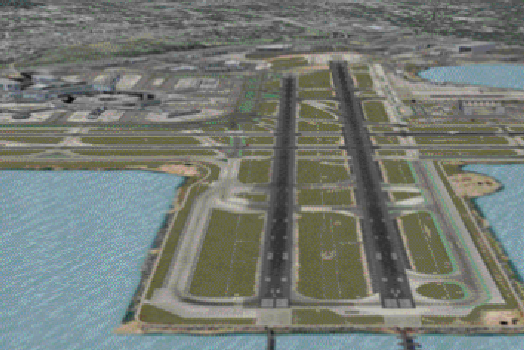
Dubai is building a new airport. Surrounded by sand and baking in the summer heat, workers are putting the final touches to the first runway of the Dubai World Central International Airport ahead of scheduled delivery in October. It is the first of six runways of what will be the world’s fourth-largest airport in terms of area, covering 140 square kilometers upon its completion scheduled for 2017 with a cost of an estimated $10 billion. The sprawling complex will boast the world’s largest passenger capacity — 120 million people per year.

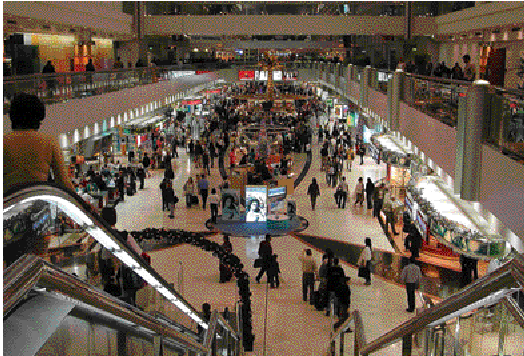
Like everything else in Dubai, the airport will be connected to a hotel and a mall. The “fingers” that link planes to the concourse have been designed to accommodate the new Airbus A380 super jumbos that flagship carrier Emirates Airline is packing its fleet with in the coming years.

And if one World Central is not enough, Dubai’s government is progressing in the expansion of the existing airport, Dubai International. In total, the emirate is sinking $82 billion into the aviation sector to fund Dubai International Airport’s expansion, construction of Dubai World Central International Airport, and increasing Emirates Airline’s fleet.

Should Dubai continue to have the tourism drawing power it has displayed in the past five years, its new airport would be well positioned to surpass the world’s busiest airport, the Hartsfield-Jackson International Airport in the US city of Atlanta ranked number one worldwide in 2006 in terms of  handling the most passengers, with nearly 85 million.

This, however, is still a matter of expectation while Dubai’s existing airport has been inching its way up in the ranking of international air passenger traffic. On month-to-month basis, figures from the Geneva-based industry organization, Airports Council International, show that at the end of March 2007, the Dubai International Airport reached the number 10 spot in terms of international traffic. By the end of May, the airport rose to number nine with 2.6 million passengers.

Over the long haul

However, despite all efforts by US regulators to make it as displeasing as possible an experience, the domestic segment contributes hugely to total air traffic in the US and some other countries. This is the reason why Dubai airport, with its relatively small domestic travel, still does not make the world’s Top 30 list of total passenger traffic per airport, which is currently dominated by US airports.

But in regional and long-haul flights, Dubai’s aspirations to world leadership are not to be scoffed at. People routing through Dubai on its increasingly attractive connections from Middle Eastern and even European cities to Southeast Asia, the Far East, and Africa know that Dubai International is an overwhelming picture of construction. Its new terminal and two concourses will, at a cost of $4.1 billion, bring capacity up to almost 75 million passengers, on top of which the 120-million World Central will create an international air travel hub of unprecedented dimension.

The expansion of Dubai International was expected to be complete in 2006, but delays have pushed the date to 2009 confirmed a spokesman for the Dubai government’s Department of Civil Aviation (DCA).

As Dubai joins the exclusive club of cities, like Chicago, with two airports, the DCA spokesman brushed off issues of competition between the transport centers. “DIA and Dubai World Central are not competitors but sister concerns,” he wrote in an e-mailed response to questions from Executive. “They complement each other in catering to Dubai’s growing demand for tourism, travel and logistics.”

Plans call for the two airports to be linked by subway, in a bid to combat the suffocating congestion on Dubai’s streets. The government is also investing in a light rail system that will include stops at both airports.

One might wonder why a city that looks at a population horizon of four million in the next decade would need airports with capacity to serve nearly 195 million people per year (more than the population of Brazil, the world’s fifth most populous country). As the optimistic plans for Dubai’s development into a tourism theme park aim for 40 million visitors in 2015, it is clear that the airports will need to attract a huge portion of the world’s projected growth in long-haul flights.
For now, the emirate can bask in the knowledge that it outdid its own plans in the past. Sheikh Mohammed’s 10-year strategic plan announced in 2000 was realized in half the time. “In 2000, the plan was to increase GDP to $30 billion by 2010. This figure was exceeded in 2005, with GDP reaching $37 billion,” he said, addressing an audience in February as he announced the new plan for 2015.

Is hospitality losing to construction?

One will have to see if the emirate that could exceed its targeted per capita income by 35% five years ahead of schedule will be able to replicate such performance feats in its extreme growth vision for its future role in aviation.

An entirely different question is if the passengers of the next decade will consider the airport with the biggest crowd to be the most desirable hub for their travel. Dubai International, with its construction issues in the past two years, did not quite make it in terms of getting full points for service. In the most recent airport rankings, it landed the best airport in the region honor but did not appear among the global top ten.

Once the expansion of Dubai International is complete (and the local traffic infrastructure has had those bypass operations), the emirate and the companies in charge of running its airports will have a chance to put proof to the belief that Dubai has a golden touch for management of traveling multitudes with the value-added local heart of hospitality.

Dubai World to Buy $5 Billion Stake in US-based MGM Mirage

Although, officially, the UAE has a ban on gambling, the government-owned Dubai World, announced in late August that it would invest as much as $5 billion in Kirk Kerkorian’s MGM Mirage, the world’s second largest casino company.

Dubai World said that it will buy a 9.5% stake or 28.4 million MGM shares for around $2.4 billion with an option to increase its stake to 20%. It will also spend $2.7 billion on a 50% stake in CityCenter — a large hotel and casino complex MGM is planning for Las Vegas’s Strip.

“Dubai World’s proficiency in real estate, combined with our company’s operational expertise, strong brands and world-renowned resorts, creates competitive advantages that we believe will benefit all of our stakeholders,” MGM chief executive Terry Lanni told reporters.

The UAE in particular, and the GCC in general, is flush with cash from oil revenues and Dubai has already announced that it will invest over $14 billion in acquisitions in 2007 and analysts say half of these acquisitions will be in foreign companies abroad.

Analysts in Dubai believe Dubai World has paid too much for the stake in MGM and Kerkorian has landed a deep-pocketed partner willing to both pay a premium price for a big stake in the company and invest in its biggest project.

Dubai World has agreed to pay MGM an additional $100 million if CityCenter opens on budget and on time by the end of 2009. The construction cost of the CityCenter project, a  76-acre Las Vegas development of hotels, condos and retail outlets is $7.4 billion.

Dubai World runs businesses for the Gulf state including a palm tree-shaped island off the emirate’s coast, container-port operator DP World and private equity firm Istithmar.

MGM Mirage is a dominant player in Las Vegas, where it owns a third or more of the Las Vegas Strip and about half the hotel rooms.

September 13, 2007 0 comments
0 FacebookTwitterPinterestEmail
GCC

Ditching the Greenback

by Executive Editors September 13, 2007
written by Executive Editors

For some observers, a much awaited trend is beginning to take shape in the Middle East: that of Arab countries ditching their pegs to the American greenback in favor of adopting pegs to the euro — the currency of 13 of the European Union’s 27 current members — or a basket of mixed currencies. A move that would be much hailed by the local citizenry in the region as overdue; but not so warmly welcomed by regulators in the US entrusted with maintaining the US dollar hegemony.

Managing exchange rate regimes and mitigating risks of global repercussions from currency volatilities may well be the economist’s version of Michelangelo’s challenge to paint a perfect picture on the ceiling to the Sistine Chapel. That’s why central bankers reside in the top levels of the worldwide financial decision making mechanism. Between the various options of using a gold standard, applying limited currency management, trusting all-out in the market with a floating exchange rate, or going the opposite way of fixed exchange rates, central banks in emerging markets usually have to select the least undesirable from a list of evils, on top of which they may be subjected to political interference.

The case for abandoning the dollar peg in the Gulf has been made repeatedly in the past, as the international financial markets have shown a tendency to migrate toward currency floats of varying openness and the International Monetary Fund has supported discussions of countries allowing greater exchange rate flexibility. The issue has become intensely pressing for the countries of the Gulf Cooperaion Countries (GCC) this year, as their enormous current account surpluses from dollar-denominated oil exports coincided with a weakening of the greenback. 

Moving away from the dollar

The dollar has lost value against a host of foreign currencies like the euro (-11%) and the Australian dollar (-8%) in 2006. The prospect of a prolonged sliding dollar makes central bankers in the MENA region anxious since they sit on a large amount of greenbacks. And a weakening dollar has also caused rampant inflation across the region forcing many in and outside the official circles to question the continued peg of the GCC’s national currencies to the dollar, despite the project of creating a joint GCC currency by 2010 for which the dollar peg was considered important.

Regional examples for a move away from a strict dollar peg prominently include Egypt, whose 2003 decision to attempt using a floating exchange rate regime has been used as a case study by the IMF. Syria toyed with announcements of changing its unofficial dollar peg for about two years, with political overtones because of US sanctions against the country. 

But the first member of the GCC to break ranks and ditch the US dollar is Kuwait. Known for being a prominent US ally in the region, Kuwait made global headlines in late May when it announced that it has de-linked its dinar from the dollar and opted for a basket of currencies instead. Its central bank did not disclose the weighing of the currencies in the basket but analysts concluded from recent movements of the dinar that the dollar still accounts for the lion’s share in the basket.

Syria formally announced only in mid-August that it will peg the Syrian pound from now on to the IMF’s special drawing rights (SDR), instead of the dollar. And now, observers, and currency traders see signs that the United Arab Emirates (UAE) — the region’s most vibrant economy — might be heading down the same path saying that currency traders are betting on this development as Forwards Market Contracts show what the market is betting on.

Forwards are agreements where dealers agree to deliver currency, commodities, or financial instruments at a fixed price at a specified future date. Trading in the contracts allows investors to bet on the value of a currency that isn’t fully convertible or hedge investments denominated in it.

“If the next few months confirm further questioning of the monetary union project, the UAE and Qatar will be the next candidates for revaluations, be it straight ones or through a peg to basket of currencies,” Koceila Maames, Middle East economist at French bank Calyon, said in a research report. As the GCC countries throughout have to be concerned with calming their overheated economies, analysts recently also have spoken of signs that the region’s economic powerhouse, Saudi Arabia, is considering de-linking its riyal from the dollar.

A weak dollar against other international currencies was the main driver behind the rise of costs of imports which are denominated in the euro for most GCC states. This, economists say, has started the wheels of inflation rolling full speed ahead at a time when GCC countries do not have the ability to raise interest rates out of step with the US Federal Reserve. UAE’s inflation rate was reported to be around 9% in 2006 by the government, but international agencies say it is around 10.1%. Inflation in Kuwait hit 5% in the first quarter of 2007, up from 3.9% in December 2006. Inflation in Saudi Arabia rose to a five-month high of 3.1% in June this year as food and housing costs climbed, official data showed.

Some consumers in the Middle East appear to believe that the dollar is the world’s currency and have a superficial perception that a numerical exchange rate of better than one to the dollar for a local currency is indicative of its strength whereas currencies would be weak if a dollar buys several dirham, dinar, or pound.

But beyond such misperceived appearances, it is undisputed that governments in the region had to align their monetary policies to those of the United States because of the pegs of their national currencies to the greenback.

This move meant that when the US raises or reduces interest rates or when it increases its money supply, countries whose currencies tied to the dollar would have to follow suit. This, observers said, forced regional governments to set their interest rates along the lines of US policies, making them too low for their much faster growing economies. This led to unhealthily spiraling credit expansion and caused inflation. 

On the international level, the dollar made up 64.7% of global currency reserves in the fourth quarter of 2006, down from 65.8% in the prior three months. The euro’s share was 25.8%, the highest since its 1999 debut, an IMF report showed.

The pegging dilemma

Part of the dollar dilemma for the GCC is that only around 10% of Gulf imports are from the US while Asia accounts for more than 40% of imports into the region, Eckart Woertz, an economist at the Gulf Research Center in Dubai, said. He added that the peg “erodes the asset values of GCC countries which hold a majority of their investments in dollars, increases import bill, and erodes the purchasing power of wage earners, especially of expatriates.’’

Another matter of concerns for the GCC is budget surpluses from high oil prices, fueling multibillion-dollar infrastructure projects and the resultant economic growth across the region had caused property prices to go out the roof in countries like the UAE and Qatar. Unchecked inflation, lack of preparation for fast economic growth combined with high unemployment rate in the GCC makes the issue even more complicated. Analysts say that as long as monetary policy is tied to a weakening dollar, the situation will only worsen.

Inflating the UAE

The United Arab Emirates, the second-largest Arab economy after Saudi Arabia, had an inflation rate of 10.1% in 2006 compared to 7.8% in 2005. Although they won’t admit publicly, UAE government officials are very much concerned about the weakening dollar and as a  result of the inflation — mainly caused by the peg of the dirham to the dollar and a jump in the price of housing — the government has introduced new laws to curb it.

“The Ministry of Economy is working hard to curb inflation through a number of steps including a recently drafted competition law, which is awaiting the final approval from the Ministry of Justice,” Sheikha Lubna al-Qasimi, the UAE’s minister of economy, said in a government report. “Prices of housing units and services increased 15.3% according to each Emirates economic growth and real estates’ map,” the report added.

But the hike in real estate prices is not the biggest factor when the reconsidering a monetary policy. One problem with the situation is that the governments seem very reluctant to speak openly about the challenges they face on the exchange rate front. Officially, the UAE line on this issue is that there is no serious consideration to change the peg. But a top Lebanese analyst told Executive that if one wanted to know what a government is going to do with its currency, “listen to what they say they aren’t going to do … then expect the opposite.”

The UAE’s Central Bank governor, Sultan Nasser al-Suweidi told reporters in Switzerland, while speaking on the sidelines of the annual meeting of the Bank for International Settlements, that the UAE will not rule out the option. “No, we are not ruling it out, but we will have to move together,” he added. ‘Together’ means the rest of the GCC countries. And to further support this premise, earlier this year, the UAE’s Central Bank acted on a planned move to convert 8% of its $25 billion dollar-denominated foreign-exchange reserves to euros.

Analysts take these remarks and steps as an indication that the country might be heading down the same path as Kuwait. Observers point out that certain measures and trends such as the Forwards Contracts show that the UAE might be the next GCC country to say goodbye to the dollar in favor of a basket of currencies. If this happens, it would not be long before the remaining countries like Saudi Arabia fall in line.

Saudi Arabia’s turn

Off the record, a number of Saudi politicians have started to question the wisdom of the kingdom’s policy of tying the riyal to the dollar. A main reason behind these doubts is that a weak dollar creates havoc in the economy through inflation and restricts the country’s monetary policy. In June, a top Saudi financial analyst said that he was baffled why Saudi Arabia in particular and the GCC states in general continue to peg their currencies to the weakening US dollar.

“The question is what are the real reasons for continuing the same policies for long periods of time without any changes or amendments?” Mohammad Bin Abdullah al-Suwayed asked. “Pegging the Saudi riyal to the dollar is not a sacred matter that cannot be changed. It is a legacy of previous eras when the government was the sponsor and supervisor of the country’s economic development, which was financed from oil revenues generated in dollars,” he opined.

Inflation has been on the rise as profits from oil revenues continue to spur economic growth, increasing demands for goods and real estate. Al-Suwayed said the biggest problem with the kingdom’s monetary policy is the continuation of government control in economic development. He proposed increasing the participation of the private sector in this regard.

Wait! Jordan too

Calls by your average Joe and politicians to end the archaic policy of pegging the national currency to the dollar are not restricted to the GCC countries. As mentioned, Syria has already taken the step and now Jordanian politicians are calling for the same.

“Jordan should follow Kuwait’s steps in linking the dinar to a basket of currencies, because the drastic decline in the dollar’s value is having negative repercussions on the Jordanian economy,” Jaafer Hourani, a member of Jordan’s parliament said in a recent public statement, arguing that Jordan, like other countries in the region, experiences inflationary pressures and an erosion of purchasing power because of the peg.

The Jordanian dinar has been pegged to the greenback for over 12 years and official policy by the country’s Central Bank is to uphold the ties between the dinar and the dollar as this policy has provided Jordan the stability it needs when conducting commercial activities outside the region. But Hourani believes that the motivation behind the continuation of the dinar-dollar link is motivated by “political reasons” and not economic ones.

The bottom line

There is a consensus across the board in the region: the dollar peg is not helping to curb inflation and is restricting the development of solid monetary policies. Furthermore, a dollar peg does not provide the flexibility small countries need in a global economy. Local experts agree that all the GCC currencies are undervalued by at least 25%. And should the trend of declining dollar continue — and most observers believe it will, due to solid economic performance by the euro zone and higher inflation in the United Kingdom — the GCC will continue to suffer the consequences.

But the economic effect of the dollar peg is only one component of the equation. The second and more prominent in people’s mind and even in the official circles is the political one. Observers agree that the MENA region as a whole has been under public pressure to dissociate from the United States due to its biased Middle East policies — both on the political and economic front. On the official level, many leaders and businessmen were appalled by the United States decision to block Dubai Ports World from buying five American ports in a multi-billion dollar deal in March of 2006. The move clarified to the Arabs that Arabophobia is rampant in the United States government or at least in the circles of neo-conservatives and certain minority groups. Gulf countries are the West’s most steadfast Middle Eastern allies, yet they are treated like second-class citizens.

Another aspect of the debate is the six-country GCC plan for a single currency by 2010. This is now in doubt after Oman said it would not be able to meet all the requirements by the target date and Kuwait’s move to delink its dinar from the dollar. But this can be addressed: if GCC bankers can agree on a basket composition then perhaps a total rejection of the dollar peg is forthcoming, and as such, plans for a single currency will not be totally abandoned.

If this happens it would only be part of a global trend of keeping the dollar at bay. The world has advanced a great deal since the dollar was the single leading currency in the days from World War II up to 1971.

Rotana merges with LBCSat for a stronger position in the pan-Arab TV market

Rotana satellite television, owned by Saudi Prince Al-Waleed bin Talal announced in August that it is merging with the Lebanese Broadcasting Corporation Satellite (LBCSat), in an effort to achieve a stronger position in the pan-Arab TV market.

“LBCSat channel and Rotana channels will be integrated under one management, but they will remain administratively and financially independent,” a person in LBC close to the matter told Executive.

He added that both channels are not planning to merge under one entity at this stage, but the person, who preferred to remain anonymous, said that Pierre El-Daher, LBC chairman and CEO, will continue to be the chief executive officer of LBC channels and under the agreement, El-Daher will oversee the Rotana channels which include Rotana Clip, Rotana Music, Rotana Khaleejah, Rotana Tarab, Rotana Cinema and Rotana Zaman as well as the LBCSat channel.

When contacted by Executive, LBCSat declined to provide further details about the merger, saying that the plan is still not clear and that they will issue a statement once they have new developments to disclose. According to LBCSat, the reason behind the merger is to achieve a stronger position in the pan-Arab TV market by building a platform of complementary channels offering the best TV content to Arab audiences.

In 2003, Prince Al-Waleed bought a 49% stake in LBCSat at a cost of around $98 million. Al-Wadeed said that the partnership between LBCSat and Rotana marks an important moment in the cultural and social development of the Middle East. “Pierre and I share the same vision and the drive to elevate the Arab world in the global community,” he said. “A vibrant media scene is an important part of this goal and so our deal with LBCSat is a step in the right direction.”

Asked whether they’re planning to list shares on bourses in Lebanon or the Gulf, the person from LBCSat said that in the long-run, when both companies are merged into one, an initial public offering is definitely going to be one of the options; however, “it is premature to speak now of any IPO details.” Earlier, El-Daher told pan-Arab daily Asharq Al-Awsat that the aim behind the merger is to list the TV station on the bourse, a process which requires procedure and time. But according to media reports LBCSat will probably be listed on the Dubai Financial Market or the DIFX, but not on the Saudi stock exchange.

September 13, 2007 0 comments
0 FacebookTwitterPinterestEmail
Special Report

Global Climate Change

by Executive Editors September 11, 2007
written by Executive Editors

Middle East now feeling effects of global climate change

It seems there is as much of a surplus of news stories about global warming being human-caused as there is oil underground. While the debate over the links between human activity and climate changes rages with strong opposing views in meeting halls and chat rooms the world over, there can be no doubt that the oil industry itself is increasingly worried about climate change impact on its activities, from exploration and drilling to transport.

In the past, the Gulf’s oil producers were basking in the assumption that the region is not prone to severe storms and weather phenomena such as the hurricanes that each year pound the Western hemisphere’s crucial oil facilities in the Gulf of Mexico. But that self-assuredness has been thrown into question this summer when cyclone Gonu battered Oman with unprecedented fury. Although there may be no cause and effect between the patterns of global warming and storms like Katrina and Gonu, nevertheless, the impact of such storms has affected the oil industry worldwide and poses new threats that have yet to be assessed.

The Middle East will not be spared from the repercussions of global warming if climate change continues, Lebanon’s Greenpeace campaigner Basma Badran told Executive. “Climate change [in the region] is mostly tackled from the perspective of energy security rather than concern for the global climate. However, the latest cyclone, Gonu, that affected [Oman] and western Iran has shown that climate change will not spare the Arab region.”

Much of the oil and gas exploration in the Gulf is offshore, making the facilities vulnerable to tropical cyclones which build up over warm waters and gather strength as they move across open seas (the US term hurricane describes a tropical cyclone by another name; there is no quality difference in their destructiveness).

Impact in the age of economic interdependence

In Oman, Gonu disrupted oil industry operations, forcing the Sur liquid natural gas terminal southeast of Muscat and the Al-Fahl oil terminal to stop shipments for three days, costing $200 million in lost revenues.

A possible choke point for weather-related trouble in the Gulf is the Strait of Hormuz shipping lane. According to officials, all crude exports from the Arab states in the Gulf except Saudi Arabia — or about a quarter of world supplies — go through the strait, making it the world’s most important oil passage.

As people live in an economically interdependent age, catastrophes that happen across the globe naturally have a serious effect on global markets and business partnerships everywhere. The hurricanes Katrina and Rita, which hit the Gulf of Mexico in 2005, led to $45 billion in insured damages but the overall losses from the two storms were far larger.

The oil industry lost 115 offshore oil platforms, suffered damages to another 52 rigs, and had to write off months of production. US budget office estimates of the two hurricanes’ total damages to the area’s energy infrastructure said repair costs could be as high as $31 billion and insurance industry consultant Aon spoke of $10 billion in insured damages to the offshore oil sector.

From the perspective of the oil producing countries in the Middle East, the impact of weather problems on the international energy market was seen as proof that the consumer experiences from spiraling oil prices were industry more than resources related. Saudi Arabia’s oil minister, Ali Naimi, blamed “high oil prices on a lack of industry infrastructure, including rigs and refineries, rather than oil reserves.”

Ironically, the big five integrated oil companies reported record jumps in their profits for 2005; industry leader ExxonMobil had a whopping 46% increase in profit from 2004 to 2005 and other companies showed similar gains. Those extreme profit margins seem a possible reason why mum’s the word in the oil industry about the amount of money and time it took for production to come back to full swing and how much the industry is committing to improve its preparedness for future storms.

The American Petroleum Institute (API) said in a press release in July that member companies learned “critical lessons” from Katrina and Rita and from Hurricane Ivan in 2004. It mentioned equipment upgrades, revised emergency planning, and contingency plans with suppliers but did not give an estimate on the total cost that climate-related severe weather phenomena create for the industry or how much of their profits oil companies have been allocating to mitigate the impact of climate change on their own operations or the country at large. 

In examining the costs of mega oil companies one can take into consideration emission taxation, purchase of other nations’ emission credits, operational costs that include destruction of equipment, delays in shipping, all of which result in depreciation of share value. Oil and gas exploration costs include personnel day-rate fees for drilling contractors of between $45,000 and $80,000, which by multi-billion dollar standards are mere nuisance losses.

Development costs on the rise

Development costs include extracting and refining of petroleum products. New York-based analyst Adam Sieminski of Deutsche Bank “estimates find and development costs have climbed 15% a year in real terms from 2005 to 2007 and expects a minimum 7.5% year-on-year escalation from 2008-2010, a move which would then put worldwide find and development costs at $18-$20 a barrel.”

According to official sources oil rigs can cost between $90 million and $550 million, and take several years to deliver. Adding to the oil processing shortages in the United States is the fact that oil facilities are limited in number and are today much harder to build due to stringent regulations on emissions, which the structures must adhere to in order to ensure minimal emissions. These standards were not in place 30 and 40 years ago when the present rigs, which are falling short of supplying the ever-increasing demand for petroleum products, were constructed.

A World Resource Institute report on emerging environmental risks and shareholder value in the oil and gas industry looks at “the financial implications of prospective climate policies and limited access to reserves [that] were combined to obtain an overall assessment of the impact of these pending environmental pressures for [oil] companies.” The report concludes that “the average financial impact across all companies is a loss of about 4% in shareholder value.”

What all of these Western concerns mean to the outlook for the Arab oil industry looks positive only on the surface. New refinery projects — to a large share joint venture projects between local and multinational players — are mushrooming in the Gulf where there are fewer, if any environmental regulations like taxation on carbon emissions and seemingly no climate dangers.

But if the signs of cyclone Gonu and global climate change indicators — not to mention local pollution assessments in the oil processing centers — ring true, the Arab countries will have to deal with all these issues either now or, with huge additional backlogged cost, in the future. In the latter case, oil producers here could at some not overly distant point encounter conditions that will force them to stop operating.

On a broader scale, the international oil community is taking note of climate change, tacitly or openly, perhaps foreseeing a time in the near future when humanity will not be able to depend solely on petroleum for energy oil companies the world over are taking due precautions to stay ahead of the game.

The consequences of climate change on Arab oil companies starts very generally with its effects on the entire planet. The average surface temperature has warmed one degree Fahrenheit (0.6 degrees Celsius) during the last century, according to studies. In 1975, temperatures began spiking steadily and continue to do so.

This warming will, if not reduced, cause desertification in certain areas and flooding in others from melting ice caps — either way it means a sure end to crops and a natural progression into extreme poverty and disease. In a report on climate change, Greenpeace predicts, “If current trends in emissions of greenhouse gases continue, global temperatures are expected to rise faster over the next century than over any time during the last 10,000 years.” Whether human-caused or not, it’s clear from the global oil industry’s own behavior that it is indeed concerned for itself. The magnitude of the costs that oil producers will suffer as a result of climate change, from operational damage, loss of production, export/import delays, emission taxations and market repercussions, are forcing them to stop and take a look at what it can do to mitigate such risks. This applies to Arab oil companies as much as to all others, and the costs of cyclone Gonu may serve as reminder to the industry that it is in the same boat as

September 11, 2007 0 comments
0 FacebookTwitterPinterestEmail
Special Report

Kyoto Protocol

by Executive Editors September 11, 2007
written by Executive Editors

Region looks for its advantage

It’s all about energy, its sourcing, its usage, and the consequences thereof. On meadows next to London Heathrow, Europe’s busiest airport, protesters haggle with police. On a glacier in the Swiss Alps, news crews have a field day filming a glacier teeming with 600 in-the-buff Greenpeace activists.

In Singapore, worsted-wool clad energy ministers in the ASEAN trade block change the agenda of their main annual meeting and wrestle with carbon emission standards. In Vienna, an entire legion of state officials, industry personalities, and civil society representatives congregate for a week of debates, undoubtedly with a fair share of hot air.

The agendas of all these happenings in the space of less than a month (August 2007) center on one thing: climate change. Re-evaluate it.

The global energy dilemma is like most fundamental conflicts: amazingly straight forward and equally hard to crack. It results from two opposing needs. To widen the range of comfortable living conditions that have been made possible by the technical progress of the industrial age to include the majority of the world’s still growing population, the global output of energy and electricity has to double by 2050.

But to safeguard Planet Earth against the incalculable risks of climate change and global warming that would accelerate after 2050 and peak in the 22nd and 23rd centuries, the output of carbon emissions has to be reduced to achieve a net annual decline by 2030 and every year thereafter.

One global mechanism seeking to instigate reduction of carbon emissions is the Kyoto Protocol. By this 1997 treaty, a club of 35 developed countries are supposed to commit themselves to cutting their output of greenhouse gases — presumed by scientists to be big contributors to global warming — in increments between 2008 and the treaty’s expiry in 2012. The developed countries are obliged to progressively lower their emissions each year during this period to undercut a ceiling defined as their emission volumes in 1990 by 5% in average.

As they are not part of the countries with these reduction targets, most Arab countries have ratified or accepted the Kyoto Protocol between 2002 and mid-2006 along with the majority of the world’s nations. By the end of 2006, 169 countries and nation-level entities had ratified or accepted the Kyoto Protocol and its emission reduction mechanisms.

Kyoto’s benefits to developing nations

What makes the Kyoto Protocol interesting to developing nations are two benefits purposely built-in to their advantage: carbon emissions trading and the Clean Development Mechanism (CDM). These two tools are based on the same basic approach: because developed countries have to meet emission targets for their greenhouse gases and may face either very high costs for the required technology (especially if their emissions are already at the low end of what is technically possible) or even stiffer penalty payments, they are free to look for alternatives.

Countries or entities, such as power plants, factories, or large municipalities, which emit more than they are allowed to, can purchase “carbon credits” from others who emit less than they are allowed to. Or the emitters can invest into an emissions-reducing project in a developing country, which will also earn them credits at a cost advantage over reducing gas emissions at home because implementation of such projects in developing markets is cheaper.

Although countries of the MENA region have largely inked the Kyoto Protocol, steps to take advantage of emission trading and CDM investments are scarce. Up to August 2007, the CDM statistics show about 760 registered projects, of which 80% were concentrated in only four countries — China, India, Brazil, and South Korea.

CDM projects are dedicated mostly either to destruction of greenhouse gases (primarily hydro-flouro-carbons) or energy generation. Wind energy projects account for a notable share in the latter category but to date, there is no registered CDM project that would provide power for a water desalination plant, an omission noted by advocates of the mechanism in Arab countries.

Among a handful of companies that have ventured into Kyoto-related activities in the Middle East is the consulting firm Energy Management Services (EMS). The Jordanian-founded company, which last year became a subsidiary of Dubai Holding through acquisition by Dubai International Capital, has made its money by offering consulting services on energy efficiency for building projects (green buildings) but company managers told Executive on the sidelines of a conference earlier this year that the firm also has ventured into carbon credit trading.

According to a manger for the company, EMS has successfully marketed carbon allowances of a Jordanian power plant that switched from burning fuel oil to natural gas. Selling these carbon credits to European companies has created a revenue stream of 10 million euros annually for the Jordanian side.

Criticisms of the Kyoto process and the CDM include allegations, made in early 2007, that many of the CDM projects receive excessive payments, far beyond their cost of implementing improved energy efficiencies. Another point of critique is that the process of registering a CDM project is complicated, time consuming, and highly bureaucratic.  

Nonetheless, the mechanism offers substantial advantages to the limited number of renewable energy projects in the Middle East that are currently making use of it. In Egypt, this is the case in the Zafarana Wind Park, a renewable energy project on the Red Sea coast southeast of Cairo that has several expansions on its agenda for the coming three years, to reach a total projected capacity of 545 MW by 2010.

Egyptian officials are full of praise for wind energy, saying that although it is more expensive than power generation from fossil fuels it has become feasible through CDM revenues. According to a report from a recent conference, Egypt wants to expand its power generation from wind by 750 MW annually under its development plan until 2012 and has an overall target of generating 20% of its electricity from wind farms. The program is backed by research into wind conditions across the country. For Egyptian enterprises, it harbors strong manufacturing prospects with opportunities to set up new manufacturing plants and create thousands of jobs.

Securing alternatives

In their search for securing future electricity supplies, Arab countries aim for substantial usage of nuclear power with policies and projects either under discussion or in the planning stage by the GCC, Jordan, Egypt, and other countries. Additionally, the region sports renewable energy projects such as a plan for generating large-scale solar power for export in Algeria using a hybrid solar heating and gas burning method. The country’s aim is to be able to export thousands of megawatts to Europe by 2020.

Saudi Arabia, which hosted a first CDM conference a year ago this month, has an array of renewable energy plans and then there are some high profile projects in the UAE. Dubai planners this year have come up with a project to build a self-sufficient green skyscraper, the Burj al-Taqa and Abu Dhabi’s Masdar initiative recently entered an agreement with aluminum producer Dubai to implement a CDM project that will reduce greenhouse gas emissions at the smelter, without announcing further details on the costs and expected carbon trading benefits.

Despite those steps forward, the whole range of possibilities for profitable projects in this region as part of the global effort to fight global warming “has not yet been discovered completely,” said Salim El Meouchi, of Beirut law firm Badri & Salim El Meouchi. He told Executive that his firm started adding a specialization in Kyoto Protocol related finance and Islamic finance last year and found that no other major Lebanese law firm has yet ventured into this area.

According to El Meouchi, the evolution of CDM finance in the Middle East is still similar to last year when the lawyer presented a paper at the 2006 CDM conference in Saudi Arabia saying that despite their high potential returns, Kyoto-financed CDM projects remain a novelty “for the Islamic financial community and for the Middle East and GCC areas. This results in numerous foregone opportunities.”

However, he told Executive that he sees all countries of the region as generally interested in such projects because of their importance for the future, adding that he expects a new increase in projects once the rules have been laid out for the period after 2012 when the current Kyoto Protocol expires.

In conclusion of this year’s climate change agenda, a major international conference on the follow-up rules to the Kyoto Protocol is scheduled for December 2007 on the picturesque island of Bali.

September 11, 2007 0 comments
0 FacebookTwitterPinterestEmail
Special Report

Renewable energy

by Executive Editors September 11, 2007
written by Executive Editors

New indices help investors choose alternatives

Alternative energy is not only a priority from the perspective of securing sustainable economic development in emerging markets without wrecking the planet. It is a sector that has great investor potential, with direct opportunities in innovative manufacturing ventures and renewable energy generation plants as well as for financial investors. 

It is a clear sign for the heightened attractiveness of renewable energy investing that Standard & Poor’s launched an alternative energy index last month. Probably with an eye to sensitivities of investors regarding the diverse aspects of alternative energy, the S&P new power focus arrives as a pair of indices — a clean energy index, created in February of 2007, and a new nuclear energy index.

According to the index fact sheet, 50 companies from 13 countries with a combined market capitalization of $512.5 billion are represented. It is currently (status review from July 31) weighted with a slight bias in favor of nuclear energy. Each of its two sub-indices groups energy production companies in equal ratio to relevant technology, equipment and services providers, creating four clusters of attention. 

S&P stated it does not promote or sell any index-based investment product; its declared mission of this thematic index is to “measure investable opportunities in the complete alternative energy space.” In an indication of the earning potentials for alternative energy investments, the agency gave return figures of 3.11% for three months and 25.73% for the year-to-date on its Global Alternative Energy product, comparing these figures with returns of 0.53% and 7.50% over the same periods for the S&P Global 1200 product. At a risk of 17.18% per annum on a three-year horizon, the agency put returns for the alternative energy index at 43.91% for three years.

Another big push for investment transparency and incentives in renewable energy comes from Credit Suisse. It launched at the beginning of August a global warming index with a selection of 40 companies involved in renewable energies or efficient energy usage and reduction of greenhouse gas emissions. This new index comes on the back of another CS introduction in January, when the bank presented its Global Alternative Energy Index with the comment that this sector is on its way to “becoming a full-fledged sector in most indices in the near future.”

Development forecasts for alternative energy companies have projected annual rates of global market growth it the coming three to five years at 15% for wind power and 30% for solar energy — even before the UN released a new climate change report in February which linked global warming stronger than ever to human activity and before a wave of natural catastrophes and weather phenomena rattled the nerves and very lives of planet dwellers throughout spring and summer.

Economics, not ideology

In the unending debate over the extent of and perceived or real damages stemming from human interference in the ecosphere, elements of ideology and conflicting convictions have played a major role in the past fifty years. For profit-oriented entrepreneurs and short-term cost focused corporations, the not scientifically compelling nature of the arguments at times did not provide sufficient impact to enact shifts to costlier methods of production or emissions control.

Additionally, the sharply contrasting views held by the opposing sides of the energy debate involved positions where one interest group would support civilian use of nuclear energy as alternative energy while the concept was anathema to renewable-energy fundamentalists. Such emotion-raising aspects of the renewable/alternative energies issue appear to be shimmering through some of the index categories and sector designations by the early implementers in the new energy sector index issuance that is bound to proliferate in the coming years.

For investors, however, these are only sidebars in a bigger picture. The confluence of the positive financial perspective behind the issuance of these new indices with the latest UN-sponsored research into global development needs marks a starting point for a great new range of money making opportunities.

The United Nations Framework Convention on Climate Change (UNFCCC), at the start of another climate and energy summit in Geneva from August 27, railroaded world attention with a report predicting that curbing of greenhouse gas emissions will require annual spending of $200-210 billion and that by 2030 up to 1.7% of total global investment and financial flows will be directed in response to climate change.

Whereas the predicted share of emission-reducing investments in total global investment is not overwhelming, a working paper for the conference pointed out that private sector investments will dominate in this field and that developing countries will draw in increasing shares of the investment flows. According to the UNFCCC document, “about $148 billion out of $432 billion of projected annual investment in [the global] power sector is predicted to be shifted to renewables, carbon dioxide (CO2) capture and storage (CCS), nuclear energy and hydropower. Investment in fossil fuel supply is expected to continue to grow, but at a reduced rate.”

This is a big pot of new opportunities for energy-savvy Middle Eastern investors who are alert to the future needs of the power industry and adapt their strategies accordingly. The number of regional investment experts with credentials in renewable energy is currently not large but there are some important recent initiatives and reference projects. The most financially potent of them is the Masdar Venture and the Masdar Renewable Energy Fund that the government of Abu Dhabi created a year ago this month, in collaboration with Credit Suisse and the Consensus Business Group.

Shining Examples

The Masdar clean energy fund has been armed with $250 million by the three partners and pursues a mixed investment strategy as fund-of-funds (with $60 million) and direct financing of qualifying ventures through the remaining $190 million at its disposal. Currently in its investing phase, the fund has a worldwide reach but so far focused in practical terms on investing in US (four) and German (one) companies, whose names by a quirky coincidence start either with the letter H or with the letter S.

The total number of individual investments by the fund is expected to reach 20 to 25 transactions. The fund’s two latest projects this summer were a $15 million investment into a company that manufactures a new type of water filtration systems targeting developing markets and an investment into a manufacturer of solar modules whose technology does not require silicon. Earlier investments were with Segway, the manufacturer of personal transportation devices, and with two other solar technology specialists, one in the US and one in Germany.

The combo of photovoltaic technology and Germany is actually an up-and-speeding example for the recent momentum of the renewable power sector. The country’s renewable energy firms claim that Germany today is the world leader in several specialized technologies and the implementation of solar power projects, specifically photovoltaic conversion of sunlight directly into electricity. Until about six years ago, experts assessed this technology as comparatively inefficient and too expensive to make a strong contribution to electricity generation. It was most successful in outer space, where it debuted nearly 50 years ago, in 1958, as power source for satellites.

However, with the right kind of push, photovoltaic plants have a chance to take off in a big and profitable way. The first six megawatts of the world’s largest photovoltaic plant — under construction near the eastern German city of Leipzig — went online in mid-August, six months after the project received its building permit. 

The 40 MW plant is scheduled for completion in 2009 with an investment volume of 130 million euros; financing will be sourced later this year through a dedicated closed investment fund lead managed by German regional financial firm SachsenFonds GmbH.

The new plant’s developers, alternative energy company juwi Group, said they expect electricity generation from photovoltaic plants to become competitive in Germany and potentially amount for 10% of electricity generation in a state like Saxony where average sunshine per year is in the range of 1,600 to 1,700 or so hours (Saudi Arabia, at the top of the sun spectrum, records 3,500 hours per year in interior regions).

Expansion of the German solar industry was inseparable from legislation that incentivized both commercial and residential photovoltaic projects. The national photovoltaic capacity expanded from mere 2 MW in 1990 to 2,831 MW at the end of 2006 — and 65% of the new capacity was added from 2004 on when the law on support of renewable energies started offering a scheme of higher rewards, guaranteeing operators 20-year sales of their solar electricity at prices of no less than $0.45 per KW/h.

Even though juwi Group put the investment cost in its new plant per kilowatt at 20 to 40% lower than in a smaller and older photovoltaic plant, it is still very steep at 3,250 euros per installed kilowatt. The company conceded in a recent statement that without governmental incentives and programs such as the EU policy to target 20% of all electricity to come from renewable energies by 2020, large scale power production with photovoltaic technology would not be feasible for another decade.

Financial incentives also played a role for other segments of renewables, namely wind and biomass energy sources, where Germany’s capacity increases in the past ten years were also exponential, according to data from the ministry of environment. Across the spectrum of technologies, the country saw capital expenditures of 11.6 billion euros in renewable energy plant projects in 2006. Combined, investments and operational revenues in the renewable energies sector reached a total of 22.9 billion euros. 

On the basis of the German experience, it seems appropriate that Middle East-based investors look first at participating in equity of manufacturing companies and operators which can benefit from high awareness in their markets and have access to government incentives or subsidies in their renewable energy generation projects. Similarly to the Masdar clean energy fund, several investment and private equity firms with Arab partners have in recent years leveraged their networks of Gulf-based investors to source funding that they directed into innovative renewable energy companies outside the region.

But although the number of renewable energy projects under planning for the GCC does not justify any hype at this point, the train of sustainable and profitable innovation is starting to roll in the right direction. Masdar in July signed an agreement with Conergy, another large German producer of solar modules, to install 40 MW of photovoltaic capacity — enough to supply 10,000 homes with electricity — in Abu Dhabi by 2009.

The partnership and the associated knowledge transfer aims at creating a manufacturing base for advanced photovoltaic systems in the emirate which later on would be widened to expertise on other renewable energy generation methods such as wind power, solar cooling, and biomass technologies. Projects on Masdar’s implementation horizon include substantial education and research facilities and a special “energy and technology community,” a free zone in technical terms.

The zone will be thoroughly “green” in its energy design; moreover, it aims to host 1,500 companies with concentration on the area of alternative energy and supporting activities. Abu Dhabi counts on this project to result in an impressive volume of investment opportunities in renewable energies right in the middle of the world’s leading oil producing region, plus a second wave of earnings opportunities when the zone becomes a regional model for green development.

September 11, 2007 0 comments
0 FacebookTwitterPinterestEmail
Uncategorized

Renewable energy

by katia September 11, 2007
written by katia
September 11, 2007 0 comments
0 FacebookTwitterPinterestEmail
Banking & Finance

Bank Merger – Poised for expansion

by Executive Staff September 1, 2007
written by Executive Staff

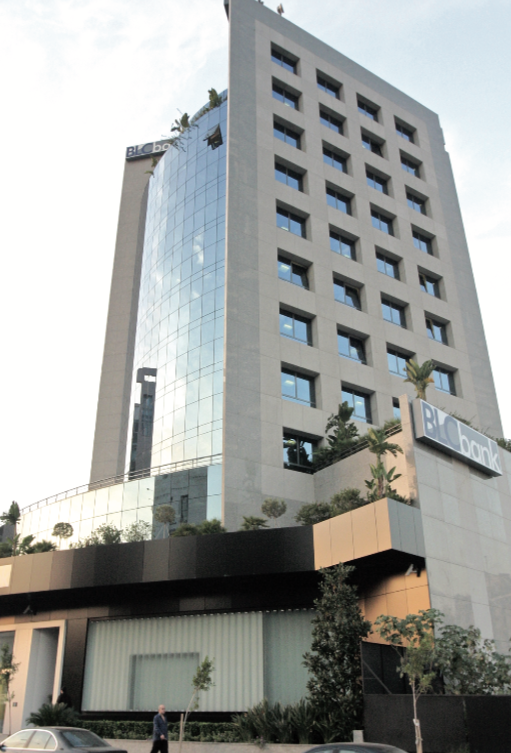
After putting it on the market earlier this year, the Qatar Investment Authority (QIA) in early August completed the sale of BLC Bank, its Lebanese banking asset to Fransbank who won a two-round competition to buy BLC Bank with a $153 million bid, $9 million better than what others had put on the table. QIA retained ownership of BLC assets with relevance for the Gulf financial industry. In an interview with Executive, Fransabank chairman Adnan Kassar said that BLC Bank was one of the oldest in the country with a wide client base and deep roots within the Lebanese business community. 

He also hinted that tactically, “the acquisition has advanced our ranking in respect to total deposits from fifth to fourth, and further deepened the gap percentage of other indicators that distance us from other immediate competitors.”

According to BLC Bank chairman Shadi Karam, Fransabank can make the leap to becoming Lebanon’s fourth largest bank by consolidating the balance sheets of the two banks while maintaining their separate brands. Fransabank now owns around $7.33 billion in assets and $6.13 billion in deposits.

Fransabank’s purchase in line with expansion

Local economist Elie Yachoui said that Fransabank might want to restructure BLC Bank and sell it on with a profit at a later stage. He did not see a great value in having a higher spot on the pecking order. “Whether fourth or fifth, it’s all the same,” he told Executive.

When QIA bought BLC Bank in 2005 for $236 million, the bank had been restructured under central bank stewardship from an ill-managed, muddled, loss-making, even shady, bank into an ambitious, forward looking entity. QIA did not divulge its reasons for selling at an undisclosed profit (the lower transaction value reflected the fact that the sale did not include BLC Bank France and its offices in the GCC) but analysts see the move tied to Lebanon’s economic paralysis.

A prominent economist with ties to the banking sector compared the acquisition price for BLC with that for Bank Saradar. BLC Bank fetched almost as much as Bank Audi paid for Saradar a few years ago but Audi got more value for its investment (through Bank Saradar’s high-end client base and asset structure which offered greater potential), he opined on condition of anonymity.

Of course Fransabank sees it differently. Referring to BLC Bank by its older name, Banque Libanaise pour le Commerce, Fransabank’s statement to Executive conveyed that the step is entwined within an expansion strategy that rotates “around two main fully synchronized axes”: an axis of international and regional expansion and a local axis.

The statement pointed to international expansion plans with focus on “selective, potential world markets,” including the existing presence in three foreign countries — France, Algeria, and Sudan — and prospective presence in Syria and Libya (rep office) this year and in Belarus, Iraq, and Turkey next year.

Fransabank said its local expansion strategy, which entailed four smaller takeovers of banks before the BLC Bank deal, was a mix of organic growth and acquisitions with strategic value for blending horizontal and vertical growth. The synergies between Fransabank and BLC Bank would extend to retail as well as to corporate (including small and medium businesses), capital markets, private and investment banking, and asset management.

While Kassar was quoted by the local media as saying that the acquisition of BLC Bank reflects Fransabank’s confidence in Lebanon’s economy and investment atmosphere, sector analysts maintain that the local market continues to offer less growth potential to Lebanese banks than cross-border expansion.

The takeover will not have a negative impact on BLC’s human resources. “There will not be a reduction of staff, but a reduction of operating expenses,” Karam was quoted by the Zawya Dow Jones newswire.

According to Kassar’s statement to Executive, Fransabank does not need to raise additional capital after the acquisition of BLC Bank. “We have financed our local and international expansion from our bank’s resources. Our capital adequacy ratio is in full compliance with the pertinent local and international requirements,” he said.

Neither does Fransabank have imminent plans for going to the Beirut bourse, where BLC Bank is listed. “We believe that listing Fransabank’s shares on the Beirut Stock Exchange is an important manner that necessitates careful consideration of market conditions and sentiments, and securing added value to shareholders’ investment,” Kassar’s statement read.

In Fransabank’s view, there is no room for considering a flotation of its stock because of Lebanon’s political crisis and its severe economical implications, including uncertainty and anxiety created by the power contest.

Kassar, a former minister of economy, had a final word to say about the quagmire: “We hope that the diverse political parties will advance the interest of the country over their own individual narrow interests and revert back to dialogue, as the only venue to reach an equitable political solution and put an end to the current seemingly endless political crisis, consequently allowing the economy to resume its development and growth.”

Inshallah.

September 1, 2007 0 comments
0 FacebookTwitterPinterestEmail
Comment

Why do people fall for scams?

by Matthias S Klein September 1, 2007
written by Matthias S Klein

A few weeks ago, a friend, who works in finance, told me a story. A Lebanese banker had come to see him and, very excitedly, told him about a great deal he was about to close. An Indonesian banker had approached the Lebanese via e-mail seeking help with a transaction, in which the Indonesian had converted a huge amount of gold into cash through a Dutch bank and now wanted to deposit that money — hundreds of millions of dollars — in a Lebanese bank. As proof, the Indonesian sent certificates that had the kind of flowery design many associate with South-East Asia. The Lebanese banker was very excited and had already started to plan where and how he and his partners would invest all this money.

Sound familiar? Of course, it was a scam. The e-mail was written in bad English, the certificates looked spurious, the Dutch bank had never heard of the Indonesian and yet, the Lebanese banker refused to believe that he had been had. The last thing my friend heard was that the Indonesian had flown to Beirut, where he stayed for two weeks — all paid for by the Lebanese banker and his associates — and then left, never to be heard from again. In retrospect, the Lebanese got off lightly with an airline ticket and a hotel bill. Usually, the victims of these scams have to advance money to the scammers to “facilitate the process” or “pay fees.”

And while only a small percentage of recipients of scam e-mails answer them, it is enough to yield substantial incomes for their senders, most of whom live in West Africa, South-East Asia and increasingly Eastern Europe. Since scams and fraud operate on many levels and through various means — e-mail, postal mail, fax, phone, business websites, and even online dating sites — reliable statistics are hard to come by but according to a BBC report from November 2006, in the UK alone, those “advance fee” scams have cost the economy around £150 million a year.

In another incident, Lebanese businessmen were offered a lucrative transaction with the Central Bank of Nigeria. They flew to Abuja, went to the bank, and met its governor. Only after their return to Beirut did they learn that, on the day of their meeting in Nigeria, the bank’s real governor had been attending a conference in the US and that the person they met in the governor’s office had been an impostor, probably a bank employee who had taken advantage of his boss’ absence to advance his criminal activities.

Most of us are well-aware of e-mail scams and the chances are that we have received e-mails entitled “I need your assistance” or “Great opportunity”. They usually claim that a bank clerk or lawyer has found himself responsible for a large sum of money belonging to a client who has met an untimely death and he now would like to transfer the money abroad but, alas, such is the law of his country that he needs a foreign partner to do so. If the recipient of the e-mail is gullible enough to answer, soon he or she will be asked to wire money to the new “partner” in order to facilitate matters. Needless to say, that money will then disappear and the “partner” no longer answers any e-mails.

Another version of this scam — called “419” or “Nigerian” referring to the article of the Nigerian Criminal Code dealing with fraud — is that the alleged author of the e-mail is a relative of a famous person who has recently died — often an ousted or murdered African head of state. A famous version purports to come from none other than Suha Arafat, the widow of the late Yasir Arafat, whose author asks to help “her” to transfer money from a bank in the Middle East to Europe.

Although these scams are most prevalent in Europe and North America, the Middle East is also fertile ground for finding greedy and gullible. But why do seemingly bright and streetwise people fall for them?

The anti-scam group Fraudwatchers say that it is a combination of lack of expertise and willingness to believe that leads people to fall for scams. As they state on their website “when a scammer who claims to be a barrister, banker or diplomat confidently presents what appear to be genuinely legal documents and arguments, it can be very convincing.” In addition, the scenarios presented — which almost always promise a large amount of money — are the kind that people want to believe and be in on.

Once a “mark” bites, the scammer starts a course of emotional manipulation, pulling the victim in further. He will use various psychological tools to extort money: the promise of a disproportionately high reward for a relatively small outlay, the feigning of personal distress, the pretense of authoritative documents, the offer of a special deal that, if not snatched, will quickly go to someone else. All have been proven emotionally hard to back out of.

Another, often overlooked, factor is that in the West and MENA alike there is a high level of ignorance of the financial protocol in foreign and exotic lands allied to an equally high diet of news about money-laundering war lords, blood diamonds, and uncontrolled business environments. Thus, a story where the daughter of a killed dictator or the lawyer of a European expat killed in an accident is trying to transfer large amounts of money out of the respective country might sound quite plausible. You have been warned.

MATTHIAS S. KLEIN is EXECUTIVE’s Deputy Managing Editor

September 1, 2007 0 comments
0 FacebookTwitterPinterestEmail
Comment

Race for the Arctic

by Peter Speetjens September 1, 2007
written by Peter Speetjens

The times they are changing, and they are changing fast. At the turn of the 20th century Frederick Cook and Robert Peary had to spend weeks on end in sledges and lost many a toe to frostbite in their race to become the first to reach the North Pole. It now seems likely that by the end of the 21st century one will simply be able to call a travel agency and book a cruise across the Arctic.

Research shows that the northern ice cap in summer is some 20% smaller than it was 30 years ago and, if this trend is to continue, there may be no ice at all by 2075, much to the chagrin of the Arctic’s polar bears. Having to live with longer summers and less ice, the white giants already face great difficulties in catching their beloved seals and have turned to cannibalism and infanticide to survive. In fact, life has become so bad, that Ursus Maritimus is on the brink of extinction.

With the arguable exception of planet White House, it is widely accepted that the melting of the Arctic is to a large extent due to global warming. Yet where the common man mainly sees problems, his leaders see but opportunities!

Sure, they too feel sorry for the polar bears, but within the bigger picture the melting ice is a true blessing in disguise, as the Arctic sea is extremely rich in fish and, according to a study by the US Geological Survey (USGS), could be home to an estimated 25% of the world’s untapped oil and gas reserves. Not to mention gold, diamonds, metal ore and other minerals!

Some 100 years after Cook and Peary’s dash to glory at the North Pole, the Arctic’s five neighboring countries — Russia, Canada, Norway, Denmark and the US — have entered a race to be the first to lay their hands on the riches underneath. Denmark is of course not directly linked to the Arctic, but in a previous round of the great land grabbing game, the tiny kingdom planted its flag on Greenland and declared its sovereignty over 2 million square kilometers of ice and snow, as well as a few thousands of Inuit hunting whales.

The problem with the Arctic is that, unlike the Antarctic, it is not governed by an international treaty. The Arctic is essentially open sea, which belong to all the world’s nations. However, according to the United Nations Convention on the Law of the Sea, nations can claim a 200-mile economic zone and, in addition, lay claim to part of the continental shelf. The extent to which they can do so is determined by a set of formulas dependent on the seafloor.

As a consequence, each of the five competitors has teams of scientists studying the nature of the ocean floor. Russia is currently leading the pack. It claims that the ocean floor is an extension of the Eurasian continental shelf. As soon as the United Nations established the “Commission on the Limits of the Continental Shelf” to deal with the world’s seabed grabbing game, Moscow immediately claimed about half the Arctic. Never a fan of international treaties, Washington refuses to acknowledge the international body.

What’s more, Russia last month sent the Akademik Fyodorov, the country’s research flagship, accompanied by a nuclear-powered icebreaker and eight helicopters into the Arctic sea. The ship’s scientists sent a miniature submarine to the seabed, some 2,500 meters below the ice, to deposit a titanium capsule with a Russian flag in it.

Canada, another major contender, currently ranks second. It aims to expand its territory by up to one third. Not in the possession of major icebreakers, it recently announced to acquire eight military patrol boats that are able to penetrate ice up to one meter thick. Denmark comes third and is at loggerheads with Canada over an icy rock called “Hans Island”.

Both countries have planted their flags on the isle and even sent warships to assert their claims. The United States currently rank fourth and has promised to announce its Arctic claim soon. In fifth place comes Norway, which has so far been the most silent of the lot.

Man is blessed with the faculty of reason, so we were taught at school, yet the older one gets, the more one is convinced that is the greatest myth ever invented. To start a race for fossil fuels in the Arctic, as its ice is melting due to the burning of fossil fuels, must be the ultimate illustration of man really being a greedy, short-sighted opportunist. As sea levels are rising and deserts expanding, keep in mind that Cook and Peary, despite their claims, actually never made it to the North Pole.

PETER SPEETJENS is a Dutch writer and freelance consultant

September 1, 2007 0 comments
0 FacebookTwitterPinterestEmail
Comment

Losing hearts and minds

by Nicholas Blanford September 1, 2007
written by Nicholas Blanford

Is the government losing to Hizbullah in the battle of hearts and minds over reconstruction from last year’s devastating month-long war? Although much has been achieved in the past 12 months, the government, crippled by political crises may have also fallen victim to its own innovative plan to help rebuild the country. In the aftermath of the war, the government opted for a direct investment scheme allowing donors to adopt and supervise the spending of their funds on projects of their choice, thus bypassing the cumbersome — and often corrupt — bureaucracy of the state. It was a novel scheme and has allowed wealthy Gulf states to charge ahead with rebuilding war-shattered villages and towns in the south, earning gratitude from the residents who have named some main streets after Gulf rulers and hung banners thanking them for their support.

Prime Minister Fouad Seniora encouraged the Gulf state sponsorship of southern Shiite villages in a perhaps vain attempt to break the region’s reliance on the social and economic support of Hizbullah’s charitable institutions. But the loyalties of the residents by and large remain committed to Hizbullah for two principle reasons. First, the Shiites of southern Lebanon are remarkably resilient and have an enormous capacity to withstand hardship and adversity. Second, the increased political and sectarian polarization in Lebanon over the past year has strengthened the “bunker mentality” of the Lebanese — the instinct to retreat into the protection of the community when under threat. Given that Hizbullah is the paramount representative of Lebanon’s Shiite community and probably the most powerful political entity in Lebanon, there is little inclination among Shiites to drop their support for the organization.

Furthermore, the direct sponsorship scheme was not confined to Sunni Gulf supporters of the government. Iran is a highly visible donor state — the emblem of its reconstruction organization is a familiar sight in South Lebanon. According to the Los Angels Times, Iran has spent $155 million on reconstructing schools, mosques and churches, health clinics, electricity projects and bridges. The Iranian organization’s most visible enterprise is the enormous construction of new and improved roads throughout southern Lebanon. The daily said the Iranians have completed work on 504 roads and is working on another 76. The scale of the road building has raised eyebrows, particularly the four-lane highway that is replacing a rarely used and potholed minor road cutting through the mountains between the Litani river and Jezzine. It is widely known that Hizbullah has turned the area into part of its post-war military front line, and nervous Druze and Christian politicians believe that the Iran-funded road building is less an altruistic boon for the sparsely populated area, but a scheme to improve communications links between Shiite Nabatieh and the Shiite villages of the Western Bekaa.

Unlike other Gulf countries, Iran has declined to put a ceiling on its total funds for Lebanon’s reconstruction. It is assumed that hundreds of millions of dollars have also been channeled to Hizbullah’s social and charitable organizations. In a speech marking the first anniversary of the ceasefire that ended the war, Sayyed Hassan Nasrallah said that Hizbullah had spent $380 million to provide alternative accommodation for more than 28,000 families and financial assistance to businesses, agriculture and fisheries. Hizbullah apparently is planning to hand out another $4,000 per family who lost their homes on top of the $12,000 and $10,000 cash payments given in the wake of the war.

The upshot of the direct investment scheme is that most Lebanese in the south only see foreign countries helping them instead of the state. Southern Lebanon traditionally is a neglected area of the country, ignored by successive Beirut-centric governments. Therefore, many southerners believe that the government’s low profile in the war-battered district indicates the usual lack of interest by the state.

Indeed, the battle for hearts and minds between the government and Hizbullah has also moved to Beirut’s southern suburbs. According to government figures released in June 2007, some 87% of the housing units damaged or destroyed during the war have been processed with recipients receiving $52 million of a total $116 million due. However, in Beirut’s southern suburbs only 28% of homeowners eligible for compensation have been processed. That has spurred Hizbullah to charge that the government is deliberately foot-dragging on payments to an area of strong support for the party. Hizbullah has formed an institution called Al Waad to take charge of the reconstruction of the southern suburbs. It has just begun breaking ground in the neighborhood after the sites were cleared of rubble. The argument has been made that the government resented paying compensation in Beirut’s southern suburbs knowing that homeowners would hand over the money to Al Waad to fund the district’s reconstruction and about 70% have done so. That would be tantamount to the cash-strapped government providing funds to a Hizbullah project for which the Shiite party will gain the ultimate plaudits once the new suburbs are completed.

NICHOLAS BLANFORD is a Beirut-based correspondent and author of  “Killing Mr Lebanon – The Assassination of Rafik Hariri and its Impact on the Middle East” 

September 1, 2007 0 comments
0 FacebookTwitterPinterestEmail
  • 1
  • …
  • 562
  • 563
  • 564
  • 565
  • 566
  • …
  • 688

Latest Cover

About us

Since its first edition emerged on the newsstands in 1999, Executive Magazine has been dedicated to providing its readers with the most up-to-date local and regional business news. Executive is a monthly business magazine that offers readers in-depth analyses on the Lebanese world of commerce, covering all the major sectors – from banking, finance, and insurance to technology, tourism, hospitality, media, and retail.

  • Donate
  • Our Purpose
  • Contact Us

Sign up for our newsletter

    • Facebook
    • Twitter
    • Instagram
    • Linkedin
    • Youtube
    Executive Magazine
    • ISSUES
      • Current Issue
      • Past issues
    • BUSINESS
    • ECONOMICS & POLICY
    • OPINION
    • SPECIAL REPORTS
    • EXECUTIVE TALKS
    • MOVEMENTS
      • Change the image
      • Cannes lions
      • Transparency & accountability
      • ECONOMIC ROADMAP
      • Say No to Corruption
      • The Lebanon media development initiative
      • LPSN Policy Asks
      • Advocating the preservation of deposits
    • JOIN US
      • Join our movement
      • Attend our events
      • Receive updates
      • Connect with us
    • DONATE