• Donate
  • Our Purpose
  • Contact Us
Executive Magazine
  • ISSUES
    • Current Issue
    • Past issues
  • BUSINESS
  • ECONOMICS & POLICY
  • OPINION
  • SPECIAL REPORTS
  • EXECUTIVE TALKS
  • MOVEMENTS
    • Change the image
    • Cannes lions
    • Transparency & accountability
    • ECONOMIC ROADMAP
    • Say No to Corruption
    • The Lebanon media development initiative
    • LPSN Policy Asks
    • Advocating the preservation of deposits
  • JOIN US
    • Join our movement
    • Attend our events
    • Receive updates
    • Connect with us
  • DONATE
Editorial

Looking to the profits of tomorrow

by Yasser Akkaoui September 1, 2007
written by Yasser Akkaoui

Why should the GCC consider investing in alternative energy? The Gulf nations have enough energy of their own for the foreseeable future, so why dismantle a lucrative and historic revenue stream?

There are, however, three powerful reasons why we should not ignore the current interest in alternative energy.

First, there are the investment opportunities, and last month’s launch of Standard & Poor’s alternative energy index — in which 50 companies from 13 countries with a combined market capitalization of $512.5 billion are represented — is the latest indicator of this potential. Secondly, there is climate change. Traditional energy producers cannot ignore the obvious and by now globally-accepted evidence that our world is changing — heating up and melting down — due to man’s over-reliance on fossil fuels. Thirdly, there are security concerns. The Middle East cannot escape the fact that it is a region with many energy eggs in one creaky and volatile basket. There is every reason to diversify while this low-intensity tension continues to simmer (especially as it looks as if Iran has only got one kind of alternative energy on its mind).

Unlike the technology boom, this is one boat the Arabs cannot afford to miss and it would be fitting that a region so synonymous with energy and wealth should use some of this wealth to lead the way in developing new, safe and responsible ways to power our earth. Then surely the shining new emirates could genuinely take their place at the developed world’s high table.

But they should not drag their heels. In the same way that Silicon Valley led the way for a technological generation, there is a new breed of US-funded research into alternative energy. President George Bush, hardly the greenest leader on Earth, has gone to Brazil three times in to discuss ethanol exports with President De Silva; and this from a man who normally only gets out of bed for Iraq, church and the future of the GOP.

Yes, there will always be resistance — oil producers and the world’s automobile manufacturers are the obvious grumblers as they have most to lose with the incursion of high additional costs required to incorporate newer and cleaner ways to do business. Speaking recently at the American University of Beirut, Nissan and Renault chief, Carlos Ghosn, no doubt wary of who butters his bread, reminded us that in a global industry which sells 65 million cars annually, it is hardly sound business practice to focus on the 300,000 hybrids assembled each year.

Then again, he, too, probably had no alternative.


September 1, 2007 0 comments
0 FacebookTwitterPinterestEmail
Lebanon

FEMIP – Helping the private sector

by Executive Staff September 1, 2007
written by Executive Staff

Although there was renewed interest in European aid to Lebanon following the Paris III donor conference last January, it is worth remembering that there is a strong tradition in European funded local projects, whether they be under the umbrella of the European neighborhood policy — which currently applies to Europe’s 16 immediate neighbors, with the exception of Russia — or as envisioned by the Barcelona Process, which aspires to deepen relations between the European Union and its southern neighbors with bilateral agreements, leading ultimately to the promotion of a Euro-Mediterranean free trade agreement in 2010. “The European Investment Bank’s (EIB) operations in the Mediterranean partner countries have in fact been brought together under the Facility for Euro-Mediterranean Investment and Partnership (FEMIP) since October 2002,” explained EIB spokes­person Orlando Arango.

Active in Lebanon since 1978, the EIB has invested a total of 800 million euros, especially to reconstruction, water and sanitation infrastructure and transport projects. The total financing by FEMIP in Lebanon between 2002 and 2007 is estimated at around 325 million euros, of which 320 million euros was made up of long-term loans. “FEMIP tends to consider this particular type of financial instrument more adequate for such projects,” said Arango.

The general aid given to the region through the partnership is outlined by an investment strategy in which top priority is given to private sector ventures, whether they stem from purely local initiatives or from foreign direct investment projects. “In order to create an environment, which is favorable to the development of private enterprise, FEMIP also supports infrastructure projects; investments in human capital as well as any scheme specifically targeting environmental protection,” Arango added. The general idea behind FEMIP projects is to provide support to Mediterranean partners enabling them to meet their economic objectives, rise up to the challenges brought by social modernization as well as advance each country’s regional integration. “This ultimately determines financial allocation for each sector and more particularly in the run-up to the creation of a common customs union with the EU by 2010,” he underlines.

Allocations based on country size

However, according to figures released by the European Union, investments in Lebanon occasionally appear to lag behind other countries in the region. Between 2002 and 2006, Morocco, an important EU partner, received 1,040 million euros, while Tunisia got 1,114 million euros. Israel has collected 275 million euros divided among environmental projects and credit lines. The same amount was granted to Lebanon, where the disbursement mainly targeted the transport industry, the environmental sector, while part of the amount covered credit lines. Aid to Jordan consists of 166 million euros divided among various activities such as energy, transport and human capital.

Regional bad boy, Syria, has received 635 million euros between October 2002 and December 2006. This amount was primarily directed toward the energy, transport, telecom and environmental sectors as well as in opening credit lines. “The budget allocated to each country depends however on the size of the economy, the level gross fixed-capital formation (GFCF) and the demand for external financing namely eligible investment projects addressed to the EIB,” Arango defended.

This summer witnessed the one-year anniversary of the July war. The event celebrated as a divine achievement by some, has nonetheless also resulted in sluggish, if not negative growth.

The EIB has also taken into account the added burden of funding part of the recovery and reconstruction processes according to the reform program put forward by the Lebanese government. Over the next five years, 960 million euros will be invested in key projects under the Public Investment Program in support of both the private and public sectors. This amount includes 400 million euros destined to priority transport, wastewater and energy infrastructure projects. “Technical assistance grants will facilitate the preparation and implementation of privatization programs,” said Arango. On the other hand the EIB is allocating 560 million euros to the private sector, an amount that will be channeled trough local Lebanese banks.

“The European Union has also earmarked 5 million euros of its budget for the recently-launched Building Block Equity Fund, to acquire equity in innovative small and medium-sized Lebanese enterprises,” Arango confirmed.

The EIB also intends to develop a venture capital market by assisting Lebanese companies. “This particular type of financing is expected to act as a catalyst in the Lebanese marketplace and promote the inward flow of funds into Lebanon as well as in the region,” he added. To implement efficiently its policy on the local level, EIB has also chosen financial partners including Byblos Bank, Bank of Beirut, Banque Audi, Banque de la Méditerranée, Banque Libano-Française, BBAC, Crédit Lebanaise, First National Bank, Fransabank, Lebanese Canadian Bank, Société Générale de Banque au Liban.

Byblos Ventures gets its start

At Byblos Bank the collaboration has materialized into the Byblos Ventures, the bank’s first equity project worth $20 million at inception. The Byblos Bank Group stake amounts to 50%, partnering the EIB which owns 25% while the remaining equity is divided among other financial institutions. “I would expect the fund to grow to $40 or $50 million,” says Paul Chucrallah, assistant general manger at Byblos Bank. “This equity project is introducing Lebanese companies to alternative financing as well as acting as a financial accelerator,” he added. As Executive went to press, other institutions were signing on the remaining 25%. “The size of each individual investment will vary between $1 and $3 million with an average of 10 to 15 projects to be taken on,” said Chucrallah.

One of the last instruments EIB is relying on pertains to the field of human resources. An internship program has been made available for students from countries in the Mediterranean basin such as Algeria, Egypt, Gaza and the West Bank, Israel, Jordan, Lebanon, Morocco, Syria, Tunisia and Turkey. It provides candidates with an opportunity to improve their skills and boost their experience by exposing them to a multicultural environment. Candidates must either have a degree from an institute of higher education or be enrolled in their final year.

Despite the current government paralysis, many projects are being executed. “Water and sewage installations in North Lebanon have been completed,” confirmed Arango, “while a storm and wastewater drainage network and a sewage treatment plant for the greater Tripoli area has also been further upgraded and developed,” he said, adding that power transport cables in Greater Beirut have also been installed while the motorway linking Tabarja to Tripoli, north of Beirut, has been finalized. This particular road work comprised the rehabilitation of the 38 km existing motorway between Tabarja and Chekka and the construction of the missing 15 km section between Chekka and Tripoli. Other projects include the upgrade and extension of Beirut’s international airport as well the Port of Beirut and the renovation of installations as well as the modernization of Air Traffic Services at the Rafic Hariri International Airport.

September 1, 2007 0 comments
0 FacebookTwitterPinterestEmail
Lebanon

Hotel Sector – Think outside the box

by Executive Staff September 1, 2007
written by Executive Staff

It’s hardly been a great tourist summer. According to the numbers published by the ministry of tourism, the number of tourist arrivals in July reached 126,986 compared to 188,465 in 2005. In June, arrivals were down nearly 60% from 2006 which was proving to be a bumper year until the war broke out.

Looking back, growth from 2001 to the beginning of 2005 averaged 20% to 30%. The first six months of 2006 were excellent with 32% growth and 71% occupancy in Beirut before the high summer traveling season. There was not enough time to recover from the war before the string of events that kept Lebanon in the news and resulted in the worst season for 15 years. Occupancy rates were under 20% for the first six months of this year and rising to between 28-35% in August, according to Pierre Achkar, President of the Lebanese Federation of Tourism and Hotel Associations and owner of the Monroe Hotel, the Markazia Monroe Suites and Printania Palace in Broumana. “When you are running below 45%, you are losing a lot of money.” From the war to the present, estimated damages to the tourism sector hover around $286 million.

In the BCD, an area once touted as the new hotel epicenter but which has now become Camp Solidere, home to an eight month demo, the squatters have succeeded in crippling at least two hotels and forcing nearly 200 businesses to close their doors. The Markazia Monroe Suites has had no clients since the protest began in December 2006. The hotel used to employ around 140 people but in the present situation, it is paying the salaries of 16 department heads just to keep them from going abroad. “How long can we hold out? Nobody knows. Do we have a financial problem? Yes. Are we going to be helped by the government? We don’t know,” says Achkar, who is considering legal action against the government for the sit-in. “When it lasts six to eight months, it’s illegal,” he argues. “They are impinging on my freedom.”

Owners need some assistance

Marwan Kairuz, chairman of Etoile Suites, also in the BCD, thought that he had escaped the losses of last summer when his hotel was fully booked by journalists. After the war his regular business returned, but once the sit-in began, it was game over. The streets were blocked and guests couldn’t access the hotel. As the protests dwindled and a few streets re-opened, he was able to achieve about 10-20% occupancy. In mid-August of this year the occupancy rate rose to around 40 to 50%, but at a price: today the average room rate is $80 compared to $220 in 2006 and $300 in 2005, while he has had to let go 70% of his staff. “We are losing money,” he said and admitted that he might have to sell some of his equity in the business.

Achkar believes that there should be greater responsibility on the part of the government to assist hotel owners because of the indirect destruction. He is asking that at the very least special loans should be provided with 0% interest for seven to ten years with owners keeping their managing interest. He believes that without this some will go out of business or the banks will move in. The syndicate has also asked the government for special electricity rates but the best the government can do is to offer the sector subsidized loans at 4%.

The brain drain is also having a negative impact, with many of Lebanon’s 120,000 tourism workers being lured to the Gulf. “I think that a lot of people working in the Gulf will be back,” says Achkar. “I have 40 former employees working in Qatar and Saudi Arabia and they tell me that the salary is only 10-20% more than that here.”

Think outside the box

The catch phrase this year for most four and five-star hotels is to “think outside the box” and focus on non-core activities such as weddings, with bookings staying steady at 2005 levels. The Mövenpick Hotel and Resort told Executive that 65 weddings were booked from July to September and that they are catering up to three a day on weekends.

Four and five-star hotels are in great locations with a full array of outlets such as high end restaurants, spas, gyms, and shopping areas — all the things one needs to take their mind off the stresses of the day. Mövenpick is one of them. Says Mira Hawa, director of sales and marketing, “[We] have been deriving business in different ways.”

Earlier this year, Mövenpick also ran a campaign in which local Lebanese were encouraged to stay and use the spa and generally pamper themselves. That campaign generated almost $65,000. Other promotions include a summer kid’s camp and “Me Time” at the Essential Spa for busy career women and mothers. Occupancy reached 65% in mid-August and they are expecting a healthy average of 50-55% for the year.

The management at the Metropolitan in Sin el-Fil has been relying on the boulevard shopping mall, the Elixia Spa and Habtoorland amusement park to keep them afloat. Last year, the Habtoor Grand Tower closed leaving only the Metropolitan Palace’s 200 rooms open for business. In August the hotel was running at a respectable 60% occupancy. It has also partnered with Middle East Airlines on a promotion for MEA ticket holders to stay four nights for the price of three.

Hotels outside Beirut such as Le Royal in Jounieh maintain they are at 50% occupancy in August, while Grand Hills in Broumana and Mzaar Intercontinental near Faraya are offering weekend getaway packages for two including a room, meals and spa treatment. Although these are normally off-season promotions, this year they have had no choice. Business has to tick over and the good news is that many Lebanese are taking advantage of the prices.

MICE (meetings, incentives, conventions and exhibitions) events have taken place but in smaller numbers with fewer participants. This is a staple for the industry particularly in the spring and fall. Mark Timbrell, general manager of Gefinor Rotana, told Executive that business never ceases and that he is quietly optimistic. While travel warnings may discourage US or European business travelers, local syndicates and associations will continue to hold their conferences, meetings and seminars. Le Royal is focusing on MICE for their target market this fall. Joyce Mouwad, director of sales and marketing for Le Royal said that for 2008 the same number of conferences are still being booked.

For the future, all agreed that recovery depends on stability to gain consumer confidence and this in large part depends on a successful presidential election. Until then the sector will continue to be creative and hang on in there.

September 1, 2007 0 comments
0 FacebookTwitterPinterestEmail
Lebanon

Software development industry – Ahead of GITEX

by Executive Staff September 1, 2007
written by Executive Staff

For techies, the GITEX, the annual information technology exhibition in Dubai, is one of the top three exhibitions in the world. It has steadily grown from 939 companies being represented in 2004 to 1,353 in 2006, with 133,139 visitors from 119 countries. The growth of GITEX reflects that of the MENA region overall as the third fastest growing IT market in the world after India and China. This year has already been sold out and will be the biggest exhibition ever in its history. At least 25 Lebanese firms have signed up along with a new conglomerate of companies known as Lebanon SoftShore.

GITEX is the place where developers unveil their latest designs such as Software Design Consulting Group’s (SDCG) Visual Dolphin Retail, that will allow retailers to manage their total business from the register, tax collection, inventory status and customer/supplier data. According to Raymonde El-Hayek Warde, general manager of SDCG, her company has participated in GITEX for 10 years and experienced constant growth that is “due in large part to the opportunities that GITEX offered in terms of exposure and importance in the Middle East.”

For others who are in the early stages of expansion to the Gulf and Arab counties, such as New Information Technology (NIT), GITEX provides the platform they need, said its managing director Selim Jamaty. NIT developed SoftPharm, a software package for pharmacies, and has achieved a market penetration rate of 97% in Lebanon. Now it is time to go to the Gulf.

Big things are happening on the Lebanese front in software development, an industry that has been able to withstand the many economic pressures facing the country. According to a 2001 Professional Computer Association’s assessment, the IT sector was estimated at $245 million with the software industry making up 14% or $34 million. Hardware and infrastructure made up the lion’s share of 58% and service another 28%. At the time, exports made up only 9%.

Focus on exports

Today, things have changed with exports accounting for the majority of business with few firms concentrating solely on the Lebanese market. Statistics on the ICT sector are hard to come by as there have been no recent studies to provide an accurate size of the industry. According to Joe Abi-Aad, president of the Association of the Lebanese Software Industry (ALSI), the sector is sorely in need of one but in the meantime independent estimates range from $250 million (Oxford Business Group 2005) with aggregate growth of the software development sector estimated at around 10% annually, to $320 million (ITG Group).

According to Abi-Aad, between 2001 and 2004 the market experienced a slight decline that coincided with the burst of the global technology bubble. Since then, members of ALSI have reported growth ranging from 5% at the lower end and up to 80% for the most successful firms who are outsourcing to the US, the EU and the Gulf. It is a burgeoning trend as developers can no longer rely on a cash-strapped Lebanese market where smaller clients are beginning to default on payment schedules. Both Fady Geagea, manager of Profiles Software Company and Nader Abdallah, general manager of Anzima, which has been serving the GCC since 2003, said doing business in the Gulf was critical for their survival in this current climate.

Another firm which had to deal with the economic fall-out from last summer’s war has opened up shop in China. Carole al-Sharabati, managing partner of software developers CME, said that they needed a back-up office for their clients overseas because of the instability in and risk perception of Lebanon. Also, the lower wages in China have helped her firm to increase international competitiveness.

One major development in the sector is the Euro-Lebanese Center for Industrial Modernization’s (ELCIM) initiative to create Lebanon SoftShore — The Software Cluster (LSS), a conglomerate of Lebanese software developers. LSS was formed this year as a means to strengthen Lebanon’s competitiveness abroad and provide Lebanese firms with a platform for greater exposure and organization to bring big outsourcing projects to the industry. So far 17 firms have joined the cluster, focusing on markets in the GCC, EU (mainly France, Switzerland and UK) and the US. LSS is headed by ELCIM and will pool the resources of the cluster members. ELCIM will promote the cluster members abroad and direct large projects.

Joining hands

For members like al-Sharabati of CME, “it is an opportunity to join hands and collaborate in a number of areas.” She views the cluster as a forum to exchange information and work together where she can assist other firms in expanding to the US while she hopes to gain exposure to the European market.

According to Talal Hijazi, coordinator of the software manufacturing sector for ELCIM, one of the advantages Lebanon has over many competing countries is its ability to develop software in many languages.

There are drawbacks to operating in Lebanon. Al-Sharabati’s firm pays $3,500 per month for a connection that in the US would not cost more than $100. Furthermore, the lines are unreliable and neither fast nor wide enough. Electricity prices have also increased along with those for generator services. Both — internet and electricity — are fundamental for the industry and their low quality a severe problem.

The greatest danger facing the industry is emigration. Most firms report difficulties to retain qualified engineers and developers. Al-Sharabati said that most young professionals are concerned only about the short term as a result of the recent instability and are therefore short-sighted when it comes to building a solid career, preferring instead to hop from one job to the next with their ultimate sight on going abroad.

As companies continue to grow, the demand for more engineers grows concomitantly leaving the market constrained by the lack of seasoned professionals. Few engineers with three to five years of experience can be found.

Software giants Microsoft and Cisco are working to address this problem through their Partnership for Lebanon that also includes GHAFARI Inc., Intel Corporation and Occidental Petroleum Corporation. The Partnership for Lebanon is focused on a number of issues to assist the Lebanese market ranging from educational initiatives to funding the private firms’ expansion efforts.

The partnership members recently announced that they will offer training programs for the IT sector — in cooperation with the Council for Development and Reconstruction — for students to help them acquire the skills and experience they need in the expanding market.

According to Hussam Kayyal, program director of corporate citizenship at Cisco, they were shocked when talking to high school students to find out that none of them were planning to stay and work in Lebanon. Since then, they have stressed to students the potential of the local sector through training and education.

Gender trends

Perhaps the most interesting trend is the issue of gender in IT. Female engineers are taking on the industry and shifting it from what was traditionally a male-dominated sphere to a more mixed one. According to al-Sharabati, the industry allows for much needed flexibility especially for females from more conservative backgrounds. CME is facing the issue that some young women have curfews imposed on them by their families and must be home by 5 p.m. Through telecommuting via the internet, these women can finish their work at home. Women are also less likely to move abroad for work and thus are becoming ever more attractive on the local market.

September 1, 2007 0 comments
0 FacebookTwitterPinterestEmail
Comment

Global Arab finance comes of age

by Riad Al-Khouri September 1, 2007
written by Riad Al-Khouri

Surplus cash from Middle East energy producing countries has been running around the world for over three decades, seeking better returns in offshore havens. However, since the 1970s, investments by Arab states have had the potential to alarm destination countries. An important example of this came after the Kuwaitis acquired about 20% of British Petroleum in 1988 and the UK forced them to reduce the holding by over half, amid concerns about OPEC member influence on one of the world’s giant oil companies.

More recently, Dubai Ports World (DPW) faced the American Congress’ opposition to acquisition of US ports; the controversy started in early 2006 with some Americans arguing that no Arab government should own such strategic assets. Later that year, DPW pulled out and sold its US port operations to an American group.

The DPW controversy reinforced fears that investments in the West had become politically risky for Arabs. However, part of the problem there seems to have been the high-profile hands-on status of the investor, and the answer may be to deployment of state money in subtler ways.

Giving mounting surpluses, this issue will undoubtedly become even more important in the next few years as Sovereign Wealth Funds (SWFs) of Arab countries roam the globe looking even more assiduously for investments. Previously, most Gulf countries had put their liquid assets (mainly dollars) in bank deposits or government bonds, typically American. However, Arab state agencies have been getting fidgety over the value of greenback deposits and American federal securities; so many Gulf SWFs are increasingly moving money into global equity markets.

The largest sovereign fund may be the Abu Dhabi Investment Authority, with as much as $500 billion under management, with Saudi Arabian SWFs not far behind. The Kuwait Investment Authority, created in 1960 to invest the emirate’s oil revenues, has accumulated more than $100 billion of assets; big Arab sovereign funds also include the Qatar Investment Authority with $40 billion, and UAE SWFs outside Abu Dhabi.

With oil revenues gushing in, these SWFs feel that their governments hold enough dollar-denominated government bonds, and so will increasingly target Western shares. A recent example came two months ago when France, Germany, and Spain welcomed Arab SWF money into the European Aeronautic Defense and Space Company (EADS), the world’s second largest aerospace conglomerate. The group includes the aircraft manufacturer Airbus, the world’s largest helicopter supplier Eurocopter, and EADS Astrium, the European leader in space programs. EADS is also the major partner in the Eurofighter consortium, develops the A400M military transport aircraft, and holds a stake in a joint venture that is the international leader in missile systems.

The $2 billion Global Strategic Equities Fund (GSEF) founded and sponsored by Dubai International Capital (DIC), the international investment arm of the state-owned firm Dubai Holding, acquired over 3% of the outstanding share capital of EADS, allowing the SWF to become one of the largest institutional shareholders in the company. In line with GSEF’s investment strategy, neither the fund nor DIC will seek a board seat or take an active role with EADS but will “build a strategic relationship with the EADS management and shareholders.”

This transaction comes less than two months after GSEF made a substantial investment in HSBC Bank Middle East, becoming one of the leading shareholders in the company. Another major investment by DIC, GSEF’s parent, was the $1.3 billion acquisition of the Doncasters Group (UK), which produces precision engineering components. Most important, target firms and host countries mostly welcomed these and other deals.

The bad news is that growth in Arab SWFs could create new risks for the global financial system, as opaque investment policies could mean that comments or rumors would tend to increase volatility in capital markets. In addition, in autocracies like the Gulf countries, officials imperfectly accountable to those for whom they are ultimately investing run the funds.

To counter these negative factors, SWFs need to be more open and commercially minded. The Norwegian Government Pension Fund, which invests much of the country’s oil riches, and is now worth over $300 billion, is a model of good governance and accountability, listing all 3,500 investments on its website; the fund’s stakes are typically small in each company so, far from feeling threatened by its investments, firms often welcome it. This seems to be the strategy of DIC, which is also aiming for greater transparency: if the deals of Arab SWFs are not to trigger protectionism, they must become transparent.

In any case, Arab SWFs are so large that a change in their investment strategy away from bonds and toward stocks could eventually cause prices to go up in major equities. In the present troubled state of the markets, this will be a good thing: as the financial acumen of Arab SWFs increases, so will the attraction of investments cleverly presented as saviors of Western interests.

RIAD AL KHOURI is the Director of MEBA w11, Amman, and Senior Associate of BNI Ltd, New York City

September 1, 2007 0 comments
0 FacebookTwitterPinterestEmail
Comment

Iran’s upcoming election

by Gareth Smith September 1, 2007
written by Gareth Smith

The campaign for Iran’s next parliamentary campaign will not start officially until a couple of weeks before the poll in March 2008, but rising political temperatures in Tehran suggest the battle has already begun.

Conservative websites have been running a video allegedly showing former president Mohammad Khatami, still a leading reformist, shaking hands with women. President Mahmoud Ahmadinejad, under criticism over his economic management, has removed two important ministers to give fresh direction to his government. And the judiciary has once again banned Shargh, the lively reformist daily newspaper that regularly lampooned the president and his allies.

The attacks on Mr. Khatami show Iran’s conservatives are firmly on the defensive, says Mohammad Ali Abtahi, a vice-president when Khatami led Iran through an eight-year reformist era between 1997 and 2005.

“They have realized there is a chance he could run again in the 2009 presidential elections,” says Abtahi, who backs the idea. “But that’s two years away, and first we must pass the test of the Majlis [parliament] election.”

Conservative nerves over the Majlis poll result from the united front put forward by the reformists last December in elections both for local councils and for the Khobregan, or Assembly of Experts, the clerical body that chooses and supervises Iran’s supreme leader.

Drawing up common center-left lists for the parliamentary election is being entrusted to regular meetings of Khatami, the former parliamentary speaker Mehdi Karrubi, and the influential former president Akbar Hashemi Rafsanjani, who has gravitated towards the reformist camp because of his alarm at the policies and behavior of Ahmadinejad.

But the conservatives still say they are confident of keeping a majority — albeit a reduced one — in the 290-seat parliament.

Amir Mohebian, the wily political editor of Resalat, the conservative daily newspaper, believes the reformists’ chances are also hampered by a failure to go beyond calls for social freedom, and by their concentration on big cities rather than smaller towns and villages. “Tribal and family factors remain important in much of the country and usually decide who is elected,” he says.

Mohebian, a keen reader of Nicolo Machiavelli, sees the ageing of baby-boomers born in the early years after the 1979 Islamic Revolution as a key factor in Iranian politics — and one that naturally favors the conservatives.

“When voters are 17 or 18, they care about self-esteem and freedom of speech,” he says. “When they’re 25 to 26 they want new policies about daily life — marriage, getting a home and so on. As people age, they naturally become more conservative.”

Karrubi surprised many fellow reformists by running his presidential campaign in 2005 on a simple promise to give everyone above 15 a monthly pay-out of 50,000 tomans (just over $50) from Iran’s growing oil revenue. But even though he came within 700,000 votes of beating Mr. Ahmadinejad into the second round run-off, the reformists have been slow to develop policies on day-to-day economic issues.

“In politics, you must choose your customers, and in a democracy this means the ordinary people — the reformists’ slogans about social freedoms are still for the elites,” says Mohebian.

Another problem for the reformists is that their energies are being lost in worrying over their candidates being blocked by the Guardian Council, a constitutional body that vets hopefuls. Precedents are mixed. The last parliamentary election in 2004 saw mass disqualifications, but in the presidential election of 2005, Ayatollah Ali Khamenei, the supreme leader, intervened to allow two reformists run after the council disqualified them.

“We have two problems — disqualifications and the fear of disqualifications,” says Abtahi. “We are looking for well-known people. But those who are unlikely to be disqualified are often those least keen on facing character assassination — this results from the film of Khatami [shaking hands with women].”

A competitive election could encourage a high turnout, which would be an important boost for Iran as it faces growing international pressure led by the United States over its controversial nuclear program. The last Majlis election saw around 51% of eligible voters at the polls, despite calls from some reformists for a boycott, although the turnout was only 18% in Tehran.

Turnout in the keenly fought presidential election two years ago was 63%, which Iranian analysts pointed out was comfortably higher than the 55% of eligible Americans who voted in the US presidential poll of 2004, which gave George W. Bush his second term.

But while March’s parliamentary election will be fought primarily on domestic and even local issues, the international situation remains an imponderable. Further sanctions from the UN and unilateral measures from the US might encourage voters to back the reformists, who have advocated a more cautious approach, but they might just just as easily favor the conservatives who can more easily easily wrap themselves in the flag.
GARETH SMYTH is the Financial Times Tehran correspondent

September 1, 2007 0 comments
0 FacebookTwitterPinterestEmail
Comment

The need for transparency in the Gulf oil markets

by Paul Cochrane September 1, 2007
written by Paul Cochrane

While the Middle East makes baby steps towards implementing greater financial transparency, accountability and the rule of law, the region’s best-known commodity — oil — lacks transparency in the way tenders are allocated and, more disturbingly, in actual reserve estimates.

Information on oil, the lynchpin of the Gulf economies and the catalyst for numerous conflicts, coups and much other skulduggery in the Middle East, is being held back from not only the people of the region, but also the very markets that rely on that energy.

The most glaring examples are Iraq and Saudi Arabia.

In Iraq the issue is over the proposed oil law, which would give multinational oil companies such as Conoco, ExxonMobil and Chevron first dibs on developing the country’s oil fields under contracts of up to 30 years.

Iraqi politicians have complained that they don’t know what is going on with oil resources as the formulation of the law is being stage managed by a US consultancy firm. Furthermore, in a recent poll carried out by Custom Strategic Research in Iraq, only 4% of poll respondents felt they have been given “totally adequate” information about the oil law while a further 20% describe information provision as “somewhat adequate,” and 76% as “inadequate”. The poll also indicates that Iraqis are not happy with the sector being developed by foreign companies, with 63% replying they would prefer Iraq’s oil to be developed and produced by Iraqi public sector companies.

The need for greater transparency in allocating oil tenders and the drawing up of the new oil law — the bedrock for future development of the country — is essential for Iraqis to decide on how their oil wealth is to be used.

Of greater concern to the global markets are the oil reserves of Saudi Arabia, the world’s top oil producer and exporter. Future supply projections are largely based on the fact that Saudi Arabia will be producing as much as 20 to 25 million barrels of oil per day (bpd) within the next two to three decades. Yet current production capacity is 11.3 million bpd, around half of that estimate.

Although Saudi Arabia is carrying out several multi-billion dollar projects to raise capacity to 12.5 million bpd by 2009, such an increase is certianly not enough to prove to the world that the kingdom has the reported 261 billion barrels of proven oil reserves. That information, on how much each field contributes to total oil reserves, is treated as a state secret. The problem is compounded by Riyadh not allowing third-party verification of their ability to deliver. Additionally, there is speculation that the kingdom’s three most important fields, which have been producing at high rates for over 50 years and require a staggering 12 million barrels per day of water to be injected to create pressure for extraction, are reaching the end of their shelf life.

Saudi Arabia assures us that it can meet projected targets — which, to its credit, it has always done — but unless national oil company (NOC) Aramco provides more information on reserves, it will be hard to know how long they can effectively meet demand.

Such secrecy among NOCs is somewhat understandable, but not helpful in making future projections in a time of rapid global economic growth or holding NOCs — the dominant energy firms in the region — more accountable to their citizens.

Equally, a lack of transparency is also limiting NOCs’ access to external capital that could help raise capacity and resultantly meet surging world demand. And with the International Energy Agency (IEA) projecting that over the next 30 years some $2.2 trillion in new investments will be needed in the global oil sector to meet surging demand, much of this cash will be destined for the Middle East — but into whose pockets and for what ends?

There is an exception however to the secrecy so predominant in the Gulf: Bahrain. In 2005, Bahrain streamlined its oil operations from three authorities into one, the National Oil and Gas Authority (NOGA), with the head of NOGA, Abdul-Hussain Ali-Mirza, a technocrat, also being the minister of oil and gas affairs. Such an approach has given NOGA greater flexibility in meeting both domestic and international demand, attracting capital, and helping to remove bureaucratic obstacles that hampered growth. All tenders are now put online for companies to bid for.

“Oil and gas has been very secretive in the past but we want to change that as there is nothing to hide,” Ali-Mirza told me earlier this year. “Countries should be transparent and responsible, so we are setting the benchmark.”

With Bahrain relatively low on the global energy supply rankings, Manama has perhaps the least to lose in being transparent (we all know its supplies are running out), but Saudi Arabia and the other Gulf countries would do well to take a leaf out of Bahrain’s book to be more forthcoming in information on tenders and reserve estimates. The arkets demand it, and the people deserve it.

PAUL COCHRANE is a freelance journalist based in Beirut. His work has appeared in Britain’s Petroleum Review and The Independent on Sunday

September 1, 2007 0 comments
0 FacebookTwitterPinterestEmail
Comment

Educating Iraq‘s child refugees

by John Dagge September 1, 2007
written by John Dagge

Waiting outside the UNHCR Iraqi registration center on the outskirts of Damascus, Khalid, a middle-age Iraqi father of four from Ramadi, points to his family and declares: “We don’t know what the future will bring.” Over the past eight months he has relocated twice between Iraq and Syria. In the moves from one county to another and the daily struggle to make ends meet, his children’s education has fallen by the wayside. “We don’t have a permanent home now, so my children haven’t been able to go to school,” he said. “Without an education, what is their future?”

For a growing Iraqi refugee population — most of whom are living off dwindling savings or remittances from family members abroad — covering the daily necessities of life is an all encompassing concern. As the conflict in their homeland drags on, however, the absence of a formal education among the numerous refugee communities scattered throughout the Middle East looms as a major obstacle to the future development of their country.

“We don’t want a whole generation to miss out on education,” UNHCR regional public information officer Sybella Wilkes said. “These children will be the future of Iraq, so it’s essential they receive an education.”

The Iraq refugee crisis now stands as the greatest mass exodus in the Middle East’s history. More than 4 million Iraqis — one in seven — have been displaced by violence and around 2.4 million have fled their homeland, the vast majority seeking shelter in Jordan and Syria. The UNHCR estimates there are about 500,000 school age children now residing in the neighboring countries of Syria, Jordan, Egypt and Lebanon. Of this group, little more than 50,000 are presently enrolled in school.

“Prior to the war, Iraq had one of the higher literacy and school enrollment rates in the region,” Wilkes said. “Now we are seeing a major gap in the education of the country’s younger generation and the impact of this down the track, as Iraq tries to rebuild cannot really be calculated.”

To combat rising illiteracy among Iraqi refugees, UNHCR recently launched a $129 million appeal with the aim of enrolling an additional 155,000 children in schools throughout the Middle East. Syria, which has absorbed an estimated 1.4 million refugees since 2003, is the main target with the UNHCR hoping to enroll 100,000 children in schools by the end of the year. To date, only 33,000 out of an estimated 300,000 school-aged children are enrolled in Syrian schools. Other targeted countries include Jordan (50,000), Jordan (2,000) and Lebanon (1,500).

The funds will cover the costs of building new schools and upgrading existing facilities, the hiring of more than 4,000 school teachers, as well as buses to transport the children. Specially designed bridging programs will be taught to bring children back up to speed with their studies, along with psychological support services to reintegrate traumatized children back into a school environment.

For many Iraqis, the lapse in a formal education started before they fled their homeland. Due to rising violence, many parents regard sending their children to school as too dangerous and as such are keeping them at home. While Syria has always held that Iraqis have free access to the country’s education system — Jordan recently announced it will open its schools to Iraqi children — a variety of reasons have resulted in a poor take up of the offer. The inherent instability associated with coming to a new country has meant that many parents simply have not had the time to arrange schooling for their children. At the same time, other families are unaware their children are able to receive an education in Syria, while in a growing number of families, children are being put to work and in some cases are a family’s primary income earners.

Red tape barriers exist as well. The drive to register Iraqis living in Syria has been met with much suspicion by Iraqis and many fear it may eventually lead to deportation. As such, unregistered parents have been unwilling to enroll their children in local schools as attendance requires the family to register their details with Syrian authorities.

With many classrooms in Damascus already numbering 50 students, there has also been resistance from Syrian authorities to enroll Iraqi students in the public education sector until additional schools have been built. Iraqi parents enquiring about sending their children to Syrian publics schools have been told that their simply is not enough room for their children. For most families, a private education is too expensive.

The bid to raise the number of school children receiving an education is also more than just about improving literacy rates. It is also about returning a sense of normality to the lives of Iraqis, both children and parents.

“Getting children into schools also helps families readjust,” Wilkes said. “It gives them some sort of routine in their life, it helps restore a sense of normality back into a family’s life, a sense that in many cases has been missing for some years and the absence of which can put great pressure on families.”

JOHN DAGGE is a freelance journalist based in Dimascus

September 1, 2007 0 comments
0 FacebookTwitterPinterestEmail
Comment

Hillary could win

by Lee Smith September 1, 2007
written by Lee Smith

Hillary Clinton was the clear front-runner for the Democratic Party’s Presidential nomination even before Barack Obama’s series of foreign policy gaffes left voters wondering if the man who said he would bomb Pakistan was ready for the top job.

So, what does matter in a presidential campaign? It is perhaps best to break the race into two different legs: One, the nomination to represent the Democratic or Republican party, and, two, the general election against the other party’s candidate. The first requires tons of campaign money, and the second demands experience in governing.

Money gets a candidate through the ups and downs of a campaign, like a bad showing in a debate or at a primary or caucus; but more importantly it enhances the candidate’s credibility and reflects the level of faith the public has in his or her chances to win the nomination. It is therefore no paradox that even though Clinton is leading the polls, Obama has raised more cash. The fact is that Clinton is her party’s most electable candidate, but she is going to have a hard time winning the nomination from her own party. Democrats really don’t like her.

Sometimes it is hard to know how she is leading given that the rank and file of the party is looking for just about any excuse to not vote for her. Many dislike her because of her support for the Iraq war; and others because she has jumped sides and decided not to support the war any longer. To them, she is too much of a “political animal” who will do anything to get elected. It hardly needs to be said that this is precisely the point — the job of an American politician is to get elected in order to lead, not to stand off on the sidelines with beautiful scruples.

There are scores of well-educated middle-class professional women who condemn Hillary because she didn’t walk away from her husband after his dalliance with Monica Lewinsky was exposed — a truly bizarre rationale for Hillary-hating. Why would an ambitious politician like Clinton walk away from what she effectively made the world’s second-most important job — spinning the man who spins the globe — once she found out what she had already known anyway, that her husband was a philanderer?

And then there are tons of men from ostensibly liberal quarters of academia and the news media who also despise her, for no other reason it seems than that she reminds them of their high-achieving partners, wives and girlfriends. In sum, it is hard not to conclude that Hillary is mostly disliked simply for the fact that she is a woman. That conviction is hardly allayed by the fact that the main reason Democrats don’t like her is that she seems to them too conservative, too Republican; in other words, she is too much like her husband Bill, one of the most popular presidents in recent memory who in retirement is now enjoying the Teflon-status usually reserved for pop-stars and fashion models.

It is an interesting fact of American politics that no US Senator has been elected president since John F. Kennedy. Everyone since then has either been elected from the Vice Presidency or from the post of Governor. In part this habit speaks to the general distaste ordinary Americans have for Washington insiders, but it also indicates that voters demand a high-level of competence from their leaders. It is not enough to have a name, a pretty face and good hair — they have to have run something first, like a state.

Bill Clinton not only managed a state, he also grasped the essential lesson of American politics after the Reagan revolution — the liberal status quo is unelectable because Americans say they want centrists. What’s curious is that from a centrist position a president can get away with almost any liberal initiative imaginable. Consider George W. Bush, a Republican, whose war in Iraq to bring democracy to the Middle East is an idea derived from the concept of liberal interventionism, even if almost every American liberal is against Bush’s application of it in Baghdad.

Liberals, the Democratic party’s base, seem to have forgotten Clinton’s example. Either that or they are afraid to lead. Clinton, a woman who exercised her political instincts at a very high level while she inhabited the White House alongside her husband, is not afraid to win and she knows how to govern. She will win the nomination because at some point Democrats will have to recognize the race is not between Clinton and the ideal liberal candidate who will represent all their best hopes and dreams and undo the Bush legacy, but between the Democratic candidate and the Republican one.

Right now it looks as if Hillary’s opponent is shaping up to be former mayor Rudolph Giuliani, best known for his courage under fire during the 9/11 attacks. Never mind that both Clinton and Giuliani are New Yorkers and thus represent a Northeastern city that generates more suspicion than Washington; voters on the extreme right and left sides of the ideological spectrum will be shut out next fall. Both candidates are aggressive on national security issues, Giuliani a bit more so, and both are liberal on social issues, like abortion. If Democratic voters can recognize the new political reality in time — a consolidation of the center thanks to Reagan, Bill Clinton and 9/11 — Hillary might just become the first woman leader of the free world.

LEE SMITH is a Hudson Institute visiting fellow and reporter on Middle East affairs

September 1, 2007 0 comments
0 FacebookTwitterPinterestEmail
Banking & Finance

Bank Merger – Poised for expansion

by Executive Staff September 1, 2007
written by Executive Staff

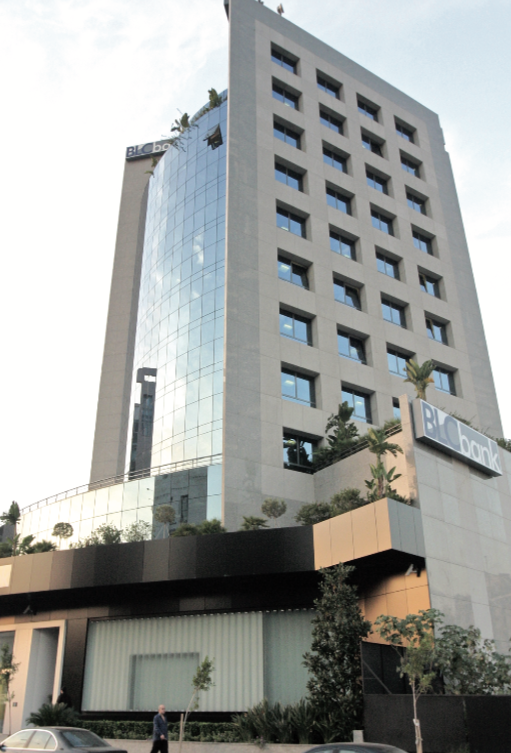
After putting it on the market earlier this year, the Qatar Investment Authority (QIA) in early August completed the sale of BLC Bank, its Lebanese banking asset to Fransbank who won a two-round competition to buy BLC Bank with a $153 million bid, $9 million better than what others had put on the table. QIA retained ownership of BLC assets with relevance for the Gulf financial industry. In an interview with Executive, Fransabank chairman Adnan Kassar said that BLC Bank was one of the oldest in the country with a wide client base and deep roots within the Lebanese business community. 

He also hinted that tactically, “the acquisition has advanced our ranking in respect to total deposits from fifth to fourth, and further deepened the gap percentage of other indicators that distance us from other immediate competitors.”

According to BLC Bank chairman Shadi Karam, Fransabank can make the leap to becoming Lebanon’s fourth largest bank by consolidating the balance sheets of the two banks while maintaining their separate brands. Fransabank now owns around $7.33 billion in assets and $6.13 billion in deposits.

Fransabank’s purchase in line with expansion

Local economist Elie Yachoui said that Fransabank might want to restructure BLC Bank and sell it on with a profit at a later stage. He did not see a great value in having a higher spot on the pecking order. “Whether fourth or fifth, it’s all the same,” he told Executive.

When QIA bought BLC Bank in 2005 for $236 million, the bank had been restructured under central bank stewardship from an ill-managed, muddled, loss-making, even shady, bank into an ambitious, forward looking entity. QIA did not divulge its reasons for selling at an undisclosed profit (the lower transaction value reflected the fact that the sale did not include BLC Bank France and its offices in the GCC) but analysts see the move tied to Lebanon’s economic paralysis.

A prominent economist with ties to the banking sector compared the acquisition price for BLC with that for Bank Saradar. BLC Bank fetched almost as much as Bank Audi paid for Saradar a few years ago but Audi got more value for its investment (through Bank Saradar’s high-end client base and asset structure which offered greater potential), he opined on condition of anonymity.

Of course Fransabank sees it differently. Referring to BLC Bank by its older name, Banque Libanaise pour le Commerce, Fransabank’s statement to Executive conveyed that the step is entwined within an expansion strategy that rotates “around two main fully synchronized axes”: an axis of international and regional expansion and a local axis.

The statement pointed to international expansion plans with focus on “selective, potential world markets,” including the existing presence in three foreign countries — France, Algeria, and Sudan — and prospective presence in Syria and Libya (rep office) this year and in Belarus, Iraq, and Turkey next year.

Fransabank said its local expansion strategy, which entailed four smaller takeovers of banks before the BLC Bank deal, was a mix of organic growth and acquisitions with strategic value for blending horizontal and vertical growth. The synergies between Fransabank and BLC Bank would extend to retail as well as to corporate (including small and medium businesses), capital markets, private and investment banking, and asset management.

While Kassar was quoted by the local media as saying that the acquisition of BLC Bank reflects Fransabank’s confidence in Lebanon’s economy and investment atmosphere, sector analysts maintain that the local market continues to offer less growth potential to Lebanese banks than cross-border expansion.

The takeover will not have a negative impact on BLC’s human resources. “There will not be a reduction of staff, but a reduction of operating expenses,” Karam was quoted by the Zawya Dow Jones newswire.

According to Kassar’s statement to Executive, Fransabank does not need to raise additional capital after the acquisition of BLC Bank. “We have financed our local and international expansion from our bank’s resources. Our capital adequacy ratio is in full compliance with the pertinent local and international requirements,” he said.

Neither does Fransabank have imminent plans for going to the Beirut bourse, where BLC Bank is listed. “We believe that listing Fransabank’s shares on the Beirut Stock Exchange is an important manner that necessitates careful consideration of market conditions and sentiments, and securing added value to shareholders’ investment,” Kassar’s statement read.

In Fransabank’s view, there is no room for considering a flotation of its stock because of Lebanon’s political crisis and its severe economical implications, including uncertainty and anxiety created by the power contest.

Kassar, a former minister of economy, had a final word to say about the quagmire: “We hope that the diverse political parties will advance the interest of the country over their own individual narrow interests and revert back to dialogue, as the only venue to reach an equitable political solution and put an end to the current seemingly endless political crisis, consequently allowing the economy to resume its development and growth.”

Inshallah.

September 1, 2007 0 comments
0 FacebookTwitterPinterestEmail
  • 1
  • …
  • 563
  • 564
  • 565
  • 566
  • 567
  • …
  • 685

Latest Cover

About us

Since its first edition emerged on the newsstands in 1999, Executive Magazine has been dedicated to providing its readers with the most up-to-date local and regional business news. Executive is a monthly business magazine that offers readers in-depth analyses on the Lebanese world of commerce, covering all the major sectors – from banking, finance, and insurance to technology, tourism, hospitality, media, and retail.

  • Donate
  • Our Purpose
  • Contact Us

Sign up for our newsletter

[contact-form-7 id=”27812″ title=”FooterSubscription”]

  • Facebook
  • Twitter
  • Instagram
  • Linkedin
  • Youtube
Executive Magazine
  • ISSUES
    • Current Issue
    • Past issues
  • BUSINESS
  • ECONOMICS & POLICY
  • OPINION
  • SPECIAL REPORTS
  • EXECUTIVE TALKS
  • MOVEMENTS
    • Change the image
    • Cannes lions
    • Transparency & accountability
    • ECONOMIC ROADMAP
    • Say No to Corruption
    • The Lebanon media development initiative
    • LPSN Policy Asks
    • Advocating the preservation of deposits
  • JOIN US
    • Join our movement
    • Attend our events
    • Receive updates
    • Connect with us
  • DONATE