• Donate
  • Our Purpose
  • Contact Us
Executive Magazine
  • ISSUES
    • Current Issue
    • Past issues
  • BUSINESS
  • ECONOMICS & POLICY
  • OPINION
  • SPECIAL REPORTS
  • EXECUTIVE TALKS
  • MOVEMENTS
    • Change the image
    • Cannes lions
    • Transparency & accountability
    • ECONOMIC ROADMAP
    • Say No to Corruption
    • The Lebanon media development initiative
    • LPSN Policy Asks
    • Advocating the preservation of deposits
  • JOIN US
    • Join our movement
    • Attend our events
    • Receive updates
    • Connect with us
  • DONATE
Banking & Finance

IPO Watch – Galfar goes public

by Executive Staff September 1, 2007
written by Executive Staff

August’s star attraction in the regional primary market was a construction and engineering group from Oman. Galfar Engineering and Contracting started receiving subscriptions for its month-long public offering on August 12 and its IPO was the largest for the month both in absolute value — $156 million with 100 million shares offered — and even more so in relation to its home market, where the measure is the biggest new equity item in a good while.

Analysts from GCC-based finance firms valued the offering highly. Based on the performance of peers in the construction industry, two finance houses — Gulf Investment Services and Fincorp — estimated the stock’s upside potential at 47-49% over the subscription price, despite its significant issue premium. Included in the offering price of 602 Baizas ($0.165) per share is an issue premium of 500 Baizas, which will provide the company with working capital and funding for expansion.

The Galfar IPO is expected to be oversubscribed by significant margins when it closes on September 10. Subscription rates for other recent IPOs ranged from no oversubscription to more than 10 times the offered amounts.

Another ongoing subscription at time of this writing is for a Kuwaiti logistics firm. A startup company with equity participation from several big names in Kuwaiti trade, Amanah Warehousing Company invited subscriptions for 60% of its capital in a $111.7 million IPO between August 20 and September 17. Amanah’s IPO has a small issue premium and is open only to Kuwaiti investors.

Smaller public offerings ongoing at the turn of August to September are a $19.5 million capital raising effort by Syria’s Al-Aqeelah Takaful Insurance and a $4.2 million effort by a Jordanian construction supplies manufacturer, which was freshly established in June of this year.

In the business of IPO fundraising in the first eight months of 2007, two regional investment banks accounted for major chunks of lead managing in terms of value. Saudi Arabia’s Samba Financial Group and Dubai-based Shuaa Capital reported to have managed amounts of $2.77 billion and $1.6 billion, according to data gathered by business information provider, Zawya. This strong performance was based on the fact that the two firms succeeded in capturing the largest individual deals in GCC markets, including the Kayan Petrochemicals and Kingdom Holding IPOs in case of Samba and the Air Arabia flotation for Shuaa.

In terms of deal numbers, however, the National Commercial Bank and the Banque Saudi Fransi, both headquartered in Riyadh, accounted for just over half of the 23 flotation measures handled by the top ten lead managers up until end of August, with seven (NCB) and five (Saudi Fransi) completed mandates. The top 10 lead managing firms attracted a total of $6.5 billion in IPO business.

IPOs lag behind 2006

By Zawya’s count, some 45 companies this year so far debuted on MENA equity markets through IPOs or equivalent measures. The Saudi primary market with 20 IPOs was the most active, followed by Jordan with eight new entrants on the Amman Stock Exchange.

In year-on-year trends, 2007 IPO numbers appear to lag behind 2006 as exemplified in the case of Saudi Arabia’s Tadawul exchange. According to the 2006 annual report of the Saudi Capital Market Authority (CMA), the kingdom’s wave of going public peaked in 2006 with 62 public offerings for shares worth close to $7.5 billion in total.

As far as initial trading for newly listed stocks went, August was surprisingly strong, defying analysts’ views that the wide gaps between subscription prices and first-day performances are on the way out at least for this month — which turned out to be overall quite atypical in more than one way for a supposedly uneventful vacation time. Of five stocks with trading debuts between August 10 and August 27, the least reported share price gain to August 27 was just over 80% by newly privatized Moroccan real estate firm CGI.

These gains, however, are peanuts when measured against the explosive gains of three Saudi insurance companies. Allied Cooperative Insurance made a first-day show of jumping 997.5% on August 27. That, however, is still nothing compared to the incredible acrobatics of Alahi Takaful Company and Saudi Indian Company for Cooperative Insurance. Alahi, which debuted on August 19, made a one-day gain of 9.94% on August 27 to SR 213 per share.

The same day was Saudi Indian’s second day of trading. Incidentally, it was not a strong day for the Tadawul All Shares Index; it weakened by about 0.4% — but Saudi Indian advanced by 9.96% to a close of SR 132.50. Mind you, the rules for flotation of insurers in Saudi Arabia’s opening of this sector to private operators after a long wait stipulated that the issue price for any insurance stock is at a par value of SR 10 — so Allied Cooperative and Saudi Indian enter the region’s stock market annals with share price gains of more than 120 times and more than 200 times in their first two days and two weeks of trading, respectively.

For Saudi investors, this may be a good moment to note in their agendas that one more insurance company IPO is in the pipeline for the third quarter of 2007. Others, who are barred from buying on Tadawul because they are not legal residents of Saudi Arabia, may observe this highly localized insurance IPO bubble in bewilderment.

September 1, 2007 0 comments
0 FacebookTwitterPinterestEmail
Financial Indicators

by Executive Editors August 24, 2007
written by Executive Editors

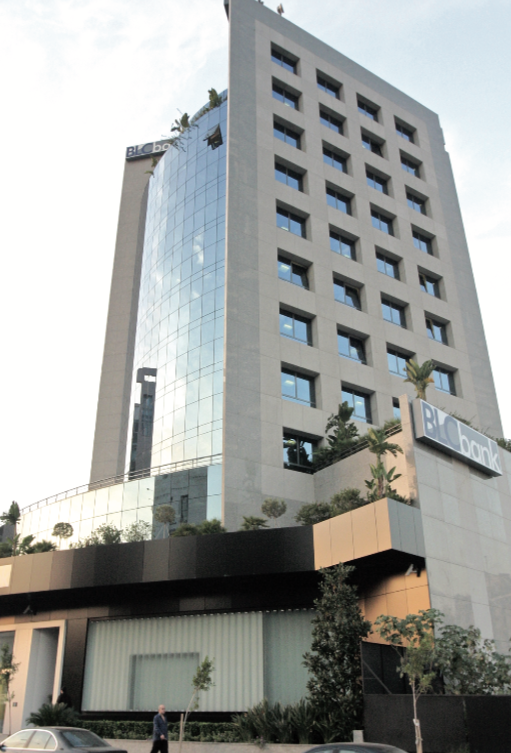
Un Under the shadow of the non-event of St. Cloud that failed to generate any improvement to Lebanon’s crippling disease of politics, the Beirut Stock Exchange did what it has been doing in the first half of the year: hang on by its teeth, gums bleeding. The BSI capped at 1172.86 on Jul 26, July trading volumes were largely insignificant. Report-worthy movements in the banking sector included the competition among local banks to buy the domestic business of BLC from the Qatar Investment Authority and the acquisition of Banque de la Bekaa by Bank of Sharjah (BoS) for $25 million. BoS essentially acquired a license which it wants to use to build an operation in the Levant. As far as stock market confidence indicators go, first-half 2007 findings by the semi-annual MasterIndex survey gave 20.5 out of 100 points in consumer confidence to the BSE (data were collected in April). That’s a drop of 63% from six months ­earlier. Compared with other Arab markets in the survey, the BSE scored 60 to 74 points lower.

Beirut SE: Blom  (1 month)

Current Year High: 1,526.31         Current Year Low: 1,168.36

n The Amman Stock Exchange Index closed at 5,682.08 points on July 26, some 177 points lower than its July 1 closing. In year-to-date sector performance, the financial services sector made the weakest showing, down by almost 11%. Hospitality, mining, and real estate are still up more than the general index YTD, banks are barely holding their ground. Heavyweight Arab Bank led trading volumes but its share price moved down 5% in the course of July. Noteworthy transactions included a $440 million block trade in stock of HBTF. Financial services firm First Jordan Investment, an affiliate of Kuwait’s Global Investment House, carried out the subscription for its $85 million initial public offering between July 10 and 23, about eight months later than announced in first plans for the step. Saudi food conglomerate Savola and real estate firm Tameer Jordan entered an agreement by which Savola is expected to acquire 5% of Tameer.

Amman SE  (1 month)

Current Year High: 6,543.67         Current Year Low: 5,267.27

 Straying upwards but a little from its plateau in the mid 3,500 points, the ADSM index closed at 3574.54 points on July 26, less than 20 points better than its 3,556.21 points at the first of the month. Summertime vacation pressures pushed the first-half disclosure season into high gear from early in the month while trading volumes tended lower. While in Dubai the new banking partners Emirates Banking Group and National Bank of Dubai proceeded with their merger to become Emirates NBD on rationale of gaining more oomph and regional profile, local champion National Bank of Abu Dhabi released second-quarter results that showed a 16% increase in profits to $160 million, saying that domestic banking was its biggest growth driver.   

Abu Dhabi SM  (1 month)

Current Year High: 3,705.32         Current Year Low: 2,839.16

The Dubai Financial Market closed at 4332.31 points on July 26, its lowest stand in two months. Earlier in July, however, it had touched its highest level in over eight months, at 4549.4 points. Air Arabia started trading with high volumes but limited gains. Emaar Properties, whose first-half results were to the dislike of share buyers, was sent 7% lower between its July 15 results disclosure and July 26. Early in the month, the DFM released a list of 13 most actively traded stocks in the first half of 2007. Including usual suspects in real estate, finance, communications and transport, companies on the “More Active Stocks” list are given a higher ceiling of 15% as daily fluctuation limit; other stocks have a ceiling of 5%. An important non-event from an international equity angle was the decision by DP World to drop its listing plans on the London Stock Exchange, judging bond financing more advantageous than the intended IPO. 

Dubai FM  (1 month)

Current Year High: 4,985.39         Current Year Low: 3,658.13

The Kuwait Stock Exchange soared on, reaching P/E levels that made some listed stock appear overpriced to regional and international analysts. Up by 24.08% from the start of the year, the KSE closed at a new record of 12,491.10 points on July 25. Its index gain in the course of the month amounted to 445.3 points, representing an increase of 3.7%. Financial firms provided serial cross border expansion announcements. Investment Dar received approval to establish an Islamic bank in Bahrain with $200 million capital. National Bank of Kuwait stated it is negotiating a deal to buy an unnamed bank in Turkey. Commercial Bank of Kuwait said it will buy 25% in a small Yemeni bank jointly with the IFC. Blue chip telecommunications stock MTC had a string of five sessions at the down limit after its second quarter profit disappointed investors but recovered some ground at the end of the month. On strong revenues from asset sales, KIPCO posted a 2.5 times higher net profit for the second quarter 2007 at $96.2 million.

Kuwait SE  (1 month)

Current Year High: 12,491.10       Current Year Low: 9,164.30

The SSE tried for another recovery before the full heat of the summer vacation. Although still trailing everyone else in the GCC as the only Gulf bourse ending July lower than its index level at the start of the year, the TASI improved rather nicely from 6,900.50 points on July 1 to a closing at 7,633.54 points on July 26. Sabic announced 42% higher Q2 net profit at $1.7 billion. The share price of Sahara Petrochemicals rose before a bonus share issue and slumped afterwards. Four new insurers entered the fold of listed firms and Prince Al-Waleed bin Talal’s Kingdom Holding, whose 5% initial public offering was covered two-and-a-half times by demand earlier in the month, announced its rather speedy start of trading on the SSE for July 29, which should make it the 100th company on the bourse. The Wall Street Journal, seemingly determined to ruffle some feathers in the desert kingdom, published a major story alleging links between Al-Rajhi Bank and terrorism finance.

Saudi Arabia SE  (1 month)

Current Year High: 11,709.10       Current Year Low: 6,861.80

The Muscat Securities Market appeared a tad under the weather toward the end of July. The index advanced from 6,314.17 points on July 1 to a year and all time-high of 6,504.18 points mid-month before softening to 6431.31 on July 26. The market is also up by 15% year-to-date. Oman United Insurance reported a first-half net loss of $5.2 million, on account of claims related to cyclone Gonu. BankMuscat reported net profit of $104 million (44% up year-on-year); National Bank of Oman and Raysut Cement came in with first-half profit gains of 46% and 35% while several smaller firms also posted good results. Kuwait’s Global Investment House made a bid to buy 51% in Omani pipe maker Al-Jazeera Steel Products.

Muscat SM  (1 month)

Current Year High: 6,504.18         Current Year Low: 4,718.74

The Bahrain Stock Exchange was not to stand behind its larger neighbor in Kuwait and produced a record performance, soaring from 2410.87 index points at the start of the month to a new historic peak of 2,503.03 points on July 26. Although at all-time best mark, commotion over the good performance was noticeably less than similar successes had been hailed during the 2005/2006 GCC markets boom. Market heavyweight Batelco contributed to the market performance with respectable profit gains and announcement of a new regional expansion strategy which it termed “niche-growth.” A corporate Kuwaiti shareholder in Bahrain’s largest listed bank, Ahli United Bank, received an acquisition offer for his stake from International Bank of Qatar, a privately-held commercial and retail bank in Qatar with four branches.

Bahrain SE  (1 month)

Current Year High: 2,503.03         Current Year Low: 2,047.28

The Doha Securities Market lost a bit of steam in the second half of July. After a climb from 7,432.54 points on July 1 to near 8,000 points on July 9, the index retreated in the rest of the month to a July 26 closing at 7569.59. The market is still among the weaker performers in the GCC this year, up by about 6% year-to-date. Industries Qatar helped the DSM to some rosy moments towards the end of the month with a substantive improvement in first-half profit. IQ and QTEL are among Gulf stocks favored by investment analysts of Credit Suisse. DSM regulators announced that they will from this month on post all information on stock trades by executives and board members in listed companies on the DSM website and market monitors. Internationally, Qatar attracted attention with its ambition to buy UK supermarket chain, Sainsbury.

Doha SM: Qatar  (1 month)

Current Year High: 7,997.53         Current Year Low: 5,825.80

The Tunisian Exchange registered negative movement that saw the Tunindex tumble 3% in the course of the month, from 2509.79 points on July 2 to 2437.21 points on July 26. After recording a historic peak in February, the bourse has not made any significant gains in four months and closed July on 4.55% up compared with the start of 2007. Market heavyweight SFBT traded lower after a 5-for-1 stock split on July 8; its share price weakened by about 12% in the two weeks afterwards. The market saw an initial public offering in July by industrial manufacturer Tunisie Profiles Aluminium. The company put 4.8 million shares, representing 16% of equity, on the market for $15.5 million. Subscription closed on July 24, with no oversubscription reported.

Tunis SE  (1 month)

Current Year High: 2,712.33         Current Year Low: 1,909.26

The Casablanca All Shares Index trained further in its quickstep sideways dance, starting the month at 11,374.11 points on July 2 and closing at 11,394.32 points on July 26. Initiating the exchange’s most significant primary market action in some time state-owned real estate firm CGI (Compagnie Generale Immobiliere) put 20% of its shares on the market in an initial public offering cum capital increase worth $428 million. Subscription closed on July 27. In industrial news, American paper manufacturer International Paper paid $40 million to buy the 35% stake in local sector company Compagnie Marocaine des Bois et Matériaux which it did not yet own.

Casablanca SE All Shares  (1 month)

Current Year High: 12,723.23       Current Year Low: 7,029.45

After a month-long rally which saw the Hermes Index scale a new record at 74,964.86 points on July 10, CASE closed at 74,390.06 on July 26. Volume performers included the Orascom group companies in telecommunications and construction. Orascom Telecom Holding placed a formal $120 million bid offer to sector company Raya on July 22 but the firm rejected the offer as too low. More attention grabbers were in the banking sector, where CIB was reported in newspapers to be negotiating a merger with Arab-African International Bank (owned mostly by the governments of Egypt and Kuwait), which would create a new strong domestic banking player with 8% market share by assets. CIB shares rallied. In another development, the government said it would bust the chains of Banque du Caire and sell 80% of one of Egypt’s top banks. The move values Banque du Caire at above $2 billion and replaces a plan of merging it with Bank Misr, which would have been too costly in terms of money, network restructuring, and employment impact. 

Cairo SE: Hermes  (1 month)

Current Year High: 74,964.86       Current Year Low: 49,705.98

August 24, 2007 0 comments
0 FacebookTwitterPinterestEmail
Gglobal indicators

Immigration in Arab countries

by Executive Contributor August 24, 2007
written by Executive Contributor

The UN Population Division database delivers an overall picture of immigration in the Arab World. Aggregating all Arab countries gives a number of 20.9 million immigrants (thus including intra-regional migrants from one Arab country to another). An alternative source could be national data of the countries of destination.  The resulting figure is lower than that of the UN. In the 14 Arab countries that have published immigration data, the aggregated number of immigrants 13 million. For the same 14 countries, the UN estimate is 18.8 million immigrants, i.e. 1.45 times higher. If the Palestinian Territories and Jordan where the discrepancy is explained by UNRWA refugees being counted as immigrants by the UN are excluded from the comparison, 12 countries give an aggregated number of immigrants of 12,288 million to be compared with 14,983 provided by the UN (22% higher than national figures). The gap between the two sources (2.7 million) is partly, but not entirely, explained by the fact that UNHCR refugees are counted in migration statistics by the UN, but not by national sources.

Top Sugar Producers

More than 100 countries produce sugar, 74% of which is made from sugar cane grown primarily in the tropical and sub-tropical zones of the southern hemisphere, and the balance from sugar beet which is grown mainly in the temperate zones of the northern hemisphere. Generally, the costs of producing sugar from sugar cane are lower than those in respect of processing sugar beets. Currently 69% of the world’s sugar is consumed in the country of origin whilst the balance is traded on world markets.

n The five largest exporters in 2005/06, Brazil, the EU, Australia, Thailand and South Africa, are expected to supply approximately 76% of all world free market exports.

n Global sugar production in 2005/06 is estimated as 147.7 million tons, 79% of which is produced by the world’s top ten sugar producers.

Exports of information and communications equipment

Growth of exports has been particularly high for the countries that started with a low base in 1996 — Hungary, Iceland, the Slovak Republic and the Czech Republic, Turkey and Poland. Germany and especially South Korea stand out as countries which started the period with substantial ICT exports and which have seen them grow rapidly between 1996 and 2005.

By the end of the period, the OECD countries could be divided into three groups — United States, Japan, Germany and South Korea with high exports of ICT goods, a middle group consisting of the Netherlands, United Kingdom, Mexico, France and Ireland and the remainder with relatively low values of ICT exports. As noted above, however, some of these, such as the four Central European countries, are rapidly increasing the value of their ICT exports.

Among the five non-member countries, growth of ICT exports has been slow and steady for all except China which has experienced spectacular growth in exports of ICT goods. Between 1996 and 2004, the value of ICT exports from China have been growing at an average rate of 33% per year and in 2004, China’s ICT exports surpassed those of the United States.

Bottled Water Consumption

Per Capital

Global consumption of bottled water has been growing over the past five years despite the fact that in a many places, including Europe and the US, there are more regulations governing the quality of tap water than bottled water. Although the US leads the world in the consumption of bottled water, at 26 billion liters in 2004, the bottled water craze is a global phenomenon. According to Beverage Marketing Corporation, worldwide consumption reached 154 billion liters (41 billion gallons) in 2004, an increase of 57% in five years. On a per capita basis, Italians are the biggest consumers of bottled water, at nearly 184 liters in 2004 — the equivalent of more than two glasses a day. Second and third place in per capita consumption are Mexico and the United Arab Emirates, at 169 and 164 liters respectively. Belgium (including Luxembourg in the statistics) and France are close, with consumption just under 145 liters per person annually.

August 24, 2007 0 comments
0 FacebookTwitterPinterestEmail
Special Report

Banking & Finance FFA goes private

by Executive Contributor August 19, 2007
written by Executive Contributor

In the past few years, bullish financial markets have witnessed an unequaled surge in profits, on which financial institutions have capitalized massively. In the MENA region, the constant income stream stemming from spiking oil prices has added to this phenomenon. Financial Funds Advisors (FFA,) a Lebanese financial institution, seems to be gearing up for the race to offer sanctuary for this surplus of Arab money. Quintupling its shareholder’s equity to $25 million, it has moved into the rarefied circles of private banking

Established in 1994 as a brokerage firm focusing on financial advice delivery and mutual fund distribution, FFA has recently acquired a specialized license from the Central Bank, allowing it to become FFA Private Bank. Its change in status, which required moving from the structure of financial institution and brokerage firm to a private investment bank, was mainly drawn from the need to build recognition among potential local clients and correspondent institutions.

“The status of a financial institution in Lebanon is the equivalent of an investment bank anywhere else in the world. It specializes in non-commercial banking services such as lending, fiduciary deposits, portfolio management and brokerage as well as advisory services,” explains Jean Riachi, chairman and general manager of FFA Private Bank. “However clients and other company stakeholders had trouble grasping our institution’s former status,” he adds.

Setting a precedent

Another underlying reason behind FFA’s change of status was rooted in some of the operation’s technical aspects. “Investment operation activities are for the most part off the balance sheet ,” says Riachi. “In terms of wealth management, a client can hold with us custody money, securities or cash under fiduciary. But we also need to offer him the option of term deposit accounts.”

In addition to providing equity and debt financing, the new license allows FFA to participate directly in companies with its own funds without reverting to outside investors.

“As a private bank, we can operate fully with some restrictions on the retail and commercial side of activities, such as short term credit and deposit, which in any case, we have, no real interest,” underscores Riachi.

Two years ago, FFA held talks with Central Bank governor Riad Salame who said he also believed it was time to strengthen areas such as the capital market, mutual funds and investment banking. “We informed the governor of our desire and commitment to consolidate our human and financial structure by increasing capital, inviting powerful shareholders and hiring additional staff,” Riachi recalls. “However, we did not feel comfortable with the FFA financial institution status.” One possible solution was to aquire an existing commercial bank.

“We went through some of the files on hand and came to the conclusion that much time and resources were needed to restructure any available operation, something which we did not really have. As a matter of fact, we were not really interested in the commercial banking activity.”

Another option was to obtain a specialized bank license — which imposed restrictions on certain operations such as short term deposits and credits. “Today, we’re the first independent private bank in the Lebanese market, where the investment banking activity is, for the most, affiliated either one way or the other, or fully owned by financial institutions and commercial banks. I believe granting a specialized license to a private group constitutes a precedent for the Central Bank,” says Riachi.

Given the positive sector reactions, Riachi feels the launch of FFA Private Bank will set a much needed trend within the Lebanese financial sector. “Commercial banks are commercial banks and this can lead to a conflict of interest when dovetailed with private banking,” he says. Riachi believes that commercial banks may adopt a less aggressive stance towards their investment banking arm and not allocate sufficient resources. “It is also a question of corporate culture, one that varies greatly between private investment and commercial banking structures, leading sometimes to undeclared conflicts, when the two operations are functioning within one framework. Today, I can see the sector increasingly moving towards banks splitting and spinning off these two activities.”

The FFA Private Bank depends on a revamped framework comprised of several core activities such as private wealth management, capital markets, asset management, corporate and merchant banking, online trading and a real estate division. According to Riachi, its independent structure grants FFA a competitive advantage in terms of mutual funds, allowing it to deal with many different providers and hand picking the best. The private wealth management arm is built on a strict approach to asset allocation comprising sector and regional diversification. “Of course, in terms of asset management we are free to focus on areas where we believe we can add the most value,” he adds. One of such examples would be the Lebanese real estate fund offered by FFA. In Georges Abou Jaoudeh’s opinion, FFA’s other general manager, the real estate development activity has proved to be successful and the company intends to duplicate the same line of business in the Gulf region. “We are working also on launching a real estate fund that will be investing in Lebanon and the neighboring countries,” he adds. “Since all of FFA Private Bank’s high-net-worth clients in Lebanon and the region are very sophisticated, customized financial solutions have been devised through FFA open architecture platform, in order to respond to all their needs,” says Abou Jaoudeh.

Hence, a product in relation with the equity regional market is under preparation. The company is supported by an online division dubbed FFA direct, a platform for online trading in equities, future markets and currencies, headed by Elie Khoury.

In a market dominated by major international players, Riachi has relied on the advantage of cultural and physical proximity FFA offers. “This advantage is backed by a reputation for offering the highest standard in terms of service and performance, as well as access to the best fund managers in the world.” For clients who are concerned by the unstable situation prevailing on the local level, Riachi believes that as security accounts are not exposed to corporate or country risk.

Carving a niche

“Regarding the corporate and merchant activity, we understand that competing with big players might be difficult. On the other hand, we believe that we can carve a niche for ourselves in the market of medium-size deals, which by nature are not handled by big industry names for reasons of economies of scale,” states Riachi. The FFA chairman nonetheless concedes that although the company may face much competition on the different corporate levels, the challenge is part of the job. “In the corporate and merchant banking sector, FFA Private Bank has yet to prove itself.”

FFA’s regional presence is secured through its DIFC subsidiary FFA (Dubai) Limited, a financial service provider that will essentially cover the GCC countries and will be fully operational by next fall. “Our marketing approach targets very high net worth individual with $1 million or more in liquid assets. Such clients are constituted for the most by business owners and we intend to capitalize on this specific factor to market our corporate and merchant finance activities,” says Riachi.

To build and expand its client base, FFA is looking into new investment tools. Abou Jaoudeh underlines that FFA is closely following the success and growth of Islamic financial  products in the region. “We aim through our asset management division to participate in structuring new financial products that will be sharia compliant,” he explains. “We are monitoring the Arab equity markets and believe that there is tremendous growth potential; consequently we are in the process of finalizing and launching a new certificate that will give exposure and participation, through one product, to all the upside potential of these markets.”

August 19, 2007 0 comments
0 FacebookTwitterPinterestEmail
North Africa

Morocco On the Road

by Executive Contributor August 19, 2007
written by Executive Contributor

In June, King Mohammed VI hosted Renault CEO Carlos Ghosn to celebrate the first export of Moroccan-assembled cars to France and Spain. The visit demonstrated the good relations between Morocco and French carmakers and aimed to develop the activity of Société Marocaine de Constructions Automobiles (SOMACA) for the local and foreign markets, notably towards the EU.

SOMACA is a Moroccan-French car company in which Renault has an 80% capital share. Philippe Cornet, the chief executive, announced that the company plans to export between 5,000 and 10,000 Logan cars a year to the EU, mainly to the French and Spanish markets. It is also planning to expand its exports to the Belgian and German markets by 2008. SOMACA will also export some 5,000 units to Egypt, Jordan and Tunisia. The success of further SOMACA operations is set to contribute to attracting new investments in car part manufacturers. The present success of Morocco’s automotive sector makes a marked change from the difficulties it was suffering just 5 years ago.

The Logan was introduced into the Moroccan market in 2006 and has become the leading brand in the low-cost car segment of the market, with some 13,000 units produced in 2006. SOMACA plans to assemble some 40,000 vehicles in 2007, including the Renault Kangoo, the Peugeot Partner, and the Citroën Berlingo.

Attracting investment

“It’s a first for the Moroccan automobile industry, which made a great leap forward with this announcement,” said Cornet. He also added that it is the first time Morocco has exported a finished industrial product to Europe apart from textiles. With a 19.6% share of the passenger car and LCV market, Renault leads the Moroccan market, which has grown by 17% since the beginning of 2005.

After Romania in 2004 and Russia in spring 2005, Morocco is the third country to launch Logan production. Renault has invested $30 million in the project. In fact, Morocco is the first country where the Group’s three brands — Renault, Dacia and Renault Samsung Motors — are sold simultaneously.

As part of a drive to attract foreign investors to reinforce the sub-contracting in the auto spare parts segment in Morocco, the Investment Directorate (ID) announced in May the establishment of an industrial free trade zone in the automobile sector, named Tanger Auto City (TAC).

“This new concept of specialized industrial zones aims to attract investors and automobile equipment makers employed by manufacturers especially those based on the European continent,” said Hassan Bernoussi, the director of ID, during a conference organized by the Moroccan MBA Association (MMA) in May in Casablanca.

The setting up of TAC reflects the government’s willingness significantly to improve what Morocco can offer in terms of foreign direct investment (FDI) options in developing sectors such as the automotive sector.

According to Salaheddine Mezouar, the minister for the automotive industry, the share of the automobile industry in gross domestic product (GDP) rose from 16.7% in 2004 to 19.6% in 2005. Mezouar noted that the automotive industry in Morocco encompasses 300 companies and provides 30,000 jobs and $2.5 billion in turnover. Considered more modernized than other industries, it generates 6% of total processing industry production and 12% of exports of industrial goods, which increased from $71 million in 1996 to $285 million in 2002. “The sector represents more than 40% of investments, or $130 million, which allowed the creation of more than 12,000 jobs in 6 years in the free trade zone alone,” said Omar Chaib, the zone’s commercial director.

Mohammed Ali Enneifer, the CEO of COFICAB, an auto cable company already based in the TAC agrees. According to Enneifer the production capacity in the Moroccan auto sector has risen by 4.3% year-on-year. “The integration of the Automotive City will help out existing companies by consolidating subcontracting and transferring foreign know-how to local companies,” he said.

Tanger Free Trade Zone (FTZ) is an example of the potential of the TAC. The FTZ has succeeded in attracting FDI due to its competitive legal and fiscal framework. Its special status allows for 100% foreign ownership, exemption from import and export tax and VAT on goods and on company tax for 5 years and a rate reduction thereafter. These benefits have attracted investors in the automotive sector, which is already the most developed sector in the FTZ.

Despite the recent announcement of car exports to Europe, the impact of TAC project may be limited on a local level. According to Bouchaib Barhoumy, the CEO of Yazaki, a Japanese company specialized in auto cable beams, the impact could be greater if, rather than spare parts, TAC concentrates on the development of the production of finished products to be exported.

August 19, 2007 0 comments
0 FacebookTwitterPinterestEmail
North Africa

Morocco All to Port

by Executive Contributor August 18, 2007
written by Executive Contributor

With construction work on schedule, the 550-square- kilometer Special Development Zone, also known as the Tanger-Med port, will be operational in July according to recent government announcements. The first customers looking to use the Tanger-Med facilities are now able to set up in the northern city of Tangier. The zone is designed to emerge as a key transit point for container traffic between the US and the Mediterranean region.

When the Moroccan government launched the Tanger-Med project in 2002 in the north of the country, its aim was to develop this region as a strategic center for transshipment, industry and trade. The project was managed by a governmental agency with privately-held company status, the Tanger-Med Special Agency.

Among the services and facilities offered by the port are a 53km extension to the Casablanca-Tangier highway, and a 45km railway connecting the port to the city of Tangier. The close proximity of the port will ensure the quick and efficient movement of goods and effective connectivity to regional and international markets.

Tanger-Med port offers logistic facilities accessible by sea, land and air for investors. The container terminal has 2,100 meters of berths with two container terminals operated by APM terminals and Eurogate-Contship. These possess 3.5m TEUs of nominal capacity and allow a draught up to 18 meters, well within the range of even the largest bulk freight transporters.

The ro-ro terminal has a capacity of eight berths, connection to the railway passenger station and the capacity for 5m passengers, 1m cars and 500,000 trucks per annum.

With a berth at 15 meters water depth and an open area of 15 hectares, the bulk and general cargo terminal looks to target the grain business.

Already planning the extension

The hydrocarbons terminal is designed to offer bunkering services to vessels calling at the port and to supply the port hinterland with refined oil products. It has a capacity of 2m tons per year. If all goes according to the plan, Tanger-Med will receive its first commercial ship in July. In fact, because about half of the project was completed within 18 months, there are already plans for its extension. Muhammad Said Benameur, the chief project director, said that, “Since the Tanger-Med has been a success, notably in terms of timing, we have already endorsed its extension before the first zone even started to be operational.” The second phase of the project will be 100% funded by the private sector, he added.

Tanger-Med already plans to raise its capacity as traffic across the Gibraltar strait is expected to increase significantly. “We expect sea traffic to rise by 7% or 8% in the next five to eight years worldwide,” said the president of TMSA, Said Elhadi. “Knowing that the number of containers crossing the Strait of Gibraltar represents about 20% of global traffic, Tanger-Med will consequently be directly affected by worldwide growth, which will eventually have major consequences for the region.”

Elhadi added, “The terminals will see a rapid increase in traffic in the coming years. Tanger Med II has been launched in preparation of our existing and potential customers’ needs. The project will help to increase significantly the capacity of the port facilities from 2012-2013 onwards.”

The existing Tangier Free Zone demonstrates the potential of Tangier-Med. The July 25 edition of pan-Arab daily al-Sharq al-Awsat reported that following its establishment in 1999, it had created some 16,000 jobs. The daily also reported that approximately 115 Moroccan and foreign companies were located in the area, with another 77 companies expected to set up shop. As a result, total jobs provided by the free zone was expected to reach 22,000 by the end of 2007.

One important development was the announcement in June that Dubai’s Jebel Ali Free Zone Authority International had been awarded the 10-year logistics free zone management concession at the port, an important achievement for the company, which already has free zone management experience outside Dubai, in both Djibouti and at Malaysia’s Port Klang Free Zone.

The establishment of Tanger-Med should also help to boost the development of Morocco’s northern region. The director of the Regional Center for Investment, Jelloul Samsseme, said that the port would help to reinforce the region’s existing infrastructure, create new export-oriented free trade zones and raise the skill level of the workforce in the region.

On the same note, the general director of the Agency for the Promotion and Economic Development of Northern Provinces, Fouad Brini, told the press that Tanger-Med will be a positive development in integrating the north of Morocco with the rest of the kingdom and facilitate the integration between the northern provinces themselves, especially by setting up facilities that will encourage large-scale trade and industrial activities in the region.

August 18, 2007 0 comments
0 FacebookTwitterPinterestEmail
North Africa

Algeria Bridging East and West

by Executive Contributor August 18, 2007
written by Executive Contributor

Work has started on the motorway crossing Algeria from east to west, which is designed to be part of a 7,000km road network across the Maghreb. The government has labeled it the largest road project in the Mediterranean and North Africa.

The idea of a trans-Maghreb motorway was first floated in the 1970s — the plan was that it would be integrated into a trans-African route. Three decades later, the first sod was turned earlier this year on the Algerian segment, a project that is estimated to cost $11 billion, the bill being fully paid by the Algerian state. President Abdelaziz Bouteflika was present at the commencement ceremony at Hammadi, east of Algiers.

The six-lane “East-West” motorway project is the centerpiece in the government’s $80 billion program of investment in Algeria’s transport infrastructure. Around 25,000km of roads are being improved, and new ports and airports constructed, with existing facilities being modernized and expanded.

A step toward integration

The construction contracts for the motorway have been awarded to two parties; Japanese consortium Kojal is to build a 400km section in the east of the country, while the Chinese group CITIC/CRRC will take responsibility for the 528km in the west and center of Algeria. The motorway will present challenges for the contractors; the road will have a total of 538 bridges and 13 tunnels, as well as links to other roads.

The full length of the six-lane motorway, scheduled for completion in late 2009 or early 2010, will be 1,213km. It will pass through 24 of the country’s 48 provinces and, it is hoped, bring significant economic benefits.

Indeed, the project should start to benefit the country even during construction. In March, public works minister Amar Ghoul described the infrastructure projects as “a workshop meant to provide jobs to the Algerian jobless.” Once completed, economic activity generated by the East-West motorway should create at least 100,000 jobs, according to official forecasts. It will also pass through the Algerian cities of Annaba, Constantine, Setif, Algiers, Oran and Tlemcen, which the government is trying to develop as manufacturing centers.

The road will link Morocco, Algeria and Tunisia via a major motorway for the first time, boosting trade and economic co-operation and integration. Both the International Monetary Fund and the World Bank have encouraged stronger economic ties in the region. All three countries are members of the Arab Maghreb Union (AMU), as are Libya and Mauritania. Currently, only 3% of all foreign trade volume of the bloc is generated by inter-union trade, and poor infrastructure connecting the countries is partly to blame, as are poor foreign relations.

The majority of Algeria’s non-energy exports are transported by road, on an often congested and run-down network; according to the ministry of transport, 90% of all traffic consists of freight vehicles.

Ghoul has emphasized the importance of linking the East-West motorway with others in the region and has been in talks with counterparts in Tunisia and Morocco on this issue.

The motorway has not been welcomed in all quarters, however. In late June, environmentalists warned that under current plans the road would pass through the El Kala national park, which lies on the Mediterranean coast, for a distance of 15 kilometers.

The park covers an area of wetlands and forests which are the habitat of many of the country’s distinctive flora and fauna including birds of prey, fox, lynx, tortoise and wild cat which the environmentalists said would be put at risk by the motorway.

The government immediately responded to the claims, with Ghoul saying that a last-minute re-routing was impossible, as it could increase the project’s costs by $2 billion. However, this was followed by an equally swift volte face, with the government declaring that construction work in the region would be suspended and a different route found.

“We have ordered the national motorways agency to widen the consultation to academics, experts, national associations and our partners,” Ghoul told the local press. “Today, we can affirm as for us that there is no longer a problem concerning El Kala park.”

Once completed, the motorway should bring with it huge benefits to the country. There is little doubt of the need for a major, modern motorway across Algeria, and the region, where development has been hamstrung by poor infrastructure. If agreements can be reached on joining it to other roads of similar capacity in the rest of the Maghreb, the plans first conceived in the 1970s will become a reality.

August 18, 2007 0 comments
0 FacebookTwitterPinterestEmail
North Africa

Algeria Bridging East and West

by Executive Contributor August 18, 2007
written by Executive Contributor

Work has started on the motorway crossing Algeria from east to west, which is designed to be part of a 7,000km road network across the Maghreb. The government has labeled it the largest road project in the Mediterranean and North Africa.

The idea of a trans-Maghreb motorway was first floated in the 1970s — the plan was that it would be integrated into a trans-African route. Three decades later, the first sod was turned earlier this year on the Algerian segment, a project that is estimated to cost $11 billion, the bill being fully paid by the Algerian state. President Abdelaziz Bouteflika was present at the commencement ceremony at Hammadi, east of Algiers.

The six-lane “East-West” motorway project is the centerpiece in the government’s $80 billion program of investment in Algeria’s transport infrastructure. Around 25,000km of roads are being improved, and new ports and airports constructed, with existing facilities being modernized and expanded.

A step toward integration

The construction contracts for the motorway have been awarded to two parties; Japanese consortium Kojal is to build a 400km section in the east of the country, while the Chinese group CITIC/CRRC will take responsibility for the 528km in the west and center of Algeria. The motorway will present challenges for the contractors; the road will have a total of 538 bridges and 13 tunnels, as well as links to other roads.

The full length of the six-lane motorway, scheduled for completion in late 2009 or early 2010, will be 1,213km. It will pass through 24 of the country’s 48 provinces and, it is hoped, bring significant economic benefits.

Indeed, the project should start to benefit the country even during construction. In March, public works minister Amar Ghoul described the infrastructure projects as “a workshop meant to provide jobs to the Algerian jobless.” Once completed, economic activity generated by the East-West motorway should create at least 100,000 jobs, according to official forecasts. It will also pass through the Algerian cities of Annaba, Constantine, Setif, Algiers, Oran and Tlemcen, which the government is trying to develop as manufacturing centers.

The road will link Morocco, Algeria and Tunisia via a major motorway for the first time, boosting trade and economic co-operation and integration. Both the International Monetary Fund and the World Bank have encouraged stronger economic ties in the region. All three countries are members of the Arab Maghreb Union (AMU), as are Libya and Mauritania. Currently, only 3% of all foreign trade volume of the bloc is generated by inter-union trade, and poor infrastructure connecting the countries is partly to blame, as are poor foreign relations.

The majority of Algeria’s non-energy exports are transported by road, on an often congested and run-down network; according to the ministry of transport, 90% of all traffic consists of freight vehicles.

Ghoul has emphasized the importance of linking the East-West motorway with others in the region and has been in talks with counterparts in Tunisia and Morocco on this issue.

The motorway has not been welcomed in all quarters, however. In late June, environmentalists warned that under current plans the road would pass through the El Kala national park, which lies on the Mediterranean coast, for a distance of 15 kilometers.

The park covers an area of wetlands and forests which are the habitat of many of the country’s distinctive flora and fauna including birds of prey, fox, lynx, tortoise and wild cat which the environmentalists said would be put at risk by the motorway.

The government immediately responded to the claims, with Ghoul saying that a last-minute re-routing was impossible, as it could increase the project’s costs by $2 billion. However, this was followed by an equally swift volte face, with the government declaring that construction work in the region would be suspended and a different route found.

“We have ordered the national motorways agency to widen the consultation to academics, experts, national associations and our partners,” Ghoul told the local press. “Today, we can affirm as for us that there is no longer a problem concerning El Kala park.”

Once completed, the motorway should bring with it huge benefits to the country. There is little doubt of the need for a major, modern motorway across Algeria, and the region, where development has been hamstrung by poor infrastructure. If agreements can be reached on joining it to other roads of similar capacity in the rest of the Maghreb, the plans first conceived in the 1970s will become a reality.

August 18, 2007 0 comments
0 FacebookTwitterPinterestEmail
North Africa

Tunisia Plan in the Offing

by Executive Contributor August 18, 2007
written by Executive Contributor

Tunisia’s 11th Development Plan has set out a road map to boosting growth through tax reforms, investment and economic restructuring.

In July, parliament unanimously approved the Development Plan, which had been presented by Prime Minister Mohammed Ghannouchi. It is the latest five-year economic plan, taking the economy into the second decade of the twenty-first century. The draft plan has been two years in the making, and Ghannouchi said that it was based on extensive consultation, an assessment of the results of past plans and a thorough analysis of developments at the national and international level.

The program combines economic reforms designed to boost investment and encourage and diversify the private sector, while boosting social services. In a move to encourage foreign direct investment (FDI), the Development Plan includes large-scale changes to the tax system. Corporate tax will be lowered from 35% to 30%, while businesses will be given a rebate equal to the increase on VAT.

Customs duties on a range of equipment and materials imported from certain countries which have free-trade agreements with Tunisia will be lifted, taking the proportion of duty-exempted imports to 80% of the total.

Strong growth

Tunisia’s strong GDP growth of 4.5% over the past decade is forecast to increase to 6.1% due to the expansion of the service sector, which will account for 50% of the economy within the next few years, and the restructuring and liberalization of other sectors and the economy in general. The Development Plan envisages that the increase in growth will help improve incomes. Per capita income grew from $2,300 in 2001 to $3,000 by the end of 2006, Ghannouchi said. The program foresees this increasing to $4,400 by the end of its remit.

The program envisages cutting unemployment to 13.4% by 2011, from 14.3% at present, made possible in part by infrastructure and industry projects.

The reforms to taxation and government spending, coupled with growth, should reduce the budget deficit to 2.2% of GDP by the end of 2011, from 2.9% at the end of 2006. The Development Plan sets out a maximum of 3.1% for the budget deficit, and 2.6% for the current account deficit (CAD). It also targets a reduction in foreign debt from 47.9% to 39.1% of GDP over the course of its implementation.

After parliament approved the 11th Development Plan, Ghannouchi emphasized that the coming five years will present challenges as well as opportunities for Tunisia. These include tougher international and domestic competition and potential increases in the price of raw materials.

“The targets set by the 11th Development Plan are ambitious and are meant to formalize Tunisians’ determination to achieve new results on the path of progress and prosperity,” he said.

The cost of the plan to the government is estimated at $45.5 billion, 35% more than the 10th Development Plan. The government aims to fund the package partly through $6 billion in foreign investments, with an additional $9.8 billion from international loans and partnership agreements with other countries in the Mediterranean and MENA regions.

Program is well costed

At a meeting to discuss the funding of the Development Plan, European Investment Bank (EIB) vice president Phillipe de Fontaine Vive announced that the financial arm of the EIB, the FEMIB, would be increasing its loans to private sector companies by 50%. Furthermore, the government is encouraging a diversification of private funding.

There is a consensus among economists that the program is well costed and that the country does not face serious external or internal risks over the next half decade, so investment will continue to come in and the government’s fiscal position will be strong enough to fund much of the plan. The US envoy to Tunisia, Robert F. Godec, recently described Tunisia as a “stable country with zero risks for foreign investments.” The recently-released African report of the World Economic Forum (WEF) also singled out Tunisia as an oasis of stability in the continent, a statement which should further boost investor confidence. While in the past Tunisia was considered a highly controlled marketplace, with strong repatriation controls, the system is changing rapidly as the government homes in on the link between trade and growth.

August 18, 2007 0 comments
0 FacebookTwitterPinterestEmail
GCC

GCC US Demands Change from OPEC

by Executive Contributor August 18, 2007
written by Executive Contributor

The United States Senate in late June passed a bill that would allow the Justice Department to sue the Organization of Petroleum Exporting Countries (OPEC) for price manipulation and high oil prices, but President George W. Bush has threatened to veto the bill, warning that OPEC members could retaliate by tightening the flow of oil into the US.

The bill, dubbed NOPEC or the “No Oil Producing and Exporting Cartels Act of 2007” would revoke the sovereign immunity OPEC members enjoy from being sued in US courts.

OPEC President Mohammed al-Hamli called the move by US lawmakers a dangerous step and added that decisions taken by OPEC were non-binding and that the organization will fight these attempts.

“It’s a really dangerous step. We will defend ourselves against these attacks,” Hamli told reporters at an oil conference in Turkey in June.

Latest official figures show that Americans are currently paying an average of $3.21 a gallon at the gas pump as oil prices continue to reach record highs. Prior to the Iraq war, Americans paid an average of $1.00 a gallon and blaming OPEC appears to score some points with the public.

“We don’t have to stand by and watch OPEC dictate the price of our gas,” Senator John Conyers, a Democrat from Michigan said. “We can do something about … this anti-competitive, anti-consumer behavior, and we are.”

The pressure’s on

The anti-OPEC bill was sponsored by Senators Herb Kohl, a Democrat of Wisconsin and Arlen Specter, a Republican of Pennsylvania. The House voted 345-72 to pass the bill.

“Price fixing by cartels is the worst violation of antitrust law and the principles of free competition,” Kohl told Executive. “If OPEC nations were private companies, their actions would be plainly illegal under antitrust law,” he added.

He thinks NOPEC would give the US government an important tool in responding to OPEC actions.

Although the White House has threatened to veto the measure, the bill may become law as both the Senate and the House have enough votes to override the veto. “The bill passed both Houses by more than the two-thirds needed to override a veto, 345-72 in the House, and 70-23 in the Senate,” Kohl said. But observers note that even if it became law, the Bush administration’s Justice Department would be the entity that would have to initiate any lawsuit.

But not all Americans support the action against OPEC. Local observers believe the problem with current oil prices is the combined increase in global demand and shortages of refinery capacity in the US. They say that congress is aiming at the wrong target. “It is the US refiners — who have made record profits — who should be called on the carpet and who every year about this time make their annual financial killing,” Robert Prince in Washington said.

“The arrogance this legislation conveys is unbelievable and completely irresponsible. As an American, I’m ashamed,” a US citizen who wished to remain anonymous told Executive. “Oil prices will continue to rise because demand has started to outstrip supply. This is the most basic rule of economics and our leaders don’t seem to appreciate it.”

Republican Senator Pete Domenici of New Mexico warned that the plan would hurt US consumers more than it would OPEC. “OPEC producers could just decide not to sell oil to us any longer,” he told reporters. “They would suffer the loss of some profits but our entire economy could come to a grinding halt.”

Although the official reaction from OPEC to NOPEC was perfunctory, Hamli said OPEC had successfully fought off two prior attempts by US lawmakers against OPEC and will do so again.

But supporters of the bill don’t believe that OPEC will react by cutting or reducing oil supplies to the US. “We would be surprised if OPEC member nations would want to stop selling oil to one of their best customers,” Kohl said.

“We would hope OPEC would respond to this law by ceasing the practice of setting mandatory production quotas designed to drive up the price of crude oil, rather than take the extreme step of cutting off oil supplies,” he added.

OPEC says the high prices are due to geopolitical tensions and refinery bottlenecks in the US rather than any shortage of crude supply. And most analysts do not foresee a decline in prices in the near future. On the contrary, what they predict is an extreme jump in prices by 2009 and 2010.

In late June, the New York-based Bloomberg News quoted Jeffrey Currie, a London commodity analyst at the world’s biggest securities firm, saying that $95 crude is likely in 2007 unless OPEC increases production, and declining inventories are raising the chances for $100 oil. Jeff Rubin at CIBC World Markets predicts $100 a barrel as soon as 2008.

August 18, 2007 0 comments
0 FacebookTwitterPinterestEmail
  • 1
  • …
  • 564
  • 565
  • 566
  • 567
  • 568
  • …
  • 685

Latest Cover

About us

Since its first edition emerged on the newsstands in 1999, Executive Magazine has been dedicated to providing its readers with the most up-to-date local and regional business news. Executive is a monthly business magazine that offers readers in-depth analyses on the Lebanese world of commerce, covering all the major sectors – from banking, finance, and insurance to technology, tourism, hospitality, media, and retail.

  • Donate
  • Our Purpose
  • Contact Us

Sign up for our newsletter

[contact-form-7 id=”27812″ title=”FooterSubscription”]

  • Facebook
  • Twitter
  • Instagram
  • Linkedin
  • Youtube
Executive Magazine
  • ISSUES
    • Current Issue
    • Past issues
  • BUSINESS
  • ECONOMICS & POLICY
  • OPINION
  • SPECIAL REPORTS
  • EXECUTIVE TALKS
  • MOVEMENTS
    • Change the image
    • Cannes lions
    • Transparency & accountability
    • ECONOMIC ROADMAP
    • Say No to Corruption
    • The Lebanon media development initiative
    • LPSN Policy Asks
    • Advocating the preservation of deposits
  • JOIN US
    • Join our movement
    • Attend our events
    • Receive updates
    • Connect with us
  • DONATE