
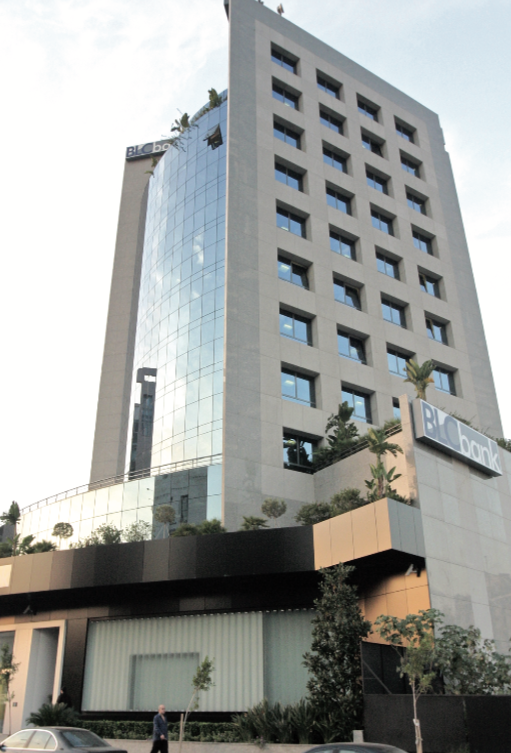
After putting it on the market earlier this year, the Qatar Investment Authority (QIA) in early August completed the sale of BLC Bank, its Lebanese banking asset to Fransbank who won a two-round competition to buy BLC Bank with a $153 million bid, $9 million better than what others had put on the table. QIA retained ownership of BLC assets with relevance for the Gulf financial industry. In an interview with Executive, Fransabank chairman Adnan Kassar said that BLC Bank was one of the oldest in the country with a wide client base and deep roots within the Lebanese business community.
He also hinted that tactically, “the acquisition has advanced our ranking in respect to total deposits from fifth to fourth, and further deepened the gap percentage of other indicators that distance us from other immediate competitors.”
According to BLC Bank chairman Shadi Karam, Fransabank can make the leap to becoming Lebanon’s fourth largest bank by consolidating the balance sheets of the two banks while maintaining their separate brands. Fransabank now owns around $7.33 billion in assets and $6.13 billion in deposits.
Fransabank’s purchase in line with expansion
Local economist Elie Yachoui said that Fransabank might want to restructure BLC Bank and sell it on with a profit at a later stage. He did not see a great value in having a higher spot on the pecking order. “Whether fourth or fifth, it’s all the same,” he told Executive.
When QIA bought BLC Bank in 2005 for $236 million, the bank had been restructured under central bank stewardship from an ill-managed, muddled, loss-making, even shady, bank into an ambitious, forward looking entity. QIA did not divulge its reasons for selling at an undisclosed profit (the lower transaction value reflected the fact that the sale did not include BLC Bank France and its offices in the GCC) but analysts see the move tied to Lebanon’s economic paralysis.
A prominent economist with ties to the banking sector compared the acquisition price for BLC with that for Bank Saradar. BLC Bank fetched almost as much as Bank Audi paid for Saradar a few years ago but Audi got more value for its investment (through Bank Saradar’s high-end client base and asset structure which offered greater potential), he opined on condition of anonymity.
Of course Fransabank sees it differently. Referring to BLC Bank by its older name, Banque Libanaise pour le Commerce, Fransabank’s statement to Executive conveyed that the step is entwined within an expansion strategy that rotates “around two main fully synchronized axes”: an axis of international and regional expansion and a local axis.
The statement pointed to international expansion plans with focus on “selective, potential world markets,” including the existing presence in three foreign countries — France, Algeria, and Sudan — and prospective presence in Syria and Libya (rep office) this year and in Belarus, Iraq, and Turkey next year.
Fransabank said its local expansion strategy, which entailed four smaller takeovers of banks before the BLC Bank deal, was a mix of organic growth and acquisitions with strategic value for blending horizontal and vertical growth. The synergies between Fransabank and BLC Bank would extend to retail as well as to corporate (including small and medium businesses), capital markets, private and investment banking, and asset management.
While Kassar was quoted by the local media as saying that the acquisition of BLC Bank reflects Fransabank’s confidence in Lebanon’s economy and investment atmosphere, sector analysts maintain that the local market continues to offer less growth potential to Lebanese banks than cross-border expansion.
The takeover will not have a negative impact on BLC’s human resources. “There will not be a reduction of staff, but a reduction of operating expenses,” Karam was quoted by the Zawya Dow Jones newswire.
According to Kassar’s statement to Executive, Fransabank does not need to raise additional capital after the acquisition of BLC Bank. “We have financed our local and international expansion from our bank’s resources. Our capital adequacy ratio is in full compliance with the pertinent local and international requirements,” he said.
Neither does Fransabank have imminent plans for going to the Beirut bourse, where BLC Bank is listed. “We believe that listing Fransabank’s shares on the Beirut Stock Exchange is an important manner that necessitates careful consideration of market conditions and sentiments, and securing added value to shareholders’ investment,” Kassar’s statement read.
In Fransabank’s view, there is no room for considering a flotation of its stock because of Lebanon’s political crisis and its severe economical implications, including uncertainty and anxiety created by the power contest.
Kassar, a former minister of economy, had a final word to say about the quagmire: “We hope that the diverse political parties will advance the interest of the country over their own individual narrow interests and revert back to dialogue, as the only venue to reach an equitable political solution and put an end to the current seemingly endless political crisis, consequently allowing the economy to resume its development and growth.”
Inshallah.

A few weeks ago, a friend, who works in finance, told me a story. A Lebanese banker had come to see him and, very excitedly, told him about a great deal he was about to close. An Indonesian banker had approached the Lebanese via e-mail seeking help with a transaction, in which the Indonesian had converted a huge amount of gold into cash through a Dutch bank and now wanted to deposit that money — hundreds of millions of dollars — in a Lebanese bank. As proof, the Indonesian sent certificates that had the kind of flowery design many associate with South-East Asia. The Lebanese banker was very excited and had already started to plan where and how he and his partners would invest all this money.
Sound familiar? Of course, it was a scam. The e-mail was written in bad English, the certificates looked spurious, the Dutch bank had never heard of the Indonesian and yet, the Lebanese banker refused to believe that he had been had. The last thing my friend heard was that the Indonesian had flown to Beirut, where he stayed for two weeks — all paid for by the Lebanese banker and his associates — and then left, never to be heard from again. In retrospect, the Lebanese got off lightly with an airline ticket and a hotel bill. Usually, the victims of these scams have to advance money to the scammers to “facilitate the process” or “pay fees.”
And while only a small percentage of recipients of scam e-mails answer them, it is enough to yield substantial incomes for their senders, most of whom live in West Africa, South-East Asia and increasingly Eastern Europe. Since scams and fraud operate on many levels and through various means — e-mail, postal mail, fax, phone, business websites, and even online dating sites — reliable statistics are hard to come by but according to a BBC report from November 2006, in the UK alone, those “advance fee” scams have cost the economy around £150 million a year.
In another incident, Lebanese businessmen were offered a lucrative transaction with the Central Bank of Nigeria. They flew to Abuja, went to the bank, and met its governor. Only after their return to Beirut did they learn that, on the day of their meeting in Nigeria, the bank’s real governor had been attending a conference in the US and that the person they met in the governor’s office had been an impostor, probably a bank employee who had taken advantage of his boss’ absence to advance his criminal activities.
Most of us are well-aware of e-mail scams and the chances are that we have received e-mails entitled “I need your assistance” or “Great opportunity”. They usually claim that a bank clerk or lawyer has found himself responsible for a large sum of money belonging to a client who has met an untimely death and he now would like to transfer the money abroad but, alas, such is the law of his country that he needs a foreign partner to do so. If the recipient of the e-mail is gullible enough to answer, soon he or she will be asked to wire money to the new “partner” in order to facilitate matters. Needless to say, that money will then disappear and the “partner” no longer answers any e-mails.
Another version of this scam — called “419” or “Nigerian” referring to the article of the Nigerian Criminal Code dealing with fraud — is that the alleged author of the e-mail is a relative of a famous person who has recently died — often an ousted or murdered African head of state. A famous version purports to come from none other than Suha Arafat, the widow of the late Yasir Arafat, whose author asks to help “her” to transfer money from a bank in the Middle East to Europe.
Although these scams are most prevalent in Europe and North America, the Middle East is also fertile ground for finding greedy and gullible. But why do seemingly bright and streetwise people fall for them?
The anti-scam group Fraudwatchers say that it is a combination of lack of expertise and willingness to believe that leads people to fall for scams. As they state on their website “when a scammer who claims to be a barrister, banker or diplomat confidently presents what appear to be genuinely legal documents and arguments, it can be very convincing.” In addition, the scenarios presented — which almost always promise a large amount of money — are the kind that people want to believe and be in on.
Once a “mark” bites, the scammer starts a course of emotional manipulation, pulling the victim in further. He will use various psychological tools to extort money: the promise of a disproportionately high reward for a relatively small outlay, the feigning of personal distress, the pretense of authoritative documents, the offer of a special deal that, if not snatched, will quickly go to someone else. All have been proven emotionally hard to back out of.
Another, often overlooked, factor is that in the West and MENA alike there is a high level of ignorance of the financial protocol in foreign and exotic lands allied to an equally high diet of news about money-laundering war lords, blood diamonds, and uncontrolled business environments. Thus, a story where the daughter of a killed dictator or the lawyer of a European expat killed in an accident is trying to transfer large amounts of money out of the respective country might sound quite plausible. You have been warned.
MATTHIAS S. KLEIN is EXECUTIVE’s Deputy Managing Editor

The times they are changing, and they are changing fast. At the turn of the 20th century Frederick Cook and Robert Peary had to spend weeks on end in sledges and lost many a toe to frostbite in their race to become the first to reach the North Pole. It now seems likely that by the end of the 21st century one will simply be able to call a travel agency and book a cruise across the Arctic.
Research shows that the northern ice cap in summer is some 20% smaller than it was 30 years ago and, if this trend is to continue, there may be no ice at all by 2075, much to the chagrin of the Arctic’s polar bears. Having to live with longer summers and less ice, the white giants already face great difficulties in catching their beloved seals and have turned to cannibalism and infanticide to survive. In fact, life has become so bad, that Ursus Maritimus is on the brink of extinction.
With the arguable exception of planet White House, it is widely accepted that the melting of the Arctic is to a large extent due to global warming. Yet where the common man mainly sees problems, his leaders see but opportunities!
Sure, they too feel sorry for the polar bears, but within the bigger picture the melting ice is a true blessing in disguise, as the Arctic sea is extremely rich in fish and, according to a study by the US Geological Survey (USGS), could be home to an estimated 25% of the world’s untapped oil and gas reserves. Not to mention gold, diamonds, metal ore and other minerals!
Some 100 years after Cook and Peary’s dash to glory at the North Pole, the Arctic’s five neighboring countries — Russia, Canada, Norway, Denmark and the US — have entered a race to be the first to lay their hands on the riches underneath. Denmark is of course not directly linked to the Arctic, but in a previous round of the great land grabbing game, the tiny kingdom planted its flag on Greenland and declared its sovereignty over 2 million square kilometers of ice and snow, as well as a few thousands of Inuit hunting whales.
The problem with the Arctic is that, unlike the Antarctic, it is not governed by an international treaty. The Arctic is essentially open sea, which belong to all the world’s nations. However, according to the United Nations Convention on the Law of the Sea, nations can claim a 200-mile economic zone and, in addition, lay claim to part of the continental shelf. The extent to which they can do so is determined by a set of formulas dependent on the seafloor.
As a consequence, each of the five competitors has teams of scientists studying the nature of the ocean floor. Russia is currently leading the pack. It claims that the ocean floor is an extension of the Eurasian continental shelf. As soon as the United Nations established the “Commission on the Limits of the Continental Shelf” to deal with the world’s seabed grabbing game, Moscow immediately claimed about half the Arctic. Never a fan of international treaties, Washington refuses to acknowledge the international body.
What’s more, Russia last month sent the Akademik Fyodorov, the country’s research flagship, accompanied by a nuclear-powered icebreaker and eight helicopters into the Arctic sea. The ship’s scientists sent a miniature submarine to the seabed, some 2,500 meters below the ice, to deposit a titanium capsule with a Russian flag in it.
Canada, another major contender, currently ranks second. It aims to expand its territory by up to one third. Not in the possession of major icebreakers, it recently announced to acquire eight military patrol boats that are able to penetrate ice up to one meter thick. Denmark comes third and is at loggerheads with Canada over an icy rock called “Hans Island”.
Both countries have planted their flags on the isle and even sent warships to assert their claims. The United States currently rank fourth and has promised to announce its Arctic claim soon. In fifth place comes Norway, which has so far been the most silent of the lot.
Man is blessed with the faculty of reason, so we were taught at school, yet the older one gets, the more one is convinced that is the greatest myth ever invented. To start a race for fossil fuels in the Arctic, as its ice is melting due to the burning of fossil fuels, must be the ultimate illustration of man really being a greedy, short-sighted opportunist. As sea levels are rising and deserts expanding, keep in mind that Cook and Peary, despite their claims, actually never made it to the North Pole.
PETER SPEETJENS is a Dutch writer and freelance consultant

Is the government losing to Hizbullah in the battle of hearts and minds over reconstruction from last year’s devastating month-long war? Although much has been achieved in the past 12 months, the government, crippled by political crises may have also fallen victim to its own innovative plan to help rebuild the country. In the aftermath of the war, the government opted for a direct investment scheme allowing donors to adopt and supervise the spending of their funds on projects of their choice, thus bypassing the cumbersome — and often corrupt — bureaucracy of the state. It was a novel scheme and has allowed wealthy Gulf states to charge ahead with rebuilding war-shattered villages and towns in the south, earning gratitude from the residents who have named some main streets after Gulf rulers and hung banners thanking them for their support.
Prime Minister Fouad Seniora encouraged the Gulf state sponsorship of southern Shiite villages in a perhaps vain attempt to break the region’s reliance on the social and economic support of Hizbullah’s charitable institutions. But the loyalties of the residents by and large remain committed to Hizbullah for two principle reasons. First, the Shiites of southern Lebanon are remarkably resilient and have an enormous capacity to withstand hardship and adversity. Second, the increased political and sectarian polarization in Lebanon over the past year has strengthened the “bunker mentality” of the Lebanese — the instinct to retreat into the protection of the community when under threat. Given that Hizbullah is the paramount representative of Lebanon’s Shiite community and probably the most powerful political entity in Lebanon, there is little inclination among Shiites to drop their support for the organization.
Furthermore, the direct sponsorship scheme was not confined to Sunni Gulf supporters of the government. Iran is a highly visible donor state — the emblem of its reconstruction organization is a familiar sight in South Lebanon. According to the Los Angels Times, Iran has spent $155 million on reconstructing schools, mosques and churches, health clinics, electricity projects and bridges. The Iranian organization’s most visible enterprise is the enormous construction of new and improved roads throughout southern Lebanon. The daily said the Iranians have completed work on 504 roads and is working on another 76. The scale of the road building has raised eyebrows, particularly the four-lane highway that is replacing a rarely used and potholed minor road cutting through the mountains between the Litani river and Jezzine. It is widely known that Hizbullah has turned the area into part of its post-war military front line, and nervous Druze and Christian politicians believe that the Iran-funded road building is less an altruistic boon for the sparsely populated area, but a scheme to improve communications links between Shiite Nabatieh and the Shiite villages of the Western Bekaa.
Unlike other Gulf countries, Iran has declined to put a ceiling on its total funds for Lebanon’s reconstruction. It is assumed that hundreds of millions of dollars have also been channeled to Hizbullah’s social and charitable organizations. In a speech marking the first anniversary of the ceasefire that ended the war, Sayyed Hassan Nasrallah said that Hizbullah had spent $380 million to provide alternative accommodation for more than 28,000 families and financial assistance to businesses, agriculture and fisheries. Hizbullah apparently is planning to hand out another $4,000 per family who lost their homes on top of the $12,000 and $10,000 cash payments given in the wake of the war.
The upshot of the direct investment scheme is that most Lebanese in the south only see foreign countries helping them instead of the state. Southern Lebanon traditionally is a neglected area of the country, ignored by successive Beirut-centric governments. Therefore, many southerners believe that the government’s low profile in the war-battered district indicates the usual lack of interest by the state.
Indeed, the battle for hearts and minds between the government and Hizbullah has also moved to Beirut’s southern suburbs. According to government figures released in June 2007, some 87% of the housing units damaged or destroyed during the war have been processed with recipients receiving $52 million of a total $116 million due. However, in Beirut’s southern suburbs only 28% of homeowners eligible for compensation have been processed. That has spurred Hizbullah to charge that the government is deliberately foot-dragging on payments to an area of strong support for the party. Hizbullah has formed an institution called Al Waad to take charge of the reconstruction of the southern suburbs. It has just begun breaking ground in the neighborhood after the sites were cleared of rubble. The argument has been made that the government resented paying compensation in Beirut’s southern suburbs knowing that homeowners would hand over the money to Al Waad to fund the district’s reconstruction and about 70% have done so. That would be tantamount to the cash-strapped government providing funds to a Hizbullah project for which the Shiite party will gain the ultimate plaudits once the new suburbs are completed.
NICHOLAS BLANFORD is a Beirut-based correspondent and author of “Killing Mr Lebanon – The Assassination of Rafik Hariri and its Impact on the Middle East”

One aspect of any form of capitalist culture — a culture of openness, cosmopolitanism, free minds and free markets — is the rule of law. With September 25 set as the date for parliament to meet and elect a new president, the rule of law, as embodied in Lebanon’s supreme legal document, the Constitution, is again under pressure.
The Lebanese never learn, it seems. Remember that the political crisis that Lebanon is still going through today, and which led to the assassination of the former prime minister, Rafik Hariri, in February 2004, began as a constitutional crisis. Syria decided that Emile Lahoud should have his presidential mandate extended by three years, and an amendment to this effect was forced through parliament. The episode prompted action at the United Nations, where the Security Council passed Resolution 1559 demanding that Syrian withdraw from Lebanon. The rest, as they say, is history — history that may soon repeat itself.
The reason is that many prominent Lebanese are now discussing amending Article 49 of the constitution yet again, this time to allow senior state employees such as the army commander, General Michel Suleiman, or the Central Bank governor, Riad Salameh, to stand for office. In an interview with Al-Safir in mid-August, the Maronite patriarch, Nasrallah Sfeir, acknowledged, albeit conditionally, that he would not oppose an amendment if it could help save Lebanon. He added, for good measure, “If the army commander can save the country, then welcome to him.”
Regardless of the merits of Suleiman or Salameh; regardless, too, of the intentions of the patriarch, who was a beacon of respect for the rule of law and the constitution during the years of Syrian hegemony, the fact is that amending the constitution to adapt to political circumstances is in an of itself a terrible mistake. Apparently, the lesson of 2004 has been lost.
First, when the document becomes a utensil to be transformed at will to satisfy parochial political objectives, it loses its inviolability. The repeated amendments applied to the constitution and to civil service regulations until 2005 discredited national institutions to no end. This may have been part of the Syrian strategy, in order to make clear who was in charge, but the practical result of this was that the state lost all credibility.
A second reason to avoid an amendment now specifically in the case of senior state employees is that there was a reason for imposing a condition that demanded a two-year hiatus between working for the state in a senior position and applying for the presidency. It was, quite simply, to ensure that high-level civil servants would not, while in office, use their positions to promote an electoral agenda. One might criticize this as not being inclusive enough, since government ministers are allowed to be presidential candidates. Still, Article 49 is a worthy step forward in the constitution, and merits being strengthened, not watered down.
Absence of the rule of law
In many respects the rule of law is at the very heart of most of Lebanon’s woes, and yet the Lebanese don’t seem to realize it — or rather they realize it, but are so overwhelmed by its absence that the problem is almost invisible by its omnipresence. Corruption, a dilapidated judiciary, the suffocating hand of political patronage, the picking and choosing of state authority, the existence of armed groups even more powerful than the army, are all examples of the things that the Lebanese cannot stomach, at least when they pay the price for such behavior. All are related in one way or another to the unwillingness of certain groups, all political affiliations included, to let the law constrain their actions.
That much is well known. However, the question that will be posed starting this month, as Lebanon enters the presidential election period ending in late November, is whether the country can gradually reimpose a liberal order based on the rule of law after a 32-year interval characterized by war and foreign intervention and domination. Lebanon may have gotten rid of Syrian soldiers two years ago, but the Lebanese are nowhere near building a state that can stand on its own. This is due in part to the continuation of Syrian efforts to return, but the majority, too, has been slow in introducing the kind of reforms that would encourage the Lebanese to have faith in a new political order.
Any amendment of the constitution should be rejected, not mainly for political reasons, but for existential ones. Lebanon will not survive as a liberal beacon in the Middle East if its constitution and system of governance continue to victims of political circumstance. A new president may come or not come, but what must be ingrained is a sense that things will no longer be as they were before. The constitution, like the law, is there to protect and be protected. It’s time to confirm that message once and for all as Lebanon prepares to take what is perhaps its most important step in the last three decades.
Michael Young

Loans will go bad, deals will be canceled, fortunes will be lost, and the sudden end of cheap financing is wreaking havoc on the buyout market, reported Fortune magazine.
Just open the Wall Street Journal or CNBC, and you will hear these same headlines repeated everyday. The news about the financial meltdown is all over the media, with the death toll rising by the day. First it was the sub-prime lenders, then prime mortgage lenders, then hedge funds, then investment banks. Even some money market funds, the safest of the safest, are witnessing a rush of withdrawals.
The private equity party, in its latest round in the US and Europe, was a classic bubble waiting to burst. The combination of low interest rates, depressed stock prices, and rising corporate profits created ideal conditions for private equity firms to flourish. With the abundant supply of debt and highly leveraged acquisitions, even modest improvements in the company’s profits generated huge returns for the private equity firms and their investors. With huge returns being logged in, investors piled hundreds of billions — $404 billion in 2006 according to Private Equity Intelligence — into private equity funds. Fund managers, with ever larger funds to deploy, were paying huge premiums to snap up deals.
In 2002, when markets did not recover from the 2000 hangover, buyout prices averaged just four times cash flow (defined as earnings before interest, taxes, depreciation, and amortization, or EBITDA). But by early this year the average buyout price was clocking in at 15 times cash flow. In a typical deal a private equity shop would borrow more than 80+% of the purchase price, and the rest it would put up in cash. In some deals, even that cash was supplied by the banks through an innovative scheme called “bridge equity,” where banks were putting up part of the equity, in addition to 80+% of the debt!
Risk?!
Lenders thought acquired companies will never default. Hedge funds bought junk bonds on the margin with a lot of debt. Junk bonds were priced at historical low levels with sometimes 2-3% spread over 10-year treasury. And private equity players piled as much debt as possible on the acquired companies’ balance sheets with no buffer for a downturn. The motto of the party was: “Buy it if you can finance it.”
What about us?
There is a structural difference between us and them. Of the 25 transactions announced or closed by MENA funds within the region in 2007, no more than five were leveraged, and only one was leveraged to the levels mentioned above. Unleveraged transactions are unthinkable outside the region, but are the norm here. Returns are not derived from financial engineering, but from relentless economic growth that will keep on humming as long as the price of oil is above $50 per barrel. The liquidity crunch grounding the global financial system is watched with amazement by the bankers in the region, who are flooded with liquidity and have minimal exposure to mortgage lending.
Nevertheless, the psychological effect will be global and will touch MENA. Now that the global case is tainted, private equity players will work harder to raise funds and finance transactions.
But economic growth will keep top and bottom lines growing at a healthy pace, creating opportunities and seducing investors. Shareholders will continue with the trend of opening up their capital for private equity or any form of intelligent capital. Governments will move unabated with their privatization programs. Bankers will pause, add 50 bps to any transaction they are pricing, and move on. And those mammoth international competitors setting up in the region probably will cut their losses and close shop.
But one lesson should be learned. Risk will show up its ugly face, it is only a matter of time. Price it right, mitigate it when possible, and manage it on continuous basis.
Imad Ghandour is Head of Strategy & Research (Gulf Capital) and Board Member of the Gulf Venture Capital Association
August’s star attraction in the regional primary market was a construction and engineering group from Oman. Galfar Engineering and Contracting started receiving subscriptions for its month-long public offering on August 12 and its IPO was the largest for the month both in absolute value — $156 million with 100 million shares offered — and even more so in relation to its home market, where the measure is the biggest new equity item in a good while.
Analysts from GCC-based finance firms valued the offering highly. Based on the performance of peers in the construction industry, two finance houses — Gulf Investment Services and Fincorp — estimated the stock’s upside potential at 47-49% over the subscription price, despite its significant issue premium. Included in the offering price of 602 Baizas ($0.165) per share is an issue premium of 500 Baizas, which will provide the company with working capital and funding for expansion.
The Galfar IPO is expected to be oversubscribed by significant margins when it closes on September 10. Subscription rates for other recent IPOs ranged from no oversubscription to more than 10 times the offered amounts.
Another ongoing subscription at time of this writing is for a Kuwaiti logistics firm. A startup company with equity participation from several big names in Kuwaiti trade, Amanah Warehousing Company invited subscriptions for 60% of its capital in a $111.7 million IPO between August 20 and September 17. Amanah’s IPO has a small issue premium and is open only to Kuwaiti investors.
Smaller public offerings ongoing at the turn of August to September are a $19.5 million capital raising effort by Syria’s Al-Aqeelah Takaful Insurance and a $4.2 million effort by a Jordanian construction supplies manufacturer, which was freshly established in June of this year.
In the business of IPO fundraising in the first eight months of 2007, two regional investment banks accounted for major chunks of lead managing in terms of value. Saudi Arabia’s Samba Financial Group and Dubai-based Shuaa Capital reported to have managed amounts of $2.77 billion and $1.6 billion, according to data gathered by business information provider, Zawya. This strong performance was based on the fact that the two firms succeeded in capturing the largest individual deals in GCC markets, including the Kayan Petrochemicals and Kingdom Holding IPOs in case of Samba and the Air Arabia flotation for Shuaa.
In terms of deal numbers, however, the National Commercial Bank and the Banque Saudi Fransi, both headquartered in Riyadh, accounted for just over half of the 23 flotation measures handled by the top ten lead managers up until end of August, with seven (NCB) and five (Saudi Fransi) completed mandates. The top 10 lead managing firms attracted a total of $6.5 billion in IPO business.
IPOs lag behind 2006
By Zawya’s count, some 45 companies this year so far debuted on MENA equity markets through IPOs or equivalent measures. The Saudi primary market with 20 IPOs was the most active, followed by Jordan with eight new entrants on the Amman Stock Exchange.
In year-on-year trends, 2007 IPO numbers appear to lag behind 2006 as exemplified in the case of Saudi Arabia’s Tadawul exchange. According to the 2006 annual report of the Saudi Capital Market Authority (CMA), the kingdom’s wave of going public peaked in 2006 with 62 public offerings for shares worth close to $7.5 billion in total.
As far as initial trading for newly listed stocks went, August was surprisingly strong, defying analysts’ views that the wide gaps between subscription prices and first-day performances are on the way out at least for this month — which turned out to be overall quite atypical in more than one way for a supposedly uneventful vacation time. Of five stocks with trading debuts between August 10 and August 27, the least reported share price gain to August 27 was just over 80% by newly privatized Moroccan real estate firm CGI.
These gains, however, are peanuts when measured against the explosive gains of three Saudi insurance companies. Allied Cooperative Insurance made a first-day show of jumping 997.5% on August 27. That, however, is still nothing compared to the incredible acrobatics of Alahi Takaful Company and Saudi Indian Company for Cooperative Insurance. Alahi, which debuted on August 19, made a one-day gain of 9.94% on August 27 to SR 213 per share.
The same day was Saudi Indian’s second day of trading. Incidentally, it was not a strong day for the Tadawul All Shares Index; it weakened by about 0.4% — but Saudi Indian advanced by 9.96% to a close of SR 132.50. Mind you, the rules for flotation of insurers in Saudi Arabia’s opening of this sector to private operators after a long wait stipulated that the issue price for any insurance stock is at a par value of SR 10 — so Allied Cooperative and Saudi Indian enter the region’s stock market annals with share price gains of more than 120 times and more than 200 times in their first two days and two weeks of trading, respectively.
For Saudi investors, this may be a good moment to note in their agendas that one more insurance company IPO is in the pipeline for the third quarter of 2007. Others, who are barred from buying on Tadawul because they are not legal residents of Saudi Arabia, may observe this highly localized insurance IPO bubble in bewilderment.

Every which way you turn in Washington these days there is talk of war, all while the President George W. Bush is gearing up for a major Middle East peace conference this fall. Maybe the president is heeding the counsel of Vegetius of ancient Rome who said: “Igitur qui desiderat pacem, praeparet bellum,” or “whoever wishes for peace, let him prepare for war.”
Indeed, those who wish for war are plentiful along the banks of the Potomac. Starting with the Iranian opposition, who have been at the forefront of the leakage of information pertaining to the Islamic republic’s nuclear program.
Alireza Jafarzadeh, an opposition figure with close links to the Mujahedeen-e-Khalq, or the People’s Mujahedeen, the first person to reveal the existence of Iran’s secret processing sites, likes to remind the administration that Iran poses “a very, very serious threat to the free world,” and a country which wants “to extend its influence beyond its borders.”
Yet, much closer to the American president, also counseling for war is Vice President Dick Cheney. The hawkish VP has long preferred the strong arm approach in dealing with Iran over diplomacy. Murmurs around Washington of a possible US and/or Israeli military strike to destroy Iran’s nuclear power sites has recently gotten louder, even if a well-informed source told this reporter that according to senior US intelligence officials, President Bush has definitely decided not to strike any of Iran’s alleged nuclear weapons production facilities this year. That doesn’t mean that military intervention against Iran could not happen next year.
Cheney, it has been reported, wants to see punitive action against Iran before Bush’s term in the White House ends in January 2009. Cheney’s proposal, the sources say has not gotten approval, so far.
Of course a relevant question is whether Iran poses a real threat or is it just a paper tiger? The neoconservatives, their Iranian allies and the pro-Israel lobby, all support the idea of a military strike. However, a well-informed Saudi source told this reporter that the reality paints a very different picture.
“The situation has radically changed in the Gulf, and especially between the Kingdom (of Saudi Arabia) and Iran. Iran is at best a second-grade power and slowly slipping into a third-grade power,” said the source, who requested anonymity.
The source claims that Iran is on the defensive. Now it is Iran who is worried, said the Saudi source. Economically, Saudi Arabia is light years ahead of Iran. Saudi Arabia leads in oil production and exports. In a report carried by Arab News, Abdullah Jumah, the president and chief executive of Saudi Aramco, said the kingdom’s oil output reached 10.7 million barrels per day by the end of 2006. Aramco also added an additional 3.6 billion barrels of oil to its reserves in 2006 and boosted its natural-gas holding by 10.4 trillion standard cubic feet, more than double its initial target.
Iran, according to Oil Minister Kazem Vaziri Hamaneh, increased its crude-oil production by 55,000 bpd in the last year, bringing total output to 4.08 million bpd.
Additionally, unlike Saudi Arabia, Iran lacks the capability of refining its own crude, relying instead on foreign refineries, principally India. Which means a blockade of shipping lanes through the Straits of Hormuz would choke Iran, depriving it of its own oil.
Leading US military strategist Anthony Cordesman thinks Iran’s current military capabilities are “outdated” and “present little current threat to its neighbors.”
“Iran has exaggerated its military capabilities,” Cordesman, of the Washington-based Center for Strategic & International Studies, said during a recent speech to a group of military experts in Abu Dhabi.
“Iran is more focused on national defense than using military power to boost its influence in the region,” he said. Iran represents “a force that has to be taken seriously in the defense of its country, but it has very little capacity to project outside the country,” Cordesman said, adding that Iran’s nuclear program could someday pose a danger but that “any serious threat lies a decade or so away.”
Iran’s ballistic missiles use 1960s technology, making them only accurate enough to “probably” strike a large city, Cordesman said. Their small warheads might only damage a few buildings. The most sophisticated weapons system in Iran’s arsenal are defensive: the Russian-made TOR-M1 air defense systems just purchased from Russia.
Cordesman also contended that tensions in the Gulf were being worsened by US and Israeli leaders overstating the Iranian threat. “The real danger Iran poses would be in an asymmetric capacity perhaps, but not in conventional warfare,” he said.
But it is precisely this asymmetric capacity that has many US and European Union officials worried. Iran has the ability to disrupt — albeit temporarily — the oil flow in the Gulf. And it has the ability to create trouble in Lebanon through Hizbullah. One area of particular concern to the Europeans, primarily the French and Italians, is the vulnerability of the United Nations Interim Force in Lebanon, where Iran could demonstrate its power precisely through asymmetric warfare.
CLAUE SALHANI is Editor of the Middle East Times and a political analyst in Washington, DC

Former jewelry designer Paula Naaman launched her scarf collection seven years ago with only four designs and ended up with more than 40 orders at her first trade fair. While doing a thesis on women imprisoned for prostitution, Sarah Beydoun decided to train them to make handicrafts and offer them a way out of the Game. Thus began the popular Sarah’s Bag label.
Hala Beydoun made her first batch of decorated cookies for her daughter’s birthday. Her friends wanted more. She quit her teaching job and now heads Cocoa and Co, maker of bespoke cookies.
Nada Zeini, a former architect-turned jewelry and accessories designer, used her first creations to decorate her kid’s Christmas tree. Her friends caught on and started wearing them as broaches under the Nounzeh brand (the first letters of her name in Arabic).
Mariana Jammal Bassatne, a communication graduate, decided after designing her second handbag that her passion for beautiful leathers would become her full-time job, while interior designer Nayla Saab-Takieddine’s jewelry, originally designed for her family, was such a hit among her friends that she launched the Or La Loi collection, or The Reign of Gold, a play on French term hors-la-loi originally meaning “outlaw.”
What all these women have in common is that their business expansion was prudent, relying on minimal investment, high margins and reinvestment. Sarah Beydoun started Sarah’s Bag with $200 and the socially conscious appeal of them being made by female prisoners. “I went to my first trade fair with 12 handbags,” remembers Beydoun, who launched her first collection from her brother’s garage in Qasqas before moving to her current store in Gemaizeh. “My friend Maria Hibri then convinced me to attend another exhibition and my collection was completely sold out!” Today, with her partner Sarah Nahouli, she sells “hundreds” of bags each year.
Moving beyond Lebanon
Paula Naaman’s business has grown by solidly ploughing back all profits into the business while Hala Beydoun’s operation followed a steady growth built on her “edible art,” as she likes to call it, which was so successful — her products are now available online, at one outlet, at fairs and upon direct order— that her husband quit his job as a fabric trader to work with her.
Beirut being as it is, all the women rely on word of mouth, websites, trade fairs and the press to spread the retail gospel, although many have moved beyond catering to Beirut’s jeunesse dorée and have begun to explore foreign markets. Most have made the leap via trade fairs and are now selling directly through regional outlets. Naaman’s brand, Paula K, generates 50% to 60% of its income outside Lebanon, mainly in Qatar, Kuwait and Abu Dhabi.
“Since the war, I would say that sales to international clients, made up principally of Arabs and Europeans, have gone up to 60%,” says Zeini whose designs are sold in Egypt, Qatar, Saudi Arabia, Italy, Germany, Belgium, Ireland and Greece. Sarah’s Bags can be found in the Emirates, KSA, Egypt, Kuwait, Qatar and Jordan with foreign sales making up 60% to 70% of the brand’s total turnover. Bassatne’s designs are also sold in the UAE, Saudi Arabia, Singapore, Bangkok, Athens, London, Qatar and Kuwait, with export sales making up 80% of revenues.
With success have come the harsh realities of the international market. The women entrepreneurs all had to learn about rules and regulations, especially when it came to food stuffs. Hala Beydoun had to adjust to the UAE’s stringent rules, while Bassatne faced a similar problem when she tried to export handbags made of banned exotic leathers. There is the additional concern about counterfeiting, which has made a few wary about outsourcing and recruitment. Jewelry designers like Saab-Takieddine have to content with fluctuating gold and diamond prices, while Lebanon’s unstable political situation is a burden for all.
According to figures provided to Executive, the annual Faraya Mzar design exhibition, held every August, which included 75 participants representing different crafts, generated more than $400,000, while total sales at the recent Amman Fair in Jordan, attended by 39 participants, amounted to $250,000. Nayla Bassili, dubbed the “Patron Saint of Lebanese designers” and the organizer of some of the biggest design fairs in Lebanon, underscores that Lebanese exhibitions are also sought after by Arab buyers in their quest for new designers. These fairs, which constitute a meal ticket for many new designers, are open only to Lebanese who design their own items and do not have a point of sale. This emphasis on products “Made in Lebanon” has contributed to modifying perceptions on the local and international levels as high-end customers increasingly wear locally designed items.
It is business after all
Success also means expansion and a more formal structure, not to mention the boring bits of running a business such as sales projections, accounting procedures and business plans. From the formal business model perspective, these women entrepreneurs have integrated some elements, while completely ignoring other aspects. They are heavily reliant on their core competencies, mostly introducing innovative products with a certain edge that appealed to particular market segments.
Most are still working on their structure and feel the need to calibrate work processes and organization in order to take their ventures to the next level. Others, however, feel content with an “artisan’s approach” as Naaman likes to put it. Nonetheless, their distribution strategy has been clearly delineated through hand-picking distributors, mostly exclusive boutiques. They have also done wonders in terms of identifying target market — most seek medium to high end customers with a definite sense of style — and customer relations as they entertain a very personal rapport with their clients on a local level.
The financial aspect is, however, less developed. As most businesses have expanded gradually and show solid cash flows, with profits mainly re-injected into the operations, little formal thought has been given to the matter. But now, as some seek to beef up their operations, this has meant in some cases turning to financial institutions. Hala Beydoun, who is currently preparing her business plan to open her new kitchen, has approached Kafalat. She told Executive that the government subsidized loan only covered her equipment, estimated at 25% of the total investment needed.
Elie Abou Khalil, head of retail banking at Byblos Bank, however, says that Kafalat loans go beyond equipment acquisition and perfectly correspond to the needs of this kind of entrepreneur. The particular line of credit is ideal for craftsmen and women, offering between LL 5 million to LL 600 million over seven years with a 6 to 12 months grace period and a 0% interest. Paul Chucrallah, assistant manager at Byblos Bank, believes that equity financing might present an interesting option for such businesses, although for now, the investments required were still too small for Byblos Ventures equity projects.
“Maybe they could all get together and form a syndicate?” he said.
Now there’s an idea!