• Donate
  • Our Purpose
  • Contact Us
Executive Magazine
  • ISSUES
    • Current Issue
    • Past issues
  • BUSINESS
  • ECONOMICS & POLICY
  • OPINION
  • SPECIAL REPORTS
  • EXECUTIVE TALKS
  • MOVEMENTS
    • Change the image
    • Cannes lions
    • Transparency & accountability
    • ECONOMIC ROADMAP
    • Say No to Corruption
    • The Lebanon media development initiative
    • LPSN Policy Asks
    • Advocating the preservation of deposits
  • JOIN US
    • Join our movement
    • Attend our events
    • Receive updates
    • Connect with us
  • DONATE
Lebanon

Beach resorts Bathing suits trump bombs

by Executive Contributor August 17, 2007
written by Executive Contributor

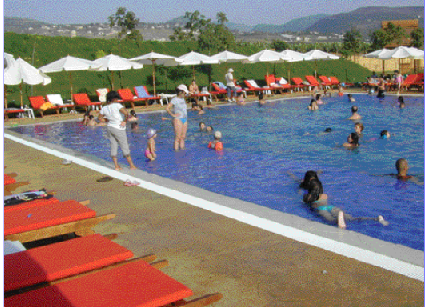
Contrasting images portray the tourism business in Lebanon this summer. Visit the downtown of Beirut or the shopping areas popular with guests from the Gulf region, and business is minimal or at best, slow. But go to seaside resorts along the Lebanese coast from the north to the south and you see crowded beaches with vivacious parties that start from, or last into, the morning.

Downtown Beirut, which at this time of the year in stable political conditions would have been packed with Gulf Arabs and foreign tourists spending their money, is barely seeing visitors in the wake of political tensions and security threats that have gripped the country since December 2006.

The whole city should be buzzing with visitors; however, we can only see some expatriates returning to vacation in their homeland. Desperate retailers place their hopes on putting up sales signs and the restaurant scene in the city center has been compacted into a few remaining eateries that get by on serving lunch to the office workers in the area.

But the fun in Lebanon never dies — it just moves elsewhere. In the absence of foreign tourists and despite the uncertainties clouding their horizon, forever-young local revelers of all ages now take care of the tourism business domestically, with their love to party and enjoy their hot summer season.

“Every Sunday we are at the beach in resorts like Ocap or Pangea in Jiyeh. The ambiance is crazy there, places are always crowded during weekends, pool bars are full and loud music just make the place rock even in daylight,” said Rana Arakji and Rachid Chouceir, two young professionals who work in central Beirut but shun the city’s present tristesse when it comes to recreation. Towns to the south of Beirut like Jiyeh and Damour, where a year ago Israeli fighter jets thundered maliciously across the sky, this summer are attracting throngs of beachgoers and Arakji said she has no worries about security.

Beach resorts and water parks are satisfied as the 2007 summer season is moving along. On weekends, cues form at the entrances and many resorts are filled to capacity as locals seek the sun after a hectic week at work.

Locals making up for tourists

“This summer season started very good. We are not affected a lot by the political and security incidents. On Sundays we have almost 2,500 people in our resort,” said Sofie Edde, marketing executive at Edde Sands, a five-star Phoenician-themed 100,000 square-meter beach resort and hotel in Byblos.

Edde Sands CEO, Fadi Edde, believes that if the situation remains as it is now with no major security threats, the resort should witness a decent and reasonable closing of the season. “In 2007 we are dealing with similar numbers as in 2005,” he told Executive.

The life on the beaches defies the months of political instability, a string of bomb blasts, and the images of imported conflict in northern Lebanon around the Nahr al-Bared Palestinian camp where since late May the Lebanese army has been locked in a deadly battle with Islamist militants.

A bit further down the coast from ancient Byblos and Edde Sands, Elie Mechantaf, owner of Cyan Beach in Zouk, was very satisfied with the summer season’s takeoff in June and July. “Cyan Beach is booming this year and I cannot compare it to previous years because this is my best year in terms of performance,” Mechantaf told Executive in a phone interview.

Operators are keeping their fingers crossed that the season will be spared from a repeat of last year’s summer war, which cost the lives of 1,200 Lebanese and destroyed the tourist season.

“In 2006 we didn’t break even, the year was a total loss,” said Fadi Edde. “In our work, we consider May and June as pre-opening cost, and we expect to make revenues in July and August, so when you spend money and don’t get any revenues, it will be a total loss.”

Encouraged by the good start of his 2007 season, Mechantaf said he is planning to expand by adding 8,000 square meters to his 15,000 square-meter resort. Banking on profit expectation of $300,000 during the three-month summer season, he bought land adjacent to Cyan Beach; his total investment in the expansion will be a minimum of $1 million.

Mechantaf said he is much more dependent on Lebanese locals than on foreign tourists. For pricey operators, expatriate Lebanese on home visits and tourists are important to reach profit targets. “Edde Sands depends on the buying power of the Lebanese expatriate community. They spend much more than local Lebanese,” Edde said. With 30% of typical revenues coming from foreign tourists and expats, the resort expects that business this year will be as good as, but not better than, 2005.

Beach resorts maturing

With the exception of private clubs restricted to members of local elites, the upscale beach resort business in Lebanon is young. Five to six years ago, the first beach-wise developers started investing in resorts that offered more than cheap lawn chairs, primitive umbrellas, and snacks. The exercise included investments such as carting clean sand to upgrade the shore, setting up boardwalks and acceptable shower facilities, and most of all, building atmosphere and image for resorts carrying names such as Oceana, La Voile Bleue, La Guava, Janna Sur Mer, and so forth.

As they are showing their resilience, the hip places are proving this summer that they are more than the ad-hoc businesses with short-term leases that some of them started out as, even though legal questions over theoretically free beach access rights as well as environmental sustainability issues are ugly smudges on the pearly white vest of the whole industry.

DJ parties and special events in beach resorts also are now an important part of the entertainment staple in the country. In early July, an appearance by Dutch music animal Tiesto drew an estimated 20,000 to Edde Sands, making his concert a testimony to Lebanon’s vivacity in a challenging time — all the more so since the country’s two largest traditional music events, the multi-faceted Baalbeck and Beiteddine festivals, have been cancelled for the second year in a row despite assurances to the contrary made by tourism minister Joe Sarkis in May.

The only festival scheduled to proceed normally (at time of this writing) is Byblos Festival. Incidentally, its three-week program from rock to soul will take place almost on the beach; one of the four shows in the festival will be five performances of Zenobia, advertised as an epic by Mansour Rahbani that celebrates the queen of ancient Palmyra as “the first voice of liberation in the East” who refused to bow to the power of the greatest empire of her age.

Beach resorts in the north and south will decorate the rest of the summer with less weighty lore, having put a number of concerts with international DJs and local performers on their calendars. In the long run, resort operators bet on special events as increasingly important components in their income mix. Edde said organizing the Tiesto party brought double benefits of marketing the resort and giving his team experience in organizing and running a large show. This will lead more companies or individuals to want to stage events at Edde Sands, he said.

Having sun, local crowds, and parties going for themselves, trendy beach resorts seem to count among the few enterprises in Lebanon whose outlook for 2007 is not downcast. They hope, however, that the country will somehow progress to political normalcy and then things will be a lot better — even on the beach.

August 17, 2007 0 comments
0 FacebookTwitterPinterestEmail
Cover story

Conflict vs. Growth: Political Threats to a Bullish Region

by Executive Contributor August 17, 2007
written by Executive Contributor

The Middle East looks like a paradox: On the one hand the high oil prices boost the regional economies, financiers are running out of investment projects, Gulf stock markets are recovering from the 2006 slump and one of the last “closed economies,” Syria, is opening. However, all this economic development occurs in the shadow of a whole number of political Damocles’ swords. External threats – an American war with Iran, which would affect the Gulf, and an Israeli-Syrian conflict that could draw in Lebanon — and domestic quandaries — ranging from out-of-control population growth to sluggish bureaucracies and the Islamist challenges to ruling elites — could all spoil the current growth.

The twin forces of oil money and attractive economic policies have boosted the region’s economic outlook and general confidence. Mega-scale infrastructure, tourism, and real-estate projects — like the Abdallah Economic City near Jeddah and the Dubai Metro — are springing up, not just in the Gulf, but also beyond the boundaries of big oil-producers. In Damascus we find the Eighth Gate and in Amman there are the Abdali projects.

It’s easy to see from whence this bullishness came. In 2006, MENA oil revenues stood at a staggering $510 billion, $75 billion more than the previous year. With the barrel of oil hitting $75, oil producing nations are swimming in a cash surplus, while remittances and foreign direct investment (FDI) to resource-poor countries have also risen to historic levels.

A time to boom

The current high oil price was caused, mainly, by expectations of continuing strong demand, especially from the fast growing economies of China and India, fears of supply disruption in a number of hotspots such as Iraq, Nigeria and possibly Iran, concerns about the reliability of major oil/gas supplies in Russia and Venezuela, as well as general capacity constraints on the hydrocarbon sector’s infrastructure.

OPEC even estimates that, because of increased demand (reaching 95.8 million barrels per day), falling supply in mature areas such as the North Sea and Mexico, and delays in new projects such as Russia’s Far East, there will be an oil supply “crunch” five years from now, leading to even higher oil prices. The same is forecast for the gas sector.

Buoyed by this dramatic rise in hydrocarbon revenues the MENA region’s real GDP growth stands at 6.3%, up from 4.3% during the first half of the decade, and an even lower 3.6% during the 1990s. In 2006, remittances, flowing from oil- to labor-exporting countries in the region, have reached $19.3 billion for MENA recipient countries, while the tourism sector saw solid growth of 14.5% compared to a 12.6% rate in 2005.

High oil revenues have also spurred FDI, which reached more than $24 billion in 2006, triple the 2004 level. The main recipients are Egypt, Lebanon, Morocco, Tunisia Jordan and the UAE. This intraregional flow of FDI is not stopping any time soon as it finds homes in energy, infrastructure, real estate, and tourism sectors.

Most of the region’s countries have managed to expand their fiscal surplus or, in case of state deficits, significantly reduce debt. In 2006, MENA current account surplus rose to 23% of GDP or $280 billion. This has had positive effects on the labor market, pushing the unemployment rate from 14.3% in 2000 to under 10% in 2006.

The World Bank, in a study released in June 2007, predicts that “prospects for MENA are potentially favorable for the period through 2009.” While an easing oil price might slow down growth among the producing countries, the non-producers are expected to compensate with stronger growth with the region holding steady at over 5%.

Investment data shows that the countries in the region are aggressively pursuing exploration for oil and gas deposits. The Maghreb countries are prospecting new blocks, Egypt is searching on its northern coast and southern border, Jordan — perilously dependent on external supplies — is investigating to exploit oil shale deposits, and even Lebanon has drawn up plans to develop offshore gas reserves.

Much of the surplus wealth is re-invested in the region. By 2010, the GCC countries plan to have spent $700 billion in the MENA oil and gas sector, infrastructure, and real estate projects. Parallel to the oil price hike, the region has also undergone a phase of economic liberalization, partially owing to the demands of globalization and partially owing to the realization even by such nomenklatura states as Syria and Libya that clinging to the old ways would spell certain economic (and with it political) demise.

But wait

Yes indeed, the region is enjoying an economic prosperity last seen in the heydays of the 1970s oil boom. Everywhere one travels, from hyper-rich Dubai to “If-Egypt-is-3rd-World-then-this-must-be-6th” Khartoum, construction sites are buzzing, consumer goods are in demand, and confidence is high. Yet, there are clouds on the horizon. Politics — both global and domestic — could spoil the party and throw spanners into the spinning wheels of the economic boom.

This summer, hints by the advisors to George W. Bush that the U.S. government would like to “solve” the question of Iranian nuclear facilities (read: Iran’s attempts to produce nuclear weapons) before the administration leaves the White House in early 2009, were answered by Iran’s Supreme Leader, Ayatollah Ali Khamenei, with an ominous warning that in the event of a US/Israeli attack, the Islamic Republic would close the Strait of Hormuz, highlighting, yet again, the vulnerability of the Gulf’s main oil and gas export route. The body of water, at its narrowest point barely 34km (21 miles) wide, is the gateway for one-fifth of the world’s oil supply, which in 2006 amounted to 17 million barrel per day (bpd).

This particular threat — coupled, for good measure, with that of retaliatory attacks against US military bases in GCC countries — is certainly the darkest case scenario. Iran will no doubt think long and hard before it decides to jeopardize its good relations with the UAE and Qatar and the oil-hungry economic powerhouses of East Asia. Nevertheless, the chance that Tehran, if it feels cornered, may resort to such an act of despair, or that in the event of a military confrontation, elements within the Iranian army or Revolutionary Guard may take unilateral action, cannot be dismissed as the stakes are too high. In fact no one is taking any chances.

Securing alternatives

Pipelines that bypass the straits already exist while others are on the drawing boards. Because of already existing political upheaval and discord, however a number of already existing pipelines — like the Trans-Arabian Pipeline going from the Saudi Gulf coast through Jordan and Syria to Lebanon’s Mediterranean coast or a number of pipelines running through Iraq — are unusable.

Saudi Arabia’s East-West Pipeline, running from the Abqaiq oil complex on the Gulf across the peninsula to Yanbu on the Red Sea, is currently underutilized, as the shipments via Yanbu add up to five days to the travel time to the Asian customers, but could easily be brought to its full capacity of 5 million bpd.

In the UAE, Abu Dhabi’s state-owned oil investment company has just tendered the engineering and design contract for the Abu Dhabi Crude Oil Pipeline (ADCOP), which will carry 1.5 million bpd — over half of Emirates’ production — to the oil terminal in Fujairah on the UAE’s eastern coast, thereby circumventing the Strait of Hormuz. Another project, at this point only in the pre-planning stage, is the Trans-Gulf Strategic Pipeline (TGSP), which would run along the southern Gulf coast all the way to the Indian Ocean, connecting the “inner” GCC countries Kuwait, KSA and UAE with the “outer” member state Oman, eventually even including Iraq and Yemen and stretching up to 1,500 km. This Strait-of-Hormuz-Bypass is envisioned to carry as much as 5 million bpd.

Eventually, when the two new conduits are constructed in many years to come, those three pipelines could take two-thirds of the oil currently carried by tankers, thus cutting shipping costs, reducing traffic in the narrow straits and busy oil terminals and — by offering a safe route — ensure continuity of oil and gas exports.

But in the meantime all eyes are on the deployment plans of the American aircraft carriers and the training exercises of the Iranian navy.

Heating up

Further west, in the Levant, the external threat is not so much from a direct US intervention — with almost all ground troops busy in Afghanistan and Iraq, the Americans have only capacity for air-strikes and thus the cup of regime change has passed by the Syrian government — but for the time being the frontlines of the Arab-Israeli conflict could easily heat up.

We have already seen what a “heating up” can do in Lebanon, where in the summer of 2006 the economy was brought to its knees within a month and projected growth of 6% was cut down to zero. The Cedar Republic remains in the throes of internal quarrels and external interference.

In a way, Damascus in summer 2007 resembles Beirut 2006 before the Summer War: bullish about its economic future, with drastic upsurge in consumption, real estate developments and other FDI-fuelled projects springing up, yet all linked to the “IF no war breaks out” caveat. Investors, even those who like to take a punt with their diversified portfolios, don’t like war.

However, that might not be Syria’s biggest problem. Following the, albeit slow, economic opening, this infitah policy is not a sure bet. Out of an estimated 20 million people living in Syria today (including up to 1.5 million Iraqis), 1 million are now doing better than under the old socialist economy — but for the other 19 million the situation is remaining stagnant or getting worse in relative as well as absolute terms. Today’s conspicuous consumption — almost unheard of a decade ago — is not only a sign of the country’s economic prosperity but, in a society still officially cherishing social equality and solidarity, also breeds resentment among the have-nots. It remains to be seen if the Syrian government will be able to contain the social tensions in the way Egypt and other socialist-gone-capitalist countries of the region have, or if economic stratification will accomplish what secular and Islamist opposition never could: break the regime.

The other domestic challenge that Syria, together with a whole number of countries in the region, faces is that of rapid demographic growth not matched by a similar rate of job creation. Major oil producers like Saudi Arabia and Libya have the money to absorb job seekers into the state bureaucracies and pay them meaningful wages. Less affluent economies also provide university graduates with public sector employment, but at salaries that force many bureaucrats and teachers to take second jobs to make ends meet. Egypt is a prime, and through its film industry a well-known, example.

However, economic disaffection is brewing in all but the super-rich GCC countries. So far, many of the region’s regimes have benefited from a tight policing of their population and fear of the alternative — as cited in Iraq — has prevented the social upheavals predicted by political pundits at least every six months from breaking out. But the social problems — growing populations and rapid urbanization — will not just go away and can only be addressed by solid economic growth across all social strata.

Dealing with demography

In the Gulf countries, particularly Saudi Arabia, policies of “nationalization of the work force” are seen as a way out of the dependency on foreign labor and expertise and prepare the countries for the time “after the oil” when their economies will have to generate revenues from other sources. The smaller Gulf nations have minute populations relative to their GDP, whereas Saudi Arabia, with a current population of 22 million nationals (plus 5.6 million foreigners) and a 3+% population growth rate is facing a true conundrum. The strong rise in oil revenues has alleviated the pressure for the time being, but contrary to its brothers in the GCC, in terms of demographic challenge it belongs more in the “Egypt, Iran, Syria, Yemen” camp.

Across North Africa, the story is similar: demographic growth unmatched by creation of jobs that pay livable wages breeds discontent within the political system, regardless whether it is monarchist, republican, or whatever. Libya is the 18th-largest oil producer in the world with a small population of just 5.6 million. After it had “come in from the cold” and rapidly developed economic ties with the West — the UK signed a $900 million oil and gas exploration deal — domestic challenges replaced foreign politics as the No. 1 threat to the stability of Qaddafi’s regime with criticism about government policies and social disparities increasingly based on an Islamist worldview.

Indeed, throughout the region, variations on the Islamist theme of politics have become the most pervasive ideology. “New veiling” and the surge of “Islamic finance” alike are markers of this development. This political phenomenon is by no means homogeneous — ranging from the Islamic capitalists of Kayseri (Turkey), whose “If you are successful, God loves you” outlook mirrors the Protestant work ethic, to the anti-business extremists of the Taliban. However, regardless of the specific flavor, it is the followers of political Islam who challenge the status quo across the region and in countries as diverse as Morocco, Egypt, and Saudi Arabia.

It remains to be seen whether the powers that be can successfully accommodate or even integrate these Islamist currents. Turkey is a good example that business-friendly Islamists in power can actually be beneficial to economic prosperity in contrast to overly state-focused secular and military elites, whereas Khomeinist Iran proves that dirigiste Islamist regimes could cause the exact opposite — an ossification of the economic sectors. Of course, then there are the hard-line ideologists who oppose and attack anyone who doesn’t follow their own model. With these, dialogue is impossible and it is they who pose the greatest threat to prosperity, since they do not care about the economic, and thus social, repercussions of their actions, exemplified by the terror attacks against tourists in Egypt and the 2006 summer war in Lebanon. Both — one extremist group and one mainstream parliamentary party — carried out actions that had negative impacts on the local economies of their respective countries.

As all countries in the region, including Gulf states, are enlarging the percentage of tourism revenues within their GDPs, they become more and more reliant on their image as “safe” locations. Whereas the infrastructure can be quickly repaired after war or a terrorist attack, convincing tourists and businessmen that it is again safe to visit is a much harder task. Just look at Lebanon this summer. The place should be full of tourists but they chose to stay away.

Hard to predict

There is no inevitability of disaster. Indeed, warding off those threats doesn’t need magic and the region’s governments and business leaders have all the means at their disposal to shield their countries against outside perils and solve domestic problems.

Prudent allocation of the last years’ high revenues, such as strong debt-reduction and a build-up of financial reserves, give the region’s economies — and their political establishments — good positions to absorb unforeseen shocks and ward off possible threats. Apart from Iraq, Lebanon, and the Palestinian Territories, racked by long periods of political instability and war, most of the countries in the region should be able to weather even a worst-case scenario, on the condition that it is short-lived and followed by an almost immediate recovery.

However, they are not (yet) geared to withstand any major long-term instability.

As long as the current situation prevails — even with Iraq mired in occupation and fratricide, Iran playing with the nuclear option, the Arab-Israeli conflict nowhere near a solution, etc. — the region’s economies will continue to prosper. In fact, countries in the region have a vested interest to maintain a certain “balance of risk” — they profit from a political situation volatile enough to keep the price of oil at the current high but not too unstable to (1) threaten continuity of prosperity and (2) push consumers to look for alternatives to the Gulf’s (and North Africa’s) oil and gas.

The oil producers are keen to keep the price within a band of $50-80 per barrel (pb). If it drops lower, they will face significant financial problems for two reasons. The first is the break-even factor. Qatar, with a break-even price of $47 pb, would be the first to suffer. Oil economies Algeria, Saudi Arabia, UAE and Kuwait have more leeway, since their break-even price is between with $38.80 (KSA) and $22.40 (Kuwait). However, for the countries whose economies are essentially oil-based, any decline in the oil price automatically translates into a significant drop in GDP. Thus, a 10% decline in world oil prices would cut Saudi Arabia’s current account as percentage of GDP by 5.2%, and Qatar’s by 5.1%.

Non-producers, while having to foot larger energy bills, will profit overall from high oil and gas prices, since the vast amounts of petro-dollars that are flowing into their economies in the shape of FDI and remittances outweigh rising energy costs.

Furthermore, cautionary tales like those of Iraq and Lebanon, and incidents of Islamist terror serve the region’s political and economic establishments — often one and the same and in all other cases symbiotically connected — to curb domestic dissent and prevent it from gaining mass appeal. However, the only way to ensure that the current calm, after a decade of trouble in the 1990s, isn’t just a temporary lull before the next storms is if the region’s leaders rapidly create and maintain the frameworks for a self-sustained continuous economic growth. In order to achieve that, they have to significantly decrease reliance on the essentially unpredictable price of natural resources and put less emphasis on the state as the main driver and provider of social prosperity.

It remains to be seen if the balance of risk can be maintained.

August 17, 2007 0 comments
0 FacebookTwitterPinterestEmail
Comment

Hairy adventures

by Norbert Schiller August 17, 2007
written by Norbert Schiller

If you think getting a resident’s visa to the Emirates is difficult try being a pet!

Years ago cats were the easiest pets to take on an airplane. They were small enough that most airlines let them on as hand luggage. Because of their size and disposition they were rarely scrutinized in the same way dogs are for health certificates and vaccine cards when they arrived at airports, particularly outside Europe. That has all changed, especially in the UAE.

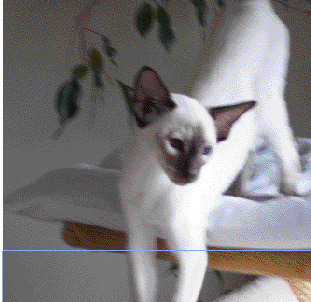
Last year, the small matter of a war forced me to relocate my family to Sharjah. Getting the paperwork — work permits and residents visas — in order is always a headache but I groaned when I learned that pets, in this case our Siamese cat Simone, were not exempt and needed their own papers.

To avoid having your pet quarantined on entry here are the steps one needs to follow: make sure your pet’s vaccines are up to date. Then, take said pet to its vet and have a micro-chip implanted in either it’s neck or behind the ear verifying that the information on the vaccine card tallies. In Lebanon, the cost for the chip is around $40. Once that is done, you (or your vet) need to get a “Good Health Certificate” from the Ministry of Agriculture in the country you’re travelling which states that all the health documents are legal and that your pet is in good health. It is advised to get that document within five days of departure. In Lebanon, the “Good Health Certificate” costs around $20. Then you need an import permit from the UAE Ministry of Agriculture. To get that you need to fax the vaccine card, the Good Health Certificate and a copy of your passport. If you have no one in the Emirates to pick up the permit your pet will, on arrival, be detained at the airport until you can produce the import document, which costs AED200 or $56.

On landing in the UAE, you must proceed to the veterinary clinic in the cargo section of the airport to pick up your pet. If all your paper work is in order you need to sign a few more documents, pay an additional AED 100, ($28), and you and your animal are then free to leave.

To avoid putting Simone in the hold, I called all the airlines in Beirut that have flights to the United Arab Emirates to see which one would accept my cat inside the cabin. I didn’t think much of it because I am used to seeing cats, sitting in cages on their owners’ laps on aircrafts. I called about 10 airlines that make the Beirut Dubai/Sharjah run to learn that only Middle East Airlines (MEA) allows pets on board. All the others said that animals have to be checked in as cargo and put into a pressurized, temperature-controlled section in the cargo area of the plane. Poor Simone. They added that the rule was imposed on them by the Emirates port authority. The only odd exception other than MEA was Emirates Airlines which forbids all animals inside the cabin except falcons and even they need a ticket. This, by the way, is nothing new. In the mid-1980s when Emirates was in its infancy, I was lucky enough to return first class to Dubai from Pakistan. A lucky break, I thought as I turned left, past the curtain into the world of privilege. Or so I thought. I had been allocated a window seat and my fellow passenger was a cage with four hooded falcons returning from a hunting trip in the Punjab. Their masters were relaxing in the row in front of me.

Back in Beirut, I proceeded to the airport with Simone and his accompanying paperwork. The check-in was simple (apart from the $70 weighing fee) and the flight went well with Simone sleeping the entire journey. After retrieving our luggage in Dubai I thought we were home free but at the last control, one of the customs agents saw the cage and escorted me to an office. “Why had I been allowed to carry the cat on the plane,” I was asked. Simone was promptly taken away to the cargo area where I had to go and rejoin the formal process before I could take her home.

We brought our cat back to Lebanon with us for the summer and the vet at the Dubai airport assured us that all her papers were in order. He said that all we need to take her back is a re-entry card, which we got, and a new health certificate issued no more than 5 days before we travel. When we called our vet in Beirut to ask how long the health certificate will take, we were told that there are new UAE regulations requiring a blood test for rabies. This test cannot be done in Lebanon and the blood sample has to be sent to France, a process that takes eight weeks. I’m praying Simone is exempt.

August 17, 2007 0 comments
0 FacebookTwitterPinterestEmail
Financial Indicators

Global economic data

by Executive Staff August 7, 2007
written by Executive Staff

Immigration in Arab countries

The UN Population Division database delivers an overall picture of immigration in the Arab World. Aggregating all Arab countries gives a number of 20.9 million immigrants (thus including intra-regional migrants from one Arab country to another). An alternative source could be national data of the countries of destination.  The resulting figure is lower than that of the UN. In the 14 Arab countries that have published immigration data, the aggregated number of immigrants 13 million. For the same 14 countries, the UN estimate is 18.8 million immigrants, i.e. 1.45 times higher. If the Palestinian Territories and Jordan where the discrepancy is explained by UNRWA refugees being counted as immigrants by the UN are excluded from the comparison, 12 countries give an aggregated number of immigrants of 12,288 million to be compared with 14,983 provided by the UN (22% higher than national figures). The gap between the two sources (2.7 million) is partly, but not entirely, explained by the fact that UNHCR refugees are counted in migration statistics by the UN, but not by national sources.

Top Sugar Producers

  • More than 100 countries produce sugar, 74% of which is made from sugar cane grown primarily in the tropical and sub-tropical zones of the southern hemisphere, and the balance from sugar beet which is grown mainly in the temperate zones of the northern hemisphere. Generally, the costs of producing sugar from sugar cane are lower than those in respect of processing sugar beets. Currently 69% of the world’s sugar is consumed in the country of origin whilst the balance is traded on world markets.
  • The five largest exporters in 2005/06, Brazil, the EU, Australia, Thailand and South Africa, are expected to supply approximately 76% of all world free market exports.
  • Global sugar production in 2005/06 is estimated as 147.7 million tons, 79% of which is produced by the world’s top ten sugar producers.

Exports of information and communications equipment

Growth of exports has been particularly high for the countries that started with a low base in 1996 — Hungary, Iceland, the Slovak Republic and the Czech Republic, Turkey and Poland. Germany and especially South Korea stand out as countries which started the period with substantial ICT exports and which have seen them grow rapidly between 1996 and 2005.

By the end of the period, the OECD countries could be divided into three groups — United States, Japan, Germany and South Korea with high exports of ICT goods, a middle group consisting of the Netherlands, United Kingdom, Mexico, France and Ireland and the remainder with relatively low values of ICT exports. As noted above, however, some of these, such as the four Central European countries, are rapidly increasing the value of their ICT exports.

Among the five non-member countries, growth of ICT exports has been slow and steady for all except China which has experienced spectacular growth in exports of ICT goods. Between 1996 and 2004, the value of ICT exports from China have been growing at an average rate of 33% per year and in 2004, China’s ICT exports surpassed those of the United States.

Bottled Water Consumption Per Capital

Global consumption of bottled water has been growing over the past five years despite the fact that in a many places, including Europe and the US, there are more regulations governing the quality of tap water than bottled water. Although the US leads the world in the consumption of bottled water, at 26 billion liters in 2004, the bottled water craze is a global phenomenon. According to Beverage Marketing Corporation, worldwide consumption reached 154 billion liters (41 billion gallons) in 2004, an increase of 57% in five years. On a per capita basis, Italians are the biggest consumers of bottled water, at nearly 184 liters in 2004 — the equivalent of more than two glasses a day. Second and third place in per capita consumption are Mexico and the United Arab Emirates, at 169 and 164 liters respectively. Belgium (including Luxembourg in the statistics) and France are close, with consumption just under 145 liters per person annually.

August 7, 2007 0 comments
0 FacebookTwitterPinterestEmail
Financial Indicators

Regional equity markets

by Executive Staff August 7, 2007
written by Executive Staff

Beirut SE: Blom  (1 month)

Current Year High: 1,526.31       Current Year Low: 1,168.36

Un Under the shadow of the non-event of St. Cloud that failed to generate any improvement to Lebanon’s crippling disease of politics, the Beirut Stock Exchange did what it has been doing in the first half of the year: hang on by its teeth, gums bleeding. The BSI capped at 1172.86 on Jul 26, July trading volumes were largely insignificant. Report-worthy movements in the banking sector included the competition among local banks to buy the domestic business of BLC from the Qatar Investment Authority and the acquisition of Banque de la Bekaa by Bank of Sharjah (BoS) for $25 million. BoS essentially acquired a license which it wants to use to build an operation in the Levant. As far as stock market confidence indicators go, first-half 2007 findings by the semi-annual MasterIndex survey gave 20.5 out of 100 points in consumer confidence to the BSE (data were collected in April). That’s a drop of 63% from six months ­earlier. Compared with other Arab markets in the survey, the BSE scored 60 to 74 points lower.

Amman SE  (1 month)

Current Year High: 6,543.67       Current Year Low: 5,267.27

The Amman Stock Exchange Index closed at 5,682.08 points on July 26, some 177 points lower than its July 1 closing. In year-to-date sector performance, the financial services sector made the weakest showing, down by almost 11%. Hospitality, mining, and real estate are still up more than the general index YTD, banks are barely holding their ground. Heavyweight Arab Bank led trading volumes but its share price moved down 5% in the course of July. Noteworthy transactions included a $440 million block trade in stock of HBTF. Financial services firm First Jordan Investment, an affiliate of Kuwait’s Global Investment House, carried out the subscription for its $85 million initial public offering between July 10 and 23, about eight months later than announced in first plans for the step. Saudi food conglomerate Savola and real estate firm Tameer Jordan entered an agreement by which Savola is expected to acquire 5% of Tameer.

Abu Dhabi SM  (1 month)

Current Year High: 3,705.32       Current Year Low: 2,839.16

 Straying upwards but a little from its plateau in the mid 3,500 points, the ADSM index closed at 3574.54 points on July 26, less than 20 points better than its 3,556.21 points at the first of the month. Summertime vacation pressures pushed the first-half disclosure season into high gear from early in the month while trading volumes tended lower. While in Dubai the new banking partners Emirates Banking Group and National Bank of Dubai proceeded with their merger to become Emirates NBD on rationale of gaining more oomph and regional profile, local champion National Bank of Abu Dhabi released second-quarter results that showed a 16% increase in profits to $160 million, saying that domestic banking was its biggest growth driver.   

Dubai FM  (1 month)

Current Year High: 4,985.39       Current Year Low: 3,658.13

The Dubai Financial Market closed at 4332.31 points on July 26, its lowest stand in two months. Earlier in July, however, it had touched its highest level in over eight months, at 4549.4 points. Air Arabia started trading with high volumes but limited gains. Emaar Properties, whose first-half results were to the dislike of share buyers, was sent 7% lower between its July 15 results disclosure and July 26. Early in the month, the DFM released a list of 13 most actively traded stocks in the first half of 2007. Including usual suspects in real estate, finance, communications and transport, companies on the “More Active Stocks” list are given a higher ceiling of 15% as daily fluctuation limit; other stocks have a ceiling of 5%. An important non-event from an international equity angle was the decision by DP World to drop its listing plans on the London Stock Exchange, judging bond financing more advantageous than the intended IPO. 

Kuwait SE  (1 month)

Current Year High: 12,491.10     Current Year Low: 9,164.30

The Kuwait Stock Exchange soared on, reaching P/E levels that made some listed stock appear overpriced to regional and international analysts. Up by 24.08% from the start of the year, the KSE closed at a new record of 12,491.10 points on July 25. Its index gain in the course of the month amounted to 445.3 points, representing an increase of 3.7%. Financial firms provided serial cross border expansion announcements. Investment Dar received approval to establish an Islamic bank in Bahrain with $200 million capital. National Bank of Kuwait stated it is negotiating a deal to buy an unnamed bank in Turkey. Commercial Bank of Kuwait said it will buy 25% in a small Yemeni bank jointly with the IFC. Blue chip telecommunications stock MTC had a string of five sessions at the down limit after its second quarter profit disappointed investors but recovered some ground at the end of the month. On strong revenues from asset sales, KIPCO posted a 2.5 times higher net profit for the second quarter 2007 at $96.2 million.

Saudi Arabia SE  (1 month)

Current Year High: 11,709.10     Current Year Low: 6,861.80

The SSE tried for another recovery before the full heat of the summer vacation. Although still trailing everyone else in the GCC as the only Gulf bourse ending July lower than its index level at the start of the year, the TASI improved rather nicely from 6,900.50 points on July 1 to a closing at 7,633.54 points on July 26. Sabic announced 42% higher Q2 net profit at $1.7 billion. The share price of Sahara Petrochemicals rose before a bonus share issue and slumped afterwards. Four new insurers entered the fold of listed firms and Prince Al-Waleed bin Talal’s Kingdom Holding, whose 5% initial public offering was covered two-and-a-half times by demand earlier in the month, announced its rather speedy start of trading on the SSE for July 29, which should make it the 100th company on the bourse. The Wall Street Journal, seemingly determined to ruffle some feathers in the desert kingdom, published a major story alleging links between Al-Rajhi Bank and terrorism finance.

Muscat SM  (1 month)

Current Year High: 6,504.18       Current Year Low: 4,718.74

The Muscat Securities Market appeared a tad under the weather toward the end of July. The index advanced from 6,314.17 points on July 1 to a year and all time-high of 6,504.18 points mid-month before softening to 6431.31 on July 26. The market is also up by 15% year-to-date. Oman United Insurance reported a first-half net loss of $5.2 million, on account of claims related to cyclone Gonu. BankMuscat reported net profit of $104 million (44% up year-on-year); National Bank of Oman and Raysut Cement came in with first-half profit gains of 46% and 35% while several smaller firms also posted good results. Kuwait’s Global Investment House made a bid to buy 51% in Omani pipe maker Al-Jazeera Steel Products.

Bahrain SE  (1 month)

Current Year High: 2,503.03       Current Year Low: 2,047.28

The Bahrain Stock Exchange was not to stand behind its larger neighbor in Kuwait and produced a record performance, soaring from 2410.87 index points at the start of the month to a new historic peak of 2,503.03 points on July 26. Although at all-time best mark, commotion over the good performance was noticeably less than similar successes had been hailed during the 2005/2006 GCC markets boom. Market heavyweight Batelco contributed to the market performance with respectable profit gains and announcement of a new regional expansion strategy which it termed “niche-growth.” A corporate Kuwaiti shareholder in Bahrain’s largest listed bank, Ahli United Bank, received an acquisition offer for his stake from International Bank of Qatar, a privately-held commercial and retail bank in Qatar with four branches.

Doha SM: Qatar  (1 month)

Current Year High: 7,997.53       Current Year Low: 5,825.80

The Doha Securities Market lost a bit of steam in the second half of July. After a climb from 7,432.54 points on July 1 to near 8,000 points on July 9, the index retreated in the rest of the month to a July 26 closing at 7569.59. The market is still among the weaker performers in the GCC this year, up by about 6% year-to-date. Industries Qatar helped the DSM to some rosy moments towards the end of the month with a substantive improvement in first-half profit. IQ and QTEL are among Gulf stocks favored by investment analysts of Credit Suisse. DSM regulators announced that they will from this month on post all information on stock trades by executives and board members in listed companies on the DSM website and market monitors. Internationally, Qatar attracted attention with its ambition to buy UK supermarket chain, Sainsbury.

Tunis SE  (1 month)

Current Year High: 2,712.33       Current Year Low: 1,909.26

The Tunisian Exchange registered negative movement that saw the Tunindex tumble 3% in the course of the month, from 2509.79 points on July 2 to 2437.21 points on July 26. After recording a historic peak in February, the bourse has not made any significant gains in four months and closed July on 4.55% up compared with the start of 2007. Market heavyweight SFBT traded lower after a 5-for-1 stock split on July 8; its share price weakened by about 12% in the two weeks afterwards. The market saw an initial public offering in July by industrial manufacturer Tunisie Profiles Aluminium. The company put 4.8 million shares, representing 16% of equity, on the market for $15.5 million. Subscription closed on July 24, with no oversubscription reported.

Casablanca SE All Shares  (1 month)

Current Year High: 12,723.23     Current Year Low: 7,029.45

The Casablanca All Shares Index trained further in its quickstep sideways dance, starting the month at 11,374.11 points on July 2 and closing at 11,394.32 points on July 26. Initiating the exchange’s most significant primary market action in some time state-owned real estate firm CGI (Compagnie Generale Immobiliere) put 20% of its shares on the market in an initial public offering cum capital increase worth $428 million. Subscription closed on July 27. In industrial news, American paper manufacturer International Paper paid $40 million to buy the 35% stake in local sector company Compagnie Marocaine des Bois et Matériaux which it did not yet own.

Cairo SE: Hermes  (1 month)

Current Year High: 74,964.86     Current Year Low: 49,705.98

After a month-long rally which saw the Hermes Index scale a new record at 74,964.86 points on July 10, CASE closed at 74,390.06 on July 26. Volume performers included the Orascom group companies in telecommunications and construction. Orascom Telecom Holding placed a formal $120 million bid offer to sector company Raya on July 22 but the firm rejected the offer as too low. More attention grabbers were in the banking sector, where CIB was reported in newspapers to be negotiating a merger with Arab-African International Bank (owned mostly by the governments of Egypt and Kuwait), which would create a new strong domestic banking player with 8% market share by assets. CIB shares rallied. In another development, the government said it would bust the chains of Banque du Caire and sell 80% of one of Egypt’s top banks. The move values Banque du Caire at above $2 billion and replaces a plan of merging it with Bank Misr, which would have been too costly in terms of money, network restructuring, and employment impact. 

August 7, 2007 0 comments
0 FacebookTwitterPinterestEmail
Banking & FinanceSpecial Report

Money Matters by BLOMINVEST Bank

by Executive Staff August 7, 2007
written by Executive Staff

Regional stock market indices

Regional currency rates

Emaar records $424m profits in Q2-2007

Dubai-based Emaar Properties, the largest Arab company for development and reconstruction, recorded a AED1.558bn ($424.2m) profit in Q2-2007. Figures came below experts’ expectations, which ranged between AED1.79bn ($487.4m) and AED1.98bn ($539m) and have increased 1.44% year on year. The revenue for the first half totalled AED8.07bn ($2.199bn) representing a 59% growth year on year mainly due to the sale of apartments and villas in Dubai. It is worth noting that Emaar Misr for Development, a wholly owned subsidiary of Emaar Properties, has launched the Cairo Gate project, the largest mall to be developed in Egypt, at the $700 million Cairo-Alexandria Desert Road project.

Dubai Financial Market profit reaches $204m

Dubai Financial Market Company, which exclusively operates the stock market of Dubai, released its financial results for the first half of 2007, recording a net profit of AED748m ($204m) for the period. AED468m ($127.4m) were generated by Initial Public Offerings and AED280m ($76.2m) were generated by operating activities. The press release showed a 95% increase of profits in the second quarter as a result of high trading values, which totalled AED83bn ($22.6bn) in Q2-2007 compared to AED43bn ($11.7bn) for Q1-2007. Furthermore, the shareholder’s equity increased by 9.4% and reached AED 8.75bn ($2.38bn).

S&P: Ratings for Saudi Arabia raised

Standard and Poor’s Ratings Services (S&P) revised this week the outlook for Saudi Arabia’s foreign and local currency long term sovereign credit ratings from ‘A+’ to ‘AA-’. S&P explained that the upgrade reflects the government’s balance between high oil revenues and its strong and rapidly improving external and fiscal positions. Ratings are likely to increase if regional geopolitical risks decrease and if measures that tackle social aspects such as unemployment were taken. S&P also upgraded the country’s local and foreign currency short-term ratings to ‘A-1+’ from ‘A-1’ and transfer and convertibility (T&C) assessment to ‘AA+’ from ‘AA’.

August 7, 2007 0 comments
0 FacebookTwitterPinterestEmail
Banking & FinanceSpecial Report

FFA goes private

by Executive Staff August 7, 2007
written by Executive Staff

In the past few years, bullish financial markets have witnessed an unequaled surge in profits, on which financial institutions have capitalized massively. In the MENA region, the constant income stream stemming from spiking oil prices has added to this phenomenon. Financial Funds Advisors (FFA,) a Lebanese financial institution, seems to be gearing up for the race to offer sanctuary for this surplus of Arab money. Quintupling its shareholder’s equity to $25 million, it has moved into the rarefied circles of private banking

Established in 1994 as a brokerage firm focusing on financial advice delivery and mutual fund distribution, FFA has recently acquired a specialized license from the Central Bank, allowing it to become FFA Private Bank. Its change in status, which required moving from the structure of financial institution and brokerage firm to a private investment bank, was mainly drawn from the need to build recognition among potential local clients and correspondent institutions.

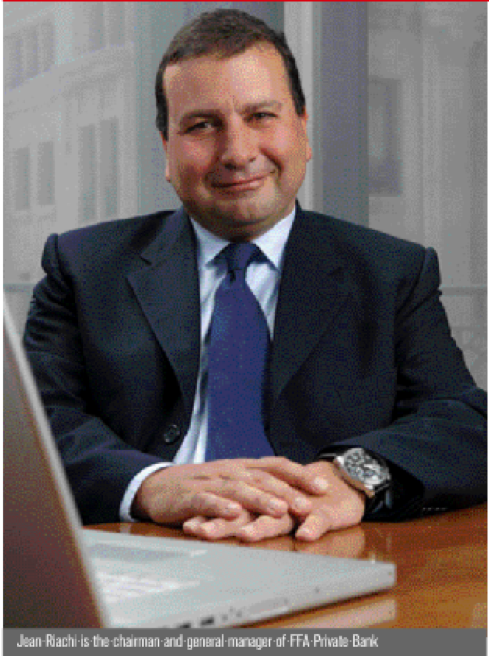
“The status of a financial institution in Lebanon is the equivalent of an investment bank anywhere else in the world. It specializes in non-commercial banking services such as lending, fiduciary deposits, portfolio management and brokerage as well as advisory services,” explains Jean Riachi, chairman and general manager of FFA Private Bank. “However clients and other company stakeholders had trouble grasping our institution’s former status,” he adds.

Setting a precedent

Another underlying reason behind FFA’s change of status was rooted in some of the operation’s technical aspects. “Investment operation activities are for the most part off the balance sheet ,” says Riachi. “In terms of wealth management, a client can hold with us custody money, securities or cash under fiduciary. But we also need to offer him the option of term deposit accounts.”

In addition to providing equity and debt financing, the new license allows FFA to participate directly in companies with its own funds without reverting to outside investors.

“As a private bank, we can operate fully with some restrictions on the retail and commercial side of activities, such as short term credit and deposit, which in any case, we have, no real interest,” underscores Riachi.

Two years ago, FFA held talks with Central Bank governor Riad Salame who said he also believed it was time to strengthen areas such as the capital market, mutual funds and investment banking. “We informed the governor of our desire and commitment to consolidate our human and financial structure by increasing capital, inviting powerful shareholders and hiring additional staff,” Riachi recalls. “However, we did not feel comfortable with the FFA financial institution status.” One possible solution was to aquire an existing commercial bank.

“We went through some of the files on hand and came to the conclusion that much time and resources were needed to restructure any available operation, something which we did not really have. As a matter of fact, we were not really interested in the commercial banking activity.”

Another option was to obtain a specialized bank license — which imposed restrictions on certain operations such as short term deposits and credits. “Today, we’re the first independent private bank in the Lebanese market, where the investment banking activity is, for the most, affiliated either one way or the other, or fully owned by financial institutions and commercial banks. I believe granting a specialized license to a private group constitutes a precedent for the Central Bank,” says Riachi.

Given the positive sector reactions, Riachi feels the launch of FFA Private Bank will set a much needed trend within the Lebanese financial sector. “Commercial banks are commercial banks and this can lead to a conflict of interest when dovetailed with private banking,” he says. Riachi believes that commercial banks may adopt a less aggressive stance towards their investment banking arm and not allocate sufficient resources. “It is also a question of corporate culture, one that varies greatly between private investment and commercial banking structures, leading sometimes to undeclared conflicts, when the two operations are functioning within one framework. Today, I can see the sector increasingly moving towards banks splitting and spinning off these two activities.”

The FFA Private Bank depends on a revamped framework comprised of several core activities such as private wealth management, capital markets, asset management, corporate and merchant banking, online trading and a real estate division. According to Riachi, its independent structure grants FFA a competitive advantage in terms of mutual funds, allowing it to deal with many different providers and hand picking the best. The private wealth management arm is built on a strict approach to asset allocation comprising sector and regional diversification. “Of course, in terms of asset management we are free to focus on areas where we believe we can add the most value,” he adds. One of such examples would be the Lebanese real estate fund offered by FFA. In Georges Abou Jaoudeh’s opinion, FFA’s other general manager, the real estate development activity has proved to be successful and the company intends to duplicate the same line of business in the Gulf region. “We are working also on launching a real estate fund that will be investing in Lebanon and the neighboring countries,” he adds. “Since all of FFA Private Bank’s high-net-worth clients in Lebanon and the region are very sophisticated, customized financial solutions have been devised through FFA open architecture platform, in order to respond to all their needs,” says Abou Jaoudeh.

Hence, a product in relation with the equity regional market is under preparation. The company is supported by an online division dubbed FFA direct, a platform for online trading in equities, future markets and currencies, headed by Elie Khoury.

In a market dominated by major international players, Riachi has relied on the advantage of cultural and physical proximity FFA offers. “This advantage is backed by a reputation for offering the highest standard in terms of service and performance, as well as access to the best fund managers in the world.” For clients who are concerned by the unstable situation prevailing on the local level, Riachi believes that as security accounts are not exposed to corporate or country risk.

Carving a niche

“Regarding the corporate and merchant activity, we understand that competing with big players might be difficult. On the other hand, we believe that we can carve a niche for ourselves in the market of medium-size deals, which by nature are not handled by big industry names for reasons of economies of scale,” states Riachi. The FFA chairman nonetheless concedes that although the company may face much competition on the different corporate levels, the challenge is part of the job. “In the corporate and merchant banking sector, FFA Private Bank has yet to prove itself.”

FFA’s regional presence is secured through its DIFC subsidiary FFA (Dubai) Limited, a financial service provider that will essentially cover the GCC countries and will be fully operational by next fall. “Our marketing approach targets very high net worth individual with $1 million or more in liquid assets. Such clients are constituted for the most by business owners and we intend to capitalize on this specific factor to market our corporate and merchant finance activities,” says Riachi.

To build and expand its client base, FFA is looking into new investment tools. Abou Jaoudeh underlines that FFA is closely following the success and growth of Islamic financial  products in the region. “We aim through our asset management division to participate in structuring new financial products that will be sharia compliant,” he explains. “We are monitoring the Arab equity markets and believe that there is tremendous growth potential; consequently we are in the process of finalizing and launching a new certificate that will give exposure and participation, through one product, to all the upside potential of these markets.”

August 7, 2007 0 comments
0 FacebookTwitterPinterestEmail
North Africa

Morocco: On the Road

by Executive Staff August 7, 2007
written by Executive Staff

In June, King Mohammed VI hosted Renault CEO Carlos Ghosn to celebrate the first export of Moroccan-assembled cars to France and Spain. The visit demonstrated the good relations between Morocco and French carmakers and aimed to develop the activity of Société Marocaine de Constructions Automobiles (SOMACA) for the local and foreign markets, notably towards the EU.

SOMACA is a Moroccan-French car company in which Renault has an 80% capital share. Philippe Cornet, the chief executive, announced that the company plans to export between 5,000 and 10,000 Logan cars a year to the EU, mainly to the French and Spanish markets. It is also planning to expand its exports to the Belgian and German markets by 2008. SOMACA will also export some 5,000 units to Egypt, Jordan and Tunisia. The success of further SOMACA operations is set to contribute to attracting new investments in car part manufacturers. The present success of Morocco’s automotive sector makes a marked change from the difficulties it was suffering just 5 years ago.

The Logan was introduced into the Moroccan market in 2006 and has become the leading brand in the low-cost car segment of the market, with some 13,000 units produced in 2006. SOMACA plans to assemble some 40,000 vehicles in 2007, including the Renault Kangoo, the Peugeot Partner, and the Citroën Berlingo.

Attracting investment

“It’s a first for the Moroccan automobile industry, which made a great leap forward with this announcement,” said Cornet. He also added that it is the first time Morocco has exported a finished industrial product to Europe apart from textiles. With a 19.6% share of the passenger car and LCV market, Renault leads the Moroccan market, which has grown by 17% since the beginning of 2005.

After Romania in 2004 and Russia in spring 2005, Morocco is the third country to launch Logan production. Renault has invested $30 million in the project. In fact, Morocco is the first country where the Group’s three brands — Renault, Dacia and Renault Samsung Motors — are sold simultaneously.

As part of a drive to attract foreign investors to reinforce the sub-contracting in the auto spare parts segment in Morocco, the Investment Directorate (ID) announced in May the establishment of an industrial free trade zone in the automobile sector, named Tanger Auto City (TAC).

“This new concept of specialized industrial zones aims to attract investors and automobile equipment makers employed by manufacturers especially those based on the European continent,” said Hassan Bernoussi, the director of ID, during a conference organized by the Moroccan MBA Association (MMA) in May in Casablanca.

The setting up of TAC reflects the government’s willingness significantly to improve what Morocco can offer in terms of foreign direct investment (FDI) options in developing sectors such as the automotive sector.

According to Salaheddine Mezouar, the minister for the automotive industry, the share of the automobile industry in gross domestic product (GDP) rose from 16.7% in 2004 to 19.6% in 2005. Mezouar noted that the automotive industry in Morocco encompasses 300 companies and provides 30,000 jobs and $2.5 billion in turnover. Considered more modernized than other industries, it generates 6% of total processing industry production and 12% of exports of industrial goods, which increased from $71 million in 1996 to $285 million in 2002. “The sector represents more than 40% of investments, or $130 million, which allowed the creation of more than 12,000 jobs in 6 years in the free trade zone alone,” said Omar Chaib, the zone’s commercial director.

Mohammed Ali Enneifer, the CEO of COFICAB, an auto cable company already based in the TAC agrees. According to Enneifer the production capacity in the Moroccan auto sector has risen by 4.3% year-on-year. “The integration of the Automotive City will help out existing companies by consolidating subcontracting and transferring foreign know-how to local companies,” he said.

Tanger Free Trade Zone (FTZ) is an example of the potential of the TAC. The FTZ has succeeded in attracting FDI due to its competitive legal and fiscal framework. Its special status allows for 100% foreign ownership, exemption from import and export tax and VAT on goods and on company tax for 5 years and a rate reduction thereafter. These benefits have attracted investors in the automotive sector, which is already the most developed sector in the FTZ.

Despite the recent announcement of car exports to Europe, the impact of TAC project may be limited on a local level. According to Bouchaib Barhoumy, the CEO of Yazaki, a Japanese company specialized in auto cable beams, the impact could be greater if, rather than spare parts, TAC concentrates on the development of the production of finished products to be exported.

August 7, 2007 0 comments
0 FacebookTwitterPinterestEmail
North Africa

Morocco: All to Port

by Executive Staff August 7, 2007
written by Executive Staff

With construction work on schedule, the 550-square- kilometer Special Development Zone, also known as the Tanger-Med port, will be operational in July according to recent government announcements. The first customers looking to use the Tanger-Med facilities are now able to set up in the northern city of Tangier. The zone is designed to emerge as a key transit point for container traffic between the US and the Mediterranean region.

When the Moroccan government launched the Tanger-Med project in 2002 in the north of the country, its aim was to develop this region as a strategic center for transshipment, industry and trade. The project was managed by a governmental agency with privately-held company status, the Tanger-Med Special Agency.

Among the services and facilities offered by the port are a 53km extension to the Casablanca-Tangier highway, and a 45km railway connecting the port to the city of Tangier. The close proximity of the port will ensure the quick and efficient movement of goods and effective connectivity to regional and international markets.

Tanger-Med port offers logistic facilities accessible by sea, land and air for investors. The container terminal has 2,100 meters of berths with two container terminals operated by APM terminals and Eurogate-Contship. These possess 3.5m TEUs of nominal capacity and allow a draught up to 18 meters, well within the range of even the largest bulk freight transporters.

The ro-ro terminal has a capacity of eight berths, connection to the railway passenger station and the capacity for 5m passengers, 1m cars and 500,000 trucks per annum.

With a berth at 15 meters water depth and an open area of 15 hectares, the bulk and general cargo terminal looks to target the grain business.

Already planning the extension

The hydrocarbons terminal is designed to offer bunkering services to vessels calling at the port and to supply the port hinterland with refined oil products. It has a capacity of 2m tons per year. If all goes according to the plan, Tanger-Med will receive its first commercial ship in July. In fact, because about half of the project was completed within 18 months, there are already plans for its extension. Muhammad Said Benameur, the chief project director, said that, “Since the Tanger-Med has been a success, notably in terms of timing, we have already endorsed its extension before the first zone even started to be operational.” The second phase of the project will be 100% funded by the private sector, he added.

Tanger-Med already plans to raise its capacity as traffic across the Gibraltar strait is expected to increase significantly. “We expect sea traffic to rise by 7% or 8% in the next five to eight years worldwide,” said the president of TMSA, Said Elhadi. “Knowing that the number of containers crossing the Strait of Gibraltar represents about 20% of global traffic, Tanger-Med will consequently be directly affected by worldwide growth, which will eventually have major consequences for the region.”

Elhadi added, “The terminals will see a rapid increase in traffic in the coming years. Tanger Med II has been launched in preparation of our existing and potential customers’ needs. The project will help to increase significantly the capacity of the port facilities from 2012-2013 onwards.”

The existing Tangier Free Zone demonstrates the potential of Tangier-Med. The July 25 edition of pan-Arab daily al-Sharq al-Awsat reported that following its establishment in 1999, it had created some 16,000 jobs. The daily also reported that approximately 115 Moroccan and foreign companies were located in the area, with another 77 companies expected to set up shop. As a result, total jobs provided by the free zone was expected to reach 22,000 by the end of 2007.

One important development was the announcement in June that Dubai’s Jebel Ali Free Zone Authority International had been awarded the 10-year logistics free zone management concession at the port, an important achievement for the company, which already has free zone management experience outside Dubai, in both Djibouti and at Malaysia’s Port Klang Free Zone.

The establishment of Tanger-Med should also help to boost the development of Morocco’s northern region. The director of the Regional Center for Investment, Jelloul Samsseme, said that the port would help to reinforce the region’s existing infrastructure, create new export-oriented free trade zones and raise the skill level of the workforce in the region.

On the same note, the general director of the Agency for the Promotion and Economic Development of Northern Provinces, Fouad Brini, told the press that Tanger-Med will be a positive development in integrating the north of Morocco with the rest of the kingdom and facilitate the integration between the northern provinces themselves, especially by setting up facilities that will encourage large-scale trade and industrial activities in the region.

August 7, 2007 0 comments
0 FacebookTwitterPinterestEmail
North Africa

Algeria: Bridging East and West

by Executive Staff August 7, 2007
written by Executive Staff

Work has started on the motorway crossing Algeria from east to west, which is designed to be part of a 7,000km road network across the Maghreb. The government has labeled it the largest road project in the Mediterranean and North Africa.

The idea of a trans-Maghreb motorway was first floated in the 1970s — the plan was that it would be integrated into a trans-African route. Three decades later, the first sod was turned earlier this year on the Algerian segment, a project that is estimated to cost $11 billion, the bill being fully paid by the Algerian state. President Abdelaziz Bouteflika was present at the commencement ceremony at Hammadi, east of Algiers.

The six-lane “East-West” motorway project is the centerpiece in the government’s $80 billion program of investment in Algeria’s transport infrastructure. Around 25,000km of roads are being improved, and new ports and airports constructed, with existing facilities being modernized and expanded.

A step toward integration

The construction contracts for the motorway have been awarded to two parties; Japanese consortium Kojal is to build a 400km section in the east of the country, while the Chinese group CITIC/CRRC will take responsibility for the 528km in the west and center of Algeria. The motorway will present challenges for the contractors; the road will have a total of 538 bridges and 13 tunnels, as well as links to other roads.

The full length of the six-lane motorway, scheduled for completion in late 2009 or early 2010, will be 1,213km. It will pass through 24 of the country’s 48 provinces and, it is hoped, bring significant economic benefits.

Indeed, the project should start to benefit the country even during construction. In March, public works minister Amar Ghoul described the infrastructure projects as “a workshop meant to provide jobs to the Algerian jobless.” Once completed, economic activity generated by the East-West motorway should create at least 100,000 jobs, according to official forecasts. It will also pass through the Algerian cities of Annaba, Constantine, Setif, Algiers, Oran and Tlemcen, which the government is trying to develop as manufacturing centers.

The road will link Morocco, Algeria and Tunisia via a major motorway for the first time, boosting trade and economic co-operation and integration. Both the International Monetary Fund and the World Bank have encouraged stronger economic ties in the region. All three countries are members of the Arab Maghreb Union (AMU), as are Libya and Mauritania. Currently, only 3% of all foreign trade volume of the bloc is generated by inter-union trade, and poor infrastructure connecting the countries is partly to blame, as are poor foreign relations.

The majority of Algeria’s non-energy exports are transported by road, on an often congested and run-down network; according to the ministry of transport, 90% of all traffic consists of freight vehicles.

Ghoul has emphasized the importance of linking the East-West motorway with others in the region and has been in talks with counterparts in Tunisia and Morocco on this issue.

The motorway has not been welcomed in all quarters, however. In late June, environmentalists warned that under current plans the road would pass through the El Kala national park, which lies on the Mediterranean coast, for a distance of 15 kilometers.

The park covers an area of wetlands and forests which are the habitat of many of the country’s distinctive flora and fauna including birds of prey, fox, lynx, tortoise and wild cat which the environmentalists said would be put at risk by the motorway.

The government immediately responded to the claims, with Ghoul saying that a last-minute re-routing was impossible, as it could increase the project’s costs by $2 billion. However, this was followed by an equally swift volte face, with the government declaring that construction work in the region would be suspended and a different route found.

“We have ordered the national motorways agency to widen the consultation to academics, experts, national associations and our partners,” Ghoul told the local press. “Today, we can affirm as for us that there is no longer a problem concerning El Kala park.”

Once completed, the motorway should bring with it huge benefits to the country. There is little doubt of the need for a major, modern motorway across Algeria, and the region, where development has been hamstrung by poor infrastructure. If agreements can be reached on joining it to other roads of similar capacity in the rest of the Maghreb, the plans first conceived in the 1970s will become a reality.

August 7, 2007 0 comments
0 FacebookTwitterPinterestEmail
  • 1
  • …
  • 566
  • 567
  • 568
  • 569
  • 570
  • …
  • 695

Latest Cover

About us

Since its first edition emerged on the newsstands in 1999, Executive Magazine has been dedicated to providing its readers with the most up-to-date local and regional business news. Executive is a monthly business magazine that offers readers in-depth analyses on the Lebanese world of commerce, covering all the major sectors – from banking, finance, and insurance to technology, tourism, hospitality, media, and retail.

  • Donate
  • Our Purpose
  • Contact Us

Sign up for our newsletter

    • Facebook
    • Twitter
    • Instagram
    • Linkedin
    • Youtube
    Executive Magazine
    • ISSUES
      • Current Issue
      • Past issues
    • BUSINESS
    • ECONOMICS & POLICY
    • OPINION
    • SPECIAL REPORTS
    • EXECUTIVE TALKS
    • MOVEMENTS
      • Change the image
      • Cannes lions
      • Transparency & accountability
      • ECONOMIC ROADMAP
      • Say No to Corruption
      • The Lebanon media development initiative
      • LPSN Policy Asks
      • Advocating the preservation of deposits
    • JOIN US
      • Join our movement
      • Attend our events
      • Receive updates
      • Connect with us
    • DONATE