• Donate
  • Our Purpose
  • Contact Us
Executive Magazine
  • ISSUES
    • Current Issue
    • Past issues
  • BUSINESS
  • ECONOMICS & POLICY
  • OPINION
  • SPECIAL REPORTS
  • EXECUTIVE TALKS
  • MOVEMENTS
    • Change the image
    • Cannes lions
    • Transparency & accountability
    • ECONOMIC ROADMAP
    • Say No to Corruption
    • The Lebanon media development initiative
    • LPSN Policy Asks
    • Advocating the preservation of deposits
  • JOIN US
    • Join our movement
    • Attend our events
    • Receive updates
    • Connect with us
  • DONATE
Banking & FinanceSpecial Report

FFA goes private

by Executive Staff August 7, 2007
written by Executive Staff

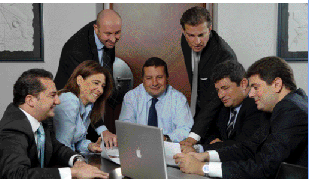
In the past few years, bullish financial markets have witnessed an unequaled surge in profits, on which financial institutions have capitalized massively. In the MENA region, the constant income stream stemming from spiking oil prices has added to this phenomenon. Financial Funds Advisors (FFA,) a Lebanese financial institution, seems to be gearing up for the race to offer sanctuary for this surplus of Arab money. Quintupling its shareholder’s equity to $25 million, it has moved into the rarefied circles of private banking

Established in 1994 as a brokerage firm focusing on financial advice delivery and mutual fund distribution, FFA has recently acquired a specialized license from the Central Bank, allowing it to become FFA Private Bank. Its change in status, which required moving from the structure of financial institution and brokerage firm to a private investment bank, was mainly drawn from the need to build recognition among potential local clients and correspondent institutions.

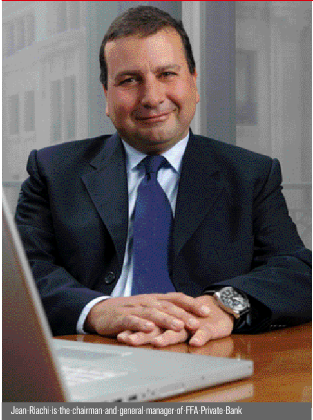
“The status of a financial institution in Lebanon is the equivalent of an investment bank anywhere else in the world. It specializes in non-commercial banking services such as lending, fiduciary deposits, portfolio management and brokerage as well as advisory services,” explains Jean Riachi, chairman and general manager of FFA Private Bank. “However clients and other company stakeholders had trouble grasping our institution’s former status,” he adds.

Setting a precedent

Another underlying reason behind FFA’s change of status was rooted in some of the operation’s technical aspects. “Investment operation activities are for the most part off the balance sheet ,” says Riachi. “In terms of wealth management, a client can hold with us custody money, securities or cash under fiduciary. But we also need to offer him the option of term deposit accounts.”

In addition to providing equity and debt financing, the new license allows FFA to participate directly in companies with its own funds without reverting to outside investors.

“As a private bank, we can operate fully with some restrictions on the retail and commercial side of activities, such as short term credit and deposit, which in any case, we have, no real interest,” underscores Riachi.

Two years ago, FFA held talks with Central Bank governor Riad Salame who said he also believed it was time to strengthen areas such as the capital market, mutual funds and investment banking. “We informed the governor of our desire and commitment to consolidate our human and financial structure by increasing capital, inviting powerful shareholders and hiring additional staff,” Riachi recalls. “However, we did not feel comfortable with the FFA financial institution status.” One possible solution was to aquire an existing commercial bank.

“We went through some of the files on hand and came to the conclusion that much time and resources were needed to restructure any available operation, something which we did not really have. As a matter of fact, we were not really interested in the commercial banking activity.”

Another option was to obtain a specialized bank license — which imposed restrictions on certain operations such as short term deposits and credits. “Today, we’re the first independent private bank in the Lebanese market, where the investment banking activity is, for the most, affiliated either one way or the other, or fully owned by financial institutions and commercial banks. I believe granting a specialized license to a private group constitutes a precedent for the Central Bank,” says Riachi.

Given the positive sector reactions, Riachi feels the launch of FFA Private Bank will set a much needed trend within the Lebanese financial sector. “Commercial banks are commercial banks and this can lead to a conflict of interest when dovetailed with private banking,” he says. Riachi believes that commercial banks may adopt a less aggressive stance towards their investment banking arm and not allocate sufficient resources. “It is also a question of corporate culture, one that varies greatly between private investment and commercial banking structures, leading sometimes to undeclared conflicts, when the two operations are functioning within one framework. Today, I can see the sector increasingly moving towards banks splitting and spinning off these two activities.”

The FFA Private Bank depends on a revamped framework comprised of several core activities such as private wealth management, capital markets, asset management, corporate and merchant banking, online trading and a real estate division. According to Riachi, its independent structure grants FFA a competitive advantage in terms of mutual funds, allowing it to deal with many different providers and hand picking the best. The private wealth management arm is built on a strict approach to asset allocation comprising sector and regional diversification. “Of course, in terms of asset management we are free to focus on areas where we believe we can add the most value,” he adds. One of such examples would be the Lebanese real estate fund offered by FFA. In Georges Abou Jaoudeh’s opinion, FFA’s other general manager, the real estate development activity has proved to be successful and the company intends to duplicate the same line of business in the Gulf region. “We are working also on launching a real estate fund that will be investing in Lebanon and the neighboring countries,” he adds. “Since all of FFA Private Bank’s high-net-worth clients in Lebanon and the region are very sophisticated, customized financial solutions have been devised through FFA open architecture platform, in order to respond to all their needs,” says Abou Jaoudeh.

Hence, a product in relation with the equity regional market is under preparation. The company is supported by an online division dubbed FFA direct, a platform for online trading in equities, future markets and currencies, headed by Elie Khoury.

In a market dominated by major international players, Riachi has relied on the advantage of cultural and physical proximity FFA offers. “This advantage is backed by a reputation for offering the highest standard in terms of service and performance, as well as access to the best fund managers in the world.” For clients who are concerned by the unstable situation prevailing on the local level, Riachi believes that as security accounts are not exposed to corporate or country risk.

Carving a niche

“Regarding the corporate and merchant activity, we understand that competing with big players might be difficult. On the other hand, we believe that we can carve a niche for ourselves in the market of medium-size deals, which by nature are not handled by big industry names for reasons of economies of scale,” states Riachi. The FFA chairman nonetheless concedes that although the company may face much competition on the different corporate levels, the challenge is part of the job. “In the corporate and merchant banking sector, FFA Private Bank has yet to prove itself.”

FFA’s regional presence is secured through its DIFC subsidiary FFA (Dubai) Limited, a financial service provider that will essentially cover the GCC countries and will be fully operational by next fall. “Our marketing approach targets very high net worth individual with $1 million or more in liquid assets. Such clients are constituted for the most by business owners and we intend to capitalize on this specific factor to market our corporate and merchant finance activities,” says Riachi.

To build and expand its client base, FFA is looking into new investment tools. Abou Jaoudeh underlines that FFA is closely following the success and growth of Islamic financial  products in the region. “We aim through our asset management division to participate in structuring new financial products that will be sharia compliant,” he explains. “We are monitoring the Arab equity markets and believe that there is tremendous growth potential; consequently we are in the process of finalizing and launching a new certificate that will give exposure and participation, through one product, to all the upside potential of these markets.”

August 7, 2007 0 comments
0 FacebookTwitterPinterestEmail
North Africa

Morocco: On the Road

by Executive Staff August 7, 2007
written by Executive Staff

In June, King Mohammed VI hosted Renault CEO Carlos Ghosn to celebrate the first export of Moroccan-assembled cars to France and Spain. The visit demonstrated the good relations between Morocco and French carmakers and aimed to develop the activity of Société Marocaine de Constructions Automobiles (SOMACA) for the local and foreign markets, notably towards the EU.

SOMACA is a Moroccan-French car company in which Renault has an 80% capital share. Philippe Cornet, the chief executive, announced that the company plans to export between 5,000 and 10,000 Logan cars a year to the EU, mainly to the French and Spanish markets. It is also planning to expand its exports to the Belgian and German markets by 2008. SOMACA will also export some 5,000 units to Egypt, Jordan and Tunisia. The success of further SOMACA operations is set to contribute to attracting new investments in car part manufacturers. The present success of Morocco’s automotive sector makes a marked change from the difficulties it was suffering just 5 years ago.

The Logan was introduced into the Moroccan market in 2006 and has become the leading brand in the low-cost car segment of the market, with some 13,000 units produced in 2006. SOMACA plans to assemble some 40,000 vehicles in 2007, including the Renault Kangoo, the Peugeot Partner, and the Citroën Berlingo.

Attracting investment

“It’s a first for the Moroccan automobile industry, which made a great leap forward with this announcement,” said Cornet. He also added that it is the first time Morocco has exported a finished industrial product to Europe apart from textiles. With a 19.6% share of the passenger car and LCV market, Renault leads the Moroccan market, which has grown by 17% since the beginning of 2005.

After Romania in 2004 and Russia in spring 2005, Morocco is the third country to launch Logan production. Renault has invested $30 million in the project. In fact, Morocco is the first country where the Group’s three brands — Renault, Dacia and Renault Samsung Motors — are sold simultaneously.

As part of a drive to attract foreign investors to reinforce the sub-contracting in the auto spare parts segment in Morocco, the Investment Directorate (ID) announced in May the establishment of an industrial free trade zone in the automobile sector, named Tanger Auto City (TAC).

“This new concept of specialized industrial zones aims to attract investors and automobile equipment makers employed by manufacturers especially those based on the European continent,” said Hassan Bernoussi, the director of ID, during a conference organized by the Moroccan MBA Association (MMA) in May in Casablanca.

The setting up of TAC reflects the government’s willingness significantly to improve what Morocco can offer in terms of foreign direct investment (FDI) options in developing sectors such as the automotive sector.

According to Salaheddine Mezouar, the minister for the automotive industry, the share of the automobile industry in gross domestic product (GDP) rose from 16.7% in 2004 to 19.6% in 2005. Mezouar noted that the automotive industry in Morocco encompasses 300 companies and provides 30,000 jobs and $2.5 billion in turnover. Considered more modernized than other industries, it generates 6% of total processing industry production and 12% of exports of industrial goods, which increased from $71 million in 1996 to $285 million in 2002. “The sector represents more than 40% of investments, or $130 million, which allowed the creation of more than 12,000 jobs in 6 years in the free trade zone alone,” said Omar Chaib, the zone’s commercial director.

Mohammed Ali Enneifer, the CEO of COFICAB, an auto cable company already based in the TAC agrees. According to Enneifer the production capacity in the Moroccan auto sector has risen by 4.3% year-on-year. “The integration of the Automotive City will help out existing companies by consolidating subcontracting and transferring foreign know-how to local companies,” he said.

Tanger Free Trade Zone (FTZ) is an example of the potential of the TAC. The FTZ has succeeded in attracting FDI due to its competitive legal and fiscal framework. Its special status allows for 100% foreign ownership, exemption from import and export tax and VAT on goods and on company tax for 5 years and a rate reduction thereafter. These benefits have attracted investors in the automotive sector, which is already the most developed sector in the FTZ.

Despite the recent announcement of car exports to Europe, the impact of TAC project may be limited on a local level. According to Bouchaib Barhoumy, the CEO of Yazaki, a Japanese company specialized in auto cable beams, the impact could be greater if, rather than spare parts, TAC concentrates on the development of the production of finished products to be exported.

August 7, 2007 0 comments
0 FacebookTwitterPinterestEmail
North Africa

Morocco: All to Port

by Executive Staff August 7, 2007
written by Executive Staff

With construction work on schedule, the 550-square- kilometer Special Development Zone, also known as the Tanger-Med port, will be operational in July according to recent government announcements. The first customers looking to use the Tanger-Med facilities are now able to set up in the northern city of Tangier. The zone is designed to emerge as a key transit point for container traffic between the US and the Mediterranean region.

When the Moroccan government launched the Tanger-Med project in 2002 in the north of the country, its aim was to develop this region as a strategic center for transshipment, industry and trade. The project was managed by a governmental agency with privately-held company status, the Tanger-Med Special Agency.

Among the services and facilities offered by the port are a 53km extension to the Casablanca-Tangier highway, and a 45km railway connecting the port to the city of Tangier. The close proximity of the port will ensure the quick and efficient movement of goods and effective connectivity to regional and international markets.

Tanger-Med port offers logistic facilities accessible by sea, land and air for investors. The container terminal has 2,100 meters of berths with two container terminals operated by APM terminals and Eurogate-Contship. These possess 3.5m TEUs of nominal capacity and allow a draught up to 18 meters, well within the range of even the largest bulk freight transporters.

The ro-ro terminal has a capacity of eight berths, connection to the railway passenger station and the capacity for 5m passengers, 1m cars and 500,000 trucks per annum.

With a berth at 15 meters water depth and an open area of 15 hectares, the bulk and general cargo terminal looks to target the grain business.

Already planning the extension

The hydrocarbons terminal is designed to offer bunkering services to vessels calling at the port and to supply the port hinterland with refined oil products. It has a capacity of 2m tons per year. If all goes according to the plan, Tanger-Med will receive its first commercial ship in July. In fact, because about half of the project was completed within 18 months, there are already plans for its extension. Muhammad Said Benameur, the chief project director, said that, “Since the Tanger-Med has been a success, notably in terms of timing, we have already endorsed its extension before the first zone even started to be operational.” The second phase of the project will be 100% funded by the private sector, he added.

Tanger-Med already plans to raise its capacity as traffic across the Gibraltar strait is expected to increase significantly. “We expect sea traffic to rise by 7% or 8% in the next five to eight years worldwide,” said the president of TMSA, Said Elhadi. “Knowing that the number of containers crossing the Strait of Gibraltar represents about 20% of global traffic, Tanger-Med will consequently be directly affected by worldwide growth, which will eventually have major consequences for the region.”

Elhadi added, “The terminals will see a rapid increase in traffic in the coming years. Tanger Med II has been launched in preparation of our existing and potential customers’ needs. The project will help to increase significantly the capacity of the port facilities from 2012-2013 onwards.”

The existing Tangier Free Zone demonstrates the potential of Tangier-Med. The July 25 edition of pan-Arab daily al-Sharq al-Awsat reported that following its establishment in 1999, it had created some 16,000 jobs. The daily also reported that approximately 115 Moroccan and foreign companies were located in the area, with another 77 companies expected to set up shop. As a result, total jobs provided by the free zone was expected to reach 22,000 by the end of 2007.

One important development was the announcement in June that Dubai’s Jebel Ali Free Zone Authority International had been awarded the 10-year logistics free zone management concession at the port, an important achievement for the company, which already has free zone management experience outside Dubai, in both Djibouti and at Malaysia’s Port Klang Free Zone.

The establishment of Tanger-Med should also help to boost the development of Morocco’s northern region. The director of the Regional Center for Investment, Jelloul Samsseme, said that the port would help to reinforce the region’s existing infrastructure, create new export-oriented free trade zones and raise the skill level of the workforce in the region.

On the same note, the general director of the Agency for the Promotion and Economic Development of Northern Provinces, Fouad Brini, told the press that Tanger-Med will be a positive development in integrating the north of Morocco with the rest of the kingdom and facilitate the integration between the northern provinces themselves, especially by setting up facilities that will encourage large-scale trade and industrial activities in the region.

August 7, 2007 0 comments
0 FacebookTwitterPinterestEmail
North Africa

Algeria: Bridging East and West

by Executive Staff August 7, 2007
written by Executive Staff

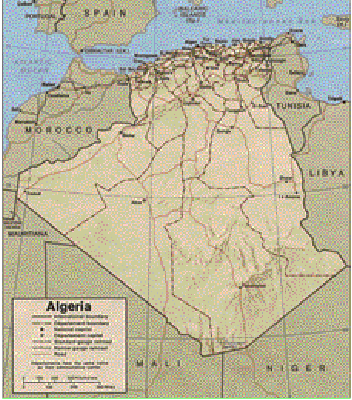
Work has started on the motorway crossing Algeria from east to west, which is designed to be part of a 7,000km road network across the Maghreb. The government has labeled it the largest road project in the Mediterranean and North Africa.

The idea of a trans-Maghreb motorway was first floated in the 1970s — the plan was that it would be integrated into a trans-African route. Three decades later, the first sod was turned earlier this year on the Algerian segment, a project that is estimated to cost $11 billion, the bill being fully paid by the Algerian state. President Abdelaziz Bouteflika was present at the commencement ceremony at Hammadi, east of Algiers.

The six-lane “East-West” motorway project is the centerpiece in the government’s $80 billion program of investment in Algeria’s transport infrastructure. Around 25,000km of roads are being improved, and new ports and airports constructed, with existing facilities being modernized and expanded.

A step toward integration

The construction contracts for the motorway have been awarded to two parties; Japanese consortium Kojal is to build a 400km section in the east of the country, while the Chinese group CITIC/CRRC will take responsibility for the 528km in the west and center of Algeria. The motorway will present challenges for the contractors; the road will have a total of 538 bridges and 13 tunnels, as well as links to other roads.

The full length of the six-lane motorway, scheduled for completion in late 2009 or early 2010, will be 1,213km. It will pass through 24 of the country’s 48 provinces and, it is hoped, bring significant economic benefits.

Indeed, the project should start to benefit the country even during construction. In March, public works minister Amar Ghoul described the infrastructure projects as “a workshop meant to provide jobs to the Algerian jobless.” Once completed, economic activity generated by the East-West motorway should create at least 100,000 jobs, according to official forecasts. It will also pass through the Algerian cities of Annaba, Constantine, Setif, Algiers, Oran and Tlemcen, which the government is trying to develop as manufacturing centers.

The road will link Morocco, Algeria and Tunisia via a major motorway for the first time, boosting trade and economic co-operation and integration. Both the International Monetary Fund and the World Bank have encouraged stronger economic ties in the region. All three countries are members of the Arab Maghreb Union (AMU), as are Libya and Mauritania. Currently, only 3% of all foreign trade volume of the bloc is generated by inter-union trade, and poor infrastructure connecting the countries is partly to blame, as are poor foreign relations.

The majority of Algeria’s non-energy exports are transported by road, on an often congested and run-down network; according to the ministry of transport, 90% of all traffic consists of freight vehicles.

Ghoul has emphasized the importance of linking the East-West motorway with others in the region and has been in talks with counterparts in Tunisia and Morocco on this issue.

The motorway has not been welcomed in all quarters, however. In late June, environmentalists warned that under current plans the road would pass through the El Kala national park, which lies on the Mediterranean coast, for a distance of 15 kilometers.

The park covers an area of wetlands and forests which are the habitat of many of the country’s distinctive flora and fauna including birds of prey, fox, lynx, tortoise and wild cat which the environmentalists said would be put at risk by the motorway.

The government immediately responded to the claims, with Ghoul saying that a last-minute re-routing was impossible, as it could increase the project’s costs by $2 billion. However, this was followed by an equally swift volte face, with the government declaring that construction work in the region would be suspended and a different route found.

“We have ordered the national motorways agency to widen the consultation to academics, experts, national associations and our partners,” Ghoul told the local press. “Today, we can affirm as for us that there is no longer a problem concerning El Kala park.”

Once completed, the motorway should bring with it huge benefits to the country. There is little doubt of the need for a major, modern motorway across Algeria, and the region, where development has been hamstrung by poor infrastructure. If agreements can be reached on joining it to other roads of similar capacity in the rest of the Maghreb, the plans first conceived in the 1970s will become a reality.

August 7, 2007 0 comments
0 FacebookTwitterPinterestEmail
North Africa

Tunisia: Plan in the Offing

by Executive Staff August 7, 2007
written by Executive Staff

Tunisia’s 11th Development Plan has set out a road map to boosting growth through tax reforms, investment and economic restructuring.

In July, parliament unanimously approved the Development Plan, which had been presented by Prime Minister Mohammed Ghannouchi. It is the latest five-year economic plan, taking the economy into the second decade of the twenty-first century. The draft plan has been two years in the making, and Ghannouchi said that it was based on extensive consultation, an assessment of the results of past plans and a thorough analysis of developments at the national and international level.

The program combines economic reforms designed to boost investment and encourage and diversify the private sector, while boosting social services. In a move to encourage foreign direct investment (FDI), the Development Plan includes large-scale changes to the tax system. Corporate tax will be lowered from 35% to 30%, while businesses will be given a rebate equal to the increase on VAT.

Customs duties on a range of equipment and materials imported from certain countries which have free-trade agreements with Tunisia will be lifted, taking the proportion of duty-exempted imports to 80% of the total.

Strong growth

Tunisia’s strong GDP growth of 4.5% over the past decade is forecast to increase to 6.1% due to the expansion of the service sector, which will account for 50% of the economy within the next few years, and the restructuring and liberalization of other sectors and the economy in general. The Development Plan envisages that the increase in growth will help improve incomes. Per capita income grew from $2,300 in 2001 to $3,000 by the end of 2006, Ghannouchi said. The program foresees this increasing to $4,400 by the end of its remit.

The program envisages cutting unemployment to 13.4% by 2011, from 14.3% at present, made possible in part by infrastructure and industry projects.

The reforms to taxation and government spending, coupled with growth, should reduce the budget deficit to 2.2% of GDP by the end of 2011, from 2.9% at the end of 2006. The Development Plan sets out a maximum of 3.1% for the budget deficit, and 2.6% for the current account deficit (CAD). It also targets a reduction in foreign debt from 47.9% to 39.1% of GDP over the course of its implementation.

After parliament approved the 11th Development Plan, Ghannouchi emphasized that the coming five years will present challenges as well as opportunities for Tunisia. These include tougher international and domestic competition and potential increases in the price of raw materials.

“The targets set by the 11th Development Plan are ambitious and are meant to formalize Tunisians’ determination to achieve new results on the path of progress and prosperity,” he said.

The cost of the plan to the government is estimated at $45.5 billion, 35% more than the 10th Development Plan. The government aims to fund the package partly through $6 billion in foreign investments, with an additional $9.8 billion from international loans and partnership agreements with other countries in the Mediterranean and MENA regions.

Program is well costed

At a meeting to discuss the funding of the Development Plan, European Investment Bank (EIB) vice president Phillipe de Fontaine Vive announced that the financial arm of the EIB, the FEMIB, would be increasing its loans to private sector companies by 50%. Furthermore, the government is encouraging a diversification of private funding.

There is a consensus among economists that the program is well costed and that the country does not face serious external or internal risks over the next half decade, so investment will continue to come in and the government’s fiscal position will be strong enough to fund much of the plan. The US envoy to Tunisia, Robert F. Godec, recently described Tunisia as a “stable country with zero risks for foreign investments.” The recently-released African report of the World Economic Forum (WEF) also singled out Tunisia as an oasis of stability in the continent, a statement which should further boost investor confidence. While in the past Tunisia was considered a highly controlled marketplace, with strong repatriation controls, the system is changing rapidly as the government homes in on the link between trade and growth.

August 7, 2007 0 comments
0 FacebookTwitterPinterestEmail
GCC

GCC: US Demands Change from OPEC

by Executive Staff August 7, 2007
written by Executive Staff

The United States Senate in late June passed a bill that would allow the Justice Department to sue the Organization of Petroleum Exporting Countries (OPEC) for price manipulation and high oil prices, but President George W. Bush has threatened to veto the bill, warning that OPEC members could retaliate by tightening the flow of oil into the US.

The bill, dubbed NOPEC or the “No Oil Producing and Exporting Cartels Act of 2007” would revoke the sovereign immunity OPEC members enjoy from being sued in US courts.

OPEC President Mohammed al-Hamli called the move by US lawmakers a dangerous step and added that decisions taken by OPEC were non-binding and that the organization will fight these attempts.

“It’s a really dangerous step. We will defend ourselves against these attacks,” Hamli told reporters at an oil conference in Turkey in June.

Latest official figures show that Americans are currently paying an average of $3.21 a gallon at the gas pump as oil prices continue to reach record highs. Prior to the Iraq war, Americans paid an average of $1.00 a gallon and blaming OPEC appears to score some points with the public.

“We don’t have to stand by and watch OPEC dictate the price of our gas,” Senator John Conyers, a Democrat from Michigan said. “We can do something about … this anti-competitive, anti-consumer behavior, and we are.”

The pressure’s on

The anti-OPEC bill was sponsored by Senators Herb Kohl, a Democrat of Wisconsin and Arlen Specter, a Republican of Pennsylvania. The House voted 345-72 to pass the bill.

“Price fixing by cartels is the worst violation of antitrust law and the principles of free competition,” Kohl told Executive. “If OPEC nations were private companies, their actions would be plainly illegal under antitrust law,” he added.

He thinks NOPEC would give the US government an important tool in responding to OPEC actions.

Although the White House has threatened to veto the measure, the bill may become law as both the Senate and the House have enough votes to override the veto. “The bill passed both Houses by more than the two-thirds needed to override a veto, 345-72 in the House, and 70-23 in the Senate,” Kohl said. But observers note that even if it became law, the Bush administration’s Justice Department would be the entity that would have to initiate any lawsuit.

But not all Americans support the action against OPEC. Local observers believe the problem with current oil prices is the combined increase in global demand and shortages of refinery capacity in the US. They say that congress is aiming at the wrong target. “It is the US refiners — who have made record profits — who should be called on the carpet and who every year about this time make their annual financial killing,” Robert Prince in Washington said.

“The arrogance this legislation conveys is unbelievable and completely irresponsible. As an American, I’m ashamed,” a US citizen who wished to remain anonymous told Executive. “Oil prices will continue to rise because demand has started to outstrip supply. This is the most basic rule of economics and our leaders don’t seem to appreciate it.”

Republican Senator Pete Domenici of New Mexico warned that the plan would hurt US consumers more than it would OPEC. “OPEC producers could just decide not to sell oil to us any longer,” he told reporters. “They would suffer the loss of some profits but our entire economy could come to a grinding halt.”

Although the official reaction from OPEC to NOPEC was perfunctory, Hamli said OPEC had successfully fought off two prior attempts by US lawmakers against OPEC and will do so again.

But supporters of the bill don’t believe that OPEC will react by cutting or reducing oil supplies to the US. “We would be surprised if OPEC member nations would want to stop selling oil to one of their best customers,” Kohl said.

“We would hope OPEC would respond to this law by ceasing the practice of setting mandatory production quotas designed to drive up the price of crude oil, rather than take the extreme step of cutting off oil supplies,” he added.

OPEC says the high prices are due to geopolitical tensions and refinery bottlenecks in the US rather than any shortage of crude supply. And most analysts do not foresee a decline in prices in the near future. On the contrary, what they predict is an extreme jump in prices by 2009 and 2010.

In late June, the New York-based Bloomberg News quoted Jeffrey Currie, a London commodity analyst at the world’s biggest securities firm, saying that $95 crude is likely in 2007 unless OPEC increases production, and declining inventories are raising the chances for $100 oil. Jeff Rubin at CIBC World Markets predicts $100 a barrel as soon as 2008.

August 7, 2007 0 comments
0 FacebookTwitterPinterestEmail
GCC

IPO Watch: Kingdom Come

by Executive Staff August 7, 2007
written by Executive Staff

The Kingdom Holding initial public offering in Saudi Arabia last month was the much-anticipated climax of the flotation eagerness that has characterized GCC equity markets since 2004.

IPO lead manager for Samba Financial Group announced that 1.25 million subscribers submitted orders for the 315 million shares which Kingdom Holding put on the market at SR 10.25 ($2.74) per share, a total share offering worth about $860 million. Demand, according to Samba, reached $2.3 billion, representing subscription coverage of 264%.

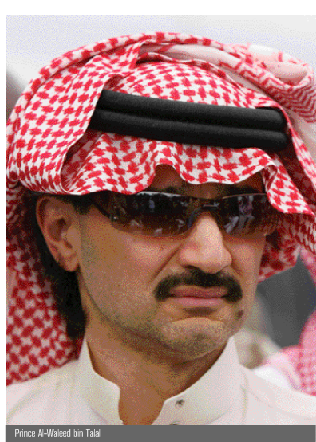
Kingdom Holding will be the fifth-largest listed company in Saudi Arabia, but the company’s founder and best-known Arab entrepreneur, Prince Al-Waleed bin Talal, will retain over 93% ownership of the holding company with its local and international assets. Although offering merely 5% of Kingdom Holding’s stock for sale — substantially less than the 30% Prince Al-Waleed had talked about earlier — the IPO carried a message of trust in the Saudi Stock Exchange (SSE).

Putting a chunk of equity on the SSE where the mouth of the savvy global businessman Al-Waleed has been for a long time, comes at an important junction. While the primary market in the GCC is far from exhausted, the transmission ratio between the primary and secondary markets has come under scrutiny.

Underpricing has distorted the outlook

Last month, in a working paper for the the International Monetary FundAnalysts studying the IPO market evolution in the GCC between the start of 2001 and 2006 said that the abnormally high first-year returns of 47 IPOs presented a distorted picture. “The average initial abnormal returns of 290% exceed those found in the existing literature for both developed and emerging market IPOs,” the working paper said and related this high ratio to the massive underpricing of GCC IPOs.

Underpriced offerings have been the rule in the GCC and driver of immense oversubscription ratios for a number of reasons, including the practice of state-backed issuers to use the IPO mechanism for a bit of redistribution of oil wealth to retail investors and specific groups in the workforce, e.g. teachers.

This led to huge trading volumes and quick profits in first-day trading of many listed stocks. Latest signs, however, suggested that this phenomenon is waning. 

Low-cost airline Air Arabia, which undertook its IPO on the Dubai Financial Market, was among the region’s newly listed companies that were subjected to a more subdued market sentiment in first-day trading. The Sharjah-headquartered carrier, which saw the second-lowest oversubscription rate (1.5 times) in the DFM’s history in March, ended its first day of trading in July with an 11% gain — low by comparison with other IPOs but still better than what analysts had predicted.

“It will probably go below its AED 1 ($0.27) offer price when it lists,” Shehab Gargash, chief executive officer with Dubai’s Daman Investments had told a conference a week before the listing.

“I still hold to the view that it’s headed below one dirham,” Gargash told Executive after the stock closed its second day of trading flat.

“There are a lot of institutional and high net worth investors carrying more than they bargained for,” he said, referring to those who poured cash into the IPO, likely expecting a typical DFM oversubscription rate at least in the double digits, and wound up with a larger percentage of shares as demand was relatively low.

Air Arabia’s muted performance comes on the heels of the DFM’s former least-oversubscribed, worst-first-day performance title holder Gulf Navigation Holding, which listed in early February. GNH’s 3.5x subscription rate and 20% climb on its debut were a case in point for Amir Halawi, a researcher with UAE-based investment bank, The National Investor.

Halawi recently co-wrote a report predicting that first-day climbs for stocks listed in the UAE hitting the stratosphere were a thing of the past. In his report, he argued that investor behavior in the UAE equity market needs to shift from indiscriminate buying of underpriced IPO shares to acquisition of shares that have the best fundamentals. “We believe that some people have started losing money on some IPOs and this is going to become a structural phenomenon,” he told a local radio show in early July.

No uniform trend

Gargash, on the other hand, denied that there is a uniform trend. “I don’t think a pattern can be generalized,” from the first-day performance of Air Arabia and GNH, Gargash said. “I think the trend is there are two types of IPOs, the star IPO and the…less glowing,” he said, pausing during the telephone interview with Executive to search for the inoffensive put-down.

The differentiation is the perception of investors as to how well-backed by government intervention the companies are and to what extent governments show active support for these companies, Gargash said. GNH is entirely privately held and the emirate of Shajrah only holds a 17% stake in Air Arabia.

Regardless of the fate of first-day gains for UAE first-time floats, the IPO market in the six Gulf Cooperation Council countries has been off to a booming first half of 2007. The number of completed subscription periods of IPOs reached 22 by June 30, up 69% from 13 during the same period in 2006.

A study by Abu Dhabi-based investment bank Gulf Capital said as of July, between 2007 and 2010 there are as many as 76 more IPOs on the way in GCC countries alone, 41 of which already have a lead manager assigned.

The strong expectation for GCC primary markets has resulted in much-increased attention from international investment advisors and researchers. Where sources on IPO activity were limited to one or two local companies in the past — the online information provider Zawya.com leading the field — recent weeks saw a spike in coverage of Middle East IPOs, if not in a dedicated report then at least in a sidebar of global IPO coverage. 

“Middle East IPO growth is driven by high market liquidity, government privatization activities, continued economic prosperity and the massive government budget surplus created primarily by increased oil prices, the main source of the governments’ revenues,” wrote Oman Bitar in a recent report on IPOs by financial services company Ernst & Young, where he is managing partner of Middle East advisory services.

The three researchers, Abdullah Al-Hassan, Fernando Delgado, and Mohammed Omran who looked at the GCC equity markets for the IMF said in their paper that the extremely high positive returns of recent IPOs here come down crashing when the perspective is adjusted to first-year performance. Evaluating IPO returns in the GCC against general indices for the respective bourses, the researchers found that these stocks performed below their benchmarks in the first year of trading when initial returns are excluded.

According to the research, aftermarket performance under a one-year buy-and-hold strategy is positive when seen against the IPO subscription price but negative when first-day returns are taken out of the equation. “A strategy of investing one dollar in IPOs at the end of the first trading day and holding it for one year would have left an investor with only 77% to 50% of the return of each dollar invested in GCC stock exchange general indices,” the academic paper said.

Moving toward realistic values

The consensus of professional market participants, analysts and researchers is that the GCC equity markets are at a junction where the experiences with underpricing, excessive subscription demand, and imbalanced first-day trading have to be mitigated by creation of more professional intermediaries and improved regulatory frameworks along with better information provision.

Recent IPO issues, including the Kingdom Holding offering, indicate that initial pricing — unless mandated differently by regulators as was the case for the Saudi insurance sector — is moving in direction of more realistic valuations.

The fixation on oversubscription is also lessening as IPOs were oversubscribed by an average of 6.5 times during the first half of 2007, about nine times less than the 60-fold demand that was prevalent in average oversubscription rates in GCC countries during the first half of 2006.

Institutional investors are expected to adjust with fair ease to the changed trends and prepare themselves to set their portfolios accordingly. Concerns are stronger that retail investors will face harsher learning curves that require dismissing excessive expectations for first-day rallies and abnormal positive aftermarket returns of IPO stocks.

August 7, 2007 0 comments
0 FacebookTwitterPinterestEmail
GCC

Dubai: Sour-Sweet Trading Dreams

by Executive Staff August 7, 2007
written by Executive Staff

After years of planning, the Dubai Mercantile Exchange (DME) opened for trading on June 1 with its flagship Omani crude futures contract. It’s a collaborative effort bringing together Tatweer, a unit of Dubai-government-owned Dubai Holdings, the New York Mercantile Exchange (Nymex) and the Sultanate of Oman.

The DME’s mission statement and declared rationale is to bridge the gap between international pricing mechanisms for sweet, or low-sulfur, crude and the Gulf’s more sulfuric (sour) oil, especially for trade with Asian oil buyers.

The price of sour crude from the Middle East is currently set in reference to inappropriate benchmarks — futures contracts for very different products traded on the world leading commodities exchanges, Nymex and London-based Intercontinental Exchange (ICE).

The idea of establishing a platform for setting its own benchmarks, enhancing profits, and managing risk in the trade of Middle Eastern oil is not new, it has just never worked before.

Part of Dubai’s goal as financial center

This dream to host the oil futures benchmarking is tied to Dubai’s goal of claiming the role of financial center between East and West through the Dubai International Financial Centre (DIFC). At its inception in 2002, the DIFC was labeled as tool to boost the contribution of the financial industry to the emirate’s GDP from 11% in 2001 to about 20% in 2010. While the DME makes reference to this target in documents on its website, it did not state how large a role the exchange aspires to play in this mission.  

Being the center for sour crude futures trade could prove to be lucrative, given that the DME’s fees per trade are around $1. Brent (ICE) and West Texas Intermediate (Nymex), currently see daily volumes average around 150,000 trades.

The value of having a role in the futures contracts for Middle East oil was underscored by the ICE when it beat the DME to the punch by launching a similar contract on May 21 to directly compete with the DME. There is, however, a major difference in that the ICE sour crude contract is cash-settled whereas the DME’s contract is physically — actual barrels — settled and backed by the governments of regional oil producers. (Although only about 5% of physically-settled futures contracts result in the buyer actually taking the physical product).

High daily volumes are the backbone of a futures contract, which is essentially an agreement to buy a commodity later at a locked-in price. Therefore the 100 contracts, or lots, a trader buys on Monday at $68 each can be sold on Tuesday if the commodity’s price climbs.

Any futures exchange is, however, extremely volatile and contracts are traded quickly, often to maximize profit (as opposed to investors in the equities market who typically hold an investment for a longer period of time). Traders want to be able to get in and out of contracts at a moment’s notice.

This liquidity, however, is the element previous Middle East oil contracts have failed to grasp. Muted trader interest that kept liquidity low killed the first sour crude futures contract launched in Singapore in 1990. The flops that followed have either completely failed or traded in such low volumes they have not reached the status of a price benchmark.

A Nymex solo attempt at a sour crude contract, launched in 2000, only saw two days of trading but remained listed for a year. The DME partnership is Nymex’s fourth sortie into the sour crude futures arena, while the ICE is making its first dash into this market, although it did, however, acquire the International Petroleum Exchange in 2001, whose attempt at a Middle East crude futures contract had turned sour in 1991.

On the DME, contracts are traded for delivery two months in the future. In its first month of trading, 39,571 Oman crude oil futures contracts changed hands — the equivalent of nearly 40 million barrels. This was slightly lower than the rival contract launched by ICE, which saw over 50,000 futures contracts, equal to over 50 million barrels, trade in its first month.

In an attempt to avoid the plague of illiquidity that downed other contracts, the DME has instituted a market maker program. This common practice brings industry heavyweights (like traders and investment banks) to boost liquidity levels, offering cash incentives to increase daily trading volumes to the 20,000 mark, after which, according to the DME’s website, the program will tail off.

Still too early to tell

“The initial target figure mentioned by the DME was 20,000 lots per day and while volumes were reasonably promising to start with, liquidity has since declined to under 1,000 lots on some days,” commented Paul Young, executive oil pricing editor for Asia with the commodities pricing firm Platts. “But it’s still way too early to give an overall verdict on the success of the contract and the DME is launching new initiatives intended to improve liquidity.”

“The Asian market welcomes the DME as a more transparent benchmark for pricing purposes. I think liquidity level at this point remains an issue, but it is still early days for the exchange,” Victor Shum, a Singapore-based energy consultant with the firm Purvin and Gertz, told Executive. “I think the general sentiment seems to be, ‘Well, let’s take a wait and see attitude.’ I think the DME has the elements there to be successful. I think most traders would like to see rising liquidity.”

Gary King, DME’s chief executive office emphasized the contract’s innovative elements when giving his outlook on the contract’s future. “We decided to align ourselves with a Middle East oil producer,” King told Executive a few days before the June 1 launch. “No one’s ever done that before.”

King said market research revealed customers who wanted a physically delivered contract and not the traditional cash-settled contracts and the contract launched in May by ICE. This offers a direct link between the paper market of the futures contracts and the physical commodity. In a bid to meet what King described as market demand, the DME set out to find a producer to partner with for the physical delivery.

Oman announced before the contract’s launch that it would base the price of all of its crude on the DME contract price, starting this month. In late June, in a move apparently timed to offer one last burst of good PR before the launch, the Dubai government, which essentially has about a one-third stake in the bourse, made the same announcement regarding its oil contracts two days before trading began.

Government backing from producer nations for the contract will certainly help lend it credibility, but the exchange has only rallied two middle-weights — Oman and Dubai — in a region of heavy-weights, John Sfakianakis, chief economist with Saudi Arabia’s SABB bank, told Executive.

Oman has 5.5 billion barrels of oil, according to estimates from the U.S. government’s energy information agency. That’s the second lowest level of reserves of the six Gulf Cooperation Council countries behind Bahrain with less than one billion barrels.

The agency’s figures estimate the UAE has 97.8 billion barrels, but UAE government websites put Dubai’s share near 4 billion in 1991. Abu Dhabi sits on an estimated 94% of the nation’s reserves.

Some are being left out

“I’m a little bit skeptical because Abu Dhabi should be a natural participant in this,” said Sfakianakis said. The DME has approached other regional producers, but came back scant on direct commitments.

“We’ve talked to all of them, and I think the proof is as we go forward, the goal is to get the contract accepted as regional benchmark and overall the ultimate goal is to get it accepted as a global benchmark,” King said in an interview the day the exchange opened.

“I think what’s accepted is that it’s important to get first three contracts trading, demonstrate they trade in a robust fashion, that they’re liquid and that you get effective price discovery,” he added, referencing the two cash settled futures contracts that are spreads between the Oman crude price and the prices of WTI and Brent.

But what of Saudi Arabia, the 800-pound gorilla, which holds the second-largest oil reserves in the world? “At the moment you can safely say that Saudi Arabia is not involved,” Sfakianakis said.

An exchange of their own

Given the goals of other GCC nations to power up their own financial hubs, it is possible that bigger producers have not shown the urge to commit to the DME sour crude contract, because they would like to run a benchmarking exchange themselves .

One contender is Qatar’s IMEX, which has just appointed its first CEO. The exchange has been rumored to look longingly at sour crude contracts, in addition to jet fuel and liquefied natural gas futures. IMEX, just like DME, is not yet letting on what futures it plans to introduce in the coming months.

Competitive pressures notwithstanding, Dubai’s financial services sector is an undisputed pillar for the economies of both the emirate and the GCC, now and in future. The question is if it will be the Gulf’s sole central financial market place. According to numbers released in June by the Dubai Chamber of Commerce and Industry, finance in 2006 contributed to about 10% of the emirate’s rapidly expanding GDP — and thus would have to significantly outpace other growth sectors within Dubai if it really is to supply 20% of the emirate’s GDP in the next decade. 

The DME’s immediate concerns will be for developing its products and client base beyond the discounts it offered traders in the startup phase. Since early 2006, there’s been talk of a jet fuel futures contract, and King has said in interviews during the DME launch that this could be running by year’s end. He added that the exchange is keen on trading other commodities but was reluctant to give details.

“The market doesn’t take prisoners. We’re holding most of those ideas close to our chests at the moment,” he told Dow Jones on June 1.

Diversifying or bringing other producers on board or simply securing pricing agreements would be a boon for the nascent exchange, but is not an absolute make or break necessity. In the end, analysts argue the market is ready for change, but is there room in the market for two or more sour crude contracts?

“Not really,” says Michael Davies, senior analyst with the London-based futures brokerage firm Sucden. “At this early stage, there needs to be a focus on one.”

August 7, 2007 0 comments
0 FacebookTwitterPinterestEmail
GCC

GCC: Arabian Heights

by Executive Staff August 7, 2007
written by Executive Staff

Four seem confusing, one is asleep, five are quite small, but three are standing tall, doing better than ever — ‘tis not a legend to a treasure map of Captain Jack Sparrow, this; ‘tis the Arab stock markets in the first half of 2007.

From the start of the year until the end of July, the indices of three major Arab equity markets — the Abu Dhabi Securities Market, the Kuwait Stock Exchange, and the Cairo & Alexandria Exchanges — have moved up beyond most expectations, with gains in the range of 20% to 25%.

The KSE and CASE achieved new historic records last month as their rallies drove them above the highs they had achieved in the days of the regional bubble that peaked between autumn of 2005 and February of 2006.

On a two-year performance check, CASE is up nearly 80% when compared with the end of July 2005, KSE is up 40%, ADSM, however, is down by a quarter of its index. Like its twin in Dubai and the neighbor in Doha, the Abu Dhabi bourse had its till now top valuation days in the second half of 2005. The largest of the region’s exchanges, Riyadh’s Saudi Stock Exchange, is down by more than 40% in two-year comparison and — after some gains in July — reduced its losses for the first seven months of this year to less than 5%.

The big black stallion in MENA markets in the first half of 2007 has to be Egypt. Its EFG Hermes Index tested the barrier of 75,000 points in the second half of last month, reaching more than 7% higher than its previous record highs from February 2006. In the way of dark horses, attention possibly deserved by the CASE case was sucked up by the on-going Dubai hype and the fascination of GCC as the main stage in the current Arabian economic miracle.

Credit Suisse favors GCC markets

Swiss wealth maker Credit Suisse (CS) blew its investment horn heavily for the Gulf last month in producing its debut in-depth report on the GCC markets, calling them “the most attractive globally on cash flow and dividend yield metrics.” Besides being very profitable, listed companies in the GCC on average have low debt. For enterprise multiple — the cost of a company expressed as ratio of enterprise value to earnings before interest, tax, depreciation, and amortization — the GCC are currently the cheapest markets worldwide, CS added.

The bank favored the GCC even more on basis of its latest oil price forecast; CS updated its outlook for benchmark crude (West Texas Intermediate) to average $62.5 per barrel through 2010. Its investment advice for GCC portfolio holders is allocation of 40% (market weight) to the SSE, 27% to the UAE (33% overweight), 19% to Kuwait (30% underweight) and 14% to Qatar (27% overweight against its share in the MSCI GCC index).

The weighting reflects that the Kuwaiti market has sped ahead of Saudi Arabia, Qatar, and the UAE in stock price levels. The Bahraini and Omani markets, which also rose to new record highs in recent weeks, do not figure in the hefty CS research and recommendation paper; their combined weight in the MSCI GCC index is only 2%, since they have significant size handicaps against their GCC peers with the exception of the region’s expatriate bourse, DIFC, that has nailed down the role as the world’s largest listing place for Sukuk but still rests in anticipation of its kiss of life for equities. 

With all the enthusiasm about Gulf equity markets, it is an enticing profitability play that a theoretical investor in index-tracking stock on the Egyptian exchange would embark on his 2007 summer holidays with his portfolio value about 120 percentage points ahead versus the Saudi bourse’s Tadawul All Shares Index if he bought and held shares from the end of July 2005 to the end of the same month in 2007. 

Full-month volumes on the Egyptian bourse in June reached 641,911 transactions and exceeded 1 billion traded securities. The value of trades was close to $5.8 billion, of which 4% were over-the-counter trades.

The first-half year rally of CASE was more than many local observers had dared to hope for at the beginning of 2007 when a magazine report in January said all that investors in Egypt could wish for were political stability and another market rally — “but that might be asking for too much.”

Regional investment firms, while taking a positive look on Egypt overall, expressed some polarization in their views on the Nile republic versus the GCC. In its regional outlook published in April, Dubai’s Rasmala Investments was bullish on CASE saying that the capital market is situated for gains because of privatization benefits and infrastructure investments.

Risk sensitivities

Shuaa Capital across town was a bit more kittenish, asserting its positive view on Egypt in the long term but stating the firm had pulled away from the market because of concerns over a valuation parity mismatch with the GCC and fears of Egypt becoming engulfed in a wider emerging markets sell-off.

In the three months since Shuaa published their spring assessment which named the UAE as their first market pick and the Saudi market the second, the Dubai Financial Market and the ADSM have done well with respective index gains of 14% and 16%. But the SSE moved up by barely 5%, and that only thanks an upward push in the second half of July, while CASE’s Hermes Index kept rolling with a three-month rise of over 13%.

As de-facto standalone paladin of the international equity game in North Africa (the much younger bourses of Tunis and Casablanca are no comparable partners at this time) Egypt has concerns over influence of international market swings on its prices, perhaps more so than the GCC where mutual dynamics can play out stronger.

People are getting more sensitive to risk, according to a ruling consensus among analysts who have gauged the credit, equity, and bond developments on large global markets in the past five months. This increased caution also could transmit distant market jitters to bourses in the Middle East in conjunction with the overall growing trend of global interaction of investor sentiments.

Coming as a timely reminder of this was Wall Street’s second-worst day of 2007 to that date on July 26 which sent the Dow lower by 311 points. Coming shortly after the New York Stock Exchange set new records, the market quiver radiated into other major markets where Japan’s Nikkei and other Asian bourses went lower the next day.

In their first responses, analysts evaluated the drop in the Dow as significant because of the high volumes of trade involved, which signaled selling by institutional investors. Without attempting any soothsaying about US markets in the remainder of 2007, the fluctuations on Wall Street are noteworthy symptoms of the increasing globalization of major equity markets that also was behind the year’s sharpest drop in the US market index at the end of February.

Back then, it was nervousness on China’s Shanghai market that triggered a wave of slides from the East to the West, ending with a drop on Wall Street. The end-July jitters traveled in the reverse direction, but immediately led experts to speak of a domino effect, raising just the same questions over growing international cross influences of market movements as the February tremor had done.

The Middle Eastern exchanges were not much affected by the February slump and because of the Islamic weekend had a time insulation benefit from the late-July drop which fell on a Thursday/Friday. However, intensification of global market developments and their influences on regional markets can be expected.

Credit Suisse July 2007 Top Stock Picks for the GCC

Accessibility to foreign investors needed

Looking at it from another angle, the accessibility of the region’s equity markets to foreign investors is worth wondering about in the positive sense. CASE statistics, in June, said foreign investors supplied 31% of the exchange’s total market value traded. An important factor in Egypt’s rally has been the economy’s platform of reform, privatization and improving of attractiveness to international players.

The announced intention to sell 80% Banque du Caire by the Egyptian government last month was a major case in point, leading — despite an outpouring of local concerns over selling out to foreigners — to immediate reports of international interest in buying the bank.

On the other hand, most of the top stock picks which CS presented in its review of the GCC markets had the drawback of not being open to foreign investors. Some blue chip stocks in the GCC that have been given mouth-watering upsides of well over 50% by local and international analysts are not available to non-GCC buyers.

In light of the performance differences between the privatization and diversification driven uptrend of CASE and the heavily oil-dependent path of the restrictive Saudi market, it is worth asking if GCC equity markets in 2007 have sacrificed significant valuation gain potentials through their access policies which barred sophisticated international investors from making moves on what they identified as the end of the correction phase that followed the initial Gulf equities bubble.   

Also an open question is to how much the Middle East can be knitted into a sufficiently coherent fabric of equity markets, trade and services. Over half a century of political proclamations of Arab free trade have not panned out, today’s private sector web of financial firms and investment relations is the intriguing show. To give just one small example for this integration, UAE investment firm Abraaj Capital owns 20% in Egypt’s EFG Hermes which owns 25% in Lebanon’s Banque Audi.

What is still missing is the joint platform of a true regional bourse — but with a load of political agreements needed and the ratio of magnanimous announcements to concrete steps in that direction waking musings on the actual international willingness to acknowledge the Palestinian state, all short-term bets on the joint Arab bourse option should be in Monopoly money.

August 7, 2007 0 comments
0 FacebookTwitterPinterestEmail
Levant

Turkey: Quo vadis?

by Executive Staff August 7, 2007
written by Executive Staff

The solid victory of the Justice and Development Party (AKP) in Turkey’s July 22 elections has stunned many pro-secularists, and given rise to questions over the hold the Ankara establishment (especially the military) may still have in the country. The gamble Prime Minister Recep Tayyip Erdogan took in calling early elections seems to have paid off. The reaction from the markets has also been positive, with many hoping for continued economic reform and stability.

The 46.7% of the vote gained by the AKP is enough to see it take 340 of the parliament’s 550 seats — sufficient for a comfortable majority, though not enough for the required two-thirds majority needed to enact constitutional change or elect a president. The party managed to increase its share of the vote by 12.4% over its 2002 results, demonstrating its continued popularity with voters.

Two other parties managed to cross the 10% threshold and take their place in parliament: the center-left Republican Peoples Party (CHP) and the far-right National Action Party (MHP). The CHP, despite improving its vote by 1.5%, will have a smaller number of deputies than in the previous parliament, at 112, while the MHP returned from the political wilderness with 14.3% of the vote, giving it 71 members. The strong showing of independent candidates, especially in the south-east of the country, saw 27 get elected. It is estimated that 23 of these independents will come together under the Democratic Society Party (DTP) umbrella, considered a “pro-Kurdish” grouping (an allegation the party denies). Another well-known independent candidate, former prime minister Mesut Yilmaz, also managed to get elected in his home province of Rize.

The Democrat Party (DP), formed after the failed union between center-right parties the True Path Party (DYP) and Motherland Party (ANAP), did poorly at the polls, getting just 5.4 % and failing to pass the barrage. Its leader, Mehmet Agar, announced his resignation after the poll.

Winners and Losers

The AKP managed to poll strongly across Turkey, being the leading party in all but 13 of 81 provinces, especially in the Central, East and South-East Anatolia regions, and the party even made a strong showing in the Black Sea area. The CHP was limited to its strongholds of Izmir, Mugla and Thrace, while the MHP managed to lead in Icel and Osmaniye in the south of the country. The other 6 provinces where the AKP was not the top party were taken by independents in the Kurdish-dominated south-east.

Other big winners in the elections were female deputies, with 48 being elected — double the number in the previous parliament. The spread of female representatives between the main parties works out as 28 for the AKP, 10 for the CHP, 2 for the MHP and 8 for independent candidates.

One of the female independents elected, Sebahat Tuncel, has been fortunate in receiving parliamentary amnesty for all crimes performed before or during office. Tuncel was placed under arrest in November 2006 under suspicion of membership in the Kurdistan Workers Party (PKK). She was released from jail days after the election and — as long as a vote to lift her amnesty is not taken by the parliament in the future — will enjoy the fruits of her new status while an elected member. Others will not be as lucky, with 59 deputies from the outgoing house now losing their immunity. The most significant of these is former DP leader Mehmet Agar, who may well face prosecution over his involvement in the 1996 Susurluk scandal, which helped bring to the surface the problem of the “deep state” in Turkey.

Recriminations

Following the poll, there has been much soul-searching on the pro-secular side as to the failure of other mainstream parties to make a dent in the AKP’s continued strong showing.

The military have been blamed in some quarters for sparking a crisis that actually helped to bolster support for the ruling AKP. The military’s “warning” in April appears to have been ignored by most voters, who were more willing to maintain the relative economic and political stability enjoyed during the AKP’s first term of government. As the deputy prime minister, Mehmet Ali Sahin, put it, “The constitution is clear. In Turkey, the politics are made by politicians and not by other institutions.” The AKP sees that the gamble it took in holding early elections has now given it the ability to take on many of the traditional secularist institutions such as the military and judiciary. It looks set to use its majority in parliament and success at the polls to reduce the power of these groupings.

Recriminations over the failure of the CHP to significantly increase its presence in parliament have seen renewed calls for the resignation of its leader, Deniz Baykal. One former party chairman, Hikmet Cetin, reportedly said: “It is not enough for Mr. Baykal to leave the CHP, he has to quit politics for the sake of both the CHP and Turkey.” Baykal responded after 48 hours of silence following the election by stating that, “such calls are a product of the media, which is seeking excitement nowadays.” The CHP-Democrat Left Party (DSP) alliance for the election also looks shaky, with some indicating that the 13 pro-DSP deputies may well leave the 112 strong CHP unity bloc. However, as the DSP would fall short of the 20 representatives needed to form an official parliamentary group, talks of a walk out may well be premature.

Others have blamed the center-right DYP and ANAP for dropping the ball in failing to unite, and thus capture a larger share of the vote from the AKP.

However, few of the opposition parties have pointed to the success of the AKP government over the past four and a half years as the true source of its electoral support. The 7.5% average annual growth experienced since the AKP’s coming to power seems to have gone down well. The markets responded very favorably to the AKP’s victory, with the Istanbul bourse surging to new highs on the day following the election victory. Moody’s, however, chose to keep Turkey’s credit rating at Ba3, citing worries over the upcoming presidential election process.

Whereto next?

One of the first things to go before the parliament will be the selection of a new president. The foreign minister, Abdullah Gul, on July 25 announced his renewed interest in the position, despite the political crisis this sparked which caused the early parliamentary elections. In his announcement, Gul said, “The people have approved my candidacy.” However, there have been calls for a compromise candidate to avoid a fresh political stand-off in the country. Erdogan, though supportive of Gul, said after the election he aimed to resolve the dispute over the presidency without causing further tensions. As to the proposed October 21 referendum on allowing the president to be elected by popular vote, as well as introduce two four-year terms for the post, constitutional law specialists are mulling over whether this has any meaning or not.

Another potential source of controversy, the Supreme Military Council (YAS) meeting in August, is set to be held before parliament convenes and elects a new president. The YAS meeting focuses on the promotion, reassignment and retirement of military officers, as well as the dismissal of those considered to be “reactionary.” As all the decisions will be approved by President Ahmet Necdet Sezer, there will be little AKP interference in the process, despite the committee being chaired by Prime Minister Erdogan, who has in the past expressed his reservations over the process.

In economic terms, the government will be looking to restart the temporarily stalled privatization process, and further reforms in line with IMF and EU requirements. The EU accession process will also become a topic of debate in the near future, though with Nicolas Sarkozy of France bolstering skeptics of Turkey’s candidacy, movement will be slow. Other foreign and economic policy issues, such as the PKK in northern Iraq, are likely to take a back seat until after the final political contests are played on the political field. And for Erdogan, it appears to be a game he is winning.

August 7, 2007 0 comments
0 FacebookTwitterPinterestEmail
  • 1
  • …
  • 566
  • 567
  • 568
  • 569
  • 570
  • …
  • 685

Latest Cover

About us

Since its first edition emerged on the newsstands in 1999, Executive Magazine has been dedicated to providing its readers with the most up-to-date local and regional business news. Executive is a monthly business magazine that offers readers in-depth analyses on the Lebanese world of commerce, covering all the major sectors – from banking, finance, and insurance to technology, tourism, hospitality, media, and retail.

  • Donate
  • Our Purpose
  • Contact Us

Sign up for our newsletter

[contact-form-7 id=”27812″ title=”FooterSubscription”]

  • Facebook
  • Twitter
  • Instagram
  • Linkedin
  • Youtube
Executive Magazine
  • ISSUES
    • Current Issue
    • Past issues
  • BUSINESS
  • ECONOMICS & POLICY
  • OPINION
  • SPECIAL REPORTS
  • EXECUTIVE TALKS
  • MOVEMENTS
    • Change the image
    • Cannes lions
    • Transparency & accountability
    • ECONOMIC ROADMAP
    • Say No to Corruption
    • The Lebanon media development initiative
    • LPSN Policy Asks
    • Advocating the preservation of deposits
  • JOIN US
    • Join our movement
    • Attend our events
    • Receive updates
    • Connect with us
  • DONATE