• Donate
  • Our Purpose
  • Contact Us
Executive Magazine
  • ISSUES
    • Current Issue
    • Past issues
  • BUSINESS
  • ECONOMICS & POLICY
  • OPINION
  • SPECIAL REPORTS
  • EXECUTIVE TALKS
  • MOVEMENTS
    • Change the image
    • Cannes lions
    • Transparency & accountability
    • ECONOMIC ROADMAP
    • Say No to Corruption
    • The Lebanon media development initiative
    • LPSN Policy Asks
    • Advocating the preservation of deposits
  • JOIN US
    • Join our movement
    • Attend our events
    • Receive updates
    • Connect with us
  • DONATE
Levant

Syria: Shame list has no impact

by Executive Staff August 7, 2007
written by Executive Staff

Barely a week passes without Washington condemning Syria for allegedly engaging in some nefarious activity. The latest two hits came in the form of an American travel ban on a number of pro-Syrian Lebanese politicians, along with the release of the US Securities and Exchange Commission’s annual name and shame list of companies doing business in state sponsors of terrorism, of which Syria is an inaugural member.

Yet despite much political posturing from Washington, the raft of economic sanctions unleashed by US President George Bush have had little impact on US-Syrian trade. Trade between two countries tripled from 2005 to 2006 and is showing healthy gains in the first quarter of this year. Furthermore, America imports more than 10 times the value of goods from Syria as does Damascus’ high profile ally Iran, with total exports to the Islamic republic weighing in at a mere $17.8 million, compared to $209 million with the US, according to figures from the Syrian Central Bureau of Statistics.

Total trade between Syria and the US in the first quarter of this year hit $144 million, up from $72 million in the first quarter of 2006, figures from the US Department of Commerce show. As a total, in the six month period from the last quarter of 2006 to the first quarter of 2007, total trade reached $361 million, more than three times the amount during the same period a year earlier when the figure was only $116 million.

Analysts are chalking up the rise in trade value to unusual agricultural activity. Syrian farmers last year relied on expensive corn imports to feed their livestock after barley crops — the staple feed — were destroyed by bad weather. Nevertheless, the healthy figures indicate that for all the political manoeuvring, sanctions are having little affect on Syria which has traditionally traded with Europe over America.

“In terms of volume, bilateral trade has not been greatly affected,” Jihad Yazigi, economist for the Syria Report, said. “Syrian trade with the United States is centered on oil and food, commodities which fall out of the scope of the sanctions. The sanctions are not about bilateral trade. It’s a specific items ban affecting technology and aircraft parts.”

Sanctions have little effect

Furthermore, Syrian-US trade is sure to be higher than official figures show given that Syrian traders can easily source American goods through countries in the region such as Lebanon and Dubai. Jordan’s Free Trade Agreement with the US, the first signed with an Arab country, also has an unknown effect due to the practice of importing raw materials from Syria, repackaging them as Jordanian goods, and exporting the finished products to the US.

Syria has operated under some form of American sanctions system since 1979 when the country was listed as a leading sponsor of international terrorism by the State Department. Exports of dual use items — such as electrical components and software — were banned and American aid to the country was cut.

Relations thawed in 1991 when Damascus supported the US-led coalition to expel Saddam Hussein’s forces from Kuwait. Trade and investment flowed, with US oil giant ConocoPhillips investing $500 million in a joint oil and gas project.

America’s second war against Saddam brought relations to a halt when Syria refused to give her support to the venture. The awarding of a $700 million gas project near Palmyra to an international consortium which included the US based Occidental Petroleum in early 2004 was seen by some as an attempt by Damascus to win favor with the US. Bush, however, didn’t take the bait and Syria’s defiance over Iraq resulted in the Syrian Accountability and Lebanese Sovereignty Restoration Act (SALSA) which banned all exports except food and medicine, along with direct flights from between the two countries.

The assassination of former Lebanese Prime Minister Rafik Hariri brought renewed economic pressure on Syria. Two additional penalties were issued by the Bush administration late last year under Section 311 of the US Patriot Act, resulting in the Treasury Department severing correspondent accounts with the state-owned Commercial Bank of Syria (CBS). Bush also issued executive orders under the International Emergency Economic Powers Act (IEEPA) which saw the Treasury seize the US assets of certain members of the Syrian government accused of supporting terrorism and aiding the pursuit of weapons of mass destruction.

The latest move came earlier this month when the SEC added well-known companies including German electronics and engineering group Siemens, chemical and pharmaceutical group BASF, as well as banking group Deutsche Bank to its annual list of companies active in countries it deems as sponsors of terrorism.

While the 2004 sanctions resulted in an immediate drop in trade — US exports to Syria fell by $13 million a month after they took effect — Syria recovered its traditional trading position with the US throughout last year.

Syria’s business community has a proven record in operating under and around sanctions. Yet there is always hope that access to America’s markets and knowledge base may become easier.

“The Syrian people are always looking to establish positive relationships with all the countries of the world,” a spokesperson for the Damascus Chamber of Commerce said.

“Problems exist regarding exports and imports and there are issues surrounding transport, but there are proposals to develop trade relations between Syria and America and we in Syria want to deepen our economic relations with all our trading partners.”

US Trade with Syria — Figures from the Census Bureau

Trade relations could influence politics

There is a considerable upside to deepening trade relations with the world’s largest economy. Since finalizing an FTA in 2001, Jordanian exports to the US have skyrocketed from $229 million in 2001 to $1.42 billion in 2006. Jordan now boasts a trade surplus of $771 million, compared with a deficit of $110 million in 2001. Over the same period the US has sought to deepen her economic ties throughout MENA, signing trade agreements with Morocco, Bahrain and Oman.

Likewise, if Libya is any example, business relations can quickly deepen following an extended period of political tension. Before the reformed ‘rouge state’ was brought in from the cold, the US had negligible trade with the country. Last year, the US racked up $2.4 billion in imports and $434 million in exports, providing Libya with a $2 billion trade surplus.

Speaking at a Banking and Financial Services conference in Damascus, David Hale, chairman of Hale Advisers LLC, said Syria’s trade “could probably triple or quadruple if Syria were able to end sanctions and pursue an FTA with America.”

“If Syria could pursue a foreign policy which turned America from a foe into a friend, it could significantly boost its prospects for boosting trade and investment,” the global economist said. “The Assad government should therefore regard its foreign policy as a potential instrument of economic reform. It should attempt to capitalize on America’s problems in Iraq to improve relations with the Bush administration.”

A number of developments have hinted at better relations between Damascus and Washington. The issuing of the Baker-Hamilton report last December called on President Bush to engage Syria in finding a solution to the violence engulfing Iraq. The visit of US House Speaker Nancy Pelosi to Damascus in May renewed discussions of a possible easing of sanctions, while Secretary of State Condoleezza Rice’s meeting with Syrian Foreign Minister Walid Muallem was seen by many as an indication that America would adopt a more pragmatic approach to solving the region’s ills.

For the moment, however, most Syria watchers believe any improvement in relations between the two countries will have to wait until after the 2008 US presidential elections. Major obstacles still lie on the road between Washington and Damascus, primarily the international tribunal to investigate the killing of Hariri. Should Syria feel to be forced into non-compliance, more serious sanctions might follow regardless of who sits in the White House.

The end game for Syria is the Golan Heights

“The real threat of the tribunal is that it is a way for the Republicans to lock in an inimical relationship with Syria should the Democrats come to power,” Joshua Landis, author of the upcoming book Democracy in Syria, said. “Furthermore, any issues of non-compliance would result in a resolution which would likely force the Europeans to join the economic embargo. Their unwillingness to do so has greatly weakened the efforts of American officials to isolate Syria.”

For Syria, the end game remains the recovery of the Golan Heights. Its support for Hamas and Hizbullah — groups which the US considers terrorist but which Syria considers national liberation movements sanctioned under international law — will not end while this rocky outcrop captured from her in 1967 remains under Israeli occupation. “The white elephant in the room is always the Golan Heights,” Landis said. “So long as Israel and the United States believe that they can deny it to Syria and get Syria to cooperate in Israel, Palestine and Lebanon, then they have rocks in their heads.”

August 7, 2007 0 comments
0 FacebookTwitterPinterestEmail
Lebanon

Beach resorts: Bathing suits trump bombs

by Executive Staff August 7, 2007
written by Executive Staff

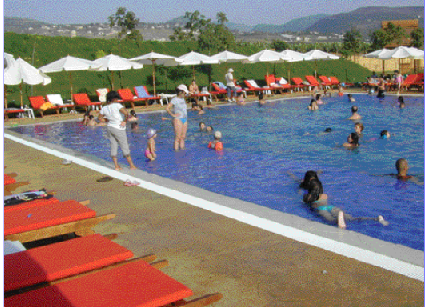
Contrasting images portray the tourism business in Lebanon this summer. Visit the downtown of Beirut or the shopping areas popular with guests from the Gulf region, and business is minimal or at best, slow. But go to seaside resorts along the Lebanese coast from the north to the south and you see crowded beaches with vivacious parties that start from, or last into, the morning.

Downtown Beirut, which at this time of the year in stable political conditions would have been packed with Gulf Arabs and foreign tourists spending their money, is barely seeing visitors in the wake of political tensions and security threats that have gripped the country since December 2006.

The whole city should be buzzing with visitors; however, we can only see some expatriates returning to vacation in their homeland. Desperate retailers place their hopes on putting up sales signs and the restaurant scene in the city center has been compacted into a few remaining eateries that get by on serving lunch to the office workers in the area.

But the fun in Lebanon never dies — it just moves elsewhere. In the absence of foreign tourists and despite the uncertainties clouding their horizon, forever-young local revelers of all ages now take care of the tourism business domestically, with their love to party and enjoy their hot summer season.

“Every Sunday we are at the beach in resorts like Ocap or Pangea in Jiyeh. The ambiance is crazy there, places are always crowded during weekends, pool bars are full and loud music just make the place rock even in daylight,” said Rana Arakji and Rachid Chouceir, two young professionals who work in central Beirut but shun the city’s present tristesse when it comes to recreation. Towns to the south of Beirut like Jiyeh and Damour, where a year ago Israeli fighter jets thundered maliciously across the sky, this summer are attracting throngs of beachgoers and Arakji said she has no worries about security.

Beach resorts and water parks are satisfied as the 2007 summer season is moving along. On weekends, cues form at the entrances and many resorts are filled to capacity as locals seek the sun after a hectic week at work.

Locals making up for tourists

“This summer season started very good. We are not affected a lot by the political and security incidents. On Sundays we have almost 2,500 people in our resort,” said Sofie Edde, marketing executive at Edde Sands, a five-star Phoenician-themed 100,000 square-meter beach resort and hotel in Byblos.

Edde Sands CEO, Fadi Edde, believes that if the situation remains as it is now with no major security threats, the resort should witness a decent and reasonable closing of the season. “In 2007 we are dealing with similar numbers as in 2005,” he told Executive.

The life on the beaches defies the months of political instability, a string of bomb blasts, and the images of imported conflict in northern Lebanon around the Nahr al-Bared Palestinian camp where since late May the Lebanese army has been locked in a deadly battle with Islamist militants.

A bit further down the coast from ancient Byblos and Edde Sands, Elie Mechantaf, owner of Cyan Beach in Zouk, was very satisfied with the summer season’s takeoff in June and July. “Cyan Beach is booming this year and I cannot compare it to previous years because this is my best year in terms of performance,” Mechantaf told Executive in a phone interview.

Operators are keeping their fingers crossed that the season will be spared from a repeat of last year’s summer war, which cost the lives of 1,200 Lebanese and destroyed the tourist season.

“In 2006 we didn’t break even, the year was a total loss,” said Fadi Edde. “In our work, we consider May and June as pre-opening cost, and we expect to make revenues in July and August, so when you spend money and don’t get any revenues, it will be a total loss.”

Encouraged by the good start of his 2007 season, Mechantaf said he is planning to expand by adding 8,000 square meters to his 15,000 square-meter resort. Banking on profit expectation of $300,000 during the three-month summer season, he bought land adjacent to Cyan Beach; his total investment in the expansion will be a minimum of $1 million.

Mechantaf said he is much more dependent on Lebanese locals than on foreign tourists. For pricey operators, expatriate Lebanese on home visits and tourists are important to reach profit targets. “Edde Sands depends on the buying power of the Lebanese expatriate community. They spend much more than local Lebanese,” Edde said. With 30% of typical revenues coming from foreign tourists and expats, the resort expects that business this year will be as good as, but not better than, 2005.

Beach resorts maturing

With the exception of private clubs restricted to members of local elites, the upscale beach resort business in Lebanon is young. Five to six years ago, the first beach-wise developers started investing in resorts that offered more than cheap lawn chairs, primitive umbrellas, and snacks. The exercise included investments such as carting clean sand to upgrade the shore, setting up boardwalks and acceptable shower facilities, and most of all, building atmosphere and image for resorts carrying names such as Oceana, La Voile Bleue, La Guava, Janna Sur Mer, and so forth.

As they are showing their resilience, the hip places are proving this summer that they are more than the ad-hoc businesses with short-term leases that some of them started out as, even though legal questions over theoretically free beach access rights as well as environmental sustainability issues are ugly smudges on the pearly white vest of the whole industry.

DJ parties and special events in beach resorts also are now an important part of the entertainment staple in the country. In early July, an appearance by Dutch music animal Tiesto drew an estimated 20,000 to Edde Sands, making his concert a testimony to Lebanon’s vivacity in a challenging time — all the more so since the country’s two largest traditional music events, the multi-faceted Baalbeck and Beiteddine festivals, have been cancelled for the second year in a row despite assurances to the contrary made by tourism minister Joe Sarkis in May.

The only festival scheduled to proceed normally (at time of this writing) is Byblos Festival. Incidentally, its three-week program from rock to soul will take place almost on the beach; one of the four shows in the festival will be five performances of Zenobia, advertised as an epic by Mansour Rahbani that celebrates the queen of ancient Palmyra as “the first voice of liberation in the East” who refused to bow to the power of the greatest empire of her age.

Beach resorts in the north and south will decorate the rest of the summer with less weighty lore, having put a number of concerts with international DJs and local performers on their calendars. In the long run, resort operators bet on special events as increasingly important components in their income mix. Edde said organizing the Tiesto party brought double benefits of marketing the resort and giving his team experience in organizing and running a large show. This will lead more companies or individuals to want to stage events at Edde Sands, he said.

Having sun, local crowds, and parties going for themselves, trendy beach resorts seem to count among the few enterprises in Lebanon whose outlook for 2007 is not downcast. They hope, however, that the country will somehow progress to political normalcy and then things will be a lot better — even on the beach.

August 7, 2007 0 comments
0 FacebookTwitterPinterestEmail
Cover story

Conflict vs. Growth: Political Threats to a Bullish Region

by Executive Staff August 7, 2007
written by Executive Staff

The Middle East looks like a paradox: On the one hand the high oil prices boost the regional economies, financiers are running out of investment projects, Gulf stock markets are recovering from the 2006 slump and one of the last “closed economies,” Syria, is opening. However, all this economic development occurs in the shadow of a whole number of political Damocles’ swords. External threats – an American war with Iran, which would affect the Gulf, and an Israeli-Syrian conflict that could draw in Lebanon — and domestic quandaries — ranging from out-of-control population growth to sluggish bureaucracies and the Islamist challenges to ruling elites — could all spoil the current growth.

The twin forces of oil money and attractive economic policies have boosted the region’s economic outlook and general confidence. Mega-scale infrastructure, tourism, and real-estate projects — like the Abdallah Economic City near Jeddah and the Dubai Metro — are springing up, not just in the Gulf, but also beyond the boundaries of big oil-producers. In Damascus we find the Eighth Gate and in Amman there are the Abdali projects.

It’s easy to see from whence this bullishness came. In 2006, MENA oil revenues stood at a staggering $510 billion, $75 billion more than the previous year. With the barrel of oil hitting $75, oil producing nations are swimming in a cash surplus, while remittances and foreign direct investment (FDI) to resource-poor countries have also risen to historic levels.

A time to boom

The current high oil price was caused, mainly, by expectations of continuing strong demand, especially from the fast growing economies of China and India, fears of supply disruption in a number of hotspots such as Iraq, Nigeria and possibly Iran, concerns about the reliability of major oil/gas supplies in Russia and Venezuela, as well as general capacity constraints on the hydrocarbon sector’s infrastructure.

OPEC even estimates that, because of increased demand (reaching 95.8 million barrels per day), falling supply in mature areas such as the North Sea and Mexico, and delays in new projects such as Russia’s Far East, there will be an oil supply “crunch” five years from now, leading to even higher oil prices. The same is forecast for the gas sector.

Buoyed by this dramatic rise in hydrocarbon revenues the MENA region’s real GDP growth stands at 6.3%, up from 4.3% during the first half of the decade, and an even lower 3.6% during the 1990s. In 2006, remittances, flowing from oil- to labor-exporting countries in the region, have reached $19.3 billion for MENA recipient countries, while the tourism sector saw solid growth of 14.5% compared to a 12.6% rate in 2005.

High oil revenues have also spurred FDI, which reached more than $24 billion in 2006, triple the 2004 level. The main recipients are Egypt, Lebanon, Morocco, Tunisia Jordan and the UAE. This intraregional flow of FDI is not stopping any time soon as it finds homes in energy, infrastructure, real estate, and tourism sectors.

Most of the region’s countries have managed to expand their fiscal surplus or, in case of state deficits, significantly reduce debt. In 2006, MENA current account surplus rose to 23% of GDP or $280 billion. This has had positive effects on the labor market, pushing the unemployment rate from 14.3% in 2000 to under 10% in 2006.

The World Bank, in a study released in June 2007, predicts that “prospects for MENA are potentially favorable for the period through 2009.” While an easing oil price might slow down growth among the producing countries, the non-producers are expected to compensate with stronger growth with the region holding steady at over 5%.

Investment data shows that the countries in the region are aggressively pursuing exploration for oil and gas deposits. The Maghreb countries are prospecting new blocks, Egypt is searching on its northern coast and southern border, Jordan — perilously dependent on external supplies — is investigating to exploit oil shale deposits, and even Lebanon has drawn up plans to develop offshore gas reserves.

Much of the surplus wealth is re-invested in the region. By 2010, the GCC countries plan to have spent $700 billion in the MENA oil and gas sector, infrastructure, and real estate projects. Parallel to the oil price hike, the region has also undergone a phase of economic liberalization, partially owing to the demands of globalization and partially owing to the realization even by such nomenklatura states as Syria and Libya that clinging to the old ways would spell certain economic (and with it political) demise.

But wait

Yes indeed, the region is enjoying an economic prosperity last seen in the heydays of the 1970s oil boom. Everywhere one travels, from hyper-rich Dubai to “If-Egypt-is-3rd-World-then-this-must-be-6th” Khartoum, construction sites are buzzing, consumer goods are in demand, and confidence is high. Yet, there are clouds on the horizon. Politics — both global and domestic — could spoil the party and throw spanners into the spinning wheels of the economic boom.

This summer, hints by the advisors to George W. Bush that the U.S. government would like to “solve” the question of Iranian nuclear facilities (read: Iran’s attempts to produce nuclear weapons) before the administration leaves the White House in early 2009, were answered by Iran’s Supreme Leader, Ayatollah Ali Khamenei, with an ominous warning that in the event of a US/Israeli attack, the Islamic Republic would close the Strait of Hormuz, highlighting, yet again, the vulnerability of the Gulf’s main oil and gas export route. The body of water, at its narrowest point barely 34km (21 miles) wide, is the gateway for one-fifth of the world’s oil supply, which in 2006 amounted to 17 million barrel per day (bpd).

This particular threat — coupled, for good measure, with that of retaliatory attacks against US military bases in GCC countries — is certainly the darkest case scenario. Iran will no doubt think long and hard before it decides to jeopardize its good relations with the UAE and Qatar and the oil-hungry economic powerhouses of East Asia. Nevertheless, the chance that Tehran, if it feels cornered, may resort to such an act of despair, or that in the event of a military confrontation, elements within the Iranian army or Revolutionary Guard may take unilateral action, cannot be dismissed as the stakes are too high. In fact no one is taking any chances.

Securing alternatives

Pipelines that bypass the straits already exist while others are on the drawing boards. Because of already existing political upheaval and discord, however a number of already existing pipelines — like the Trans-Arabian Pipeline going from the Saudi Gulf coast through Jordan and Syria to Lebanon’s Mediterranean coast or a number of pipelines running through Iraq — are unusable.

Saudi Arabia’s East-West Pipeline, running from the Abqaiq oil complex on the Gulf across the peninsula to Yanbu on the Red Sea, is currently underutilized, as the shipments via Yanbu add up to five days to the travel time to the Asian customers, but could easily be brought to its full capacity of 5 million bpd.

In the UAE, Abu Dhabi’s state-owned oil investment company has just tendered the engineering and design contract for the Abu Dhabi Crude Oil Pipeline (ADCOP), which will carry 1.5 million bpd — over half of Emirates’ production — to the oil terminal in Fujairah on the UAE’s eastern coast, thereby circumventing the Strait of Hormuz. Another project, at this point only in the pre-planning stage, is the Trans-Gulf Strategic Pipeline (TGSP), which would run along the southern Gulf coast all the way to the Indian Ocean, connecting the “inner” GCC countries Kuwait, KSA and UAE with the “outer” member state Oman, eventually even including Iraq and Yemen and stretching up to 1,500 km. This Strait-of-Hormuz-Bypass is envisioned to carry as much as 5 million bpd.

Eventually, when the two new conduits are constructed in many years to come, those three pipelines could take two-thirds of the oil currently carried by tankers, thus cutting shipping costs, reducing traffic in the narrow straits and busy oil terminals and — by offering a safe route — ensure continuity of oil and gas exports.

But in the meantime all eyes are on the deployment plans of the American aircraft carriers and the training exercises of the Iranian navy.

Heating up

Further west, in the Levant, the external threat is not so much from a direct US intervention — with almost all ground troops busy in Afghanistan and Iraq, the Americans have only capacity for air-strikes and thus the cup of regime change has passed by the Syrian government — but for the time being the frontlines of the Arab-Israeli conflict could easily heat up.

We have already seen what a “heating up” can do in Lebanon, where in the summer of 2006 the economy was brought to its knees within a month and projected growth of 6% was cut down to zero. The Cedar Republic remains in the throes of internal quarrels and external interference.

In a way, Damascus in summer 2007 resembles Beirut 2006 before the Summer War: bullish about its economic future, with drastic upsurge in consumption, real estate developments and other FDI-fuelled projects springing up, yet all linked to the “IF no war breaks out” caveat. Investors, even those who like to take a punt with their diversified portfolios, don’t like war.

However, that might not be Syria’s biggest problem. Following the, albeit slow, economic opening, this infitah policy is not a sure bet. Out of an estimated 20 million people living in Syria today (including up to 1.5 million Iraqis), 1 million are now doing better than under the old socialist economy — but for the other 19 million the situation is remaining stagnant or getting worse in relative as well as absolute terms. Today’s conspicuous consumption — almost unheard of a decade ago — is not only a sign of the country’s economic prosperity but, in a society still officially cherishing social equality and solidarity, also breeds resentment among the have-nots. It remains to be seen if the Syrian government will be able to contain the social tensions in the way Egypt and other socialist-gone-capitalist countries of the region have, or if economic stratification will accomplish what secular and Islamist opposition never could: break the regime.

The other domestic challenge that Syria, together with a whole number of countries in the region, faces is that of rapid demographic growth not matched by a similar rate of job creation. Major oil producers like Saudi Arabia and Libya have the money to absorb job seekers into the state bureaucracies and pay them meaningful wages. Less affluent economies also provide university graduates with public sector employment, but at salaries that force many bureaucrats and teachers to take second jobs to make ends meet. Egypt is a prime, and through its film industry a well-known, example.

However, economic disaffection is brewing in all but the super-rich GCC countries. So far, many of the region’s regimes have benefited from a tight policing of their population and fear of the alternative — as cited in Iraq — has prevented the social upheavals predicted by political pundits at least every six months from breaking out. But the social problems — growing populations and rapid urbanization — will not just go away and can only be addressed by solid economic growth across all social strata.

Dealing with demography

In the Gulf countries, particularly Saudi Arabia, policies of “nationalization of the work force” are seen as a way out of the dependency on foreign labor and expertise and prepare the countries for the time “after the oil” when their economies will have to generate revenues from other sources. The smaller Gulf nations have minute populations relative to their GDP, whereas Saudi Arabia, with a current population of 22 million nationals (plus 5.6 million foreigners) and a 3+% population growth rate is facing a true conundrum. The strong rise in oil revenues has alleviated the pressure for the time being, but contrary to its brothers in the GCC, in terms of demographic challenge it belongs more in the “Egypt, Iran, Syria, Yemen” camp.

Across North Africa, the story is similar: demographic growth unmatched by creation of jobs that pay livable wages breeds discontent within the political system, regardless whether it is monarchist, republican, or whatever. Libya is the 18th-largest oil producer in the world with a small population of just 5.6 million. After it had “come in from the cold” and rapidly developed economic ties with the West — the UK signed a $900 million oil and gas exploration deal — domestic challenges replaced foreign politics as the No. 1 threat to the stability of Qaddafi’s regime with criticism about government policies and social disparities increasingly based on an Islamist worldview.

Indeed, throughout the region, variations on the Islamist theme of politics have become the most pervasive ideology. “New veiling” and the surge of “Islamic finance” alike are markers of this development. This political phenomenon is by no means homogeneous — ranging from the Islamic capitalists of Kayseri (Turkey), whose “If you are successful, God loves you” outlook mirrors the Protestant work ethic, to the anti-business extremists of the Taliban. However, regardless of the specific flavor, it is the followers of political Islam who challenge the status quo across the region and in countries as diverse as Morocco, Egypt, and Saudi Arabia.

It remains to be seen whether the powers that be can successfully accommodate or even integrate these Islamist currents. Turkey is a good example that business-friendly Islamists in power can actually be beneficial to economic prosperity in contrast to overly state-focused secular and military elites, whereas Khomeinist Iran proves that dirigiste Islamist regimes could cause the exact opposite — an ossification of the economic sectors. Of course, then there are the hard-line ideologists who oppose and attack anyone who doesn’t follow their own model. With these, dialogue is impossible and it is they who pose the greatest threat to prosperity, since they do not care about the economic, and thus social, repercussions of their actions, exemplified by the terror attacks against tourists in Egypt and the 2006 summer war in Lebanon. Both — one extremist group and one mainstream parliamentary party — carried out actions that had negative impacts on the local economies of their respective countries.

As all countries in the region, including Gulf states, are enlarging the percentage of tourism revenues within their GDPs, they become more and more reliant on their image as “safe” locations. Whereas the infrastructure can be quickly repaired after war or a terrorist attack, convincing tourists and businessmen that it is again safe to visit is a much harder task. Just look at Lebanon this summer. The place should be full of tourists but they chose to stay away.

Hard to predict

There is no inevitability of disaster. Indeed, warding off those threats doesn’t need magic and the region’s governments and business leaders have all the means at their disposal to shield their countries against outside perils and solve domestic problems.

Prudent allocation of the last years’ high revenues, such as strong debt-reduction and a build-up of financial reserves, give the region’s economies — and their political establishments — good positions to absorb unforeseen shocks and ward off possible threats. Apart from Iraq, Lebanon, and the Palestinian Territories, racked by long periods of political instability and war, most of the countries in the region should be able to weather even a worst-case scenario, on the condition that it is short-lived and followed by an almost immediate recovery.

However, they are not (yet) geared to withstand any major long-term instability.

As long as the current situation prevails — even with Iraq mired in occupation and fratricide, Iran playing with the nuclear option, the Arab-Israeli conflict nowhere near a solution, etc. — the region’s economies will continue to prosper. In fact, countries in the region have a vested interest to maintain a certain “balance of risk” — they profit from a political situation volatile enough to keep the price of oil at the current high but not too unstable to (1) threaten continuity of prosperity and (2) push consumers to look for alternatives to the Gulf’s (and North Africa’s) oil and gas.

The oil producers are keen to keep the price within a band of $50-80 per barrel (pb). If it drops lower, they will face significant financial problems for two reasons. The first is the break-even factor. Qatar, with a break-even price of $47 pb, would be the first to suffer. Oil economies Algeria, Saudi Arabia, UAE and Kuwait have more leeway, since their break-even price is between with $38.80 (KSA) and $22.40 (Kuwait). However, for the countries whose economies are essentially oil-based, any decline in the oil price automatically translates into a significant drop in GDP. Thus, a 10% decline in world oil prices would cut Saudi Arabia’s current account as percentage of GDP by 5.2%, and Qatar’s by 5.1%.

Non-producers, while having to foot larger energy bills, will profit overall from high oil and gas prices, since the vast amounts of petro-dollars that are flowing into their economies in the shape of FDI and remittances outweigh rising energy costs.

Furthermore, cautionary tales like those of Iraq and Lebanon, and incidents of Islamist terror serve the region’s political and economic establishments — often one and the same and in all other cases symbiotically connected — to curb domestic dissent and prevent it from gaining mass appeal. However, the only way to ensure that the current calm, after a decade of trouble in the 1990s, isn’t just a temporary lull before the next storms is if the region’s leaders rapidly create and maintain the frameworks for a self-sustained continuous economic growth. In order to achieve that, they have to significantly decrease reliance on the essentially unpredictable price of natural resources and put less emphasis on the state as the main driver and provider of social prosperity.

It remains to be seen if the balance of risk can be maintained.

August 7, 2007 0 comments
0 FacebookTwitterPinterestEmail
Comment

If you think getting a resident’s visa to the Emirates is difficult try being a pet!

by Executive Staff August 7, 2007
written by Executive Staff

Years ago cats were the easiest pets to take on an airplane. They were small enough that most airlines let them on as hand luggage. Because of their size and disposition they were rarely scrutinized in the same way dogs are for health certificates and vaccine cards when they arrived at airports, particularly outside Europe. That has all changed, especially in the UAE.

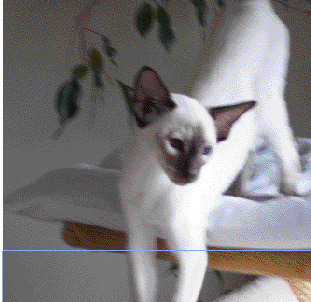
Last year, the small matter of a war forced me to relocate my family to Sharjah. Getting the paperwork — work permits and residents visas — in order is always a headache but I groaned when I learned that pets, in this case our Siamese cat Simone, were not exempt and needed their own papers.

To avoid having your pet quarantined on entry here are the steps one needs to follow: make sure your pet’s vaccines are up to date. Then, take said pet to its vet and have a micro-chip implanted in either it’s neck or behind the ear verifying that the information on the vaccine card tallies. In Lebanon, the cost for the chip is around $40. Once that is done, you (or your vet) need to get a “Good Health Certificate” from the Ministry of Agriculture in the country you’re travelling which states that all the health documents are legal and that your pet is in good health. It is advised to get that document within five days of departure. In Lebanon, the “Good Health Certificate” costs around $20. Then you need an import permit from the UAE Ministry of Agriculture. To get that you need to fax the vaccine card, the Good Health Certificate and a copy of your passport. If you have no one in the Emirates to pick up the permit your pet will, on arrival, be detained at the airport until you can produce the import document, which costs AED200 or $56.

On landing in the UAE, you must proceed to the veterinary clinic in the cargo section of the airport to pick up your pet. If all your paper work is in order you need to sign a few more documents, pay an additional AED 100, ($28), and you and your animal are then free to leave.

To avoid putting Simone in the hold, I called all the airlines in Beirut that have flights to the United Arab Emirates to see which one would accept my cat inside the cabin. I didn’t think much of it because I am used to seeing cats, sitting in cages on their owners’ laps on aircrafts. I called about 10 airlines that make the Beirut Dubai/Sharjah run to learn that only Middle East Airlines (MEA) allows pets on board. All the others said that animals have to be checked in as cargo and put into a pressurized, temperature-controlled section in the cargo area of the plane. Poor Simone. They added that the rule was imposed on them by the Emirates port authority. The only odd exception other than MEA was Emirates Airlines which forbids all animals inside the cabin except falcons and even they need a ticket. This, by the way, is nothing new. In the mid-1980s when Emirates was in its infancy, I was lucky enough to return first class to Dubai from Pakistan. A lucky break, I thought as I turned left, past the curtain into the world of privilege. Or so I thought. I had been allocated a window seat and my fellow passenger was a cage with four hooded falcons returning from a hunting trip in the Punjab. Their masters were relaxing in the row in front of me.

Back in Beirut, I proceeded to the airport with Simone and his accompanying paperwork. The check-in was simple (apart from the $70 weighing fee) and the flight went well with Simone sleeping the entire journey. After retrieving our luggage in Dubai I thought we were home free but at the last control, one of the customs agents saw the cage and escorted me to an office. “Why had I been allowed to carry the cat on the plane,” I was asked. Simone was promptly taken away to the cargo area where I had to go and rejoin the formal process before I could take her home.

We brought our cat back to Lebanon with us for the summer and the vet at the Dubai airport assured us that all her papers were in order. He said that all we need to take her back is a re-entry card, which we got, and a new health certificate issued no more than 5 days before we travel. When we called our vet in Beirut to ask how long the health certificate will take, we were told that there are new UAE regulations requiring a blood test for rabies. This test cannot be done in Lebanon and the blood sample has to be sent to France, a process that takes eight weeks. I’m praying Simone is exempt.

August 7, 2007 0 comments
0 FacebookTwitterPinterestEmail
Comment

The Russians are coming

by Peter Speetjens August 1, 2007
written by Peter Speetjens

Founded by the controversial Russian-born billionaire Arkadi Gaydamak, the Social Welfare Party (SWP) is but the latest gladiator to enter Israel’s increasingly fragmented political arena. For decades the Knesset was dominated by eternal foes Labor and Likud, yet today it is home to a dozen small and medium-size parties, while tens of others failed to meet the minimum amount of votes required to enter parliament.

Within this widely varied political landscape, the distinct “Russian vote” is of growing importance. Since the collapse of the Soviet Union in 1989, some 1.2 million immigrants of Jewish descent were welcomed in Israel. Note, however, that although a Jew is generally defined as someone born to a Jewish mother, the Israeli Law of Return grants anyone with a Jewish grandparent the right to live the Zionist dream. It is estimated that some 300,000 Russian immigrants are not Jews.

Note as well that not all immigrants are Russians. They are mainly referred to as such because of the language they speak, which today is a common feature of Israeli society. Representing at least 20 of the Knesset’s total of 120 seats, the Russians are also known as the “kingmakers” of Israeli politics, as they are able to make or break a coalition. Little wonder then that during the 2006 elections Israel’s leading political parties all ran Russian-language campaigns.

Like other Russian parties, the SWP appears to the right of the Israeli political spectrum. It aims to topple the Olmert government, because of its failures in the 2006 Lebanon war, and promises full integration and social justice for Russian immigrants, most of whom are secular, belong to lower and middle class income groups, and share a sentiment of being second-class citizens.

During past elections, Israel’s Russians have predominantly voted right-wing, and showed a preference for a strong charismatic leader most likely to deliver on the issues of security and stability. The self-made man Gaydamak seems to meet that demand.

Born in Russia in 1952, Gaydamak left for France at the age of 20. Having started as a day laborer, he worked his way up the business ladder by means of a translation and import-export firm working between France and Russia. Part of his fortune, worth an estimated $4 billion, may not have been earned legitimately, as French authorities are keen to interrogate Gaydamak about his role in “Angolagate,” in which hundreds of millions worth of arms were smuggled to the African nation.

Gaydamak expects the SWP to win no less than 40 seats, even though he himself will not run. He has also set his eyes on becoming the mayor of Jerusalem, banking on the fact he owns the Holy City’s leading football and basketball teams.

It remains to be seen if the SWP can indeed win up to 40 seats. Thus, Benyamin Netanyahu’s Russian-media strategist, Michael Falkov, told the Jerusalem Post that Gaydamak lost a lot of popularity trying to acquire the Russian pork-selling supermarket chain Tiv Ta’am and make it kosher. As the Russian vote is fiercely secular, that particular move was not appreciated.

What’s more, Gaydamak is not the first Russian to enter Israeli politics playing the immigrant card. In the mid-1990s, Natan Sharansky, a former Soviet dissident who spent years in the Gulag, founded Israel B’Aliya (Israel on the Rise), which promoted the rapid absorption of Soviet Jews and in 1996 won 7 seats. However, he failed to deliver and after a brief spell as minister under Ariel Sharon only managed to re-enter the Knesset as a Likud candidate.

Sharansky’s position as Israel’s leading Russian politician has now been taken by Avigdor Lieberman. Having previously worked as the Likud Party’s Director General, he participated in the 2006 elections with his Yisrael Baytenu (Israel – Our Home), which gained 11 seats. With the arrival of Lieberman, Israeli hard-line politics became a whole different ballgame.

Lieberman propagates positions considered radical even among the right wing. He was once quoted as saying that Palestinian prisoners should be drowned in the Dead Sea and that he himself would provide the buses. More recently, he called for a loyalty test for Arab-Israelis and for the execution of Israeli MPs who met with Hamas representatives. Despite these and other controversial remarks, Olmert appointed him as Minister of Strategic Affairs, a new cabinet position that solely deals with Iran.

At this point, it is unlikely that Gaydamak will be able to overtake the popular Lieberman as Israel’s leading Russian politician. Yet, whatever the face of the Russian vote may be, it is a vote that is here to stay and one that favors a hard line “safety first” approach in negotiations with the Palestinians and other Arab nations. What makes the Russians different from other right-wing voters is their as fervent disliking of the religious right.

And the latter is arguably the good news, as it is likely to prevent an ultra-right cocktail between Likud, the Russians and the Orthodox Jews to come into existence, for one need not be a genius to predict what that could mean for the future of the Middle East.

August 1, 2007 0 comments
0 FacebookTwitterPinterestEmail
Comment

Buying a home in Beirut

by Rana Hanna August 1, 2007
written by Rana Hanna

Birds do it, bees do it, even educated fleas do it, let’s do it, let’s … buy a home!” So you’ve decided to do the grown-up thing and buy a house. Now what? Buying a newly built — or half built or even unbuilt — property is indeed a daunting task, not only because of the big sums of money involved (Can I afford it?) but also because of the commitment necessary (Will I still love it in the morning?) and the risk associated with it (Will the market go up or down? Will the building collapse on my head in 20 years?).

The obvious first step is to find the right property. Real estate agents in Lebanon may help, but if you are looking to buy new property, you can easily eschew agents’ fees (2.5% of the final price) as all new projects are advertised clearly, allowing you to contact the developer directly.

The earlier you commit in the project’s development, the bigger the discount you get. That is because developers are usually looking to recoup their investment costs as quickly as possible and are therefore more willing to negotiate prices. Once developers do recoup their costs, they look to maximize their profits. Although buying ‘on spec’ may reap its rewards financially, the risk is greater. You’re expected to pay 30% of the total price up-front upon signature of the contract, although sometimes legal and/or financial problems may hinder the developer from obtaining the necessary licenses and planning permissions, and in some cases you may end up without an ownership deed.

Another risk of buying on spec are the specs themselves. Always ask for a list and sign on it: some developers eager to sell may agree with you on many points such as number of parking spaces available to you or the size of the storage room although some may renege on these agreements. An easy way out of this is to make sure the developer is reputable (in a country this size, that is the easy part) and to check out some of their other projects. Don’t be shy to ask some of the residents how happy they are with their property. Also, visit the site with an architect or an engineer who may point out issues you may not have thought of: they tend to see the minutest details.

When it comes to negotiating the price, that’s when you need someone like my sister. Don’t be afraid to argue, most developers will negotiate between 10% and even 20% of the asking price. But think of the hidden or extra costs that can amount up to $50,000 depending on the property. Firstly, you need to factor in charges that you pay upon signature of the contract (0.3% the value of the property) and 5% of the total cost upon registration of the property (plus another 0.6% in fees and miscellaneous costs) — an extra $31,500 on a half- million dollar property. Extra costs may also be incurred through the building process as some developers will charge for any extras you will want to install (one extra plug in a room can cost $50, electric shutters $500) and can easily amount to around $15,000 in total.

Financing is a different thing altogether. Usually, in Lebanon you are expected to have paid up to 90% of the house price by the time you move in. So unless you can pay up cash, you’d need to get a housing loan. In Lebanon this puts you into a Catch-22 situation as you need a document proving ownership of the property which is usually only given to you by developers after you’ve already paid about 60% of the house price already. Also, there’s a limit to just how much the bank will give you. For example, a salaried employee earning around $4,000 a month can borrow up to a maximum of $115,000 over 15 years which is repaid at a current interest rate of between 8-9%. With current house prices in central Beirut averaging around $2,000 per square meter, you would either need to settle for a 100 m2 home in the city or for a bigger house in suburbia.

So, if you find the idea of buying a new house unnerving, perhaps it is best to do as the birds and the bees do and find a good tree somewhere else!

RANA HANNA has spent the better part of the last two years searching for property to purchase. She is sill looking

August 1, 2007 0 comments
0 FacebookTwitterPinterestEmail
Comment

Who is Barak Obama?

by Lee Smith August 1, 2007
written by Lee Smith

The 47 year-old junior senator from Illinois emerged as a powerful figure after he delivered the keynote address at the 2004 Democratic Convention while he was still a state legislator. A charismatic speaker whose half-African half-American heritage seem to represent the reality of multi-racial America and the future of the Democratic Party, Obama’s current ascendancy appears to reside in the fact that not only did he not approve the Iraq War but he wasn’t even a member of the Senate when the 2003 vote was called. He was elected to the Senate in 2004.

Obama is where the fantasies of the left wing and the center of the Democratic Party seem to converge. The left never wanted the war to begin with and the center wishes it had never happened this way. Obama, the untainted one, is the candidate who allows them to imagine Iraq back into never-never-land. He is not the anti-war choice as much as he is the non-Iraq candidate.

Nonetheless, the Democratic front-runner is still New York Senator Hillary Clinton, whose most obvious liability is that she voted for the war, a mark on her record that Obama has been eager to exploit. Finally, after the latest debate between the Democratic candidates, Clinton struck back, targeting the principles of her opponent’s foreign policy. In the debate, Obama welcomed the opportunity to meet with world leaders hostile to the US, and Clinton later said that this strategy “was irresponsible and frankly naïve.”

Obama, whose inexperience at the national level means he has no foreign policy credentials to speak of, justified his position by favorably comparing his willingness to engage enemies with the ethos of the current White House. “The notion that somehow not talking to countries is punishment to them — and this is the guiding diplomatic principle of this administration — is ridiculous.”

Here Obama is not irresponsible and naïve, but ignorant. The Bush White House does not withhold diplomacy as a form of punishment, but rather contends that engagement with radical states legitimizes and rewards outlaw behavior. The actions, for example, of Syria and Iran offer sufficient evidence to justify the White House’s rationale.

Obama may be the non-Iraq candidate, but he also seems to have been in a deep sleep the last five plus years, snoring through not only 9/11, but everything else the region has revealed about itself since then. In addition to the timeless clichés of Washington foreign policy circles — like the signal importance of the Arab-Israeli crisis and trying to separate Syria from Iran — Obama also subscribes to the innocent realism of the Baker-Hamilton Iraq Study Group report. The junior senator calls for a “comprehensive regional and international diplomatic initiative to help broker an end to the civil war in Iraq.”

The international actors who might make a difference in Iraq — like France, Germany and Russia — have been transparently clear over the last several years they have no interest in tying themselves down in Iraq to suit US strategic goals. As for the significant regional players who could help, they have either distanced themselves from the project or have done everything in their power to subvert it. Saudi Arabia is uncomfortable being the meat squeezed between the ascendant Shia sandwich of Iran and Iraq and has no Iraq policy. And Iran and Syria obviously have no stake in a stable Iraq, or else they would not have nurtured chaos in the land of the two rivers so assiduously over the last four years. Tehran and Damascus want the US out of the Middle East and will understand any invitations to a US-led conference as a ceremony to accept Washington’s terms of surrender.

Elsewhere, Obama’s Iraq policy is being criticized not for its naiveté but rather its cynicism. In an interview with the Associated Press, Obama argued that, “preventing a potential genocide in Iraq isn’t a good enough reason to keep U.S. forces there. If genocide,” said Obama, is “the criteria by which we are making decisions on the deployment of U.S. forces, then by that argument you would have 300,000 troops in the Congo right now … We would be deploying unilaterally and occupying the Sudan, which we haven’t done. Those of us who care about Darfur don’t think it would be a good idea.”

Obama’s all-or-nothing interventionism as an excuse to ignore a potential full-blown civil war may seem amoral to some, but it illustrates an important development in US thinking. In a long essay outlining his foreign policy positions for the July/August Foreign Affairs, “Renewing American Leadership,” Obama writes, “After thousands of lives lost and billions of dollars spent, many Americans may be tempted to turn inward and cede our leadership in world affairs. But this is a mistake we must not make.”

Even if most of the candidates who have virtually talked themselves out of contention the 2008 elections will depend very much on what the electorate thinks about Iraq. And yet as Obama’s AP interview obliquely suggests, the real consequences of Iraq will not be understood for years to come. Obama’s Foreign Affairs essay essentially argues that liberal interventionism is the right idea, even if the Bush team got it wrong. The big question looming in America’s strategic future is: What if liberal interventionism is not the right idea, no matter who’s running the show?

LEE SMITH is a Hudson Institute visiting fellow and reporter on Middle East affairs 

August 1, 2007 0 comments
0 FacebookTwitterPinterestEmail
Consumer Society

Hooters, Tooters It’s a bad idea

by Executive Staff August 1, 2007
written by Executive Staff

The food franchising industry is doing well in the Middle East. Buying a tried-and-proven formula for a hospitality venture has allowed both small entrepreneurs and powerful investors to roll out restaurants in their markets while cutting down some of their development headaches and harvesting customer recognition from the strength of international brands. Examples range from lowbrow individual franchisees of sandwich and pizza delivery outlets to the full-scale regional multi-US-brand operations of Kuwait Food Corporation (TGIF, KFC, et al).

Although franchisees in the region had their problems with copycatting or brand disputes, the franchise concept has on the whole worked smoother than the nation’s consumer goods wrestling battles between exclusive agencies and overpriced import monopolies in one corner and product fakers and unethical traders in the other.

International food franchising formulas have been repeated by local conceptioneers who brought, for example, Lebanese restaurants like Caspar & Gambini or Crepaway to the Gulf. The process is also working in the opposite direction of bringing concepts from the GCC to the Levant.

But do people of the region want restaurants that openly offend conservatives? Would they accept franchise outlets that express an alien culture in highly intrusive manner? The issue arose newly this summer over marketing announcements by a Kuwaiti businessman who wanted to land a Hooters restaurant — trademark: only busty waitresses willing to wear tight orange shorts and dress totally down on top need apply — not in Kuwait but in Dubai.

The man’s announcement immediately drew disbelief and some consternation from readers and commentators. A Kuwaiti columnist suggested that Hooters should “keep their breasts in the West.” Officials in Dubai said there was no record of an application to register the venture there and that they would follow “very closely” any moves to establish the restaurant in the emirate.

Not always welcome

Bringing those international brands into your hometown is not everyone’s cup of tea. In pre-enlightened Syria, state representatives once forced eaters to abandon the Colonel’s coleslaw apparently because of a (later reversed) official aversion to Kentuckian chicken commercialism.

However, most failed franchise operations in developed countries as well as the Middle East arguably did not go down because of protests by gender activists or anxious culture guardians. They faltered because their concepts didn’t vie with customers — in Beirut alone, the list is quite long and includes donut makers, ice cream and frozen yogurt, and regional and international fried chicken vendors.

The apparently wishful-more-than-wistful Hooters impresario, a man by the name Jamal Shaheen, gave interviews in June, during which he said that he was looking for a location where he could open a first outlet in Dubai by the end of 2007 and add further outlets in the following year, also in the emirate. He did not elaborate on his investment into becoming a franchisee or if he had a motive other than money for wanting to set up the restaurant.

After his news sparked contrarian opinions, he was no longer available to answer interview requests on the economics of the projects. According to the information on the company’s website in the US, the firm charges a franchise fee of $75,000 per location; typical costs furthermore include an initial investment of between $800,000 and $1.5 million per restaurant.

Given Dubai’s spiraling rent and other costs, an outlet there is unlikely to require an initial investment at the low end of range cited by Hooters. And by the way, the plan to set up in Dubai was already Shaheen’s secondary roll-out plan. He wanted first to launch in Beirut but dropped the idea because of the difficult development outlook.

The reality test of trying if this particular skimpy waitress scheme will be allowed in Lebanon thus fell flat, although it might have caused less of a controversy here. Teasing attires and self-commercialization of women and men in Lebanon are nothing new.

Whereas regional online discussions on the restaurant project revealed many similarities to accusations and justifications that make the pros and cons in debates on sexist business ventures in the US, the wire to trip the attempt of letting Hooters loose in an Arab market may well be that the regional cultural paradigm enforces a public set of norms also when those norms come with a past of having been breached for centuries or millennia in the off.

Announcing raucous plans for a restaurant in open digression of the norms held up publicly in the region may have greatly impaired any chances that such a venture ever might have had in Dubai and any city of the region. Tooting about Hooters appears to have been a bad idea.

August 1, 2007 0 comments
0 FacebookTwitterPinterestEmail
Editorial

This is Beirut!

by Yasser Akkaoui August 1, 2007
written by Yasser Akkaoui

It’s Saturday night at White, the rooftop bar on the edge of the beleaguered Beirut Central District. The affluent 30-something crowd, many of whom live and work in the GCC, dance to the beat pulsating from the huge speakers. At the refrain “This is Beirut! Not Dubai!

” they cheer loudly. They are on holiday and nothing is going to stop the fun.
 

The tourists have stayed away and the political storm clouds may be gathering. The country threatens to be torn apart by internal divisions but the vitality of the Lebanese remains undimmed. The country simmers on the hot plate of chaos but we can still get on down.

It’s a well worn cliché, but on paper Lebanon should never work. And yet in the midst of all the turmoil, the key sectors still perform. Property development marches on, luxury cars still roll out of the showrooms, banks still show healthy balance sheets, the port of Beirut is ranked in the world’s top 100 and the nightlife still throbs to Lebanon’s uniquely sweaty beat. Lebanon is a country that should not make sense, and yet, in its own weird way, it works.

Dubai, on the other hand, totally makes sense. It is organized and stable, its mega-developments tower into the azure Gulf sky. Dubai is wealth central, a Las-Vegas-eque pleasure dome predicated on a master plan and fuelled by blue chip entertainment, premiere sporting events, vibrant capital market and a real estate revolution with global ripples. All that glitters is gold and its there for the taking. The state-owned enterprises led the way — especially in real estate and private equity — and showed the obedient citizenry how it’s done.

In Lebanon, the opposite is true. It is shambolic, divisive and anarchic, but its hunger to work, to trade, to sell and to build is unstoppable. Whenever and wherever there is an opportunity the Lebanese entrepreneur will take it. Lebanon is a nation driven by its private sector initiative and strong merchant class. With this glorious and indomitable DNA, how can we not celebrate Beirut?

From Beirut,

August 1, 2007 0 comments
0 FacebookTwitterPinterestEmail
Lebanon

Automotive – Wheels and deals

by Executive Staff August 1, 2007
written by Executive Staff

The Association of Car Importers in Lebanon (ACIL) has reported that total registered new cars are down by 20%, selling 7,909 cars in the first six months compared to the same period in 2006 whose sales reached 9,780. June’s drop alone was over 50% compared with June 2006, which has weighed down the average considerably. Mid-May through September is the car industry’s high season when dealers make nearly half of their yearly sales and, despite everything, July has shown promise of an upswing.

The car market is a traditionally important economic measure of consumer confidence. As the second largest investment for the average person, car sales can show how the economy is affecting individual lives. The industry has been hit by a number of factors — political uncertainty, a flaccid tourist season (the revenues from which would normally contribute 11% to Lebanon’s GDP) and a strengthening euro — all of which will contribute to what is expected to be a year of zero economic growth. The good news is that it’s a buyer’s market.

According to Farid Homsi, general manager of Impex Trading, the local agent of Chevrolet, Cadillac and Hummer, statistics show that over 70% of Lebanese buyers of new cars now choose from the $10,000 to $16,000 segment. He says that this change in consumer preferences is partly due to increasing petrol prices forcing most to search for more efficient and affordable cars. Not surprisingly, given the retail pinch, the mid-level luxury segment from $40,000-$50,000 has been most affected. The recession-proof luxury and SUV segment has remained unaffected by the dip.

Commericial sales are down

Another factor that has hit the car industry is the drop of commercial sales of cars for business fleets and car rental companies which account for 30 to 35% of overall sales. “We knew they were going to suffer,” said Abdo Sweidan, chief operating officer at Rasamny-Younis Motor Co. (Rymco), which represents Nissan. Most dealers expected corporate fleets would not be replaced this year and the same for car rental companies that would reuse the same cars. Despite this, year-to-date figures in June showed that 634 commercial cars — vans and the like — have been sold, compared to 726 for the same time last year.

“We are crisis managers more than marketing managers,” explains Bazerji. In his experience, “all cars which have a selling price of at least $35,000 are more heavily affected by the currency exchange.” Maserati has been negatively impacted by the rising euro forcing his company to improvise and find solutions.

For most dealerships of European cars — which make up nearly a third of the market — management have found ways to soften the blow of currency fluctuations relating to the euro. Christian Nehme, commercial manager at Kattaneh, representative for Audi and Volkswagen, said that his company has received its stock through their regional office in Dubai to hedge against the rising currency.

Luxury still sells

“High-end luxury buyers are unpredictable,” said Charles Tarazi, brand manager and partner at Porsche. While sales deliveries are down around 10% for Porsche, the ultra luxury segment priced around $190,000, such as GR3RS, the Cayenne Turbo SUV, and the 911 Turbo, are not only selling but even carrying with them a waiting list running until February 2008. What most impacted Porsche has been the used models which range in price between $30,000 to $80,000 and make up at least 40% of sales.

Other European brands have steadily lost ground from 47% of the market share three years ago to 29% today. Most brands are down for the first half-year compared with that of last year, except for Porsche — propped up by the best selling Cayenne — and the competitive Skoda both showing healthy sales. Peugeot remains the top selling European brand selling 607 units and making up 7% of the European market.

The combination of the trend toward compact and efficient cars in the last two years and the exchange rate for the yen has had a positive impact on Japanese models. This year, Japanese models captured almost 47% of the market share with Nissan and Toyota taking the lead. Nissan’s Tilda takes the lead as Rymco’s most popular model. Korean brands have also continued to increase their market share to just over 16%.

The impact of the weakening dollar has also helped to push American cars according to Homsi. American brands have a market share of 7%. Compact cars such as the Chevrolet Aveo have been his company’s most popular. Going up the scale, the Cadillac’s compact model BLS has been aimed at the younger clientele as well as Hummer’s H3 which is smaller and more compact, Homsi said. Known for their gas-guzzling engines and large bodies, American manufacturers have shifted to greater fuel efficiency and compact sizes.

Deals are to be had during these times as car dealers are forced to find creative ways to attract customers. “Buyers right now are very prudent, they want to wait and see,” said Nabil Bazerji, managing directory of GA Bazerji and Sons, representative for Maserati, Lancia and Suzuki. “We are advertising to motivate the market and improvising to reduce the price burden,” he continued. While many in the industry cite consumer tastes changing to affordability, Bazerji maintains that “Lebanese are still trendy, they focus on the brands and then look for affordable models of the brands they want.”

The car industry is capital intensive with high overhead. With import duties beginning at 20% for the first $13,000 of a car invoice and then 50% for the value over that, not to mention the 10% VAT, dealers must make a considerable investment to import their stock. The industry has lobbied for the duty to be replaced by a flat rate similar to those used in Europe and Dubai, according to Homsi, adding that sales would be higher if the duty was lifted. These fees are paid before the cars are sold on the market forcing dealers to recoup them in the sticker price and leaving little wiggle room for negotiations on prices. Taxes, registration and insurance tack on several thousand dollars to the price of a car.

Creative financing

Rymco came up with a campaign to remedy this whereby the sticker price was inclusive of all fees leaving off those last minute “surprises” like the 7% registration fee. Additionally, they provided a financial package with no down payment and free insurance for a year. “We had to think outside the box,” said Sweidan, adding that the campaign was so successful in the spring that their inventory vanished in less than a month. While most dealers are reporting decreasing sales, Rymco was able to report growth of 30% according to Sweidan. “The summer campaign has also been successful, I wish that I had ordered more cars,” he said. The success of their campaign is also due in part to their aggressive advertising campaign from newspaper advertisements to SMS messages, leaving only very few unaware of the offer.

Other dealers have followed suit by providing financing programs up to five years to lower the monthly payment as well as financing packages that include all fees and taxes to ease the financial burden as well as aftersales services, filling in the void between consumers’ wants and their financial means. Low interest rates have also helped to financing packages. Attractive leasing options are also gained much ground for consumers who are wary of long-term commitments.

Sweidan said the two most important lessons for Rymco in the last year after the Summer War and this year’s continued economic uncertainty has been that “there is never no market, there are always segments within the market that have growth potential. Once you have identified them, focus all of your resources on the target segment you want to attract and find a match between consumer wants and their means.”


August 1, 2007 0 comments
0 FacebookTwitterPinterestEmail
  • 1
  • …
  • 567
  • 568
  • 569
  • 570
  • 571
  • …
  • 685

Latest Cover

About us

Since its first edition emerged on the newsstands in 1999, Executive Magazine has been dedicated to providing its readers with the most up-to-date local and regional business news. Executive is a monthly business magazine that offers readers in-depth analyses on the Lebanese world of commerce, covering all the major sectors – from banking, finance, and insurance to technology, tourism, hospitality, media, and retail.

  • Donate
  • Our Purpose
  • Contact Us

Sign up for our newsletter

[contact-form-7 id=”27812″ title=”FooterSubscription”]

  • Facebook
  • Twitter
  • Instagram
  • Linkedin
  • Youtube
Executive Magazine
  • ISSUES
    • Current Issue
    • Past issues
  • BUSINESS
  • ECONOMICS & POLICY
  • OPINION
  • SPECIAL REPORTS
  • EXECUTIVE TALKS
  • MOVEMENTS
    • Change the image
    • Cannes lions
    • Transparency & accountability
    • ECONOMIC ROADMAP
    • Say No to Corruption
    • The Lebanon media development initiative
    • LPSN Policy Asks
    • Advocating the preservation of deposits
  • JOIN US
    • Join our movement
    • Attend our events
    • Receive updates
    • Connect with us
  • DONATE