• Donate
  • Our Purpose
  • Contact Us
Executive Magazine
  • ISSUES
    • Current Issue
    • Past issues
  • BUSINESS
  • ECONOMICS & POLICY
  • OPINION
  • SPECIAL REPORTS
  • EXECUTIVE TALKS
  • MOVEMENTS
    • Change the image
    • Cannes lions
    • Transparency & accountability
    • ECONOMIC ROADMAP
    • Say No to Corruption
    • The Lebanon media development initiative
    • LPSN Policy Asks
    • Advocating the preservation of deposits
  • JOIN US
    • Join our movement
    • Attend our events
    • Receive updates
    • Connect with us
  • DONATE
Comment

No outcry, just a whimper

by Gareth Smith July 1, 2007
written by Gareth Smith

Protests in the Islamic world were hardly a surprise whenthe Queen of England, Elizabeth II, last month awarded aknighthood to the controversial author Salman Rushdie. BothSunni Pakistan and Shia Iran summoned the British ambassadorfor a diplomatic dressing down.

In Tehran, Fars News Agency reproduced the religiousruling of February 14, 1989, from the late Imam RuhollahKhomeini authorizing the killing of the novelist as anapostate. But the overall reaction in Iran was surprisinglymild, with nothing of the popular outcry seen in Pakistanand no repeat of the embassy attacks last year after theDanish cartoons of the prophet Muhammad.

Times have changed since 1989, when Iran was at theforefront of radical Islam just ten years after the 1979Revolution brought down the Shah, regarded by Washington asimpregnable until toppled by a mass movement headed byAyatollah Khomeini.

The big difference is the rise of Wahhabi Sunni Islam inthe 1990s, including the emergence of al-Qaeda. This has notonly driven a deep wedge between Sunnism and Shiism buttaken the edge of Shia militancy.

Iranian president Mahmoud Ahmadinejad has tried his bestsince his 2005 election victory to return to the radicalismof the Iranian Revolution’s early years. But he isstruggling to undo all the compromises, at home and abroad,made in the 1990s under presidents Akbar Hashemi Rafsanjaniand Mohammad Khatami. Iran will assert its “rights,”especially on the nuclear program, and defend its friends,including Hizbollah, but fewer and fewer Iranian politicianssee themselves as in a war of existence with the West.

Hence, despite Ahmadinejad’s call for the Zionist state ofIsrael to be removed “from the page of history” (a quotationfrom Imam Khomeini) and his vilification by the US andIsraeli PR machines, he has achieved little other thanimprove his popularity rating across the Islamic world.

Just six months after Ahmadinejad was elected president,his reformist predecessor Khatami put his finger on theproblem in an interview with IRNA news agency where hewarned of “deviating and inflexible currents” in Islam.

Khatami did not name names, but few doubted he wascriticizing his successor. The nub of his argument was thefollowing: “I advise the radicals who are upset [Osama] binLaden is so well known in the world that no matter what youdo and how radical you become, you will be at the end of thequeue that bin Laden heads.”

Iraq has brought all this home. While some in the USadministration have been spinning the media that Iran issending arms westward, the reality is that the bulk of armsflow has been the other way round since US forces failed tosecure the Iraqi army’s weapons in the 2003 invasion.

The vast expansion of al-Qaeda’s violence in Iraq since2003 has alarmed Iran as a state based on Shia Islam withmainly Sunni countries to its west and east. As Ali Allawiargues in his recent book, “The Occupation of Iraq,” thepolitical situation in Iraq has driven a sizeable proportionand perhaps a majority of Sunni Arabs towards some kind ofpolitical Wahhabism.

Wahhabis have long attacked, as a violation of monotheism,the Shias’ veneration of long-dead Imams — those the Shiabelieve to have been the legitimate successors to theProphet Muhammad. And last month’s destruction of theminarets of the al-Askari shrine in Samarra, just the latestattack on Shia holy places in Iraq, showed the visceralhatred felt by Sunni extremists for Shia religiouspractices.

Iran itself has been largely spared the atrocities carriedout by al-Qaeda groups in Iraq, but long ago 1994 a militantSunni group based in Pakistan and possibly linked toal-Qaeda was suspected of the bombing of the shrine of theseventh Shia Imam, Reza, in Mashhad, killing 26 people.

In April, Iran was alarmed by an interview on the US-government’s Voice of America with Abdul-Malek Rigi, leaderof Jundullah, a militant group based in Iran’s Baluchistanprovince that ABC News reported was being secretlyencouraged by American in its bloody attacks on Iranianofficials and civilians.

All this leaves Iran ever more wary of Sunni radicalismand hesitant about putting itself at the head of any pan-Islamic militancy through issues like the Rushdie affair.

A former Iranian official once told me Tehran’s fear ofal-Qaeda meant it had no desire to distract its attention.“Al-Qaeda is like a dangerous snake,” he said. “If you seeit attacking someone who says he is your enemy, you will notattract the snake’s attention so it attacks you. With thissnake, there are no effective half measures. Either you killit or leave it free, as wounding it will make it angry andmore dangerous.”

Gareth Smyth is the Iran correspondent for the Financial Times


July 1, 2007 0 comments
0 FacebookTwitterPinterestEmail
Consumer Society

UAE – Multimedia boating

by Executive Staff July 1, 2007
written by Executive Staff

Dubai’s history has long been associated with the sea. Todaymore than ever, the city rekindles with its marine past.Driven by sustained regional economic growth and oilabundance, prestigious waterside developments such as thethree Palm developments, the World project, the Dubai Marinacomplex to name only a few, sprout from the desert sands.One company has taken close notice to the trend: the KnotikaMarine Mall (KMM) is a new concept in the marine industryoffering a wide range of products and services.

The mall is headquarters to more than 30 companies with acumulated 70% regional market share. “The Knotika Holdingcompany aims at filling the gap between suppliers andpotential buyers by providing products and services as wellas complementary activities such as learning centers as wellas media and events organization arms, all in relation withthe sea” says Wael Joujou, the company’s CEO.

The activities include a publishing house, a TV station, asea school, a marine store as well as the Knotika ExpressServices. The latter activity offers simple solutions forboat aficionados by combining financial services, insurance,transport and registration in one single package. “Thismakes the purchase process a much easier and enjoyableexperience,” Joujou points out. KMM showcases a wideselection of boats and manufacturers from all fivecontinents, promoting an efficient buying process from theneed identification to the last minute detail.

The young GM explains how boat owners have to undergo anumber of unavoidable steps, all requiring complementaryservices that are rarely provided by one single seller.Knotika intervenes at the beginning of the process byoffering first a wide selection of vessels, then helpingidentify customer needs, providing financial and insuranceservices as well as securing transportation or import forthe boat when needed. The company lends potential customersits technical expertise in screening and hiring crews,locating berths, ship maintenance and charter. “We aim tomake all those services come in one place at a guaranteedcompetitive rate. We also give customers insight into a hugeindustry and support their buying process, acquiring theirtrust by pointing them in the right direction,” underlinesJoujou.

Waterfront property developments boost boatsales

With the recent boom in waterfront property constructionin Dubai and a growing network of marinas expanding acrossthe Gulf area, the marine industry is receiving a tremendousboost, on which Knotika is capitalizing. “The UAE is still apremature market with tremendous potential, where theyachting industry takes at the moment the shape of a hockeystick curve,” says the company executive. He explains thatfor the time being supply remains higher than demand, themajor industry hurdle residing in the limited availabilityof marinas and berth. “The trend is supposed to reverse froma two to a ten year period with suppliers witnessing agrowth of 20 times their present turnover,” he adds.

“Although sales have progressed, the sector is stillunderdeveloped and clients have not been able yet to keep upwith supply,” says Joujou. On the other hand suppliers areincreasingly offering improved products and greaterselections as well as trying to educate buyers. New localentities are joining the industry race with internationalcompanies planning local production bases in the UAE wherelabor costs, land availability, low customs andtransportation fares can make prices more competitive by a20 to 40 % margin.

As for the products in demand in the UAE market, fishingboats are a big hit. “There is a potential market for sailboats … which combine a sport activity with yachting. In thecoming decade, we expect sail boats market share to increaseup to 50% while the remaining market is dominated bymotorboats. For now I would say actual sail boat marketshare is 5%,” Joujou reckons. In the CEO’s viewpoint,smaller boats can act as catalysts, appealing to the “newrich” executives with no real boating experience. Ideally,this activity will be practiced in the new WaterfrontProjects marinas and sheltered bays under development.

As the KMM pilot project proves to be a success, thecompany is expanding in the next few years, reaching the farshores of Jeddah, Qatar, Bahrain, Abu Dhabi, Kuwait andOman. A franchising option is also currently underway, withtwo contracts expected to be signed at the end of 2007.

July 1, 2007 0 comments
0 FacebookTwitterPinterestEmail
Editorial

The New Middle East

by Yasser Akkaoui July 1, 2007
written by Yasser Akkaoui

With the announcement of the creation of SolidereInternational, Lebanese entrepreneurship can once again holdits head high. Again, it has proved its credentials anddemonstrated that it can grow well beyond its borders evenwhen it is burdened by internal crises and politicalinstability. For international investors know that Lebanesebusiness acumen is resilient and operates outside mainstreamMiddle East rhythms and their commitment to investment inLebanese ventures has remained undimmed.

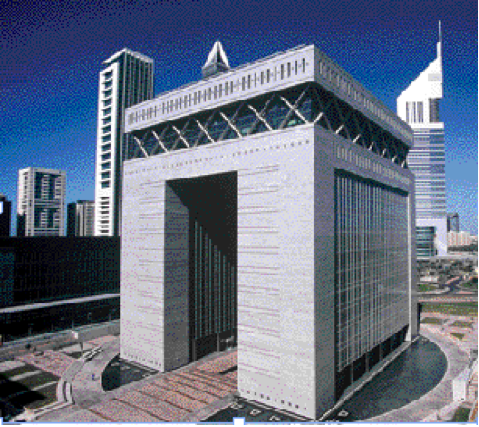
Solidere International is part of a more vibrant, robust andforward looking Middle East, a Middle East fuelled not byconflict and hate, but by a dynamic corporate vision and thehunger to compete at the highest level, to create newcorporate entities and deliver wealth, prestige, innovationand prosperity. Nowhere has this new spirit been moreevident, nowhere has demonstrated more the maturity and thediversity of the region or highlighted its remarkablecorporate development better than the Dubai InternationalFinance Center (DIFC), the Qatar Financial Center and thesoon-to-be built King Abdullah Financial District.

All are responding to a new wave of private equityinvestors, who are forging ahead in a regional bid todiversify what was a vulnerable, one sided, oil-basedregional economy. These hubs are responding to a newappetite. With wise public sector support and clearlydemarcated policy, they can complement one another and evenoffer opportunities for other similar hubs to spring upacross the GCC and across the Middle East.

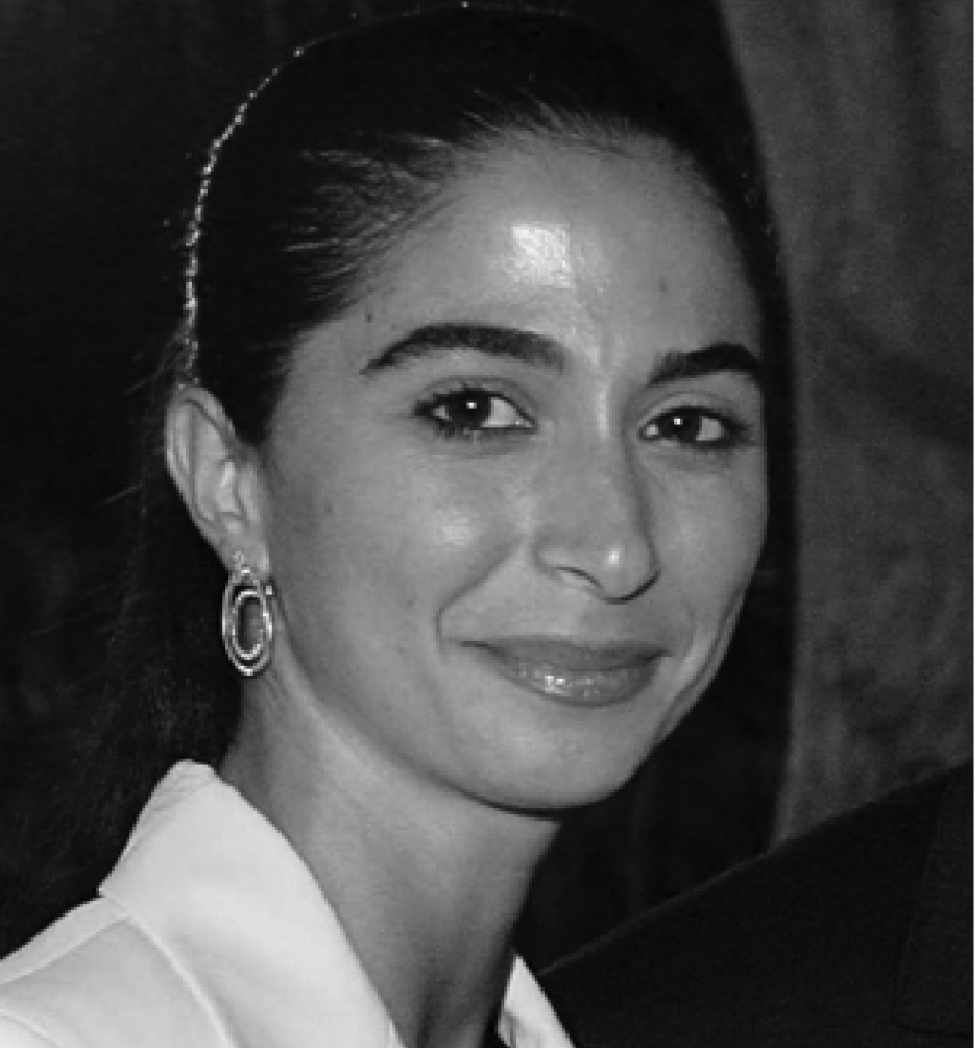
And finally, into this new zeitgeist comes a new andexciting player, the Arab woman executive. More and more, weencounter senior team members and team leaders, not tomention CEOs, CTOs and CFOs, who are Arab women and who areexcelling in their position. And let’s not forget those Arabwomen who have made it as entrepreneurs, who have shed theapron for the two-piece and are taking their companies tothe forefront of regional and even global business.

They have all cut their teeth in a male-dominated world, inthis most male-dominated culture. They have shown thehighest level of professionalism, impressive business savvyand the desire to succeed in an environment in which toooften the male ego has been the driving force. They havecome in and shown us that a level head, an efficientattitude, determination and an analytical mind are more thana match for the often testosterone-fuelled bluster of theirmale colleagues.

Not only do we accept them, respect them and learn fromthem, they also make us rich!

July 1, 2007 0 comments
0 FacebookTwitterPinterestEmail
Comment

Return to Gaza

by Ben Wedeman July 1, 2007
written by Ben Wedeman

I hadn’t been to Gaza since January. The kidnapping of theBBC’s Gaza correspondent Alan Johnston on March 12 had madethe strip a no-go zone, and during the vicious rounds offactional fighting between Hamas and Fatah it was virtuallyimpossible to report from Gaza in a meaningful way.

But Hamas’ stunning victory in the final round of fightingon June 15, had changed everything. Fatah had been roundlydefeated, and my sources in Gaza told me we could return.

At the border, the scene, once we passed through the finalgate remotely controlled by Israeli border security, wassurreal. Around a hundred people — mostly young men with asmattering of women and children — were huddled by the sidesof the concrete corridor. There was a strong stench ofsweat, urine, human excrement and rotting garbage. Thepeople were mostly members of the defeated Fatah securityservices and their families, desperate to get out of Gaza. Afew spoke to us, and let us film them, and told us Hamas wasrounding up Fatah members and executing them.

Eventually, we passed through the first checkpoint manned byHamas gunmen, and the atmosphere changed. There was order.And the deeper we went into Gaza City, I was struck by howcalm the place was. There weren’t as many cars and peopleabout as usual, but I could hear no gunfire, and some storeswere open.

We drove by the villa of Muhammad Dahlan, once Fatah’s Gazastrongman, now residing in Ramallah on the West Bank. Dahlanwas Hamas’ arch-enemy, a man who, when he headed PalestinianPreventative Security, had mercilessly cracked down on Hamasduring the 1990s, and was believed to be the point man inFatah’s attempt to scuttle the Hamas-led Palestiniangovernment.

The villa was a shambles. Doors and windows had beenstripped, wiring yanked out from the walls. Everything thatcould be carried away was long gone. Three teenage boys werebusy loading up a donkey cart with the marble flooring.Nothing better symbolized the utter humiliation of the menwho were once the ruthless masters of Gaza.

What happened here is a revolution. For the first time in modern Arab history, a militant, revolutionary, Islamic movement has successfully and decisively overthrown the established Arab order. It was made possible by a variety of factors, including direct and indirect assistance from Syria and Iran, and by a single-minded determination to crush Fatah.

But the victory wouldn’t have been possible if Fatah hadn’tdone such a miserable job of managing the affairs of Gaza inparticular, and the Palestinians in general, over the years.When the leadership of Fatah returned to Gaza and the WestBank after decades in exile following the Oslo Accords in1993, they seemed more determined to profit from the new erathan create a viable Palestinian entity.

Their rule was characterized by blatant corruption,mismanagement, heavy-handed oppression and nepotism — allthe ills that have plagued the modern Arab world. They’rethe same ills which the Islamic movement — whether it be theMuslim Brotherhood in Egypt, the Islamic Action Front inJordan or Hezbollah in Lebanon — has been able to capitalizeon. Hamas proved its political power and popularity when ittrounced Fatah in Palestinian parliamentary elections inJanuary 2006. And it has matched its political prowess withmilitary might by crushing Fatah last month, even thoughthey were outmanned and outgunned.

Most of Fatah’s leadership in Gaza had long ago fled to therelative safety of the West Bank. Not surprisingly, almostevery regime in the Arab world is terrified by what happenedin Gaza, and is scrambling to do whatever they can to shoreup the bruised and battered leadership of Mahmoud Abbas inthe West Bank. They see themselves in Mahmud Abbas, and knowthat the forces that bolster them could, if faced by adetermined, focused, well-organized, and well-armed Islamicopposition, crumble just as easily.

That’s the big picture. For many Gazans, the return of orderis a positive change, or at least a relief after more than ayear of sporadic and intensifying factional fighting.

“It’s better now,” Ahmed, an old friend, told me. “Thefighting has stopped. We feel much safer. The problem is noone knows what will happen next. We don’t know if Israelwill allow food in. We don’t know if Israel will continue toprovide petrol or electricity. Today things are fine. Buttomorrow? We just don’t know.”

And that seems to be the worry of most people in Gaza. Thefuture only gets foggier. It’s a tiny, overcrowded patch ofland that always seems to be going somewhere, but neverarriving. One period of uncertainty is followed by another,and another and another.

Ben Wedeman is CNN’s Jerusalem Correspondent

July 1, 2007 0 comments
0 FacebookTwitterPinterestEmail
Comment

The media really are American

by Fadi Chahine July 1, 2007
written by Fadi Chahine

Jeremy Tunstall hit the mark when he called his book,“The Media Are American.” Two of America’s oldest mediaoperators — the News Service and Hollywood — possess a remarkable strength on the world media scene. For decadesthe news-service wires have been and still are dominated by theAmericans and partly shared with Europe.

Although the American slice of the world media pie iswaning due to the growth of the Internet, nevertheless, massmedia is still in the realm of players in the United Statesand Europe. Even today with the internet and the World WideWeb, news content and information is produced anddisseminated by the mainstream Western media outlets, likeReuters, AFP, AP, BBC, CNN and Dow Jones.

Even countries with a longstanding abhorrence for the Westare clients of the Western media. If one is to visit anynews service on a web portal from the Middle East and NorthAfrica (MENA) region, one will find that more than 75% ofnews content on those sites is a product of the dominatingWestern media.

Even smaller and more local print publications the regionuse and rely for their sources of news and information onthese media houses, both in English and Arabic. Majorpublications, like Al-Khaleej, Gulf News, Jordan Times,Tehran Times and others, carry lead stories on their frontpages that are produced by the Western and European press.Even the Arabic press is not immune. Reuters and AFP storiesconstitute at least 50% of news content inside the pages ofBeirut’s dailies Al-Nahar and Al-Safir and the London-based Al-Hayat or theSaudi-owned Al-Sharq al-Awsat.

Although Western news agencies do provide real-time newsfrom the MENA region, their coverage tends to be limited inscope, focusing on conflict, natural disasters and majorevents like the peace process and presidential visits.Insightful and local reporting about the major issuesaffecting regional countries, their economies and businessprospects, is scarce. Analytical and contextual reporting israrer still.

What’s more disturbing is that the American mediastructure, while it sustains a wide array of expressions,has become more concentrated in its control by a very selectfew of large corporations and a certain ethnic make-up. It is inevitable that these corporations/ethnic groupswill have their own agenda to influence the reader, as isthe case in the United States and some European countries.

The point worth emphasizing here is the fact the flow ofinformation for the MENA region is overwhelmingly flowingfrom the West to the East. As such, it is essential forthose of us in the media business to reverse this processand give the opportunity to the people of the Middle East tovoice their opinions, report their news and write theiranalyses for consumption in the Western world in particularand globally in general.

It is sad to see the Middle East with all its riches,culture, talents, creativity, liquidity and intellect,relying on what is mostly American news, discussing anddebating issues that will effect and shape everything aboutthe region. And what’s even worse is the fact that thepeople of the region, whether knowingly or unknowingly, area very active participant in this unfortunate event.

Today, news coverage has to be looked at from a globalperspective but reaching to the local level. However, sincea distinct characteristic of American journalism isisolation it leads a Western journalist to determine goodguys and bad guys in the Middle East based on preconceivedideas and prejudices, or simply straight-out bias in orderto follow a preset agenda.

Most people learn about national and international eventsfrom the mass media — newspapers, radio, and especially,television. Therefore, the media can contribute to conflictescalation, either directly or indirectly. Media coverage ofthe conflict played a key role in turning US public opinionagainst the Arabs, Palestinians and Muslims and in shapingthe current American foreign policies.

The media can also contribute to conflict de-escalation.As such, media houses in the Middle East, publishers,editors and reporters have the duty and the responsibilityto do all they can to reverse the flow of information andmake it stream from the East to the West. We must provide anaccurate view of the conflict through both words andpictures, and we should serve as an example for honest andunbiased reporting by providing both sides of the story evenif it points out some of our own shortcomings.

What the Middle East, Arabs and Muslims need today is anhonest, clear and transparent effort to create additionalspace in the Western media for their perspectives and fornews coverage produced by professional journalists who livein the region and who have the proper background andexperience to provide contextual, honest and fair reportingfor consumption in the Western world. The Jews at-large havedone the same successfully. What’s stopping the Arabs fromaccomplishing this very important goal? We either have thewill and courage or we don’t. There cannot be a grey line inthis struggle. Half-hearted attempts are not enough and willnot work. Clear and credible conviction is required andthose who have this conviction have the responsibility toact and to act now!

Fadi Chahine, is the Managing Editor of Zawya Dow Jones Newswires in Beirut


July 1, 2007 0 comments
0 FacebookTwitterPinterestEmail
Comment

Dreaming in St. Michaels

by Nicholas Blanford July 1, 2007
written by Nicholas Blanford

ST MICHAELS, Maryland, USA: Lebanon’s woes over the past twoyears have been keeping the Washington-based think-tankindustry busy as the country finds itself in the unenviableposition of being a point of convergence for most of thepressing quandaries besetting the Middle East — theArab-Israeli conflict, Iraq, Iran, terrorism, al-Qaeda andfundamentally the axis of resistance versus Pax Americana.Being a locus of multiple crises is bad for Lebanon butoffers plenty of food for thought for the many think tanksthat cram K, L, and M streets in the US capital.

Earlier in June, I was invited by a leading think tank toparticipate in a round table forum in which some 15 expertswere asked to brainstorm an ideal vision of Lebanon 10 yearsdown the road, identify the obstacles preventing that visionfrom being realized and offering suggestions to overcomethem.

The future aspiration for Lebanon derived by theparticipants was of a stable, prosperous, liberal democracywith a freewheeling economy and social welfare safety net.Whether all Lebanese would aspire to such a future forLebanon is questionable, but it certainly suited thecomposition of the group sitting around the table, mainlyWesterners including three Westernized Lebanese.

Still, the participants were in agreement that such autopian vision for Lebanon was most unlikely given thechallenges facing Lebanon both on both the short-term andlong-term.

Perhaps the chief obstacle raised by the roundtable was howto invigorate a sense of nationhood where Lebaneseprioritize loyalty to the state over loyalty to the sect orzaim. There is a will among some Lebanese, mainly theeducated young, to crack the stranglehold on Lebanesepolitics maintained by the neo-feudalistic zuama, be theytraditional landlords like the Jumblatt and Gemayel familiesor the post-civil war generation such as Nabih Berri and theHariris.

The independence uprising in spring 2005 generated for afleeting moment a hope among young street activists thatSyria’s disengagement from Lebanon would catalyze a generalreformation of the political system, giving rise to a newgeneration of politicians beholden to the state rather thanlocal sectarian interests. Of course, those dreams weredashed the moment the last Syrian soldier departed Lebanonthrough the Masnaa crossing and the leaders of the rivalMarch 14 and March 8 factions began cutting deals with eachother to ensure the re-election of themselves and theirlists in the parliamentary polls of May and June 2005.

Then there were the issues of Hizbullah and how to persuadethe Shiite resistance movement to relinquish its arms andserve first and foremost Lebanese interests rather thanfollowing a regional agenda. How to tackle and eliminatecorruption, Lebanon’s relations with the Arab world, Syriain particular, electoral and constitutional reform — allthese were discussed and debated.

For those of us who traveled from Beirut to attend themeeting, the tensions in Lebanon came with us. On touchingdown at Dulles airport in Washington, we learned of WalidEido’s assassination. We were on our way back home when newscame through that rockets had been fired from south Lebanoninto Israel, the first such incident since the end of lastsummer’s war between Hizbullah and Israel.

Yet the conference on the violence wracking Lebanon was heldSt Michaels, a resort for the east coast elite, besideChesapeake Bay, a two hour drive from Washington.

Lebanon felt a long way away when walking down the highstreet of St Michaels. The stars and stripes flags flutteredproudly from the front yards of simple houses of whiteclapboard and shingled roofs. Elderly married coupleswearing baseball caps, baggy shorts and polo shirts wandereddown the street, slurping on ice creams while gazing throughthe windows of a seeming endless array of shops with tweedynames such as Holly’s Haven and Three Crazy Ladies that soldpricey knick knacks. Huge SUVs that would humble the mostegotistical of Lebanese Hummer drivers ambled along thepristine asphalt roads at painfully slow — but legal —speeds.

Barely a car crawled through St Michaels without a yellowribbon motif stuck to the trunk carrying the demand “Supportour Troops.” Every now and then, a sign along the highwayrecorded that the next stretch was dedicated to the memoryof individual soldiers who had died in Iraq or Afghanistan.In one shop, a middle-aged man with steel-gray 1970s haircutand bizarre orange mirrored sunglasses extolled the virtuesof a new kind of body armor called Dragon Skin, apparentlypopular with troops serving in Iraq. “If I was deploying inBayroot, I’d accept no substitute,” he drawled.

After the sterility of St Michaels, it was somehowrefreshing to return to Beirut. As for the think tanksession’s future dream for Lebanon, don’t hold your breath.


Nicholas Blanford is a Beirut-based journalist and author of“Killing Mr Lebanon: The Assassination of Rafik Hariri and its Impact on the Middle East”

July 1, 2007 0 comments
0 FacebookTwitterPinterestEmail
Comment

In Name of the Disappeared

by Peter Speetjens July 1, 2007
written by Peter Speetjens

With an eye on the fate of Alan Johnston, the BBCcorrespondent who disappeared in Gaza on March 12, 2007, CNNrecently interviewed Olaf Wiig. In August 2006, the Fox News journalist had been kidnapped at gunpoint by an obscure Islamist group that demanded the release of all Muslimprisoners in the United States.

Wiig related that he had not been mistreated and that hisbiggest torture was facing the uncertainty, the not knowingwhere he was, why he was there, and for how long he had tostay there before being released, if he was to be releasedat all. Wiig was eventually set free after two weeks incaptivity.

Uncertainty was also the word that constantly popped up ina series of interviews I did with Lebanese mothers whosesons and husbands had disappeared during or after the CivilWar. All of them said it was the uncertainty over the fateof their loved ones that tormented them the most. In fact,most of them said they preferred to know their son was dead,than to not know at all. At least, so they argued, theywould be able to turn the page and move on with their lives.

No doubt, the Argentinean Mothers of the Plaza de Mayo,whose children disappeared under the reign of the militaryjunta, would answer in similar fashion. And so would thefamilies of the thousands that disappeared in countries asvaried as Chile, Algeria and the former Soviet Union.

Although there are differences, Wiig and Johnston, and thechildren of Lebanon and Argentina, all fell victim to whatis known in the jargon as “forced disappearance,” whichapplies to an organization or state that kidnaps, illegallydetains and often tortures a person for political reasons.The victim is imprisoned without trial at a secret location,sometimes for years on end. At a certain point he or she maysuddenly be released, yet it will mostly end in murder,after which the body will be dumped in an unknown location.

For the families involved, the end result is the same, asin both cases the victim vanishes from the face of theearth, while the suspected perpetrators deny any involvementand make sure all physical evidence is destroyed. Seeing theexamples cited above, it is frightening to realize that theWest, lead by the self-proclaimed freedom champions in Washington, has embarked ona path not so entirely different.

On June 8, Swiss investigator Dick Marty submitted hissecond report to the Council of Europe which points at agrowing body of evidence that, ever since 9/11, the CIA haskidnapped hundreds of presumed terror suspects around theworld and flown them to secret prisons in countries such asPoland, Rumania, Morocco, Egypt and Afghanistan. Andapparently it did so with tacit support of its Europeanallies.

Thus, Maher Arar, a Canadian of Syrian descent, wasarrested at Kennedy Airport in New York City and deported toSyria where he stayed 10 months in jail. Khaled el-Masri, a German citizen of Lebanese descent, was arrested inMacedonia and flown to Afghanistan where he was held forfive months. In 2003, Egyptian Abu Omar was snatched by ateam of CIA agents in Milan and flown to Egypt where heremained in jail until February 2007. All three claim tohave been tortured.

These cases are arguably but the tip of the metaphoricaliceberg. Marty’s report was issued one day after six humanrights organizations had published a list with 39 names ofpeople, who at some point were in US custody, yet today areunaccounted for. In other words, they disappeared. Despiterepeated requests by organizations such as Human RightsWatch and Amnesty International, the US government refusesto comment or provide information about their whereabouts.

Lack of transparency and disrespect for basic human rightsseems to be the norm for the Bush administration inconducting its War on Terror. So, most Guantanomo Bay “enemycombatants” have still no clue for how long they will remainimprisoned, as they have never even been charged with anywrongdoings. In fact, it was only in 2006 that a courtruling forced the US government to release their names.

Much less reported in the mainstream media is the factthat in the aftermath of 9/11, thousands of people werearrested in the United States on immigration law violations.Most were Muslims and had overstayed their visa. Of coursethe administration had a legal ground to arrest thesepeople, yet most of them were jailed for months on end andeventually deported without having seen a lawyer or judge.

Hence, Shakir Baloch, a Canadian of Pakistani descent,stayed seven months in a New York jail and was only releasedafter his wife had managed to somehow track him down andfind an attorney.

On August 30, the annual International Day of theDisappeared takes place to draw attention to all thosepeople around the world detained in places unknown to theirrelatives or legal representatives. Let us hope that by thenAlan Johnston has been set free and that the United States,as the self-proclaimed beacon of freedom, recalls thatuniversal human rights are exactly that: universal.

Peter Speetjens is a Dutch writer and freelance consultant

July 1, 2007 0 comments
0 FacebookTwitterPinterestEmail
By Invitation

Role of governments in energizing the future of ICT

by Karim Sabbagh & Eddy Skaff July 1, 2007
written by Karim Sabbagh & Eddy Skaff

Most governments in the Middle East are increasingly supporting the idea that information and communication technologies (ICT) can be made available to all citizens to truly improve their lives. In the not-too-distant future, ICT will positively transform how we interact as consumers with services such as banking, shopping, healthcare,transportation and many other facets of our everyday lives.Leading ICT regions such as Western Europe, North America,and Southeast Asia are already experiencing this paradigm.

The Middle East region, however, is still far from realizingthe full benefits of ICT and the path to true advancementwill continue to be tortuous unless the topic receives fullattention. A number of challenges must be overcome to getICT development on a sustainable path.

“The importance in giving the populations of the Middle Eastaccess to ICT cannot be underestimated,” said Eddy Skaff,Senior Associate at Booz Allen Hamilton (BAH). “In order tobe competitive on the world stage, Middle East markets willhave to prevail over some current obstacles they face, whichthreaten to hinder the successful implementation of anenvironment that supports and sustains ICT and its benefits.Governments in this region can play a key role in makingthese benefits a reality to consumers.”

Singapore is the world leader

The latest Networked Readiness Index, published by theWorld Economic Forum in collaboration with INSEAD,highlights the pivotal role governments play in driving thenational ICT agenda. In this ranking, one countryoutperforms the rest of the world in more than one pillar:Singapore. This underscores the “Singaporean government’sclear vision for ICT and the subsequent leading roleundertaken by the latter in promoting ICT diffusion andpenetration.”

The report shows the Middle East region remaining quitestable in network readiness and highlights several successstories with government-lead initiatives in the UAE (29thplace), Qatar (36th place) and Bahrain (50th place).

The single biggest hurdle is the lack of a holistic ICTdevelopment agenda at a national level. The definition of adevelopment plan at a market level is mostly non-existent in the region. This position does not undermine thesuccessful formulation and early implementations of sectorspecific ICT plans, such as e-government.

Saudi Arabia is a typical example where several governmentagencies are involved in different national IT initiativesand programs. The Communications and Information TechnologyCommission is championing Saudi’s e-government program aswell as several other IT sector initiatives such as theInternet Restructuring Project and Computer EmergencyResponse Team to name a few. The Saudi Arabian GeneralInvestment Authority has become a key player by launchingthe Knowledge Economic City in Madinah, establishing theIntel Capital Fund and signing an agreement with CiscoSystems to invest SR1 billion in the IT sector. Otheragencies have also contributed to the national ICTdevelopment.

Similarly, the UAE boasts several government-championedICT development projects. Dubai’s e-government program,launched in 2000, has been recognized as a success story bypractitioners. Dubai Internet City, Knowledge Village, andDubai Silicon Oasis are aiming to create and develop ICTclusters. The Abu Dhabi Systems and Information Committeelaunched earlier this year the Abu Dhabi Government’s portalalong with a very ambitious e-government project. TheTelecommunications Regulatory Authority, for its part,established an ICT Development Fund.

Such examples underscore the prevailing state offragmentation region-wide, albeit with a drive for increasedcoordination. The accumulation of these siloed initiativesmay be creating an inefficient allocation of resources andsubstantive delays in delivering meaningful services tousers.

How governments can promote ICT

Holistic ICT development agendas at the national levelshould be driven by governments through a complete SectorManagement Lifecycle. (1) Governments should begin bysetting national policies for the growth and development ofboth the telecommunications and IT sectors. (2) Thesepolicies would be translated into long-term master plansthat identify development priorities and programs. (3)Governments should also ensure the availability of adequateregulatory and legal environments to foster a faircompetitive market, regulate distribution of scarceresources, and protect consumers and businesses through aset of e-legislations. (4) Finally, government-ledinitiatives will create the right level of readiness amongthe country’s economic actors.

Telecom regulations are typically entrusted to astructurally and financially independent authority, whilesector development initiatives are usually overseen by anempowered cross-departmental program office reporting to thesenior program champion. However, some roles could also becombined within a single entity to accelerate theimplementation of the national ICT agenda.

“Governments implementing a highly structured program thatincorporates these approaches will more than likely seepositive results,” said Karim Sabbagh, BAH’s vice president.“ICT that is widely available will give Middle Easteconomies the very element they need to maintaincompetitiveness in the near- and long-term future withtechnologically advanced economies throughout the world.”

July 1, 2007 0 comments
0 FacebookTwitterPinterestEmail
Financial Indicators

Global economic data

by Executive Staff June 30, 2007
written by Executive Staff

Journalists killed on duty 1992-2007

The Committee to Protect Journalists applies strict journalistic standards when investigating a death. It considers a case “confirmed” only if it is reasonably certain that a journalist was killed in direct reprisal for his or her work; in crossfire; or while carrying out a dangerous assignment. It does not include journalists who are killed in accidents – such as car or plane crashes – unless the crash was caused by hostile action (for example, if a plane were shot down or a car crashed trying to avoid gunfire).

It includes only confirmed cases in our database and in the statistical analysis above. If the motives are unclear, but it is possible that a journalist was killed because of his or her work, the Committee to Protect Journalists classifies the case as “unconfirmed” and continues to investigate to determine the motive for the murder. 

*Adds up to more than 100 percent because more than one category applies in some cases.

**CPJ considers justice fully served when both the perpetrators and masterminds are convicted. If perpetrators are convicted, but the intellectual authors are not, CPJ classifies the case as partial justice.

Older workers

Persons aged 55-64 in employment as % of the population of same age group

OECD countries must get more people into employment if they are to boost living standards and maintain welfare services. That is the message from the OECD Jobs Strategy 2006. Some population groups merit particular policy attention. For instance, only 65% of women of working age are employed in the OECD, versus 87% of prime-age men. Meanwhile, premature retirement and barriers to getting a job affect older people that wish to work. In several countries, including Italy, less than a third of 55 to 64 year olds were in employment in 2005, compared with over 60% in the US and Japan, and nearly 85% in Iceland. The Jobs Strategy sees four pillars to effective employment policymaking:

A: Setting appropriate macroeconomic policy

B: Removing impediments to labor-market participation and job-search

C: Tackling obstacles to labor demand

D: Facilitating the development of labor-force skills and competencies

Healthcare spending

Public and private spending, per capital

Healthcare spending has grown faster than GDP in every OECD country except Finland between 1990 and 2004. It accounted for 7% of GDP on average across OECD countries in 1990, but reached 8.9% in 2004. Spending is projected to increase as a share of GDP due to costly new medical technologies and population ageing. The public share of health spending – 73% on average in 2004 – has fallen in some countries, but has risen in others. This includes the US – 40% to 45% in 1990-2004 – where, despite a dominant private sector, US public spending per capita in health remains higher than in most other OECD countries.

Some workers will inevitably be in jobs for which they are overqualified, but the rate of overqualification is higher among foreign-born populations. In Italy and Greece, immigrant overqualification is particularly high compared with native populations. Immigrant overqualification is also relatively high in Norway and Sweden, though this reflects refugees rather than economic migrants. While the native/ foreign gap in overqualification rates is narrower in the UK and US, these countries have respectively the fifth and seventh highest overqualification rates for native-born workers of the 21 countries in

Youth and traffic fatalities

OECD countries

Proportion of youth in the population: 10%

Proportion of youth in driver fatalities: 27%

Traffic crashes are the single greatest killer of 15 to 24 year-olds in OECD countries. These drivers pose a greater risk than other drivers to themselves, their passengers and other road users. The problem also imposes great social and economic costs on individuals, families and societies. In the US alone, government estimates put crashes involving 15 to 20 year-old drivers at $40.8 billion in 2002. Some 8,500 young drivers of passenger vehicles were killed in OECD countries in 2004. Death rates for 18 to 24 year-old drivers are more than double those of older drivers. Moreover, death rates for young men are consistently higher than those of young women, often by a factor of three. In other words, even where overall road safety is improving, young driver risk is not.

June 30, 2007 0 comments
0 FacebookTwitterPinterestEmail
Financial Indicators

Regional equity markets

by Executive Staff June 30, 2007
written by Executive Staff

Beirut SE: Blom  (1 month)

Current Year High: 1,550.85       Current Year Low: 1,168.36

 What some analysts camouflaged as “the events in North Lebanon” in the last third of May wiped out modest gains, which the BLOM index had made in the first part of the month. But owing to its resilience and apparent long breath of many investors, the index closed at 1,223.01 points on May 24, within half a point of its close on April 30. The mid-month top mark was 1,248.81 points on May 17. Solidere accounted for the bulk of trading volume in the nervous fourth week of the month but held its ground, all things considered. Main banking stocks Audi and BLOM also fared respectably, with Audi trading above $63 and BLOM at $70 and higher throughout the month. Byblos Bank confirmed that it bought 6.6% of Jordan Ahli Bank.

Amman SE  (1 month)

Current Year High: 6,920.89       Current Year Low: 5,267.27

The Amman Stock Exchange trailed its peers with a drop from 5,992.10 points on May 1 to 5,753.89 points on May 27, a 4% weakening. Although government officials and several companies used the World Economic Forum to announce investment initiatives, the ASE was listless because of the troubles in Palestine and Lebanon. Among the announced deals, Jordan Phosphate Mines teamed up with Bahrain’s Venture Capital Bank for a new $65 million chemicals complex. Kuwait Finance House-Bahrain will establish a new investment bank in Jordan with $50 million capital while Bank of Jordan got its license for Syria. According to an ASE publication, first-quarter earnings for 95 listed companies were up 50.4% from a year earlier and the banking sector reaped 65% of the total earnings.

Abu Dhabi SM  (1 month)

Current Year High: 3,833.94       Current Year Low: 2,839.16

The Abu Dhabi Securities Market shot up almost 600 points, or some 20%, between May 1 and May 27. This rally has lasted for two months and made the ADSM the top gainer among GCC bourses for the year to date. On May 27, the ADSM jumped 4.4% and closed at 3634.93 points, an eight-month high. Energy, real estate, and banking stocks had the most pizzazz with Taqa and Aabar Petroleum among the stocks in demand. The two energy stocks went up 33% and 37%, respectively, in May but were still outdone by real estate stocks Aldar and Sorouh, which climbed 45% and 53%. Fujairah National Insurance made its debut. At the end of the month, ADSM and the Bahrain Stock Exchange signed a memorandum of understanding.  

Dubai FM  (1 month)

Current Year High: 4,985.39       Current Year Low: 3,658.13

The Dubai Financial Market’s general index rose from 3,670.47 points on May 1 to 4,480.80 points on May 27. The gain of more than 20% mirrored that of the ADSM this month, but due to the DFM, ended the reporting period only 6.9% up for the year to date. Dubai saw the UAE’s second largest initial public offering for 2007, from real estate firm Deyaar. Retail investors pushed demand up to over $12 billion, or 14 times the $880 million share offering. Good performers on the DFM included Dubai Islamic Bank (up 31%), and the DFM stock (up 20%) in May. Emaar Properties  closed at AED12.35 on May 27. The UAE market regulator noted approvingly that for the first time, all listed companies met their results reporting deadlines for the first quarter.

Kuwait SE  (1 month)

Current Year High: 11,403.40     Current Year Low: 9,164.30

The Kuwait Stock Exchange ranked second among GCC bourses in 2007 index performance at the end of May, with a 13.27% increase for the year to date. Achieving its climb more steadily than the meteoric Abu Dhabi exchange, the KSE index moved from 10,776.40 points on May 1 to 11.403.40 points on May 27 – its highest stand since end of February 2006. Shares of MTC were in the limelight with rumors of strategic share buying by regional investors. The company formally denied that there was any buying or selling of strategic stakes in MTC or its African subsidiary, Celtel. Kuwait Finance House saw good demand and its shares went up 30% in May. In macro news, Kuwait stirred up the GCC by announcing its switch from a dollar peg to a basket of currencies, which was read as nay to the intended GCC currency union.  

Saudi Arabia SE  (1 month)

Current Year High: 13,509.09     Current Year Low: 6,916.85

The Saudi Stock Exchange remained volatile compared to its peers. From 7,574.48 points on May 1, the TASI moved lower in the first week and closed at 7,667.92 points on May 27. Sabic made headlines by purchasing the plastics business of US manufacturer GE for $11.6 billion. Saudi Kayan Petrochemicals, a Sabic affiliate, was the biggest IPO catch last month with a SR6.75 billion offering that was subscribed almost five times over. A bundle of five insurance firms offered between 31% and 40% of their capital and met good demand. The cement sector was the strongest gainer in the third week of May, after producers hiked their prices. Although the government mandated revocation of the price increases after a week, the companies’ outlook remains good. Agriculture was the most volatile sector in May.

Muscat SM  (1 month)

Current Year High: 5,956.46       Current Year Low: 4,657.16

The Muscat Securities Market showed further bullish sentiments in May and climbed from 5,807.53 points on May 1 to 6,092.65 points on May 27, giving the MSM a 6.7% gain since the start of 2007. BankMuscat continued to push for negotiations over an acquisition offer it made for Alliance Housing Bank (AHB), a bank with market capitalization of $205 million. The AHB board rejected the offer by BankMuscat, Oman’s largest bank with $2.95 billion market cap, citing other regional suitors. BankMuscat offered a 34% premium on the share price of AHB as of early May and the stock has since gone up by about one third. Oman United Insurance Company and privately owned Al Ahlia Insurance, however, called off a merger plan.

Bahrain SE  (1 month)

Current Year High: 2,298.67       Current Year Low: 1,996.68

The Bahrain Stock Exchange was the fourth GCC bourse with a steep ascent during the merry month of May. In a 9% gain, its index rose from 2106.70 points on April 30 to 2,298.67 points on May 27 – making good for losses in the first four months of the year and ending the month on a high note. The kingdom had its share in the month’s primary market glee through the successful initial public offering of Seef Properties, which met strong subscription demand from institutional investors. After announcing management changes and expansion plans, shares in Batelco moved up in May but the Bahraini operator denied rumors that it was talking with an international sector firm over selling it a 20% stake.

Doha SM: Qatar  (1 month)

Current Year High: 8,276.65       Current Year Low: 5,825.80

Continuing on its upward path from April, the Doha Securities Market took May in stride with an 18% gain from 6571.13 points at the start of the month to 7,749.37 points on May 27. With the concentration of gains in the second half of the month, the market’s main movers included Barwa Real Estate, Nakilat, Industries Qatar, and banking shares, including Doha, Rayyan, and International Islamic banks which all advanced by margins of more than 20%. Some investors cashed in on gains with profit taking at the end of the month.  Barwa Real Estate made news with a $1.1 billion Egyptian land purchase for a new super-sized residential project in New Cairo. Qatar Islamic Bank said it will set up a sharia-compliant subsidiary in London.

Tunis SE  (1 month)

Current Year High: 2,712.33       Current Year Low: 1,861.15

 After a third consecutive month of moving sideways, the Tunindex closed at 2,568.90 points on May 25, down 30 points from its close on April 30. This made the small Tunisian bourse the month’s most unspectacular performer among the three North African exchanges but kept it up by 9.68% when compared with the start of the year. Market cap leader SFBT saw its stock drop by 4% to TD79.98, while Banque de Tunisie lost 3% and Tunisair share prices weakened by 7% between May 1 and May 25.

Casablanca SE All Shares  (1 month)

Current Year High: 12,723.23     Current Year Low: 6,563.27

The Casablanca All Shares Index started the month with a week of gains to a pinnacle of 12,723.23 points on May 8 but then selling set in and the index shed 14% in a week’s trading that saw it briefly dip below 11,000 points on May 15. To the end of the month, the index picked up another 500 points and closed at 11,464.60 on May 25. Despite its downward fluctuation, the Moroccan bourse is still the best performer, index-wise, in North Africa for the year to date, with a gain of 19.4% from the start of 2007. Maroc Telecom dropped 10% and leading bank Attijariwafa Bank shed 18% of its market value in the middle of the month in the downtrend that showed across several sectors before the bourse’s slight recovery in the fourth week of May. Local brokers described the market’s dip as expectable profit taking. 

Cairo SE: Hermes  (1 month)

Current Year High: 68,274.93     Current Year Low: 41,965.37

The Hermes index for the Cairo & Alexandria Exchanges was 9.39% up for the year on May 27. Entering the month at 65,582.80 points, the index climbed to 68,274.93 points on May 27. Analysts were less ebullient about CASE than about the GCC markets last month but said that telecom and banking shares did reasonably well, the latter with expectations that several regional banks will compete to buy a significant stake in Al Watany Bank. Piraeus Bank Egypt launched a $53 million rights issue. Sodic, the real estate investment company that signed an urban development contract for Sodic land with Lebanon’s Solidere, had to acknowledge that merger talks with another company failed. Sodic’s stock dropped 13% in May.

June 30, 2007 0 comments
0 FacebookTwitterPinterestEmail
  • 1
  • …
  • 573
  • 574
  • 575
  • 576
  • 577
  • …
  • 686

Latest Cover

About us

Since its first edition emerged on the newsstands in 1999, Executive Magazine has been dedicated to providing its readers with the most up-to-date local and regional business news. Executive is a monthly business magazine that offers readers in-depth analyses on the Lebanese world of commerce, covering all the major sectors – from banking, finance, and insurance to technology, tourism, hospitality, media, and retail.

  • Donate
  • Our Purpose
  • Contact Us

Sign up for our newsletter

    • Facebook
    • Twitter
    • Instagram
    • Linkedin
    • Youtube
    Executive Magazine
    • ISSUES
      • Current Issue
      • Past issues
    • BUSINESS
    • ECONOMICS & POLICY
    • OPINION
    • SPECIAL REPORTS
    • EXECUTIVE TALKS
    • MOVEMENTS
      • Change the image
      • Cannes lions
      • Transparency & accountability
      • ECONOMIC ROADMAP
      • Say No to Corruption
      • The Lebanon media development initiative
      • LPSN Policy Asks
      • Advocating the preservation of deposits
    • JOIN US
      • Join our movement
      • Attend our events
      • Receive updates
      • Connect with us
    • DONATE