• Donate
  • Our Purpose
  • Contact Us
Executive Magazine
  • ISSUES
    • Current Issue
    • Past issues
  • BUSINESS
  • ECONOMICS & POLICY
  • OPINION
  • SPECIAL REPORTS
  • EXECUTIVE TALKS
  • MOVEMENTS
    • Change the image
    • Cannes lions
    • Transparency & accountability
    • ECONOMIC ROADMAP
    • Say No to Corruption
    • The Lebanon media development initiative
    • LPSN Policy Asks
    • Advocating the preservation of deposits
  • JOIN US
    • Join our movement
    • Attend our events
    • Receive updates
    • Connect with us
  • DONATE
Comment

Ruffing it, Bahrain style

by Paul Cochrane May 1, 2007
written by Paul Cochrane

A recent trip to Bahrain, what should have been a fairlyrun-of-the-mill interview with a CEO to discuss the launchof the Middle East’s first sports car plant turned intosomething rather different from the usual chat over coffeein a hotel lobby.

I was informed just an hour before the interview by theassistant to Alois Ruf, the owner of Germany’s highperformance sports car company Ruf, that I was to meet himout at the Bahrain International Circuit (BIC), home of theFormula 1 racetrack and the location for Ruf’s $20 millionfactory.

When I arrived at the VIP section of the Formula 1 track,my eardrums were subjected to the magnificent roar of adozen Lamborghinis straining at the leash. I hadunexpectedly gate-crashed the Speed Trip, one of the BIC’s200 annual events, at which owners of super cars and Ducatimotorbikes use their machines for what they were meant for:pushing the pedal to the metal and not worrying about overlyzealous traffic cops.

Lined up in the pit stop off the racetrack were the Ruf RKCoupe and Ruf Rt 12, which both looked pretty much likeunmarked Porsche 911s. This was not far from the truth, withthe chassis modeled on the Porsche, but everything else,from the electrics to the engine, completely refitted andseriously supercharged.

Talking with the head engineer while waiting for Mr Ruf toshow up I asked if either of the Ruf cars could take on oneof the Lamborghinis going hell for leather around the track.“The silver one no, the blue (RK Coupe), sure.” With the RufRK Coupe topping 220 mph and the Ruf Rt 12 reaching a mere189 mph, its no wonder Ruf is highly sought after cars bycar enthusiasts in the know.

In business since 1939, Ruf is not well known outside of caraficionado circles but those who can afford them buy them.

Ruf has had a 20-year relationship with the Bahraini royalfamily, inviting sheikhs over for test drives and servicingmodels at the Pfaffenhausen base in Germany. Indeed, LotharDrescher Ruf-Bahrain’s General Manager used to supervise theservicing of the royal family’s sizeable car pool.

With the Gulf awash in petrodollars, Bahrain close to SaudiArabia, a tax-free haven and with the region’s only F1track, Bahrain was a natural choice for Ruf’s first factoryoutside of Germany.

With plans to manufacture 20 cars a year by 2008, Ruf willsoon be pumping out 100 “boutique super cars” a year by 2012for export worldwide.

Ten days later, I was back in Bahrain for the opening of thefactory and in the short time I had been away the Ruffactory had been transformed, lights flooding out of thewindows into the desert, and pools of water shimmeringaround the entrance.

Following the arrival of Crown Prince Sheikh Salman binHamad Al Khalifa and his entourage of assorted sheikhsdecked out in black abayas, a surprise was in store for the200 guests.

Heralded by the revving of a powerful engine coming frombehind the seated audience a sleek, silver matt sports cardrove up to the stage and out swung Alois Ruf from hiscompany’s latest creation—the $450,000, 375 km/h Ruf CTR3.

If rubbing shoulders with royalty and not having a sizeableenough bank account to afford a car like the CTR3 didn’tinform me of my lowly financial position, nothing can putyou further in your place than not attending the Formula 1,and certainly if one is not watching the grand prix from theBIC’s VIP viewing tower.

“Are you coming to the Formula 1?” asked a rather lovelyBrazilian lady. “It’s so much fun up in the VIP box,mingling with the sheikhs and bumping into walls and PrinceAndrew saying, ‘Ah, here are the Brazilians!’ No? Shame.”

Shame indeed, so I headed for the parking lot chomping on afree cigar to locate my rather staid mode of transport totake me back to Manama.

PAUL COCHRANE is a regional business writer based in Beirut 


May 1, 2007 0 comments
0 FacebookTwitterPinterestEmail
Consumer Society

Plastic makes perfect: Beirut banks boost

by Executive Staff May 1, 2007
written by Executive Staff

Money talks,” thus reads the clever ad for the Alfa Blom MasterCard. And money talks all right, as this particular card co-branded with the mobile phone operator offers the card holder 60 minutes of free talk time upon issuing the card and an additional 5 minutes for every $100 spent. The Blom initiative is but the latest addition to Lebanon’s ever growing number of credit cards and incentive schemes.

As general conditions and interest rates among credit cards rarely vary, banks increasingly rely on loyalty programs and consumer incentives to reward existing card holders, and attract new clients. Air miles, chocolate boxes, wine bottles, coffee pots, hair dryers, watches and cash paybacks: you name it, banks offer it … As long as you just use that card.

For nearly 5 years, Blom has offered a more regular loyalty program: as the card holder uses his card to purchase goods, he collects points that can be redeemed for gifts, varying from kids toys to airline tickets. In addition, when purchasing at a selected group of retailers, he automatically takes part in a kind of lottery and he may become the lucky winner of a lucrative gift. In Europe and the US, using the credit card to pay for the smallest items is increasingly becoming the norm. Why not? Somewhere down the line there will be an air ticket.

According to Dr. Gladys Younes, head of BLOM’s Communication and Investor Relations Department, the bank has long resisted entering the co-branded market, as it preferred to work with a group of retailers, rather than a single partner. “The telecommunication industry however, is a consumer magnet in both Lebanon and in the world,” he said.“We have always viewed a co-branded card with a major telecom player as a partnership that can add major value. A brand like Alfa embraces a customer database that is at least as big as ours.”

One of the lowest debts in the world inLebanon

The Alfa BLOM MasterCard is the first of its kind in theMiddle East and seems a perfect deal for all parties involved, as it promotes purchasing and using the BLOMMasterCard, as well as subscribing to the Alfa classic line, instead of buying units.

Currently, there are an estimated 100,000 cardholders inLebanon, with an average credit debt of some $30 per capita, which is one of the lowest ratios in the world. As a comparison, in Saudi Arabia the average debt per credit cardholder is $161, in Britain $5,188 and in the United States$9,312. In other words, the Lebanese credit market still has an enormous growth potential and it should not come as a surprise therefore that banks continue to launch new offers and incentives.

According to Philippe Hajj, Head of Fransa bank’s RetailBanking Division, most credit cards offered by Lebanese banks are quite similar. “What differentiates them is mainly the cost, conditions, and benefit packages related to them,”he said. “That is the reason banks are reviewing their pricing, while adding benefits to their cards.”

Fransa bank recently launched its “Cash-Back” loyalty scheme, which allows card holders to redeem the points collected by credit card purchases by cash money, which will be credited directly to their cards upon their request. For every dollar spent, one gets a point, which in its turn is good for $3 cents. Hajj emphasized however, that point clients may still prefer to redeem their points at MEA, Aishti or MTC touch.

Standard Chartered Bank and Credit Libanais both offer elaborate gift schemes. Standard Chartered offers 100 points for every $100 spent. With 5,000 points, the card holder can start redeeming from a range of household items and other gifts. Credit Libanais offers 10 points for every $100spent. Rewards range from wine to travel insurance and even a home theater.

For its part, Byblos Bank has devsied the Cool Card. No doubt, aimed at introducing younger customers to the benefits of credit cards, it offers retail discounts and enters cardholders into prize draws.

Incentive schemes well-received

According to Alain Hakim, assistant general manager ofCredit Libanais business and marketing development division, the bank’s incentive scheme has been well received, although“cardholders remain mostly oriented towards cash withdrawal rather than purchase settlement.”

Although a potential client would first look at a card’s interest rate and charges, he may be tempted to opt for a credit card that promises him a reward, said Hakim. “A credit card in need can be a friend indeed,” he said. “If a cardholder can be disciplined enough to use his credit card for his day-to-day purchases, while keeping money aside to pay his bills at the end of the month, then it can be a win-win situation.The savvy consumer can earn interest on his savings for that month, while receiving cash back or free-of-charge incentives from the card provider.”

In addition to an elaborate gift scheme, Audi Saradar Bank recently introduced an air mileage program. For every $100spent by Visa or MasterCard, the card holder gets 10 points.With 500 point he or she is entitled to a chocolate box, with 50,000 points a free air ticket to Amman or Cairo.

“Many institutions have implemented loyalty programs, yet few have fully understood the nuances and challenges involved,” said Niovi Daoud of Audi Saradar’s CommunicationsDepartment. “Many believe a good loyalty program can virtually run by itself, that once you’ve set it in motion, you can sit back and enjoy the ongoing success. In reality, we’ve found that programs should be continually modified in order to fit clients’ lifestyles.” To do so Audi Bank offers dozens of different cards and incentive schemes.

Blom Bank’s Younes could not agree more with his Audi Bank counterpart. “The US market, the world’s most developed in terms of credit cards, is composed of 50% co-branded cards,”he said. “The Lebanese market has at least 15 co-branded programs. Are these 15 institutions in Lebanon capable of generating enough volume? For a co-branded program to be profitable, at least 3,000 cards should be generated and sold. Even more, should be generated if the co-branded card is to have generous and often expensive features. That is why we find that many banks issuing co-branded cards are doing so for prestige purposes rather than business reasons.”

HSBC offers its Premier Credit Card holders 3 points for every dollar spent, which can then be redeemed to acquire electronics or luxury goods. However, to obtain a PremierCard one is required to have $75,000 in savings or have a combined credit balance of home loan, savings and other assets of at least $100,000.

According to HSBC’s Cards Executive, Omar Farhat, the bank’s loyalty and incentives program is not meant to be a recruitment program, but meant to reward existing clients and thus build up client loyalty.

“We try to differentiate our card from others mainly through our services,” he said. “So, we offer card holders a24-hours help desk worldwide, as well as a travel insurance that meets requirements for a Schengen visa. In addition to the points scheme, we occasionally do special campaigns, in which we offer card holders such things as cinema or concert tickets.”

Music to their ears!

May 1, 2007 0 comments
0 FacebookTwitterPinterestEmail
Editorial

An honest man, badly drawn

by Yasser Akkaoui May 1, 2007
written by Yasser Akkaoui

While corporate governance continues to be the hot topic ina region with a still-evolving corporate culture, it isinteresting to note that even the supposed arch-exponents ofthe practice sometimes fall foul of the standards theyimpose.

George Bush-appointed World Bank chief and noted neocon,Paul Wolfowitz, appears to have been a victim of a campaignto discredit him over the treatment of his girlfriend, alsoa senior World Bank member, who, to avoid a conflict ofinterest, was found a plumb job at the US State Department.Despite the hullabaloo, the ex-deputy Secretary of State ofDefense, appears to have acquitted himself honorably and Iam sure that many Arab politicians and high ranking figuresare still wondering what all the fuss was about.

But the case highlights two interesting issues: First itshows just how important it is to walk the line in terms ofpersonal conduct and setting an example to all. Second,after the deeply flawed Seymour Hersh feature in thenormally stringent New Yorker, in which he accused the Bushadministration in not doing its homework and funnelingmonies to groups with al Qaeda-esque profiles backed by theLebanese government of Fuad Seniora, it is yet anotherexample of the deep-seated level of anti-Bushfeeling in certain corners of the Americanestablishment.

Wolfie was, as they say in London, stitched-up, even thoughhe did his best to play the collision of his private andpublic life by the book.

The new Arabia

This month we also doff our caps to the tremendous stepsmade state-owned enterprises in Dubai in particular and theUAE in general in turning what could easily has been left asa flabby desert outpost, living off dwindling naturalresources, into a muscular trading giant, real estate tyroand tourist heaven.

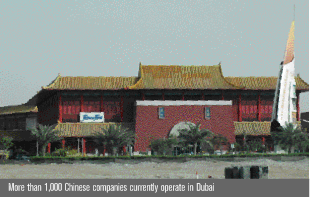
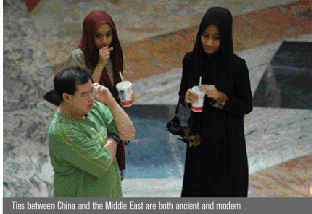
Its bilateral economic ties with China and India are aclear indicator of Dubai’s intentions to become a globalplayer by seeking out alliances with 3 billion newcapitalists, while its real estate giants are already atwork in the dragon kingdom, exporting their particular, andspectacular, brand of development know-how. From being anexpat backwater as recently as the early 90s, Dubai hasbecome a genuine holiday destination—the third most popularwith UK travelers—and a global venue for blue chip sportingevents that attracts the biggest names and fattest purses onthe planet.

It proves that a lot can be achieved by micro-managing themacro-economy if there is a strong ruling class with avision.

One wonders what Adam Smith might say to such a plan.

May 1, 2007 0 comments
0 FacebookTwitterPinterestEmail
Comment

Flashes in the neo-con pan!

by Peter Speetjens May 1, 2007
written by Peter Speetjens

Muslims living in Holland should tear the Koran in half, as half of the book advocates violence, thus maverick Dutch politician Geert Wilders recently suggested, subtly adding:“If Mohammed lived here today, I could imagine chasing him out of the country tarred and feathered as an extremist.”

This was the latest in what has become an extensive repertoire of Wilders’ “wisdom” on immigration and Islam. He has also held forth on headscarves and mosque building, and it is this populist and provocative approach that has brought him headlines as well as friends and foes in equal measure. His nicknames include: bulldog, crusader, street fighter and, on account of his carefully waxed LouisXIV white locks, the Blond Dolly of The Hague.

Having left the liberal party in 2004, which he thought“too left,” Wilders went on to establish his Freedom Party, with which he won 9 out of 150 parliamentary seats during the 2006 elections; and according to a recent poll, Wilders would win seats, if elections were held today.

Latest in a series of political grandstanders

However, one would gravely underestimate current trends inHolland by writing off Wilders as a noisy crank, thrown out by the exotic tradition of Dutch coalition-based politics.Wilders is but the latest in a series of very colorful, if highly controversial politicians, who have played the anti-immigration card for significant political gains and triggered a wind of change, transforming the Dutch Kingdom from one of Europe’s most progressive and welcoming states into a country with the toughest immigration laws on the continent.

It all started at the end of the 1990s with the emergence of the flamboyant Pim Fortuyn, a former communist turned liberal university professor with a love for designer suits and controversy. Warning of “an Islamization of Dutch culture,” even though Muslims make up but 5% of the population, Fortuyn was the first to put immigration and integration firmly on the political agenda. He was shot dead in May 2002 by a Dutch environmentalist.

Next to carry the anti-immigration and anti-Islam flag was Ayaan Hirsi Ali, a Somali refugee who was granted political asylum in 1997 and who entered parliament for the LiberalParty in 2002, under a storm of criticism, as she had always been a member of the Labor Party. Ali was and still is a very ambitious woman and, like Fortuyn, emphasized the“backwardness” of Islam, especially regarding women.

Loyal to her new liberal party masters, Ali also called for tough immigration laws, until in May 2006 it was discovered that the 37-year-old had lied about her past. She had not lived through and survived the Somali civil war, but in fact attended one of the best schools in Kenya. Too much of a political hot potato for her party, Ali withdrew quietly from mainstream politics and accepted a job with the ultra-right American Enterprise Institute.

With Fortuyn killed and Hirsi Ali gone, only Wilders remains. Often called “the new Fortuyn”—a title he vehemently rejects—Wilders wants to be seen as` his own man.“I want people to judge me on who I am,” he stated during a visit to the United States. “I am Geert Wilders. What we share is our anger that the popular voice is not being translated into policy.”

The last sentence says it all. Like Fortuyn before him,Wilders claims that Dutch politicians have lost touch with“the street.” To back up his often outrageous comments,Wilders likes to refer to “the millions outside(parliament)” who think like him. Fortuyn claims he dared to say what “most people” only dare to think. Such populist references to “the silent majority” have had often disastrous consequences in the past. At the height of its popularity in 2003, Fortuyn’s party took only 17% of Dutch seats, while Wilders could only claim 6% in 2006.

The purpose of Wilders’ trip to the United States was to meet a number of neo-con and Christian right groups. “I want to explain what’s going to happen in Holland and ask for support—political support, maybe financial support, all the support possible.” Wilders is in dire need of support, mostly monetary, as he is no longer part of the well-offLiberal Party, and has become painfully aware of the fact that a political party cannot live on screaming headlines a lone. Yet, although the new breed of Dutch politicians can rely on some sympathy among America’s conservative elite, it is unlikely they are to receive much cash.

First of all, institutions linked to the US government will think twice before financing a Dutch opposition party, while Holland belongs to America’s most loyal allies in the so-called War on Terror. Secondly, conservative Holland is not quite yet conservative America. Wilders may be anti-Islam and cherish a free market ideology, yet he lives in a country that has formally embraced gay marriages, abortion, euthanasia and a liberal drugs policy.

What does this mean for the future of Wilders? Well, on the short term, he will no doubt continue to provoke headlines.Yet on the long term, a combination of limited finances and equally limited political experience will see the FreedomParty follow in the footsteps of Pim Fortuyn’s party, which failed to win a single seat in the 2006 elections.

PETER SPEETJENS is a Dutch writer and freelance consaltant

May 1, 2007 0 comments
0 FacebookTwitterPinterestEmail
Lebanon

French shipping firm with Lebanese roots boosts Beirut’s port activity

by Executive Staff May 1, 2007
written by Executive Staff

The rise of Beirut Port with strong growth of freight volumeand earnings since late 2004 is partly due to the Frenchshipping firm with Lebanese roots, CMA CGM. With claims tobe the world’s third-largest container shipping line sinceacquiring Delmas—another French shipping line with strongAfrican business—in 2006, CMA CGM has demonstrated a visionfor its Beirut location that includes on the one hand aproject to construct a new office building and on the otherhand involves the group’s reliance on Beirut as a port ofcall and transshipment hub.

However, the company’s two recent activities—finalizing athree-year contract with the Beirut Port Authority at thestart of 2007 and laying the cornerstone for the newregional operations building with capacity for 400 employeesat the port’s free zone in April—are in no way interlaced,insists the general manager for CMA CGM (Compagnie Maritimed’Affrètement-Compagnie Générale Maritime) in Beirut,Georges Kurban who told Executive that it is “wrong” to askabout the two issues in one question.

Building in Beirut

In the core of the matter, the company’s decision to buildits own offices in Beirut is the older of the two moves andrelated to its global strategy. “The project has beendecided long time ago because this is our homeland, wherethe roots and origins of CMA CGM are. This step is withinthe process of the image of the company to have offices invarious parts of the world,” Kurban said.

Other office development projects of the firm include a newoperations center in Marseilles and a regional office inAlgiers, as well as a building in the American seaportVirginia Beach. While the international center of CMA CGMactivities will expand in Marseilles, the Beirut premiseswill also house Merit Corporation, the holding companythrough which CMA CGM’s Lebanese founder and presidentJacques Saade and his family control the shipping firm andseveral smaller sister companies involved in freightforwarding, overland transport, real estate ownership, andtrade in office supplies.

Active for decades

The company has been active in Beirut for decades, Kurbansaid, serving clients in Lebanon and the hinterland. Itexpanded its activities significantly in recent yearsthrough adding the port to its weekly shipping service onthe route that originates in the industrial ports ofnorthern China and Indonesia’s Port Kelang and offersservice to Jeddah, the Mediterranean, and Northern Europe,and last November on the reverse route from Europe to theFar East that also facilitates shipments from Beirut toJeddah and other Red Sea ports.

The weekly stops which CMA CGM secured through its newcontract with the Beirut Port Authority brought business andjobs to the port. When total container movements at the portin January and February increased by 70% from the sameperiod a year ago to over 154,000 twenty-foot-equivalentunits (TEU), transshipment activities by CMA CGM and itslarger rival MSC, which also transships at Beirut, can beexpected to have contributed significantly to the strongrise in traffic, on top of increases in Lebanon’s nationalexports and imports that have given some hopeful indicationsfrom the start of this year.

Kurban did not specify the number of containers which CMAvessels has loaded and unloaded in Beirut per month sincethe company started calling on the port on both legs of itsnorth China route but he confirmed that volumes coming fromChina are generally larger than the volumes traveling theother way.

The importance of the contract that secures CMA CGM’susage of the Beirut Port container terminal at Quay 16clearly lies in the fact that it brings transshipmentbusiness. Attracting major shipping lines to make Beirut ahub for regional traffic was one of the main objectivesbehind the expansion and rehabilitation of Beirut Port thatstarted in the 1990s and resulted in an operationalcontainer terminal with the installation of modern gantrycranes about three years ago.

On the strength of these cranes, which can transfercontainers between CMA CGM’s 6,500 TEUs carrying mothervessels and four (on average) smaller feeder vessels perweekly visit, the company serves its clients in easternMediterranean ports between Mersin in Anatolia and Damiettain Egypt from Beirut. In total, the hub operation coversseven ports in Turkey, Syria, Cyprus, and Egypt.

Beirut’s evolution into a successful transshipment centershows how much the port could achieve after years ofinfighting and various obstacles to its start of containeroperations were removed. It also proved skeptics—which in the past few years have included members of theshipping industry and the port administration—wrong in theirassumption that cargo increases at the port would mainly bedriven by terminating trade and not by transshipment trafficto other destinations.

Beirut’s ‘gift of nature’

For Kurban, the reason why Beirut could win the businessof major shipping lines is a mixture of the liftingcapacities, trained operators, and what he called a “gift ofnature”. “In comparison with other ports in the region,Beirut has new terminal and services that other ports cannotoffer. It also has a natural advantage in the water depth atthe quay that other ports cannot provide,” he said.

However, Kurban added that the gantry cranes of Beirutwith their 60-ton lifting capacity could soon enough beensurpassed by regional deployment of cranes with 100-toncapacity that can move containers at higher speed. Dependingon cargo flows and the services they offer, other nearbyports thus could in future successfully angle for becomingregional hubs.

He sees the future of shipping on global scale influencedpositively not only by China but also by the development ofcountries such as India and Vietnam or Latin Americancountries which claim greater manufacturing roles. “Theshipping industry from 20 years ago is totally differentfrom the shipping industry today, because of the developmentof the countries and the development of bigger and fasterships that offer better revenues and lower costs,” he said.He expects good development of the shipping and freightforwarding industry to continue further “but I believe noone can give you a date” on how long the industry will boomas it did in recent years.

With about 1% of the company’s global work force basedhere, Beirut cannot be expected to be an overpoweringrevenue factor in the books of CMA CGM. The company,according to its results presentation for last year fromMarch 2007, achieved a worldwide turnover of $8.4 billion ona shipping volume of 5.9 million TEUs, representingincreases of 33% and 28% respectively, as the groupintegrated the Delmas company from January 1, 2006. Netprofits last year increased by 5% to $611 million.

Growth strategies of CMA CGM include more acquisitionsworldwide, a near-term increase of its fleet to over 300vessels (on the back of accomplishing a 50% increase in itsfleet size to 286 vessels at the end of last year), andopening of new routes. In North Africa, the group has boldplans for Algeria, including financial services and railservices. In the Middle East, Iraq is a country where Kurbansees a strong role for CMA CGM as soon as the situationimproves, based on the company’s long presence andexperience in the area.

Kurban, on whose desk sat a brochure on an expansionproject of Lattakia Port at time of his interview withExecutive, said that the company’s growth plans for theEastern Mediterranean include operations in Syria andbidding for port projects there and wherever attractivecontracts are being offered. CMA CGM, which manages Maltaport under an exclusive agreement and has operatoragreements in 15 ports overall, had been a bidder for thecontainer terminal operator contract at Beirut Port but didnot win the deal.

In this age when the position of Beirut is that of a portcompeting with several others for a regional role in theEastern Mediterranean and the idea of ever seeing a sizeablecommercial fleet of Lebanese-flagged ships is remote, thefamily-run CMA CGM group built by entrepreneur Jacques Saadeinto a modern-day shipping firm with 11,500 employees (andan active global employer of Lebanese) is the closest thingto a Phoenician maritime trader empire which one can find inthe early 21st century.

May 1, 2007 0 comments
0 FacebookTwitterPinterestEmail
Banking & Finance

Bonds… Corporate Bonds – Debt trading comes on strong in region

by Executive Staff May 1, 2007
written by Executive Staff

The growth of bond issuance in Arab markets, includingconventional and Islamic paper, has taken off in 2006-2007.Figures circulated by the financial industry say that bondissuance by GCC corporations reached $18.2 billion in 2006,compared with less than $2 billion in 2003. In total, GCCbond issuance surpassed $40 billion last year, comprisingsovereign, banking, project finance and corporate issues aswell as shariah-compliant issues.

The increase of 2006 was exceptional because numbers wereinflated by some very large issues from the UAE, namely aconventional bond by Abu Dhabi energy company Taqa worth$3.5 billion and by two similar-sized shariah-compliantissues from real estate developers Nakheel and from Dubai’sPorts, Customs, and Free Zone Corporation (PCFC), PhilippLotter, a senior credit officer of international ratingsagency Moody’s Investor Services, told Executive.
Lotter authored a study that forecasts 2007 to be anotherextraordinary growth year, with issuance of corporate bondsin the GCC to at least double by end of December and withoutrunning out of steam. Even issues much smaller than theheadline-making multi-billion-dollar bonds “faced strongdemand,” he said, and there is no danger yet that smallerissues will be crowded out.


Bond experts from the banking industry also see the MiddleEast just at the start of an epochal journey to develop theprimary and secondary markets for tradable fixed-incomesecurities. Coming from a minuscule base, “the market hasdeveloped very well. We foresee healthy growth for bonds andsukuk in 2007 and beyond,” said Tim Harrison, associatedirector of HSBC Bank Middle East for corporate andinvestment banking.

Corporates and government-backed companies last year werenot the region’s only forces with a mind to issue morebonds. According to Lotter, bond issuance in the GCC in 2006originated to $13 billion from banks and to $9 billion fromgovernments. Project finance for $3.5 billion pushed thetotal to $40.3 billion. Corporate issues were split 60-40between conventional bonds and sukuk.

The volume of fixed-income securities in the Middle East hasexpanded across all type of products, affirmed Adel Afiouni,a managing director with Credit Suisse based in London.Conventional and Islamic, debt, asset backed orequity-linked, etc. has increased substantially over thelast years and there is clearly room for much more growth,added Afiouni who heads CS’s Middle East & North AfricaInvestment Banking Coverage.

The bond market’s spell… You are getting verysleepy
 

What creates the spell of the bond market? Bond varietiesare much more numerous than spy movies but on average alsomore boring. An Aston Martin is not required, and neither isa Martini, but small is the band of people with fascinationand license to deliberate on semi-annual coupons, redemptionvalue, floating rates, puttability, and the inverse relationof price and yield.
 

The fixed-income market is also the domain of specialists.While individuals do buy bonds and US households have beensaid to hold about 10% of US bonds in circulation, theretail investor mostly interacts indirectly with the bondmarket—either through owning stakes in bond-investing funds,or as beneficiary of pensions and returns from otherinstitutions which rely heavily on sovereign bonds orcorporate issues.
 

But for companies as issuers and institutional investorsas buyers, the fixed-income market is a sexy propositionbecause it is a merry match to equity for serving fundingneeds, to such an extent that bonds today are amulti-trillion dollar market which makes the current size ofArab bond business look like an orientation course.
 

However, the exponential growth has been quite recent whentaken in the historic context of bond issuance which hasbeen closely aligned with the rise of the financial industryfor some four centuries.
 

Initially, the lenders of post-medieval Europe conceivedof bonds to meet the large funding needs of rulers and thosenoble families whose nobility referred to running upexpenses in chronic excess of their income.
 

Bonds helped the early bankers to source funding that theycould not provide on their own and distribute risk inserving such customers. The idea also caught on for warfare,the real money-burner of all ages. European countries andlater on the United States issued war bonds to cover theimmense cost burden of the World Wars. Depending on thesuccess and righteousness of the conflicts, war bonds werethe—by all means risky—mixture of patriotism andprofiteering that could generate excessive gains for somebut usually meant sacrifice for many, or ruin after lostwars.

Trains push developing bond market
 

Another great source feeding the evolution of bonds wasinfrastructure finance, especially railroad bonds, whichwere the rage in the 19th century rail transport revolutionfrom economizing Czarist Russia over train spotting Britainto freewheeling North America. In an age of wild expansionand no supervision, the surge of railroad bonds offered theunintended side-effect of giving fraudsters handyinstruments for duping gullible buyers with worthless fakes.
 

The transport industry debt instruments thus contributedprominently to the emergence of the credit ratings industry,which started out with small providers of information ondebt instruments such as railroad bonds to investors at thebeginning of the 20th century. But it wasn’t until theproliferation of debt markets and bond issues from the 1970sthat ratings agencies started booming and fee-based ratingof corporations and debt issuers became a phenomenal growthbusiness.
 

US corporations were the first to delve into bonds asalternatives to equity and bank debt, followed in the 1990sby European companies. Researchers say that issuance ofcommercial paper alone increased almost threefold in the USin the last 10 years of the 20th century, supporting annualrevenue growth rates of 15% for the leading ratings agency,Moody’s. Europe’s corporate bond market benefited from theMaastricht treaty and euro introduction and more thandoubled between 1995 and 2000.
 

The growth was accompanied by introduction of newregulatory and ratings mechanisms. But risk shocks have notentirely vanished in corporate issuance, even when theissuer is not an unrated entity or producer of a junk bond.An example for a bad risk that caught the US market offguard was the case of telecommunications firm WorldCom fiveyears ago.
 

Investors in bonds by WorldCom—which had made the recordbooks with an $11.9 billion corporate bond issue rated byagencies as investment-grade just a year before itsdevastating fraud and financial scandal in 2002—lost abouttwo thirds of their money when the company went belly up.The partial recovery of investments meant that bond holderswere still better off than other WorldCom stakeholders butthe case reverberated in the courts.

In the Middle East, bonds are coming into big play a good30 years later than their rise in the US and about 15 yearslater than in Europe. But this does not mean that the bondidea is past its prime. Given the relative saturation of theUS bond market, indicators suggest that the Middle East candraw a lot of attention to its bond issues, bothconventional bonds and their Islamic equivalent, sukuk.

Benefiting from a ‘virtuous circle’
 

The bond market in the Middle East is benefiting from a“virtuous circle of increased issuance by regional borrowersand increased interest from international investors,” saidAfiouni. He told Executive that the increase in the volumeof new corporate bonds over the last years is the result ofissuers realizing that they can benefit from globalliquidity to diversify their source of funding away fromtraditional local banks lending and tap into a new investorbase. International bond buyers in turn are attracted by thefact that Middle Eastern bonds provide diversification andstill offer some premium and an attractive risk returnprofile over comparably rated bonds from issuers in otherdeveloped markets.
 

In April, the growing role of regional bond finance wasfurther illustrated by news that Saudi billionaire Maan AlSanea (a Saudi Arabian financier who won global attentionthis year by being included for the first time in the Forbesbillionaires list) intends to finance acquisitions andexpansion measures of the Saad group by issuing conventionaland Islamic bonds worth about $5 billion. The news came onthe heels of an announcement that Sanea bought a $6.6billion stake in HSBC.
Given that integration of financial markets andliberalization/deregulation measures are among the mainelements that stimulate the growth of the financialindustry, Arab bond markets are likely to get further boostsfrom convergence measures, including the planned monetaryunion.

Euro gains currency as bond instrument
 

In this context, European central bankers have pointed outthat the euro has gained in importance as bond issuingcurrency through the European Monetary Union, which moreoverhas boosted intra-eurozone trade volumes by around 10%without hurting external trade. This raises the question howstrongly the GCC joint currency project will influence thegrowth of trade and financial markets in the region—if itsucceeds as planned—and how much this will enhance the bondscene.
 

However, the majority of current GCC bond issuers addressinternational markets, said Harrison, implying that theimpact of regional economic integration will be less of afactor for the Middle East bond market boost.
 

“In the Dubai ports issue, 95% of investors came fromoutside,” he said, adding that the majority of currentissues, including Islamic ones, are denominated in dollar,because that makes them much more appealing to internationalbuyers.
Elements of the overall bond issuance picture incurrencies and formats that appeal internationally are alsothe Euro Medium-Term Note Programs (EMTN), debt instrumentswhich several regional banks have deployed successfully inthe past two years.


The market shows trends of broadening into local and otheremerging markets currencies, though. Last month, EmiratesBank Group closed its first bond denominated in the ThaiBaht, a $61.5 million issue that was lead-managed byStandard Chartered Bank, the same bank that had arranged GCCbond issues targeting other Asian markets by beingdenominated in Singapore and Hong Kong dollars.

Local investor hunger
 

In an example for companies responding to local investorhunger, Kuwait’s Global Investment House in late Aprilclosed a KWD45 million ($156 million) bond issue withfive-year maturity in two tranches, one paying 7% annualinterest and one with a floating rate. It is the financialfirm’s second bond and will be used to repay other debt andfinance investments.
 

Global’s senior vice president for marketable securities,Saidu Mohammed, told Executive that the investment bankdecided to issue the bond, which it also manages, todiversify and extend maturity of its financing tools, whichinclude funds and Islamic instruments.
 

It is not necessarily cheaper for companies to issue bondsthan obtaining bank loans, said Lotter, but by accessing thebond market firms can diversify their funding base and theirinvestor base. As a lesser motive, corporations also maywant to reap some benefits from the publicity associatedwith launching a massive bond and spreading the news of itsrating in the global financial industry.

Sukuk are bound to claim a greater role in regional fixedincome and are expected to penetrate global markets. Thatinfrastructure development is one major reason for theincrease in sukuk issuance creates a certain parallel in thegrowth of the asset-backed Islamic financial instruments tothe historic emergence of bonds in the debt markets ofEurope and North America. The plans of the UK and Japan, andalso of Germany, to issue new sovereign or government-backedsukuk will make sukuk again more palatable to investors.
To behave like bonds elsewhere, the Islamic andconventional issues need a liquid secondary market wheretrading of bonds stimulates further financial flows. Mostexperts agree that the region’s secondary bond markets arestill some time away, with the Dubai International FinancialExchange—where more sukuk are listed than anywhere else—andthe London Stock Exchange—which recently announced theestablishment of a secondary market for sukuk—being ahead ofothers in the attempt to grab the trading action.


Nakheel listed its sukuk on DIFX and LSE, and DubaiIslamic Bank has the same agenda for its new musharakasukuk. But trading in securities on DIFX is still somewhattheoretical and other contenders are in the race for hostingthe secondary market in Middle Eastern bonds. Thesecontenders include Bahrain and Kuala Lumpur, both placeswhere Islamic finance is strong.
 

Given the recentness of bond issuance in the GCC, theexperts would not estimate the timeframe for building aliquid secondary market. “It will take several years,”Lotter estimated. Afiouni noted that the investment behaviorof banks and other bond buyers in the Middle East was, untilrecently, still predominantly characterized by abuy-and-hold mentality. “They put them into the drawer untilmaturity,” he said, “but we expect this to change asinternational investors become more actively involved.”
 

In Kuwait, bond buyers are still holding to maturity,Mohammed said. While he expects the market to grow into moreissues, he sees the emergence of a secondary market for themoment as a wishful proposition. The market is “not thatliquid. If we want to see a liquid bond market, we will haveto be patient,” he said.
 

Harrison, however, claimed that a secondary market forover-the-counter trading of Middle Eastern bonds is alreadytaking off in Dubai. “It is starting already,” he said,referring to an active trading desk at HSBC.
 

With the latest announcements of bond projects, trends for2007 indicate that corporate issuance could well increasebeyond $40 billion this year and peak in a wave of growththat will continue at high rates well into the next decade.Besides the implications for development of a secondarymarket, the booming bonds imply that need for ratings andauxiliary services will increase in the next few years.Information on issuers, overall market conditions, anddetailed fixed-income trends and daily news will be a strongbusiness opportunity.

May 1, 2007 0 comments
0 FacebookTwitterPinterestEmail
Lebanon

A woman‘s work is needed in Lebanon

by Executive Staff May 1, 2007
written by Executive Staff

The Lebanese business community gathered recently at one ofBeirut’s posher eateries to celebrate the signing of a tradememorandum between the Beirut and Paris Chambers ofCommerce. However, it was neither the place nor the occasionthat was remarkable, but the fact that among the 100 or soguests, there were only a handful of women.

Studies conducted by the Gender Entrepreneurial Marketprogram (GEM) show that female labor participation inLebanon—which increased from 12.5% in the 1960s to 32.3%% in2000—was estimated in 2003, at 21.7% of the total laborforce. Tapping into this unexploited labor market, theLebanese League for Women in Business (LLWB), anon-partisan, non-profit organization, aims to empower womenin the economic environment by providing a structured forumfor women in order to achieve their entrepreneurial potential.

Filling the vacuum

The NGO was the result of a happy coincidence when the 12founding members met by chance at a conference forbusinesswomen in Tunisia in May 2005. “The conferencebrought together women from all over the MENA region, whichinspired us to reproduce a similar model in Lebanon,” saysNajwa Tohme, manager at Al Rifai Roastery and president ofLLWB. With only 22% of Lebanese women contributing to theworkforce, the founders of LLWB tried to utilize the laborvacuum prompted by increasing numbers of experienced maleemployees leaving the country in search of better careerprospects.

“We decided to support women, trying to facilitate theirentry into the job market. I don’t have exact figures formale versus female productivity, but as Mr. Adnan Kassar,Fransabank’s CEO, stated at our inaugurating conference,when women and men are put together in the same workenvironment, women tend to be more accurate and loanscontracted by female debtors seem also to result in lowerdefault rates.”

Opting for education and vocation

To accomplish its mission statement, namely to “encouragewomen to take the lead to succeed,” LLWB has opted foreducational and vocational programs, networking, advocacyand incubators. “We intend to organize conferences andtrainings that will assist women and point them in the rightdirection. The educational programs will address variousaspects of the business process such as setting up anoperation, drafting a business plan, market research, orapproaching financial institutions,” adds Tohme.

In addition, women employed in private companies willbenefit from the training sessions, by reinforcing theirknowledge base and learning to apply concepts to their ownactivities. To promote the role of women in economy, LLWBwill also approach fresh university graduates. Thereinsertion of women in the workforce after an extensiveleave of absence, usually caused by pregnancy, is anothergoal on the organization’s agenda.

“Once they’ve tended to their family and their children areall grown up, women feel left behind. We can update theirskills, through training sessions, in order to facilitatethe integration process. A perfect example would be offeringcomputer classes.”

Networking

Networking is another tool used for promoting women in theworkplace. This will be done mainly through the conferencingactivity where people can come together, exchange businessideas and present their products. The last field, advocacy,highlights women rights in business, it is supported by ateam of four lawyers, who are also members of the NGO. “Therole of women is quite narrow in business. If one takes aquick look at the banking sector, positions such branchmanager are within a woman’s reach, whereas boardmemberships are a rare occurrence, unless the woman owns astake in the organization,” adds Tohme. “Companiesadvertising CEO positions ultimately favor male over femalecandidates.”

Incubators, the last weapon in the NGO’s hand, offermanagement guidance, technical assistance and consulting,tailored to young growing companies. Once the NGO is largeenough and capable of offering a wide array of expertise,incubators will be used to guide women through the businessmaze. “This particular instrument is part of our medium tolong-term plan,” points-out Tohme.

As LLWB aims to achieve equal opportunities andunrestricted access to resource for women, as well as toenhance female entrepreneurship and leadership, Tohmebelieves that benchmarking will be measured against resultsachieved, as the NGO activities grow.

To build awareness among the business community, LLWBorganized a conference last month devoted to theassociation’s goals and mission, bringing in speakers todiscuss access to SME funding, such as Carlos Lebbos head ofspecialized credits at BLC, Tarek Itani, credit manager atKafalat and Nagy Rizk from the Building Block Equity Fund.NGOs, major business associations and companies as well asAmerican embassy officials were invited to take part in theevent. Few bothered to show up.

For more information: please visit the LLWB Web site at:www.llwb.org

May 1, 2007 0 comments
0 FacebookTwitterPinterestEmail
Comment

Wolfowitz at the exit door?

by Claude Salhani May 1, 2007
written by Claude Salhani

So far this has not been a good year for President Bush.First, his plan to pacify Iraq by “surging” more Americantroops appears to have backfired. Since the surge beganIraqis have been dying in far greater numbers than everbefore, and terrorist bombings are claiming nearly 120 livesa day. And, U.S. casualties are increasing, adding pressurein Washington for an early troop pullout.

But if Bush faces a tough time on his handling of foreignpolicies, he now has serious problems at home as well. Afterloosing the majority in both houses of Congress to theDemocrats last November, the president has had anotherawkward moment vis a vis Paul Wolfowitz his choice to runthe World Bank.

Wolfowitz was supposed to fight corruption and alleviatepoverty. To make the task easier, “Wolfie,” as he is know tothose who like him, as well as to those who don’t, was givena yearly salary of $400,000—tax free—and an expense accountto match the status of the job.

As World Bank president, Wolfowitz oversees some 10,000employees around the world. Among them was, ratherawkwardly, his girlfriend, Shaha Riza. Wolfowitz, appearedto be playing by the book. In order to avoid a conflict ofinterest, when he took up his new job it was decidedinternally that she be moved to the US State Department,along with a promotion and a hefty pay rise—due to the factshe was being professionally inconvenienced by the move asit derailed her World Bank career path.

Appointed to the job by President George W. Bush in the formof a golden parachute after leaving the Rumsfeld Pentagon,Wolfowitz, a neoconservative who played a major role inconvincing the Bush administration to go to war in Iraq,stated he would apply a zero tolerance policy regardingcorruption. Now he was being accused of finding ahigh-paying job for his girlfriend.

To make matters worse, the scandal reached a climax as theBank was holding its yearly spring session in Washingtonwith the participation of finance and foreign ministers,central bank directors and financial gurus from around theworld. As the scandal gathered steam, the World Bank’s 24-member board said that the situation regarding the fate ofthe former US deputy defense chief should be dealt with,"urgently, effectively and in an orderly manner."

Calls for Wolfowitz’s resignation began to trickle in withsome finance ministers saying he should step downimmediately. But the US, which appoints the bank’s head,said it still supports Wolfowitz, who they claim had nothingto do with her new appointment. Riza, they argue, wasappointed by a World Bank ethics committee (Wolfie hadpreviously excused himself from all matters pertaining tohis companion). When she was transferred to the StateDepartment she was given the mid-range salary for her newlevel was based on the bank’s existing pay scales.

Dana Perino, a White House spokeswoman, said that PresidentGeorge W. Bush "has confidence in Paul Wolfowitz." Wolfowitzmeanwhile was booed at a meeting with World Bank staff.

By mid April Wolfowitz was told directly by one of his twodeputies, Graeme Wheeler from New Zealand, to step down at asession attended by senior staff members, according to somenews reports. The Bank’s executive board, the Bank’sgovernor as well as a number of European shareholders becameeager to see him go. Senior managers within the bank seemedsplit however, some backing Wolfowitz, others calling forhis resignation.

One of the bank’s main functions is to fight poverty aroundthe world. Yet by the Bank’s own admission, there are stillmore than 1 billion people living on less than $1 a day, and2.5 billion, or 40 percent of the world population,subsisting on less than $2 a day. Wolfowitz’s critics—ofwhich he has many—say that since assuming his new functionsat the Bank he has run the institution “much like a Chicagoward boss or mayor.” He has been said to resort to employ“patronage and intimidation” tactics.

When he moved to the World Bank from the Department ofDefense Wolfowitz took along his political acolytes,upsetting scores of long-time bank senior personnel.

Now there is growing fear in the Republican Party that adragged out “Wolfie-gate” will not help the GOP at a timewhen a vital presidential election is looming just off thehorizon. Many are beginning to echo what World Bankemployees have been saying: it is time for Wolfowitz to go.

Claude Salhani is an international editor and political analyst at United Press International (UPI)


May 1, 2007 0 comments
0 FacebookTwitterPinterestEmail
Talking To

Inside Intel‘s brain: A talk with the boss

by Executive Staff May 1, 2007
written by Executive Staff

As part of Intel’s efforts to promote the use oftechnology with communities around the world and as arepresentative of the “Partnership for Lebanon,” IntelChairman Craig Barrett visited Lebanon last month. He alsospoke to Executive

How does the American Lebanese partnership andthe Berytech fund you contributed to, fit into the UnitedNations’ Global alliance for ICT you currently chair?

The UN Global Alliance has the same objectives as thePartnership for Lebanon, which aims to improve education,healthcare, economic development and the interaction betweengovernments and citizens. The partnership is obviouslyinvolved in Lebanon because of the destruction that resultedlast year from the conflict between Israel and Hizbullah. Weare not taking any sides on this issue, our concern is onlyfor the individual Lebanese citizen with the aim ofimproving his situation. On a much larger scale, the UNAlliance oversees what can be done to advance the status ofcitizens from emerging countries around the world. Theglobal goal is very similar to the Partnership’s one. As forthe Berytech fund, the issue of economic development is alsopart of the Partnership’s objectives and the UN GlobalAlliance. Economic development can come in various flavors:foreign investment, organic growth, economy, orentrepreneurial activity, in this last regard, Lebanonoffers a long cultural and societal history. The Berytechactivity aims to stimulate and promote economic growth,using education and potential young entrepreneurs. Berytechis unique in the sense that it is in an incubator: it takesideas, before they’re formed into business plans and givesthem a chance to grow and nurture. The investment inBerytech, a purely Intel venture, is totally consistent withthe partnership’s goals.

You’ve declared to the American congress that UScompetitiveness can only improve through education and R&D.Where do you see America standing in the economicenvironment in a few years, especially now that emergingcountries are slowly growing and siphoning off jobs?

The challenge the USA faces lies in the worldwidecompetition for educated workers and new ideas. It is thereason why so many of us lobby our own government for moreR&D and progress in education, especially in the areas ofmath and science. We are very concerned by the fact that ifthe US continue on their current course, it would faceserious problems in the future from a competitivestandpoint. We have proposed various efforts such as theincrease in research investment and improving the fields ofmath and science, which are both incredibly critical to thefuture of competitiveness.

You’ve said that “companies can’t save their wayout of a recession or even prosperity. Instead, they have toinvest in innovative products and technologies.” What isIntel doing in this respect?

If you look at our business at the beginning and the endof any year, separated only by a twelve-month period, about90% of our revenue in December is generated by products thatwere not available on the market in January. Unless you havea development machine that can create new products, androutinely achieve technology leadership, you cannot besuccessful. So when I say “you cannot save your way out of arecession,” it means that if you slow down the developmentmachine, trying to improve financial performance by onlycutting back on investments, you ultimately fail. If youlook at Intel’s general trend over its entire history, R&Dspending always tends to increase. We spend from $5.5 to $6billion every year on research and development, which is afairly large amount, larger by any country’s means.

E In a world where networking, computing andcommunications are converging even more, how is thisaffecting Intel’s overall vision and strategy?

The convergence of computing and communications is verycompatible with Intel’s philosophy and direction. Ascomputing, communication and rich content come together,more computing power to handle data is required. The trendis consistent with Intel’s generic approach, focusing onmicroprocessor power, on Moore’s law, continually improvingcomputing, generation after generation after generation. Idon’t see any disconnection between such a convergence andIntel’s direction.

As the economic environment evolves, Intel faceslower margins and increased competition from countries suchas China or India. How do you see the trend going and whatsteps is Intel taking to rise up to the challenge?

It is a rather interesting fact that people have beenwriting about Intel facing lower margins for years andyears. However, I am not sure the proposition is accurate.We have just announced, two or three days ago, that weexpect margins to increase for the second half of the year.For the past twenty years, margins have fluctuated betweenthe low and high fifty percent range. I also believe our CFOforecasted this year’s margins for the mid-fifties. Oursuccess is based on our leadership technology in the marketplace, providing us with a higher return on investment and ahigher margin on product. The challenge is to maintain ourmarket leadership position, which determines what marginswill look like. There is no question that the averageselling price for microprocessors has decreased over theyears, while our production machine is getting moreefficient, thus taking the cost down. As costs follow thefall in product prices, margin levels stay roughly constant.

How long will it take before we see seriouscompetition from countries like China and India in themicroprocessor industry? How does this affect Intel’s futureplans?

Intel has faced competition in the micro-processing area,from Europe, US, Japanese as well as Chinese companies.Competition is not something new to us, we respond to it byavoiding standstill, moving the technology forward instead,at a very rapid pace. This requires a very large investmentin R&D, which companies need to match if they want tocompete with us in the next generation of products. It isnot about figuring out how to make last generation productsat cheaper prices, but rather how to produce next generationtechnologies, which is what people in the market place want.I suspect we will continue to face competition in the nexttwenty years like we’ve done before, but the challenge forus remains the same.

Intel has long thrived by concentrating on PCmicroprocessors. Now Intel is trying to play the same rolein various fields such as consumer electronics, wirelesscommunications, and health care. What prompted the decisionto diversify your product base and which direction do yousee Intel taking?

The healthcare industry has not made very effective use ofcomputing technologies. It is a very large market withimportant opportunities for the sorts of products Intelmanufactures. In consumer electronics, the opportunityresides again in the convergence of computing,communications and content. The fact that computers havebeen built historically using Intel architecture, as digitalcontent becomes more important, consumer electronics, alsofocused on content, will become more computer-like. There isa definite opportunity to move our architecture intoconsumer electronics applications. This convergence ofcomputing, communications and content allows us to grow fromcomputers to consumer electronics devices.

How does this diversification affect the waychips are produced? Is it affecting collaboration withincompany teams as well as alliances with other marketplayers?

It actually expands the spectrum of companies you need todeal with. Historically, Intel always dealt with thecomputer industry, with large companies such as Dell,Packard and others. But as the convergence of computing,communication and content further increases, we end updealing more and more with consumer electronics and contentcompanies, we previously, were not much involved with. Weare still engaged in our standard computer business, towhich wireless communication capability and content are alsointegrated. These three elements coming together imply thatour products look less and less like standard computingplatforms, assimilating communication and contentinitiatives.

How difficult is it to brand an “ingredientproduct” such as Intel and convince customers to requireit?

You hire some very clever marketing people who create abrand like the “Intel Inside” branding campaign, the mostsuccessful “ingredient branding” campaign the world has everseen. We’ve been able to achieve this because of ourleadership position in the marketplace and used it toexpress the importance of our technology through aningredient branding campaign. If we had lacked leadershipposition from a technology standpoint, it would be verydifficult for us to convince anyone of the “ingredient’s”value. We were thus able to engineer a brand around ourpreeminent position in technology. Today, people are awarethat microprocessors are the PCs brains; everyone wants thesmartest brain and they want Intel. You need therefore bothgood technology and a very smart marketing person whosename, by the way, is Dennis Carter, to recognize this andconvince others to pursue it.

What is your view on the evolution of theinformation technology in the Arab world where, in somecountries, infrastructure is still nascent and monopoliesrun high?

There are excellent opportunities in the Arabic-speakingworld in this regard. Countries recognize the need for smartpeople and smart ideas as well as good infrastructure, andpart of this infrastructure relies on computing andcommunication. Many economies have weak communication orinefficient and extremely expensive infrastructures, such asin Lebanon, because of government control or actions on thesector. Ultimately those infrastructures need to become morecompetitive. There is great opportunity for investment,creativity and technology, which is what companies likeIntel are all about.

How do you picture the technology world in 15 years?

Fifteen years is such a long time in our industry, itmakes it very difficult to tell. The internet was born andgrew dramatically in the space of ten years. Digital camerasappeared, music also became digital, its delivery movingfrom a CD form to an internet feed. However, what is easy toproject is that there will be definitely huge changes andcompanies which are flexible and adaptable will be mostsuccessful in such a time frame. As an example, if you wereoperating like Microsoft in the software business ten yearsago, you could never have forecasted Google posing such abig challenge in the future. Google was born ten years agoin a university; it was not a product, not a business, butonly an idea. The beauty of our industry, its excitement,springs from the fact that concepts, often created by oneperson, can change the face of the whole sector. This meansthat any company wanting to be successful needs to keep itseyes wide opened continually for new ideas. This reasoningmotivates Intel’s involvement in so many joint researchprojects with universities and venture capital—the fundingof startup companies—and allows it to stay close to whatgoes on in the basic research and product worlds. As my bossAndy Grove used to say, only the paranoid survive,otherwise, one runs the risk of being defeated by newtechnologies.

May 1, 2007 0 comments
0 FacebookTwitterPinterestEmail
Capitalist Culture

Like everywhere, Money talks in Lebanon

by Michael Young May 1, 2007
written by Michael Young

Four months into the opposition’s descent on the Soliderearea in protest, it is increasingly plain that the effortwas a remarkable success. No, the Seniora government is notabout to fall, nor has the Hariri tribunal been permanentlyderailed; rather, the opposition has scored a dazzlingvictory against businesses in the downtown area. Most havebeen knocked out cold financially, while the rest arepreparing to throw in the towel.

This may seem a tendentious reading. Opposition supporterswould respond that neither Hizbullah nor the Aounistmovement ever really intended to push the Solidere merchantsand restaurants into the street. Most businesses are indeedthe victims of a political confrontation that shows no signsof abating. However, one thing is undeniable: oppositionparties have a much tougher climb than the majority does inproving that they are truly concerned about Lebanon’seconomic well-being; or even that they have a cohesive planto address the country’s financial woes. Three episodes inparticular illustrate the opposition’s problems.

In one episode, Solidere businesses not long ago askedMichel Aoun to take measures to lower the pressure on theirlivelihoods. This would have involved removing tents fromsome parts of the downtown area, to free up access to theirbusinesses. Aoun did not reject the idea. However, severalweeks later nothing has been done. This has only showed thatthe opposition remains reluctant to lose face by reducingits presence in Solidere, even though it couldadvantageously sell a downgrading of its tent city as proofof its interest in the fate of those closing down.

The second episode was the opposition’s decision on January23 to block roads throughout Lebanon, but more particularlyto block the airport road and prevent Prime Minister Fuadal-Seniora from traveling to the Paris-III economicconference. While the opposition parties publicly declaredtheir support for what the conference was trying to achieve,they also understood it would give the government greatcredibility at a time when they were trying to force Senioraout of office. That’s why the expressions of support endedup sounding hollow, as opposition parties placed partisanpolitics before that of trying to create an impression ofunity at home that would have enhanced Lebanon’s chances ofgetting funds.

A third episode was the speech of Hizbullah’s secretarygeneral, Hassan Nasrallah, on April 8. In his address,Nasrallah wondered where the Paris-III pledges of some $7billion were, and lamented that donors had imposedconditions to loan Lebanon money. “Even the economy has beeninternationalized,” Nasrallah observed. He went on to pointout that Hizbullah would be willing to let the situationremain as is for another two years, until Parliament’smandate expired. While he admitted that the opposition wasnot happy with the situation, it was better than civil war.

Nasrallah, even if he is sincere in wanting to avoid a newwar between the Lebanese, will have hardly convinced anyonethat his strategy shows concern for economic realities. Twomore years of stalemate may not only devastate economicconfidence, it would make much more unlikely the release ofmoney pledged in Paris. The Hizbullah leader askedironically where the Paris money had gone, but he leftunmentioned that the dispute between the majority and theopposition—a dispute for which Hizbullah and the Aounistsare partly responsible—is the cause for the reluctance amongsome countries to pay up. Nor will Nasrallah have reassuredeconomists that his criticism was legitimate when hecomplained of the conditions set by foreign donors to helpthe Lebanese economy. Not all aid money can be delivered insuitcases, and for Lebanon to first meet internationalconditions in order to earn the right to receive foreignloans seems so obvious as to be a moot point.

Each of these examples was significant in that theopposition has failed to convincingly show it has aneconomic program that would allow it to take power alone,without March 14. The parliamentary majority, for all itsshortcoming, retains international financial confidence,while the opposition simply does not. Just as important, themajority seems more or less united around the Senioragovernment’s economic program (even if it is open tocriticism), while there are fundamental differences betweenthe economic preferences of the Aounists and those of Hizbullah.

Forgetting politics for the moment, the existential fightbeing waged by both sides in Lebanon today detracts from thefact that when it comes to economics, their continueddivisions can only lead to collective suicide. The majoritycannot pass its economic program without a dialogue with the opposition; but the opposition needs to clarify its own economic views before any sort of dialogue has a realistic chance of succeeding.

Michael Young

May 1, 2007 0 comments
0 FacebookTwitterPinterestEmail
  • 1
  • …
  • 584
  • 585
  • 586
  • 587
  • 588
  • …
  • 685

Latest Cover

About us

Since its first edition emerged on the newsstands in 1999, Executive Magazine has been dedicated to providing its readers with the most up-to-date local and regional business news. Executive is a monthly business magazine that offers readers in-depth analyses on the Lebanese world of commerce, covering all the major sectors – from banking, finance, and insurance to technology, tourism, hospitality, media, and retail.

  • Donate
  • Our Purpose
  • Contact Us

Sign up for our newsletter

[contact-form-7 id=”27812″ title=”FooterSubscription”]

  • Facebook
  • Twitter
  • Instagram
  • Linkedin
  • Youtube
Executive Magazine
  • ISSUES
    • Current Issue
    • Past issues
  • BUSINESS
  • ECONOMICS & POLICY
  • OPINION
  • SPECIAL REPORTS
  • EXECUTIVE TALKS
  • MOVEMENTS
    • Change the image
    • Cannes lions
    • Transparency & accountability
    • ECONOMIC ROADMAP
    • Say No to Corruption
    • The Lebanon media development initiative
    • LPSN Policy Asks
    • Advocating the preservation of deposits
  • JOIN US
    • Join our movement
    • Attend our events
    • Receive updates
    • Connect with us
  • DONATE