• Donate
  • Our Purpose
  • Contact Us
Executive Magazine
  • ISSUES
    • Current Issue
    • Past issues
  • BUSINESS
  • ECONOMICS & POLICY
  • OPINION
  • SPECIAL REPORTS
  • EXECUTIVE TALKS
  • MOVEMENTS
    • Change the image
    • Cannes lions
    • Transparency & accountability
    • ECONOMIC ROADMAP
    • Say No to Corruption
    • The Lebanon media development initiative
    • LPSN Policy Asks
    • Advocating the preservation of deposits
  • JOIN US
    • Join our movement
    • Attend our events
    • Receive updates
    • Connect with us
  • DONATE
Comment

The so-called ‘peace process’

by Lee Smith May 1, 2007
written by Lee Smith

Here in Washington, the winners of the 2006 mid-termelections had just started to enjoy their spoils when the2008 presidential campaign already started to heat up. Nosooner had Nancy Pelosi finished her tour of the Hamadeyasouq than the Clinton campaign decided to make Syria part ofthe campaign platform.

See, former President Bill Clinton used to say that themajor impediment he faced in solving the Israeli-Arabdispute was Yasser Arafat. But now with Hilary on thecampaign trail, that’s all in the past. Peace in the MiddleEast is easy, as long as you have the right person in theWhite House—and a proper knowledge of history. Clinton saysthe peace process was derailed for one reason alone—thebullet that killed Yitzhak Rabin.

“The assassination of Rabin killed the whole process,”Clinton told the London-based pan-Arab daily, Ash-SharqAl-Awsat. “This one bullet not only killed Yitzhak Rabin butthe whole process that we were working on.”

That’s right—it was a Jewish extremist who ruined Oslo.Never mind the second intifada and Hamas’s genocidalcampaign against Jews. And Chairman Arafat had nothing to dowith sabotaging the peace process. If it weren’t for thatone Jewish bullet we even would have had peace betweenIsrael and Syria. And we still can—“It will take 35 minutesto resolve the problem between Israel and Syria,” saysClinton. 35 minutes! Wow—I wonder which Americanpresidential candidate could pull that stunt off?

Ah, peace. It is true that the “P word” is certain to strikea Pavlovian chord among the Americans, who are particularlyprone to Middle Eastern fantasies, but it’s not just WhiteHouse hopefuls putting a tired Middle Eastern nag throughher pointless paces. Consider the curious case of Ibrahim“Abe” Suleiman, a Syrian-born naturalized American citizenfor close to half a century now. In April, Suleiman traveledto the Knesset to explain how an Israeli-Syrian peace dealwas possible within six months. Ok, that time frame isconsiderably longer than a half hour and change, but giventhat the Israelis and Syrians both think Suleiman’s talkingout of his hat, six months is nothing short of miraculous.

The US press has followed the case with interest, albeitconfusedly so. For instance, there’s the New York Times,which for well over half a year now has waged a relentlesscampaign demanding the Bush administration “engage”Damascus. The space they’ve devoted to l’affair Suleiman hasbeen for all practical purposes to explain that Syria’sspecial envoy seems to represent no official position inDamascus and has found no confidence in Jerusalem. In otherwords, it is a story about a non-story.

On the other hand, the anti-Syrian Kuwaiti daily al-Siyassahhas reported that Suleiman is the brother of former regimeaffiliate Bajhat Suleiman, once believed to be involved inthe assassination of Rafiq al-Hariri—a fact that wouldsuggest that “Abe” is indeed well connected in Damascus.

However, much more troubling than any genuine relationshipSuleiman may have to the Asad regime is the prospect thathis role as mediator will generate its own momentum andcause chaos throughout the region.

We have already discussed why Washington is apt to embraceeven the most dubious prophet of peace and concord, butother regional interests have their own reasons as well.

Israeli officials are no doubt looking a little more than ayear into the future and wondering whether a possibleDemocrat in the White House will demand concessions fromJerusalem that the Bush administration did not. In thatcase, it would be wise for Israel to keep an apparentlysincere fool like Suleiman close at hand rather than sufferthe vicious Arabist inanities of, say, Walid Moallem orFarouq al-Shara. And even if the new White House is asfriendly to Israel as the present one, the Jewish state hasits own internal politics to worry about. However improbablepeace may seem, Olmert or Netanyahu or whoever winds up inthe running for Prime Minister is going to need some sort ofroad map or peace process to keep voters interested. Whoknows but that the Syria track may seem more appealing thana deal with the Hamas-controlled PA.

Damascus of course would like nothing more than to be tiedup in a peace process—while it also threatens war againstIsrael to liberate the Golan, a prospect even more fantasticthan Clinton’s 35 minutes to peace. The Asad regime isterrified of the international tribunal charged with handingdown indictments in the Hariri murder. So far, Damascus hasallegedly assassinated Lebanese citizens and backed a waragainst Israel in its attempts to forestall the tribunal,but the train is steadily and surely approaching thestation. With so much riding on a “peace process,” no matterhow phony, who would dare punish Damascus for the blood ithas shed not just in Lebanon, but throughout the region? Andafter all, isn’t that how the regime has been selling itscase to the international community for some time now? See,we don’t really want to kill people. We want to be part ofthe rest of the world, we want to come in from the cold, wewant a deal. And isn’t it a shame that until we get what wewant we will have to keep killing people—and just so wedon’t have to keep killing people?

Lee Smith is a Hudson Institute visiting fellow and reporter on Middle East affairs.


May 1, 2007 0 comments
0 FacebookTwitterPinterestEmail
Comment

Inter Arab Trade” no longer a joke

by Riad Al-Khouri May 1, 2007
written by Riad Al-Khouri

Arab political unity, from being a mantra in the 1950s,has turned into a joke, and today the Arab world’s 22″sister” countries regularly bicker in an endless politicaltragic-comedy. Politically, fragmentation of the Arab worldis clear, but what about economics? The same lack ofintegration had been true in the late 20th century of Arabeconomies as it was of states themselves, but couldintra-Arab business now be reversing that? It used to be thecase that Arab states traded little with each other, butthat is starting to change, thanks in part to the Arab FreeTrade Area (AFTA). AFTA was launched in 1997, and seventeencountries are now part of it (with Mauritania, Djibouti,Somalia, the Comoros, and Algeria still outside) accountingfor 96% of the total intra-Arab trade. The agreement aims toabolish tariffs and other barriers to intra-Arab commerce,and the goal of duty-free merchandise trade among members isnow close.

Partly thanks to AFTA, trade among Arab states has risen:in 2001, 7.2% of Arab merchandise exports went to other Arabstates; by 2005, the figure was 8.1%; with the comparablenumbers for imports moving from 10.2% to 12.4% over the sameperiod. This is not a spectacular jump, and is still farfrom the percentages for intra- EU or North Americancommerce; but the trend is clear, with partial figures for2006 indicating a further rise and the outlook for 2007 evenbetter. The same is true for non-merchandise trade, asbusiness in sectors such as banking, transport, and tourismbooms among Arab countries.

Going beyond AFTA, Egypt, Morocco, Tunisia, and Jordanentered in 2004 into the Agadir Agreement, which seeks toestablish an Arab-Mediterranean free trade zone by 2010.(Lebanon and Syria have also expressed interest in joiningAgadir, and other serious potential adherents are Algeria,Libya, Mauritania, and Palestine.) Encouraged by the highlysuccessful Israeli-Jordanian-American Qualifying IndustrialZone (QIZ) model, which has seen Jordan selling billions ofdollars worth of goods to America in the past decade, Agadirseeks to boost exports to Europe through accumulation ofvalue added among Arab and European producers. To do thisfirst requires unifying “rules of origin” (i.e. the way thatcountries determine where and how goods are transformed intofinished products) to allow member exports to benefit from duty-free entry into the EU market. The principle is simple: forthe manufactures of one country to enter another at a low orno tariff charge under a free trade agreement, a certainamount of local value added has to occur. Agadir aims to dosomething similar to QIZ, but vis-à-vis Europe, adding valuefrom there and from Arab signatories to export to theEuropeans duty-free.

While not a panacea for economic fragmentation, AFTA andthe more ambitious Agadir accord are quietly drawing Arabcountries closer. As the rest of the world integrateseconomically, the Arabs will have little choice but to dothe same. To help thing along, the likes of the Arab TradeFinancing Program (ATFP) is bankrolling intra-Arab tradedeals. One of several schemes of this type, the ATFP, aspecialized Arab financial institution with a mission tocontribute to development of regional trade, was started in1989 by Arab shareholders including regional funds, centralbanks, and a number of private financial institutions. Oneof its latest deals came this year when four Lebanese bankssigned agreement for USD82 m in lines of credit from theprogram. The money is part of a pledge made by the ATFP atthe January Paris III donor conference to give Lebanesebanks USD90 m in soft loans, and the program has nowprovided more than USD930 m to Lebanon since the ATFPstarted operations.

Finally, and related to this trend, intra-Arab investment isalso rising strongly, partly as a result of capitalrepatriation from the West after 911. Jordan is a case inpoint: investments recorded during the first quarter of thisyear by the state Jordan Investment Board (JIB) totaledUSD1.357 b, 212% higher than the USD435 m made during thefirst three months of 2006, with most of the non-Jordanianinflow from the Gulf region. (Actual investments are evenhigher, but these numbers are for projects benefiting fromJIB exemptions.) To spur this process, JIB investmentpromotion offices will open in Kuwait, Qatar and Abu Dhabithis year. You have only to remember the early 90s, whensuch a move would have been unthinkable, to realize how farArab economies have moved together in the past decade and ahalf. Driven increasingly by the private sector, this trendshould continue no.

Riad al Khouri is Director of MEBA wll, Amman andSenior Associate of BNI Inc, New York
 

May 1, 2007 0 comments
0 FacebookTwitterPinterestEmail
Comment

Lessons of a hostage crisis

by Gareth Smith May 1, 2007
written by Gareth Smith

The United States’ cold war with Iran has taken aseries of sinister turns in recent weeks. Hopes of regionalco-operation over Iraq’s future are just one victim ofWashington’s drive to apply the thumbscrews.

The good news was Tehran’s release of 15 British sailors andmarines, and the freeing in Baghdad of Jalal Sharafi, secondsecretary in Iran’s embassy, after his kidnap two months agoapparently by Iraqi special forces.

But the bad news was weightier. Washington has now allegedTehran has supplied lethal weaponry not just to insurgentsin Iraq but to the resurgent Taliban in Afghanistan.

In turn, there is increasing anger in Tehran over thedetention since January of five Iranians seized by US forcesfrom a consulate building in Arbil, northern Iraq. The case,which began shortly after George Bush announced a ‘new Iraqstrategy’ that basically consisted of countering Iran, isfor Tehran a disturbing sign of hostile US intentions.

Rumors of tit-for-tat seizures were encouraged by thedisappearance of a former FBI agent, Robert Levinson, inIran’s Kish island in early March, with mystery surroundinghis motives for the trip and what happened to him after hemet a black American who fled to Iran in 1980 afterassassinating a former diplomat under the Shah.

Meanwhile, Ali-Reza Asgari, the former deputy Iraniandefense minister, is still missing after disappearing inTurkey either in December or February. Political opinion inTehran divides between thinking he defected and thinking hewas kidnapped by the US or Israelis.

While Iranian officials continue to emphasize their opennessto “serious” talks over their nuclear program, Tehran haspressed ahead with uranium enrichment at its Natanz plant,despite two UN security council resolutions demanding itsuspend all atomic activities barring the preparation of theRussian-built reactor at Bushehr.

The most tangible pressure on Iran is Washington’s militarybuild-up in the region’s waters, especially with the arrivalin early May of a additional aircraft carrier, the Nimitzalong with its strike fleet.

Given the wider picture, the case of the 15 Britons wasalmost light relief. The world watched a theatrical 13 daysof televised “confessions,” tub-thumping from British primeminister Tony Blair, and president Mahmoud Ahmadinejadannouncing their release as a gesture of Islamicmagnanimity.

Iran, Britain and the US all deny any links between the fateof the 15 and the ‘Arbil five’ or Sharafi. But many saw morethan coincidence in the timing of Sharafi’s release.

Nonetheless, the freeing of the 15 Britons did follow quietcontact between Blair’s office and Ali Larijani, Iran’s topsecurity official, who apparently co-ordinated Iran’shandling of the crisis. It is unclear what Britain promised,if anything, although Ahmadinejad said a letter [fromforeign secretary Margaret Beckett] has said there would be“no repetition” of the incident. Iran gave no indicationBritain has accepted its demand for an apology andAhmadinejad noted that “the British government was not evenbrave enough to tell their people the truth.”

The release also came only after London toned down itsrhetoric. Tehran-based diplomats, led by ambassador GeoffreyAdams, had argued from the beginning that a “softly, softly”approach was more likely to lead to an early release.

And despite all the speculation outside Iran about conflictswithin the political elite over the crisis, there was aremarkable level of agreement. Indeed, the crisis over theBritish sailors and marines encouraged a closing of ranksafter heated arguments in recent months over the economicmanagement of Mr Ahmadinejad and aspects of nuclear policy.

Both conservative and reformist newspapers, which act partlyas mouthpieces of political currents in the absence ofeffective parties, were united in their support for Iran’sposition in the stand-off over the detained Britons.

Etemad-e Melli, a reformist paper critical of Ahmadinejad,accused Britain of pushing a “crisis scenario” to preparewider confrontation with Iran and relieve the pressure on MrBlair over the situation in Iraq. Officials close to AkbarHashemi Rafsanjani, former president and still influentialconservative pragmatist, said they feared the crisis was apretext for a US and UK military attack.

However confusing the details, the direction is clear. TheUS administration believes that increasing pressure withthrough sanctions and a military build-up will lead to splitin Iran’s political elite and force the leadership toreverse nuclear policy and abandon Iran’s relationship withIraqi Shia groups, Hizbollah and Palestinian groups.

It is a dangerous strategy based on assumptions thatunderestimate Iranian nationalism and the commitment of itspolitical class. Iranian military commanders who as youngmen fought in the trenches of the 1980-88 war with Saddam’sIraq will not have been cowered by British forces makingtelevised confessions after a few days’ captivity and laterselling their spiced-up stories to the highest bidder.

But, at bottom, the Bush administration believes the 1979Revolution as boil that can still be lanced. And if onlyIran can be changed, then the wider region will belatedlyenter the new American century.

Gareth Smyth is The Financial Times Tehran correspondent


May 1, 2007 0 comments
0 FacebookTwitterPinterestEmail
Comment

Dubai and Halliburton hardly an ideal match, business is business

by Thomas Schellen May 1, 2007
written by Thomas Schellen

When US oil services behemoth Halliburton said this springit was moving its corporate headquarters to Dubai, exudationof praises ensued at full throttle. Maestro developerMohammed Alabbar of Emaar grandeur for example recentlycited the move as proof that a global city is underconstruction in Dubai with no real estate bubble about toburst.

Local and regional commentators from academia and media usedthe occasion to hail Dubai’s new international appeal andits welcoming attitude to foreign businesses, especiallywhen compared with the, at best, lukewarm US reception ofUAE-based companies to American shores. Even the soberFinancial Times called it the emirate’s biggest marketingcoup yet, even if it did allude to Halliburton’s reputationfor untoward corporate behavior.

As a romantic fling, the affair between the US corporateanimal and the overachieving emirate would be worth chasingby gossip columnists and paparazzi—were it not for onemissing element: emotion. It is more a marriage ofconvenience and a dubious one at that. It is a questionableunion and one that will not advance the corporate culturefor which Dubai wants to be known.

Halliburton knows Dubai because it has maintained an officethere since 1991. Having a single executive holding thepositions of chairman, president, and CEO, Halliburton alsohas at least one corporate culture aspect in common with agood number of companies in the GCC. But when thetri-functional David Lesar in March announced his migrationfrom steamy, hot Houston to steamier, hotter Dubai, he spokeentirely the lingo of more business growth, better customerrelations in the “Eastern Hemisphere”, and bringinginnovative “rotary steerable tools” to the company’scustomers in the oil and gas business.

There was not a single hint from Mr. Lesar of any emotionalattachment to the city of Dubai of the sort that top MiddleEastern corporate heads often freely profess, and definitelyno signal that Halliburton wants to be a model for goodgovernance, aspiring to widen the ranks of multinational andlocal companies questing to make Dubai a regional center ofsocially responsible corporations.

In fact if the truth be told, American perception actuallypointed in the opposite direction. Upon hearing the news, USpoliticians and watchdog organizations flooded the publicforums with allegations that Halliburton might try to cutits tax burden through the relocation, shift jobs abroad,avoid scrutiny of its supposedly Un-American activities inIran, or even escape from scathing inquiries into its pastsins of corruption and allegations that is was ripping offthe US army in Iraq via its subsidiary, KBR.

The company immediately acted to deny those accusations,emphasizing that it would remain registered in Delaware, payits taxes, and hire more employees in the US. It alsocompleted its separation from KBR last month and announcedthat it will end its involvement in Iran, which Halliburtonhad managed through a subsidiary registered in the CaymanIslands and working from, yes, Dubai.

But distrust of Halliburton looms large in the US, whereself-appointed watchdog groups included the firm in lists ofthe ten worst corporate criminals of the 1990s and as one ofthe ten worst companies in 2004 and 2005. ConfirmedHalliburton haters also pointed out that Dubai has noextradition treaty with the US.

Part of the over-enthusiasm in cheering Halliburton’s officemove may be rooted in the fact that Dubai is a regionalbigwig but by no means a global contender yet. This showsfrom its position on many of the global, from the WorldBank’s Doing Business ratings (77th) to the World EconomicForum’s Competitiveness Index, where it ranked 29th amongthe 40 most developed economies. Even though it was theindex’s top Arab country, it was still near the top of thebottom third for competitiveness in the high-income peergroup. It also doesn’t help Dubai’s cause to be rated—fairlyor unfairly—as 74th and only just “moderately free”in theHeritage Foundation’s ranking of 153 countries for theireconomic freedom.

Dubai has taken many good steps and it is at a point whereit needs to implement some corrections rather than gettingexcited about another corporate addition to its overcrowdedspace. There are already more than enough companies whoopened shop in Dubai and its various free zones with motivesthat have little to do with a vision of building acosmopolitan center for business and leisure and more to dowith being somewhere that a foreign company can avoidquestions or chase money. Dubai should refocus on the bestpractices and honest aims it set out to pursue not so long ago.

Thomas Schellen is business editor for Zawya Dow Jones in Beirut

May 1, 2007 0 comments
0 FacebookTwitterPinterestEmail
Comment

Chapter 7 and the tribunal

by Nicholas Blanford May 1, 2007
written by Nicholas Blanford

Despite the hesitation of the United Nations secretariat andthe warnings of the Lebanese opposition, the adoption of theInternational Tribunal under a Chapter 7 mandate appearsalmost certain.

The government and its supporters have stepped up efforts tohave the tribunal adopted under Chapter 7, believing thatonce it becomes a fait accompli it will break the politicaldeadlock with the opposition.

There is much uncertainty over the powers and legalparameters of the tribunal which has only helped exacerbatethe tensions surrounding its formation. Hizbullah says it isworried that the US—the main external driving force behindthe tribunal—will use it as a political weapon to settle oldscores, such as reopening “files” dating back to the suicidebombings and kidnappings of the 1980s. Those fears are notwholly without foundation. One senior Christian politiciantold me that was exactly what he hoped would happen once thetribunal is formed so as to undermine Hizbullah’s oppositionrole. Former Prime Minister Omar Karami has suggested thatthe tribunal’s powers be expanded to include the murder ofhis brother, Rashid. If Rashid Karami’s death is included,then there is no end to the number of assassinations,massacres and killings that could end up before thetribunal.

UN officials, however, have said that the tribunal willlimit its work to the series of murders, attempted murdersand bombings that began in October 2004.

International tribunals are a relatively recent phenomenonin international law, a result of greater cooperation amongglobal powers after the polarization of the Cold War came toan end. The first since the Nuremburg and Tokyo tribunals in1945 and 1946 was the tribunal for the former Yugoslavia in1993. Since then numerous ad hoc tribunals have been formedto deal with international war crimes such as those forSierra Leone, Cambodia and Rwanda among others. Critics ofthese tribunals claim they are politically motivated and aform of victor’s justice. Certainly, there can be littledoubt that Lebanon’s tribunal owes its imminent existence tothe exigencies of United States policy toward Syria ratherthan an impartial attempt to discover and prosecute thekillers of Rafik Hariri and his companions.

Much of the ambiguity surrounding the Lebanese version isthat it is a hybrid of several other international tribunalsrather than a direct copy and will be treading new legalground. For example, the tribunals for the former Yugoslaviaand Rwanda were adopted under Chapter 7 from the beginning.There were no local judges sitting on the tribunal andinternational law was adopted for both. The tribunal forSierra Leone included a token local presence and was heldin-country although international law was adopted again. Themixed Lebanese International Tribunal will have equalparticipation of local and foreign judges and will sit underLebanese law (with the exception of the death penalty).Unlike its Sierra Leonean counterpart, however, the Lebanesetribunal will not sit in Lebanon.

Furthermore, the original intention was to establish thetribunal under a bilateral treaty between Beirut and theUnited Nations. The recourse to Chapter 7 only arose whenthe passage of the treaty through parliament became blocked.

Nicolas Michel, the UN’s top legal adviser, has suggestedthat even if the Security Council approves the tribunalunder Chapter 7, it will not be put together until the UNcommission concludes its investigation. That statement wasintended to reassure critics of a Chapter 7 tribunal, buttheoretically the tribunal can begin operating as soon as itis approved by the Security Council, a location chosen andthe judges selected. For example, the tribunal could begintrials of the four generals presently languishing withoutcharge in Roumieh prison. They were detained nearly twoyears ago on the advice of Detlev Mehlis, the then head ofthe UN investigation commission. While, their detention waslegally permissible, their indefinite incarceration withoutcharge nor arraignment in a court of law is not.

In normal circumstances, there should be no need for thetribunal to have recourse to the raft of coercive measuresat the disposal of the UN Security Council under Chapter 7.Indictments issued by the tribunal are legally binding underinternational law irrespective of Chapter 7.

However, Chapter 7 could be applied if any party refused tohand over individuals indicted by the tribunal. AlthoughArticle 42 of Chapter 7 permits the use of military force toimplement Security Council decisions, the UN could opt forthe softer measures contained in Article 41 such as economicsanctions and the severance of diplomatic relations. Even ifthe Security Council was unable to forge a consensus onusing military force, the indicted persons would be unableto travel internationally and could face a freeze of theirinternational assets. However, the down side is that thewhole legal process could grind to a halt, the prosecutionspending, until those indicted are turned over or handthemselves in.

Such is the case with Ratko Mladic and Radovan Karadzic whohave been under indictment by the tribunal for the formerYugoslavia since 1995. The Serbian authorities agreed toturn them over, but both men remain at large, apparently inSerbia, and their prosecution consequently pending.

Nicholas Blanford is a Beirut-based reporter and author of Killing Mr Lebanon: The Assassination of Rafik Hariri andits Impact on the Middle East.


May 1, 2007 0 comments
0 FacebookTwitterPinterestEmail
Comment

Region needs real journalism

by Fadi Chahine May 1, 2007
written by Fadi Chahine

Local and foreign observers across the MENA region are inconsensus that the region lacks a key ingredient to anythriving democracy: a pool of professional journalists. Thishas created a drought of oversight and accountability.

While the problem is known, there is hardly any evidenceit is being addressed. Even the institutions that one wouldturn to first, the region’s universities, have failed intheir task. The lack of journalistic standards in the regionhas allowed those universities and colleges that do offer adegree in journalism—which are few and far in between—tograduate students with little practical know how and writingskills based on the standards used in the developed world.

Whether the education was Arabic, English or French, theacademic training afforded to journalism students does notcome close to being equal to the education and trainingavailable in more developed countries, which means that mostof these colleges graduate wannabe journalists.

Governments of the region are keen to maintain theirofficial news agencies, and some of these agencies havestaff sizes rivaling those of international wire services.However, the state influence over the media has been drivenby a desire to control and is a huge obstacle to thedevelopment of journalism as democratic regulative or fourthestate. The dominant culture of unquestioning submission tothe state and any kind of institutional authorityexacerbates the problem. From Lebanon to Sudan, politicalaccountability and scrutiny is nil in the region.

In most countries, governments have either neglected ordeliberately avoided creating training programs to improvethe ability of Middle Eastern and North African journaliststo report effectively about politics, business and economicsand increase understanding among Arab populations of theseissues. Press associations and journalist unions also havenot delivered impulses that would stimulate the creation ofa press corps deserving of the name.

Finally, by not doing enough to nurture young journalistsand reward them for thorough inquisitive reporting anddisclosure of political, social, or corporate wrongdoings,media owners and publishing companies share part of theblame for the absence of a professional press corps. Thus,today very few journalists take a serious stand on issuesrelated to the welfare of the public and maybe one in athousand journalists makes an attempt to hold governments orgovernment officials accountable for their misdoings.

A good number of the region’s journalists find it hard toseparate being responsive from caving, being accountablefrom being a tool, being sensitive from being weak.Journalists are meant to be, by definition, eager forinvestigations of government misconduct. That is supposed tobe their purpose, embedded in their DNA.

A recent study conducted by the Amman-based Higher MediaCouncil (HMC) on the training requirements for members ofthe media showed that journalists lacked the most basicskills of the craft, including proper training for writingand editing skills, use of languages, computers and theInternet.

The study revealed that 35% of media practitioners havenever been involved in any training courses, while only22.7% of those working in the sector have a degree injournalism. Most writers have less than 10 years ofexperience.

In recent years, media institutions like Al Jazeera andinternational news organizations like Reuters, as well asNGOs such as the International Journalism Institute havemade efforts to offer workshops and training programs forpractitioners of journalism in the Middle East. Journalismprograms at some universities receive token support from theUN or have linked up with international programs. But goodas they may be, these efforts are not enough to create apool of journalists who are ready and primed to tackle thebig issues facing the region’s countries.

To start doing this, the Middle East needs a trainingenvironment where centers in all major cities provide thosewho want a career in journalism the understanding of therequired knowledge and skills. This training environmentwill only succeed if it is centered on building journalisticskills that are rooted in practice and suited to addressingthe challenges which working writers face daily in theirwork. It must also empower journalists in building a newjournalistic culture that serves the larger needs of theMENA region.

It is now more than ever that we need new writers, editorsand readers to step forward and speak up. Journalism in theMENA region is calling and good journalists to representpeople who do not have a voice in society. The press mustgive voice not only to those in power, but also to those whoare not being heard.

We need more active inclusion of journalists in continuousmonitoring of governments work, further understanding offree access to information and conflict of interest conceptsand better integration of legal frameworks in journalisticpractice. If we are able to achieve this in the MENA regionthen there is a chance that the media can be triumphant.

Fadi Chahine is the Managing Editor of Zawya Dow Jones in Beirut.


May 1, 2007 0 comments
0 FacebookTwitterPinterestEmail
Comment

The Blonde on the Billboard

by Rana Hanna May 1, 2007
written by Rana Hanna

You must have seen her. She’s blonde, fair andclear-skinned, blue-eyed with a perfect pout and an evenmore perfect nose. She’s staring at you frompractically every billboard in Beirut and urging you to takeout a “Plastic Surgery Loan” from First National Bank, sothat you too can look perfect.

Going under the knife to give you that edge—personally orprofessionally—is no longer a taboo. Beauty is no longergenetic luck. It has become attainable and affordable, andFirst National Bank have just made it even easier to getthere.

In fact they’ve made it very easy. As long as you earnover $600 a month and can afford to pay it back within 24months (with 6% interest), the patient-to-be can borrow upto $5,000 within 48 hours, with no down-payment required.You can have any procedure you want, from laser eye surgeryto orthodontics via laser hair removal and botox. Hate thatgut? Get rid of it!

The ad itself, part of a bigger brand awareness campaign, issomething of a marketing coup and has the whole towntalking. Among the hundred or so daily calls that the bankhas been receiving since the launch of the campaign, areinquiries from CNN and the BBC, who, like everyone else,noticed the blonde on the billboard and decided it was aquirky story.

While many who believe that we should not tamper with whatHe gave us, or feel that as a society we are heading toShallowsville, it would not be fair to accuse First Nationalof exploiting vanity—buying a car is also a style statement.It is merely responding to a demand that reflects the needsof a population that places high value on looking its best.Each year the Lebanese spend a fortune on cosmeticprocedures and First National expects to approve hundreds ofloans. And it’s not only the women. Over a third of thecalls that the bank has received have been from men.

According to FNB, the product is not new and had been indevelopment since 2004 and was scheduled to launch on 28July 2006. The project was delayed because of the summer warbut after the guns fell silent, the bank noticed that demandhad not diminished; quite the contrary, it increased.

It transpired that the war had proved the perfect window fora quick surgical procedure. Social events were kept to aminimum—a combination of decorum and danger had seen tothat—and so there was ample time to recover from a minorprocedure. Others had more pressing needs, especially thoseinjured during the war—burns and facial disfigurement andthe like—and who could not pay for a procedure without aloan and FNB have gone to some lengths to explain this.

Still there is the billboard picture of the perfect blondestaring at me telling me that I can now get the makeover ofmy dreams and live the life I’ve always wanted.

It’s nice to be a looker but is it a factor in success? Wellapparently yes. Many studies have shown a positivecorrelation between beauty and professional success, bettermarketability, better positions in the workplace, highersalaries and even stronger political prospects (baldleaders, for example, are perceived as lacking in that finaldollop of charisma).

In Lebanon, plastic surgery is available on every streetcorner, it is relatively affordable and the doctors areexcellent. And with the country so depressed at the moment,it’s probably a good idea to give yourself a littlesomething to feel good about. The Lebanese have proved, onceagain, to be above all hardship. The trophy wife mantra usedto be “when the going gets tough, the tough go shopping.” Inour case, when the going gets tough, we sign up forRhinoplasty.

RANA HANNA admits to having had plastic surgery

May 1, 2007 0 comments
0 FacebookTwitterPinterestEmail
Comment

Ruffing it, Bahrain style

by Paul Cochrane May 1, 2007
written by Paul Cochrane

A recent trip to Bahrain, what should have been a fairlyrun-of-the-mill interview with a CEO to discuss the launchof the Middle East’s first sports car plant turned intosomething rather different from the usual chat over coffeein a hotel lobby.

I was informed just an hour before the interview by theassistant to Alois Ruf, the owner of Germany’s highperformance sports car company Ruf, that I was to meet himout at the Bahrain International Circuit (BIC), home of theFormula 1 racetrack and the location for Ruf’s $20 millionfactory.

When I arrived at the VIP section of the Formula 1 track,my eardrums were subjected to the magnificent roar of adozen Lamborghinis straining at the leash. I hadunexpectedly gate-crashed the Speed Trip, one of the BIC’s200 annual events, at which owners of super cars and Ducatimotorbikes use their machines for what they were meant for:pushing the pedal to the metal and not worrying about overlyzealous traffic cops.

Lined up in the pit stop off the racetrack were the Ruf RKCoupe and Ruf Rt 12, which both looked pretty much likeunmarked Porsche 911s. This was not far from the truth, withthe chassis modeled on the Porsche, but everything else,from the electrics to the engine, completely refitted andseriously supercharged.

Talking with the head engineer while waiting for Mr Ruf toshow up I asked if either of the Ruf cars could take on oneof the Lamborghinis going hell for leather around the track.“The silver one no, the blue (RK Coupe), sure.” With the RufRK Coupe topping 220 mph and the Ruf Rt 12 reaching a mere189 mph, its no wonder Ruf is highly sought after cars bycar enthusiasts in the know.

In business since 1939, Ruf is not well known outside of caraficionado circles but those who can afford them buy them.

Ruf has had a 20-year relationship with the Bahraini royalfamily, inviting sheikhs over for test drives and servicingmodels at the Pfaffenhausen base in Germany. Indeed, LotharDrescher Ruf-Bahrain’s General Manager used to supervise theservicing of the royal family’s sizeable car pool.

With the Gulf awash in petrodollars, Bahrain close to SaudiArabia, a tax-free haven and with the region’s only F1track, Bahrain was a natural choice for Ruf’s first factoryoutside of Germany.

With plans to manufacture 20 cars a year by 2008, Ruf willsoon be pumping out 100 “boutique super cars” a year by 2012for export worldwide.

Ten days later, I was back in Bahrain for the opening of thefactory and in the short time I had been away the Ruffactory had been transformed, lights flooding out of thewindows into the desert, and pools of water shimmeringaround the entrance.

Following the arrival of Crown Prince Sheikh Salman binHamad Al Khalifa and his entourage of assorted sheikhsdecked out in black abayas, a surprise was in store for the200 guests.

Heralded by the revving of a powerful engine coming frombehind the seated audience a sleek, silver matt sports cardrove up to the stage and out swung Alois Ruf from hiscompany’s latest creation—the $450,000, 375 km/h Ruf CTR3.

If rubbing shoulders with royalty and not having a sizeableenough bank account to afford a car like the CTR3 didn’tinform me of my lowly financial position, nothing can putyou further in your place than not attending the Formula 1,and certainly if one is not watching the grand prix from theBIC’s VIP viewing tower.

“Are you coming to the Formula 1?” asked a rather lovelyBrazilian lady. “It’s so much fun up in the VIP box,mingling with the sheikhs and bumping into walls and PrinceAndrew saying, ‘Ah, here are the Brazilians!’ No? Shame.”

Shame indeed, so I headed for the parking lot chomping on afree cigar to locate my rather staid mode of transport totake me back to Manama.

PAUL COCHRANE is a regional business writer based in Beirut 


May 1, 2007 0 comments
0 FacebookTwitterPinterestEmail
Consumer Society

Plastic makes perfect: Beirut banks boost

by Executive Staff May 1, 2007
written by Executive Staff

Money talks,” thus reads the clever ad for the Alfa Blom MasterCard. And money talks all right, as this particular card co-branded with the mobile phone operator offers the card holder 60 minutes of free talk time upon issuing the card and an additional 5 minutes for every $100 spent. The Blom initiative is but the latest addition to Lebanon’s ever growing number of credit cards and incentive schemes.

As general conditions and interest rates among credit cards rarely vary, banks increasingly rely on loyalty programs and consumer incentives to reward existing card holders, and attract new clients. Air miles, chocolate boxes, wine bottles, coffee pots, hair dryers, watches and cash paybacks: you name it, banks offer it … As long as you just use that card.

For nearly 5 years, Blom has offered a more regular loyalty program: as the card holder uses his card to purchase goods, he collects points that can be redeemed for gifts, varying from kids toys to airline tickets. In addition, when purchasing at a selected group of retailers, he automatically takes part in a kind of lottery and he may become the lucky winner of a lucrative gift. In Europe and the US, using the credit card to pay for the smallest items is increasingly becoming the norm. Why not? Somewhere down the line there will be an air ticket.

According to Dr. Gladys Younes, head of BLOM’s Communication and Investor Relations Department, the bank has long resisted entering the co-branded market, as it preferred to work with a group of retailers, rather than a single partner. “The telecommunication industry however, is a consumer magnet in both Lebanon and in the world,” he said.“We have always viewed a co-branded card with a major telecom player as a partnership that can add major value. A brand like Alfa embraces a customer database that is at least as big as ours.”

One of the lowest debts in the world inLebanon

The Alfa BLOM MasterCard is the first of its kind in theMiddle East and seems a perfect deal for all parties involved, as it promotes purchasing and using the BLOMMasterCard, as well as subscribing to the Alfa classic line, instead of buying units.

Currently, there are an estimated 100,000 cardholders inLebanon, with an average credit debt of some $30 per capita, which is one of the lowest ratios in the world. As a comparison, in Saudi Arabia the average debt per credit cardholder is $161, in Britain $5,188 and in the United States$9,312. In other words, the Lebanese credit market still has an enormous growth potential and it should not come as a surprise therefore that banks continue to launch new offers and incentives.

According to Philippe Hajj, Head of Fransa bank’s RetailBanking Division, most credit cards offered by Lebanese banks are quite similar. “What differentiates them is mainly the cost, conditions, and benefit packages related to them,”he said. “That is the reason banks are reviewing their pricing, while adding benefits to their cards.”

Fransa bank recently launched its “Cash-Back” loyalty scheme, which allows card holders to redeem the points collected by credit card purchases by cash money, which will be credited directly to their cards upon their request. For every dollar spent, one gets a point, which in its turn is good for $3 cents. Hajj emphasized however, that point clients may still prefer to redeem their points at MEA, Aishti or MTC touch.

Standard Chartered Bank and Credit Libanais both offer elaborate gift schemes. Standard Chartered offers 100 points for every $100 spent. With 5,000 points, the card holder can start redeeming from a range of household items and other gifts. Credit Libanais offers 10 points for every $100spent. Rewards range from wine to travel insurance and even a home theater.

For its part, Byblos Bank has devsied the Cool Card. No doubt, aimed at introducing younger customers to the benefits of credit cards, it offers retail discounts and enters cardholders into prize draws.

Incentive schemes well-received

According to Alain Hakim, assistant general manager ofCredit Libanais business and marketing development division, the bank’s incentive scheme has been well received, although“cardholders remain mostly oriented towards cash withdrawal rather than purchase settlement.”

Although a potential client would first look at a card’s interest rate and charges, he may be tempted to opt for a credit card that promises him a reward, said Hakim. “A credit card in need can be a friend indeed,” he said. “If a cardholder can be disciplined enough to use his credit card for his day-to-day purchases, while keeping money aside to pay his bills at the end of the month, then it can be a win-win situation.The savvy consumer can earn interest on his savings for that month, while receiving cash back or free-of-charge incentives from the card provider.”

In addition to an elaborate gift scheme, Audi Saradar Bank recently introduced an air mileage program. For every $100spent by Visa or MasterCard, the card holder gets 10 points.With 500 point he or she is entitled to a chocolate box, with 50,000 points a free air ticket to Amman or Cairo.

“Many institutions have implemented loyalty programs, yet few have fully understood the nuances and challenges involved,” said Niovi Daoud of Audi Saradar’s CommunicationsDepartment. “Many believe a good loyalty program can virtually run by itself, that once you’ve set it in motion, you can sit back and enjoy the ongoing success. In reality, we’ve found that programs should be continually modified in order to fit clients’ lifestyles.” To do so Audi Bank offers dozens of different cards and incentive schemes.

Blom Bank’s Younes could not agree more with his Audi Bank counterpart. “The US market, the world’s most developed in terms of credit cards, is composed of 50% co-branded cards,”he said. “The Lebanese market has at least 15 co-branded programs. Are these 15 institutions in Lebanon capable of generating enough volume? For a co-branded program to be profitable, at least 3,000 cards should be generated and sold. Even more, should be generated if the co-branded card is to have generous and often expensive features. That is why we find that many banks issuing co-branded cards are doing so for prestige purposes rather than business reasons.”

HSBC offers its Premier Credit Card holders 3 points for every dollar spent, which can then be redeemed to acquire electronics or luxury goods. However, to obtain a PremierCard one is required to have $75,000 in savings or have a combined credit balance of home loan, savings and other assets of at least $100,000.

According to HSBC’s Cards Executive, Omar Farhat, the bank’s loyalty and incentives program is not meant to be a recruitment program, but meant to reward existing clients and thus build up client loyalty.

“We try to differentiate our card from others mainly through our services,” he said. “So, we offer card holders a24-hours help desk worldwide, as well as a travel insurance that meets requirements for a Schengen visa. In addition to the points scheme, we occasionally do special campaigns, in which we offer card holders such things as cinema or concert tickets.”

Music to their ears!

May 1, 2007 0 comments
0 FacebookTwitterPinterestEmail
Editorial

An honest man, badly drawn

by Yasser Akkaoui May 1, 2007
written by Yasser Akkaoui

While corporate governance continues to be the hot topic ina region with a still-evolving corporate culture, it isinteresting to note that even the supposed arch-exponents ofthe practice sometimes fall foul of the standards theyimpose.

George Bush-appointed World Bank chief and noted neocon,Paul Wolfowitz, appears to have been a victim of a campaignto discredit him over the treatment of his girlfriend, alsoa senior World Bank member, who, to avoid a conflict ofinterest, was found a plumb job at the US State Department.Despite the hullabaloo, the ex-deputy Secretary of State ofDefense, appears to have acquitted himself honorably and Iam sure that many Arab politicians and high ranking figuresare still wondering what all the fuss was about.

But the case highlights two interesting issues: First itshows just how important it is to walk the line in terms ofpersonal conduct and setting an example to all. Second,after the deeply flawed Seymour Hersh feature in thenormally stringent New Yorker, in which he accused the Bushadministration in not doing its homework and funnelingmonies to groups with al Qaeda-esque profiles backed by theLebanese government of Fuad Seniora, it is yet anotherexample of the deep-seated level of anti-Bushfeeling in certain corners of the Americanestablishment.

Wolfie was, as they say in London, stitched-up, even thoughhe did his best to play the collision of his private andpublic life by the book.

The new Arabia

This month we also doff our caps to the tremendous stepsmade state-owned enterprises in Dubai in particular and theUAE in general in turning what could easily has been left asa flabby desert outpost, living off dwindling naturalresources, into a muscular trading giant, real estate tyroand tourist heaven.

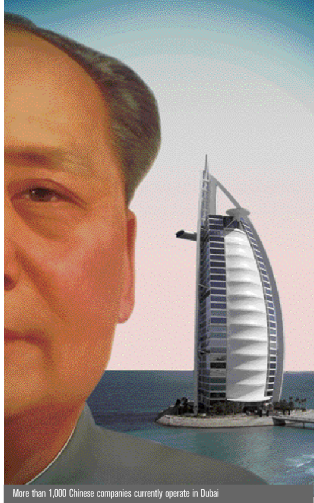
Its bilateral economic ties with China and India are aclear indicator of Dubai’s intentions to become a globalplayer by seeking out alliances with 3 billion newcapitalists, while its real estate giants are already atwork in the dragon kingdom, exporting their particular, andspectacular, brand of development know-how. From being anexpat backwater as recently as the early 90s, Dubai hasbecome a genuine holiday destination—the third most popularwith UK travelers—and a global venue for blue chip sportingevents that attracts the biggest names and fattest purses onthe planet.

It proves that a lot can be achieved by micro-managing themacro-economy if there is a strong ruling class with avision.

One wonders what Adam Smith might say to such a plan.

May 1, 2007 0 comments
0 FacebookTwitterPinterestEmail
  • 1
  • …
  • 584
  • 585
  • 586
  • 587
  • 588
  • …
  • 686

Latest Cover

About us

Since its first edition emerged on the newsstands in 1999, Executive Magazine has been dedicated to providing its readers with the most up-to-date local and regional business news. Executive is a monthly business magazine that offers readers in-depth analyses on the Lebanese world of commerce, covering all the major sectors – from banking, finance, and insurance to technology, tourism, hospitality, media, and retail.

  • Donate
  • Our Purpose
  • Contact Us

Sign up for our newsletter

    • Facebook
    • Twitter
    • Instagram
    • Linkedin
    • Youtube
    Executive Magazine
    • ISSUES
      • Current Issue
      • Past issues
    • BUSINESS
    • ECONOMICS & POLICY
    • OPINION
    • SPECIAL REPORTS
    • EXECUTIVE TALKS
    • MOVEMENTS
      • Change the image
      • Cannes lions
      • Transparency & accountability
      • ECONOMIC ROADMAP
      • Say No to Corruption
      • The Lebanon media development initiative
      • LPSN Policy Asks
      • Advocating the preservation of deposits
    • JOIN US
      • Join our movement
      • Attend our events
      • Receive updates
      • Connect with us
    • DONATE