• Donate
  • Our Purpose
  • Contact Us
Executive Magazine
  • ISSUES
    • Current Issue
    • Past issues
  • BUSINESS
  • ECONOMICS & POLICY
  • OPINION
  • SPECIAL REPORTS
  • EXECUTIVE TALKS
  • MOVEMENTS
    • Change the image
    • Cannes lions
    • Transparency & accountability
    • ECONOMIC ROADMAP
    • Say No to Corruption
    • The Lebanon media development initiative
    • LPSN Policy Asks
    • Advocating the preservation of deposits
  • JOIN US
    • Join our movement
    • Attend our events
    • Receive updates
    • Connect with us
  • DONATE
Finance

Jordan’s financial markets ready to take off

by Executive Staff November 1, 2006
written by Executive Staff

Jordan’s investment banking scene is changing, with lively action on the stage of initial public offerings, privatization and private equity deals, but also interesting goings-on offstage with some investment banking teams. In all that, Jordan is seeing an influx of Gulf capital into financial firms, which suggests that the country is migrating towards stronger involvement of regional investment banks but doing so as a secondary market for the Gulf, where the really big deals are going down.

Upfront, the financial and corporate investment market in Amman is lively, with IPOs for two recently established financial firms announced for early November, one for First Jordan Investment Company, a financial services and real estate investment firm with significant shareholding by Kuwaiti and Qatari players, and the other for Arab Future Investment Company, a startup investment company targeting small and medium enterprises.

Other new listings on the Amman Stock Exchange (ASE) since the middle of 2006 included Al Sanabel, an Islamic investment banking and brokerage firm that started trading in October, and July IPOs by brokerage Al Bilad Securities and by First Finance Company, a Sharia-compliant consumer finance provider. Each of the latter two startups entered the market under participation of Gulf shareholders and both firms were very successful in soliciting investor interest in their IPOs, reporting oversubscription rates of between four and five times apiece.

Another new brokerage company emerged in July through a merger of two existing Jordanian financial firms in conjunction with entry of a new regional partner, Al Mal Capital of the UAE. The new firm, Al Mal Securities Jordan, claims to be a regional leader in capitalization and plans to spread its brokerage wings to Lebanon, Syria, Iraq, and Palestine, according to Al Mal Capital. The company notabene also has near-term IPO intentions on the Amman Stock Exchange.

All in all, and despite a lackluster period for the ASE Index from February, Jordan has seen a rise in stock market flotations from seven in 2005 to 13 in the first half of 2006 alone. The majority of those were for companies in the real estate investment and financial services field, according to local investment guru Henry Azzam who multi-tasks as CEO of Amwal Invest—a 18-month-old Jordanian investment bank that went public in 2005—and chairman of the Dubai International Financial Exchange. By Azzam’s calculation, the combined paid-up capital of the first-half of 2006’s newly listed firms amounted to $463.32 million, a neat sixfold increase from the $77.15 million in total capital in the 2005 IPOs.

Market becoming too crowded?

While Jordan’s financial services sector has thus been expanding in operator depth and market presence, some industry insiders say that the market is getting too crowded with so many players. Omar Masri, founder and former head of investment bank Atlas Investment Group, said that the brokerage sector has filled to a point where some 50 companies are licensed to trade securities on the ASE, making this part of the financial industry “very fragmented.”

Zaid Nassif, vice president and head of corporate finance at Amwal Invest, said that investment banking in Jordan is progressing but at the same time competition between dedicated investment banks such as Amwal and Jordinvest and investment banking departments of commercial banks has increased greatly, leaving no room for new institutions the enter the sector.

According to Nassif, recent government regulations increased the market for investment banks by requiring IPO candidates to have qualified financial firms manage their offerings. Additionally, the growing count of listed companies would generate future demand for advisory and structuring of financial vehicles such as bond issues, rights issues, or eventual mergers and acquisitions.

Other experts pointed to Jordan’s active privatization program as a reliable source for investment banking needs, meshing with the local private sector demand and interest of Arab investors in the Hashemite kingdom to create a valid financial services sector.

While opening new opportunities, such market developments are also likely to test Jordan’s financial industry which is part of an overall national banking culture with relatively shallow roots in a country where commercial banking has bloomed later than in Lebanon and where still today one bank, Arab Bank, holds an overweight position in both market share and market capitalization.

Investment sector got its wind three years ago

The investment banking sector in Jordan—which saw initial formation of investment departments at commercial banks and some banks with investment angle starting in the late 1970s, and underwent another development push in the second half of the 1990s—really picked up around three years ago when trading activities on the ASE experienced a growth spurt, Masri said.

In his opinion, investment banking units of commercial banks in Jordan have “always remained a disappointment,” but at the same time the dedicated investment banks also “have not yet made a real impression in the local financial landscape.”

Masri described Jordan’s financial services environment as well-regulated, with a platform of recognition for investment banks and a vibrant bourse that is advanced in comparison to other Levant countries. But he said the greatest weakness in the sector was a severe lack of human capital.

Investment firms have large capital bases and well-known people at the top, “but they lack the workerbees,” he said. “Investment banking has growth with good potential in private equity. Advisory on privatization, private equity, fundraising services, and brokerage services, offer opportunities—but you need the right factory.”

While other investment bankers working in Jordan also see a need for further development of the regulatory side, they agree that the shortage of qualified investment professionals is the country’s main challenge in fostering sector growth.

This issue was illustrated earlier this year by a brain-drain at Atlas Investment Group, which saw several key employees depart the company to accept positions with investment firms in Saudi Arabia, Kuwait, Dubai and London.

In part, the rumblings inside Atlas were linked to the relationship between the investment bank and Arab Bank, which had acquired Atlas over two years ago. Industry observers said that recent moves by Arab Bank, such as excluding Atlas from advising on important acquisitions and the group’s capital increase, contributed to the disillusionment of senior employees.

In the words of Masri—who left Arab Bank and Atlas this spring to develop the investment activities of the Masri family-owned EDGO Group—the lack of alignment between the visions of Arab Bank and Atlas was one of the main problems.

According to the new top executive at Atlas, Arab Bank Head of Investment Banking Jawdat Halabi, the lure for professionals to move from Jordan to the better remunerated and more vibrant Gulf markets is strong, but the Jordanian market has recently grown more attractive. “The key issue is pay, and compensations in Jordan are moving much closer to the market trend,” said Halabi, who joined Arab Bank this year from the National Commercial Bank in Saudi Arabia.

Bullish on strategies for growth

Halabi confirmed that Arab Bank is bullish on Atlas and has a strategy by which the company will refocus its activities on asset management and brokerage services, positioning Jordan as one of several markets in the Levant and North Africa. At the same time, however, Arab Bank is developing a second investment arm in the Gulf region through AB Capital, a company registered at the DIFX. Arab Bank has no doubt this firm will take a larger role in investment banking than Atlas, because of the Gulf market’s superior size in comparison to Jordan and the Levant.

November 1, 2006 0 comments
0 FacebookTwitterPinterestEmail
Comment

Real men negotiate with Tehran

by Executive Staff November 1, 2006
written by Executive Staff

North Korea’s nuclear test should remind the world that what counts in politics is results rather than rhetoric. Especially since the “Axis of Evil” speech of January 2002, the Bush administration has pursued ideology-based policies that have failed in the real world.

The US has not achieved a basic level of success with any one of the members of the Axis: North Korea, Iraq and Iran. But Iran is the odd one out of the three, with a functioning state, an international strategy based on national interest, and a relative degree of internal pluralism.

And yet the opportunity for the United States and the European Union to reach an agreement with Iran over its nuclear program seems to be slipping away. Iran, unlike North Korea, is a signatory of the Nuclear Non-Proliferation Treaty (NPT), which means its atomic facilities are monitored by UN inspectors from the International Atomic Energy Agency. It also suspended enrichment for three years and allowed for more intrusive IAEA inspections under the treaty’s Additional Protocol.

But Iran’s talks with the EU, started in 2003, have foundered over a basic disagreement. The EU wants Iran to suspend enrichment indefinitely, so as to forestall Iran’s gaining technology for a bomb. Tehran, meanwhile, sees access to enrichment as a “right” guaranteed under the NPT.

The talks that sputtered to a halt in October between Javier Solana, the EU foreign policy chief, and Ali Larijani, Iran’s top security official, should not be the last chance to reach an agreement. Other ways of restricting Iran’s nuclear program—sanctions or US/Israeli military strikes—would be ineffective at best and highly dangerous at worst.

It seems clear both from what has leaked out from the Solana-Larijani talks and from Iran’s written response to the P5+1 (the permanent members of the UN security council plus Germany) that Tehran offered a compromise: Iran could continue to enrich during negotiations, but afterwards would limit domestic enrichment to the laboratory plant at Natanz. Other enrichment would be carried out in Russia while Natanz would remain under IAEA inspection.

Since the talks broke down, both sides have been digging in. The US and the EU continue to argue Iran should suspend all enrichment. Tehran defends its rights, and we must assume will go ahead with expanding the program beyond laboratory-level enrichment towards industrial-scale.

The outlines of a deal recognizing Iran’s laboratory-level enrichment have been evident for some time, and are acknowledged by many in Europe. But time is something now in short supply, and US and British insistence that Iran suspend all enrichment is becoming self-defeating.

Neither is this a static situation. Opponents of a deal in Tehran, while a minority in the collective leadership, are becoming more vocal and we assume more influential. President Ahmadinejad has used the issue, coupled with vehement criticisms of Israel, to project himself as a leadership figure throughout the Muslim and Arab worlds.

America looks less and less like it is in a position to dictate terms to Iran. Russia and China do not favor sanctions. Iraq is not stable, and there has been a telling growth in Afghanistan of suicide bombings against western targets. In Lebanon, Hizbullah held up the Israelis with a few hundred fighters. No wonder the Iranians think Americans can’t manage all these conflicts and attack them.

But politicians driven by ideology often fail to see realities staring them in the face, and this is what makes the stand-off with Iran so dangerous.

The insistence on ending all enrichment on Iranian soil has not produced the desired result. Hence it is time for unconditional talks aimed at reaching an agreement with Iran that accepts its right to nuclear technology, including a limited enrichment program, while also insisting it comes back into the Additional Protocol and extends its co-operation with the IAEA.

Of course Tehran would claim that as a “victory,” but in this imperfect and volatile world that is a small price to pay for a vital and practical step towards stability.

November 1, 2006 0 comments
0 FacebookTwitterPinterestEmail
Society

The show must go on

by Executive Staff November 1, 2006
written by Executive Staff

Beirut Gate, the $600 million Abu Dhabi-financed real estate development in Solidere, is going ahead as planned. How quickly and successfully it does so will be a confidence test for the local market.

Covering a total footprint of 21,448 m2 and a built-up area of 178,500 m2, the project consists of eight separate plots, on which eight separate but thematically-linked buildings are to be constructed. Residential space will anchor the development, accounting for 120,000 m2, whilst 25,000 m2 is set aside for ground-floor retail units and the rest is offices.

In terms of location, it will occupy most of the remaining empty land in the north-east of Solidere, including the open area near the Tabaris overpass, and, most controversially, the sites currently home to the ‘dome’ cinema and the nearby ruined church.

Six of the planned buildings will be designed by two architects: Christian de Portzamparc, the man behind Paris’s Cité de la Musique and New York’s LVMH building; and Arquitectronica, a US-based firm. The other two will be designed by Nabil Gholam, a Lebanese architect who has produced other downtown developments; and the Erga Group, another Beirut-based firm.

Emotional turmoil

Predictably, given its size and location, Beirut Gate looks set to stir emotions. Rumors have already circulated about the possible demolition of one of Beirut’s 1960s icons, the dome-shaped cinema, and its alleged replacement with mixed-use space. However, Abu Dhabi Investment House (ADIH), the UAE-based fund which bought the eight plots from Solidere back in March, denies that the cinema will be turned into a tower block.

“It’s a sensitive issue,” says Nicholas Fraser, Executive Director of Real Estate at ADIH. “And although we have no preservation orders, we have decided to build a new cultural center on the site. This will be given to the city, and could be used for modern art galleries or installations. As for the church, it will either be rebuilt or restored.”

In business terms, Beirut Gate might be emitting positive signals at a critical time—and Fraser hopes the Beirut municipality will accelerate the permit process to encourage other investors—but is demand sufficient to make it a financial success?

ADIH say they have already sold one 38,984 m2 plot to a developer at a price of $2,200/m2, with a second sale currently under negotiation. Fraser hopes that all eight will be sold by spring or summer of next year, probably to a combination of Lebanese and GCC-based investors. If they all buy at that price, then ADIH itself will generate a handsome return—and it claims that investors or developers can expect returns of 18%.

A litmus test?

“I’d estimate that ADIH bought the land from Solidere at around $1,200/m2, which would produce a substantial margin if they sell all the plots at $2,200/m2,” says RAMCO’s Raja Makarem. “A secondary developer who then buys the land from ADIH would need to charge about $5,000/m2 to individual tenants to be able to make a decent profit.”

At pre-war levels, $5,000/m2 is certainly within the top bracket of downtown property, though not at the very pinnacle of pricing. But whilst residential space is still a fairly solid bet, and any developer purchasing a Beirut Gate plot should have a specific clientele in mind, office space in central Beirut is already subject to quite high vacancy rates, a situation which is likely to persist.

Other more immediate concerns include that of construction access for such a large site, especially in a city that already suffers from debilitating traffic. Fraser, though, predicts that the building process will be staggered.

Beirut Gate could prove to be a litmus test for confidence in the post-war Lebanese real estate market. With the other huge downtown project—the 100,000 m2 Kuwaiti-financed Phoenicia Village—temporarily on hold, the success of this development will be an important gauge for the local market as a whole.

November 1, 2006 0 comments
0 FacebookTwitterPinterestEmail
Finance

Banking reforms- Syria loosens up ?

by Executive Staff November 1, 2006
written by Executive Staff

When attendees crowd the new Four Seasons Hotel in downtown Damascus for the opening of the Syrian Banking Conference on November 3-5, talk will undoubtedly turn to the complications that private banking still faces two years after the first such institutions opened for business.

Indeed, although five private banks now operate—and three more are on the way by year’s end—there is a palpable sense among Lebanese bankers, who have led the sector’s expansion in Syria, that additional measures must be passed, and soon, if long-term stability and growth is to be achieved.

As a recent Audi research report said, “serious hurdles are facing banking activity, [which calls] for the implementation of further reforms.”

One criticism is that the sector still suffers from a dangerous lack of transparency in regulation, oversight and operation. Underscoring the point, the latest International Monetary Fund (IMF) report on Syria asserts that the recent rapid expansion of private credit is likely to have weakened the quality of bank’s lending portfolios because there is little in the way of risk management practices—not to mention a credit bureau that might accurately assess a customer’s suitability for debt. At the same time, according to one Beirut-based banker intimately involved in his company’s expansion across the border, “The Syrian central bank…is lacking independence and is not playing its role like any other central bank in the world.”

Such criticism is avoided in public because the central bank, under its new governor Adib Mayyali, is seen as a strong force pushing for further reform, but the comment illustrates the dominant view that politics is still intervening in the sector, preventing much-needed exchange rate reforms, the restructuring of state-owned banks and, as a consequence of both, much sought-after interest rate liberalization.

Syrian Deputy Prime Minister for Economic Affairs Abdullah Dardari, freely admits as much, but insists that “there is an intensive liberalization program for the financial sector in Syria—including the reforming of the central bank, making it more independent and more liberalization in terms of the monetary policy where there will be more room for the market.”

To underscore his seriousness, he points to a recently initiated program of cooperation with the IMF, the European Union and the Arab Monetary Fund to address the core issues, but acknowledges that the effort will take up to two years to complete. And even then the question becomes to what extent the government will actually act on the recommendations by passing the relevant laws.

Although some bankers, like Jean Bassil, assistant GM at Byblos Bank Syria, are hopeful that Dardari’s timeframe will indeed come to fruition, with “the remaining restrictions and the complicated regulations disappearing,” two years may prove to be a long time to wait, especially for some of the smaller changes which bankers are increasingly clamoring for.

Indeed, at the top of that list, according to several sector leaders, are the private ownership cap of 49%; an improvement in clearing and settlement procedures; the lack of placement vehicles like T-bills which might tease more money out of Syria’s cash economy (CDs have only recently been allowed); and the convertibility of the currency which, according to one banker, “is still impossible.”

"The major enhancements we would like to see,” explained Bank Audi Syria’s Bassel Hamwi, in comments widely agreed upon, “are related to e-compensation, the automation of the central bank accounts, and the setup of a professional central risk unit.”

That matters have reached this point should come as no surprise: the Syrian economy operated as an integrated, state-run entity for decades, which means that as the “low-hanging fruit” of financial reform was picked in recent years, it has now become nearly impossible to introduce further reform without going to the heart of the issue.

And that means finally tackling the immensely difficult issue of financing state-run institutions, floating the currency and creating risk management practices that are not based, as one Lebanese banker put it, on “long coffee chats to determine bankable credits,” much less the political pedigree of a certain project.

Given all this, participants at November’s Syrian Banking Conference will indeed have much to discuss.

November 1, 2006 0 comments
0 FacebookTwitterPinterestEmail
Capitalist Culture

Vote to blow bush off course? US’s Iraq plan sinking

by Michael Young November 1, 2006
written by Michael Young

Around the time this article will appear, the United States will be preparing for a congressional election that may have a decisive impact on capitalist culture in the Middle East—in other words, on the stated aim of the Bush administration to advance liberal democracy in Arab countries, so exchanges of ideas and money are free, and peoples freer.

To be sure, that project is already half a way down into the grave, and dirt is being shoveled over it. Only administration stalwarts still publicly defend the notion that Iraq is a democracy in the making. With American casualties dramatically on the rise, and supporters of the war increasingly doubtful about the conflict’s outcome, there is not only little conviction that advancing Iraqi democracy is even relevant anymore, but there is also a sincere worry among pro-Bush Republicans that Iraq may be the reason why they lose their majority in the House of Representatives.

Death by committee

Then there is the fact that the Bush administration has named a high-level commission, the Iraq Study Group, to shape a new approach to the conduct of the war. The head of the group is James Baker, the former secretary of state under President George H.W. Bush. The silky Baker, for all his expertise, was never someone much concerned with democracy and human rights. A political “realist,” but also someone close to Big Oil, his priority was usually to advance American national interests in the Middle East in collaboration with what the Washington Arabist establishment has called “our traditional allies.” That means primarily Saudi Arabia and Egypt, neither democratic paragons, along with other regimes having little concern for the tropes of capitalist culture.

The war in Iraq and also the rise of Iran have only strengthened these regimes in American and European eyes. With Tehran batting away international efforts to end its uranium enrichment and the West increasingly fearful that Iran is close to building a nuclear device, neither Washington nor the EU is keen to destabilize their Arab allies with calls for more representative and open political systems.

That would be understandable, if policy were about the here and now. But the reality is much more complex. The very reason why Iran appears so threatening to the Arab world—and the reason why Iraq seems to pose such a threat to its neighbors—is that the Arab states are not democratic. As they confront increasingly difficult challenges in the region, their regimes have the added burden of knowing they face a serious legitimacy problem at home. And where there is a problem of legitimacy, there is a problem of stability and predictability. Which Arab regime can be sure its people will defend the state if it is threatened?

The irony is that while the Arab regimes deny democratic legitimacy to their own people, the American democracy project in the Middle East, or what remains of it, might well be permanently terminated thanks to an American democratic happening. The outcome of the congressional elections remains unclear, but in late September and October what seemed like a commanding Republican advantage suddenly began to collapse. First, a National Intelligence Estimate suggested that the Iraq war, rather than damaging terrorism, had allowed it to proliferate in the country. Then, Bob Woodward’s new book, “State of Denial,” further brought home that the administration had lied about Iraq. And a scandal involving Rep. Mark Foley, a Florida Republican caught sending lewd messages to congressional pages, harmed Republican chances when it was revealed that the party’s leadership had tried to conceal his behavior.

Democracy threatens grand design

A Democratic victory in the House would probably not substantially alter the Bush’s Iraq policy in the short term. However, it would deeply change the framework of the debate. Facing a more hostile House, President Bush would have to make concessions on Iraq. This wouldn’t necessarily be bad, given that American policy today seems utterly ineffective, but it is also very unlikely that democracy would be a priority if the Democrats’ aim—and perhaps that of quite a few Republicans—is to pave the way for an exit from Iraq. One doesn’t build a capitalist culture while booking passage home.

So Bush’s grand democratic ambition for the region would sink without a trace, its death to be formally declared in two years’ time when the president leaves office. That would be a shame, and many would be right in saying that Bush was to a large extent to blame. But that doesn’t diminish the fact that if the US returns to a policy of condoning undemocratic regimes in the Middle East, American interests will be further threatened. Thugs often make for very unreliable allies.

Michael Young

November 1, 2006 0 comments
0 FacebookTwitterPinterestEmail
Comment

“They hate us for our freedoms”? If only they knew

by Abigail Fielding-Smith November 1, 2006
written by Abigail Fielding-Smith

Immediately after September 11, 2001, while the ruins of the World Trade Center still smoldered, some of the more thoughtful members of the punditocracy and the population asked the obvious question of why: “Why did this happen? What had the US done that was so bad?”

For some—George W. Bush, for instance—the answer was clear. It wasn’t what the US had done, it was who we were.

“Americans are asking, why do they hate us?” he said in a joint address to Congress on Sept. 20, 2001. “They hate our freedoms—our freedom of religion, our freedom of speech, our freedom to vote and assemble and disagree with each other.”

He used “freedom” 13 times in that one speech. It would, as it turns out, become a recurring theme for the president. In his second inaugural address, Bush used “freedom” 27 times, more than twice as many times as his joint address. That’s a lot of freedom. And that’s not even counting the “freedom fries” on the menu at the Congressional cafeteria.

But under this president and the bills he’s signed into law, Americans are losing their freedoms at an alarming rate—and with them, the United States’ power to inspire people to work for real freedom from tyranny.

One shouldn’t discount the power the idea of America has for oppressed people of the world. When Syria still had its boot on Lebanon’s throat, Americans in the country were often reminded of this power by cab drivers, shopkeepers and other strangers who spoke movingly of America’s support for freedom around the world and expressed hope that it would support freedom in Lebanon, too. And then, for a brief moment during the Cedar Revolution, Bush seemed to support the country.

Back home, however, it was a different story. On October 17, Bush signed into law the Military Commission Act of 2006, which supporters say provides a framework for trying terrorism suspects while “clarifying” the Geneva Conventions. Under the law, Bush’s new powers are the very definition of tyranny. Setting aside it’s thumbs-up to interrogation techniques such as water-boarding, sleep depravation and stress positions—techniques which “normal people consider torture,” as the New York Times put it—the act allows the president of the United States or the secretary of defense to declare a US citizen, even if they had never left the States, an “unlawful enemy combatant,” throw them into a military prison and never bring charges against them. Foreign nationals or legal residents cannot appeal their imprisonment or demand a trial, a right known as habeas corpus, while Americans’ rights to a habeas hearing are strictly limited. And this can happen anywhere in the world. If the president says you’re a bad guy, it’s pretty much game over for you. Oh, and you’ll probably be tortured.

Even today, there are possibly hundreds of Lebanese detainees languishing in Stygian darkness in Damascus. Men (and some women) who were taken in the night by the Syrian forces after its October 13, 1990, invasion have been tortured, have never had a trial nor been informed of the charges against them. Just like “dirty bomber” Jose Padilla somewhere in a US military brig!

The difference between Syria and the United States is that Washington is—and I stress this—legally doing this. So what freedoms exactly is the United States fighting for? What brave fight against “Islamo-Fascism” is the US waging when its own laws sound like they were written by Josef Stalin?

That Osama bin Laden, Saddam Hussein, Abu Musab al-Zarqawi and their ilk were and are butchers, mass murders and thugs is beyond dispute. That they’re enemies of true freedom and hurtful toward the peaceful people of the world is also indisputable. But America’s judicial system isn’t about who its enemies are; it’s about who America is.

Thomas Paine wrote in 1795, “An avidity to punish is always dangerous to liberty. … He that would make his own liberty secure must guard even his enemy from oppression; for if he violates this duty he establishes a precedent that will reach to himself.”

When America looks at her enemies, she now sees herself.

November 1, 2006 0 comments
0 FacebookTwitterPinterestEmail
Comment

High-speed Internet access still in the slow lane in Lebanon

by Executive Staff November 1, 2006
written by Executive Staff

For the past several months, a triumphant press release has been sitting on internet provider IDM’s homepage, gathering dust and providing, at the same time, one indication of how the government has been unable to address even small problems that seem to offer such unambiguously large rewards.

“IDM,” the release reads, “Is pleased to announce that on January 3rd, 2006, it has signed with the Ministry of Post & Telecommunications (MPT) a Memorandum of Understanding (MOU) that will allow IDM to offer broadband Internet access over DSL (Digital Subscriber Line). The service will be commercially available once the relevant decrees will be finalized and issued from the Council of Ministers.”

Of course, in retrospect, the first indication that complications might arise should have been the discrepancy between the headline of the press release—“Agreement … allows IDM to offer broadband Internet access over DSL soon in Lebanon” —and the lead paragraph above.

For when one reads on, the indispensable notion of “soon”—critical to those Lebanese who have been hearing about DSL’s imminent arrival for nearly three years now—disappears, apparently unworthy of further elaboration. In fact, any suggestion that “the relevant decrees” themselves might be finalized “soon” essentially boils down to this: DSL will be available once the Council of Ministers decides to act.

Unfortunately, 11 months on, DSL appears no closer to a daily reality than it did before the MOU was signed earlier this year.

This is due to several factors, which are conspiring together to prevent the introduction of what is seen, the world over, as a key driver of economic, intellectual and social progress.

First and foremost, since long-distance calling revenue produces hundreds of millions of dollars each year for the general budget, the government is loathe to introduce broadly available and affordable high-speed internet—the rationale being that people will start to use Voice over Internet technology (VoIP), which is illegal in Lebanon, to place their calls for virtually nothing.

Second, there is a capacity problem: Lebanon’s international fiber links out of the country and onto the commercial internet simply cannot handle a huge increase in domestic users. Long-awaited plans to increase capacity have likewise been subject to delay after delay.

As a result of these issues, internet tariffs in Lebanon remain the highest in the region, with IDM selling a two-megabyte per second upload and download speed package for a whopping $6,000 per month!

Even IDM’s current package, which approximates DSL’s bare minimum 256-kilobyte download speed (upload speeds are capped at a VoIP-killing 32 kilobytes per second), comes in at $150 per month. And that is after sharing bandwidth with other customers in the area and a $300 installation fee.

Although the promised DSL service in Lebanon is meant to provide upload and download speeds in excess of 256 kbps, the expected price of $50 a month still is almost double the average rate globally.

The situation is particularly exasperating since Lebanon’s human capital—its highly-educated and creative workforce—is routinely cited by Lebanese and non-Lebanese analysts alike as arguably the country’s greatest asset, along with its comparatively liberal economic structures.

Modern business, however, is driven by connectivity: without affordable access, Lebanon is increasingly forced to export its precious human capital abroad to better-connected, if less intrinsically liberal, economies. Indeed, even for lower-skilled workers, the lack of a true internet economy means exclusion from emerging opportunities seized on by other countries in the region—call centers, for example, in Tunisia and Morocco that are now serving a wide array of European Union businesses.

The situation reached the point of embarrassment last month when in succession, 1) former pariah state Libya announced a $250 million program with an American non-profit to provide inexpensive laptop computers and satellite internet for all of the nation’s 1.2 million schoolchildren; 2) An international report assessed that internet penetration in Israel reached 71% in 2005, putting the Jewish state in fifth place worldwide; and 3) (just to cap the month off) Iran announced it was making DSL available, but that it would cap upload and download speeds at 128 kbps in an apparent attempt to block usage of politically-oriented streaming video and audio sites.

Thus, the sad fact is that Lebanon is not only being outpaced in the internet economy by both its southern foe and a war-torn, former backwater state with little in the way of human capital, but its own provision of internet services essentially approaches the Iranian model (albeit without the intention to censor).

“Nigeria, Senegal, Libya and Iran announced the DSL entry to their country,” observes Zakiye Karam, commercial manager at IDM. “Who knows, maybe Iraq would do it before Lebanon.”

The suggestion is not entirely implausible. After all, South and Southeast Asian countries have seen a cumulative 57% growth in DSL users over the past year. In the Middle East and Africa, the number of DSL users increased by nearly 1.75 million between July 2005 and July 2006.

Iraq, despite its chaos, has a burgeoning mobile communications sector ideally suited for implementing so-called “leap-frogging” technologies—like wireless Internet—thus avoiding the need to build actual lines on the streets. (Such technologies are also on the rise in Lebanon, with Cedarcom leading the way through its launch of mobile wireless broadband service this month. These high-speed, lower-cost alternatives may even end up trumping the stalled DSL drive — see page 79.)

In any case, Lebanon is seeing little in the way of movement towards a resolution of the DSL issue.

In fact, nine months ago, Minister of Telecommunications Marwan Hamade responded to one reporter’s query on the subject by saying, “The ministry has been paralyzed for years while the main items discussed were conflicts with the mobile companies … Now that we are out of this mess, we can address the issue of broadband.”

Unfortunately, as with the US in Iraq, Hamade’s prognosis that things may finally be clearing up seems, 11 months later, to be worth about as much as promises issued from the suffocating confines of the Green Zone.

It is also perhaps an indication that it will take a lot more than resolving one old issue at the ministry before Lebanon is finally able to move ahead into the Internet economy.

November 1, 2006 0 comments
0 FacebookTwitterPinterestEmail
Society

Killing Mr. Lebanon – New book on target

by Michael Karam November 1, 2006
written by Michael Karam

On that sunny February day in 2005 when they killed Rafik Hariri, Basil Fuleihan and 21 others outside the St. Georges hotel, I was due to have lunch at Le Vendôme at 1pm. However, that morning the venue was changed. Had it not, and being the punctual sort, I would have arrived in Ain Mreisseh minutes before 1pm. Quite where I would have been as Hariri’s convoy hurtled past Marina Towers seconds before its fiery denouement, I am not sure. I could have missed the blast, been caught in it or been blown flat on my back as I handed my car keys to the parking valet. As it was, I never even heard the blast. It was warm day, the a/c was on and the radio was blaring. I had taken a bad route and was stuck in traffic outside the French embassy. Lunch was cancelled. I went home, poured a large whisky before turning on the TV and watched the news unfold. My mother called from London. “Yes,” I told her. “He is dead.” Reads like a Ludlum thriller

Nearly two years on, the crime, while momentarily overshadowed by the recent summer war, is still etched on our minds. It was a defining second in Lebanese history, one of those moments that we divide into life before and life after. For those who care about such things, the events that took place in the hours before and after the explosion are thrillingly and minutely recounted in Killing Mr. Lebanon: The Assassination of Rafik Hariri and Its Impact on the Middle East by Nicholas Blanford. The opening chapter reads like a Ludlum thriller, made all the more compulsive because Blanford has skillfully knitted together the events of that Valentine’s Day morning through the eyes of no more than 15 people in whose lives that day will forever resonate.

However, there is much more to KML that makes it one of the most important and entertaining books in a long time to examine the tectonic plates that grind under Lebanon’s political surface, charting as it does the raw power struggle between Lebanon and Syria that eventually led to the presidential extension, Hariri’s resignation and the passing of the fateful UN resolution 1559. As its title hints, the book also seeks to portray Hariri—“He was a corrupter rather than corrupt”—as the prodigal son who rode into town on the back of a billion-dollar fortune and set about realizing a dream to take Lebanon and transform it into what he saw as its rightful position as the Hong Kong of the region. In the interest of disclosure, Nicholas Blanford is a friend. He is also a dogged and thorough reporter for the Times, Christian Science Monitor, Time Magazine and occasionally, the pages of Executive. He has lived in Lebanon since 1994 and has reported from Iraq, Kuwait and Saudi Arabia. He is also one of the most knowledgeable reporters in the world on Hizbullah. Tragic epilogue

KLM was written over eight months. It contains over 80 interviews conducted in three countries—Lebanon, France and Syria—lasting over 100 hours. Blanford traveled to Paris to interview Saad Hariri and Abdel Khalim Khaddam. He sat with an emotionally drained Jumblatt in Mokhtara, and quizzed Marwan Hamadeh and the late Gebran Tueni. In examining the role of Syria in Lebanon, he spoke to Fares Boueiz, who is by all accounts a great raconteur, and Qassem Qanso, whom Blanford found surprisingly likable. Even if it needs to be updated, the book will stand the test of time when others will loiter in the remainder bins. IB Tauris took a gamble by asking Blanford to write what is the defining book on the event and its impact. The investigation was, and still is, a work in progress, so at any time the book could have been overtaken by events. It is, however, bang up to date. It concludes with a powerful epilogue written on July 23, midway through this summer’s war between Israel and Hizbullah, in the form of a dispatch datelined Tyre. As Blanford notes, the war was a tragic finale to the Hariri story. “Hariri had always feared that Hizbullah’s hostility toward Israel would lead Lebanon into just this kind of slaughter and destruction. How he had bargained, negotiated and maneuvered to avoid such a catastrophe. Yet it had all come to nothing. His death and the subsequent chain of events—the polarization in Lebanon over Hizbullah’s arms, resurgent sectarianism, government weakness, Syrian meddling and international manipulation—had led to this unfolding disaster.”—MK

Killing Mr Lebanon: The Assassination of Rafik Hariri and Its Impact on the Middle East by Nicholas Blanford is published by IB Tauris, £17.99


November 1, 2006 0 comments
0 FacebookTwitterPinterestEmail
Society

Samsung’s growth in Middle East – CE giant hopes to expand its brand

by Nicholas Noe November 1, 2006
written by Nicholas Noe

This September in Berlin, in his keynote address at IFA 2006, the world’s largest consumer electronics exhibition, Samsung President and CEO Gee Sung Choi reviewed the tremendous success enjoyed by his company over the past few years and highlighted several exciting new developments on Samsung’s horizon. With 2005 parent company sales of $56.7 billion and net income of $7.5 billion, and powered by a staff of approximately 128,000 people in 57 countries, Samsung has rapidly risen to the position of global powerhouse, leaping from 34th place in Interbrand’s 2005 ranking of global brands (based on brand equity) to 20th place in 2006. (To give some more perspective, parent company sales in 2001 were valued at $24.4 billion, and net profit at $2.2 billion—values that more than doubled and tripled, respectively, by 2005.)

Leadership matters

Mr. Choi’s leadership has played a large role in these impressive strides; in his speech, Choi recalled his comments at IFA 2003, when he coined the term “digital renaissance,” predicting the growth of the consumer electronics industry and a global transition towards digital technology that have since been realized. With this in mind, his concept for the next step in the “digital renaissance,” an era of “rich digital experiences,” carries extra weight; delivering such experiences to end consumers will play a key role in Samsung’s strategy for further consolidating its market leadership.

Although the Middle East is not Samsung’s largest market, it is one of its fastest-growing, and is poised to play an increasingly significant role in the company’s global strategy. In terms of brand power, Samsung is the #3 consumer electronics company in the Middle East and Africa region, with a high level of brand awareness and overwhelmingly positive consumer feedback.

Headquartered in Dubai, Samsung Middle East and Africa (MEA) operates through ten branches and two subsidiaries in the region, with a permanent workforce of 434 employees. Although the brand’s leadership position is more recent, Samsung has a 20-year history in the Middle East.

MEA is no exception to Samsung’s global growth trend, and represents one of company’s fastest-growing markets along with South East Asia, Latin America, Europe and China. Since 2001, average annual revenue growth has been 24%, with 2005 revenues for MEA reaching $2.5 billion. According to MEA Corporate Marketing Manager Haris Munif, expected growth for 2006 is 18-20%, with expected revenues for the year as high as $2.9 billion.

“Our sales and growth rates in the MEA region are very much on track with other markets,” notes Munif. “In absolute terms, Samsung MEA contributes approximately 5% to global sales. Sales contribution is higher in some other markets as they are huge customers of Samsung B2B products like LCD screens and semiconductors.”

Samsung’s best-sellers in the MEA market reflect the diversity of the company’s offerings. According to Munif, AV (in particular, their flagship ‘Bordeaux’ LCD TV, which is a regional market leader) and home appliances have proven some of Samsung MEA’s strongest categories, along with the mobile phone sector—where Samsung, with its 20% market share, commands 3rd position in the regional market.

According to Munif, Samsung “has been the pioneer in introducing the era of digital convergence to the MEA consumer,” through its popular, innovative and intuitive products. Among its recent accomplishments, Munif cites Samsung’s key role in introducing “the dawn of smart home technology in this region, by displaying the first home networks in collaboration with Etisalat.”

Universal appeal

Although Samsung strives to achieve a universal image (at IFA 2006, a central section of Samsung’s expansive hall featured a display of “lifestyle concept” rooms, including Scandinavian, Asian and Mediterranean interior designs, to highlight the ease with which its digital products blend seamlessly in any home setting), partnerships play an increasingly significant role in the company’s corporate strategies, and Samsung has not missed the opportunity to draw on its two decades of experience in the Middle East when it comes to branding. “Samsung has a predominantly centralized approach to marketing; however, we do have an effective mix of global and local marketing campaigns,” explains Munif. “This ‘glocal’ marketing approach touches the local sentiment but does not compromise on global brand equity. A very good example is the upcoming Doha Asian Games campaign, for which Samsung has created an entirely local campaign for its global flagship ‘Bordeaux’ LCD TV.”

Samsung MEA may be part of a global brand, but according to Munif, MEA’s ultimate commitment is to its local end users:

“Our goal is make Samsung the most preferred and loved brand in the region. We aim to achieve this by focusing on our consumers’ needs, and delivering localized products and solutions to fulfill them.”

November 1, 2006 0 comments
0 FacebookTwitterPinterestEmail
State department

With friends like these

by Executive Contributor October 19, 2006
written by Executive Contributor

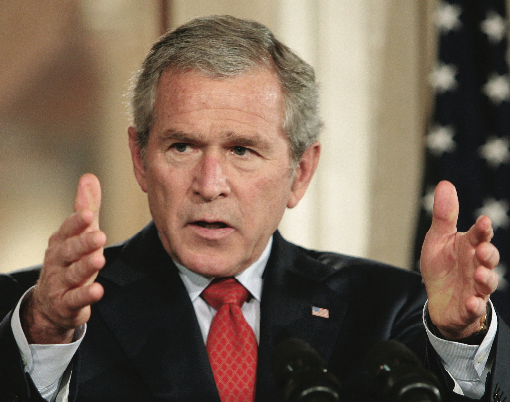
Israel’s 34-day war on Lebanon crystallized Washington’s position in the Middle East conflict. The Bush administration’s unequivocal support of Israel’s actions has further alienated US from the Arab world and even succeeding in distancing traditional allies such as Saudi Arabia.
The Saudis – like the Jordanians and the Egyptians – secretly wished for a quick war that would cut Hizbullah down to size, but as the conflict dragged, these leaders had no option but to call for a ceasefire. It was to no avail: the US only succeeded in losing more hearts and minds in the region, giving birth to a new generation of anti-US resentment.

Burning issues
Given the circumstances, Washington can hardly pretend to be an objective broker to a peaceful settlement to the Arab-Israeli dispute. That is, if the issue of peace talks ever were to surface again in the little time – less than two years now – that George W. Bush has left as the resident of 1600 Pennsylvania Avenue. The president’s remaining months in the White House will be taken up by the following burning issues:

  1. The November elections: With the Democrats attempting to retake the House and Senate from the Republican Party in preparation for the 2008 presidential elections, Bush has already begun campaigning for the Republicans. Much of his time between now and November will be spent flying around the country trying to garner support for the Republican Party.
  2. The ongoing war in Iraq: That conflict alone must be responsible for more than a few of the president’s grey hairs. Despite the White House spin, Bush’s hopes of a quick victory in Iraq sputtered and died, amid growing sectarian violence with hundreds of Iraqis dying on a daily basis. In fact, Bush will be lucky if the all-out civil war that threatens to rip Iraq apart does not break out on his watch – if it already hasn’t, that is. It would be a terrible legacy for any president to leave behind. Then there is the ever-increasing casualty rate – the body count – among both US military personnel and the civilian Iraqi population. And finally, with no visible face-saving exit strategy in sight for the administration, that US forces are expected to remain in Iraq well beyond the end of the Bush presidency.
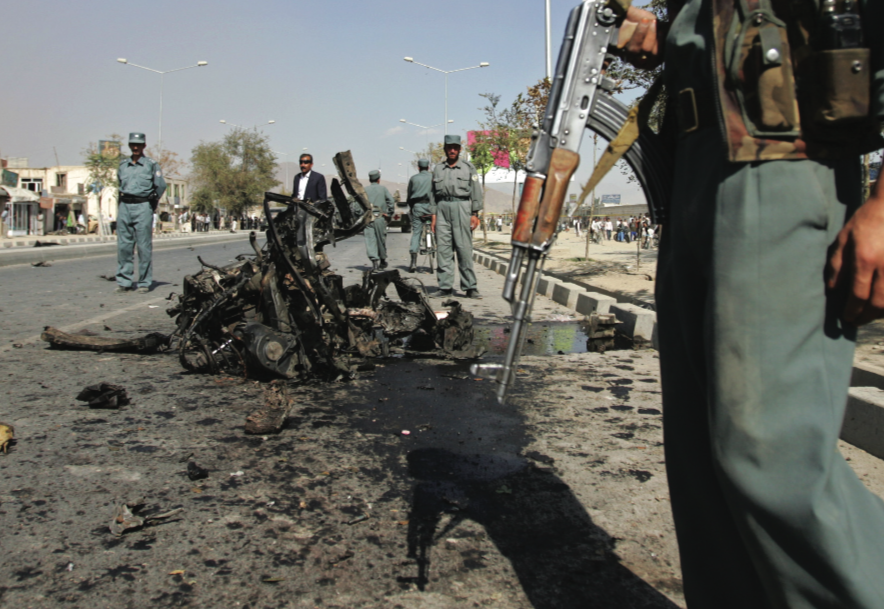
  3. The war in Afghanistan: the resurgence of the Taliban in recent months is a clear indication that the war in Afghanistan is far from over. Armed opposition to the pro-American government of Hamid Karzai – which was limited until recently to the southern part of the country – is slowly creeping into the capital, Kabul. Car bombings, suicide bombings and targeted shootings of government officials are becoming more and more common.
  4. The war on terrorism: this is a war being fought in the shadows, and it is giving the president a tough time, even with members of his own Republican party over such issues as the rights of suspects to be tried and convicted based on evidence kept secret even from the accused.
  5. The Iranian nuclear dossier: of all the urgent dossiers piling up on the president’s desk, the Iran nuclear file must be one of the most burning issues. The Bush administration is faced with one of its toughest decisions yet: what to do with Iran’s nuclear ambitions?

Beltway gossip
This this is where Lebanon – and Hizbullah – and Syria enter the scene. There is much talk inside the Washington Beltway of a possible strike on Iran, should the Islamic Republic refuse to abide by the international community’s request that it stop its nuclear program. Iran claims its nuclear program is intended for purely civilian use, but the United States and its Western allies are not convinced. If the US and/or Israel were to attack Iran’s nuclear facilities, what are the counter-measures Iran is likely to take? A good probability is that it would have Hizbullah unleash its rockets on Israel, as it did during the 34-day conflict with the Jewish state.
Such action would push Israel to retaliate against Hizbullah – and in turn against Lebanon, as it did during the July/August war. So is it all gloom and doom for the Lebanese, barely out of one crisis, before an even greater catastrophe befalls the country?
Not necessarily so. Here is an optimist’s view from Washington, DC.
The arrival of several thousand blue-helmeted peacekeepers from Italy, Spain and France, along with several thousand Arab and Muslim soldiers can be seen as a sign that the international community very much supports a stable and independent Lebanon. But what the Western powers want is a “demilitarized” zone in south Lebanon where the 15,000 Lebanese Army troops dispatched to the area can, with the support of the 15,000 foreign soldiers backing up the Lebanese Army, act as a deterrent and keep armed militias at bay.

The western powers want a demilitarized zone where armed militias can be kept at bay

Facilitating integration
For that to happen – for South Lebanon to become demilitarized – there would be a need for Hizbullah to transform itself from what it currently is – a political party with a lot of muscle – into purely a political grouping. That in turn would facilitate its integration into Lebanese political life. It has been done before in many parts of the world. Unfortunately, those are rarely the ways of the Middle East; for one, it is far too logical. And despite two United Nations resolutions (1559 and 1701) calling for the disarmament of all militias and groups in Lebanon with the exception of the Lebanese Army, don’t expect Hizbullah to start handing in its weaponry any time soon.


The most likely scenario is the one practiced many times over the years in Lebanon whenever a particular militia found it had to give up its guns. Most of the weaponry disappears underground while a token number of old machine guns along with some faulty rocket launchers are ceremoniously handed over in front of the world’s media. All sides look good, everyone goes away happy until the next time.
But what of Syria’s role in all this? So far it has remained unmentioned. Syria is edging to get back into mainstream Lebanese politics and is betting on its supporters in Lebanon (today, Hizbullah and Gen. Michel Aoun’s Free Patriotic Movement) to open the door for them.

October 19, 2006 0 comments
0 FacebookTwitterPinterestEmail
  • 1
  • …
  • 609
  • 610
  • 611
  • 612
  • 613
  • …
  • 686

Latest Cover

About us

Since its first edition emerged on the newsstands in 1999, Executive Magazine has been dedicated to providing its readers with the most up-to-date local and regional business news. Executive is a monthly business magazine that offers readers in-depth analyses on the Lebanese world of commerce, covering all the major sectors – from banking, finance, and insurance to technology, tourism, hospitality, media, and retail.

  • Donate
  • Our Purpose
  • Contact Us

Sign up for our newsletter

    • Facebook
    • Twitter
    • Instagram
    • Linkedin
    • Youtube
    Executive Magazine
    • ISSUES
      • Current Issue
      • Past issues
    • BUSINESS
    • ECONOMICS & POLICY
    • OPINION
    • SPECIAL REPORTS
    • EXECUTIVE TALKS
    • MOVEMENTS
      • Change the image
      • Cannes lions
      • Transparency & accountability
      • ECONOMIC ROADMAP
      • Say No to Corruption
      • The Lebanon media development initiative
      • LPSN Policy Asks
      • Advocating the preservation of deposits
    • JOIN US
      • Join our movement
      • Attend our events
      • Receive updates
      • Connect with us
    • DONATE