• Donate
  • Our Purpose
  • Contact Us
Executive Magazine
  • ISSUES
    • Current Issue
    • Past issues
  • BUSINESS
  • ECONOMICS & POLICY
  • OPINION
  • SPECIAL REPORTS
  • EXECUTIVE TALKS
  • MOVEMENTS
    • Change the image
    • Cannes lions
    • Transparency & accountability
    • ECONOMIC ROADMAP
    • Say No to Corruption
    • The Lebanon media development initiative
    • LPSN Policy Asks
    • Advocating the preservation of deposits
  • JOIN US
    • Join our movement
    • Attend our events
    • Receive updates
    • Connect with us
  • DONATE
Society

The show must go on

by Executive Staff November 1, 2006
written by Executive Staff

Beirut Gate, the $600 million Abu Dhabi-financed real estate development in Solidere, is going ahead as planned. How quickly and successfully it does so will be a confidence test for the local market.

Covering a total footprint of 21,448 m2 and a built-up area of 178,500 m2, the project consists of eight separate plots, on which eight separate but thematically-linked buildings are to be constructed. Residential space will anchor the development, accounting for 120,000 m2, whilst 25,000 m2 is set aside for ground-floor retail units and the rest is offices.

In terms of location, it will occupy most of the remaining empty land in the north-east of Solidere, including the open area near the Tabaris overpass, and, most controversially, the sites currently home to the ‘dome’ cinema and the nearby ruined church.

Six of the planned buildings will be designed by two architects: Christian de Portzamparc, the man behind Paris’s Cité de la Musique and New York’s LVMH building; and Arquitectronica, a US-based firm. The other two will be designed by Nabil Gholam, a Lebanese architect who has produced other downtown developments; and the Erga Group, another Beirut-based firm.

Emotional turmoil

Predictably, given its size and location, Beirut Gate looks set to stir emotions. Rumors have already circulated about the possible demolition of one of Beirut’s 1960s icons, the dome-shaped cinema, and its alleged replacement with mixed-use space. However, Abu Dhabi Investment House (ADIH), the UAE-based fund which bought the eight plots from Solidere back in March, denies that the cinema will be turned into a tower block.

“It’s a sensitive issue,” says Nicholas Fraser, Executive Director of Real Estate at ADIH. “And although we have no preservation orders, we have decided to build a new cultural center on the site. This will be given to the city, and could be used for modern art galleries or installations. As for the church, it will either be rebuilt or restored.”

In business terms, Beirut Gate might be emitting positive signals at a critical time—and Fraser hopes the Beirut municipality will accelerate the permit process to encourage other investors—but is demand sufficient to make it a financial success?

ADIH say they have already sold one 38,984 m2 plot to a developer at a price of $2,200/m2, with a second sale currently under negotiation. Fraser hopes that all eight will be sold by spring or summer of next year, probably to a combination of Lebanese and GCC-based investors. If they all buy at that price, then ADIH itself will generate a handsome return—and it claims that investors or developers can expect returns of 18%.

A litmus test?

“I’d estimate that ADIH bought the land from Solidere at around $1,200/m2, which would produce a substantial margin if they sell all the plots at $2,200/m2,” says RAMCO’s Raja Makarem. “A secondary developer who then buys the land from ADIH would need to charge about $5,000/m2 to individual tenants to be able to make a decent profit.”

At pre-war levels, $5,000/m2 is certainly within the top bracket of downtown property, though not at the very pinnacle of pricing. But whilst residential space is still a fairly solid bet, and any developer purchasing a Beirut Gate plot should have a specific clientele in mind, office space in central Beirut is already subject to quite high vacancy rates, a situation which is likely to persist.

Other more immediate concerns include that of construction access for such a large site, especially in a city that already suffers from debilitating traffic. Fraser, though, predicts that the building process will be staggered.

Beirut Gate could prove to be a litmus test for confidence in the post-war Lebanese real estate market. With the other huge downtown project—the 100,000 m2 Kuwaiti-financed Phoenicia Village—temporarily on hold, the success of this development will be an important gauge for the local market as a whole.

November 1, 2006 0 comments
0 FacebookTwitterPinterestEmail
Finance

Banking reforms- Syria loosens up ?

by Executive Staff November 1, 2006
written by Executive Staff

When attendees crowd the new Four Seasons Hotel in downtown Damascus for the opening of the Syrian Banking Conference on November 3-5, talk will undoubtedly turn to the complications that private banking still faces two years after the first such institutions opened for business.

Indeed, although five private banks now operate—and three more are on the way by year’s end—there is a palpable sense among Lebanese bankers, who have led the sector’s expansion in Syria, that additional measures must be passed, and soon, if long-term stability and growth is to be achieved.

As a recent Audi research report said, “serious hurdles are facing banking activity, [which calls] for the implementation of further reforms.”

One criticism is that the sector still suffers from a dangerous lack of transparency in regulation, oversight and operation. Underscoring the point, the latest International Monetary Fund (IMF) report on Syria asserts that the recent rapid expansion of private credit is likely to have weakened the quality of bank’s lending portfolios because there is little in the way of risk management practices—not to mention a credit bureau that might accurately assess a customer’s suitability for debt. At the same time, according to one Beirut-based banker intimately involved in his company’s expansion across the border, “The Syrian central bank…is lacking independence and is not playing its role like any other central bank in the world.”

Such criticism is avoided in public because the central bank, under its new governor Adib Mayyali, is seen as a strong force pushing for further reform, but the comment illustrates the dominant view that politics is still intervening in the sector, preventing much-needed exchange rate reforms, the restructuring of state-owned banks and, as a consequence of both, much sought-after interest rate liberalization.

Syrian Deputy Prime Minister for Economic Affairs Abdullah Dardari, freely admits as much, but insists that “there is an intensive liberalization program for the financial sector in Syria—including the reforming of the central bank, making it more independent and more liberalization in terms of the monetary policy where there will be more room for the market.”

To underscore his seriousness, he points to a recently initiated program of cooperation with the IMF, the European Union and the Arab Monetary Fund to address the core issues, but acknowledges that the effort will take up to two years to complete. And even then the question becomes to what extent the government will actually act on the recommendations by passing the relevant laws.

Although some bankers, like Jean Bassil, assistant GM at Byblos Bank Syria, are hopeful that Dardari’s timeframe will indeed come to fruition, with “the remaining restrictions and the complicated regulations disappearing,” two years may prove to be a long time to wait, especially for some of the smaller changes which bankers are increasingly clamoring for.

Indeed, at the top of that list, according to several sector leaders, are the private ownership cap of 49%; an improvement in clearing and settlement procedures; the lack of placement vehicles like T-bills which might tease more money out of Syria’s cash economy (CDs have only recently been allowed); and the convertibility of the currency which, according to one banker, “is still impossible.”

"The major enhancements we would like to see,” explained Bank Audi Syria’s Bassel Hamwi, in comments widely agreed upon, “are related to e-compensation, the automation of the central bank accounts, and the setup of a professional central risk unit.”

That matters have reached this point should come as no surprise: the Syrian economy operated as an integrated, state-run entity for decades, which means that as the “low-hanging fruit” of financial reform was picked in recent years, it has now become nearly impossible to introduce further reform without going to the heart of the issue.

And that means finally tackling the immensely difficult issue of financing state-run institutions, floating the currency and creating risk management practices that are not based, as one Lebanese banker put it, on “long coffee chats to determine bankable credits,” much less the political pedigree of a certain project.

Given all this, participants at November’s Syrian Banking Conference will indeed have much to discuss.

November 1, 2006 0 comments
0 FacebookTwitterPinterestEmail
Capitalist Culture

Vote to blow bush off course? US’s Iraq plan sinking

by Michael Young November 1, 2006
written by Michael Young

Around the time this article will appear, the United States will be preparing for a congressional election that may have a decisive impact on capitalist culture in the Middle East—in other words, on the stated aim of the Bush administration to advance liberal democracy in Arab countries, so exchanges of ideas and money are free, and peoples freer.

To be sure, that project is already half a way down into the grave, and dirt is being shoveled over it. Only administration stalwarts still publicly defend the notion that Iraq is a democracy in the making. With American casualties dramatically on the rise, and supporters of the war increasingly doubtful about the conflict’s outcome, there is not only little conviction that advancing Iraqi democracy is even relevant anymore, but there is also a sincere worry among pro-Bush Republicans that Iraq may be the reason why they lose their majority in the House of Representatives.

Death by committee

Then there is the fact that the Bush administration has named a high-level commission, the Iraq Study Group, to shape a new approach to the conduct of the war. The head of the group is James Baker, the former secretary of state under President George H.W. Bush. The silky Baker, for all his expertise, was never someone much concerned with democracy and human rights. A political “realist,” but also someone close to Big Oil, his priority was usually to advance American national interests in the Middle East in collaboration with what the Washington Arabist establishment has called “our traditional allies.” That means primarily Saudi Arabia and Egypt, neither democratic paragons, along with other regimes having little concern for the tropes of capitalist culture.

The war in Iraq and also the rise of Iran have only strengthened these regimes in American and European eyes. With Tehran batting away international efforts to end its uranium enrichment and the West increasingly fearful that Iran is close to building a nuclear device, neither Washington nor the EU is keen to destabilize their Arab allies with calls for more representative and open political systems.

That would be understandable, if policy were about the here and now. But the reality is much more complex. The very reason why Iran appears so threatening to the Arab world—and the reason why Iraq seems to pose such a threat to its neighbors—is that the Arab states are not democratic. As they confront increasingly difficult challenges in the region, their regimes have the added burden of knowing they face a serious legitimacy problem at home. And where there is a problem of legitimacy, there is a problem of stability and predictability. Which Arab regime can be sure its people will defend the state if it is threatened?

The irony is that while the Arab regimes deny democratic legitimacy to their own people, the American democracy project in the Middle East, or what remains of it, might well be permanently terminated thanks to an American democratic happening. The outcome of the congressional elections remains unclear, but in late September and October what seemed like a commanding Republican advantage suddenly began to collapse. First, a National Intelligence Estimate suggested that the Iraq war, rather than damaging terrorism, had allowed it to proliferate in the country. Then, Bob Woodward’s new book, “State of Denial,” further brought home that the administration had lied about Iraq. And a scandal involving Rep. Mark Foley, a Florida Republican caught sending lewd messages to congressional pages, harmed Republican chances when it was revealed that the party’s leadership had tried to conceal his behavior.

Democracy threatens grand design

A Democratic victory in the House would probably not substantially alter the Bush’s Iraq policy in the short term. However, it would deeply change the framework of the debate. Facing a more hostile House, President Bush would have to make concessions on Iraq. This wouldn’t necessarily be bad, given that American policy today seems utterly ineffective, but it is also very unlikely that democracy would be a priority if the Democrats’ aim—and perhaps that of quite a few Republicans—is to pave the way for an exit from Iraq. One doesn’t build a capitalist culture while booking passage home.

So Bush’s grand democratic ambition for the region would sink without a trace, its death to be formally declared in two years’ time when the president leaves office. That would be a shame, and many would be right in saying that Bush was to a large extent to blame. But that doesn’t diminish the fact that if the US returns to a policy of condoning undemocratic regimes in the Middle East, American interests will be further threatened. Thugs often make for very unreliable allies.

Michael Young

November 1, 2006 0 comments
0 FacebookTwitterPinterestEmail
Comment

“They hate us for our freedoms”? If only they knew

by Abigail Fielding-Smith November 1, 2006
written by Abigail Fielding-Smith

Immediately after September 11, 2001, while the ruins of the World Trade Center still smoldered, some of the more thoughtful members of the punditocracy and the population asked the obvious question of why: “Why did this happen? What had the US done that was so bad?”

For some—George W. Bush, for instance—the answer was clear. It wasn’t what the US had done, it was who we were.

“Americans are asking, why do they hate us?” he said in a joint address to Congress on Sept. 20, 2001. “They hate our freedoms—our freedom of religion, our freedom of speech, our freedom to vote and assemble and disagree with each other.”

He used “freedom” 13 times in that one speech. It would, as it turns out, become a recurring theme for the president. In his second inaugural address, Bush used “freedom” 27 times, more than twice as many times as his joint address. That’s a lot of freedom. And that’s not even counting the “freedom fries” on the menu at the Congressional cafeteria.

But under this president and the bills he’s signed into law, Americans are losing their freedoms at an alarming rate—and with them, the United States’ power to inspire people to work for real freedom from tyranny.

One shouldn’t discount the power the idea of America has for oppressed people of the world. When Syria still had its boot on Lebanon’s throat, Americans in the country were often reminded of this power by cab drivers, shopkeepers and other strangers who spoke movingly of America’s support for freedom around the world and expressed hope that it would support freedom in Lebanon, too. And then, for a brief moment during the Cedar Revolution, Bush seemed to support the country.

Back home, however, it was a different story. On October 17, Bush signed into law the Military Commission Act of 2006, which supporters say provides a framework for trying terrorism suspects while “clarifying” the Geneva Conventions. Under the law, Bush’s new powers are the very definition of tyranny. Setting aside it’s thumbs-up to interrogation techniques such as water-boarding, sleep depravation and stress positions—techniques which “normal people consider torture,” as the New York Times put it—the act allows the president of the United States or the secretary of defense to declare a US citizen, even if they had never left the States, an “unlawful enemy combatant,” throw them into a military prison and never bring charges against them. Foreign nationals or legal residents cannot appeal their imprisonment or demand a trial, a right known as habeas corpus, while Americans’ rights to a habeas hearing are strictly limited. And this can happen anywhere in the world. If the president says you’re a bad guy, it’s pretty much game over for you. Oh, and you’ll probably be tortured.

Even today, there are possibly hundreds of Lebanese detainees languishing in Stygian darkness in Damascus. Men (and some women) who were taken in the night by the Syrian forces after its October 13, 1990, invasion have been tortured, have never had a trial nor been informed of the charges against them. Just like “dirty bomber” Jose Padilla somewhere in a US military brig!

The difference between Syria and the United States is that Washington is—and I stress this—legally doing this. So what freedoms exactly is the United States fighting for? What brave fight against “Islamo-Fascism” is the US waging when its own laws sound like they were written by Josef Stalin?

That Osama bin Laden, Saddam Hussein, Abu Musab al-Zarqawi and their ilk were and are butchers, mass murders and thugs is beyond dispute. That they’re enemies of true freedom and hurtful toward the peaceful people of the world is also indisputable. But America’s judicial system isn’t about who its enemies are; it’s about who America is.

Thomas Paine wrote in 1795, “An avidity to punish is always dangerous to liberty. … He that would make his own liberty secure must guard even his enemy from oppression; for if he violates this duty he establishes a precedent that will reach to himself.”

When America looks at her enemies, she now sees herself.

November 1, 2006 0 comments
0 FacebookTwitterPinterestEmail
Comment

High-speed Internet access still in the slow lane in Lebanon

by Executive Staff November 1, 2006
written by Executive Staff

For the past several months, a triumphant press release has been sitting on internet provider IDM’s homepage, gathering dust and providing, at the same time, one indication of how the government has been unable to address even small problems that seem to offer such unambiguously large rewards.

“IDM,” the release reads, “Is pleased to announce that on January 3rd, 2006, it has signed with the Ministry of Post & Telecommunications (MPT) a Memorandum of Understanding (MOU) that will allow IDM to offer broadband Internet access over DSL (Digital Subscriber Line). The service will be commercially available once the relevant decrees will be finalized and issued from the Council of Ministers.”

Of course, in retrospect, the first indication that complications might arise should have been the discrepancy between the headline of the press release—“Agreement … allows IDM to offer broadband Internet access over DSL soon in Lebanon” —and the lead paragraph above.

For when one reads on, the indispensable notion of “soon”—critical to those Lebanese who have been hearing about DSL’s imminent arrival for nearly three years now—disappears, apparently unworthy of further elaboration. In fact, any suggestion that “the relevant decrees” themselves might be finalized “soon” essentially boils down to this: DSL will be available once the Council of Ministers decides to act.

Unfortunately, 11 months on, DSL appears no closer to a daily reality than it did before the MOU was signed earlier this year.

This is due to several factors, which are conspiring together to prevent the introduction of what is seen, the world over, as a key driver of economic, intellectual and social progress.

First and foremost, since long-distance calling revenue produces hundreds of millions of dollars each year for the general budget, the government is loathe to introduce broadly available and affordable high-speed internet—the rationale being that people will start to use Voice over Internet technology (VoIP), which is illegal in Lebanon, to place their calls for virtually nothing.

Second, there is a capacity problem: Lebanon’s international fiber links out of the country and onto the commercial internet simply cannot handle a huge increase in domestic users. Long-awaited plans to increase capacity have likewise been subject to delay after delay.

As a result of these issues, internet tariffs in Lebanon remain the highest in the region, with IDM selling a two-megabyte per second upload and download speed package for a whopping $6,000 per month!

Even IDM’s current package, which approximates DSL’s bare minimum 256-kilobyte download speed (upload speeds are capped at a VoIP-killing 32 kilobytes per second), comes in at $150 per month. And that is after sharing bandwidth with other customers in the area and a $300 installation fee.

Although the promised DSL service in Lebanon is meant to provide upload and download speeds in excess of 256 kbps, the expected price of $50 a month still is almost double the average rate globally.

The situation is particularly exasperating since Lebanon’s human capital—its highly-educated and creative workforce—is routinely cited by Lebanese and non-Lebanese analysts alike as arguably the country’s greatest asset, along with its comparatively liberal economic structures.

Modern business, however, is driven by connectivity: without affordable access, Lebanon is increasingly forced to export its precious human capital abroad to better-connected, if less intrinsically liberal, economies. Indeed, even for lower-skilled workers, the lack of a true internet economy means exclusion from emerging opportunities seized on by other countries in the region—call centers, for example, in Tunisia and Morocco that are now serving a wide array of European Union businesses.

The situation reached the point of embarrassment last month when in succession, 1) former pariah state Libya announced a $250 million program with an American non-profit to provide inexpensive laptop computers and satellite internet for all of the nation’s 1.2 million schoolchildren; 2) An international report assessed that internet penetration in Israel reached 71% in 2005, putting the Jewish state in fifth place worldwide; and 3) (just to cap the month off) Iran announced it was making DSL available, but that it would cap upload and download speeds at 128 kbps in an apparent attempt to block usage of politically-oriented streaming video and audio sites.

Thus, the sad fact is that Lebanon is not only being outpaced in the internet economy by both its southern foe and a war-torn, former backwater state with little in the way of human capital, but its own provision of internet services essentially approaches the Iranian model (albeit without the intention to censor).

“Nigeria, Senegal, Libya and Iran announced the DSL entry to their country,” observes Zakiye Karam, commercial manager at IDM. “Who knows, maybe Iraq would do it before Lebanon.”

The suggestion is not entirely implausible. After all, South and Southeast Asian countries have seen a cumulative 57% growth in DSL users over the past year. In the Middle East and Africa, the number of DSL users increased by nearly 1.75 million between July 2005 and July 2006.

Iraq, despite its chaos, has a burgeoning mobile communications sector ideally suited for implementing so-called “leap-frogging” technologies—like wireless Internet—thus avoiding the need to build actual lines on the streets. (Such technologies are also on the rise in Lebanon, with Cedarcom leading the way through its launch of mobile wireless broadband service this month. These high-speed, lower-cost alternatives may even end up trumping the stalled DSL drive — see page 79.)

In any case, Lebanon is seeing little in the way of movement towards a resolution of the DSL issue.

In fact, nine months ago, Minister of Telecommunications Marwan Hamade responded to one reporter’s query on the subject by saying, “The ministry has been paralyzed for years while the main items discussed were conflicts with the mobile companies … Now that we are out of this mess, we can address the issue of broadband.”

Unfortunately, as with the US in Iraq, Hamade’s prognosis that things may finally be clearing up seems, 11 months later, to be worth about as much as promises issued from the suffocating confines of the Green Zone.

It is also perhaps an indication that it will take a lot more than resolving one old issue at the ministry before Lebanon is finally able to move ahead into the Internet economy.

November 1, 2006 0 comments
0 FacebookTwitterPinterestEmail
Society

Killing Mr. Lebanon – New book on target

by Michael Karam November 1, 2006
written by Michael Karam

On that sunny February day in 2005 when they killed Rafik Hariri, Basil Fuleihan and 21 others outside the St. Georges hotel, I was due to have lunch at Le Vendôme at 1pm. However, that morning the venue was changed. Had it not, and being the punctual sort, I would have arrived in Ain Mreisseh minutes before 1pm. Quite where I would have been as Hariri’s convoy hurtled past Marina Towers seconds before its fiery denouement, I am not sure. I could have missed the blast, been caught in it or been blown flat on my back as I handed my car keys to the parking valet. As it was, I never even heard the blast. It was warm day, the a/c was on and the radio was blaring. I had taken a bad route and was stuck in traffic outside the French embassy. Lunch was cancelled. I went home, poured a large whisky before turning on the TV and watched the news unfold. My mother called from London. “Yes,” I told her. “He is dead.” Reads like a Ludlum thriller

Nearly two years on, the crime, while momentarily overshadowed by the recent summer war, is still etched on our minds. It was a defining second in Lebanese history, one of those moments that we divide into life before and life after. For those who care about such things, the events that took place in the hours before and after the explosion are thrillingly and minutely recounted in Killing Mr. Lebanon: The Assassination of Rafik Hariri and Its Impact on the Middle East by Nicholas Blanford. The opening chapter reads like a Ludlum thriller, made all the more compulsive because Blanford has skillfully knitted together the events of that Valentine’s Day morning through the eyes of no more than 15 people in whose lives that day will forever resonate.

However, there is much more to KML that makes it one of the most important and entertaining books in a long time to examine the tectonic plates that grind under Lebanon’s political surface, charting as it does the raw power struggle between Lebanon and Syria that eventually led to the presidential extension, Hariri’s resignation and the passing of the fateful UN resolution 1559. As its title hints, the book also seeks to portray Hariri—“He was a corrupter rather than corrupt”—as the prodigal son who rode into town on the back of a billion-dollar fortune and set about realizing a dream to take Lebanon and transform it into what he saw as its rightful position as the Hong Kong of the region. In the interest of disclosure, Nicholas Blanford is a friend. He is also a dogged and thorough reporter for the Times, Christian Science Monitor, Time Magazine and occasionally, the pages of Executive. He has lived in Lebanon since 1994 and has reported from Iraq, Kuwait and Saudi Arabia. He is also one of the most knowledgeable reporters in the world on Hizbullah. Tragic epilogue

KLM was written over eight months. It contains over 80 interviews conducted in three countries—Lebanon, France and Syria—lasting over 100 hours. Blanford traveled to Paris to interview Saad Hariri and Abdel Khalim Khaddam. He sat with an emotionally drained Jumblatt in Mokhtara, and quizzed Marwan Hamadeh and the late Gebran Tueni. In examining the role of Syria in Lebanon, he spoke to Fares Boueiz, who is by all accounts a great raconteur, and Qassem Qanso, whom Blanford found surprisingly likable. Even if it needs to be updated, the book will stand the test of time when others will loiter in the remainder bins. IB Tauris took a gamble by asking Blanford to write what is the defining book on the event and its impact. The investigation was, and still is, a work in progress, so at any time the book could have been overtaken by events. It is, however, bang up to date. It concludes with a powerful epilogue written on July 23, midway through this summer’s war between Israel and Hizbullah, in the form of a dispatch datelined Tyre. As Blanford notes, the war was a tragic finale to the Hariri story. “Hariri had always feared that Hizbullah’s hostility toward Israel would lead Lebanon into just this kind of slaughter and destruction. How he had bargained, negotiated and maneuvered to avoid such a catastrophe. Yet it had all come to nothing. His death and the subsequent chain of events—the polarization in Lebanon over Hizbullah’s arms, resurgent sectarianism, government weakness, Syrian meddling and international manipulation—had led to this unfolding disaster.”—MK

Killing Mr Lebanon: The Assassination of Rafik Hariri and Its Impact on the Middle East by Nicholas Blanford is published by IB Tauris, £17.99


November 1, 2006 0 comments
0 FacebookTwitterPinterestEmail
State department

With friends like these

by Executive Contributor October 19, 2006
written by Executive Contributor

Israel’s 34-day war on Lebanon crystallized Washington’s position in the Middle East conflict. The Bush administration’s unequivocal support of Israel’s actions has further alienated US from the Arab world and even succeeding in distancing traditional allies such as Saudi Arabia.
The Saudis – like the Jordanians and the Egyptians – secretly wished for a quick war that would cut Hizbullah down to size, but as the conflict dragged, these leaders had no option but to call for a ceasefire. It was to no avail: the US only succeeded in losing more hearts and minds in the region, giving birth to a new generation of anti-US resentment.

Burning issues
Given the circumstances, Washington can hardly pretend to be an objective broker to a peaceful settlement to the Arab-Israeli dispute. That is, if the issue of peace talks ever were to surface again in the little time – less than two years now – that George W. Bush has left as the resident of 1600 Pennsylvania Avenue. The president’s remaining months in the White House will be taken up by the following burning issues:

  1. The November elections: With the Democrats attempting to retake the House and Senate from the Republican Party in preparation for the 2008 presidential elections, Bush has already begun campaigning for the Republicans. Much of his time between now and November will be spent flying around the country trying to garner support for the Republican Party.
  2. The ongoing war in Iraq: That conflict alone must be responsible for more than a few of the president’s grey hairs. Despite the White House spin, Bush’s hopes of a quick victory in Iraq sputtered and died, amid growing sectarian violence with hundreds of Iraqis dying on a daily basis. In fact, Bush will be lucky if the all-out civil war that threatens to rip Iraq apart does not break out on his watch – if it already hasn’t, that is. It would be a terrible legacy for any president to leave behind. Then there is the ever-increasing casualty rate – the body count – among both US military personnel and the civilian Iraqi population. And finally, with no visible face-saving exit strategy in sight for the administration, that US forces are expected to remain in Iraq well beyond the end of the Bush presidency.
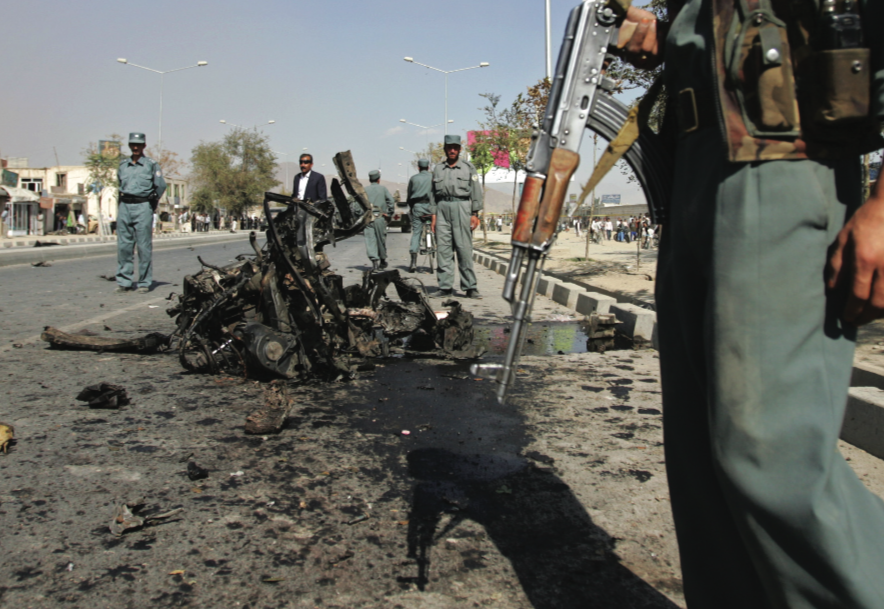
  3. The war in Afghanistan: the resurgence of the Taliban in recent months is a clear indication that the war in Afghanistan is far from over. Armed opposition to the pro-American government of Hamid Karzai – which was limited until recently to the southern part of the country – is slowly creeping into the capital, Kabul. Car bombings, suicide bombings and targeted shootings of government officials are becoming more and more common.
  4. The war on terrorism: this is a war being fought in the shadows, and it is giving the president a tough time, even with members of his own Republican party over such issues as the rights of suspects to be tried and convicted based on evidence kept secret even from the accused.
  5. The Iranian nuclear dossier: of all the urgent dossiers piling up on the president’s desk, the Iran nuclear file must be one of the most burning issues. The Bush administration is faced with one of its toughest decisions yet: what to do with Iran’s nuclear ambitions?

Beltway gossip
This this is where Lebanon – and Hizbullah – and Syria enter the scene. There is much talk inside the Washington Beltway of a possible strike on Iran, should the Islamic Republic refuse to abide by the international community’s request that it stop its nuclear program. Iran claims its nuclear program is intended for purely civilian use, but the United States and its Western allies are not convinced. If the US and/or Israel were to attack Iran’s nuclear facilities, what are the counter-measures Iran is likely to take? A good probability is that it would have Hizbullah unleash its rockets on Israel, as it did during the 34-day conflict with the Jewish state.
Such action would push Israel to retaliate against Hizbullah – and in turn against Lebanon, as it did during the July/August war. So is it all gloom and doom for the Lebanese, barely out of one crisis, before an even greater catastrophe befalls the country?
Not necessarily so. Here is an optimist’s view from Washington, DC.
The arrival of several thousand blue-helmeted peacekeepers from Italy, Spain and France, along with several thousand Arab and Muslim soldiers can be seen as a sign that the international community very much supports a stable and independent Lebanon. But what the Western powers want is a “demilitarized” zone in south Lebanon where the 15,000 Lebanese Army troops dispatched to the area can, with the support of the 15,000 foreign soldiers backing up the Lebanese Army, act as a deterrent and keep armed militias at bay.

The western powers want a demilitarized zone where armed militias can be kept at bay

Facilitating integration
For that to happen – for South Lebanon to become demilitarized – there would be a need for Hizbullah to transform itself from what it currently is – a political party with a lot of muscle – into purely a political grouping. That in turn would facilitate its integration into Lebanese political life. It has been done before in many parts of the world. Unfortunately, those are rarely the ways of the Middle East; for one, it is far too logical. And despite two United Nations resolutions (1559 and 1701) calling for the disarmament of all militias and groups in Lebanon with the exception of the Lebanese Army, don’t expect Hizbullah to start handing in its weaponry any time soon.


The most likely scenario is the one practiced many times over the years in Lebanon whenever a particular militia found it had to give up its guns. Most of the weaponry disappears underground while a token number of old machine guns along with some faulty rocket launchers are ceremoniously handed over in front of the world’s media. All sides look good, everyone goes away happy until the next time.
But what of Syria’s role in all this? So far it has remained unmentioned. Syria is edging to get back into mainstream Lebanese politics and is betting on its supporters in Lebanon (today, Hizbullah and Gen. Michel Aoun’s Free Patriotic Movement) to open the door for them.

October 19, 2006 0 comments
0 FacebookTwitterPinterestEmail
Feature

An army:

by Nicholas Blanford October 19, 2006
written by Nicholas Blanford

But is it enough?

International interest in reforming the Lebanese army was triggered by the Syrian disengagement from Lebanon last year, but the month-long war this summer between Hizbullah and Israel has given the process a renewed sense of urgency.
Within days of the ceasefire coming into effect on August 14, some 15,000 soldiers were dispatched to the area south of the Litani river to take up new positions in territory vacated by withdrawing Israeli troops – the first time Lebanese troops have been posted on the border with Israel in more than three decades.
“There is no place prohibited for it and when the army sees any weapon even in the hands of the resistance, it will confiscate it,” Prime Minister Fuad Seniora said in an interview with Orbit television in mid-September.
The Lebanese troops in the South will be coordinating closely with UNIFIL II, the name given to the newly-reinforced UN Interim Force in Lebanon which is slated to increase in size from 2,000 to 15,000 by the end of November.
Hizbullah, whose fighters have abandoned the border positions established over the past six years, has raised no objections to the deployment of Lebanese troops in the South, satisfied that the army will not attempt to disarm the group.

Border protection role
The government and international military donors believe that the future principle role of the Lebanese army is to maintain border security, tightening Lebanon’s notoriously porous frontier with Syria and preventing outbreaks of violence along the sensitive border with Israel, including repelling overflights in Lebanese airspace by Israeli aircraft.
With that in mind, foreign military specialists are recommending a more streamlined, mobile and better-coordinated military force that can respond quickly to trouble.
Following the Syrian disengagement from Lebanon last year, the government commissioned assessment studies from the UK and the US on what was required to reform and improve the capabilities of the Lebanese army. After the August 14 ceasefire came into effect, a British military team updated its assessment on the Lebanese army and recommended 16,000 troops in South Lebanon, 8,000 to patrol the border with Syria and another 1,000 to protect the maritime border.
That the Lebanese army requires a thorough overhaul is beyond question. Although the army has a comparatively large amount of equipment for a force of around 45,000 soldiers (the present strength is some 60,000 after 15,000 reservists were mobilized during the recent war with Israel), much of it is obsolete or non-functioning, and a mix of US, French and Soviet hardware. The army’s 310 tanks date from the 1950s and are only effective in an internal security context. US-made trucks and jeeps also date from the 1950s. The air force consists of 23 Vietnam era UH-1 Huey helicopters. The navy’s seven British coastal patrol craft have limited firepower and radar capabilities and are too slow for anti-infiltration and anti-smuggling operations. Of the 27 US-made small inshore patrol vessels given to the navy in 1994, only 10 to 12 are operational.
Spare parts for much of the equipment are no longer available, forcing the army to cannibalize from existing gear and come up with ingenious alternatives to keep vehicles on the road.


“Since the Syrian army was here, there’s been very little procurement for the Lebanese army, but they have done a magnificent job with what they have,” said one Western defense attaché.
The Lebanese army also made an assessment of equipment needs, a “wish list” of state-of-the-art weapons systems which never stood a realistic chance of being fulfilled. The list, which was seen by Executive, included five dozen heavy tanks, several combat helicopters, such as Apache or Cobra attack helicopters, nearly 30 patrol boats and a number of self-propelled 155mm artillery guns, in all amounting to nearly $1 billion.
“Their list was a non-starter,” said a Western diplomat. “Even if they were to receive what they wanted, the Lebanese army is too small and lacks the logistical back-up to utilize such equipment.”
The figure has been slashed to under $100 million and most of the offensive weaponry such as heavy artillery and aircraft has been replaced on the list by more mundane, but vital, logistical items such as transport vehicles, and communications and surveillance equipment.
Minister of Defense Elias Murr also envisages a lighter-armed, more mobile military. He apparently disavowed the army’s “wish list” and is placing emphasis on twin-propellered troop transport helicopters capable of ferrying soldiers rapidly to remote areas of the border as well as anti-tank missiles and anti-aircraft weapons as a means of thwarting potential Israeli air and ground incursions. The utility of advanced anti-tank missiles was proven during the Hizbullah-Israel war where they accounted for some 50 of the Israeli army’s 119 fatalities and destroyed, disabled or damaged 46 tanks and 14 other armored vehicles.

Mixed signals
While the needs of the army are well understood, organizing the transfer of equipment has been slow, hampered by a lack of coordination chiefly among potential foreign donors, according to diplomats in Beirut.
Britain has offered to be the lead country in coordinating which donor nation allocates what equipment or service to prevent overlap.
“You don’t need four countries all offering dog training,” said one Western diplomat.
The US, which has supplied the army with much of its equipment under the “excess defense articles” program, and France, with its traditional links to Lebanon, were seen as politically unacceptable to lead the coordination effort to revamp the Lebanese army.
While foreign donors recognize the need for coordination, “international sensitivities” over who takes the lead is delaying the process, according to one European diplomat.
“We are no further forward than when the Syrians left, although the needs have been known from the start,” the diplomat said.
What equipment has already arrived for the army is often transferred on an ad hoc basis without attention paid to the military’s needs. For example, Qatar recently sent Lebanon 100 military trucks. The trucks, however, were delivered equipped with desert tires, without windscreen wipers and without any spare parts. Around 20% of the trucks had to be cannibalized to keep the rest of the fleet on the road.
“The trucks were fitted for desert conditions. No one had thought about the needs of the Lebanese army. In the end it cost a lot of money to put those trucks on the road,” said a foreign military advisor.
Instead of one-off gifts of arms and equipment, the trend among military suppliers is “cradle-to-grave procurement,” in which a fleet of vehicles is sold along with a package that includes spare parts and workshops to ensure that the vehicles are properly maintained.
Furthermore, the army is looking to standardize equipment, ensuring, for example, that the army and the Internal Security Forces use the same communications system.

Greater allocation
The US Congress has significantly stepped up its financial allocations for the Lebanese military, reflecting Washington’s belief that a strong united army will help safeguard Lebanese stability. Some $10.6 million was allocated for fiscal year 2006 to be spent on repairs and spare parts for existing equipment. Further funds are expected before the end of the current fiscal year. Another $2 million was earmarked mainly for training troops and improving counter-terrorism techniques, some of it under the International Military Education Training (IMET) program, which has resumed after a hiatus during the years of Syrian domination of Lebanon. Some 120 student officers and NCOs have attended Ranger school in the US in the past year under the IMET program. American military teams are also training NCOs in Lebanon under four- to six-week programs.
Lurking in the shadows of the international interest in reforming the Lebanese army is the dreaded “H- word.” The unspoken inference is that a re-equipped, better-trained, more mobile national army will undercut the rationale behind Hizbullah’s argument that the Islamic Resistance is a vital component of Lebanon’s strategic defense.


“We want to be careful how the debate is framed,” said one Western diplomat. “If it’s suspected that this is a US-Zionist subterfuge then Hizbullah will use its veto to turn it off.”
But there is little doubt that undermining Hizbullah remains a powerful factor in the mainly Western interest in improving the Lebanese army’s capabilities.
In September, Steven Hadley, the US National Security Advisor, held a meeting in Washington with two senior advisors to Israeli Prime Minister Ehud Olmert to brief them on Washington’s plans for the Lebanese army.


According to an account of the meeting reported by Israel’s Yedioth Ahronoth newspaper, Hadley explained to the Israelis that a strengthened Lebanese army would bolster the Lebanese government against Hizbullah and other pro-Syrian elements in Lebanon, namely armed Palestinian groups. The Israelis reportedly agreed in principle with the US plan but voiced concern that some of the military hardware to be transferred to the Lebanese army could end up in Hizbullah’s hands.

October 19, 2006 0 comments
0 FacebookTwitterPinterestEmail
For your information

Tourists trickle back

by Executive Contributor October 19, 2006
written by Executive Contributor

Post-war wine
challenges for Israel

Lebanon’s wine producers can breathe a sigh of relief. There was no force majeur and there may even be an increase in production as the Israeli blockade has denied Egyptian winemakers their annual shipment of around 400 tons of Lebanese grapes, creating a surplus on the local market. “Opportunist wine makers who want to exploit the situation will overproduce this year,” ventured one local producer, adding, “Negociants will be selling Cabernet Sauvignon and Cinsault for peanuts at the end of the harvest.”
Next door, Israel’s $145 million industry did not face the same restrictions of movement, nor did it suffer the same scale of destruction. That said, the Upper Galilee, home to Israel’s best vineyards, was caught in the fighting. For nearly a month, the vineyards went unattended. Last-minute preparations could not be made and the harvest was delayed by about a week to ten days.
But Israeli winemakers face a more challenging threat: the issue of the sovereignty of the Golan Heights. Any Middle East peace deal that returns the Golan to Syria would see some of Israel’s best terroir absorbed by its neighbor. According to local experts, for the leading wineries on the Golan it is not a question of if the Golan will return to Syria, but when. “Even though they have been there for two generations, they are ready to leave if that will bring peace,” said one analyst.
While many have predicted that the Golan Heights winery – one of Israel’s largest – will probably relocate, possibly to the site of the Galil Mountain Winery, it would be the smaller wineries on the Golan that would bear the brunt of the upheaval. “My guess is that Chateau Golan will find a modus vivendi on the other side of the border, but that nearly all of the small wineries will fold up their tents and vanish into the night,” said the analyst.

Tourists trickle back
Since the Rafik Hariri International Airport once again started receiving international flights, planes have been arriving filled to capacity. The arrivals, however, are mainly Lebanese returning home after being evacuated during the conflict. Unsurprisingly, tourists have been slow to return to Lebanon after seeing the depressing news footage of thousands of foreigners being evacuated and the destruction caused by Israeli bombardment – not exactly an ideal destination for your dream vacation. (Ironically, readers of the July issue of Travel and Leisure would have been heartened to read that Beirut was voted number nine on its annual list of the world’s top 10 cities this year). The predictions of 1.6 million visitors to Lebanon in 2006 rings hollow now in the aftermath of the conflict, but Lebanese tour operators remain optimistic. Incredible as it may seem, there are a few tour groups willing to honor their booking to Lebanon. “The first tour group in Lebanon since the ceasefire will arrive in Lebanon on the 7th of October,” says Danny Abi Nader, owner of TLB Destinations. The trip is being marketed under the theme: “Back to Lebanon…be the first.” Abi Nader expects this arrival to attract international media attention putting the country back in in the positive spotlight, giving other groups the confidence to visit. Promoting Lebanon still remains an upward struggle, however, as governments continue to advise against all but essential travel. (Amended, however, from “against all travel,” now that a ceasefire is in place.) And caution is still advised when travelling to the Bekaa and all travel south of the Litani River is discouraged.
Outward-bound journeys from Lebanon were also put to a stop, as Lebanese holidaymakers had to cancel their trips, forced by the shut down of all air traffic. Business in this sector is slowly returning to normal. Airlines are flying to and from Beirut once again, and overdue holidays abroad are being booked. In order to give business a boost, local travel company Nakhal & Co launched an online booking system and gave a 10% reduction on all hotel bookings made during September when customers purchased an air ticket. Abi Nader remains optimistic about the long-term future of the industry and has set up CIFA (Centre pour l’Insertion par la Formation et l’Activite), a non–profit organization which trains young people in the skills of tour-leading.
He is expecting other tourists to follow this first wave and come to Lebanon as they want to see the country they have heard so much about in the news. Gulf tourists will be slower to return, but they will be back eventually once they are confident of a lasting peace. According to Elie Nakhal, general manager of Nakhal & Co, a stream of Gulf citizens is already trickling back into Lebanon to check up on their homes and businesses.

Marathon effort
Only a couple of months ago, it seemed highly unlikely that the Beirut International Marathon (BMA) would even take place this year. During the recent conflict, BMA organizers were actively arranging sporting programs for children and displaced families, instead of focusing on marathon registrations. With a ceasefire in place and the blockade lifted, organization of the event is now going ahead as planned, but under a new theme. It has been relaunched by May El Khalil, BMA race founder and president, as Kermalak Ya Loubnan – For your sake, Lebanon. The main sponsor of the event is Blom Bank, who is joined by other high- profile sponsors like Nike and Tropicana. Given the strong national sentiment, all are expecting a higher attendance than last year. According to Mark Dickinson, BMA managing director, the main cost of putting on the event is just over $900,000; this includes all of the preparation, logistics, cost per runner and the administrative costs. “Registrations through our website are exceeding all expectations, which is a great incentive for us to redouble our efforts to make this year’s race an event to remember,” says Dickinson. Foreign participants have committed themselves to running the event and instead of being put off by the recent conflict, seem even more determined than ever to attend. To drum up support, the Beirut Marathon Association plans to send a delegation to the United Arab Emirates to promote this year’s event. The aim is to encourage the people of the Emirates to participate in this year’s marathon; also to receive sponsorship support from Dubai’s booming private sector. All competitors are encouraged to run for a cause, and the marathon’s charitable cause this year will be for the victims of the cluster-bombs scattered around the country, still claiming lives.
The Beirut International Marathon will take place on Sunday, November 26, 2006. The event will feature the international marathon, 10-K Fun Run, and Mini-Marathon for kids under 18. Registration for the races can be done at one of the many registration outlets around Lebanon. For online registration go to [email protected]. The deadline for registration is October 26, 2006.

Syrian car market
sees stellar growth
DAMASCUS: Following a sizeable reduction in import duties last year, Syria’s fledgling car market has grown by up to 60% in under a year.
A decade ago, Syria’s roads were full of ageing 1960s American cars; in 1995, the government allowed imports for the first time, but customs taxes were so prohibitive that only economical South Korean and Chinese cars were affordable for even affluent Syrians.
But last September, the government reduced import duties from 255% to 60% for cars above 1.6 liters, and from 145% to 40% for smaller cars. The reduction has been a serious boon for car dealers that opened shop in Syria.
“It’s been a huge percentage increase, three times more than before 2005,” said Hilmith Al Knawati, sales manager for Fiat, Lancia and Alfa Romeo.
Although there are no official statistics on the market, dealers put growth at anywhere between 40% to 60%, with every dealer interviewed claiming an increase of up to 50%. The market saw a slight blip during the war on Lebanon, but has since bounced back.
Last year, there were a reported 900,000 cars on the roads, a small number considering Syria’s 16 million people.
“Since last year maybe 200,000 to 300,000 cars were sold,” said Al Knawati.
Chevrolet dealer Jared Gerges said there has been a 45% increase in sales, but primarily for smaller vehicles. Gerges said he hopes the US sanctions that prohibit American companies dealing with Syria will be lifted as the dealership, which has a 20% market share with Chevrolet, has the license to sell Cadillacs and Hummers.
The appetite for new cars is so high across the board that demand is exceeding supply.


“If we ordered a thousand cars now, they would sell quickly,” said Mazda’s representative Aksaan Khwandh.
But despite such growth, dealers want a further reduction in customs taxes. Customers still have to pay customs fees and a car tax that can add up to 30% on a car’s end cost.
As a result, demand is higher for smaller models, which have lower taxes.
“We will see another huge increase in demand when the registration fee is reduced,” said Al Knawati.
Due to the reduction, Renault said its market share increased from 8% to 14%, a 57% increase on 2005. Peugeot and Nissan also reported a 50% increase, but European and Japanese car dealerships will have to market hard to compete with the Chinese and South Koreans who control around 35% of the market.
Kia will open a car plant next year, as will Iran’s Saipa to manufacture one of its vehicle lines. Syria is Saipa’s top overseas market, accounting for around 90% of exports.

October 19, 2006 0 comments
0 FacebookTwitterPinterestEmail
Lebanon

Mayday, mayday Media hit bigMayday, mayday

by Executive Editors October 7, 2006
written by Executive Editors

Lebanon’s media industry is struggling to recover from $38.7 million losses it suffered this summer as a result of Israel’s devastating 34-day war on Lebanon.
Media experts said that it will take time and resources for media outlets to regain their footing after sustaining direct and indirect damages.
Direct losses included material damages caused to the stations, while indirect losses pertain to advertisement contracts, most of which were terminated during the war as TV coverage focused on war developments.
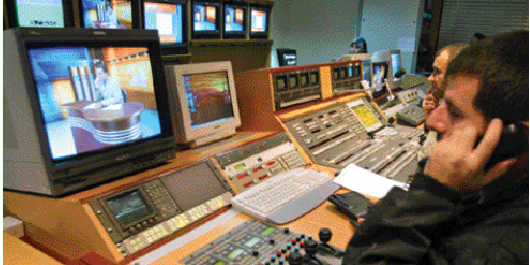
Direct damages affected mostly audiovisual media, as Israeli air raids struck transmission stations of Lebanese television and radio stations and flattened the head office of Hizbullah-affiliated Al Manar TV in Beirut’s southern suburbs.
Indirect losses affected all media and were caused by a 40% drop in advertising income during the war, according to Walid Azzi, publisher of Beirut-based advertising industry magazine ArabAd.
The advertising losses hurt a media industry that is already struggling in a market that cannot sustain the large number of existing print and audiovisual outlets. At the same time, media are important for Lebanon’s economic freedom and democratic society.

Al Manar and LBC hardest hit
“The cost of operation of a single TV station is around $1.5 million per month, which is equal to $18 million per year,” Azzi said. He added that only one of Lebanon’s more than half-dozen commercial TV stations could exist on advertising income and stations had turned to other revenue sources, such as selling programs, seeking sponsorships and merchandising services and items linked to reality TV shows.
On the side of direct damages, Israeli attacks hit stations targeted for their political position in the Hizbullah camp and stations in other parts of the political spectrum.
Leading the sector in damages, Al Manar’s direct and indirect damages topped $16 million, reports an official for the station.
“When Al Manar was hit, broadcasting only stopped for two minutes. After that the station was up and running and continued its broadcast as usual,” he said.
The media outlet with the second-highest damages was the Lebanese Broadcasting Corporation International (LBCI), which operates terrestrial and satellite channels from a head office in Lebanon’s Christian heartland.
The station’s losses during the war amounted to $5.35 million, an LBCI official said on condition of anonymity.
“This is not exaggerated; it is 100% accurate,” he said, adding that three broadcast transmission stations were destroyed without affecting the national transmission of LBCI programming.
Future TV came third with $3.3 million of direct and indirect losses, according to Abdel Karim Sabbagh, chief radio frequency engineer at Future TV.

Advertising revenue lost
In addition to two broadcast towers hit by Israeli missiles, Sabbagh said the station’s indirect damages manifested in the cancellation of advertising contracts.
According to a list published by Lebanese newspaper an-Nahar, five other television stations suffered losses ranging from $350,000 to $2.65 million and seven radio stations were affected with damages amounting to a combined $6.2 million.
Despite these financial losses, Lebanon’s media sector maintained or even stepped up programming during the war, demonstrating its resilience in a time of crisis. Since the end of the war, stations have increased their efforts to stay up and running.
To ensure the survival of Lebanon’s radio and TV stations, the Union of Arab Broadcasters suggested Tuesday loan forgiveness for the stations, which carry an estimated cumulative debt burden of $760 million.
Azzi on his part called for stronger support of advertisers in the time of hardship. Companies wishing to promote their brands should not back off during wartime, but rather exploit such circumstances and uphold campaigns to ensure the continuity of their brand.
“You have to advertise during crisis in order to keep your brand alive,” Azzi said.

October 7, 2006 0 comments
0 FacebookTwitterPinterestEmail
  • 1
  • …
  • 610
  • 611
  • 612
  • 613
  • 614
  • …
  • 696

Latest Cover

About us

Since its first edition emerged on the newsstands in 1999, Executive Magazine has been dedicated to providing its readers with the most up-to-date local and regional business news. Executive is a monthly business magazine that offers readers in-depth analyses on the Lebanese world of commerce, covering all the major sectors – from banking, finance, and insurance to technology, tourism, hospitality, media, and retail.

  • Donate
  • Our Purpose
  • Contact Us

Sign up for our newsletter

    • Facebook
    • Twitter
    • Instagram
    • Linkedin
    • Youtube
    Executive Magazine
    • ISSUES
      • Current Issue
      • Past issues
    • BUSINESS
    • ECONOMICS & POLICY
    • OPINION
    • SPECIAL REPORTS
    • EXECUTIVE TALKS
    • MOVEMENTS
      • Change the image
      • Cannes lions
      • Transparency & accountability
      • ECONOMIC ROADMAP
      • Say No to Corruption
      • The Lebanon media development initiative
      • LPSN Policy Asks
      • Advocating the preservation of deposits
    • JOIN US
      • Join our movement
      • Attend our events
      • Receive updates
      • Connect with us
    • DONATE