
TRABOULSI: Our capacity for producing electricity is around 2,200 megawatts. The Beddawi and Zahrani plants produce 900 megawatts, Zouk 550 megawatts, Jieh 300 megawatts, Litani about 150 megawatts, Baalbak and Tyre together produce about 150 megawatts and Hreishe about 40 megawatts. We currently consume about 1,600 megawatts. In reality, when there is a malfunction with certain facilities, then we have some problems and some areas get temporarily cut off. The reason is that when Zahrani and Baddawi were commissioned, there was no simultaneous installation of a power grid or network. So although they can produce 900 megawatts, we can only benefit by about 300 megawatts. We are currently executing the installation of these power grids in order to be able to fully access the 900 megawatts those facilities can produce. Because we can’t currently make full use of these capacities, we are sometimes forced to buy about 150 megawatts from Syria, 50 from the Bekaa and 100 from the North.
But what about EDL’s finances?
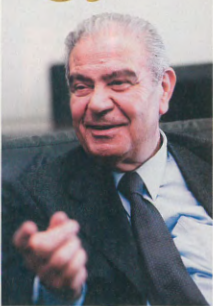
TRABOULSI: The financial situation is known. The projects that were undertaken by the government and delivered to the electricity authority have a total value, including interest rates, of about $1.3 billion. It is our responsibility to make the credit and interest payments. In addition to that, the fuel prices went up by $50 per ton and EDL uses about two million tons per year. So there were additional expenses on electricity of about $80 million to $90 million. We also have the burden of paying our employees and other expenses and additional equipment. There’s also about LL700 million worth of uncollected money on the market.
Has collection improved?
TRABOULSI: There is a collection problem, of course, as a result of some residents not cooperating or paying and others illegally using electricity. We expect to accomplish the installation of meters, transformers, low-tension wiring, and accurate billing and collection as an attempt to reduce debt as much as possible, within an acceptable period of time. This is what keeps us awake every night.
Will there be a rate increase to cover the debt?
TRABOULSI: We have noticed that our receivables have increased, but only slightly. Of course, a study made by the electricity authority in France suggests we should increase the fare; the World Bank also recommends that we should increase the fare. But there are also social and economic considerations to consider; we shall see what the appropriate thing to do is.
Will EDL be privatized? Is deregulation an alternative?
TRABOULSI: I am preparing a ‘project law’ for electricity, which I will submit to the council of ministers. But electricity will not be privatized soon. However, its operations will become more flexible, and its primary rules of operations will be set in place as well as the conditions involving the private sector in its operations. There is nothing prohibiting private companies from distributing and competing against EDL in the future, but it all hinges on this ‘project law’ and reorganization of EDL.
What about converting to natural gas instead of oil as the fuel for generating electricity?
TRABOULSI: There is an American company studying the feasibility of converting EDL’s operations into gas: liquid gas would probably originate from Qatar and natural gas from Syria. Our Syrian neighbors have natural gas and so they commissioned EDL to design the plans to lay pipes from Homs to the Beddawi at a cost of about $50 million to $60 million. Then there is the issue of financing the project. The Syrians will probably look to finance their end by selling some gas or oil supplies to the company that will finance construction. As for our part, the electricity authority is still studying how the project will be financed. In Beddawi and Zahrani, our consumption will be 3 million m³ daily. The cost to build the pipeline from the Syrian/Lebanese border to the Zahrani power plant is about $200 million. Using gas is cheaper and the facilities are cheaper to maintain because mazout (diesel) is more difficult to handle than gas. For this project to happen, we have to look for a source to finance it that will not burden the treasury.
What about liquid gas from Qatar, which has been suggested by the French petroleum giant ELF?
TRABOULSI: This is a very recent project. It is big, and costs a lot, around $1 billion. We still have to look at the findings of the study and how much Lebanon will have to bear by way of financing costs. This project not only involves using liquid gas for the facilities producing electricity like Beddawi and Zahrani, but also for Jieh and Zouk, which need to be rehabilitated to allow for such use. The government will not go for such a project unless the feasibility study is favorable. Within two or three years we aim to have private partners help run EDL, but you cannot burden them with unfavorable economic considerations.
Switching to another of your responsibilities, oil. Petroleum companies in Lebanon have been very unhappy with the ministry’s role in regulating the distribution of gasoline. Why not let the market adjust the price of gasoline?
TRABOULSI: In 1977, a law was drafted to restrict the import of gasoline to the ministry of industry and oil, as it was called then, and to organize a system that would take care of its distribution. At the time, the ministry was responsible for all oil imports. In the 1990s, the ministry released control over the import of oil, kerosene, asphalt and gas to the private sector, but retained responsibility for importing mazout and fuel oil to satisfy the needs of the country. However, the ministry of oil is the one that issues the schedule of prices for distribution of private sector imports for a simple reason: You cannot leave it up to the importer to set his own price of gasoline. We have implemented a schedule of prices that is built on adequate numbers that are well studied, where profits are secured, as it is done in all parts of the world. If we let the importer set his own market prices, the price of the 20 liters tomorrow would jump to LL50,000. We guarantee the importer’s profit to cover his expenses and give him a profit margin. It is fair for the consumer and for the importer. Now we are using a variable scale ladder that adjusts the pump price to the increase or decrease in the price of oil imports. Previously, when the fixed scale ladder was used and when the oil price was in decline, we as a government were making more money from increased customs. It might have been the case that importers were making less money but they were still making their set profit margins. The only loser in this equation is the government.
Is there a plan to upgrade the refineries?
TRABOULSI: The cost of rehabilitating the refineries is around $1 billion, for both Zahrani and Tripoli. But as they only refine 34,000 barrels per day, this alternative doesn’t make sense. To justify this cost, they would have to be refining about 100,000 barrels per day. In this case, the government doesn’t have the capability to do this and, furthermore, we live in an area where oil is plentiful. It is not economically feasible to ship oil, refine it and then compete with other oil companies that are already selling oil derivatives to the region
