
What steps should Lebanon take to join the Euro-Med Association Agreement?
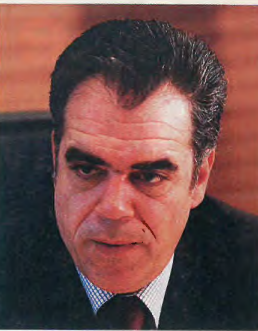
KOURKOULAS
The main obstacle is that Lebanon must reduce or abolish
customs duties. They should replace this method of gaining revenues.
The government is already committed to introducing indirect taxation,
and we are assisting the government in introducing fiscal reforms.
But in the last few years the government has actually
been increasing tariffs.
KOURKOULAS
The rise in protectionism we have seen in the last three
or four years is the opposite of what we are trying to do. I think that the
Lebanese are aware of this, and they have always communicated their
willingness and commitment to go in the other direction. The problem
is the budget deficit and the fact that more than 60% of revenues are generated
from customs tariffs. But this is not the best solution, because not
only does it go against the terms of the association agreement, it undermines
the competitiveness of the Lebanese economy. Lebanon cannot
afford to continue in this manner.
The government is planning to replace customs duties with a value-added tax (VAT). But some economists feel that Lebanon is not transparent enough for it to be effective. What is your view?
KOURKOULAS
You should not underestimate the capacity of the
Lebanese economy to introduce VAT. There are examples of other countries
in the European Union who were reluctant to introduce VAT
because of the argument you have just made. For example Greece,
which was obliged to introduce VAT after its accession to the EU. The
fiscal authorities were not very organized; there was a lot of tax evasion.
But the introduction of VAT helped rationalize the fiscal system
and reduce the tax evasion problem.
Are you preparing future loans or grants for Lebanon?
KOURKOULAS
We are preparing some new programs. One is a
social development fund that will assist in the creation of jobs in remote
and underdeveloped regions. Twenty-five million euros will be dedicated
to the social fund, 11 million euros will be allocated for industrial
organization. We are also preparing a structural adjustment facility
for the Lebanese budget. These are all grants.
There is a lot of fear that Lebanese companies will become casualties once the country lowers its trade barriers. How real are these fears?
KOURKOULAS
The Lebanese market is small and this market
already has a high percentage
of import penetration.
I think that
it’s not correct to say
that customs duties
protect local production. The main reason for increasing customs duties
is for fiscal reasons: to increase revenues for the government.
Sometimes, local industry is the victim of these protections when they
have to pay customs duties for raw materials. We allocated 11 million
euros for industrial modernization with the objective of improving the
performance and the competitiveness of Lebanese industries.
Presumably, the Lebanese sectors that are competitive cannot rely on
this small market. The Lebanese know this better than we do. We feel
that, on the contrary, the realization of our free trade area with
Lebanon and Mediterranean countries will give them a much bigger
market in which to operate.
How can local industry compete? They have high energy and production costs, high labor costs and they pay high prices for raw materials.
KOURKOULAS
Compared to other countries in the region, the cost of
labor here is high, as is the cost of land. But I think that this country’s big
asset is its human resources. They can be competitive in more sophisticated
and more value-added services. In the service sectors or the tourist sector
they can be competitive despite the fact that the cost is higher. They can
be competitive in processing agricultural products. There are other high
value-added sectors that might benefit.
I think that the main obstacle is not the high labor costs but the cost of
administrative procedures. Sometimes, it’s more important for businesses
to reduce or simplify these procedures than to have lower labor costs.
Euro-Med is supposed to encourage European investment. But this is a tiny market and costs for businesses are high. Do you feel that European companies will really want to invest in Lebanon?
KOURKOULAS
I think that what is more important for businesses is
the whole administrative framework in which they will have to operate.
We feel that the conclusion of the agreement will send a strong signal
that Lebanon is going in the right direction, and I think that this will
increase the attractiveness of this country.
The market may be small, but other countries in the region will adopt
the same rules. I think that other businesses in the region would like
to operate on a regional level, not a national level. The sooner this agreement
is concluded, the better it will be for attracting investors.
