
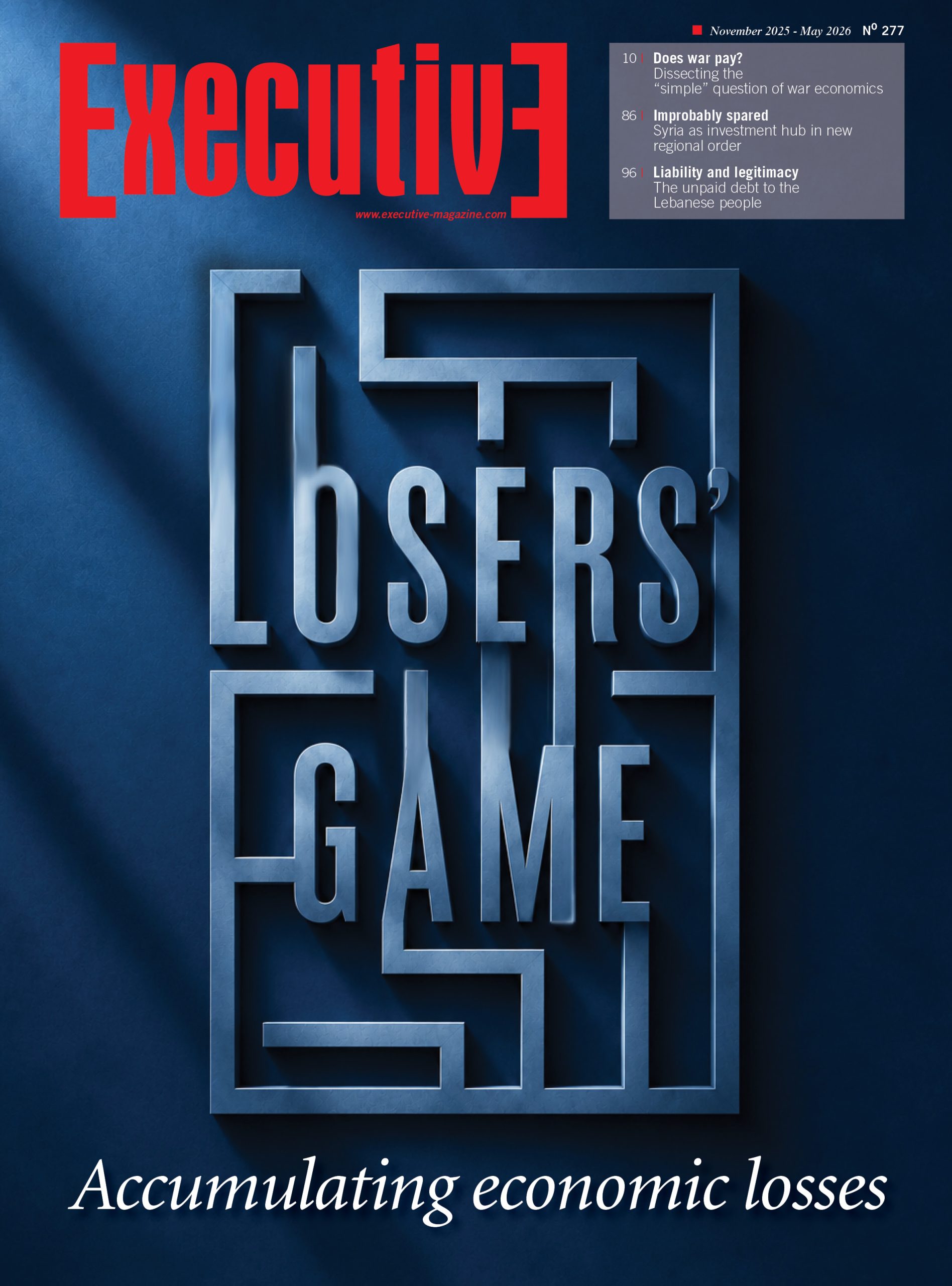
The war that opened on February 28 was not ours to start, and it will not be ours to end. What people are left to settle is the crippling bill. Having become victims of external power games and global failure, Lebanese society bears the sunk costs of serial conflicts.
Nor did this war erupt in isolation. Global alliances are fraying, international law is losing force through disuse and abuse, leaving small, exposed states to absorb fallout they had no hand in shaping. The world logged more violent conflict in 2025 than any year since 1946, much of it in regions, like ours, already scarred by past wars.
As oil trade convulsed in the Strait of Hormuz, the IMF cut its regional growth outlook by four fifths. In Beirut, transport costs rose by a quarter within weeks, energy by a fifth. Farmland was hit, water and solar pumps destroyed. Farmers, hospitality workers, and households absorb this cost and children not yet born will be paying the debt.
There is the other part of our misery, the part we did to ourselves and therefore own. The state borrowed, mismanaged and stole, yet the draft bank resolution law before Parliament would spread the consequences across depositors for twenty years, while those who engineered the collapse walk away. Public assets exist; put them under transparent management and let their earnings repay the people whose savings were taken. By choosing fiscal justice, we can own the future that is still ours to decide.
But we are faced with a state that seems unable to count. Ministries offer no evidence for their fiscal projections, and estimates diverge by billions. A state that cannot count, cannot govern. Here we need to act decisively and reform our counterproductive fiefdom patterns, lest divisive policies open much deeper and older rifts.
But then there is the bigger part of Lebanon’s burden. The part where unfathomable damages are still accumulating, and GDP faces another year of contraction. This part of our misery, though we do not own it, is huge and impossible to bear, the fruit of destruction endured cycle after cycle without ever assembling losses into a claim. Damage must be measured, costed, and redressed under international law.
Lebanon is not alone in facing this systemic evil that is called “democratic decline”. International IDEA’s 2026 report finds Rule of Law the weakest, fastest-declining pillar of governance worldwide. It ascertains that accountable civil society measurably lowers the conflict risk that comes with democratic erosion.
So, sequence monetary reform. Allocate realistic capital spending to power, ports, and logistics. Institutionalize economic intelligence and publish it. Prudently court the capital and technology now reshaping this region.
Above all, remember that accountability begins at home.
