Does war create opportunities? Probably not the kind anyone would wish for. But war creates new realities, and the ongoing bombardments are once again reshaping what Lebanon will have to rebuild when peace eventually comes.
As so many times before, Lebanon is facing a new reconstruction challenge. The renewed war this year has brought further destruction to homes and infrastructure across the country, while Lebanon was still recovering from the damage inflicted during the war in 2024. The World Bank estimated recovery and reconstruction needs following the 2024 war at $11 billion. In September, Prime Minister Nawaf Salam said in parliament the combined cost of the two wars had already exceeded $20 billion and could surpass $27 billion once the impact of the current war is fully calculated.
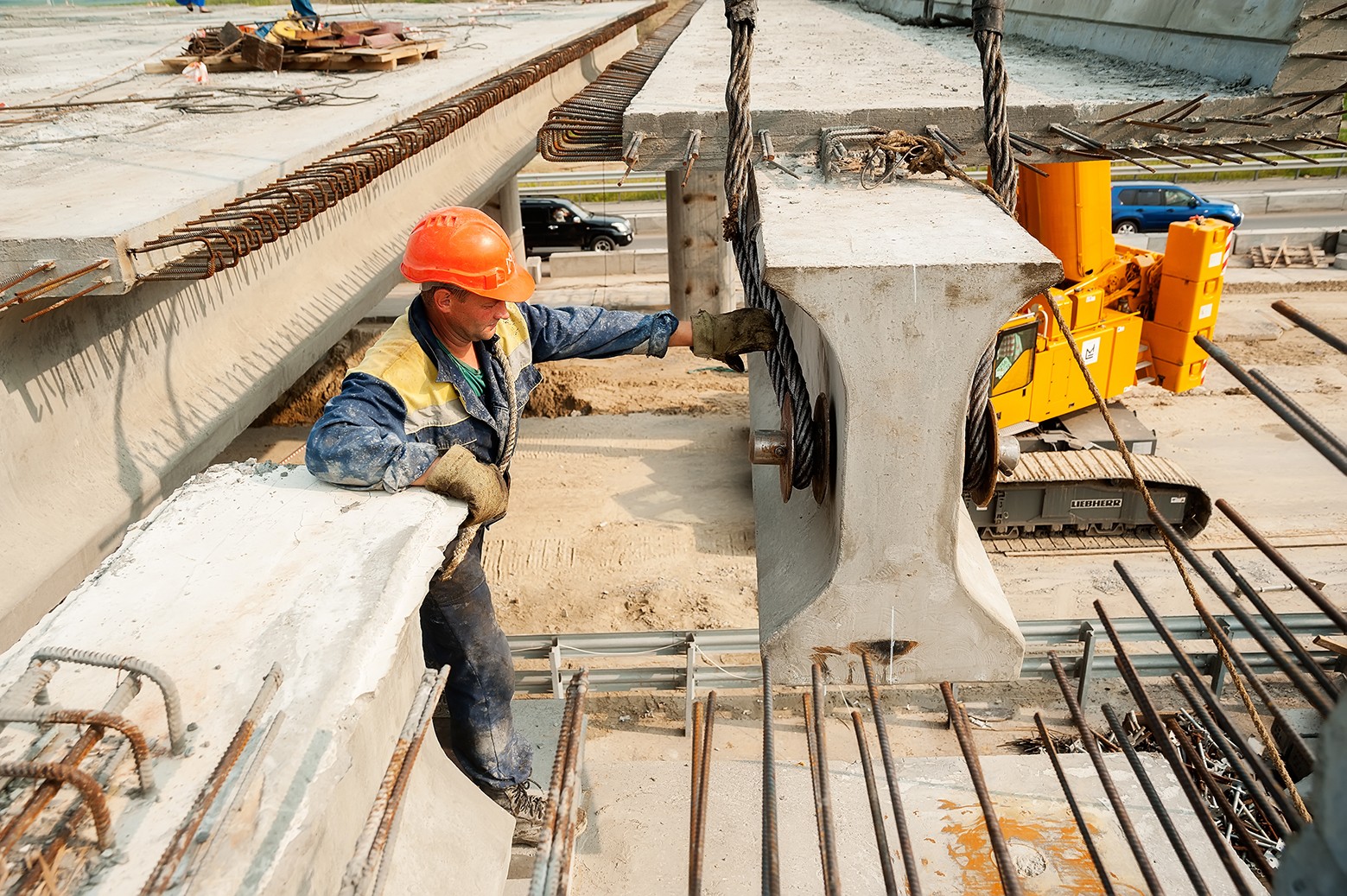
Rebuilding will require vast quantities of concrete, aggregates and cement, putting renewed pressure on Lebanon’s domestic cement industry and the quarries supplying it. The challenge is not only economic. Decades of quarrying have left an environmental footprint, while a shifting regulatory framework continues to shape how quarries can operate and cement can be imported.
At the same time, Lebanon is already sitting on millions of tonnes of material that could potentially become part of the reconstruction effort. A joint UN assessment estimates that the 2024 war alone generated between 20 and 27 million tonnes of debris, while the ongoing war is adding more. To put that figure into perspective, the 2024 debris alone is equivalent in weight to roughly seven to nine times Lebanon’s total cement deliveries in 2025, based on data from Banque du Liban. How much of that rubble can be reused and how the remaining demand is divided between imports and domestic production could determine how much more needs to be extracted for reconstruction.
A regulatory landscape in flux
Lebanon’s approach to cement has long combined protection of domestic production with attempts to regulate the quarries supplying it. Both policies have shifted repeatedly, often against the backdrop of reconstruction and changing demand for building materials.
On the import side, Public Works Studio, a Beirut-based research and advocacy organisation working on urban and land issues, dates restrictions on cement imports to 1993, as Lebanon was rebuilding after the civil war. Imports nevertheless occurred during the 1990s, before the government imposed a documented five-year ban in 1999. By 2018, the World Bank described cement imports as “de facto prohibited,” noting that the Ministry of Industry was no longer issuing import licences for Portland cement (the most common type of hydraulic cement worldwide) and clinker. Clinker is the limestone-based intermediate product used to make cement. Tariffs stood at 75 percent for Portland cement and clinker and 25 percent for white cement.
Quarrying followed a parallel regulatory path. Decree 8803, adopted in 2002, established rules for quarries and crushers and a plan defining areas where quarrying could be licensed. The original plan designated quarrying areas in the Anti-Lebanon mountain range in the eastern part of the country. Yet quarrying continued outside the designated areas, with successive governments granting cement producers temporary or exceptional permissions to operate.
As Lebanon faced renewed reconstruction needs after the 2024 war, the regulatory approach shifted again. A December 2024 Cabinet decision, subsequently published by Legal Agenda, granted cement producers an exceptional two-year period to operate their quarries. The new government cancelled that decision in May 2025 and, as Environment Minister Tamara El Zein confirmed to L’Orient Today, instructed the companies to apply for permits under Decree 8803.
Policy shifted again in 2026. In April, as Lebanon faced growing reconstruction needs, the government adopted measures that L’Orient Today reported would allow cement companies to resume quarrying for one year, renewable for up to ten years, subject initially to municipal approval. The Ministry of Industry subsequently confirmed that the measures were revised later that month with additional environmental requirements. In July, however, Legal Agenda reported that the State Council had suspended the government decisions authorising the quarry operations while legal challenges against them were being considered.
At the same time, the government opened another route to meet cement demand. On July 1, 2026, the government removed restrictions on cement imports, with the Ministry of Industry accepting applications for import licenses, citing increased demand ahead of reconstruction. However, according to the Customs Administration, the high tariffs on cement and clinker remain.
Quarrying beyond the plan
Lebanon’s cement industry has three major producers: Cimenterie Nationale, Ciment de Sibline and Société des Ciments Libanais (CEMLEB), formerly known as Holcim Lebanon. Cimenterie Nationale and CEMLEB operate their cement plants in Chekka in northern Lebanon, while Sibline’s production is located outside Wadi El Zayni, about 35 kilometres south of Beirut.
The quarries supplying the two northern producers extend into the surrounding Koura region. Here decades of limestone extraction have become part of a wider debate over land use, environmental damage and the regulation of quarrying.
For Tala Alaeddine, a senior urban researcher at Public Works Studio, the gap between the regulatory framework and what happened on the ground after the 2002 quarry decree is particularly important. The decree did more than determine where new quarries could be licensed.
“The government back then gave the cement companies a very strict period of time to move the quarries,” she says. “They told them that they should move to the selected areas. But until now, these quarries haven’t moved.”
Alaeddine attributes this partly to economics, arguing that relocation would increase transportation costs and sacrifice the logistical advantages of operating close to the existing plants and the coast. The quarry areas subsequently continued to expand. “It went bigger and expanded more and more after the issuance of the decree,” she tells Executive.
But Alaeddine says the 2002 quarry decree is not the only planning framework impacting Koura.
“The quarrying is also against the highest urban planning decree, which is the National Physical Master Plan of Lebanese Territories,” she explains.
Approved in 2009, the plan provides a national framework for land use. In Koura, Alaeddine says, it highlights the tension between quarrying and the area’s mixed character.
“There is agriculture, nature and residential areas and this needs to be maintained,” she notes. She also points to agricultural land classified by the plan as being of national importance close to the quarries.
The pressure on land is not confined to Koura. A 2024 World Bank report, drawing on data from 2021, found that 1,425 quarries covered 6,172 hectares across Lebanon. Of the land affected by quarrying, 18 percent was forest and 12 percent was agricultural land.
The footprint of extraction
The planning framework describes one side of the conflict. The other can be seen in Koura itself, where decades of extraction have transformed the landscape. Greenpeace Middle East and North Africa has examined some of the environmental impacts associated with the cement industry in the area. Its executive director, Ghiwa Nakat, also grew up in the region.
“We’ve seen deterioration of the land and deterioration of our agriculture,” Nakat tells Executive. “They’ve practically been eradicating complete hills in the area. These are geological formations that took thousands of years to form, and once they are gone, they cannot simply be recreated.”
The concerns extend beyond the landscape. Air-quality monitoring carried out by Greenpeace in collaboration with the University of Balamand, local NGO Earth Will and Greenpeace Research Laboratories found that people in Kfarhazir and Fiaa, two villages near Chekka, were repeatedly exposed to PM2.5 levels above World Health Organisation guidelines. PM2.5 consists of tiny particles in the air that can travel deep into the lungs.
The study did not quantify the share attributable to each pollution source, but identified cement manufacturing, quarries and crushers among important local sources of particulate emissions and concluded that the local cement industry was likely contributing to the PM2.5 health burden.
Beyond these local environmental concerns, cement production also has a significant global climate impact. According to the World Economic Forum, it accounted for around 8 percent of global CO₂ emissions in 2022.
Quarrying can also affect water resources. The World Bank’s 2024 report notes that removing topsoil can increase the risk of contaminants entering the ground, while unsustainable extraction and a lack of quarry rehabilitation can reduce groundwater recharge and disrupt groundwater flows.
The consequences of quarrying have also prompted efforts to assess the sector’s liabilities to the state. A 2023 study by Lebanon’s Ministry of Environment and UNDP calculated that at least $2.39 billion was due to the National Treasury from the quarrying sector. The figure includes regulatory and fiscal costs as well as compensation for environmental degradation and rehabilitation.
Rehabilitation is therefore not a new issue. It is already part of the regulatory framework, but Nakat argues that it is not being properly implemented according to existing standards. She also cautions that rehabilitation should not be used to justify further extraction.
“To rehabilitate properly, extraction needs to be paused so the damage can be assessed and a credible plan put in place,” she says. “Some losses are irreversible.”