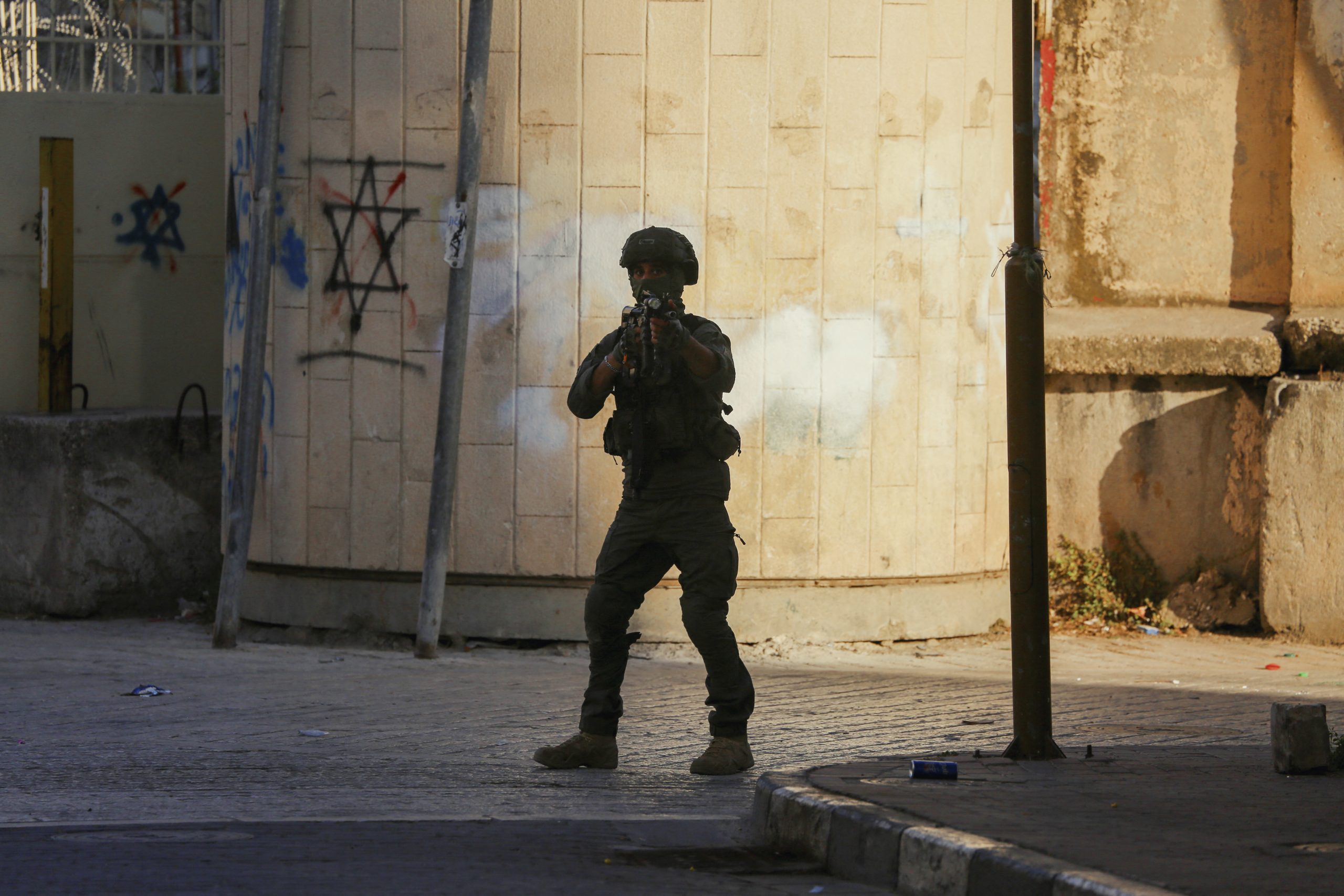
This analysis was written as part of a Special Report on the repercussions of war across six polities from October 7th, 2023-December 2025
Israel’s war on Gaza is a geopolitical existential catastrophe, with 71,266 Palestinians in Gaza and 1,671 Israelis reported killed in less than three years as of December 2025 according to Humanitarian Situation Update #351 from the United Nation’s Office for the Coordination of Humanitarian Affairs (OCHA). Additionally, the November 2025 Situation Report from the United Nations Relief and Works Agency for Palestinian Refugees in the Near East (UNWRA) documents a total of 1,048 Palestinians killed in the West Bank since October 2023.
Since October 7, 2023, the high-cost war has significantly impacted Israel’s economy without causing excessive rupture (it was still listed as the Organisation for Economic Cooperation and Development [OECD]’s third best economy in 2025 by The Economist as reported by the UK journal Globes) while completely decimating that of Palestine. While the International Court of Justice ruled in January 2024 that it was “plausible” that Israel was enacting genocide, the United Nation (UN)’s Independent International Commission of Inquiry concluded in a September 2025 report that Israel has committed and continues to commit genocide against Palestinians in the Gaza strip, which the 1948 genocide convention defines as “the intent to destroy, in whole or in part, a national, ethnical, racial or religious group.”The Israeli government maintains that it is defending itself against the attacks that took the lives of around 1,200 Israelis on October 7th, 2023.
A non-crippling macro blow
The Gaza war precipitated a pronounced decline in the economy of both polities, although the consequences are far from comparable between the two. At the end of 2025, Israel is experiencing significant wartime disruption to economic activity that is still accompanied by economic growth: According to IMF’s World Economic Outlook data for 2025, GDP is projected at $580 billion, with inflation at 3.2 percent and real growth rebounding to 2.5 percent in 2025 and expected to reach 3.9 in 2026 compared to that of 2024 which was 1 percent, the lowest in two decades. The Bank of Israel’s April 2025 forecast expected GDP to expand 3.5 percent in 2025 and roughly 4.0 percent in 2026, reflecting a rebound in private consumption and investment amid lingering conflict risks.
The human death toll has reached at least 1,671 civilians and soldiers, most of whom were killed during Hamas’ indiscriminate attacks on October 7th, as well as over 8,000 purportedly injured during the 3-year span. Towards the end of October 2023, Israeli Minister of Finance Bezalel Smotrich estimated per diem costs of war at around $260 million per day, a number which has increased dramatically as the scope, intensity, and fronts of the war—or wars—have expanded at numerous points within the three-year period. On May 30th, 2024, Amir Yaron, the governor of Israel’s central bank, said that defense and civilian costs of the war on Gaza war would reach $68 billion by 2025, a figure that still does not reflect the total economic cost of war on many fronts.
Behind those numbers is a story of a state that has been through a financially burdensome war, and yet is still growing. Perhaps the largest factor of Israeli economic resilience is its backing by the United States politically and militarily with at least USD 21.7 billion between October 2023 and September 2025, according to an October 2025 report released by US think tank Quincy Institute for Responsible Statecraft and Brown University’s Cost of War Project. The report notes that this number does not include the “tens of billions of dollars in arms sales agreements that have been committed for weapons and services” yet to be delivered. However, even though these figures imply a slow macroeconomic recovery, it is crucial to note that it is far from an organic growth, but rather one driven by government and defense spending, making this growth relatively unsustainable. Although the economy in Israel did not face collapse due primarily to the growth of its tech sector, the war on Gaza was expensive enough to risk medium-term economic destabilization and disparities between the sectors with many of them declining drastically, due to heavy military and fiscal war-time expenses.
The balance sheet of occupation
As the ICJ and the UN has emphasized throughout the course of the war, there have been countless breaches of International and Humanitarian law by Israel that mount to a high economic and political price. The Stockholm International Peace Research Institute (SIPRI), an international entity dedicated to compiling conflict and arms expenditure data, reported in April 2025 that the “global military burden,” defined as military expenditure’s share of GDP, increased to 2.5 percent in 2024. For Israel, military spending jumped by 65 percent to reach $46.5 billion in 2024, an 8.8 percent share of GDP which SIPRI notes as “the steepest annual increase since the Six-Day War in 1976.”
In March 2025, Bank of Israel (BOI)’s Amir Yaron claimed in a Jerusalem press conference that “the war once again is a testament to the crucial importance of a relatively low public debt-to-GDP ratio for the economy’s resilience to shocks”. Yet the public debt in Israel has reached almost 71 percent of GDP, with 5 percent deficit, as estimated by the BOI.
During war, displacement becomes an inherent reality for many, and an expensive one. A large magnitude of the direct fiscal expenditure of the government is the compensation and income replacement of more than 300,000 Israeli reservists that mobilized since the beginning of the war. The government also spends on sheltering and feeding of soldiers, which draws the figure close to 600 million shekel a day (USD 158 million), according to the Ministry of Finance. The displacements of these reservists also create a gap in the labor forces in their respective industries, which disrupt several production lines. The expected military budget for 2025 that was announced in March 2024, according to the Ministry of Defense, is 118 billion shekels (USD 31 billion), twice the one allocated for 2023. These numbers will not only enhance military and security sectors but will also include several budget cuts in other sectors that will ultimately have a direct effect in the general economic growth.
In addition to compensating reservists, Israel also paid compensation for around 60,000 of the northern residents evacuated due to the Israel-Hezbollah war and around 164,000 evacuees in the south due to the Gaza war. Although the total amount of displaced residents in the north exceeded the 60,0000 evacuees in the north and around 164,000 evacuees in the south, those officially evacuated were provided with living assistance, rent, and compensation for damages and losses in business revenues via the Israel Tax Authority. Additionally, incentives were provided for residents to return to their former places of work.
The cracks in construction
The war on Gaza has had significant spillover effects on the Israeli construction sector, with residential construction among the most affected segments. Before assessing the scale and nature of these losses, it is important to situate the industry within its broader structural and political context. The Israeli government has continued to allocate substantial funds toward settlement expansion and infrastructure in the occupied West Bank as part of the 2025 fiscal package and related multi-year plans. In July 2025, the government approved 918 million shekels (about $275 million) specifically for settlement infrastructure projects —a decision presented to the Knesset Finance Committee by Transportation Minister Miri Regev and Finance Minister Bezalel Smotrich. Moreover, in December 2025, Finance Minister Smotrich earmarked a broader 2.7 billion-shekel (approximately $843 million) plan over the next five years to expand and enhance settlement communities, infrastructure, land registration, and associated services beyond the Green Line — a package detailed by Israeli outlets based on official budget directives and statements from Smotrich’s office. By the end of 2024, the Israeli Yesha Council reported that the settler population had surpassed 500,000. This activity takes place in territory that the International Court of Justice, in its advisory opinion issued on 19 July 2024, determined to be under an unlawful occupation.
While the construction sector did not experience a full collapse following the outbreak of the war, it was significantly affected by labor shortages. A primary factor was the sharp reduction in the availability of Palestinian workers, following an October 2023 decision by the Israeli government to restrict their entry into Israel and to close crossings from the occupied West Bank. This disruption resulted in an acute manpower shortfall. In December 2023, Israel’s finance minister estimated daily economic losses at approximately USD 830 million, underscoring the sector’s dependence on Palestinian labor. Since the start of the war, numerous construction sites and residential projects have been temporarily suspended or closed, citing security considerations and the reallocation of resources toward defense-related needs. According to Israel’s Central Bureau of Statistics, by the first quarter of 2024, 41 percent of housing construction sites in Tel Aviv were inactive. Despite continued investor interest premised on Israel’s economic resilience, elevated levels of security-related and regulatory uncertainty have constrained real estate development and delayed investment decisions.
Turbulence in tourism
Travel to Israel declined sharply following the outbreak of the war on Gaza, as heightened security risks, regional instability, and international travel advisories weighed heavily on tourism demand. In parallel, Israel’s global image has come under increased scrutiny amid the conduct of the war, contributing to reputational effects that may have further discouraged discretionary travel. The Israeli Ministry of Tourism reported a 90 percent year-on-year decline in international tourist arrivals in 2024, with arrivals falling to approximately 880,000, down from 2.95 million in 2023—levels not recorded in more than a decade.
The contraction in inbound tourism significantly reduced revenues across the broader hospitality ecosystem, including airlines serving Israel, hotels, and leisure facilities. According to the Ministry of Tourism, cumulative losses in the tourism sector reached an estimated USD 3.4 billion by the end of 2024. While domestic tourism activity has partially mitigated the downturn, its capacity to stabilize the sector remains limited and remains highly contingent on developments in the regional security and diplomatic environment.
The tech sector savior
The above sections have established that the economy in Israel remains resilient. One of the main drivers for this resilience is the tech sector. According to the Israeli Innovation Authority (IIA), the tech sector accounted for almost 20 percent of GDP as of 2023 with an output of USD 85 billion a year, contributing to over half of the country’s exports. This economic endurance has brought Google, Microsoft, and Amazon to establish research and development centers in Israel located in Tel Aviv and Haifa over the past decade. The sector, which is a cornerstone of the Israeli economy, has a significant role in the global innovation landscape for its advanced manufacturing, research, and development worldwide.
Even though the sector remains standing on solid ground, the war on Gaza has slowed down its growth due to work force depletion, slow investment and formation of startups, in addition to the hesitation of the international market. In 2022, there were 508,440 employees that actively worked in the technology sector in Israel. The IIA noted that this number fell to 390,847 employees in 2024 after the beginning of the war on Gaza. Nonetheless, as mentioned above, the sector, whose main components are cybersecurity, AI, medical technology, and fintech accounted for almost 20 percent of GDP before the war, a figure that has dropped to reach 17 percent of GDP in 2024.
The tech sector might be bleeding from one end, but it is certainly also blooming from another. Despite a decrease in investments, it is important to note that during 2025, Israeli tech companies have experienced an exceptionally strong mergers & acquisitions market, reaching USD 71 billion, five times that of 2024, according to Avi Hasson, CEO of Startup Nation Central in a May 2025 statement: “We are seeing fewer rounds, but at record sizes, signaling confidence in scale-ready companies. At the same time, global buyers are making some of the boldest bets we’ve ever seen on Israeli tech, especially in cybersecurity.” The Israeli government has worked hard on its national and international cybersecurity tools, many of which are used to support propaganda and create influence campaigns.
The cost of a makeover campaign
The United Nations’ recognition of Israel’s war on Gaza as a genocide, with the killing of over 70,000 Palestinians in Gaza and the damage or total destruction of 92 percent of all residential buildings in Gaza, according to a UN estimate as of April 2025, has negatively impacted Israel’s global standing. In an effort to bolster its reputation at home and aboard, Israel has invested a significant amount on propaganda to help relieve the economic isolation and reputational risks the country faces. In late 2024 and early 2025, the Israeli government approved a significant increase in its “hasbara” budget (which translates from Hebrew to “explanation”), allocating an additional $150 million (approximately NIS 545 million) to the Foreign Ministry for these efforts. This amount represents a more than 20-fold increase over previous annual allocations for public diplomacy. Additionally, Israel’s Government Advertisement Agency reports spending USD $120.5 million in 2024 on sponsored Google Ads. A report by Turkish news agency, Andolu Ajansi, states that in June 2025, the Israeli government advertisement bureau spent USD $50 million on X, Google, and other platforms to oppose anti-Israel narratives as well as media aimed at exposing famine and alleged war crimes in Gaza.
Counting the costs in the Gaza Strip
The World Bank describes the economy in Gaza as being “near total collapse”, with the GDP falling 17 percent in the West Bank as of 2024, and 83 percent in Gaza. The UN Conference on Trade and Development (UNCTAD) reported in November 2025 that Gaza’s GDP stood at $362 million in 2024, or $161 per capita. Furthermore, the public debt of the Palestinian Authorities before the war, according to the IMF, was 50 percent of GDP in 2022, which has also increased drastically since the beginning of the war to reach almost 80 percent of GDP by mid-2024.
As the World Bank has stated repeatedly, data collection in Gaza is nearly impossible since almost all economic activity has ground to a halt. Before the conflict, the economy in Gaza was mostly reliant on small industries, agriculture, and service jobs, some that were based in Israeli territories.
Gaza’s crippled economic sectors
The largest contributor to the economy in Gaza before the war was the service sector, contributing to roughly 60 percent of total GDP, which includes healthcare, education, public administration, and transport. The healthcare system in Gaza is operating in a state of near-collapse under the cumulative pressures of sustained military operations, infrastructure damage, and severe supply constraints. According to a May 2025 news release from the World Health Organization, only 19 of Gaza’s 36 hospitals remain partially operational, and of these, 7 are able to offer only basic emergency services.
Gaza’s education system has been largely incapacitated by the conflict, with widespread damage to schools (the UN’s education and cultural organization, UNESCO, reported in February 2024 that 563 school buildings have been bombed) prolonged closures, and the displacement of students and educators. The suspension of formal schooling and limited access to alternative learning modalities have disrupted education at scale.
Moreover, the agricultural infrastructure in Gaza, which contributed to about 6 percent of GDP before the war, was critically impacted. The Food and Agriculture Organization of the UN (FAO) reported in a March 2025 assessment that only 4.6 percent of Gaza’s total cropland is available for cultivation, while more than 80 percent of it has been completely damaged.
With schools, hospitals, and businesses in almost complete ruins, partial to complete blockades have exacerbated the situation. During the aid blockade from the beginning of March 2025 through mid-May, the prices of food and basic necessities skyrocketed, with OCHA reporting that a single bag of flour cost between $300 and $500. The United Nations officially declared a famine in Gaza on Friday, August 22, blaming “systematic obstruction” of aid by Israel during more than 22 months of war. Israeli Prime Minister Benjamin Netanyahu swiftly dismissed the findings and rejected the UN-backed report as “an outright lie.”
The socio-economic aftermath
In the aftermath of the war, Israel witnessed an unprecedented mental health crisis. The Israeli ministry of defense reported that the number of people that received psychological treatment in 2024, due to PTSD, anxiety, and depression, increased by 421 percent compared to 2022. This surge in the need for mental health facilities led to a significant increase in funding to expand psychiatric clinics and mental health services in 2024. “We have allocated $88.4 million USD for psychiatric services in 2024, and 163.4 million USD for 2025,” reported Gilad Bodenheimer, head of the mental health department in the Ministry of Health in an October 2025 statement. A study conducted in July 2024 by Social Finance Israel (SFI), a nonprofit Multidisciplinary Association for Psychedelic Studies revealed that the economic burden of PTSD, post-traumatic stress syndrome, alone is estimated reach 53 billion USD over the next five years.
As for Gaza, between 15 June and 15 August 2024, the World Health Organization conducted a study to evaluate the prevalence of anxiety, stress, and depression among internally displaced people in the Deir al-Balah and South Gaza, mainly those forced to live in tents. The prevalence of depression, stress, and anxiety were 99.5 percent, 93.7 percent, and 99.7 percent respectively, though there is a tremendous paucity of mental health data available across the population.