
Coca-Cola has moved its Near East office from Cyprus to Beirut. A relative newcomer to Lebanon, the company claims a 40% market share here. That’s double its share prior to purchasing its bottling facilities in Shoueifat three years ago. Coke products were banned from Arab countries in 1967 because of its operations in Israel, re-entering the Lebanese market in 1990. The Beirut office will cover Lebanon, Jordan and Yemen. EXECUTIVE spoke to Mark Tully, country manager for Coca-Cola Near East, about the company’s plans.
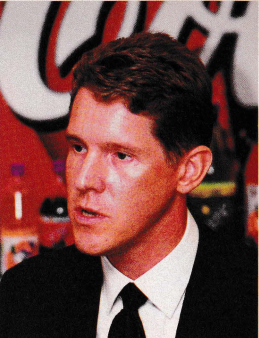
Why did Coca-Cola move its regional office from Cyprus to Lebanon?
TULLY Earlier this year the company defined a new policy, which is, to quote a maxim, ‘think local, act local.’ The timing was perfect to relocate the office to Beirut, a market that has seen huge growth in the last three or four years. We bought the bottling operation in Shoueifat and following that we’ve made significant investments. We hope moving the office to Lebanon will continue to create growth.
Many find that the red tape and high operating costs make this a difficult business environment. Is Coca-Cola concerned about that?
TULLY In the last few months that we’ve been preparing the relocation of our regional offices to Beirut, we haven’t come across any major barriers. I’m encouraged by the response that we’ve had at all levels. As far as operating costs are concerned, we would welcome the opportunity to work with the government to find a framework for a reduction in operating expenses—namely taxes, custom duties, oil prices and electricity—which would create a more positive atmosphere for investment. Lebanon and Jordan combined—we’ve gone through a similar exercise of acquiring the bottling operations in both those markets—have seen investment of over $60 million by the company in the last three years.
What are your strategies to increase Coca-Cola’s market share?
TULLY The key thing from a strategic point of view that’s helped us grow our market share is some of the packaging, such as the 2.25-liter, large-size PET and the 500 lira cans.
Was it easy or did you have obstacles, like competition from Pepsi?
TULLY It’s the consumer that drives the market. And it’s by gaining preference with the consumer that we gained acceptance at the trade levels to be able to expand our distribution. It’s really the focus on the consumer that’s been one of the major success factors for us.
How much have you invested in marketing?
TULLY It’s a bit difficult to quantify marketing in terms of dollars spent here versus dollars in a different market, but we’ve invested significantly both from a packaging point of view, as well as consumer promotions. Our key focus was to expand distribution as much as possible across the whole of Lebanon.
Why did you purchase the factory in Shoueifat?
TULLY Our market share was about 16% in 1997. Acquiring the business enabled us to accelerate our development so we could get to the point we are at today quicker than we would have done with the independent operation.
Where is the war being fought?
TULLY The war in the industry today is being fought on a consumer marketing platform. Today you’ll see consumer promotions by all the soft drink companies; you’ll see consumer promotions by Coca-Cola. It’s through these sorts of activities and media advertising that competitors are engaging in the fight for market. This is a very competitive market, and the Middle East as a whole in carbonated soft drinks is competitive.
When you speak of market share do you mean Coke versus Pepsi?
TULLY It’s company market share. That would cover all our brands. We take a portfolio approach with our markets. We don’t just concentrate on Coca-Cola, though it is probably our number one brand and cola is the number one segment.
Do you plan on being number one?
TULLY Absolutely. We’ve doubled our market share in the past three years, and the plans we have are to take over the share leadership in two years.
By how large a margin do you expect to lead the market?
TULLY Ultimately we’d like to get to 75% of the market, but that’s not going to happen in two or three years. Phase one was getting to a level of critical mass in terms of our market share. Step two—share leadership. We don’t have our heads in the clouds. I do think about the days when we’ll have 70 or 80% focus on what our objective is.
