
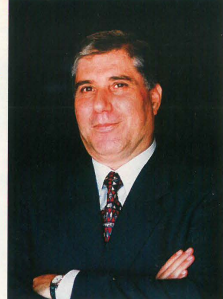
What is the role of the ministry of emigrants?
JOMAA We have organized numerous activities with Lebanese emigrants.
We are trying to create a bridge of communication with the emigrant
community. But we are looking at emigrants from a different perspective;
the existing image is one that paints them as the money or funds
available to the Lebanese.
Lebanese emigrants have influenced other cultures and they play an
important social, educational, political and economic role in other societies.
So we’re dealing with the emigrant community from a social and
economic point of view. Our activities include forging friendly ties in areas
where there are large concentrations of Lebanese living abroad.
Recently, we organized a conference for emigrant business people. So
we have made the first step, but we have a long way to go. The next step
is to organize a follow-up committee, because we are turning this conference
into an institution. For the conference, we received help from
the private sector, about $150,000. We put in around $50,000.
Why are so many people emigrating?
JOMAA This is nothing new. It’s true we need to keep educated and
talented individuals in Lebanon, but we have to provide a favorable climate
for them to stay or for emigrants to return. In addition, there is
competition for intellect around the world; talent is being drawn to East
Asia. It is a very critical and sensitive issue, requiring a plan of action
from the government or the exodus will continue.
What was the general feeling among the emigrants with
regard to investing in Lebanon?
JOMAA Lebanese emigrants dream of investing in their homeland, but
there are complications that impede investments. There should be a special
law for emigrants providing incentives. Now we have a one-stop shop
in IDAL, but it’s only a start and applies to all investors, not emigrants in
particular. We created a committee to facilitate investments from emigrants.
However, the conference achieved several things. It allowed emigrants to
visit Lebanon and not just see it through the eyes of the media. Secondly,
Lebanese emigrants from different countries were able to meet and establish business relations that Lebanon could eventually benefit from.
Can emigrants rebuild the country and the economy?
JOMAA Absolutely, Lebanon would not have been able to withstand
20 years of war without its emigrants. During the war, the money
coming from Australian emigrants to their families back home was about
$1 million AUS per day. Emigrants are great contributors to the local
economy; we don’t have raw materials or natural resources.
Coming back to investments, no real progress will be made unless we
can improve the investment environment and offer incentives. Many
Lebanese emigrants have the means and ideas needed to invest in
tourism, industry or elsewhere, but are wary of the social security system,
the labor situation or red tape.
What about T-bills at no interest for five years?
JOMAA The idea is for emigrants to participate in reducing the public
debt. Each would invest $100,000 for five years. The annual interest
rate of 7%, or $35,000, would be at the government’s disposal to pay
the interest on the public debt. We presented the idea to the emigrants
during the conference, and 100 were interested. If 200,000 emigrants
participated, we’d no longer have a public debt. The others were
ready to contribute, but some asked for 1% interest to make a nominal
gain. Others asked that the $100,000 be divided into four installments.
Right now we have about 40 people who are ready to contribute.
We are preparing plans with the ministry of finance and government for
that purpose and to increase the number of participants.
What are the chances that action will be taken any time
soon in order to facilitate and offer incentives for direct
investments?
JOMAA We have as a ministry put a plan of action into place, and we
are starting as we speak. Everything takes time, but government incentives
need to come from the ministry of economy and others. We can
only suggest our ideas to those ministries; we can’t control the activities
of other ministries.
