Sell Fast, a company founded by Kheireddine Fakhoury and Kamal Sinno in 1994, is a concept designed for an economically challenged country like Lebanon. The idea was to stock a store full of items where everything goes for a buck. After opening the first $1 store late in 1993, Fakhoury cleared his $30,000 inventory of shampoo, plates, and kitchenware in less than two weeks, selling around 4,000 items per day.
“Business was so good and more people kept coming in asking me to supply them with goods that I invested every penny I had in this business,” says Fakhoury. Six months after sourcing more items from the US, the company went from just retail to wholesale operations with a $300,000 investment. Today, besides its four retail shops, called Shop One, Sell Fast supplies over 600 clients including BHV, Spinneys, Monoprix, Vendome Hotel, and others. The products range in price from $1 shampoos, soaps and cotton buds up to $150 for 123-piece dinner sets. With an average sale of $10 per client, the company turned over $2 million its first year of operation and has been growing at an average of 20% yearly, prompting the owners to reinvest their capital each time to upgrade their operations.
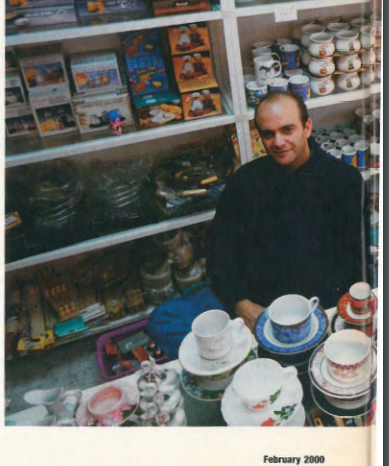
Now Sell Fast imports from China, the Far East, Italy, the US, France, Belgium, Malaysia, Thailand, and Indonesia and sells to $1 stores, supermarkets, wholesale operations, houseware and kitchenware stores, and exports directly to similarly economically challenged countries such as the African states, Bulgaria, Romania and Cyprus. “We will double our turnover in 2000,” says Fakhoury.
Sell Fast is not alone, either. Another successful wholesaler that targets the low end is Bitar Trading Co. For the last ten years, Saad Bitar took his father’s business, set up in 1965, and focused the company’s products mainly on inexpensive glass kitchenware imported from Southeast Asia. And it’s working. Bitar is now a holding company, 15% foreign-owned and comprised of four companies designed to support the glassware business.
With an annual turnover of more than $5 million, Bitar distributes to 120 wholesalers and some 50 retailers of kitchenware, porcelain and enamelware products to clients such as BHV, Fahd Supermarket, Achik and Arout. Bitar’s porcelain items range in price from $1 to $200, but in glassware, most products are in the range of $1 to $10. Bitar reckons that only 15% of his business caters to lower-middle-income earners ($1,000 to $1,500 per month), but the rest is geared to low-income earners.
Reasons for their success are not hard to fathom. “Selling on the low end is more in tune with the current market conditions,” says Marwan Iskandar, an economist with M1 Associates. “People are shifting down their consumption.” Fakhoury agrees: “Consumers are looking for bargains and we have to tempt them heavily to get the money out of their pockets.” Louis Hobeika, an economist at the American University of Beirut, believes that the phenomenon is fundamental: “Selling to the low end is gaining popularity because the recession means that consumers who were once middle class are now moving to the lower class.”
Still, Fakhoury reckons that his business has potential not just in the low-end market. The fact is, he argues, consumers of greater purchasing power will not balk at a bargain opportunity for a good-quality product. But is it good quality? “The Lebanese are shrewd, educated consumers,” says Fakhoury. “They won’t pay for rubbish, even when spending LL 1,000, they want to know it’s worth it.” The fact that big supermarket chains and even five-star hotels are buying those items only proves the point that the products are not cheap, just inexpensive.
That’s the good side, though. Most low-end sales are for non-branded products that carry no warranty. Additionally, branded goods need not be stocked in a wide variety of items to attract customers; the brand sells the product. But when selling low-end coffee cups, photo albums, glassware or porcelain, the trader needs to change with the trends in tastes and fashion. “The pressure is to counteract the lack of brands by supplying a million new things, and for a growing company that’s a headache,” says Fakhoury.
Bitar has the same problem trying to attract women, who are interested in new designs, colors and a variety of sizes. “The market is too small to try to satisfy the changing tastes of my consumers, but we have to do it if we want to stay in business,” says Bitar.
Retailers are not particularly overwhelmed with the benefits of selling low-end. According to a major department store general manager, a drop in purchasing power over the last few years has been noticeable, but the larger sale volumes for cheaper products have not generated significantly higher profits than the slower-selling high-end items. For example, in one month, they could sell five sets of plates valued at LL 5 million and equally sell 100 sets valued at LL 250,000.
Tambourgi is a retail store at ABC, selling high-end glassware, tableware and a variety of household silver items. “I’ve had the same high-end customers for years and they buy with or without a bargain sale,” says owner Edna Tambourgi. Middle-class buyers, however, need to see at least a 30% discount before buying, she says.
The problem, of course, is that getting started on the high end means a larger capital investment and greater risk. So what about developing a low-end one-stop-shop retail concept? For example, Wal-Mart, which operates under a similar concept, is one of the most successful US companies of the past 30 years.
Both Bitar and Fakhoury doubt the likelihood of anyone risking the investment required to see something like this happen in Lebanon anytime soon. “Although the market is waiting for such a place,” says Fakhoury, “I will only open one or two stores just for kitchenware, for example, but not for the entire range of products.”