• Donate
  • Our Purpose
  • Contact Us
Executive Magazine
  • ISSUES
    • Current Issue
    • Past issues
  • BUSINESS
  • ECONOMICS & POLICY
  • OPINION
  • SPECIAL REPORTS
  • EXECUTIVE TALKS
  • MOVEMENTS
    • Change the image
    • Cannes lions
    • Transparency & accountability
    • ECONOMIC ROADMAP
    • Say No to Corruption
    • The Lebanon media development initiative
    • LPSN Policy Asks
    • Advocating the preservation of deposits
  • JOIN US
    • Join our movement
    • Attend our events
    • Receive updates
    • Connect with us
  • DONATE
DesignSpecial Report

Sharing Lebanon’s artisanal treasures with the world

by Executive Editors August 7, 2015
written by Executive Editors

Challenging economic times have left Lebanon’s smaller manufacturers in a precarious situation, with few potential customers in the local market and a lack of government support beyond a few free zones and tax breaks for exports, meaning foreign markets are difficult to reach. Enter UNIDO (United Nations Industrial Development Organization), which has launched a pilot program to support manufacturers in Lebanon’s creative industries. Taken as a whole, UNIDO says these industries contributed five percent to Lebanon’s gross domestic product in 2010 – the latest comparison available, and accounted for four percent of the national workforce that year. But there is potential for more.

Design, UNIDO says, is a useful tool for further economic development and job creation. Their plan is to build a system of support, starting with artisanal jewelry makers in the Beirut suburb of Bourj Hammoud and furniture makers in Tripoli, Lebanon’s second largest city. “They both are suffering – Tripoli is suffering very much, but also Bourj Hammoud – because of the lack of tourists, especially Gulf tourists,” says Giulio Vinaccia, an industrial design consultant leading UNIDO’s program. Matched with Lebanese celebrity designers, UNIDO will instill business prowess among artisans and, with buyers already in place, facilitate access to European markets.

Melting pot of creativity

Harnessing Lebanon’s creativity requires a structured approach; “Creativity now is a science, it has a methodology and has a logic to follow,” says Vinaccia. As part of a larger program amongst countries of the Southern Mediterranean, UNIDO’s initiative for Lebanon is to scale up artisanal production, starting first with the jewelry and furniture makers.

There is no shortage of creativity amongst Lebanese jewelry and furniture designers. “Lebanese are born with hundreds of different stories. They know the traditions of Mohammed and of Armenian design. All that is fantastic for being creative, and that’s why it’s so good in Lebanon – it’s a melting pot. This is the perfect environment for creativity,” he says.

Other creative industry clusters have not achieved the success touted [see overview on page 28] in part because those producers did not have markets prearranged to sell their products. Seeing this, UNIDO considers it a priority to establish a market for designers to sell their goods. Vinaccia tells Executive that Tripoli’s furniture makers will be sending tables to Habitat, a French retailer of household furnishings. “We went to Paris, we made the deal. They said build us some prototypes, check the quality, send them to us, and we’ll put them in stock. This was the first homework I gave to them [furniture makers]. For them it’s so easy, no? But they need to understand how to arrive at mass production and how to maintain the quality.”

Vinaccia points out the need to professionalize Lebanon’s designers. “You need to be a mix of manager and designer with a toolbox of organization, business development, and marketing skills,” he says. “To that end, UNIDO includes a capacity building phase to its program which includes matching amateur designers with celebrity mentors in the field.” Being linked to big Lebanese names – designers like Nada Debs, Vinaccia says – will help open doors for the artisans, particularly once their products reach the market.

Finally, to maintain the technical knowhow of artisanal craft and to introduce new design approaches and technologies, UNIDO has hooked up with Académie Libanaise des Beaux-Arts (ALBA), a local design school. This, Vinaccia says, brings UNIDO’s program full circle by linking students from the academic environment with designers in the workshop.

National identity

“You need to understand that design is no longer the dress of the products – it is the soul,” says Vinaccia. Products nowadays, he says, need to be as aesthetically pleasing as they are functional. But they also need to tell a story that impresses the buyer with a unique image of the country that produced it.

In the heat of the United States’ global trade negotiations, geographic indicators (GIs) – names for products that correspond specifically to location of origin – stand out as a point of contention. GIs appeal to national identity and the Europeans, in negotiating the Transatlantic Trade and Investment Partnership with the Americans, argue that regional foods like Greek feta or French champagne should be legally protected as intellectual property. The idea makes sense – in many cases GIs can be identified with historic connotations to their nation of origin. This means that wine produced in Napa Valley, for example, has brand name power and is thus quite lucrative for farmers and producers.

UNIDO’s idea to nurture Lebanese jewelry and furniture is similar. Tying national identity to the products would develop brand name recognition – ‘made in Lebanon’ is a powerful sell, particularly to the expatriate community yearning for a piece of home. But it is premature to think they could be considered geographic indicators, and UNIDO does not anticipate branding protection as part of their strategy.

The history of producing jewelry in Bourj Hammoud and furniture in Tripoli, however, is real, and for some in UNIDO’s program, like Hadidian Jewelry, the business stretches back generations. The jewelry and furniture trades are symbolic of their respective neighborhoods, which Vinaccia says is a selling point.

Like Lebanon’s previous clusters, the UNIDO program is only possible through external funding – the European Union in this case. In the past, once funding dried up similar programs were discontinued and participants were left to soldier on with no one facilitating access to buyers in foreign markets. The UNIDO cluster project is still in its infancy, but if the model for the jewelry and furniture makers proves successful, the plan is to expand the program to other clusters, Cristiano Pasini, UNIDO’s country representative tells Executive. “We are doing something very meaningful for these two clusters – I’m sure we’re going to scale up.”

August 7, 2015 0 comments
0 FacebookTwitterPinterestEmail
Tourism and Hospitality

It’s vacation time!

by Nabila Rahhal August 7, 2015
written by Nabila Rahhal

The summer season, when schools are off for two months and productivity at work slows down, is usually seen as the best time to leave one’s home country for a well-deserved break and discover new cities around the globe.

Whether booked independently through airline search engines or planned as an all-inclusive package through travel agencies, leisure travel is often anticipated by travelers as the high point of the year, and by businesses as an important source of revenue.

In Lebanon, the idea of a vacation abroad is becoming more and more common, says Nakhal Travel’s general manager Elie Nakhal, who sees this as a positive sign for travel agencies.

Summertime and Lebanese travel agencies

According to the travel agencies interviewed for this article, the summer season traditionally constitutes between 40 and 60 percent of their annual turnover in terms of leisure travel. “In the summer, the leisure business increases at the expense of business travel, while the opposite is true in winter,” says Nakhal, “though leisure travel still constitutes a bigger part of our business with roughly 60 percent.”

Johnny Modawar, marketing manager at Wild Discovery Travel and Tourism, explains that many Lebanese only travel during the summer vacation, as opposed to traveling during other school or national holiday periods. This concentrates a lot of holiday traffic across the same period from the end of June to mid-September. Some people, especially couples and those with no children, postpone their trips until mid-September onwards to avoid the crowds in the traditional vacation spots such as Mykonos, Greece or Ibiza, Spain. “Spa offerings are highly booked in September and October, mainly by couples, and in hotels that are known for their spas or regions that have curative aspects, like Evian in France,” says Modawar.

For the past few years, the month of Ramadan has been falling during July, which has delayed the typical vacation time until the approach of Eid, making August the peak travel month for 2015. “Usually, people who fast don’t travel during Ramadan so we consider it a low season. Speaking for myself and others in the business, we don’t start our charter plane operations until Eid onwards with August being the main month for vacations in Lebanon and leisure travel decreasing by the end of September,” explains Selim Boutros, director of Kurban, a travel agency in Lebanon.

ONLINE VERSUS TRAVEL AGENCY

The case for the live agent versus the online website

With the popularity and ease of use of online travel booking sites, it seems that many are foregoing agencies for the “do it yourself approach” in order to benefit from last minute discounted prices or other special offers. Yet, travel agencies insist that they bring added value to travel planning and provide services or reassurances that online booking sites can’t.

“It is true that online booking has become very popular, but the role of the travel agent remains necessary due to many factors. Today when you book online there is no one to really advise you on the kind of hotel you want and even if you do check the online reviews, it is not the same. We as travel agents, and based on our past experience with our clientele, are able to advise clients on which hotels or destinations suit them best,” says Nakhal.

Another reason Nakhal gives to justify the need for travel agents is that “everything is good until something goes wrong and when that happens, travel agents have a role to help in crisis management.” In his opinion websites are impersonal and follow guidelines blindly, so if a traveler books a trip online through a booking engine and something goes wrong, there is no one to negotiate with. He gives the example of how, when the July 2006 war took place and Lebanon’s airport closed for 30 days, Nakhal was able to reimburse the full amounts paid for planned trips, with no cancellation fees, to their clients, while those who had booked directly through Nakhal’s partners (such as Costa or Club Med) were not able to get their money back. “We are their partners and they know we are serious. The rules online are strict, and there is no room for maneuvering,” he explains.

Modawar explains that the role of the travel agent is especially viable in Lebanon where people are more used to having services provided for them rather than doing things for themselves. “Lebanese still like having a personal contact or someone to be able to refer to, and would pay extra to guarantee satisfaction,” he says giving the example of Wild Discovery, which plans to launch two more offices in Lebanon in 2016 as evidence of how big the demand for travel agencies still is in the country.

Tech savvy travelers

Yet, the prevalence of all the online travel booking sites cannot be denied and although the travel agents interviewed for this article do have an online presence, they say that people still tend to book their trips at the physical agency.

“Today what we are facing in Lebanon is, from our experience, that people are still visiting our agencies and taking our offers but also having a look online to compare and benchmark prices. The internet lacks the complete package of airlines, hotels and programs but instead has pieces that you blend on your own. This type of travel has its clients but these are not our core clients who are people who are still coming for our agency for the consultancy and expertise,” says Modawar explaining that this trend of online browsing and benchmarking places a positive pressure on them as agencies to always be up to date on the best hotels and deals.

Boutros gives the example of Go Kurban, their travel booking website which he describes as a “dynamic catalogue and online agency”, saying that in the five weeks since they launched (at the time of the interview late June) they have had more than 21,000 original users and 25,000 visitors but that people have yet to adopt the website and actually book online instead of just browsing the packages. “People are still afraid of online payment but I think it is just a process of adoption and we will get past that,” explains Boutros, enthusing about the plans they have to increase their online presence which include a new mobile website and a regional expansion of what he calls a “hybrid online agency”.

The early bird catches the worm

While Europeans and Americans tend to plan their leisure trips almost a year in advance, benefitting from special offers and discounted trips on hotels and airlines, the Lebanese are last minute planners, Boutros explains. “Previously, our flights didn’t fill up to maximum until two weeks before departure, which is really last minute. Starting from three years ago, we are seeing bookings coming in earlier and earlier so this year we were selling Easter packages along with our summer packages,” says Boutros, despite admitting that the bulk of their reservations still come at the last minute.

Choice of destinations

While Lebanese travelers may book their vacations at the last minute, the travel agencies charged with planning their vacations begin their work for the summer during the previous winter. “We choose to launch new destinations according to market segmentation and product strategy. First, we identify who is our target (profile, age bracket, purpose of the journey, types of needs to answer: honeymoon, family, adventure, relaxation trips etc.) We analyze the potential of this new destination to attract people then we build the product looking at the main interests of the destination, the airline connections out of Beirut, the leading hotels and resorts to partner with etc. We have our proper methodology when selecting hotels and many factors are to be taken into consideration such as the hotel’s location, amenities it offers to specific profiles such as families or honeymooners, hotel overall status and recent renovations and obviously its rates and flexibility towards clients,” says Modawar.

From a quick glance at street billboards, it is easy to see that most Lebanese travel agencies provide the “classic” destinations, namely the Turkish islands Bodrum and Marmaris, and the Greek islands of Mykonos or Santorini.

Boutros explains that the Turkish islands are the most popular destinations among Lebanese, chiefly because no visa is required to go there which presents a significant drop in cost if travelling with a family, in addition to saving time on the inconvenience of visa appointments. “Marmaris is our most popular travel destination because it is budget friendly and suits everyone, from families to young couples, with packages starting at $400,” says Boutros.

Indeed, the recent financial turmoil in the southern Mediterranean has an impact on holiday makers. “Greece is quite affordable this year because of the low Euro rate in general and because of the country’s economic situation [with the European Union] in particular,” says Modawar, who adds that hotels are giving guests more flexibility e.g. guests are no longer required to book for a full week, and instead can enjoy just a few days, which they couldn’t do in 2014. Modawar considers Kalamata, in southern Peloponnese Greece, as one of this summer’s new destinations by Wild Discovery, with the Costa Navarino Luxury Hotel Resort that presents a capacity of more than 700 rooms and amenities suitable for families and couples, as its main attraction.“We selected it in the winter and we arranged it with our airline partner Aegean Airlines to have direct flights there.”

It’s a chartered world

The destinations which are relatively new to the Lebanese market are promoted by travel agencies with the creation of direct chartered flights. “Wild Discovery charters its own planes only with national airline companies such as MEA, Croatia Airlines, Aegean Airlines (national carrier of Greece), for quality and safety measures. The distribution channel of our charter flights is divided into two parts: either we sell these seats through Wild Discovery’s nine branches, meaning to our own clients, or we sell these seats through our network of subagents we deal with in Lebanon so they fill our planes with their own clients. Smaller travel agencies cannot charter planes on their own. The cost of operation, financial exposure and filling capacity is naturally very high, which is why they would rather buy from us,” explains Modawar.

Chartered planes make summer traveling more convenient and less time consuming. Nakhal cites Vienna, Austria, and the Czech Republic as the ‘new’ destinations they are promoting this summer, through chartering direct flights to these places. “This makes it much more convenient for travelers who no longer have to take multiple connecting flights, which is why we consider this a creation of a ‘new’ destination, as chartered planes really encourage people to travel to these cities”. Nakhal explains that during last summer they chartered direct flights to Dubrovnik, Croatia, and Montenegro. This saved travelers from having to take three connecting flights to get to these places, and thereby opened a new market for these destinations, attracting both the high and medium end travelers.

According to Boutros, this summer offers a lot of new destinations as “chartered [flights] are going everywhere.” For example, Barcelona is fast becoming a popular travel destination this summer partly because Kurban chartered Vueling Airlines to travel twice a week from Beirut. Kurban has also opened up Belgrade, Serbia, as a new destination for the Lebanese this year through collaboration with their airline partners.

The lodgings plan

In parallel to planning chartered flights, travel agencies secure hotel rooms at the selected destinations early on as well. Boutros explains the process by highlighting their choice of hotels, which is based both on the selected destination and on their experience in past years. “Most of our rooms for the summer are prepaid at the beginning of the year and it’s an internal strategy as to whether we are conservative or aggressive in the number of rooms we get,” says Boutros, giving the example of Mykonos, which he says is tricky as it’s a very popular destination among travelers yet has few hotels. This causes a problem for many agencies, which are frequently left with more chartered flights than rooms.

Modawar also speaks of strategy when it comes to booking rooms, saying that agencies have to take risks to ensure availability before promoting the destination: “We fly to Mykonos twice a week so we have to guarantee room availability in this period, therefore we lock them in beforehand. These destinations are also in high demand in Europe and since we all take vacations at the same time (July to August) it is even more important for us to be ahead with both airlines and hotels,” he says.

The cost of traveling

The generally dismal economic situation in Lebanon and the lower purchasing power among most Lebanese has taken its toll both on the choice of vacation and on travel agencies. “From the five star clients to the low income ones, the number one factor for all our clients is cost. I wish I could say value but it is more price: everyone is after a better deal,” says Boutros.

Modawar explains that the situation in Lebanon is causing agencies to promote quality travel but at very competitive prices, as not everybody can afford to go to luxurious destinations like the Caribbean or South Africa. Places like Croatia, Turkey and Greece have become a necessary part of a travel agency’s portfolio. “We are not always selling the 600 dollar packages but we have to have them,” he explains. Travel agencies do say that, while many of their more wealthy clients may skimp on the airline tickets, they tend to splurge on accommodation once they get to their destinations. “Our products cater both to the high end and mid income level markets. Our packages attract everybody but their choice of accommodation, number of nights, and specific cities reflect their income level,” says Nakhal. Whether on a budget or five star trip, it seems that travelling for vacation has become part of many Lebanese families’ summer plans, and travel agencies can subsequently accommodate and benefit from all price ranges.

August 7, 2015 0 comments
0 FacebookTwitterPinterestEmail
DesignSpecial Report

Human-centered design is central to modern day problem solving

by Tania Anaissie August 6, 2015
written by Tania Anaissie

Doug Dietz is a legend. He is the man that transformed the once miserable experience of receiving a MRI scan into a magical adventure. Doug is a design thinker.

He is an alumnus of our Stanford Hasso Plattner Institute of Design (d.school) Executive Education program. Doug was on the General Electric (GE) team that designed nuclear scanners (used to conduct MRIs). When they were first installed, he excitedly visited a hospital to observe them in use. What he saw was a small, 7-year old girl hiding behind her mother’s legs, terrified of the upcoming scan. The loud sounds, flashing lights, and deadly-looking stretcher brought her to tears. She was so upset, the family had to go home and reschedule the scan for another day. Hundreds of other children that year had to be sedated to undergo the MRI tests. As Doug describes it, “I went for kudos, but what I got was a kick in the ass.” He found it an incredibly heartbreaking and humbling experience.

Motivated to make a change after this encounter, he came to the Stanford University d.school to learn Design Thinking. He learned that by focusing on his users, he could make the largest impact. When his superiors at GE dismissed his request to conduct this work, he used his personal time after work and on weekends to move forward. He created an advisory board of children in Chicago, consulted experts at children’s museums, and spoke to a number of families in hospitals. As he progressed, his focus shifted many times until he reached a truly magical solution. He turned the MRI rooms into adventures that make children feel they are in forests, oceans, or cities. The machines and walls are painted with scenes, the technicians wear costumes and act, and children receive storybooks the night before preparing them for their upcoming “adventure.”

The results are incredible. When Doug visited after the change, he observed a small girl with her family. After the scan, she tugged on her mother’s skirt and asked, “Mommy, can we come back tomorrow?” The number of children needing sedation has dropped to almost zero.

Aside from the heart-warming change for families and children, Doug and his team have greatly improved the way teams design healthcare services. When talking to hospitals looking to buy either GE’s machines or a competitor’s, GE has secured multi-million dollar deals because the hospitals wanted Doug’s magical designs installed. And now within GE, engineering and marketing teams are asking Doug to join early discussions as they make changes to the machines. Engineers motivated by his story began to think, “How can we make the machines quieter and less scary?” As a result, GE will soon be releasing this new quiet MRI machine – an amazing advancement.

Doug’s story is a prime example that shows if you focus on your users and their deeper needs, you can transform people’s lives. This is so powerful that, naturally, more people will want your product/service. This can also transform how other groups in your organization work, scaling the desire for innovation.

Though you may not work in healthcare or work with children, we all have the ability to bring delight and novelty into our work. I truly believe that all people are inherently creative, but our school and work environments often stifle us. Design Thinking helps us re-engage our creativity. It is a problem-solving process that can be applied to any field. It consists of five process steps and a set of mindsets that radically shift how we work. The key element of design thinking is a focus on the user. Humans are the key to building successful solutions, and only by deeply understanding our end users can we truly innovate.

Design thinking as we know it came to life in Silicon Valley. Startups in the Valley are eagerly applying it to their work, and it has become a key element of many Startup ecosystems around the world. Now, large companies are doing the same. Organizations like Fidelity, Jet Blue, Procter & Gamble, Capitol One, and more have opened internal Design Thinking innovation labs. They are attracting top young talent, developing innovative new offerings, and transforming their industries.

Aside from focusing on your users, what does being a design thinker mean? It means you believe in a bias towards action (do instead of talk), you build on your teammates’ work and make them look good, you seek answers from others who have different life experiences than you (and you really listen), and you work with teammates who come from a diversity of backgrounds and value their perspective. You also believe in iterating quickly and often at low resolution to learn as fast as possible.

Wherever you are today, you can creatively solve problems in this human-centric way. You can start small, by interviewing one customer. Get to know them – what’s their story and how does your product or service fit into their lives? There are free resources on the d.school website. You can run a beginning crash course in design thinking for your colleagues or you can go through the Online Crash Course. The books “Creative Confidence” by Tom and David Kelley and “The Achievement Habit” by Bernie Roth are good reads on the topic. Also look for opportunities to access design thinking here in Lebanon. Every time I am here, I meet more people practicing it.

Design thinking is radically shifting how we work and disrupting industries across the world. And, maybe, with a little listening and prototyping, you’ll find yourself in an imaginative storybook of your own.

August 6, 2015 0 comments
0 FacebookTwitterPinterestEmail
DesignSpecial Report

The evolution of ‘design’

by Matt Nash August 6, 2015
written by Matt Nash

Design is as old as humanity itself. In fact, there’s increasing evidence that it’s even older. Think Australopithecus with an iPhone.

Ok, not an iPhone but a stone purposefully smashed with other stones to create a sharp edge (an iStone, if you will), and maybe not Australopithecus, depending on which school of pre-human taxonomy you prefer. But just this year, scientists working in Kenya announced the 2012 discovery of the oldest known purpose-built stone tools, which date back as many as 3.3 million years, well before Homo Sapiens came into existence. Since then, the notion of design has evolved, even if its most advanced forms have not quite yet surfaced here in Lebanon.

What is design?

Based on numerous conversations had for this special report, which ranged from the specific to a level of abstraction that still somewhat boggle our minds, the most succinct definition of design seems to be ‘creativity with a purpose’. The purpose can be as mundane as getting food into our mouths or as corporate as creating a sense of brand loyalty among consumers by designing a friendly, hassle-free customer experience. Design was once the sole domain of the person creating an object, be it a blacksmith, cobbler or carpenter. Today, however, it has become a craft unto its own. And it’s just as important for selling things as it is for as it is for creating them.

Giulio Vinaccia, an Italian designer, working with the UN on a new design-oriented program in Lebanon says product designers today are being brought into the process of creating an item at a far earlier stage than before. Previously they were seen as “tailors,” he says, who were there to merely make something look nice. “Twenty years ago I received a brief of 20 pages to make a glass. The company said, ‘It’s a glass for red wine and this kind of glass needs to have the mouth very open to intake oxygen’ and we were only the ‘tailor’ to design the correct shape.” Now the same company will write to my office and say ‘Guilio, we’re not selling glasses, what should we do?’” Product designers are now being brought in earlier in the commodity creation life cycle, not only to make the creation look nice, but also to help give it a sexy story to make sure it sells. Outside the manufacturing plant, companies need slick websites and the bigger ones hire ad agencies and marketing firms, all of which employ legions of designers. There are designers in just about every field, and even those who may not call themselves designers – like educators and magazine writers – could be considered among the ilk.

The ‘Creative Economy’

Because there seems to be a designer lurking in every office closet (or sitting next to you at the coffee shop and working remotely), it is difficult to put a figure on how much the industry as a whole is worth. They’re big players in the so-called “Creative Economy”, a sector which does not yet have a universally accepted definition. The UN Industrial Development Organization cites from the United Nations Conference on Trade and Development (UNCTAD) “Creative Economy Report 2010” that it contributes nearly 5 percent to Lebanon’s economy and accounts for over 4 percent of employment. The UN heaped praise on the state of creativity in this country, commenting on its website that “The strength and dynamism of cultural and creative industries in Lebanon are rooted in multifaceted cultural influences, deep-rooted private initiatives and the country’s privileged geographical location. Beirut, for instance, has been regaining and consolidating its role as a regional hub in design, advertising, architecture, fashion, gastronomy and publishing — even if the related value chains are often not completely covered and if some important linkages (such as collaborative work and initiatives, investments, etc.) are still weak.” Despite Lebanon’s reputation for innovation and creativity, design in its newest incarnation – as an inventive solution provider – has not taken off here. But the evangelists have arrived.

“New” design

Since the 1960s, there’s been a developing notion that designers simply think differently than, say, bankers or dockworkers. Around 15 years ago, a new industry was born: designers became problem-solving consultants. They began to think up creative ways to tackle social problems such as homelessness, offer government tips on how to more easily interact with and court the business world with a customer-centric sales pitch. Call it what you will – service design, experience design, strategic design, design thinking – what’s on offer is all pretty much the same. Designers use an innovative method when problem solving which can help a company’s bottom line, an approach which these “new” consultants claim executives, mid-level managers and traditional management gurus lack.

“Most traditional consultancies will always analyse from within the organization. They will look at your processes, your systems, and understand the people and the policies to see how we can optimize. And it’s great if that optimization, in the end, also benefits [a customer’s] experience. […] But it’s very analytical and it’s very numbers based,” says Anne Meijer, business development manager at Livework Studios, a service design company based in five major world cities, including Beirut, currently working with the local strategic consultancy Brand Cell. “Service design is more and more coming inward. We basically bring the customer into the organization. First we show and make the organization understand what the customer is experiencing. Then we imagine how we can use this experience, and understand what it means for an organization and the business.”

To understand this better, imagine a bank where customers complain they spend 15 to 20 minutes waiting to see a teller each time they come to a branch. A traditional consultant might suggest adding more tellers or instituting a policy whereby each teller must limit interactions with customers to a maximum of ten minutes. A design consultant, on the other hand, would interview customers to find out why they’re coming to the bank, and interview tellers to find out what their processes are for dealing with customers. This interview technique leads to “visualizing” ways to 1) reduce the need for people to enter a branch – which can involve using new technologies like websites, e-banking or even ATMs – and 2) speed up the process once they’re there. Visualizing means just that. Think post-it notes, storyboards and reducing often complex information into a visual, digestible form the way designers are renown to do. It’s all very right-brain and quite the contrast to the ruthless penny-pinching associated with the “old way” of business optimization. One of the leading firms in this new field, US-based IDEO, says in describing its work: “Nobody wants to run an organization on feeling, intuition, and inspiration, but an over-reliance on the rational and the analytical can be just as risky.” IDEO’s use of design as a problem solving tool, the company assures, “provides an integrated third way.”

Meijer also added that, as a consultancy, “we need to give [clients] short term benefits,” that are more tangible than abstract outcomes (like customer loyalty) which are hard to quantify. A prime example would be identifying redundancies and firing them along with other optimizations that more quickly prove a consultant’s bill is worth paying. Joe Ayoub, CEO of Brand Cell, adds that, with only one completed service design solution thus far offered in Lebanon, the company is charging “maybe not as much as we would love,” but is hopeful that “next year, we will command the price on service design.”

The Less profitable model

As noted above, the “design is different” gospel preached by this new wave of consultants has 50-year-old roots and it’s not just business in need of salvation. For an example of evolution in a petri dish, we once again turn to London (See: the Peppered Moth’s reaction to the Industrial Revolution). Seventy years ago, the government formed a council on design to keep the country competitive in industrial design. Today, the Design Council touts itself as “champion[ing] great design that improves lives.” They’re talking new designer meets social challenge, something Doreen Toutikian sees is sorely lacking in Lebanon. “What we don’t need is another chair,” she says. Toutikian directs the non-profit MENA Design Research Center, organizer of the annual Beirut Design Week, a seven-day orgy of all things design launched in 2012. That year, the MENA DRC hosted a program that let designers use their prowess to try tackling real-life problems people in Lebanon face. Ideas which were generated included a new traffic management system for Gemmazyeh; a “sustainable consumerism project” that would have turned plastic bags into other useable and sellable objects in Bourj Hammoud, and a device that lets users monitor how much electricity they use to avoid blowing a fuse when using the generator, and to conserve power. While almost none came to fruition, she argues the process helped change how participating designers think, so she considers it a success story anyway.

She says the MENA DRC trains young designers and will keep on spreading the word about design’s potential to transform the world, working from the bottom up to create an ecosystem focused on solving Lebanon’s myriad problems.

Tried and true

While the direct economic benefits of this new iteration of design are hard to quantify, there are continued efforts to use the more aesthetic aspects of the discipline to grow business and create employment in Lebanon. UNIDO’s creative and cultural industries cluster project is matching furniture manufactures and jewelry makers with young designers in an attempt to boost these traditional industries now in various states of disrepair (see story on page 36).

Still missing from the equation, however, is state support for any of these initiatives. While the UNIDO program shows promise, it is unclear whether the cluster will survive once the money from outside dries up. Foreign funding to help local creative industries and designers has come to Lebanon in the past. However, two prominent initiatives, the Lebanon Creative Cluster and the Beirut Creative Cluster, ceased functioning when the money dried up, according to Salim Tannous, former director of the BCC. The LCC launched in 2009 and, based on its time capsule of a website, died by 2010. It did not achieve its stated objectives (“increasing the coordination across the creative industry ecosystem,” “channeling government resources and programs,” and “enabling capital formation,” among others) and Executive was unable to reach someone directly involved in the project for further comment.

The BCC started work in 2012 and was more focused. Tannous explains that it catered to any company whose products end up on a screen, be it TV, cinema, computer, tablet or smartphone, but failed to become financially self-sufficient as a cluster, which prompted him to leave as manager earlier this year. Building an ecosystem for the creative economy in general or for a design economy specifically, therefore, will likely require government financing.

August 6, 2015 1 comment
0 FacebookTwitterPinterestEmail
Editorial

It stinks

by Yasser Akkaoui August 5, 2015
written by Yasser Akkaoui

Driving home to Verdun after dinner in Badaro in late July, I thought I’d somehow slipped back in time to the 1980s. I looked down at my steering wheel. I was not in a DeLorean, so it wasn’t time travel. But it sure felt like a war zone. The streetlights were out, but the roads were glowing. Thick black smoke and bright orange flames made the few people on the street look menacing. I kept looking for debris caused by the bombs, but only saw burning mountains of garbage. It was a flashback to the most terrifying experiences I’ve had in this country.

Since then, I’ve seen reminders of the civil war in all the photos of blocked roads, angry demonstrators and trash fires. Protesters are even piling rubbish in front of banks, which they accuse of actively participating in the government’s corruption. This resentment towards the private sector and the feeling that it is a detestable part of the system is eerily similar to the general sentiment on the street back in 1975. People are once again being manipulated. The banking sector that has been dodging foreign attacks since 2006 is actually helping keep this country afloat economically, storing savings for both rich and poor alike. It’s clear to me that these protesters are following marching orders given by the politicians who are the designers of this crisis. Channeling their anger at one of our few productive sectors is lunacy intended to divert people’s attention from the truth.

But why am I surprised? Since the end of the civil war, waste management has been nothing but a well designed cash cow and you can be damn sure the warlords in power have gotten their milk. Whatever solution our politicians are pretending to find today is just a creative and innovative way to re-distribute our wealth. They don’t care about designing the best waste management plan for Lebanon. They are only creative when designing ways that will make them richer.

This month we’re calling on our readers to employ Design Thinking to imagine creative and innovative solutions to Lebanon’s problems. For a change, we want a human-centered approach to addressing this country’s woes that will truly benefit the people. Our politicians are doing the exact opposite with waste management. They spoke at the end of July of ‘temporary solutions’ – a quick fix. The only real quick fix would be getting rid of them once and for all and bringing to power people who actually care about this country and its citizens.

As we drown in trash and struggle to breathe, it is clear that our political class is even better than our foes at destroying our quality of life in pursuit of more personal illicit gain. Their strategy will backfire. And it will backfire soon.

August 5, 2015 1 comment
0 FacebookTwitterPinterestEmail
LeadersOpinion

Wading knee deep in trash, literal and political

by Executive Editors August 5, 2015
written by Executive Editors

There’s nothing more frustrating for those of us who deal in facts to see rumor, opinion and plain horseshit posing as debate. The one thing that stinks more than the actual trash rotting on our streets is the national conversation about waste management. We demand real answers and vow to use these pages to showcase them for our readers in upcoming issues.

As evidenced by repeated, unsustainable promises that a ‘temporary solution’ was found while trash piles continued to grow, our politicians continue to not deal with us honestly concerning this matter. Not only did it take several days for the ‘solution’ to actually take hold, but let’s take a serious look at the very notion of a solution for garbage that is not long term. Waste is a health risk, and to dispose of it in an environmentally responsible way that does not poison the people living near it requires planning. You cannot simply burn it on the street, nor can you simply dump it into an abandoned quarry or open field. Both of these ‘temporary solutions’ harm the environment and pose risks to human health.

What many don’t know is that modern landfills are actually referred to as ‘sanitary landfills’ as they are engineered in a way to prevent rotting garbage from polluting groundwater and the surrounding landscape. (Naameh, by the way, is a sanitary landfill.) However, you cannot build one overnight – it takes months. Similarly, there are safe ways to incinerate refuse with little left over. Ironically, one byproduct of waste incineration is often electricity, but who in Lebanon needs more state-provided electricity? Waste incineration plants also take time to build. And money. So whatever ‘temporary’ solution is used, please know that it will hurt the environment and carry with it health risks. Not to mention the Lebanese penchant for ‘temporary’ to be a by-word for  long-lasting, if not permanent.

And remember, we’re only in this mess because of the government’s inability to manage waste properly. The plan for tendering new contracts proposed earlier this year could never have solved the Naameh problem even if companies had bid and won those contracts because of the state’s reactive decision to close Naameh by July 17. No replacement could have been realistically built in the timeframe the government imposed.

Moreover, the entire debate about the landfill deserves more robust investigation. Anyone who has been near Naameh knows that it stinks. It is unclear to us if the smell comes from the actual landfill itself or from the new truck-fulls of waste that came in an endless parade (i.e. an operational stink that would go away once the trucks stop bringing more garbage). While no one likes foul odors, they alone are not proof that Naameh is poisoning people. The government insists that Naameh is a sanitary landfill that expanded as its lifespan increased, meaning that all of the extra capacity waste is in a sanitary landfill, not simply strewn about in the general vicinity. Activists and residents, on the other hand, insist that Naameh is a filthy cancer causer. Neither have publically presented evidence to support their claims. We’ll do our best to find any evidence that’s out there. 

No discussion of garbage is complete, of course, without mentioning the commercial group, Averda, tasked with cleaning up after us. Averda has two companies; Sukleen which collects the waste and Sukomi which treats and landfills it. And yes, we said ‘treats.’ Sukomi does turn some organic waste into compost and does some recycling. Could it do more? For sure. But let’s make sure we have our basic facts right before we start making demands. Averda founder Maysarah Sukkar is allegedly a ‘Hariri man’ who won the contracts for cleaning up Beirut and most of Mount Lebanon in one corrupt way or another. Thus far, these allegations have neither been proven nor disproven, and we might not be able to offer a definitive answer either. What we will answer in future, however, is how the price Averda’s companies charge compare internationally. Let’s all be clear that this is not as straightforward as it may sound. First, we don’t have a confirmed figure on how much Beirut and most of Mount Lebanon pay for waste disposal. There are figures floating around, but the government is not transparent on this topic. In fact, back in 2010, there was a fight in the cabinet over extending contracts for Sukleen and Sukomi. Some politicians alleged the contracts were state secrets. They decried extending what they could not read. Earlier this year, Executive mentioned this episode to an official responsible for waste management. “Lies,” he cried. The official said that any parliamentarian or minister could read the contracts whenever the need arose. In fact, this official stressed how “anyone who has the right” to see them is welcome to. Executive was deemed to not have that right. More troubling, the official seemed ignorant to the idea that the public has the right to see them. We all pay taxes, right? Compounding the problem is the necessity to compare apples to apples. Even if we find a compelling reason to trust the oft-cited trash collection figure of $140 per ton, we must make sure that we compare it properly. Sukleen and Sukomi are paid to collect, treat and dispose of waste.  So the price per ton includes all three steps. When you hear someone say, “But in London/Cairo/Amman/New York it’s $X cheaper,” this is only true if the price abroad includes everything Averda is doing in Lebanon. Perhaps London only pays $35 per ton for street sweeping but much more for the rest of the trash death cycle. (Note that figure is purely an example. It did not result from even a basic Google search so don’t quote it.) We’ll do our best to find a reliable price-per-ton figure for waste management in Beirut and surrounding districts and attempt to put that price in context.

Starting now, Executive will do three things concerning waste management in Lebanon: Investigate claims about how clean Naameh is or is not; report on international best practice for both technology and pricing in waste management; and raise a stink until we see a sustainable solution that will work. This won’t be an easy task, but we’re happy with the challenge. Stay tuned for what we find, and in the mean time, stay clean.

August 5, 2015 0 comments
0 FacebookTwitterPinterestEmail
Design

Executive Design Challenge August 2015

by Executive Staff July 31, 2015
written by Executive Staff

Are you passionate about initiating real change? Do you have ideas but don’t know how to translate them into action? If yes, enter Executive Magazine’s human-centered design challenge to win the exclusive chance to turn your idea into a reality!


The #ExecutiveDesignChallenge is based around the principle of human-centered design. We want you to think of a problem that you are interested in and design a practical solution to it. The concept of human focus differentiates human-centered design from other conventional problem-solving techniques; if you understand the people at the center of an issue, the solution you create will be more effective. Essentially, we want you to design with purpose!

This challenge has three steps to it. Firstly, identify and outline a problem that is important to you. Secondly, come up with an innovative solution which is based around the principle of human-centered design. Finally, upload your solution onto our Facebook event page (see link below).


We have provided some guidelines to help clarify the process:

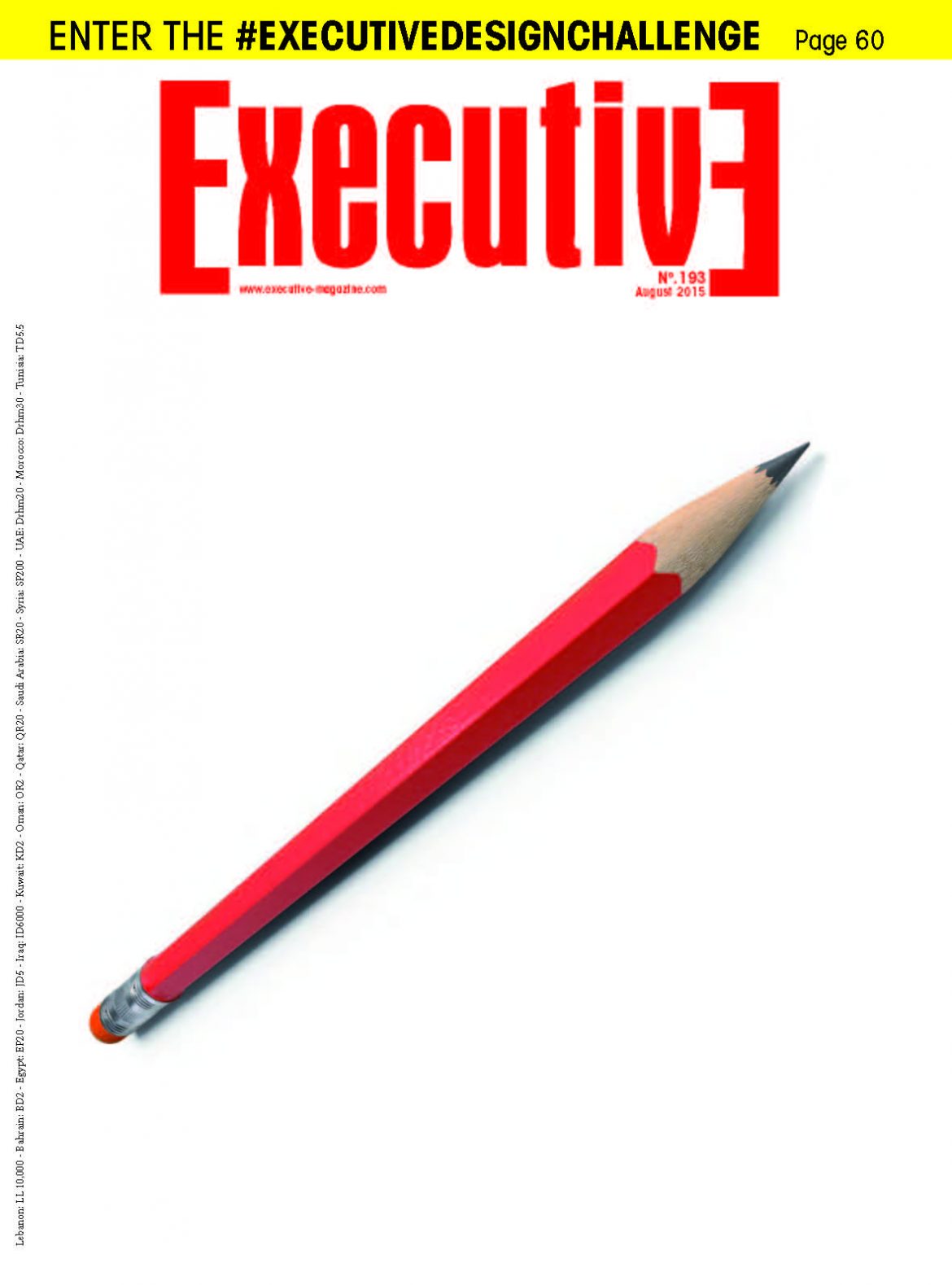
  1. Make sure you have the front cover of Executive’s August Issue and the provided sketch pencil ready to use for the design challenge.
  2. Think about a problem you wish to solve which is central to Lebanon and to human needs. This could be anything – from the rubbish collection crisis to the electricity shortage. Remember to place people at the center of your problem; what is it about these problems that affects people the most? How will they use the solution you provide for these problems? Some scrap paper might also come in handy for drafts or preliminary sketches, and drawings can be good conversation starters. Use the people around you to gain clearer answers, simply asking your family members or neighbors about what they think would be a good start!
  3. Design a possible solution to your chosen problem which uses Executive’s August issue front cover as a frame. This design solution could come in many different forms, including a drawing, a photograph, graphics, text, sculpture or even code! For example, if you design a sculpture prototype, you could take a photo of it and place it onto Executive’s front cover. Feel free to add extra sketches or text to help explain your solution if necessary. You may submit more than one entry.
  4. Once your design solution is on the front cover, upload it onto the Executive Design Challenge Facebook event page: bit.ly/executivedesignchallenge, accompanied by the hashtag “#ExecutiveDesignChallenge”.


Who can enter

The contest is open to Lebanese residents who are eighteen years of age or older at the time of entry. The organizer has the right to verify the eligibility of each entrant.


Selection of Winner

The number of “likes” each entry receives on Facebook will count for 50% of the final grade. A panel of judges chosen by Executive Magazine will be comprised of experienced design industry professionals whose decision will count for the remaining 50% of the final grade. All judges’ decisions are final and binding. The participant whose entry receives the highest score wins the competition.


Prize

The winner will be rewarded with a full-page spread of their design solution in one of Executive’s upcoming issues. Furthermore, the design solution will subsequently be turned into a more in-depth white paper to be presented to the relevant ministry concerned. Executive will do its utmost to promote the proposed solution with the aim of bringing about substantial, concrete change.

The winner will be announced in early September, 2015.


General rules

Deadline for submission is on the August 25, 2015. Entries uploaded past this date will not be considered.

By entering the contest, each entrant grants Executive Magazine the right to use all statements and designs submitted on its social media platforms or in any advertising without compensation or approval.


Thank you for taking part in Executive’s Design Challenge. Enjoy and good luck!


July 31, 2015 0 comments
0 FacebookTwitterPinterestEmail
Economics & Policy

Mixing oil and insurance

by Jeremy Arbid July 31, 2015
written by Jeremy Arbid

Not even a political shutdown of the oil and gas file can discourage Lebanese insurers from preparing for this industry — they, after all, do know a thing or two about risk. But as local insurers gathered at a June conference to discuss the finer points of oil and gas indemnity, a lack of consensus surfaced as to whether they will have priority to assure the assets of exploration companies when they come to town — a right granted as per Lebanon’s insurance law. The government is due to debate this aspect of the legal framework ironing out the details with Lebanon’s insurance association.

While that all plays out, a more interesting aspect to ponder is whether local insurers will have the financial leverage to assure oil and gas projects. Together, Lebanese firms generate annual premiums of $1.5 billion and are liquid enough with equities totaling around $1 billion. One oil rig, for example, valued at around $150 million would have liabilities in the hundreds of millions of dollars. Talk of forming an insurance pool will allow them to share more risk limiting exposure and liability. Lebanese insurers want their piece of the cake, but it is yet unclear how much net premiums the local players might reap from an oil and gas industry.

Compromise between internal and Lebanese firms

Confusion over whether local companies will have insurance priority is the immediate point in a developing debate between ACAL — Lebanon’s association of insurance companies — and the government. Lebanon’s petroleum activities regulation — a collection of application decrees filling out the offshore petroleum resources law — says that oil and gas exploration companies will be free to self insure their operating risk through a wholly owned unit. Many international oil companies (IOCs) have captive insurance subsidiaries that they use to insure their operating risk. For them, it makes more sense economically to insource risk management because it allows profits generated from premium payments to float back up to the parent organization. In other words, self insuring would allow IOCs to skirt premium payments to Lebanese insurance firms. That, says ACAL, conflicts with the country’s indemnity law stipulating the financial protection of any asset through a local insurer.

A compromise is in the works says Max Zaccar, president of ACAL. He told a conference audience in early June that an insurance pool might be formed, “We are putting in place a system so that all the insurances of the oil and gas industry are placed with the 50 insurance companies in Lebanon [through] international reinsurers.” But the particulars of ACAL’s ongoing discussion with the government, he said, were too precious for the public’s ears. Wissam Zahabi, the Lebanese Petroleum Administration’s economic pointman, told Executive on the sidelines of the conference that local insurers “retaining a percentage [of risk]” would add value and compound returns to Lebanon’s economy. “This is an industry that has huge application,” he says, adding that “ACAL is proposing a scheme and we are working with them to make sure [local insurers] are liable jointly and to ensure they have the solvency and the capacity.”

Local solvency

Whether local insurers do have the solvency or expertise to take on financially massive exploration projects in Lebanese waters is a different question entirely. They will most likely form an insurance pool to spread risk across the 50 insurance companies operating in Lebanon. According to expert brokers of international oil and gas insurance contracts, none or next to none of the local insurers have enough capital to insure the bigger projects of oil exploration. Lebanese insurance companies are too small to go it alone. Pooling their resources together would allow them to take on a greater share of risk, but at this point it’s not really clear how much.

The likelihood is that such a pool might take on only a fraction of the risk while passing a greater portion of risk to the larger, more global insurance players. “We’ll definitely need a reinsurance market,” says Jalal Tabaja, a senior manager specialized in marine and energy reinsurance at Chedid Re, a regional firm. “We’re talking about billions of dollars in assets. Each one is a billion or $500 million or so, and it’s not easy to cover it locally. So we do need a reinsurance market to distribute the risk.”

Insurance would indeed represent a lust-worthy opportunity for the local economy, but nobody really knows how much in gross premiums an oil and gas insurance industry might be generated in the Lebanese market. The greater potential is for follow-on business not directly related to operating risk, the type of commercial activities not currently insured in Lebanon. These insurance demands may appear as companies spring up to facilitate oil and gas exploration — those companies servicing rigs and production facilities — and, possibly later, a refining industry.

Lebanese technocrats have taken note of the insurance experience from the Gulf oil producers. In most instances, Arab companies passed on all the risk to international reinsurers. Even later on they did not build these capabilities, with the possible exception of Saudi Aramco, which built its own risk management business line, but generally they have not been very strong in capability because their insurance markets are not robust.

Lebanese insurers have time on their side — we can thank politicians, for once, for the ongoing delay. Lebanon’s insurance industry will need to prepare its human and financial capital needs. There are yet further, more difficult hurdles to leap. Sharing information among competitors is currently a big barrier — an insurance pool will require certain levels of information sharing and collaboration among companies, a battle likely to unfold once an insurance pool is set up.

July 31, 2015 0 comments
0 FacebookTwitterPinterestEmail
BusinessFinance

A fine time for fintech

by Thomas Schellen July 31, 2015
written by Thomas Schellen

No, fintech is not the code name for the joint research and development capabilities of Finland based Nokia and France’s Alcatel-Lucent. And for those who are troubled by the idea of being unaware of the latest buzzword, the term is not actually all that new. Blending the words financial and technology, fintech has been around for years as a descriptor of bland, back office information technology solutions provided to firms in the financial industry. As of late, however, the term is buzzing with redefinitions, and startups all over the planet appear bent to hire backend developers for fintech projects.

One cuddly definition of fintech ventures is that “they build and implement technology which is used to make financial markets and systems more efficient.” According to its authors at the student-led fintech club at the Wharton Business School in the United States, this entails companies in areas ranging from crowdfunding and peer-to-peer lending to algorithmic asset management and thematic investing, as well as payments, data collection, credit scoring, education lending, digital currency, exchanges, working capital management, cyber security “and even quantum computing.”

Other definitions of fintech are more aggressive, emphasizing that companies in this area are commonly tech startups out to push the buttons of established banking and financial services companies by being more agile, cheaper and absolutely superior in innovating information technology products and services when compared with the big banks.

Whatever definition one favors, the sector of entrepreneurial ventures is receiving international attention, not in the least due to optimistic consulting reports that investments in fintech startups have tripled twice in the past four years — to over $12 billion in 2014. The list of new companies is long and growing globally as well as in Lebanon, albeit at a comparatively subdued rate in the latter case. Local startups such as PinPay, Bnooki and Via Mobile — all companies which Executive has reported on under our entrepreneurship coverage — are alive and progressing well along their various tracks of development.

As Via Mobile’s chief executive Karim Khoury tells Executive, his venture — which was part of our Top 20 Entrepreneurs in 2014 — is growing as planned and has been helped by maturing market conditions where the e-payments concept is increasingly being accepted. Competition among fintech companies according to him is currently playing out in a smallish field of eight local companies. New contenders are expected to enter the fray but candidates are playing their cards close. The competition among the actors is overall healthy but consumers tend to get confused by the different new apps and solutions, he says, yet adds optimistically, “The market will start to consolidate soon. I expect mergers in the very near future.”

In Khoury’s view, the current high media focus on anything fintech is something of a hype and reminiscent of the time a few years ago when everybody was obsessing with talking about “the cloud.”

Fintech itself as an investment opportunity on the other hand is anything but hype, says Henri Asseily, managing partner at newly formed Leap Ventures, a late-stage venture capital firm dedicated to the Lebanese market.

“We have already seen a number of companies that are in the fintech space. I don’t think it is hype. I think it’s warranted. Fintech is there and it is key, but whether the entrepreneurs in Lebanon are going to do something that is world class, I don’t know yet. It really depends on if we see companies that are worth investing in,” he tells Executive on the sidelines of Leap Venture’s launch in Beirut last month.

Leap Ventures has received fintech funding requests in the $5 million range, and that is interesting to the VC firm, Asseily adds, but has yet to examine these proposals. While Leap Ventures’ limited partners are all from the Lebanese banking sector, he sees no reason why the firm would not invest in a qualified fintech company, as long as there is no existing strategic investor involved that is too close to the target company. “This [connection to the banks] is no conflict of interest,” he exclaims. “It is a great opportunity for fintech companies. [If] they come to us and if they have a great product, we call up all our banks and say, ‘try the product, pilot it!’ Our job is to put the product on the market.”

The idea, promoted in numerous fintech descriptions, of disrupting banks, attacking their high fees and taking financial business down to “the people” sounds hip. But in reality, new fintech contenders will often find themselves at least in the longer run having to aim for a symbiotic relationship with the established financial giants. This message that traditional lenders and tech entrepreneurs need each other is increasingly reverberating with the banking industry and analysts in developed markets.

Given its prominent and, in regional terms, very sophisticated banking sector, Lebanon seems bound to adopt such a symbiotic view as the fintech sphere expands beyond its currently very minor dimension. However, budding fintech operators are still confronted with perception barriers, says fintech hopeful Elise Moussa. Having spotted an entrepreneurial opportunity in facilitating mobile payments for retail goods after moving from Boston to Beirut in 2012, she initially contacted banks to present her photo-based solution enabling consumers to make goods purchases of up to $25, which she called Snapay. But finding banks to be “scared of anything that has to do with payments on a mobile phone,” she says she iterated her concept and shifted to telecommunications operators as target partners.

[pullquote]The market will start to consolidate soon. I expect mergers in the very near future[/pullquote]

Her approach is to bootstrap her company until it has “some traction” before seeking major funding. Money is not the top problem in achieving an entrepreneurial opportunity in Lebanon, she says. “The number one issue is if we can apply the old rules and regulations to new technologies, and the answer is absolutely not. No amount of money can really solve this problem and it is a delicate dance between what the market needs and wants and what regulation is doing.”

Findex and fintech

Fintech entrepreneurs like Khoury and Moussa have no problem thinking big and envision possibilities to serve hundreds of millions of un- or under-banked people with mobile financial services in the Middle East and beyond. And indeed, the real measure of success for fintech as an industry may well not lie in the development of another convenience-enhancing tool for bank clients but in how effective they can contribute to the growth of financial inclusion.

Measured by the Financial Inclusion Index (Findex), almost 40 percent of the world’s adults in 2014 did not have access to financial services via either a conventional bank account or a mobile account, according to a World Bank survey finding released this April. It was the second survey of this type after 2011 and showed — although probably not yet highly robust on all statistical fronts — an estimated 700 million persons increase in the number of people holding financial access via a formal financial institution or mobile account.

According to a review of the second Findex survey by advocates of microfinance and financial inclusion, the increase in the number of people with financial access over only three years comprises over 500 million people who used a traditional channel, plus 160 million who came in as part of population growth and some 41 million from mobile accounts.

Analysis by Gallup, which conducted the survey for the World Bank’s Global Financial Inclusion database, shows a comparably low account penetration of 14 percent for conventional and less than 1 percent for mobile access in the Middle East. In sub-Saharan Africa, where overall financial access is the second lowest in the world after the Middle East, mobile accounts were particularly strong drivers of financial inclusion and almost one third of all adults with formal financial access relied on their mobiles as entry point to the financial system.

The World Bank sees access to regulated financial services as a potential bridge out of poverty and has set itself a hyper ambitious target of 100 percent universal financial access by 2020. The measurements of financial inclusion can be expected to improve over the next few years and deliver an increasingly sharp picture on the respective Findex success rates of traditional channels versus mobile accounts via fintech companies. This will be the litmus test if fintech entrepreneurs can make true on their visions of being positive disruptors to the economies of developing countries.

July 31, 2015 0 comments
0 FacebookTwitterPinterestEmail
Economics & Policy

Looking good

by Matt Nash July 30, 2015
written by Matt Nash

While some locals have allegedly found small amounts of oil or gas in the Bekaa Valley while looking for an entirely different resource, namely water, there is no Lebanese version of Jed Clampett — the fictitious US hillbilly-turned-millionaire who accidentally struck oil while not so skillfully “shootin’ at some food.” That said, data from a new hydrocarbon exploration survey that focused on the northern half of Lebanon as well as the coast suggest that buried a bit deeper than an errant bullet could travel, Lebanon may have onshore oil and gas deposits. Nothing is certain before drilling begins and not all deposits are necessarily commercially recoverable reserves, but prospects in the portions of the Bekaa surveyed look good. The question moving forward will be when drilling will begin and under what legal framework will it happen.

Oil, oil everywhere

Jim Hollis, CEO of NEOS GeoSolutions, likes to tell a joke. “This goes back to something I said [at a conference] yesterday, ‘The first thing they teach us is: The best place to find oil is where there’s oil,’” he quips in an interview with Executive some 17 hours before trotting the one-liner out again at a survey data presentation event. “We look for patterns, and what’s awesome about Lebanon is, if you look around the neighborhood, there are lots of plays,” he continues.

Indeed, oil and gas finds in Syria seem to follow a southwest path from the north east of the country right up to the Lebanese border. There are oil and gas fields in Israel, too. And while the geopolitical differences among the three countries are vast, NEOS GeoSolutions — the American company that completed a survey of 6,000 square kilometers on- and offshore Lebanon — believes that geologically Lebanon has a lot in common with both Syria and Israel. Beneath the borders none actually agree on are two resource-rich basins that all three can potentially exploit or further develop, as the case may be.

Like Wissam Chbat — an official from Lebanon’s Petroleum Administration (LPA) who gave a speech at the launch of the survey’s results — Hollis spoke rather definitively about the presence of onshore oil and gas without playing a guessing game about the amount of what might be where. Both have an interest in talking up prospectivity — Hollis wants to sell survey data and Chbat wants to attract oil and gas companies — that is, however, constrained by a need to maintain credibility in the future. As part of the survey results package — which are now on sale for interested oil and gas companies — NEOS produced a map of what Hollis described as “hot spots” or “sweet spots” deemed worthy of further investigation.

[pullquote]Currently, the legal framework is basically suitable[/pullquote]

The next step from a resource development perspective would be to bring in oil and gas companies to either conduct additional, targeted surveying or to simply begin drilling, depending on a company or consortium’s risk appetite. While the LPA drafted a new law that would apply to onshore exploration and production — as the 2010 legislation that created the LPA applies only offshore — Chbat explains that the existing legal framework allows the Cabinet to sign contracts with companies to explore and, potentially, produce whenever it sees fit. In fact, he says, in the 1950s the government granted onshore exploration and production concessions — which never resulted in any commercially viable finds and were canceled in the 1990s. Today’s Cabinet could very well do so again.

Playing by the book

“If investors want to proceed, how?” Chbat asks rhetorically while addressing an audience at the survey’s data delivery ceremony. He explains that a mining law from 1933, coupled with another piece of legislation from 1975, and taken in conjunction with a 2011 Cabinet decision and a 2013 decision by the Minister of Energy and Water, together provide a legal path for the Cabinet to act without need for a completely new legal text. Passing a new legal text would require parliamentary approval, which tends to follow what experience shows can be over a decade of “debate.” The Cabinet’s power to move unilaterally towards onshore exploration and production is significant because, particularly in the Lebanese context, drilling onshore would be both technically easier and significantly cheaper than drilling in the country’s ultra-deep offshore. “The council of ministers can issue a decree for an [onshore] exploration and production sharing agreement” similar to the one for offshore that the Cabinet has been studying for years now, Chbat says. The LPA is still pushing for totally new legislation to have a firmer legal footing down the road. However, Chbat notes, “Currently, the legal framework is basically suitable.” Whether the Cabinet seizes this opportunity in light of the promising new data, though, is anybody’s guess.

July 30, 2015 0 comments
0 FacebookTwitterPinterestEmail
  • 1
  • …
  • 149
  • 150
  • 151
  • 152
  • 153
  • …
  • 685

Latest Cover

About us

Since its first edition emerged on the newsstands in 1999, Executive Magazine has been dedicated to providing its readers with the most up-to-date local and regional business news. Executive is a monthly business magazine that offers readers in-depth analyses on the Lebanese world of commerce, covering all the major sectors – from banking, finance, and insurance to technology, tourism, hospitality, media, and retail.

  • Donate
  • Our Purpose
  • Contact Us

Sign up for our newsletter

[contact-form-7 id=”27812″ title=”FooterSubscription”]

  • Facebook
  • Twitter
  • Instagram
  • Linkedin
  • Youtube
Executive Magazine
  • ISSUES
    • Current Issue
    • Past issues
  • BUSINESS
  • ECONOMICS & POLICY
  • OPINION
  • SPECIAL REPORTS
  • EXECUTIVE TALKS
  • MOVEMENTS
    • Change the image
    • Cannes lions
    • Transparency & accountability
    • ECONOMIC ROADMAP
    • Say No to Corruption
    • The Lebanon media development initiative
    • LPSN Policy Asks
    • Advocating the preservation of deposits
  • JOIN US
    • Join our movement
    • Attend our events
    • Receive updates
    • Connect with us
  • DONATE