• Donate
  • Our Purpose
  • Contact Us
Executive Magazine
  • ISSUES
    • Current Issue
    • Past issues
  • BUSINESS
  • ECONOMICS & POLICY
  • OPINION
  • SPECIAL REPORTS
  • EXECUTIVE TALKS
  • MOVEMENTS
    • Change the image
    • Cannes lions
    • Transparency & accountability
    • ECONOMIC ROADMAP
    • Say No to Corruption
    • The Lebanon media development initiative
    • LPSN Policy Asks
    • Advocating the preservation of deposits
  • JOIN US
    • Join our movement
    • Attend our events
    • Receive updates
    • Connect with us
  • DONATE
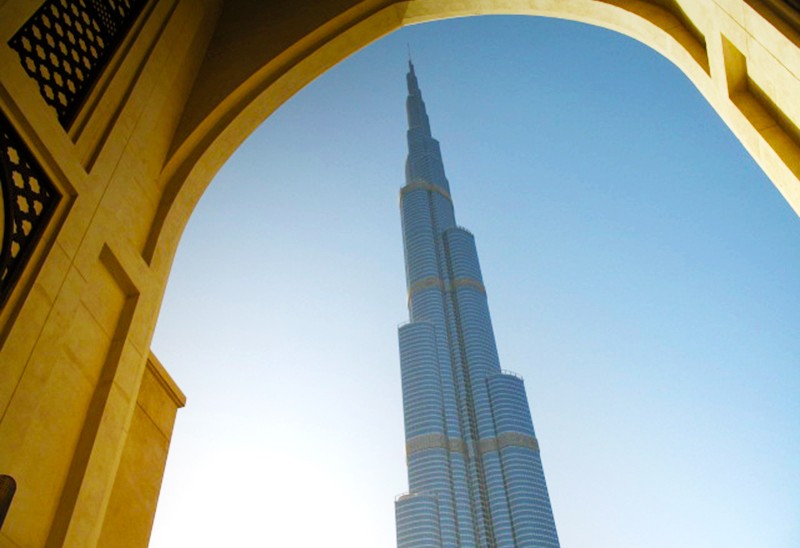
Dubai skyline
Finance

Crash and burn

by Thomas Schellen June 23, 2014
written by Thomas Schellen

A rather spectacular governance lesson came this past week from Dubai-listed construction and development group Arabtec Holding. The company, presumably driven by a mixture of its own daring ambitions and the resurgent construction business in the United Arab Emirates and other Gulf countries, had seen its share price double in roughly two months between mid-January and mid-April. The share opened above AED 5 ($1.36) on April 20 and rallied another 47 percent to AED 7.40 on May 14, its highest close ever.

Amid a wave of surprising news, however, the Arabtec share price fell just as precipitously in the five weeks since and closed last week at AED 4.26 — levels last seen in early April. What makes this slide stand out was that the company started to dominate the trading activity on the DFM with high volumes of share sales around June 8, ahead of a series of surprising disclosures. On June 11, the company posted a press release among its official company disclosures on the DFM, in which chief executive Hasan Ismaik dismissed “rumors” about the company’s share price in the two preceding days as well as rumors about its future plans, without refuting any allegation or even specifying what either rumor might be.

On June 12, the company added another disclosure — posted only in Arabic — denying that it planned any new listing of a unit on the DFM and on June 15, it announced a board meeting for June 18 to discuss projects and “other business.” In the meanwhile, the selloff of Arabtec shares continued as the market was treated to news that Ismaik had expanded his personally held stake from 8 percent earlier in the year to 21.5 percent by late May and then to almost 29 percent by June 15.

At the same time, the largest institutional investor in Arabtec, a unit of Abu Dhabi state owned International Petroleum Investment Company (IPIC) that goes by the name of Aabar Investments, caused nervousness among investors by reducing its stake in Arabtec to around 19 percent from 21.6 percent in share sales between June 8 and 10. Subsequent news that Aabar had divested of another 4.6 percent were based on information on the DFM website that the market operator described on June 15 as “temporary system glitch” in the last trading hour.

All this was topped on June 19, however, when Arabtec announced the results of its June 18 board meeting, revealing that the “other business” discussed by the board constituted the resignation of the company’s CEO and since quite recently, largest shareholder, Ismaik. The stock predictably tanked again when this bombshell hit. By time of this writing on June 23, Bloomberg and Reuters news services cited “sources” saying that a key executive and an unspecified number of employees had been dismissed.

However, there was no DFM market statement by Arabtec to this extent and the corporate website only reflected the revision of board membership announced in the June 19 DFM disclosure. The website also did not any provide information on the Arabtec viewpoint of the developments since the beginning of June. However, those looking for insights into the company’s business approach could gain incisive flashes of enlightenment on what Arabtec (or its public relations writers) called “our commitment.”

“Arabtec Holding is a Publicly Listed Company and therefore we must be publicly open and transparent,” the page explained. The company claims to be bursting with integrity and ethical behavior via a code of conduct for executive on all levels. It also affirms that disclosure of “all material matters concerning the company’s activities should be timely and balanced”. However, the most recent minutes of a board meeting that can be accessed on the site date from August 7, 2012 and the most recent disclosure shown is dated July 7, 2013.

Markets down

Led by Arabtec’s continued slide — and with the holy month of Ramadan fast approaching — index readings and trading activities across Arab securities markets retreated in the year’s 25th week. Meanwhile, the top indices in the United States were shooting up to new records as the Federal Reserve was reassuring investors about the strength of and outlook for the American economy.

The region’s major markets fell noticeably in what was plainly one of the year’s most underperforming weeks for Arab equities. Benchmark indices for the Qatari, Kuwaiti, Egyptian and Dubai bourses dropped between 4 and 5 percent. Markets in Amman, Casablanca, Manama, Riyadh and Abu Dhabi lost between 1 and 3 percent. Muscat and Beirut could hardly be called gainers as each advanced by less than a tenth of a percent. A small green arrow signaling a one percent gain in the Tunindex was the best that the MENA had to offer.

June 23, 2014 0 comments
0 FacebookTwitterPinterestEmail
Society

Bringing India to the Beirut Art Fair

by Maya Sioufi June 23, 2014
written by Maya Sioufi

Despite the noise the Lebanese art market creates within the capital, it fails to generate a strong echo beyond the borders of the country. “We have a feeling that despite the fact that the country has recognized artists, the art scene is not developed,” says Fabrice Bousteau, chief editor of renowned French magazine Beaux Arts.

Over morning coffee at Le Gray hotel in Beirut, Bousteau shared his enthusiasm at discovering Lebanon for the first time, thanks to founder and director of the Beirut Art Fair (BAF) Laure d’Hauteville’s invitation to be the guest curator for the fifth edition of the fair to be held in September of this year. After welcoming more than 18,000 visitors last year, and with total sales of $2.8 million, the organizers of the fair announced this week that the BAF will host around 50 art and design galleries this year, and is expected to attract 20,000 visitors and generate sales of around $3 million. This is a significant improvement on its first edition, when just 3,500 visitors came to admire pieces from 30 galleries and invest a total of $800,000.

[pullquote]While there are many Lebanese who are avid art collectors, many invest only in art from international markets and not Lebanon[/pullquote]

Why Indian art? 

Aware of the fair from its first edition, Bousteau only got involved with the BAF in March of this year following d’Hauteville’s suggestion that he should curate an Indian pavilion. Bousteau’s admiration for Indian art began over 15 years ago, on a spontaneous holiday during which he fell in love with the country. He pursued his passion with regular trips, eventually culminating in an exhibition in Paris’ Georges Pompidou Center in 2011 entitled “Paris–Delhi–Bombay.” 

With a limited budget for the fair, Bousteau cannot ship monumental sculptures, so he opted for the opposite — a focus on smaller art. With only compact art pieces, he aims to represent “mini India with all of its richness and diversity,” he says. With artists from different confessions and cultures, he plans to portray the contemporary Indian art scene within the pavilion via numerous artists from the famed Subodh Gupta, the ‘Jeff Koons of India,’ to some lesser-known artists.

How will the Lebanese public react to Indian art? The streets of Beirut remind the French visitor of India, with their constant honking of car horns and abundance of odors. He labels the Indian way of thinking “schizophrenic cool,” saying it corresponds to his own. 

Constraints of the Lebanese art market

As for his thoughts and insights on the Lebanese scene, the French art critic stresses that there are several elements needed for the evolution of the country’s art market. First and foremost is the development of Lebanese collectors keen on investing in local talent and on supporting the BAF. “In an art fair, the most important collectors are the ones from the country,” he says. While there are many Lebanese who are avid art collectors, many invest only in art from international markets and not Lebanon, according to Bousteau.

The French contemporary art fair FIAC (Foire Internationale d’Art Contemporain) is now the second most important fair worldwide after Art Basel, surpassing London’s Frieze. “That was not at all the case 15 years ago, when we used to say that we lacked collectors. Now the art market in France is very strong because there are more and more French collectors,” he says. Bousteau argues that the Parisian art market was less hit by the 2008 financial crisis than its London contemporary because London had more “fake” collectors, the type who “after buying their Ferraris had fun with the remaining money [by buying art].”

Other critical issues that need to be addressed are the lack of renowned art schools and contemporary art museums, as well as the dearth of public funds. The Beirut Art Center — which is not related to the BAF — for instance, relies entirely on private financing, with the majority of sponsors of foreign origin, leaving the owners scrambling for funding project after project. 

A successful art fair would spur the country’s artistic progress, says Bousteau. While the BAF has evolved tremendously from its first edition four years ago, a lot remains to be done for the country’s artistic talent to develop further and gain the acclaim it deserves.

June 23, 2014 0 comments
0 FacebookTwitterPinterestEmail
BankingSpecial Report

Lebanon’s payment gateway curse

by Executive Editors June 22, 2014
written by Executive Editors

Typically, when a customer buys a product online through a payment gateway, the cardholder’s information goes through a long chain of servers and processors that link the cardholder, the merchant and the payment association before arriving to the credit card’s issuing bank. The bank then does an automated check before it gives its authorization, which is sent down in reverse order until it reaches the merchant and cardholder. The entire process takes approximately 2–3 seconds.

While the technical dimension is quite complex, from a merchant perspective either the payment goes through, or it doesn’t. Unfortunately for Lebanese merchants, the local payment gateways have a high refusal rate on foreign cards. Karim Saikali, a veteran of Lebanese e-commerce who founded BuyLebanese.com explains that many American banks will routinely block transactions that are done on a Middle Eastern payment gateway for “security reasons.”

Such blocking is a huge hindrance to Lebanese online businesses who depend greatly on international sales. With PayPal reneging on its promise to come to Lebanon, local businesses have had to make do with alternatives to the largest and most trusted payment gateway globally. PayPal is widely cited among Lebanese entrepreneurs to be a better functioning, faster online payment system than the alternatives. Many merchants have opted for a combination of both smaller foreign gateways and local gateways. However, neither of these perfectly fits their needs.

Good enough for Lebanon

For Lebanese companies which exclusively do business inside Lebanon, local payment gateways such as Bank Audi’s E-payment gateway and Netcommerce, supported by Credit Libanais and Fransabank, are not bad options. The local payment gateways have merits in terms of proximity, convenience and merchant support, as well as avoiding the fees that would be incurred on money transfers from a foreign bank account. Fadi Sabbagha, CEO of new media design and consultancy company Born Interactive says he always encourages his customers who only do business in Lebanon to use a local payment gateway. Unfortunately, Lebanese online businesses that only sell inside the country are quite rare due to the slow adoption of e-commerce among the Lebanese population.

These payment gateways have other drawbacks. Lebanese entrepreneurs have complained that the Lebanese payment gateways are cursed with long setup times. In Lebanon, to be able to sell through the payment gateways requires a lengthy approval process from the banks. “As a merchant, to start being able to accept cards is not an overnight thing. You need to get approval first,” says Sabbagha. According to Piotr Yordanov, founder of social network organizer Beepl, setting up online payment is a large time and resource commitment, as a company would “have to spend a whole week having a full-time CTO [Chief Technical Officer] working on it.” Half-jokingly, he adds, “I even considered [virtual currency] Bitcoin” as an alternative, where the setup would only take a couple of hours.

Crowdfunding

In addition, Lebanese payment gateways are not specialized to cater to every business need. With the multitude of businesses possible through the online realm, some are too unconventional for Lebanese payment gateways’ expertise. Abdallah Absi, founder of online crowdfunding platform Zoomaal, was forced to resort to a US payment gateway when he first realized that local payment gateways had no experience in carrying out the due diligence on third parties to verify the credibility of those raising funds. “They didn’t know what kind of process needs to be put in place, and neither did we,” he says.

Foreign payment gateways, however, are not a perfect solution, and fail to meet the specific needs of Lebanese businesses. Zoomaal faced obstacles with these gateways’ reluctance to deploy the money raised for certain projects in Lebanon even after Zoomaal had already raised the funds. “And we want these kind of projects,” says Absi. Now that they are armed with the know-how to do due diligence themselves, they are incorporating a Lebanese payment gateway into their system, in addition to several foreign ones they will continue to use. “We hope they will give us that freedom,” he says.

The use of multiple payment gateways provides a temporary fix to Lebanese merchants. But until a payment gateway that targets their technical and specific needs presents itself, Lebanese entrepreneurs will continue to spend time and money disproportionately trying to figure out a service that many businesses around the world take for granted.

June 22, 2014 0 comments
0 FacebookTwitterPinterestEmail
Leaders

Don’t kill the banks

by Executive Editors June 22, 2014
written by Executive Editors

In order to fund the proposed public sector wage hike, Lebanon’s Parliament is scrounging for cash. In their desperation, lawmakers have proposed one of the most morally hazardous ideas in public finance: taxing some profits twice. Not only is this an unfair idea, it is fiscally irresponsible and blatantly lacking in forethought.

Double taxation is not only bad for the banks who would have to pay twice, but also for the country. Instituting such an economically unsound principle by legislative fiat would leave a very black smudge on Lebanon’s record as an investor-friendly environment — as if it needed yet another.

At issue is a 7 percent non-deductible tax on interest banks earn on government-issued treasury bills and certificates of deposit. Currently, banks pay a 5 percent tax on these earnings but are then allowed to deduct them from their year-end corporate profits so they are not taxed twice. Making this tax non-deductable is a clever way to disguise a massive tax hike as a small 2 percent rise.

Meanwhile, double taxing profits on government debt could go badly wrong. If investors know they will be taxed more on government securities, they may demand higher returns, sending interest rates higher and making sovereign debt servicing more expensive — the last thing needed in a country with systemic debt-related deficits.

But more broadly, double taxation erodes the legitimacy of the taxation system as a whole. What’s to stop a greedy state from double or even triple taxing more bank profits or those of other businesses? Going down this road is dangerous, leaving any company successfully operating in Lebanon fearful that it might be next while deterring  businesses looking to expand here in the future.

The range of other taxation measures the legislature is considering will cut into banks’ profits — as all such taxes do — but these measures are modest, not deceptively packaged, don’t threaten state finances and steer clear of double taxation.

Many bankers are publicly arguing that a hike in corporate taxes from 15 to 17 percent is unacceptable. Further, they argue that they would be hit hardest as they are most transparent about their earnings. It is as if they are being punished for being honest, they argue, and will only encourage tax scofflaws to continue hiding their earnings.

This argument has merit; the Ministry of Finance should be much more aggressive in ensuring all companies pay their fair share. However, the 2 percent increase will not break the banks.

Bankers also argue that a proposed 2 percent hike in the capital gains tax will likely lead to capital flight. Such a scenario is unlikely. First, a World Bank review of interest rates for depositors shows that in 2013, rates in Lebanon were higher than many other countries in the Middle East and North Africa. Despite a higher tax, attractive rates will likely still lure in deposits.

Additionally, no serious amounts of capital flew out of the country when the current 5 percent tax was first introduced. It is doubtful that this increase will have a different effect. Finally, this tax is neutral for the banks themselves as their customers will pay it.

Ideally, the state would make no new fiscal commitments, (see next leader) but Lebanon is in an economic emergency. Wages all around are too low, and teachers and civil servants are being particularly deprived of fair pay. The state must act, and act responsibly by both giving its employees a raise and finding a way to pay for it. This is triage, and greater taxation is simply a necessity.

Modest new taxes should be swiftly approved by parliament, but the MPs must avoid the double taxation proposal. Despite their protests, the banks can afford to pay a bit more. Tax them — don’t kill them.

June 22, 2014 0 comments
0 FacebookTwitterPinterestEmail
Cables in the dirt
Economics & Policy

Internet unchained

by Matt Nash June 20, 2014
written by Matt Nash

It could have happened years ago. In July 2011 — after a nearly seven-month delay — Lebanon ‘lit up’ a submarine fiber optic cable that brought the county much-needed internet capacity. Before the India-Middle East-Western Europe (IMEWE) cable went live, the internet came to Lebanon in a trickle. After, it was supposed to be a flood — a promise that will come closer to realization on July 1.

Theoretically, the IMEWE should have benefited end users in two ways: significantly faster internet speeds and much higher capacity, reflected in monthly download limits. Neither benefit really materialized.

Download speeds in most of 2011 were around 500 kilobits per second, according to US-based Ookla, which monitors global internet speeds. Throughout most of that year, Lebanon was either dead last or among the countries with the slowest global download speeds. With IMEWE operating, the speed began to pick up.

Today, Lebanon ranks 175 out of 192 countries on Ookla’s index with an average download speed of 2.52 megabits per second (Mb/s) — five times faster than in 2011. That said, the global average download speed is 18.6 Mb/s.

Price fixing

On the capacity side, government policy stood between users and the massive amounts of monthly downloading IMEWE made possible. When then-Minister of Telecommunications Nicolas Sehnaoui announced new, post-IMEWE internet offers (as the state essentially controls such things) monthly download limits rose far less than they could have.

For example, the lowest priced package pre-IMEWE cost $16 excluding VAT and had a monthly 2 gigabyte (GB) limit, split between uploading and downloading. The same package post-IMEWE had a 4 GB limit. There was no unlimited package available, and the largest limit was set at 40 GB for the most expensive package, costing $149.25 per month.

Beginning July 1, the lowest priced package (still at $16 per month excluding VAT) will have a 40 GB limit and a speed of up to 2 Mb/s (up from 1 Mb/s) while an unlimited package with the same connection speed will be on offer for $50 per month, excluding VAT.

What about mobile revenues?

Revenues from mobile phone users are a significant contributor to the Lebanese treasury. In 2013 the telecom sector was the third largest state money-earner, according to the Ministry of Finance. The state owns the actual networks while Egypt’s Orascom (Alfa) and Kuwait’s Zain (touch) manage them on the state’s behalf. As with the internet, the government sets mobile phone prices, and in June prices took a dip.

For prepaid customers (those who buy recharge cards, paying for mobile phone service before using it), the per-minute cost of a call fell from $0.36 to $0.25, excluding the 10 percent VAT. Data compiled for the Ministry of Telecommunications by Dubai-based Delta Partners show that the new rate is still higher than the MENA average of $0.16 per minute. That said, some still fear it will have a serious impact on the treasury.

For postpaid customers (those who pay a monthly bill after they’ve used the service), the per-minute price of a call stayed the same at $0.11 — the MENA average for postpaid calls, according to Delta Partner’s numbers. However, customers used to pay $15 monthly simply for having the line.

“It was a tax,” says Gilbert Najjar, head of the Owner Supervisory Board, a part of the Ministry of Telecoms that oversees the mobile network managers. Now postpaid users will get 60 free minutes of talk time for their $15.

Asked if the price cuts and free minutes will hurt revenues, Najjar says there will be a short-term hit, but the ministry estimates that the state will actually make more in the next 12 months than it did in the previous 12 months.

For example, he says, on average in the MENA region, prepaid mobile phone users talk 100 minutes per month. In Lebanon, it’s 62 minutes. The ministry estimates that people will talk more and that Lebanon’s mobile penetration rate of 88 percent will jump — Najjar says the ministry expects 11 percent more prepaid users and 12 percent more postpaid users in the next year. More users, combined with anticipated increases in talk time, should bring the state $73 million more with the new prices, he claims.

While end users grumbled about the low capacity limits, the charges they paid for excess uses were lucrative for Ogero — the state-owned operator of Lebanon’s fixed-line phone network and the gatekeeper of the country’s international internet capacity, which passes its profits to the state treasury.

Around 93 percent of Ogero’s customers are on the cheapest two packages, the company’s Information Technology Director, Toufic Chebaro, tells Executive. Their monthly overcharges, he says, account for 35 percent of Ogero’s revenues.

No one Executive spoke with would give exact figures on how many customers Ogero has, but Chebaro says all told, around 300,000 households in Lebanon have broadband connections.

This figure includes Ogero — which has the most customers, although Chebaro doesn’t give a number for the company’s market share — as well as the private sector internet service providers (ISPs) such as IDM, Terranet and Sodetel.

Both Chebaro and Khaldoun Farhat, Terranet’s CEO, say most internet customers subscribe to the cheapest packages and frequently pay a little extra every month for exceeding their capacity limits.

“This [revenue stream] will be interrupted,” Chebaro says, quickly adding that according to “many simulations” on the impact new packages will have on Ogero’s bottom line, “if you look one year down the road, we will have similar revenues.”

“The loss is really negligible,” he says, refusing to give exact figures.

A profitable, uneven playing field

Private sector ISPs are singing a different tune. “We’re worried as an ISP that our margin will be totally eroded,” says Maroun Chammas, chairman and general manager of IDM.

By law, the new internet packages approved by Lebanon’s cabinet only apply to Ogero. But although private ISPs are allowed to set whatever prices they like, to remain competitive they often try to either match or undercut Ogero’s prices. They say that, like Ogero, around 90 percent of their customers subscribe to the two cheapest packages.

Under the new pricing scheme, the second cheapest package after the $16, 40GB option, which Ogero’s Chebaro says 26 percent of customers subscribe to, will see the same connection speed increase, and a capacity rise from 10 GB to 50 GB along with a price hike from $25 per month to $33.

Speaking of the capacity increase for the lowest priced package, Terranet’s Farhat complains, “Our capacity cost hasn’t gone down 10 times, and our overhead hasn’t gone down 10 times.”

While it’s true capacity costs for ISPs will not fall in lockstep with the increase in capacity to end users, costs will go down when the new packages go into effect. Currently, ISPs lease capacity from Ogero at a monthly rate of $430 per E1, an approximately 2 Mb/s connection. The price of an E1 will drop to $230 in July, but Farhat says E1 costs represent only 30 percent of Terranet’s operating expenses.

Ogero’s Chebaro argues that ISPs are simply complaining for the sake of it. He says that, in addition to the drop in E1 prices, port fees will be cut in half, from some $11 per user per month to about $5. ISPs pay port fees when customers must use an Ogero platform to connect to the internet, which is the case in many parts of the country. “We’ve relaxed the constraint they had,” Chebaro says.

Chammas and Farhat do not dispute that they will still make a profit with the new packages, they simply argue they will be earning less as they must provide both higher speeds and greater capacity.

[pullquote]“We have the best connection; everybody knows that”[/pullquote]

Farhat complains that, as a state owned company, Ogero “has no cost accounting,” adding, “My guess is we have to adapt. We have to show profit.”

Both ISP executives say their main hope is drawing in more customers, but Chebaro is confident that with the new packages, Ogero’s market share will increase.

“We have the best connection; everybody knows that,” he says. “With the new tariffs, customers will say, ‘Let’s go with the best.’”

Outstanding issues

The private sector is also worried Ogero will continue stalling when it comes to giving them E1s, which they will need to give customers faster speeds and more capacity.

Terranet’s Farhat says his company hasn’t received more E1s since December 2012.

One source of the delay is Ogero’s general director, Abdel Moneim Youssef, who is also the director general of operations and maintenance at the Ministry of Telecommunications. To receive an E1, private ISPs must first get permission from the ministry before Ogero will lease it. That permission comes via Youssef.

Notoriously media shy, Youssef refused to give Executive a full interview, but Telecommunications Minister Boutros Harb arranged for Executive to meet him.

As Executive prepared to ask Youssef questions, he interrupted to say he doesn’t “know anything,” pointing Executive toward Chebaro. Executive did ask about the E1 situation and why private ISPs cannot get this international capacity.

“They don’t need it,” Youssef says.

The private sector disagrees, and further argues it should be allowed to install equipment in more central offices around the country. The central offices are basically hubs connecting end users to the national network, if they are Ogero customers, or to the ISPs’ networks. There are some 300 central offices.

[pullquote]The companies may find “it’s not worth” redoing botched work already done and opt to pay penalties instead[/pullquote]

Ogero has equipment in nearly 200, Chebaro says. He says the private sector is in 80, but Farhat says ISPs are only present in 71, adding that in around half of those, the equipment is not yet functioning. Executive could not independently verify either claim.

Harb says all of these issues should be resolved immediately and blames problems between the private sector and the Ogero–Ministry of Telecommunications team on his predecessors. Since 2008, telecommunications ministers have been members of or allied with the Free Patriotic Movement, an arch foe of Harb’s March 14 coalition.

Will speeds really jump?

The new packages promise connection speeds starting at 2 Mb/s and going as high as over 8 Mb/s, according to a press conference the ministry held in late May. For around 30 percent of the 300,000 households with fixed line broadband connections, such speeds are not even possible.

After years of delay, Lebanon finally has all of its central offices connected by fiber optic cables, Chebaro says. This means the country now has a network backbone capable of ultra-high speeds. The project, announced in October 2010, was initially valued at $40 million.

However, both Harb and Chebaro say the work, carried out by France’s Alcatel-Lucent and Lebanon’s Consolidated Engineering and Trading, was not done properly in all areas of the country, particularly the far north and far south. Harb says the companies will redo the work at no extra cost to the state — which he says ended up paying $52 million for the project.

Chebaro is not so optimistic. The companies may find “it’s not worth” redoing work already done and opt to pay penalties instead, he says.

While all of the central offices are now connected via fiber optics, Chebaro says there “may be some deficiencies” because the companies that laid the lines did not respect all of the technical specifications — such as the depth of burial for cables — stipulated in their contracts.

Copper wires connecting the central offices to users’ homes, however, are the real speed killers.

“Distance is our enemy,” Harb says. Copper can deliver speeds up to 8 Mb/s if the wire is short. Once a copper wire is stretched several kilometers between a central office and an end user’s home, however, the speed can be as slow as 1990s dial-up connections.

As noted above, Chebaro says around 30 percent of households with fixed-line broadband connections are simply too far from their central office to reach speeds of 2 Mb/s. Chebaro says there are possible solutions to this problem that don’t involve laying fiber cables to each individual building — a project Harb would like to see happen eventually, but which could cost up to $1 billion, he says.

Asked if there are plans to implement any of the possible solutions he outlined, Chebaro says, “When we say there are plans, that means we’re ready to launch it. That’s not the case.”

“Now, hopefully, plans will materialize,” Chebaro adds.

June 20, 2014 0 comments
0 FacebookTwitterPinterestEmail
Iranian President Hassan Rouhani (C-L) greets Emir of Kuwait, Sheikh Sabah al-Ahmad Al Sabah (C-R) upon his arrival in Tehran on June 1, 2014. Kuwait's Emir started a landmark visit to Tehran focused on mending fences between Shiite Iran and the Sunni-ruled monarchies in the Gulf. AFP PHOTO/ATTA KENARE
Comment

A game of nuance

by Gareth Smith June 19, 2014
written by Gareth Smith

There has been a note of triumph in Iran’s welcoming of Bashar al-Assad’s reelection. “In Syria, America is building castles in the air,” said Major General Hassan Firuzabadi, chief of staff of the Iranian Armed Forces, proclaiming the Syrian opposition “defeated”. And there was confidence as well as grief in the recent public mourning of Abdollah Eskandari, a retired commander in the Islamic Revolutionary Guards Corps (IRGC), captured and beheaded by rebels in Syria.

But there is also relief. The bulk of those in Iran’s leadership are pragmatic, and part of their pragmatism consists of reacting to others. Iran’s Supreme Leader Ayatollah Ali Khamenei has stressed many times the importance of Iran assessing Washington’s motives, especially concerning whether it wants to overthrow the Islamic Republic.

The government’s position on Syria has been nuanced. While Iran has sent IRGC officers to Syria, helped recruit Shia fighters in Afghanistan and Iraq, and most importantly encouraged Hezbollah’s participation, President Hassan Rouhani has advocated negotiations, albeit on the condition that Assad’s removal not be a precondition.

If Iran must react primarily to the United States, whose invasions of Afghanistan and Iraq changed the region, there has been a slow but growing sense in Tehran of a fundamental shift in the Saudis’ attitude.

This began with the downfall of Saddam Hussein and the emergence of a Shia-led order in Baghdad, but it has gathered pace with the events in Syria. Iran struggled to absorb the consequences of Saudi Arabia’s sudden decision in January 2012 to turn against Assad and was alarmed as the Syrian regime lost ground throughout that year.

While Assad has recovered in the past 12 months, Iran continues to put out feelers towards the Saudis. Meanwhile, analysts in Tehran debate the implications of a more assertive Saudi regional role intended to replace what the Saudis say is reduced US and European involvement.

The recent visit to Iran of Kuwaiti Emir Sheikh Sabah al-Ahmad Al Sabah marks a continuing thaw between Tehran and some of its neighbors in the Persian Gulf. Khamenei said regional security depends on “good relations among all countries” and welcomed “a new chapter” of economic ties with Kuwait, with the latter announcing plans to buy Iranian gas and a memorandum of understanding on joint steel production in Iran. Ministers talked of expanding bilateral trade from an annual $220 million.

But the visit’s political impact, even with Kuwait holding the rotating presidency of the six state Gulf Cooperation Council, hinges on Saudi Arabia.

The signs are unclear. Iranian Foreign Minister Mohammad Javad Zarif has been invited to Saudi Arabia, but has said he is unable to accept because the proposed date clashes with planned nuclear negotiations with world powers.

The Saudis meanwhile continue their rhetoric against Iranian ‘interference’ in Syria, Lebanon and Iraq. And Riyadh continues to beat a military drum. Saudi military exercises in April — “Sword of Abdullah” — were its largest ever, and Saudi defense spending of $55.2 billion in 2013 far outstripped Iran’s $9.6 billion.

Military strategies are always based on political assumptions, even in a state as opaque as Saudi Arabia, but a recent paper articulating a Saudi defense doctrine would not read well in Tehran.

Nawaf Obaid, a visiting fellow at the Belfer Center at Harvard University, makes clear that his paper — “A Saudi Arabian Defense Doctrine” — is not an official document. But while offering his fulsome thanks to Prince Turki Al Faisal, former Saudi intelligence director and architect of the Afghan intervention of the 1980s, he writes that the idea for the project “came to me several years ago when I worked for His Royal Highness during his tenures as the Saudi Arabian Ambassador to the UK & Ireland, and then to the US.”

Obaid argues Saudis must aim to curb the “instability” produced by “supposed pro-democracy uprisings” and work on “containing the effects of the so-called Arab Spring”. This includes “military foreign operations by sending stabilization forces to unstable post-Arab Uprising countries such as was done in Bahrain.”

If that were not enough to ring alarm bells in Tehran, Obaid writes that the “KSA continues to limit Iran’s influence in the region through the inherent weaknesses of the Persian state.” He highlights the reference to Iran’s domestic ethnic and religious mix with a map, and the term ‘Persian state’ emphasizes the fact that only half of Iranians are Persians. Obaid is clearly envisaging heightened sectarian tension both in Iran and the wider region.

It remains to be seen how the Saudis could implement such ideas, in Syria or anywhere else. But we should not doubt they are seen as a threat by Iran.

June 19, 2014 0 comments
0 FacebookTwitterPinterestEmail
A metallic sculpture
The Buzz

In photos: Beirut Design Week

by Nabila Rahhal & Greg Demarque June 18, 2014
written by Nabila Rahhal & Greg Demarque

Last week saw Lebanon’s designers out in force, participating in the annual Beirut Design Week (BDW). Now in its third year, BDW has made a name for itself in showcasing and engaging the local creative community. The week featured around 87 exhibitions by local designers along with a variety of talks by international and local speakers, as well as workshops on topics ranging from design and business to jewelry and fashion. Networking happy hours, dinners, design-related film screenings and open markets also took place throughout the week.

All these activities provided a platform for both established and emerging Lebanese designers, giving the public the opportunity to learn more about them and appreciate their work as a viable part of the economy — albeit in need of some support. Designers in turn were able to engage with each other, strengthening the network of local artisans.

A metallic sculpture
During BDW 2014, the Artisan Initiative held a tour in the Bourj Hammoud area to introduce participants to its wealth of skilled artists
The tour included this blind craftsman weaving straw into a new creation
Tools
The tools of the trade
A handmade precious metal necklace created in Bourj Hammoud
The Creative Space Beirut, a free fashion design school, displayed their students' works in progress
Nada Debs' exhibition featured a lineup of artisans demonstrating their work in handmade home accessories
Jo Baaklini
Jo Baaklini started off at last year's BDW. This year, he took it to another level with Starch
Emne Mroue
Emne Mroue, the designer behind Sacoche, participated in the Newcomers Exhibition, displaying her minimalist leather bags
Another kind of artisanship was also on offer

One of the highlights of BDW was the Newcomers Exhibition — a showcase that exemplifies how BDW has become a springpad for local talent. Last year, Jo Baaklini participated in the Newcomers Exhibition and went on to be part of fashion design incubator Starch’s 2013 lineup of designers. He got then his own catwalk experience during this year’s Fashion Forward event in Dubai. This year, Baaklini returned to BDW with Starch.

Another goal of BDW was the collaboration and sharing of ideas that naturally occur when the design community gets together. “The most beautiful part of Beirut Design Week is the idea of collaboration: meeting new people and knowing more about other designers,” said Emne Mroue, who took part in the Newcomers Exhibition with her Sacoche collection.

Finally, BDW aimed to engage and train designers with talks and workshops throughout the week. This expanded emphasis was a welcome change from 2013’s BDW, which had only one day dedicated to such events.

BDW was organized by the MENA Design and Research Center, a nonprofit organization cofounded by Doreen Toutikian, an interdisciplinary designer and entrepreneur, and Maya Karanouh, CEO of TAGbrands, a branding consultancy.


June 18, 2014 0 comments
0 FacebookTwitterPinterestEmail
Part of The Boulevard project
Real Estate

Exporting Solidere

by Matt Nash June 16, 2014
written by Matt Nash

Plastic sheets with slick photos and generic names like “The Candy Shop” covering storefronts make Amman’s The Boulevard look less empty than it is.

Some five years after initially planned, the $423 million project officially opened to the public on June 14, but of the 22,000 square meters dedicated to shops, cafes and restaurants, only 30 percent are leased, says Joseph Helou, chairman of Abdali Investment and Development PSC, a part owner.

Covering a total 40,000 square meters of land, The Boulevard consists of 12 buildings flanking a 370-meter long, 21-meter wide pedestrian walkway and represents just over 10 percent of the now decade-old Abdali Urban Regeneration project. The development — a work in progress valued at around $5 billion — is the brainchild of the late former Lebanese Prime Minister Rafik Hariri and Jordan’s King Abdullah II.

Planning for profit

Abdali Investment and Development began in 2004 as a public-private partnership between Hariri — via Saudi Oger — and the Jordanian government — through Mawared, a state-owned real estate developer. Following Hariri’s death a year later, Saudi Oger’s stake was transferred to Beirut-based Horizon Development, owned by Bahaa Hariri, Rafik’s eldest son, explains Helou, who is also Horizon’s CEO.

In 2005, Kuwait Projects Company (KIPCO) joined Abdali Investment and Development as a partner with an initial 12 percent stake, which later shrunk to 2 percent because they “didn’t participate in any capital increase,” as Horizon and Mawared did, Helou explains.

All told, Helou says Horizon sunk “195 million [Jordanian dinars], or around $300 million,” into the development, the first phase of which is now slated to be completed in 2018. Asked what return on that investment he is expecting, he says, “Like any investor, we are hoping to get anything above 10 percent, for sure.”

The total Abdali project will be built on 384,000 square meters of land, most of which once belonged to the Jordanian military, and is divided into two phases. Currently in development, the first phase — covering 251,000 square meters of land — is cut into 33 parcels. Abdali’s development strategy is similar to that of Solidere, developing small chunks themselves and selling the rest to others to build on in line with their master plan. Helou explains that Abdali Investment and Development took a stake in building up only two parcels of land, The Boulevard and Abdali Mall, the latter expected to be completed in 2017.

“The 31 other parcels have been developed by completely independent developers,” Helou says, adding that Abdali Investment and Development has the same plan for phase two — which represents nearly 35 percent of the project’s total land area.

George Amireh, Abdali Investment and Development’s CEO, tells Executive that 18 of phase one’s 33 projects are complete, 10 are under development, and the rest are still in the planning and designing stage.

“Mostly financial” problems were the cause for delays in some of the developments within phase one, Amireh says. In late 2011, the Jordan Times reported that local contractors were complaining that developers working on Abdali projects — and other megaprojects in the Kingdom — were not paying.

“We worked around their problems,” says Amireh, adding that the government offered various incentives. “None [of our investors] pulled out,” he explains. “Maybe one or two couldn’t finish the project; we managed to help them and assist them in [finding] them partners to finish.”

Delays have prompted Abdali Investment and Development to take a closer look at new developers’ feasibility numbers and “keep these projects running,” he says. “We’ve put more restrictions on the developing durations so they will not drag for a very long time.” Specifically, he says, Abdali Investment and Development will look at “timing, feasibility, availability of funds, [and] equity versus debt ratios,” which “should be 60 percent at least.” Asked how this is a change from the past, Amireh says: “[All] 33 plots were sold in two days” when the project was first launched.

When completed, according to a company brochure and Helou, phase one will break down, approximately, as follows: 26 percent will be retail locations, 28 percent office spaces, 14 percent will be hotels and serviced apartments, 26 percent will be other residential and 6 percent will be a hospital, owned by Lebanese Maher Abu-Ghazaleh, who is behind the Clemenceau Medical Center.

Attracting investment…and business

Several Lebanese companies are either investing in or making money from the Abdali project. Bank Audi, Société Générale de Banque au Liban and MedGulf all own buildings in phase one. Beirut-based Laceco Architects and Engineers, meanwhile, are building five of the 33 first phase projects.

Abdali Investment and Development is looking for a “serious partner” to codevelop around 40 percent of the 792,000 square meters of phase two’s built-up area. Asked if they have anyone in mind, Helou laughs. “We do, but I cannot give the name at the moment,” he says.

Infrastructure works for phase two are expected to begin by the end of this year. The war in Syria and increasing instability in Iraq are not scaring away investors, according to Helou. “Frankly, if you had asked me this question last year, I would tell you, ‘Yes, we have some difficulties to get new investors or interested parties for phase two,’ but now it is becoming more easy,” he says, citing progress on phase one as spurring interest.

As a potential business hub, the project does not intend to compete with Dubai, says Abdali Investment and Development CEO Amireh, but rather wants to position itself as a gateway to the Levant. He is hoping to attract large companies from countries such as Iraq and Syria to set up shop in Abdali or for those already based in Jordan to move.

“Being in Abdali, it’s the address,” he says, adding that infrastructure in Abdali is higher quality than that in the rest of the country.

As for retail, Amireh argues the project is aimed at the general Jordanian public, but says retail spots will be targeted at medium to high-end customers. Jordan’s per capita GDP is $4,945 according to 2012 World Bank estimates.

Abdali’s advertising brochures repeatedly use the word ‘luxury’ and seem geared toward the wealthiest Jordanians rather than the masses.

But Amireh insists “Abdali is not meant for only a special category in the market.”

“It’s not only branded for the high-end retailers. Abdali has the medium — and the high. It has the medium-end and the high-end retail offers,” he says, adding “It’s open to everybody.”

June 16, 2014 0 comments
0 FacebookTwitterPinterestEmail
Partygoers at the Let It Snow event.
Finance

Just the ticket

by Livia Murray June 13, 2014
written by Livia Murray

It was a long time coming. When Al-Mawarid Bank and local startup Presella jointly announced the bank’s equity participation in the company yesterday, it had been almost a year since Banque du Liban (BDL) created the funding mechanism that would support this type of deal. Mawarid’s investment in Presella was the first to be approved by the central bank under this system, whereby the company will be receiving $200,000 from the bank for an equity stake of just under 21 percent. This suggests the shareholders value the company at around $1 million.

The key element behind the deal is Circular 331, which was passed by the central bank in August of last year. Under this circular, the central bank subsidizes 75 percent of an equity investment by commercial banks into a startup company under an arrangement that allows commercial banks to buy treasury bills and sell them back to the central bank at a discounted rate.

Presella is an online ticketing platform that seeks to help event organizers reduce the financial risk of throwing events. The company offers normal services such as selling tickets, but also has a crowdfunding option whereby anyone organizing an event can set the minimum number of tickets that need to be sold for the event to take place. In about one and a half years, the startup has sold over $650,000 worth of tickets between hundreds of small and medium sized events, primarily in Beirut, followed by rollouts in Dubai and events in Cyprus and Turkey.

Start from the bottom

The company has certainly grown since its 2012 debut. Presella was one of the eight startups that graduated from former acceleration program Seeqnce, which provided its first round of funding of $76,500, split between cash and in-kind services such as office space and an internet connection.

It was through a pitching session held by Seeqnce in 2013 that Presella first caught the eye of Marwan Kheireddine, chair and general manager of Mawarid, major shareholder in Virgin Megastore in Lebanon and Saudi Arabia, and a former minister in the 2011–2014 government of Najib Mikati. Kheireddine had been invited to the pitching event as an angel investor. Earmarking them for investment, Kheireddine pushed forward when Circular 331 was promulgated.

Mawarid’s investment is part of Presella’s $300,000 second round of funding. In addition to the bank’s $200,000, the startup will receive $100,000 from a handful of Lebanese angel investors. The company plans on using the money to expand in the Emirati, Qatari and Saudi markets. “We are aiming to be a success story, to inspire entrepreneurs in Lebanon,” says cofounder Walid Singer.

The current shareholders include cofounders Singer and Louay Kadri, as well as a group shareholding that originated in the Seeqnce accelerator program. After the second funding round, Presella’s shareholders will include six new members, says Singer.

And Mawarid is letting them drive. The bank will take a board seat, but they will not engage with them as advisors, according to Kheireddine. “Being a bank on their board gives them credibility wherever they go, so we can open doors for them,” he says. “It is a relatively well structured board. Had we gone into another investment that was really brand new, right off the drawing board, the chances are we would position ourselves to play a bigger role in that company.”

According to Kheireddine, Mawarid is planning on exiting the company in five years, although the circular gives them up to seven years.

Blazing the trail

When Circular 331 was passed, it generated a lot of hype over the maximum of approximately $400 million that could be injected into the startup economy. But while the rate of investment has not been promising thus far, such deals may see an uptick now that the first bank has taken the plunge.

The central bank is currently looking through the documents of a total of five startups, but is aware of approximately 25–30 more in the process of applying, according to Marianne Hoayek, head of the Executive Office at BDL.

A handful of banks are actively looking for deals to invest in. For his part, Kheireddine plans to have Mawarid invest in at least 30 companies. The bank is in the process of looking at three other investments, one of which it has already applied to the central bank for, according to Kheireddine.

As far as diversification goes, Mawarid can invest up to $3 million into startup companies, according to the terms of the circular which limit the amount of investment a bank can make into startup companies to 3 percent of a bank’s tier 1 capital. In Mawarid’s case, this capital stands at around $100 million, according to the chair. It is also limited to investments of $300,000 or less, since the circular defines that a bank can only invest a tenth of the 3 percent into any one company.

While it is difficult to project how many startups will see investment over the next couple of years, Kheireddine was adamant that conservative banks in Lebanon need to change their culture in terms of how they perceive startups and begin to understand how to invest in them (see Q&A with Marwan Kheireddine).

Mawarid’s investment certainly creates a stronger potential for other banks to follow suit, now that a precedent is set. “We knew that Circular 331 had to be ironed out,” says Kheireddine. “There were a lot of things that needed clarification internally within the central bank and within each bank. So we went through that first investment with the intention of paving the way for other investments to come.”

To apply for central bank funding, the startup and the commercial bank have to sign a term sheet, which is sent to the central bank along with other documentation such as the business plan. The central bank makes sure that the company is compliant with Circular 331, and then advances 75 percent of the funds through the treasury bill mechanism while the bank comes up with the other 25 percent.

If the investment is profitable, the commercial bank has to split gains from dividends or the sale of the shares 50–50 with the central bank.

“Success will come; the question is whether it’s going to be huge or small,” says Kheireddine. “I think that we will end up investing in at least a few hundred companies, utilizing a few million dollars of the $400 million, and making some money on some of the companies. But that’s the least that I would like to see.”

June 13, 2014 0 comments
0 FacebookTwitterPinterestEmail
Business

Investing in local startups

by Livia Murray June 13, 2014
written by Livia Murray

Marwan Kheireddine is the chair and general manager of Al-Mawarid Bank, one of the shareholders in the Virgin Megastore franchises in Lebanon and Saudi Arabia, and a former minister in the previous Lebanese government. He was involved in pushing Circular 331 in coordination with former Minister of Telecommunications Nicolas Sehnaoui. Executive sat with him to talk about Mawarid’s recent investment in local startup Presella.


So are you Presella’s number one fan?

Does it really matter? I don’t think so. What is important is that they get to work, and prove that their business plan is achievable, and that they can create jobs and make returns.


[pullquote]I think that at most we will be financing semi-crazy ideas.[/pullquote]

You actually have some entrepreneurial and investment experience. Are you nervous that other banks who are directly investing into startups don’t have this kind of knowledge?

No, I think that the challenge banks will have, which we will also have as a bank, is changing their mentality from lenders to investors. Because the two things are totally different. When you lend someone money, you’re lending them with the intention and you’re taking all the required precautions to ensure that they will pay you back the principal amount that they borrowed plus all interest and charges and what have you. Now if you are investing, you’re taking a totally different approach, you’re looking at the business model, you’re looking at the management capabilities, you’re looking at the opportunity of success. But then you may lose money. And bankers are not designed — their DNA does not really work well with losing money. So there is a culture shift that needs to take place in banks in order to move them from great lenders and knowing exactly how to lend, to great investors and thinking how to invest.


But even with a culture shift, isn’t this a very risky venture for banks who have no past experience in investing, and who are notoriously conservative?

I honestly think that not all banks are going to take this opportunity. It was very wise by the central bank to force banks to provide 25 percent [of any investment]. Because had this not been there, the market would have probably seen a lot of lousy investments. But the fact that banks have to put up 25 percent of any investment from their own money, means basically that there is not going to be an investment that is not well analyzed and not well looked at. So that will protect the system, basically.


Do you thinks banks will look into these ventures as genuine profit making opportunities or do you think it’s going to start more as a corporate social responsibility (CSR) policy by banks who want to show that they’re dynamic players in the ecosystem?

I think a few banks will use that as a CSR initiative. And you know what? That’s fine. Big deal. At the end of the day, they are taking a risk in investing in companies. They are going to lose 25 percent of their investment if they choose badly, and if they don’t do enough investments as a policy, the chances of them losing all their investment is huge.


Isn’t it also risky for the central bank?

When the central bank [decided] this, we assumed 1 out of 10, or 1 out of 15 [startups] would make it.


Aren’t these figures a global rule of thumb? How do we know if it will apply to Lebanon?

We don’t know. But I think we will perform slightly better than the average international performance, mostly because the investment decision will be taken by banks that are conservative in nature. So in my mind, we’re not going to be financing crazy ideas. I think that at most we will be financing semi-crazy ideas.

But if you end up investing in a few thousand companies, by sheer application of the statistics, the central bank should be benefiting. I think Armageddon for all of us is if we only invest in a few companies, and then don’t find anything else. Then the chances are we are losing all of our investments — but then it’s not the 400 million, it’s a very small amount. So statistically speaking, the probability of success should be higher than what we have seen internationally, only because banks are more conservative in their decisionmaking. Irrespective of how entrepreneurial you are going to push them to be, they will still be conservative.


Correction: A previous version of this article described Marwan Kheireddine as the chair and CEO of Al-Mawarid Bank. He is the general manager, not the CEO. Apologies.

June 13, 2014 1 comment
0 FacebookTwitterPinterestEmail
  • 1
  • …
  • 193
  • 194
  • 195
  • 196
  • 197
  • …
  • 696

Latest Cover

About us

Since its first edition emerged on the newsstands in 1999, Executive Magazine has been dedicated to providing its readers with the most up-to-date local and regional business news. Executive is a monthly business magazine that offers readers in-depth analyses on the Lebanese world of commerce, covering all the major sectors – from banking, finance, and insurance to technology, tourism, hospitality, media, and retail.

  • Donate
  • Our Purpose
  • Contact Us

Sign up for our newsletter

    • Facebook
    • Twitter
    • Instagram
    • Linkedin
    • Youtube
    Executive Magazine
    • ISSUES
      • Current Issue
      • Past issues
    • BUSINESS
    • ECONOMICS & POLICY
    • OPINION
    • SPECIAL REPORTS
    • EXECUTIVE TALKS
    • MOVEMENTS
      • Change the image
      • Cannes lions
      • Transparency & accountability
      • ECONOMIC ROADMAP
      • Say No to Corruption
      • The Lebanon media development initiative
      • LPSN Policy Asks
      • Advocating the preservation of deposits
    • JOIN US
      • Join our movement
      • Attend our events
      • Receive updates
      • Connect with us
    • DONATE