• Donate
  • Our Purpose
  • Contact Us
Executive Magazine
  • ISSUES
    • Current Issue
    • Past issues
  • BUSINESS
  • ECONOMICS & POLICY
  • OPINION
  • SPECIAL REPORTS
  • EXECUTIVE TALKS
  • MOVEMENTS
    • Change the image
    • Cannes lions
    • Transparency & accountability
    • ECONOMIC ROADMAP
    • Say No to Corruption
    • The Lebanon media development initiative
    • LPSN Policy Asks
    • Advocating the preservation of deposits
  • JOIN US
    • Join our movement
    • Attend our events
    • Receive updates
    • Connect with us
  • DONATE
AnalysisEconomics & Policy

Of elephants and hot potatoes

by Thomas Schellen July 29, 2022
written by Thomas Schellen

Lebanon is a wealthy country. In principle. It has all sorts of assets – land, water, industry, skilled workers and competitive professionals, a deep education system, touristic and cultural treasures, seasonal agricultural outputs and the related agro-industry, and so forth. Some of the country’s assets are well known to the point of hyperbole, such as the trade-link location at the crossroads of cultures and the marvelously sized external economic network of expatriates. 

Beyond – for a small country sizeable – their number and complexity, Lebanon’s assets have stories that are as disturbing as they are particular. Some publicly controlled assets, for example in telecommunications, are more tangible and quantifiable than others but have underperformed under state tutelage. Other intangible ones, such as the culinary culture and the ability to attract visitors, have shown vacillating performances in reflection of regional and international factors. While the tale of domestic transportation assets has been dominated by informality and confusion over ownership and strategy. Some important human and natural assets could be newly commoditized, but possibly at costs to society that would negate any real benefit from doing so. Other publicly held assets, like electricity production (the default example), have been held captive to partisan interests which blocked their development. Some assets, such as water, have not only suffered decades of state tutelage and politically polluted management but also have barely been assessed in economic terms.

The societal value of the most notoriously unequal assets held in Lebanon, namely the financial assets, has been stifled. From state gold reserves to working people’s retirement savings, legal stipulations for a full generation have restricted the usage of such assets to the people’s disadvantage. Capital markets have been frozen dreams. While the concentration of private deposits and their deployment in unproductive investments, such as luxury real estate, has been allowed without significant attempts at putting them at least in part, to more productive or equitable use. All of this was happening for more than two decades before the crash of the economy. Since the onset of the currency crisis in late 2019, impairment of GDP has exacerbated the detriments that stem from extreme concentration of financial assets in the remaining (and very large) pockets of private wealth. 

In this landscape littered with politically stranded, abused, and underdeveloped assets amidst an encroaching swamp of poisonous inequality, nobody disputes that the land of the cedars is far less affluent than it was just two years ago. (No wonder: printing money and burning reserves on subsidies are two of several great recipes for financial mayhem that have recently been used to excess in the Lebanese fiscal and monetary kitchen.) 

Delivering another confirmation of this economic destruction, the World Bank on July 1 carved a depressing financial marker into its global totem pole of “country classifications” by Gross National Income (GNI). On the 2022 edition of this list, Lebanon is classified as a “lower-middle income country” in a politically correct lingo which encodes the country’s economic degradation in a catchy, albeit simplistic, term.  

“For the eleventh consecutive year, Lebanon’s real GDP per capita fell in 2021, and the country also experienced sharp exchange rate depreciation. Therefore, Lebanon, an upper-middle-income country for almost 25 years, now moves to the lower-middle income group,” notes the entry in the official World Bank Blog.

The downshift in Lebanon’s economic assessment comes with a number: $3,450 GNI per capita for 2021 as of a July 1, 2022 estimate. The year-on-year drop from $5,510 GNI per capita brought Lebanon below the institution’s upper/lower MIC dividing line of $4,255. However, the reclassification is that of a sub-tier: Lebanon is still part (and not near the bottom) of the middle-income countries (MIC) that comprise the bulk of countries in the World Bank’s taxonomy. Numbering well over 100, MICs are the home of more than two thirds of the global population and are sub-categorized according to GNI/capita as upper and lower MICs – in what miraculously turns out to be roughly even proportion. 

Long coming reminder of the need for action on assets

Casino du Liban is majority-owned by a government-controlled company, Intra Investment Company

This reclassification had been expected for more than a year. However helpful, meaningful, or counter-productive the classification may turn out to be, morphing the dry data into policy discourse as indicative of the self-identifications and behaviors of the country’s economic actors highlights our strategic question: how to make better use of Lebanon’s assets? 

Also, besides portraying the assets question as an emergency issue in the context of Lebanon’s needed economic rescue, the World Bank classification is an urgent reminder of the need for a new asset utilization strategy. Even more so considering the World Bank’s observation of 11 consecutive years of contractions in Lebanon’s real GDP.

Three elemental choices of a 21st century political economy are state control, regulated markets with a dominance of private firms, and a mixed economy where private and public interests are pursued through a combination of socialized public mandates and capitalist private ownership rights. Discussions to plot a course for publicly held assets, having been conducted against the background of Lebanon’s free-wheeling mercantile mindset and entrepreneurial zeal, have been tilted towards a system of private markets or a mixed economy solution. 

The default solution under the logic of markets is radical privatization of public assets. The radical opposite, massive nationalization and central planning of the economy, has profoundly lost its appeal during numerous such experiments. One solution, where state ownership of assets is maintained but elements of private enterprise are secured, is the proposition of the sovereign contracting out services through licensing, concessions, and royalty agreements. The licensees and concessioners pay upfront fees, royalties, and taxes during the life of their contracts. A similar and frequently chosen solution with elements of a mixed economy is corporatized state-owned enterprises (SOE), meaning SOEs that are operating according to the practical wisdom of governance, rooted in markets and competition. Finally, and in comparison with SOEs, is a public private partnership or PPP; a less state-affirming solution under the mixed economy model but with many existing sub-models, such as build-operate-transfer (BOT). 

Perspectives on the center-right side of the state-market equation  

As befitting a democracy, Lebanon has proponents of full privatization, fans of models that retain state ownership and advocates of PPPs. Private industry tends to be in the first camp. “I would go for full privatization of public services,” Salim Zenni, the president of the Association of Industrialists, tells Executive. 

To Zenni, the highest plateaus of local efficiency are scaled by the achievements made in the private sector. “I would like to privatize because of the inefficiency of the public sector in Lebanon. [This inefficiency] is so endemic that there is no way for [any sector] to be profitable if it is not run by the private sector,” he reasons. 

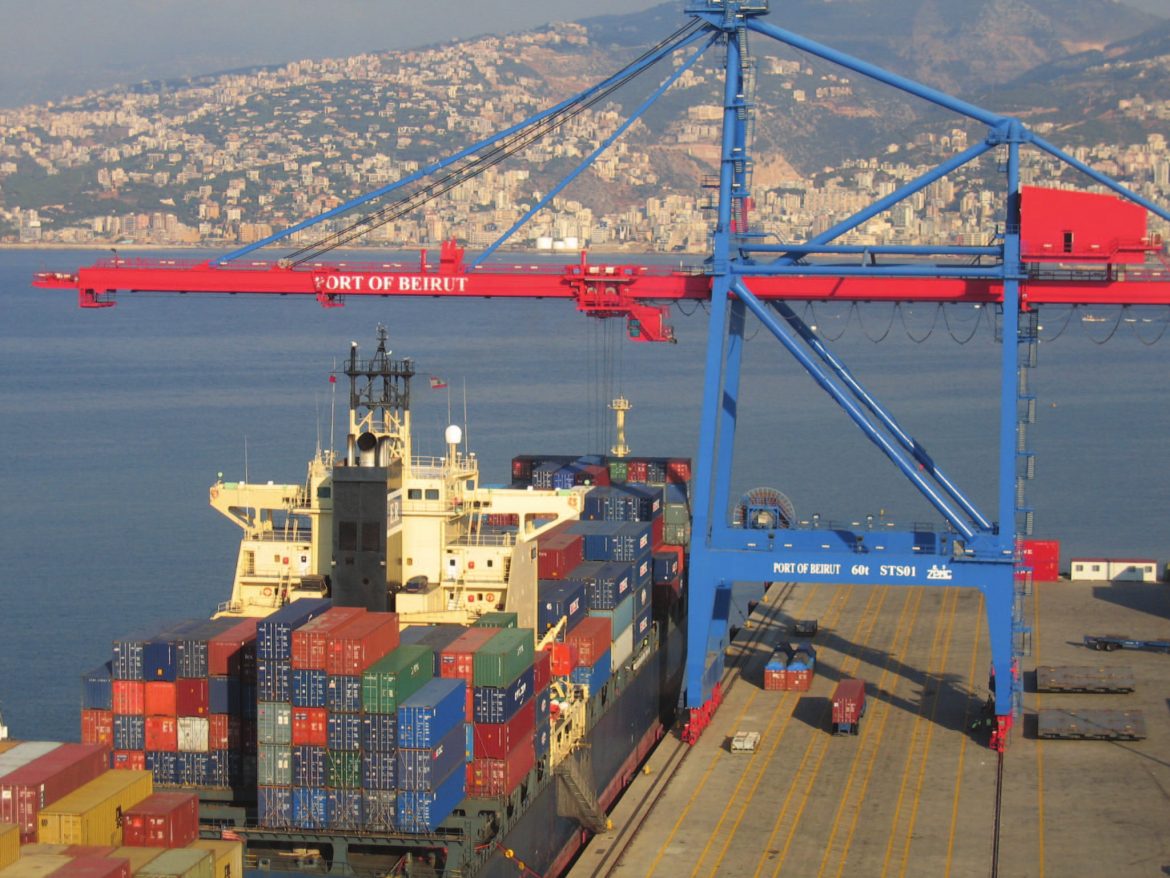
Having encountered too many needless costs, their optimization would be a much-needed benefit of privatization of state services for industrial companies, he adds, referring to high public sector fees for conducting trade through Lebanese ports as an example. “In both imports and exports, industrialists are invoiced for services that are not needed. Compared to the quality of these services, both are overpriced,” he complains.

Industrialists have for many years been facing issues with infrastructure, communication, and the supply of electricity, along with absence of state policies. Yet, Zenni says, they have not been deterred, adding that state involvement is not helpful even if it was coming through protectionist measures. “We industrialists have the capacity and capability of competing and this has shown in the past two to three years. What is needed at this stage is to bring down the industrialists’ cost, so that they can compete locally and internationally.”

Khaled Zeidan, an experienced investor and banker, acknowledges that privatization is a contentious issue in Lebanon, but attributes this to misconceptions circulating in the country before the adoption of a privatization law 22 years ago, during the term of Prime Minister Rafik Hariri. “People say no [to privatization] without understanding what they are rejecting,” he says. 

In his view, the privatization law of 2000 has been structured in a good way. The work of the Higher Council for Privatization (HCP, later augmented to include a mandate for public-private-partnerships) since that time has likewise been organized well, he says, and widespread arguments over privatization today are driven by the same mentalities as they were then. “In my opinion, you have those who understand the real value proposition for the country – but [for whom privatization] is in contradiction to their own objective of clientelism and nepotism,” Zeidan argues, who is the chairman and general manager of Beirut-based financial advisory firm Capital EE.  

“Then there are those that are being fed leftist point of views through the media. Why are we suddenly no longer in favor of a clear, transparent process? You sell 49 percent [of a publicly held asset] to investors and retain majority ownership by the state. You sell according to specific rules and regulations and use a process that is managed by an international investment bank or similar. I think simply that there has been a huge amount of misinformation that has trickled into the consciousness of the general public.”

For academic and businessman Fouad Zmokhol, the best path to be trodden under the current circumstances is the one of private sector involvement, in which state ownership of a public asset remains intact. “Personally, I am in favor of BOT, because BOT will keep ownership of the state. It can give the private partner 15 or 20 years but will revert to the state after,” he says, adding wistfully: “And one hopes that by then, a lot will have been achieved and the state will have been improved.”

However, Zmokhol, who wears two hats as dean of the faculty of business administration and management at the University of Saint Joseph (USJ) and as President of the Association of Lebanese Business People in the World (RDCL World), cautions that there are two main issues standing as obstacles to privatization, PPPs, or BOT projects. 

Firstly, any investor into the Lebanese market today would not look so much at a project’s promise of return and its intrinsic risks but examine the worst-case scenario. This is based on the knowledge that an investment in Lebanon can be lost; not over bad investment strategies or wrong management but because of sovereign and political risk. 

According to Zmokhol, assessments of project risks are made worse by the chaotic state of the judicial system. An additional factor against investor involvement is the current inability to predict rational return expectations considering the country’s currency instability and competing parallel currency rates. 

“Given these two main issues, I do not see any investment appetite in the short term. But things can be different after financial rates return,” he says, before elaborating that the third risk factor is the political reality of Lebanon. Since the end of the civil war in the 1990s, the state has been under the sway of a “gang”: people that were involved in the conflict and remain in power with no indication that they will ever relinquish it (as one can argue has been demonstrated in the latest elections and political “negotiations” thereafter). “Taking those three [barriers against investment] into account, I unfortunately don’t see any appetite to invest in the coming years,” Zmokhol repeats.  

Zeidan points out that Lebanon’s market economy has continued to function despite a three-year shrinkage of the economy, which in his view was substantial, but not as bad as presumed by international observers or as expressed in high-level economic ranking numbers. According to him, the bulk of the economy has moved into informality, the size of which institutions such as the World Bank cannot gauge. “The only problem now is to bring credit back, and how to do that. This to me is the biggest challenge. Deposits and Eurobond subscriptions were sources of inflows but both are no longer there. [Access to finance] has to be an essential component of any restructuring plan.” 

Besides great implications for the banking sector, such as the need to create specialized banks and also draw in international banking players, the finance aspect of any reform and rescue operation is crucial in matters of privatization, along with the activation of PPPs and SOEs as economic drivers. On the other hand, according to Zeidan, local banks would not contribute to the sale or activation of public assets as lead investors, given that investment needs of large projects would be beyond their means. Instead, they would likely be constrained to roles of conduits. 

“If for example [a globally active investment bank] would decide to be involved in the financing of an oil block exploration, specialized funds and regional players would want to get involved, and most probably also some Lebanese banks that take small stakes in a syndicated arrangement,” he says. “To act as agents in PPP and SOE projects you do not need commercial banks but solid, specialized investment and specialized banks across the country. [For this] we need to build new pockets of funding, which were previously ignored.” 

Nuances to boot

Lebanon’s government holds a monopoly over tobacco industry

Within their views that can safely be seen as residing on the center-right side of the socialist-capitalist balance in matters of society and state, the three experts discuss the vast complex of privatization, SOEs, and PPPs in nuanced ways. 

Zenni for example shows himself convinced that investments into telecommunications assets (see special report of May 2022) would not only be suitable for large, internationally active operating groups as strategic partners. “The big players will come, and it will be difficult to compete against them [for winning any telco tenders],” he concedes. However, he emphasizes that open competition on tenders and not political stipulations under joint ventures should involve local shareholders. “We as Lebanese companies are all over the world, having acquired telecom licenses and operating networks. Why should we not be capable of doing that in Lebanon?” 

Albeit Zenni’s acceptance list of solutions for the improvement of public services in Lebanon starts with full privatization, it does not end there. “My opinion: go private, but if the decision is not to go private, PPP is 100 percent better than public [ownership and operation]. [Going] private is better than PPP and PPP is better than public,” he elaborates. On the issue of capital markets and listing of companies, he says that he recognizes the importance of a functioning local capital market, but would prefer listings on international securities exchanges over waiting for an opening of a real capital market for the local economy. “I will not sit doing nothing just waiting for the Lebanese capital market to open,” he says. 

Despite voicing serious doubts about the viability of continued operations of state-owned enterprises and sectors, and also about the possibility of attracting partners for PPPs, Zmokhol explains that from his perspective as a business leader, the situation of Lebanese enterprises and publicly held sectors requires “keeping the headline issues in mind,” while thinking as if there are partners interested to enter into projects like electricity generation. Even if those might be in the ideation phase and need further data requirements before concrete steps can be taken. “It is good to have a discussion over SOEs and develop new ideas, [but] implementation would involve many stages where you have to put at least some dates and a strategy, and guarantees,” he says.

“Noting that fundamental principles of PPP have evolved greatly, there is a lot of research that should be done from the academic side of the PPP proposition,” adding his perspective as an academic. “The law that we have on PPP is basic, and in my view was much more political than actively implemented. According to the research that was done at USJ, the [PPP] law leaves many questions on the issue of governance open. The main issues as far as doing academic research and policy research on PPP, would be governance, management, and [exit options],” Zmokhol opines.

Zeidan on his part puts emphasis on the view that in order to have viable concessions, operator contracts, or a PPP in projects – anywhere from new hydro-power and renewable energy to a port or running a casino – the structure of the project should initially be led by an international agency and also have a local partner as co-lead. In case of a listing, shares would have to be issued locally, he says. All this cannot proceed without a functioning and trustworthy financial sector. But it begins with adoption of a clear vision. “We need to reimagine the banking sector in a way that serves the economy which we want to build,” he advocates.

The mental picture that emerges is that of a never-ending political economy discourse overlaid with the surreal image of a very practical dilemma. In the latter regard, in one side of an imagined hall of resuscitation and new strategy for the economy, are the political, oligarchic, and other, elephants, all with their history of self-interests and narrow group interests which have been pursued at the expense of public interest. On the other side of the same hall, resides a pit full of very hot PPP, SOE, and privatization corporate potatoes which are all different: assets that can deliver benefits to society but need management, governance, regulation, mindset, money and activation. 

Some economists believe Middle East Airlines, Lebanon’s national carrier, should be transferred into the private sector

The barriers against the latter are humongous: barriers that are financial, and barriers that are structural because even the existing SOEs are not transparent and do not have a culture of efficiency and productive collaboration. Add to that the voids in regulation, legislation, oversight, judicial processes and institutions, plus the absence of infrastructure and basic supplies, which PPPs and SOEs would need and that privatized companies also could not do without. 

The elephants, however, are part of the polity, and they need to be brought into productive political order, while the hot potatoes need working solutions: the sooner, the better.

July 29, 2022 0 comments
0 FacebookTwitterPinterestEmail
AnalysisEconomics & PolicyTransport

Can public transport go “public”?

by Sarah Hourany July 29, 2022
written by Sarah Hourany

The realm of ground transport is in upheaval. Increased need for affordable commutes to and from work is rooted to one side by higher fuel costs and on the other side by overall consumer price inflation and extreme cost-of-living hikes. People need to be economically active to earn a living, but if they cannot get to work or commuting to work costs too much, the economy becomes stifled in yet another way.

Enter the public transport system. A combination of climate issues, lifestyle changes wrought by Covid-19 lockdowns, and now this year’s alarming fuel price rises have been pushing many countries to rethink or boost established people mover systems.

In Germany this spring, the parliament approved a plan to temporarily cut transportation costs to ease the burden of the increasing global energy prices. Dubbed “9 for 90”, the 9-euro ticket can be used across Germany with all city and regional transport for a period of 90 days. The costly initiative – 2.5 billion euros was allocated by the Federal Ministry of Transport and Digital Infrastructure – sold some 21 million tickets between May and early July. 

An economic crisis labelled as one of the world’s worst in 150 years, record-breaking inflation, and a collapsed currency. Documenting and exposing state flaws is more important than ever before.

Share our reports to help us work.

The 9-euro ticket and a parallel gasoline tax relief in the European economic powerhouse were designed as a stop-gap measure against swelling transportation costs and as an initiative to change mainstream commuter behaviors. But numerous other countries, notably smaller European Union members with visitor-friendly policies, have also been scaling up their public transport strategies. In Malta, public transportation will be free of charge from October, in a move to encourage better use and reduce congestion on the roads. Over in Luxembourg, public transport is provided at zero cost for citizens and tourists alike, setting a striking example of a country with free mobility.

The reality of an informal transport sector

On the contrary in Lebanon, public transportation is practically inexistent as a good provided by state, province, or municipality. The country’s current multifaceted crisis has triggered once again a debate over whether the economically crucial sector of ground transport should be reconstituted along old public bus and train operators, or newly designed in a public way. 

In the absence of an efficient public transportation system, Lebanon has long relied on private passenger service solutions. Private cars serve as the key vehicle for mobility, leaving the sector vulnerable to negative energy shocks. 

Periodic efforts of the bureaucratically endowed railway and public transport authority, known locally as the Office des Chemins de Fer et des Transports en Commun (OCFTC), manage to operate some public buses with the OCFTC logo in Beirut and its hinterland.

But in reality, low-income commuters, cost-conscious students and an ecologically-minded minority of Beirut urbanites have to resort to the entrepreneurial system of shared service taxis, or private bus and mini-bus operators, to avoid the luxury expense of an exclusive taxi. 

While for a long time the system comprised of ad-hoc service taxis (a “step to the curb if you want a ride” system) and unreliable private bus schedules, it generally met the transport needs of people without their own cars.

Yet inevitably, the free market spirit of the mass transportation sector translated into excesses of aggressive driving alongside incalculable safety risks which disadvantaged orderly, OCFTC operated buses. 

The latter at some politically opportune moments got support from public figures, which seemed to last as briefly as it was shallow, but then those buses quite literally started to fall apart while seeing less and less usage. 

Riding private new or used cars became the go-to option. They were deemed safer, more practical, more socially desirable, and thanks to bank loan offers, became more accessible too. In addition, subsidized fuel prices at the pump, and the slump in oil prices to around $50 per barrel between 2015 and 2020, boosted Lebanon’s private car craze.

However, the dilapidated state of public transport cannot be attributed solely to Lebanon’s love affair with personal wheels, or the government’s populist policies in which they transferred international oil price falls onto the consumers – a move criticized at the time by visiting International Monetary Fund delegations.

In reality, it stems from the fragmented and overlapping tasks designated to various governmental and institutional authorities, and the lack of coordination among these entities. This was highlighted by a Lebanese American University report in 2014, titled “Sustainable Transport; Grouped Publication”. Weak management, low levels of accountability and inter-ministerial friction were natural consequences of this absolute chaos, points confirmed in the National Environmental Action Plan issued by the Lebanese Ministry of Environment in 2005. Today, instead of striving to become sustainable, the sector seems to have reached a point of no return and struggles to stay functional. 

This mal-organized situation is causing significant economic losses, and the elevated cost of transportation is impacting citizens’ mobility, according to the transport economist and planner Dr. Mazen Omran. Skilled workforce is not well-linked to employment locations and students are not appropriately connected to schools and universities, Omran says. He also believes this is impacting productivity rates and human capital formation. Even worse, the whole economic activity is paralyzed; taking a toll on already sinking government revenues according to Ziad Nasr, the head of the Railway and Public Transportation Authority (RPTA).

The railway sector: time for a revival?

The railway network was originally established in the 1890s mainly to link Beirut and Tripoli to Syria, Iraq, Turkey and Europe, through the efforts of local and French businessmen.  On June 6, 1956, the Lebanese state regained ownership of the railroads under the name “Chemin de Fer de l’État Libanais” (Lebanese State Railways). Then on April 14, 1961, the Office des Chemins de Fer de l’État Libanais et du Transport en Commun de Beyrouth et de sa Banlieue (Lebanese State Railway and Public Transportation Authority for Beirut and Suburbs) was formed under Decree 6479. Its name was later changed to what we know today, Office des Chemins de Fer et des Transports en Commun.

However, like most of Lebanon’s post-civil war infrastructure, the railway service suffered great losses and its operations gradually declined until it ceased completely in the early 1990s. After that, many parts of the railway were encroached upon by buildings or highways.

The OCFTC, a public institution established in 1961 under the Ministry of Public Works and Transport, remained the sector’s management authority. A semi-independent legal identity with financial and administrative autonomy, the OCFTC is formed of two departments: the Railways Directorate and the Bus Transport Directorate.

As opposed to public perception, there are no employees in the Railways Directorate, Nasr tells Executive: “Policymakers tend to think that there is no need for employees unless the train stations are fully operational.” Nasr argues that the creation of a new public transport system requires both local human resources and international input. 

“The planning on all levels requires skilled staff,” Nasr says, before adding that there is a major need for international technical guidance to build capacity. On top of technical assistance from foreign institutions, involvement by the private sector is also a must, according to Nasr. Either in the form of public-private partnerships (PPP), build-operate-transfer (BOT) or foreign direct investment (FDI); to share risks and enhance productivity, provided there is political stability.

Earlier this year, caretaker Public Works and Transport Minister Ali Hamieh discussed with a French transport company, Alstom SA, the restoration of three railways under a BOT contract.  Potential rail projects for freight or public transport have been repeatedly brought up at different moments since they became inactive some 30 years ago.

Under the latest attempt to rebuild rail infrastructure and bring some relief to the roads, the first suggested rail line would link Beirut Rafic Hariri International Airport to Abboudiye on the northern border with Syria, while passing through the ports of Beirut and Tripoli. The second would connect the airport to the Masnaa border crossing, and the third would function from Riyak in the Bekaa valley to the Syrian city of Homs.

“The revival of the railway sector is a must, but it requires a feasibility study that takes into account the new economic and urban realities and needs,” Nasr says. “The priority will be given to the coastline connecting Beirut and Tripoli ports.” In February this year, Hamieh announced that Spain will be financing a comprehensive master plan for the 407-kilometer-long railway, in a bid to revive it.

Bus network: a feasible option?

Earlier this year, on May 23, France offered 50 buses to Lebanon to support the rehabilitation of the road sector, as per an agreement between the French and Lebanese Public Works and Transport Ministers signed on March 10 at the Grand Serail in Beirut. This grant comes on top of a prior initiative by the French shipping company CMA CGM which repaired 45 public buses damaged by the Beirut blast, as per a statement by the company. 

Asked about the status of the French buses, Nasr explained that various operational obstacles are still in the way. Fuel oil suppliers and spare parts distributors request cash payments in fresh dollars, while public institutions are legally obliged to meet their financial obligations in Lebanese Pounds. “Exceptional times need exceptional measures,” he says.

But supplier demands aside, the work morale and room for performance of the 150 employees in the directorate remains questionable, given that they are earning a monthly salary worth $45 on average. Currently, 6,400 buses and mini vans with legal plates are operational, while illegal plates amount to double this number, Nasr says. They operate without specific schedules and do not use dedicated lanes. In addition, these buses compete over the same lines in the cities, while they are almost inexistent in remote areas, rendering their services inefficient. As well as this, the vehicles do not undergo regular maintenance, posing a serious safety threat. 

The Lebanese transportation sector: a need for the country’s economic rebound

If Lebanon’s economy is to rebound, the transportation sector should be at the core. Omran says the sector is not close to topping the list of urgent PPP projects or privatization discussions, and emphasizes that a transport policy should be agreed upon irrespective of politics. “Jumping between transport projects that are politically driven without an overarching transport policy will not get the country anywhere,” he says. “The transportation sector can play a monumental role, specifically in the current unprecedented economic crisis; if public transport is promoted and implemented, as it provides a real alternative and cheaper option to private cars.”

By Omran’s estimate, several hundreds of millions of dollars are required to create public transport choices to meet the needs of people and enterprises, because the current road and rail infrastructure are not suitable for any transport scheme. “Private finance via the World Bank, European Investment Bank and European Bank for Reconstruction and Development should have a role to play, but without a clear strategy it would be challenging to attract any PPP.”

 Various research studies published in international academic journals confirm that countries with good infrastructure attract more FDI. As a matter of fact, transport infrastructure that includes components such as roads, runways, ports, airports, and railways, among others, contribute to decreasing the cost of doing business, and subsequently enhancing FDI. 

However, the nature of public transport is undergoing fundamental changes; reflected by the current planning of infrastructure and mass transit projects. The arrival of digitized private transport along with the avalanche of ride hail apps is a cautionary tale on the importance of designing public transport in long-term social and sustainable manner, particularly in light of a recent investigation into Uber, which revealed lobbying and falsifications as it expanded out of the United States.

Drone deliveries and driverless trucking systems, in addition to new remote working traditions, have to be integrated into the negotiations of decision makers. In Germany, for instance, public transport is highly organized, but also involves endless regulations and interlaced public, private, and privatized operators. As such, allowing for ride-share taxis a few years ago required an overhaul of the law, while initiating a summer solution like the nine-euro ticket needed the buy-ins of states and massive bureaucratic adjustments. 

By contrast, the arrival of ride-hail apps to Lebanon did not visibly disrupt the existing sector. Lebanon’s massively informal public transport sector and absence of state capacity to manage it, in addition to the technical alertness and entrepreneurial drive of its innovators, such as entrepreneurship hub tech workshops, could mark a perfect starting point to engineer new modes of public transport. The development of such modes, as PPPs or otherwise, are urgently needed to avoid a worsening of this integral sector. What is more, if successive governments had taken precautionary actions, less investment would be needed today. Although, according to Nasr, it is better late than never.

July 29, 2022 0 comments
0 FacebookTwitterPinterestEmail
Last Word

Lighting up Beirut with the power of solidarity

by Gabriel Ferneine July 29, 2022
written by Gabriel Ferneine

Have you been surprised recently by a street in your neighborhood being lit up for more than an hour at a time? Perhaps you have felt a little safer when walking on a street which had been shrouded in darkness for the past 15 months? The story of this tiny but noticeable change in our capital’s nightly cityscape is the story of Rebirth Beirut. This story is worth your interest because it tells of a concrete improvement in our urban quality of living.

Nowadays, it is a must for a self-respecting, sustainability-focused organization in Lebanon to be non-profit, completely independent, non-political and non-confessional. Once a civil society organization or non-governmental organization (NGO) – or a socially active organization by any other name – begins to acquire credibility through its actions, being transparent becomes a precondition for further success. 

In today’s social and economic environment of overwhelming needs on every level, local initiatives connecting the community and the private sector can create a strong impact. If they activate the power of community solidarity with the private sector to provide a tangible good, alongside a concerned public agency, such as municipal authorities, it can help rebuild sustainable economic activity. 

Lebanon has long suffered from an absence of accurate, timely and consistent data. Our special reports provide valuable insights into the poor state of Lebanon’s industries and markets.

Help us continue our work by sharing

Applying these principles has allowed Rebirth Beirut to succeed beyond our hopes. Within record time, we were able to organize the return of street lights to parts of Beirut. Just a month after we celebrated “Throwing the switch back on” for Gouraud (Gemmayze), Pasteur, and Mar Mikhael streets on May 22, 2022, the initiative was in action on a total of 16 streets. We are a step closer towards the ambitious goal of reinstalling safety to pedestrians and motorists through lit streets during the night, across the Beirut municipal area.

Founded in 2020, Rebirth Beirut began as a relief NGO after the Beirut blast. In September 2021, we decided to take the initiative forward to a city-scale NGO with the aim to bring back the lights of the city. As soon as we launched our initiative, in which we connected local generators to Gemmayze’s LED-equipped poles (previously installed through a USAID grant), people noticed and began to realize that we can all make a difference by lighting up our communities. 

Some of the streets on our project roster include around Rizk Hospital and Sassine Square, as well as the thoroughfares of Alfred Naccache Street, Charles Malek Avenue, and Independence Avenue in Achrafieh. We intend to extend this coverage soon to some of the main streets in Koraytem, as well as Bliss Street, neighborhoods full of commerce and student life, and the Ain el Mreisseh Corniche, from St. Georges Bay to the lighthouse.  

Our mid-term ambition for this fast-growing initiative is to cover the entire territory under the authority of the Municipality of Beirut, where Rebirth Beirut has been authorized by the city’s governor to feed electricity into lamp posts. We also have special plans for illuminating and landscaping the entrances to the city, in partnership with young architects. It is a dream to achieve all this within a six-month time frame.

But even if it takes more time, it will be worth every effort invested by community members and private sector companies, including diesel cost incentives to generator operators, who donate power to enable the lighting of the streets. 

As proven by the experience of shops and restaurants in the Gemmayze pilot project, the return of streetlights means small stores stay open longer, restaurants enjoy better business, and touristic hotspots are brought back to life. It displays how there is not just an improvement to safety when there is light, but also an improvement to economic life. 

We are aware that this lighting solution, though it is made possible by the amazing solidarity of community members, only covers surface wounds. It cannot substitute for solutions such as large-scale public-private partnerships with long contractual horizons. Our overriding goal is Beirut’s economic revival, which incorporates many more potential initiatives, in areas such as waste removal and recycling. Yet, the lesson of our recent project is how partnerships between the community and the private sector can quickly bring back light, bring back hope, and bring back activity. 

July 29, 2022 0 comments
0 FacebookTwitterPinterestEmail
Real estate

For your information

by Executive Editors July 7, 2022
written by Executive Editors

Solidere shaken bypolitical uncertainty

Real estate behemoth Solidere released its 2011 results posting a net profit of $162.6 million, down 16.9 percent from the prior year when the company brought in $196.5 million. This significant drop reflects the overall slowing of the Lebanese real estate market, due mainly to political tensions in Lebanon and the armed uprising in Syria. The company’s real estate sales brought in $241.7 million last year, down from $337.2 million in 2010. Solidere emphasized that while profits dropped over the last year, it still holds 1.88 million square meters of land worth some $8 billion, in a market where property is scarce. “These results come despite the unstable domestic and regional situation which the country has passed through since the beginning of last year, and which had a negative impact on the economic, commercial and real estate activity,” the company said in the report. One bright spot in the report notes that Solidere pulled in a net profit of $49.9 million from its rental properties last year, marking an increase of 20.9 percent over the previous year. However, Solidere also forecast that the unstable regional political climate, as well as regional and global financial crises, could negatively affect the company’s profits for several more years. (See page 80)

Japan helps turn on the taps in Keserwan

A partnership deal with the Japanese government to supply communities in the Keserwan with drinking water was inaugurated in early June, though the completion date is still some months away. Named “Spring Strait”, the $102 million project is being built under the auspices of the Council for Development and Reconstruction (CDR) and the Ministry of Energy and Water (MoEW) using a soft loan from Japan. According to the National News Agency, Minister of Energy and Water Gibran Bassil said, “We hope that what we have unanimously agreed upon recently in cabinet to act… so that we work together to face fear of aggression… which all Lebanese denounce. Let’s make the sound of water in Lebanon resound louder than the blare of bullets.” Also speaking at the event, president of the CDR, Nabil el-Jisr, said Spring Strait was one of the most important water development projects ever undertaken in Lebanon, according to a statement. When completed, Spring Strait will boast 13 pumping stations, nearly two-dozen distribution mains, and a four-kilometer tunnel to the sea.

Arkan nets $381 million loan

Abu Dhabi-based Arkan Building Material Company said in a late June statement that it had secured a $381.2 million loan with a six and a half-year maturity from several banks, including Union National Bank, First Gulf Bank and Emirates NBD, to help fund new projects and refinance existing debt. The company said the loan would help achieve “significant savings in interest cost for Arkan over the repayment period of the loan.” Abu Dhabi’s General Holding Corporation, a government entity, owns 51 percent of Arkan.

Nakheel goes big in first quarter

Dubai-based property developer Nakheel had a mediocre showing in the first quarter of 2011, when it posted a $9.8 million drop in profits over the same reporting period the previous year. But in the first quarter of 2012, the company has reported a profit of $98.6 million. Nakheel credited the gains to a commitment to keep overhead costs down on projects, as well as its surging retail and leasing holdings. In a statement, the company said, “The positive results of first quarter, following from the robust financial results achieved in the year 2011, continue to indicate a relatively more stable real estate market.”

July 7, 2022 0 comments
0 FacebookTwitterPinterestEmail
PodcastsSpecial Report

Talking Media Actions

by Thomas Schellen, Alia Ibrahim & Ahmad Salman June 29, 2022
written by Thomas Schellen, Alia Ibrahim & Ahmad Salman

Leveraging the abilities of Lebanon-based media in the digital age is a great regional opportunity for news organizations.

Following on from the media action plan project, Executive sits with Alia Ibrahim, the co-founder and CEO of Daraj, and Ahmad Salman, general manager of As-safir Newspaper, to discuss the potential for growth within Lebanese media.


June 29, 2022 0 comments
0 FacebookTwitterPinterestEmail
Economics & Policy

Against all odds, an ESG Stewardship Program landing in Lebanon

by Danny Maalouly June 7, 2022
written by Danny Maalouly

In the past few years, a new trend in investment has emerged and taken the world by storm, leaving many enterprises scrambling to embark on a journey that is dubbed as ESG investing. Environmental, Social, and Governance (ESG) practices and standards have significantly changed the landscape of investment and the way it is allocated, based on environmental performance, social impact, and governance issues.  


Essentially, incorporating ESG methodologies into any enterprise yields long-term sustainability. Therefore, Lebanese enterprises that have been floating without a strategic direction towards success and sustainable growth must adapt in the face of the current financial and economic crises. The crises negatively impacted the business environment and disrupted its smooth operations. The lack of liquidity affected the ability of companies to operate and secure their basic working capital needs, which led them to either function at minimum capacity or even freeze their operations. 

Enterprises, and in turn their survival, are vital to the economic recovery and in the current global trends and climate, they are forced to explore alternative funding solutions from individuals and organizations wanting to utilize their investments to generate positive social outcomes. 

In today’s fast paced world, Lebanese enterprises are required to adapt with the inevitable business changes that are occurring on the global level. Adherence to ESG criteria has become a necessity and not a mere endeavor practiced by thoughtful business owners. 

In a corrupt and shady environment, our reports hold a magnifying glass up to Lebanon’s poorly regulated sectors.

Share our reports to help us work.

This is where the role of the United States Agency for International Development (USAID) Lebanon’s Trade and Investment Facilitation (TIF) project becomes essential. TIF is a multi-year project focused on facilitating trade, import substitution, investment, and policy reform. Under TIF, on behalf of USAID, we are pioneering innovative development approaches to economic growth. We are conscious of this necessary transformation and decided to prompt, prepare, and support local Lebanese enterprises with all the requirements to adhere by ESG standards. Despite the challenging situation, we were able to spearhead the initiation of the ‘Lebanon ESG Stewardship Program,’ supporting the country in remaining at the forefront of the business and investment enabling environment and being among the very few countries in the MENA region to achieve this.

Towards this end, we partnered with Capital Concept S.A.L. to implement the Lebanon ESG Stewardship Program. The methodologies of said program were developed in collaboration with the International Finance Corporation, the European Bank for Reconstruction and Development, and the UN agencies in Lebanon. 

The Lebanon ESG Stewardship Program addresses several world class concerns for companies across all sectors, encourages them to comply with responsible business practices, to grow and improve, as well as achieve market advantages and competitiveness, thus leading them to become more lucrative for investors. It will also provide them with guidelines developed in a common language to help them address and manage organizational risks in a cost-effective way. 

TIF’s engagement will promote sustainable growth benefiting both companies and investors. As USAID TIF, we will support the first 100 eligible companies which will enroll in Capital Concept’s stewardship program. It will be used as a tool to guide the selected companies to become more socially responsible, environmentally compliant and to run sustainable businesses, making them safer, stronger performers and more attractive for investors.  It will also help address the economic challenges by preparing the grounds for these companies, providing them with support, mentorship, and guidance all the way to receiving the ESG certifications. This extensive program will lead to strengthening the supported entities and making them investment ready. In fact, it will improve exports, management practices, create business linkages and new economic opportunities for all the sectors in the Country. 

Along with advancing the national economy, having a solid ESG Program will attract both individual and institutional investors who are willing to pay for shares of well-governed companies, in addition to paving the way for future growth and diversification. The program will set specific guidelines developed in a communal language to help improve their business environment while addressing and managing organizational risks in a cost-effective way. 

This partnership is of strategic importance to the Lebanese economy, given that it is the basis for future growth. As ESG is becoming imperative for investment decisions, funding, and support, it is essential to prepare local entities and guide them through the detailed requirements to become ESG certified by embarking on this scalable and sustainable stewardship program.  

June 7, 2022 0 comments
0 FacebookTwitterPinterestEmail
Editorial

I watched this film before, I don’t like the ending

by Yasser Akkaoui June 2, 2022
written by Yasser Akkaoui

And so, they’re back.

The same incompetent, bloodthirsty warlords that haven’t spared our lives during the Civil War, or our hard-earned savings in recent years. To blindly assume that they will miraculously change their behaviors and habits because the electorate gave them a slap on the wrist by voting in 12 anti-establishment figures is an absolute stupidity, bordering on lunacy.

At this freshly elected Parliament’s inaugural session, we watched on as MP Nabih Berri was reelected as Speaker for the seventh time; a person that represents the sad reality of a nation having been deprived, by six previous assemblies, of change, reforms, and progressive thinking

A Parliament of dynamism, reforms, and will to progress is the desperate hope of Lebanon. A reformist chamber would give us the energy needed to conquer all the chal- lenges and barriers bestowed upon us by those same elected, and now re-elected, rep- resentatives who have mismanaged, wasted, and stolen years and decades of our hard work, dedication, and financial (and emotional) stability.

But let it be clear that the reelection of many of the same old names and most of the same political groups does not give them license to waste and steal. The voters who pro- vided them with renewed legitimacy bear the responsibility to hold them accountable for squandering people’s money. It will be the final ruin of Lebanon if the people and the me- dia will dodge this responsibility, thus allowing politicians to resume their implementation of extractive strategies that will subsequently tax our now meager earnings, and continue to milk and sabotage Lebanon’s state-owned enterprises (SOEs). Executive Magazine has always advocated for the proper restructuring of our SOEs, and embedding a good govern- ance principle to aid in creating value, growth, and wealth. We carry on with this mission in this issue by examining the potency of the telecommunications sector.

Unfortunately, we have been disappointed time and again in our hopes and chances for well-run institutions that deliver affordable and efficient public services. But we will not give up the fight for a better public economy and for a better state. Meanwhile, the private sector is taking bold measures to break away from its isolation, and building their capacities for investment, efficiency, and growth. The launch of the Lebanese Private Sector Network (LPSN), in which I participated, is a manifestation of the will and readi- ness of the private sector to hunt for long-term earnings and stability, while defending all what remains of good values.

This entrepreneurial spirit will once again break this mold of isolation, and emerge as the driving force towards a striving, and forward-thinking Lebanon.

June 2, 2022 0 comments
0 FacebookTwitterPinterestEmail
Leaders

Spring, actually?

by Executive Editors June 2, 2022
written by Executive Editors

To resuscitate a dying person is a scary task. Let’s say you walk along the coast and discover a distant cousin laying there lifeless. She is not even breathing any longer, and you understand from how she looks that she must have been washed ashore after drifting in a rudderless boat under a merciless sun for days without food, drink, or even a cap to cover her head. 

Sadly, this is not just some movie script but an increasingly realistic scenario as the crisis persists in Lebanon. But in such a situation, besides making an outcry of emotional anguish, most of us will hardly know what the right thing to do is. We would perhaps carry the victim to someone who can help or try what we have seen in some TV show to make the victim breathe. Even if this works, however, chances are high that we become frantic and wouldn’t know what further aid to give for what problem and in what order. And if we seek to nurse the victim back to mental and physical health, finding and implementing adequate treatment will be another giant leap.  

Bringing an entire country back to life is incomparably more difficult than resuscitating a drowning friend. Against a constant barrage of fears – which were part rational expectations but mostly destructive rumors – that started even before the acute crisis outbreak of 2019, Lebanon has survived month after month by virtue of the people’s resilience. Some of our troubles have, in the meanwhile, diminished or look more manageable today than they did in 2020. However, none of the principal systemic challenges of 2019 and the preceding years has yet been solved. 

Still, there is good. In the realm of microeconomics, meaning the individual and collective affairs of private economic agents, the proven energy of Lebanese industrialists, women business leaders, and entrepreneurs is a source of hope (see our Gender Equity special report for evidence). In the financial economy, there are meaningful efforts afoot regarding the mobilization of finance and access to funding sources – both from private investors and under the inclusion of International Financial Institutions. In global policy matters that are essential predicators for the future development of local industries and SMEs, new initiatives aim to enhance the alignment of Lebanese ventures with climate, environmental, social, and governance standards that are defining the sustainability agenda of entire economies, including the Lebanese one (see story on GCF and ESG). 

And although one cannot honestly speak of a political economy or macroeconomic policy involving the government as a driver of better and integrative development of economic life, even the negotiations and reform efforts of the government from the beginning of 2022 up to the time of the elections appear, by a dispassionate assessment, more fruitful than what was delivered in previous attempts. 

Against all professional skeptics, habitual haters, manipulators, trolls, and naysayers, elections have happened. But at the same time, new global problems are looming, and the answers to the best method for the resuscitation of Lebanon are desperately overdue after the country has been more than two years adrift in the crisis of everything. 

That brings urgent questions back to mind. Does the agreement with the International Monetary Fund, after the recent pronunciation of a staff-level accord seemingly more in reach for this year than in the previous two years, make for the right starting point for the country’s return to economic life? How can the pound’s immediate alignment with the market rate and dismissal of the insane multiplicity of currency exchange rates be worked out, and will a massive floating-rate shock or the opposite, the imposition of an ultra-hard peg, be the best currency solution? 

Will the reform of numerous laws, taxes, state expenditures, and administrative structures be the correct starting point for building a constructive partnership between society and state, or would too many new austerity measures and dismissals of public sector employees overpower the people and stultify growth? Will the decisive spark for the development of new trust by citizens be achieved by holding crooks accountable and starting the restoration of looted and wasted funds? Will a restructuring of the banking sector and, however gradual, return of deposits to the people bring balance back to the reality of our banking experience, even though this entire sector has, with each passing month, looked more dysfunctional and absurd?  

There seems to be at least seven different answers for each of these questions for every three experts that you ask. (You can trust and entirely rely on Executive on this. In the recent past, we witnessed and participated in a plethora of presentations, economist statements, and roadmap debates dedicated to discovering the correct political economy route for recovery. The only thing more staggering than the amount of exhibited brainpower, knowledge, and the predominance of, yes, male greybeards at most of those colloquiums was the number and diversity of expert opinions.)  

Given the bipolar systemic reality of Lebanon, under which, on the one side, there simply is no out-of-the-box solution for the country’s multi-faceted political, social, and economic crisis, and which, on the other side, involves complicated geopolitical interests and regional powers on top of local communal fragmentations and divergent group identities and associated partisan interests, one can make a full-confidence bet that the parliamentary election of 2022 will not deliver easy solutions. 

No functioning democracy can deliver quick and easy solutions. Only an extreme policy simpleton would even ask if perfect solutions to everyone’s satisfaction can be instantly expected from a new parliament, be it broadly or partially representative. What aggravates this dilemma under the Lebanese system, however, is the institution’s track record of procrastination and inactivity, where the country and all observers have suffered through a decade of recurrent legitimacy vacuums, high exposure to corruption, and a consensus modality which anyone with their partisan interests could use to stifle any critical legislative decision, thus disabling actual negotiated compromise.    

Especially when a new Council of Ministers has to be formed, the juxtaposition of multiple self-interests and internal and external allegiances of elected lawmakers had historically translated into tortuous and generally futile periods of partisan negotiations over the formation of the next government – even in periods when the unity of purpose and agreement on the national good were emergency needs (which was at any political juncture of the past three decades). 

This year, in addition to the well-known political challenges and utter economic emergencies, the election outcome engenders many worries that the sharp down-the-middle split of the new parliament will only prepare the ground for more political antagonism. These fears cannot be discounted, and the fact that international observers from the EU to the UN, as well as the highest officials of the Lebanese state, are making it their first priority in post-election statements to proselytize for an urgent agreement on a new Prime Minister-designate and swift formation of a new Council of Ministers (CoM) — can only stoke those worries.

All of the above economic, policy, and political news reinforces the point that in a body’s society and its economy, a gazillion facets are interconnected, and resuscitation of the whole begins way before elections, with the public-minded efforts by countless private agents. Public actors in the best of all worlds would then submit to the wisdom of the private crowds who have told them that they are tired of their petty power games, ineffectiveness, and evident corruption. 

Whether such is a realistic hope for a working majority in the newly elected assembly or not, the country cannot bear another period of political paralysis or sharp disagreements over ideological positions. Moreover, Lebanon has seen enough brainstorming in the search for an economic paradigm. It is two things that need to be understood now: 

  1. A nation is a complex cultural, social, economic, and political ecosystem, and any new direction has to draw on diverse inputs and gather momentum. The discussion cannot afford but adhere to and strengthen democratic processes and broad participation across Lebanon’s internal cantonal lines of identity and belonging. 
  2. Mistakes will be made, never mind what Council of Ministers will come and whatever model for reform and rescue will be applied. In view of Lebanon’s horrendous current conundrum, the best thing to do right now will be to start acting based on existing knowledge and available economic road map resources. Developments should be monitored constantly and policy errors rectified as fast as possible. But to do nothing will be the biggest mistake imaginable. 

Above all, what is required is a fundemental societal, economic, and political spring today. But what is this spring? Among beginning learners of English that come from a Germanic language background, there is a didactic pun on the word spring: a recent migrant to the United States, still uncomfortable with the new language spoken there and surly in his general outlook on his economic future, takes a walk where he meets a fellow expat with stronger language proficiency and cheerful disposition. When the second émigré smiles and says, “Spring in the air,” the first one bitterly retorts, “Spring yourself!” Playing on the difference in the primary meanings of spring in English (the season of new growth) and spring in German, which is the imperative of springen, “to jump, leap,” the joke actually reveals the common root of both words as describing something vibrant that is emerging – but at the same time something that requires a massive leap of faith. 

The cultural pillars of Lebanon’s multi-faceted historic identity all affirm one thing:  when obstacles tower all around, tackling them requires a leap of faith, activating the hidden resources of the human mind and tapping into the principle of hope that is the beginning of development, vitality, and prosperity. The regional protest spring of 2011 and the spontaneous autumn protests of 2019 in Lebanon are the slowly germinating seeds of new cultures that hitherto have appeared to be hidden to the point of being invisible to ordinary minds and superficial observers (of which there is an abundance). The elections of 2022 give hope that the seeds of democratic change will be sprouting faster and better than has previously been expected. 

June 2, 2022 0 comments
0 FacebookTwitterPinterestEmail
Economics & PolicyICT infrastructureLeadersTelecom

Virtual lights against a tide of darkness

by Executive Editors June 2, 2022
written by Executive Editors

If owning Lebanon’s digital future was the objective of a massively multiplayer online game, the MMO design could easily be for a win-lose contest where one winner could walk away with some virtual trophy and be rewarded some non-fungible token (NFT) or an amount in stablecoin. But the reality of Lebanese telecommunications is not a political game, multiplayer or otherwise – despite it having appeared as such over the years. The impact of telecommunications and the wider ICT sector on the real economy and the well-being of society is such that it is paramount to change the telecom game from a lose-lose past into a win-win future. 


With many contradictory elements and an ironic political twist at the end of its long first round, the economic and social telecommunications narrative meanders madly from the activation of mobile telephony as a phenomenally productive infrastructure innovation and landmark for the attraction of large syndicated finance in the mid-to-late 1990s to the day of October 17, 2019, when another attempted exploitation of telecom for state tax income triggered the people’s thawra as a national moment of constructive and peaceful rage.

The sadly ironic twist of the latter unjust taxation attempt is that the outrage over it might have translated into a broad economic good – had such vigorous and inclusive public protests been happening back in the days of 1998, 2000, or 2002, when Lebanon had a substantial regional edge as an early adapter of mobile telephony and information and communication technology (ICT). The edge is a memory, but the digital story with its enormous economic upside potential is as important, or more important, for Lebanon today as it was in the early GSM days.

What do the Lebanese people receive in return for tax? Inadequate state services, creaking infrastructure, and the same old faces.

Help us bring clarity to a complicated socio-economic climate by Sharing our work.

What is this telecommunications tale as of spring 2022? One way to approach it would be to think of three fields of force or axes of gravity that pull on the sector. One such force field is what non-economic psychologists call the people’s “coping mechanisms” during a crisis, the second source of gravity is the behavior of the dominant institutions and the leaders behind those institutions, and the third fundamental force in play is the tremendous pull of digital economic growth that makes it imperative to implement a telecommunications strategy as the foundation of developing the digital future.

The market’s balancing power

The first force field is being constituted by the economic coping mechanism of the market, specifically taking the case of the handset market. This aspect of the communications sphere seems to exert itself rather well through the instrument of the significantly informal market, albeit within the limitation and overall manner of market forces, meaning this largely self-adjusting platform is neither inherently social nor moral, but practical. It primarily involves individual participants, such as the millions of phone users and the many small retail device sellers.

Consumers have been adjusting their telecom-related purchase choices to their continued communication needs while commanding increasingly few financial resources in cash or credit. With cash as an almost singular purchasing tool at the disposal of this market, distributors/retailers would bring new types of budget market handsets and adjust their ancillary offerings.

Since 2020, the handset market has been exposed to minimal adulteration by state intrusions such as indirect taxes – effectively diminished during the crisis – or the realization of higher customs levies. The handset market appeared to find a new equilibrium informally as the crisis subjected it to the forces of demand and supply in a pure way.

The potentially devastating gravity of old institutions  

Similar to the effective absence of tax distortions in the handset market, state interference in the operational side of telecommunications was inactive during the crisis. Likely due to political reticence, the sector applied the official pre-crisis exchange rate and thus had a reprieve from the madness of arbitrary multiple exchange rate issuances until the 2022 parliamentary elections (which is the time of this writing). 

With fee collections being implemented at the official exchange rate, communication costs of the population during the crisis were beholden to a level that stood out as an island of affordability and good value for money on the consumer side. In parallel, it placed the aggregating figurative and literal burdens of “keeping the lights on” to the state-owned providers. 

For example, this inequitable situation is reflected in the growing inefficiency of customer care service deliveries by the duopoly of mobile operators Alfa and Touch. Still, if Executive’s experience with the operators’ communication departments is symptomatic, it also is responsible for a general deterioration in their corporate cultures. 

In any case, the political fears that underlie the state’s hesitancy to adjust tariffs have increasingly become juxtaposed with the need to increase the short-term revenues from the sector and offset the incompletely covered operating costs of the state assets in the telecommunications sector.

As the deep plunge in revenue per user from the maximum extraction model used before the crisis has, of course, not been sustainable, today, the need for tariff adjustments appears to loom ahead as a precarious balancing act. In finding such required balance, the relevant institutions – by default distrusted in the politically contaminated telecommunications sector – will have to address the risk of operational breakdowns due to exhaustion of resources on the one hand and the risk of widespread unrest up to the level of street confrontations in response to placing yet another cost burden on the people for whom their phone and internet usage are both a vital economic enabler and the only remaining means of preserving their mental health and social ties.

How this, under prevailing ownership and decision-making processes, deeply political problems will be approached after the elections is of paramount importance – but so far, long on vague promises, fears, and badly deficient information. The numbers of a more than five-fold increase in lira terms seem hackneyed, in the best-case lacking finesse and, in the worst, void of elements that would make for a good transitional plan. Executive calls for extreme transparency and multi-stakeholder communication in the urgently needed devising and implementation of such a plan.

While not the only need of Lebanon, and perhaps not even the most pressing or fundamental one in the immediate crisis, an indisputably needed step forward is to initiate a new round of digital economic development. And it is feasible and required to activate this development as soon as possible. As experts invested in the sector show in conversations with Executive, they have a strong understanding of the factors that caused the malfunctioning of the erstwhile mobile telecom miracle of the 1990s, of the current financial limitations, and the overall direction that the sector needs to take.

In this latter regard, the recovery of telecom is an interconnected story where the best chances of breaking the destructive patterns of the past can be gained when everything is constructively connected to everything: ethical standards and best practices, industry, tech entrepreneurship, innovation, design, civil society, legislation, policy-making and enforcement, and even the dreaded craft of day-to-day politics.

At the core will have to be partnerships, and it seems that the best bets would be public-private partnerships (PPPs) with large strategic partner companies. In the views of the experts, there are good chances to forge such partnerships with regional or multi-national telecom powerhouses with brand values in the billions of dollars – notably, more than one regional player has matured to such a level, as assessed by brand studies – and negotiation power that no Lebanese state could ever achieve because of the market’s small size. 

These new-generation PPPs, however, will have to be what Lebanese PPP expert Ziad Hayek calls “true partnerships” that are constructed not as alternative procurement contracts but as frameworks of mutual obligations and benefits in the face of radical uncertainties as well as significant societal and economic risks, from pandemics to tech innovation shocks.

The other vital ingredient will be the human element. Cost it what it may, we need to retain not only our experienced engineers but also our customer care teams, we need to invest in educating new tech and managerial talent, and build trust in leaders with the skill and authority to negotiate public telecommunication goods in the interest of the country. 

It will not be easy to negotiate good deals for Lebanon in the years to come. But seeing many capable persons in the telecommunications sector and ICT industry, among potential investors, academia, civil society, and even politicians, this magazine is of the opinion that the moment has come – and the last good chance it may be – where a diverse people who are determined and professional optimists could forge a win-win telecommunications path. Hopefully, it would enable digital potential in anything from e-government and online procurement to the global and local productivity gains hidden in the digital future. 

June 2, 2022 0 comments
0 FacebookTwitterPinterestEmail
Economics & PolicyICT infrastructureOverviewSpecial ReportTelecom

Desperate bid for a profitable future

by Thomas Schellen June 1, 2022
written by Thomas Schellen

On a sunny morning in spring 2022, confusion reigns for but a moment. Executive has an appointment to interview Imad Kreidieh, the chairman and general director (CDG) of state-owned enterprise (SOE). Still, the company’s gates are closed and plastered with snap labor strike announcements. However, a brief conversation through the closed gate’s metal bars later, and we can enter via a broad and uninvitingly bare courtyard into the telecommunications infrastructure operator’s and services provider’s sprawling administrative complex. 

Walking into the building, a visitor with some background in navigating public offices and varied ministries in Beirut will quickly feel ‘at home’ – if one can ever develop any homey feelings in a structure that seems to have been designed in the past century for signaling the greater glory of a mighty state to its anonymous supplicants. The setup is admin-perfect for echoing those ‘wells of silence’ that people easily stumble into when trying to communicate with their state: you pass an empty reception desk in a mentally chilling, sub-utilitarian foyer, ride in elevators that are adorned with large, albeit in one case cracked, mirrors, and then proceed along lengthy CCTV camera-embellished hallways – a common hallmark of local edifices of government bureaucracy. 

One can only imagine how the corridors might look bursting with human activity (on non-strike days?), but the first individuals to greet visitors today are the obliging personnel at the security station in front of the executive suite on the head office’s upper floor. Then a surprise: instead of the micro-culture-shock-inducing contrast that one commonly suffers when stepping from the average government ministry’s drab corridors into the ostentatious offices of the respective minister, the vestibule and office of Ogero’s CDG exudes a cool corporate air, type top-management utility. 

Instead of the one of over-the-top luxury of your average political dragon’s lair, the place feels more functional than representative, with an atmosphere just on the accommodating side of austere. Also, verbally, with Kreidieh’s first comments on his employees’ strike expressing explicit support for their action, the conversation starts with an encouraging vibe of realism.

Ogero, the oldest state-controlled corporate unit in the byzantine telecommunications mosaic of Lebanon, thus presents itself as a suitable waypoint on the quest to unravel the dystopian mysteries of a sector that has for three decades been key to many ups and downs of the Lebanese economy while situated on the frontlines of policy conflicts and shrouded in allegations of corrupt shenanigans and brutally counterproductive political influences.  

Institutional memories 

As Lebanon is moving toward (or at least hoped to get to) the end of its crisis of everything, one hypothetical economic value proposition of the telecommunications sector can be shouted out loudly as conditio sine qua non, an indispensable condition: a prosperous future is unimaginable without vital knowledge economy inputs and digitization. However theoretical a multi-year vision of digital GDP improvement for Lebanon might be, and to what degrees such ideas and realities might diverge in the end, a competitive telecommunications industry and solid, multi-faceted communications infrastructures are by the wisdom of international economists and local telecom experts both decisive and irreplaceable for a productive economy in Lebanon’s future. 

But can Lebanon rebuild technical capacities that have recently been tethering on steep funding cliffs or ever hope to recoup a comparative regional telecom edge that the country has not held for over 20 years? On operational grounds, the current picture is as dismal as one can imagine, judging by the many worrisome developments that Ogero’s Kreidieh, along with civil society advocates, and this year also, the minister of telecommunications, have been sharing in interviews and social media messages over the past two years.   

Among these well-publicized headaches are, for example, Ogero’s pain of losing qualified engineers and the SOE’s inability to resolve the financial struggles of its employees who, according to Kreidieh strive, despite their woefully insufficient remunerations, to provide the last reasonably stable and affordable bright spot in the lives of their compatriots, acceptable internet access. To other day-to-day worries, Kreidieh also can talk in detail about the high frequency of thefts of cabling and infrastructure components by possibly desperate but certainly not public-minded crooks, the constant need to find fuel for running Ogero’s nodes, and the ridiculousness of the fact that less than $20 million dollars could equip all of the networks with renewable energy by the installation of photovoltaics. 

Beyond the operational struggles and the fiscal incapacitation of having nowhere near the needed 2022 funding allocated to Ogero for OPEX (Kreidieh cites a hard ceiling of $2 million, a fraction compared to the 2019 operations and maintenance budget of $42 million), let alone CAPEX (zero in 2022 versus $20 million in 2019), however, loom two existential questions which existentially concern telecommunications, all connectivity, the information technology industry, and the entire future of Lebanon. 

First question: can past telecommunications policies and practices in the government-controlled sector teach us lessons to lead the country into a profitable digital future? 

The second question concerns the value proposition of the digital future and, as such, is a tripartite question: what value proposition would be currently adequate when trying to monetize the financially dysfunctional telecommunications industry of Lebanon as a public asset; how and how fast can this industry be capitalized for public economic good and profitability; and how important will this asset be in the context of a new and more digital economy on the condition that it is properly positioned and managed? 

Those who do not learn 

The first question has a short answer and a longish one in the opinion of every industry stakeholder and telecommunications expert whom Executive approached during our inquiry into the value of this public asset. The short answer is yes; the past political mistakes regarding telecommunications are apparent, and repetition can be avoided. The longer answer expands on the short one by insisting that policymakers repent for, henceforth shun, and by all means swear off ever thinking again about short-term revenue and public coffers when dealing with telecom. 

The decisive no-go term is “cash cow.” 

“Many people used to believe that the telecommunications sector is a cash cow for the government,” laments, for example, politician Ghassan Hasbani. Before entering the political field, Hasbani, a former deputy prime minister of Lebanon, had held consulting roles and senior corporate positions with several regionally essential telecommunications operators in the 1990s and 2000s. According to him, the cash cow approach meant that mobile telephony earnings were “wrongly applied as a tax revenue rather than being used as an economic driver.”

By Kreidieh’s judgment, freely expressed with choice words such as “insane” and “completely stupid” to describe past and recent handling of the telecom industry as a tool of extractive economic and fiscal behavior, the cash cow treatment of telecommunications could not have been more misguided. 

Under a virtuous strategy, the unexpectedly strong cash flows generated from mobile telephony operations in the early years “would have been invested to a large extent into improving the quality of service with innovative products and services. This would have engaged the economy into a positive loop. But instead of investing and promoting a proper environment for startups and companies to grow, we considered the telco sector as a cash cow and started financing the rest of the administration through monies that were generated by the telco sector,” Kreidieh says. 

To him, the trajectories of the past twenty years are blatantly clear: worse decisions were being piled upon bad ones. The vicious cycle commenced when the government canceled 10-year build-operate-transfer contracts and prematurely retook control of the mobile operator duopoly in the early 2000s. 

In the following period, attempts at privatization of the mobile operators through license auction in the mid-2000s could have created “a totally different situation than what we find ourselves in today,” Kreidieh says, and a window for competition and the blossoming of a different ecosystem could have been opened. “There is no doubt in my mind that privatization would have transformed the telecommunications sector into a very serious economic leverage for the whole country. It has been the case in all different countries where economies grow with the help of technologies.”

This chance was missed, however, and so were opportunities to bring order to the opaquely government-run affairs of telecommunications in the later 2000s and early 2010s. Owing to political obstruction, the institutional launch of the regulator, years delayed, was rendered meaningless. Likewise, plans to break up the operator duopoly and incite competition through the creation and partial flotation of a third operator, Liban Telecom, under the inclusion of Ogero as an awardee of the third license, did not come to fruition. 

“The creation of the regulatory authority was a second chance after the misery that took place when the government decided to claim back the two privately owned [mobile] operators LibanCell and Cellis. The Lebanese administration obviously again missed that opportunity to set up a proper environment to develop the telecommunications industry,” Kreidieh opines and concludes, “In a summary, we missed (our chance) when the administration claimed back the operators, missed it again when failing to implement and put in place a regulatory authority and we missed a third opportunity which was the implementation of [telecommunications] Law 431 and creation of a third mobile operator.”

A better framework

Plotting the missed takeoff points along a cognitive timeline makes it evident that the telecommunications’ protracted government ownership and value-extraction was a grave error. Can privatization and public-private partnership (PPP) reopen the door of digital opportunity and innovation that the country needs? 

At least in the framework sense, there is some prospect of investment and development by a new competition law, Amine Salam, the minister of economy and trade, tells Executive. According to Salam, this law, the concept of which has been bandied around unsuccessfully for twenty years, has been highlighted by the International Monetary Fund (IMF) as a critical piece of legislation for invigorating the future economy of Lebanon. 

Salam says that the new law comprises two competition-enhancing aspects: the abolition of state protectionism of exclusive agencies and lifting restraints in the public sector. “Some people thought the law would only be about removing constraints of exclusive agencies from the private sector. This is one [part of it], but the more important aspect of this legislation is that for the first time in more than 55 years, we have opened the public sector to private investment,” he boasts. 

Elaborating further, he emphasizes: “This law opens up the entire public sector for FDI. Anyone, foreign or local investors or a joint venture between a foreign and local investor, can now apply and co-invest together to do a telecom project or an energy project. They can start a new airline or open a new casino, [or] go into a water desalination project.”

But no ready mold 

Yet, legislative innovation and leveling of the competitive arena would be a long shot to expect a short and straight path to successful telecom privatization or any PPP wins today. Even the theory of telecom privatization under a PPP model – without even venturing into the nitty-gritty of negotiations, valuations, and building of contractual trust – does not lend itself to a straightforward application under present circumstances, says Ziyad Hayek, international PPP consultant and the former secretary-general of Lebanon’s Higher Council for Privatization and PPP (HCP). 

While he asserts that the existing PPP law of 2016 is sufficient to manage a partnership process and also agrees that the telecom sector is a rare area where privatization would make sense, he points to a strong semblance between the current situation and a post-conflict environment where there is “no financials, no clarity, nothing to base anything on” from a valuation and project perspective. 

“A decision to privatize the sector under these economic circumstances is nonsense. We would not get enough for what we have,” concurs Kreidieh. 

Given that there is no clarity even on the degree to which international accounting standards are applied in the country, “everything related to financial statements and accounting today in Lebanon is just a matter of opinion,” Hayek tells Executive. He goes on to warn that conflicts would be programmed if a license auction under a conventional telecom privatization strategy were attempted.

“If the government were to auction a license without having a base of calculating value, they would be making a big mistake. If the price paid for a license turns out to be too low, the government is going to regret [issuing the license] as it will be bad for the country. If the price is too high, the government’s problems will be with the company that bought the license,” Hayek says, advising that the tendering terms for telco PPP packages would need to be invented from scratch and fine-tuned in direct negotiations with the prospective private sector participants to make sure that the terms of the agreement are acceptable to both sides.

The obfuscation of value, the unknown when, and the why not now

Hasbani agrees that a proper assessment of the telecom sector is not feasible as “the net present value of the company’s returns could generate in the coming 20 years is very low because of the current situation.” He, therefore, argues against an immediate attempt to privatize in favor of a two-phased approach of corporatization followed by privatization. Adding a political economy angle to the question, he frames his vision for the telecommunications sector in the context of the big dispute over state debts and depositors’ compensation.

“The first things to do post-election are to start implementing law 431, start unbundling the structure [of the sector], create Liban Telecom as a stand-alone corporatized entity for the fixed operations with published financials, [and put] the regulatory authority into a proper position so that it starts covering its own costs from license fees, [by way of] issuing licenses to the two mobile operators and the fixed operator,” he says. 

In a second implementation phase, he advocates for “gradual privatization and handover of some of the value to the Lebanese public who lost money in the banks.” This would require the government to list telecommunications entities, provide a stable stock price environment, and allocate shares, albeit with initial selling restrictions, to depositors to compensate for their losses in the banks. 

Once the share values of the state assets turned listed companies claw back some of the ground lost in the economic crisis, the sale of shares would be allowed, Hasbani says, adding that an international strategic investor in the telco assets could become at first a partial owner of the listed entities and later on be obliged to offer buying shares from compensated depositors if these want to cash out their holdings.  

Overall, the main objective in the governmental telecommunications strategy should neither be revenue generation with the state as operator and ultimate beneficiary – a path that long was heading towards diminishing revenues due to mismanagement – nor the achievement of high receipts in a privatization of the sector. Instead, “privatization will be about improving the service, lowering the cost burden, shifting it away from the government and enhancing the economic benefits of telecommunications through price competition,” Hasbani insists. 

The privatization chorus’ subtly diverging tunes and challenges 

Like Hasbani and Kreidieh, civil society representative Albert Konstanian sees privatization as the right path for a reversal of the cash cow approach and the activation of the telecom industry under a competition and innovation enhancement formula. This focus would treat telecom privatization as a sectorial play, not a financial one, he believes, meaning that “revenue for the government is not really an objective because the selling price today would be the net present value of the future cash flow and no investor is stupid enough to overpay.”

Having researched a study on SOEs and their valuations in late 2019 unfair use of publicly available data and acknowledging that his estimations of SOE valuations at the time are far from helpful today, he regards privatization as a no-brainer for some SOEs (such as the state carrier MEA and Casino du Liban), as totally non-sensical for others – namely the utilities and transportation. But in a third category, among which he sees the telecom entities, privatization is prudent if strong regulation underpin it, publicly determining strategies, and powerful, independent regulatory institutions. 

On such grounds, privatization would not only be the best but practically the only sentient choice for telecommunications as a fast-moving industry where innovation plays a central role and best practices have been established around the world. “Telecom is not meant to be run by the government. It should definitely be privatized, but there are many preparatory steps. For me, the objective of privatization is first to boost investment and second to enhance competition. Those are the two main objectives,” he emphasizes. 

Despite strongly favoring privatization as the final objective, Kostanian takes the same view as his political and industrial peers to not rush into the process. Specifically, he regards it as untimely before the sharp decline in monthly revenue per user – which he estimates as having fallen from $18 to $20 before the crisis, to the neighborhood of $3 or $4 – is halted and an upward RPU trajectory initiated. In other preparatory requirements for telecom privatization, he sees a need for reorganizing the sector structurally. In his opinion, distinctions between operators of mobile and fixed networks and separate data services providers are a legacy of the 20th century and are not appropriate anymore because these realms have converged.

A phase-wise transformation and privatization emerge as a consensus view of the experts that divulged their telecom visions to Executive – but that does not mean that this transition will be free of hurdles and divergent options. Kostanian, for example, sees the 2002 telecommunications law 431 as requiring a revision and significant update. In contrast, Kreidieh and Hasbani see it as basically still ready to deploy out of the box – the latter being extremely mindful of the law’s tortuous and lengthy adoption process in its original iteration and arguing that only a few technical terms in the text would need to be updated.

Under phased privatization, the near-term management of the infrastructure is the retention of state ownership, reduction of infrastructure costs by consolidation, and the provision of this infrastructure to corporatized operators under a wholesale concept. However, albeit designed to be temporary, this concept could be applied in different ways and could have a bad ending in the pitfalls of monopolistic behavior. 

Hasbani says he has confidence that prominent strategic players would not be deterred by Lebanon’s old track record of breaking its BOT contracts and would instead be enticed by today’s exceedingly rare opportunity to acquire an existing mobile network from a state-owner. According to him, privately held telecom assets will typically be put on the market when they are not doing well, but state-owned networks in a privatization deal are tasty morsels. “The upscale and delta of improvement is usually much bigger when buying a state-owned entity.” An additional benefit of enrolling a larger international player with extensive market power – much more market power than the Lebanese state could muster as the owner of a relatively small network – as a strategic partner would be able to implement infrastructure investments at a lower cost. 

Nonetheless, there is a great deal of uncertainty about every financing aspect throughout the coming year, and this uncertainty casts doubts on the likelihood of much-needed investments. Financial experts, telecom stakeholders and international observers invested in the Lebanese case declaring in unison that the time for privatization by sale is not now because no fair valuation is possible. However, the sector’s current valuation question is a delay factor, not a deal-breaker. A long-term view is of value in countering negative expectations rooted in the experience of high inflation and extreme volatility of the currency.

“The problem is not the currency but the other risks. Once Lebanon can stabilize the currency at any level, and issue reliable regulations, making sure that there is a stable and independent TRA that allows the investor to know what they get into, the next step is having a judiciary system that protects them; all this reduces investment risk. Once all this is in place, the Lebanese telecom market still has great growth potential,” Hasbani says. 

Whether this potential is viewed through the narrow lens of the ICT industry’s role – where Hasbani estimates that the direct GDP contribution of ICT could be in the two to three percent range five years from today – or through wider lenses under which Kreidieh envisions that the contribution to GDP from digitally-enabled telecommunication services should be between 8 and 13 percent of GDP after five years, or an even more engulfing view under which in a Lebanese knowledge society and e-government enabled polity (e-government development still being the ardent wish of technology stakeholders from the ICT industry chief lobbyist Camille Moukarzel to a host of corruption fighters and civil society advocates of transparency) everything is connected to everything in terms of econometrics and telecommunications is the tech backbone of a massive, long-term digital upside and an immeasurable but dominant slice of overall societal income and wealth.  

In this context, it also is worth noting what Kreidieh says about the most significant danger to the sector, the value of human capital, and having a solid vision. On the one hand, he is openly more fearful of losing people than of seeing the daily deterioration of Ogero’s material assets.  “Physical assets are easily replaceable. But whenever you lose a good engineer, you have lost him for good. This is more serious and why I consider the brain drain as the most imminent danger for the telecommunications sector in Lebanon,” he says, but juxtaposes this on the other hand by emphasizing strong existing opportunities such as the provision of cloud services and having the company become a payment solutions provider, emulating successes of African regional telecom heavyweight MTN as an enabler of banking services or even the Chinese model of WeChat. 

“There is always something to be done in the telecommunications industry. There is always hope, and the salvation of Lebanon is technology, the brains that go with it, and telecommunications,” he enthuses, all the while acknowledging how being optimistic in all circumstances is a Lebanese business stereotype. Nonetheless, he says it with verve. “We have a chance, but we need decision-makers with vision and guts to make it happen.”  

June 1, 2022 0 comments
0 FacebookTwitterPinterestEmail
  • 1
  • …
  • 23
  • 24
  • 25
  • 26
  • 27
  • …
  • 696

Latest Cover

About us

Since its first edition emerged on the newsstands in 1999, Executive Magazine has been dedicated to providing its readers with the most up-to-date local and regional business news. Executive is a monthly business magazine that offers readers in-depth analyses on the Lebanese world of commerce, covering all the major sectors – from banking, finance, and insurance to technology, tourism, hospitality, media, and retail.

  • Donate
  • Our Purpose
  • Contact Us

Sign up for our newsletter

    • Facebook
    • Twitter
    • Instagram
    • Linkedin
    • Youtube
    Executive Magazine
    • ISSUES
      • Current Issue
      • Past issues
    • BUSINESS
    • ECONOMICS & POLICY
    • OPINION
    • SPECIAL REPORTS
    • EXECUTIVE TALKS
    • MOVEMENTS
      • Change the image
      • Cannes lions
      • Transparency & accountability
      • ECONOMIC ROADMAP
      • Say No to Corruption
      • The Lebanon media development initiative
      • LPSN Policy Asks
      • Advocating the preservation of deposits
    • JOIN US
      • Join our movement
      • Attend our events
      • Receive updates
      • Connect with us
    • DONATE